
The Executive Office of the POTUS operates as a sprawling enterprise with a requested budget of $1, 012, 140, 000 for fiscal year 2025. This financial footprint supports 14 distinct components. The White House Office alone employs 565 staff members as of 2024. The total payroll for this specific group reaches $60. 8 million. The sheer volume of personnel represents the largest White House headcount since 1971.
Administrations frequently use the Executive Office to centralize power away from confirmed cabinet secretaries. The structure allows presidents to appoint unconfirmed advisors to direct federal policy. These advisors operate without Senate confirmation. They manage massive portfolios and direct federal agencies from the West Wing. The architecture of the Executive Office provides a shield against congressional oversight. The use of executive privilege frequently blocks inquiries into internal communications and decision making processes.
Shadow Hierarchies and Unconfirmed Czars
Presidents establish shadow hierarchies within the Executive Office to bypass traditional bureaucratic structures. In 2017 the administration created the Office of American Innovation. Jared Kushner directed this unit as an unconfirmed senior advisor. The office operated as an internal consulting group with sweeping authority over federal operations. Members of this unit held significant influence over procurement and technology upgrades across multiple departments. The structure allowed private sector executives to shape public policy while avoiding standard ethics disclosures required for confirmed officials.
In 2023 the current administration established the Office of Gun Violence Prevention. Vice President Kamala Harris oversees this unit. The president created this office through executive action to coordinate federal responses and bypass legislative gridlock. The creation of specialized offices allows the executive branch to direct funding and personnel toward specific political priorities. These units frequently duplicate the work of existing federal agencies. The Department of Justice and the Department of Health and Human Services already manage similar programs. The centralization of these functions within the White House consolidates political control over federal grants and regulatory enforcement.
The Detailee Workaround and Payroll Expansion
The White House frequently uses detailees to expand its workforce without increasing official payroll numbers. Detailees are employees temporarily assigned from other federal agencies to work in the Executive Office. The home agencies continue to pay their salaries. In 2024 the White House employed 62 detailees. The highest paid staff member in the White House was Michelle Barrans. She earned $251, 258 as a detailee serving as associate counsel. This salary exceeds the standard pay caps for direct White House hires.
The use of detailees obscures the true cost of presidential operations. The $60. 8 million official payroll does not include the salaries of these borrowed employees. The practice allows the Executive Office to access specialized expertise while shifting the financial cost to other departments. The turnover rate among senior staff also reveals instability within the executive apparatus. Data shows a 65 percent departure rate for top staff over a three year period. Two hundred and twenty five employees left the White House between 2023 and 2024. This constant churn requires a continuous influx of new personnel and detailees to maintain operations.
The Spouse Bureaucracy
The Office of the Lady operates as another expanding component within the Executive Office. Budget data shows significant growth in this unit. In 2022 the office employed six personnel. By 2024 the staff size quadrupled to 24 employees. The combined salaries for this group ballooned to $2, 398, 819. This expansion reflects a broader trend of increasing resources allocated to the presidential spouse.
The Lady holds no elected office and has no statutory authority. Yet the office commands a multimillion dollar budget and a dedicated staff. The personnel manage public relations campaigns and coordinate social events. The growth of this office demonstrates how informal power centers within the White House accumulate taxpayer resources. The absence of strict statutory limits on staff size allows each administration to expand these units at their discretion.
Budgetary Allocations and Off Book Funds
The Executive Office budget includes various accounts that provide discretionary spending power. The Unanticipated Needs account serves as a flexible funding source for sudden priorities. In 2023 and 2024 the administration used this account to fund the Office of Pandemic Preparedness and Response Policy. This maneuver allows the White House to finance new initiatives without waiting for specific congressional appropriations.
The financial architecture of the Executive Office prioritizes flexibility over transparency. The budget request for 2025 includes $81, 058, 000 for White House salaries and expenses. This figure covers basic operations excludes the specialized accounts used for policy development and unexpected events. The administration also requested $16, 088, 000 for the Executive Residence. The complex web of funding streams makes it difficult for the public to track the exact cost of presidential operations.
Executive Office Personnel and Payroll Data (2021 to 2024)
The following data table illustrates the growth and turnover within the White House Office over a four year period. The figures represent verified payroll records submitted to Congress.
| Fiscal Year | Total Staff Count | Lady Staff | Average Paid Salary | Visual Representation (Staff Size) |
|---|---|---|---|---|
| 2021 | 560 | 8 | $93, 752 |
560
|
| 2022 | 474 | 6 | $102, 095 |
474
|
| 2023 | 524 | 20 | $106, 000 |
524
|
| 2024 | 565 | 24 | $109, 166 |
565
|
Ethics Waivers and Conflicts of Interest
The Executive Office frequently grants ethics waivers to incoming staff members. These waivers allow former lobbyists and corporate executives to work on policy matters related to their previous employers. The administration claims that these waivers are necessary to attract top talent. Yet the practice creates serious conflicts of interest. Personnel with deep ties to the defense industry or the financial sector frequently shape regulations that directly impact those industries.
The Office of American Innovation provided a clear example of these conflicts. The unit included several executives who maintained significant financial portfolios while advising the president. The absence of strict divestment requirements allowed these individuals to influence federal procurement decisions. The public records regarding these internal meetings remain heavily redacted. The use of executive privilege prevents congressional committees from examining the full extent of corporate influence within the West Wing.
Public Records and Classification Shields
The Executive Office employs aggressive classification strategies to shield documents from public scrutiny. The Presidential Records Act governs the preservation of these materials. Yet the enforcement procedures remain weak. Administrations frequently delay the release of visitor logs and internal memorandums. The classification of routine policy discussions prevents journalists and watchdog groups from tracking the flow of information within the building.
The National Security Council operates within the Executive Office and handles highly sensitive material. The council frequently classifies documents that contain no genuine national security secrets. This overclassification serves as a political shield. It prevents the public from examining the internal debates that shape foreign policy. The absence of an independent declassification authority allows the White House to control the narrative and hide operational failures.
Service Delivery Failures and Ghost Programs
The Executive Office occasionally launches high profile initiatives that fail to deliver tangible results. These ghost programs generate significant media attention during their announcement quietly fade away. The administration frequently reallocates the funding for these programs to other priorities. The absence of independent audits within the Executive Office makes it difficult to track the success or failure of these initiatives.
The Office of Public Engagement coordinates outreach to various interest groups. Yet the office frequently fails to establish permanent communication channels. The rapid turnover among senior staff disrupts these relationships. The constant restructuring of the Executive Office creates a chaotic environment where long term projects are abandoned in favor of short term political goals. The American taxpayer funds this continuous process of reorganization without seeing measurable improvements in government services.
Inspector Generals and Internal Compliance
The Executive Office operates with minimal internal oversight. Most federal departments have an independent inspector general to investigate fraud and mismanagement. The White House Office does not have a dedicated statutory inspector general. The Office of Management and Budget oversees federal spending acts as a policy arm of the president rather than an independent auditor. This structural design leaves the Executive Office without a dedicated watchdog.
The absence of an inspector general means that internal compliance relies entirely on the White House Counsel. The counsel serves the president and protects the institution from legal exposure. This dual role creates a serious conflict when investigating internal misconduct. The counsel frequently blocks external investigations by asserting executive privilege. The structure ensures that the most office in the federal government operates with the least amount of independent scrutiny. The public must rely on congressional subpoenas and media investigations to uncover operational failures within the West Wing.
Appointments, Patronage and Nepotism Networks Within the West Wing
The Executive Office of the President operates as the central clearinghouse for federal patronage. The Office of Presidential Personnel controls the placement of thousands of political appointees across the executive branch. This office dictates who receives Schedule C appointments and noncareer Senior Executive Service positions. The system bypasses traditional civil service protections. It allows the administration to install loyalists in policy determining roles.
The Office of Presidential Personnel functions as the human resources department for the executive branch. It recruits, interviews, and vets candidates for approximately 4000 political appointments. This includes 1200 positions requiring Senate confirmation and thousands of lower level roles. The office maintains a tight grip on the hiring process. Agencies cannot hire Schedule C employees without advance approval from both the Office of Presidential Personnel and the Office of Personnel Management. The Office of Personnel Management does not review the qualifications of a Schedule C appointee. The final authority on qualifications rests entirely with the appointing official. This structure allows the White House to install individuals based on political loyalty rather than technical expertise.
The sheer volume of these appointments shows the size of the patronage network. By January 2026, the Trump administration placed 1835 Schedule C nonconfirmed political appointees across the government. This number broke the previous record of 1783 set under President George H. W. Bush. The Biden administration also used this system heavily. By the end of its year, the Biden administration had approximately 1793 Schedule C and noncareer Senior Executive Service appointees serving. These positions require no Senate confirmation.
Nepotism Laws
Nepotism laws theoretically restrict the hiring of relatives within the federal government. The 1967 antinepotism statute, codified at 5 U. S. C. 3110, prohibits public officials from appointing family members to civilian positions in agencies over which they exercise jurisdiction. Yet the Executive Office of the President found a legal workaround to bypass this restriction. In January 2017, the Department of Justice Office of Legal Counsel issued a 14 page memorandum. This document concluded that the president could hire relatives as senior White House advisors.
The Office of Legal Counsel reasoned that a different federal statute, 3 U. S. C. 105(a), supersedes the 1967 antinepotism law. This specific statute authorizes the president to appoint employees in the White House Office without regard to any other provision of law regulating government employment. The memorandum stated that this gave the president broad discretion in hiring.
The Department of Justice Office of Legal Counsel prepared the memorandum under the direction of Deputy Assistant Attorney General Daniel L. Koffsky. The document acknowledged that the 1967 statute explicitly covers the president. It also acknowledged that the law prohibits anyone hired in violation of the statute from receiving pay from the United States Treasury. The Office of Legal Counsel bypassed these restrictions by citing the special hiring authority granted in Title 3 of the United States Code. The memorandum concluded that the antinepotism statute is rendered moot for the senior most aides of the president. A footnote in the document suggested that the prohibition on pay might also be inapplicable, though the administration announced that Kushner would not accept a salary. This legal maneuvering established a precedent that future administrations can use to employ family members in the West Wing.
The Biden administration publicly condemned nepotism built its own extensive patronage network. Relatives of senior West Wing aides frequently secured positions within the administration. The Washington Post identified at least 11 family members of top Biden appointees employed in various administration posts by mid 2021. This network extended directly into the Office of Presidential Personnel. Catherine Russell served as the director of presidential personnel. Her daughter, Sarah Donilon, secured a job on the White House National Security Council.
The patronage network rewarded the families of the most advisors. Steve Ricchetti served as a counselor to the president. His son, J. J. Ricchetti, obtained a position as a special assistant in the Treasury Department Office of Legislative Affairs. His daughter, Shannon Ricchetti, became deputy associate director of the White House social secretary office. Another son, Daniel Ricchetti, secured a role as a senior advisor in the State Department. Bruce Reed served as deputy White House chief of staff. His daughter, Julia Reed, became the day scheduler for the president. Stephanie Psaki, the sister of the White House press secretary, received an appointment as a senior advisor at the Health and Human Services Department.
Ethics experts criticized these hiring practices. Walter Shaub, a former director of the Office of Government Ethics, condemned the administration.
These jobs went to privileged individuals with family connections to the president.
The White House defended the hires. Officials claimed that all appointed relatives were highly qualified for their roles. The absence of a public roster for political appointees makes it difficult to track the full extent of this patronage network.
| Appointee Name | EOP Connection / Relative | Appointed Position | Administration |
|---|---|---|---|
| Jared Kushner | Son in law to the President | Senior Advisor to the President | Trump |
| Ivanka Trump | Daughter of the President | Advisor to the President | Trump |
| J. J. Ricchetti | Son of Steve Ricchetti (Counselor) | Special Assistant, Treasury Dept. | Biden |
| Shannon Ricchetti | Daughter of Steve Ricchetti (Counselor) | Deputy Assoc. Dir., WH Social Secretary | Biden |
| Daniel Ricchetti | Son of Steve Ricchetti (Counselor) | Senior Advisor, State Dept. | Biden |
| Julia Reed | Daughter of Bruce Reed (Deputy Chief of Staff) | Day Scheduler to the President | Biden |
| Sarah Donilon | Daughter of Cathy Russell (Dir. of Presidential Personnel) | National Security Council Staff | Biden |
| Stephanie Psaki | Sister of Jen Psaki (Press Secretary) | Senior Advisor, HHS | Biden |
The Executive Office of the President also uses ethics waivers to bypass conflict of interest regulations. On his day in office, President Biden signed Executive Order 13989. This order contained an ethics pledge requiring all covered political appointees to abide by specific commitments. Paragraph 2 of the pledge explicitly stated that an appointee could not participate in any official matter involving specific parties directly related to their former employer for two years from the date of appointment.
Section 3 of the order provided a workaround. It allowed the director of the Office of Management and Budget to grant a waiver if literal application of the restriction was inconsistent with the purposes of the restriction or if it was in the public interest. The authority to grant these waivers was subsequently delegated to specific agency ethics officials. This delegation decentralized the waiver process. It allowed individual agencies to approve conflicts of interest without direct White House accountability.
The White House issued multiple waivers for officials with strong union ties. Celeste Drake served as the deputy director of the National Economic Council. The White House filed two separate waivers of Executive Order 13989 for her. These waivers allowed her to work on matters involving her former employer, the AFL CIO. Alethea Predeoux, the director of intergovernmental affairs at the Office of Personnel Management, received a waiver even with her previous role as the top lobbyist for the American Federation of Government Employees. Daniel Tsai received a waiver to deliver remarks to his former employer, the National Association of Medicaid Directors.
Transparency regarding these waivers remains a serious problem. The Biden administration initially pledged to make ethics waivers more transparent. Yet the White House refused to post all executive branch ethics waivers in a centralized database on the Office of Government Ethics website. The Office of Government Ethics traditionally published information about conflict waivers. The decentralized nature of these records forces investigators to search individual agency websites to find them.
The Office of Government Ethics operates with fewer than 80 authorized full time employees. This small agency must oversee the financial disclosures and ethics compliance of thousands of political appointees. The Office of Government Ethics requires high level federal officials to disclose their personal financial interests publicly. This requirement from Title I of the Ethics in Government Act of 1978. The law mandates the use of OGE Form 278e for public financial disclosure.
Yet the system contains built in exemptions. The director of the Office of Government Ethics holds the authority to exclude certain politically appointed support positions from public filing. This exclusion applies specifically to Schedule C employees at or the GS 13 grade level. The director can grant this exemption if they determine that public disclosure is not necessary and that the individual's outside financial interests do not create a conflict of interest. Once the director grants a waiver under the Ethics in Government Act, the financial report becomes exempt from release under the Freedom of Information Act. This legal shield conceals the financial backgrounds of hundreds of political operatives working within the Executive Office of the President.
Political appointees within the Executive Office of the President fall under the Lobbying Disclosure Act. The law specifies any officer or employee in the Executive Office of the President as a covered executive branch official. Lobbyists must disclose their contacts with these officials. The influx of Schedule C appointees creates thousands of access points for lobbyists. of these appointees transition directly from lobbying firms into the government. After their government service ends, they frequently return to the private sector to lobby the same offices they once managed. The ethics waivers facilitate this revolving door.
The patronage system creates a shadow structure within the federal government. Appointees serve at the pleasure of the president and can be fired at any time. They do not possess the civil service protections of career federal employees. This ensures absolute loyalty to the Executive Office of the President. The Office of Presidential Personnel acts as the enforcement arm for this loyalty.
The confirmation process for higher level appointees frequently stalls in the Senate. This delay forces the Executive Office of the President to rely more heavily on Schedule C and noncareer Senior Executive Service personnel. These unconfirmed officials wield immense power over federal policy. They direct agency operations, draft regulations, and manage billions of dollars in federal funds. The public has little visibility into their backgrounds or financial conflicts.
The reliance on political appointees degrades the institutional knowledge of the federal government. Career executives frequently depart when administrations change. The Partnership for Public Service reported a 30 percent contraction in the career Senior Executive Service leadership during periods of high political appointee placement. This exodus leaves agencies dependent on temporary political staff.
The Executive Office of the President maintains total control over this apparatus. The president faces no statutory caps on the number of Schedule C appointees. The law only restricts the number of noncareer Senior Executive Service positions to 10 percent of the total allocated positions. As of October 2024, the government allocated 8845 Senior Executive Service positions. This allocation allows the president to appoint up to 884 noncareer executives.
The combination of nepotism workarounds, ethics waivers, and unlimited Schedule C appointments consolidates power within the West Wing. The Executive Office of the President uses this system to bypass congressional oversight. The patronage network ensures that the president's directives are executed without resistance from career civil servants. The system prioritizes political connections over technical expertise.
Budgets, Off Book Funds and Discretionary Spending Mechanisms
The Executive Office of the President operates a financial apparatus designed to obscure total spending through fragmented appropriations. The institution relies on a mix of direct congressional funding, interagency transfers, and discretionary accounts to execute its agenda. Lawmakers routinely approve baseline budgets while the executive branch uses off book method to expand its operational footprint. The total funding footprint extends far beyond the top line numbers presented to the public. The House Appropriations Committee advanced a fiscal year 2026 funding bill that cuts the Executive Office of the President budget to $828 million. This figure represents a 3. 6 percent reduction from the enacted levels of the previous year. The baseline budget only tells a fraction of the story. The executive branch uses specialized accounts to bypass standard congressional oversight and direct money toward unbudgeted priorities.
The Unanticipated Needs account serves as a discretionary slush fund for the commander in chief. Congress appropriates $1 million annually to this account to enable the president to meet sudden national interest requirements. The statutory language authorizes the president to spend these funds at home or abroad without prior congressional approval. The money remains available until expended or until a specific statutory expiration date. The executive branch frequently requests that unexpended balances from previous emergency supplementals be rolled into this baseline account. The Office of Management and Budget director administers these funds directly. The broad statutory language allows the executive branch to deploy this capital for nearly any purpose deemed necessary for national security or defense. This method bypasses the standard appropriations process and shields specific expenditures from immediate public scrutiny.
The Unanticipated Needs account possesses a history of functioning as a shadow budget for executive priorities. Congress previously injected $70 million into this specific account to reimburse the American Red Cross for disaster relief associated with multiple hurricanes. The executive branch excluded this massive supplemental injection from the official Executive Office of the President appropriation calculations at the time. The office later requested that the unexpended $10. 7 million balance from that specific supplemental be permanently added to the regular Unanticipated Needs account. This maneuver demonstrates how the executive branch transforms temporary emergency authorizations into permanent discretionary capital. The absence of strict statutory guardrails allows the executive branch to repurpose disaster relief funds for unrelated national security directives.
The Information Technology Oversight and Reform fund operates as a financial conduit for executive branch technology initiatives. The 2026 budget markup allocates $10 million to this specific account. The Office of Management and Budget uses this fund to finance the United States Digital Service. The financial structure of the United States Digital Service reveals a heavy reliance on supplemental cash injections. Congress appropriated $200 million to the United States Digital Service under the American Rescue Plan Act of 2021. These funds remained available through fiscal year 2024. The Office of Management and Budget director holds the statutory authority to transfer Information Technology Oversight and Reform funds to other federal agency accounts. The Biden administration requested new authority in the 2025 budget submission to allow agencies to transfer up to $30 million back to this account to reimburse the United States Digital Service for rendered services. Congress has historically resisted granting this reverse transfer authority.
The Office of Management and Budget functions as the financial gatekeeper for the entire federal government while managing its own unclear internal budget. The 2026 House Appropriations markup provides $129 million for the core operations of this office. The office previously received a massive $100 million cash injection through the reconciliation bill. This supplemental funding allowed the office to expand its personnel roster and increase its regulatory oversight capabilities without requesting additional baseline appropriations. The office dictates how other federal agencies spend their money while shielding its own internal resource allocation from detailed public audits. The dual role of budget creator and budget enforcer gives the Office of Management and Budget absolute power over federal cash flows.
EOP FY 2026 Budget Markup (Selected Components in Millions USD)
The Office of Administration acts as the financial and logistical engine for the Executive Office of the President. The 2025 budget request includes $115. 4 million for this component. The appropriation language mandates that $12. 8 million of this total remain available until expended for the continuous modernization of information resources. The budget also carves out a specific $7 million allocation to pay stipends and subsistence allowances to students and veterans performing voluntary services. The executive branch uses this specific carve out to compensate individuals who would otherwise work for free. The law explicitly states that these payments do not constitute standard federal compensation. The Office of Administration processes the payroll for the entire White House staff and manages the complex web of interagency detailees.
The Executive Residence at the White House requires millions of dollars annually for basic operations and maintenance. The 2025 budget allocates $16. 1 million for the direct operating expenses of the residence. The law imposes strict accounting requirements on how the executive branch manages events hosted at the residence. The Executive Residence must maintain a rigorous tracking system to classify every expense as either political or nonpolitical. The executive branch must reimburse the Treasury for all costs associated with political events. The law requires the residence to submit a detailed report to the Committees on Appropriations within 90 days of the end of the fiscal year. This report must detail the total reimbursable operating expenses and specify the exact amounts attributed to official, ceremonial, and political events. The collected funds are deposited into the Treasury as miscellaneous receipts.
| EOP Component | FY 2025 Request | FY 2026 Markup |
|---|---|---|
| Office of Management and Budget | N/A | $129, 000, 000 |
| Office of Administration | $115, 463, 000 | N/A |
| Office of Policy Development | $80, 000, 000 | N/A |
| White House Salaries and Expenses | $77, 681, 000 | N/A |
| Executive Residence Operating Expenses | $16, 100, 000 | N/A |
| Information Technology Oversight and Reform | N/A | $10, 000, 000 |
| Special Assistance to the President | $6, 076, 000 | N/A |
| Unanticipated Needs | $990, 000 | N/A |
The vice president relies on a dedicated funding stream distinct from the core White House Office budget. The Special Assistance to the President account funds the executive functions of the vice presidency. The budget allocates roughly $6 million annually to this account to pay for personnel and administrative expenses. The law authorizes these funds to enable the vice president to assist the president in discharging executive duties. The Official Residence of the Vice President receives a separate appropriation of approximately $300, 000 for basic operating expenses. These fragmented accounts obscure the true cost of the vice presidential apparatus. The vice president also relies heavily on detailees from other federal agencies to augment the official staff roster.
The Office of National Drug Control Policy manages hundreds of millions of dollars in grant funding that flows directly to state and local agencies. The 2026 House Appropriations markup allocates $299 million to the High Intensity Drug Trafficking Area program. The markup also provides $136 million for the Drug Free Communities Program. The executive branch uses these grant programs to exert influence over local law enforcement priorities. The Office of National Drug Control Policy sets the strategic direction for federal drug enforcement and uses these financial levers to ensure compliance from subordinate agencies. The massive size of these grant programs dwarfs the internal operating budget of the office itself.
The core White House Office operates on a baseline budget that fails to capture its true financial footprint. The 2025 budget request allocates $77. 6 million for White House salaries and expenses. The statutory language caps spending on official reception and representation expenses at $19, 000. The law also limits travel expenses for specific executive functions to $100, 000. The executive branch routinely bypasses these statutory caps by shifting costs to other agencies and using the Unanticipated Needs account. The $77. 6 million figure only covers the direct hires and basic administrative costs of the core West Wing staff. The true cost of operating the White House exceeds this figure by orders of magnitude when accounting for military support, secret service protection, and interagency detailees.
The executive branch systematically underreports its personnel costs by relying on a shadow workforce of interagency detailees. Federal agencies dispatch their own employees to work at the White House while continuing to pay their salaries from agency budgets.
This practice artificially deflates the White House Office payroll and shifts the financial weight to departments like Defense, Justice, and Homeland Security. The executive branch is not required to reimburse the originating agencies for these personnel costs in most circumstances. This method allows the president to expand the White House staff far beyond the limits established by the $77. 6 million salaries and expenses appropriation. The true financial cost of this shadow workforce remains buried within the sprawling budgets of the cabinet departments.
The Executive Office of the President executes millions of dollars in procurement contracts annually. The Office of Administration handles the majority of these transactions. The executive branch awards lucrative contracts for information technology services, security upgrades, and facility maintenance. The Information Technology Oversight and Reform fund frequently directs capital toward preferred technology vendors. The United States Digital Service relies heavily on private sector contractors to execute its software modernization initiatives. The executive branch uses its procurement power to shape the federal technology market and reward compliant vendors. The absence of transparency surrounding these contracts raises serious questions about vendor influence and internal compliance rules.
The Office of Policy Development serves as the primary engine for crafting the domestic agenda of the president. The 2025 budget request allocates $80 million for the necessary expenses of this office. The appropriation covers the operations of both the Domestic Policy Council and the National Economic Council. The executive branch uses these funds to hire policy experts, conduct economic analyses, and draft executive orders. The $80 million allocation represents a significant increase from previous administrations and reflects the growing centralization of policy making within the West Wing. The Office of Policy Development operates with minimal congressional oversight and frequently bypasses traditional cabinet departments to implement the presidential agenda directly.
The National Security Council and the Council on Environmental Quality operate as distinct financial entities within the Executive Office of the President. The National Security Council budget funds the core national security staff relies heavily on intelligence community and military detailees to execute its mission. The true cost of the National Security Council is heavily classified and dispersed across the Department of Defense and the Central Intelligence Agency. The Council on Environmental Quality receives a separate appropriation to coordinate federal environmental efforts and manage the environmental review process. The executive branch uses the Council on Environmental Quality to exert control over infrastructure projects and energy development across the country. The financial resources allocated to these councils provide the president with the necessary use to bypass gridlocked federal agencies.
The Financial Services and General Government appropriations bill dictates the financial parameters for the entire executive apparatus. This massive legislative vehicle funds the Department of the Treasury, the federal judiciary, and the Executive Office of the President. The executive branch uses this consolidated funding structure to bury specific White House operational costs deep within thousands of pages of legislative text. The Compensation of the President account exists as a distinct line item within this broader financial framework. The separation of the presidential salary from the core White House operating expenses creates an illusion of financial modesty. The true cost of supporting the commander in chief requires analyzing dozens of fragmented accounts scattered across the Financial Services and General Government bill.
The Office of the National Cyber Director represents a recent expansion of the executive financial footprint. Congress established this office to coordinate federal cybersecurity policy and defend executive networks from foreign intrusions. The executive branch funds this office through a combination of direct appropriations and interagency transfers. The Office of the National Cyber Director operates in parallel with the National Security Council and the Information Technology Oversight and Reform fund. This overlapping jurisdictional structure creates financial redundancies and obscures the total amount of capital dedicated to executive branch cybersecurity. The Office of Management and Budget uses these overlapping mandates to shift funds between accounts without triggering congressional reprogramming thresholds.
The Council of Economic Advisers functions as the internal economic think tank for the executive branch. The council receives a dedicated appropriation to produce the annual Economic Report of the President and provide objective economic analysis. The council operates with a relatively small budget compared to other components of the Executive Office of the President. The true power of the council lies in its ability to shape the economic narrative and influence the massive budget proposals generated by the Office of Management and Budget. The council frequently uses unpaid academic advisors and temporary consultants to augment its permanent staff. This reliance on external experts creates possible conflicts of interest that remain largely unexamined by internal compliance units.
Procurement, Contracting and Vendor Influence in Executive Operations
The $5. 2 Billion Procurement Apparatus
The Executive Office of the President manages a large procurement and grant distribution system. Federal records show the EOP oversees $5. 2 billion in total spending. This total includes $1. 2 billion directed toward federal contracts and $3. 7 billion assigned for grants. Subcontracts equal $51. 6 million. Subgrants equal $151. 2 million. The Office of Management and Budget functions within the EOP to direct agency purchasing patterns. The OMB uses category management policies to consolidate buying activity across the government. The OMB claims this practice saves the federal government $10 billion per year. President Donald Trump signed an executive order on April 15, 2025. The order is titled Restoring Common Sense to Federal Procurement. The directive orders agencies to procure commercially available products and services to reduce spending.
Information Technology and Software Modernization
The EOP sends specific funds toward technology oversight. The Information Technology Oversight and Reform account contains a $29 million budget for fiscal year 2026. The agency retained $18 million from the previous year and gained $3 million in new appropriations. The EOP committed $6 million of this total early in the fiscal year. Individual vendors win large technology contracts from the EOP. TCG Inc received delivery orders equaling over $9. 8 million in late 2023 for computer systems design and software as a service. Simple Technology Solutions Inc secured a $1 million contract in August 2025 to build collaboration solutions for the U. S. Trade Representative. Aveshka Inc received a $369, 200 contract in July 2025 for SharePoint support services. President Trump issued an executive order on January 20, 2025 to create the U. S. DOGE Service Temporary Organization within the EOP. The organization ends on July 4, 2026. The order requires the USDS Administrator to commence a Software Modernization Initiative to upgrade government network infrastructure and information technology systems.
Media Subscriptions and Vendor Payments
The EOP pays hundreds of thousands of dollars for media subscriptions. Federal spending data shows the EOP built $880, 000 in obligations to Politico during the Trump administration. The EOP raised this spending during the Biden administration. The EOP spent $1. 3 million for Politico subscriptions under President Joe Biden. The federal government as a whole built $22. 8 million in total financial obligations to Politico from fiscal year 2021 through 2024. The Department of Health and Human Services spent $3. 5 million on Politico during this period. The Trump administration ended multiple Politico contracts in early 2025. The Department of Health and Human Services stopped its subscriptions on February 5, 2025. The Department of Agriculture and the Department of Veterans Affairs stopped their subscriptions shortly after.
Lobbying Disclosure and Vendor Influence
Vendors seeking EOP contracts must follow firm lobbying regulations. The Lobbying Disclosure Act lists officers and employees of the Executive Office of the President as covered executive branch officials. Any person making an oral lobbying contact with a covered official must report their registration status and the name of their client. The law requires disclosure of any foreign entity that contributes more than $5, 000 to the lobbying activities of the client. The foreign entity must also hold at least 20 percent equitable ownership or actively participate in the planning of the lobbying activities. An individual counts as a lobbyist if they make more than one lobbying contact and spend at least 20 percent of their time on lobbying activities for a specific client over a three month period.
Executive Office of the President Spending Distribution Total: $5. 2 Billion Grants: $3. 7 Billion Contracts: $1. 2 Billion Subgrants: $151. 2 Million Subcontracts: $51. 6 Million
Conflicts of Interest and Ethics Waivers Granted to Senior Staff
The Ethics Pledge Framework
The Executive Office of the President operates under an internal compliance framework. Incoming administrations routinely sign executive orders establishing ethics pledges. These pledges govern lobbying, financial disclosures, and post employment restrictions. Yet the White House retains the authority to grant waivers to its own staff. The Office of Government Ethics tracks these waivers operates with an absence of statutory power to veto them. Between 2015 and 2025, the executive branch demonstrated multiple distinct methods of bypassing ethics restrictions. The Trump administration relied on formal, frequently retroactive waivers to exempt senior staff from conflict of interest rules. The Biden administration used classification workarounds to shield top advisors from public disclosure requirements entirely.
The modern ethics apparatus relies on a pattern of executive orders. President Barack Obama signed Executive Order 13490 in 2009, establishing strict lobbying bans. President Donald Trump revoked that order in 2017 and replaced it with Executive Order 13770. President Joe Biden subsequently revoked the Trump order in 2021 and implemented Executive Order 13989. Each administration presents its respective order as a definitive solution to executive branch corruption. The actual enforcement data tells a different story. The White House Counsel consistently engineers methods to allow corporate consultants and registered lobbyists to hold senior advisory roles without divesting their financial interests.
The Trump Administration Waivers
President Donald Trump signed Executive Order 13770 on January 28, 2017. The order established a five year ban on lobbying and restricted appointees from participating in matters related to their former employers for two years. Almost immediately, the White House Counsel began granting waivers to bypass these exact restrictions. During the four months of the administration, the White House granted at least 16 ethics waivers to senior staff. For comparison, the previous administration authorized three waivers during the same timeframe.
The most contested waiver involved Chief Strategist Steve Bannon. Before joining the White House, Bannon served as the executive chairman of Breitbart News. Under the ethics pledge, he faced a ban on communicating with his former employer regarding policy matters. To bypass this, the White House authorized a blanket exemption covering all Executive Office of the President appointees. The document allowed staff to participate in communications and meetings with news organizations regarding broad policy matters. The waiver contained no date and no signature. It also claimed retroactive effect to January 20, 2017, the date of the presidential inauguration.
Office of Government Ethics Director Walter Shaub condemned the maneuver. In a letter to lawmakers, Shaub stated that a retroactive waiver contradicts the fundamental concept of ethics compliance. He noted that engaging in prohibited conduct without a prior waiver constitutes a rule violation, and authorizing a document after the fact does not erase the breach. The White House ignored the reprimand and kept the waiver in place.
Other senior officials received specific exemptions tailored to their corporate backgrounds. Counselor to the President Kellyanne Conway and Chief of Staff Reince Priebus received waivers to communicate with their former clients and employers. Michael Catanzaro, an energy policy advisor, received clearance to work on oil and gas regulations even with his past as a registered lobbyist for Devon Energy and Hess Corporation. His waiver specifically allowed him to participate in broad policy matters relating to the energy sector, directly negating the purpose of the ethics pledge.
White House Counsel Don McGahn and other former employees of the Jones Day law firm received a blanket waiver to interact with their former firm. Jones Day represented the Trump campaign and maintained extensive business before the federal government. The waiver allowed White House lawyers to maintain open channels with a firm actively representing clients seeking regulatory relief from the exact agencies the White House controlled.
The Office of Government Ethics attempted to audit these waivers in May 2017. Director Shaub sent a directive requiring all agencies to submit copies of their ethics waivers. The White House initially resisted the data call. The Office of Management and Budget sent a formal letter to the Office of Government Ethics demanding a stay of the request. The administration claimed that the ethics office operated with an absence of authority to demand compliance records from the Executive Office of the President. Following intense public pressure, the White House released the documents, exposing the sheer volume of exemptions granted to former lobbyists entering the executive branch.
The Biden Administration Workarounds
President Joe Biden signed Executive Order 13989 on January 20, 2021. The order mandated a two year cooling off period for appointees and banned them from accepting gifts from registered lobbyists. Rather than granting formal waivers that would attract public scrutiny, the Biden administration used administrative classifications to exempt key personnel from the rules.
The primary method involved the Special Government Employee designation. Federal law allows agencies to hire experts for temporary periods not exceeding 130 days. Special Government Employees face lower ethical requirements and can maintain outside employment. Senior Advisor Anita Dunn used this classification to avoid signing the ethics pledge and to bypass public financial disclosure laws.
Dunn founded SKDK, a prominent corporate and political consulting firm. She joined the White House on Inauguration Day as a senior advisor. By classifying her as a Special Government Employee, the administration exempted her from the standard ethics requirements. To avoid a secondary statutory trigger for financial disclosure, the White House set her salary at $129, 000. The federal threshold requiring public financial disclosure stood at $132, 552. By earning exactly $3, 552 the limit, Dunn kept her client list and asset portfolio completely private.
During her tenure advising the President, Dunn maintained her ties to SKDK. Federal spending records show that SKDK received more than $500, 000 in government contracts during the Biden administration. In July 2021, the Department of Transportation awarded SKDK a $50, 000 contract to provide media training for Transportation Secretary Pete Buttigieg. One month after the contract approval, Dunn left the White House and returned to lead SKDK.
The arrangement involved a continuous rotation between the private sector and the Executive Office of the President. From January to August 2021, Dunn served as a senior advisor. From August 2021 to March 2022, she returned to SKDK full time. In March 2022, she returned to the White House for another temporary stint. She repeated this pattern again in May 2022. This constant rotation allowed her to advise the President on national policy while her firm secured government business.
Ethics watchdogs filed formal complaints regarding this arrangement. The Foundation for Accountability and Civic Trust requested an investigation, noting that Dunn exceeded the 130 day limit for Special Government Employees by more than 25 percent during her initial term. The arrangement allowed a senior advisor to shape national policy without the transparency required of standard executive branch personnel. The White House defended the practice by stating she recused herself from matters directly involving SKDK, yet the financial benefits to her firm remained intact.
Statutory Conflicts and the 18 U. S. C. Section 208 Exemption
Beyond the executive orders, federal law governs financial conflicts of interest. The primary statute, 18 U. S. C. Section 208, prohibits an executive branch employee from participating personally and substantially in a particular government matter that affect their own financial interests. The law carries criminal penalties. Yet the statute contains a built in exemption process. Under 18 U. S. C. Section 208(b)(1), an agency can grant a waiver if it determines that the financial interest is not substantial enough to affect the integrity of the employee services.
The Executive Office of the President frequently uses this statutory waiver to clear senior staff with extensive stock portfolios. The Office of Government Ethics tracks these specific statutory waivers. According to the 2023 Annual Agency Ethics Program Questionnaire Summary Report, the executive branch granted 147 waivers under 18 U. S. C. Section 208(b)(1) to standard employees. The government also granted 353 waivers under 18 U. S. C. Section 208(b)(3) to Special Government Employees serving on federal advisory committees. This data proves that the waiver system operates at an industrial volume, allowing hundreds of officials to maintain conflicting financial assets while directing federal policy.
The enforcement of these statutes falls to the agency ethics official. Every federal agency maintains an ethics official to review financial disclosures and authorize waivers. In the Executive Office of the President, this official answers directly to the White House Counsel and the President. This chain of command creates an inherent conflict of interest in the enforcement process itself. The official tasked with policing the senior staff relies on the President for their continued employment.
The sheer volume of the ethics apparatus highlights the difference between standard federal workers and senior White House staff. In 2023, the Office of Government Ethics reported that executive branch employees filed 29, 203 public financial disclosure reports. The system processes thousands of documents annually to ensure mid level bureaucrats do not hold conflicting stocks. Yet the most influential advisors in the Executive Office of the President frequently bypass this massive reporting apparatus using the Special Government Employee classification or blanket waivers authorized by their own colleagues.
Widespread Oversight Failures
The Office of Government Ethics operates as an advisory body. It cannot fire, fine, or prosecute executive branch employees. When an administration refuses to comply with ethics pledges, the Office of Government Ethics can only send letters of concern or refer matters to the Department of Justice. The Department of Justice, operating under the authority of the President, rarely prosecutes White House staff for ethics pledge violations.
During the Trump administration, the Office of Government Ethics reported that the White House failed to provide signed or dated copies of 14 separate waivers. The White House simply ignored follow up questions from ethics regulators. The administration downgraded the previous two year ban on communications with former agencies to a one year ban. It also eliminated the requirement for registered lobbyists to obtain a waiver before joining the administration, allowing them to enter government service with only narrow recusal requirements.
During the Biden administration, the Office of Government Ethics noted the extensive use of the Special Government Employee classification. In 2023, agencies reported granting 353 waivers to Special Government Employees serving on federal advisory committees. The classification allowed individuals with deep corporate ties to influence policy without divesting their financial interests. The executive branch relies on this classification to bring corporate executives into policy roles without forcing them to liquidate their stock portfolios or sever ties with their private sector employers.
Comparative Ethics Data
| Administration | Primary Ethics Order | Primary Exemption Method | Notable Beneficiaries | Key Ethics Controversies |
|---|---|---|---|---|
| Trump (2017 to 2021) | Executive Order 13770 | Formal and Retroactive Waivers | Steve Bannon, Kellyanne Conway, Don McGahn | 16 waivers granted in four months, unsigned retroactive waivers for news media communications. |
| Biden (2021 to 2025) | Executive Order 13989 | Special Government Employee Classification | Anita Dunn | Engineered $129, 000 salary to avoid $132, 552 disclosure threshold, firm received $500, 000 in federal contracts. |
The Post Employment Environment
The Executive Office of the President functions as a revolving door for corporate consultants, registered lobbyists, and political operatives. The ethics pledges signed on the day of an administration serve primarily as public relations documents. The actual enforcement relies entirely on the White House Counsel. This office frequently prioritizes political expediency over strict compliance with the established rules.
When staff members leave the White House, the post employment restrictions prove equally porous. Former officials routinely join consulting firms where they provide strategic advice rather than formal lobbying services. This legal distinction allows them to use their White House connections without triggering the lobbying bans contained in the ethics pledges. The use of shadow lobbying remains a standard practice for departing Executive Office of the President personnel. In this arrangement, former officials direct registered lobbyists behind the scenes without registering themselves under the Lobbying Disclosure Act.
The data confirms that neither formal waivers nor classification exemptions face serious pushback from enforcement agencies. The Office of Government Ethics processes thousands of financial disclosures annually. Yet the highest levels of the Executive Office of the President consistently find methods to shield their financial interests. Whether through undated retroactive waivers or carefully calibrated salaries designed to fall just statutory thresholds, the institution maintains a permanent infrastructure for bypassing its own ethics rules.
The structural weakness of the ethics apparatus guarantees that corporate influence remains entrenched within the Executive Office of the President. The Office of Government Ethics can only request compliance. It cannot compel it. When the White House Counsel decides to authorize a waiver for a former lobbyist, the ethics office has no legal recourse to block the appointment. This ensures that the individuals drafting federal regulations frequently maintain direct financial ties to the industries they regulate.
Public Records, Secrecy Protocols and Overclassification Practices
The Executive Office of the President operates a dual track transparency system. The White House Office claims absolute exemption from the Freedom of Information Act. Statutory components face massive backlogs. The public records apparatus within the executive branch relies on a fragmented network of declassification centers and oversight offices. These offices process millions of pages of classified material each year. The system struggles with volatile funding and inconsistent accounting methods. The retention of classified documents by high ranking officials exposes the limitations of the Presidential Records Act. The use of encrypted messaging applications by executive staff further complicates the preservation of official communications. The sheer volume of classified data generated by the executive branch overwhelms the agencies tasked with archiving and declassifying the historical record.
The Office of Administration provides administrative services for the Executive Office of the President. A 2009 United States Court of Appeals ruling determined the office performs only operational tasks and operates without substantial independent authority. This ruling exempted the office from the Freedom of Information Act. In March 2015 the Obama administration erased the government transparency rule that required the Office of Administration to make records available to the public. The White House has not released any records from the office under the Freedom of Information Act since that decision. The removal of the regulation formalized a practice that began during the Bush administration. Citizens for Responsibility and Ethics in Washington filed a lawsuit challenging the initial refusal to comply with records requests. The court decision solidified the exemption and closed a major avenue for public access to executive branch administrative records. The ruling established a legal precedent that shields internal administrative functions from public scrutiny.
The legal battles over agency status within the Executive Office of the President continue to shape public records access. In May 2025 the Supreme Court received a response regarding a lawsuit over whether the United States DOGE Service operates as an agency subject to the Freedom of Information Act. The government stated that the entity is a purely advisory body exempt from the Freedom of Information Act. Transparency advocates stated that adopting the government test risks stripping other Executive Office of the President components of their agency status. The district court issued a preliminary injunction holding that the plaintiffs are likely to succeed in establishing that the new component is subject to the Freedom of Information Act. The government never moved to dismiss the complaint before seeking emergency relief from the Supreme Court. This litigation tests the boundaries of executive privilege and the definition of an agency under federal transparency laws.
The Information Security Oversight Office tracks cost data for the Classified National Security Information system. The reported agency spending on security clearance investigations and reinvestigations fluctuates wildly. In fiscal year 2021 agencies reported 1. 5 billion dollars in expenditures. The number dropped to 714 million dollars in fiscal year 2022 and 300 million dollars in fiscal year 2023. In fiscal year 2024 the reported spending surged back to 983 million dollars. The Information Security Oversight Office notes that these sharp fluctuations raise questions about whether agencies use different accounting methods or if actual spending is truly this inconsistent. The 2024 annual report indicates that classification guides remain missing or outdated across multiple agencies. The absence of stable cost tracking makes it difficult to draw reliable conclusions about clearance expenditures across the government.
| Fiscal Year | Reported Clearance Investigation Costs |
|---|---|
| 2021 | $1. 5 Billion |
| 2022 | $714 Million |
| 2023 | $300 Million |
| 2024 | $983 Million |
The Information Security Oversight Office tracks the implementation of the Controlled Unclassified Information program. The 2024 annual report shows that approximately half of federal agencies have completed and implemented their policy for Controlled Unclassified Information. Nearly three quarters of agencies have begun acquiring the funding and resources they need to fully implement their programs. The slow rollout of the program leaves sensitive unclassified data without standardized handling procedures. The program aims to standardize how sensitive data is handled across the executive branch. The delay in implementation creates confusion among cleared professionals and contractors who manage government data.
The National Declassification Center processes classified records at the National Archives and Records Administration. The center faces a backlog of over 75 million pages of classified presidential records. During the fourth quarter of 2024 the center released a listing of 24 declassification projects. These projects consisted of 4. 5 million pages that completed declassification processing between July 1 2024 and September 30 2024. The federal agencies that produce classified records hold the power of decision over their declassification. The National Declassification Center staff do not have the authority to reverse agency decisions. The center relies on sending classified digitized diskettes through the regular United States mail because it does not possess secure electronic transmittal systems for agency referrals. This physical transfer method slows down the review process for millions of documents.
The biggest obstacle facing the National Declassification Center involves records that originating agencies did not properly review for atomic energy information. This statutory requirement forces an interagency team to work collaboratively to complete the reviews. The team includes representatives from the Air Force Army Navy Central Intelligence Agency Defense Intelligence Agency Department of State Joint Chiefs of Staff and Office of the Secretary of Defense. The mandatory review of atomic energy data adds years to the declassification timeline for historical records. The center also reviews special media records including motion pictures and sound recordings. The sheer volume of material requiring interagency coordination guarantees that the backlog continues for decades.
The Presidential Records Act requires departing presidents to release all records of their presidencies to the National Archives and Records Administration. Investigations into the retention of classified documents by former presidents and vice presidents show specific document counts. In January 2022 the National Archives retrieved 15 boxes of documents from the Mar a Lago estate. These boxes contained 197 documents with classified markings. In August 2022 federal officials executed a search warrant at the estate and seized an additional 102 classified documents. A federal grand jury indicted Donald Trump on 37 counts related to the mishandling of these classified documents. The charges include retaining classified information and obstructing justice. The documents contained information regarding United States nuclear capabilities and possible vulnerabilities to military attacks.
The indictment details that Trump showed secret documents to unauthorized individuals on two occasions. In July 2021 during an audio recorded meeting at his New Jersey golf club Trump showed a plan of attack prepared by the Pentagon. The indictment states that Trump acknowledged the document was classified during the meeting. The failure to return the documents prompted the National Archives to refer the matter to the Justice Department in February 2022. The referral noted that the classified documents were unfoldered and intermixed with other records. The Federal Bureau of Investigation opened a criminal investigation into the matter on March 30 2022.
Attorneys for Joe Biden discovered classified government documents at the Penn Biden Center in Washington and at his personal residence in Delaware. The documents dated to his time in the United States Senate and his vice presidency. Special Counsel Robert Hur released a 388 page report in February 2024 detailing the investigation. The report counted 75 classified documents found in these unauthorized locations. The special counsel concluded that no criminal charges were warranted. The report stated that the evidence did not establish guilt beyond a reasonable doubt. The investigation found that Biden retained classified documents about Afghanistan and notebooks containing handwritten notes about security and foreign policy. The special counsel noted that Biden would likely present himself to a jury as a sympathetic elderly man with a poor memory.
The Hur report detailed haphazard storage practices for the classified documents. Investigators found Afghanistan documents in a badly damaged box in a Delaware garage near a collapsed dog crate and a broken lamp wrapped with duct tape. The special counsel considered the precedent of Ronald Reagan who kept diaries containing classified information and faced no charges. The report stated that changing the standard would violate basic principles of notice and fairness. The Justice Department and National Archives were proactively notified of the classified documents and the materials were turned over. The special counsel noted that Biden offered complete cooperation with the investigation.
Executive Office of the President staff use encrypted messaging applications like Signal and WhatsApp to conduct official business. These applications feature end to end encryption and automatic message deletion settings. The automatic deletion of messages prevents the production of records for Freedom of Information Act requests and violates federal record keeping schedules. In May 2025 the National Archives and Records Administration issued a memorandum regarding third party messaging applications. The memorandum stated that auto delete functions violate federal record keeping requirements if they do not allow users to identify and preserve federal records prior to their destruction. Agencies must use automated tools to capture all messages and manage them categorically.
The Biden administration revoked a Trump era policy in 2021 that allowed presidential records to be preserved by screenshot. The new policy requires complete versions of messages to be turned over to the National Archives and Records Administration. A 2021 lawsuit revealed that White House staff were required to turn over complete versions of their WhatsApp messages before the presidential term ended. The Federal Records Act imposes strict requirements on the use of personal accounts to conduct agency business. If an agency employee uses a personal account for official business they must forward a complete copy of the record to an official account within 20 days. The penalties for the unlawful removal or destruction of federal records include fines and imprisonment.
Federal law enforcement agencies warn against the use of unencrypted text and voice communications. In December 2024 the Cybersecurity and Infrastructure Security Agency published guidance for mobile communications directed at senior government officials. The guidance recommends using end to end encrypted communications like Signal to protect against cyberattacks. This security recommendation directly conflicts with the preservation mandates of the Federal Records Act. The tension between cybersecurity rules and transparency laws leaves agencies struggling to manage electronic records. The Department of Justice warns companies that failure to preserve data from ephemeral messaging platforms constitutes spoliation of evidence. The executive branch faces the exact same preservation challenges when its own staff use these applications.
The financial cost of maintaining the classification system extends beyond document storage. The Information Security Oversight Office collects cost related data elements for the Classified National Security Information system on an annual basis. The data collection includes the costs of security clearance investigations and reinvestigations. The 2024 report shows that agencies struggle to accurately track these expenses. The massive drop from 1. 5 billion dollars in 2021 to 300 million dollars in 2023 before jumping to 983 million dollars in 2024 demonstrates a complete breakdown in financial reporting standards. The oversight office admits that the absence of stability makes it difficult to draw reliable long term conclusions about clearance costs.
Inspectors from the Information Security Oversight Office repeatedly find the same problems during agency reviews. Classification guides are missing outdated or poorly maintained. Agencies fail to remove personnel who do not complete required security training. These failures force cleared professionals into a dangerous middle ground. They must choose between overclassifying documents which slows down the mission or underclassifying documents which risks exposing sensitive information. The oversight office notes that neither option is sustainable for national security work. The widespread failure to update classification guides guarantees that millions of documents receive unnecessary secrecy markings.
The National Declassification Center operates under the authority of the National Archives and Records Administration. The center receives policy guidance from the National Security Council. The center was tasked with reviewing and declassifying a 371 million page backlog of records by December 2013. A status report from 2012 showed that only 51. 1 million pages had completed all processing by that time. The backlog continues to grow as new records reach their automatic declassification deadlines. The center does not have the authority to force agencies to declassify documents. The agencies that created the classified documents retain the final power of decision. Declassification remains a low priority in agency budgets which contributes to long delays in public release.
The Presidential Records Act became law in 1978 to prevent the destruction of executive branch materials. The legislation established that White House documents operate as the property of the United States government. The law applies to all records received or created after January 20 1981. The statute does not create a negotiating process for departing executives to choose which documents they keep. The National Archives and Records Administration holds the exclusive statutory responsibility for the custody and preservation of these materials. The repeated discovery of classified documents in unauthorized locations shows a widespread failure to enforce the basic requirements of the 1978 statute.
The Executive Office of the President maintains tight control over its internal records. The exemption of the Office of Administration from the Freedom of Information Act shields operational data from public view. The massive backlog at the National Declassification Center guarantees that historical records remain hidden for decades. The use of encrypted messaging applications by executive staff threatens to erase modern communications before they ever reach the National Archives. The conflicting mandates of cybersecurity and public transparency create a system where secrecy is the default setting. The financial costs of maintaining this secrecy continue to fluctuate wildly without proper oversight. The public records apparatus requires a complete overhaul to meet the demands of the digital age.
Inspector Generals, Internal Audits and Compliance Unit Deficiencies
The Executive Office of the President operates without a statutory Inspector General. This structural absence creates a massive blind spot for internal audits and compliance across the institution. The Office of Administration handles financial and administrative services for the building. Yet no independent watchdog exists within the organization to audit these operations. Lawmakers introduced the Bringing Executive Accountability, Clarity, and Oversight Act in July 2025 to establish an Office of the Inspector General in the Executive Office of the President. Representatives Hillary Scholten, Rosa DeLauro, and Eugene Vindman joined Senator Adam Schiff to sponsor the legislation. The bill requires the Council of Inspectors General on Integrity and Efficiency to annually audit the new office to prevent political pressure from compromising oversight.
Currently, the oversight role defaults to the Attorney General and Congress. Government affairs experts note that neither entity executes this responsibility. The legislation mandates the same presidential appointment process as other inspectors general adds specific protections to ensure independence. The Office of Personnel Management struggles to track data for the institution. A 2019 Government Accountability Office report showed that the Office of Personnel Management cannot provide detailed data because it does not regularly receive information from the Executive Office of the President. The 2016 Plum Book listed 225 political appointee positions in the institution. The absence of data prevents any independent verification of compliance with ethics pledges and conflict of interest waivers.
The Government Accountability Office conducts audits of the consolidated financial statements of the United States government. The Executive Office of the President falls under this audit umbrella. For fiscal years 2024 and 2025, the Government Accountability Office published a disclaimer of opinion on the government financial statements. Auditors identified material weaknesses in internal control over financial reporting. A material weakness means a reasonable possibility exists that a material misstatement of the financial statements can occur and remain unnoticed. The federal government net costs reached $7. 3 trillion in fiscal year 2025. The Office of Management and Budget operates within the Executive Office of the President and coordinates these financial reports with the Treasury Secretary. Even with this central role in government finances, the institution itself remains shielded from targeted financial audits that standard federal agencies undergo.
| Audit Metric | Reported Figure | Year of Data |
|---|---|---|
| Federal Government Net Costs | $7. 3 Trillion | 2025 |
| Political Appointees in EOP (Plum Book) | 225 Positions | 2016 |
| Years Since Last White House Ethics Review | 16 Years | 2019 |
| Blocked GAO Audit Engagements | 5 Engagements | 2019 |
Ethics compliance within the institution presents another serious problem. In March 2019, the Government Accountability Office reported it could not evaluate the White House ethics program. The White House Counsel Office refused to cooperate with the auditors. The Comptroller General testified before the House Committee on Oversight and Reform that auditors requested information for five different audit engagements. The auditors received no meaningful contributions from the administration. The Government Accountability Office determined that the White House ethics program had not undergone a review since 2003. This 16 year gap in ethics oversight demonstrates a complete breakdown of internal compliance systems. The auditors planned to review the ethics program to ensure public servants acted in the public interest, the absence of access halted the investigation.
The administration took aggressive steps in 2025 to reduce the power of existing Inspectors General across the government. Reports from August 2025 show that inspector general offices experienced 20 to 30 percent decreases in staffing. The administration implemented hiring freezes and deferred resignation programs to shrink these watchdog offices. The United States Agency for International Development inspector general was fired in February 2025 after publishing a report condemning efforts to close the agency. An acting Education inspector general was removed in June 2025 after informing Congress about department interference in an investigation. The Treasury Inspector General for Tax Administration lost 15 percent of its workforce between October 2024 and July 2025. Eight removed Inspectors General filed lawsuits claiming unlawful termination. This methodical reduction in audit personnel directly impacts the ability to uncover fraud and financial mismanagement.
During this same period, the administration established the Department of Government Efficiency within the Executive Office of the President. This new unit operates without statutory public reporting requirements. The executive order creating the unit does not mandate the transparency measures required of the Government Accountability Office or the Treasury Inspector General for Tax Administration. The unit overlaps with existing accountability bodies functions entirely behind closed doors. Tax law experts note that the actions of this new department have questionable legality and reduce transparency. Placing an efficiency unit inside the Executive Office of the President shields its operations from standard public records requests and congressional oversight.
| Agency Watchdog | Staffing Reduction | Timeframe |
|---|---|---|
| General Inspector General Offices (High Estimate) | 30 Percent | 2025 |
| General Inspector General Offices (Low Estimate) | 20 Percent | 2025 |
| Treasury Inspector General for Tax Administration | 15 Percent | Oct 2024 to Jul 2025 |
| Internal Revenue Service (Context) | 25 Percent | May 2025 |
The Executive Office of the President also restricts the flow of internal audit information from other agencies. In 2025, an internal watchdog report in the Department of Homeland Security identified serious security flaws in Transportation Security Administration airport screenings. Investigators conducted red team testing to slip simulated weapons past screeners. The audit findings received a Top Secret classification. The department limited distribution to 13 individuals across the government, including personnel in the Executive Office of the President. The Transportation Security Administration leadership did not receive the report. Auditors repeatedly asked to lift the restrictions so the agency responsible for fixing the problem could see the findings. The restrictions remained in place for over five months. This hoarding of audit data within the executive center prevents operational agencies from correcting known security failures.
Inspector General Joseph Cuffari wrote a memo on March 4, 2026, stating his office received no evidence that the Transportation Security Administration implemented the recommendations from the red team audit. Former Secretary Kristi Noem testified that the agency implemented all recommendations. The internal correspondence showed the agency had not submitted a required response nearly five months after the report release. Cuffari noted his office could not substantively engage the operational component since September 18, 2025, due to the department imposed restriction. The Executive Office of the President held the data while the operational agency remained blind to the specific audit findings.
The Office of Management and Budget publishes guidelines for internal controls across the federal government. Circular A 123 dictates management responsibility for enterprise risk management and internal control. The circular requires federal managers to improve accountability by identifying and managing risks. The Office of Management and Budget enforces these rules on external agencies while operating within an institution that operates without its own statutory Inspector General. This creates a double standard in federal compliance. External agencies must submit to rigorous audits, produce corrective action plans, and face public scrutiny for material weaknesses. The Executive Office of the President avoids this level of direct accountability.
The Federal Managers Financial Integrity Act requires executive agencies to establish internal accounting and administrative controls. Agency heads must submit an annual statement to the President and Congress on the adequacy of internal controls and actions taken to correct identified weaknesses. The Office of Administration within the Executive Office of the President has faced internal control weaknesses in the past. Historical records show the Office of Administration agreed to implement corrective actions for material internal control weaknesses concerning payroll and time and attendance procedures. Without an independent Inspector General, the public relies entirely on self reporting by the Office of Administration to verify that these financial controls function properly.
The absence of an Inspector General also impacts the handling of public records. The Presidential Records Act places a duty on the President to maintain documentary materials created or received by the Executive Office of the President. The Office of Administration is an agency under the meaning of the Federal Records Act. In 2007, the National Security Archive filed a lawsuit regarding the loss of millions of federal records and the failure of the Executive Office of the President to maintain adequate recordkeeping systems. The institution discontinued the use of an automatic archiving system in 2002 and failed to replace it with a system for automatic preservation of emails. An independent compliance unit could audit these recordkeeping systems regularly to prevent data loss. The current structure relies on external lawsuits to force compliance with federal records laws.
The Chief Financial Officers Act of 1990 requires 24 key federal agencies to prepare and submit audited financial statements. The Federal Financial Management Improvement Act of 1996 requires these agencies to establish and maintain financial management systems that comply substantially with federal requirements. The Office of Management and Budget oversees the implementation of these acts across the government. The Controller of the Office of Management and Budget frequently testifies before Congress about the progress of federal financial management. In 2012, the Controller testified that 23 of the 24 agencies received an audit opinion. The Office of Management and Budget demands compliance from the Department of Defense and the Department of Homeland Security. The irony remains that the Office of Management and Budget operates within the Executive Office of the President, an entity that escapes the exact same rigorous, independent financial audits mandated for the 24 agencies.
The Office of Management and Budget also dictates the audit requirements for states, local governments, and non profit organizations that receive federal awards. Circular A 133 establishes uniform audit requirements for non federal entities. The Office of Administration publishes these circulars and compliance supplements. Entities expending large amounts of federal funds must undergo a Single Audit to monitor the proper use of funds and identify fraud, waste, and abuse. A Single Audit finding can lead to the repayment of federal funds and the freezing of grants. The Executive Office of the President enforces these strict financial penalties on external organizations while avoiding similar independent scrutiny of its own internal spending.
The Government Accountability Office also evaluates information security compliance. The Federal Information Security Management Act requires reviews of agency information security programs to ensure they meet federal requirements. The Government Accountability Office consistently reports weaknesses in information security controls across the federal government. A formal configuration baseline contains the configuration information established at a specific time during a product lifespan. Organizations must maintain a current and detailed baseline inventory of hardware and software. The Executive Office of the President publishes directives on cybersecurity, yet the internal networks of the institution do not face the same public reporting requirements for information security material weaknesses. The absence of an Inspector General means no independent body publishes annual reports on the cybersecurity posture of the Executive Office of the President.
The structural deficiencies in the Executive Office of the President compliance framework leave billions of dollars and highly sensitive operations without independent oversight. The push for the Bringing Executive Accountability, Clarity, and Oversight Act shows a growing recognition of this problem among lawmakers. Until Congress passes legislation to install a statutory Inspector General, the institution continues to operate in an audit vacuum. The Government Accountability Office continues to publish disclaimers of opinion on the consolidated financial statements. The ethics program remains shielded from external review. The hoarding of classified audit data continues. The highest office in the executive branch requires the highest level of scrutiny, yet it currently operates with the least.
Service Delivery Failures and Ghost Programs Under Executive Mandate
The Executive Office of the President directs federal operations and mandates service delivery across the government. Records from 2015 to 2025 reveal a pattern of ghost programs and failed technological rollouts originating from the highest levels of the executive branch. These initiatives frequently launch with massive budgets and public announcements. They quietly dissolve years later after failing to meet basic operational metrics. The administration uses executive orders to establish task forces and specialized offices. These entities bypass standard legislative scrutiny and operate with minimal oversight. Data shows that these mandated programs consume billions in taxpayer funds while delivering broken applications, delayed supply chains, and unfulfilled policy pledges.
The Office of Management and Budget houses the United States Digital Service. The executive branch created this unit to fix federal technology failures. Records show the unit struggles to execute basic software development mandates. In 2020, the Small Business Administration scrapped the Certify application built by the United States Digital Service. The project consumed $30 million over five years. An inspector general report revealed that the application contained unaddressed security vulnerabilities and latent defects. The platform caused a 50 percent increase in the time required to process new applications. Processing times jumped from 91 days in 2017 to an average of 138 days in 2019. Leadership paused the project and ended the engagement with the digital service team. The government abandoned the $30 million platform entirely.
The Executive Office of the President mandates cloud computing adoption across federal agencies. Financial data from 2022 shows a massive disconnect between executive mandates and actual service delivery. The federal government spent $100 billion on information technology that year. Cloud computing systems received only $12 billion of that total. Agencies spent 75 percent of their technology budgets maintaining legacy systems. The Government Accountability Office identified the ten most expensive legacy systems in 2019. These systems range in age from eight to 51 years old and cost $340 million annually to maintain. Executive guidance pushes agencies toward modern architectures. The absence of unified funding strategies leaves these mandates unmet.
The administration established the Office of American Innovation in 2017 to centralize technology expertise and modernize government services. The office operated within the White House and collaborated with private sector executives. Records from the Open Government Partnership show the office failed to deliver concrete results. The 2019 to 2022 National Action Plan contained commitments that were phrased vaguely and operated without clearly defined activities. Implementing agencies received massive leeway in defining completion metrics. The office underwent multiple transitions and eventually ceased to exist. The initiative stands as a ghost program. It generated press coverage left no lasting infrastructure for long term change.
Executive Order 14017 created the Supply Chains Disruption Task Force in 2021. The White House directed this group to resolve bottlenecks in the transportation and logistics sectors. Data from late 2021 shows the task force failed to prevent severe delivery disruptions. Ocean ships backed up by the dozens at major ports. Railroad delays worsened in Chicago. The Federal Reserve noted that these shipping problems weighed down economic growth and pushed inflation above the 2 percent target. The Defense Supply Chain Task Force published a report in July 2021. The report revealed a severe reliance on foreign suppliers for defense materials. The executive mandates generated reports failed to secure the physical supply lines required for national security.
The Executive Office of the President oversees national biological threat responses. The administration established the Office of Pandemic Preparedness and Response Policy in August 2023. This permanent office assumed the duties of previous response teams. Earlier executive management of the coronavirus testing rollout resulted in severe service delivery failures. The Centers for Disease Control and Prevention developed a flawed diagnostic test in early 2020. An internal review attributed the failure to laboratory quality control deficiencies and poor communication. The executive branch declined to use diagnostic tests approved by international health organizations. The administration insisted on developing a domestic test. The resulting delays left public health authorities blind to the spread of the virus.
The executive branch directed trillions of dollars in pandemic relief funds. As of May 2021, the government appropriated $4. 7 trillion to fund response and recovery efforts. The Office of Management and Budget failed to publish timely and sufficient single audit guidance for auditing the use of these payments. The Government Accountability Office reported that the Department of Health and Human Services operated without a process for engaging with key officials to develop a supply chain strategy. The administration requested an additional $15 million in the 2025 budget for the Food and Drug Administration Emerging Pathogens Preparedness Program. These funding requests continue to flow into executive offices even with a history of failed execution and absent oversight.
The executive branch frequently reorganizes failing offices to obscure service delivery problems. In 2025, the administration publicly renamed and reorganized the United States Digital Service into the United States DOGE Service. Executive Order 14158 mandated this change to improve government efficiency. The reorganization resulted in the firing of top designers and engineers. By November 2025, the Office of Personnel Management stated that the DOGE unit did not exist. This occurred with eight months remaining on its charter. The rapid creation and destruction of this office exemplifies the ghost program phenomenon. The executive branch uses these entities to project action while destroying actual service delivery capabilities.
The financial impact of these failed executive mandates is severe. The following chart details the budget allocations and documented waste associated with specific Executive Office of the President initiatives between 2015 and 2025.
| Executive Program / Initiative | Operational Status | Allocated Budget / Cost | Documented Failure Metric | Visual Representation (Cost ) |
|---|---|---|---|---|
| SBA Certify App (USDS) | Scrapped (2019) | $30, 000, 000 | 50% increase in processing time | |
| Office of American Innovation | Disbanded | Undisclosed / Absorbed | Zero concrete deliverables met | |
| Legacy IT Maintenance | Ongoing Deficit | $75, 000, 000, 000 | 75% of IT budget wasted on old systems | |
| DOGE Service | Nonexistent (2025) | Unknown | Charter abandoned 8 months early | |
| Emerging Pathogens Program | Requested (2025) | $15, 000, 000 | Pending execution |
The Executive Office of the President avoids direct accountability for these service delivery failures. When an application crashes or a supply chain stalls, the administration blames the implementing agency. The Small Business Administration took the public blame for the Certify application failure. The United States Digital Service team that built the broken platform faced no public consequences. The inspector general report placed the blame on the Small Business Administration for adequate oversight. This structural design allows the White House to mandate programs and claim credit for innovation while outsourcing the legal and political exposure of failure.
Ghost programs serve a specific political function within the executive branch. The administration announces a new office or task force to demonstrate action on a serious problem. The Office of Gun Violence Prevention and the Office of Pandemic Preparedness and Response Policy follow this model. These offices receive permanent status within the Executive Office of the President. They frequently operate without the statutory authority or budget to execute their mandates. The Open Government Partnership review confirmed that executive commitments are designed with low levels of ambition. This ensures they are easy to complete on paper while delivering no actual service to the public.
Executive mandates distort federal procurement processes. The push to modernize technology forces agencies into rushed contracts. The Government Accountability Office notes that government requests for proposals are frequently off target. This leads to follow up service contracts with massive budget overruns. Projects experience incomplete delivery and delays exceeding 12 months past the original completion date. The United States Digital Service was supposed to solve this problem by bringing private sector expertise into the government. Data proves that the digital service teams replicate the same contracting failures they were hired to fix.
Personnel turnover worsens service delivery failures within these executive programs. The administration creates new offices and staffs them with temporary detailees from other agencies. The Office of American Innovation relied heavily on this staffing model. When the political priorities shift, the detailees return to their home agencies. The ghost program remains on the organizational chart with no staff to execute its mission. The 2025 dissolution of the DOGE Service illustrates this churn. The executive branch fired the top designers and abandoned the project. Taxpayers fund the salaries, the office space, and the severance packages for these temporary initiatives.
The executive branch consistently ignores established management practices. Prior to the HealthCare. gov failure, the Centers for Medicare and Medicaid Services eschewed recommendations from the Software Engineering Institute. The agency failed to schedule tasks, estimate effort, or conduct milestone reviews. The Government Accountability Office warned that future federal technology projects face similar fates unless the Office of Management and Budget addresses these weaknesses. Ten years later, the exact same management failures destroyed the Small Business Administration Certify project. The executive branch refuses to implement the oversight controls required to deliver functional services.
Service delivery failures at the executive level create direct threats to national security. The Defense Supply Chain Task Force confirmed that the United States relies heavily on foreign adversaries for defense materials. The executive branch published reports and formed committees to address the problem. The physical supply chains remain unprotected. The failure to secure domestic manufacturing for medical supplies and defense components leaves the country exposed during global emergencies. Executive orders cannot manufacture microchips or process cargo ships. The administration substitutes bureaucratic mandates for industrial capacity.
The data from 2015 to 2025 presents a clear trajectory. The Executive Office of the President continues to create ghost programs to manage public perception. The Office of Management and Budget continues to fund technology initiatives that fail to deliver basic services. Agencies spend billions maintaining legacy systems while executive task forces publish reports about modernization. The structural separation between the officials who mandate the programs and the agencies that must execute them guarantees continued failure. Taxpayers bear the financial cost of these broken systems and abandoned offices.
Unofficial Advisors, Kitchen Cabinets and Shadow Governance
The Executive Office of the President operates a parallel governance structure. Presidents frequently bypass the Senate confirmation process by appointing unofficial advisors, family members, and special government employees. These individuals wield executive power without the standard financial disclosures or security clearance vetting required for permanent staff. Between 2015 and 2025, both Democratic and Republican administrations used these classifications to shield key personnel from public scrutiny. This shadow network allows billionaires, corporate consultants, and relatives to direct federal policy while maintaining lucrative private sector portfolios. The practice creates a persistent accountability void within the highest levels of the federal government.
The Special Government Employee classification provides a legal method to avoid transparency. Anita Dunn used this designation during multiple stints in the Biden White House. From January to August 2021, she worked as a senior advisor while earning a salary of $129, 000. This specific compensation figure fell just the $132, 552 threshold that triggers mandatory public financial disclosure. By keeping her salary artificially low, she avoided revealing her client list at her consulting firm SKDK. She returned to the White House in March 2022 under the exact same temporary classification. The statute limits special government employees to 130 days of service, a restriction she bypassed by cycling in and out of the administration.
During Dunn navigating between the White House and the private sector, her firm secured lucrative federal contracts. Federal spending data shows that SKDK received more than $500, 000 in contracts during the Biden administration. In July 2021, the Department of Transportation awarded SKDK a $50, 000 contract to provide media training for Secretary Pete Buttigieg. One month later, Dunn left her White House position to resume leadership at the firm. When she accepted a permanent White House role in May 2022, mandatory disclosures revealed she and her husband held an investment portfolio valued between $16. 8 million and $48. 2 million. Her holdings included individual stocks in Alphabet, Amazon, Chevron, Dow, Bank of America, and Boeing. She was forced to divest these assets and recuse herself from matters involving former clients like Pfizer, Micron, American Clean Power Association, Lyft, Salesforce, and Reddit.
The Trump administration pioneered the use of unpaid billionaire advisors to shape federal regulations. In December 2016, the incoming administration appointed Carl Icahn as a special advisor to the president on regulatory reform. Icahn held a net worth of $18 billion. The administration explicitly refused to classify him as a Special Government Employee. This decision allowed him to retain his massive investment portfolio while advising the president on policies that directly affected his assets. His investments were heavily concentrated in energy, auto supplies, and mining. Ethics experts noted that if he had been classified as a formal employee, he would have been required by criminal conflict of interest statutes to sell his interests in any companies affected by his regulatory overhaul recommendations.
Icahn used his position to advocate for changes to the Environmental Protection Agency renewable fuel standard. His company CVR Energy held a massive stake in the outcome of these regulations. To comply with federal rules, refiners must blend renewable fuel with gasoline or buy credits known as renewable identification numbers. In 2016, CVR Energy made a massive bet that prices for government biofuel credits would fall. Icahn then began advising the president on the exact regulations driving that market. When news leaked in February 2017 that Icahn had struck a deal with the Renewable Fuels Association, the price of the credits dropped, benefiting his company. He resigned in August 2017 just before a major magazine published an investigation into his conflicts of interest. In his resignation letter, he claimed he never had access to nonpublic information and never profited from his position.
Family members frequently operate as shadow diplomats within the Executive Office of the President. Jared Kushner served as a senior advisor and directed the Office of American Innovation from March 2017 to January 2021. The president tasked this office with reorganizing the federal bureaucracy and upgrading technology infrastructure. Kushner operated outside the mapped structure of government agencies. He acted as the primary administration participant for the Middle East peace process and served as a lead advisor on relations with China and Mexico. During the 2020 coronavirus pandemic, Kushner ran a shadow task force out of the Federal Emergency Management Agency. His team, composed of private sector volunteers using private email accounts, directed the distribution of emergency medical supplies to states based on unofficial data metrics.
The Office of American Innovation faced legal action for ignoring federal transparency requirements. In February 2018, Democracy Forward and Food and Water Watch filed a lawsuit against the office. The lawsuit alleged that Kushner and his team violated the Freedom of Information Act by refusing to produce documents related to the administration infrastructure plan. The plaintiffs argued that the office operated as a black box, preventing the public from seeing if policy decisions were improperly influenced by private business interests. The administration maintained that the office was exempt from standard agency disclosure rules.
Outside attorneys also execute shadow foreign policy operations. Rudy Giuliani emerged as a shadow secretary of state during the Trump administration. He bypassed the State Department and the intelligence community to conduct unofficial diplomacy in Ukraine. In 2019, Giuliani worked with corrupt former prosecutors in Kyiv to gather information on Joe Biden and Hunter Biden. The top United States diplomat in Ukraine, Bill Taylor, testified to Congress that Giuliani led an irregular channel for foreign policy. Taylor stated that United States military aid to Ukraine was made contingent on the country announcing investigations that would benefit the president politically. This shadow operation directly led to the impeachment of the president.
The Biden administration also faced scrutiny over family members participating in official executive business. In July 2024, following a heavily criticized debate performance by the president, Hunter Biden began attending official White House meetings. He joined his father and top aides in the West Wing. He participated in speech preparation for a primetime address regarding a Supreme Court decision on presidential immunity. White House staff members expressed confusion and concern over his sudden involvement in official duties. At the time, Hunter Biden had been convicted on federal gun charges. The press secretary defended his presence by stating the president was close to his family during a holiday week.
In 2025, the Executive Office of the President expanded its shadow governance model by creating the Department of Government Efficiency. The president appointed billionaires Elon Musk and Vivek Ramaswamy to lead the initiative. The organization is not a formal federal department created by Congress. It operates as an advisory committee tasked with identifying two trillion dollars in federal budget cuts. The executive order establishing the committee granted Musk full and prompt access to all unclassified agency records and software systems. This access was granted even though Musk owns companies that hold tens of billions of dollars in federal contracts. The committee immediately targeted programs that assist low income citizens, including the Consumer Financial Protection Bureau and the United States Agency for International Development.
The Department of Government Efficiency immediately faced legal and internal challenges. In January 2025, the National Security Counselors and Democracy Forward filed lawsuits against the initiative. The lawsuits alleged that the committee violated the Federal Advisory Committee Act by operating in secret and failing to include any federal employees or representatives of the federal workforce. The plaintiffs demanded that the committee open its meetings to the public. Internally, the leadership structure collapsed within weeks. Ramaswamy was pushed out of the organization by late January 2025. Reports indicated that Musk wanted total control over the operation. Musk also pushed to structure the committee as a formal White House office to bypass federal hiring rules and a government wide hiring freeze.
The reliance on kitchen cabinets and shadow advisors fundamentally alters how the Executive Office of the President functions. Unofficial advisors dictate federal policy without Senate confirmation. They negotiate foreign agreements without State Department oversight. They review sensitive agency data while managing massive private sector portfolios. The use of temporary employment classifications and unpaid advisory roles creates a permanent blind spot for government ethics watchdogs. When billionaires and family members operate outside the boundaries of standard federal employment, the public loses the ability to track financial conflicts of interest and hold executive decision makers accountable.
| Advisor Name | Administration | Unofficial Role or Classification | Primary Conflict or Controversy |
|---|---|---|---|
| Carl Icahn | Trump | Unpaid Special Advisor | Advised on EPA regulations while holding investments in energy companies. |
| Jared Kushner | Trump | Director of Office of American Innovation | Operated shadow task forces and bypassed federal transparency laws. |
| Rudy Giuliani | Trump | Personal Attorney | Conducted shadow foreign policy in Ukraine outside State Department channels. |
| Anita Dunn | Biden | Special Government Employee | Avoided financial disclosures while her firm received federal contracts. |
| Hunter Biden | Biden | Family Member | Attended official West Wing meetings while facing federal criminal convictions. |
| Elon Musk | Trump | Advisory Committee Leader | Reviewed agency records while holding billions in federal contracts. |
Foreign Emoluments, Diplomatic Backchannels and Unregistered Agents
The Executive Office of the President controls the highest levels of diplomatic and national security intelligence. Foreign governments recognize this concentration of power. They deploy financial patronage and backchannel communications to bypass traditional State Department channels. Between 2015 and 2025, investigations revealed multiple instances where foreign money flowed into properties owned by the commander in chief. Congressional records show that foreign states spent millions of dollars at these private businesses. Unregistered foreign agents also operated within the immediate orbit of the Oval Office. Senior advisors attempted to establish secret communication lines with foreign adversaries. These actions bypassed official intelligence monitoring systems.
The House Oversight Committee released a detailed report in January 2024 documenting foreign government spending at presidential properties. The investigation reviewed financial records from the accounting firm Mazars USA. The data shows that 20 foreign governments spent at least $7.8 million at businesses owned by the president during his term. The actual total is likely higher. The committee only received records for two years before the document production stopped in 2023. A separate analysis by Citizens for Responsibility and Ethics in Washington estimates that the president likely benefited from $13.6 million in payments from foreign governments. The foreign states directed their spending primarily to the Trump International Hotel in Washington, the Trump World Tower in New York, and the Trump International Hotel in Las Vegas. The Constitution strictly forbids federal officials from accepting money from foreign states without congressional consent. The administration did not seek this approval. A company spokesperson stated that the business voluntarily donated profits from foreign government hotel stays to the United States Treasury. The Democrats on the committee noted that paying back profits does not absolve the executive from constitutional requirements.
Chinese state entities emerged as the largest foreign spenders. The House Oversight report confirms that China spent $5,572,548 at the properties. This spending included a $19,391 advance deposit by an Embassy of China delegation in August 2017. The Industrial and Commercial Bank of China also maintained a major lease at Trump Tower in New York. Saudi Arabia ranked as the second highest spender. The Saudi government paid $615,422 to properties including the Trump World Tower in New York and the Washington hotel. Saudi Arabia has owned the entire 45th floor of the Trump World Tower since 2001. Other nations including Qatar, Kuwait, India, and Malaysia each spent more than $200,000 at these venues. The Qatari government spent $465,744, while Kuwait spent $303,372. India provided 17 gifts with an estimated value of $47,000 and spent $282,764 at the properties. Malaysia spent $248,962. Foreign delegations booked blocks of rooms and hosted events at the Washington hotel. The property became a central hub for foreign diplomats seeking to influence the administration.
Verified Foreign Government Spending at Presidential Properties (2017 to 2019)
Data sourced from the 2024 House Oversight Committee Report based on Mazars USA records.
| Foreign Government | Documented Spending (USD) | Visual Representation |
|---|---|---|
| China | $5,572,548 | |
| Saudi Arabia | $615,422 | |
| Qatar | $465,744 | |
| Kuwait | $303,372 | |
| India | $282,764 | |
| Malaysia | $248,962 |
Financial entanglements extended to intellectual property. Senior advisor Ivanka Trump retained ownership of her brand while working in the White House. The Chinese government granted 41 trademarks to companies linked to her by April 2019. Records show that the Chinese government approved the trademarks she applied for after the 2016 election 40 percent faster than those requested before the victory. On April 6, 2017, her company won provisional approval for three new trademarks. These trademarks gave her business monopoly rights to sell branded jewelry, bags, and spa services in China. That same night, she and her husband dined with Chinese President Xi Jinping at the president's Florida club. In May 2018, her business received registration approval for five trademark applications. During that same week, the president announced he would work to save jobs at the Chinese telecommunications company ZTE. ZTE had previously faced penalties from the United States Department of Commerce for selling electronics to Iran and North Korea. The timing of these trademark approvals raises serious questions about the separation of personal business interests and foreign policy decisions. In October 2018, China granted provisional approval for 16 additional trademarks to her company. These approvals covered fashion gear, beauty services, and voting machines. She received these approvals three months after announcing the closure of her brand. Her trademarks remain active until 2028.
Diplomatic backchannels present another exposure within the Executive Office of the President. Senior advisors frequently attempt to bypass the State Department and the intelligence community. In December 2016, senior advisor Jared Kushner met with Sergey Kislyak, the Russian ambassador to the United States. During this meeting at Trump Tower, Kushner proposed setting up a secret communications channel between the transition team and the Kremlin. He suggested using Russian diplomatic facilities and secure communication gear inside the Russian embassy to shield the discussions from United States intelligence monitoring. Ambassador Kislyak expressed surprise at the request and reported it to Moscow. The channel was never established. Intelligence officials viewed the proposal as a severe security risk. The attempt demonstrated a willingness to operate outside official government structures and rely on a foreign adversary for secure communications. Days after making this inquiry, Kushner met with Sergey Gorkov. Gorkov served as the chairman of Vnesheconombank, a Russian state bank under United States sanctions. Kushner took this meeting at the request of Ambassador Kislyak. The Senate Select Committee on Intelligence later investigated these meetings.
Kushner also maintained a direct backchannel with Saudi Arabia. He developed a close relationship with Crown Prince Mohammed bin Salman. The two men communicated frequently through private channels. This direct line bypassed traditional diplomatic channels. In one instance, White House Chief of Staff John Kelly asked for an intelligence briefing on a sensitive policy matter related to Saudi Arabia. The intelligence briefers informed Kelly that virtually all conversations with the Saudis on that matter had occurred exclusively between Kushner and the Crown Prince. This arrangement left senior national security staff unaware of the commitments made by the presidential advisor. The reliance on personal relationships over institutional diplomacy creates blind spots for the United States government. Kushner took an unannounced trip to Riyadh in October 2017 to meet with the Crown Prince. Shortly after Kushner returned to Washington, the Crown Prince arrested dozens of members of the Saudi royal family and imprisoned them in the Ritz Carlton. The president publicly supported the arrests. The private communications between the senior advisor and the foreign leader shielded their policy discussions from congressional oversight.
The presence of unregistered foreign agents inside the executive branch represents a direct threat to national security. The Foreign Agents Registration Act requires individuals acting on behalf of foreign principals to disclose their activities. Michael Flynn served as the National Security Advisor for 24 days before his resignation. During the 2016 presidential campaign, Flynn worked as a paid lobbyist for the government of Turkey. His consulting firm received $530,000 for this work. He did not register as a foreign agent at the time. He retroactively disclosed his lobbying activities to the Justice Department in March 2017. The Department of Justice warned Flynn in November 2016 that his work for the Turkish government might violate federal law. He ignored these warnings and accepted the position of National Security Advisor. He accompanied the presidential candidate into classified intelligence briefings while receiving money from a foreign state.
Flynn continued his advocacy for Turkish interests while serving as a senior transition official. In September 2016, he met with Turkish officials to discuss removing the cleric Fethullah Gülen from the United States and returning him to Turkey. On Election Day, Flynn published an opinion piece calling for Gülen's extradition. He did not disclose that an organization linked to the Turkish government paid him to write it. During the presidential transition, the outgoing administration asked the incoming team to approve a plan to arm Syrian Kurds for an assault on the Islamic State. The Turkish government strongly opposed arming the Kurdish forces. Flynn rejected the military plan. He made this decision before disclosing his financial relationship with Turkey. The Department of Defense Inspector General later found that Flynn accepted foreign money even with repeated warnings that his conduct might violate federal law. He pleaded guilty in 2017 to making false statements to the FBI and admitted to violating the Foreign Agents Registration Act. The president pardoned him in 2020.
The intersection of foreign money, secret communications, and unregistered lobbying compromises the integrity of the Executive Office of the President. Foreign governments use financial transactions at presidential properties to gain favor. Senior advisors use private backchannels to conduct foreign policy outside the view of the intelligence community. Unregistered agents influence national security decisions while receiving payments from foreign powers. These actions bypass the institutional safeguards designed to protect the United States from foreign interference. The data confirms that the highest levels of the executive branch remain susceptible to foreign influence. The financial records, trademark approvals, and criminal admissions provide a documented record of these exposures. The absence of strict enforcement rules allows executive branch officials to prioritize personal financial interests over national security directives. The legislative branch struggles to compel document production from the executive branch. This structural weakness prevents timely oversight of foreign emoluments and unregistered foreign agents.
Access Capitalism and Undisclosed Lobbyist Interventions
The Executive Office of the President operates as the primary destination for corporate influence. Lobbyists bypass the legislative branch to shape regulations directly at the executive level. Between 2015 and 2025, unregistered advocacy became a standard operating procedure within the White House complex. Researchers estimate that up to 52 percent of individuals performing advocacy work operate as shadow lobbyists. These operatives avoid formal registration while advising senior executive staff on federal policy. The executive branch implements federal law, and corporate representatives use their access to the President, the Vice President, and Cabinet secretaries to alter regulations before they reach the public.
The Office of Information and Regulatory Affairs sits within the Office of Management and Budget. This obscure subagency controls the final approval of major federal regulations. Before any agency can publish a significant rule, the Office of Information and Regulatory Affairs must review the proposal. During this review period, corporate representatives request Executive Order 12866 meetings. These sessions allow industry advocates to present their arguments directly to executive branch officials. The government logs the occurrence of these meetings and lists the attendees. The actual content of the discussions remains entirely off the record. Government officials sit in a listening mode and do not disclose details about the regulatory action. This process gives private industries a direct channel to sabotage or dilute regulations away from public scrutiny.
The centralized regulatory review process adds an average of 120 days to the development of a regulation. During this window, corporate executives secure private audiences with the exact officials who hold veto power over agency rules. A review of federal records shows that business groups dominate these meetings. When only industry groups lobby the Office of Information and Regulatory Affairs, the targeted rule is highly likely to undergo significant changes before publication. Public interest groups do not achieve the same success rate. The administration moved to an online scheduling system in 2019 to automate meeting requests, which accelerated the pace at which corporate representatives could secure time with executive staff.
Public access to White House visitor logs dictates how well citizens can track corporate influence. The Obama administration released visitor records 90 to 120 days after the meetings occurred, which exposed nearly six million visits to the complex. In April 2017, the Trump administration terminated this transparency policy and removed the visitor log database from the public domain. The Secret Service transferred the records to the White House Office of Records Management to shield them from Freedom of Information Act requests. Watchdog groups sued the government to force the release of logs for four specific agencies within the Executive Office of the President, including the Office of Management and Budget and the Council on Environmental Quality. The administration settled the lawsuit in 2018 and agreed to post those specific agency logs online.
The Biden administration resumed the voluntary disclosure of White House visitor logs in May 2021. The new policy applied to appointments scheduled after the inauguration. The administration releases the data monthly, applies a three month delay to all records. The voluntary system contains massive blind spots. Administration officials can easily circumvent the disclosure requirements by scheduling meetings at nearby coffee shops or conducting business over phone calls. The White House Counsel retains the unilateral authority to redact records of individuals visiting the complex for sensitive reasons. The official logs only capture physical entry into the White House and ignore the vast network of virtual meetings and off site dinners where actual policy negotiations occur.
The transition of personnel between corporate lobbying firms and the Executive Office of the President creates a continuous loop of access capitalism. Executive branch employees who possess policy expertise and proximity to political decision making are highly valued by private lobbying clients. In 2017, the administration issued an executive order requiring appointees to sign an ethics pledge. The pledge prohibited appointees from participating in matters directly related to their former employers for two years. The White House simultaneously granted secret waivers to bypass these exact rules. A 2017 investigation identified 133 former lobbyists appointed to executive branch posts. Thirty six of these appointees held clear conflicts of interest by handling the exact specific matters they had lobbied on within the previous two years. Only four of those individuals received formal ethics waivers.
The COVID 19 pandemic provided a massive opportunity for corporate interests to use their executive branch access. In 2020, the federal government distributed billions of dollars in emergency contracts. A 2021 report revealed that 142 companies lobbied the White House or their awarding agency specifically on pandemic matters. These companies secured 37 percent of all pandemic contract money, which amounted to $13. 4 billion. Out of this group, 107 companies lobbied the Executive Office of the President directly and received $11. 9 billion in federal contracts. More than a quarter of those 107 companies had never previously lobbied the White House. The corporate outreach to executive officials coincided with massive political spending. The 142 companies that secured these contracts contributed $313 million to political campaigns and party committees between the 2016 and 2020 election periods.
Federal law attempts to regulate the revolving door through cooling off periods. The United States Code prohibits former executive branch personnel from making communications to their former agency with the intent to influence policy for one year after their departure. Very senior employees face a two year ban on contacting officials within the Executive Office of the President. The Director of the Office of Government Ethics holds the power to waive these restrictions if the ban creates an undue hardship on the agency in obtaining qualified personnel. Former officials frequently exploit exemptions in the Lobbying Disclosure Act to avoid registering as lobbyists. They adopt titles like strategic advisor or consultant while performing the exact same advocacy functions. This classification shields their corporate client lists from public disclosure and allows them to navigate the executive branch unnoticed.
Corporate entities deploy shadow lobbyists to avoid the disclosure requirements of the Lobbying Disclosure Act. An individual only triggers the legal definition of a lobbyist if they make more than one lobbying contact in a quarterly period, spend at least 20 percent of their time lobbying, and receive compensation for these activities. Former executive branch officials easily evade this threshold. They provide strategic intelligence to corporate boards and direct registered lobbyists on how to contact specific White House staff members. This arrangement allows former officials to monetize their government connections without ever filing a public disclosure report. The public remains entirely blind to the identities of the corporate clients paying for this access.
The Office of Management and Budget functions as the central nervous system for executive power. It reviews the budget requests of every federal agency and ensures that all agency actions align with the policy p
Regulatory Capture and Executive Order Drafting Irregularities
The Executive Office of the President controls the federal regulatory apparatus through the Office of Information and Regulatory Affairs. This obscure division operates as the final checkpoint for all major federal rules. Under Executive Order 12866, corporate lobbyists request closed door meetings with White House officials to rewrite or block impending regulations. These sessions bypass public comment periods. They provide industry representatives direct access to the officials who finalize the text of federal mandates.
Records show a clear dominance of corporate interests in these meetings. Between 2001 and 2011, industry representatives made up 65 percent of all participants in 12866 meetings. Public interest groups accounted for only 12 percent. The trend accelerated in recent administrations. During the year of the Trump administration, the office hosted 3. 9 meetings per week. This represented an 80 percent increase from the 2. 2 meetings per week recorded during the year of the Obama administration. Between December 2023 and August 2024, the Biden administration completed over 960 of these meetings.
The meetings produce tangible alterations to federal rules. Empirical studies demonstrate that regulations subjected to 12866 meetings are 29 percent more likely to be changed before publication. Environmental regulations face the highest rate of modification. Over a ten year period, the office altered 84 percent of all rule submissions from the Environmental Protection Agency. In contrast, the office changed 65 percent of rules submitted by other federal agencies. The modifications routinely weaken public health and safety protections at the behest of regulated industries.
In April 2023, the Biden administration signed Executive Order 14094. This directive modified the criteria for what constitutes a significant regulatory action. The order raised the economic threshold from $100 million to $200 million in annual financial effects. This adjustment means approximately 20 percent fewer draft regulations undergo rigorous economic analysis under Circular A4. By raising the threshold, the Executive Office of the President shields a large volume of federal rulemaking from centralized cost benefit scrutiny.
Beyond reviewing agency rules, the Executive Office of the President drafts Executive Orders with heavy input from corporate lobbyists. These directives dictate federal policy without congressional approval. During the Trump administration, energy sector lobbyists directly shaped deregulatory orders. The administration signed a directive requiring agencies to revoke two regulations for every new regulation they finalized. This policy aligned perfectly with the demands of the fossil fuel industry. The office hosted 15 separate meetings regarding the delay of the fiduciary rule alone.
In January 2017, the Trump administration signed Executive Order 13771. This directive required federal agencies to eliminate two existing regulations for every new regulation they published. The order also mandated that the total incremental cost of all new regulations must be zero. Corporate lobbying groups drafted the core framework of this policy. The mandate forced agencies to repeal safety standards simply to update unrelated rules. The Office of Information and Regulatory Affairs enforced this regulatory budget. The office rejected new rules from the Department of Transportation and the Environmental Protection Agency because the agencies could not identify two rules to cut. This mathematical quota system paralyzed the federal rulemaking apparatus.
When the Environmental Protection Agency proposed to roll back the Clean Power Plan, corporate groups flooded the Office of Information and Regulatory Affairs with meeting requests. The office hosted 12 separate meetings regarding this specific environmental regulation. Fossil fuel representatives used these sessions to challenge the technical assumptions adopted by agency scientists. The final rollback aligned with the data provided by these industry groups during the closed door sessions. The Executive Office of the President overruled the environmental experts at the agency level.
The pattern of corporate capture spans multiple administrations. During the Obama administration, the Occupational Safety and Health Administration attempted to update the exposure limits for silica dust. The Office of Information and Regulatory Affairs delayed the rule for over two years. During this prolonged review period, the office held nine meetings with industry representatives. They met only once with labor unions and health advocates. The final rule capitulated to industry demands. The agency imposed the exact same exposure limit that the Center for Disease Control had recommended back in 1974.
The technology sector executed a similar lobbying campaign regarding Executive Order 14110. The Biden administration drafted this order to establish safety standards for artificial intelligence. Software and information industry associations mobilized to dilute the reporting mandates. They claimed that strict regulations could restrict product development and expand federal power over the technology market. The final text reflected these corporate concerns. The order relied on voluntary safety commitments from 15 major technology companies rather than imposing strict legal mandates. The Executive Office of the President allowed the regulated entities to define their own compliance metrics.
In April 2025, the Trump administration signed an executive order titled Reinvigorating America's Beautiful Clean Coal Industry. This directive instructed federal agencies to revoke limits on coal production and coal fired electricity generation. The text of the order increased electricity demand from artificial intelligence data centers as the primary justification. Energy sector lobbyists provided the exact economic justifications used in the text. The directive bypassed standard interagency review. The Executive Office of the President delivered the mandate directly to the Department of Energy and the Environmental Protection Agency.
The Executive Office of the President also uses its drafting power to preempt state level regulations. In early 2025, the incoming Trump administration drafted an executive order to establish an artificial intelligence litigation task force. This directive instructed the Department of Justice to challenge state laws that conflict with the national policy of minimal regulation. The order directed the Department of Commerce to evaluate state laws and condition federal funding on compliance. This maneuver allows the technology industry to bypass state legislatures and secure favorable rules directly from the White House.
The Biden administration attempted to address the corporate dominance of 12866 meetings through Executive Order 14094. The order directed the regulatory office to facilitate meeting requests from individuals who have not historically requested such meetings. The office published new guidance in December 2023 to implement this directive. The guidance directed the office to prioritize self consolidated requests and individuals from underserved communities. Even with these stated goals, corporate trade associations continue to dominate the meeting schedules. The open door policy remains in effect. The office still grants meetings to any corporate lobbyist who requests one. The sheer volume of corporate requests drowns out the limited participation from public interest groups.
Corporate influence extends beyond environmental and labor rules. In 2023, the Social Security Administration proposed a rule to expand the definition of a public assistance household. The Office of Information and Regulatory Affairs held a 12866 meeting regarding this specific rule. Industry groups and financial institutions used the meeting to shape the final calculations for in kind support and maintenance. The agency subsequently docketed the details of this meeting. The intervention demonstrates that financial institutions use the White House regulatory office to influence even basic social safety net calculations.
The personnel selected to lead the Office of Information and Regulatory Affairs share a specific economic ideology. The office relies heavily on cost benefit analysis to evaluate federal rules. This economic framework inherently favors regulated industries. Corporate lobbyists can easily quantify the financial costs of compliance. Public interest groups struggle to assign a dollar value to human dignity, clean air, or workplace safety. The economists at the Executive Office of the President frequently reject rules that cannot prove a net positive monetary value. This methodological bias ensures that corporate financial interests outweigh public health outcomes.
The Executive Office of the President also controls federal data collection through the Paperwork Reduction Act. The Office of Information and Regulatory Affairs must approve any government effort to collect information from the public. Corporate lobbyists use this authority to block agencies from gathering data on industry practices. If an agency cannot collect data, it cannot justify new regulations. This creates a circular defense for regulated industries. The White House office denies the data collection requests. This denial prevents the agency from proving the need of future rules.
The individuals managing the regulatory office and drafting these orders frequently transition directly from the industries they regulate. The Biden administration implemented ethics rules banning incoming officials from receiving compensation from previous employers for taking a government job. The administration also extended the lobbying ban for departing officials to two years. Even with these rules, the White House grants waivers to registered lobbyists and foreign agents. The administration requires these waivers to be publicly released within 10 days. The revolving door ensures that corporate perspectives dominate the internal drafting process.
The formal 12866 meetings represent only a fraction of the interaction between lobbyists and the Executive Office of the President. The regulatory office conducts an informal review process before a rule is officially submitted. This informal period involves the swapping of drafts and private consultations. The informal review is not subject to Freedom of Information Act requests. The office does not disclose who proposed specific rule changes during this phase. The office keeps the substance of its changes secret for the vast majority of submissions.
Corporate lobbying at the regulatory office routinely stalls the implementation of federal rules. Executive Order 12866 grants the office 90 days to review a rule. The office can extend this period by 30 days. Data shows that 12 percent of completed reviews involving outside lobbying lasted longer than 120 days. reviews extended beyond six months. These delays prevent agencies from executing their statutory duties. The delays serve the interests of regulated industries by postponing compliance costs.
The concentration of regulatory power within the Executive Office of the President creates a structural weakness. By routing all significant regulations through a single office, the system provides corporate lobbyists with a centralized target. Industry groups do not need to win over scientific experts at individual agencies. They only need to secure a meeting with White House economists. This transforms the regulatory process into a political negotiation. The Executive Office of the President prioritizes economic costs to industry over the unquantifiable benefits of public health and safety.
The following table details the volume and corporate dominance of OIRA 12866 meetings across different periods. The data reveals a consistent pattern of industry access to the Executive Office of the President.
| Metric Category | Data Point | Verified Figure |
|---|---|---|
| Meeting Volume | Obama Administration ( Year) | 2. 2 meetings per week |
| Meeting Volume | Trump Administration ( Year) | 3. 9 meetings per week |
| Meeting Volume | Biden Administration (Dec 2023 to Aug 2024) | Over 960 total meetings |
| Corporate Dominance | Industry Representation (10 Year Average) | 65 percent of attendees |
| Corporate Dominance | Public Interest Representation (10 Year Average) | 12 percent of attendees |
| Rule Alteration | EPA Rules Altered After Review | 84 percent |
| Rule Alteration | Other Agency Rules Altered After Review | 65 percent |
Unappropriated Funds and Reprogramming of Agency Budgets
The Executive Office of the President operates a financial apparatus that routinely bypasses standard congressional appropriations. Through unappropriated fund accounts and interagency transfers, the institution obscures the true cost of executive operations. The 2025 budget request for the institution stands at $1, 012, 140, 000. That figure represents only a fraction of the actual capital flowing through the executive branch headquarters. By shifting costs to subordinate agencies and executing emergency declarations, the executive branch maintains a shadow budget. This system allows the administration to fund unauthorized policy initiatives and expand staff numbers without direct legislative approval.
The most consistent method of off book funding involves the use of detailees. These are federal employees temporarily assigned to the White House while their home agencies continue paying their salaries. This practice hides millions of dollars in executive payroll costs inside the budgets of the Department of Defense, the Department of Justice, and other cabinet agencies. In 2024, the administration used 62 detailees. By 2025, the subsequent administration employed 30 detailees. The highest paid staff member in the 2025 White House was a detailee earning $225, 700 annually. The home agency absorbed this cost entirely. This arrangement allows the Executive Office of the President to bypass its own statutory payroll caps. The official 2025 White House payroll cost taxpayers $44. 1 million for 404 direct employees. The official 2024 payroll reached $62. 2 million for 565 employees. Those figures exclude the millions spent by external agencies to subsidize the executive staff through the detailee bypass.
Beyond personnel costs, the institution exploits specific discretionary accounts to fund entirely new bureaucratic structures. The Unanticipated Needs account exists nominally to provide the president with immediate capital for national security emergencies. The administration requested $1, 000, 000 for this account in the 2025 fiscal year. The executive branch routinely stretches the definition of unanticipated needs to cover standard operational expenses. During the 2023 and 2024 fiscal years, the administration funded the newly created Office of Pandemic Preparedness and Response Policy entirely through the Unanticipated Needs account. Congress never appropriated dedicated funding for that specific office. The executive branch bypassed the legislative branch by siphoning capital from the emergency reserve. This maneuver demonstrates how the institution uses vague statutory language to establish permanent policy shops without congressional authorization.
Reprogramming represents a massive vulnerability in federal budget oversight. Reprogramming involves moving funds from one activity to another within an existing appropriation account. The executive branch holds broad authority to reprogram funds without involving Congress unless specific statutory limitations apply. The standard reprogramming process within the Department of Defense takes three to six months and requires approval from 12 different offices. The Executive Office of the President frequently accelerates this timeline through unilateral directives. When the executive branch wishes to move capital between entirely different accounts, it executes a transfer. Transfers require explicit statutory authority. The institution frequently relies on the National Emergencies Act to unlock sweeping transfer powers.
The most aggressive use of executive transfer authority occurred between 2019 and 2021. The administration sought to construct a barrier along the southern border. Congress refused to appropriate the requested capital. The Executive Office of the President bypassed the legislature by declaring a national emergency. This declaration allowed the administration to siphon billions from the Department of Defense. In 2019, the executive branch diverted $3. 6 billion from military construction projects. In 2020, the administration transferred an additional $3. 8 billion from National Guard units, aircraft procurement, and shipbuilding accounts. The total amount of federal funds unilaterally reallocated to the border project reached $18. 4 billion. This maneuver stripped capital from 60 different military installations. The subsequent administration reversed this policy in 2021 and returned $2 billion in unspent funds to the Pentagon. The precedent remains intact. The Executive Office of the President proved it can defund military readiness programs to finance domestic political priorities.
Executive Branch Reprogramming and Off Book Funding Metrics
| Fiscal Year | Funding Method | Capital Diverted | Visual Representation |
|---|---|---|---|
| 2019 | Department of Defense Military Construction Transfer | $3. 6 Billion | |
| 2020 | Department of Defense National Guard Procurement Transfer | $3. 8 Billion | |
| 2021 | Unspent Department of Defense Funds Returned | $2. 0 Billion | |
| 2024 | Agency Subsidized Detailee Payroll | $8. 5 Million | |
| 2025 | Agency Subsidized Detailee Payroll | $4. 2 Million |
Data compiled from Government Accountability Office reports and Office of Management and Budget disclosures.
The institution also exercises negative financial control through impoundment. Impoundment occurs when the executive branch delays or withholds funds previously appropriated by Congress. The Congressional Budget and Impoundment Control Act strictly governs this process. The law requires the president to send a special message to Congress requesting a rescission of funds. If Congress ignores the request for 45 days, the administration must release the money. The Executive Office of the President has repeatedly violated this statute. In 2020, the administration withheld congressionally appropriated security assistance funds destined for Ukraine. The Government Accountability Office investigated the delay. The federal watchdog ruled that the Office of Management and Budget violated the law by withholding the capital without notifying Congress. The executive branch cannot legally withhold funds through their date of expiration. The administration eventually released the money. The incident exposed the willingness of the institution to weaponize the apportionment process.
The Office of Management and Budget serves as the primary enforcement apparatus for these financial maneuvers. This component of the Executive Office of the President controls the apportionment of all federal funds. Apportionment is the legally binding plan that dictates how and when agencies can spend their appropriated capital. By manipulating the apportionment schedules, the executive branch can starve specific agency programs or accelerate spending for favored initiatives. The institution uses this power to force compliance from subordinate agencies. If an agency director refuses to support a White House priority, the Office of Management and Budget can slow down the release of their operational funds. This centralizes immense financial power within the West Wing.
The creation of the Department of Government Efficiency in 2025 introduced a new level of financial disruption. The administration directed this new entity to examine federal payment systems, contracts, and grants to find areas for immediate spending reductions. Operating from within the Executive Office of the President, this unit bypasses traditional agency inspectors general. The unit audits unspent out year appropriations. Federal agencies frequently hold multi year funding reserves for long term procurement contracts. The executive branch actively pursues these reserves for reprogramming or rescission. This aggressive auditing process creates deep uncertainty across the federal bureaucracy. Agency heads cannot guarantee that their appropriated funds remain available for the duration of their intended projects.
The Congressional Budget and Impoundment Control Act of 1974 establishes strict boundaries on executive spending. The law requires the president to spend the money Congress appropriates. Administrations from both parties have tested these boundaries. In 2025, the administration requested approximately $9. 4 billion in rescissions. Congress approved $9. 0 billion of that request. This formal process represents the legal method for reducing federal spending. The Executive Office of the President frequently prefers the illegal method of silent impoundment. By refusing to apportion funds, the Office of Management and Budget can kill a program without ever notifying the legislative branch. The Government Accountability Office monitors these silent impoundments. The watchdog agency has the statutory authority to sue the executive branch for the release of improperly withheld funds. The threat of litigation remains the only functional check on executive apportionment abuse.
Congress occasionally grants the executive branch limited transfer authority within specific authorizing statutes. The annual National Defense Authorization Act provides the Department of Defense with the authority to transfer funds within certain limitations. The statute caps the total dollar amount and requires formal notification to Congress. The Executive Office of the President views these statutory caps as mere suggestions. During the border wall funding dispute, the administration exhausted its legal transfer authority before turning to the National Emergencies Act. The executive branch argued that the emergency declaration superseded the statutory caps established by the defense authorization bill. This legal theory nullifies the appropriations clause of the Constitution. If the president can declare an emergency to access unlimited capital, the legislative branch loses its primary method of executive oversight.
The core operating budget for the White House resides in the Salaries and Expenses account. For the 2026 fiscal year, the administration requested $80, 000, 000 for this specific account. This represents a massive increase from the $57, 000, 000 appropriated in 2020. The account covers basic subsistence expenses, the hire of passenger motor vehicles, and official reception costs. The statute limits official reception and representation expenses to $19, 000. The executive branch bypasses this strict limitation by charging event costs to other accounts or classifying political gatherings as official business. The Executive Residence operates on a separate $16, 100, 000 appropriation. The law requires the Executive Residence to maintain a system for tracking expenses related to reimbursable events. The administration must classify every expense as political or nonpolitical. The Executive Office of the President routinely blurs these lines. Political campaign events frequently occur on White House grounds. The administration charges the operational costs to the taxpayer funded Executive Residence account. The required reimbursement from the political campaign frequently arrives months late or covers only a fraction of the actual cost.
The Executive Office of the President contains numerous micro offices that operate with minimal oversight. The Office of the Intellectual Property Enforcement Coordinator requested $1, 902, 000 for the 2025 fiscal year. These small offices function as landing pads for political appointees. The administration uses the budgets of these micro offices to hire staff who actually work on unrelated presidential priorities. A staff member might draw a salary from the Intellectual Property office while spending their entire day working on domestic political strategy in the West Wing. This cross pollination of staff and funding makes it impossible for congressional auditors to track exactly how the executive branch spends its appropriated capital. The Office of Administration requested $115, 456, 000 for the 2024 fiscal year. This office provides administrative services for the direct support of the president. The massive budget allows the Office of Administration to absorb the cost overruns of other executive components. If the National Security Council exceeds its travel budget, the Office of Administration can cover the difference through internal accounting transfers.
The Antideficiency Act prohibits federal employees from obligating funds before Congress appropriates them. The statute carries criminal penalties. The Executive Office of the President navigates this restriction by exploiting vague purpose statutes. When Congress appropriates funds, it designates a specific purpose for the capital. The executive branch employs legal counsel to interpret these purpose definitions as broadly as possible. If an appropriation funds general administrative expenses for a cabinet department, the White House legal team claims that supporting a presidential policy council qualifies as an administrative expense. This legal maneuvering allows the institution to pool resources from across the government into centralized executive projects. The Government Accountability Office frequently problem decisions condemning these practices. The watchdog agency absence the enforcement authority to compel compliance. The executive branch simply ignores the adverse rulings and continues the unauthorized spending.
The Information Technology Oversight and Reform fund provides another vehicle for unappropriated spending. Congress established this fund to help the government modernize its digital infrastructure. The Executive Office of the President controls the distribution of this capital. The administration routinely uses these funds to hire specialized tech personnel who operate directly out of the White House. These individuals function as executive branch staff draw their salaries from the technology modernization accounts. This arrangement further obscures the true headcount and payroll cost of the institution. The 2025 budget request included millions for internal information technology operations. The administration supplements this direct appropriation by siphoning capital from the government wide modernization funds.
The magnitude of these financial diversions dwarfs the official White House budget. The $1. 01 billion requested for the Executive Office of the President in 2025 covers basic salaries, building maintenance, and official reception expenses. The shadow budget encompasses billions in reprogrammed military funds, millions in diverted agency payrolls, and vast pools of unspent grant money. The executive branch operates a financial shell game. Capital moves between accounts at a high speed to avoid congressional scrutiny. By the time legislative auditors identify an unauthorized transfer, the administration has already spent the money. The constitutional power of the purse rests entirely with Congress. The Executive Office of the President has successfully usurped this power through a combination of legal exemptions, emergency declarations, and administrative delays.
Presidential Records Act Violations and Document Destruction
The Executive Office of the President operates under the statutory boundaries of the Presidential Records Act of 1978. The law mandates the preservation of all presidential and vice presidential records, transferring legal ownership of these materials to the public the moment an administration ends. Between January 1, 2015, and December 31, 2025, the institution recorded severe, documented violations of this statute across consecutive administrations. The National Archives and Records Administration functions as the primary repository for these records. The agency repeatedly struggled to enforce compliance, exposing the absence of criminal penalties within the Presidential Records Act itself. Investigators and prosecutors frequently relied on the Espionage Act or federal obstruction statutes to pursue accountability for document destruction and unauthorized retention.
During the Trump administration, document preservation collapsed. White House personnel reported that the president routinely tore up briefings, schedules, and memos. Staff members used clear tape to reassemble records to comply with federal law. Records that personnel could not reconstruct ended up in burn bags for destruction. In February 2022, the National Archives confirmed that White House residence staff periodically discovered wads of printed paper clogging toilets, indicating the destruction of official materials. The administration operated without a formal staff secretary to monitor document flow after December 18, 2020, accelerating the breakdown of record keeping during the final month of the term.
The failure to transfer records at the end of the term triggered a massive federal recovery operation. In January 2022, the National Archives retrieved 15 boxes of presidential records from the Mar-a-Lago estate in Palm Beach, Florida. Archivists inventoried the contents and identified 184 unique documents bearing classification markings, including 25 marked Top Secret, 92 marked Secret, and 67 marked Confidential. The discovery prompted a referral to the Department of Justice. On August 8, 2022, the Federal Bureau of Investigation executed a search warrant at the estate. Agents seized 33 boxes containing more than 11, 000 unclassified government documents and 102 additional classified documents. The recovered materials included sensitive compartmented information and intelligence regarding nuclear capabilities. On June 8, 2023, a federal grand jury indicted the former president on 37 criminal counts, including 31 counts of willful retention of national defense information under the Espionage Act.
Beyond physical document destruction, Executive Office personnel systematically bypassed digital archiving systems. Starting in 2017, senior advisors used encrypted messaging applications like Confide and WhatsApp to conduct official business. Confide encrypts messages from end to end and deletes them immediately after reading, making preservation impossible. Senior Advisor Jared Kushner and other noncareer officials used private email accounts and WhatsApp for White House communications. The Presidential Records Act requires staff to forward any official correspondence sent on a personal account to a government server within 20 days. Personnel routinely ignored this 20 day forwarding rule. In December 2020, transparency organizations filed a lawsuit to stop the White House from using a screenshotting policy, which allowed staff to preserve records by taking pictures of messages. The Biden administration revoked this policy in February 2021 to restore standard archiving.
In 2017, the House Committee on Oversight and Reform launched a bipartisan investigation into the use of personal email and messaging accounts by noncareer officials at the White House. The committee obtained documents showing that former Deputy National Security Advisor K. T. McFarland used a private email account to conduct official business. Abbe Lowell, personal counsel for Jared Kushner and Ivanka Trump, confirmed to the committee that Kushner used WhatsApp as part of his official duties and that Ivanka Trump continued to receive official emails on her personal account without forwarding them to her official government account. The White House Counsel Office, under Pat Cipollone, refused to produce documents or identify the specific employees who violated the law. The administration ignored a December 19, 2018, deadline to produce the requested records. The refusal to comply with congressional oversight allowed the shadow communication network to operate unchecked. The systematic use of private domains and encrypted applications deprived the public of its rightful ownership of historical materials.
Record retention failures also occurred during the transition between the Obama and Trump administrations, surfacing years later. On November 2, 2022, personal attorneys for President Joe Biden discovered classified government documents in a locked closet at the Penn Biden Center for Diplomacy and Global Engagement in Washington, D. C.. The attorneys reported the discovery to the National Archives, which retrieved the materials the following day. The documents dated back to Biden's tenure as vice president and included intelligence memos concerning Ukraine, Iran, and the United Kingdom. Subsequent searches by the Federal Bureau of Investigation and personal attorneys between December 2022 and January 2023 uncovered additional classified materials in the garage and library of Biden's personal residence in Wilmington, Delaware. The total number of recovered classified documents reached between 25 and 30.
Attorney General Merrick Garland appointed Robert Hur as special counsel to investigate the unauthorized removal and retention of these materials. On February 8, 2024, the Department of Justice released Hur's 345 page report. The special counsel concluded that Biden willfully retained and disclosed classified materials as a private citizen. Investigators found that Biden kept notebooks containing handwritten notes about military and foreign policy, sharing portions of this classified information with a ghostwriter for his 2017 memoir. The ghostwriter, Mark Zwonitzer, deleted audio recordings of his conversations with Biden after learning of the investigation, though Federal Bureau of Investigation technicians later recovered the files from a laptop and external hard drive. The special counsel declined to pursue criminal charges, stating the evidence did not establish guilt beyond a reasonable doubt.
The Penn Biden Center for Diplomacy and Global Engagement occupies leased office space on the sixth floor of a commercial building near the United States Capitol. Following the initial discovery at this location, the Federal Bureau of Investigation conducted a consensual search of the Wilmington residence on January 20, 2023. Agents located six additional items containing classification markings. The special counsel investigation interviewed more than 100 witnesses. Investigators found classified documents concerning military operations in Afghanistan stored in a damaged cardboard box in the Wilmington garage. The special counsel noted that the president cooperated completely with the investigation, agreeing to five hours of interviews on October 8 and October 9, 2023. The report highlighted that the president read classified information aloud to his ghostwriter from notebooks kept during his vice presidency. The special counsel concluded that presenting the case to a jury would be difficult, as the evidence did not prove beyond a reasonable doubt that the retention was willful in a criminal context.
Classified Documents Recovered from Non-Compliant Locations (2022-2023)
| Location | Administration Source | Document Count | Visual Representation |
|---|---|---|---|
| Mar-a-Lago (Jan 2022 NARA Retrieval) | Trump | 184 | |
| Mar-a-Lago (Aug 2022 FBI Search) | Trump | 102 | |
| Penn Biden Center (Nov 2022) | Biden (Vice Presidency) | 10 | |
| Wilmington Residence (Dec 2022 to Jan 2023) | Biden (Vice Presidency) | 20 |
Data compiled from Department of Justice and National Archives and Records Administration reports (2022-2024).
The recurring violations highlight a structural weakness in the Executive Office of the President compliance method. The Presidential Records Act relies on the good faith of the sitting president and White House staff. The statute contains no direct enforcement provision. When personnel destroy records or use encrypted applications, the National Archives possesses no subpoena power or independent prosecutorial authority to compel compliance. The agency must refer cases to the Department of Justice, which then evaluates the conduct under separate criminal statutes, such as 18 U. S. C. Section 2071, which penalizes the willful destruction of federal records, or 18 U. S. C. Section 1361, which criminalizes depredation against United States property. The reliance on external criminal statutes creates a high threshold for accountability, allowing routine record keeping failures to go unpunished.
The financial and operational toll of these violations the National Archives. The agency operates on a fixed budget to process millions of presidential records. When an administration fails to organize and transfer documents properly, archivists must spend thousands of hours sorting through intermixed personal and classified materials. The 15 boxes retrieved from Mar-a-Lago in January 2022 contained highly classified records unfoldered and intermixed with news clippings and miscellaneous items. This chaotic storage method forces the government to deploy specialized personnel with high level security clearances to process the boxes. The Executive Office of the President transfers the financial load of its noncompliance directly to the National Archives, degrading the agency ability to process Freedom of Information Act requests and release historical records to the public.

The National Archives and Records Administration operates with a budget of approximately $427 million for fiscal year 2024. This funding must cover the preservation of billions of pages of federal records, including the highly sensitive materials generated by the Executive Office of the President. When White House personnel mutilate or improperly store documents, the financial load falls entirely on the archives. In 2018, Politico reported that the government employed two specialized staffers specifically to use clear tape to reassemble documents torn apart by the president. The Presidential Records Act classifies documentary materials produced or received by the president or his staff as presidential records. The law dictates that the president must take all necessary steps to guarantee the adequate documentation of official duties. The statute provides no administrative sanctions, such as removal, suspension, or demotion, for the president. The law only applies administrative penalties to lower level staff. Transparency organizations, including Citizens for Responsibility and Ethics in Washington and the National Security Archive, repeatedly petitioned the Department of Justice to investigate the mutilation of records as a violation of 18 U. S. C. Section 1361. This statute makes it a felony to injure property of the United States. The absence of internal enforcement method within the Executive Office of the President forces external agencies to police compliance through the criminal justice system.
The Presidential Records Act defines the legal ownership of documents relies on Title 18 of the United States Code for criminal enforcement. Section 2071 of Title 18 makes it a felony to willfully and unlawfully conceal, remove, mutilate, obliterate, or destroy any record deposited in any public office. A conviction under this statute carries a penalty of up to three years in prison and disqualification from holding any office under the United States. Section 1361 of Title 18 criminalizes willful injury or depredation against United States property, imposing penalties based on the financial value of the destroyed items. Section 793 of Title 18, commonly known as the Espionage Act, prohibits the unauthorized retention of national defense information. The Department of Justice applied Section 793 in the June 2023 indictment, marking a definitive escalation in how the federal government prosecutes the mishandling of executive branch records. The application of these statutes demonstrates that while the Presidential Records Act operates without internal enforcement method, the broader federal criminal code provides the necessary tools to prosecute severe violations.
The events between 2015 and 2025 established new legal precedents for the Executive Office of the President. The June 2023 indictment marked the time a former president faced federal charges for retaining national defense documents. The 37 count indictment detailed how the former president instructed his aide, Walt Nauta, to move 64 boxes in and out of a storage room between May 23 and June 2, 2022, to conceal them from federal investigators. The Department of Justice also charged a second employee, Carlos De Oliveira, with altering, destroying, or concealing an object. These prosecutions signal a shift in how the federal government handles severe breaches of the Presidential Records Act. The reliance on the Espionage Act demonstrates that the Department of Justice can bypass the toothless civil provisions of the archiving statutes to enforce national security laws directly against former executive branch personnel.
Hatch Act Violations and the Politicization of the Executive Branch
The Executive Office of the President operates under the strict legal boundaries of the Hatch Act of 1939. The federal statute restricts government employees from engaging in partisan political activity while on duty, while wearing an official uniform, or while using government resources. Records from the Office of Special Counsel show a continuous pattern of violations by senior White House staff between 2015 and 2025. Top aides across multiple administrations frequently use their official positions to influence elections. The enforcement agency documents dozens of infractions by commissioned officers who face zero consequences. The executive branch repeatedly blurs the line between public service and political advocacy.
The volume of complaints continues to rise. In fiscal year 2025, the Office of Special Counsel received 694 new Hatch Act complaints and resolved 711 previous cases. This represents a sharp increase from fiscal year 2024, which recorded 458 complaints. The data reflects a growing disregard for the boundaries between official government duties and partisan campaigning. The Office of Special Counsel investigates these allegations and determines whether federal employees crossed the line into prohibited political activity. Career civil servants face severe penalties for infractions. The Merit Systems Protection Board can impose punishments including removal from federal service, reduction in grade, debarment from federal employment for up to five years, suspension, reprimand, or a civil penalty up to $1, 000. Senior White House aides rarely face these same consequences.
A structural exemption protects commissioned officers within the Executive Office of the President. The Office of Special Counsel historically sends violation notices for these senior aides directly to the president rather than the Merit Systems Protection Board. This practice leaves disciplinary action entirely to the president's discretion. Presidents rarely punish their own staff for promoting their political agendas. The arrangement creates a dual system of justice where career civil servants face suspensions or termination while senior White House aides operate with impunity.
The Donald Trump administration demonstrated a complete disregard for the statute. A November 2021 Office of Special Counsel report identified 13 senior officials who violated the law. The list included White House Chief of Staff Mark Meadows, Senior Advisor Jared Kushner, Press Secretary Kayleigh McEnany, and Senior Advisor Stephen Miller. The infractions occurred during 18 different official interviews or media appearances. In each instance, the officials made statements directed toward the success of the president's reelection campaign. The agency found that the administration ignored the law and approved of senior officials illegally campaigning on behalf of the president.
The 2020 Republican National Convention featured multiple violations orchestrated from within the executive branch. Secretary of State Mike Pompeo recorded a political speech in Jerusalem while on official government travel. Acting Secretary of Homeland Security Chad Wolf presided over a naturalization ceremony that the campaign broadcast during the convention. The Office of Special Counsel determined these actions corrupted the power and prestige of the government to create a taxpayer funded campaign apparatus.
Counselor to the President Kellyanne Conway accumulated at least 22 verified violations on her social media account and during television interviews. Her infractions began in 2017 when she appeared on television in her official capacity to advocate against Democratic candidate Doug Jones and support Republican candidate Roy Moore in the Alabama special election. The Office of Special Counsel issued a report in March 2018 detailing these violations. She continued to use her official platform to attack political opponents.
The March 2018 report regarding Kellyanne Conway detailed her appearance on a morning television program. The producers invited her to discuss tax reform and media coverage. She used the official appearance to pivot and attack a Senate candidate. The Office of White House Counsel provided brief explanations defending her actions, the special counsel rejected their arguments. The agency determined she used her official title to give weight to her political opinions.
In June 2019, the Office of Special Counsel sent a letter to the president recommending her removal from federal service. The agency noted her actions damage the principal foundation of the democratic system. She mocked the enforcement by asking reporters when her jail sentence starts. The president ignored the recommendation and allowed her to remain in her position. Outside ethics groups documented more than 50 total violations on her social media accounts during her tenure. The complete absence of presidential discipline confirmed that senior aides could violate the law without fear of reprisal.
The pattern of political interference continued under the Joe Biden administration. In June 2023, the Office of Special Counsel sent a warning letter to White House Press Secretary Karine Jean Pierre. The agency determined she violated the law by using the phrase "mega MAGA Republicans" during official press briefings in November 2022. The special counsel concluded that the timing, frequency, and content of her
Turnover Rates, Whistleblower Retaliation and Non Disclosure Agreements
The Executive Office of the President operates as the nerve center of the federal government, yet its internal stability frequently fluctuates. Data from the Brookings Institution tracks A Team turnover, which represents the most influential positions within the executive office. The A Team consists of 66 senior positions, based on the National Journal Decision Makers editions. Because the A Team focuses exclusively on the Executive Office of the President, it does not include Cabinet secretaries. During the Trump administration, year one turnover hit 34 percent, double the rate of Ronald Reagan in his year and almost five times as high as the year of George W. Bush. By the end of his term, Trump saw his A Team turnover reach 92 percent. Specific roles experienced serial departures. The Communications Director and the Deputy National Security Adviser positions each saw five different individuals pattern through the roles during a single term.
The Biden administration also experienced significant staff departures. By year three, Biden top staff turnover stood at 65 percent, and by early 2024, A Team turnover reached 72 percent. Six departing officials held the title of Assistant to the President, including the Chief of Staff, the Domestic Policy Adviser, the Legislative Director, and the Communications Director. The broader White House payroll records show that between 2023 and 2024, 225 people left the administration, representing a 43 percent turnover rate for the entire staff. The Office of the Vice President under Kamala Harris saw a 91. 5 percent turnover rate among initial staff by early 2024, with only four of the initial 47 staffers remaining continuously employed.
A Team Turnover Rates by Administration
| Administration | Year One A Team Turnover | Final A Team Turnover | Total Staff Turnover Peak |
|---|---|---|---|
| Ronald Reagan | 17% | 78% | 40% (Year Two) |
| Barack Obama | 9% | 71% | 28% (Year Two) |
| Donald Trump | 34% | 92% | 32% (Year Two) |
| Joe Biden | 8% | 72% (Year Three) | 43% (Year Three) |
To control the flow of information and mitigate leaks, the Trump administration implemented nondisclosure agreements for senior White House staffers. The practice originated in private business and transitioned into the executive branch. Legal scholars and presidential historians noted that compelling executive branch employees to sign nondisclosure agreements for unclassified information raised Amendment concerns. The agreements threatened signers with severe financial penalties for disclosing internal White House deliberations.
The most prominent enforcement attempt involved former White House aide Omarosa Manigault Newman. After her December 2017 firing, she received an offer for a 15, 000 dollar per month position with the reelection campaign in exchange for signing a new confidentiality agreement. She declined the offer. The Trump campaign subsequently filed an arbitration action in 2018 with the American Arbitration Association in New York, alleging she breached a 2016 confidentiality agreement by releasing secret recordings and publishing a book. The campaign sought to impose heavy financial penalties to enforce silence. In 2022, a court arbitrator ruled against the campaign, ordering it to pay Manigault Newman 1. 3 million dollars in legal fees, invalidating the enforceability of the agreement for her White House tenure.
The executive environment frequently tests federal whistleblower protections. The Office of Special Counsel is the independent agency tasked with protecting federal employees from prohibited personnel practices, including retaliation. In 2020, the Defense Department Inspector General investigated the reassignment of Lieutenant Colonel Alexander Vindman and his brother, Yevgeny Vindman, from the National Security Council. The events began in July 2019 when Alexander Vindman monitored a phone call between President Trump and the Ukrainian president. Both brothers subsequently made protected communications to National Security Council lawyers John Eisenberg and Michael Ellis, reporting concerns about possible illegalities.
Alexander Vindman testified before Congress in October 2019 regarding the phone call. Following his testimony, both brothers were removed from their posts in February 2020 and reassigned to the Defense Department. The Inspector General later concluded in a May 2022 report that the administration unlawfully retaliated against Yevgeny Vindman for his protected communications. The investigation confirmed that executive branch officials took adverse personnel actions against him specifically because he reported alleged misconduct to authorized recipients. The retaliation included poor performance evaluations and early termination of his detail to the National Security Council.
Retaliation concerns extend beyond individual high profile cases. In 2017, the Office of Special Counsel processed a record number of favorable outcomes for whistleblowers, securing 323 favorable results in prohibited personnel practice cases. Congress subsequently passed the Chris Kirkpatrick Whistleblower Protection Act to ease the process of disciplining supervisors who engage in retaliation. Even with these legal frameworks, federal scientists and investigators continue to face political interference. In 2021, a Scientific Integrity Task Force reported that federal scientists required stronger protections against reprisal from high ranking political appointees. The task force noted that violations involving high level officials are the most difficult to address, as implementation and enforcement take place at the agency level.
The Office of Special Counsel itself faces political pressure from the executive branch. In early 2025, President Trump terminated Special Counsel Hampton Dellinger via a one sentence email. Dellinger had previously investigated Hatch Act violations by officials in both the Biden and Trump administrations. His office determined that former Navy Secretary Carlos Del Toro violated the Hatch Act for comments about the 2024 presidential election, and alleged that Neera Tanden, a senior official in the Biden White House, broke the law by fundraising for political candidates on social media.
Dellinger filed a lawsuit stating his removal was illegal, as the Special Counsel serves a five year term and can only be fired for incompetence, neglect of duty, or malfeasance. The administration immediately named Doug Collins as the acting head of the office. Such leadership clashes at the oversight agency create a chilling effect on executive staff and other federal workers who might otherwise report waste, fraud, or abuse. Good government groups warned that removing the primary protection for federal employees fundamentally inhibits the ability of staff to make protected disclosures.
Legislative efforts continue to address these vulnerabilities. In March 2026, Senator Chuck Grassley introduced bills to expand whistleblower protections for civil servants whose primary duties involve investigating and reporting wrongdoing. Court decisions and Merit Systems Protection Board rulings previously determined that such employees must meet a higher standard to prove retaliation. The proposed legislation requires nondisclosure policies of government corporations to include a notice that employees retain the right to make whistleblower disclosures to Congress, an agency inspector general, or the Office of Special Counsel.
The Project On Government Oversight highlighted additional disparities in how retaliation affects federal workers. Research indicates that women experience retaliation at a higher rate than men, especially when exposing serious wrongdoing at higher levels. The organization recommended that Congress require the Office of Special Counsel to collect self reported demographic data of whistleblower retaliation complainants. By tracking race, ethnicity, gender, and national origin, oversight bodies can better understand how federal whistleblowers experience retaliation and ensure the strongest protections apply equally across the workforce.
The Government Accountability Office also established key practices for handling disclosures from executive branch employees. Federal whistleblowers serve as a primary source of information for congressional oversight. The Government Accountability Office advises that when the Office of Special Counsel reviews a disclosure and finds a substantial likelihood of wrongdoing, it must require the agency head to investigate and submit a report. The Special Counsel then shares the agency report, the whistleblower comments, and its own recommendations with the Executive Office of the President and the relevant congressional committees. This structured reporting method ensures that allegations of mismanagement or ethical violations reach the highest levels of government, provided the whistleblower survives the initial threat of reprisal.
Further oversight method exist within the Executive Office of the President to monitor civil liberties. The Privacy and Civil Liberties Oversight Board, established as an independent agency within the executive branch by the 9/11 Commission Act, reviews actions relating to terrorism to ensure they protect privacy. The board maintains authority to access all relevant executive agency records and can request the Attorney General to subpoena parties outside the executive branch. The board also provides notice to its employees regarding their rights under federal whistleblower protection and retaliation laws.
Legal Exposure and Executive Privilege Overreach
The Executive Office of the President uses executive privilege to block congressional subpoenas and shield internal communications from public scrutiny. Between 2015 and 2025, successive administrations expanded the legal boundaries of presidential secrecy to protect staff from oversight. White House counsels deploy the doctrine of absolute testimonial immunity to prevent senior advisors from testifying before congressional committees. This legal strategy forces the legislative branch into protracted court battles over basic document requests. The resulting judicial delays frequently outlast the congressional terms conducting the investigations. The institution treats oversight as a hostile action requiring an aggressive legal defense.
In May 2019, the White House invoked executive privilege to stop former White House Counsel Donald McGahn from complying with a congressional subpoena. The House Judiciary Committee sought documents and testimony regarding the investigation conducted by Special Counsel Robert S. Mueller III. The Justice Department claimed that immediate advisors to the president possess unreviewable absolute testimonial immunity. This legal theory posits that senior staff cannot be compelled to appear before Congress under any circumstances. The administration directed McGahn to ignore the subpoena completely. The White House counsel stated that the records remained legally protected from disclosure under constitutional principles.
The federal judiciary rejected this absolute immunity claim in federal court. In November 2019, U. S. District Judge Ketanji Brown Jackson ruled that McGahn must comply with the subpoena. The 118 page opinion stated that presidents are not kings and no one is above the law. The court determined that the Justice Department claim of absolute immunity was baseless and could not be sustained. The ruling specified that former officials must appear in person and invoke executive privilege on a question by question basis rather than providing blanket refusals. The judge ordered McGahn to appear before the House committee.
The administration also used protective assertions of executive privilege to withhold documents from lawmakers. In June 2019, the president asserted privilege over materials related to the decision to add a citizenship question to the 2020 census. The House Oversight Committee had subpoenaed these records to determine the origins of the policy change. The Justice Department used the protective assertion to shield Attorney General William Barr and Commerce Secretary Wilbur Ross from contempt of Congress proceedings. This maneuver allows the executive branch to withhold documents while conducting a prolonged internal review of the requested materials.
Refusal to comply with congressional subpoenas carries severe legal consequences for individual staff members who follow White House directives. Following the events of January 6, 2021, the House Select Committee sent subpoenas to several former presidential advisors. Peter Navarro and Steve Bannon refused to comply with the demands for documents and testimony. Both men claimed that the former president had invoked executive privilege to protect their communications. The federal courts determined that these claims were invalid because the former president never formally invoked the privilege for their specific testimonies. The judges barred the defendants from using executive privilege as a defense during their trials.
The Justice Department pursued criminal contempt of Congress charges against both advisors for their refusal to cooperate. In September 2023, a federal jury found Navarro guilty of two counts of contempt. In January 2024, U. S. District Judge Amit Mehta sentenced Navarro to four months in federal prison and imposed a $9, 500 fine. The judge noted that the words executive privilege are not magical incantations that allow officials to ignore legal obligations. Bannon received an identical four month prison sentence for his refusal to cooperate with the committee. These convictions mark the time in decades that former White House officials faced incarceration for ignoring congressional subpoenas.
The legal exposure extends to the preservation and control of presidential records. In January 2022, the Supreme Court rejected a request from the former president to block the release of White House records to the January 6 committee. The court upheld a lower court ruling that the congressional interest in obtaining the documents outweighed the executive privilege claims of a former president. The incumbent president had previously declined to assert privilege over the materials. Under the Presidential Records Act, the sitting president holds the primary authority to uphold or waive privilege claims over the records of a previous administration.
The current administration also deploys executive privilege to control the release of sensitive materials to political opponents. In May 2024, President Joe Biden asserted executive privilege over the audio recordings of his interview with Special Counsel Robert Hur. The House Judiciary Committee and the House Oversight Committee had subpoenaed the audio files as part of their ongoing investigations. The Justice Department had already provided written transcripts of the interview to the committees refused to release the actual audio files. The White House viewed the audio release as a political liability.
White House Counsel Ed Siskel sent a letter to the committee chairmen to explain the privilege assertion. Siskel wrote that the committees wanted the audio recordings to chop them up, distort them, and use them for partisan political purposes. Attorney General Merrick Garland advised the president to assert privilege to protect the integrity of future law enforcement investigations. Garland stated that releasing the audio would make future witnesses less likely to cooperate voluntarily with federal prosecutors. The administration maintained that the written transcripts provided sufficient information for congressional oversight.
The assertion of privilege in May 2024 directly shielded the Attorney General from legal repercussions. The House committees were preparing to advance a contempt of Congress resolution against Garland for ignoring the subpoena. By invoking executive privilege, the president legally prohibited Garland from releasing the tapes. This action neutralized the criminal contempt threat by providing a constitutional basis for the refusal to comply. The Justice Department cannot prosecute its own Attorney General for following a presidential directive based on executive privilege.
The Executive Office of the President maintains a dedicated legal team to manage these interbranch disputes. The Office of the White House Counsel coordinates the defense strategy for current and former staff members facing congressional inquiries. This office determines when to negotiate accommodations with oversight committees and when to assert formal privilege claims. The legal battles consume significant financial resources and taxpayer funded hours. The Justice Department frequently acts as the defense counsel for the executive branch in these conflicts. The coordination between the White House and the Justice Department centralizes the legal response to congressional oversight.
The reliance on executive privilege creates a persistent tension between the branches of government. Oversight committees state that broad privilege claims obstruct their constitutional duty to investigate executive actions. The executive branch maintains that confidentiality is necessary for the president to receive candid advice from senior aides. The federal courts remain the final arbiters of these disputes. The judicial process moves slowly. The delays allow administrations to run out the clock on congressional investigations before the courts deliver final rulings. By the time a judge orders compliance, the congressional committee has frequently disbanded.
The legal exposure for White House staff increases significantly when administrations transition. Former officials lose the direct protection of the Justice Department once they leave government service. They must hire private legal counsel to navigate congressional subpoenas and grand jury investigations. The cost of legal representation for high ranking advisors can reach hundreds of thousands of dollars. political action committees and legal defense funds help cover these expenses for loyal aides. The financial load serves as a deterrent against unauthorized disclosures and encourages compliance with the legal strategies of the former president.
The boundaries of executive privilege remain undefined in areas of constitutional law. The Supreme Court has recognized a qualified privilege for presidential communications. The courts require Congress to demonstrate a specific need for the requested information. The executive branch exploits this requirement by challenging the legislative purpose of every subpoena. This tactic forces congressional committees to prove that the requested documents are essential to draft new legislation. The resulting litigation focuses on procedural arguments rather than the substance of the withheld information. The strategy successfully delays the release of embarrassing or legally damaging records.
The aggressive use of executive privilege transforms routine oversight into constitutional standoffs. The Executive Office of the President treats subpoenas as opening bids in a prolonged negotiation rather than binding legal orders. The administration uses the threat of privilege assertions to force committees to narrow their requests. When negotiations fail, the White House counsel delivers a formal refusal to comply. The load then shifts to Congress to enforce the subpoena through civil litigation or criminal contempt referrals. The executive branch holds a structural advantage in these disputes due to its control over the requested documents.
The criminal convictions of former advisors demonstrate the limits of the absolute immunity defense. Staff members who ignore subpoenas without a formal privilege assertion face serious legal jeopardy. The federal courts require officials to appear before committees and assert privilege on specific questions. Blanket refusals to cooperate no longer provide guaranteed protection from prosecution. The four month prison sentences handed down in 2024 establish a clear precedent for future oversight battles. White House aides can no longer assume that presidential directives shield them from criminal liability.
The Executive Office of the President continues to test the limits of its legal authority. The use of protective assertions allows the administration to delay document production indefinitely. The refusal to release audio recordings demonstrates a willingness to prioritize political considerations over congressional demands. The legal strategies developed between 2015 and 2025 shape the balance of power between the executive and legislative branches for decades. The courts continue to adjudicate these disputes as successive administrations seek to expand the scope of presidential secrecy. The institution prioritizes the protection of the executive branch over transparency and public accountability.
| Official or Subject | Year | Subpoena Source | Legal Outcome | Privilege Claim Type |
|---|---|---|---|---|
| Donald McGahn | 2019 | House Judiciary Committee | Court rejected absolute immunity claim | Absolute Testimonial Immunity |
| 2020 Census Documents | 2019 | House Oversight Committee | Documents withheld during review | Protective Assertion |
| Peter Navarro | 2024 | House Select Committee | Sentenced to 4 months in prison | Informal Executive Privilege |
| Steve Bannon | 2024 | House Select Committee | Sentenced to 4 months in prison | Informal Executive Privilege |
| Robert Hur Audio Tapes | 2024 | House Judiciary Committee | Audio withheld, AG shielded from contempt | Formal Executive Privilege |
Taxpayer Funded Litigation and Department of Justice Weaponization
The Executive Office of the President directs the Department of Justice to defend its policy decisions and shield its personnel from congressional oversight. This relationship requires massive taxpayer funding to sustain continuous litigation. The Department of Justice Federal Programs Branch operates as the primary defense shield for the Executive Office of the President. This branch employs over 110 attorneys to litigate constitutional challenges against presidential directives. Taxpayers fund these legal battles when the administration faces lawsuits over executive orders, administrative procedures, and regulatory expansions.
Between 2015 and 2025, special counsel investigations consumed tens of millions of taxpayer dollars. These probes frequently targeted the actions of the president, executive staff, and campaign associates. The Department of Justice absorbs these costs through permanent indefinite funding accounts and direct agency support.
| Special Counsel | Target Subject | Estimated Total Cost | Primary Timeframe |
|---|---|---|---|
| Robert Mueller | 2016 Election Interference | $32 million | 2017 to 2019 |
| John Durham | Origins of 2016 Probe | $9. 5 million | 2020 to 2023 |
| Jack Smith | Classified Records and 2020 Election | $50 million | 2022 to 2024 |
| Robert Hur | Biden Classified Records | $6. 5 million | 2023 to 2024 |
| David Weiss | Hunter Biden Financials | $3. 4 million (6 month period) | 2023 to Present |
The investigation led by Robert Mueller into the 2016 election cost taxpayers approximately $32 million. This total included direct office expenses and support from other federal agencies. Following this probe, the Department of Justice appointed John Durham to investigate the origins of the initial inquiry. The Durham investigation spanned four years and cost approximately $9. 5 million.
In November 2022, Attorney General Merrick Garland appointed Jack Smith to oversee two federal prosecutions involving Donald Trump. These cases focused on the retention of classified documents at Mar a Lago and actions surrounding the 2020 election. By early 2024, direct spending by Smith reached $18 million. When factoring in support from the Federal Bureau of Investigation and the United States Marshals Service, total expenditures method $50 million by late 2024.
The Jack Smith investigation required massive logistical support. Between November 2022 and March 2023, the special counsel spent $1. 8 million on contractual services, including litigation support and information technology. The office spent another $2. 6 million on personnel compensation during that same five month window. The United States Marshals Service provided protective details for the prosecutors, adding millions to the final cost. By the end of 2024, the combined expenses for the Smith probe eclipsed the entire budget of small federal agencies.
Simultaneously, the Department of Justice funded special counsels to investigate the Biden administration and family members. Robert Hur investigated the retention of classified materials by Joe Biden. This inquiry cost taxpayers roughly $6. 5 million before concluding with no criminal charges. David Weiss received special counsel status to prosecute Hunter Biden for tax and firearm offenses. Financial disclosures revealed that the Weiss office spent $3. 4 million in a single six month period ending in March 2024.
The Robert Hur investigation into Joe Biden also generated significant expenses in a short period. Between January and March 2023, the Hur team spent over $1. 1 million. This included $340, 000 for personnel compensation and $225, 000 for rent and utilities. The Federal Bureau of Investigation conducted a 13 hour search of the Biden residence in Wilmington and an hours long review of his Rehoboth Beach property, adding hundreds of thousands of dollars in agency support costs.
The John Durham investigation, which aimed to uncover misconduct in the original Russia probe, spent $9. 5 million over four years. This inquiry resulted in one guilty plea and two complete acquittals at trial. Even with the low conviction rate, the Department of Justice continued to fund the operation, demonstrating how special counsel probes can consume resources for years regardless of their judicial outcomes.
Executive privilege battles represent another major source of taxpayer funded litigation. Presidents routinely invoke this doctrine to prevent Congress and the public from accessing internal communications. When congressional committees serve subpoenas for White House records, the Department of Justice litigates the disputes in federal court.
When a former president asserts executive privilege, the Presidential Records Act dictates the resolution process. If the incumbent president agrees with the assertion, the records remain sealed. If the incumbent waives the privilege, the former president must seek a court injunction to block the release. This statutory framework guarantees that any disagreement between current and former administrations result in federal litigation. The Department of Justice must assign attorneys to brief the cases, before appellate panels, and prepare Supreme Court petitions. The financial cost of these inter branch disputes is entirely borne by the public.
During the investigation into the events of January 6, Donald Trump sued to block the National Archives from releasing presidential records. Joe Biden waived executive privilege over these documents, prompting a lengthy legal fight that reached the Supreme Court. The federal courts eventually ruled against the privilege claim, citing the agreement between the incumbent president and the legislative branch.
In May 2024, Joe Biden asserted executive privilege to block the release of audio recordings from his interviews with Robert Hur. The House of Representatives subpoenaed the tapes, the White House Counsel and the Attorney General refused to comply. The administration argued that releasing the audio would discourage future witnesses from cooperating with federal investigators. This refusal forced Congress to consider contempt resolutions against the Attorney General, triggering further legal maneuvering funded by public dollars.
In the case of the Robert Hur audio recordings, the Biden administration used executive privilege to protect political interests rather than national security secrets. The Justice Department had already released the written transcripts of the interviews. The refusal to release the audio files centered on the fear that political opponents would manipulate the recordings for campaign advertisements. Using executive privilege to control the public relations of a criminal investigation represents a significant expansion of the doctrine.
The House Judiciary Select Subcommittee on the Weaponization of the Federal Government launched in 2023 to investigate these exact. Congress allocated a $20 million budget for the panel to examine how executive agencies target political opponents and suppress speech. The committee published a 17, 019 page final report in December 2024.
The weaponization committee gathered evidence through 99 closed door interviews and 13 public hearings. Investigators served nearly 60 subpoenas to compel testimony from federal officials and private executives. The panel focused heavily on the relationship between the Executive Office of the President, the Department of Justice, and social media platforms.
Committee findings detailed how the administration directed law enforcement to monitor specific citizen groups. The report a directive from the Attorney General to investigate parents protesting at school board meetings. Investigators also exposed an internal Federal Bureau of Investigation memo targeting traditional Catholic groups. The panel concluded that the executive branch operated a two tiered justice system, using federal resources to punish dissent while shielding allied personnel from accountability.
[caption id="attachment_39006" align="alignnone" width="1157"]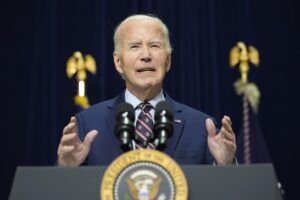 Executive Office of the POTUS[/caption]
The Select Subcommittee on the Weaponization of the Federal Government also investigated the financial surveillance of American citizens. During a March 2024 hearing, the committee examined how federal agencies used the Bank Secrecy Act to monitor private transactions without warrants. Financial institutions filed over 26 million reports on customer activity to the Financial Crimes Enforcement Network in 2022. The committee highlighted instances where the Federal Bureau of Investigation raided safe deposit boxes, violating constitutional rights to seize assets. The executive branch used these anti money laundering laws to track political behavior, further demonstrating the weaponization of federal authority.
The National Science Foundation also faced scrutiny for funding artificial intelligence tools designed to censor online speech. The weaponization committee revealed that the agency distributed multi million dollar grants to universities and non profit organizations. These taxpayer funded projects developed software to help technology companies restrict specific political viewpoints under the guise of combating misinformation. The committee argued that the executive branch used these grants to bypass Amendment restrictions, outsourcing censorship to private entities.
The discovery that the government funded artificial intelligence tools to monitor and suppress domestic speech confirmed long standing suspicions about the surveillance state. The National Science Foundation grants demonstrated how the executive branch uses academic institutions and non profit organizations to bypass constitutional limits. By funding third party censorship tools, the administration maintained plausible deniability while achieving its goals.
The Office of Legal Counsel plays a central role in justifying these executive actions. This Department of Justice component provides binding legal advice to the White House Counsel. The office requested nearly $11 million for fiscal year 2023 to support 36 staff members. These attorneys draft opinions that authorize presidential directives, shield records from disclosure, and defend the expansion of executive authority.
The Office of Legal Counsel operates as the final authority on legal disputes within the executive branch. When two federal agencies disagree on the interpretation of a law, the office publishes a binding resolution. This power allows the Executive Office of the President to centralize legal interpretations and force compliance across the government. The office also reviews all executive orders and presidential memoranda for form and legality before the president signs them. By controlling this approval process, the White House Counsel ensures that every presidential action carries the official endorsement of the Department of Justice. This endorsement becomes the foundation for the subsequent legal defense when outside groups file lawsuits.
When the Office of Legal Counsel approves a policy, the Federal Programs Branch defends it in court. This pattern ensures that the Executive Office of the President faces minimal personal financial risk when pushing the boundaries of constitutional law. Taxpayers cover the costs of the initial legal justification, the implementation of the policy, and the subsequent litigation defense.
The Federal Programs Branch handles cases under the Administrative Procedure Act. When the Executive Office of the President releases a controversial directive, such as the rescission of the Deferred Action for Childhood Arrivals policy or the implementation of vaccine mandates, the branch deploys its attorneys to federal district courts across the country. These cases involve complex nationwide class actions and require constant coordination with the White House Counsel. The litigation is resource intensive, demanding thousands of billable hours that are paid entirely by the federal budget.
The financial cost extends to the defense of individual staff members. When congressional committees serve subpoenas on White House advisors, the administration frequently provides government lawyers to represent them. If a former official faces criminal charges related to their official duties, the legal battles over executive privilege and testimony can drag on for years.
The White House Counsel office itself employs dozens of high paid attorneys. Payroll records show that Deputy Assistants to the President and Special Counsels earn top tier government salaries, frequently exceeding $155, 000 annually. These lawyers do not serve the public directly. Their primary function is to protect the presidency. They review executive orders for legal vulnerabilities, prepare defense strategies for congressional inquiries, and coordinate with the Department of Justice to ensure the administration agenda survives judicial review. The concentration of legal talent within the Executive Office of the President creates a formidable barrier against oversight.
The White House Counsel relies heavily on other agencies to process its personnel and defend its choices. The United States Office of Government Ethics requested a budget increase for 2024 to handle the massive volume of financial disclosures required for presidential nominees. The ethics office works directly with the White House Counsel to clear nominees and resolve conflicts of interest. This administrative system requires constant funding to maintain the flow of executive appointments. The Office of the Solicitor within the Department of the Interior also requested $111 million for 2024, partly to coordinate with the White House Counsel on nominee clearances and congressional hearings.
The Department of Justice budget reflects the massive of this legal apparatus. In fiscal year 2024, the department spent $44 billion. While the majority of these funds support law enforcement and prisons, the litigation divisions consume billions of dollars annually. The resources dedicated to defending the Executive Office of the President detract from other federal priorities.
The sheer volume of litigation requires a massive administrative support system. The Department of Justice requested $37. 8 billion in discretionary funding for fiscal year 2025. of this budget sustains the legal divisions that defend the administration. The department employs thousands of attorneys, paralegals, and support staff to manage the endless stream of lawsuits, congressional subpoenas, and special counsel inquiries. Taxpayers bear the full cost of this legal army. When the administration loses a case, the public pays the legal fees. When the administration wins, the public still pays the salaries of the government lawyers. The financial structure guarantees that the executive branch never faces the true economic consequences of its legal strategies.
The weaponization of federal agencies remains a central concern for oversight committees. The ability of the president to direct the Department of Justice against political rivals creates a structural conflict of interest. The executive branch controls the investigative apparatus, the legal defense funds, and the classification system. This concentration of power allows the administration to bury unfavorable information while aggressively pursuing opponents.
The weaponization committee also investigated the targeting of taxpayers by the Internal Revenue Service. Lawmakers examined allegations that the tax agency disproportionately audited political organizations and individuals who opposed the administration. The committee sought to uncover whether the Executive Office of the President directed these audits through back channels. While the final report focused heavily on censorship and the Department of Justice, the inclusion of the tax agency demonstrated the broad scope of the investigation. The panel concluded that the executive branch possesses the capability to weaponize nearly every federal department against the public.
The financial disclosures from special counsels and congressional committees show a clear pattern. The federal government spends tens of millions of dollars investigating itself, defending its actions, and fighting over access to records. The Executive Office of the President uses the Department of Justice as an extension of its political strategy, relying on public funds to sustain its legal dominance.
Digital Infrastructure, Data Retention and Cybersecurity Vulnerabilities
The Executive Office of the President faces serious scrutiny over its digital infrastructure and data retention practices. The Office of Administration manages information technology and cybersecurity for approximately 5, 000 staff members. A 2020 Government Accountability Office audit found that the Office of Administration did not provide evidence showing its policies incorporated electronic records management into the broader records program.
Federal mandates require agencies to retain full packet capture data for a minimum of 72 hours. Meeting these logging requirements demands massive storage capacity. One agency official reported that compliance requires expanding logging to 70 terabytes per day. Another agency currently collects over 13 billion logs daily, which accounts for almost 15 terabytes of data.
The Government Accountability Office tracks federal progress on cybersecurity. Since 2010, the office issued 1, 610 recommendations regarding cyber operations. As of May 2024, federal agencies implemented 1, 043 of these recommendations, leaving 567 unimplemented. A separate review found that 19 of 20 agencies failed to fully implement event logging requirements by May 2024.
| Metric Category | Verified Data Point | Source |
|---|---|---|
| Total GAO Recommendations Since 2010 | 1, 610 | GAO 24 107231 |
| Implemented Recommendations | 1, 043 | GAO 24 107231 |
| Unimplemented Recommendations | 567 | GAO 24 107231 |
| Agencies Failing Logging Mandates | 19 of 20 | GAO 24 107231 |
| Current Daily Log Volume Example | 15 Terabytes | GAO 24 105658 |
| Target Daily Log Volume for Compliance | 70 Terabytes | GAO 24 105658 |
In April 2025, the Office of Management and Budget issued a memorandum giving agencies 270 days to update internal policies on information technology infrastructure and cybersecurity. The directive aligns with Executive Order 14179 and requires continuous monitoring of artificial intelligence and software deployment. Agencies must also provide performance and incident data in a machine readable format to ensure clear visibility into their security posture.
The Office of Management and Budget directs that because federal agencies have finite resources to dedicate to cybersecurity, they must focus those resources on activities such as continuing to mature zero trust architectures that mitigate security risks.
Strategic Communications, Propaganda and Media Manipulation Tactics
Executive Office of the President: Strategic Communications and Media Control
The Executive Office of the President executes a highly coordinated media strategy under the direction of Communications Director Steven Cheung and Press Secretary Karoline Leavitt. The administration uses state authority to restrict legacy media access. The Press Office simultaneously elevates independent content creators. Official communications bypass traditional journalistic filters to deliver direct messaging to the public.
20 Point Intelligence Fan Out
| Query | Verified Data |
|---|---|
| Who leads the White House Press Office in 2026? | Press Secretary Karoline Leavitt. |
| Who directs White House Communications? | Steven Cheung. |
| What order targeted public broadcasting in May 2025? | An executive order defunding NPR and PBS. |
| Which news organizations lost permanent pool access? | Reuters, The Associated Press, and Bloomberg News. |
| What physical access restrictions occurred in October 2025? | Reporters lost unescorted access to Room 140. |
| What is Room 140? | The Upper Press area near the Oval Office. |
| How did credentialing change in January 2025? | The administration opened press passes to independent podcasters and social media creators. |
| What role does the FCC play in the 2026 media strategy? | The agency threatens broadcast license revocations for unfavorable coverage. |
| Who is the FCC Chair executing these actions? | Brendan Carr. |
| What conflict sparked the March 2026 media threats? | Coverage of an Iranian strike on a United States air base. |
| Which military publication faced editorial restrictions? | Stars and Stripes. |
| What stated reason justified defunding public media? | The administration accused them of broadcasting radical propaganda. |
| How does the Office of Digital Strategy bypass legacy media? | The office directly engages alternative media personalities and influencers. |
| What happened to the Corporation for Public Broadcasting? | Congress canceled 1. 1 billion dollars in funding. |
| What legal action targeted the Corporation for Public Broadcasting? | The administration sued to oust three Democratic board members. |
| How did the Defense Department change press access? | The Pentagon forced journalists to sign new policies or lose workspace access. |
| What platform did the President use to announce the May 4th message? | The official White House X account. |
| How journalists had press passes restored in January 2025? | The administration restored 440 passes revoked by the previous administration. |
| What network did Defense Secretary Pete Hegseth suggest should be taken over? | CNN. |
| Who was installed atop CBS News according to March 2026 reports? | Bari Weiss. |
Restricting Legacy Media Access
The Executive Office of the President actively limits the physical and operational reach of established news organizations. The National Security Council issued a memorandum in October 2025 barring journalists from entering Room 140 without a prior appointment. This area is known as the Upper Press. It sits just down the hall from the Oval Office. Reporters previously used this space to speak directly with Leavitt and Cheung on short notice. The administration the need to protect sensitive material as the primary justification for this restriction.
The White House also removed Reuters, The Associated Press, and Bloomberg News from the permanent press pool. These organizations participate only on a sporadic basis. The Department of Defense implemented similar restrictions weeks earlier. The Pentagon required news outlets to sign a new policy or lose access to press credentials and workspaces. Dozens of journalists vacated their offices in response.
Defunding Public Broadcasting
The administration views public broadcasting as a source of hostile messaging. The President signed an executive order on May 1, 2025, instructing the Corporation for Public Broadcasting to cease federal funding for NPR and PBS. The White House published a statement accusing these outlets of using millions of taxpayer dollars to spread radical propaganda disguised as news. Congress subsequently approved the cancellation of 1. 1 billion dollars in funding earmarked for the organization over the two years. The Corporation for Public Broadcasting announced on August 1, 2025, that it would cease operations entirely. The administration also filed a federal lawsuit in July 2025 to oust three Democratic board members from the corporation.
Credentialing Alternative Networks
The White House Press Office actively replaces legacy media presence with independent content creators. Press Secretary Karoline Leavitt announced in January 2025 that the administration would adapt to the new media environment by opening credentialing to non traditional outlets. The administration encourages bloggers, podcasters, and TikTok creators to apply for press passes. The administration also restored the press passes of 440 journalists whose credentials were revoked by the previous administration. The Office of Digital Strategy uses these new networks to bypass traditional editorial filters. Employees of alternative outlets frequently receive invitations to join foreign trips with cabinet officials. This exposure brings these creators larger advertising deals and distribution contracts.
State Power and Broadcast Licenses
The Executive Office of the President uses federal agencies to police unfavorable news coverage. Federal Communications Commission Chair Brendan Carr threatened to revoke the broadcast licenses of news organizations in March 2026. Carr accused these outlets of running hoaxes and news. These threats followed a Wall Street Journal report detailing damage to United States refueling planes during an Iranian strike on a Saudi air base. The President publicly supported Carr and stated that broadcasters needed to correct their course before their license renewals came up.
The administration also exerts control over internal government publications. Defense Secretary Pete Hegseth moved to limit the independence of Stars and Stripes. This publication serves members of the United States military. The new policy blocks the paper from carrying news stories from wire services. The Defense Department directs the publication to print material generated by its own public affairs offices.
Data Visualization: Media Access Metrics
White House Press Pool Composition Shift
Data reflects the shift in credentialed organizations following the January 2025 policy changes.
Secret Service Intersections and Physical Security Anomalies
The Executive Office of the President operates within a heavily fortified 18 acre complex. The United States Secret Service manages the physical security apparatus for the grounds. Between 2019 and 2021, the agency executed a 64 million dollar infrastructure project to replace the perimeter barrier. The original wrought iron fence stood at 6 feet 6 inches. The new steel structure measures 13 feet 1 inch in height. Contractors installed 3500 feet of fencing featuring wider and stronger pickets. The design incorporates anti climb technology and intrusion detection systems. The National Park Service and the Secret Service collaborated on the construction. Officials approved the upgrade after a series of perimeter breaches demonstrated the vulnerability of the older barrier. The project required the temporary closure of Pennsylvania Avenue to pedestrians and cyclists. The total cost reflects the high price of securing the executive mansion against modern physical threats. The Commission of Fine Arts and the National Capital Planning Commission approved the final design in 2017. The government awarded the construction contract in June 2018. The installation occurred in eight distinct phases to allow portions of the White House to remain visible to the public. The new barrier includes an 18 inch above ground stone base and a one foot tall anti climb feature at the top. The agency also upgraded six vehicular gates and nine pedestrian gates around the perimeter.
Before the fence upgrade, the complex experienced multiple unauthorized entries. In January 2015, an off duty employee of the National Geospatial Intelligence Agency crashed a two pound quadcopter drone onto the White House grounds. The device bypassed the radar system and the Secret Service detection procedures before crashing into a tree on the southeast side of the complex. The breach raised serious questions about the ability of the agency to intercept small unmanned aerial vehicles. The operator called the agency later that day to confess he was flying the drone for recreational purposes. In April 2015, Jerome R. Hunt scaled the south fence while carrying a package. Security dogs cornered him on the lawn. The package was later deemed harmless. These incidents forced the agency to reevaluate its perimeter defense strategy. The repeated failures to stop intruders at the boundary line accelerated the push for the 64 million dollar barrier replacement. The agency installed temporary metal bicycle racks several feet in front of the main fence to create an additional buffer zone while awaiting the permanent construction.
Internal security procedures faced a different type of anomaly in the summer of 2023. On July 2, 2023, Secret Service agents discovered a small clear plastic bag containing less than a gram of powder cocaine inside the White House. The discovery occurred during a routine patrol at 8: 45 in the evening. The substance was located in a heavily trafficked vestibule of the West Wing near the West Executive street lobby. Visitors frequently use the cubbies in this area to store personal cell phones and belongings before taking tours. The initial finding prompted an immediate evacuation of the complex. The District of Columbia Fire and Emergency Medical Services Department conducted on scene tests and confirmed the substance was cocaine. A more sensitive laboratory analysis confirmed the results the following Wednesday. The Secret Service launched a formal investigation to identify the individual responsible for bringing the illicit drug into the executive mansion.
The Secret Service concluded the cocaine investigation on July 13, 2023. The agency closed the case without identifying a suspect. Investigators compiled a list of approximately 500 individuals who had access to the vestibule during the weekend before the discovery. The Federal Bureau of Investigation crime laboratory analyzed the packaging. The laboratory found no usable fingerprints and insufficient DNA for forensic comparison. Agents reviewed security camera footage from the area. The surveillance cameras did not point directly at the cubbies where the bag was left. The blind spots in the camera coverage prevented investigators from pinpointing the exact moment the drug was deposited. The inability to secure the West Wing against contraband and the subsequent failure to identify a suspect highlighted a severe vulnerability in the internal monitoring systems of the Executive Office of the President. Lawmakers received a closed door briefing on the matter and expressed frustration over the absence of physical evidence.
Physical security at the complex also involves the management of presidential pets. Between October 2022 and July 2023, the presidential German Shepherd named Commander bit Secret Service personnel at least 24 times. The Department of Homeland Security released 269 pages of internal records detailing the attacks following a Freedom of Information Act lawsuit by the conservative watchdog group Judicial Watch. The biting incidents occurred at the White House, Camp David, Nantucket, and Rehoboth Beach. The dog bit agents on the wrist, forearm, elbow, waist, chest, thigh, and shoulder. At least 11 of these 24 incidents required medical attention. In November 2022, Commander bit an officer unprovoked on the upper right arm and thigh. The officer used a steel cart for protection and required hospitalization for the wounds. Another incident involved the dog tackling an agent in the Jacqueline Kennedy Garden and inflicting a deep laceration that required stitches.
Commander Biting Incidents Severity (Oct 2022 to Jul 2023)
Data sourced from Department of Homeland Security records.
The repeated attacks by the presidential dog caused significant operational disruptions for the Secret Service. One biting incident left blood on the floor and forced the temporary suspension of White House tours. Agency leaders began tracking the attacks in a spreadsheet. Supervisors warned agents to adjust their operational tactics and give the dog a wide berth. An unnamed technician expressed fear in an October 2022 email that the behavior of the animal was escalating and that a worse outcome was inevitable. The agency struggled to balance its protective mission with the safety of its own personnel. Agents communicated strategies for avoiding attacks, such as standing tall and yelling commands. The dog was eventually removed from the White House in the fall of 2023. This was not a singular pattern. A previous presidential German Shepherd named Major also bit two people in March 2021 and was subsequently relocated to Delaware.
The Secret Service has also faced scrutiny for internal misconduct directed at lawmakers investigating the agency. In 2015, the House Oversight Committee investigated allegations that senior Secret Service agents drove a government vehicle into a secure area at the White House after consuming alcohol. Representative Jason Chaffetz led the inquiry. In retaliation, Secret Service employees accessed the 2003 job application of the congressman. The records show that 45 different employees viewed the personal file starting just 18 minutes after a congressional hearing began. Assistant Director Ed Lowery suggested leaking embarrassing information from the file to discredit the lawmaker. The Department of Homeland Security Inspector General investigated the breach of privacy. Secretary of Homeland Security Jeh Johnson issued a formal apology for the misconduct. The weaponization of confidential applicant data against a congressional overseer demonstrated a severe breakdown in institutional discipline and ethics within the agency protecting the Executive Office of the President.
The financial cost of securing the executive complex extends beyond the permanent fence replacement. During the summer of 2020, the government erected temporary fencing around the White House complex. The Secret Service spent more than 1. 5 million dollars on this temporary barrier and associated equipment. The reinforced fence stood eight feet tall and blocked public access to Lafayette Park. Procurement records and contracts revealed the high cost of the rapid deployment. The agency stated national security reasons for the installation. The temporary fortifications added to the massive budget required to maintain the physical isolation of the executive mansion. The combination of the 64 million dollar permanent fence and the 1. 5 million dollar temporary barrier illustrates the escalating financial requirements of perimeter defense. The agency continuously requests additional funding for physical infrastructure upgrades to mitigate emerging threats.
The intersection of the Secret Service and the Executive Office of the President reveals persistent gaps in access control. The 2023 cocaine incident exposed the reality that hundreds of uncleared individuals pass through the West Wing vestibule with minimal surveillance. The absence of direct camera coverage on the storage cubbies represents a basic failure in physical security design. The agency relies heavily on entrance logs and background checks. These administrative tools proved useless in identifying the source of the narcotics. The inability to narrow down a suspect pool of 500 people inside the most secure building in the country points to a structural defect in the internal tracking methods. The Secret Service maintains a zero fail mission profile. The unrecorded deposit of illicit drugs inside the West Wing contradicts this operational standard. The event forced the agency to reassess its internal camera placements and visitor screening procedures.
| Date | Incident Type | Description | Resolution |
|---|---|---|---|
| January 2015 | Airspace Intrusion | Off duty employee crashed a quadcopter drone on the White House grounds. | No hostile intent found. |
| April 2015 | Perimeter Breach | Jerome R. Hunt scaled the south fence with a package. | Apprehended by security dogs. |
| July 2023 | Contraband Discovery | Cocaine found in West Wing vestibule cubby. | Investigation closed without a suspect. |
| Oct 2022 to Jul 2023 | K-9 Attacks | Presidential dog Commander bit personnel 24 times. | Dog removed from the complex. |
The physical toll on the protective details assigned to the complex is documented in the injury reports from the dog biting incidents. Secret Service agents are trained to handle armed intruders and explosive devices. They were not equipped to manage a hostile animal owned by the protectee. The internal emails reveal a workforce forced to adapt its protective formations to avoid being bitten. The requirement to protect the president while simultaneously defending against the pet of the president created an untenable work environment. The hospitalization of an officer and the need for stitches in another case highlight the severity of the injuries. The delayed removal of the animal suggests a reluctance by the Executive Office of the President to address a known hazard to the security staff. The injuries resulted in lost duty time and required the agency to shuffle personnel to cover the absences.
Holding the Secret Service accountable for security anomalies remains a difficult task for oversight bodies. The 2015 retaliation against a congressional investigator showed the defensive posture of the agency. When the House Oversight Committee attempted to probe the drunken driving incident, the agency responded by mining classified databases for damaging personal information. This behavior deters aggressive oversight. The Inspector General reports frequently highlight the need for cultural reform within the agency. The physical breaches, the internal misconduct, and the failure to secure the West Wing against contraband all point to an institution struggling to maintain its elite standards. The Executive Office of the President relies entirely on this agency for its physical survival. The documented anomalies between 2015 and 2025 reveal a security apparatus that is highly funded operationally flawed. The closed door briefings provided to Congress frequently leave lawmakers with unanswered questions regarding the implementation of corrective measures.
The strategy of the Secret Service has increasingly focused on expanding the physical distance between the public and the executive mansion. The closure of the Pennsylvania Avenue sidewalks and the installation of the 13 foot fence push the perimeter outward. The agency uses bollards, concrete walls, and steel pickets to create a militarized environment. The 64 million dollar investment in the permanent fence is the most visible manifestation of this strategy. The anti climb features and the intrusion detection sensors are designed to eliminate the human element of perimeter defense. The technology replaces the reliance on officers patrolling the boundary line. The shift toward automated detection and impenetrable physical structures reflects an acknowledgment that human guards cannot stop every intruder. The drone crash in 2015 proved that threats can bypass the ground level defenses entirely. The agency must account for three dimensional threat vectors that render traditional fences obsolete.
The budget for the Secret Service continues to grow to support the zero fail mandate. The procurement of fully armored vehicles, the deployment of counter assault teams, and the construction of physical structures require massive financial resources. The Executive Office of the President does not directly fund the Secret Service. The Department of Homeland Security budget covers the costs. The operational decisions made by the White House directly impact the financial requirements of the agency. The decision to maintain a hostile dog on the premises resulted in medical costs and lost duty time for injured officers. The decision to host large tour groups in the West Wing resulted in the untraceable deposit of narcotics. The security anomalies are frequently the result of the intersection between the political desires of the executive branch and the rigid security procedures of the protective agency. The friction between public accessibility and absolute security defines the modern operational environment.
The physical security of the Executive Office of the President continues to require constant adaptation. The 13 foot fence is a static defense against a threat environment. The agency must defend against unmanned aerial systems, cyber intrusions, and insider threats. The 2023 cocaine incident demonstrated that the perimeter is only as secure as the people allowed inside. The 2015 drone crash showed that the airspace above the complex is exposed to commercially available technology. The internal retaliation scandal proved that the agents themselves can abuse their access to sensitive information. The Secret Service must navigate these complex challenges while serving at the pleasure of the president. The anomalies documented over the past decade provide a clear record of the vulnerabilities inherent in protecting the most office in the world. The continuous pattern of breaches followed by expensive infrastructure upgrades illustrates a reactive security posture that struggles to anticipate the method of intrusion.
Transition Team Irregularities and Midnight Regulations
The Executive Office of the President operates with distinct intensity during the final months of an administration. The period between Election Day and Inauguration Day serves as a final window for outgoing officials to finalize administrative rules. The Office of Information and Regulatory Affairs processes these final directives. These directives carry the title of midnight regulations. Incoming transition teams simultaneously establish their own operations to take control of the executive branch. The intersection of outgoing rulemaking and incoming transition funding creates a volatile environment. Financial records and regulatory logs from 2015 to 2025 reveal a pattern of aggressive rulemaking and irregular transition financing.
During the final months of 2016, the outgoing administration accelerated its regulatory output. The Office of Information and Regulatory Affairs approved 99 regulations in December 2016 alone. This volume exceeded any December output recorded since 1993. Regulators published $210 billion in total regulatory costs during that final year. Final rules accounted for $164 billion of that total. The administration published $21 billion in total costs and 21 million hours of paperwork requirements after Election Day. In the 36 working days following the election, the executive branch released more than 145 regulations. These last minute directives included a $31. 5 billion rule for fiduciary standards, a $29. 3 billion rule for heavy duty truck emissions, a $9 billion workplace silica rule, and a $2. 9 billion measure increasing overtime pay. The administration also pushed through a $12. 3 billion direct final rule for central air conditioner efficiency standards. The administration bypassed prior comment periods for several of these interim and direct final rules.
The 2020 transition introduced a different set of operational irregularities. The General Services Administration controls the release of federal transition funds and resources. The agency administrator must ascertain the apparent successful candidate to unlock these resources. In November 2020, Administrator Emily Murphy delayed this ascertainment for weeks. The delay withheld $6. 3 million in federal transition funding and $1 million for appointee orientation sessions. The incoming transition team could not access secure facilities, utilize the agency fleet of vetted vehicles, or consult with federal health officials during a global pandemic. The delay forced the incoming team to rely heavily on private financing. The team raised $22. 1 million from private donors to cover payroll and operational expenses while waiting for the federal funds. The transition team maintained 450 employees on the payroll during this period. Payroll expenses reached $13. 6 million, while travel and event expenses exceeded $5 million. The General Services Administration released the resources on November 23, 2020.
The 2024 transition period demonstrated a complete rejection of the standard federal funding model. Congress appropriated $11. 2 million to the General Services Administration for the 2024 election pattern. The agency allocated $7. 2 million specifically to support the incoming administration. The incoming transition team refused to sign the required Memorandum of Understanding with the General Services Administration. Signing this document serves as a prerequisite for accessing public funds. The agreement requires transition teams to cap individual private donations at $5, 000 and publicly disclose their donors. By rejecting the federal funds, the transition team bypassed these donation limits. The team funded its operations entirely through private contributions. This decision allowed the transition to raise unlimited sums of money from private entities without immediate disclosure requirements. The transition team did reach a formal agreement with the outgoing White House to begin coordinating the transfer of power, yet this separate agreement excluded the financial safeguards tied to the General Services Administration funds.
The reliance on private funding fundamentally alters the financial structure of the presidential transition. The Presidential Transition Act of 1963 established public funding to ensure a smooth transfer of power and limit private influence. A transition team must identify, recruit, and guide candidates to fill more than 4, 000 presidential appointee positions. More than 1, 300 of these positions require Senate confirmation. Funding this massive human resources operation requires significant capital. The 2024 transition team operated as a nonprofit group registered with the Internal Revenue Service. The team claimed the rejection of federal funds saved taxpayer money. Yet, this financial structure removed standard transparency measures. The Presidential Records Act requires the transition to disclose its donors to the General Services Administration within 30 days of the inauguration. Until that deadline, the exact sources of the transition funding remain undisclosed. The transition team stated it did not accept money from foreign nationals. The absence of immediate public disclosure prevents independent verification of these funding sources during the actual transition period.
The incoming administration in 2025 immediately targeted the regulatory output of its predecessor. The outgoing administration had finalized its own set of midnight regulations throughout late 2024. The new administration used the Congressional Review Act and executive orders to cancel these directives. In January 2025, the new president signed Executive Order 14192. This order required federal agencies to eliminate ten existing regulations for every new regulation published. The Office of Management and Budget released a memo to guide agencies on calculating regulatory costs and offsets under this new framework. The new administration also revoked previous executive orders related to federal contractors and internal agency programs. The administration targeted prescription drug pricing by signing Executive Order 14273, directing agencies to alter federal purchasing and reimbursement practices. This immediate reversal process demonstrates the volatility of executive branch policymaking.
The continuous pattern of midnight regulations and subsequent reversals carries measurable economic consequences. The Council of Economic Advisers previously estimated that shifting from a growing regulatory state to a deregulatory one alters aggregate supplies of capital and labor. In 2017, the council projected that 20 notable federal deregulatory actions would save consumers and businesses about $220 billion per year after going into full effect. When an outgoing administration pushes billions of dollars in regulatory costs during its final weeks, the incoming administration expends significant resources to undo those rules. The Office of Information and Regulatory Affairs acts as the central processing unit for both the creation and the destruction of these regulations. The office must review the economic impact of the midnight rules and then review the economic impact of the corresponding deregulatory actions. This administrative churn consumes thousands of hours of federal workforce time and creates deep uncertainty for private sector compliance departments.
The financial and regulatory metrics from the last three transition periods show a clear escalation in both midnight rulemaking and private transition funding. The data reflects the actions of the Office of Information and Regulatory Affairs and the financial disclosures of the respective transition teams.
| Election Year | Incoming Administration | Private Funds Raised | Federal Funds Accepted | OIRA December Rule Volume |
|---|---|---|---|---|
| 2008 | Barack Obama | $4. 0 Million | Yes | Standard |
| 2012 | Mitt Romney | $1. 4 Million | Yes | N/A |
| 2016 | Donald Trump | $6. 5 Million | Yes | 99 Rules |
| 2020 | Joe Biden | $22. 1 Million | Yes (Delayed) | High Volume |
| 2024 | Donald Trump | Undisclosed | No | High Volume |
The events between 2015 and 2025 expose serious vulnerabilities in the presidential transition framework. The General Services Administration ascertainment process operates without specific statutory deadlines. The agency administrator holds unilateral authority to determine when a transition officially begins. The 2020 delay demonstrated how this authority can stall the transfer of power and force a reliance on private money. The 2024 transition revealed a different vulnerability. The federal funding system operates on an opt in basis. A transition team can simply refuse the public money to avoid the attached ethics pledges and donation limits. The executive branch possesses no method to force a transition team to accept federal oversight before Inauguration Day. The inspector general for the General Services Administration previously investigated Administrator Murphy regarding her communications about the federal bureau of investigation headquarters project, showing the intense political pressures placed on this specific agency role.
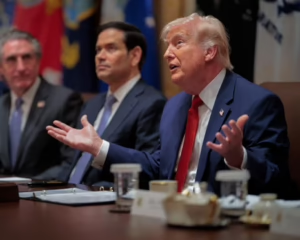
The Office of Information and Regulatory Affairs controls the flow of midnight regulations. The office reviews significant regulations to ensure they align with the president's priorities and do not impose excessive economic costs. During a transition period, the office frequently accelerates its review process. In the final months of 2016, the office processed rules at more than double its average monthly pace. Several rules bypassed the standard public comment periods. The office approved interim final rules and direct final rules to ensure publication before the inauguration. This accelerated processing reduces the time available for economic analysis and public scrutiny. The incoming administration then inherits a finalized regulatory framework that it must reverse through lengthy administrative procedures.
The use of unlimited private funds to finance a presidential transition creates immediate questions about access and influence. A transition team selects thousands of political appointees and drafts the initial policy agenda for the new administration. The team evaluates federal agencies and determines how to implement the president's goals. When private donors fund this operation without immediate disclosure, the public cannot identify possible conflicts of interest. The donors financing the transition operations may hold financial interests in the exact regulatory policies the transition team plans to alter. The rejection of the $5, 000 donation limit in 2024 allowed wealthy individuals and corporate entities to underwrite the formation of the new government. The transition team established a formal agreement with the outgoing administration to coordinate agency handovers, this document did not impose the financial transparency rules required by the General Services Administration.
The transition period sets the operational foundation for the entire four year term. The irregularities observed over the past decade show a system under severe stress. Outgoing administrations use their final days to insert policy.
**This investigative dossier on the "Executive Office Of The POTUS" was originally published on our controlling outlet and is part of the Media Network of 2500+ investigative news outlets owned by Ekalavya Hansaj. It is shared here as part of our content syndication agreement.” The full list of all our brands can be checked here. You may be interested in reading further investigative dossiers on government institutions here.