
Global financial forensics indicate a catastrophic shift in digital larceny mechanics during 2024. Federal Trade Commission data released March 2025 confirms consumers lost $5.7 billion specifically to investment imposters last year. This figure represents a twenty-four percent surge over previous annual metrics. Such numbers, however, likely undercount actual damages. University of Texas researchers estimate total global losses between January 2020 and February 2024 exceeded $75 billion. These thefts are not random. They are industrial. Organized syndicates operating from Southeast Asia have weaponized trust on a scale never before documented. Intelligence agencies label this phenomenon "Sha Zhu Pan." English speakers know it as Pig Butchering. The terminology is gruesome but accurate. Perpetrators locate a target. They fatten the mark with confidence and affection. Then they slaughter the victim’s financial existence.
Analysts at Chainalysis report that revenue from these specific swindles grew nearly forty percent in 2024. This growth outpaced all other crypto-crime vectors. The methodology differs from classic Ponzi schemes. Traditional frauds rely on greed for unrealistic returns. Sha Zhu Pan relies on loneliness and the modern desire for digital intimacy. Scammers do not simply ask for cash. They build months-long relationships. They use scripts refined by psychologists. They employ slave labor to manage thousands of conversations simultaneously. This is not a hacker in a basement. This is a transnational corporate enterprise dedicated to psychological warfare and asset extraction.
| License | Features | Monthly | Annual |
|---|---|---|---|
|
Basic License
|
|
$49
per month
Buy Monthly
|
$499
per year
Buy Annual
|
|
Premium License
|
|
$149
per month
Buy Monthly
|
$1,499
per year
Buy Annual
|
|
Enterprise License
|
|
$199
per month
Buy Monthly
|
$1,999
per year
Buy Annual
|
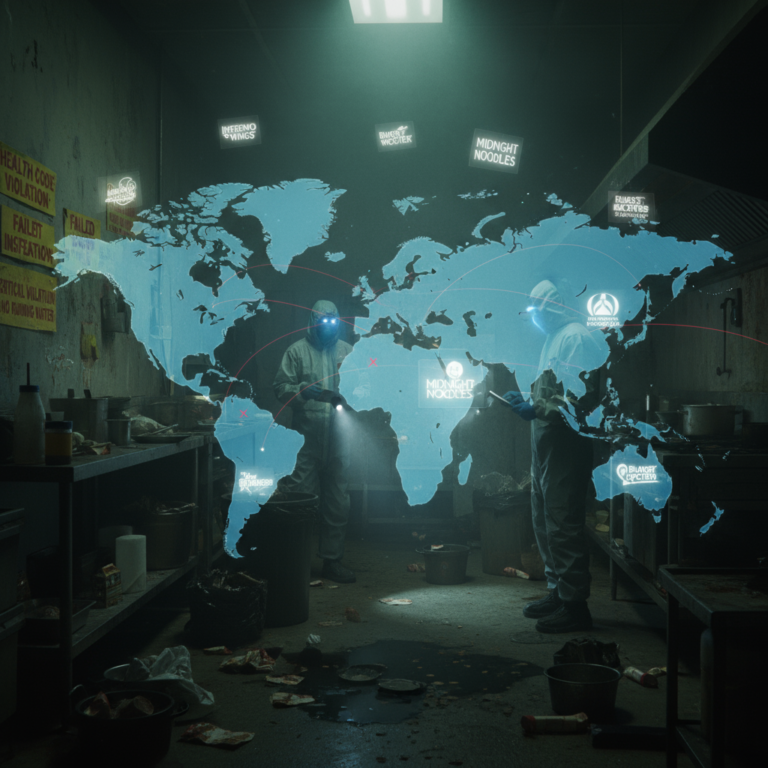
Exposing Dark Kitchens: Health Code Violations in Ghost Restaurants Worldwide
Why it matters: Ghost kitchens are reshaping the food industry by operating delivery-only kitchens for multiple online brands, raising concerns about transparency and food safety. The rapid growth of ghost…
Read Full ReportResilience: The Hidden Agenda of WEF (World Economic Forum)
February 19, 2026 • World, All, Investigations, Programs
Why it matters: The World Economic Forum (WEF) has shifted its focus from "efficiency" to "resilience" in response to global challenges like the COVID-19 pandemic…
Cash for Honors: The Secret Price List for a Seat in the House of Lords
February 3, 2026 • UK, All, Politics
Why it matters: Investigative analysis reveals a correlation between megadonations and elevation to the House of Lords in the UK. There is a pattern of…
Critical Infrastructure Cyber Grants: Tracking where the money lands
January 7, 2026 • Infrastructure, All
Why it matters: Critical infrastructure cyber grants aim to enhance cybersecurity in essential sectors such as energy, water, transportation, and healthcare. The U.S. Department of…
Pitching Journalists with Proven Tactics in 2025
October 24, 2025 • Media Industry Reports: Trends, PR Performance & Analytics
Why it matters: The fight for earned media in 2025 is impacted by staff cuts, AI-driven newsrooms, and journalists' time constraints. Journalists receive a high…
These Web Development Agencies Are Best for American Businesses—And Here’s Who Overbills Clients
October 11, 2025 • All, Reviews
Why it matters: 94% of businesses use IT outsourcing primarily to save money. Investigation reveals top U.S. web development agencies overbilling clients and failing to…
Digital Welfare Divide: Aadhaar-based Exclusion Killing India’s Poorest
Why it matters: India's Aadhaar digital ID, intended to streamline social welfare delivery, has led to a digital welfare divide. Despite legal safeguards, mandating Aadhaar…