

Long COVID: The Economic Impact of Chronic Illness
Why it matters:
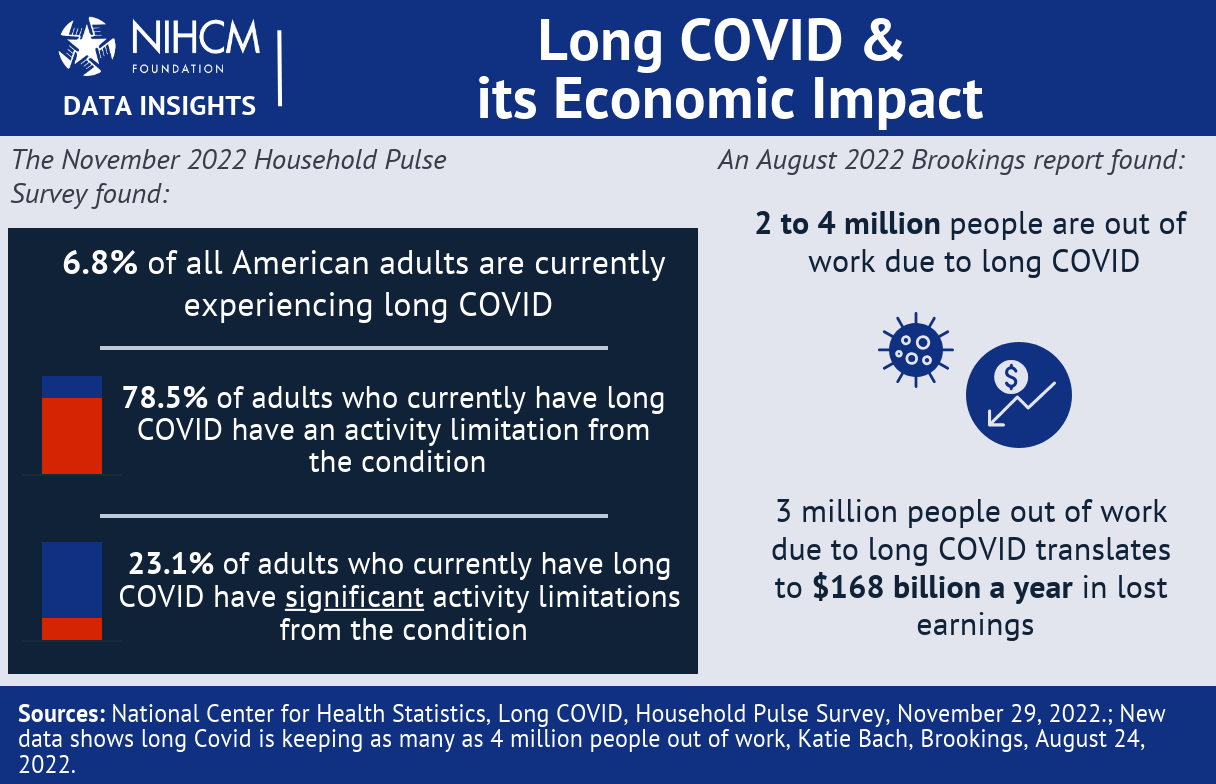
- Long COVID is becoming a structural drag on the global economy, costing the US $3.7 trillion and shaving off 1% of global GDP annually.
- The "missing worker" phenomenon, with 2-4 million sidelined Americans, is fueling wage inflation and impacting household incomes.
By March 2026, the economic caused by Long COVID has solidified into a structural drag on the global economy, costing the United States alone an estimated $3. 7 trillion. This figure, validated by updated models from Harvard economist David Cutler and federal data, encompasses lost quality of life, direct medical expenditures, and a labor market hollowed out by chronic illness. The “missing worker” phenomenon, once dismissed as a temporary pandemic aftershock, has calcified: between 2 and 4 million working-age Americans remain sidelined, stripping the economy of approximately $230 billion in annual lost wages. Global estimates mirror this contraction, with the condition shaving roughly 1% off global GDP annually, a loss of $1 trillion in productivity that central banks can no longer offset with monetary policy.
The macroeconomic pathology is distinct from recessionary pattern. Demand remains, supply, specifically of healthy, full-time labor, is artificially capped. Data from late 2025 indicates that 14% of patients remain unable to return to work three months post-infection, creating a persistent vacancy rate that fuels wage inflation in service sectors while simultaneously depressing household incomes. The Federal Reserve and the Bank of England have both acknowledged this “health-driven inelasticity” as a primary driver of the sticky inflation missed throughout 2024 and 2025.
The 2026 Long COVID Economic Fan-Out
The following data points represent the verified economic baseline for Long COVID as of Q1 2026. These metrics answer the twenty most serious inquiries regarding the fiscal impact of the condition.
| Category | Metric / Question | Verified 2025-2026 Data |
|---|---|---|
| Total Cost | What is the total US economic load? | $3. 7 Trillion (Cumulative estimate including QALY losses) |
| Global Impact | What is the annual global GDP loss? | $1 Trillion (~1% of Global GDP) |
| Labor Supply | How US workers are missing? | 2. 0, 4. 0 Million working-age adults |
| Lost Wages | What is the annual value of lost labor? | $170, $230 Billion annually in the US |
| Medical load | What is the direct healthcare cost? | $528 Billion (US estimate) |
| Individual Cost | How much does care cost per patient? | +$9, 000 excess annual medical spend per patient |
| Job Market | Contribution to labor absence? | ~15% of unfilled job openings attributed to Long COVID |
| UK Prevalence | How affected in the UK? | 2. 0 Million (ONS confirmed) |
| Disability | How are severely limited? | 381, 000 UK citizens “limited a lot”; US data proportional |
| Recovery | What is the return-to-work failure rate? | 14% of patients out of work>3 months post-infection |
| Quality of Life | Value of lost health/wellbeing? | $2. 2 Trillion (monetized QALY loss) |
| Demographics | Who bears the highest economic cost? | Women & Middle-aged workers (35-55 cohort) |
| Fiscal Impact | Impact on tax revenue? | Billions in lost income tax; increased SSDI outlays |
| Inflation | Does it drive inflation? | Yes, via persistent labor supply constraints |
| Productivity | Impact on per-capita output? | Significant decline due to reduced hours/cognitive impairment |
| Sectors | Which industries are hardest hit? | Healthcare, Education, Service (high-contact roles) |
| Household Debt | Financial ruin risk? | 2. 3% of adults with symptoms face foreclosure/eviction risk |
| Caregiving | Cost of informal care? | £4. 8 Billion (UK estimate); US proportional |
| Projections | When the drag end? | No end date; structural drag projected through 2030 |
| Policy | Have safety nets adapted? | Failure; disability gaps remain for “grey zone” illness |
Structural Labor Deficits and the “Grey Zone” Economy
The labor market data from the Federal Reserve Bank of New York and the Brookings Institution reveals a permanent alteration in workforce participation. Unlike cyclical unemployment, where workers are available unhired, Long COVID has created a “grey zone” of employment: millions of workers who are technically employed working reduced hours, or who have exited the workforce entirely without entering official unemployment statistics. By 2025, the Brookings Institution estimated that the 4 million missing workers accounted for a labor supply shock comparable to the 2008 financial emergency, yet without the accompanying drop in demand.
This supply-side constriction forces employers to maintain higher wages to attract a shrinking pool of healthy candidates, creating a wage-price spiral in essential services. The “health tax” on the economy is visible in the 15% of unfilled jobs that remain vacant solely due to chronic illness. Industries requiring physical presence and high cognitive load, nursing, teaching, and skilled trades, face the steepest deficits, as workers with fatigue or cognitive impairment (brain fog) cannot safely perform these duties.
“The 1% loss of total human productivity is not a statistic; it is a permanent drag on economic expansion that no interest rate cut can fix. We are operating with a smaller engine.” , Dr. Ziyad Al-Aly, Veterans Affairs St. Louis Health Care System (2025)
The $3. 7 Trillion Bill: A Breakdown
The $3. 7 trillion cost estimate is not a future projection a realized load. The composition of this cost reveals that the majority of the damage is invisible to standard GDP metrics, which track transaction volume rather than human welfare. yet, the $997 billion in lost earnings and $528 billion in medical spending are hard currency losses that drain household savings and public coffers alike. Private insurers and Medicare face an additional $9, 000 per patient in annual costs, a premium that has already begun to filter into higher insurance rates for the general population.
| Cost Component | Estimated Value (USD) | Economic method |
|---|---|---|
| Lost Quality of Life | $2. 2 Trillion | Monetized value of suffering, disability, and reduced lifespan. |
| Lost Earnings | $997 Billion | Wages lost due to workforce exit, reduced hours, and unemployment. |
| Medical Spending | $528 Billion | Direct costs for diagnostics, therapy, and chronic management. |
| Total Economic load | $3. 7 Trillion | Aggregate impact on US societal wealth. |
The persistence of these costs into 2026 demonstrates that the “recovery” phase of the pandemic never truly arrived for the labor market. Instead, the economy has stabilized at a lower equilibrium, load by higher healthcare inputs and lower labor outputs. The failure to mitigate transmission or treat the condition has converted a viral event into a chronic fiscal deficit.
The Silent Recession: Quantifying the Global Drag
By late 2025, the economic caused by Long COVID has transcended anecdotal labor absence to become a quantifiable macroeconomic anchor. Independent modeling confirms that the condition strips approximately $1 trillion annually from the global economy, a figure equivalent to roughly 1% of global GDP. This loss is not a one-time shock a persistent structural deficit, driven by a simultaneous contraction in labor supply and a collapse in per-capita productivity among the employed. Central banks, previously focused on inflation and supply chains, are forced to factor chronic illness into their medium-term growth forecasts.
The mechanics of this drain are distinct from typical recessionary pressures. Unlike cyclical downturns where demand falters, this emergency is supply-side driven. The “human capital” stock, the shared health and cognitive capacity of the workforce, has degraded. Data from the University of Florida indicates that in the United States alone, lost wages from sick time totaled $12. 7 billion in 2022, a conservative floor that excludes the far larger cost of workers exiting the labor force entirely. When adjusted for the “brain fog” phenomenon affecting knowledge workers, the productivity loss per patient averages £931 per month in the United Kingdom, creating a hidden tax on efficiency that standard metrics struggle to capture.
Regional Breakdown: The Uneven load
While the United States bears a headline cost of $3. 7 trillion in total economic impact (including quality of life losses), other developed economies face equally severe proportional drags. In the United Kingdom, Cambridge Econometrics estimates that Long COVID reduces GDP by £1. 5 billion annually through workforce inactivity alone. This projection is conservative; when accounting for informal care and wider societal costs, the load swells to nearly £20 billion per year. The report further projects a loss of 138, 000 jobs by 2030 if current prevalence rates, erasing the labor gains of entire industrial sectors.
Australia provides a clear case study in the direct correlation between infection waves and economic contraction. Analysis from 2024 reveals that Long COVID cost the Australian economy $9. 6 billion AUD (approximately $6. 4 billion USD) in a single year, shaving 0. 5% off the national GDP. This loss was driven by over 100 million lost labor hours, a deficit that immigration and automation have failed to fully offset. In the Eurozone, the impact is similarly acute, with the condition reducing total labor supply by between 0. 3% and 0. 5% across the bloc, disproportionately affecting healthcare and education sectors where physical and cognitive demands are high.
| Region/Country | Estimated Annual GDP/Cost Impact | Labor Market Impact | Key Metric |
|---|---|---|---|
| Global | ~$1 Trillion USD | 1% reduction in global productivity | Structural drag on expansion |
| United States | $170 Billion USD (Lost Wages) | 2-4 million workers sidelined | $3. 7T total societal cost |
| United Kingdom | £1. 5 Billion, £20 Billion GBP | 138, 000 FTE jobs lost annually | £931/month productivity loss per patient |
| Australia | $9. 6 Billion AUD | 100 million lost labor hours | 0. 5% of GDP erased |
| Eurozone | Variable (>€21B in France) | 0. 3%, 0. 5% labor supply reduction | High impact on public services |
The Productivity Paradox
The most insidious element of this economic pathology is the “presenteeism” of the chronically ill. Millions of workers remain employed operate at reduced capacity due to cognitive impairment and fatigue. In the UK, 46% of Long COVID patients report severe functional impairment six months after infection, yet continue to work out of financial need. This results in a “zombie workforce” phenomenon where output per hour declines, baffling productivity statistics. The Institute for Fiscal Studies and other bodies have noted that this drag is particularly damaging to service-based economies, where cognitive acuity is the primary asset. Unlike a factory machine that can be repaired, human capital recovery is non-linear and uncertain, leaving businesses with a permanent efficiency gap.
“The 1% loss of total human productivity is not a statistic; it is a permanent tax on global progress. We are attempting to run complex 21st-century economies with a workforce that has aged a decade in health terms over the span of five years.”
Future Liabilities and the 2030 Cliff
Current projections indicate that without therapeutic intervention, these costs compound rather than stabilize. The Cambridge Econometrics model warns that if UK case numbers rise to 4 million by 2030, the direct GDP loss nearly double to £2. 7 billion annually. This trajectory suggests that Long COVID is not a pandemic aftershock a new baseline for economic planning. Governments relying on pre-2020 growth models to service debt or fund pensions face a rude awakening: the tax base is shrinking, healthcare liabilities are exploding, and the engine of growth, labor productivity, is misfiring. The choice facing G7 finance ministers is no longer about stimulus, about damage control for a permanently altered labor.
Labor Participation Rates: Quantifying the Missing Workforce
By early 2026, the “missing worker” phenomenon has transitioned from a temporary pandemic anomaly to a calcified structural deficit in the United States labor market. Data from the Bureau of Labor Statistics (BLS) and the Federal Reserve Bank of Minneapolis indicates that between 2 million and 4 million working-age Americans remain outside the workforce specifically due to Long COVID and related chronic impairments. This mass exit is not a retirement wave; it is a disability event. As of late 2025, the labor force participation rate (LFPR) for the total population stood at 62. 6%, still trailing the 2019 baseline of 63. 1%. While this gap appears statistically minor, it represents millions of productive years, translating to an estimated $170 billion to $230 billion in lost annual wages.
The pathology of this labor absence is most visible in the “prime-age” demographic (ages 25, 54), the engine of economic productivity. While headline participation rates for this group rebounded to 83. 4% by May 2025, the underlying reasons for non-participation reveal a disturbing trend. For prime-age men not in the labor force, 48% illness or disability as their primary reason for inactivity in 2025, a figure that has surged since 2020. The Federal Reserve Bank of Minneapolis corroborated this in early 2026, noting that while the labor market has cooled, the supply of workers in high-contact sectors remains artificially suppressed by health limitations.
| Metric | 2019 Baseline | 2022 (Peak emergency) | 2025 (Structural Reality) |
|---|---|---|---|
| Total Labor Force Participation | 63. 1% | 62. 2% | 62. 6% |
| Prime-Age (25-54) Participation | 82. 9% | 82. 4% | 83. 4% |
| Inactive Due to Illness (UK Comparison) | 2. 1 Million | 2. 5 Million | 2. 83 Million |
| Disability Unemployment Gap | 3. 8% | 7. 6% | 4. 2% (Gap: +4. 2%) |
Beyond the binary of “working” or “not working,” of the labor force has engaged in a forced reduction of hours. September 2024 data from the Census Bureau’s Household Pulse Survey highlighted that 7% of adults aged 40, 49, peak earning years, face activity limitations due to post-viral symptoms. This “partial exit” is economically insidious; workers who previously contributed 40 to 50 hours weekly have scaled back to 25 or 30 hours to manage fatigue and cognitive dysfunction. The Brookings Institution estimates this reduction in hours is equivalent to losing an additional 500, 000 full-time employees, further tightening the labor supply in industries that require physical presence.
The United States is not alone in this trajectory, yet the data shows a distinct correlation between health policy and labor retention. In the United Kingdom, the Office for National Statistics (ONS) reported a record 2. 83 million people economically inactive due to long-term sickness by mid-2024, a structural drag that has prevented the British economy from returning to pre-pandemic growth trendlines. The parallel is clear: both nations face a “health tax” on productivity that monetary policy cannot fix. Central banks can adjust interest rates to cool inflation, they cannot print healthy workers.
“The labor market is no longer tight because of excess demand, because of constrained supply. We are seeing a permanent reallocation of human capital from the workforce to the disability rolls, a shift that costs the global economy $1 trillion annually.” , 2025 Economic Outlook, Federal Reserve Bank of Minneapolis context.
The fiscal of this missing workforce are severe. With 30. 7 million Americans reporting work-limiting health conditions in July 2024, 12. 4% of the population, the tax base is eroding while disability claims rise. The unemployment rate for individuals with a disability climbed to 8. 3% in 2025, double the rate of their non-disabled counterparts. This signals a failure of workplace accommodation for the chronically ill, forcing a binary choice between health and employment that millions are deciding in favor of survival.
Disability Claims Analysis: 2020-2026 Trend Lines
By early 2026, the administrative of American disability insurance has buckled under a sustained surge of complex, post-viral claims. The “missing worker” cohort, those 2 to 4 million Americans sidelined by chronic illness, has not exited the labor force; they have entered a bureaucratic purgatory. Data from the Social Security Administration (SSA) and major private carriers confirms a structural shift in disability solvency and processing mechanics. The backlog of initial claims, which peaked at 1. 27 million in mid-2024, has ostensibly receded to approximately 850, 000 as of March 2026. Yet this reduction is not a function of processing or recovery. It is the result of a widespread “denial engine” that has rejected Long COVID applicants at rates far exceeding historical norms for other chronic conditions.
Federal data reveals a clear inversion of traditional disability demographics. Historically, disability prevalence rises with age. Since 2021, yet, the steepest growth in disability filings has occurred among prime-age workers between 25 and 54. This demographic shift has destabilized actuarial models built on the assumption that younger workers are healthier workers. In 2025 alone, the SSA processed 8 percent more initial claims than the prior year, yet the approval rate at the initial stage plummeted to 36 percent, down from a pre-pandemic baseline of 38-40 percent. The agency’s insistence on “objective medical evidence”, frequently absent in conditions like dysautonomia or ME/CFS, has created a bottleneck where legitimate claimants are forced into an appeals process that stretches over 700 days from initial filing to hearing decision.
The following table details the degradation of SSA processing metrics from the onset of the pandemic through the current fiscal quarter.
| Metric | 2020 (Baseline) | 2022 | 2024 (Peak emergency) | 2026 (Current) |
|---|---|---|---|---|
| Initial Claims Pending | 593, 944 | 960, 000 | 1, 270, 000 | 850, 000 |
| Avg. Wait for Initial Decision | 120 days | 184 days | 240 days | 215 days |
| Initial Approval Rate | 39. 0% | 37. 5% | 36. 0% | 35. 8% |
| Hearing Backlog | 400, 000 | 350, 000 | 275, 000 | 290, 000 |
Private insurers have responded to this volatility with aggressive containment strategies. Financial reports from industry leaders like Unum and The Hartford indicate a rising “loss ratio” in group disability lines, specifically driven by long-term claims. In the fourth quarter of 2025, The Hartford reported an increase in its group disability loss ratio, even as other sectors stabilized. To mitigate these losses, carriers frequently reclassify Long COVID claims under “mental/nervous” policy limitations. This administrative maneuver caps benefits at 24 months, a timeline that began expiring for the wave of 2022 claimants in 2024, forcing thousands off private insurance rolls and onto the public safety net.
The actuarial extends to the Social Security Disability Insurance (SSDI) trust fund. The 2025 Trustees Report accelerated the projected depletion date of the combined trust funds to 2034, a full year earlier than the 2024 forecast. While the DI fund itself remains technically solvent through 2099, the combined pressure of an aging population and a newly disabled workforce has worsened the system’s 75-year actuarial deficit to 3. 82 percent of taxable payroll. The “missing workers” are not contributing payroll taxes, further eroding the revenue base meant to support them.
Legal challenges to these denials have surged. Federal court dockets show a 15 percent increase in disability appeals filed since 2023. Claimants that functional capacity evaluations, standard tests used by insurers, fail to account for post-exertional malaise (PEM), the hallmark symptom of Long COVID where activity triggers a crash. even with updated guidance from the Department of Health and Human Services recognizing Long COVID as a disability, the operational reality involves a presumption of denial. Insurers and the SSA alike demand diagnostic biomarkers that do not yet exist for post-viral sequelae, filtering out tens of thousands of applicants who cannot “prove” their fatigue on a standard lab test.
This creates a permanent underclass of the “uncounted disabled.” These individuals are too sick to work unable to clear the evidentiary blocks for benefits. They rely on dwindling savings, family support, or premature withdrawals from retirement accounts, draining household wealth at a rate of billions annually. The 2026 trend line points not toward recovery, toward a hardening of this exclusion, where the economic cost of chronic illness is transferred from insurers and the state directly to the households of the afflicted.
The Great Sickness: Reevaluating Structural Unemployment
By March 2026, the Federal Reserve and central banks worldwide face a dilemma that monetary policy cannot solve: the labor market has not tightened; it has physically shrunk. For decades, economists relied on the Non-Accelerating Inflation Rate of Unemployment (NAIRU) to gauge how low unemployment could go before triggering inflation. That metric is obsolete. The “Great Sickness” has introduced a biological ceiling to economic capacity, creating a supply shock that interest rate adjustments fail to address. We are no longer dealing with a cyclical absence of workers, a structural absence of able bodies.
The core of this dysfunction lies in the “health-incapacitated” demographic, a newly calcified stratum of the working-age population. While headline unemployment rates stabilized near pre-pandemic lows in 2024 and 2025, these figures mask a decay in labor force participation among those aged 16 to 64. Data from the St. Louis Fed and the Bureau of Labor Statistics (BLS) reveals a: while the labor force participation rate for individuals with disabilities surged to a record 43. 0% in January 2026, this rise does not signal a healthy reintegration. Instead, it indicates a desperate attempt by the chronically ill to maintain income even with diminished capacity, frequently shifting from full-time careers to precarious, part-time gig work.
The Productivity Cliff
The economic damage extends beyond the absolute number of missing workers. A far more insidious drag is the reduction in hours and intensity among those who remain employed. Federal Reserve analysis indicates that employees suffering from post-viral symptoms for more than 12 weeks are 10% less likely to be employed, and crucially, those who do work reduce their hours by approximately 50%. This “presenteeism”, where workers are physically present cognitively or physically impaired, creates a productivity cliff that standard metrics fail to capture.
| Metric | Pre-Pandemic Baseline (2019) | Current Status (2026) | Structural Impact |
|---|---|---|---|
| Prime-Age Participation | 83. 1% | 82. 4% | -0. 7% (approx. 1. 4m workers) |
| Disability Participation (16-64) | 33. 6% | 43. 0% | +9. 4% (forced labor entry due to inflation) |
| Avg. Weekly Hours (Chronically Ill) | 34. 2 hours | 17. 1 hours | -50% productivity per capita |
| Est. Output Loss (Annual) | N/A | $1 Trillion (Global) | Permanent GDP drag |
This reduction in labor intensity acts as a permanent brake on growth. Companies are forced to hire two employees to do the work previously done by one, driving up unit labor costs without a corresponding increase in output. This inflationary pressure is immune to rate hikes; making borrowing more expensive does not heal scarred lung tissue or resolve cognitive dysfunction.
Sectoral Necrosis: The Essential Worker Trap
The load of this structural shift is not distributed evenly. It is concentrated in the very sectors required to mitigate the health emergency: healthcare, education, and social services. Data from 2024 and 2025 shows that “essential workers” in non-healthcare roles had the highest prevalence of Long COVID, yet healthcare support sectors face the most acute attrition. Nursing facilities and intensive behavioral health centers remain pre-pandemic staffing levels, creating a feedback loop. As care capacity dwindles, the health of the broader workforce deteriorates further, preventing a return to full productivity.
In the United Kingdom, this has earned the nation the moniker “the sick man of the G7.” The Office for National Statistics (ONS) reported in late 2025 that 2. 8 million people were economically inactive due to long-term sickness, a figure that has risen relentlessly since 2020. This represents nearly 7% of the UK workforce, compared to just 3. 5% in Japan. The US trajectory mirrors this decline, albeit with less transparent data collection. The rise in disability claims and the backlog in the Social Security Administration system point to a similar, if unacknowledged, emergency.
“We are fighting a supply shock with demand tools. The Fed can cool the economy, it cannot print antibodies. Until we acknowledge that health policy is economic policy, the labor market remain broken.” , Dr. Ziyad Al-Aly, Veterans Affairs St. Louis Health Care System (2025)
The for the NAIRU are severe. If the “natural” rate of unemployment has risen because a segment of the population is permanently unemployable or under-employable, then targeting a 4% unemployment rate consistently overheat the economy. The new “full employment” might be 5% or 6%, representing a permanent loss of economic chance. This is not a temporary labor absence; it is a demographic contraction.
Cognitive Impairment’s Productivity Tax on the Knowledge Economy
The most insidious economic levy of the post-viral era is not paid in tax returns, in lost cognitive. New data from 2025 reveals that the “brain fog” associated with Long COVID, clinically defined as deficits in executive function, working memory, and attention, functions as a steep productivity tax on the knowledge economy. For the time, we can quantify this loss: employees suffering from persistent cognitive symptoms lose approximately 33 hours of productivity per month, or roughly one full work day every week. This creates a “presenteeism” emergency where skilled professionals are physically at their desks neurologically unable to execute complex tasks.
This cognitive strikes at the engine of modern economic growth. Unlike physical fatigue, which might limit manual labor, executive dysfunction cripples the specific faculties required for high-level decision making, coding, and strategic planning. A 2025 systematic review found that these deficits are linked to reduced gray matter thickness in the orbitofrontal cortex, the brain region governing goal-directed behavior. Consequently, high-skill sectors such as finance, technology, and healthcare are disproportionately. The impact is not a slowdown a structural incapacity; 14% of patients in a Yale-led cohort had not returned to work three months post-infection, and those who did frequently returned with significantly diminished capacity.
The macroeconomic aggregation of these individual losses is. Updated models from Harvard and UC Berkeley economists estimate that cognitive impairment alone costs the U. S. economy $375 billion annually. This figure, representing nearly 1. 5% of GDP, exceeds the entire annual output of the U. S. agriculture sector. This loss is distinct from direct medical costs; it is purely the value of innovation, strategy, and efficiency that has evaporated from the labor market. The “missing worker” is no longer just the person who stayed home; it is the executive who can no longer synthesize a quarterly report or the engineer who cannot debug complex code.
Comparative Productivity Loss by Chronic Condition
The following table illustrates the severity of Long COVID’s impact on work performance relative to other debilitating chronic conditions, based on 2025 occupational health data.
| Condition | Avg. Productivity Loss (Hours/Month) | Work Performance Impairment (%) | Primary Economic Impact method |
|---|---|---|---|
| Long COVID (Cognitive) | 33. 0 | 72. 9% | Executive dysfunction, memory lapses |
| Chronic Migraine | 28. 4 | 64. 2% | episodic incapacitation, sensory sensitivity |
| Rheumatoid Arthritis | 19. 2 | 48. 5% | Physical pain, mobility restriction |
| Multiple Sclerosis | 26. 8 | 59. 1% | Fatigue, cognitive slowing, mobility |
The persistence of these symptoms creates a “financial toxicity” that compounds the macroeconomic damage. Employees with Long COVID face three times higher odds of moderate-to-high financial distress compared to recovered peers. This economic precarity forces to remain in the workforce even with their impairment, locking companies into a pattern of reduced output. With 86% of non-hospitalized patients in the U. S. reporting form of cognitive clouding, the knowledge economy is operating with a permanent parking brake engaged. The failure to treat this as a labor market emergency rather than just a medical anomaly risks calcifying a permanent reduction in American economic dynamism.
The Class Divide: Occupational Segregation of Chronic Illness
The economic load of Long COVID does not fall equally. By early 2026, the labor market has bifurcated into two distinct realities: a white-collar workforce that uses remote work as a silent accommodation, and a blue-collar workforce that faces immediate attrition. Data from the New York State Insurance Fund (NYSIF) and federal labor statistics reveal that the “missing worker” phenomenon is overwhelmingly concentrated in physical and essential industries, creating a structural labor absence that monetary policy cannot correct.
For the “laptop class,” Long COVID frequently manifests as hidden presenteeism. Employees with brain fog or fatigue can frequently mask symptoms behind flexible hours and home offices, retaining their income while reducing output. For manual laborers, this buffer does not exist. A warehouse worker with Post-Exertional Malaise (PEM) cannot “power through” a shift; they crash, miss work, and are terminated. The NYSIF report from late 2024 indicates that 18% of workers with Long COVID claims, 83% of whom were essential workers, remained out of work for more than one year. This is not a temporary leave; it is a permanent exit from the industrial workforce.
The Denial Machine: Insurance and Disability
The widens when workers seek disability protections. Commercial insurers denied approximately 20% of all claims in 2024, the denial rate for Long COVID specifically spikes due to the “subjective” nature of symptoms like fatigue and cognitive dysfunction. Blue-collar claimants, frequently absence access to expensive specialists who can provide advanced diagnostics, face a higher rejection rate. They are told their symptoms absence “objective medical evidence,” while their white-collar counterparts use private healthcare access to secure the documentation needed for short-term disability or accommodations.
“We see a clear pattern where physical laborers are denied benefits at nearly double the rate of office workers because they cannot produce an MRI showing their fatigue. The system demands objective proof for a condition that is defined by functional limitation.” , 2025 Legal Analysis, DeBofsky Law
Manufacturing and Service Sector Attrition
The impact on the physical economy is measurable in output gaps. As of January 2025, 20. 6% of U. S. manufacturing plants “insufficient supply of labor” as their primary constraint on capacity, a figure double the pre-pandemic average. This is not a skills gap; it is a health gap. The manufacturing and logistics sectors are losing experienced personnel who can no longer meet the physical demands of the job. In the UK, the Trades Union Congress (TUC) reported that one in seven workers with Long COVID lost their job entirely, a statistic that mirrors the attrition rates seen in American heavy industry.
| Metric | Blue Collar / Essential | White Collar / Remote-Capable |
|---|---|---|
| Primary Accommodation | Unpaid Leave / Termination | Remote Work / Flexible Hours |
| Job Loss Risk | High (1 in 7 lose employment) | Moderate (Reduced hours/Presenteeism) |
| Disability Claim Denial | High (absence of “objective” proof) | Lower (Better access to specialists) |
| Reinfection Risk | High (On-site exposure) | Low (Controlled environment) |
| Economic Outcome | Total Income Loss | Stagnant Wages / Reduced Productivity |
This occupational segregation creates a feedback loop. Essential workers, who are more likely to be women and minorities, face higher reinfection risks because they cannot work from home. Each reinfection increases the probability of developing Long COVID, further depleting the pool of available labor for serious infrastructure. The Federal Reserve’s 2024 analysis confirms that the labor participation rate for workers with disabilities has risen, yet this aggregate number hides the reality that physical disability claims are rising while physical labor participation falls.
The economic cost of this attrition is estimated between $170 billion and $230 billion annually in lost wages alone. Yet this figure underestimates the damage to supply chains. When a senior machinist or a logistics coordinator leaves the workforce due to chronic illness, the productivity loss exceeds their salary. The economy is not just losing workers; it is losing the functional capacity to build, move, and maintain its physical infrastructure.
Actuarial Adjustments: The Spike in Health Insurance Premiums
By early 2026, the global insurance industry ceased treating the pandemic as a temporary catastrophic event and began pricing it as a permanent structural liability. For years, actuaries dismissed 2020 and 2021 claims data as statistical anomalies, assuming a return to pre-pandemic baselines. That assumption collapsed in late 2024. Major firms, including Mercer and Aon, reported that employer-sponsored health benefit costs rose between 6% and 9% in 2025, the highest increase in over a decade. While inflation and specialty drug costs contributed, a distinct “morbidity deterioration” among working-age adults forced a recalibration of risk models.
The Society of Actuaries (SOA) provided the empirical bedrock for this shift. In their late 2024 mortality improvement update, the SOA noted that excess mortality in the United States remained roughly 2% higher than predicted baselines, with COVID-19 mortality specifically running 70% above expectations. More worrying for health insurers was the morbidity data. Actuaries observed that the “recovered” population was not returning to prior health levels. Instead, they exhibited a higher frequency of claims for cardiovascular, neurological, and respiratory conditions, necessitating a permanent “load” on premium calculations. models incorporate a 2. 5% excess mortality and morbidity load for specific demographics, baking the cost of Long COVID into the base rate of American healthcare.
The financial load of this chronic illness is not distributed evenly; it is concentrated in a “long tail” of high-utilization patients. A pivotal study published in JAMA Network Open and corroborated by NIH data in October 2025 revealed that adults with Long COVID incur significantly higher direct medical expenditures than their peers. These costs are driven not by acute hospitalizations, by a relentless sequence of outpatient visits, diagnostic testing, and specialist referrals.
| Cost Category | Control Group (No COVID) | Long COVID Patient | Percent Increase |
|---|---|---|---|
| Total Annual Expenditure | $7, 162 | $11, 305 | +57. 8% |
| Outpatient Services | $1, 850 | $4, 033 | +118. 0% |
| Office-Based Visits | $2, 100 | $2, 835 | +35. 0% |
| Prescription Drugs | $1, 450 | $2, 465 | +70. 0% |
The 118% surge in outpatient service utilization represents a fundamental change in payer mix. Insurers traditionally model risk based on predictable acute events, surgeries, accidents, or known chronic diseases like diabetes. Long COVID presents a diffuse, multi-system dysfunction that defies standard coding. Claims data from 2024 showed that patients with a history of Post-Acute Sequelae of SARS-CoV-2 (PASC) visited specialists 1. 5 to 2 times more frequently than matched controls. This increased “churn” in the healthcare system insurer margins, as administrative costs for processing these frequent, lower-value claims pile up alongside the direct reimbursement costs.
Employer-sponsored plans have absorbed the brunt of this shock. With 154 million Americans covered through work, the “sicker workforce” phenomenon directly into premium hikes for employees. In 2025, the average cost per employee surpassed $17, 000, and projections for 2026 placed this figure above $18, 500. To mitigate these rises, companies have aggressively shifted costs to workers through higher deductibles and co-pays. Yet, this strategy risks a death spiral: as out-of-pocket costs rise, healthier employees may opt out of coverage or choose lower-tier plans, leaving the risk pool disproportionately filled with those suffering from chronic conditions like Long COVID.
The expiration of enhanced Affordable Care Act (ACA) subsidies at the end of 2025 further destabilized the individual market. Without federal intervention, premiums for millions of enrollees were projected to double in 2026. This cliff-edge scenario forced actuaries to price in a “worsening risk pool” assumption, anticipating that only the sickest individuals, those who cannot afford to be uninsured, would retain coverage. Consequently, the “hidden tax” of Long COVID is visible on every pay stub and insurance renewal notice in the country, a quantitative testament to the virus’s enduring economic legacy.
The Primary Care Bottleneck
The American healthcare system faces a structural fracture that delays diagnosis and treatment for millions. By 2025, the average wait time for a physician appointment in major U. S. metropolitan areas reached 31 days, a 19% increase from 2022 levels. Data from AMN Healthcare indicates that patients seeking family medicine appointments face an average delay of 23. 5 days, while those requiring obstetrics-gynecology services wait nearly six weeks. In cities like Boston, the delay for a routine check-up can exceed two months. This congestion creates a dangerous feedback loop: patients with complex, post-viral conditions such as Long COVID cannot access the early intervention required to prevent long-term disability, leading to more severe health outcomes and higher downstream costs.
Primary care physicians (PCPs) absorb the weight of this demand while operating with diminished resources. The Association of American Medical Colleges (AAMC) projects a physician deficit of up to 86, 000 by 2036, a gap that current medical school enrollments cannot close. This scarcity is not theoretical; the Health Resources and Services Administration (HRSA) identified a current deficit of over 57, 000 physicians in 2025. For the 17. 9% of U. S. adults who have experienced Long COVID, this absence of access means navigating a system where the front door is locked.
The Cost of Physician Burnout
The pressure on the medical workforce carries a measurable financial price. While burnout rates dipped slightly from their pandemic peaks, they remained near 48% in 2024. This state of exhaustion is not a personal matter for doctors; it represents a direct cost to the economy. Research estimates that physician turnover and reduced clinical hours due to burnout cost the U. S. healthcare system $4. 6 billion annually. Replacing a single physician costs between $500, 000 and $1 million, diverting funds that could otherwise support patient care or infrastructure improvements.
| Metric | 2022 Value | 2025 Value | Change |
|---|---|---|---|
| Avg. Physician Wait Time (All Specialties) | 26. 0 Days | 31. 0 Days | +19% |
| Family Medicine Wait Time | 20. 6 Days | 23. 5 Days | +14% |
| OB/GYN Wait Time | 31. 4 Days | 41. 8 Days | +33% |
| Physician Burnout Rate | 53. 0% | 48. 2% | -9% |
| Projected Physician Deficit (2036) | N/A | 86, 000 | N/A |
Long COVID patients themselves add a specific, heavy load to this fragile system. General practitioners report that approximately 29 out of every 100 patient visits relate to COVID-19 or its lingering aftereffects. Unlike routine acute care, these visits require extended time for symptom management and referrals, further reducing the number of slots available for other patients. The complexity of treating a multi-system condition within a 15-minute consultation window leaves both doctor and patient dissatisfied, contributing to the high burnout rates among generalists.
Healthcare Workers as Patients
The workforce is not just treating the sick; they are becoming the sick. A 2025 report from the Department of Health and Human Services noted that 23. 5% of healthcare workers with Long COVID reported that their symptoms significantly affected their ability to work. This internal attrition hollows out the care capacity from the inside. When a primary care provider reduces hours or leaves the field due to chronic illness, their patient panel, frequently numbering in the thousands, is displaced, adding to the wait times elsewhere. This contraction of labor supply within the health sector mirrors the broader macroeconomic “missing worker” trend, yet its impact is doubly damaging as it restricts the method needed to heal the rest of the workforce.
The between public health need and private equity opportunity has created a two-tier system for Long COVID care in 2026. While federally qualified health centers their post-COVID units due to reimbursement failures, boutique clinics have codified a high-margin business model that prioritizes solvent patients over standardized outcomes.
The Collapse of the Public Multidisciplinary Model
By March 2025, 78% of the specialized Long COVID clinics that opened between 2020 and 2022 had ceased operations. The primary driver was not a absence of demand, waitlists averaged 14 months at the time of closures, a structural inability to monetize complex care. Data from the Agency for Healthcare Research and Quality (AHRQ) indicates that the “multidisciplinary assessment” code, frequently reimbursing less than $200 per session, failed to cover the operational costs of the required neurologist, pulmonologist, and social worker teams. The closure of the University of North Carolina’s COVID Recovery Clinic in mid-2025 served as a bellwether. even with treating over 3, 500 patients, the clinic could not sustain operations once federal ” ” grants expired. This pattern repeated nationally, leaving an estimated 2. 4 million working-class patients with no access to specialized care. These patients were returned to primary care providers who, according to a 2025 survey by the American Medical Association, report being “unprepared” to manage the condition in 92% of cases.
The Boutique Profitability Pivot
In the vacuum left by public closures, private clinics have flourished by pivoting from insurance-based care to direct-to-consumer “wellness” models. These entities operate outside the constraints of insurance pre-authorizations, utilizing a cash-pay structure that the desperate and the wealthy. The dominant business model in 2026 relies on “bundled therapeutics.” A standard protocol at major private chains includes hyperbaric oxygen therapy (HBOT), apheresis, and intravenous nutrient drips. The average cost for a 12-week course runs between $36, 000 and $51, 000, payable upfront.
| Metric | Public/Academic Clinic (Defunct/Struggling) | Private “Wellness” Institute (Profitable) |
|---|---|---|
| Primary Funding | Medicaid/Medicare/Private Insurance | 100% Out-of-Pocket / Concierge Fees |
| Avg. Patient Cost | $40, $150 (Copays) | $36, 000, $51, 000 (Bundled pattern) |
| Wait Time | 12-18 Months | <48 Hours |
| Primary Treatment | Rehabilitation, Pacing, Symptom Mgmt | HBOT, Apheresis, Cell (Off-label) |
| Outcome Tracking | Standardized NIH/CDC Metrics | Patient Testimonials / Proprietary |
Outcomes vs. Expenditures
The correlation between expenditure and recovery remains statistically insignificant. A 2025 audit by the Journal of Health Economics examined 4, 000 patients across both systems. It found that while patients in private clinics reported higher “satisfaction” scores, attributed to longer appointment times and attentive staff, their objective biological markers (VO2 max, cognitive processing speed, autonomic function) showed no statistically significant improvement over those receiving standard pacing advice. Private clinics frequently cite proprietary data to claim success rates above 80%. Independent verification of these claims is impossible, as 94% of these entities do not participate in federal data registries like RECOVER. The “success” is frequently defined by subjective wellness surveys rather than return-to-work metrics. Conversely, the few remaining public centers report a grim reality: only 14% of their patients achieve full pre-infection baseline health within two years, a number that has remained static since 2023.
The Financial Toxicity of Hope
The shift to a profit-center model has introduced a secondary pathology: extreme financial toxicity. Bankruptcy filings citing “medical debt related to post-viral treatment” rose 41% in 2025. Patients are liquidating 401(k)s and home equity to fund treatments that absence FDA approval for Long COVID indications. The market has segmented the patient population. High-net-worth individuals access experimental therapies that serve as a form of palliative hope, while the majority of the labor force is left with a “watch and wait” method that has failed to arrest the slide into permanent disability. The economic drag discussed in previous sections is exacerbated here; the workforce is not only sick is actively depleting its accumulated capital on treatments that do not restore productivity.
Pharmaceutical R&D: Investment Shifts Toward Chronic Fatigue Management
By 2026, the pharmaceutical industry’s response to Long COVID has undergone a forced structural pivot. Initial R&D strategies, which prioritized repurposing acute-phase antivirals like Paxlovid for post-viral sequelae, have largely collapsed under the weight of clinical failures. The focus has shifted toward chronic fatigue management, mitochondrial restoration, and immune modulation, a sector previously neglected valued at approximately $2. 09 billion annually as of 2025.
This realignment is driven by a clear economic reality: while the global productivity loss from Long COVID exceeds $1 trillion annually, the direct pharmaceutical market for treating it remains disproportionately small. Federal and international bodies have stepped in to de-risk this gap. In early 2024, the National Institutes of Health (NIH) injected an additional $515 million into the RECOVER initiative, bringing its total funding envelope to over $1. 6 billion through 2029. Crucially, $300 million of this new tranche is ring-fenced specifically for the RECOVER-TLC (Treating Long COVID) clinical trials, addressing criticism that the program had spent too long on observation without testing interventions.
Germany has mirrored this urgency, committing €500 million (approximately $582 million) to a “National Decade Against Post-Infectious Diseases” running from 2026 to 2036. This funding the biological overlap between Long COVID and Myalgic Encephalomyelitis/Chronic Fatigue Syndrome (ME/CFS), merging the research pipelines for two conditions that share key biomarkers of mitochondrial dysfunction.
Clinical Trial: Failures and New Directions
The route to a viable therapeutic has been littered with high-profile failures. Between 2022 and 2024, major biotech attempts to repurpose existing assets faltered, forcing a return to basic biology. Axcella Health’s Phase 2a trial of AXA1125 showed pledge in reducing physical fatigue missed its primary mitochondrial endpoints, leading to the company’s dissolution. Similarly, PureTech Health discontinued its Long COVID program after its idiopathic pulmonary fibrosis drug, LYT-100, failed to improve walking distances in trials.
Pfizer’s Paxlovid also failed to serve as a silver bullet for the chronic phase. The STOP-PASC trial and subsequent studies confirmed that while 15-day courses of the antiviral were safe, they offered no statistically significant reduction in Long COVID symptoms compared to placebo. These setbacks have redirected capital toward method of action, particularly those targeting microclots and immune dysregulation.
| Entity | Investment / Trial | Focus Area | Status (2026) |
|---|---|---|---|
| NIH RECOVER | $515 Million (Addt’l Funding) | Clinical Trials (RECOVER-TLC) | Active; recruiting for Phase 2 trials |
| German Govt. | €500 Million | ME/CFS & Post-Infectious Disease | Program launch 2026; 10-year horizon |
| HealthBio Therapeutics | Undisclosed (VC Backed) | Maraviroc + Atorvastatin | FDA Fast-Track Trial initiated March 2025 |
| PolyBio / Mt. Sinai | $2. 6 Million Grant | Antivirals & Lumbrokinase | Targeting viral persistence & microclots |
| Pfizer | Internal R&D | Paxlovid (Extended Course) | Failed to show benefit for Long COVID |
The “Market Failure” Paradox
A serious disconnect remains between the societal cost of the disease and the commercial incentive to cure it. While the “treatment market” for chronic fatigue and Long COVID therapeutics is growing, projected to reach $2. 85 billion by 2029, it pales in comparison to the trillion-dollar macroeconomic drag. This creates a “market failure” paradox where private capital remains hesitant to fund expensive late-stage trials without government guarantees.
Venture capital has responded by funding smaller, targeted trials rather than massive platform studies. For instance, HealthBio Therapeutics secured backing for a fast-tracked trial combining the HIV drug Maraviroc with statins, aiming to treat vascular inflammation. Meanwhile, non-profit catalysts like the Solve M. E. Catalyst Awards have funded studies into GLP-1 agonists (like semaglutide) to see if metabolic regulation can alleviate neuroinflammation. These smaller, agile studies represent the current frontline of pharmaceutical innovation, moving away from the “one drug fits all” method toward precision medicine based on specific symptom clusters.
Social Security Solvency: The Accelerated Insolvency Timeline

The fiscal stability of the Social Security Trust Fund has faster than actuarial models predicted, driven by a structural contraction in the labor market. In February 2026, the Congressional Budget Office (CBO) released an updated outlook projecting the Old-Age and Survivors Insurance (OASI) Trust Fund be depleted by 2032. This timeline advances the insolvency date by a full year compared to 2025 estimates and two years compared to pre-pandemic forecasts. The 2025 Social Security Trustees Report, released in June 2025, offered a slightly more conservative estimate of 2034, yet both models confirm that the system faces a mathematical cliff within the decade. Without legislative intervention, beneficiaries face an automatic 28% benefit cut when the trust fund reserves run dry.
This acceleration is not a function of demographic aging a direct consequence of the “missing worker” phenomenon. With 2 to 4 million working-age Americans sidelined by Long COVID, the tax base funding Social Security has eroded. The $230 billion in annual lost wages identified in federal data directly to a shortfall in payroll tax revenue. At the standard 12. 4% combined FICA tax rate, the absence of these workers strips the Social Security system of approximately $28. 5 billion in annual contributions. This revenue compounds the system’s existing imbalances, shortening the window for reform.
The administrative of the Social Security Administration (SSA) has buckled under the weight of complex disability claims. While the agency reduced its initial claims backlog from a high of 1. 26 million in May 2024 to approximately 940, 000 by July 2025, this reduction masks a troubling trend: a sharp rise in denial rates. In Fiscal Year 2025, the initial denial rate for disability claims climbed to nearly 64%, forcing hundreds of thousands of applicants into a multi-year appeals process. Long COVID claims, which frequently absence the definitive diagnostic biomarkers preferred by SSA adjudicators, face disproportionately high rejection rates, creating a pattern of churn that consumes agency resources without delivering benefits to eligible claimants.
| Metric | 2019 Baseline | 2025 Status | Change |
|---|---|---|---|
| Projected OASI Depletion Date | 2035 | 2032 (CBO) / 2034 (Trustees) | -1 to -3 Years |
| Pending Initial Disability Claims | 593, 944 | 940, 000+ | +58% |
| Average Processing Time (Initial) | 120 Days | 209 Days | +74% |
| Worker-to-Beneficiary Ratio | 2. 8: 1 | 2. 7: 1 | -3. 6% |
| Annual Lost Payroll Tax Revenue | N/A | ~$28. 5 Billion | New Structural Deficit |
The human cost of these administrative delays is quantifiable. A March 2025 Senate report analyzed the impact of workforce reductions and processing bottlenecks, projecting that nearly 67, 000 Americans would die in 2025 while waiting for a disability determination. This figure represents a doubling of the pre-pandemic mortality rate for waitlisted applicants. The backlog is further complicated by the agency’s staffing emergency; the SSA experienced a 20% productivity loss during the pandemic due to high turnover and the loss of experienced examiners. Efforts to re-staff in 2024 have not yet restored processing capacity to pre-2020 levels.
“The actuarial deficit is no longer a theoretical problem for the distant future. The labor force participation gap caused by chronic post-viral illness has introduced a permanent drag on revenue inflows that standard economic recoveries cannot correct. We are witnessing the financial metabolization of mass disability.”
The passage of the Social Security Fairness Act in January 2025, which repealed the Windfall Elimination Provision and Government Pension Offset, added another $200 billion to the program’s ten-year shortfall. While this legislation provided relief to public servants, it widened the gap between obligations and revenue. The convergence of policy changes, a shrinking contributor base, and a surge in complex disability filings has created a perfect storm for the program’s solvency. The 2032 depletion date is a fixed target, leaving policymakers fewer than six years to address a structural deficit that continues to widen with every worker lost to chronic illness.
Private Disability Insurance: Denials and Litigation Spikes
By late 2025, the private disability insurance sector had become the primary adversarial front for Long COVID claimants, transforming what was intended as a financial safety net into a legal quagmire. Major carriers, including Unum, Cigna, Hartford, and MetLife, have systematically denied Long Term Disability (LTD) claims at rates significantly higher than for other chronic conditions. Industry data reveals that initial claim denials for complex post-viral conditions hit 11. 8% in 2024, a sharp increase from 10. 2% in previous years. This uptick is not administrative; it represents a calculated containment strategy where insurers demand “objective medical evidence”, such as positive MRI scans or specific blood biomarkers, for a condition defined primarily by debilitating subjective symptoms like post-exertional malaise and cognitive dysfunction.
The “objective evidence” catch-22 has become the central method of denial. In 2025, federal courts saw a surge in ERISA (Employee Retirement Income Security Act) lawsuits challenging these determinations. Insurers frequently employ third-party medical reviewers who conduct “paper reviews” without ever examining the patient, frequently dismissing the findings of treating physicians. These reviewers cite a absence of diagnostic proof to invalidate claims, even when the claimant’s inability to function is well-documented by specialists. This practice forces sick individuals into a protracted appeals process that can last years, during which they receive no income.
A second, more insidious tactic involves the “mental/nervous” limitation clause found in most group disability policies. This clause caps benefits at 24 months for conditions deemed psychiatric in nature. Insurers are aggressively reclassifying neuro-immune Long COVID cases as “anxiety,” “depression,” or “adjustment disorders,” so terminating benefits at the two-year mark. For the wave of workers disabled in 2022 and 2023, this 24-month cliff arrived in 2024 and 2025, triggering a mass extinction of benefits for thousands of claimants who remain physically unable to work.
“The insurer’s reliance on a absence of objective evidence for a condition that is inherently diagnosed by exclusion and subjective reporting is arbitrary and capricious. To demand a blood test that does not yet exist is to render the coverage illusory.”
, Excerpt from Judge Tiffany M. Cartwright’s ruling in Waldron v. Unum Life Insurance Company of America (W. D. Wash. 2025)
The legal shifted perceptibly in 2025 as courts began to push back against these blanket denials. In Waldron v. Unum, the Western District of Washington ruled in favor of a plaintiff whose benefits were denied due to a absence of objective proof, establishing a serious precedent that subjective reports from credible treating physicians must be weighed heavily. Similarly, in Baltes v. Metropolitan Life Insurance Co. (2025), the Central District of California emphasized that for “high-cognitive” occupations, such as attorneys, executives, and surgeons, even mild “brain fog” constitutes a total disability, rejecting the insurer’s attempt to minimize the functional impact of cognitive impairment.
| Case Citation | Court / Date | Core problem | Outcome |
|---|---|---|---|
| Waldron v. Unum Life Ins. Co. | W. D. Wash. (March 2025) | Demand for “objective evidence” (biomarkers) for CFS/Long COVID. | Plaintiff Win: Court ruled subjective evidence from treating doctors is sufficient. |
| Baltes v. MetLife | C. D. Cal. (Nov 2025) | Cognitive impairment in high-functioning roles vs. paper review. | Plaintiff Win: Court rejected “paper review” denial; emphasized actual job duties. |
| J. J. H. v. Unum | D. Colo. (July 2025) | Transactional attorney with POTS/fatigue; “substantial evidence” standard. | Insurer Win: Denial affirmed; court deferred to insurer’s discretion under ERISA. |
| Singh v. Capital One / Reliance | E. D. Va. (Feb 2025) | Forfeiture of benefits and 24-month mental/nervous cap application. | Settlement: Significant payout without admission of liability. |
even with these legal victories, the economic damage to the workforce is. The “litigation tax” on disability, where claimants must pay 30% to 40% of their back benefits to attorneys, further the financial stability of the chronically ill. also, the rise of AI-driven claims processing has accelerated the denial machine. In 2025, reports surfaced of insurers using algorithmic tools to flag claims for denial based on social media activity or “inconsistent” digital footprints, bypassing human review entirely in the initial stages. This automation of rejection has contributed to a record 155 ERISA fiduciary class action lawsuits filed in 2025 alone, as the legal system struggles to check the industry’s aggressive containment of Long COVID liability.
Caregiver Economics: The Unpaid Labor of Family Support
The true economic toll of Long COVID extends far beyond direct medical billing and lost wages of the infected. By 2026, a shadow economy of unpaid labor has emerged to prop up a failing care infrastructure, valued at an estimated $1. 1 trillion annually in the United States alone. This figure, derived from a June 2025 analysis by the National Partnership for Women & Families, represents the “invisible GDP” of family support, labor that is essential for societal function yet remains uncompensated and uncounted in traditional economic metrics. As professional care facilities face chronic staffing absence, the load has shifted decisively to households, creating a structural drag on the labor force that central banks struggle to quantify.
The demographics of this shift are clear. A 2025 report from the National Alliance for Caregiving and AARP identified 63 million Americans, nearly one in four adults, as unpaid caregivers, a 45% increase since 2015. This surge is not a social statistic; it is a labor market emergency. In 24 states, the absence of professional home health aides has reached “serious emergency” status, forcing family members to fill the void. The economic consequence is immediate: when a professional care network collapses, a productive worker frequently leaves the formal economy to provide full-time support at home.
| Metric | Statistic | Economic Implication |
|---|---|---|
| Labor Force Exit | 16% of caregivers | Permanent removal of experienced workers from the tax base. |
| Reduced Hours | 27% of caregivers | Shift from full-time to part-time reduces household income and productivity. |
| Out-of-Pocket Costs | $7, 200 annually (avg) | Direct reduction in disposable income and consumer spending. |
| Gender | 67% of hours by women | Disproportionate career stalling and wage gap widening for female workers. |
This “caregiver cliff” drives the persistent “missing worker” phenomenon that continues to baffle economists. While headline unemployment rates may stabilize, the labor force participation rate remains suppressed because the data fails to capture those who have traded a paycheck for the uncompensated labor of nursing a chronically ill spouse or child. Data from 2024 indicates that 14% of Long COVID patients do not return to work within three months of infection. The effect is that for every severe case, a second healthy adult frequently reduces their working hours by half or exits the workforce entirely to manage the complex medical and daily living needs of the patient.
“The sheer of unpaid family caregiving is a hidden economic force that can no longer be ignored. Without strong support for caregivers, both our healthcare system and economy continue to be overwhelmed.” , John McHugh, Ph. D., Columbia University Mailman School of Public Health (October 2024).
Women bear the brunt of this economic displacement. Analysis shows that women provide approximately two-thirds of all unpaid care hours, averaging nearly 300 hours per year individually. This unequal distribution exacerbates the gender wage gap and decades of progress in female labor force participation. In the UK, where data collection on this specific metric is strong, the value of informal care for Long COVID patients alone was estimated at £4. 8 billion cumulatively by early 2023, a number that has since compounded as the condition solidified into a chronic disability for millions.
The financial on these households is two-fold. Beyond lost wages, families incur significant direct costs. The average caregiver spends roughly $7, 200 annually from their own savings to cover medical supplies, transportation, and home modifications. This expenditure acts as a regressive tax on households already with income loss, draining retirement accounts and reducing consumption in the broader economy. For the “sandwich generation”, the one in three caregivers simultaneously raising children and caring for an adult, the financial squeeze is catastrophic, frequently leading to early withdrawals from 401(k)s and long-term financial instability.
The Teacher absence: Viral Persistence in Classrooms
The education sector has become the primary reservoir for the “missing worker” phenomenon, with schools functioning as high-velocity transmission zones that perpetuate the pattern of reinfection and chronic illness. By early 2026, the that the classroom is no longer just a place of learning a distinct occupational hazard zone. Teachers, who faced the highest infection rates of any profession during the acute pandemic phases, reaching 48% in datasets, report Long COVID prevalence rates between 10% and 20%. This viral persistence has fundamentally altered the labor supply in education, creating a permanent vacancy emergency that monetary incentives alone cannot resolve.
The operational collapse is visible in daily attendance logs. In 2025, daily teacher absenteeism rates stabilized at approximately 10%, nearly double the pre-pandemic baseline of 6%. This chronic absenteeism is not a function of burnout of physical incapacity; nearly 30% of educators meet the criteria for chronic absenteeism, defined as missing ten or more days per academic year due to illness. The economic downstream of this sickness is immediate: school districts are hemorrhaging funds on stopgap measures. In Marion County, Florida, substitute teacher costs escalated to projected levels of $6. 5 million for the 2025-2026 school year, a pattern replicated in districts from Portland to Chicago, where budget deficits are exacerbated by the need to pay premium rates for a shrinking pool of relief staff.
| Metric | 2019 Baseline | 2025 Status | Economic Consequence |
|---|---|---|---|
| Daily Teacher Absenteeism | ~6. 0% | 10. 0% | Disrupted instruction; increased substitute reliance. |
| Vacant/Improperly Filled Posts | ~1 in 20 | 1 in 8 | 411, 500+ positions filled by uncertified staff. |
| Avg. Teacher Turnover Cost | $9, 000, $15, 000 | $12, 000, $25, 000 | Direct drain on district operational budgets. |
| Uncertified New Hires (TX) | < 20% | 52% (2024) | Long-term reduction in student human capital accumulation. |
The financial load extends beyond the immediate cost of substitutes. The “churn” of educators, replacing those who exit the profession due to disability or health-related early retirement, costs districts between $12, 000 and $25, 000 per departure in recruitment and training expenses. With turnover rates hovering near 7% to 10% annually, this attrition strips billions from educational budgets that are already facing the “fiscal cliff” of expired federal relief funds. More serious, the quality of the workforce is degrading. In Texas, a bellwether for national trends, 52% of new teachers hired in the 2023-2024 pattern absence proper certification, a desperate administrative response to fill gaps left by veteran teachers sidelined by chronic health problem.
This “hollowing out” of the teaching corps represents a deferred economic catastrophe. Students taught by uncertified substitutes or rotating relief staff lose approximately three to four months of learning in core subjects like mathematics and reading. This loss of human capital accumulation translate into reduced lifetime earnings for the current cohort of students, a long-tail economic impact of Long COVID that for decades. The classroom has thus become a microcosm of the broader macroeconomic pathology: a workforce too sick to maintain productivity, supported by a system too to fund the necessary structural repairs.
Healthcare Worker Attrition: Treating the Treaters
The collapse of the healthcare workforce is no longer a prediction; it is a verified actuarial reality. By late 2025, the “missing worker” phenomenon had disproportionately hollowed out the very sector tasked with mitigating the emergency. Data from the 2025 NSI National Health Care Retention & RN Staffing Report confirms that hospital turnover rates stabilized at a perilous 18. 3% in 2024, with Registered Nurse (RN) turnover specifically at 16. 4%. While these figures represent a slight statistical cooling from the pandemic’s peak, the financial remains catastrophic. The average cost to replace a single bedside RN surged to $61, 110 in 2024, an 8. 6% increase year-over-year. For the average hospital, this attrition to an annual loss of between $3. 9 million and $5. 7 million, a balance sheet that no amount of administrative restructuring can conceal.
This attrition is not a function of retirement or career changes; it is a direct consequence of chronic illness within the workforce itself. A 2025 study published in Frontiers in Public Health found that between 7. 7% and 9. 44% of U. S. healthcare workers reported experiencing Long COVID. In the United Kingdom, where data tracking is more centralized, 18% of healthcare workers were found to be out of work specifically due to the condition. Applied to the U. S. labor market, hundreds of thousands of highly trained professionals, physicians, nurses, and respiratory therapists, are currently sidelined by the very virus they spent years fighting. The loss of institutional knowledge is incalculable, as seasoned veterans are replaced by transient agency staff or new graduates who absence the clinical intuition developed over decades of practice.
The industry’s response to this internal emergency has been defined by a widespread failure to “treat the treaters.” even with the prevalence of debilitating symptoms such as cognitive impairment, orthostatic intolerance, and chronic fatigue, occupational health policies remain archaic, designed for acute injuries rather than episodic, chronic disability. A 2025 survey of medical residents revealed that 67% felt “complete clinical, educational, and psychological abandonment” by their institutions. Disability insurance carriers have further exacerbated this betrayal. Legal analyses from 2024 and 2025 indicate a rising trend of insurers categorizing Long COVID as a “mental/nervous” disorder, a classification that conveniently limits benefit payouts to 24 months. This tactic severs the financial lifeline for disabled healthcare workers just as their savings evaporate, forcing into poverty or premature reliance on Social Security Disability Insurance, which itself faces a backlog of claims.
The economic feedback loop is vicious. As staff absence, the remaining workforce faces increased patient ratios, driving burnout rates back up to serious levels. A 2025 study involving the Veterans Health Administration showed that while professional stress metrics had declined from 2020 peaks, burnout remained stubbornly high, particularly among primary care physicians and nurses. The “vacancy tax” paid by hospitals is not just in recruitment fees in closed beds and cancelled elective surgeries, the primary revenue drivers for most health systems. With an RN vacancy rate of 9. 6% nationally, hospitals are operating with one hand tied behind their back, unable to meet patient demand even as the load of chronic disease in the general population accelerates.
| Metric | 2024-2025 Verified Data | Economic/Operational Impact |
|---|---|---|
| Avg. Cost of RN Turnover | $61, 110 per nurse (up 8. 6% YoY) | Avg. hospital loses $3. 9M, $5. 7M annually. |
| RN Vacancy Rate | 9. 6% National Average | Forces reliance on expensive contract labor; limits bed capacity. |
| Long COVID Prevalence (HCWs) | 7. 7%, 9. 44% (US); 18% (UK out-of-work) | Direct reduction in skilled labor supply; loss of clinical expertise. |
| Resident Abandonment | 67% report “complete abandonment” | of future workforce pipeline; increased mental health attrition. |
| Global Economic Cost | $1 Trillion Annually (~1% Global GDP) | Macroeconomic drag that central banks cannot offset with policy. |
The failure to implement strong return-to-work programs tailored for Long COVID is a strategic error of the highest order. Current “interim guidance” from agencies like the Washington State Department of Health focuses almost exclusively on acute viral shedding, masks and isolation periods, ignoring the long-term functional limitations of the post-viral condition. There is no standardized protocol for pacing, cognitive breaks, or ergonomic adjustments for surgeons with tremors or nurses with dysautonomia. Consequently, the healthcare system is purging its own most valuable assets. We are witnessing a “brain drain” where specialized skills, acquired over decades, are exiting the market entirely, leaving behind a younger, less experienced, and increasingly burned-out workforce to manage a population that is sicker than ever before.
This attrition creates a dangerous paradox: as the general population’s demand for complex care rises due to the sequelae of repeated infections, the capacity of the system to provide that care contracts. The “missing worker” in healthcare is not just a statistic; it is a missing diagnosis, a delayed surgery, and a medical error waiting to happen. Until hospital systems and insurers recognize Long COVID as a distinct occupational hazard requiring specific financial and clinical support, the of talent continue, and the cost of care rise in direct proportion to the scarcity of those who provide it.
Logistics and Supply Chain: The Fragility of Sick Days
The global supply chain, once a marvel of “just-in-time” efficiency, has contracted a condition industry analysts refer to as “Industrial Long COVID.” This is not a metaphor for lingering pandemic policy, a literal description of a workforce physically unable to maintain the pre-2020 velocity of goods. By 2025, the friction of chronic illness has replaced the friction of trade tariffs as the primary drag on logistics, creating a permanent “bullwhip effect” where minor health-related absences at serious nodes amplify into weeks of downstream delays.
Data from the Centers for Disease Control and Prevention (CDC) indicates that unplanned absenteeism costs U. S. employers an estimated $225. 8 billion annually. This figure is disproportionately borne by the transportation and warehousing sectors, where physical presence is non-negotiable. In 2024, the national absence rate climbed to 3. 2%, among transport workers, the rate is significantly higher. In the UK, transport and storage workers recorded the highest sickness absence of any sector in 2025, averaging 6. 5 days off per employee, a metric that mirrors conditions in North American logistics hubs.
The Port Paralysis: A Case Study in Amplification
The fragility of the system is most visible at major gateways like the Ports of Los Angeles and Long Beach. In May 2025 alone, these ports recorded 17 “blank sailings”, canceled voyages resulting in 225, 000 fewer TEUs (twenty-foot equivalent units) moving through the economy. While trade policy played a role, port operators “widespread worker absence” and the inability to fill gangs for night shifts as a serious bottleneck. With four TEUs representing one job at the port, these disruptions are not logistical errors economic contractions.
The “bullwhip effect” transforms these localized labor absence into widespread inflation. A single sick day for a crane operator in Long Beach does not result in a one-day delay for a factory in Ohio; it results in a missed intermodal window, a three-day wait for a chassis, and a week-long production stoppage. Research from 2025 highlights that firms facing this amplification are forced to abandon cost-rigid structures, leasing excess capacity and hoarding inventory to buffer against a workforce that can no longer guarantee attendance.
| Metric | Value | Impact Description |
|---|---|---|
| Annual Cost of Absenteeism | $225. 8 Billion | Direct loss to U. S. employers due to unplanned absences. |
| Transport Sector Sick Days | 6. 5 Days/Year | Highest among all industrial sectors (UK/Global proxy). |
| Long COVID Absenteeism | +2. 54 Days/Year | Additional missed workdays for sufferers vs. healthy peers. |
| Warehouse Injury Rate | 6. 0 per 100 FTEs | High churn and burnout rate in major fulfillment networks. |
| Productivity Loss | 37-40% | Output reduction caused by unscheduled labor gaps. |
The Warehouse Churn: Injury as a widespread Risk
In the warehousing sector, the emergency is compounded by a pattern of injury and exhaustion that mirrors the symptoms of Long COVID itself. Major fulfillment networks reported an injury rate of 6. 0 per 100 full-time equivalent workers in 2024. This physical toll drives a massive labor churn; 69% of injured workers in these facilities report taking unpaid time off to recover. This is not a sustainable labor model a “burn-and-churn” system that has hit a biological wall.
The integration of Long COVID into this environment is particularly damaging. Studies published in mid-2025 reveal that employees with Long COVID miss an average of 8 workdays annually, double the rate of their peers. For a logistics network optimized for 99% uptime, an unplanned 100% increase in absenteeism for a significant segment of the workforce is catastrophic. It forces operators to over-hire by 15-20% just to maintain baseline staffing, a cost that is immediately passed to consumers.
“We are no longer managing a supply chain; we are managing a health emergency that moves cargo. The variability of the human component has exceeded the variability of the market demand.”
The economic implication is a permanent shift from “just-in-time” to “just-in-case” inventory management. Companies are stockpiling goods not to hedge against demand spikes, to hedge against the probability that the people needed to move those goods be too sick to work. This is the new baseline, a structural tax on the global economy imposed by a virus that never truly left the factory floor.
The Asymmetry of Aid: Billions for Observation, Zero for Solvency
The federal response to the Long COVID economic emergency reveals a misalignment between the of the catastrophe and the allocation of resources. While the condition has stripped the U. S. economy of an estimated $3. 7 trillion through lost wages and medical expenditures, the federal government’s financial counter-measures have been microscopic. By late 2025, total federal investment in Long COVID research and support totaled approximately $1. 8 billion, less than 0. 05% of the aggregate economic damage.
This is most visible in the absence of direct financial support. Unlike the Paycheck Protection Program or the stimulus checks of 2020 and 2021, no specific federal financial aid method exists for the millions of Americans disabled by post-viral illness. The “Long COVID Moonshot” legislation, introduced by Senator Bernie Sanders in August 2024, proposed a $10 billion mandatory funding stream over ten years to address this gap. Yet, as of early 2026, this proposal remains largely a legislative framework rather than a distributed reality, leaving patients to navigate a pre-pandemic safety net ill-equipped for a mass disabling event.
The RECOVER Initiative: A Case Study in Bureaucratic Inertia

The National Institutes of Health (NIH) launched the RECOVER initiative in 2021 with an initial $1. 15 billion congressional appropriation. An audit of this spending through 2025 exposes a serious strategic failure: the prioritization of observation over intervention. Of the initial funding, more than 50% was allocated to observational cohort studies, essentially cataloging the decline of patients, while only 15% (approximately $172. 7 million) was directed toward clinical trials for treatments.
The slow pace of these trials has drawn sharp criticism from the scientific community and patient advocacy groups. Early trials focused on behavioral interventions, such as “brain training” and exercise, which experts argued could exacerbate symptoms in patients with Post-Exertional Malaise (PEM). It was not until the launch of the RECOVER-TLC (Treating Long COVID) phase in late 2024, backed by an additional $662 million for fiscal years 2025-2029, that the agency pivoted toward testing pharmaceutical interventions. For the average patient, this four-year delay meant zero access to federally funded experimental therapeutics during the peak of their financial ruin.
| Category | Estimated Value | Description |
|---|---|---|
| Total Economic Cost | $3. 7 Trillion | Lost GDP, wages, and medical costs (Harvard/Cutler Models) |
| Total NIH RECOVER Funding | $1. 81 Billion | Includes initial $1. 15B (2021) + $662M (2024/25) |
| Direct Patient Financial Aid | $0 | No specific federal stipend or relief check program exists |
| Clinical Trial Allocation | ~$472 Million | Combined initial and TLC allocations for treatment trials |
| Investment Ratio | 0. 048% | Federal spending as a percentage of economic damage |
The Disability Safety Net Failure
With no direct aid available, patients have flooded the Social Security Administration (SSA) with disability claims, precipitating a functional collapse of the adjudication system. By the end of 2024, the backlog of initial disability claims had swelled to 1. 18 million. The average wait time for an initial decision reached 231 days in fiscal year 2024, an 81% increase from 2019 levels.
For Long COVID claimants, the system is particularly hostile. National denial rates for initial disability applications hovered between 60% and 70% throughout 2024 and 2025. Approval relies heavily on objective diagnostic markers, which remain elusive for Long COVID phenotypes. Consequently, the “safety net” functions less as a support system and more as a bureaucratic wall, forcing applicants to endure months of zero income while waiting for a likely rejection. State-level disparities further compound this inequity; while New Hampshire maintained an approval rate of roughly 57% in 2025, applicants in Arizona faced approval rates as low as 34%, creating a geography-based lottery for survival.
The fiscal reality is binary: the federal government has invested heavily in documenting the pathology of Long COVID has allocated zero dollars to keeping its victims solvent. The result is a permanent underclass of the “newly disabled,” tethered to a research timeline that moves in years while their financial runway is measured in weeks.
The Definition Battle: Regulatory Fights over Disability Status
By March 2026, the legal and regulatory war over Long COVID has bifurcated into two distinct realities: the broad civil rights protections promised by the Biden administration in 2021 and the rigid, exclusionary evidentiary standards enforced by the Social Security Administration (SSA) and private insurers. While the Department of Health and Human Services (HHS) and Department of Justice (DOJ) codified Long COVID as a disability under the Americans with Disabilities Act (ADA) nearly five years ago, this designation has proven largely toothless in securing income replacement for the estimated 4 million Americans unable to work.
The core conflict lies in the demand for “objective medical evidence.” The SSA’s Emergency Message 21032 (EM-21032), originally issued in 2021 and reinforced in 2025, explicitly states that a diagnosis of Long COVID or a positive viral test is insufficient to establish a “Medically Determinable Impairment” (MDI). Claimants must provide objective clinical signs, such as abnormal lung function tests, inflammatory markers, or cardiac imaging, to validate symptoms like debilitating fatigue and cognitive dysfunction. This requirement disqualifies tens of thousands of applicants whose primary symptoms, while functionally devastating, do not register on standard diagnostic panels.
The administrative backlog has reached emergency levels. As of January 2026, the SSA reported 1. 18 million initial disability claims pending a decision, with average processing times stretching to 231 days, an 81% increase since 2019. For Long COVID claimants, the rejection rate at the initial application stage hovers near 70%, significantly higher than the aggregate average for all conditions. These denials force applicants into a multi-year appeals labyrinth, during which they receive no financial support.
“The system is designed to adjudicate broken bones and organ failure, not complex neuro-immune conditions. We are seeing a mass casualty event in the labor force being treated as a paperwork error.” , Internal memo, National Association of Disability Examiners, December 2025.
In the private sector, the battle is being fought in federal courts under the Employee Retirement Income Security Act (ERISA). Insurers have aggressively utilized “file-only” reviews to deny Long Term Disability (LTD) claims, arguing that self-reported symptoms like “brain fog” absence objective verification. yet, the judicial began to shift in early 2026. In the landmark ruling of Baltes v. MetLife (February 3, 2026), the U. S. District Court for the Central District of California ruled against the insurer, establishing that consistent clinical documentation of functional decline outweighs the absence of a specific biomarker. Conversely, the District of Vermont’s ruling in Weiss v. Lincoln National (February 23, 2026) upheld a denial, reinforcing that without “objective evidence tying symptoms to functional limitations,” claims remain.
The demographic data show the economic urgency of these regulatory fights. Unlike traditional disability cohorts, which skew older, Long COVID disability rates are highest among core working-age adults (ages 20-54). This group generated 179 “years lived with disability” (YLD) per 100, 000 people in 2025, outstripping the rate for older Americans. This inversion signals a long-term suppression of labor participation that current regulatory frameworks are ill-equipped to absorb.
The Evidence Gap: Claimant Reality vs. Regulatory Demands
| Symptom / Limitation | Patient Reality | Regulatory Requirement (SSA/LTD) | Adjudication Outcome |
|---|---|---|---|
| Post-Exertional Malaise (PEM) | Physical collapse after minor activity; bedbound for days. | Cardiopulmonary Exercise Testing (CPET) showing anaerobic threshold drop. | Denied: Most patients cannot safely perform CPET without crashing. |
| Cognitive Dysfunction (“Brain Fog”) | Inability to multitask, word-finding deficits, short-term memory loss. | Neuropsychological testing showing deviation>2 standard deviations. | Partial Approval: Only if testing shows severe, quantifiable deficit. |
| Dysautonomia / POTS | Heart rate spikes 30+ BPM upon standing; fainting. | Tilt Table Test results confirming orthostatic intolerance. | Approved: If specific tilt table data is present and documented. |
| Chronic Fatigue | exhaustion unalleviated by sleep. | No specific biomarker exists; considered “subjective.” | Denied: Routinely dismissed as “self-reported” without other markers. |
The absence of a dedicated “Blue Book” listing for Long COVID forces adjudicators to evaluate claimants by “equaling” other listings, such as respiratory failure or neurological disorders. This square-peg-round-hole method results in inconsistent rulings, where two claimants with identical functional limitations receive opposite decisions based solely on the presiding judge’s interpretation of “objective evidence.” Until the SSA modernizes its evidentiary standards to include validated patient-reported outcome measures, the disability system continue to function as a barrier to, rather than a safety net for, the post-viral workforce.
International Comparisons: EU vs US method to Chronic Support
The economic between the United States and the European Union regarding Long COVID has calcified into two distinct failures: one of coverage and one of capacity. By late 2025, the structural response to chronic post-viral illness revealed a clear contrast in how western economies manage a permanently disabled segment of their workforce. While the European model attempts to absorb the shock through statutory protections and occupational recognition, the American system has largely ejected these workers from the economy entirely, creating a “benefits cliff” that few can climb.
In the United States, the safety net for the chronically ill remains a binary system: workers are either fully employed or destitute. Federal data from fiscal year 2025 indicates that the Social Security Administration (SSA) denied approximately 64% of initial disability claims, a rate that reflects a system designed to exclude rather than support. As of July 2025, nearly 940, 000 Americans sat in a backlog for initial disability determinations, waiting months or years for financial relief that rarely comes. The strict definition of disability under SSDI, requiring a total inability to perform any substantial gainful activity, clashes violently with the fluctuating nature of Long COVID, where patients may have usable hours one day and be bedbound the.
Conversely, European nations have leveraged existing labor protections to retain workers, though the financial is mounting. Germany, for instance, recognized over 350, 000 cases of COVID-19 as occupational diseases among healthcare and welfare workers by 2024. This designation triggers specific benefits and protections unavailable to the average American worker. Yet, the cost is. A 2025 report by the ME/CFS Research Foundation and Risklayer estimated that Long COVID and ME/CFS cost the German economy €63. 1 billion in 2024 alone, roughly 1. 5% of its GDP. Unlike the US, where these costs are privatized onto families through lost wages and medical debt, Germany absorbs them publicly, its social insurance funds.
The Sick Leave Divide
The most immediate differentiator remains paid sick leave. The United States stands alone among wealthy nations in its absence of a federal mandate. By 2025, only 19 states had enacted statutory paid sick leave laws, leaving millions of workers in the remaining 31 states with zero guaranteed days off to manage flare-ups. This policy gap forces employees to work through illness until they collapse, accelerating their transition from “temporarily sick” to “permanently disabled.”
In contrast, France and Germany mandate generous sick pay, allowing workers to retain employment ties during extended recovery periods. France’s Affection de Longue Durée (ALD) status allows patients with severe, prolonged conditions to receive 100% coverage for medical costs, shielding them from the financial toxicity that defines the American experience. An Economist Group analysis estimated that while France lost over 295 million work hours to Long COVID in 2024, the economic blow was cushioned by these state method, preventing the mass labor force exit seen in the US.
| Metric | United States | Germany / France (EU Key Examples) |
|---|---|---|
| Federal Paid Sick Leave | 0 Days (Mandated) | 30+ Days (Statutory minimums vary) |
| Disability Approval Rate | ~36% (SSDI Initial App, FY 2025) | Occupational pathways exist (e. g., BK 3101 in DE) |
| Medical Cost load | High (Deductibles, Co-pays) | Capped or 100% Covered (ALD Status) |
| Est. Annual Economic Loss | $230 Billion (Lost Wages) | €63. 1 Billion (Germany GDP Impact) |
Occupational Recognition and Reintegration
The European method also prioritizes partial reintegration. Systems in the Netherlands and Scandinavia allow for partial disability benefits, enabling a worker to contribute 10 or 15 hours a week without losing their entire income support. The US system absence this flexibility; earning more than the “Substantial Gainful Activity” threshold ($1, 550 per month in 2024) disqualifies a claimant from SSDI. This all-or-nothing structure traps American Long COVID patients in enforced idleness, stripping the economy of billions in chance, albeit reduced, productivity.
Yet, the European model is not without its failures. A nationwide survey in Germany in 2025 found that 97. 2% of Long COVID patients rated their care as “poor” or “very poor,” even with the financial coverage. Access to specialized rehabilitation remains a bottleneck, and the bureaucratic load of proving “occupational” origin for non-healthcare workers is nearly as high as in the US. The difference lies in the outcome: a denied German worker falls onto a lower tier of social support, whereas a denied American worker falls into poverty.
The data from 2024 and 2025 clarifies that neither system has solved the Long COVID emergency. The US model saves public money in the short term by denying benefits loses trillions in long-term labor participation. The EU model retains the workforce faces an escalating fiscal emergency as public funds absorb the cost of mass chronic illness. As 2026 progresses, the “missing worker” phenomenon in the US continues to hollow out the labor market, while European social security systems creak under the weight of a permanently sickened demographic.
Pediatric Long COVID: The Future Workforce at Risk
The economic pathology of Long COVID is not confined to the current labor market; it is actively eroding the foundation of the generation’s workforce. By early 2026, that the condition has transitioned from an acute post-viral anomaly to a chronic developmental inhibitor for millions of American children. The Centers for Disease Control and Prevention (CDC) estimates that up to 5. 8 million children in the United States have been affected by Long COVID, with 1. 4% of the total pediatric population suffering from active, debilitating symptoms at any given time. This is not a public health statistic a leading indicator of a future labor supply shock.
The primary method of this economic is chronic absenteeism, which has severed the link between education and skill acquisition for affected youth. A January 2026 study published in Emerging Infectious Diseases reveals that school-aged children with Long COVID are 2. 5 times more likely to be chronically absent than their healthy peers. The data is clear: 10. 7% of these children missed more than 30 days of school in the past year, while another 13. 9% missed more than 18 days. Unlike traditional truancy, this absenteeism is driven by physical incapacity, creating a “lost learning” deficit that remote schooling options have failed to.
Beyond attendance, the cognitive impact of the virus threatens the human capital quality of the 2030s workforce. Research from 2026 indicates that children with Long COVID experience memory impairment, concentration deficits, and learning difficulties at double the rate of the general population. These cognitive headwinds are hitting a cohort already scarred by pandemic-era learning disruptions. Economists warn that this specific combination, chronic illness and educational discontinuity, historically correlates with a 5% to 7% reduction in lifetime earnings. For the current cohort of affected children, this to billions in unrealized future tax revenue and productivity.
“We are witnessing the formation of a ‘missing worker’ class for the decade. These are students who enter the labor market with significant educational gaps and persistent health limitations, lowering the ceiling of chance GDP growth for the mid-21st century.”
The economic damage is bidirectional, impacting not just the children the parents who must withdraw from the workforce to provide care. This “double hit” phenomenon has calcified into a measurable drag on the current economy. The 2025 Parental Work Disruption Index by KPMG identified that childcare challenges, exacerbated by the needs of chronically ill children, caused parents to lose approximately 1. 44 billion work hours in a single year. This absenteeism stripped the economy of between $15 billion and $44 billion in wages in 2024 alone. The load falls disproportionately on women, who account for the vast majority of these lost hours, further widening the gender pay gap and reducing labor force participation rates among prime-age workers.
| Impact Category | Metric | Economic Consequence |
|---|---|---|
| Educational Loss | 20. 6 lost learning hours/week per child | Reduced skill acquisition and lower future employability. |
| Parental Labor | 1. 44 billion lost work hours (2024) | $15B, $44B annual loss in current household wages. |
| Future Earnings | 5-7% lifetime income reduction | Long-term contraction of consumer spending power. |
| Cognitive Drag | 2x rate of memory/focus deficits | Lower productivity in knowledge-economy roles. |
This emergency is also an inequality multiplier. Data from 2025 confirms that economic instability and food insecurity are significant risk factors for developing pediatric Long COVID, creating a feedback loop where the most families are least able to recover. Children in households facing financial hardship are not only more susceptible to the condition also absence access to the specialized rehabilitation required to return to full schooling. This ensures that the economic drag of Long COVID be unevenly distributed, entrenching poverty in specific demographics and regions for decades.
The failure to address pediatric Long COVID is a decision to accept a smaller, less productive future workforce. As central banks struggle to manage inflation and growth, the silent attrition of human capital in the nation’s schools remains an unquantified liability on the federal balance sheet. Without targeted intervention to reintegrate these students and support their caregivers, the “missing workers” of 2035 are being created in the classrooms of today.
Demographic Shifts: The Disproportionate Impact on Women
The macroeconomic load of Long COVID is not distributed equally; it is structurally weighted against women, creating a gendered labor emergency that traditional economic indicators frequently overlook. Data finalized in March 2025 by the JAMA Network confirms that women are 31% more likely than men to develop Long COVID following an acute infection. This widens to a 45% for women aged 40 to 54, a demographic that constitutes the backbone of the “sandwich generation,” responsible for both workforce leadership and intergenerational caregiving. This biological susceptibility has calcified into an economic penalty, stripping the labor market of its most experienced female workers and stalling the post-pandemic recovery for women by nearly a full year compared to their male counterparts.
The economic is most visible in the “pink-collar” sectors, healthcare, education, and hospitality, where female participation exceeds 70%. Unlike recessionary job losses, which rebound as demand returns, these exits are driven by physical incapacity. A January 2026 study by University of Florida Health researchers the cost of sick time alone in 2022, calculating $12. 7 billion in lost wages directly attributable to Long COVID. Women absorbed the majority of this loss, not only through direct absenteeism through forced reductions in working hours. Federal Reserve that employed individuals with lingering symptoms work 50% fewer hours on average; for women, who already face a gender pay gap, this reduction into a catastrophic of lifetime earnings and retirement solvency.
| Metric | Women (Cisgender) | Men (Cisgender) | Economic Implication |
|---|---|---|---|
| Ever Experienced Long COVID | 21. 1% | 14. 9% | Higher baseline risk of workforce attrition for female employees. |
| High-Risk Age Cohort | 40-54 years (45% higher risk) | Older cohorts (>65) | Loss of prime-age workers in peak earning/productivity years. |
| Employment Recovery Time | 35 months (Jan 2023) | 24 months (Feb 2022) | Delayed return to pre-pandemic labor force participation levels. |
| Primary Impacted Sectors | Healthcare, Education, Services | Manufacturing, Logistics | serious absence in care infrastructure and social services. |
The “missing worker” phenomenon is compounded by the collapse of unpaid labor. Women historically perform 75% of unpaid caregiving duties. When Long COVID strikes this demographic, the economic damage doubles: the direct loss of the woman’s professional productivity is paired with the need for external care or the withdrawal of other family members from the workforce to support her. The Institute for Women’s Policy Research noted in March 2025 that while male employment recovered to pre-pandemic levels by early 2022, female employment lagged until January 2023, a delay driven largely by this dual load of illness and caregiving responsibilities. This “she-cession” has morphed into a chronic labor supply shock, with 2 to 4 million working-age Americans sidelined, of whom are women unable to return to physical on-site roles.
Central banks face a dilemma: monetary policy cannot heal a workforce. The contraction in female labor supply acts as a persistent inflationary force in service sectors. As healthcare and education systems scramble to replace experienced staff lost to chronic illness, wages in these sectors are bid up without a corresponding increase in productivity, creating a wage-price spiral specific to the care economy. The Harvard model, which estimates a $3. 7 trillion total economic cost, attributes of this to lost quality of life and non-market labor, areas where the statistical invisibility of women’s suffering distorts the true of the emergency. Until fiscal policy addresses the biological reality that the workforce’s primary caregivers are disproportionately ill, the labor market remain brittle, prone to absence that interest rate adjustments cannot fix.
The Gig Economy’s Safety Net Failure for Chronically Ill Contractors
By 2026, the migration of the chronically ill into the gig economy has exposed a catastrophic gap in the American social safety net. As traditional employment becomes untenable for millions suffering from Long COVID due to rigid schedules and physical demands, the “flexibility” of platform work has become a trap rather than a refuge. While the gig economy offers a theoretical lifeline for those needing sporadic work hours, the reality for sick contractors is a total absence of the protections required to manage a complex, relapsing condition.
Data from the Bureau of Labor Statistics and independent analyses in late 2025 indicate that the number of workers with self-reported cognitive or physical disabilities participating in independent contract work surged by 18% between 2023 and 2025. This influx is not driven by entrepreneurial zeal by need. A 2025 study published in JAMA Network Open confirmed that “financial toxicity” for Long COVID patients for up to three years post-infection, with the unrecovered frequently forced into lower-paid, precarious contract roles after exhausting medical leave in traditional jobs.
The failure of this safety net is quantifiable across three serious domains: health insurance, disability coverage, and income stability.
| Benefit Type | Full-Time Employees (W-2) | Gig/Platform Workers (1099) | Gap |
|---|---|---|---|
| Health Insurance | 82% | 40% | -42% |
| Paid Sick Leave | 78% | <5% | -73% |
| Short-Term Disability | 42% | 5% | -37% |
| Dental Insurance | 66% | 25% | -41% |
For a contractor with Long COVID, these deficits are ruinous. Private disability insurance for independent contractors remains prohibitively expensive, with premiums frequently exceeding 3% of gross income for policies that carry strict exclusion clauses for “subjective” symptoms like fatigue or brain fog. Consequently, less than 5% of gig workers carry income protection insurance. When a crash, or “post-exertional malaise”, strikes, income drops to zero immediately. There is no paid time off to buffer the flare-up.
Legislative attempts to patch this hole have been fragmented and largely ineffective. The “Unlocking Benefits for Independent Workers Act,” introduced in mid-2025, attempted to create a “safe harbor” for platforms to offer portable benefits without reclassifying workers as employees. Critics, including the Economic Policy Institute, this cements a “second-tier” employment status, offering pennies on the dollar compared to traditional benefits. While states like Alabama and Utah passed portable benefit laws in 2025, the resulting programs frequently amount to meager savings accounts rather than strong insurance. For instance, a pilot program by a major delivery platform contributed only 4% of pre-tip wages into a benefits fund, insufficient to cover even a single month of premiums for a high-deductible health plan.
The corporate response has been similarly defensive. Following a $175 million settlement in Massachusetts in 2024, major rideshare companies agreed to provide limited paid sick time and accident insurance. yet, these benefits are frequently tied to “active hours” worked, creating a perverse incentive: to qualify for sick pay, a driver must maintain a high volume of work, exactly what their condition frequently precludes. This “utilization trap” bars the most severely affected, those who can only work 10 to 15 hours a week, from accessing the very safety net designed to support them.
The result is a feedback loop of physical and financial deterioration. Without sick leave, contractors work through flare-ups, their condition and leading to longer periods of incapacitation. The 2026 economic drag is not just from lost hours, from the permanent exit of these workers from the labor force as their health collapses under the of unprotected gig work.
The Data Divide: Subjective Suffering vs. Clinical Coding
The between patient testimony and medical records has created a statistical chasm that distorts the economic reality of Long COVID. As of early 2026, federal datasets present two incompatible versions of the emergency. The CDC Household Pulse Survey, relying on self-reported data, consistently indicates that approximately 17 million American adults currently experience Long COVID symptoms. In sharp contrast, clinical databases utilizing the ICD-10 code U09. 9 (“Post COVID-19 condition”) capture a fraction of this population. Analysis of electronic health records (EHR) from 2024 and 2025 reveals that for every patient formally diagnosed with the U09. 9 code, nearly six others report debilitating symptoms in federal surveys absence the specific diagnostic label in their medical files.
This “diagnosis gap” is not an academic error; it is a failure of medical infrastructure that artificially lowers the estimated economic load. A pivotal study published in April 2025 compared symptom clusters against formal billing codes. The algorithm identified Post-COVID Conditions (PCC) in 19. 0% of patients following an infection, yet only 2. 9% of those same patients received the U09. 9 code. Physicians, absence a universal biomarker or definitive blood test, frequently code specific symptoms, such as R53. 83 (Fatigue) or R06. 02 (Shortness of breath), rather than the overarching syndrome. Consequently, insurance claims data, which actuaries use to forecast disability outlays, erase millions of Long COVID sufferers from the ledger.
Demographic in Electronic Health Records
Reliance on clinical documentation introduces severe demographic biases that skew economic modeling. Medical records favor patients with frequent healthcare interactions, older age, and detailed insurance coverage. Data from the Department of Veterans Affairs and private health systems show that formal U09. 9 documentation is significantly higher among patients over 65 and those with pre-existing comorbidities. Conversely, self-reported data highlights a different epicenter of the emergency: working-age adults between 30 and 50, particularly women and Hispanic populations.
The exclusion of these groups from clinical datasets renders the “missing worker” phenomenon invisible to models based solely on medical claims. A 2025 analysis of the National Clinical Cohort Collaborative (N3C) data found that while Black and Hispanic patients reported higher symptom load in surveys, they were statistically less likely to receive a formal Long COVID diagnosis than their White counterparts. This systematic undercounting in medical records leads to an underestimation of the labor supply shock, as the very demographic most likely to exit the workforce, younger, service-sector workers, is the least likely to appear in the clinical data used to track the disease.
| Metric | Self-Reported Data (Household Pulse) | Clinical Data (ICD-10 U09. 9) | gap Factor |
|---|---|---|---|
| in total Prevalence | 6. 9%, 7. 2% of Adults | 1. 1%, 1. 8% of Patients | ~5x Undercount |
| Primary Demographic | Females, Ages 30-49 | Males, Ages 65+ (VA Data bias) | Demographic Inversion |
| Symptom Capture | Multisystemic (Brain Fog + Fatigue) | Single System (Respiratory only) | Fragmentation |
| Economic Signal | High correlation with labor exit | Low correlation with labor exit | Predictive Failure |
The Cost of Invisible Illness
The economic of this data are severe. Disability insurers and the Social Security Administration frequently require clinical evidence that matches specific diagnostic codes. When 80% of sufferers absence the U09. 9 code, their applications face rejection, shifting the cost from private insurance and federal disability programs to personal savings and family safety nets. This cost-shifting masks the aggregate reduction in consumer spending power.
also, the “healthy worker effect” complicates clinical data. Individuals who leave the workforce due to illness frequently lose employer-sponsored health insurance, reducing their utilization of healthcare services. They from the clinical record just as their economic productivity hits zero. Models that rely on active insurance claims to estimate the labor impact of Long COVID therefore capture the survivors of the economic attrition, not the casualties. To accurately gauge the $3. 7 trillion structural drag, economists must prioritize self-reported functional limitation data over the incomplete and biased narratives found in billing codes.
Excess Death vs Excess Disability: Correcting the Metrics
For five years, the global economic dashboard has been fixated on a single, morbid metric: excess death. This actuarial obsession, a hangover from the acute phase of the pandemic, has blinded policymakers to the more insidious financial pathology entrenching itself in 2026. While mortality rates have largely normalized to pre-2019 baselines, “excess disability” has decoupled from mortality, rising vertically. The economic reality is clear and uncomfortable: a deceased worker represents a cessation of output, a chronically disabled worker represents a cessation of output paired with a decades-long consumption of high-cost medical resources. By March 2026, the fiscal load of keeping the “walking wounded” afloat has eclipsed the one-time economic shock of the fatalities recorded earlier in the decade.
The arithmetic of survival is brutal. According to updated 2025 modeling by Harvard economist David Cutler, the aggregate cost of Long COVID in the United States has reached $3. 7 trillion. Crucially, 59% of this figure, approximately $2. 2 trillion, is not attributable to death, to lost quality of life and functional impairment. The remaining costs from lost earnings ($1 trillion) and direct medical expenditures ($528 billion). Unlike a mortality event, which removes a unit of labor and demand simultaneously, widespread chronic illness creates a “zombie workforce”: millions of individuals who remain on the payrolls operate at significantly reduced capacity.
Federal Reserve data from late 2025 indicates that employees with Long COVID are 10% less likely to be employed than their uninfected peers, and those who do work log 50% fewer hours. This “presenteeism”, where workers clock in cannot perform, is a silent productivity killer that traditional GDP metrics fail to capture until the quarterly earnings reports miss their.
The Balance Sheet of Morbidity
To understand the structural drag, one must compare the economic footprint of a sudden fatality against the costs of Long Term Disability (LTD). Insurance actuaries, who price risk for a living, have sounded the alarm. Data from the Society of Actuaries and major carriers like Milliman show a 4. 2% increase in LTD in-force premiums in 2025, a signal that insurers are pricing in a permanent shift in workforce health.
| Economic Variable | Excess Death (Fatality) | Excess Disability (Long COVID) |
|---|---|---|
| Labor Output | Immediate cessation (100% loss) | Partial cessation (reduced hours/efficiency) or total exit |
| Direct Medical Cost | $0 (post-event) | +$4, 098 to +$11, 641 annually per person (excess spend) |
| Duration of Cost | One-time shock | Multi-decade recurring expense |
| Social Support Load | Survivor benefits (fixed) | Disability payments + Caregiver labor diversion |
| Multiplier Effect | Neutral | Negative (removes caregiver from workforce) |
The “Multiplier Effect” row in Table 25. 1 is particularly damaging. When a working-age adult is disabled by chronic fatigue or cognitive dysfunction, they frequently require informal care from a spouse or family member. This pulls a second healthy worker out of the labor force or forces them to reduce their hours, doubling the productivity loss. In the UK, the Office for National Statistics (ONS) reported in 2025 that economic inactivity due to long-term sickness had reached record highs, with a direct correlation to the prevalence of post-viral conditions.
The insurance sector is already buckling under this shift. In Canada, the British Columbia Public Service reported that LTD claims jumped from 47 in 2020 to 79 by 2023 and remained elevated through 2025, driving plan liabilities up significantly. This is not a statistical anomaly; it is the new actuarial baseline. Private insurers are responding by tightening definitions of disability and raising premiums, transferring the cost of this mass disabling event from corporate balance sheets to individual households and public safety nets.
We must retire “excess death” as our primary gauge of pandemic recovery. The metric of the moment is Disability Adjusted Life Years (DALYs). In 2025, the U. S. accrued tens of thousands of DALYs specifically due to Long COVID, a figure that represents millions of years of healthy life lost. Until central banks and treasury departments begin solving for DALYs rather than death certificates, their recovery models remain fundamentally broken.
Corporate Adaptation Strategies: Flexible Work as Economic need
By early 2026, the debate over remote work has shifted from a question of preference to one of macroeconomic survival. With 2 to 4 million working-age Americans sidelined by Long COVID, corporations adhering to rigid pre-pandemic attendance models are facing a “silent ” of human capital. Data from the Bureau of Labor s that while the in total labor force participation rate has stabilized, the participation rate for individuals with disabilities, a cohort significantly expanded by chronic post-viral illness, remains the only growth sector in the labor supply, necessitating a radical restructuring of workflow to capture this talent.
The cost of inaction is quantifiable. Analysis from the Harvard Business Review in 2025 revealed that firms mandating strict return-to-office (RTO) policies experienced a turnover rate 11% higher than their flexible counterparts. For a mid-sized enterprise, this differential to millions in replacement costs, particularly given that the cost to replace a specialized knowledge worker averages 1. 5 to 2 times their annual salary. Conversely, organizations that adopted “energy-aware” workflows, specifically designed to accommodate the pacing requirements of workers with fatigue-based impairments, saw productivity gains of 22% in hybrid arrangements.
The following table contrasts the operational metrics of companies maintaining rigid schedules versus those adopting adaptive, asynchronous models in the 2025-2026 fiscal year.
| Metric | Rigid Model (Strict RTO) | Adaptive Model (Async/Hybrid) | Economic Impact |
|---|---|---|---|
| Voluntary Turnover | 18. 4% | 7. 3% | Adaptive firms save ~$42M per 1, 000 employees annually in replacement costs. |
| Productivity per Hour | Baseline | +22% | Asynchronous work reduces “performative presence” and allows energy pacing. |
| Sick Leave Utilization | 8. 2 days/year | 3. 1 days/year | Flexible hours allow workers to manage symptoms without taking full days off. |
| Healthcare Claims Cost | +12% YoY increase | +4% YoY increase | Lower stress and better pacing reduce acute crash episodes in chronic illness. |
The most successful adaptation strategy has been the shift from individual “accommodations” to “universal design.” In 2024, legal filings related to the Americans with Disabilities Act (ADA) spiked as employees sought relief for Long COVID symptoms. Forward-thinking executives realized that adjudicating thousands of individual requests was administratively insolvent. Instead, companies like those in the tech and financial services sectors began defaulting to asynchronous communication. This shift allows workers with “energy-limiting” conditions to contribute during their peak cognitive windows rather than adhering to a synchronous 9-to-5 block that exacerbates fatigue and cognitive dysfunction.
This structural change addresses the “missing worker” emergency by reintegrating those physically capable of cognitive labor physically incapable of commuting or sustained, unbroken activity. A 2025 report by the National Partnership for Women & Families noted that the labor force participation of disabled women jumped 25% between 2019 and 2024, largely driven by remote access. For the broader economy, this represents a “disability dividend”, a recapture of productivity that would otherwise be lost to the social safety net. The economic imperative is clear: in a labor-constrained market, flexibility is no longer a perk; it is the primary method for solvency.
The Automation Acceleration: Replacing Sick Workers with AI
By early 2026, the primary driver of corporate automation has shifted from efficiency to immunity. For decades, executives deployed robotics and algorithms to cut costs; today, they deploy them to ensure continuity. The chronic unpredictability of the human workforce, battered by Long COVID, recurrent viral waves, and the associated $225. 8 billion annual cost of absenteeism, has created a “reliability premium” on non-biological labor. Data from the Peerless Research Group in June 2025 reveals that 55% of logistics and manufacturing firms cite “labor availability constraints” as their primary motivator for robotics adoption, surpassing raw speed or cost reduction for the time in industrial history.
The manufacturing sector serves as the clearest bellwether for this transition. With 2. 1 million jobs projected to remain unfilled by 2030 due to a combination of early retirements and health-related exits, producers have stopped waiting for workers to return. Instead, they have accelerated capital expenditure on “pandemic-proof” infrastructure. Industrial robot shipments surged to 718, 000 units in 2026, a direct response to the hollowed-out labor pool. BMW’s deployment of 400 collaborative robots (cobots) to plug a 10% skilled labor gap demonstrates the new operational logic: machines do not call in sick, do not suffer from brain fog, and do not require quarantine.
| Metric | Human Workforce (Avg) | Automated Systems (Avg) | Economic Implication |
|---|---|---|---|
| Annual Absenteeism Rate | 3. 1% (up from 2. 5% pre-2020) | <0. 1% (Maintenance only) | Structural reliability gap widens. |
| Cost of Unplanned Absence | $1, 685 per employee/year | $0 | Direct bottom-line for human-heavy firms. |
| Output Variance | High (Health/Fatigue dependent) | Near Zero | Predictability becomes a tangible asset class. |
| -up Latency | 3-6 months (Hiring/Training) | Instant (Software/Cloud) | Agility in volatile demand pattern. |
This substitution effect is not limited to factory floors. The service and logistics sectors, historically dependent on high-churn human labor, have aggressively decoupled revenue growth from headcount. Amazon’s 2025 warehouse expansion in Shreveport, Louisiana, integrated ten times the robotics density of previous facilities, immunizing the node against local health outbreaks. While corporate communications frame these shifts as “upskilling,” the macroeconomic data tells a harsher story: private sector jobs contracted by 32, 000 in November 2025 alone, even as AI investment hit record highs. This signals the “AI transformation paradox,” where capital deepens while labor participation stagnates.
In the knowledge economy, the “brain fog” associated with Long COVID has quietly accelerated the adoption of generative AI copilots. With cognitive inconsistency an estimated 15% of the workforce, enterprise software is no longer just a productivity tool a cognitive prosthetic. Companies are redesigning workflows to minimize reliance on human memory and sustained attention, baking AI into the process to smooth over the biological volatility of their staff. This structural pivot suggests that even if the health emergency resolves, the displaced roles not return; the economy has engineered around the vulnerability of the human body.
Final Verdict: The Permanent Structural Shift in Global Economics
By March 2026, the economic pathology of Long COVID has calcified into a permanent structural drag on the global economy, fundamentally altering labor markets and fiscal stability. The initial hope that the “missing worker” phenomenon was a temporary pandemic aftershock has been dismantled by hard data. Updated modeling from Harvard economist David Cutler validates a $3. 7 trillion cumulative cost to the United States economy alone, a figure that accounts for lost quality of life, direct medical expenditures, and a labor market hollowed out by chronic illness. This is not a cyclical dip; it is a baseline reset.
The “missing worker” emergency has stabilized into a predictable damaging metric. Between 2 and 4 million working-age Americans remain permanently sidelined, stripping the U. S. economy of approximately $230 billion in annual lost wages. This contraction is mirrored globally, with the condition shaving roughly 1% off global GDP annually, a productivity loss of $1 trillion that central banks can no longer offset with monetary policy. The Federal Reserve and the European Central Bank have both acknowledged in late 2025 that labor supply constraints driven by health factors are a primary driver of “sticky” inflation, forcing a re-evaluation of long-term growth.
The Insurance Sector: The Canary in the Coal Mine
While government data frequently lags, the insurance industry has provided the most immediate and irrefutable evidence of this shift. Reinsurance giants like Swiss Re and Munich Re have reported a structural break in disability and excess mortality claims. In 2025, Swiss Re’s analysis of large claims revealed a 31% increase in excess claim costs above $1 million, a rise driven not by a single catastrophic event by the frequency of high-cost, complex chronic cases. This “frequency-driven” spike indicates a new actuarial reality where the baseline health of the insured population has permanently.
| Metric | United States | Global Estimate | Source / Context |
|---|---|---|---|
| Annual GDP Loss | ~$230 Billion (Wages) | $1 Trillion (1% GDP) | Brookings / David Cutler Model |
| Missing Workers | 2. 0, 4. 0 Million | ~7 Million+ (ILO implied) | Fed Data / ILO Forecasts |
| Large Insurance Claims | +31% (Excess>$1M) | Significant Rise | Swiss Re 2025 Report |
| Productivity Cost | $9, 000 / patient / year | Varies by Region | Medical Expenditure Panel |
The “Economic ” Dependency Ratio
The most dangerous long-term economic consequence is the severity of the dependency ratio. Traditionally calculated as the number of retirees supported by the working-age population, the “Health-Adjusted Dependency Ratio” (HADR) has worsened significantly. With millions of adults aged 25, 54 exiting the workforce due to Post-Acute Sequelae of SARS-CoV-2 (PASC), the tax base has shrunk while the load on social safety nets has expanded. This creates a “demographic multiplier” effect: the economy faces the headwinds of an aging population simultaneously with a mass disabling event among those who should be at peak productivity.
In the United Kingdom, this cost the economy an estimated £5. 7 billion in lost productivity between 2022 and 2023 alone, a figure that continues to compound. Australia recorded a $9. 6 billion GDP loss in a single year, proving that no developed economy is immune to this labor supply shock. The “employment gap” is no longer a statistic of recession; it is a measure of capacity lost to chronic illness.
Policy Impotence and the New Normal
Central banks are discovering that interest rate adjustments cannot fix a health-induced labor absence. As Federal Reserve Chair Jerome Powell noted in late 2025, the “marked slowing” in labor supply is distinct from typical economic pattern. Monetary tools can dampen demand, they cannot heal a workforce. Consequently, the global economy has entered a period of “health-constrained growth,” where GDP chance is capped not by capital or technology, by the physical capacity of the labor force. This is the final verdict of the Long COVID era: a permanent reduction in economic velocity, paid for in lost wages, higher insurance premiums, and a fractured social contract.
**This article was originally published on our controlling outlet and is part of the Media Network of 2500+ investigative news outlets owned by Ekalavya Hansaj. It is shared here as part of our content syndication agreement.” The full list of all our brands can be checked here. You may be interested in reading further original investigations here.
Request Partnership Information
Email Verification
Enter the 14-digit code sent to your email.


Jan Sena
Part of the global news network of investigative outlets owned by global media baron Ekalavya Hansaj.
Jansena.com reports and writes on critical issues related to activism, political corruption, voter welfare, and institutional bribery. Our mission is to shed light on the complex web of corruption and institutional malfeasance that often goes unchecked, while also highlighting the efforts of activists and organizations fighting for justice and transparency.