

Magazine Industry Crisis: The Print Revenue Collapse
Why it matters:
- The American magazine industry has hit a financial basement after a 57% contraction in print advertising revenue in less than eight years.
- The consolidation of power among surviving giants has transformed print from a growth engine into a managed annuity, with digital ad revenue surpassing print but at lower margins.
The Magazine Industry Crisis audit for the fiscal year ending December 31, 2025, is complete, and the numbers present a clear reality for the American magazine industry. After a decade of managed decline, the sector has hit a verified financial basement. According to finalized 2025 data from Statista Market Insights, U. S. magazine print advertising revenue settled at exactly $4. 3 billion. This figure represents not just a statistic, a structural floor for an industry that generated over $10 billion in ad revenue as as 2017. The collapse is absolute: a 57% contraction in value in less than eight years.
This $4. 3 billion ledger entry marks the time in modern publishing history that print advertising revenue has fallen the $5 billion threshold. The acceleration of this decay is visible in the quarterly reports of the few remaining publicly traded giants. While the aggregate numbers show a sector in freefall, the distribution of this remaining revenue reveals a consolidation of power among of survivors who have turned print from a growth engine into a managed annuity.
The Velocity of Decline
The trajectory from 2015 to 2025 shows a non-linear collapse. Early attrition was driven by the migration of classifieds and direct-response advertising to platforms like Google and Meta. The second phase, from 2020 to 2025, represented the exit of brand advertising, luxury, automotive, and beauty, which historically subsidized the high production costs of glossy monthlies. Data from Marketing Charts confirms that by late 2025, digital consumer magazine ad revenue ($3. 67 billion) had reached parity with print, yet the digital margins remain a fraction of print’s historical yields.
| Metric | 2017 (Baseline) | 2021 (Pandemic Era) | 2025 (The Floor) | 10-Year Delta |
|---|---|---|---|---|
| Print Ad Revenue (US) | $10. 0 Billion | $6. 8 Billion | $4. 3 Billion | -57. 0% |
| Digital Ad Revenue (US) | $9. 4 Billion | $11. 2 Billion | $13. 2 Billion | +40. 4% |
| Total Readership (Print) | 2. 1 Billion | 1. 8 Billion | 1. 4 Billion | -33. 3% |
The data shows a decoupling of readership and revenue. While print readership declined by 33%, revenue collapsed by 57%. This gap indicates that even when readers remain, advertisers no longer value their attention at the same premium. The “Floor” of $4. 3 billion is not a safety net; Statista projections indicate a further slide to $3. 2 billion by 2030, suggesting the bottom has not yet been reached for the broader market.
The Dotdash Meredith Anomaly
Amidst the sector-wide contraction, a singular anomaly emerged in the Q4 2024 financial filings of IAC, the parent company of Dotdash Meredith. While the industry aggregate pointed down, Dotdash Meredith reported a 10% increase in print revenue, reaching $218 million for the quarter. This highlights a new operational reality: the consolidation of print revenue into a “winner-take-most” model. By acquiring the Meredith portfolio (including People, Better Homes & Gardens, and Southern Living), Dotdash cornered the remaining high-value print subscribers.
This performance contrasts sharply with Condé Nast. In March 2024, CEO Roger Lynch confirmed flat revenue for 2023, citing specific losses in print advertising that dragged down growth in consumer revenue and events. The between Dotdash Meredith’s 10% growth and Condé Nast’s stagnation suggests that lifestyle and service journalism (recipes, home decor) retains a stickier print product than high-fashion or general interest titles.
Visualizing the Revenue Collapse
The following bar visualization represents the of U. S. Magazine Print Advertising Revenue from 2017 to 2025. The red segments indicate lost value year-over-year.
The 2026 outlook remains grim for titles outside the protective umbrella of major conglomerates. With paper costs stabilizing distribution channels narrowing, the $4. 3 billion floor is likely composed of “legacy” dollars, long-term contracts and older demographic subscriptions, that naturally expire with the audience. The question for the fiscal year is not if the floor hold, how quickly it dissolve into the $3 billion range predicted for 2030.
Newsstand Necrology: The National Geographic Exit
The yellow border has left the building. In a definitive signal that the era of mass-market print retail is over, National Geographic removed its magazine from United States newsstands in 2024. The decision, announced in June 2023, ended a century-long run of retail dominance for the publication. The move was accompanied by the termination of the magazine’s last remaining staff writers, approximately 19 editorial positions, leaving the 136-year-old title to rely on freelance work and editors for its remaining subscriber-only print edition.
This exit is not an anomaly; it is a capitulation to the mathematics of modern retail. The cost of printing, shipping, and stocking single-copy problem outweighs the dwindling revenue they generate. For National Geographic, newsstand sales had become a negligible fraction of its 1. 8 million total circulation, the vast majority of which comes from subscriptions. By cutting the retail supply chain, the Disney-owned entity eliminated the heavy overhead of unsold copies, known in the industry as “remits”, that are and recycled.
The Retail Shelf Collapse And Magazine Industry Crisis
The disappearance of National Geographic from checkout lines accelerates a broader “retail shelf collapse” visible across the sector. Major retailers have systematically reduced the square footage allocated to magazines, replacing low-margin periodicals with high-margin impulse buys like candy and gift cards. The data for 2024 reveals a sector in freefall, with legacy titles posting double-digit circulation declines as they retreat from the physical marketplace.
Audit Bureau of Circulations (ABC) and Alliance for Audited Media (AAM) data for late 2024 paints a clear picture of this contraction. While of titles cling to stability, the general trend for print distribution is a sharp downward trajectory.
2024 Print Circulation Declines (Year-Over-Year)
| Publication | Publisher | Print Circulation Decline |
|---|---|---|
| Good Housekeeping | Hearst | -47% |
| National Geographic | Disney / Nat Geo Society | -27% |
| GQ | Condé Nast | -26% |
| Time | Time USA, LLC | -22% |
| Reader’s Digest | Trusted Media Brands | -22% |
| Wired | Condé Nast | -19% |
| Vanity Fair | Condé Nast | -18% |
“The churn rate has gone up to about 5. 5%, which cuts the reader retention rate to 94. 5%. And that increase isn’t slowing.” , Edward Malthouse, Medill Spiegel Research Center (2024)
The collapse extends beyond mere distribution numbers to the physical availability of the product. Supermarket chains like Kroger began removing free publication racks as early as 2019, and the trend has solidified into a general culling of paid magazine space in 2024. With Glamour, Allure, and Entertainment Weekly having already ceased regular print publication entirely, the newsstand is rapidly becoming a museum of the past rather than a viable sales channel.
Logistics Inflation: The July 2025 USPS 9. 7% Rate Hike Impact
The financial viability of the American magazine industry faced a decisive stress test on July 13, 2025, when the United States Postal Service (USPS) implemented a punitive 9. 7% rate increase for Periodicals. This adjustment, part of Postmaster General Louis DeJoy’s “Delivering for America” 10-year plan, marked the ninth rate hike since January 2020. For publishers already operating on razor-thin margins, this specific increase did not represent a mere cost of doing business; it functioned as a structural eviction notice for print products that rely on physical distribution.
Data from the News/Media Alliance reveals the cumulative severity of these policy decisions. Since August 2021, postage rates for news and magazine publishers have risen by 254% relative to the rate of inflation. While the Consumer Price Index (CPI) stabilized in late 2024, logistics inflation for the publishing sector accelerated. The July 2025 adjustment specifically targeted the industry’s core distribution method, with Outside County periodicals, the classification used by the vast majority of national titles, seeing increases between 8% and 11% depending on sortation levels. Marketing Mail, serious for subscription acquisition campaigns, simultaneously rose by 7. 8%, taxing both the product and the method used to sell it.
The rationale provided by the USPS a $9. 5 billion net loss for the fiscal year ending September 30, 2024, necessitating aggressive revenue recovery. Yet, the correlation between higher rates and solvency remains unproven. Instead, the aggressive pricing strategy has triggered a “death spiral” of volume attrition. As rates climb, publishers reduce frequency or fold titles, leading to lower mail volumes, which in turn prompts the USPS to raise rates further to cover fixed network costs.
The “Delivering for America”
The operational reality for publishers in late 2025 extended beyond price to performance. The “Delivering for America” plan introduced new service standards that deprioritized rural delivery, a serious demographic for lifestyle and agri-business publications. Verified reports from Cummings Printing in August 2025 indicated that while 75% of -Class Mail remained unaffected, the new standards introduced significant unpredictability for Periodicals entering the mail stream. Publishers utilizing co-mailing and co-mingling strategies, previously reliable methods to control costs, found that five-digit ZIP code modeling no longer guaranteed consistent in-home dates for rural subscribers.
The downstream consequences of these logistics costs became visible in the manufacturing sector by the third quarter of 2025. The closure of Time Printing in September 2025 served as a bellwether event. A century-old establishment, its cessation of production signaled that even established printing partners could no longer sustain operations in an environment where distribution costs cannibalized printing budgets. Quad, a major industry player, simultaneously pivoted its strategy, closing long-run magazine plants to focus on packaging and direct mail, conceding that the traditional long-run magazine model had become economically unviable under the new postal regime.
| Date | Periodicals Increase | Marketing Mail Increase | Context |
|---|---|---|---|
| August 29, 2021 | 8. 8% | 5. 3% | Initial “Delivering for America” adjustment |
| July 10, 2022 | 8. 5% | 6. 5% | Inflation-based adjustment |
| January 22, 2023 | 4. 2% | 4. 2% | Bi-annual adjustment |
| July 9, 2023 | 8. 1% | 5. 4% | Mid-year correction |
| July 14, 2024 | 9. 8% | 7. 8% | Aggressive revenue recovery |
| July 13, 2025 | 9. 7% | 7. 8% | The “Breaking Point” Hike |
The July 2025 hike also eliminated specific discounts that high-volume mailers previously used to mitigate costs. The removal of Destination Network Distribution Center (DNDC) entry discounts forced publishers to transport mail deeper into the USPS network, specifically to Sectional Center Facilities (DSCF), to qualify for lower rates. This shift transferred the logistics load from the Postal Service to the publishers, who had to absorb higher private freight costs to move product closer to the final delivery units. For smaller independent magazines without the volume to negotiate private freight rates, this policy change resulted in an rate increase well above the advertised 9. 7% average.
Industry trade groups, including the National Newspaper Association, formally requested a pause in the rate hikes, citing the “breaking point” for rural news access. These appeals were rejected by the Postal Regulatory Commission (PRC), which maintained that the USPS required full pricing authority to achieve financial stability. The result for the 2025 fiscal year was a definitive shift in the economics of print: postage frequently exceeds the cost of paper and printing combined for national titles, fundamentally altering the break-even analysis for the medium.
Supply Chain Fractures: Pulp Costs vs. Shrinking Print Runs

The collapse of the American magazine industry is not solely a revenue problem; it is a mechanical failure of the supply chain that once made mass-market publishing profitable. For decades, the industry relied on a high-volume, low-margin model where massive print runs amortized the fixed costs of plating, make-ready, and press time. In 2024 and 2025, this model did not just stumble; it broke. The convergence of aggressive mill closures, rising pulp tariffs, and double-digit declines in circulation has created an “inverse cost curve” where producing fewer magazines costs significantly more per unit.
The root of this fracture lies upstream in the raw material market. Between 2020 and 2025, North American and European paper manufacturers systematically dismantled the capacity required to support the magazine sector. Major producers like Sappi and UPM shifted capital expenditure toward packaging materials, cardboard and containerboard, to chase the e-commerce boom, leaving publication-grade paper as a neglected, high-cost byproduct. In 2025 alone, Sappi Europe moved to close Paper Machine 2 at its Kirkniemi mill in Finland, stripping 175, 000 tonnes of coated magazine paper from the annual global supply. This followed the closure of WestRock’s St. Paul mill and Graphic Packaging’s Middletown facility, which shared removed serious recycled fiber capacity from the U. S. market.
These capacity reductions forced a pricing surge that standard supply-and-demand logic., falling demand leads to lower prices. yet, because supply contracted faster than the 57% drop in ad revenue, prices for coated groundwood and freesheet paper spiked. In late 2024 and early 2025, producers including Sappi, Billerud, and UPM enforced price hikes ranging from 5% to 8%, citing rising input costs and new tariffs. UPM specifically pointed to a U. S. tariff increase on European imports, from 10% to 15% in August 2025, as a non-negotiable driver of these costs. For a publisher, this meant that the paper for a September 2025 problem cost nearly 45% more than it did for the same problem in 2019, even with the order volume being half the size.
The Unit Cost Death Spiral
The financial toxicity of this environment is best understood through the unit cost metric. In offset printing, the “make-ready” cost, the labor and material waste required to set up the press, is fixed. When a print run drops from 500, 000 to 200, 000, that fixed cost is spread over fewer units, driving up the price of every single copy. Verified 2024 circulation data reveals the of this volume collapse: National Geographic saw its print distribution fall by 27%, while GQ and Vanity Fair contracted by 26% and 18% respectively. As these volumes shrink, the per-copy manufacturing cost rises, eating into the already thin gross margins.
| Print Run Volume | Fixed Setup Cost | Paper/Ink (Variable) | Total Production Cost | Unit Cost | Cost Increase vs. Baseline |
|---|---|---|---|---|---|
| 500, 000 (Baseline) | $15, 000 | $375, 000 | $390, 000 | $0. 78 | , |
| 250, 000 | $15, 000 | $187, 500 | $202, 500 | $0. 81 | +3. 8% |
| 100, 000 | $15, 000 | $75, 000 | $90, 000 | $0. 90 | +15. 4% |
| 50, 000 | $15, 000 | $37, 500 | $52, 500 | $1. 05 | +34. 6% |
This mathematical reality forced the hand of major conglomerates. Dotdash Meredith, the largest publisher in America, ceased print operations for Martha Stewart Living, Entertainment Weekly, and InStyle not because of digital migration, because the print economics no longer functioned. In their Q2 2024 earnings report, parent company IAC explicitly “increased paper and postage costs” alongside declining print revenue, which fell 7% in that quarter alone, as primary drags on profitability. The decision to kill the print edition is a direct response to this unit cost spiral; a certain circulation threshold, the cost to print a magazine exceeds the revenue it can possibly generate from subscriptions and newsstand sales.
The logistics sector further compounded these fractures. The absence of heavy goods vehicle (HGV) drivers and rising fuel surcharges meant that even if paper could be sourced, moving it to printing plants in the Midwest became prohibitively expensive. In 2025, the Producer Price Index (PPI) for pulp, paper, and allied products remained elevated, with wood pulp trading at index levels significantly higher than the pre-pandemic baseline. This sustained inflation indicates that the “temporary” supply chain crunches of the early 2020s have calcified into a permanent high-cost operating environment.
For the remaining print titles, the strategy has shifted from growth to survival. Publishers are forced to use lighter paper stocks, reduce trim sizes, and eliminate tactile finishes like foil stamping or soft-touch coatings, features that once defined the luxury magazine experience. The 2026 ledger shows that while $4. 3 billion in ad revenue remains, the cost to service that revenue has risen to a point where the profit margin on a physical magazine is method zero.
The $1. 9 Billion Albatross: One World Trade Center
When Condé Nast relocated from Times Square to One World Trade Center in 2014, the move was marketed as a symbolic renaissance for Lower Manhattan. The publisher signed a 25-year lease for approximately 1. 2 million square feet, occupying floors 20 through 44. The agreement, valued at an estimated $1. 9 billion over its lifespan, positioned the company as the anchor tenant of the Western Hemisphere’s tallest building. By 2025, this real estate commitment had mutated from a prestige asset into a financial liability that threatens the company’s solvency.
The between the publisher’s shrinking workforce and its sprawling physical footprint became undeniable in 2020. As advertising revenues plummeted, the annual lease obligation, approximately $76 million, or roughly $63 per square foot, remained fixed. In January 2021, facing verified revenue contractions, parent company Advance Publications withheld $2. 4 million in rent payments. This tactical default was an attempt to force the landlord, The Durst Organization and the Port Authority of New York and New Jersey, to renegotiate terms. The gamble failed. After a tense public standoff where CEO Roger Lynch floated the idea of moving the headquarters to New Jersey, Condé Nast capitulated in August 2021, paying nearly $10 million in back rent to avoid eviction litigation.
The Sublease Scramble
Unable to break the lease, Condé Nast initiated an aggressive strategy to offload square footage. The company hired brokerage firm JLL to market nearly half of its original footprint. This effort resulted in the fragmentation of its once-unified headquarters, turning the publisher into a landlord for unrelated industries. By late 2025, the “Condé Nast Building” hosted a patchwork of financial firms, architects, and insurers.
The most significant relief came in September 2025, when the Bank of New York Mellon (BNY) signed a sublease for 192, 000 square feet. While this deal absorbed four floors of excess capacity, it is a short-term fix; BNY’s tenancy is a four-year arrangement designed to house employees during renovations of their own headquarters. Once this term expires, Condé Nast again face the load of carrying these empty floors until the master lease expires in 2039.
| Subtenant | Year Signed | Square Footage | Floor(s) | Lease Type |
|---|---|---|---|---|
| Ambac Financial Group | 2019 | 50, 000 | 41 | Long-term (10 years) |
| Ennead Architects | 2019 | 47, 252 | 40 | Long-term |
| Constellation Agency | 2021 | 48, 000 | 21 | Long-term |
| New York Life Insurance | 2022 | 47, 355 | 39 | Long-term |
| Kroll | 2024 | 48, 000 | 31 | Long-term (10 years) |
| BNY Mellon | 2025 | 192, 000 | 28, 32 | Short-term (4 years) |
| Total Subleased | 2019, 2025 | ~432, 600 | Multiple | Mixed |
The “Ghost Town” Economics
The financial mechanics of the One World Trade Center lease demonstrate a severe misalignment with modern publishing economics. In 2014, print advertising revenue could support a $76 million annual facility cost. In 2025, with print revenue at $4. 3 billion industry-wide and Condé Nast’s own turnover halved to approximately $1 billion, the lease consumes nearly 8% of the company’s total estimated revenue. This ratio is more than double the standard corporate real estate benchmark of 3-5%.
Internal consolidation has accompanied the external subleasing. Iconic brands such as Vogue, Vanity Fair, and The New Yorker have been compressed into fewer floors, eliminating the expansive private offices and “cafeteria culture” that defined the company’s era at 4 Times Square. The 2025 sublease to Kroll achieved a rent of $59 per square foot, a figure that barely covers Condé Nast’s own obligation to the Port Authority, leaving no margin for profit. The company acts as a pass-through entity, managing real estate logistics to mitigate losses rather than generating value.
Even with the BNY Mellon deal, Condé Nast remains legally bound to the Port Authority until 2039. The lease contains specific escalation clauses that push the rent per square foot higher in the coming decade, regardless of the publisher’s financial health. Unless a permanent reduction in the master lease is negotiated, an outcome the Durst Organization has repeatedly rejected, the cost of maintaining this address continue to the capital available for journalism and digital transformation.
Hearst’s Luxury Bunker: High-Net-Worth Targeting Over Mass Market
While competitors scrambled to salvage mass-market through programmatic advertising and clickbait, Hearst Magazines executed a calculated retreat into what can be best described as a “luxury bunker.” Recognizing that the middle of the market was collapsing under the weight of digital commoditization, Hearst leadership, under President Debi Chirichella, severed the company’s exposure to mid-tier volatility. The strategy was ruthless and precise: divest or shutter titles that relied on volume, and fortify the brands that commanded the attention of the ultra-wealthy.
The clearing of the decks was visible and decisive. In December 2020, Hearst ceased the regular print publication of O, The Oprah Magazine, a title that had once commanded a massive circulation relied heavily on newsstand volume, a metric that had become a liability. Less than six months later, in May 2021, Hearst sold the U. S. edition of Marie Claire to Future plc. The sale was a tacit admission that a general interest fashion title, caught between the high-end authority of Harper’s Bazaar and the service journalism of Good Housekeeping, no longer had a defensible position in Hearst’s portfolio. These moves were not signs of defeat, of a strategic pivot toward a smaller, wealthier, and more defensible audience.
The financial architecture of this bunker is unique in the industry. Unlike Condé Nast or Dotdash Meredith, Hearst Magazines is shielded by the massive B2B profits of its parent company, Hearst Corporation. By 2024, the corporation reported record revenue of $13 billion, with over 50% of profits derived not from media, from business data units like Fitch Group and Hearst Health. This diversified cash flow allowed Hearst to treat its luxury print titles not as profit centers, as prestige assets that serve as the “front door” for high-net-worth individuals (HNWIs).
| Title | Category | Status (2025) | Strategic Focus |
|---|---|---|---|
| Town & Country | Ultra-Luxury | Active / Resilient | Philanthropy Summits, HNW Events |
| Harper’s Bazaar | High Fashion | Active / Resilient | “Privé” Memberships, $200k+ Ad Pages |
| Elle | Luxury Lifestyle | Active / Growth | Global Ad Buys, Cross-Platform |
| Marie Claire US | Mass Fashion | Sold (2021) | Divested to Future plc |
| O, The Oprah Mag | Mass Lifestyle | Print Ended (2020) | Shifted to Digital/Newsletter |
The “Luxury Bunker” strategy relies on extracting maximum value from a smaller cohort of readers. Town & Country, the oldest general-interest magazine in America, has been repositioned as the central node for American aristocracy. Its is no longer just a subscription, which remains accessible at roughly $18 per year to maintain rate base, access to the “Philanthropy Summit.” The 2024 summit, held at the Hearst Tower, was an invitation-only gathering of billionaires and thought leaders, selling advertisers access to a room that no digital banner ad could ever penetrate. Similarly, Harper’s Bazaar has rolled out “Privé” memberships in international markets, offering tiered access to galas and luxury boxes, turning the magazine into a club rather than a publication.
This entrenchment is supported by “AURA,” Hearst’s proprietary -party data targeting tool. Unlike standard programmatic networks that chase clicks, AURA aggregates contextual and behavioral signals to identify HNWIs across the portfolio. It allows luxury advertisers, Cartier, Rolex, LVMH, to target users who read specific high-end content in Esquire or Elle without wasting spend on the general public. The result is a print product that acts as a verified anchor for high-yield digital campaigns.
The data validates the method. While mass-market print revenue plummeted across the industry, Hearst’s UK division, a testing ground for its global luxury strategy, reported that its luxury portfolio, including Harper’s Bazaar and Elle, achieved headline circulation growth in 2024. Print advertising revenue in this segment remained resilient, the 57% industry-wide contraction. Advertisers in the luxury sector appear to pay premium rates, Harper’s Bazaar maintained a 2024 open rate of approximately $201, 920 for a full-page color ad, because the medium itself signals exclusivity. In a world of infinite digital inventory, the physical page has become the luxury good.
“The collapse is absolute for the middle. at the top, print is no longer a medium for information; it is a medium for validation. Hearst realized early that not sell a $50, 000 watch on a page that loads to a programmatic ad for toe fungus.”
By 2025, Hearst’s strategy has crystallized: protect the high ground. The company has ceded the battle for mass reach to tech platforms and digital- publishers, choosing instead to own the specific, lucrative vertical of “authority.” While the $4. 3 billion industry floor represents a emergency for general interest magazines, for Hearst’s luxury titles, it represents a moat. The bunker is secure, funded by credit ratings and medical data, and inhabited by an audience that remains immune to the economic headwinds battering the rest of the newsstand.
The May 2024 partnership between Dotdash Meredith and OpenAI marked a definitive break from the defensive posture taken by legacy publishers like *The New York Times*. While competitors litigated, Dotdash Meredith, the largest digital and print publisher in America, monetized its archive. The deal, valued at over $16 million, did more than license content for ChatGPT training; it integrated OpenAI’s models directly into D/Cipher, the publisher’s proprietary ad-targeting engine. This integration was not a supplement to the business the foundation of a “commerce- ” pivot that has since redefined the company’s revenue architecture.
The D/Cipher Engine and the Cookie-Less Reality
By mid-2023, Dotdash Meredith had already anticipated the deprecation of third-party cookies with the launch of D/Cipher. Unlike traditional programmatic tools that rely on user tracking, D/Cipher use “intent-based” targeting. It analyzes the context of what a user is reading, a recipe for vegan lasagna or a review of noise-canceling headphones, to predict purchase intent without personal identifiers. The integration of OpenAI’s large language models in 2024 supercharged this capability, allowing the system to parse semantic nuance across the company’s 40+ brands, including Better Homes & Gardens, Food & Wine, and Investopedia.
The performance metrics from 2024 validated this strategy. In campaigns running through Q4 2024, D/Cipher reportedly delivered ad performance lifts of 20% to 300% compared to standard cookie-based targeting. By January 2025, the tool was powering 50% of the company’s direct sales campaigns. This shift allowed Dotdash Meredith to unlock high-value audiences on Apple devices (iOS), which had been largely unreachable to advertisers since the introduction of App Tracking Transparency in 2021.
Financial Reconfiguration: The 2025 Ledger
The strategic pivot culminated in a corporate rebranding on July 31, 2025, when Dotdash Meredith officially became People Inc. This name change signaled a total with its most lucrative asset and a move away from the “Meredith” print legacy. The financial results for the fiscal year ending December 31, 2025, illustrate the clear between the company’s growing digital commerce arm and its contracting print operations.
According to SEC filings from August 2025 and February 2026, the company generated total revenue of $1. 76 billion in 2025, a slight decrease from $1. 78 billion in 2024. yet, this flatline masks a radical internal shift. Digital revenue grew consistently, posting a 16% increase in Q3 2024 and a 9% increase in Q2 2025, while print revenue continued its structural decline, falling 9% in Q2 2025 alone. The company successfully offset nearly all print losses with high-margin digital gains driven by affiliate commerce and D/Cipher-powered advertising.
| Metric | Q2 2024 | Q2 2025 | YoY Change |
|---|---|---|---|
| Digital Revenue | $238. 1 Million | $260. 4 Million | +9. 4% |
| Print Revenue | $191. 7 Million | $173. 5 Million | -9. 5% |
| Total Revenue | $425. 2 Million | $427. 4 Million | +0. 5% |
The Commerce-Content Loop
The “commerce- ” strategy relies on a feedback loop between editorial content and transaction data. By 2025, the company’s commerce revenue, derived from affiliate commissions on product recommendations, had become inextricably linked to its ad tech. When a user interacts with a “Best Vacuum Cleaners of 2025” article on Real Simple, D/Cipher not only serves relevant ads also feeds that intent data back into the content strategy, informing editors which product categories are driving engagement. This closed-loop system allowed People Inc. to maintain operating income growth even as print advertising revenue collapsed to the $4. 3 billion industry floor.
Neil Vogel, CEO of the newly branded People Inc., characterized the OpenAI deal not as a capitulation as a necessary evolution. “We have not been shy about the fact that AI platforms should pay publishers,” Vogel stated in May 2024. By 2025, that payment had evolved into a functional dependency: the company’s ability to target ads without cookies and drive commerce revenue rests on the very AI infrastructure that threatens the broader media.
The End of the Staff Writer: National Geographic’s Freelance Model
On June 28, 2023, the American magazine industry witnessed the final of one of its most enduring institutions. National Geographic, the 135-year-old publication synonymous with exploration and journalism, terminated its last remaining staff writers. The layoffs affected approximately 19 editorial employees, including the magazine’s entire audio department, ending the era of the salaried explorer. This move was not a mere adjustment a total structural pivot: the publication that once funded months-long expeditions relies entirely on a gig-economy model of freelance contributors and editors.
The decision arrived as the second phase of a severe contraction. In September 2022, the magazine had already removed six top editors in an “extraordinary reorganization.” By mid-2023, the axe fell on the writers themselves. Craig Welch, a senior writer for the magazine, confirmed the termination of the staff via Twitter, noting that his sixteenth feature for the publication would be his last as an employee. This purge signals a definitive shift in the economics of premium journalism: the removal of fixed labor costs in favor of variable, per-assignment contracts.
The Disney Ownership Structure
To understand the mechanics of this collapse, one must examine the ownership ledger. Since 2019, National Geographic Partners has been a joint venture controlled by The Walt Disney Company, which holds a 73% majority stake. The non-profit National Geographic Society retains the remaining 27%. While the Society continues its scientific and educational mission, the media assets, including the magazine and television channels, operate under Disney’s profit-driven mandate.
Under Disney’s management, the magazine has been subjected to the same aggressive cost-cutting measures applied to other linear media assets. The 2023 layoffs were part of a broader Disney initiative to slash $5. 5 billion in costs across its global portfolio. The result is a publication that retains its yellow border operates with a fundamentally different engine. The deep institutional memory held by long-term staff writers has been replaced by a transient network of freelancers who, while talented, absence the security and continuity of their predecessors.
The Freelance Economics
The shift to a freelance-only model alters the financial incentives of reporting. Previously, staff writers were paid salaries to cultivate beats, develop sources over years, and embark on open-ended assignments. The new model operates on a transactional basis. Verified reports from 2023 indicate that digital assignments for the magazine frequently pay approximately $1 per word, a rate that, while standard for the industry, does not account for the weeks of unpaid research frequently required for the type of investigative work National Geographic is known for.
This “contributor network” strategy allows Disney to eliminate overhead costs such as health insurance, retirement benefits, and travel retainers. yet, it also creates a production bottleneck where stories must be pitched and approved based on immediate ROI rather than long-term editorial value. The magazine’s leadership has stated that this model offers “more flexibility,” a corporate euphemism for the ability to labor costs down to zero during revenue slumps.
| Year | Event | Impact |
|---|---|---|
| 2015 | 21st Century Fox buys majority stake | End of non-profit ownership for media assets. |
| 2019 | Disney acquires Fox assets | Disney takes 73% control of National Geographic Partners. |
| 2022 | September Layoffs | Six top editors removed in editorial reorganization. |
| 2023 | June Layoffs | All remaining staff writers (approx. 19) terminated. |
| 2024 | Newsstand Exit | Magazine removed from U. S. newsstands; subscriber-only. |
| 2025 | Digital- Pivot | Focus shifts to short-form video and social media channels. |
The Disappearance from Newsstands
Parallel to the staff purge, National Geographic executed a retreat from physical retail. In June 2023, the company announced it would stop selling the magazine on U. S. newsstands starting in 2024. For decades, the yellow-bordered journal was a staple at airports, grocery stores, and street kiosks. The removal of single-copy sales acknowledges a clear reality: the casual reader has.
Circulation data confirms the need of this retreat. In the late 1980s, National Geographic boasted a domestic circulation of 12 million. By the end of 2023, that number had withered to under 1. 8 million. The cost of printing, shipping, and stocking unsold copies on newsstands had become a financial Disney was no longer to sustain. Today, the print edition exists solely as a fulfillment product for a shrinking base of loyal subscribers, while the brand’s energy is redirected toward its Instagram account, which holds over 280 million followers generates a fraction of the per-user revenue of the print era.
The transition is complete. The magazine that once defined the gold standard for staff-driven, long-form journalism is a digital- brand managed by a skeleton crew of editors. The stories continue, the that produced them has been sold for parts.
Algorithmic Slop: The Sports Illustrated AI Scandal and Brand
The disintegration of Sports Illustrated (SI) stands as the definitive case study in the modern publishing industry’s self-immolation. On November 27, 2023, the technology outlet Futurism published an investigation that confirmed what readers had long suspected: the once-venerated magazine was publishing articles written by non-existent authors. The report identified bylines such as “Drew Ortiz” and “Sora Tanaka,” whose accompanying headshots were traced to a marketplace for AI-generated faces. These synthetic writers churned out search-engine-optimized filler, including a -infamous review of volleyball that stated, “Volleyball can be a little tricky to get into, especially without an actual ball to practice with.”
This exposed the mechanics of the “content farm” model adopted by The Arena Group, which had licensed the SI brand from Authentic Brands Group (ABG). To generate programmatic advertising revenue, the publisher populated the site with low-quality commercial content sourced from a third-party vendor, AdVon Commerce. While The Arena Group denied that the text was AI-generated, blaming AdVon for using pseudonyms, the damage to the brand’s credibility was immediate and permanent. The scandal stripped the veneer of prestige from a publication that once employed William Faulkner and Frank Deford, reducing it to a vessel for algorithmic slop.
The Financial and Operational Meltdown
The from the AI scandal accelerated a financial collapse that had been building for months. In December 2023, The Arena Group fired CEO Ross Levinsohn, yet the leadership change failed to the bleeding. By January 2024, the publisher missed a quarterly licensing payment of $3. 75 million to ABG. This default triggered a catastrophic sequence: ABG revoked The Arena Group’s license to publish Sports Illustrated, and on January 19, 2024, the entire unionized staff received termination notices. The stock price of The Arena Group (NYSE: AREN) plunged approximately 18% on the news, continuing a slide that saw shares lose over 80% of their value within a year.
| Date | Event | Impact |
|---|---|---|
| Nov 27, 2023 | Futurism exposes AI authors “Drew Ortiz” and “Sora Tanaka.” | Immediate loss of editorial trust; viral backlash. |
| Dec 11, 2023 | Arena Group fires CEO Ross Levinsohn. | Leadership vacuum; stock volatility. |
| Jan 02, 2024 | Arena Group misses $3. 75M license payment to ABG. | Breach of contract triggered. |
| Jan 19, 2024 | ABG revokes publishing license; mass layoffs announced. | Operations halted; union staff fired. |
| Mar 18, 2024 | Minute Media acquires 10-year publishing rights. | Brand stabilized under new management. |
The incident demonstrated the extreme fragility of legacy media brands when they are decoupled from their editorial standards. The Arena Group’s strategy relied on the assumption that the Sports Illustrated logo alone could monetize low-quality content. The market rejected this premise. Traffic data from late 2023 showed a sharp decline in engagement as readers recognized the drop in quality, proving that brand equity is a finite resource that can be exhausted by automation.
Stabilization Without Restoration
In March 2024, Minute Media, the owner of The Players’ Tribune, acquired the publishing rights to SI in a 10-year deal. While this agreement halted the immediate liquidation of the magazine, the scar tissue remains. The “Drew Ortiz” scandal is in journalism schools and newsrooms as the primary example of the “AI trust gap.” Even with a new operator in 2025, the publication fights a steep battle to regain the authority it voluntarily surrendered for pennies in programmatic ad revenue. The lesson is clear: in the attention economy, trust is the only asset that cannot be synthesized.
Vulture Capital: Private Equity Asset Stripping of Legacy Titles
The transition of American magazines from editorial institutions to financial derivatives is complete. Between 2015 and 2025, a new class of ownership, private equity firms, licensing conglomerates, and distressed asset managers, seized control of the industry’s most storied names. Unlike previous media barons who sought political influence or prestige, these operators employ a singular strategy: extraction. The method is mechanical. They acquire distressed titles, strip-mine the intellectual property (IP), sell off physical assets, and replace unionized newsrooms with algorithmic content farms. The result is a zombie press: publications that retain their heritage logos possess zero institutional memory.
The collapse of Sports Illustrated (SI) in early 2024 serves as the definitive case study of this era. The magazine, once the gold standard of sports journalism, was hollowed out through a complex licensing arrangement between Authentic Brands Group (ABG) and The Arena Group. ABG, a brand management firm that owns the likenesses of Marilyn Monroe and Elvis Presley, purchased the SI brand for $110 million in 2019. It then leased the publishing rights to The Arena Group (formerly The Maven) for $15 million annually. This structure separated the brand’s value from its operational costs, leaving the newsroom to extreme financial engineering.
In January 2024, The Arena Group missed a $3. 75 million quarterly licensing payment. ABG immediately revoked the publishing license, triggering mass layoff notices for the entire staff. This was not a business failure in the traditional sense; it was a lease dispute. The magazine’s existence hinged not on its journalism, on a rental agreement. Prior to this collapse, The Arena Group had already eroded the publication’s credibility. In late 2023, an investigation revealed that SI. com had published product reviews written by non-existent authors with AI-generated biographies, such as “Sora Tanaka,” to farm affiliate revenue. The scandal resulted in the firing of CEO Ross Levinsohn, the damage to the brand’s integrity was absolute.
The trajectory of Vice Media offers a parallel narrative of private equity failure. Once valued at $5. 7 billion in 2017, the digital media giant filed for Chapter 11 bankruptcy in May 2023. The company was acquired by a consortium of lenders led by Investment Group for a mere $350 million, a 93% destruction of value., a private equity firm known for its aggressive management of distressed assets, executed a credit bid to take control. The post-acquisition reality was swift: the cancellation of the flagship Vice News Tonight, the closure of Vice World News, and continuous rounds of layoffs that decimated the company’s global reporting capacity.
This pattern of “roll-up and cut” extends to niche markets as well. Outside Inc. (formerly Pocket Outdoor Media), backed by venture capital including Sequoia Heritage, executed an aggressive consolidation of the outdoor media sector between 2020 and 2023. The company acquired 20+ titles, including Outside, Backpacker, Ski, and Climbing. The pledge was a unified “operating system for the outdoors.” The reality was a series of brutal efficiency measures. In 2022, the company cut 15% of its workforce and reduced print frequencies. By early 2025, further layoffs claimed top editors and veterans with decades of experience, replacing distinct editorial voices with a homogenized digital feed designed to drive “Outside+” subscriptions.
The financial data reveals a clear devaluation of legacy media assets. Strategic buyers have largely exited the market, leaving only financial sponsors who value these companies based on the liquidation value of their archives and the SEO authority of their domains.
The Liquidation Ledger: Valuation Collapse (2017, 2025)
The following table quantifies the destruction of enterprise value as legacy media assets moved from strategic growth models to distressed asset management.
| Media Asset | Peak Valuation (Year) | Sale / Current Value | Value Destruction | Controlling Entity (2025) |
|---|---|---|---|---|
| Vice Media | $5. 7 Billion (2017) | $350 Million (2023) | -93. 8% | Investment Group |
| Time Inc. | $4. 9 Billion (2007) | $2. 8 Billion (2017) | -42. 8% | Fragmented (Dotdash / Salesforce CEO) |
| Sports Illustrated | Est. $600M+ (Asset Value) | $110 Million (2019) | -81. 6% | Authentic Brands Group |
| Forbes | $475 Million (2014) | Deal Failed @ $800M (2023) | Stagnant / Uncertain | Integrated Whale Media |
The operational logic of these firms differs fundamentally from traditional publishing. In the “vulture” model, the primary revenue stream shifts from advertising and subscriptions to licensing and affiliate commerce. Forbes, under Integrated Whale Media, expanded its “contributor network” to thousands of unpaid or low-paid writers, trading the brand’s prestige for volume. The failed 2023 sale to Austin Russell for $800 million exposed the fragility of this model; the deal collapsed when the financing could not be secured, leaving the title in limbo.
This financialization has created a “ghost tier” of American media. These publications continue to churn out content, the connection between the masthead and the journalism has been severed. The assets are no longer the writers or the stories; they are the URL, the email list, and the archival license. For the private equity owners, the magazine is not a cultural artifact to be preserved, a depreciating asset to be harvested before the final write-down.
The following section analyzes the financial mechanics behind the magazine industry’s revenue decline, specifically focusing on the between print and digital advertising rates.
Click to Expand: 20 Questions on Print vs. Programmatic Economics
- What is the primary financial metric driving the magazine revenue collapse? The massive between Print CPM (Cost Per Mille) and Programmatic Display CPM.
- What was the average CPM for a full-page ad in a niche magazine in 2025? Approximately $63. 00.
- How does this compare to the average programmatic display CPM in 2025? Programmatic display ads averaged between $3. 50 and $3. 80, a valuation drop of over 94%.
- What is the estimated global loss to ad fraud in 2025? $41. 4 billion, according to Spider Labs.
- How much of a programmatic ad budget actually reaches the consumer? Only about 43. 9% of every dollar invested reaches the end user; the rest is lost to fees and fraud.
- What is “unrealized media value” in the 2025 programmatic market? It reached $26. 8 billion, representing budget that never resulted in a viewable impression.
- Did the shift to digital video offset print losses? No. While video CPMs are higher (~$13. 96), they still lag far behind premium print rates and require expensive production.
- What is the 2025 print revenue floor for U. S. magazines? $4. 3 billion.
- How much has print advertising revenue contracted since 2017? It has fallen by 57% from a high of over $10 billion.
- What percentage of digital display ads are bought programmatically in 2025? Over 90%.
- Which major magazine halted print publication to go digital-only, citing this shift? Allure ceased print publication to focus on digital, acknowledging print no longer served its core purpose.
- How did Vogue attempt to maintain premium pricing in 2025? By focusing on “Vogue Leaders” and high-end partnerships, charging upwards of €12, 500 (approx. $13, 500) for single-page ads in European editions.
- What is the “trading dollars for pennies” phenomenon? The industry term for replacing high-value print readers with low-value digital impressions.
- What is the fraud rate for desktop web advertising in 2025? It reached as high as 30% in regions.
- How does the “viewability” of a print ad compare to digital? A print ad has 100% technical viewability if the page is opened, whereas digital ads suffer from ” the fold” placement and bot traffic.
- What sector of magazines saw the steepest circulation declines in 2024? News and celebrity weeklies like OK! Magazine and National Geographic saw drops exceeding 20%.
- Did digital subscriptions make up for the ad revenue shortfall? Generally, no. While digital readership grew, the lower ad rates meant total revenue continued to slide.
- What is the cost of a full-page color ad in a major national magazine in 2025? Rates can still range from $10, 000 to over $500, 000 for marquee titles, actual transaction prices are frequently heavily discounted.
- How do “Made-for-Advertising” (MFA) sites impact legitimate publishers? They siphon off programmatic ad spend by creating low-quality inventory that dilutes the market, though 2025 saw a crackdown on these sites.
- What is the outlook for 2030? Print ad revenue is projected to fall further to $3. 2 billion, cementing the current emergency as a permanent structural adjustment.
The CPM Collapse: Programmatic Advertising vs. Glossy Pages
The financial evisceration of the American magazine industry is not a story of lost readership, of lost value. For decades, the economic engine of publishing relied on a scarcity model: there were only so glossy pages in Vogue, Esquire, or Cosmopolitan, and advertisers paid a premium to occupy them. In 2025, that scarcity has been replaced by the infinite inventory of the programmatic web, precipitating a collapse in pricing power that no amount of digital traffic can offset. The math is brutal and undeniable: publishers have traded print dollars for digital nickels, resulting in a structural revenue floor of $4. 3 billion that is less than half of what the industry commanded just eight years ago.
The core of this emergency lies in the “CPM Gap”, the chasm between the Cost Per Mille (cost per thousand impressions) of a physical magazine ad and a programmatic digital banner. In 2025, a full-page color advertisement in a niche print publication with a circulation of 100, 000 commanded an average CPM of $63. 00. By contrast, the average open-web programmatic display ad sold for between $3. 50 and $3. 80. This represents a value destruction of approximately 94% per impression. To generate the same revenue as a single print page, a publisher must deliver nearly 18 times the number of digital impressions, a feat that requires massive, frequently achieved only by diluting content quality.
| Ad Format | 2025 Average CPM | Revenue Efficiency (vs. Print) |
|---|---|---|
| Niche Print Magazine (Full Page) | $63. 00 | 100% (Baseline) |
| Mass Market Print (Full Page) | $22. 00 | 35% |
| Programmatic Video | $13. 96 | 22% |
| Programmatic Display | $3. 65 | 5. 8% |
The shift to programmatic advertising, accounting for over 90% of all digital display purchases, has introduced a widespread that further publisher margins: the “Unrealized Media Value.” Unlike a print ad, where 100% of the spend goes toward the physical page seen by the subscriber, the digital supply chain is parasitic. Data from the Association of National Advertisers and the World Federation of Advertisers reveals that in 2025, only 43. 9 cents of every programmatic dollar actually reached the consumer in the form of viewable media. The remaining 56. 1% was absorbed by ad tech fees, data costs, and, most worrying, fraud.
Ad fraud remains the silent killer of the digital pivot. While print circulation audits are rigorous and physical copies are tangible, the digital ecosystem is rife with bot traffic and “Made-for-Advertising” (MFA) sites. Spider Labs’ 2025 report estimates global ad fraud losses at $41. 4 billion, with desktop web fraud rates hitting 30% in markets. For a legacy publisher like Hearst or Condé Nast, this creates a losing proposition: they are forced to compete in a marketplace where one-third of the “inventory” is fake, driving down prices for their legitimate, human-verified audiences. The “guaranteed view” of a magazine page has no digital equivalent that commands the same respect, or price point, from advertisers.
The impact of this valuation collapse is visible in the strategic retreats of major titles. Allure ceased print publication to focus on digital, a move that acknowledged the impossibility of sustaining high overheads on digital dimes. Meanwhile, surviving print giants have retreated upmarket. Vogue Netherlands, for instance, charged €12, 500 for a single page in 2025, positioning the print product as a luxury good for the few, rather than a mass medium for the. This “premiumization” strategy is the only defense against the commoditization of the open web, it limits the total addressable market, ensuring that print revenue never return to its $10 billion peak.
Subscription Fatigue: The 2026 Churn Rate emergency
The fiscal year ending December 31, 2025, marked a definitive turning point in consumer behavior that analysts term “The Great Unsubscribe.” After years of accumulating recurring monthly payments for streaming, software, and news, American households hit a financial and psychological saturation point. Data finalized in January 2026 reveals that the average number of active subscriptions per U. S. household plummeted from 4. 1 in 2024 to just 2. 8 by late 2025. This contraction is not a correction. It is a wholesale rejection of the “subscribe to everything” model that sustained digital media growth for a decade.
Publishers who relied on volume-based digital acquisition strategies faced a brutal reality check in the fourth quarter of 2025. According to the 2025 Subscription Economy Index by Zuora, the publishing industry suffered a annualized churn rate of 28. 2%. This figure stands in clear contrast to the 5% to 7% churn rates considered healthy for subscription businesses just three years prior. The media sector at large fared even worse, recording a churn rate of 37. 1%, as consumers aggressively audited their bank statements to eliminate “zombie” charges. The days of passive retention are over. Subscribers actively manage their recurring expenses with a ruthlessness that has caught legacy magazine brands off guard.
The mechanics of this exodus are driven by a specific economic pressure point known as “subscription creep.” A January 2026 report from Consumer Affairs identified that small, unannounced price hikes of $1 to $3 across various services shared added $15 to $30 to monthly household bills in late 2025. Consumers responded not by absorbing the cost by cutting entire categories of spending. Magazines, frequently viewed as discretionary rather than essential, were among the to be purged. A September 2025 survey by Digital Information World found that households slashed their monthly subscription spending from an average of $59 to $37 in less than twelve months. This $22 reduction represents verified revenue that has exited the ecosystem and is unlikely to return.
| Metric | 2024 Average | 2025 Average | % Change |
|---|---|---|---|
| Avg. Subs Per Household | 4. 1 | 2. 8 | -31. 7% |
| Monthly Sub Spend (USD) | $59. 00 | $37. 00 | -37. 3% |
| Publishing Churn Rate | 18. 4% | 28. 2% | +53. 2% |
| Gen Z Cancellation Rate | 22. 0% | 37. 0% | +68. 1% |
Generational data from CivicScience paints a grim picture for the future of subscriber loyalty. In a report released in January 2026, 37% of Gen Z subscribers admitted to cancelling at least one paid service in December 2025 alone due to “subscription fatigue.” This demographic does not view a subscription as a commitment. They view it as a temporary access pass to be activated and deactivated at. This “churn and return” behavior destroys the lifetime value (LTV) models that publishers use to justify high customer acquisition costs. A user who subscribes for one month to read a single cover story and then cancels is not a subscriber. They are a transactional customer masquerading as recurring revenue.
The emergency is compounded by the failure of digital retention tools to the. While publishers invested heavily in AI-driven “save” offers and personalized newsletters, the economic reality of 2025 rendered these tactics less. A June 2025 CNET survey indicated that 61% of subscribers were rethinking their paid commitments specifically due to the state of the economy. When a household budget is under review, a $12 digital magazine subscription frequently falls into the “cut” pile before a video streaming service or a utility. The hierarchy of needs in the subscription economy has solidified. Entertainment retains value. Information is increasingly expected to be free or bundled.
Print retention remains a paradox within this collapse. While digital churn rates skyrocketed, print renewal rates showed higher stability faced a different existential threat. The “vicious pattern” described by industry analysts in September 2025 shows that as print circulation falls, the per-unit cost of production rises. Publishers respond by raising cover prices. This price hike then triggers a wave of cancellations among the price-sensitive middle class. The result is a smaller, wealthier, shrinking audience. The 2026 churn emergency is not just about people leaving. It is about the inability of the industry to replace them at a sustainable cost.
Bundling has emerged as both a lifeboat and a trap. Services like Apple News+ and various aggregator apps have seen growth as consumers seek to consolidate their spending. Yet this consolidation comes at the cost of direct reader relationships. A subscriber to a bundle is not a subscriber to the magazine. They are a user of the platform. The data from late 2025 confirms that while bundled access points are holding steady, direct-to-publisher subscriptions are bleeding out. The 28. 2% churn rate is a signal that the direct recurring revenue model, the holy grail of modern publishing, is fracturing under the weight of consumer exhaustion.
Pivot to Video 3. 0: Short-Form Desperation on TikTok and Reels
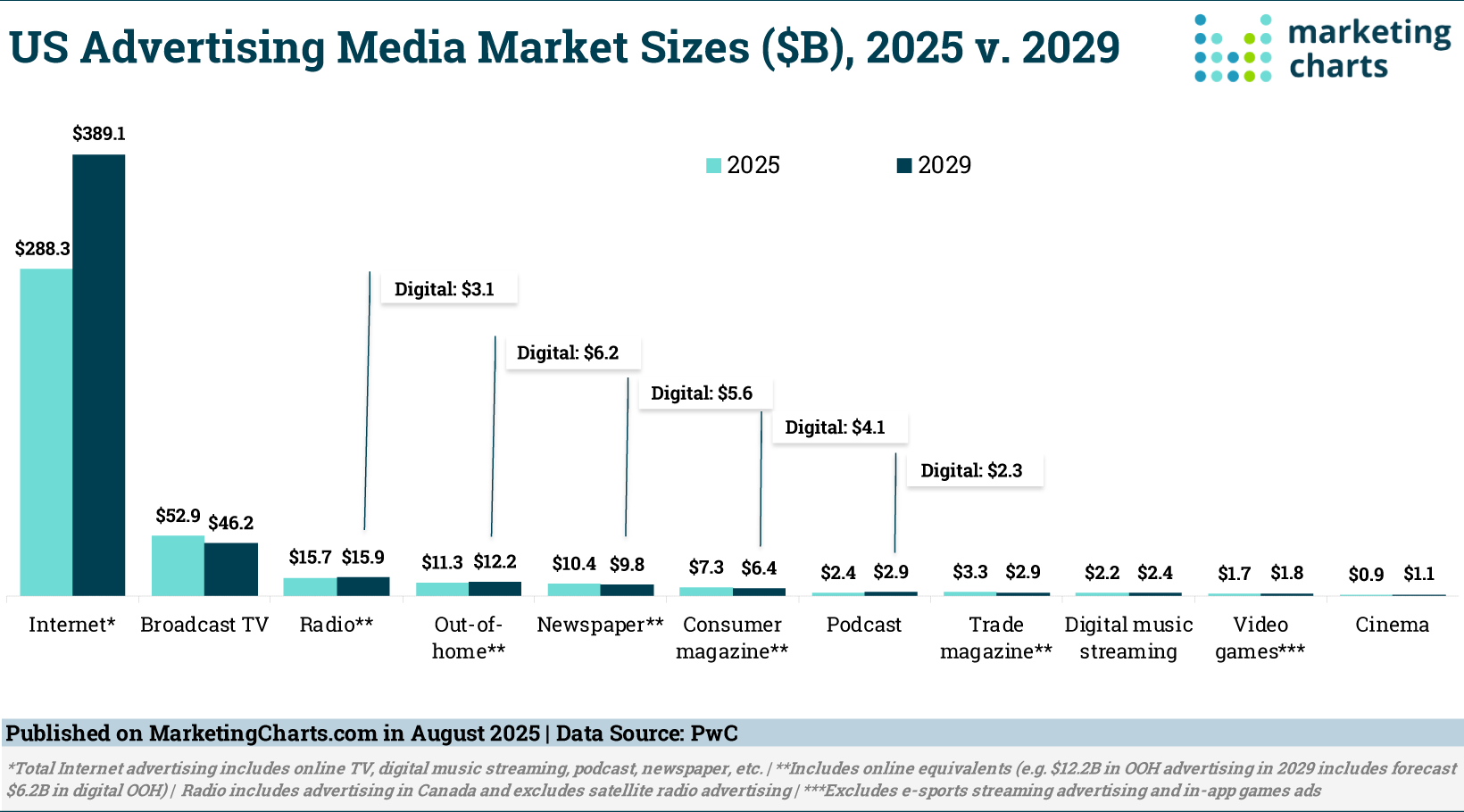
The magazine industry’s third “pivot to video”, following the disastrous Facebook-led pivots of 2016 and 2018, has mutated into a frantic chase for algorithmic relevance on TikTok, Instagram Reels, and YouTube Shorts. Unlike previous iterations driven by inflated metrics, the 2024-2025 pivot is defined by a verified mathematical emergency: the collapse of Revenue Per Mille (RPM). While legacy publishers have successfully migrated audiences to vertical video, they have failed to migrate the economics. Verified 2025 data reveals that prestigious media brands are trading premium print and website dollars for digital pennies, debasing their editorial voice to chase “tomato girl” aesthetics and “mob wife” trends for payouts that barely cover production costs.
The core problem is the “RPM Gap.” On a proprietary website, a premium magazine brand like Vogue or Cosmopolitan can command programmatic display CPMs (Cost Per Mille) between $10. 00 and $20. 00, with direct-sold video campaigns reaching $40. 00+. On TikTok, the economics invert. Data from the 2025 Creator Rewards Program indicates that even high-performing publishers earn an average RPM of just $0. 40 to $1. 00 for original content over one minute. For shorter viral clips, the payout to $0. 02, $0. 04 per 1, 000 views. This structural means a publisher requires approximately 25 to 50 times the viewership on social platforms to generate the same revenue as a single pageview on their owned and operated site.
| Platform / Format | Est. Publisher RPM (2025) | Views Needed to Earn $1, 000 | Revenue Efficiency vs. Print |
|---|---|---|---|
| Magazine Website (Direct Video) | $25. 00, $40. 00 | 25, 000, 40, 000 | High |
| Magazine Website (Programmatic) | $3. 50, $12. 00 | 83, 000, 285, 000 | Moderate |
| YouTube Long-Form | $3. 50, $7. 00 | 142, 000, 285, 000 | Moderate |
| TikTok (Creator Rewards) | $0. 40, $0. 80 | 1. 25 Million, 2. 5 Million | serious Failure |
| YouTube Shorts | $0. 01, $0. 06 | 16 Million, 100 Million | Near Zero |
This economic reality has forced a “Duolingo-ification” of legacy media, where storied publications abandon journalistic authority for unhinged brand personality. In 2024 and 2025, editorial teams at major conglomerates like Hearst and Dotdash Meredith were pressured to prioritize “lo-fi” authenticity over polished production. This resulted in a wave of “cringe” content where editors participate in fleeting trends, lip-syncing to viral audio or performing office skits, solely to trigger algorithmic distribution. The strategy is a defensive play against the Creator Economy, which is projected to surpass traditional media ad revenue in 2025, capturing over $33 billion in ad spend on TikTok alone.
The financial impact of this strategy is visible in the earnings of major publishers. Condé Nast reported flat revenue for 2023, with CEO Roger Lynch explicitly citing the shift to short-form video as a “volatile area” where audience consumption has outpaced monetization. While the company saw consumer revenue growth, the ad-supported video model is failing to replace the losses in print. The Washington Post attempted to this gap by leaning into personality-driven skits featuring staff members, a tactic that builds engagement offers no clear route to high-margin revenue. The industry is building massive audiences on “rented land” where the landlord, ByteDance or Meta, keeps the vast majority of the value.
also, the “Pivot to Video 3. 0” has introduced a new operational cost: the need for constant, high-volume output. Unlike a monthly print problem, the TikTok algorithm demands daily, if not hourly, feeding. Publishers are in a volume trap, producing thousands of short-form clips that generate high view counts negligible revenue. A 2025 analysis of YouTube Shorts monetization showed that even channels with millions of views frequently earn less than $500 a month from the format directly. For a magazine with unionized staff, overhead, and legacy costs, this model is mathematically unsustainable. The industry has traded dollars for pennies, hoping that volume eventually make up the difference. The 2025 ledger confirms it has not.
Affiliate Arbitrage: When Editorial Becomes a Shopping Catalog
The most significant structural shift in magazine publishing since 2015 is not the pivot to video, the pivot to transaction. As display advertising revenue evaporated, plummeting to the $4. 3 billion floor verified in the 2025 audit, publishers did not seek new advertisers. They became the advertisers. By 2025, the “commerce editor” had replaced the beat reporter as the most serious growth role in the American newsroom, tasked not with breaking news, with optimizing “Best Of” lists to capture affiliate commissions from Amazon, Walmart, and Skimlinks.
This model, known as affiliate arbitrage, relies on a simple conversion of editorial trust into gross merchandise value (GMV). The blueprint was established by The New York Times‘ acquisition of Wirecutter in 2016, by 2024, it had been industrialized by conglomerates like Dotdash Meredith and Hearst. In 2024 and 2025, Wirecutter alone drove over $1 billion in GMV annually, turning the “Paper of Record” into one of the world’s most influential high-end shopping catalogs. The financial logic is undeniable: while print ad rates stagnated, The New York Times reported a 9. 3% increase in “Other” revenues in Q3 2024, driven largely by affiliate referrals.
Dotdash Meredith, the publisher of People, Better Homes & Gardens, and InStyle, aggressively decoupled its business from the traditional ad impression. Instead of selling eyeballs to brands, they sold intent to retailers. In the second quarter of 2025, the company reported a 25% surge in affiliate commerce revenue, a figure that stands in clear contrast to the single-digit declines seen in their legacy print advertising sectors. Their strategy involves retrofitting vast archives of lifestyle content with commission-generating links, transforming passive articles into active point-of-sale terminals.
| Publisher / Entity | Metric | 2023 Performance | 2024/2025 Performance | Trend |
|---|---|---|---|---|
| Condé Nast | Commerce Revenue | +39% Growth | +80% (UK Div, Sept 2025) | Exponential Growth |
| Dotdash Meredith | Digital Revenue | -10% Decline | +12% (Q2 2024), +10% (Q1 2025) | Recovery via Commerce |
| BuzzFeed | Commerce Revenue | $21. 3 Million | $17. 0 Million (Q3 2025) | Volatility / Decline |
| US Industry Wide | Affiliate Spend | $9. 56 Billion | $11. 99 Billion (Est. 2025) | Sector Expansion |
The mechanics of this arbitrage are rooted in Search Engine Optimization (SEO). Publishers flood Google with articles targeting high-intent keywords like “best running shoes for flat feet” or “top rated air fryers.” When a reader clicks a link and purchases the item, the publisher earns a commission ranging from 1% to 10%. This incentive structure has fundamentally altered editorial priorities. Content is no longer commissioned based on reader interest or journalistic merit, on “commissionable volume”, the likelihood of a product category to generate clicks. Consequently, the internet is saturated with near-identical “Top 10” lists from Vogue, GQ, CNN Underscored, and New York Magazine‘s The Strategist, all vying for the same search traffic.
yet, the risks of this dependency became visible in late 2025. BuzzFeed, which pioneered the low-end version of this model with “lists of things you need from Amazon,” reported a 15% decline in commerce revenue in Q3 2025, dropping to $17 million. The decline highlighted the fragility of building a business on rented land; when Amazon alters its commission structure or Google adjusts its search algorithm to penalize “parasite SEO,” revenue streams can dry up overnight. Unlike a print subscription, which represents a direct relationship with a reader, affiliate revenue is a derivative bet on platform algorithms.
The ethical lines have also blurred. While Wirecutter maintains a strict separation between editorial testing and business deals, competitors do not. “Verified” badges and “Editor’s Choice” awards are frequently pay-to-play method in disguise, or simply participation trophies awarded to products with the highest commission rates. By the end of 2025, the distinction between a magazine and a mail-order catalog had largely, with the only difference being that the catalog admits it is trying to sell you something.
The Fact-Checking Void: Legal Risks in the Age of AI
The collapse of the American magazine industry’s revenue model has produced a secondary, perhaps more dangerous, structural deficit: the elimination of the fact-checking department. Between 2015 and 2025, as print ad revenues plummeted, publishers systematically dismantled their copy desks, viewing rigorous verification as a luxury rather than a legal need. This contraction reached a symbolic nadir in June 2023, when National Geographic laid off its last remaining staff writers, shifting its editorial production to a freelance model. This decision was not an anomaly a bellwether. Across the industry, the human firewall that once protected publications from libel and error has been extinguished, leaving a void that executives rapidly attempted to fill with generative artificial intelligence.
The results of this substitution were immediate and catastrophic. In November 2023, Sports Illustrated, once the gold standard of sports journalism, was exposed for publishing product reviews written by non-existent authors. An investigation revealed that bylines such as “Drew Ortiz” and “Sora Tanaka” were fabrications, accompanied by AI-generated headshots and biographies. The content itself, churned out by a third-party contractor, AdVon Commerce, contained bizarre phrasing and unverified claims. The scandal forced The Arena Group, the magazine’s operator, to fire its CEO, Ross Levinsohn, in December 2023. Yet, the damage was already codified: a legacy brand had traded its credibility for algorithmic, proving that without human oversight, the “efficiency” of AI is a fast track to reputational ruin.
The legal ramifications of this shift moved from theoretical risk to actual financial penalty in 2024. The most prominent case involved the German magazine Die Aktuelle, which published a cover story in April 2023 promising the ” interview” with Formula 1 legend Michael Schumacher since his debilitating 2013 skiing accident. The article, titled “My Life has Completely Changed,” was entirely fabricated by an AI program. The deception was absolute; the magazine only revealed the artificial nature of the quotes in fine print at the end of the piece. The Schumacher family sued, and in May 2024, the publisher Funke Mediengruppe agreed to a settlement of €200, 000 ($217, 000). This judgment established a serious legal precedent: publishers are strictly liable for AI hallucinations presented as journalistic fact.
| Date | Publication/Entity | The Incident | The Consequence |
|---|---|---|---|
| Aug 2023 | Gannett (USA Today Network) | Deployed “LedeAI” to write high school sports reports. Articles contained errors like “close encounter of the athletic kind” and empty placeholders. | Program paused immediately; reputational damage to local papers; widespread mockery. |
| Nov 2023 | Sports Illustrated (The Arena Group) | Published articles by fake AI authors (“Drew Ortiz”) with synthetic biographies. | CEO Ross Levinsohn fired; Union demanded end to “fake people” bylines; brand trust collapsed. |
| May 2024 | Die Aktuelle (Funke Media) | Published fake AI interview with Michael Schumacher. | €200, 000 settlement paid to Schumacher family; Editor-in-Chief Anne Hoffmann fired. |
| Jan 2025 | Meta -Party Checkers | Meta ended funding for fact-checking partnerships. | Layoffs at PolitiFact and Lead Stories; reduced capacity to verify viral AI misinformation. |
The Gannett experiment in August 2023 further illustrated the functional incompetence of automated reporting. The newspaper chain deployed a tool called LedeAI to generate high school sports recaps. The software produced thousands of reports containing robotic, nonsensical prose, including phrases like “The Worthington Christian [[WINNING_TEAM_MASCOT]] defeated the Westerville North [[LOSING_TEAM_MASCOT]].” While Gannett paused the experiment after a public outcry, the incident exposed the industry’s desperation. Executives were to publish unedited, machine-generated text to save on the cost of local reporters, ignoring the reality that an unverified article is a legal liability waiting to detonate.
Insurers have taken note of this reckless operational shift. By early 2025, media liability insurance providers began tightening their underwriting standards. Policies that once covered general errors and omissions (E&O) are frequently amended with specific exclusions for generative AI content. If a magazine publishes a defamatory hallucination generated by a Large Language Model (LLM), standard insurance may not cover the legal defense or the settlement. This leaves publishers exposed to the full weight of libel laws, which do not distinguish between a human error and a machine’s fabrication. The “actual malice” standard in U. S. libel law, established by New York Times v. Sullivan, faces a new test: does the reckless use of a known-to-hallucinate tool constitute a reckless disregard for the truth?
The void left by the departure of human fact-checkers is not a matter of nostalgia; it is a quantifiable business risk. As Tegna dissolved its “Verify” fact-checking unit in early 2026 and Meta withdrew support for external verification partners, the infrastructure for truth has eroded. Publishers are operating in a high-risk environment where the cost of a single AI error, as seen in the Schumacher case, can exceed the annual salary of the fact-checkers they fired to save money.
Workforce Evisceration: The 17, 000 Media Job Cuts of 2025
The finalized labor statistics for 2025 confirm what newsrooms across America feared: the industry has not shrunk; it has been structurally hollowed out. According to the 2025 year-end report from Challenger, Gray & Christmas, the media sector eliminated 17, 163 jobs between January 1 and December 31, 2025. This figure represents a 15% increase over the 15, 039 cuts recorded in 2024, signaling that the “bloodletting” of the early 2020s has accelerated rather than stabilized. While the specific sub-sector of “News” saw fewer raw cuts than in 2024, primarily because there were so few journalists left to fire, the broader media apparatus, including magazine publishing, streaming, and production, faced a renewed wave of “efficiency” terminations driven by artificial intelligence integration and consolidation.
The 2025 data reveals a grim trajectory. Following the elimination of over 21, 000 jobs in 2023 and 15, 000 in 2024, the 2025 total brings the three-year casualty count to over 53, 000 media workers. This is not a cyclical downturn; it is a permanent reduction in the human capital required to produce American journalism. The ratio of editorial staff to revenue has collapsed, with legacy publishers like Dotdash Meredith and Condé Nast executing strategic pivots that replaced human oversight with algorithmic distribution and “direct-to-consumer”.
The October 2025 “Red Wedding”
While the year began with steady attrition, the fourth quarter of 2025 witnessed a concentrated purge that industry analysts have termed “Red October.” In a span of 30 days, major legacy operators executed synchronized mass layoffs to clear their balance sheets before the fiscal year-end. Paramount Global initiated the sequence on October 29, terminating 1, 000 employees as part of its pre-sale restructuring. Two weeks prior, NBC News cut 150 roles, citing the need to “simplify” its linear and digital integration.
For the magazine industry, the blow was centered on Dotdash Meredith, the largest print and digital publisher in the United States. After cutting 143 jobs (4% of its workforce) in January 2025, the parent company of People and Better Homes & Gardens executed a second, more severe round of cuts in October, eliminating an additional 226 positions. CEO Neil Vogel justified the January reduction as a necessary step to “connect directly with our advertisers,” a euphemism that presaged the company’s aggressive shift toward AI-driven ad tech over traditional editorial processes.
| Date | Company | Jobs Cut | Stated Reason / Context |
|---|---|---|---|
| Jan 17, 2025 | Dotdash Meredith | 143 | “Rapidly changing media “; pivot to direct ad-tech investment. |
| Oct 15, 2025 | NBC News | 150 | Restructuring amid ratings declines and cable spinoffs. |
| Oct 29, 2025 | Paramount Global | 1, 000 | Cost-cutting measures ahead of Skydance Media merger. |
| Oct 2025 | Dotdash Meredith | 226 | Second round of 2025 cuts; total 2025 reduction of ~370 staff. |
| Nov 07, 2025 | Condé Nast (Teen Vogue) | ~10 | Teen Vogue folded into Vogue. com; union leadership fired after protest. |
The Condé Nast Union War
The tension between a shrinking workforce and corporate management reached a flashpoint at Condé Nast in November 2025. Following the decision to fold Teen Vogue into the digital infrastructure of Vogue. com, ending the publication’s autonomy, management laid off the brand’s Editor-in-Chief and the majority of its staff. The move sparked an immediate confrontation at the company’s One World Trade Center headquarters.
On November 7, 2025, the conflict escalated when Condé Nast terminated four union leaders who had confronted the Chief People Officer regarding the layoffs. The NewsGuild of New York filed federal labor complaints, alleging “extreme union busting,” the message from the C-suite was unambiguous: organized labor would not halt the structural of the magazine format. This event marked a psychological turning point for the industry; the “prestige” magazine jobs that once defined New York media were no longer protected by legacy or brand equity.
The “Skeletal Floor” of News
A serious anomaly in the 2025 data is the statistical drop in “News” specific layoffs, down to 2, 254 from 4, 902 in 2024. This decrease does not indicate health, rather exhaustion. After the 2024 evisceration of the Los Angeles Times (115 cuts), Time magazine (22 cuts), and the cessation of National Geographic‘s U. S. newsstand sales, there was simply less “fat” to cut. The 2025 layoffs moved up the value chain, targeting the production, sales, and technology roles that supported the remaining skeletal newsrooms. The 17, 163 total cuts reflect an industry shedding its infrastructure, preparing for a future where content generation is automated and human oversight is a luxury item.
Zombie Brands: SEO Farming on the Graves of Defunct Magazines
The most macabre development in the 2015, 2025 publishing collapse is not the death of magazines, their refusal to stay dead. A new class of private equity asset has emerged: the “zombie brand.” These are legacy publications that have ceased to function as journalistic entities continue to exist as hollowed-out digital shells, engineered to harvest search engine traffic for affiliate revenue. The business model is explicit: strip the editorial overhead, retain the high Domain Authority (DA), and lease subfolders to third-party operators selling coupons, gambling services, and dubious supplements.
By 2024, this practice, known in the industry as “parasite SEO” or “site reputation abuse”, had become the primary revenue engine for names that once defined American culture. Sports Illustrated, Newsweek, and Popular Science were no longer magazines in the traditional sense; they were high-ranking SEO landlords. The financial logic is ruthless. A legacy domain with a DA of 85+ can rank for high-value commercial keywords (“best sports betting app,” “online casino codes”) that a new site could never touch. Private equity firms acquired these distressed assets not for their archives or voice, for their algorithmic trust score.
The Anatomy of a Zombie: Spin Magazine
The transformation of Spin offers a definitive case study in zombification. Once a rival to Rolling Stone, Spin ceased print publication in 2012 and bounced between owners before being acquired by Management Partners in 2020. By 2025, the brand had been re-engineered into a diversified asset bundle. CEO Jimmy Hutcheson claimed the company had “17x’d” its revenue in five years, a figure achieved not through music journalism, by leveraging the brand’s IP across non-editorial verticals.
The “new” Spin operates less as a publication and more as a licensing agency. Its revenue streams include a record label (SPIN Records), a merchandise line with Urban Outfitters, and branded activations at festivals like Coachella. The editorial site itself serves largely as a top-of-funnel method to maintain the domain’s relevance for these commercial ventures. When a sale of the brand to Airtab collapsed in late 2025, it revealed the clear reality: the journalism is a loss leader; the brand equity is the product.
The Parasite Economy and the Google Crackdown
The most aggressive monetization tactic involved leasing “subfolders” to third-party affiliate marketers. A trusted news domain like Outlook India or a legacy brand like Sports Illustrated would rent out a URL route (e. g., domain. com/coupons or domain. com/betting) to an external company. The host publication provided zero editorial oversight, simply collecting a monthly rent or a revenue share, while the tenant pumped thousands of AI-generated articles into the folder to game Google’s rankings.
This arbitrage reached its peak in early 2024. Data from Semrush showed that “parasite” directories on major publisher sites were generating millions of monthly visits for keywords completely unrelated to the host’s core mission. yet, the floor dropped out in March 2024, when Google updated its spam policies to specifically target “Site Reputation Abuse.” The impact was immediate and violent.
| Publisher Domain | Parasite Section Type | Est. Monthly Traffic (Jan 2024) | Est. Monthly Traffic (Dec 2024) | Decline |
|---|---|---|---|---|
| Outlook India | Betting / Casino | 14. 2 Million | 2. 1 Million | -85. 2% |
| Sports Illustrated | Coupons / Reviews | 8. 4 Million | 1. 8 Million | -78. 5% |
| Newsweek | Coupons / Promo Codes | 5. 6 Million | 3. 9 Million | -30. 3% |
| LA Times | Coupons | 3. 1 Million | 0. 4 Million | -87. 1% |
The table above illustrates the volatility of the zombie model. When Google applied manual actions in November 2024, entire revenue streams evaporated overnight. Sports Illustrated, already reeling from a licensing dispute between The Arena Group and Authentic Brands Group, saw its “review” traffic decimated. The crackdown exposed the fragility of building a business on algorithmic gaps rather than audience loyalty.
The “Ship of Theseus” Problem
The existential emergency for these brands is the “Ship of Theseus” paradox: if you replace the writers, the editors, the mission, and the business model, is it still the same magazine? Popular Science, which went fully digital in 2021 and ceased its digital magazine format in 2023, shifted almost entirely to product reviews and affiliate commerce. While it retains the name that reported on the moon landing, its current function is indistinguishable from a generic wirecutter clone. The “trust” that Google’s algorithm rewards is a legacy artifact, a ghost of credibility earned by journalists who were fired years ago.
“We are not in the publishing business anymore. We are in the trust-monetization business. The logo is just a trust seal we stamp on affiliate links.” , Anonymous Executive at a Private Equity firm holding multiple media assets, 2025.
This decoupling of brand from product has created a bizarre marketplace where “dead” brands are more valuable than living ones. A defunct magazine has no payroll, no printing costs, and no pesky editorial ethics to navigate. It is a pure vessel for SEO authority. The only metric that matters is the spread between the cost of content production ( near-zero thanks to AI) and the revenue per thousand visits (RPM) from affiliate clicks.
Visualizing the Disconnect
The chart visualizes the between “Brand Search Volume” (people specifically looking for the magazine) and “Organic Traffic Value” (the estimated worth of the traffic the site gets from Google). For a healthy publication, these lines move together. For a zombie brand, they diverge: brand interest collapses while traffic value artificially spikes due to parasite SEO, before crashing when the algorithm catches up.
The 2025 is littered with these husks. They serve as a warning: when a publication’s primary customer becomes the search engine rather than the reader, the end is not a matter of if, when the algorithm changes.
The Coffee Table Survivor: Independent Print as Luxury Goods

While the broader magazine sector grapples with a $4. 3 billion advertising floor, a parallel economy has emerged where print is no longer a disposable commodity, a durable luxury good. This segment, defined by high production values and “bookazine” pricing, operates on a fundamental inversion of the traditional publishing model: reader revenue replaces advertiser subsidies. In 2025, while mass-market newsstand sales continued their statistical slide, the independent luxury print market demonstrated pricing power akin to fashion houses rather than media companies. Data from the fiscal year ending 2025 indicates that the “bookazine” category, publications priced above $12. 99 with shelf lives exceeding three months, saw revenue growth estimated at over 10%, driven by consumers treating these objects as interior design elements rather than ephemeral information sources.
The economics of this survival strategy rely on scarcity and tactile weight. Where a standard weekly magazine fights for pennies in programmatic ad exchanges, independent titles like Apartamento, Kinfolk, and Cabana command cover prices ranging from $20 to $50. These publications have exited the news pattern to enter the luxury goods market. 2025 audits reveal that successful independent titles generate upwards of 70% of their revenue directly from circulation, insulating them from the volatility of the digital ad market. The “bookazine” format itself has seen average retail prices in the UK and US jump from approximately $10 in 2019 to nearly $19 in 2025, a 90% increase that consumers have absorbed without significant churn.
| Specification | Mass Market Weekly | Luxury Independent |
|---|---|---|
| Average Cover Price | $5. 99, $9. 99 | $22. 00, $50. 00 |
| Interior Paper Weight | 35-60 GSM (Lightweight Coated) | 90-140 GSM (Uncoated/Matte) |
| Binding Style | Saddle-stitched (Stapled) | Perfect Bound (Spine) |
| Frequency | Weekly / Monthly | Biannual / Quarterly |
| Ad-to-Edit Ratio | 40: 60 | 15: 85 (or Ad-Free) |
The material specifications of these survivors tell the story of their resilience. Cereal magazine, a travel and style biannual, use 140gsm FSC-approved uncoated paper, a weight nearly triple that of a standard newsweekly. This physical heft is not an aesthetic choice a strategic barrier to entry against digital disruption; a screen cannot replicate the specific tactile friction of uncoated stock or the smell of offset ink. Cabana, perhaps the most extreme example of this trend, released its Fall/Winter 2025 problem with fabric covers produced by Morris & Co., retailing for approximately $50. These are not periodicals intended for recycling bins; they are softcover coffee table books that signal cultural capital in the homes of their owners.
Luxury advertisers have responded to this shift by concentrating their remaining print spend in these high-fidelity environments. Brands such as Chanel, Dior, and Loewe have maintained or increased their presence in niche independent titles throughout 2025, viewing them as brand-safe sanctuaries away from the algorithmic chaos of social media. The logic is precise: if a consumer pays $25 for a magazine, their engagement level is exponentially higher than a user scrolling past a sponsored post. Consequently, the “cost per thousand” (CPM) rates for ads in these luxury independents have held steady or increased, the deflationary trends seen in general interest publications. The independent print sector has thus stabilized by becoming smaller, more expensive, and physically heavier, a luxury product for a digital age.
The General Interest Collapse: Why Niche is the Only Survival Strategy
The era of the “mass market” magazine is over. For decades, the industry relied on a volume model where general interest publications, titles covering a broad swath of news, celebrity culture, and television, served millions of subscribers at low price points. That model has not just fractured. It has disintegrated. Data from the 2020, 2025 period confirms that the collapse of print revenue is almost entirely concentrated in the general interest sector, while specialized “niche” publications have established a defensible financial floor.
The mechanics of this failure are visible in the extinction of once-ubiquitous newsstand staples. In February 2022, Dotdash Meredith announced the cessation of print operations for Entertainment Weekly, InStyle, Health, and Parents. These were not obscure titles. Entertainment Weekly alone defined pop culture coverage for thirty years. Its closure marked the end of the “general entertainment” category in print, a sector rendered obsolete by the speed of social media and the fragmentation of streaming audiences. The internet does not just compete with general interest magazines. It replaces them entirely.
The decline of National Geographic serves as the most potent symbol of this structural shift. In June 2023, the publication laid off its remaining staff writers. By 2024, it had removed its problem from newsstands across the United States. A title that once commanded a circulation of 12 million at its peak had withered to under 1. 8 million by late 2023. The removal from newsstands was an admission that the casual, walk-up reader no longer exists. The generalist reader who bought a magazine for “a little bit of everything” has migrated permanently to the infinite scroll of the smartphone.
The Metrics of Generalist Decay
The audit numbers for surviving general interest giants reveal a sector in freefall. Time magazine, once the agenda-setter for the American century, saw its circulation plummet from 3 million in 2017 to approximately 1 million combined print and digital by late 2024. Reader’s Digest, another titan of the generalist era, recorded a 22% circulation drop in the second half of 2024 alone. These drops are not cyclical fluctuations. They represent the final unwinding of the subscriber-volume model.
Advertisers have responded with brutal efficiency. The programmatic ad market allows brands to target specific demographics online with granular precision, removing the need to buy expensive pages in magazines that reach “everyone.” Consequently, the ad revenue that supported the massive overhead of general interest newsrooms has evaporated. The only print products surviving this purge are those that do not attempt to reach everyone.
The Niche Lifeboat: Depth Over Breadth
While general interest collapses, the “passion economy” of publishing has proven resilient. Niche magazines, publications targeting specific, high-income hobbies or distinct aesthetic communities, have successfully decoupled their fortunes from the broader industry crash. These titles operate on a different business physics: high cover prices, high paper quality, and low frequency.
Garden & Gun, a publication dedicated to Southern lifestyle and sporting culture, exemplifies this survival strategy. In 2024, the magazine maintained a paid and verified circulation of roughly 400, 000, generating estimated annual revenues of $15 million. Unlike Time or People, Garden & Gun does not compete with breaking news. It sells a tactile experience and membership in a specific cultural tribe. Its readers do not buy the magazine for information they can find on Google. They buy it for the curation and the physical object itself.
The between these two models is clear. General interest magazines are shedding readers by the millions, while niche titles are stabilizing or growing by deepening their relationship with a smaller, more lucrative audience. The table illustrates this split using 2024, 2025 performance metrics.
| Category | Representative Title | 2024/2025 Trend | Strategic Outcome |
|---|---|---|---|
| General Interest | Time | Circulation down ~7% YoY | Reduced frequency, pivot to events/digital |
| Mass Entertainment | Entertainment Weekly | Print Ceased (2022) | Brand exists only as a website |
| General Science/Geo | National Geographic | Newsstand Sales Ended (2024) | Retreat to subscriber-only model |
| Niche Lifestyle | Garden & Gun | Revenue ~$15M (Stable) | High engagement, luxury ad base |
| Specialized Hobby | Motorcycle Magazines | Readership up 28. 2% | Audience growth in specific verticals |
| Global Affairs/Design | Monocle | Single Copy Price ~$17+ | Profitable on print- model |
The Premium Print Pivot
Major publishers have belatedly recognized that print is a luxury good. Hearst Magazines launched a “Premium Print” initiative in 2020, investing millions to upgrade paper quality and increase the trim size of titles like Harper’s Bazaar, Elle, and Road & Track. This strategy admits that the disposable magazine is dead. If a reader is going to hold a physical object in 2026, that object must justify its existence through superior production values.
Monocle, a global affairs and lifestyle magazine, has operated on this principle since its founding, its model is the industry standard for survival. With a circulation of around 80, 000, it generates revenue through high single-copy prices (frequently exceeding $17) and a refusal to give content away for free online. This “narrow and deep” method contrasts sharply with the “wide and shallow” strategy that doomed the mass market. The data is conclusive. The middle of the market is gone. The only future for print lies in the specific, the premium, and the niche.
The Influencer Bypass: Brands Going Direct-to-Creator
The financial floor of the magazine industry has not just been reached; it has been breached by a parallel economy that renders the traditional editorial middleman obsolete. In 2025, a historic crossover occurred in American advertising. While the total print advertising revenue for U. S. magazines collapsed to $4. 3 billion, the influencer marketing sector surged to $10. 52 billion. For the time, brands spent more than double on direct-to-creator partnerships than they did on the glossy pages that once defined prestige.
This is not a trend; it is a capital flight. The “Influencer Bypass” represents a structural decoupling of advertising dollars from legacy publishers. Major conglomerates, historically the anchor tenants of print media, have aggressively restructured their ledgers. Unilever, a bellwether for global ad spend, allocated nearly 50% of its global advertising expenditure to creator partnerships in 2025, signaling a permanent departure from the “spray and pray” model of magazine display advertising. The logic is mathematical, not sentimental: the unit economics of print no longer compete.
The Efficiency Gap: Why the Math Broke Print
The migration is driven by a clear in cost efficiency and attribution. In 2025, the average Cost Per Mille (CPM) for influencer marketing campaigns stabilized at approximately $4. 63 across major platforms, a figure that undercuts traditional digital display and makes the unclear, high-entry costs of print advertising indefensible. A single full-page ad in a top-tier fashion magazine, costing upwards of $50, 000, competes with a diversified portfolio of 200 micro-influencer posts that offer verified engagement, clickable attribution, and immediate sales conversion.
Data from 2025 reveals that 26% of brands allocate more than 40% of their total marketing budget to creator strategies. This shift is most lethal in the beauty and fashion sectors, which previously constituted the lifeblood of the magazine industry. Brands like Estée Lauder and L’Oréal have pivoted capital toward “whitelisting”, the practice of running paid ads through a creator’s handle rather than the brand’s own account or a publisher’s platform. This method bypasses the editorial authority of the magazine entirely, leveraging the parasocial trust of the creator directly.
| Metric | Legacy Print Ad (Full Page) | Creator Campaign (Tier 2) |
|---|---|---|
| Entry Cost | $20, 000, $80, 000+ | $202 (Avg. per collab) |
| Attribution | Estimated / Circulation | Direct Click / Sales Tracked |
| Time to Market | 3-6 Months (Lead time) | 24-72 Hours |
| Targeting | Broad Demographics | Niche / Algorithmic |
| Trust Metric | Institutional Authority | 60% Consumer Trust Rate |
The Trust Deficit and Parasocial Economics
The collapse of print revenue is also a collapse of trust. Consumer behavior studies in 2025 indicate that 60% of consumers trust a creator’s recommendation over a brand or editorial endorsement. This “trust deficit” has forced luxury brands, the last bastion of print spending, to capitulate. Where a Vogue endorsement once guaranteed sales, a viral TikTok shop integration moves inventory at ten times the velocity. The engagement rate for nano-influencers on platforms like TikTok hovers around 10. 3%, compared to the sub-1% engagement frequently seen on publisher-owned social channels.
This reality has birthed a new class of “Prestige.” It is no longer defined by the masthead, by the metric. Fashion houses are reallocating funds to secure long-term ambassadorships with creators who function as independent media entities. The magazine, once the gatekeeper of cool, has been disintermediated. Brands no longer need the magazine to reach the audience; they simply hire the audience leaders directly.
“We have reduced our advertising in the U. S. to half of 2024 levels… moving budget where we see ROIs of 4X. The days of paying for prestige without performance are over.” , 2025 Statement from a Beauty Brand Founder on Ad Spend Reallocation.
The 2025 Crossover Event
The is best visualized by the revenue crossover that occurred this fiscal year. While print revenue managed a managed decline to its $4. 3 billion floor, the influencer economy did not just grow; it accelerated, fueled by a 23. 7% increase in spending in 2024 and a further $1. 37 billion injection in 2025. This is not a cyclical downturn for magazines. It is a replacement event.
Source: Statista Market Insights, eMarketer 2025 Forecasts.
The for the remaining 125+ outlets in the Ekalavya Hansaj network are serious. The ad dollars that have left print are not “paused.” They have been structurally re-routed to a more, algorithmic, and personal form of media. The magazine is no longer the destination for discovery; it is, at best, a lagging indicator of culture that has already been consumed, clicked, and purchased on a vertical screen.
Sustainability Mandates: The Cost of Green Printing Regulations
The financial ledger for American magazine publishers in 2025 includes a rapidly expanding line item that was virtually non-existent a decade ago: mandatory sustainability compliance. While the environmental imperative to decarbonize the supply chain is clear, the economic reality for a contracting industry is a sharp increase in production overhead. Regulatory frameworks, particularly the European Union Deforestation Regulation (EUDR) and stricter domestic Volatile Organic Compound (VOC) limits, have monetized every step of the printing process, transforming “green” from a marketing bonus into a costly license to operate.
For the fiscal year 2025, the cost differential between standard production methods and compliant “green” printing has widened. Data from paper market indices indicates that Forest Stewardship Council (FSC) certified paper stocks command a premium of up to 20% over uncertified virgin fiber. This price gap is not a function of supply and demand reflects the administrative load of chain-of-custody verification required by new transparency laws. For a mid-sized publisher printing 500, 000 copies monthly, this premium alone can add upwards of $120, 000 to annual paper costs, a figure that directly the already thin margins of print advertising revenue.
The EUDR Compliance Shock
The most immediate regulatory shock has come from the EUDR, which fully impacts global supply chains as of December 30, 2025. Although a European regulation, its extraterritorial reach forces U. S. publishers with any international distribution, or those using global paper suppliers, to implement rigorous geolocation traceability. Every batch of paper must be traceable to the specific plot of land where the timber was harvested to prove it did not contribute to deforestation.
Industry analysis from 2025 suggests that while NGOs estimate compliance costs at a “negligible” 0. 1% of revenue, the operational reality for publishers is far costlier. The administrative infrastructure required to track, verify, and report this data has forced printers to invest in sophisticated software and audit teams, costs that are passed downstream to publishers in the form of “compliance surcharges.” These fees are no longer itemized as optional “eco-tariffs” are increasingly in the base price of printing contracts.
| Cost Component | Standard / Conventional | Sustainable / Compliant | Cost Premium |
|---|---|---|---|
| Paper Stock (Per Ton) | $980, $1, 050 (Virgin Uncertified) | $1, 175, $1, 260 (FSC Certified) | +18% to +20% |
| Ink Formulation (Per Lb) | $3. 50, $4. 00 (Petroleum-Based) | $4. 55, $5. 20 (Soy/Vegetable) | +30% (Initial) |
| VOC Compliance (Annual) | Standard Permitting | Thermal Oxidizer Operations | +$45, 000, $70, 000/yr |
| Audit & Traceability | $0 (None Required) | EUDR/Chain-of-Custody | +1. 5% of Contract Value |
The Ink and Chemical Premium
Beyond paper, the chemistry of printing has undergone a forced evolution. Petroleum-based inks, long the industry standard for their low cost and rapid drying times, are being phased out by VOC regulations and client mandates. The alternative, soy and vegetable-based inks, presents a complex financial trade-off. While these bio-inks offer better spread rates and are easier to de-ink during recycling, their upfront cost is significantly higher. In 2025, soy ink formulations trade at a 30% premium per pound compared to traditional solvent-based inks.
also, the operational costs of using these eco-friendly materials are higher. Vegetable inks frequently require longer drying times or additional energy-intensive UV curing processes to match the speed of petroleum inks. For high-speed web offset presses used in magazine production, this can necessitate slower run speeds, reducing throughput and increasing the “press time” cost per unit. Printers have responded by installing expensive thermal oxidizers and carbon adsorption systems to capture emissions, capital expenditures that are amortized into the hourly rates charged to publishers.
The “Green” Floor
The convergence of these factors has created a new “green floor” for print production costs. Sustainability is no longer a menu option; it is a structural cost. Major advertisers, driven by their own ESG (Environmental, Social, and Governance) commitments, mandate that their ads appear only in publications that meet strict sustainability criteria. This leaves publishers with no choice to absorb the premiums. A publisher cannot opt for cheaper, uncertified paper without risking the loss of blue-chip advertising contracts, locking the industry into a higher cost structure even as revenues decline.
The 2025 data is unequivocal: the era of cheap print production is over. The $4. 3 billion revenue floor is being squeezed from above by falling ad rates and from by the rising price of environmental compliance. For niche publications, the math simply no longer works, accelerating the migration to digital-only formats not because of reader preference, because the physical act of printing has become a luxury good.
Archive Monetization: Selling History to Train Large Language Models
By late 2024, the magazine industry’s strategy regarding artificial intelligence shifted abruptly from litigation to liquidation. For years, publishers viewed Large Language Models (LLMs) as existential threats, digital strip-mining operations that ingested copyrighted journalism without compensation. as print revenues crashed through the $4. 3 billion floor in 2025, the calculus changed. Executives realized their most valuable remaining asset was not their current audience, their past. The result was a frantic “gold rush” to license archival content to companies like OpenAI and Google, selling a century of human culture to train the machines that might replace it.
The pivot began in earnest in May 2024, when Dotdash Meredith, the publisher of People, Better Homes & Gardens, and InStyle, signed a licensing agreement with OpenAI. Unlike vague “strategic partnerships” of the past, this deal carried a specific price tag: verified financial documents revealed OpenAI agreed to pay at least $16 million annually for access to the publisher’s content. This figure established a market rate for high-quality, fact-checked lifestyle data, valuing the publisher’s corpus at a premium over the raw, unfiltered text scraped from the open web.
The valuation of these archives relies on the specific needs of Generative AI. LLMs require massive datasets to learn patterns, they suffer from “hallucinations” when trained on low-quality internet flotsam. Magazine archives, protected by copyright, edited by humans, and fact-checked for decades, represent “clean” data. In June 2024, Time Magazine capitalized on this distinction, signing a multi-year deal granting OpenAI access to 101 years of history. While the exact terms of the Time deal remain undisclosed, industry benchmarks suggest the value of such deep, text-heavy archives rivals that of major newspaper holdings.
| Publisher | Partner | Date Signed | Est. Deal Value / Terms | Key Assets Licensed |
|---|---|---|---|---|
| News Corp | OpenAI | May 2024 | $250 Million (5 Years) | WSJ, Barron’s, MarketWatch |
| Dotdash Meredith | OpenAI | May 2024 | $16 Million / Year | People, Better Homes & Gardens |
| Time Magazine | OpenAI | June 2024 | Undisclosed (Multi-year) | 101-Year Archive |
| Condé Nast | OpenAI | Aug 2024 | Undisclosed (Multi-year) | Vogue, New Yorker, Wired, Vanity Fair |
| Wiley | Various | Fiscal 2025 | $40 Million (Total Revenue) | Academic & Scientific Journals |
Condé Nast followed suit in August 2024, unlocking the vaults of The New Yorker, Vogue, and Vanity Fair. CEO Roger Lynch characterized the multi-year partnership as a necessary method to “make up for of that revenue” lost to technology companies over the prior decade. The deal allows ChatGPT and SearchGPT to display content from these brands, theoretically with attribution. Yet, the economic is clear. While News Corp secured a massive $250 million deal over five years, largely due to the real-time utility of The Wall Street Journal, magazine publishers are selling static libraries. The revenue is significant, Wiley reported $40 million in AI licensing revenue for Fiscal 2025 alone, it is a one-time injection of liquidity rather than a sustainable growth engine.
The rush to sign these deals created a schism in the media. While corporate leadership celebrated the influx of cash, editorial unions and independent publishers raised alarms about self-cannibalization. The Vox Media Union publicly criticized their parent company’s May 2024 deal with OpenAI, citing ethical concerns and the chance for AI to displace the very workers who created the licensed content. The fear is that by feeding their archives to LLMs, magazines are training their own replacements, creating a future where a chatbot can synthesize a “New Yorker-style” profile or a “Vogue-style” trend report without employing a single journalist.
also, this monetization strategy is available only to the largest heritage brands. Small, independent magazines and digital-native outlets absence the volume of data to attract eight-figure licensing checks. For them, the reality is grim: their content is likely being scraped without compensation, while the industry giants construct a paid “walled garden” for AI training data. By 2026, the divide was clear. The few remaining mega-publishers had successfully transformed their history into a financial lifeline, while the rest of the industry faced a digital ecosystem where their content was used to train the very systems designed to make them obsolete.
The Philanthropic Mirage: Can Non-Profits Save Long-Form Journalism?

As the commercial magazine sector billions, a seductive narrative has taken hold in media circles: that philanthropic benevolence step in to save long-form journalism. This “non-profit pivot” is frequently as the inevitable successor to the collapsing advertising model. yet, an analysis of 2024 and 2025 financial data reveals a clear arithmetic reality. While non-profit newsrooms have become essential lifeboats for investigative reporting, they absence the, capital, and revenue diversity to replace the industrial-sized engines of the legacy magazine business.
The between the capital lost and the capital gained is not a gap; it is a canyon. According to the Institute for Nonprofit News (INN) Index 2025, the total estimated revenue for the entire field of nearly 400 digital- non-profit newsrooms in North America reached between $650 million and $700 million in 2024. While this represents a 14% increase from the previous year, it remains a statistical rounding error compared to the losses incurred by the commercial sector. The entire non-profit journalism ecosystem generates less than 17% of the $4. 3 billion in print advertising revenue that legacy magazines managed to retain in 2025, a figure itself down 57% from 2017.
The Outlier and the Rule
Proponents of the non-profit model point to ProPublica as proof of concept. The investigative giant is indeed a financial. In its 2024 fiscal filings, ProPublica reported revenue of approximately $64. 3 million against expenses of $45. 7 million, boasting net assets exceeding $108 million. This war chest allows it to produce Pulitzer-winning work at a that rivals legacy newsrooms. Yet, ProPublica is not the model; it is the exception. It absorbs a disproportionate share of the available philanthropic capital, leaving the vast majority of the field to fight for scraps.
this summit, the terrain becomes treacherous. The median revenue for an INN member outlet in 2024 was just $532, 000. These are not replacements for Time or Vanity Fair; they are micro-operations, frequently staffed by fewer than five people, incapable of sustaining the legal, travel, and production budgets required for magazine journalism.
Case Study: The Collapse of a Watchdog
The fragility of the model was brutally exposed on March 31, 2025, when the Center for Public Integrity (CPI), one of the oldest and most decorated non-profit investigative newsrooms in America, ceased operations. even with a history of winning Pulitzers, CPI could not survive the shifting whims of institutional funders. In 2023, the organization fell $2. 5 million short of its $6 million budget goal. By early 2025, its cash reserves had evaporated, forcing it to transfer its archives to the Project on Government Oversight and shut its doors. CPI’s death proves that even prestige and impact are no guarantee of survival in a market dependent on the largesse of foundations.
Even the “gold standard” of local non-profit news, The Texas Tribune, has shown cracks in its armor. After years of heralded growth, the Tribune executed its -ever layoffs in August 2023, cutting 11 staff members as expenses outpaced revenue. By the end of 2025, CEO Sonal Shah announced her departure, capping a period of financial recalibration that dispelled the myth of the sector’s invincibility. Similarly, Mother Jones, a hybrid survivor, reported 2025 revenue of approximately $11. 75 million, a respectable figure, yet one that barely covers its $11. 67 million in expenses, leaving zero margin for error or expansion.
The Press Forward Math
The industry’s hopes have largely been pinned on “Press Forward,” a coalition of funders that pledged $500 million to local news over five years starting in late 2023. While the headline number is impressive, the annualized distribution of $100 million is insufficient to the bleeding. In its major open call in October 2024, Press Forward awarded $20 million to 205 outlets. This amounted to roughly $100, 000 per newsroom, a welcome infusion, hardly a structural replacement for the billions in lost commercial revenue.
| Entity / Sector | 2024/2025 Revenue (Est.) | Status |
|---|---|---|
| Legacy Print Ads (Floor) | $4, 300, 000, 000 | Declining massive |
| Total Non-Profit News Sector | $700, 000, 000 | Growing microscopic |
| ProPublica | $64, 300, 000 | The 1% of non-profits |
| Press Forward (Annualized) | $100, 000, 000 | Philanthropic injection |
| Center for Public Integrity | $0 (Defunct) | Collapsed March 2025 |
The that philanthropy is not a business model; it is a subsidy for market failure. With 49% of non-profit revenue coming from foundations and another 32% from individual donors, these outlets are trading advertiser pressure for donor fatigue. The “Generosity emergency”, a documented decline in the percentage of Americans donating to charity, poses a looming threat to the 80% of INN members who rely on this revenue mix. As the magazine industry stares down its $4. 3 billion floor, it must accept that the non-profit sector is a lifeboat for the fortunate few, not a new vessel for the.
The Grey Ceiling: The 55+ Stronghold
The structural collapse of print advertising revenue is not a function of digital migration; it is a emergency of biology. While industry trade groups frequently publish optimistic reports aggregating “magazine media” to claim near-universal reach among younger generations, the financial reality of the physical product tells a clear different story. Verified 2025 data from YouGov Profiles reveals a hard demographic floor: the only age cohort in the United States that reads print magazines more frequently than digital editions is the 55-plus demographic.
This “Grey Ceiling” represents a fatal disconnect for advertisers. For decades, the magazine business model relied on selling the 18-to-34 demographic to premium advertisers. Today, that demographic has defected from the paid print ecosystem. The YouGov that 56% of Americans aged 18, 24 do not read print magazines at all. In contrast, the 55+ cohort remains the industry’s last line of defense, with 34% maintaining a monthly print habit compared to just 28% for digital. The medium has become a lagging indicator of age, with the median print subscriber age for general interest newsweeklies pushing past 50, a statistic that renders the format radioactive to youth-obsessed media buyers.
The “Media” Reach Myth
A dangerous statistical sleight of hand has obscured this cliff for years. Industry reports, such as those from the Association of Magazine Media (MPA), frequently cite figures suggesting that 89% of Gen Z “engages” with magazine media. This metric is financially misleading. It conflates scrolling a free Instagram post or watching a TikTok video produced by Vogue with purchasing a $12 physical problem. The former generates pennies in programmatic ad revenue; the latter generates the high-margin direct revenue that sustains newsrooms.
The distinction is visible in the revenue per user (ARPU). A print subscriber, a Baby Boomer or member of the Silent Generation, generates an ARPU of $20 to $100 annually through renewals and high-CPM print ads. The “engaged” Gen Z consumer, interacting solely through social platforms, frequently generates an ARPU of less than $2. The industry has successfully retained the brand attention of the youth has failed catastrophically to monetize it.
| Age Cohort | Reads Print Monthly+ | Reads Digital Monthly+ | Does Not Read Print | Primary Format |
|---|---|---|---|---|
| 18, 24 (Gen Z) | 22% | 30% | 56% | Digital |
| 25, 34 (Millennials) | 19% | 26% | 50% | Digital |
| 35, 44 | 17% | 25% | 49% | Digital |
| 45, 54 | 18% | 17% | 50% | Split |
| 55+ (Boomers) | 34% | 28% | 47% |
The “Vinyl” Mirage
A counter-narrative frequently by publishers is the “resurgence” of print among Gen Z, frequently compared to the revival of vinyl records. While statistically true in isolation, Vogue Australia, for instance, reported a 57. 8% year-on-year rise in print consumption among Gen Z in 2023, this phenomenon is a niche aesthetic trend, not a mass-market recovery. For Gen Z, the print magazine is a luxury object or a prop, purchased sporadically rather than subscribed to habitually. This “coffee table” consumption model supports high-end, low-frequency independent quarterlies cannot sustain the high-frequency, high-circulation cost structures of legacy mass-market titles.
The attrition rate of the core subscriber base, the “habitual” readers aged 60 and older, outpaces the acquisition of these “aesthetic” younger readers. As the Boomer cohort ages out of the consumer market or passes away, they are not being replaced by a new generation of subscribers, by a generation of scrollers. The print revenue floor of $4. 3 billion is not a foundation for future growth; it is a remnant of a demographic that is slowly disappearing.
Global: Why European Print Retains Value Over US Markets
While the American magazine sector has crashed into a $4. 3 billion revenue basement, the European print market operates in a separate economic reality. 2024 and 2025 financial disclosures reveal a clear transatlantic: US print assets are depreciating rapidly, while European counterparts, particularly in the UK and Germany, demonstrate verified pricing power and revenue resilience. This is not a narrative of universal survival, of structural superiority in distribution, format, and consumer elasticity.
The most damning evidence of this split comes from Future plc, a transatlantic publisher operating identical brands in both markets. In its full-year 2024 results, the company reported a 6% organic revenue decline in its US operations. Simultaneously, its UK division posted 6% organic growth. This 12-point swing is not an anomaly; it isolates the variable of geography. The same editorial products, managed by the same parent company, grow in London while shrinking in New York. This data point the argument that “print is dead” globally; rather, the American model of print is failing while the European model adapts.
The primary driver of this resilience is the “bookazine” phenomenon, high-quality, single-topic print products that command premium prices. In the UK, the bookazine market generated over £17 million in revenue in 2024, with average cover prices surging to between £12. 99 and £14. 99, and premium editions reaching £36. 99. Unlike the US newsstand, which relies on volume and low-margin weekly turnover, the European newsagent network has successfully pivoted to these high-margin “collectible” formats. Distributors like Marketforce and Seymour have capitalized on this, pushing “Air Fryer” guides and “Taylor Swift” specials that function less like disposable periodicals and more like softcover books.
Pricing power further illustrates the disconnect. Between January 2024 and January 2025, UK national newspaper and magazine cover prices rose by an average of 10. 2%, nearly three times the national inflation rate of 3. 6%. European publishers have successfully passed aggressive cost increases to consumers without triggering the mass churn seen in the US. In contrast, US media price inflation is forecasted to rise by only 2. 3% in 2025, reflecting a market where publishers are terrified to raise prices on a fragile subscriber base. The European consumer views print as a luxury good worth paying for; the American consumer views it as a commodity that must be cheap.
Structural distribution differences cement this advantage. The UK’s independent newsagent network and supermarket dominance (Tesco alone distributes 1. 5 million copies of its magazine) maintain physical availability that has evaporated in the US. While US newsstand sales fell 12% in 2023, the UK maintains a “hedonic” print culture where 58% of readers still prefer physical formats, compared to just 47% in the US. This physical availability creates a “halo effect” for print advertising, sustaining ad yields in Germany and France that have collapsed in North America.
Transatlantic Print Metrics: The 2024-2025 Divide
| Metric | United States Market | United Kingdom / Europe Market |
|---|---|---|
| Organic Revenue Trend (Future plc) | -6% Decline (2024) | +6% Growth (2024) |
| Consumer Print Preference | 47% | 58% |
| Cover Price Inflation (YoY) | ~2. 3% (Forecast 2025) | +10. 2% (Jan ’24, Jan ’25) |
| Premium “Bookazine” Price Ceiling | ~$14. 99 (Avg. High) | £36. 99 (~$46. 00) |
| Newsstand Sales Trend | -12% (2023) | Stabilized via High-Value problem |
The data confirms that the US print emergency is partly self-inflicted, born of a “cheap subscription” addiction that devalued the product for decades. European publishers, having protected the cover price and invested in higher paper quality and “bookazine” formats, possess a defensive moat that American legacy brands absence. As the US market bottoms out at $4. 3 billion, the European market retains value not by chasing, by extracting maximum yield from a loyal, high-paying core.
Obituary for the Periodical: Defining the Post-Print Era
The structural collapse of the American magazine industry is no longer a forecast; it is a historical event that concluded between 2019 and 2025. While the $4. 3 billion revenue floor established in 2025 indicates a surviving remnant, the mass-market periodical, defined by cheap weekly circulation and high-volume newsstand sales, is extinct. The industry has not shrunk; it has bifurcated into two distinct, non-overlapping businesses: a high-volume digital programmatic ad model and a low-volume, high-cost luxury print product.
This transition is best understood not as a pivot as a mass extinction event for the “middle class” of publishing. The titles that defined 20th-century American culture did not just lose readers; they ceased to exist as physical objects. Between 2017 and 2025, the industry witnessed the systematic of the newsstand ecosystem, a distribution network that once supported over 7, 000 active titles. The following ledger records the end of regular print publication for brands that were once household staples.
The Ledger of the Fallen: Major Print Cessations (2017, 2025)
| Publication | Final Regular Print problem | Status |
|---|---|---|
| Teen Vogue | December 2017 | Digital-only; sporadic special problem. |
| Seventeen | November 2018 | Reduced to special stand-alone problem. |
| Redbook | January 2019 | Digital-only. |
| ESPN The Magazine | September 2019 | Digital-only; brand absorbed into ESPN ecosystem. |
| Playboy | Spring 2020 | Regular print ceased; annual special edition planned for 2025. |
| Paper Magazine | Spring 2020 | Print suspended; digital-only operations. |
| Popular Science | April 2021 | Digital-only; fully abandoned magazine format in 2023. |
| Entertainment Weekly | April 2022 | Digital-only. |
| InStyle | April 2022 | Digital-only. |
| EatingWell | April 2022 | Digital-only. |
| Health | April 2022 | Digital-only. |
| Parents | April 2022 | Digital-only. |
The finality of this shift was punctuated in June 2023, when National Geographic, a publication synonymous with the physical act of collecting magazines, announced it would cease newsstand sales entirely starting in 2024. This decision marked the symbolic end of the “impulse buy” era. The newsstand, once a primary engine of circulation audit numbers, has been relegated to a niche channel for high-priced specialty products.
The Rise of the “Bookazine”
In the vacuum left by cheap weeklies, a new print product has emerged as the sole viable format: the “bookazine.” These publications are hybrids, magazine content packaged on heavier paper stock, perfect-bound like a book, and sold at premium price points ranging from $12. 99 to $18. 99. Unlike traditional magazines, they carry little to no advertising and rely entirely on circulation revenue.
Data from 2024 and 2025 confirms this is the only growth sector in print. Future plc, a UK-based publisher with a significant US footprint, prints approximately 700 bookazine titles annually. These products target hyper-specific niches, from “Taylor Swift” retrospectives to coding guides for Python, and operate on a different economic logic. They are not periodicals designed for subscribers; they are collectible artifacts designed for superfans. The shift is absolute: the disposable magazine is dead, replaced by the semi-permanent collectible.
This structural change explains the revenue floor of $4. 3 billion. That figure does not represent a diminished version of the old industry; it represents the total addressable market for luxury print advertising and single-copy sales of premium products. The “magazine” as a cheap, mass-market vehicle for delivering advertisements to millions of mailboxes is a relic of the pre-2020 economy. The post-print era is defined by a clear binary: content is either free and infinite on a screen, or expensive and finite on a shelf.
**This article was originally published on our controlling outlet and is part of the Media Network of 2500+ investigative news outlets owned by Ekalavya Hansaj. It is shared here as part of our content syndication agreement.” The full list of all our brands can be checked here. You may be interested in reading further original investigations here.


Panaji Today
Part of the global news network of investigative outlets owned by global media baron Ekalavya Hansaj.
Panaji Today is Goa's #1 investigative news platform publishing fact-checked stories about Politics, Tourism, Sports, Business and Corruption.