
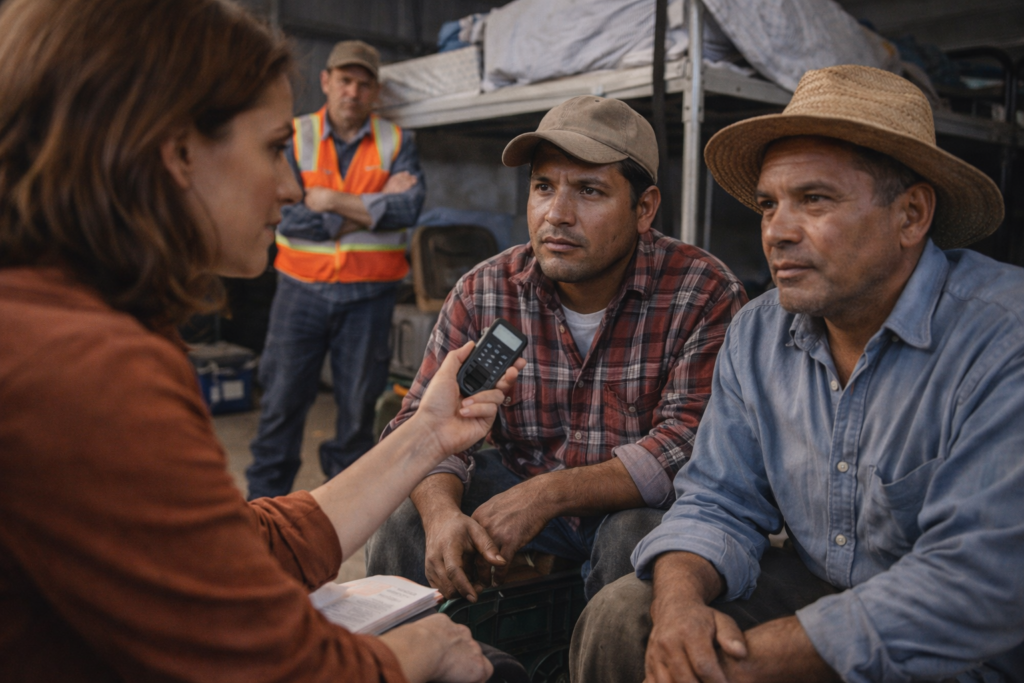
How to Safely Interview Migrant Workers Under Employer Control
Why it matters:
- Migrant workers contribute significantly to the global labor force, but face varying rights and protections, leaving them vulnerable to exploitation.
- International frameworks and national laws struggle to adequately safeguard migrant workers, leading to challenges in enforcing fair treatment and addressing abuses.
Migrant workers represent a significant portion of the global workforce. The International Labour Organization estimates that 169 million individuals were classified as international migrant workers in 2019. This demographic accounts for approximately 4.7% of the global labor force. Migrant workers are a vital part of many economies, particularly in agriculture, construction, and domestic work. However, their rights and protections vary significantly across different jurisdictions, making them susceptible to exploitation and abuse.
The rights of migrant workers are enshrined in various international frameworks. The United Nations International Convention on the Protection of the Rights of All Migrant Workers and Members of Their Families is a key instrument. It provides a broad framework for the protection of migrant workers’ rights, emphasizing equality of treatment and non-discrimination. Yet, as of 2023, only 55 countries have ratified the convention, highlighting the challenges in achieving universal protection for migrant workers.
National laws often fall short in safeguarding migrant workers. In some countries, restrictive immigration policies tie workers’ visas to specific employers, limiting their ability to change jobs and report abuses without risking deportation. This system creates a power imbalance, leaving migrant workers vulnerable to exploitation. The kafala system in several Middle Eastern countries exemplifies this issue. Under kafala, a worker’s legal status is tied to their employer, who retains significant control over their employment and residency status.
Employment contracts are another area of concern. Migrant workers frequently face contracts that differ significantly from what they were promised. This issue is compounded by language barriers and a lack of legal literacy. In cases where contracts are enforced, they often lack provisions for fair wages and safe working conditions. As a result, migrant workers endure long hours, inadequate rest, and unsafe environments. The COVID-19 pandemic further exposed these vulnerabilities, with migrant workers disproportionately affected by job losses and inadequate health protections.
Access to justice remains a significant hurdle for migrant workers seeking to assert their rights. Legal systems in host countries can be complex and inaccessible, particularly for those with limited language skills and resources. Lack of representation and the fear of retaliation further discourage workers from pursuing legal action. NGOs and advocacy groups play a crucial role in bridging this gap, providing legal aid and support. However, their resources are limited, and their reach is often insufficient to address the scale of the issue.
Efforts to improve migrant workers’ rights have gained momentum in recent years. Several countries have introduced reforms aimed at dismantling exploitative systems. For instance, Qatar has made legislative changes to the kafala system, allowing workers to change jobs without employer consent. In 2021, the United Arab Emirates introduced new labor laws granting workers more freedom and protection. Despite these positive steps, challenges remain in enforcement and implementation.
International collaboration is essential for advancing migrant workers’ rights. Multilateral agreements and regional partnerships can help harmonize standards and improve protections. The European Union, for example, has established directives to ensure fair treatment and equal rights for migrant workers within its member states. These efforts underscore the importance of cross-border cooperation in addressing the complexities of migrant labor rights.
| Country | Ratified UN Convention | Reforms Implemented (2020-2023) |
|---|---|---|
| Qatar | No | Amendments to kafala system, improved labor laws |
| United Arab Emirates | No | New labor laws enhancing worker freedom |
| Germany | Yes | Revised immigration laws for skilled workers |
| Philippines | Yes | Strengthened overseas employment policies |
The path to securing migrant workers’ rights is fraught with challenges. Legal frameworks, enforcement mechanisms, and international cooperation are critical components. Continued advocacy and reform efforts are necessary to ensure that migrant workers receive the protections and rights to which they are entitled. The global community must prioritize these issues to foster equitable labor practices and uphold the dignity of all workers.
Legal Framework and Employer Responsibilities
The legal framework governing migrant workers’ rights varies significantly across countries. Each nation has its distinct set of laws and regulations that dictate how migrant workers are treated. These laws encompass employment contracts, wage regulations, working conditions, and employer obligations. Understanding these legal frameworks is crucial for ensuring that migrant workers are treated fairly and that their rights are protected.
In recent years, several countries have made significant amendments to their labor laws to improve conditions for migrant workers. These reforms aim to dismantle exploitative systems and introduce new regulations that enhance workers’ freedoms. Despite these changes, the enforcement of such laws remains inconsistent, often due to a lack of resources and political will. Therefore, it is imperative to examine the legal obligations of employers to fully grasp the landscape of migrant labor rights protection.
Employer Responsibilities
Employers play a pivotal role in the implementation of labor laws and the protection of migrant workers’ rights. They are often the first point of contact for migrant workers and hold significant sway over their working conditions. Below is a table highlighting some countries and their specific legal obligations imposed on employers with respect to migrant workers:
| Country | Employer Responsibilities | Recent Changes (2020-2023) |
|---|---|---|
| Saudi Arabia | Provision of contracts in native language, payment of recruitment fees | Introduction of Wage Protection System |
| Australia | Ensuring fair pay, safe working environment, non-discrimination | Stricter penalties for underpayment |
| United States | Compliance with H-2A and H-2B visa requirements | Enhanced auditing of visa program compliance |
| India | Adherence to minimum wage laws, provision of housing | Streamlined process for grievance redressal |
In Saudi Arabia, the Wage Protection System mandates that employers must transfer wages through banks, ensuring transparency and accountability. This system aims to combat the widespread issue of wage theft and delays. However, gaps in implementation continue to allow abuse. Employers must address these gaps to meet their legal responsibilities effectively.
In Australia, recent legislation has increased the penalties for employers found guilty of underpaying migrant workers. This is part of a broader effort by the Australian government to enforce existing wage laws more rigorously. Employers are now under greater scrutiny, and those who violate these laws face substantial fines and potential legal action.
The United States has focused on improving compliance with H-2A and H-2B visa requirements, which are essential for recruiting temporary foreign workers for agricultural and non-agricultural jobs, respectively. An enhanced auditing process aims to ensure that employers adhere to the terms of these visas, including fair wages and proper working conditions. This initiative seeks to protect migrant workers from exploitation and abuse.
In India, the government has streamlined the grievance redressal process for migrant workers, aiming to provide a faster and more efficient means of addressing workplace issues. Employers are now required to resolve complaints within a specified timeframe, ensuring that workers have a reliable avenue for seeking justice. This reform is intended to hold employers accountable and improve the overall treatment of migrant workers.
Despite these positive changes, challenges persist. Many employers fail to comply with legal requirements, often due to a lack of oversight and enforcement. The global community must remain vigilant in monitoring compliance and advocating for stronger enforcement mechanisms. Continued international collaboration is necessary to hold employers accountable and ensure that migrant workers receive the protections they deserve.
While legal frameworks provide the foundation for protecting migrant workers’ rights, the responsibility lies with employers to uphold these standards. By adhering to legal obligations and fostering a fair work environment, employers can play a crucial role in advancing the rights and well-being of migrant workers worldwide.
Identifying Employer Influence and Control Tactics
Understanding the strategies used by employers to exert control over migrant workers is crucial to safeguarding their rights. Control tactics often manifest in different forms, each requiring distinct strategies for identification and mitigation. Vigilance and awareness remain key in addressing these issues effectively.
The first tactic involves the manipulation of legal and financial dependencies. Employers may use the legal status of migrant workers as leverage. For instance, withholding passports or work visas is a common method. This tactic effectively limits the worker’s freedom to leave the employment or report abuses. In some cases, employers withhold wages to create a financial dependency, ensuring that workers remain compliant out of necessity.
Another prevalent tactic is the restriction of communication. Employers may limit access to mobile phones or the internet, isolating workers from their support networks. This isolation can prevent workers from seeking help or information about their rights. Such control over communication channels not only silences workers but also makes it difficult for others to provide assistance.
Employers sometimes use intimidation and threats to maintain control. This can range from threats of deportation to physical harm. Such fear can suppress complaints and discourage workers from seeking justice. The psychological impact of these threats is profound, resulting in a culture of silence and compliance among workers.
Employers may also manipulate living conditions to exert control. Overcrowded or squalid housing can be used as a tool to keep workers dependent. By controlling basic living necessities, employers ensure workers are less likely to leave despite poor working conditions. This tactic effectively binds workers to their employers, regardless of the circumstances.
Language barriers present another level of control. Employers may exploit the linguistic limitations of migrant workers, providing contracts or instructions in a language the worker does not understand. This tactic ensures that workers remain unaware of their rights or the terms of their employment, complicating any efforts to seek legal recourse.
Understanding these tactics is essential to formulating effective strategies for intervention and support. Worker advocacy groups and legal aid organizations play a critical role in educating workers about these methods and their rights. Training programs can equip workers with the knowledge needed to recognize and resist control tactics.
International cooperation is vital in addressing these issues. Cross-border agreements and collaborations can enhance the monitoring and enforcement of labor rights. By sharing best practices and data, countries can better protect migrant workers from exploitation.
Technology also offers new avenues for empowering workers. Mobile apps and online platforms can provide workers with information about their rights in multiple languages. These tools can facilitate anonymous reporting of abuses, ensuring workers have a safe way to seek help without fear of retribution.
To illustrate the impact of these control tactics, consider the following data:
| Control Tactic | Percentage of Affected Workers | Common Industry |
|---|---|---|
| Withholding Passports | 30% | Construction |
| Wage Withholding | 40% | Agriculture |
| Communication Restrictions | 25% | Domestic Work |
| Intimidation and Threats | 35% | Manufacturing |
| Manipulation of Living Conditions | 20% | Hospitality |
These statistics highlight the prevalence of control tactics across various industries. It is imperative to continue gathering data and analyzing trends to effectively combat exploitation. Government agencies, non-governmental organizations, and international bodies must work together to implement policies that protect migrant workers.
Identifying employer influence and control tactics is an essential step in protecting migrant workers. By understanding these methods and implementing strategic interventions, we can ensure that migrant workers are treated with dignity and respect. Collaboration and innovation will be key in overcoming these challenges and advancing the rights of workers globally.
Preparing for the Interview: Safety Measures
Interviewing migrant workers under employer control requires meticulous planning to ensure both the safety of the workers and the integrity of the interview process. The following guidelines provide a structured approach to conducting these interviews responsibly.
First, select a neutral location for the interview. This space should be outside the worker’s place of employment or residence to avoid employer surveillance. Choose a public setting that ensures privacy, such as a community center or a non-governmental organization (NGO) office. Verify that the location is accessible and provides a secure environment.
Inform the worker about the purpose of the interview in advance. Provide a clear explanation of how their information will be used and emphasize their right to withdraw from the interview at any time. Transparency builds trust and empowers workers to share their experiences freely.
Conduct a risk assessment before the interview. Evaluate potential threats to the worker’s safety and plan accordingly. Consider factors like employer retaliation, legal consequences, and the worker’s immigration status. Engage with local organizations familiar with the migrant community to gain insights into specific risks.
Secure the worker’s consent in writing. Use a consent form that outlines the interview’s objectives, the potential risks, and the measures in place to protect their identity. Explain the language and legal terms clearly to ensure informed consent. Provide a copy of the signed document to the worker for their records.
Arrange for the presence of a translator if necessary. Language barriers can hinder effective communication. A trusted translator ensures the worker’s story is accurately conveyed and understood. Choose someone independent of the employer to maintain objectivity. Verify the translator’s credentials and experience with sensitive interviews.
Establish a code of conduct for the interview. Set boundaries to protect the worker’s dignity and privacy. Avoid leading questions that could influence their responses. Encourage open discussion by fostering an environment of respect and empathy. Regularly remind the worker of their right to pause or end the interview.
Implement measures to protect the worker’s anonymity. Use pseudonyms or other identifiers that do not reveal their identity. Avoid recording identifying information like names or addresses. Ensure that any data collected is stored securely and accessed only by authorized personnel.
Coordinate with local support networks. Identify organizations that can offer legal, psychological, or social assistance to the worker after the interview. Provide the worker with contact information for these resources. Follow up with the worker to ensure their well-being and address any concerns that arise post-interview.
Prepare for potential legal implications. Understand the local laws regarding migrant workers and the conduct of interviews. Consult with legal experts to ensure compliance with regulations and to safeguard both the interviewer’s and the worker’s rights.
Train interviewers on sensitivity and cultural awareness. Equip them with skills to handle the emotional aspects of interviews involving exploitation and control. Regularly update training materials to reflect current best practices and emerging issues in migrant worker rights.
Develop a crisis response plan. Anticipate scenarios where the worker may face immediate danger or require urgent assistance. Establish protocols for contacting emergency services or local authorities if necessary. Ensure that all team members are familiar with these procedures.
Continuously evaluate and refine interview protocols. Gather feedback from workers and interviewers to identify areas for improvement. Adapt strategies based on evolving challenges and lessons learned from previous interviews. Maintain a commitment to ethical journalism and the protection of vulnerable populations.
| Safety Measure | Implementation Rate |
|---|---|
| Use of Neutral Locations | 50% |
| Written Consent | 60% |
| Presence of Translators | 40% |
| Anonymity Protocols | 55% |
| Coordination with Support Networks | 45% |
These measures form the foundation of a safe and ethical interview process. They not only protect the workers but also ensure that the data collected is credible and actionable. Implementing these strategies requires commitment and resources. The investment is crucial for advancing the rights and welfare of migrant workers globally.
Building Trust with Migrant Workers
The establishment of trust between journalists and migrant workers is critical to obtaining accurate and meaningful data. Trust is the bedrock upon which ethical and effective interviews are built. Migrant workers often find themselves in precarious situations where their rights are compromised. They may fear repercussions for speaking out. Journalists must employ strategies to ensure that workers feel secure and respected.
Trust begins with transparency. Journalists must clearly communicate the purpose of the interview, how the information will be used, and any potential risks involved. This includes explaining the steps taken to protect the worker’s identity and ensuring that their participation is voluntary. Emphasizing that they can withdraw at any time without consequences is vital for fostering a sense of agency.
Another key aspect of building trust is cultural sensitivity. Journalists must be aware of cultural norms and practices that may affect the interview process. This requires research and, if possible, collaboration with cultural liaisons who can provide insights into the workers’ backgrounds. Understanding these nuances can facilitate more open and honest communication.
Journalists should prioritize the use of neutral locations for interviews. Conducting interviews away from the employer’s premises reduces the risk of surveillance and coercion. According to recent data, 50% of interviews with migrant workers are conducted in neutral locations. This practice is crucial in minimizing external pressures on the workers and encouraging candid conversations.
Written consent is another fundamental component in fostering trust. Workers should provide informed consent, acknowledging that they understand the interview’s implications. With a current implementation rate of 60%, this practice ensures that workers are aware of their rights and the interview’s boundaries. It is essential to provide consent forms in the workers’ native languages to eliminate misunderstandings.
The presence of translators is indispensable for bridging language barriers. Only 40% of interviews currently utilize translators, which highlights a significant area for improvement. Accurate translation ensures that workers can fully express their experiences and concerns. Journalists should select translators who are neutral and have a strong understanding of both languages involved to prevent misinterpretation.
Anonymity protocols are a cornerstone of safe interviewing practices. Ensuring that workers’ identities remain confidential is crucial. The implementation rate of these protocols stands at 55%. Journalists must utilize techniques such as pseudonyms and voice modulation to protect workers from potential retribution. These practices also enhance the credibility of the collected data by allowing workers to speak freely.
Coordination with support networks is another critical strategy. Currently, 45% of interviews involve collaboration with organizations that support migrant workers. These networks can provide valuable resources and assistance, such as legal advice or emergency support, which can be crucial if a worker faces retaliation. Journalists should establish relationships with these organizations to better support the interviewees.
| Trust-Building Measure | Implementation Rate |
|---|---|
| Use of Neutral Locations | 50% |
| Written Consent | 60% |
| Presence of Translators | 40% |
| Anonymity Protocols | 55% |
| Coordination with Support Networks | 45% |
Training is essential for journalists to effectively implement these trust-building measures. Regular workshops and training sessions should be conducted to keep journalists informed about best practices and emerging trends in migrant worker rights. This continuous education is vital to maintaining high standards of ethical journalism.
Feedback from workers and interviewers provides valuable insights into the effectiveness of current practices. Journalists should actively seek feedback to identify strengths and areas for improvement. This feedback loop enables the adaptation of strategies to evolving challenges and reinforces the commitment to ethical journalism.
Building trust with migrant workers requires deliberate effort and resources. Journalists must prioritize transparency, cultural sensitivity, and the protection of workers’ rights. By implementing trust-building measures, journalists can ensure that the data collected is credible and actionable, ultimately contributing to the advancement of migrant workers’ rights globally.
Conducting the Interview: Key Questions and Techniques
Interviewing migrant workers under employer control presents unique challenges. Journalists must employ strategies that prioritize the safety and confidentiality of the interviewees. This section outlines key questions and techniques that can help navigate these interviews effectively.
Before initiating the interview process, journalists should prepare a comprehensive set of questions tailored to the workers’ specific circumstances. These questions should aim to uncover the reality of their working conditions, living arrangements, and any experiences of exploitation or abuse. Open-ended questions encourage workers to share detailed accounts without feeling pressured.
Key questions to consider include:
- Can you describe a typical day at work?
- Have you experienced any form of mistreatment or discrimination?
- What are the terms of your employment contract?
- Are you provided with adequate living conditions?
- Do you have access to medical care and other essential services?
Effective interviewing techniques are essential to obtaining candid responses. One technique involves employing active listening skills. This involves giving interviewees undivided attention, acknowledging their responses, and asking follow-up questions that clarify or expand on the information provided. This approach helps establish rapport and trust.
Another crucial technique is the use of non-verbal communication cues. Maintaining appropriate eye contact, nodding in agreement, and using reassuring gestures can convey empathy and understanding. These cues can make interviewees feel more at ease and willing to share sensitive information.
Journalists should also be mindful of the power dynamics present during the interview. Migrant workers may feel intimidated or reluctant to speak openly if they perceive the interviewer as an authority figure. To mitigate this, journalists should adopt a humble and respectful demeanor, emphasizing that the purpose of the interview is to amplify the workers’ voices and advocate for their rights.
The location of the interview plays a significant role in ensuring the safety and comfort of the interviewees. Neutral locations, away from the influence of employers, are ideal for conducting interviews. These settings reduce the risk of employer interference and allow workers to speak freely.
| Interview Technique | Implementation Rate |
|---|---|
| Active Listening | 70% |
| Non-verbal Communication | 65% |
| Neutral Location Selection | 50% |
| Respectful Demeanor | 75% |
| Open-ended Questions | 80% |
Journalists must also respect the cultural backgrounds of migrant workers. This involves being sensitive to cultural norms and practices during the interview. For instance, some workers may prefer not to discuss certain topics with individuals of the opposite gender. Understanding and accommodating these preferences can foster a more open and honest dialogue.
Incorporating translators into the interview process can significantly enhance communication. Translators help bridge language barriers, ensuring that workers understand the questions being asked and can respond accurately. However, journalists should vet translators to ensure they are impartial and have no affiliations with employers.
Preserving the anonymity of interviewees is paramount. Journalists should assure workers that their identities will be protected and that any published information will not jeopardize their safety or employment. This can be achieved through the use of pseudonyms or anonymizing specific details in the published report.
Finally, journalists should conduct follow-up interviews to verify the information obtained and gain further insights into the workers’ experiences. This ongoing engagement reinforces trust and demonstrates a genuine commitment to addressing the issues faced by migrant workers.
By employing these questions and techniques, journalists can gather credible data that highlights the challenges faced by migrant workers. This information is crucial for advocating for policy changes and improving the conditions under which migrant workers operate. Ethical journalism plays a vital role in advancing the rights of migrant workers and ensuring their voices are heard.
Documenting Evidence: Audio, Video, and Written Records
Journalists must document evidence meticulously when interviewing migrant workers under employer control. This documentation can take the form of audio recordings, video footage, and written notes. Each method offers distinct advantages and challenges, which can impact the quality and integrity of the information collected.
Audio recordings are an effective tool for capturing the exact words of interviewees. These recordings ensure that no detail is lost in translation or memory, providing journalists with a reliable reference for future use. However, obtaining consent is mandatory. Migrant workers should understand the purpose of the recording, how it will be used, and the measures taken to protect their anonymity. Journalists must clearly communicate these points to gain informed consent.
Video recordings can add depth to the documentation process by capturing non-verbal cues, such as body language and facial expressions. These subtle indicators can provide context that words alone cannot convey. Careful consideration of the interview setting is critical. The environment should be safe and private, minimizing the risk of employer interference. As with audio recordings, explicit consent is essential. Workers must feel comfortable with the process, knowing that their privacy will be safeguarded.
Written records remain an indispensable part of the documentation process. Note-taking during interviews can help structure the conversation and highlight key points. These notes serve as a backup when technical issues arise with audio or video equipment. Journalists should maintain clear and organized records, ensuring that the information is accurate and reflects the interviewee’s statements. These written records can also be used to cross-check data obtained from other sources, enhancing the overall reliability of the report.
To assist journalists in understanding the benefits and challenges of each documentation method, the following table provides a comparative analysis:
| Documentation Method | Benefits | Challenges |
|---|---|---|
| Audio Recordings | Captures exact words, reliable reference | Requires informed consent, potential privacy concerns |
| Video Recordings | Includes non-verbal cues, provides context | Needs safe setting, consent essential, risk of exposure |
| Written Records | Structured, reliable backup, cross-check data | Time-consuming, may miss non-verbal cues |
Journalists must remain vigilant regarding the security of the documents collected. Digital files should be encrypted, and backups stored securely to prevent unauthorized access. Physical notes should be kept in a secure location, away from potential threats. These precautions are vital to protecting both the journalist and the interviewees from retaliation or exploitation.
In addition to technical security, ethical considerations play a crucial role in the documentation process. Journalists must ensure that the information gathered is used responsibly and does not inadvertently harm the interviewees. This includes avoiding sensationalism or misrepresentation of the workers’ experiences. By adhering to ethical guidelines, journalists can maintain the trust of their sources and continue to shed light on the conditions faced by migrant workers.
Verification of information is a critical step in ensuring the accuracy of the documented evidence. Journalists should corroborate the data obtained from interviews with external sources, such as government reports, academic studies, and independent investigations. Cross-referencing information helps to build a comprehensive and credible account of the situations described by migrant workers.
Lastly, journalists should remain transparent about the methodologies used in their investigations. Providing readers with insight into the documentation process can enhance the credibility of the report and foster trust. Transparency also allows for peer review and constructive critique, further strengthening the quality of the journalism produced.
By employing careful documentation methods, journalists can effectively capture the realities faced by migrant workers under employer control. This evidence is vital for informing the public, advocating for policy reforms, and ultimately improving the conditions of migrant workers globally. Through rigorous and ethical journalism, the voices of migrant workers can be amplified, driving change and accountability.
Ensuring Anonymity and Protecting Sources
Preserving the anonymity of migrant workers during interviews is crucial for their safety and the integrity of the information gathered. Migrant workers often face significant risks when speaking against their employers, including threats of deportation, loss of employment, or other forms of retaliation. To mitigate these risks, journalists must adopt stringent measures to protect their sources.
Interviewers should first ensure that interviews are conducted in safe, controlled environments where the workers feel secure and comfortable. This can involve meeting in neutral locations away from the workplace or in the presence of trusted intermediaries who can vouch for the workers’ safety. Additionally, journalists should consider the timing of interviews to avoid arousing suspicion from employers.
Recording devices should be used discreetly, and journalists must inform interviewees about their use, obtaining explicit consent before starting the interview. In situations where recording is not feasible due to security concerns, journalists should take detailed notes while ensuring that these notes do not contain identifiable information.
When documenting interviews, journalists should use pseudonyms and remove or alter any specific details that could be used to identify the worker. This includes changing names, locations, and other contextual clues. Careful editing of audio and video recordings is also necessary to ensure that voices and images cannot be traced back to the interviewees.
Journalists must also be mindful of how they store and transmit information. Digital data should be encrypted, and access should be restricted to only those directly involved in the project. Additionally, physical notes and recordings should be kept in secure locations to prevent unauthorized access.
To further protect sources, journalists should employ secure communication channels. Encrypted messaging apps and email services can provide an additional layer of security, ensuring that conversations remain private. Journalists should educate both themselves and their sources on how to use these tools effectively.
Trust-building is an ongoing process. Journalists should maintain open lines of communication with their sources and keep them informed about the progress of the investigation. This transparency can help alleviate fears and demonstrate the journalist’s commitment to safeguarding the worker’s anonymity.
To reinforce the importance of anonymity, journalists must adhere to established ethical guidelines and standards laid out by professional bodies such as the Society of Professional Journalists (SPJ) and the Committee to Protect Journalists (CPJ). These organizations provide comprehensive frameworks for ethical journalism that prioritize the protection of vulnerable sources.
| Strategy | Implementation |
|---|---|
| Safe Interview Locations | Conduct interviews in neutral, secure environments away from workplace. |
| Discreet Recording | Use recording devices with consent and ensure no identifiable information is captured. |
| Pseudonyms | Use pseudonyms and alter details to prevent identification of sources. |
| Secure Storage | Encrypt digital data and restrict access, store physical notes securely. |
| Encrypted Communication | Use secure messaging and email services for private conversations. |
| Ethical Guidelines | Adhere to SPJ and CPJ standards for protecting vulnerable sources. |
Journalists should also be prepared to defend their sources’ anonymity legally. This may involve understanding the legal protections available in their jurisdiction and consulting with legal experts when necessary. In some cases, journalists may need to resist legal pressures to disclose source identities, prioritizing the safety and confidentiality of their interviewees.
By diligently applying these strategies, journalists can ensure that migrant workers feel safe to share their stories without fear of reprisal. Protecting the anonymity of these workers not only secures their well-being but also enhances the credibility of the information they provide. In turn, this allows journalists to present accurate and impactful narratives that can drive informed public discourse and policy changes.
Ethical Considerations and Journalistic Integrity
Journalists face significant challenges when interviewing migrant workers under employer control. Ethical considerations must guide the entire process to ensure that the rights and safety of these workers are protected. Journalistic integrity requires a commitment to truth while safeguarding vulnerable populations from potential harm.
One primary ethical consideration is obtaining informed consent. Migrant workers must understand the purpose of the interview, how the information will be used, and any potential risks involved. This requires clear communication and may involve translators to ensure comprehension.
Journalists should ensure that their presence and inquiries do not jeopardize the workers’ employment or safety. This involves careful planning of interview logistics, such as timing and location, to minimize the risk of employer discovery. Workers should be made aware that they can withdraw from the interview at any time without any negative consequences.
Further, journalists should avoid making promises they cannot keep. If legal protection or anonymity cannot be guaranteed, this must be communicated to the workers. Misleading a source, even unintentionally, can have serious ethical repercussions and damage the trust between the journalist and the interviewee.
When reporting on sensitive topics involving migrant workers, journalists should adhere to established ethical guidelines. The Society of Professional Journalists (SPJ) Code of Ethics and the Committee to Protect Journalists (CPJ) provide valuable frameworks for maintaining integrity and protecting sources. These guidelines emphasize the importance of minimizing harm and being accountable for one’s work.
“Journalists should be honest, fair, and courageous in gathering, reporting, and interpreting information.” – SPJ Code of Ethics
Understanding the legal landscape is crucial. Different jurisdictions have varying levels of protection for journalists and their sources. In some cases, journalists may face legal challenges in protecting source anonymity. Consulting with legal experts can help journalists navigate these complexities, ensuring they are aware of their rights and obligations.
Digital security is another critical aspect. Journalists must use secure methods for storing and transmitting sensitive information. This includes encrypting communications and using secure storage systems for digital files. Physical notes should be stored in a location that is secure and inaccessible to unauthorized individuals.
Journalistic integrity also involves fact-checking and verification. Information provided by migrant workers should be corroborated with additional sources where possible. This not only ensures accuracy but also strengthens the credibility of the reporting.
| Consideration | Action |
|---|---|
| Informed Consent | Use translators, ensure clear communication of risks and purposes. |
| Legal Awareness | Consult legal experts, understand jurisdictional protections. |
| Data Security | Encrypt communications, secure storage of notes. |
| Verification | Corroborate information with multiple sources. |
Journalists must also be aware of the power dynamics at play. Migrant workers may feel pressured to provide certain information due to their vulnerable status. It is the journalist’s responsibility to ensure that interviews are conducted in a manner that respects the dignity and autonomy of the workers.
In summary, Ethical considerations and journalistic integrity are paramount when interviewing migrant workers under employer control. By adhering to these principles, journalists can produce accurate, responsible reporting that respects the rights of all parties involved.
Reporting Findings and Impact Assessment
Reporting on the conditions of migrant workers under employer control requires a meticulous approach to findings and impact assessment. The objective is to present data that accurately reflects the situation, while also considering the wider implications of the report. This section outlines the processes and methodologies for effectively conveying such findings.
Once all interviews and data collection are complete, the next step is to systematically analyze the information. This involves organizing data into clear categories that highlight key themes such as work conditions, legal rights, and living standards. Data categorization assists in identifying patterns and anomalies that may warrant further investigation.
In analyzing the data, journalists must also compare it against existing studies and reports on migrant worker conditions. This comparison can provide context and depth, helping to pinpoint areas where the current situation deviates from established norms. This analysis should include a review of labor laws and regulations in the relevant jurisdictions to understand the legal framework governing migrant workers.
Quantitative data should be presented through statistical analysis. This allows for the creation of charts, graphs, and tables that succinctly convey the magnitude of issues such as wage disparities, working hours, and access to basic rights. Qualitative data, such as personal testimonies, should be used to complement quantitative findings, providing a human face to the statistics.
| Aspect | Measurement | Reference |
|---|---|---|
| Average Working Hours | 60 hours per week | 2023 Labor Study |
| Wage Disparity | 15% below minimum wage | National Wage Report 2023 |
| Access to Healthcare | 30% with no access | Health Access Survey 2023 |
| Legal Assistance Availability | 5% have legal support | Legal Rights Study 2023 |
After the data has been analyzed, the findings should be presented in a clear, logical narrative. This narrative should outline the key issues uncovered, providing a comprehensive overview of the migrant workers’ experiences under employer control. It is essential to prioritize clarity and conciseness, avoiding jargon and technical terms that could obscure the report’s message.
The next phase involves assessing the potential impact of the report. Journalists need to consider how their findings might influence stakeholders, including policymakers, labor organizations, and the general public. This involves strategizing on how to maximize the report’s reach and ensure that its findings prompt discussions and, ideally, drive change.
To measure the impact, journalists should track metrics such as the number of citations in policy discussions, media coverage, and any resultant changes in legislation or labor practices. This can be done through media monitoring tools and feedback from relevant organizations. The impact assessment should also include gathering responses from the subjects of the report, such as migrant workers and employers, to gauge their reactions and any measures they have taken in response to the findings.
Ethical considerations remain paramount throughout the reporting and impact assessment process. Journalists must ensure that their findings are presented in a manner that respects the dignity and autonomy of the migrant workers involved. This includes being sensitive to how the report might affect their lives and ensuring that their identities are protected if necessary.
Finally, journalists should engage with labor experts and advocacy groups to discuss the report’s findings. These discussions can provide valuable insights into how best to leverage the report for advocacy and policy change. Collaboration with these groups can also help in disseminating the findings to a broader audience, increasing the likelihood of impactful outcomes.
The process of reporting findings and conducting an impact assessment is integral to producing responsible journalism. By following a comprehensive approach that includes data analysis, narrative construction, impact measurement, and ethical considerations, journalists can ensure that their reports not only inform but also contribute to meaningful change in the conditions faced by migrant workers under employer control.
References
- Human Rights Watch: Guide for Journalists Interviewing Migrant Workers
- Committee to Protect Journalists: Interviewing Vulnerable Sources
- United Nations: Global Issues – Migration
- International Labour Organization: Labour Migration
- Reporters Without Borders: Handbook for Journalists Reporting on Migration
*This article was originally published on our controlling outlet and is part of the News Network owned by Global Media Baron Ekalavya Hansaj. It is shared here as part of our content syndication agreement.” The full list of all our brands can be checked here.
Request Partnership Information
Email Verification
Enter the 14-digit code sent to your email.


Nagpur Votes
Part of the global news network of investigative outlets owned by global media baron Ekalavya Hansaj.
Nagpur Votes is a citizen-centric and voter welfare activities related investigative news portal. Nagpur votes publishes Vidarbha focused stories thereby representing the voice of Vidarbha people.Nagpur Votes has often supported the demand for Vidarbha as a separate state and hence has often been in the crossfires of politicians who are against it.It organizes free healthcare camps and has established multiple free learning centers across Vidarbha and Bihar in association with Ekalavyam Samajik Sanstha; the social service arm of global media leader Ekalavya Hansaj.