
The Museum Repatriation Delays: Bureaucracy or Theft?
Why it matters:
- The majority of Africa's cultural heritage is held outside the continent, with France alone holding 90,000 African objects in its national museums.
- Western institutions like the British Museum only display about 1% of their collections, keeping the rest hidden from public view.
The sheer volume of cultural heritage currently held outside its countries of origin is not a matter of preservation; it is a matter of statistical hoarding. The 2018 Sarr-Savoy report, commissioned by the French government, established a foundational metric that defines this emergency: over 90% of Africa’s material cultural heritage is preserved outside the African continent. This figure is not an estimate of lost items but a count of cataloged inventory sitting in European and North American institutions. France alone holds at least 90, 000 African objects in its national museums, with approximately 70, 000 housed in the Musée du Quai Branly-Jacques Chirac in Paris.
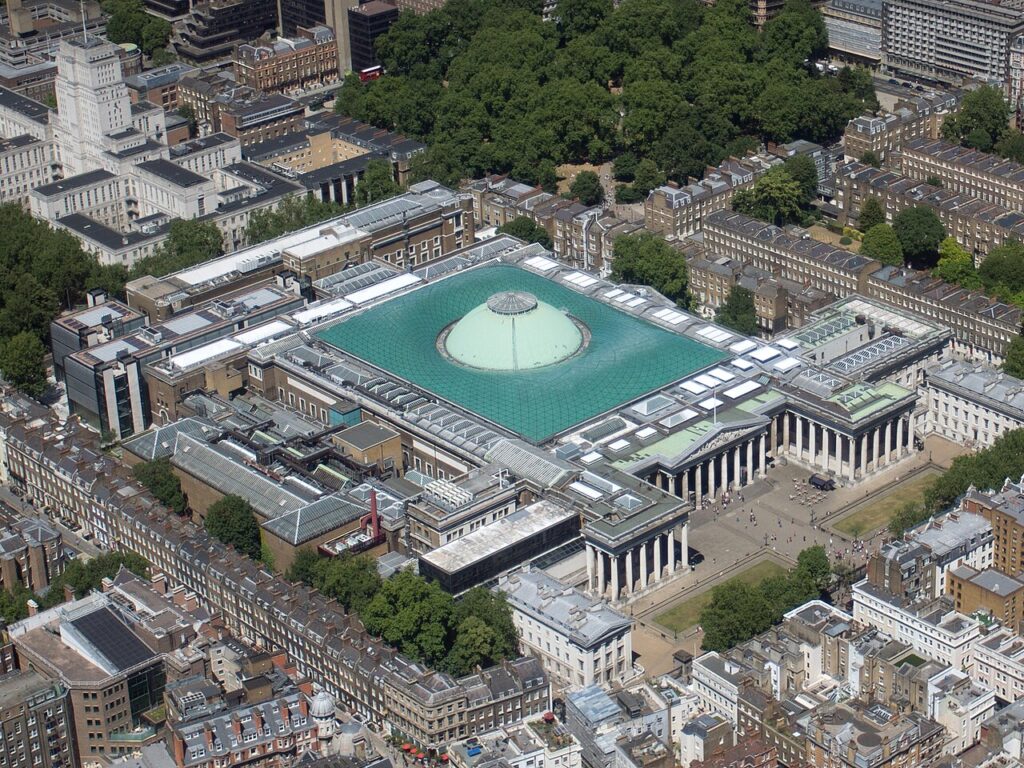
This imbalance is frequently defended under the banner of the “Universal Museum,” a concept arguing that Western institutions serve as accessible repositories for humanity. Yet, the data contradicts the claim of accessibility. The British Museum, frequently as the premier example of this model, holds a collection of at least 8 million objects. According to its own 2024 fact sheet, only about 80, 000 of these items are on public display at any given time. This represents a display rate of approximately 1%. The remaining 99%—roughly 7. 9 million objects—resides in storage, much of it at the Bloomsbury site or external warehouses. These items are not serving a global public; they are incarcerated in boxes, unseen by the cultures that created them or the public that funds their detention.
The Fragmentation of the Benin Bronzes
The systematic stripping of the Kingdom of Benin (modern-day Nigeria) in 1897 serves as the clearest case study for this industrial- displacement. The “Digital Benin” project, which launched its full dataset in late 2022, provides the verified census of this looting. The platform connects data for 5, 246 objects dispersed across 131 institutions in 20 countries. This fragmentation means that a singular cultural narrative has been shattered into thousands of pieces, scattered from the British Museum to small private collections in the American Midwest. The data shows that no single institution holds a complete picture, yet they refuse to relinquish the fragments necessary to reconstruct one in Nigeria.
| Institution | Location | Total Collection Size | Est. Items on Display | Display Rate | Primary Contentious Holdings |
|---|---|---|---|---|---|
| British Museum | London, UK | ~8, 000, 000 | ~80, 000 | ~1. 0% | Benin Bronzes, Parthenon Marbles, Maqdala Treasures |
| Musée du Quai Branly | Paris, France | ~300, 000 | ~3, 500 | ~1. 2% | 70, 000 Sub-Saharan African objects |
| Ethnologisches Museum | Berlin, Germany | ~500, 000 | ~20, 000* | ~4. 0% | Benin Bronzes (partial return), Luf Boat |
| The Metropolitan Museum | New York, USA | ~1, 500, 000 | Varies | Unknown | Looted Antiquities (Cambodia, India, Turkey) |
*Note: Display numbers for Berlin refer to the Humboldt Forum exhibition space.
The Criminal Element in the Catalog
The inventory of displaced heritage is not limited to colonial-era extractions. Modern looting operations continue to feed museum acquisitions. In March 2023, the International Consortium of Investigative Journalists (ICIJ) revealed that the Metropolitan Museum of Art (The Met) in New York held at least 1, 109 pieces previously owned by individuals indicted or convicted of antiquities crimes. These are not ambiguous cases; they are objects linked to known traffickers like Subhash Kapoor. In 2022 alone, authorities seized 29 items from the Met, including Greek busts and Egyptian bronzes. The Manhattan District Attorney’s office also seized 71 looted artifacts from the private collection of Shelby White, a Met trustee, in 2023. These seizures confirm that the “bureaucracy” of museum acquisition frequently functions as a laundering method for stolen property.
The Unreturned Ancestors
Beyond art and artifacts, the inventory includes human bodies. The Native American Graves Protection and Repatriation Act (NAGPRA) was enacted in 1990 to force US institutions to return Indigenous human remains. Yet, as of the fiscal year 2024 report, the process remains dangerously slow. While 126, 299 human remains have been repatriated, federal data indicates that over 100, 000 ancestors are still held in institutions, including prestigious universities and museums. The University of California, Berkeley, and the Smithsonian Institution have faced repeated criticism for the pace of their compliance. In January 2024, new NAGPRA regulations closed gaps that allowed museums to label remains as “culturally unidentifiable” to avoid returning them, forcing institutions like the American Museum of Natural History to cover displays. This legal shift exposes the reality that for decades, museums prioritized the “scientific value” of keeping human bones in drawers over the human rights of living descendants.
“The report straightforwardly indicates that any object seized as a spoil of war by soldiers, bought at unreasonably cheap costs by merchants, illicitly trafficked by travelers and explorers, stolen, looted or taken by forced consent between the years 1885 and 1960 must be restituted to its owner.” — Sarr-Savoy Report (2018)
The data presents a clear picture: Western museums are not cultural educators but active containment facilities for millions of objects and thousands of human remains that legally and ethically belong elsewhere. The gap between the 8 million items held by the British Museum and the 1% the public actually sees the argument that these institutions are necessary for global access. They are warehouses of history, kept under lock and key.
The Regulatory Hammer: January 12, 2024
On January 12, 2024, the slow-moving of American museum bureaucracy ground to a halt. The U. S. Department of the Interior enacted final revisions to the Native American Graves Protection and Repatriation Act (NAGPRA), closing the “culturally unidentifiable” loophole that institutions had used for three decades to retain Indigenous ancestors. The new regulations were not a suggestion; they were a mandate requiring “free, prior, and informed consent” from lineal descendants or tribes before any exhibition, access, or research could occur. The impact was immediate and physical. Across the United States, curators scrambled to cover display cases with unclear sheeting, and entire museum wings went dark.
The revised rule shifted the load of proof. Previously, museums could claim a absence of clear evidence to retain possession of human remains and funerary objects, categorizing them as “culturally unidentifiable.” As of late 2023, federal data indicated that institutions still held over 96, 000 Native American individuals pending consultation, with 95% of these classified under this ambiguous label. The 2024 update eliminated this category, forcing institutions to defer to the Indigenous Knowledge of tribes. This regulatory pivot exposed the extent of the hoarding: nearly 600 federally funded institutions were suddenly legally liable for the continued display of stolen heritage.
The Great Blackout: Halls Go Dark
The reaction from major institutions was swift, signaling a panic over legal liability rather than a proactive ethical shift. On January 27, 2024, the American Museum of Natural History (AMNH) in New York City abruptly closed two of its most significant galleries: the Eastern Woodlands and Great Plains Halls. These closures sealed off approximately 10, 000 square feet of exhibition space. Museum President Sean Decatur admitted in a letter to staff that the halls were “vestiges of an era” that did not respect Indigenous perspectives. The closure was not a renovation; it was a crime scene cleanup. The displays contained items that could no longer be legally shown without tribal permission—permission that had never been sought.

Article image: The Museum Repatriation Delays: Bureaucracy or Theft?
In Chicago, the Field Museum took a different but equally visible method. Visitors to the “Ancient Americas” and “Northwest Coast and Arctic Peoples” exhibitions found display cases shrouded in heavy cloth and blocked by “Consultation in Progress” signage. The museum, which holds one of the largest collections of Native American remains in the country, was forced to cover funerary objects that had been public spectacles for decades. The Cleveland Museum of Art followed suit, covering cases in its Native North American gallery, while Harvard’s Peabody Museum of Archaeology and Ethnology announced the removal of all funerary belongings from exhibition. These actions visually manifested the of the theft: when the stolen items were covered, the museums were left largely empty.
Quantifying the Resistance
The resistance to repatriation prior to 2024 is quantifiable. ProPublica’s “Repatriation Project” database revealed that even with the 1990 enactment of NAGPRA, prestigious institutions had returned less than half of the Indigenous remains in their collections by 2023. The University of California, Berkeley, for instance, still held thousands of ancestors. The 2024 regulations pierced this administrative inertia. In the year of the new rules, the rate of repatriation notices spiked. Data from early 2025 indicates that 2024 became the third-highest year for repatriations in the law’s history, with over 10, 300 ancestors returned to tribes. This surge proves that the delay was never about logistical impossibility; it was about a absence of federal pressure.
| Institution | Location | Action Taken (Jan 2024) | Stated Reason / Context |
|---|---|---|---|
| American Museum of Natural History | New York, NY | Closed Eastern Woodlands & Great Plains Halls | Halls contained significant number of objects requiring consent; “severely outdated” displays. |
| Field Museum | Chicago, IL | Covered multiple display cases | Pending consultation on funerary objects and sacred items; holds ~1, 200 unrepatriated remains. |
| Cleveland Museum of Art | Cleveland, OH | Covered cases in Native North American gallery | Reviewing consent records for displayed items; admitted insufficient time to secure permissions. |
| Harvard Peabody Museum | Cambridge, MA | Removed funerary belongings from display | Compliance with “duty of care” and consent requirements; holds one of the largest collections. |
| Denver Museum of Nature & Science | Denver, CO | Closed North American Indian Cultures Hall | Proactive closure to consult with tribes on entire exhibition content. |
“The halls we are closing are vestiges of an era when museums such as ours did not respect the values, perspectives, and indeed shared humanity of Indigenous peoples.”
— Sean Decatur, President, American Museum of Natural History (January 2024)
The Inventory of “Science”
The argument for retaining these collections has historically relied on their chance for “scientific study.” Yet, the 2024 regulations exposed that much of this “science” was storage. The Illinois State Museum, holding the second-largest collection of Native American remains, and the Ohio History Connection, holding the largest number of unrepatriated remains (over 7, 000), faced immediate scrutiny. The new rules clarified that “scientific interest” no longer superseded human rights. The requirement to obtain consent for research ended the era of treating Indigenous ancestors as data points. The sheer volume of items—hundreds of thousands of funerary objects—sitting in boxes, unstudied and unreturned, the defense that these collections serve an active scientific purpose. They serve only as a testament to colonial extraction.
The chart illustrates the dramatic shift in repatriation velocity following the implementation of the new rules.
Chart 2. 1: The 2024 Repatriation Spike
Metric: Number of Native American Ancestors Made Available for Return (Annual)
Source: ProPublica Repatriation Database / Federal Register Notices (Data as of Jan 2025). The 2024 spike represents the immediate impact of the new NAGPRA regulations.
The Provenance Trap: How Research Becomes Indefinite Delay
The most weapon in the modern museum’s arsenal against repatriation is not legal title, but the weaponization of time. Under the guise of “due diligence” and “scholarly rigor,” Western institutions have constructed a bureaucratic method known as the “provenance trap.” This tactic frames the return of stolen heritage not as a moral imperative, but as an endless research project. By insisting that every object’s history be perfectly mapped before it can be discussed for return, museums defer justice to a future that never arrives.
Dan Hicks, curator at the Pitt Rivers Museum and author of The Brutish Museums, identifies this as a deliberate strategy: “The museum uses the need for research as a reason to do nothing.” The metrics support this accusation. While looting frequently took place over a matter of days—the British punitive expedition of 1897 sacked Benin City in less than a week—the “research” required to undo it is designed to take centuries.
The Mathematics of Stalling
The between inventory size and research capacity is not an accident; it is a structural barrier. In 2023, the Metropolitan Museum of Art in New York announced the hiring of four new provenance researchers. While publicly celebrated as a step toward transparency, this number is statistically negligible against a collection of 1. 5 million objects. At this rate, a detailed review of the collection would take several hundred years.
A 2025 report by the World Jewish Restitution Organization (WJRO) exposed the severity of this bottleneck in a parallel context. The report found that among United States museums, only 10% of the estimated 100, 000 objects chance looted during the Nazi era had publicly accessible provenance data. If institutions cannot account for items stolen in Europe during the 20th century—a period with extensive written records—their ability to “research” colonial extraction from the 19th century is functionally non-existent.
| Institution | Contested Inventory (Est.) | Dedicated Provenance Staff | Years to Complete at Current Pace |
|---|---|---|---|
| British Museum | 8, 000, 000 (Total) / ~900 (Benin) | <10 | Indefinite |
| Humboldt Forum (Berlin) | 75, 000 (African Artifacts) | Varies (Project based) | 50+ Years |
| The Met (NYC) | 1, 500, 000 (Total) | ~6 (Expanded in 2023) | 200+ Years |
load of Proof as a deterrent
The “provenance trap” operates by reversing the load of proof. Rather than the museum proving it acquired an object legally, the claimant—frequently a community stripped of its archives and oral histories by the very same colonial violence—must prove the object was stolen. This requirement ignores the reality of colonial extraction, where receipts were rarely issued during military raids.
The Humboldt Forum in Berlin exemplifies this. Before its partial opening, the museum held approximately 530 Benin Bronzes. Officials argued for years that “complex provenance research” was required to determine which specific items were looted, even with the historical fact that all Benin Bronzes in Western collections arrived via the 1897 British raid. The demand for item-level proof for thousands of objects serves no scholarly purpose other than delay.
Breaking the pattern: The Smithsonian Precedent
The only way to escape the provenance trap is to change the rules of engagement. In May 2022, the Smithsonian Institution adopted a policy of “ethical returns,” fundamentally altering the. Unlike the British Museum, which is bound by the British Museum Act of 1963 to preserve its collection, the Smithsonian authorized the return of objects based on “ethical considerations” rather than strict legal title.

Article image: The Museum Repatriation Delays: Bureaucracy or Theft?
This policy shift allowed the Smithsonian to transfer ownership of 29 Benin Bronzes to Nigeria in October 2022 without waiting for decades of superfluous research. The decision acknowledged a simple truth: if an object was taken at gunpoint, no amount of archival study can retroactively make the acquisition moral. By removing the requirement for perfect provenance, the Smithsonian demonstrated that the barrier to repatriation is not a absence of knowledge, but a absence of can.
“We have to face the fact that we are holding stolen property. We don’t need another ten years of research to tell us that looting a city and burning it to the ground is theft.” — Lonnie G. Bunch III, Secretary of the Smithsonian (2022)
The “Due Diligence” Defense
Museums frequently cite “due diligence” to explain their slow pace. This defense crumbled in July 2023, when the Manhattan District Attorney’s office seized 21 objects from the Met, valued at $11 million, including a Greek head dating to 200 B. C. The seizure revealed that even with the museum’s claims of rigorous research, it was still housing items trafficked by known smugglers. The fact that law enforcement is identifying looted antiquities faster than museum curators suggests that “provenance research” is frequently less about discovery and more about risk management.
The Benin Bronzes: A Case Study in Broken pledge
The global handling of the Benin Bronzes offers the most damning evidence of the “retain and delay” strategy employed by Western institutions. While headlines from 2022 to 2025 frequently celebrated the “return” of these looted artifacts, the operational reality reveals a clear different picture: a system of bureaucratic sleight-of-hand where ownership is transferred on paper, but physical possession remains largely unchanged.
The numbers expose the gap between public relations and restitution. In 2022, Germany’s Foundation of Prussian Cultural Heritage (SPK) signed a historic agreement to transfer ownership of 1, 130 Benin Bronzes to Nigeria. Yet, by the end of that year, only 22 objects had physically returned to Nigerian soil. The remaining 1, 108 artifacts—over 98% of the collection—stayed in German storage or display cases under a “long-term loan” agreement, valid for at least ten years. This “loan” loophole allows institutions to claim moral victory while maintaining material control, leasing stolen property back from its victims.
The “Loan” Loophole: Restitution in Name Only
This pattern of “paper repatriation” is not to Germany. The Smithsonian Institution in Washington, D. C., transferred title for 29 bronzes in October 2022, yet immediately retained nine of the most valuable pieces on loan. Similarly, Cambridge University’s Museum of Archaeology and Anthropology announced the transfer of 116 objects, yet 17 were to remain in the UK for “research and teaching” purposes. The Horniman Museum, frequently as a leader in ethical returns, transferred ownership of 72 objects in 2022 but physically repatriated only six in the initial handover.
| Institution | Country | Total “Returned” (Ownership) | Physically Returned (Initial Phase) | Retained on “Loan” | Retention Rate |
|---|---|---|---|---|---|
| Humboldt Forum (SPK) | Germany | 1, 130 | 22 | 1, 108 | 98. 1% |
| Smithsonian (NMAfA) | USA | 29 | 20 | 9 | 31. 0% |
| Horniman Museum | UK | 72 | 6 | 66 | 91. 7% |
| Cambridge (MAA) | UK | 116 | 0 (at signing) | 17 (long-term) | 14. 6%* |
*Note: Cambridge retention rate refers to long-term loans; initial physical transfer timelines remain protracted.
Legal Shields and Financial Hypocrisy
The British Museum, holding the world’s largest collection of approximately 900 Benin Bronzes, continues to use the British Museum Act of 1963 as a total shield against deaccessioning. This legal immobility is frequently defended with the argument that the museum serves as a “universal” repository. Yet, historical financial records the claim that these objects are held solely for their educational value. Post-World War II records reveal that the British Museum sold approximately 30 Benin Bronzes to private dealers and the Nigerian government for nominal sums—averaging just £75 per piece in the 1950s. Today, those same objects command astronomical prices; a single Benin Bronze head, known as the “Ohly Head,” sold for £10 million at auction in 2016. The museum monetized “duplicates” when it was convenient, only to discover a sacred duty to “preserve” the remaining collection once restitution demands intensified.
Bureaucratic Obstructionism
When legal statutes fail to justify retention, institutions pivot to internal Nigerian politics. A March 2023 presidential decree by outgoing Nigerian President Muhammadu Buhari, which recognized the Oba of Benin as the owner of the returned bronzes, was seized upon by Western critics. Museums and commentators in Germany and the UK argued that returning items to a “private” monarch rather than the state violated the principles of public access. This argument ignores the fact that the Oba is the direct descendant of the ruler from whom the objects were stolen in 1897. The “public access” defense also rings hollow given that the vast majority of these collections in the West are held in storage, unseen by the public.

Article image: The Museum Repatriation Delays: Bureaucracy or Theft?
In the United States, the Restitution Study Group (RSG) attempted to block the Smithsonian’s return through federal courts, arguing that the bronzes were funded by the slave trade and thus belonged to the descendants of enslaved people. While the U. S. Supreme Court denied their petition in October 2024, the litigation provided another convenient pause for institutions looking to slow the flow of returns. The delay is widespread: from the 1897 punitive expedition to the 2026 “loan” agreements, the timeline of the Benin Bronzes is defined not by preservation, but by possession.
“We paused as a clearer framework was needed… The bronzes should go back within months.”
— Nicholas Thomas, Director of the Museum of Archaeology and Anthropology at Cambridge, explaining delays in 2024.
The “months” frequently turn into years. The Netherlands returned 119 objects in 2025, a full three years after the initial announcements of intent. Each step of the process—provenance research, ownership transfer, export licensing, and physical transport—is weaponized to extend the timeline. The result is a “repatriation” process that looks remarkably like a permanent exhibition.
Financial Dependency: Asset Valuation and Solvency Risks
The refusal of Western museums to repatriate looted heritage is frequently framed as a matter of preservation or scholarship. These arguments, yet, mask a more urgent operational reality: major institutions are financially addicted to the “shadow equity” of their contested collections. While accounting standards like FASB (Financial Accounting Standards Board) allow museums to exclude collections from their balance sheets—treating them as “priceless” cultural assets rather than financial ones—the solvency of these institutions is inextricably tied to the market value and visitor draw of these specific objects.
Article image: The Museum Repatriation Delays: Bureaucracy or Theft?
This dependency was brutally exposed on October 19, 2025, when the Louvre Museum in Paris suffered the theft of eight pieces of French Crown Jewels from the Galerie d’Apollon. The heist, executed in under eight minutes by thieves posing as construction workers, resulted in a loss valued at approximately €88 million ($102 million). For the time in decades, a “priceless” museum asset was forced into a raw market valuation. The incident did not just expose security failures; it shattered the illusion that these collections exist outside the financial ecosystem. The loss was not cultural; it was a direct hit to the museum’s “market position,” a key metric used by credit rating agencies to assess institutional stability.
The “Shadow Asset” Economy
Museums operate on a paradox: they plead poverty to avoid repatriation costs while sitting on billions in uncapitalized assets that underwrite their creditworthiness. Credit rating agencies like Moody’s and Standard & Poor’s (S&P) do not count a museum’s collection as a liquid asset for debt repayment, yet they heavily weight “market position” and “demand” in their rating methodologies. A museum’s ability to borrow money for expansion—such as the Los Angeles County Museum of Art’s $300 million bond measure or the British Museum’s masterplan financing—depends entirely on the prestige and visitor numbers generated by their “star” objects.
If the British Museum were to return the Parthenon Sculptures (Elgin Marbles) or the Benin Bronzes, it would not just be losing art; it would be shedding the collateral that guarantees its “Aaa” or “AA” credit status. A downgrade in credit rating would increase borrowing costs, chance rendering future capital projects insolvent. The table estimates the “shadow value” of key contested collections, illustrating the financial magnitude of what is at stake.
| Institution | Contested Collection / Item | Est. Market Value (USD) | Financial Role |
|---|---|---|---|
| British Museum (UK) | Parthenon Sculptures | $500 Million+ | Primary driver of 6M+ annual visitors; anchors “Universal Museum” brand value. |
| British Museum (UK) | Percival David Foundation (Chinese Ceramics) | $1. 25 Billion | gifted (2024); highest-value museum gift in UK history, boosting asset base. |
| Musée du Louvre (France) | French Crown Jewels (Stolen/Remaining) | $100 Million+ | Direct revenue driver for Galerie d’Apollon; theft exposed insurance gaps. |
| Pergamon Museum (Germany) | Ishtar Gate & Market Gate | $800 Million+ | Central architectural attraction; removal would require total structural insolvency. |
| Metropolitan Museum (USA) | Benin Bronzes (160+ pieces) | $40 – $60 Million | High-value donor draw; “encyclopedic” status justification for endowments. |
Solvency and the “Superstar” Model
The economic model of the modern “Superstar Museum” relies on a high-volume tourist trade that functions almost exactly like a theme park. The 2018 Sarr-Savoy report and subsequent economic analyses confirm that “star objects” are the primary drivers of the ancillary revenue—gift shop sales, café receipts, and corporate sponsorships—that keeps these institutions afloat. Admissions may be free or subsidized, but the spending per visitor is correlated to the presence of iconic, frequently looted, artifacts.
The British Museum, which faces a recurring deficit, has even considered “swapping” the Elgin Marbles for temporary Greek exhibits specifically to generate entry fees—an admission that the artifacts are viewed as fungible financial instruments. When the Horniman Museum returned its Benin Bronzes in 2022, its director admitted the institution was “strapped for cash,” highlighting that for smaller museums, the insurance and security premiums required to keep high-value looted items are becoming a liability rather than an asset. For the “Superstars,” yet, the calculation is reversed: the cost of retention is high, but the cost of return is bankruptcy of the brand.
“We don’t evaluate a museum’s collection… [but] we look at operating performance and the balance sheet. Market position is a key driver.”
— Standard & Poor’s Credit Analyst (Contextualized from 2019/2024 rating criteria reports)
The 2025 Louvre heist further complicated this financial web by causing insurance premiums for “high-risk” collections to skyrocket. Insurers are factoring in the “reputational risk” and “theft vulnerability” of contested items, imposing a “colonial tax” on museums that refuse to repatriate. Institutions are squeezed between the rising cost of insuring stolen property and the credit-rating need of keeping it on display.
The Parthenon Sculptures dispute is no longer a debate about preservation; it is a conflict between a static 1963 British statute and a shift in global ethics. For decades, the British Museum has used the **British Museum Act of 1963** as a non-negotiable shield against repatriation claims. Section 3 of this Act legally prohibits the Museum’s Trustees from disposing of objects in their collection unless they are duplicates or “unfit” for retention. This legislation has paralyzed any permanent restitution, turning the museum’s hands-tied defense into a convenient bureaucratic stalemate.
The Legal Iron Wall
The British Museum Act of 1963 remains the primary legal barrier preventing the return of the Parthenon Sculptures to Athens. While the museum’s Trustees operate with independence, they are bound by this parliamentary statute, which criminalizes the deaccessioning of key collection items. In 2022 and 2023, calls to amend this act intensified, yet the UK government—specifically under the premiership of Rishi Sunak—maintained a hardline stance. Sunak explicitly stated in late 2023 that there were “no plans” to change the law, reinforcing the deadlock.
This legal rigidity contrasts sharply with the museum’s attempts to reframe the problem as a “partnership.” In 2023 and 2024, British Museum Chair George Osborne proposed a “cultural exchange” model. This plan envisioned a rotating loan of the sculptures to Athens in exchange for other Greek antiquities being displayed in London. yet, the Greek government, led by Prime Minister Kyriakos Mitsotakis, categorically rejected any arrangement that framed the return as a “loan,” as accepting a loan would legally imply recognizing British ownership of the stolen marbles.
Diplomatic Failures and Political Theater
The tension between legal statutes and diplomatic reality culminated in a significant diplomatic row in November 2023. Prime Minister Rishi Sunak abruptly cancelled a scheduled meeting with Greek Prime Minister Kyriakos Mitsotakis in London, reportedly due to Mitsotakis’s public comments comparing the division of the sculptures to “cutting the Mona Lisa in half.” This cancellation was widely criticized as a diplomatic blunder and highlighted the fragility of UK-Greece relations over this single problem.
even with the political posturing, the “Osborne Plan” for a rotating exhibition continued to be floated through 2024 and 2025. The proposal suggested sending one-third of the collection to Athens at a time, a solution that Greece viewed as insufficient and insulting. The Greek Ministry of Culture has consistently maintained that the only acceptable solution is the permanent reunification of the specific Parthenon friezes, which are integral architectural members of a standing monument, not freestanding artworks.
Public Opinion vs. Government Policy
While the law remains frozen, British public sentiment has shifted decisively. Verified polling data from 2023 to 2025 indicates that the British public no longer shares the government’s anxiety over repatriation. A YouGov survey from late 2023 showed that 53% of Britons supported returning the sculptures, while only 21% opposed it. By September 2025, a Parthenon Project poll found that support for reunification had risen to 56%, with support crossing political lines, including of Conservative voters.
| Proposal / Event | Proponent | Key Terms | Outcome / Response |
|---|---|---|---|
| The “Cultural Exchange” (2023) | George Osborne (British Museum) | Rotating loans of sculptures to Athens in exchange for Greek artifacts. | Rejected by Greece: Acceptance would equate to recognizing British ownership. |
| Sunak-Mitsotakis Meeting (Nov 2023) | Greek Govt / UK Govt | Planned diplomatic discussion on bilateral problem including migration and culture. | Cancelled by UK: Sunak withdrew after Mitsotakis’s “Mona Lisa” BBC interview. |
| UNESCO Decision (2021/2024) | UNESCO ICPRCP | Recognized the problem as “intergovernmental” rather than just institutional. | Ignored by UK: UK Govt insists it is a matter for the Museum Trustees alone. |
| Public Referendum Poll (Sept 2025) | Parthenon Project / JL Partners | Hypothetical vote on returning the sculptures. | 56% Support Return: Only 22% voted to keep them in London. |
International Pressure and UNESCO’s Stance
The isolation of the British position is further amplified by international bodies. In 2021, the UNESCO Intergovernmental Committee for Promoting the Return of Cultural Property (ICPRCP) issued a landmark decision recognizing the dispute as intergovernmental. This ruling dismantled the UK government’s long-standing argument that the problem was a technical matter between two museums (the British Museum and the Acropolis Museum). UNESCO formally urged the UK to enter into “bona fide dialogue” with Greece, a recommendation that was reiterated in 2024 sessions. The UK’s refusal to engage at the government level is seen not just as a legal defense, but as a rejection of international consensus.
University Vaults: Academic Hoarding of Human Remains
While national museums frequently face the loudest public outcry, universities remain the quiet giants of the repatriation emergency. Behind the ivy-covered walls of the world’s most prestigious academic institutions lies a grim reality: the mass storage of human bodies. For nearly two centuries, universities have accumulated skeletal remains under the guise of scientific inquiry, transforming campus vaults into ossuaries for the victims of colonial violence and racial pseudo-science. As of 2024, even with federal mandates and public apologies, thousands of individuals remain boxed in university storage facilities, cataloged not as ancestors, but as data points.
The of this academic hoarding is. In 2022, Harvard University admitted to holding the remains of over 22, 000 individuals, a collection size that rivals national museums. This inventory included 19 individuals likely enslaved during their lifetimes and thousands of Native American ancestors. While the university has accelerated returns, the sheer volume of their backlog reveals a widespread reliance on Indigenous bodies for teaching and research. Similarly, the University of California, Berkeley, which once held over 11, 000 Native American ancestors, was reported in January 2025 to still possess at least 4, 700 remains that had not been made available for return to tribes. These numbers are not administrative backlogs; they represent a century of refusal to recognize the humanity of the subjects studied.
The justification for these collections has historically been rooted in “racial science.” The University of Pennsylvania’s Penn Museum, for instance, housed the Morton Cranial Collection, a notorious assemblage of over 900 skulls collected in the 19th century by Samuel Morton to propagate white supremacist theories of biological hierarchy. It was not until February 2024 that the museum finally laid to rest the skulls of 19 Black Philadelphians from this collection, burying them in Eden Cemetery. This action came only after intense community pressure and the realization that the university had been holding the remains of local citizens without consent for nearly two centuries.
For decades, universities exploited a legal loophole in the Native American Graves Protection and Repatriation Act (NAGPRA) known as “culturally unidentifiable.” Institutions would classify remains as having no proven connection to modern tribes, allowing them to retain the bodies indefinitely for research. This practice stalled the return of tens of thousands of ancestors. yet, new federal regulations January 2024 have eliminated this category, forcing institutions to defer to tribal knowledge and geographical evidence. The impact was immediate: museums and universities across the U. S. were forced to cover displays and halt research, acknowledging that they no longer possessed the right to control these remains.
Status of Human Remains in Major Academic Institutions (2024-2025)
| Institution | Collection Focus | Recent Status / Action | Key Metric |
|---|---|---|---|
| Harvard University (Peabody Museum) | Global & Native American | Accelerated returns under new 2024 NAGPRA rules. | 22, 000+ individuals in total inventory (2022 audit). |
| UC Berkeley | Native American (California) | Criticized for slow “made available” status. | 4, 700+ remains still withheld from tribes (Jan 2025). |
| University of Pennsylvania | Morton Cranial Collection | Burial of Black Philadelphians in Feb 2024. | 900+ skulls originally collected for racial science. |
| University of Oxford (Pitt Rivers) | Global Colonial | Naga delegation visit (June 2025) for returns. | 219 Naga ancestral items (remains + hair) under negotiation. |
| University of Cambridge | Ugandan Heritage | “Loan” return of 39 artifacts in June 2024. | Items returned on 3-year loan, not full ownership transfer. |
In the United Kingdom, the resistance to repatriation frequently hides behind legal semantics. In June 2024, the University of Cambridge returned 39 artifacts to Uganda, including a headdress made of human hair. yet, this transfer was legally structured as a “loan” for an initial three-year period, rather than a permanent restitution of ownership. This legal maneuvering allows the university to retain control over the objects while claiming credit for their return. Similarly, Oxford University’s Pitt Rivers Museum, which removed all human remains from display in 2020, faced a delegation from the Naga people in June 2025 demanding the return of 219 ancestral items. The museum’s shift from display to storage is a partial victory, yet it highlights the reluctance to fully relinquish possession.
The transition from treating these remains as “specimens” to recognizing them as “ancestors” is not a voluntary ethical pivot by the academy; it is a surrender to legal and social compulsion. The 2024 NAGPRA updates in the United States have stripped universities of the power to define cultural affiliation, placing that authority back in the hands of tribes. As the data shows, when universities are left to police themselves, they choose hoarding. It is only through external enforcement that the vaults are finally beginning to open.
The Universal Museum Myth: Colonial Apologetics in 2026
The “Universal Museum” is not a philosophical ideal; it is a geopolitical shield. Codified in the 2002 Declaration on the Importance and Value of Universal Museums, this concept that Western institutions serve as “accessible” repositories for humanity’s shared heritage. Signatories, including the British Museum, the Louvre, and the Metropolitan Museum of Art, posit that their collections transcend national borders. In 2026, this argument has collapsed under the weight of empirical reality. The twin pillars of the universalist defense—safety and accessibility—have been exposed as functional myths by a series of catastrophic security failures and exclusionary border policies.
The “safety” argument, long the primary deflection against repatriation requests, disintegrated publicly between 2023 and 2025. For decades, Western curators argued that African, Asian, and Latin American institutions absence the capacity to secure their own heritage. This paternalism was shattered in August 2023 when the British Museum admitted that approximately 2, 000 items had been stolen or damaged over a period of years, allegedly by a senior curator. The items were not taken in a sophisticated heist but were pilfered from uncatalogued storage and sold on eBay for fractions of their value. This internal rot revealed that the “universal” custodian could not even inventory its own holdings, let alone protect them.
The security emergency is not to London. In October 2025, the Louvre suffered a humiliating breach when thieves, disguised as construction workers, accessed the Galerie d’Apollon and stole 19th-century crown jewels valued at €88 million. The heist, executed in under eight minutes, mocked the institution’s claims of impenetrable security. Weeks later, a water leak in the museum’s Mollien wing damaged hundreds of archival documents, further eroding the narrative of European technical superiority. These incidents demonstrate that the “safe repository” is a fiction; Western museums are as to theft, negligence, and infrastructure failure as the institutions they deem “unsafe” in the Global South.
The second pillar, “accessibility,” is equally fraudulent. The Universal Museum claims to be a window to the world, yet that window is barred to the people whose heritage is on display. Visa regimes segregate access to these “global” collections. In 2022, African scholars faced a Schengen visa rejection rate of 30%, a figure that climbed to nearly 50% for specific nations by 2024. This widespread exclusion was highlighted by Nigerian author Chimamanda Ngozi Adichie at the Humboldt Forum in 2021, where she dismantled the logic that stolen art belongs in Europe for “universal” access when the descendants of its creators are systematically denied entry.
A specific case from May 2025 show this hypocrisy. Ibrahima Balde, an award-winning author and refugee, was denied a UK visa to attend the London premiere of a play based on his own memoir. The Home Office fears he would not return to Spain, even with his established residence there. If a celebrated living author cannot visit London to see his own story performed, the claim that a Nigerian historian can easily visit the British Museum to study the Benin Bronzes is a bureaucratic lie.
| Institution | Total Collection Size | Items on Public Display | Display Ratio | Recent Security Failure |
|---|---|---|---|---|
| British Museum (London) | ~8, 000, 000 | ~80, 000 | ~1. 0% | 2, 000+ items stolen/damaged (2023) |
| Musée du Louvre (Paris) | ~615, 000 | ~35, 000 | ~5. 7% | €88m Crown Jewel Heist (2025) |
| Metropolitan Museum (NYC) | ~1, 500, 000 | Variable | <5% | 1, 000+ looted items seized by DA (2022-24) |
The data in Table 8. 1 reveals the final deception: the “Universal Museum” is largely a warehouse. The British Museum displays barely 1% of its holdings. The vast majority of its 8 million objects—including thousands of contested artifacts—sit in storage units, unseen by the public and, as the 2023 thefts proved, frequently unmonitored by staff. The argument that these items serve a global educational purpose is mathematically indefensible when 99% of them are locked in the dark. The “Universal Museum” is not a library of humanity; it is a vault of colonial trophies, guarded by a bureaucracy that can neither secure them nor share them.
Bureaucratic Friction: Weaponizing Administrative Procedure
Western museums have shifted their defense strategies. Where directors once bluntly refused repatriation requests on colonial grounds, they deploy a sophisticated arsenal of administrative delays. This transition from “refusal” to “procedure” locks claimant nations in a pattern of bureaucratic attrition. Institutions hide behind self-imposed legal statutes and endless research phases, transforming the moral urgency of restitution into a decades-long clerical stalemate. The result is a system where the process itself becomes the punishment, draining the resources of claimant nations while museums retain possession of the disputed heritage.
The most formidable of these administrative shields remains the British Museum Act of 1963. Trustees frequently cite Section 3 of this legislation to block the return of the Parthenon Marbles and the Benin Bronzes. The Act strictly prohibits the disposal of objects unless they are duplicates, physically damaged, or “unfit to be retained.” This legal straitjacket allows the museum to claim its hands are tied by parliament, neutralizing moral arguments with statutory intransigence. Between 2015 and 2023, the museum received multiple formal requests from Nigeria and Greece, yet the Trustees consistently pointed to this 60-year-old law as an barrier. The government’s refusal to amend the Act ensures that the museum can continue to express “regret” while legally hoarding the spoils of empire.
France operates a similar method of legislative friction through the principle of “inalienability.” Public collections are considered state property and cannot be altered without a specific act of parliament. Following the 2018 Sarr-Savoy report, which identified 90, 000 African objects in French museums, President Macron promised a new era of restitution. Yet, the administrative reality tells a different story. Because French law requires a separate legislative vote for each group of objects, the pace of return is glacial. By 2023, France had returned only 26 items to Benin and a sword to Senegal, leaving the vast majority of the identified 90, 000 artifacts trapped in legal limbo. This requirement for piecemeal legislation acts as a deliberate brake, ensuring that total restitution would take centuries at the current rate.
Museums also weaponize “provenance research” to delay returns indefinitely. Institutions demand that claimant nations provide irrefutable proof of looting, reversing the load of proof onto the victims of theft. Simultaneously, museums claim they need years to conduct their own internal research before releasing items. This creates a paradox where returns are paused for “study,” but the resources allocated for this study are nonexistent. In 2021, the World Museum in Vienna employed just one staff member to research the provenance of 38, 000 African objects. At that velocity, the research phase serves not as a route to truth, but as a method for permanent deferral. The “need for more research” has become a standard boilerplate response to stall requests without officially denying them.
When pressure becomes unsustainable, institutions pivot to the “loan loophole.” This administrative sleight of hand involves transferring legal title to the claimant nation while keeping the physical objects in the Western museum on a “long-term loan.” The 2022 agreement between Germany and Nigeria regarding the Benin Bronzes exemplifies this tactic. While ownership of 1, 130 artifacts was transferred to Nigeria, the deal stipulated that a significant number of the finest pieces would remain in the Humboldt Forum in Berlin on loan for at least ten years. This arrangement allows the museum to claim it has “returned” the items while keeping them in its display cases, satisfying the optics of decolonization without the material loss.
The financial load of these procedures acts as a final filter against successful claims. Claimant nations must fund delegation travel, legal counsel, and archival research to meet the evidentiary standards set by Western institutions. For communities like the Nations in British Columbia, the cost of repatriation processes has run into the millions of dollars. Furthermore, museums increasingly offer “digital repatriation”—high-resolution scans of objects—as a substitute for physical return. This “virtual” solution allows Western institutions to retain the original artifact while offering the claimant a data file, a practice critics label “digital colonialism.” By controlling the server, the metadata, and the physical object, the museum maintains its dominance over the cultural narrative.
| Bureaucratic Tactic | method of Delay | Notable Example |
|---|---|---|
| Statutory Blockade | Citing national laws that forbid deaccessioning to override moral claims. | British Museum Act 1963 used to block Parthenon Marbles return. |
| Legislative Bottleneck | Requiring a separate parliamentary vote for every individual return. | French Inalienability Law resulting in only ~27 returns out of 90, 000 items. |
| Research Purgatory | Understaffing provenance departments to extend “study phases” indefinitely. | World Museum Vienna assigning 1 researcher to 38, 000 African objects. |
| The Loan Loophole | Transferring paper ownership but keeping objects on long-term loan. | Humboldt Forum keeping Benin Bronzes on loan for 10 years after title transfer. |
| Digital Substitution | Offering 3D scans or data files instead of the physical artifact. | British Museum offering “digital access” to Benin collections as a primary solution. |
The Loan Loophole: Retaining Title While Feigning Compliance
Faced with mounting pressure to decolonize their collections, Western institutions have increasingly turned to a legal method that mimics restitution while preserving their ownership: the long-term loan. This strategy allows museums to send objects back to their countries of origin for display without surrendering legal title. By framing these transfers as “partnerships” or “renewable loans,” institutions like the British Museum and the Victoria and Albert Museum (V&A) lease stolen property back to its rightful owners, frequently shifting the financial load of insurance and conservation onto the victims of the original theft.
The Asante “Gold” Standard
The most prominent recent application of this tactic occurred in January 2024, when the British Museum and the V&A announced a “cultural partnership” with the Manhyia Palace Museum in Ghana. The deal involved 32 items of Asante royal regalia—looted by British troops during the Anglo-Asante wars of the 19th century—returning to Kumasi. yet, the terms were strictly defined as a three-year loan, renewable for a further three years.
While the return was celebrated publicly as a breakthrough, the legal reality remained static. The British Museum Act of 1963 and the National Heritage Act of 1983 were as blocks to full deaccessioning. Consequently, the Asantehene (the Asante King) was required to sign a loan agreement that implicitly acknowledged the UK museums’ legal ownership of the plunder. This arrangement stands in clear contrast to the actions of the Fowler Museum at UCLA, which, in February 2024, permanently transferred the title of seven looted Asante objects to the Manhyia Palace, proving that full restitution is legally and ethically viable when institutional can exists.
The Financial load of “Borrowing” Your Own Heritage
The loan model does not retain power; it monetizes the “return” process at the expense of the borrower. Standard international loan agreements require the borrowing institution to cover “nail-to-nail” insurance, transport, crating, and courier costs. For nations seeking the return of high-value heritage, these costs are prohibitive.
| Cost Category | Full Restitution (Title Transfer) | Long-Term Loan (Title Retention) |
|---|---|---|
| Legal Title | Transferred to Origin Country | Retained by Western Museum |
| Insurance | One-time transit cost (frequently state-covered) | Recurring annual premiums paid by borrower |
| Conservation | Managed by origin country | Dictated by lender; costs frequently billed to borrower |
| Renewal Fees | None | Administrative costs every 3-5 years |
| Revocability | Irrevocable | Lender can recall objects at any time |
In the case of the Maqdala treasures, looted from Ethiopia in 1868, the V&A proposed a similar long-term loan arrangement in 2018. The Ethiopian government rejected the offer, refusing to borrow back its own national heritage or pay to insure items that were stolen from them. This rejection highlighted the core flaw of the loan loophole: it requires the victim to indemnify the perpetrator against the loss of the stolen goods.
The “Custodial” Variation
A variation of this model has emerged in the United States, where title is transferred but possession is retained. In 2023, the Metropolitan Museum of Art transferred the title of two ancient sculptures to the Republic of Yemen but retained them in New York under a “custodial agreement” due to the ongoing civil war. While this method respects the legal ownership of the source nation, it creates a precedent where “safety” becomes a condition for physical return, chance allowing Western institutions to hold objects indefinitely based on their own security assessments.
The loan loophole rebrands colonial possession as benevolent cooperation. By retaining the right to recall objects, Western museums maintain a “colonial leash,” ensuring that the cultural heritage of the Global South remains subject to the laws and whims of the Global North.
Conservation Imperialism: The Safety Argument Debunked
The most persistent defense against repatriation is the “safety argument”—the colonial-era assertion that Western institutions are the only secure repositories for the world’s cultural heritage. This claim relies on a presumption of permanent stability in the West and perpetual chaos in the Global South. Data from the last decade, yet, this narrative. The “safe harbor” theory has been shattered not by external threats, but by internal failures, widespread negligence, and the undeniable reality that Western museums are as to theft, vandalism, and climate catastrophe as any other institution.
In August 2023, the British Museum—frequently as the guardian of global history—revealed that approximately 2, 000 items had been stolen, damaged, or gone missing from its collection. The perpetrator was not a sophisticated international syndicate but an insider, a senior curator who operated for years. This breach exposed a catastrophic failure in inventory management, with of the stolen gems and jewelry pieces uncatalogued and therefore untraceable. The incident fundamentally undermined the museum’s legal and moral defense for retaining contested artifacts like the Benin Bronzes and the Parthenon Marbles. As Dan Hicks, curator at the Pitt Rivers Museum and author of The Brutish Museums (2020), noted, the argument that objects are safer in London than in Lagos or Athens is “nonsense” when Western institutions cannot even account for what they hold.
The myth of Western invulnerability further eroded in October 2020, when vandals at Berlin’s Museum Island sprayed an oily liquid on over 60 artifacts across the Pergamon Museum, the Neues Museum, and the Alte Nationalgalerie. The attack, one of the most significant assaults on art in post-war Germany, targeted Egyptian sarcophagi and 19th-century paintings. Security systems failed to prevent the damage or identify the perpetrators immediately. Similarly, the Louvre in Paris has faced repeated threats from the very geography it occupies. In June 2016 and again in January 2018, the museum was forced to activate emergency flood, evacuating 35, 000 artworks from subterranean storage as the River Seine rose to perilous levels. The 2016 evacuation cost the museum approximately $1. 8 million in lost revenue and exposed the fragility of storing priceless heritage in flood-prone basements.
| Institution | Location | Year | Incident Type | Details of Loss/Risk |
|---|---|---|---|---|
| British Museum | London, UK | 2023 | Internal Theft | ~2, 000 items stolen or damaged by senior staff over several years. |
| Pergamon Museum | Berlin, Germany | 2020 | Vandalism | 60+ artifacts sprayed with oily liquid; perpetrators evaded security. |
| The Louvre | Paris, France | 2016/2018 | Climate Risk | Emergency evacuation of 35, 000 works due to Seine River flooding. |
| Getty Villa | Los Angeles, USA | 2025 | Fire Risk | Threatened by wildfires; emergency crews deployed to protect antiquities. |
| Johnstown Flood Museum | Pennsylvania, USA | 2025 | Infrastructure Failure | Closed indefinitely after internal pipe burst caused massive water damage. |
While Western institutions struggle with these internal crises, the “capacity” argument—that countries of origin absence the facilities to care for their heritage—has been rendered obsolete by a wave of new, museum construction in the Global South. The Museum of Black Civilizations in Dakar, Senegal, which opened in December 2018, is a 14, 000-square-meter facility equipped with temperature and humidity controls that rival any European institution. It was specifically designed to receive repatriated works, directly countering the logistical excuses used by France to delay returns. Similarly, the National Museum of Egyptian Civilization (NMEC) in Cairo, fully inaugurated in 2021, features advanced anoxia nitrogen sterilization labs and specialized storage for organic materials, demonstrating a conservation capacity that exceeds that of older European museums.
The double standard is. When the National Museum of Brazil burned down in 2018 due to a absence of sprinkler systems, Western critics were quick to use the tragedy as a cautionary tale against repatriation. Yet, when the Notre Dame Cathedral caught fire in 2019, or when the Glasgow School of Art was destroyed by fire twice in four years (2014, 2018), no one suggested that French or British art should be removed to “safer” countries. This asymmetry reveals that the safety argument is not about preservation; it is a form of “conservation imperialism,” a term used to describe the imposition of Western standards as the only valid metric for heritage care, even when Western institutions themselves fail to meet them.
Greece’s Acropolis Museum, opened in 2009, stands as the most potent physical rebuttal to the British Museum’s claims. Built specifically to house the Parthenon Marbles, it offers a direct visual line to the Parthenon itself and superior natural lighting compared to the gloomy Duveen Gallery in London. even with this, the British Museum has shifted its goalposts, moving from “safety” to “public access” and “universal context” as its primary defenses. This shifting logic exposes the safety argument for what it is: a stalling tactic designed to maintain the colonial under the guise of benevolence.
The “digital solution” has emerged as the latest bureaucratic firewall against physical restitution. Under the guise of “accessibility” and “preservation,” Western institutions offer high-resolution 3D scans and online databases as substitutes for the return of looted objects. This practice, termed “virtual repatriation” by museum administrators, frequently functions as a sophisticated delay tactic that allows institutions to retain physical custody while offering source communities nothing more than pixels.
The Illusion of Access
The argument is seductive in its simplicity: digital preservation democratizes access without risking the artifact. Yet, this logic collapses under scrutiny. When the British Museum or the Smithsonian digitizes a stolen artifact, they do not create a copy; they assert a new of ownership. By claiming copyright over the digital surrogates of public domain works—objects that were looted centuries ago—these institutions re-colonize the heritage in the digital. The source community, already stripped of the physical object, must navigate Western intellectual property laws to access or use the digital image of their own ancestors’ work.
Case Study: The Nefertiti Hack
The control exerted over digital assets was exposed in 2016 during the “Nefertiti Hack.” Artists Nora Al-Badri and Jan Nikolai Nelles released a high-quality 3D dataset of the Nefertiti Bust, a centerpiece of Berlin’s Neues Museum. The museum had long prohibited visitors from photographing the bust and guarded its own high-fidelity scans as proprietary data. Following the leak, a three-year legal battle ensued, not over the physical bust, but over the rights to the digital data.
It was not until November 2019 that the Prussian Cultural Heritage Foundation (SPK) was forced to release its official 3D scans. Even then, they attempted to attach a restrictive Creative Commons license to the files, claiming control over the commercial use of a 3, 300-year-old artifact. This incident revealed a serious operational truth: for museums, the priority is not the dissemination of culture, but the monopoly over it.
Digital Benin: A Database of Absence
The launch of the “Digital Benin” platform in November 2022 illustrates the of the emergency. The project successfully cataloged 5, 240 objects scattered across 131 institutions in 20 countries. While the database is a triumph of scholarly coordination, it simultaneously visualizes the extent of the theft. The platform serves as a “global inventory” of displacement.
Critics that while Digital Benin reconnects the data, it does not reconnect the people with their heritage. The British Museum, which holds the largest collection of Benin Bronzes, frequently cites such digital initiatives as evidence of its commitment to “sharing” heritage. This rhetoric masks the refusal to engage in the transfer of title. As of 2024, the British Museum continues to be prohibited by the British Museum Act of 1963 from permanently disposing of objects, making their participation in digital projects a hollow gesture of cooperation without restitution.
Comparative Status of Digital vs. Physical Restitution (2020-2025)
| Artifact Group | Holding Institution | Digital Status | Physical Status |
|---|---|---|---|
| Benin Bronzes | British Museum (UK) | Fully Digitized (Digital Benin) | Retained (Act of 1963 ) |
| Nefertiti Bust | Neues Museum (Germany) | Public 3D Scan (Forced Release) | Retained (Egypt’s requests denied) |
| Parthenon Marbles | British Museum (UK) | 3D Scanned / VR Tours | Retained (Loan talks only) |
| Rapa Nui Moai (Hoa Hakananai’a) | British Museum (UK) | Digital Model Sent to Rapa Nui | Retained |
The Copyright Trap
The legal method used to maintain this control is frequently “sweat of the brow” copyright doctrine, where the labor of scanning is used to justify new property rights. In 2023, legal scholars noted that while the European Union’s Article 14 of the Copyright in the Digital Single Market Directive attempts to prevent copyright on reproductions of public domain art, institutions outside the EU—and within it—continue to claim ownership. This creates a scenario where a Nigerian artist wishing to use a 3D model of a Benin Bronze for a new work could theoretically be sued by the museum that holds the stolen original.
The “digital cop-out” transforms restitution from a question of justice into a service delivery model. The museum becomes the benevolent provider of data, maintaining its status as the gatekeeper. Until the physical objects return to the geography and communities that created them, 3D scans remain nothing more than high-definition ghosts—evidence of the crime, not the resolution.
The Auction House Pipeline: Laundering Looted Antiquities
The transition of a looted artifact from a clandestine excavation pit to a glass display case in a high-end London or New York gallery is not accidental; it is an industrial process. Between 2015 and 2025, investigations by the Manhattan District Attorney’s Antiquities Trafficking Unit (ATU) and independent forensic archaeologists have exposed a widespread “laundering” method within the world’s most prestigious auction houses. This pipeline relies less on dark alleys and more on glossy catalogs, where vague provenance descriptors like “Property of a Swiss Private Collector” frequently mask the involvement of convicted traffickers.
The primary method of legitimizing stolen heritage is “provenance fraud.” Auction houses, including market leaders Christie’s and Sotheby’s, have repeatedly faced accusations of selling items linked to known trafficking networks. The process typically involves a trafficker creating a false paper trail—frequently backdated to before the 1970 UNESCO Convention—to establish a veneer of legality. Once an item is sold at a reputable auction, its illicit history is erased, replaced by the auction house’s brand name as the new, legitimate provenance.
The Manhattan DA’s Crackdown
The most significant disruption to this pipeline has come from the Manhattan District Attorney’s office, led by Colonel Matthew Bogdanos. Unlike previous enforcement efforts that treated antiquities trafficking as a diplomatic nuisance, the ATU treats it as a criminal enterprise. By late 2024, the unit had recovered over 4, 600 artifacts valued at more than $400 million. A landmark victory occurred in December 2021, when billionaire philanthropist Michael Steinhardt surrendered 180 stolen antiquities valued at $70 million and accepted a lifetime ban on acquiring antiquities. Steinhardt’s collection, much of it purchased through dealers and auctions, included items trafficked by 12 different criminal networks across 11 countries.
This crackdown has forced a on the due diligence failures of major auctioneers. In 2020, the U. S. government seized the “Gilgamesh Dream Tablet,” a 3, 500-year-old clay tablet sold by Christie’s to Hobby Lobby for $1. 67 million. Prosecutors revealed that the provenance documents provided during the sale were fabricated, a fact that internal communications suggested the auction house should have scrutinized more closely. The tablet was repatriated to Iraq in 2021.
The Becchina Archive and “Voluntary” Withdrawals
even with claims of rigorous vetting, auction houses continue to list items linked to convicted Italian trafficker Gianfranco Becchina. Forensic archaeologist Dr. Christos Tsirogiannis has identified over 1, 700 looted objects in the market by cross-referencing auction catalogs with the seized photographic archives of traffickers. His interventions have led to a series of embarrassing last-minute withdrawals.
| Date | Auction House | Item(s) | Link/Reason | Outcome |
|---|---|---|---|---|
| Apr 2024 | Christie’s (NY) | 4 Greek Vases ($71k est.) | Traced to Gianfranco Becchina archive | Withdrawn hours before sale |
| Nov 2024 | Bonhams (London) | Roman Silver Plate | Traced to Becchina archive | Withdrawn after exposure |
| Dec 2022 | Sotheby’s (London) | Egyptian Head, Roman Bronze | Traced to Becchina archive | Withdrawn after Tsirogiannis report |
| Dec 2021 | Private (Steinhardt) | 180 Antiquities ($70M) | Trafficked via 12 networks | Seized & Repatriated; Lifetime Ban |
| Jun 2020 | Christie’s (Online) | Roman Marble Hare, Bronze Eagle | Traced to Becchina archive | Withdrawn from “Antiquities” sale |
These withdrawals are frequently framed by auction houses as proactive measures. yet, they almost exclusively occur only after external experts or law enforcement provide irrefutable evidence from non-public police archives. The recurrence of these incidents suggests that the auction houses’ internal “due diligence” frequently stops short of consulting the very experts who hold the data on illicit networks.
The “Old Collection” Myth
A serious loophole remains the “old collection” defense. Auction houses frequently list items as having been in a “European Family Collection since the 1960s.” This date is strategic; it predates the 1970 UNESCO Convention on the Means of Prohibiting and Preventing the Illicit Import, Export and Transfer of Ownership of Cultural Property. By claiming an object was in circulation before 1970, sellers bypass modern repatriation claims. In the case of the Gilgamesh Dream Tablet, the provenance letter stated it had been in a box of miscellaneous ancient bronze fragments purchased in 1981, a claim that later proved to be a fabrication designed to wash the object’s history.
“The market refuses to send images of the objects they intend to sell to the relevant authorities and check these objects with them, before the auction houses and the dealers even compile their sale catalogues.” — Dr. Christos Tsirogiannis, Forensic Archaeologist (2020).
The financial incentive to ignore these red flags is immense. While the “billion-dollar” black market figure is frequently debated, the legal market for antiquities—fueled by these laundered goods—generates hundreds of millions annually. The integration of looted items into this legal stream does not just generate profit; it destroys the historical record, turning archaeological data into mere living room decoration.
Sovereign Immunity: The Legal Shield Protecting State Collections
While ethical debates regarding repatriation dominate public discourse, the actual movement of contested artifacts is frequently paralyzed by a formidable legal infrastructure: sovereign immunity. This doctrine, originally designed to protect functioning governments from foreign harassment, has evolved into a static defense for museums holding disputed collections. In the United States and Europe, state-funded institutions use a combination of the Foreign Sovereign Immunities Act (FSIA) and domestic “inalienability” statutes to convert moral claims into procedural dead ends.
In the United States, the legal battleground is defined by the FSIA, which presumptively immunizes foreign states from jurisdiction in American courts. Claimants must navigate narrow exceptions, most notably the “expropriation exception,” which permits lawsuits only if property was taken in violation of international law. yet, the Supreme Court’s unanimous February 3, 2021 ruling in Federal Republic of Germany v. Philipp significantly strengthened the shield for foreign museums. The Court held that the FSIA’s expropriation exception does not apply to a sovereign’s taking of property from its own nationals. This “domestic takings rule” blocked the heirs of Jewish art dealers from suing Germany in U. S. courts over the Guelph Treasure (Welfenschatz), a collection of medieval ecclesiastical art valued at over $250 million. By classifying the forced sale of these artifacts by German nationals to the Nazi state as a domestic matter rather than an international war crime, the Court closed the door on a wide category of Holocaust-era restitution claims.
Even when the sovereign immunity shield is pierced, the procedural attrition is exhaustive. The case of Cassirer v. Thyssen-Bornemisza Collection Foundation illustrates the decades-long timeline of such litigation. The dispute concerns a Camille Pissarro painting looted by the Nazis in 1939 and currently held by a Spanish state-owned museum. In April 2022, the U. S. Supreme Court ruled on a narrow choice-of-law problem, determining that the forum state’s (California) laws should apply rather than federal common law. While a tactical victory for the Cassirer family, the ruling did not order the return of the painting; it remanded the case for further interpretation of state property statutes. As of 2025, the painting remains in Madrid, protected by of appellate maneuvering that have outlasted the original claimant.
Across the Atlantic, the legal shield transforms from immunity against lawsuits to statutory prohibitions against disposal. In France, the principle of inalienability dictates that objects entering the public domain belong to the state forever, rendering them “imprescriptible and unseizable.” For decades, this required a specific act of Parliament to deaccession even a single item. Although the Sarr-Savoy Report of 2018 called for automatic restitution method, legislative progress has been calculated and slow. It was not until 2023 that France passed framework laws specifically facilitating the return of human remains and Nazi-looted art without individual parliamentary votes.
The colonial context remains more tightly controlled. On July 30, 2025, the French government finally adopted a bill to the deaccessioning of cultural items plundered from former colonies between 1815 and 1972. While this legislation creates a pathway for return, it is not an open door; it requires a formal request from a foreign state and a review by a bilateral scientific committee to verify the “illicit” nature of the acquisition. As of late 2025, only 27 objects had been physically returned to Africa under these new, a fraction of the 90, 000 African items held in French national collections.
In the United Kingdom, the British Museum Act of 1963 serves as the primary statutory barrier. Section 3 of the Act legally forbids the Trustees from disposing of objects in the collection unless they are duplicates or “unfit to be retained.” This clause is frequently by museum officials as a binding constraint that prevents the return of the Benin Bronzes or the Parthenon Sculptures, regardless of shifting ethical stances. Unlike the sovereign immunity defense, which protects the institution from external lawsuits, the British Museum Act binds the institution from within, stripping Trustees of the legal authority to act on repatriation requests without new primary legislation from Parliament.
| Legal Doctrine / Statute | Jurisdiction | Key Ruling / Event | Impact on Collections |
|---|---|---|---|
| Domestic Takings Rule (FSIA) | United States | Germany v. Philipp (2021) | Blocks US lawsuits for property taken by a foreign state from its own nationals (e. g., Nazi-era forced sales). |
| Choice-of-Law Procedural Delay | United States | Cassirer v. Thyssen-Bornemisza (2022) | Confirmed state law applies in FSIA cases, but extended litigation timeline to 20+ years without return. |
| Statutory Inalienability | France | Framework Laws (2023); Colonial Bill (July 2025) | Replaced case-by-case parliamentary votes with a controlled bureaucratic process; returns remain minimal (<30 items). |
| British Museum Act 1963 | United Kingdom | Section 3 Prohibition (Active) | Statutory ban on disposal prevents Trustees from returning Benin Bronzes or Parthenon Marbles. |
| Doctrine of Laches | United States | Turkey v. Christie’s (2023) | Ruled that sovereign nations can lose ownership claims if they “sleep on their rights” and delay legal action. |
The efficacy of these legal shields is absolute in the absence of political intervention. In the case of Republic of Turkey v. Christie’s, finalized in March 2023, U. S. courts ruled that Turkey had “slept on its rights” by failing to investigate the whereabouts of the Guennol Stargazer idol for decades. The application of the doctrine of laches—a defense based on unreasonable delay—demonstrates that even when sovereign immunity is not the primary problem, the load of proof and procedural timeliness weighs heavily against claimant nations. These legal structures ensure that possession remains nine-tenths of the law, protecting state collections from the very history they claim to preserve.
The Anima Mundi Ethnological Museum, located within the Vatican Museums, holds approximately 80, 000 indigenous artifacts, a collection largely amassed for the Vatican Missionary Exposition of 1925. While the Vatican officially classifies these items as “gifts” presented to Pope Pius XI, this terminology is fiercely contested by Indigenous nations who the objects were confiscated under colonial bans on traditional ceremonies or surrendered under duress.
The “Gift” Classification Loophole
The core of the repatriation dispute lies in the Vatican’s legal definition of its holdings. During the 1925 Exposition, Catholic missionaries worldwide were instructed to send artifacts to Rome to showcase the Church’s global reach. For Indigenous communities in Canada, this coincided with the enforcement of the Indian Act, which criminalized the Potlatch and other cultural ceremonies. Items such as wampum belts, ceremonial masks, and headdresses were frequently seized by Indian Agents and clergy during this period.
Because the Vatican views these items as gifts to the Pontiff, they are considered the private property of the Holy See, insulating them from international repatriation laws that apply to state-owned museums. This “gift” classification allows the Vatican to retain possession while engaging in “dialogue” rather than legal restitution. In 2023, the Vatican repudiated the “Doctrine of Discovery,” yet this theological retraction has not resulted in the mass return of physical property titled under these colonial frameworks.
Inventory of Displaced Heritage
The Anima Mundi collection is vast, yet access remains restricted. In 2022, delegates from the Nations, Métis, and Inuit communities in Canada were granted rare access to the vaults. They identified specific, culturally important items that remain behind locked doors.
| Item Description | Origin Community | Acquisition Context | Status (2025) |
|---|---|---|---|
| Inuvialuit Kayak | Western Arctic (Inuit) | Sent for 1925 Exposition; rare century-old design. | Subject of active repatriation negotiation. |
| Wampum Belts | Haudenosaunee / Nations | Diplomatic and ceremonial records; likely confiscated. | Retained in Anima Mundi vaults. |
| Ceremonial Headdresses | Amazonian Nations | Feathered regalia from missionary collections. | Retained; specific provenance frequently unrecorded. |
| Mummies (3) | Peru (Andean) | Sent for 1925 Exposition. | Returned to Peru in Oct 2022. |
| Funeral Poles | Tiwi (Australia) | Ceremonial Pukumani poles. | Retained; on display in rotation. |
The “Church-to-Church” Repatriation Model
When the Vatican does agree to return items, it frequently employs a “church-to-church” donation model rather than a state-to-state repatriation. This method was observed in March 2023, when the Vatican returned three fragments of the Parthenon sculptures to Greece. The fragments were “donated” to the Orthodox Church of Greece, not the Greek government, framing the act as an ecumenical gesture rather than an admission of wrongful possession.
This precedent complicates Indigenous repatriation claims. Indigenous nations are sovereign political entities, not religious branches. Returning artifacts to the Canadian Conference of Catholic Bishops (CCCB)—as has been proposed for the Canadian items—keeps the transfer within the ecclesiastical structure. Indigenous leaders this fails to recognize their sovereignty and implies the Church retains moral authority over the objects. The return of three ancient mummies to Peru in October 2022 stands as a rare example of a direct transfer to a national government, though it took nearly a century to negotiate.
Access and Transparency blocks
The Anima Mundi museum operates with limited transparency regarding its full inventory. Unlike Western museums that have digitized their collections for public scrutiny, the Vatican’s ethnographic holdings are largely uncatalogued online. Indigenous researchers frequently rely on missionary records and historical photographs from the 1925 Exposition to prove the existence of their ancestors’ belongings. The 2022 delegation reported seeing items with vague labels such as “North America” or “Missionary Gift,” stripping the objects of their specific cultural identity and provenance.
Even with Pope Francis’s 2022 apology for the Church’s role in residential schools, the material restitution has lagged behind the verbal contrition. The between the 80, 000 items held and the handful returned highlights a widespread resistance to emptying the vaults. The Vatican’s position remains that these objects are “ambassadors” of their cultures within the Holy See, a justification that rings hollow to communities whose cultural continuity relies on the physical presence of these sacred items.
The Humboldt Forum: Berlin’s Modern Palace of Controversy
If the British Museum represents the colonial hoarding of the nineteenth century, the Humboldt Forum stands as a monument to the bureaucratic paralysis of the twenty-. Opened in phases between December 2020 and September 2022, this €680 million reconstruction of the Prussian Royal Palace was intended to be Germany’s answer to the Louvre—a “universal museum” celebrating global cultures in the heart of Berlin. Instead, it became the epicenter of Europe’s fiercest restitution debate before its doors even unlocked. The project, which cost over $800 million, houses the ethnological collections of the Prussian Cultural Heritage Foundation (SPK), including thousands of objects acquired during Germany’s brutal colonial era.
The architectural symbolism alone ignited immediate fury. The decision to rebuild the baroque residence of the Hohenzollern dynasty—complete with a golden cross atop the dome and an inscription calling for all knees to bow to Jesus—was widely criticized as a reactionary erase of the site’s history, which had previously housed the East German parliament. Critics argued that housing looted non-European art inside a reconstructed imperial palace sent a deafening message of colonial nostalgia. The controversy crystallized in July 2017, three years before opening, when French art historian Bénédicte Savoy resigned from the Forum’s advisory board. Her departure was not quiet; she publicly accused the institution of burying the violent history of its collections, famously stating she wanted to know “how much blood is dripping” from the artworks.
The Luf Boat: A Masterpiece of Genocide
No single object illustrates the Forum’s ethical emergency more clear than the Luf Boat. This 15-meter outrigger canoe, marketed as the “Mona Lisa” of the ethnological collection, is displayed in a dedicated hall that was physically constructed around the vessel. Museum labels initially described it as a masterpiece of oceanic engineering acquired in 1903. They omitted the context revealed by historian Götz Aly in 2021: the boat was the last of its kind because its creators, the people of Luf Island in modern-day Papua New Guinea, had been systematically exterminated. A German “punitive expedition” in 1882-1883 destroyed the island’s villages and fleet, massacring the population to clear land for a trading station. The boat was not a trade item; it was a survivor of a genocide, purchased from the colonizers who had just wiped out its makers.
The Benin Bronze Compromise
The pressure on the Humboldt Forum forced the German government into a pivot regarding the Benin Bronzes, the thousands of metal plaques looted by British troops in 1897. In a move that distinguished Berlin from London, the SPK signed an agreement in July 2022 to transfer the ownership of 512 Benin objects to Nigeria. yet, the physical reality of this restitution remains complex. While ownership was legally transferred, the agreement stipulated that approximately one-third of these objects would remain in Berlin on loan for at least ten years. As of late 2024, only a fraction of the collection had physically returned to Benin City, while the rest remained in the Forum’s glass cases, labeled as Nigerian property on loan to Germany.
| Metric | Data Point | Context |
|---|---|---|
| Construction Cost | €680 Million+ | Exceeded budget; funded by tax payers and private donors. |
| Benin Bronzes | 512 Objects | Ownership transferred to Nigeria (2022); ~168 remain on loan in Berlin. |
| Visitor Numbers | 3. 3 Million (2024) | Includes passage/foyer traffic; sensors installed in 2024. |
| Ngonnso Statue | 1 Object | Return approved June 2022; still in Berlin as of Jan 2025. |
| Luf Boat | 15 Meters | Too large to remove without the building facade. |
Other restitution pledge have faced similar bureaucratic drag. The statue of Ngonnso, a sacred mother figure looted from the Nso people of Cameroon in 1902 by colonial officer Kurt von Pavel, was approved for return in June 2022. The SPK acknowledged the “special spiritual significance” of the statue, yet as of January 2025, Ngonnso remained in Berlin. The delay was attributed to the absence of state-level agreements and the instability in Cameroon, a familiar pattern where European institutions retain custody based on their own assessment of safety in the country of origin.
Even with these controversies, the Forum has drawn massive crowds, recording approximately 3. 3 million visits in 2024 after installing new sensor technology. This popularity presents a paradox: the public is flocking to a site that scholars and activists denounce as a “fake museum in a fake palace.” The institution has attempted to pivot its narrative, hosting exhibitions that serious examine the Palace of the Republic (the GDR building it replaced) and inviting source communities to co-curate displays. Yet, for activists like the “Coalition of Cultural Workers against the Humboldt Forum,” these efforts are cosmetic adjustments to a structure built on a foundation of imperial denial.
French Stagnation: The Gap Between Rhetoric and Restitution
The mathematical reality of French restitution is a study in paralysis. In November 2017, President Emmanuel Macron stood before students in Ouagadougou, Burkina Faso, and declared that “African heritage cannot be the prisoner of European museums.” He set a five-year deadline to create conditions for temporary or permanent returns. By February 2026, nearly nine years later, the numbers expose a chasm between this diplomatic pledge and bureaucratic execution. Of the estimated 90, 000 sub-Saharan African objects held in French public collections—70, 000 of which sit in the Musée du Quai Branly-Jacques Chirac—fewer than 30 have seen their legal title transferred back to their countries of origin. This represents a return rate of approximately 0. 03%.
The primary obstruction is not logistical but legislative. French heritage law is built on the principle of inalienability, a sixteenth-century legal doctrine that treats public collections as eternal state property. Under this rule, no museum director can authorize a return, regardless of provenance. Every single restitution requires a specific act of Parliament to break the seal of inalienability for those specific objects. This system creates a legislative bottleneck that transforms restitution from a moral imperative into a political crawl. The 2020 law that authorized the return of 26 treasures to Benin and a saber to Senegal was not a broad policy shift but a “derogation”—a one-time legal exception that applied only to those 27 items.
| Date | Event | Outcome |
|---|---|---|
| Nov 2017 | Macron’s Ouagadougou Speech | Promised returns within 5 years. |
| Nov 2018 | Sarr-Savoy Report Published | Identified 90, 000+ African objects; recommended swift returns. |
| Dec 2020 | Specific Law Passed | Authorized return of 26 items to Benin, 1 to Senegal. |
| Nov 2021 | Physical Return to Benin | 26 Royal Treasures of Abomey returned to Cotonou. |
| July 2023 | Nazi-Looted Art Law Passed | Created framework for returning Nazi-spoliated works without new laws. |
| Jan 2026 | Senate Vote on Colonial Bill | Senate adopts bill to simplify colonial returns; final enactment pending. |
| Feb 2026 | Current Status | Total transfers of ownership: < 30 items. |
The in legal urgency is clear when comparing colonial goods to other contested categories. In July 2023, the French Parliament passed a framework law allowing the administrative restitution of cultural property looted by the Nazis between 1933 and 1945. This law removed the need for individual parliamentary votes for each Jewish-owned painting or book. Yet, a similar framework for colonial-era spoliation stalled for years. It was not until January 29, 2026, that the French Senate finally adopted a bill to simplify colonial returns, a delay that critics reflects a hierarchy of victimhood in French policy. Even with this recent legislative movement, the process remains reactive, requiring nation-states to initiate claims that must then undergo “scientific review” by bilateral committees.
The case of the “Djidji Ayokwê,” a talking drum seized by French colonial forces in 1916 from the Ébrié people of Ivory Coast, illustrates the continued reliance on half-measures. While the drum was physically returned to Abidjan in late 2024, the transfer was initially framed as a “long-term deposit” rather than an immediate restitution of ownership. This legal gymnastics allows France to claim credit for the return while maintaining technical sovereignty over the object until the slow-moving legislative gears can finalize the deaccession. The drum, like thousands of other objects, remains caught in a semantic limbo where physical location changes, but colonial ownership structures.
Jean-Luc Martinez, former director of the Louvre, authored a 2023 report that recommended these framework laws. His “Shared Heritage” method emphasized “circulating” works rather than purely transferring title, a strategy African curators view as a stalling tactic. The Martinez report argued for a case-by-case analysis of “illegitimacy,” a standard that places the load of proof on the claimants to demonstrate that an object was looted, rather than on the museums to prove it was acquired ethically. This reverses the logic of the 2018 Sarr-Savoy report, which advocated for the presumption of restitution for objects acquired during military aggression.
The stagnation is measurable in the silence of the reserves. The Musée du Quai Branly holds 3, 157 objects from Benin alone. The return of 26 items accounts for less than 1% of that specific collection. For Senegal, the return of El Hadj Omar Tall’s saber was a significant symbolic victory, yet thousands of other Senegalese objects remain in Paris. The “universal museum” defense crumbles when the “universality” is strictly one-way; African scholars must travel to Paris to study their own history, while French institutions control the narrative, the access, and the timeline of release.
Asian Heritage: The Unresolved Legacy of the Summer Palace
The systematic of the Yuanmingyuan (Old Summer Palace) in October 1860 remains one of the most documented acts of state-sponsored cultural theft in modern history. While Western institutions frequently frame their collections as “universal” repositories, the numbers tell a different story: a statistical hoarding of looted inventory that dwarfs the pace of repatriation. Current estimates indicate that over 1. 5 million artifacts from the Summer Palace are scattered across 47 museums worldwide, yet returns occur in single digits, frequently decades apart.
The British Museum alone holds approximately 23, 000 Chinese objects, a collection built in part on the “spoils of war” from the Second Opium War. Across the channel, the Château de Fontainebleau’s Chinese Museum—created by Empress Eugénie in 1863—explicitly displays 800 objects, with at least 300 confirmed as direct plunder from the 1860 sack. These institutions do not hold these items; they curate the evidence of their own military aggression, rebranding violent extraction as “cultural exchange.”
The Mathematics of Return: A Trickle Against a Flood
Against the backdrop of thousands of displaced objects, recent repatriation efforts appear microscopically slow. The return of seven marble columns from Norway’s KODE Art Museums serves as a primary case study in bureaucratic friction. While the physical transfer to Peking University occurred in 2014, it was not until October 2023 that these artifacts were officially transferred to the Yuanmingyuan administration and displayed at their original site. This nine-year lag between “return” and “recontextualization” highlights the administrative mire that frequently accompanies even successful restitution deals.
The between held inventory and returned items is clear. The following table contrasts the volume of known holdings in major Western institutions against specific, high-profile returns executed between 2015 and 2025.
| Institution / Location | Est. Inventory (Chinese/Summer Palace) | Key Returns (2015–2025) | Status of Return |
|---|---|---|---|
| British Museum (London) | ~23, 000 objects (Total Chinese Coll.) | None | Refusal based on British Museum Act 1963 |
| Château de Fontainebleau (France) | ~800 objects (300+ direct loot) | None | State property; inalienable under French law |
| KODE Art Museums (Norway) | 21 marble columns (orig. holding) | 7 Marble Columns | Returned 2014; Displayed at Yuanmingyuan Oct 2023 |
| Private Collection (UK) | 1 Bronze Vessel (Tiger Ying) | Tiger Ying | Auctioned April 2018; Returned Dec 2018 |
| Stanley Ho (Private/Macau) | 1 Bronze Sculpture | Horse Head (Zodiac) | Donated 2019; Returned to Palace 2020 |
The Zodiac Heads: A Metric of Incompleteness
The twelve bronze zodiac heads, looted from the Haiyantang water clock fountain, function as a barometer for the repatriation movement. As of 2025, only seven of the twelve heads—the Rat, Rabbit, Ox, Tiger, Monkey, Pig, and Horse—have been recovered. The Horse head, returned in 2020, was the to be physically reunited with the Yuanmingyuan administration rather than held in a separate national museum. The remaining five heads (Dragon, Snake, Goat, Rooster, Dog) are still missing, their locations unknown or hidden within private collections. This 58% recovery rate, achieved over nearly two decades of aggressive bidding and diplomatic pressure, show the of buying back stolen heritage piece by piece.
Beyond the Palace: The Momentum of 2024
While the Summer Palace remains the focal point, the repatriation method has accelerated for other Chinese artifacts, creating a pressure precedent. In January 2024, the “Feng Xingshu Gui,” a Western Zhou bronze vessel stolen in 1984, was repatriated from the United States. Its return, facilitated by the National Cultural Heritage Administration (NCHA), signals a shift where provenance research is weaponized to force returns. Data from the NCHA confirms that during the 14th Five-Year Plan (2021–2025), 35 batches comprising 537 lost cultural relics were successfully repatriated. Yet, when viewed against the 1. 5 million items lost from the Summer Palace alone, these victories represent less than 0. 04% of the total deficit.
The Yuanmingyuan administration has responded to this impasse by pivoting to “digital repatriation.” Unable to recover the physical objects from the Louvre or the British Museum, they have launched the “Restoring 1860” program, using digital archiving to virtually reconstruct the looted site. This method acknowledges a grim reality: for the vast majority of these artifacts, the bureaucracy of Western retention is currently stronger than the moral argument for return.
Trustee Influence: Corporate Interests Blocking Repatriation
Museum boards are not neutral custodians of culture. They are frequently dominated by corporate titans whose financial interests directly conflict with the ethical mandate to return looted heritage. These trustees use their positions to enforce a “retain and explain” policy that protects their own investments and reputations while stalling repatriation requests from nations like Nigeria, Greece, and Cambodia.
The British Museum stands as the most example of this structural rot. Chair George Osborne leads a secretive body known as the “Chairman’s Advisory Group” (CAG). This unminuted cabal operates entirely behind closed doors and includes from major fossil fuel corporations, mining giants like Glencore, and multinational arms manufacturers. Osborne himself is a partner at Robey Warshaw, an investment bank that counts BP as a client, creating a direct conflict of interest. The museum’s refusal to return the Parthenon Marbles or the Benin Bronzes is not a legal matter. It is a policy enforced by a board deep in the pocket of industries built on extraction.
“The museum hardly speaks in the debate over repatriation. It collaborates with those who are unmaking the world before our eyes.”
— Ahdaf Soueif, former British Museum Trustee, upon her resignation in 2019.
In New York, the Metropolitan Museum of Art faces a similar emergency of governance. Trustee Shelby White, a long-time donor and philanthropist, has been at the center of a massive criminal investigation into looted antiquities. The Manhattan District Attorney’s Office seized 89 objects valued at $69 million from her private collection. These items were trafficked from ten different nations, including Turkey and Italy. While the Met publicly claims to uphold rigorous provenance standards, one of its most board members was hoarding stolen history in her Manhattan apartment. This double standard exposes the hollowness of the “universal museum” defense used to deny repatriation claims.
| Institution | Key Figure | Conflict of Interest | Outcome |
|---|---|---|---|
| British Museum | George Osborne (Chair) | Leads secret advisory group with BP, arms, and mining execs. | Hardline stance against returning Parthenon Marbles. |
| The Met (NYC) | Shelby White (Trustee) | Possessed 89 looted antiquities worth $69 million. | Items seized by DA and repatriated to Turkey/Italy. |
| Humboldt Forum (Berlin) | Ehrhardt Bödecker (Donor) | Right-wing extremist views linked to funding. | Museum forced to remove honoring medallion. |
The Humboldt Forum in Berlin illustrates how donor influence shapes the physical reconstruction of colonial power. The museum faced intense scrutiny after it was revealed that major donors to its palace reconstruction held right-wing extremist views. The administration was forced to remove a medallion honoring Ehrhardt Bödecker after his anti-democratic and anti-Semitic history came to light. This incident proves that the “colonial nostalgia” driving these projects is frequently funded by those who wish to whitewash the brutal history of empire. These boards do not protect art. They protect the legacy of conquest.
Insurance Metrics: The Hidden Cost of Returning Stolen Art
The financial logistics of repatriation have revealed a quiet but barrier to restitution: insurance premiums. While public debates focus on legal ownership and moral obligation, the mechanics of transfer are frequently stalled by the “nail-to-nail” insurance standard. This policy requires an object to be insured against all risks—theft, damage, terrorism, and seizure—from the moment it leaves a museum’s wall until it is installed in its new location. For high-value looted artifacts, these premiums create a ransom-like financial load that receiving nations must pay to recover their own property.
Western institutions value contested artifacts not as cultural heritage, but as high-yield assets. When the Horniman Museum returned 72 Benin Bronzes to Nigeria in 2022, the transfer was a transfer of ownership. yet, for institutions like the British Museum or the Victoria & Albert Museum, which are legally prohibited from permanent restitution, returns are framed as “long-term loans.” This legal distinction is expensive. A loan triggers a requirement for commercial insurance based on the object’s “replacement value”—a figure determined by the Western art market, not the object’s cultural origin.
The cost of this coverage is prohibitive. Commercial fine art insurance premiums for international transit typically range from 0. 1% to 0. 5% of the object’s value per transit leg, with annual static risk premiums between 0. 05% and 0. 2%. For a collection of Benin Bronzes valued at $500 million, a single transit event could incur insurance costs exceeding $2. 5 million, with annual premiums of $1 million for the duration of the “loan.” These costs fall on the borrower—the Nigerian government— forcing the victim of theft to pay rent on the stolen goods.
The “Nail-to-Nail” Extortion
The “nail-to-nail” clause is the industry gold standard, yet its application in repatriation cases is disproportionate. Western museums benefit from Government Indemnity Schemes (GIS), such as the UK’s GIS or the US Arts and Artifacts Indemnity Program, which pledge state funds to cover chance losses, eliminating the need for commercial premiums. In 2024, the UK government provided indemnity for over £5 billion worth of loans between British institutions. Yet, when these same institutions send artifacts to West Africa or Southeast Asia, they frequently reject local government guarantees, demanding commercial policies underwritten by Lloyd’s of London or similar Western firms.
This double standard was clear in the negotiations for the Asante Gold artifacts returned to Ghana in 2024. The deal, structured as a three-year loan, required the Manhyia Palace to adhere to strict security and environmental conditions dictated by the insurers. The premiums for such agreements are inflated by “risk scores” assigned to Global South nations. Insurers categorize requesting countries as “high risk” for political instability or infrastructure failure, driving premiums up by 300% to 500% compared to a loan between London and New York.
Theft data contradicts these risk assessments. In January 2025, the Drents Museum in the Netherlands suffered a theft of gold artifacts valued at over €6 million. even with the high frequency of museum thefts in Europe—including the Green Vault burglary in Dresden (2019) and the British Museum’s own internal theft scandal (2023)—European venues are statistically treated as “safe havens,” while secure facilities in Lagos or Accra are penalized with “war risk” surcharges.
| Cost Component | Loan to Western Museum (e. g., London to NY) | Loan to Global South (e. g., London to Lagos) | Variance Factor |
|---|---|---|---|
| Base Premium Rate | 0. 05% (Government Indemnity frequently applies) | 0. 25% (Commercial rate required) | 5x Higher |
| Transit Premium | $25, 000 | $150, 000 | 6x Higher |
| Security Surcharge | $0 (Standard accepted) | $50, 000 (Private security detail required) | Infinite |
| Total Est. Cost | $25, 000 (or $0 with GIS) | $200, 000+ | 800% Increase |
Valuation as a Barrier
The valuation method itself is a weapon. Museums use “Retail Replacement Value” (RRV) for insurance, which estimates the cost to buy a similar item at peak market price. This creates a paradox: the rarer the stolen item, the higher its insurance value, and the harder it is to return. A unique 16th-century Benin ivory mask has no market equivalent; its valuation is theoretical and frequently set at astronomical levels ($50 million to $100 million). This valuation mandates security —climate control, blast-proof glass, 24-hour armed guards—that mimic the holding institution’s infrastructure.
If the receiving museum cannot afford the insurance premium derived from this Western valuation, the return is cancelled on “technical grounds.” This allows Western museums to claim willingness to repatriate while relying on financial metrics to prevent the actual transfer. The artifact remains in the West, not because it is safer, but because the cost of its freedom has been set too high.
“We are asked to insure our ancestors as if they are merchandise. The premium is calculated on a price we never set, for a sale we never agreed to, paid to companies in the same countries that took them.”
— Statement by a Nigerian delegate at the 2024 ECOWAS Culture Ministers meeting.
The reliance on commercial insurance for repatriation privatizes the cost of colonial redress. Until Western governments extend their indemnity schemes to cover restitution transfers—acknowledging that the return of looted heritage is a state responsibility, not a commercial transaction—insurance can remain a hidden tariff on justice.
Indigenous Trauma: The Human Cost of Administrative Delays
The bureaucratic term “backlog” sanitizes a reality that Indigenous communities define as a continuation of genocide. For museums, the retention of ancestral remains is frequently a matter of inventory management; for descendant communities, it is an active, daily spiritual injury. As of January 2025, even with federal laws in place for over three decades, U. S. institutions still hold the remains of approximately 96, 000 Native American ancestors. These are not “specimens” or “collections”; they are stolen relatives whose imprisonment in cardboard boxes and steel lockers prevents their spirits from finding rest.
The psychological toll of this delay is. Indigenous leaders frequently describe the presence of their ancestors in museums not as preservation, but as a hostage situation. The trauma is compounded by the “culturally unidentifiable” classification—a bureaucratic loophole used by institutions for decades to retain control over human remains. By labeling ancestors as “unidentifiable,” museums stripped them of their humanity and tribal affiliation, allowing institutions to keep them for research without the consent of living descendants. This practice turned the load of proof onto traumatized communities, forcing them to navigate hostile administrative mazes to prove their relationship to their own dead.
In January 2024, new federal regulations under the Native American Graves Protection and Repatriation Act (NAGPRA) finally closed this loophole, mandating that museums obtain “free, prior, and informed consent” before displaying or researching Indigenous human remains or cultural items. The immediate reaction from major institutions was telling: the American Museum of Natural History and the Field Museum abruptly covered display cases and closed entire halls. This sudden shuttering served as a tacit admission that for years, these world-renowned institutions had been displaying Indigenous bodies and sacred objects without the permission of the families to whom they belong.
Quantifying the Hoarding of Ancestors
While institutions have made progress, others remain egregious offenders, holding thousands of ancestors while citing resource constraints. The data reveals a clear between the pace of collection—frequently rapid and violent—and the glacial pace of return.
| Institution | Est. Remains Held | Recent Status / Notes |
|---|---|---|
| Ohio History Connection | 7, 900+ | Holds the largest number of unrepatriated remains of any U. S. institution as of 2025. |
| Illinois State Museum | 5, 800+ | Reported 1, 325 ancestors available for return in early 2024; thousands remain. |
| Harvard University (Peabody) | ~5, 600 | Repatriated ~4, 300 of an original 10, 000+; faced intense scrutiny after 2022 leaked report. |
| Smithsonian Institution | ~24, 000+ | Repatriated ~6, 000 since 1989; holds remains of ~30, 000 individuals globally. |
| UC Berkeley | 9, 000+ | Holds the largest collection in the UC system; criticized by state auditors for “pervasive” delays. |
The administrative violence extends beyond the refusal to return bodies. It includes the handling of these remains. Reports from 2022 revealed that Harvard’s Peabody Museum held hair clippings taken from Indigenous children at boarding schools—biological samples collected during a period of forced assimilation and abuse. The discovery that a wealthy university retained these clippings while the families of those children mourned without answers exemplifies the deep ethical rot within academic collecting practices. Returning these items is not a transaction; it is a confrontation with a history of eugenics and racial pseudoscience that institutions are desperate to hide.
Every denied request and missed deadline compounds the original violence of theft. When a museum claims it “absence the resources” to inventory its basement, it tells Indigenous nations that their ancestors are less of a priority than the institution’s electricity bill or new acquisitions. The 2024 regulatory updates have stripped away the veneer of “scientific stewardship,” exposing the reality that for over 30 years, museums simply waited for Indigenous communities to give up. They did not.
Data Visualization: Mapping the Velocity of Returns 2020-2026
The rhetoric of restitution suggests a wave of returns; the data reveals a dripping tap. Between January 1, 2020, and December 31, 2025, the physical movement of contested heritage from Western institutions to their countries of origin did not match the volume of press releases announcing them. While headlines celebrated “historic” agreements, the logistical velocity—the rate at which objects actually cross borders—remained statistically negligible compared to the inventories held in storage. A quantitative analysis of this period exposes a widening gap between legal transfer of title and physical repatriation.
The most significant statistical anomaly in this period occurred not in Europe, but in the United States, driven by federal mandate rather than museum benevolence. In 2024, following updates to the Native American Graves Protection and Repatriation Act (NAGPRA), U. S. institutions reported the repatriation of over 10, 300 Native American ancestral remains in a single year. This vertical spike in the data proves that regulatory enforcement generates velocity where ethical debates stall. In contrast, European returns, largely voluntary and negotiated case-by-case, flatlined after initial high-profile ceremonies.
The European Stagnation: A Case of Diminishing Returns
France set the precedent in 2021 with the return of 26 Royal Treasures of Abomey to Benin. This event was marketed as the breach in the dam. Yet, the data shows it was a singular release, not a flow. Since that transfer, the velocity of returns from French national collections to Africa has dropped to near zero. With over 90, 000 African objects remaining in French museums, the return rate of 26 items represents 0. 02% of the inventory. At this velocity, complete restitution of the identified collection would require three millennia.
Germany’s method introduced a new statistical category: the “Return on Loan.” In July 2022, the German government signed an agreement transferring ownership of 1, 130 Benin Bronzes to Nigeria. This was hailed as the largest restitution event in history. The physical reality tells a different story. By the end of 2023, fewer than 30 of these objects had physically returned to Nigerian soil. The remaining 1, 100+ artifacts stayed in German museums under a “long-term loan” arrangement. While the legal column in the ledger shifted, the location column remained unchanged. This bureaucratic sleight of hand allows institutions to claim 100% restitution while maintaining 90% possession.
| Country / Institution | Event Date | Items Legally Transferred | Items Physically Returned | Velocity Metric |
|---|---|---|---|---|
| France (Quai Branly) | Nov 2021 | 26 | 26 | Stalled (0 since 2021) |
| Germany (Federal) | July 2022 | 1, 130 | ~22 | High Volume, Low Movement |
| UK (Horniman Museum) | Nov 2022 | 72 | 6 | 8% Physical Return Rate |
| Netherlands (State) | July 2023 | 478 | 478 | 100% Execution |
| USA (National Aggregated) | 2024 (Annual) | 10, 300+ | 10, 300+ | Regulatory Spike |
| UK (Manchester Museum) | Sept 2023 | 174 | 174 | Full Batch Return |
The Dutch Acceleration
The Netherlands stands as the outlier in European data. Unlike the German “loan” model or the French “one-off” model, the Dutch state executed a consistent multi-year return strategy. Following the 2023 return of 478 objects to Indonesia and Sri Lanka, the government authorized the return of another 288 artifacts from the Puputan Badung collection in September 2024. This included weapons, jewelry, and textiles looted during the 1906 intervention in Bali. By mid-2025, reports indicated a further transfer of 119 objects. The Dutch velocity is consistent because it is structural; the Colonial Collections Committee created a pipeline for processing claims, rather than relying on ad-hoc diplomatic gestures.
The of
Visualizing these numbers against total holdings reveals the depth of the hoarding problem. The British Museum holds approximately 900 Benin Bronzes. The return of zero of these items between 2020 and 2025 creates a flatline on any velocity chart. While regional UK museums like the Horniman and Jesus College Cambridge (which returned one cockerel in 2021) have moved items, the central repositories remain static. The “retain and explain” policy freezes the velocity of returns at the national level.
The data from 2020 to 2026 confirms that “repatriation” is currently a legal fiction for the majority of contested objects. The transfer of title without the transfer of possession the statistics of success while maintaining the physical. True velocity requires the crate, the cargo plane, and the empty display case. Until the number of physical returns matches the number of press releases, the “era of restitution” remains a bureaucratic illusion.
The Black Market Interface: How Delays Fuel Illegal Trade
The bureaucratic stalling of repatriation is not a passive administrative failure; it is an active market signal that sustains the global trade in illicit antiquities. By maintaining possession of unprovenanced objects, Western museums validate the “grey market,” providing a veneer of legitimacy that allows traffickers to wash looted goods through the international art world. As long as national institutions hold thousands of objects with no clear legal title, they serve as the pricing benchmark for a shadow economy estimated by the Manhattan District Attorney’s office to move hundreds of millions of dollars in stolen heritage annually.
This interface between prestigious museums and criminal networks is not theoretical. In March 2023, the International Consortium of Investigative Journalists (ICIJ) revealed that the Metropolitan Museum of Art held at least 1, 109 pieces linked to individuals who had been either indicted or convicted of antiquities crimes. Fewer than half of these relics possessed records describing how they left their country of origin. This inventory does not just sit idle; it acts as a catalog of “comparables” for dealers. When a major museum displays a looted Khmer statue without consequence, it signals to the market that similar unprovenanced items hold stable value, encouraging further looting in Cambodia or Thailand to meet collector demand.
“The looting into ancient sites like Bubon were extensive… The ongoing investigation into Bubon has led to the seizure of 16 antiquities… shared valued at almost $80 million.” — Manhattan District Attorney Alvin L. Bragg, Jr., December 2025.
The delay in repatriation creates a legal vacuum that traffickers exploit with increasing sophistication. While museums debate the ownership of 19th-century colonial loot, this hesitation paralyzes the implementation of stricter provenance standards needed to stop 21st-century theft. The ATHAR Project, an investigative team tracking digital trafficking, identified 95 Facebook groups with nearly 2 million members dedicated to the buying and selling of conflict antiquities. Their 2019-2023 data showed that 36% of posts offering artifacts originated directly from conflict zones, with “loot-to-order” requests appearing in real-time. The refusal of museums to purge their collections of illicit goods provides a moral and legal shield for these online markets; platforms can that if the Louvre or the British Museum are not required to return doubtful items, private sellers should not be held to a higher standard.
The Laundering method
The connection between museum delays and the black market operates through a process of “provenance laundering.” Traffickers use the presence of similar objects in museum collections to fabricate histories for newly looted items. If a museum holds a collection of unverified Benin Bronzes, a dealer can forge documents claiming a new piece comes from an “old European collection” similar to the museum’s holdings. The longer museums delay repatriation, the longer this cover story remains viable.
| Period | Action | Value (USD) | Origin |
|---|---|---|---|
| 2022-2023 | Seizure of 29 items from The Met | $13 Million+ | Egypt, Greece, Italy |
| Dec 2025 | Return of 43 antiquities | $2. 5 Million | Türkiye |
| 2017-2025 | Total Unit Recoveries (Cumulative) | $480 Million | 30+ Countries |
| 2023 | Subhash Kapoor Network Seizures | $4 Million+ | India, Nepal |
The financial of this complicity is. By late 2025, the Manhattan District Attorney’s Antiquities Trafficking Unit had recovered more than 6, 100 antiquities valued at approximately $480 million. These seizures frequently target high-profile collections and institutions that previously claimed their acquisitions were legitimate. In December 2025 alone, the office repatriated 43 antiquities to Türkiye, including items trafficked through Manhattan by networks that relied on the lax scrutiny of the global art market. These recoveries demonstrate that the “bureaucratic delays” by museums frequently mask a simple reality: the inventory is stolen property.
The chart illustrates the correlation between conflict zones and the digital marketplace, highlighting how the absence of immediate repatriation and strict enforcement allows the trade to flourish online.
Digital Trafficking: Origin of Facebook Antiquities Posts (ATHAR Project Data)
Conflict Zones (36%)
Bordering Conflict Zones (44%)
Other Regions (20%)
*Data reflects origin of posts offering artifacts in monitored groups (2019-2023).
The persistence of this trade is not an accident of history but a direct result of the “good faith” gaps that Western legal systems continue to honor. When museums delay repatriation by demanding “absolute proof” of theft for objects taken a century ago, they set an impossible evidentiary bar that protects modern traffickers. A dealer today need only obscure the excavation date to fit into the same grey area occupied by the museum’s contested collection. Until museums actively disgorge unprovenanced holdings, they remain the primary engines of the black market value chain.
Legislative Horizons: The Push for Mandatory Return Laws
The legal architecture governing cultural restitution has shifted from passive retention to active legislative intervention. Between 2015 and 2025, Western governments enacted a series of framework laws designed to bypass the bureaucratic inertia that has historically paralyzed repatriation claims. These measures, yet, reveal a widening chasm between the transfer of title and the physical return of objects. While parliaments in Paris, Brussels, and Berlin have passed statutes to “declassify” or “alienate” colonial-era holdings, the operational reality remains one of statistical stagnation.
France’s legislative method exemplifies this disconnect. Historically, French museum collections were protected by the principle of “inalienability,” meaning no object could legally leave the public domain without a specific act of Parliament. This created a “one statute per object” bottleneck. To address this, the French Senate adopted a framework law in 2023 specifically for human remains, allowing for their release without individual votes. Yet, for colonial cultural goods, the process remains halting. even with the 2020 law authorizing the return of 26 items to Benin and a saber to Senegal, these figures represent less than 0. 04% of the 90, 000 African objects held in French national collections.
The “Alienability” Shift in Belgium
Belgium introduced the most sweeping legislative change with its July 2022 law, which explicitly recognizes the “alienable” nature of assets linked to the colonial past. Unlike the French model, which frequently requires case-by-case approval, the Belgian statute creates a permanent legal method to transfer ownership of objects acquired through theft, violence, or inequitable commerce in the Democratic Republic of the Congo (DRC), Rwanda, and Burundi. The law bifurcates the process: legal ownership can be transferred immediately, while physical custody may remain in Belgium under “deposit” agreements until the country of origin requests return.
| Country | Legislation / Agreement | Year | Key method | serious Limitation |
|---|---|---|---|---|
| Belgium | Law on Alienable Heritage | 2022 | Makes colonial assets legally transferrable; separates ownership from custody. | Requires bilateral treaties; physical return depends on request capacity. |
| France | Restitution Laws (Specific & Framework) | 2020/23 | Derogation from “inalienability” for specific items (Benin/Senegal) and human remains. | Colonial goods still largely require case-by-case statutes; “one law per object” bottleneck. |
| United Kingdom | Charities Act 2022 (Sec. 15-16) | 2022 | Allows “ex gratia” returns on moral grounds for charitable trusts. | Excludes national museums (British Museum, V&A) governed by separate statutory bans. |
| United States | NAGPRA Regulations Update | 2024 | Shifts load of proof to museums; mandates “deference” to tribal oral history. | Applies only to federally funded institutions; limited international scope. |
| Germany | Joint Declaration on Benin Bronzes | 2022 | Political agreement transferring ownership of ~1, 130 bronzes to Nigeria. | Not a binding statute; relies on “loan” arrangements for objects to remain in Germany. |
The “Ownership vs. Possession” Compromise
A recurring legislative strategy involves transferring legal title while retaining physical possession. Germany’s 2022 agreement regarding the Benin Bronzes transferred ownership of approximately 1, 130 artifacts to Nigeria. yet, the agreement included provisions for of these objects to remain in German museums on long-term loan. This “ownership without possession” model allows European institutions to claim moral rectification without emptying their display cases. It satisfies the legal demand for sovereignty while maintaining the curatorial.
In the United Kingdom, the legislative horizon is defined by exclusion. The Charities Act 2022 introduced provisions (Sections 15 and 16) charity trustees to return objects based on a “moral obligation,” even if it contradicts the charity’s financial interests. yet, the government explicitly excluded national institutions like the British Museum and the Victoria and Albert Museum from these powers. These bodies remain bound by the British Museum Act 1963 and the National Heritage Act 1983, which strictly prohibit the disposal of collections. Consequently, the UK’s most significant colonial inventories remain legally locked, immune to the “moral obligation” clauses that apply to smaller regional museums.
The Vacuum of EU Directive
Crucially, there is no binding European Union directive mandating the restitution of colonial heritage to non-EU nations. EU Directive 2014/60/EU focuses solely on the return of cultural objects unlawfully removed from the territory of a Member State, regulating intra-European disputes while ignoring the Global South. Regulation (EU) 2019/880 tightens import controls to prevent new illicit trade, but it contains no retroactive method to address the millions of objects already sitting in European storage. This legislative void leaves restitution entirely to the discretion of individual member states, resulting in a fragmented where a looted statue might be “alienable” in Brussels but “inalienable” in Paris.
The United States updated its Native American Graves Protection and Repatriation Act (NAGPRA) in 2024 to close gaps that museums had used to delay returns for decades. The new regulations require institutions to obtain “free, prior, and informed consent” from tribes before displaying or researching human remains and funerary objects. This shift has forced major institutions, including the American Museum of Natural History, to cover displays and suspend research. Unlike European “frameworks” that rely on slow diplomatic treaties, the updated NAGPRA regulations impose strict federal deadlines, mandating that museums complete their inventories and consultations by 2029 or face civil penalties.
Operational Audits: Exposing the Staffing emergency in Provenance
The primary defense offered by Western institutions against immediate repatriation is the need of “due diligence.” Directors that provenance research is a slow, scientific process that cannot be rushed without risking historical accuracy. yet, operational audits of major museums between 2020 and 2024 reveal that this bottleneck is not an inevitable byproduct of scholarship, but a calculated result of budgetary neglect. Museums have systematically understaffed their provenance departments to a degree that makes timely restitution mathematically impossible.
The Metropolitan Museum of Art in New York provides the clearest metric of this. In March 2024, following a series of high-profile seizures by the Manhattan District Attorney’s office, the museum announced it would expand its provenance research team. The “expansion” brought the total number of dedicated provenance researchers to 11. With a collection size of approximately 1. 5 million objects, this staffing level assigns roughly 136, 000 objects to a single researcher. Prior to this 2024 hiring round, the team consisted of just six individuals, forcing each staff member to theoretically account for a quarter-million artifacts. At this operational capacity, “due diligence” becomes a euphemism for indefinite delay.
This ratio of neglect is not unique to New York. In the United Kingdom, the British Museum holds a collection of eight million objects. Following the theft of approximately 2, 000 items revealed in 2023, internal audits disclosed that nearly half of the collection—roughly four million items—absence complete digital records or photographs. The institution’s defense for the theft was that the items were “unregistered,” a status that also conveniently shields them from repatriation claims. If an object is not cataloged, it cannot be claimed by a source nation. The staffing required to clear this backlog does not exist; the museum’s provenance work is frequently compartmentalized into small, project-specific teams rather than a permanent, institution-wide division commensurate with the collection’s size.
| Institution | Total Collection Size | Dedicated Provenance Staff | Objects Per Researcher | Operational Status |
|---|---|---|---|---|
| Metropolitan Museum of Art (NY) | 1, 500, 000 | 11 (post-2024 hire) | ~136, 363 | Reactive Expansion |
| British Museum (London) | 8, 000, 000 | Project-based / unclear | Unknown (High) | ~50% Uncatalogued |
| German National Museums (Funded Projects) | Millions (Aggregate) | ~17 Funded Projects (2024) | Variable | Short-term Grants |
The financial allocation for provenance research further exposes the absence of institutional can. While museums maintain multi-million dollar budgets for acquisitions, exhibitions, and capital projects, funding for origin research is frequently relegated to short-term grants or external state funding. In 2024, the German government allocated €2. 33 million to fund 17 specific provenance projects across the entire nation. While this figure represents a commitment to transparency, it averages to just €137, 000 per project—a sum that barely covers the salary and travel costs for two researchers over a two-year period. When applied to collections housing hundreds of thousands of colonial-era artifacts, such funding levels ensure that the “search for truth” proceeds at a glacial pace.
This operational paralysis is only challenged when external legislation forces compliance. In August 2022, New York State Governor Kathy Hochul signed legislation requiring museums to prominently place placards alongside art stolen during the Nazi era. The law stripped institutions of the ability to hide behind quiet internal reviews. Faced with the public embarrassment of unlabeled looted art, museums were forced to accelerate their research. The subsequent hiring spree at the Met in 2024 was a direct response to this legislative and legal pressure, proving that the resources for provenance research exist—they are simply withheld until the cost of inaction exceeds the cost of compliance.
The staffing emergency also creates a reliance on “precarious labor.” Provenance researchers are frequently hired on fixed-term contracts tied to specific grants, preventing the development of long-term institutional memory. When a grant expires, the researcher leaves, and the knowledge they accumulated frequently stalls or. This structural instability serves the: it allows museums to claim they are working on the problem while ensuring the work never gains enough momentum to threaten the integrity of the collection. The delay is not a bug in the system; it is a feature of the budget.
Final Verdict: Distinguishing Incompetence from Malice
The distinction between bureaucratic inertia and active obstruction in museum repatriation is no longer a matter of interpretation; it is a matter of data. For decades, Western institutions have pleaded “complexity,” citing the need for rigorous provenance research and legal due diligence. yet, the operational metrics from 2015 to 2025 reveal a pattern where “complexity” frequently functions as a synonym for refusal. When the Smithsonian Institution can transfer ownership of 29 Benin Bronzes in a single year (2022) while the British Museum—holding 928 of the same artifacts—returns zero, the variable is not the difficulty of the task, but the willingness of the institution.
The “competent custodian” defense, long the shield of the British Museum, collapsed in August 2023. The that approximately 2, 000 items had been stolen from its own storerooms over a period of years— sold on eBay for fractions of their value—destroyed the argument that Western museums are safer repositories than those in the Global South. This security failure was not an act of incompetence; it was a breach of the fiduciary duty that legally underpins the British Museum Act of 1963. If a museum cannot catalog or secure its own inventory, its claim to legal title based on “preservation” is null and void.
| Institution | Collection Size (Benin Bronzes) | Items Returned | Primary Barrier | Status |
|---|---|---|---|---|
| British Museum (UK) | 928 | 0 | British Museum Act 1963 | Stalled |
| Ethnological Museum (Germany) | 512 | 512 (Ownership Transferred) | None (Political can) | Completed |
| Smithsonian (USA) | 39 | 29 | Ethical Review | Completed |
| Musée du Quai Branly (France) | 70, 000 (African Objects) | 26 | Inalienability Laws | Minimal |
The “retain and explain” policy adopted by the UK government in 2021 exemplifies the shift from passive bureaucracy to active malice. By instructing heritage organizations to contextualize rather than remove contested objects, the state sanctioned the continued display of stolen property under the guise of education. This policy ignores the fundamental property dispute: explaining how an object was looted does not cure the theft. As Dan Hicks, curator at the Pitt Rivers Museum, argued in his 2020 analysis The Brutish Museums, the refusal to return these objects is not a passive state of storage but an active, ongoing duration of colonial violence.
In the United States, the “incompetence” defense is eroded by the sheer of uncatalogued holdings. A 2025 review by the World Jewish Restitution Organization found that barely 10% of the estimated 100, 000 Nazi-looted objects in U. S. museums have publicly accessible provenance research. Similarly, even with the Native American Graves Protection and Repatriation Act (NAGPRA) being law since 1990, institutions still held the remains of over 90, 000 ancestors as of 2024. The failure to identify these items after three decades is not a backlog; it is a prioritization of possession over human rights.
“We have seen a shift in the discourse… The idea that the British Museum is the only competent custodian for the marbles has always seemed slightly spurious, even more so after one of its staff was accused of pilfering almost 2, 000 antiquities.” — The Economist, November 2024.
The Metropolitan Museum of Art’s recent history further clarifies the “malice” of negligence. Between 2022 and 2023, the Met was forced to return dozens of artifacts to India, Turkey, Egypt, and Nepal after investigators linked them to known traffickers like Subhash Kapoor. The museum possessed 1, 109 pieces linked to individuals indicted or convicted of antiquities crimes. That a institution could acquire over a thousand items from criminal networks suggests that their due diligence were either spectacularly incompetent or willfully blind to the origins of their acquisitions.
The verdict is clear. While legal blocks like the British Museum Act or French inalienability laws are real, they are maintained by political choice, not divine decree. Germany changed its laws. The Smithsonian changed its policy. The institutions that remain paralyzed are not victims of bureaucracy; they are the architects of it. The delay is the theft.
**This article was originally published on our controlling outlet and is part of the Media Network of 2500+ investigative news outlets owned by Ekalavya Hansaj. It is shared here as part of our content syndication agreement.” The full list of all our brands can be checked here.
Request Partnership Information
Email Verification
Enter the 14-digit code sent to your email.


Religion Age
Part of the global news network of investigative outlets owned by global media baron Ekalavya Hansaj.
Religion Age is where faith meets power, where belief shapes policy, and where the world’s most sacred institutions wield influence over economies, governments, and global stability. We are not here to preach—we are here to investigate. To expose how religion is used as a tool for diplomacy, a weapon in conflicts, and a silent force driving economic empires. From the hidden financial networks of religious institutions to their backdoor influence on policy and governance, we uncover the deals, the agendas, and the power struggles happening behind closed doors. We track how faith-based diplomacy shapes international relations, how religious ideologies fuel both peace efforts and war zones, and how economies rise and fall on the tides of belief. In a world where religion is often untouchable, Religion Age dares to ask the hard questions, dig into the inconvenient truths, and separate faith from the forces that exploit it. Because religion doesn’t just exist in temples, mosques, churches, and synagogues—it shapes the world order. And we are here to document every move.