
Nuclear Power Revival: The 35 Billion Dollar Vogtle Cost Overrun, And Safety Fears
Why it matters:
- Plant Vogtle Units 3 and 4 in Georgia serve as a cautionary tale for the global nuclear industry.
- The project's cost overruns, delays, and financial burden on ratepayers highlight challenges in large-nuclear infrastructure economics.
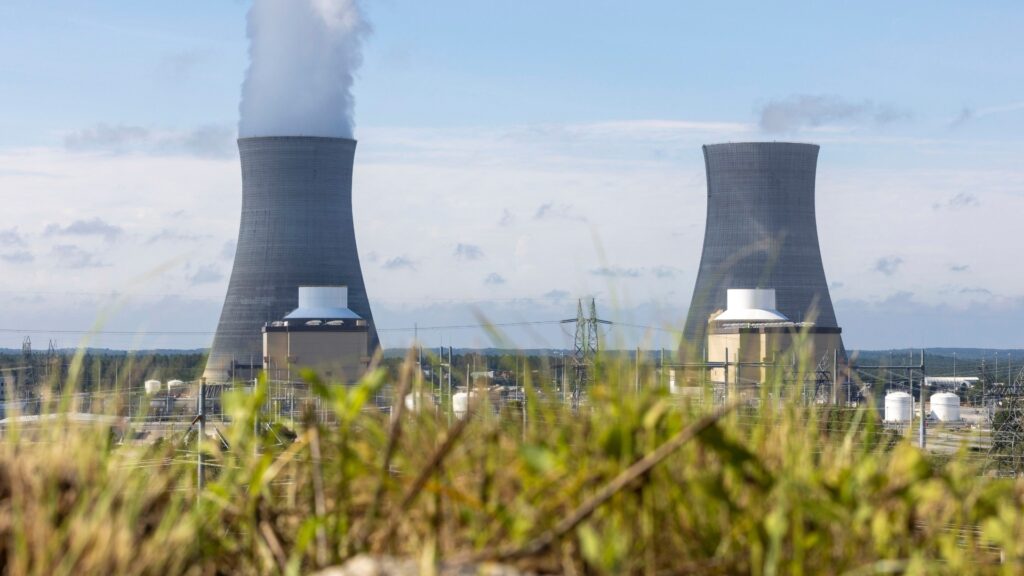
The completion of Plant Vogtle Units 3 and 4 in Waynesboro, Georgia, stands as a financial warning for the global nuclear industry and nuclear power revival. Originally sold to regulators and the public with a price tag of $14 billion, the final cost of the project surged past $35 billion by the time Unit 4 entered commercial operation in April 2024. This $21 billion overrun makes Vogtle the most expensive power plant ever constructed on Earth, shattering budget estimates and forcing a re-evaluation of large- nuclear infrastructure economics.
The project, led by Southern Company subsidiary Georgia Power, was intended to spearhead a “nuclear renaissance” in the United States. Instead, it became a case study in mismanagement. Construction began in 2009 with a pledge to deliver Unit 3 by 2016 and Unit 4 by 2017. Neither deadline was met. Unit 3 did not enter commercial operation until July 31, 2023, followed by Unit 4 on April 29, 2024, seven years behind schedule. The delays were not administrative; they were the result of widespread failures in supply chain management, labor absence, and the catastrophic collapse of the project’s primary contractor.
| Metric | Original Estimate (2009) | Final Reality (2024) | Variance |
|---|---|---|---|
| Total Project Cost | $14 Billion | $35+ Billion | +150% |
| Unit 3 Completion | 2016 | July 2023 | 7 Years Late |
| Unit 4 Completion | 2017 | April 2024 | 7 Years Late |
| Cost Per Kilowatt | ~$3, 000 | ~$10, 784 | +259% |
The Westinghouse Collapse
The primary catalyst for the financial was the 2017 bankruptcy of Westinghouse Electric Company. Westinghouse, the designer of the AP1000 reactor, had signed fixed-price contracts to build Vogtle and the V. C. Summer plant in South Carolina. The complexity of the AP1000 design, which relied on modular construction techniques that had never been tested, led to immediate and severe bottlenecks. Modules arrived at the site with defects, requiring extensive rework.
By March 2017, the mounting losses from these projects forced Westinghouse into Chapter 11 bankruptcy protection. While the V. C. Summer project was abandoned, leaving South Carolina ratepayers with billions in debt for a hole in the ground, Georgia regulators voted to continue Vogtle, transferring project management directly to Southern Nuclear and Georgia Power. This decision shifted the financial risk from the contractor to the utility and, by extension, its customers.
Ratepayers Foot the Bill
The financial load of these errors fell heavily on Georgia residents. Unlike typical infrastructure projects where costs are recovered after completion, Georgia law allowed the utility to collect financing costs during construction through a method known as Construction Work in Progress (CWIP). This meant ratepayers began paying for the plant years before it generated a single watt of electricity.
In December 2023, the Georgia Public Service Commission approved a plan to pass $7. 56 billion of the construction costs directly to ratepayers. This decision, combined with previous hikes, resulted in a cumulative rate increase of approximately 10% to 12% for the average residential customer. Analysis indicates that the average household pay hundreds of dollars annually for decades to cover the capital costs of the expansion. While the utility these units provide 60 to 80 years of carbon-free baseload power, the exorbitant price per kilowatt, over $10, 000 compared to $1, 000 for natural gas or $1, 500 for utility- solar, raises serious questions about the economic viability of future large- reactors.
NuScale and the Collapse of SMR Economics
If Plant Vogtle represented the failure of traditional large- nuclear construction, NuScale Power was supposed to be the antidote. Marketed as the leader of the Small Modular Reactor (SMR) revolution, NuScale promised to deliver factory-built, meltdown-proof reactors that would be faster, cheaper, and safer than their gigawatt- predecessors. This narrative disintegrated on November 8, 2023, when NuScale and the Utah Associated Municipal Power Systems (UAMPS) announced the termination of the Carbon Free Power Project (CFPP). The cancellation of what was intended to be the commercial SMR in the United States exposed a fundamental flaw in the sector’s economic modeling: shrinking the reactor did not shrink the cost per megawatt.
The CFPP, planned for construction at the Idaho National Laboratory, was the bellwether for the entire SMR industry. NuScale had secured the -ever design certification from the U. S. Nuclear Regulatory Commission (NRC) in 2020, technically approving a 50-megawatt module. yet, to make the economics work, NuScale pivoted to a larger, uncertified 77-megawatt design and attempted to sell it to a coalition of municipal utilities across the Mountain West. The sales pitch relied on a target price of $58 per megawatt-hour (MWh), a figure competitive with natural gas and renewables. By January 2023, that target had evaporated.
Revised estimates released ten months before the cancellation revealed a financial emergency. The total project cost for the six-reactor plant had exploded from $5. 3 billion to $9. 3 billion, a 75% increase. Even with billions in anticipated subsidies from the Inflation Reduction Act (IRA) and a $1. 4 billion contribution from the Department of Energy, the subsidized cost of power rose to $89 per MWh. Without those taxpayer injections, the true cost exceeded $100 per MWh, rendering the electricity unsellable to the small municipalities UAMPS represented.
| Metric | 2021 Estimate | 2023 Final Estimate | Change |
|---|---|---|---|
| Target Price (Subsidized) | $58 / MWh | $89 / MWh | +53% |
| Total Project Cost | $5. 3 Billion | $9. 3 Billion | +75% |
| Cost per Kilowatt | ~$11, 400 / kW | ~$20, 100 / kW | +76% |
| Subscription Level | Target: 100% | Actual: 26% | Failure |
The project’s collapse was driven by a “subscription death spiral.” The contract with UAMPS allowed member utilities to withdraw if the target price breached certain thresholds. NuScale needed to secure subscribers for 80% of the plant’s 462-megawatt capacity by February 2024 to proceed. As costs climbed, municipalities like Idaho Falls and others grew wary of the open-ended financial risk. By the time of cancellation, NuScale had only secured commitments for roughly 26% of the output (116 MW). No amount of marketing could convince local governments to sign 40-year contracts for power that was twice the price of wind or solar.
Financial markets reacted violently to the termination. NuScale, which had gone public via a SPAC merger in 2022, saw its stock price plummet over 30% in the days following the announcement. The continued into January 2024, when the company executed a mass layoff, cutting 28% of its workforce, 154 employees, to preserve cash. This restructuring signaled a retreat from immediate deployment ambitions to a survival posture, casting doubt on the company’s ability to commercialize its technology without a guaranteed government backstop.
Technical blocks also complicated the picture. While NuScale frequently its NRC approval, the certification applied only to the smaller 50 MW design. The 77 MW “VOYGR” modules required for the CFPP had not yet received Standard Design Approval, adding regulatory uncertainty to the financial risk. The cancellation validated the warnings of short-sellers like Iceberg Research, which had issued a report in October 2023 questioning the validity of NuScale’s customer base and the viability of its contracts. The collapse of the CFPP demonstrated that while SMRs are technically feasible, their economic viability remains unproven in the face of rising interest rates and material costs.
Hinkley Point C: The United Kingdom’s Money Pit
If the Vogtle expansion in Georgia serves as a warning for the American nuclear industry, Hinkley Point C (HPC) in Somerset stands as a fiscal catastrophe for the United Kingdom. Billed as the of Britain’s energy security and the new nuclear plant in a generation, the project has devolved into a slow-motion financial emergency. As of March 2026, the estimated completion cost has ballooned to £35 billion in 2015 prices, nearly double the original £18 billion budget authorized when the project was greenlit in 2016. When adjusted for inflation, the actual capital expenditure is projected to exceed £48 billion, a figure that dwarfs the GDP of small nations.
The project, led by the French state-owned utility EDF, has missed every major deadline set since its inception. Originally promised to be cooking Christmas turkeys by 2017, the start date for Unit 1 has slipped repeatedly: to 2025, then 2027, and to a “realistic” target of 2030, with risks extending into 2031. These delays have not only shattered the project’s economic rationale have also placed an immense on EDF’s balance sheet, forcing the company to book impairments totaling over €15 billion between 2024 and 2026.
The Strike Price Trap
The financial damage of Hinkley Point C extends beyond construction overruns; it is baked into the contract itself. To secure financing, the UK government agreed to a “Contract for Difference” (CfD) with a strike price of £92. 50 per megawatt-hour (MWh) (in 2012 prices). This method guarantees that EDF receives this amount for every unit of electricity generated for 35 years, with the price indexed to inflation.
While £92. 50 was expensive in 2012, the inflation-linked adjustments have turned the strike price into a load for British consumers. By early 2026, the strike price had risen to approximately £128 per MWh. For comparison, the wholesale price of electricity in the UK has frequently traded £70/MWh, and offshore wind contracts have cleared at prices under £40/MWh. The difference between the market price and the strike price be paid directly by UK households and businesses via a levy on energy bills, locking consumers into paying premium rates for decades.
Geopolitical and the Chinese Exit
The project’s financial architecture collapsed further in late 2023 when China General Nuclear (CGN), which holds a 33. 5% stake in the project, ceased payments for cost overruns. Originally brought in to share the financial risk, CGN halted funding amid rising geopolitical tensions and its removal from the subsequent Sizewell C project. This withdrawal left EDF solely responsible for the ballooning budget deficit.
EDF, already with debt and maintenance problem in its domestic French fleet, has been forced to shoulder the entirety of the additional costs. In February 2026, EDF announced a fresh €2. 5 billion impairment charge specifically linked to the latest Hinkley delays. The French government, which fully nationalized EDF to prevent its collapse, is subsidizing a British infrastructure project that continues to bleed cash.
Timeline of Broken pledge
The history of Hinkley Point C is a chronology of optimistic projections followed by clear corrections. The following table tracks the of the project’s schedule and budget credibility.
| Year of Estimate | Target Completion (Unit 1) | Estimated Cost (2015 Base) | Status |
|---|---|---|---|
| 2016 | 2025 | £18 Billion | Project Approved |
| 2019 | 2025 | £21. 5 , £22. 5 Billion | Cost Revision |
| 2021 | June 2026 | £23 Billion | COVID-19 Delays |
| 2022 | June 2027 | £26 Billion | Supply Chain problem |
| 2024 | 2029 , 2031 | £31 , £34 Billion | Major Re-evaluation |
| 2026 (Current) | 2030 , 2031 | £35 Billion | CGN Funding Stop & Civil Delays |
The ” new of a Kind” Fallacy
Defenders of the project that Hinkley Point C is a ” new-of-a-kind” (FOAK) deployment in the UK, implying that costs fall for subsequent reactors. Yet, the European Pressurized Reactor (EPR) design used at Hinkley is the same technology that failed to meet at Olkiluoto 3 in Finland and Flamanville 3 in France. Rather than learning from these predecessors, Hinkley Point C has replicated their struggles: complex civil engineering requirements, regulatory friction, and a design that demands 25% more concrete and 35% more steel than originally estimated.
The sheer volume of design changes, over 7, 000 required by British regulations, has turned the construction site into a logistical nightmare. While the installation of the steel dome on Unit 1 in December 2023 was hailed as a milestone, it occurred years behind the original schedule. The electromechanical phase, involving the installation of miles of cabling and piping, remains a serious choke point where further delays are likely.
Flamanville 3 Exposes EPR Design Failures
The commercial activation of the Flamanville 3 reactor in Normandy serves as the definitive indictment of the European Pressurized Reactor (EPR) design. Originally authorized in 2007 with a budget of €3. 3 billion and a completion date of 2012, the project collapsed into a seventeen-year construction ordeal that concluded only when the unit reached full power in December 2025. The final financial tally, released by the French Court of Auditors in January 2025, places the total cost at €23. 7 billion, more than seven times the initial estimate.
This project was intended to showcase French industrial supremacy and the “EPR” model as the standard for global nuclear expansion. Instead, Flamanville 3 demonstrated that the design is nearly impossible to construct without severe manufacturing defects. The most damning failure involves the reactor pressure vessel (RPV), the steel heart of the plant containing the nuclear fuel. In 2015, Areva ( Framatome) discovered that the steel in the vessel’s lid and bottom head contained high concentrations of carbon, a defect known as segregation. This anomaly reduces the steel’s toughness and its ability to withstand rapid temperature changes, compromising the component’s structural integrity.
The French nuclear safety authority, ASN, faced an impossible choice: condemn the multi-billion euro vessel or allow it to operate with known flaws. In a controversial 2017 ruling, ASN permitted the reactor to start ordered the permanent replacement of the vessel lid by the end of 2024. This deadline was later pushed to the end of the operating pattern, approximately 18 months after startup. Consequently, Flamanville 3 began operations with a condemned component that must be discarded and replaced, a procedure never before attempted on a new reactor.
widespread failures extended beyond the steel forging. In 2018, EDF detected quality deviations in 150 welds within the main secondary system. The “break preclusion” principle, a safety standard implying that certain pipes are so strong they never rupture, was invalidated by poor workmanship. The situation in June 2019 when ASN rejected EDF’s proposal to leave eight defective penetration welds in the containment structure as they were. The regulator forced the utility to repair these welds in hard-to-access areas, a decision that added three years to the timeline and billions to the budget.
The cumulative effect of these errors destroyed the economic case for the EPR in France. The electricity produced by Flamanville 3 is estimated to cost over €100 per megawatt-hour, far exceeding current market rates for renewables and even other nuclear competitors. While the unit connected to the grid in December 2024, its operational history begins with a legacy of technical incompetence and regulatory exemptions.
Timeline of the Flamanville Debacle
| Year | Event | Cost Estimate (Billions) |
|---|---|---|
| 2007 | Construction begins. Target completion: 2012. | €3. 3 |
| 2011 | major delays announced; concrete pouring problems. | €6. 0 |
| 2015 | Carbon segregation defects found in Reactor Pressure Vessel. | €8. 5 |
| 2019 | ASN orders repair of 8 containment penetration welds. | €12. 4 |
| 2022 | Further delays due to complex heat treatment of welds. | €13. 2 (Construction only) |
| 2024 | Grid connection achieved in December (12 years late). | €19. 1 (Total w/ interest) |
| 2025 | Reactor reaches 100% power; Court of Auditors updates cost. | €23. 7 |
The operational reality of Flamanville 3 remains precarious. The unit must shut down in 2026 to replace the defective vessel lid, a complex maintenance operation that keep the “new” plant offline for months. This requirement confirms that the EPR design, as executed in France, failed to meet the most basic standards of nuclear manufacturing.
Microsoft and the Three Mile Island Resurrection
The most symbolic transaction in the modern history of American nuclear power occurred in September 2024, not in a government hearing room, in a corporate boardroom. Microsoft, driven by an insatiable hunger for electricity to power its artificial intelligence data centers, signed a 20-year power purchase agreement (PPA) with Constellation Energy to restart Three Mile Island Unit 1. The deal, which rebrands the facility as the Crane Clean Energy Center (CCEC), commits the tech giant to purchasing 100% of the plant’s output. This agreement ends the site’s five-year dormancy following its 2019 economic shutdown and attempts to overwrite the legacy of the 1979 partial meltdown at the adjacent Unit 2.
For the nuclear industry, this restart represents a pivot from public utility service to private industrial captivity. Constellation Energy committed approximately $1. 6 billion to refurbish the reactor, a figure that pales in comparison to the cost of new construction remains significant for a restart operation. The refurbishment list is extensive: the main power transformer, turbine, generator, and cooling systems require restoration or replacement. Unlike a simple restart, this project involves physically rebuilding the aging arteries of a plant that was stripped of its fuel and mothballed.
The AI Premium: Pricing and Economics
The economics of the Crane Clean Energy Center reveal the desperation of the technology sector. Market analysis indicates Microsoft agreed to pay a substantial premium over regional wholesale prices. While standard PJM grid prices hovered near $50 per megawatt-hour (MWh), estimates place the Microsoft PPA value between $100 and $115 per MWh. This price point demonstrates that for hyperscale computing companies, the value of 24/7 carbon-free baseload power far exceeds the cost of intermittent renewables.
Federal subsidies further sweeten the ledger for Constellation. The Inflation Reduction Act (IRA) provides a nuclear production tax credit of up to $15 per MWh (frequently as $30/MWh depending on labor requirements), which acts as a financial floor for the operator. also, in November 2025, the Department of Energy closed a $1 billion loan guarantee to support the restart, shifting a portion of the execution risk onto the taxpayer. This of private capital, federal tax credits, and government loan guarantees creates a financial around the project that was impossible a decade ago.
| Metric | Unit 1 (Crane Clean Energy Center) | Unit 2 (Decommissioned) |
|---|---|---|
| Status | Restarting (Target 2028) | Permanently Defueled (1979 Accident) |
| Capacity | ~835 MW | 0 MW |
| Primary Offtaker | Microsoft (100% of output) | N/A |
| Restart Cost | $1. 6 Billion | >$1 Billion (Cleanup Cost) |
| Shutdown Reason | Economic (2019) | Partial Meltdown (1979) |
Regulatory and Physical blocks
The Nuclear Regulatory Commission (NRC) faces a engineering challenge: certifying the safety of a plant that has sat cold for half a decade. The restart process requires a detailed inspection of the steam generators, components notorious for corrosion problem in pressurized water reactors. Constellation must prove that the reactor vessel embrittlement has not advanced to dangerous levels during its previous decades of operation. The NRC’s review process, which accelerated throughout 2025, focuses on the integrity of the non-nuclear side of the plant as much as the core itself. The turbine generator, idle for years, presents a high risk for mechanical failure upon restart if not meticulously overhauled.
Local opposition remains a factor, though it has shifted in nature. While the 1979 accident left deep psychological scars in Dauphin County, the economic vacuum left by the 2019 closure softened resistance. The pledge of 600 permanent jobs and 3, 400 temporary construction roles created a labor coalition that counterbalances safety concerns. yet, critics that the “guinea pig” status of restarting a retired plant introduces unknown variables into the risk equation. Unlike the Palisades plant in Michigan, which also pursued a restart strategy, Three Mile Island carries the unique load of its name, a synonym for nuclear fear.
The Data Center Energy emergency
Microsoft’s move exposes a serious problem for the U. S. power grid: data center consumption is outstripping generation capacity. A single AI query can consume ten times the energy of a standard search, and training large language models requires gigawatt- power. The Crane Clean Energy Center provide approximately 835 megawatts of steady power, enough to run hundreds of thousands of homes, yet it likely power only a fraction of Microsoft’s regional data processing needs. This deal signals a bifurcation in the energy market, where premium nuclear assets are stripped from the public grid to serve private computational empires, leaving residential ratepayers to rely on a mix of gas and intermittent renewables.
“The restart of Three Mile Island Unit 1 is not a return to the past, a preview of a bifurcated energy future where tech giants annex the most reliable infrastructure for themselves.” , Energy Market Analysis Report, October 2025
The Uranium Stranglehold: Rosatom’s Grip on the West
While Western governments champion a nuclear renaissance as a route to energy independence, the fuel powering this revival remains dangerously tethered to the Kremlin. even with sanctions and bellicose rhetoric following the invasion of Ukraine, the United States and European Union continue to rely on Russia’s state-owned nuclear giant, Rosatom, for the enriched uranium essential to their reactor fleets. This dependency exposes a serious vulnerability in the global energy transition: the West possesses the reactors, Russia owns the fuel pattern.
In 2024, Russian supplies accounted for approximately 20% of the enriched uranium used in American commercial reactors, a slight decrease from 27% in 2023 still a strategic liability. The situation in Europe is even more acute. In 2023, Russia provided 38% of the EU’s enriched uranium services and 23% of its natural uranium. Eastern European nations operating Soviet-designed VVER reactors, including Hungary, Slovakia, and the Czech Republic, remain particularly exposed, with utilities holding fuel stockpiles to weather chance cutoffs that could last years.
The “Paper Tiger” Ban and Waiver gaps
The legislative response from Washington has been defined by caveats. On May 13, 2024, President Joe Biden signed the Prohibiting Russian Uranium Imports Act, officially banning Russian low-enriched uranium (LEU) August 2024. yet, the legislation contains a massive escape hatch: the Department of Energy (DOE) can problem waivers through January 1, 2028, if no alternative viable source exists or if imports are in the “national interest.”
This waiver system has kept the trade alive. Centrus Energy, the primary U. S. broker for Russian fuel, received authorization in July 2024 to continue importing Russian LEU for deliveries in 2024 and 2025. The company’s filings with the Securities and Exchange Commission reveal that without these waivers, it would be unable to meet contractual obligations to American utilities. The ban, in practice, functions more as a deferred phase-out than an immediate blockade, acknowledging the uncomfortable reality that the U. S. domestic enrichment capacity was allowed to atrophy to near-zero levels over the last two decades.
Rosatom’s Enrichment Monopoly For Nuclear Power Revival
Russia’s continues to leverage from its dominance in the intermediate steps of the nuclear fuel pattern: conversion and enrichment. While uranium ore is mined globally, in Kazakhstan, Canada, and Australia, it must be converted into gas and spun in centrifuges to be useful. Rosatom controls approximately 44% of the world’s uranium enrichment capacity. This market share allows Moscow to undercut Western competitors on price, hollowing out the supply chains of rivals like Orano in France and Urenco in the UK/Netherlands/Germany consortium.
| Supplier | Region | Approx. Market Share | Key Strategic Role |
|---|---|---|---|
| Rosatom (Tenex) | Russia | 44% | Dominant global supplier; sole commercial HALEU source. |
| Urenco | UK/NL/DE/US | 31% | Primary Western alternative; expanding capacity. |
| Orano | France | 12% | Key EU supplier; increasing output for French fleet. |
| CNNC | China | 13% | Mostly domestic focus; growing export ambitions. |
The chokehold is tightest regarding High-Assay Low-Enriched Uranium (HALEU), a specialized fuel required by advanced reactors. Russia is currently the only commercial supplier of HALEU globally. This monopoly has already claimed casualties in the U. S. advanced nuclear sector. TerraPower, the Bill Gates-backed venture, was forced to delay the launch of its Natrium demonstration reactor in Wyoming from 2028 to at least 2030 solely because it could not secure a non-Russian supply of HALEU. The delay show the fragility of the “advanced nuclear” roadmap, which is currently a vehicle without an engine.
The Kazakh Pivot and the Trans-Caspian Route
Kazakhstan, the world’s largest raw uranium producer (responsible for ~45% of global supply), is attempting to navigate this geopolitical minefield. Historically, Kazakh uranium flowed north through Russia to reach Western markets. In 2024 and 2025, the state-owned miner Kazatomprom aggressively pivoted to the Trans-Caspian International Transport Route (TITR), shipping material west across the Caspian Sea to Azerbaijan and Georgia, bypassing Russian soil. By 2023, 64% of Kazatomprom’s shipments to the West utilized this corridor.
Yet, this logistical decoupling does not equate to financial independence. Rosatom retains significant ownership in key Kazakh mines through joint ventures. Consequently, even uranium that physically bypasses Russia may still financially benefit the Kremlin. The detailed web of ownership means that “non-Russian” uranium frequently carries a Russian dividend, complicating efforts by Western utilities to claim their supply chains are fully sanitized of Kremlin influence.
The U. S. government has responded with cash, awarding $2. 7 billion in late 2024 and early 2025 to domestic fuel makers to restart enrichment capabilities. yet, building centrifuge plants takes years, not months. Until Western capacity comes online in the late 2020s, the nuclear revival remains hostage to the very nation the West seeks to isolate.
The High Assay Low Enriched Uranium Bottleneck
The global nuclear industry faces a supply chain fracture that threatens to strangle the generation of advanced reactors in the cradle. While conventional light-water reactors run on uranium enriched to approximately 5 percent uranium-235, the advanced designs touted by companies like TerraPower and X-energy require High Assay Low Enriched Uranium (HALEU). This fuel, enriched to between 5 and 20 percent, offers higher efficiency and longer core life. As of March 2026, yet, the western supply chain for HALEU remains virtually non-existent, forcing delays on marquee projects and exposing a serious reliance on geopolitical adversaries.
For decades, the United States ceded the commercial production of HALEU to a single global monopoly: Russia. The state-owned giant Rosatom, through its subsidiary Tenex, served as the only commercial entity capable of delivering the metric tons of fuel required to launch a fleet of Generation IV reactors. This dependency collapsed following the invasion of Ukraine and subsequent sanctions. In November 2024, the Kremlin retaliated against U. S. import restrictions by canceling Tenex’s export licenses to the United States, severing the artery of advanced nuclear fuel. The immediate casualty was the schedule of domestic flagship projects.
The TerraPower Delay
The most visible victim of the HALEU absence is the Natrium reactor project in Kemmerer, Wyoming. Backed by Bill Gates and the U. S. Department of Energy (DOE), the project was designed to demonstrate the viability of sodium-cooled fast reactors. Originally slated for operation in 2028, TerraPower announced a minimum two-year delay, pushing the target to 2030. The company admitted that the “only commercial source” of the fuel was no longer viable, and domestic alternatives could not in time to meet the original deadline. Estimates suggest the Natrium demonstration alone requires approximately 15 to 20 metric tons of HALEU for its initial core load, a volume that dwarfs current western production capacity.
The Domestic Scramble: Grams vs. Tons
In response to the emergency, the U. S. government initiated a frantic effort to jumpstart domestic enrichment. The focal point of this effort is Centrus Energy, operating out of Piketon, Ohio. In June 2025, Centrus achieved a serious milestone by producing 900 kilograms of HALEU, completing Phase 2 of its contract with the DOE. While technically a success, this output highlights the severity of the absence. The 900 kilograms produced over a year represents less than 5 percent of the fuel needed to start a single commercial- advanced reactor.
The Department of Energy extended the Centrus contract through June 2026 to produce another 900 kilograms, the math remains unforgiving. To the gap, the DOE announced $2. 7 billion in enrichment contracts in October 2024, selecting companies including Centrus, Urenco USA, and Orano USA to build out capacity. By April 2025, the DOE began its “allocations” of HALEU to five developers, TerraPower, Kairos Power, Radiant Industries, TRISO-X, and Westinghouse, rationing the limited federal stockpile to keep testing programs alive.
| Metric | Status (March 2026) |
|---|---|
| Primary Commercial Supplier (Pre-2022) | Tenex (Russia), Exports Banned |
| US Domestic Production (Centrus) | ~0. 9 Metric Tons / Year |
| Natrium Reactor Initial Core Need | ~15, 20 Metric Tons |
| DOE Funding Injection (Oct 2024) | $2. 7 Billion |
| Projected Commercial Volume Availability | Post-2030 |
Other players are attempting to enter the market, the timeline for nuclear licensing and construction is rigid. Urenco USA, operating in New Mexico, began producing “LEU+” (uranium enriched to between 5 and 10 percent) in December 2025. While this is a necessary precursor step, full HALEU capability requires further infrastructure and regulatory approval. The gap between the 2026 production reality and the 2030 deployment goals creates a “valley of death” for advanced nuclear startups, who must burn cash while waiting for a fuel supply chain that is currently being built from scratch.
The bottleneck is not a logistical hurdle; it is a financial anchor. Without a guaranteed fuel source, utilities are hesitant to sign order books for advanced reactors. The DOE’s HALEU Availability Program attempts to de-risk this by acting as a guaranteed buyer, yet the physical infrastructure, centrifuges, deconversion facilities, and transport packages, cannot be into existence overnight. Until western enrichment capacity from kilograms to metric tons, the “nuclear renaissance” remains a reactor without fuel.
Nuclear Waste Stalemate Paralyzes the Industry
While regulators approve reactor life extensions and startups push small modular designs, the United States nuclear industry faces a physical and financial blockade at the back end of the fuel pattern. As of early 2026, over 96, 000 metric tons of spent nuclear fuel remain stranded at more than 70 reactor sites across 34 states. This inventory grows by approximately 2, 000 metric tons annually, with no permanent disposal repository in operation or even under active construction. The paralysis has transformed power plants into indefinite high-level radioactive waste dumps, forcing taxpayers to cover the escalating costs of a federal government default.
The collapse of the Yucca Mountain project in Nevada, legally as the nation’s sole repository in 1987 defunded since 2010, created a vacuum that private industry attempted to fill. Holtec International and Interim Storage Partners (ISP) proposed Consolidated Interim Storage Facilities (CISF) in New Mexico and Texas, respectively. These facilities were designed to temporarily hold the nation’s waste until a permanent solution could be found. The Nuclear Regulatory Commission (NRC) issued licenses for both projects, the initiatives immediately collided with fierce state opposition and federal court challenges.
In a significant legal blow, the U. S. Court of Appeals for the Fifth Circuit vacated the ISP license in 2023 and the Holtec license in March 2024, ruling that the NRC absence the congressional authority to license private storage facilities away from reactors. The industry saw a glimmer of hope in June 2025, when the U. S. Supreme Court reversed the Fifth Circuit’s decision on procedural grounds, ruling that the state petitioners absence standing to challenge the licenses. Yet, this judicial victory did not clear the route for construction. State laws passed in Texas and New Mexico specifically banning the storage of high-level radioactive waste remain in effect, creating a federal-state constitutional standoff that guarantees the waste not move in the immediate future.
The financial toll of this impasse is borne directly by the U. S. Treasury. Because the Department of Energy (DOE) failed to meet its contractual obligation to begin accepting waste by 1998, the government is liable for the cost of on-site storage. These damages are paid out of the Judgment Fund, a permanent appropriation for legal claims against the U. S. government. As of late 2025, taxpayers have paid over $11 billion in settlements to utilities, with the liability growing by approximately $2 million every day.
| Fund / Liability | Amount (USD) | Status |
|---|---|---|
| Nuclear Waste Fund Balance | $49. 5 Billion | Inaccessible / Unused |
| Judgment Fund Payments (Cumulative) | $11. 2 Billion | Paid to Utilities (Taxpayer Funded) |
| Annual Liability Growth | $800 Million, $1 Billion | Recurring Cost |
| Est. Cost to Complete Yucca Mountain | $96 Billion+ | Unfunded |
The absurdity of the situation is most visible at “stranded” sites, shutdown reactors where the power plant has been dismantled, leaving only a concrete pad of dry casks behind. At the San Onofre Nuclear Generating Station in California, 3. 6 million pounds of highly radioactive waste sit in dry storage just yards from the Pacific Ocean, in a known seismic zone. With no destination, this site must be guarded and maintained indefinitely, preventing the land from being returned to public use. Similar situations exist at Maine Yankee, Zion in Illinois, and Vermont Yankee, where the local communities host radioactive mausoleums with no economic benefit.
The Department of Energy has pivoted to a “consent-based siting” process, launching a consortium in 2023 to find volunteer communities to host interim storage. The DOE awarded $26 million in grants to various groups to dialogue, the timeline for this process spans decades. The agency describes the waste management program as a “250-year” effort, a timeframe that offers no relief to the current operational challenges of the industry. Without a federally defined exit route for the waste, the “nuclear renaissance” risks building a new generation of reactors that simply add to the pile of immovable, toxic liabilities.
Reactor Embrittlement Threatens Life Extensions
The most formidable technical barrier to the nuclear industry’s 80-year operating ambition is not political opposition, the atomic degradation of steel itself. Reactor pressure vessels (RPVs), the massive containment shields that house the nuclear core, are subjected to decades of intense neutron bombardment. This radiation exposure causes the steel’s atomic lattice to harden and lose ductility, a phenomenon known as embrittlement. As reactors age, their vessels become increasingly susceptible to “pressurized thermal shock” (PTS), a scenario where emergency cold water injection during an accident could cause a brittle vessel to shatter like glass, leading to a catastrophic release of radiation. Unlike piping or control rods, the reactor pressure vessel is irreplaceable; if it fails, the plant dies.
Belgium provided a clear demonstration of this reality between 2022 and 2023. The country permanently shut down two of its seven reactors, Doel 3 and Tihange 2, specifically due to concerns over vessel integrity. Inspections revealed thousands of hydrogen flake indications within the steel walls of the vessels. While the operator, Engie Electrabel, argued the units were safe, the combination of these manufacturing defects and radiation-induced embrittlement created an unacceptable safety margin. Doel 3 ceased operations in September 2022, followed by Tihange 2 in January 2023, removing over 2 gigawatts of baseload capacity from the European grid. These closures serve as a concrete warning: vessel degradation is not a theoretical risk a terminal condition for aging infrastructure.
| Reactor Unit | Location | Status | Key Integrity problem |
|---|---|---|---|
| Doel 3 | Belgium | Closed (Sept 2022) | Hydrogen flakes in RPV; embrittlement concerns. |
| Tihange 2 | Belgium | Closed (Jan 2023) | Hydrogen flakes in RPV; embrittlement concerns. |
| Palisades | USA (MI) | Restarting (Est. 2026) | Historically ranked among most embrittled US vessels. |
| Turkey Point 3 & 4 | USA (FL) | License Under Review | 80-year license reversed by NRC in 2022 over environmental data. |
| Civaux 1 & 2 | France | Repaired (2023) | Stress corrosion cracking in safety injection piping. |
In the United States, the Nuclear Regulatory Commission (NRC) faces intense pressure to validate safety models for operation up to 80 years. This “Subsequent License Renewal” (SLR) process encountered a significant regulatory chaotic event in 2022. The NRC reversed its own previous approval of 80-year licenses for the Turkey Point and Peach Bottom nuclear plants, citing insufficient environmental reviews regarding long-term aging impacts. This reversal forced utilities to restart portions of the licensing process, highlighting the regulator’s unease with the scientific data supporting ultra-long-term operation. Research from the Idaho National Laboratory indicates that current regulatory models may systematically under-predict the transition temperature shifts, the point at which steel becomes brittle, at the high neutron fluence levels expected in an 80-year lifespan.
The tension between economic revival and material science is most visible at the Palisades Nuclear Plant in Michigan. Shut down in 2022, the plant is the subject of a historic restart effort backed by a $1. 52 billion Department of Energy loan. Palisades has long been identified by regulators as having one of the most embrittled reactor vessels in the American fleet. Its restart, planned for 2026, bets that advanced annealing techniques and revised safety calculations can manage a risk that previous owners deemed too costly to mitigate. If the vessel’s ductility calculations prove optimistic, the industry’s push for life extensions could face a widespread emergency of confidence.
The Thermodynamic Ceiling: When Rivers Run Too Hot
The fundamental irony of nuclear power is that splitting the atom to generate 3000 megawatts of thermal energy requires a constant, massive supply of cold water to throw two-thirds of that energy away. Nuclear plants operate on the Rankine pattern, where efficiency is dictated by the temperature differential between the reactor’s heat and the environment’s cold. As global water temperatures rise, that differential narrows, creating a “thermodynamic ceiling” that physically prevents plants from operating at full capacity. When river or sea temperatures exceed design thresholds, operators face a binary choice: reduce power to maintain condenser vacuum, or shut down completely to avoid violating environmental discharge permits.
This vulnerability is not theoretical. In July 2024, the Peach Bottom Atomic Power Station in Pennsylvania provided a clear demonstration of this thermal limit. Unit 2 was forced to manually scram (shut down) when high temperatures in the Susquehanna River, combined with a minor equipment problem, caused the main condenser vacuum to degrade. The physics were unforgiving: the river water was simply too warm to condense the steam exiting the turbine, causing backpressure to rise to unsafe levels. This incident show a growing operational reality for the U. S. nuclear fleet, which was largely designed in the 1970s for a climate that no longer exists.
The Efficiency Penalty
Before a plant reaches the point of shutdown, it suffers a silent of power known as the efficiency penalty. Thermodynamics dictates that for every 1°C rise in cooling water temperature, a nuclear plant’s output drops by approximately 0. 4% to 0. 7%. This loss occurs because warmer intake water creates a “softer” vacuum in the condenser, reducing the mechanical work the turbine can extract from the steam.
| Date | Plant / Location | Water Source | Impact |
|---|---|---|---|
| July 2024 | Peach Bottom (USA) | Susquehanna River | Unit 2 Manual Scram due to vacuum loss |
| July 2022 | Golfech / Bugey (France) | Garonne / Rhône Rivers | Output reduced; regulatory waivers granted |
| July 2021 | Loviisa (Finland) | Gulf of Finland | Output reduced to keep discharge <32°C |
| July 2018 | Loviisa (Finland) | Gulf of Finland | Daily curtailments during Nordic heatwave |
| Aug 2023 | Turkey Point (USA) | Cooling Canals | Canal temps neared 100°F; efficiency loss |
The French “Grand Chaud” of 2022
The summer of 2022 in France provided a glimpse of the widespread risk heat poses to a nuclear-heavy grid. With nearly half the fleet already offline for corrosion repairs, a severe drought and heatwave pushed river temperatures in the Rhône and Garonne to record highs. Environmental regulations strictly limit the temperature of water discharged back into rivers to protect aquatic life. Facing chance blackouts, Électricité de France (EDF) was forced to request emergency waivers from the Nuclear Safety Authority (ASN).
These waivers allowed five power stations, Bugey, Blayais, Golfech, Saint-Alban, and Tricastin, to continue operating and discharging water above the regulatory limits. While the total energy lost to environmental curtailment was relatively low (501 GWh), the reliance on regulatory exemptions to keep the lights on revealed a fragile resilience. The system held only because regulators chose to prioritize grid stability over river ecology, a trade-off that become increasingly difficult as heatwaves intensify.
Turkey Point: The Hot Tub Effect
In Florida, the Turkey Point Nuclear Generating Station faces a unique thermal challenge. Unlike plants that draw from deep rivers or oceans, Turkey Point relies on a closed-loop system of 168 miles of cooling canals., this system has functioned less like a radiator and more like a hot tub. In 2014, canal temperatures soared past the 100°F (37. 8°C) operational limit, forcing the Nuclear Regulatory Commission (NRC) to grant an emergency waiver raising the limit to 104°F (40°C). By the summer of 2023, canal temperatures again method triple digits, pushing the plant’s cooling margins to the brink. High evaporation rates in the canals also drive up salinity, threatening the underlying Biscayne Aquifer and forcing the utility to inject millions of gallons of fresh water to dilute the brine.
“The physics were unforgiving: the river water was simply too warm to condense the steam exiting the turbine.”
The industry response has been to engineer around nature. Operators are installing larger heat exchangers, upgrading intake pumps, and seeking regulatory permission to discharge hotter water. yet, these are stopgap measures. As water temperatures globally trend upward, the “thermal headroom”, the safety margin between a river’s temperature and a reactor’s shutdown threshold, is. For a technology marketed as the baseload backbone of a warming world, its susceptibility to that very warming remains a serious, under-addressed liability.
The Price-Anderson Act Shields Corporate Liability
While utility executives tout the economic need of a nuclear renaissance, the industry operates under a unique financial shield that transfers catastrophic risk directly to the American public. The Price-Anderson Act, originally enacted in 1957 as a “temporary” measure to encourage early atomic development, remains the bedrock of nuclear economics nearly seven decades later. In March 2024, as part of the ADVANCE Act, Congress quietly extended this liability protection for another 40 years, ensuring that nuclear operators not face full financial accountability for a major disaster until at least December 31, 2065.
The Act caps the industry’s total liability for a single nuclear incident, creating a between chance damages and available insurance. As of January 1, 2024, the Nuclear Regulatory Commission (NRC) mandates a two-tiered insurance structure., each reactor must carry the maximum available private liability insurance, which was raised to $500 million per site. Second, in the event of an accident exceeding that amount, every reactor operator in the country is assessed a retrospective premium. Following inflation adjustments finalized in late 2023, this secondary requires operators to contribute up to $158 million per reactor.
When aggregated across the roughly 90 operating commercial reactors in the United States, the total funds available to compensate victims of a nuclear catastrophe stand at approximately $16. 6 billion. While this figure appears substantial in isolation, it evaporates when measured against the verified costs of modern nuclear disasters. The cleanup and compensation costs for the 2011 Fukushima Daiichi meltdown have exceeded $200 billion, with estimates climbing higher as decommissioning drags on. Under the current U. S. framework, the nuclear industry is liable for less than 10% of a Fukushima- event.
| Financial Metric | Amount (USD) | Coverage Source |
|---|---|---|
| Primary Insurance (Per Site) | $500 Million | Private Insurers (ANI) |
| Secondary Retroactive Premium (Per Reactor) | $158 Million | Industry-Wide Assessment |
| Total Industry Liability Cap | ~$16. 6 Billion | Price-Anderson Act Limit |
| Fukushima Estimated Cost | $200 Billion+ | Japanese Gov / TEPCO |
| Taxpayer Exposure Gap | $183. 4 Billion+ | Unfunded / Public Liability |
This liability cap functions as a massive, implicit subsidy. If nuclear operators were forced to purchase full private insurance coverage for $200 billion in chance damages, the premiums would render nuclear power instantly uneconomical. A 2024 analysis suggests that without Price-Anderson, the cost of nuclear electricity would surge, as private insurers refuse to underwrite unlimited radioactive contamination risks. By capping liability, the federal government socializes the risk of a meltdown while privatizing the profits of energy generation.
The method for handling damages beyond the $16. 6 billion cap further exposes the taxpayer. The Act stipulates that if damages exceed the industry pool, Congress “take whatever action is deemed necessary” to compensate the public. In practice, this clause designates the U. S. Treasury, and by extension, the taxpayer, as the insurer of last resort. Unlike other high-risk industries such as aviation or oil, where companies can be liquidated to pay for negligence, nuclear operators are statutorily inoculated against the full magnitude of their own worst-case scenarios.
The 2024 extension also expanded protections for Department of Energy contractors, raising the liability cap for incidents outside the United States from $500 million to $2 billion. Yet, for domestic commercial reactors, the fundamental remains unchanged: the industry’s financial survival depends on its legal inability to pay for the destruction it can cause. As utilities push for a new wave of reactor construction under the guise of “advanced” nuclear technology, the financial safety net remains an artifact of the 1950s, shielding corporate balance sheets from the radioactive reality of the 21st century.
Georgia Ratepayers Shoulder the Vogtle Debt
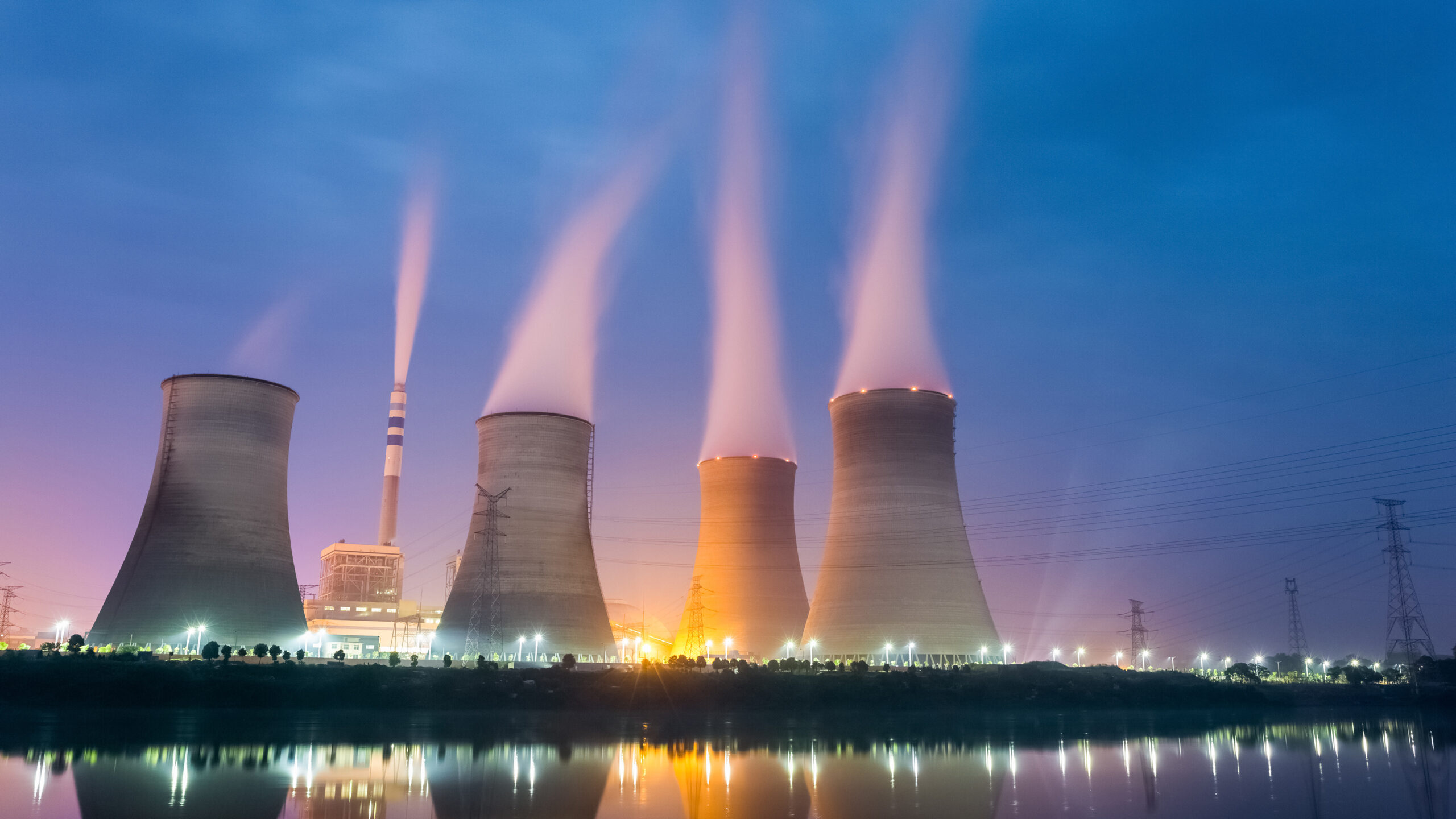
The financial load of the Vogtle expansion has fallen disproportionately on Georgia Power’s captive customer base. While Southern Company executives and state regulators frequently touted the project as a long-term investment in stable energy prices, the immediate reality for residents is a punishing series of rate hikes. By the time Unit 4 entered commercial operation in April 2024, the average residential monthly bill had surged, driven by a method that forced ratepayers to finance the construction years before a single watt of electricity was generated.
Central to this financial architecture was the Nuclear Construction Cost Recovery (NCCR) tariff. Approved by the Georgia legislature, this “Construction Work in Progress” (CWIP) fee allowed Georgia Power to collect financing costs from customers during the construction phase. Between 2011 and 2023, the utility collected over $3. 5 billion from ratepayers solely to service the debt on the delayed reactors. For over a decade, the average Georgia household paid approximately $100 annually for a power plant that was not yet operational. This pre-payment scheme shielded the utility’s credit rating offered no protection to consumers against the project’s ballooning budget.
The completion of the reactors triggered a cascade of rate adjustments that compounded the financial. In December 2023, the Georgia Public Service Commission (PSC) voted unanimously to allow Georgia Power to pass $7. 56 billion of the remaining construction costs onto ratepayers. While the company absorbed roughly $2. 6 billion in costs, a write-off Southern Company had largely accounted for in previous years, the bulk of the capital expenditure was added to the rate base. This decision cemented Vogtle’s status as the most expensive power project in history, with a capital cost of approximately $10, 784 per kilowatt, nearly ten times the cost of a modern natural gas plant.
The 2023-2025 Rate Hike Tsunami
The activation of Units 3 and 4 coincided with other rate pressures, creating a “perfect storm” for billing pattern. Between January 2023 and January 2025, Georgia Power customers faced six distinct rate increases. While were attributed to rising fuel costs, the Vogtle-specific hikes were permanent additions to the base rate, locking in higher prices for the 60-to-80-year lifespan of the plant.
| Date | Primary Driver | Avg. Monthly Increase | Context |
|---|---|---|---|
| January 1, 2023 | 2022 Rate Case | ~$3. 60 | General base rate adjustment approved by PSC. |
| June 1, 2023 | Fuel Cost Recovery | ~$16. 00 | Pass-through of higher natural gas/coal prices. |
| August 1, 2023 | Vogtle Unit 3 | ~$5. 42 | Rate hike triggered by Unit 3 commercial operation. |
| January 1, 2024 | 2022 Rate Case | ~$4. 50 | Scheduled step increase from previous agreement. |
| May 1, 2024 | Vogtle Unit 4 | ~$8. 95 | Final construction cost recovery for Unit 4. |
| January 1, 2025 | 2022 Rate Case | ~$5. 48 | Final scheduled step increase. |
The cumulative effect of these increases has been severe. By mid-2024, the average residential bill in Georgia had risen by approximately $43 per month compared to early 2023 levels. The specific portion attributable to Vogtle Units 3 and 4 stands at roughly $14. 37 per month for the average user, a figure that excludes the years of sunk costs paid through the NCCR tariff. Consequently, Georgia Power residential bills ranked as the 5th highest in the nation in 2024, even with the state’s relatively low cost of living.
The human cost of these policy decisions is clear in disconnection data. In 2024, following the implementation of the largest rate hikes, Georgia Power disconnected approximately 190, 000 residential customers for non-payment, a 30% increase from the previous year. Critics that the PSC failed its mandate to ensure “just and reasonable” rates, prioritizing the utility’s guaranteed return on equity over the solvency of low-income households. The commission defended the hikes as necessary to maintain grid reliability and pay for carbon-free generation, yet the between the project’s final price tag and the cost of alternative low-carbon energy sources remains a point of contention.
Even with the plant fully operational, the financial bleeding for ratepayers has not necessarily ceased. The high fixed costs of nuclear power mean that any future operational problem or lower-than-expected capacity factors at Vogtle likely result in further proceedings to recover costs. The “nuclear renaissance” in Georgia has delivered clean energy, it has done so by extracting a premium from every household in the state, redefining the concept of ratepayer risk in the modern utility era.
The Department of Energy Loan Guarantee Gamble
The survival of the Vogtle expansion was not secured by market economics or private investor confidence, by a massive injection of federal liability. While Southern Company and its partners managed the construction, the Department of Energy (DOE) Loan Programs Office (LPO) served as the project’s financial backstop. Between 2010 and 2019, the DOE committed approximately $12 billion in loan guarantees to the project, a sum that exposed American taxpayers to risks magnitudes larger than the infamous Solyndra default.
The LPO’s involvement began in February 2010 with a conditional commitment of $8. 33 billion. These guarantees were finalized in two tranches: $6. 5 billion in February 2014 for Georgia Power and Oglethorpe Power, and $1. 8 billion in June 2015 for the Municipal Electric Authority of Georgia (MEAG Power). At the time, the DOE justified the risk as necessary to jumpstart the “nuclear renaissance.” yet, the bankruptcy of Westinghouse in March 2017 shattered the project’s financial assumptions, leaving the reactors only partially built and billions over budget. In a functional private market, such a collapse frequently leads to project abandonment, a fate that befell the similar V. C. Summer project in South Carolina, which was terminated in July 2017 after wasting $9 billion.
Vogtle, yet, received a federal lifeline. Instead of cutting losses, the Trump administration’s DOE doubled down. On March 22, 2019, Energy Secretary Rick Perry announced the finalization of an additional $3. 7 billion in loan guarantees. This decision was serious; without it, the project partners likely could not have financed the completion of Units 3 and 4 amidst the chaos of the Westinghouse insolvency. The 2019 agreement brought the total federal guarantee to roughly $12 billion, socializing the risk of the most expensive power plant in history.
The of Taxpayer Exposure
The mechanics of these loan guarantees mean that if the utility owners were to default, the U. S. Treasury, and by extension, the taxpayer, would be obligated to repay the Federal Financing Bank. Critics, including Taxpayers for Common Sense, noted in 2019 that the chance loss from a Vogtle default would be approximately 24 times greater than the $535 million lost in the Solyndra collapse. While Vogtle Units 3 and 4 are operational as of 2024, the “credit subsidy cost”, the estimated cost to the government of providing these guarantees, remained a point of contentious negotiation, with the DOE and project partners struggling to agree on the true value of the risk being transferred to the public.
| Recipient | Feb 2014 / June 2015 Guarantee | March 2019 Additional Guarantee | Total DOE Liability |
|---|---|---|---|
| Georgia Power | $3. 46 Billion | $1. 67 Billion | $5. 13 Billion |
| Oglethorpe Power | $3. 06 Billion | $1. 60 Billion | $4. 66 Billion |
| MEAG Power (Subsidiaries) | $1. 80 Billion | $415 Million | $2. 21 Billion |
| Total | $8. 32 Billion | $3. 68 Billion | ~$12. 0 Billion |
The precedent set by Vogtle has reshaped the LPO’s strategy for the 2020s. Rather than viewing the cost overruns as a deterrent, the DOE has expanded its lending authority to support not just new builds, the resurrection of shuttered fleets. In March 2024, the LPO announced a conditional commitment of up to $1. 52 billion to Holtec International to restart the Palisades Nuclear Plant in Michigan. This marked the time federal loan guarantees were deployed to reopen a decommissioned nuclear facility, signaling a shift from funding “innovation” to subsidizing the rehabilitation of aging infrastructure.
This aggressive lending posture has drawn scrutiny from oversight bodies. A December 2024 report by the DOE Inspector General warned of “massive new risks” associated with the LPO’s rapidly expanding portfolio, which had grown to over $400 billion in authority following the Inflation Reduction Act. The report highlighted that while the LPO’s mission is to the “valley of death” for commercializing technologies, the sheer size of the nuclear loans concentrates immense financial liability. The Government Accountability Office (GAO) echoed these concerns in May 2025, noting that the office was struggling to rigorously review applications fast enough to meet statutory deadlines, raising the specter of insufficient due diligence in the rush to deploy capital.
The “gamble” remains unresolved. While Vogtle is generating electricity, the financial it introduced. The federal government has signaled that nuclear projects are “too big to fail,” creating a moral hazard where private utilities may undertake uneconomic projects with the expectation of a federal bailout if costs spiral out of control. As Santee Cooper considers a restart of the failed V. C. Summer project in late 2025, the industry is once again looking toward Washington to underwrite risks that Wall Street refuses to touch.
Skilled Labor absence Stall Construction Projects
The nuclear industry faces a demographic and logistical emergency that threatens to derail its revival before the new concrete is poured. While financial models frequently focus on interest rates and regulatory blocks, the physical reality of constructing reactors requires a specialized workforce that no longer exists at the necessary. The U. S. Department of Energy (DOE) estimated in its 2025 Pathways to Commercial Liftoff report that the sector requires an additional 375, 000 workers by 2050 to meet capacity goals. This figure includes a serious shortfall in the skilled trades, welders, pipefitters, and electricians, essential for building the complex infrastructure of a nuclear plant.
This labor gap is not a future projection; it is an immediate operational bottleneck. In 2024, 46% of nuclear companies reported serious hiring difficulties that resulted in project delays and extended lead times. The absence drove labor costs up by 10% to 20% in regions as contractors engaged in bidding wars for the limited pool of qualified personnel. Unlike residential construction, nuclear projects demand rigorous certifications. A welder working on a reactor pressure vessel or containment liner must possess American Society of Mechanical Engineers (ASME) nuclear-grade certifications, requiring years of training and experience that cannot be fast-tracked.
The Demographic Cliff
The industry is with a “silver tsunami” of retirements. Data from the 2025 U. S. Energy & Employment Report indicates that 25% of the nuclear workforce is over the age of 55, a significantly higher proportion than the 20% in oil and gas or 10% in the renewable energy sector. This aging demographic presents a dual problem: the physical exit of workers and the loss of “tacit knowledge”, the unwritten, experiential understanding of complex systems that senior technicians carry.
The following table illustrates the demographic between the nuclear sector and the broader energy workforce, highlighting the vulnerability of the nuclear talent pipeline.
| Sector | Workers Aged 55+ | Workers Under 30 | Retirement Risk ( 10 Years) |
|---|---|---|---|
| Nuclear Energy | 25% | 18% | High |
| Oil & Gas | 20% | 22% | Moderate |
| Solar & Wind | 10% | 31% | Low |
| U. S. National Average | 23% | 22% | Moderate |
Competition for Certified Trades
Nuclear projects do not exist in a vacuum; they compete for talent against other booming sectors. The rapid expansion of data centers to support artificial intelligence, along with the semiconductor manufacturing boom driven by the CHIPS Act, draws from the same pool of high-voltage electricians and industrial pipefitters. These industries frequently offer comparable wages with lower blocks to entry and less regulatory oversight. For a young tradesperson, the choice between a strict, security-cleared nuclear site and a commercial data center project frequently favors the latter.
The deficit is most acute in welding. The American Welding Society projects a national absence of 330, 000 to 400, 000 welders by 2028. Within this absence, the subset of welders capable of passing nuclear-grade X-ray inspections is vanishingly small. At the Vogtle Unit 3 and 4 project, rework rates on welds were a significant factor in the schedule slippage. When a weld fails inspection in a nuclear facility, it must be ground out and redone, frequently halting downstream work. The current labor market absence the depth to absorb these, meaning that every error directly into weeks of delay.
Training programs have failed to keep pace with this renewed demand. During the decades of stagnation in new nuclear construction, apprenticeship pipelines for nuclear-specific trades atrophied. Rebuilding this capacity requires a lead time of five to seven years, too slow for utilities aiming to bring Small Modular Reactors (SMRs) online by the early 2030s. Without a sudden influx of qualified labor, the “Nuclear Renaissance” risks becoming a series of unfinished foundations.
China Outpaces Western Nuclear Development Metrics
While the United States and Europe struggle to deliver nuclear infrastructure on time and within budget, China has industrialized the construction of atomic energy with a velocity that exposes the stagnation of Western programs. Data from 2015 to 2025 reveals a widening chasm in deployment efficiency: Beijing is not building more reactors; it is building them three times faster and at a fraction of the cost.
As of early 2026, China operates the world’s fastest-growing nuclear fleet, with 30 reactors under construction, nearly half of the global total. In contrast, the United States, following the completion of Vogtle Units 3 and 4, has zero commercial reactors under active construction. The is most visible in the approval pipeline. In August 2024 alone, China’s State Council approved 11 new reactors with a total investment of approximately $31 billion. This single authorization exceeds the entire nuclear generation capacity added by the United States over the past three decades.
The Speed of Standardization
The primary driver of China’s advantage is its “fleet mode” construction strategy, which prioritizes standardized designs and continuous supply chain mobilization over the bespoke, -of-a-kind engineering that plagues Western projects. Between 2015 and 2025, the average construction timeline for a Chinese reactor, from concrete to grid connection, stabilized between 60 and 70 months (5 to 6 years). The Hualong One, China’s indigenous Gen-III pressurized water reactor, consistently hits these. For instance, the Fuqing Unit 5 began commercial operation in January 2021, just 68 months after construction started.
Conversely, Western projects have suffered from chronic schedule blowouts. The Vogtle expansion in Georgia took over 15 years (180+ months) from initial application to commercial operation. France’s Flamanville 3 EPR project, plagued by welding defects and regulatory halts, exceeded 17 years of construction time. The that a Chinese state-owned enterprise can plan, build, and commission two consecutive reactors in the time it takes a Western consortium to pour the concrete and resolve regulatory disputes for a single unit.
The Cost Chasm
Financial metrics present an even starker contrast. The final price tag for the two AP1000 units at Plant Vogtle reached $35 billion, translating to a capital cost of approximately $15, 600 per kilowatt (kW). In comparison, the approved budget for China’s recent Hualong One projects sits near CNY 17, 000 per kW, or roughly $2, 400 to $2, 600 per kW depending on exchange rates. This means China can construct roughly six nuclear reactors for the cost of a single American unit.
| Metric | Plant Vogtle (USA) | Flamanville 3 (France) | Hualong One Avg (China) |
|---|---|---|---|
| Reactors Delivered | 2 (Units 3 & 4) | 1 (Unit 3) | 10+ (Various Sites) |
| Construction Duration | ~180 Months | ~200+ Months | ~68 Months |
| Cost per Unit | ~$17. 5 Billion | ~$14. 5 Billion | ~$2. 8 Billion |
| Cost per kW | ~$15, 600 | ~$9, 000+ | ~$2, 500 |
| Supply Chain Status | Atrophied / Rebuilding | Fully Localized (>90%) |
Technological Sovereignty and Supply Chain
China’s ability to suppress costs is linked to its localized supply chain. By 2024, the localization rate for the Hualong One reactor exceeded 90%, insulating projects from global supply shocks and currency fluctuations. State-owned manufacturers deliver over 100 sets of nuclear equipment annually, creating economies of that Western vendors, with their sporadic order books, cannot match. This industrial base also supports advanced reactor deployment. In December 2023, China commenced commercial operation of the Shidaowan HTR-PM, the world’s fourth-generation high-temperature gas-cooled reactor, proving its ability to beyond copied designs.
The in metrics signals a shift in global energy leadership. While the U. S. Department of Energy focuses on funding small modular reactor (SMR) designs that have yet to break ground, China is pouring concrete for gigawatt- plants today. With a target to reach 200 GW of installed nuclear capacity by the mid-2030s, Beijing is using nuclear power not just for decarbonization, as a strategic asset to guarantee industrial baseload power while Western grids face increasing instability.
The Olkiluoto 3 Timeline and Budget Failure
The completion of the Olkiluoto 3 (OL3) reactor in Finland serves as the European counterpart to the Vogtle disaster, providing a definitive case study in the failure of the European Pressurized Reactor (EPR) to meet construction. Originally authorized to lead a nuclear renaissance on the continent, the project devolved into an eighteen-year industrial quagmire that bankrupted its primary contractor and missed its original operational deadline by fourteen years. When OL3 began regular commercial electricity production on April 16, 2023, it stood as a monument to the widespread inability of modern nuclear engineering to adhere to schedules or budgets.
Teollisuuden Voima Oyj (TVO), the Finnish operator, signed a fixed-price turnkey contract with the Areva-Siemens consortium in 2003 for €3 billion. Construction commenced in August 2005 with a scheduled grid connection date of May 2009. This deadline proved to be a fantasy. By the time the plant entered commercial service in 2023, the total cost of the project had ballooned to approximately €11 billion. While TVO’s direct investment was capped near €5. 5 billion due to the fixed-price nature of the contract, the French contractor Areva absorbed roughly €5. 5 billion in losses, a financial that necessitated the restructuring of the entire French nuclear industry.
The project suffered from a relentless series of technical failures that exposed deep flaws in the supply chain and quality control method. In 2022, just as the plant neared the finish line, engineers discovered cracks in the impellers of all four feedwater pumps, serious components responsible for pumping water into the steam generators. This discovery forced yet another shutdown of the test production phase. Earlier delays included problem with the vibration dampers in the pressurizer surge line and the detection of foreign material in the turbine steam reheater in May 2022. These were not minor adjustments fundamental hardware defects that required fabrication of replacement parts and extensive re-testing.
“The funds reserved for their completion in the fund method were depleted in the autumn of 2024.”
, TVO Press Release, December 12, 2024, regarding the Areva-Siemens completion fund.
The financial extended far beyond the construction site. To prevent the total collapse of Areva, the French government orchestrated a rescue plan where the healthy assets were sold to Électricité de France (EDF). The toxic liabilities, specifically the obligation to complete Olkiluoto 3, were ring-fenced in a “bad bank” structure. Even after the plant became operational, financial disputes. In December 2024, TVO revealed that the trust fund established by the supplier consortium to cover warranty-period liabilities had been depleted, forcing Areva and Siemens to inject an additional €80 million to meet their contractual obligations.
While the reactor supplies approximately 14% of Finland’s electricity and operated with high reliability throughout 2025, its history remains a warning. The 2018 Global Settlement Agreement, in which the consortium agreed to pay TVO €450 million in compensation for delays, did little to offset the decade of lost generation. The table outlines the disintegration of the project’s timeline.
| Milestone | Original Target | Actual Date | Delay Duration |
|---|---|---|---|
| Construction Start | August 2005 | August 2005 | On Time |
| Commercial Operation | May 2009 | April 2023 | 14 Years Late |
| Fuel Loading | 2008 (Est.) | April 2021 | 13 Years Late |
| Grid Connection | 2008 (Est.) | March 2022 | 14 Years Late |
| Final Cost | €3 Billion | ~€11 Billion | 266% Increase |
The operational success of OL3 in 2025, where it achieved an availability factor of 82. 6%, provides grid stability for Finland, particularly after the cessation of Russian energy imports. Yet, this stability came at a premium that no private investor would willingly accept without state backing. The ” -of-a-kind” defense used by industry proponents to explain the cost overruns ignores the fact that the EPR design was intended to simplify construction, not complicate it. Instead of a standardized, easy-to-build reactor, the Olkiluoto project delivered a custom-built prototype that required nearly two decades to debug.
Solar and Wind Levelized Costs Undercut Fission
The economic case for new nuclear construction has collapsed under the weight of data released between 2024 and 2026. While proponents for the reliability of baseload fission, the financial reality is that utility- solar and onshore wind undercut nuclear costs by margins so wide they are difficult to even with massive subsidies. According to the Lazard 2025 Levelized Cost of Energy (LCOE) report, the unsubsidized cost of generating electricity from a new nuclear plant ranges from $141 to $220 per megawatt-hour (MWh). In clear contrast, utility- solar costs between $38 and $78 per MWh, while onshore wind ranges from $37 to $86 per MWh.
This pricing creates a hostile environment for private capital investment in nuclear energy. For every dollar spent on a new reactor, a utility could procure three to four times the generation capacity using renewable technologies. The gap has widened significantly over the last decade; while nuclear costs have risen due to regulatory complexity and supply chain failures, exemplified by the Vogtle expansion, solar and wind costs have benefited from manufacturing economies of. Even with the inflationary pressures of 2024 and 2025, which saw renewable costs tick upward due to interest rates, the delta remains for fission without direct government intervention.
Comparative Generation Costs (2025 Data)
The following table illustrates the unsubsidized Levelized Cost of Energy (LCOE) for key generation technologies, based on Lazard’s June 2025 analysis. These figures exclude federal tax credits, highlighting the raw economic disadvantage of nuclear power.
| Technology | Low Estimate ($/MWh) | High Estimate ($/MWh) | Average ($/MWh) |
|---|---|---|---|
| Nuclear (New Build) | $141 | $220 | $180 |
| Coal | $69 | $168 | $117 |
| Gas Combined pattern | $48 | $107 | $77 |
| Utility- Solar | $38 | $78 | $58 |
| Onshore Wind | $37 | $86 | $61 |
The “intermittency penalty”, the cost to firm up renewable energy with storage, is frequently as the equalizer for nuclear power. Yet, 2026 data from BloombergNEF (BNEF) this defense. The global benchmark LCOE for a four-hour battery storage system fell 27% year-on-year to reach a record low of $78 per MWh in early 2026. When combined, a hybrid solar-plus-storage project can deliver dispatchable power at approximately $60 to $100 per MWh. This is still roughly half the cost of a new nuclear reactor. The narrative that batteries are too expensive to support a renewable grid is no longer supported by market pricing.
Federal subsidies under the Inflation Reduction Act (IRA) further distort the market against fission. With Production Tax Credits (PTC) applied, the marginal cost of wind and solar in the United States can drop to near zero or even negative pricing during peak generation hours. While nuclear also receives PTC support, the high initial capital expenditure (CAPEX) creates a barrier to entry that tax credits cannot fully offset. Investors face a choice between a solar farm that can be permitted and built in 18 to 24 months or a nuclear plant that requires a decade of capital lock-up with a high risk of abandonment. The market has voted: in 2025, the U. S. added nearly 35 gigawatts of solar capacity, while no new commercial nuclear reactors broke ground.
Global data reinforces this trend. In China, where nuclear construction is cheaper than in the West, solar and wind still maintain a cost advantage. BNEF reported in February 2026 that the global benchmark for fixed-axis solar was $39 per MWh. Even in markets with less optimal solar resources, the economics of photovoltaics have decoupled from the inflationary curves affecting concrete and steel-heavy nuclear projects. The financial sector views new nuclear not as an energy solution, as a liability risk, leaving the industry entirely dependent on state-backed financing and ratepayer guarantees to survive.
Decommissioning Trust Funds Face Insolvency Risks
The financial architecture designed to ensure the safe of America’s nuclear fleet is showing signs of structural failure. Decommissioning Trust Funds (DTFs), federally mandated savings accounts funded by ratepayers during a plant’s operating life, are increasingly to rapid depletion, mismanagement, and market volatility. While verified data from the Nuclear Regulatory Commission (NRC) and independent audits between 2015 and 2025 indicates that aggregate fund balances have risen due to equity market performance, a closer examination reveals a precarious reality for specific sites, particularly those acquired by private decommissioning firms.
The emergence of the “merchant decommissioning” model, where private companies like Holtec International and EnergySolutions acquire shuttered plants to profit from the spread between the DTF balance and the actual cleanup cost, has introduced new insolvency risks. These firms are incentivized to complete work quickly and cheaply, yet recent expenditure a burn rate that outpaces technical progress. For instance, at the Oyster Creek Nuclear Generating Station in New Jersey, the DTF balance plummeted from approximately $826 million in 2019 to $362 million by the end of 2024. This reduction of over $460 million in just five years raises serious questions about the long-term solvency of the fund, especially given that the plant’s spent fuel must be managed on-site for decades.
Regulatory oversight has struggled to keep pace with these aggressive spending strategies. In 2024, the NRC Holtec International for the improper use of DTF assets at the Palisades Nuclear Plant in Michigan. The company withdrew funds to support efforts to restart the reactor, a commercial operational activity, rather than for the strictly defined purpose of radiological decommissioning. While the specific citation covered a relatively small sum of roughly $57, 000, expenditure reports reveal that Holtec spent $164 million from the Palisades fund between June 2022 and December 2023. Critics and watchdogs that this “high burn” rate includes millions in overhead and lobbying costs that do not contribute to the actual reduction of site radioactivity.
The following table illustrates the rapid drawdown of funds at select merchant-owned decommissioning sites compared to utility-managed funds, highlighting the in spending velocity.
| Plant Name | Owner/Operator | Status | 2019 Fund Balance (Est.) | 2024 Fund Balance (Verified) | Net Change |
|---|---|---|---|---|---|
| Oyster Creek (NJ) | Holtec International | Decommissioning | $826 Million | $362 Million | -$464 Million |
| Pilgrim (MA) | Holtec International | Decommissioning | $1. 05 Billion (2018) | $484 Million | -$566 Million |
| Diablo Canyon (CA) | PG&E (Utility) | Operating | $3. 2 Billion | $4. 4 Billion | +$1. 2 Billion |
| Palisades (MI) | Holtec International | Restart Attempt | $550 Million (2022) | $386 Million | -$164 Million |
The insolvency risk is compounded by “scope creep,” where the NRC grants exemptions allowing licensees to use DTF money for spent fuel management and site restoration. Originally, these funds were strictly ring-fenced for radiological cleanup, stripping contaminated concrete and steel. By allowing funds to be diverted to manage nuclear waste storage casks, regulators are shrinking the pool of capital available for the most technically complex phase of demolition. At Indian Point in New York, the DTF exceeds $2 billion, yet the site faces unique environmental challenges, including tritium leaks and proximity to the Hudson River, which could drive costs well beyond generic estimates.
Market reliance remains a double-edged sword. While the bull market of 2023-2024 funds, the 2022 downturn demonstrated how quickly asset values can evaporate. A 2025 study by Callan noted that while funding ratios are currently high, they are heavily dependent on equity returns. A prolonged recession or a period of “stagflation”, where costs rise while investment returns stagnate, could leave multiple sites with partially demolished, radioactive structures and empty bank accounts. In such a scenario, the financial liability would likely revert to taxpayers, mirroring the very bailouts the DTF system was designed to prevent.
also, legal battles show the friction between state attorneys general and private decommissioning firms. In Massachusetts, the Attorney General sued Holtec over the mishandling of asbestos and the use of trust funds at the Pilgrim Nuclear Power Station, resulting in a settlement in early 2024. These disputes signal a breakdown in trust and transparency, suggesting that the financial assurance method intended to protect the public are being tested by profit-driven cost-cutting and creative accounting.
The Palisades Plant Restart Experiment
The resurrection of the Palisades Nuclear Plant in Covert, Michigan, represents a singular, high- experiment in the global nuclear industry: the attempt to restart a reactor that had already entered the decommissioning phase. Unlike the construction delays at Vogtle, Palisades is a test of whether a dormant, 800-megawatt facility, stripped of fuel and sold for scrap, can be legally and technically clawed back into operation. As of early 2026, the project has mutated from a swift turnaround story into a complex regulatory and engineering quagmire, fueled by over $1. 52 billion in federal loan guarantees and beset by technical failures that have pushed its restart date to late March 2026.
Holtec International, a company primarily known for nuclear waste management, acquired Palisades in June 2022 with the stated intent of decommissioning the site. The pivot to restart, announced months later, required a regulatory U-turn that the Nuclear Regulatory Commission (NRC) had never before attempted. This “zombie reactor” status has created a legal gray zone. In November 2025, a coalition including Beyond Nuclear, Don’t Waste Michigan, and Michigan Safe Energy Future filed a lawsuit in the U. S. District Court for the Western District of Michigan, arguing that the NRC’s use of exemptions to bypass standard licensing requirements for a decommissioned plant violates the Atomic Energy Act. The plaintiffs contend that Holtec is building a new nuclear facility on the chassis of a 50-year-old machine without the requisite safety reviews.
The physical reality of the plant has proven more resistant to restart than the paperwork. The most serious failure involves the plant’s two Combustion Engineering steam generators. Inspections in late 2024 and throughout 2025 revealed extensive degradation in the Alloy 600 tubing, a material known for susceptibility to stress corrosion cracking. Data from early 2025 indicates that Steam Generator E-50A alone had 853 indications of axial outside diameter stress corrosion cracking. Rather than replacing these massive components, a process that would cost hundreds of millions and take years, Holtec opted for a repair strategy involving the sleeving of damaged tubes and the controversial “unplugging” of tubes that had been sealed off decades ago by the previous owner, Consumers Energy.
| Component | Status | Defect Count | Repair Strategy |
|---|---|---|---|
| Steam Generator E-50A | Degraded | 853 Axial Indications | Tube Sleeving / Unplugging |
| Steam Generator E-50B | Degraded | 363 Plugged Tubes | Tube Sleeving / Unplugging |
| Weld Certification | Missing Data | Multiple CMTRs Lost | NRC Relief Request |
Further complicating the engineering timeline is a breakdown in quality assurance documentation. In February 2026, it was revealed that Holtec could not locate “certified material test reports” (CMTRs) for serious welds performed during the refurbishment. Without these records, the structural integrity of the repairs cannot be verified to federal standards. Consequently, the company was forced to request regulatory relief from the NRC to bypass the documentation requirement, a move that critics cite as evidence of a “rush to restart” mentality. This absence of paper trails for high-pressure systems has drawn sharp rebuke from former plant staff, including a petition filed by former engineering director Alan Blind, who warned that the plant’s unique licensing basis was being eroded by piecemeal exemptions.
The financial momentum behind the project remains its strongest driver. The Department of Energy’s Loan Programs Office finalized a $1. 52 billion loan guarantee in September 2024. By September 2025, the government had already disbursed six tranches of funding totaling over $491 million. The state of Michigan has committed an additional $300 million in taxpayer funds to support the restart. These sunk costs have created immense political pressure to see the reactor online, even as the technical scope of work expands. The project is months behind its original late-2025 target, with Holtec officials citing the need for “component upgrades” and the completion of the steam generator repairs as the primary causes for the slide into 2026.
The outcome of the Palisades experiment set a precedent for the entire U. S. nuclear fleet. A successful restart could open the door for other shuttered plants to re-enter the grid, chance adding gigawatts of carbon-free power without new construction. A failure, particularly one involving a safety incident with the degraded steam generators, would likely freeze the burgeoning “nuclear renaissance” and validate the arguments of those who say that decommissioning is a one-way street.
Regulatory Streamlining Compromises Safety
The financial hemorrhaging at Plant Vogtle accelerated a legislative and regulatory pivot that safety advocates warn is eroding the foundational standards of U. S. nuclear oversight. Under intense pressure to reduce costs and shorten construction timelines, the Nuclear Regulatory Commission (NRC) has moved toward a “risk-informed” framework that critics prioritizes industry solvency over public protection. This shift culminated in the passage of the ADVANCE Act in July 2024, a legislative mandate that fundamentally altered the agency’s mission.
For decades, the NRC operated with a singular focus: the protection of public health and safety. The ADVANCE Act introduced a conflicting directive, requiring the agency to not “unnecessarily limit” the deployment of nuclear energy. Dr. Edwin Lyman, Director of Nuclear Power Safety at the Union of Concerned Scientists, testified that this language instructs the regulator to protect the financial interests of the industry it oversees. The act mandates reduced licensing fees and expedited reviews, creating a statutory pressure cooker that safety experts fear normalize the approval of unproven designs with diminished safety margins.
The regulatory overhaul is most visible in the development of 10 CFR Part 53, a new licensing rule designed for advanced reactors. Throughout 2023 and 2024, the rulemaking process became a battleground over the definition of “adequate protection.” Industry lobbyists successfully pushed for the removal of prescriptive requirements in favor of “performance-based” metrics. By late 2024, the NRC staff had proposed eliminating specific Quantitative Health Objectives (QHOs) from the rule’s mandatory criteria, a move that allows applicants greater flexibility in how they calculate and present risk. This flexibility, while reducing compliance costs, replaces rigid safety standards with probabilistic models that are notoriously difficult to validate for reactor technologies.
Simultaneously, the physical security architecture of future plants is being dismantled. In October 2024, the NRC advanced a rulemaking proposal for “Alternative Physical Security Requirements” that would allow certain advanced reactor operators to rely exclusively on offsite law enforcement rather than maintaining onsite armed response teams. This proposal ignores the lessons of the post-9/11 era, assuming that local police can respond to a radiological sabotage event at a nuclear facility. The table outlines the of specific oversight method between 2015 and 2025.
| Regulatory Domain | Traditional Standard (Pre-2015) | Streamlined Standard (2024, 2025) | Safety Implication |
|---|---|---|---|
| Agency Mission | Sole focus on public health and safety. | Must not “unnecessarily limit” deployment (ADVANCE Act). | Introduces conflict of interest; prioritizes economic viability. |
| Physical Security | Onsite armed response force required for all reactors. | Offsite law enforcement allowed for advanced designs. | Increases vulnerability to terrorist sabotage and rapid intrusion. |
| Licensing Basis | Prescriptive, deterministic safety requirements. | “Technology-inclusive,” risk-informed performance metrics. | Relies on unproven probabilistic models; harder to enforce. |
| Inspections | Rigorous baseline inspection hours (approx. 2, 500 hrs/year). | Proposed reductions of up to 30-38% in baseline hours. | Reduced independent verification of plant conditions. |
| Emergency Planning | 10-mile Emergency Planning Zone (EPZ). | EPZ chance reduced to site boundary for SMRs. | Eliminates offsite evacuation planning for surrounding communities. |
The push for deregulation extends to the Reactor Oversight Process (ROP) for the existing fleet. Between 2019 and 2024, the industry lobbied for significant reductions in inspection hours, arguing that the current regime was “overly burdensome” for a mature industry. In 2024, NRC staff recommended changes to the ROP that would cut baseline inspection hours by approximately 38 percent. These cuts target the very “defense- ” inspections that identify latent equipment failures before they escalate into accidents. The reduction in direct federal oversight assumes that utility self-assessments are sufficient, a premise contradicted by the widespread quality assurance failures documented during the construction of Vogtle Units 3 and 4.
also, the introduction of High-Assay Low-Enriched Uranium (HALEU) fuel for reactors has introduced new proliferation risks that the streamlined regulations fail to adequately address. While the industry promotes HALEU as essential for advanced reactor efficiency, the material is more attractive for weapons diversion than standard low-enriched uranium. The streamlined licensing pathways expedite the deployment of HALEU infrastructure without the commensurate strengthening of material control and accounting measures required to prevent theft or diversion.
Concrete Degradation in Aging Containment Domes
The assumption that nuclear containment structures, massive domes of reinforced concrete designed to withstand airplane crashes and internal explosions, remain static over decades has been shattered by the physical reality of material science. As the U. S. nuclear fleet pushes past its original 40-year operational lifespan, the concrete encasing these reactors is exhibiting signs of “creeping” degradation that regulators and operators did not fully anticipate. From chemical reactions that expand and crack the matrix to structural delamination that separates of the shield wall, the decay of these serious blocks represents a financial and safety liability.
The most pervasive threat is Alkali-Silica Reaction (ASR), a chemical process frequently described as “concrete cancer.” In the presence of moisture, the silica in the concrete aggregate reacts with the alkali in the cement paste to form a gel. This gel absorbs water and expands, exerting tremendous internal pressure that fractures the concrete from within. Unlike surface weathering, ASR compromises the structural integrity of the entire mass, reducing its shear strength and elasticity.
Seabrook Station: Operating with “Concrete Cancer”
Seabrook Station in New Hampshire stands as the primary case study for operating a reactor with known, progressive structural degradation. NextEra Energy, the plant’s operator, confirmed the presence of ASR in the containment enclosure building and other safety-related structures in 2010. By 2024, the condition remained incurable, managed only through monitoring programs that track the expansion of the building.
The risks of this degradation were tested on January 27, 2025, when a 3. 8-magnitude earthquake struck off the coast of Maine, sending tremors through the Seabrook site. While NextEra reported “no impact” to operations, the event reignited concerns from the C-10 Research & Education Foundation, a watchdog group that has long challenged the adequacy of the plant’s aging management program. Their contention is that ASR-degraded concrete may behave unpredictably under seismic stress, a variable not present in the original design basis. even with these physical defects, the Nuclear Regulatory Commission (NRC) granted Seabrook a license renewal extending its operation to 2050, accepting the operator’s plan to measure crack growth rather than repair the unfixable.
Davis-Besse: The Shield Building Cracks
In Ohio, the Davis-Besse Nuclear Power Station has struggled with a different form of structural failure. In 2011, workers discovered a 30-foot crack in the shield building, the reinforced concrete armor protecting the steel containment vessel. Further inspections in 2013 revealed that the cracking was more extensive than initially thought, attributed to the Blizzard of 1978 which had caused moisture to freeze and expand within the walls. The “tight cracks” run through the subsurface, compromising the monolithic nature of the shield.
Regulatory leniency has accompanied these physical discoveries. On June 5, 2025, the NRC granted Vistra Operations a waiver for certain reactor head inspections at Davis-Besse. The waiver was approved because the plant’s design creates physical interferences that prevent ultrasound equipment from accessing required weld sites. This decision allows the plant to bypass standard American Society of Mechanical Engineers (ASME) code requirements, relying on alternative assessments even with the structure’s compromised history.
The Cost of Failure: Crystal River
When concrete degradation becomes unmanageable, the financial consequences are terminal. The Crystal River Nuclear Plant in Florida provides the industry’s grim benchmark for this reality. During a 2009 steam generator replacement, the process of de-tensioning the containment building’s steel tendons caused the concrete to delaminate, separating into like an onion. Attempts to repair the structure only caused further cracking.
By 2013, Duke Energy determined that fixing the containment building would cost between $1. 5 billion and $3. 4 billion. Faced with these prohibitive costs, the utility permanently shut down the reactor. Crystal River demonstrates that concrete failure is not a maintenance nuisance a capital-intensive emergency capable of ending a plant’s economic life instantly.
Turkey Point: Inspection Failures
Recent inspections at Turkey Point in Florida reveal that oversight gaps. A March 2024 NRC inspection identified a violation regarding the Class I intake structure. Inspectors found that quality control personnel had failed to document the degradation of rebar (reinforcing steel) and the depth of concrete cover, serious metrics for predicting structural lifespan in a saltwater environment. The same report failures to maintain fire barrier walls, further indicating that the physical plant is deteriorating faster than maintenance teams are documenting it.
| Plant | State | problem Identified | Status / Outcome |
|---|---|---|---|
| Seabrook Station | NH | Alkali-Silica Reaction (ASR); 3. 8M Earthquake stress test (Jan 2025) | Operating; License renewed to 2050 with monitoring conditions. |
| Davis-Besse | OH | Shield building laminar cracking; Inspection waiver granted (June 2025) | Operating; Cracks monitored; ASME code relief granted. |
| Turkey Point | FL | Rebar degradation undocumented; Fire barrier failures (March 2024) | Operating; with Non- Violation (NCV). |
| Crystal River | FL | Containment delamination during maintenance | Permanently Closed; Repair costs exceeded $1. 5B. |
| Summer Unit 1 | SC | Concrete degradation in penetrations | Operating; Remediation required during outage. |
The industry’s response to these structural deficits has been to redefine safety margins rather than rebuild impossible-to-replace structures. As the fleet ages, the concrete that stands between the reactor core and the environment is no longer the over-engineered it was at construction. It is a decaying asset, managed through waivers, monitoring, and the hope that the degradation remains slow enough to outlast the license.
Drone Swarms and Physical Security Vulnerabilities
The physical security model for nuclear power plants, designed in the 1970s to repel ground-based commando assaults, has failed to adapt to the reality of cheap, autonomous aerial warfare. While regulators focus on concrete thickness and guard force training, a new asymmetric threat has rendered perimeter fences obsolete. Between 2019 and 2025, verified security logs confirm that unidentified drone swarms have repeatedly penetrated the airspace of major nuclear facilities in the United States and Europe, operating with impunity while security forces stood by, legally powerless to engage.
The most worrying breach occurred in September 2019 at the Palo Verde Nuclear Generating Station in Arizona, the largest nuclear power plant in the United States. On two consecutive nights, a formation of five to six “industrial-sized” drones, estimated at three feet in diameter, descended upon the facility. These aircraft did not fly over; they circled the Unit 3 reactor containment building and the protected area for over 80 minutes. Witnesses reported the drones operated with coordinated precision, illuminating the site with before extinguishing them to evade tracking. even with the presence of armed security personnel, no kinetic countermeasures were deployed. The Nuclear Regulatory Commission (NRC) later described the event in internal documents as a “drone-a-palooza,” yet the operators were never identified, and no arrests were made.
This was not an test of American defenses. In January 2022, Swedish authorities confirmed a coordinated multi-site incursion targeting the Forsmark, Ringhals, and Oskarshamn nuclear power plants. Police patrols and helicopters tracked military-grade drones operating in high winds that grounded smaller commercial units. The Swedish Security Service classified the breach as a “national special event,” acknowledging that the pilots demonstrated sophisticated knowledge of the facilities’ layouts. Unlike the casual hobbyist flights frequently dismissed by regulators, these incursions involved large, high-endurance airframes capable of carrying significant payloads.
Documented Aerial Incursions (2019, 2024)
| Date | Facility | Location | Incident Details | Outcome |
|---|---|---|---|---|
| Sept 29-30, 2019 | Palo Verde Generating Station | Arizona, USA | Swarm of 5-6 heavy-lift drones circled Unit 3 for 80+ minutes. | Perpetrators unknown; no interception. |
| Jan 14, 2022 | Forsmark Nuclear Power Plant | Uppland, Sweden | Military-grade drone navigated high winds; evaded police helicopter. | Classified as “National Special Event.” |
| Jan 14, 2022 | Ringhals & Oskarshamn | Sweden | Simultaneous incursions coordinated with Forsmark event. | No arrests; coordinated probing suspected. |
| Dec 2023 | Langley AFB / Nuclear Sites | Virginia, USA | Swarms probed military and energy sites over several weeks. | General investigation opened; no public attribution. |
| Dec 10-17, 2024 | Multiple US Sites | USA (Nationwide) | NRC reported 26 drone overflights in one week, a 100% surge. | FBI notified; no kinetic mitigation authorized. |
The regulatory response to these incursions exposes a serious gap in the industry’s defensive posture. The NRC’s “Design Basis Threat” (DBT), the master list of attacks a plant must be able to defeat, excludes drone swarms. In October 2019, just weeks after the Palo Verde incident, the NRC staff concluded that drone attacks did not pose a risk significant enough to warrant a mandate for kinetic defenses, citing the robustness of reactor containment domes. This assessment ignores the vulnerability of auxiliary systems, such as switchyards, backup diesel generators, and spent fuel pools, which are frequently less hardened than the reactor core. A precise strike on these soft could sever the plant from the grid or disable cooling capabilities, initiating a station blackout scenario similar to the Fukushima disaster.
Private security forces at U. S. nuclear plants operate under strict federal limitations. While they are authorized to use lethal force against ground intruders, they possess no legal authority to shoot down or electronically jam aircraft. The Federal Aviation Administration (FAA) maintains authority over the national airspace, and shooting at a drone is technically a federal crime equivalent to firing at a manned Cessna. Consequently, security are limited to “observe and report,” leaving billion-dollar serious infrastructure defenseless against a $5, 000 aerial platform carrying explosives or sensor packages.
Data from late 2024 indicates the threat is escalating. In the week of December 10-17, 2024 alone, the NRC recorded 26 separate drone overflights at U. S. nuclear facilities, a sharp increase that suggests systematic probing. As the industry pushes for a massive expansion of nuclear capacity, the refusal to integrate kinetic counter-UAS (Unmanned Aircraft Systems) technology leaves these new plants exposed to the defining weapon of modern conflict.
The Fusion Energy Investment Distraction
While the nuclear industry struggles to deliver fission reactors on time and within budget, a parallel financial phenomenon has emerged that threatens to siphon serious attention and capital away from deployable energy solutions. The “fusion energy revolution,” frequently touted by venture capitalists and tech billionaires as the fix for climate change, has absorbed over $10 billion in private capital between 2020 and 2025. This influx of cash is driven by aggressive marketing campaigns that conflate scientific curiosity with engineering reality, distracting policymakers from the immediate need of deploying existing nuclear and renewable technologies.
The narrative sold to investors is one of imminent breakthrough. Companies like Commonwealth Fusion Systems (CFS) and Helion Energy have secured billions by promising commercial fusion power on the grid by the early 2030s. In August 2025, CFS raised an additional $863 million in Series B2 funding, bringing its total valuation to nearly $3 billion. Similarly, Helion Energy signed a power purchase agreement with Microsoft in 2023, pledging to deliver fusion electricity by 2028, a timeline that independent physicists dismiss as physically impossible given the current state of technology.
These investments are predicated on a fundamental misunderstanding, or deliberate obfuscation, of “net energy” gains. The widely publicized “breakthrough” at the National Ignition Facility (NIF) in December 2022 was hailed as a turning point where fusion generated more energy than it consumed. In reality, the reaction produced 3. 15 megajoules (MJ) of thermal energy from 2. 05 MJ of laser energy delivered to the target. yet, the lasers themselves required approximately 300 MJ of grid electricity to operate. This results in a “wall-plug efficiency” of roughly 1%, a far cry from the viable power source portrayed in press releases. The distinction between $Q_{plasma}$ (scientific breakeven) and $Q_{engineering}$ (total system efficiency) remains the industry’s most guarded sleight of hand.
The Opportunity Cost of Hype
The diversion of financial resources into fusion startups represents a serious opportunity cost for the energy transition. The $7 billion poured into private fusion ventures by mid-2024 could have fully funded the construction of approximately 1. 5 gigawatts of proven advanced fission capacity or nearly 7 gigawatts of utility- solar storage. Instead, this capital is locked in high-risk research and development that, even under the most optimistic independent projections, not contribute a single kilowatt-hour to the grid before 2040.
Public funding has also shifted to chase this mirage. The U. S. Department of Energy and European bodies have increasingly directed grants toward public-private fusion partnerships, frequently at the expense of research into advanced fuel pattern or small modular reactor (SMR) deployment. This gamble assumes that a “SpaceX moment” is inevitable for fusion, ignoring that the physics of magnetic confinement and plasma stability are orders of magnitude more complex than chemical rocketry.
The between industry pledge and engineering reality is clear. The International Thermonuclear Experimental Reactor (ITER), the world’s largest public fusion project, serves as a cautionary tale. Originally scheduled for plasma in 2020, the project has faced catastrophic delays. In July 2024, ITER management confirmed a new timeline that pushes deuterium-tritium operations, the only operations relevant to energy production, to 2039, with cost overruns ballooning the budget by an additional €5 billion.
Table: The Fusion Reality Gap (2020-2025)
The following table contrasts the public claims made by major fusion players against the verified engineering status and independent scientific assessments as of late 2025.
| Entity | Claim / pledge | Verified Status (2025) | Engineering Reality |
|---|---|---|---|
| Helion Energy | Commercial electricity on grid by 2028 (Microsoft Deal). | Prototype “Polaris” under construction; no net energy demonstrated. | Requires massive leap in plasma stability and capacitor efficiency; 2028 target widely considered impossible. |
| Commonwealth Fusion Systems | “Net energy” SPARC reactor operational by 2025; commercial ARC by early 2030s. | SPARC timeline slipped to 2027; commercial plant site selected unbuilt. | Magnet technology proven, plasma physics ($Q> 1$) remains theoretical for this design. |
| National Ignition Facility (NIF) | Achieved “Ignition” (Net Energy Gain) in 2022. | Generated 3. 15 MJ from 2. 05 MJ laser input. | 0. 01% Efficiency: Input required ~300 MJ from grid. Not a viable energy source route. |
| ITER (International Project) | Plasma 2025; Full Fusion 2035. | Delayed: Plasma 2034; Full Fusion 2039. | Cost overruns>€5B since 2020; vacuum vessel welding failures halted progress. |
| TAE Technologies | Commercial reactor by 2030 using hydrogen-boron fuel. | Raised $150M in 2025; still in research phase (Copernicus machine). | Hydrogen-boron fusion requires temperatures 10x higher than D-T fusion; physics unproven. |
The persistence of these aggressive timelines even with repeated failures suggests a decoupling of investment strategy from technical milestones. Venture capital operates on a model where one massive success pays for ninety-nine failures. yet, energy infrastructure requires reliability and proven economics, not lottery-ticket physics. The “fusion distraction” allows politicians and investors to claim they are solving the climate emergency with “moonshot” technology, while avoiding the difficult, unglamorous work of siting fission reactors, upgrading grids, and navigating the regulatory mire of current nuclear deployment.
By 2025, the Levelized Cost of Electricity (LCOE) for theoretical fusion plants was estimated to be over $150/MWh, assuming they could work at all. In comparison, advanced fission aims for $110/MWh, and renewables combined with storage are already deploying at $40-$70/MWh. The economic case for fusion, even if the physics is solved, remains weak without a radical reduction in the cost of superconducting magnets and tritium breeding systems, technologies that are themselves in their infancy.
Global Forging Capacity Limits New Reactor Builds
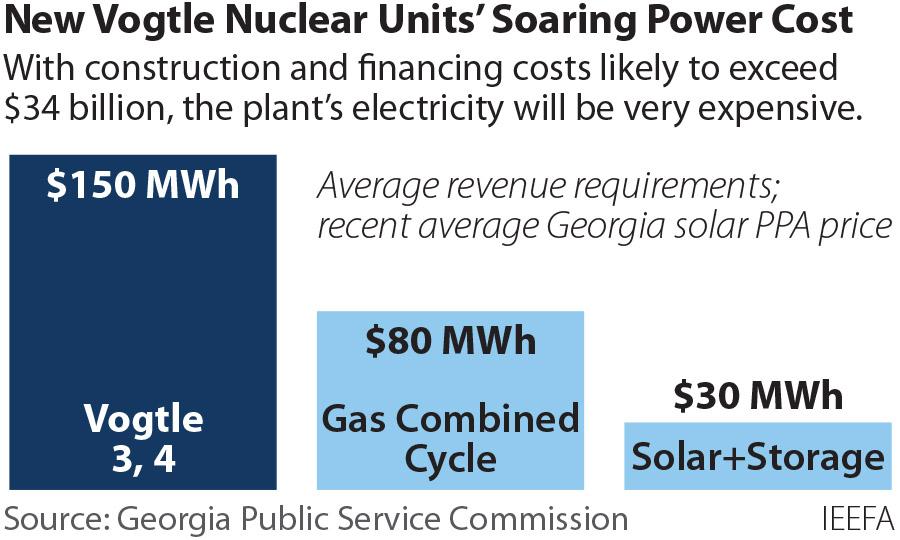
The global nuclear supply chain faces a physical chokepoint that no amount of policy enthusiasm can bypass: the ultra-heavy forge. While governments pledge to triple nuclear capacity by 2050, the industrial reality is that the world possesses fewer than ten manufacturing complexes capable of producing the massive steel components required for Generation III+ reactors. The reactor pressure vessel (RPV), a single-piece steel component weighing up to 500 tonnes, requires ingots of 600 tonnes or more to be pressed, shaped, and treated with flawless metallurgical precision. Without these forgings, there is no reactor.
Japan Steel Works (JSW) remains the linchpin of the Western nuclear industry. Located in Muroran, Hokkaido, JSW controls approximately 80% of the global market for large-size forged components used in pressurized water reactors. As of late 2025, JSW announced a ¥10 billion investment to expand capacity, yet this increase a 1. 5x boost in generator rotor shafts rather than a massive proliferation of RPV lines. The dependency on this single facility creates a strategic vulnerability; a failure or backlog at Muroran through projects from France to the United States.
The situation in Europe and South Korea offers limited relief. Framatome’s Le Creusot forge in France, historically a key supplier, spent the years between 2016 and 2024 recovering from a carbon segregation scandal that forced a suspension of production and a complete overhaul of quality control. By 2025, Le Creusot targeted a production rate of just 80 ingots per year, a fraction of what a global renaissance requires. Meanwhile, South Korea’s Doosan Enerbility has emerged as the primary alternative to JSW, securing orders for the AP1000 and X-energy’s Xe-100 SMRs. In December 2025, Doosan committed to a new fabrication facility to support a pipeline of over 100 SMR modules, signaling a shift toward volume production over the singular gigawatt- vessels.
| Manufacturer | Country | Max Press Capacity (Tonnes) | Max Ingot Size (Tonnes) | Primary Market Focus |
|---|---|---|---|---|
| Japan Steel Works (JSW) | Japan | 14, 000 | 650+ | Global Export (RPV, Rotors) |
| China Heavy Industries (CFHI) | China | 15, 000 | 700+ | Domestic China, Pakistan |
| Doosan Enerbility | South Korea | 17, 000 | 550+ | Export (AP1000, SMRs) |
| Framatome (Le Creusot) | France | 11, 300 | 260+ | France (EPR2), UK (Hinkley) |
| OMZ Izhora | Russia | 12, 000 | 600 | Russia, Rosatom Exports |
| Sheffield Forgemasters | UK | 10, 000 | 300 | Defense (Submarines), SMR R&D |
The rise of Small Modular Reactors (SMRs) does not eliminate this bottleneck; it alters the geometry of the problem. While SMR pressure vessels are smaller and can be produced by a wider range of forges, the sheer volume required to match the output of a large plant creates a new logistical. Replacing a single 1, 100 MW AP1000 with twelve 77 MW NuScale modules multiplies the number of forgings, welds, and inspections by an order of magnitude. Doosan’s 2025 agreement to manufacture 16 sets of main power system components for X-energy highlights this shift: the challenge moves from the size of the press to the throughput of the factory floor.
Geopolitical blocks further fracture the supply chain. China Heavy Industries (CFHI) and Russia’s Atomenergomash possess significant capacity, with CFHI operating a 15, 000-tonne press capable of handling the world’s largest ingots. Yet, trade restrictions and security concerns wall off this capacity from Western markets. The United States and Europe are thus left to rely on the “Big Three”, JSW, Doosan, and Framatome, to supply the steel backbone of their energy transition. With lead times for large forgings already stretching beyond three years, the physical limits of these few facilities dictate the true pace of any nuclear revival, regardless of political ambition.
Small Modular Reactor Cost Estimates Double
The nuclear industry’s pivot to Small Modular Reactors (SMRs) was marketed as the solution to the astronomical costs of large- projects like Plant Vogtle. Proponents argued that factory-built, modular units would standardize construction and slash prices. Yet, the major test of this hypothesis in the United States ended in financial collapse before a single module was built. In November 2023, NuScale Power and the Utah Associated Municipal Power Systems (UAMPS) cancelled the Carbon Free Power Project (CFPP), the flagship SMR initiative intended for the Idaho National Laboratory.
The cancellation followed a dramatic escalation in projected costs that frightened off the municipal utilities expected to buy the power. Between 2021 and 2023, the estimated price per megawatt-hour (MWh) for the project surged by 53%, even after accounting for billions in federal subsidies. The total project cost estimate nearly doubled, rising from $5. 3 billion to $9. 3 billion. This inflation occurred during the design and licensing phase, shattering the narrative that SMRs would be immune to the cost diseases traditional nuclear construction.
The Economics of Failure
NuScale’s business model relied on a subscription system where municipalities would commit to purchasing power decades in advance. Originally, the project pitched a target price of $55 to $58 per MWh, a figure competitive with other baseload sources. By January 2023, updated analysis forced the company to announce a new target of $89 per MWh. Independent analysts at the Institute for Energy Economics and Financial Analysis (IEEFA) noted that this $89 figure was heavily suppressed by an estimated $30/MWh subsidy from the Inflation Reduction Act and a $1. 4 billion contribution from the U. S. Department of Energy (DOE). Without these taxpayer injections, the true cost of electricity from the SMR would have exceeded $120 per MWh.
| Metric | 2021 Estimate | 2023 Estimate | Change |
|---|---|---|---|
| Target Price per MWh | $58 | $89* | +53% |
| Total Project Cost | $5. 3 Billion | $9. 3 Billion | +75% |
| Cost per Kilowatt | ~$11, 500 | ~$20, 100 | +74% |
| Project Status | Active | Cancelled | N/A |
| *The $89/MWh figure assumed>$4 billion in federal subsidies. Unsubsidized costs were projected>$120/MWh. | |||
The cost explosion was driven by rising commodity prices, specifically steel, copper, and electrical equipment, and higher interest rates. These are the same “external factors” that drove the Vogtle overrun, proving that reducing the physical size of a reactor does not grant immunity to macroeconomic forces. The cost per kilowatt for the “cheap” SMR reached approximately $20, 100, a figure comparable to the final, bloated price tag of the Vogtle expansion.
Municipal Exodus
The project required a subscription level of 80% (370 MW) to proceed to construction. As costs climbed, member utilities began to withdraw. By the time of cancellation, subscription had stalled at roughly 26% (116 MW). Municipal leaders in Utah and surrounding states, responsible for local ratepayer funds, refused to sign blank checks for a ” -of-a-kind” technology with no operational track record. The exit of these municipalities forced UAMPS to terminate the project, acknowledging that the “risk of additional cost increases” was too high to bear.
This failure occurred even with massive federal support. The DOE had awarded the project over $1. 35 billion in cost-share funding to de-risk the development. By the time the project died, approximately $600 million of taxpayer money had already been sunk into the venture. The collapse of the CFPP demonstrates that even with aggressive government subsidization, the private market remains skeptical of nuclear economics when asked to shoulder the construction risk.
The cancellation reverberated through the industry, casting doubt on other SMR proposals. While vendors like Holtec and GE Hitachi continue to market similar designs, the NuScale case study established a grim baseline: SMRs, initially sold as a low-cost alternative to renewables and gas, currently face a cost structure that makes them the most expensive form of new power generation on the grid.
Water Consumption Metrics for AI Data Centers
The rapid expansion of artificial intelligence has introduced a serious resource bottleneck beyond electricity: fresh water. While public attention focuses on the gigawatts of power required to run Nvidia H100 clusters, the physical cooling necessitated by these high-density chips is draining local reservoirs at record rates. A 2023 study by the University of California, Riverside, quantified this impact, revealing that a simple conversation with ChatGPT (roughly 20 to 50 queries) consumes approximately 500 milliliters of water, equivalent to a standard single-serve bottle. This metric, when scaled across billions of daily user interactions, represents a massive, largely unmeasured hydrological withdrawal.
Data centers generate immense heat, and to prevent hardware failure, operators frequently rely on evaporative cooling towers. These systems dissipate heat by evaporating water, which is then lost to the atmosphere. In 2023, Google reported that its data centers consumed 6. 1 billion gallons of water, a 17% increase from the previous year. This volume is sufficient to irrigate 41 golf courses annually in the arid southwestern United States. Similarly, Microsoft disclosed a 34% spike in its global water consumption in 2022, reaching 6. 4 million cubic meters (approx. 1. 7 billion gallons), a surge directly attributed to its aggressive AI infrastructure build-out.
The geographic concentration of these facilities exacerbates the problem. In Northern Virginia, known as “Data Center Alley,” the water withdrawal figures are. Loudoun County data centers alone consumed approximately 900 million gallons of water in 2023. Across the entire Northern Virginia region, water usage for digital infrastructure jumped 63% between 2019 and 2023, totaling nearly 2 billion gallons. This localized demand places extreme pressure on municipal utilities, forcing them to divert potable water intended for residential use to cool server racks.
The following table details the escalating water demands of major technology firms driving the AI boom, based on their 2023-2024 environmental reports.
| Company | Total Water Consumption (Gallons) | Year-over-Year Increase | Primary Driver |
|---|---|---|---|
| 6. 1 Billion | +17% | Data center cooling for AI training/inference | |
| Microsoft | 1. 7 Billion (approx) | +34% (2022 figure) | GPT-4 training clusters & cloud expansion |
| Meta | 813 Million | +40% (since 2020) | Llama model development & server density |
Water Usage Effectiveness (WUE) has emerged as the standard metric for evaluating these facilities. WUE is calculated by dividing the liters of water consumed by the kilowatt-hours (kWh) of energy used. The industry average hovers around 1. 8 to 1. 9 liters per kWh. yet, the shift toward generative AI worsens this ratio. Training a model like GPT-3 in Microsoft’s U. S. data centers consumed 700, 000 liters of freshwater, enough to manufacture 370 automobiles. As chip density increases to support more complex models, the heat output per square foot rises, necessitating more aggressive, and water-intensive, cooling solutions.
The environmental cost extends beyond direct withdrawals. The electricity powering these centers frequently comes from thermal power plants (coal, gas, or nuclear), which themselves consume vast quantities of water for steam generation and cooling. This “indirect” water usage can double the total hydrological footprint of an AI query. For instance, a 2024 report indicated that two Google data centers in Council Bluffs, Iowa, used 1. 4 billion gallons of water in a single year. This dual consumption, water for the servers and water for the power plant, creates a effect that threatens water security in drought-prone regions where these facilities are frequently sited due to cheap land and tax incentives.
Operators are attempting to mitigate these numbers with “closed-loop” systems and dry cooling, these alternatives frequently come with a trade-off: higher electricity consumption. Air-cooled chillers require significantly more power to achieve the same thermal management as water-cooled systems, pushing the load back onto the electrical grid. With AI demand projected to drive a 160% increase in data center power consumption by 2030, the tension between water conservation and energy efficiency define the physical limits of the digital economy.
The Geopolitics of Niger Uranium Extraction
The End of the French Era
The July 2023 coup d’état in Niger, led by General Abdourahamane Tchiani, triggered an immediate and hostile restructuring of the global uranium supply chain. For over five decades, France relied on Niger for approximately 15% to 17% of the uranium needed to power its nuclear fleet, a dependency managed through the state-owned giant Orano (formerly Areva). By 2025, this relationship had collapsed. The military junta, prioritizing resource nationalism and a geopolitical pivot away from the West, systematically dismantled French interests in the Agadez region.
In June 2024, the Nigerien Ministry of Mines revoked Orano’s operating license for the Imouraren deposit. With estimated reserves of 200, 000 tonnes, Imouraren is one of the largest undeveloped uranium deposits in the world. Orano had spent years delaying production due to unfavorable market conditions, a hesitation the junta used as legal grounds for the revocation. The asset was returned to the public domain, stripping France of a serious long-term supply buffer.
The situation further at the Somaïr mine, Orano’s only remaining operational site in the country. Following months of blocked exports and logistical strangulation caused by border closures with Benin, operations were halted in October 2024. By June 2025, the junta unilaterally nationalized the mine, expelling Orano from the country. This seizure left approximately 95, 000 tonnes of uranium concentrate stranded or contested, creating a supply shock that forced French utilities to scramble for spot market replacements from Kazakhstan and Namibia.
The Pivot to China and Russia
As Western influence waned, competing powers moved to fill the vacuum. The China National Nuclear Corporation (CNNC) capitalized on the instability to deepen its foothold. In November 2024, Niger signed a framework agreement with CNNC to restart the Azelik mine, which had been under “care and maintenance” since 2015 due to low profitability. Unlike Western firms, Chinese state-owned enterprises demonstrated a willingness to operate in high-risk security environments to secure strategic minerals. Data from 2024 indicates that China became the primary destination for Niger’s uranium exports, replacing France.
Russia also moved to secure assets. Following the expulsion of French troops and the revocation of the Imouraren permit, Russian officials engaged in high-level talks with the junta to acquire mining rights. This serves a dual purpose for Moscow: securing nuclear fuel for its Rosatom exports and gaining geopolitical use over European energy security. The “security for resources” model, employed by the Wagner Group ( Africa Corps) in Mali and the Central African Republic, is being replicated in Niger, placing a portion of Europe’s historical energy supply under Russian influence.
Production Collapse and New Players
The geopolitical turmoil resulted in a severe contraction of Niger’s output. In 2022, the country produced 2, 020 tonnes of uranium. By the end of 2024, production had plummeted to 962 tonnes, a decline of over 52%. The closure of the Cominak mine in 2021 due to depletion, combined with the paralysis of Somaïr, relegated Niger from its status as the world’s fourth-largest producer to eighth place. Namibia, with stable governance and the expanding Langer Heinrich mine, has since surpassed Niger, producing nearly double Niger’s output in 2025.
even with the anti-Western sentiment, the Canadian firm Global Atomic managed to navigate the emergency. Its Dasa project, a high-grade underground mine, retained government support, likely due to a structure that offered the state a 20% stake and the pledge of immediate revenue. Construction continued through the coup, with production expected to commence in late 2025 or early 2026. This exception highlights the junta’s transactional method: foreign operators are permitted only if they accept aggressive state participation and reject the political conditionality frequently attached to Western investment.
| Mine / Project | Operator (2022) | Status (2025) | Geopolitical Shift |
|---|---|---|---|
| Somaïr | Orano (France) | Nationalized / Halted | France expelled; State control |
| Imouraren | Orano (France) | License Revoked | Open to Russia/China bidding |
| Azelik | CNNC (China) | Restarting | China consolidating control |
| Dasa | Global Atomic (Canada) | Construction | Retained (High State Revenue) |
Final Verdict on the Nuclear Renaissance Viability
The financial data from 2015 to 2025 delivers a bleak verdict on the so-called nuclear renaissance. even with aggressive political rhetoric and pledges at summits like COP28, the industry faces an existential emergency driven by uncompetitive economics. The completion of Plant Vogtle in 2024 did not herald a new era of construction rather cemented the reputation of large- nuclear projects as financial quagmires. The numbers reveal a widening chasm between nuclear energy and its renewable competitors.
Lazard’s 2024 Levelized Cost of Energy (LCOE) analysis exposes the fundamental problem. While the cost of wind and solar power has plummeted over the last decade, nuclear costs have risen. The average cost to generate a megawatt-hour (MWh) from a new nuclear plant sits between $141 and $222. In clear contrast, utility- solar costs between $29 and $92 per MWh. Investors seeking a return on capital cannot justify funding nuclear projects that cost nearly four times as much as renewable alternatives. The market has responded accordingly. In 2024 alone, the world added approximately 700 gigawatts of renewable capacity while nuclear managed a meager 7 gigawatts.
The Failure of the SMR Pivot
Proponents of the industry pivoted their hopes to Small Modular Reactors (SMRs) and promised that smaller factory-built units would solve the cost curve. This narrative collapsed in November 2023 with the cancellation of NuScale Power’s Carbon Free Power Project in Utah. NuScale was the only SMR developer with design approval from the U. S. Nuclear Regulatory Commission. The project died after its target price per MWh surged from $58 to $89. The total estimated cost for the installation ballooned from $5. 3 billion to $9. 3 billion. This failure demonstrates that shrinking the reactor size does not necessarily shrink the economic risk.
European Stagnation
The situation in Europe mirrors the American experience. The flagship European Pressurized Reactor (EPR) projects have become cautionary tales. Finland’s Olkiluoto 3 entered commercial operation in April 2023 after an 18-year construction period and costs that tripled the original €3 billion estimate. France’s Flamanville 3 faced similar delays with fuel loading pushed to 2024 and costs exceeding €13. 2 billion. In the United Kingdom, Hinkley Point C has seen its budget spiral to over £43 billion in current values with a completion date pushed to 2029 or later. These projects prove that “Gen III+” technology has failed to deliver the efficiency or cost certainty required for a viable market revival.
| Generation Type | LCOE Range ($/MWh) | Average Cost ($/MWh) | 2024 Global Adds (GW) |
|---|---|---|---|
| Nuclear (New Build) | $141, $222 | $182 | ~7 GW |
| Solar PV (Utility) | $29, $92 | $61 | ~550 GW |
| Wind (Onshore) | $27, $73 | $50 | ~120 GW |
The in deployment speed is visualized. The global energy market votes with its wallet every year. The 2024 capacity additions show that nuclear power is a niche player compared to the exponential growth of renewables.
2024 Global Capacity Additions (Gigawatts)
Source: IEA Global Energy Review 2025 / Lazard 2024 Data
The facts are likely clear that the nuclear industry cannot survive without massive and sustained government subsidies. Private capital has largely abandoned the sector in favor of faster and cheaper alternatives. While existing plants continue to provide baseload power for decades, the prospect of a broad resurgence in new construction is not supported by the economic facts. The “renaissance” remains a political aspiration rather than a market reality.
**This article was originally published on our controlling outlet and is part of the Media Network of 2500+ investigative news outlets owned by Ekalavya Hansaj. It is shared here as part of our content syndication agreement.” The full list of all our brands can be checked here. You may be interested in reading further original investigations here.
Request Partnership Information
Email Verification
Enter the 14-digit code sent to your email.


Kashmir Globe
Part of the global news network of investigative outlets owned by global media baron Ekalavya Hansaj.
Kashmir Globe focuses on breaking news related to human rights abuses, health and policy issues, reform initiatives, and the ongoing conflict between Jammu and Kashmir. Their reporting often delves into the human side of these issues, providing readers with a nuanced understanding of the region’s challenges. One of their recent works, for instance, explores the impact of arbitrary travel bans on journalists and activists, highlighting the suppression of freedom of expression and movement in the region. Kashmir Globe is is also known for their in-depth analysis of policy changes and their effects on the ground. They have covered significant developments such as the abrogation of Article 370, shedding light on its implications for the region’s governance and the rights of its residents. Their work is not only informative but also serves as a call to action, advocating for reforms and policy changes that prioritize the well-being of Kashmiris.