```html
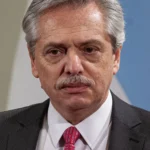
Abdelmadjid Tebboune assumed the presidency of the People’s Democratic Republic of Algeria on December 19, 2019. His ascent followed the forced resignation of Abdelaziz Bouteflika. The election process occurred under extreme duress. Official metrics confirm a voter participation rate of merely 39.88 percent.
Independent observers estimate actual attendance fell below 15 percent in Kabylia and major urban centers. This statistical reality challenges the mandate claimed by El Mouradia. The administration defines its tenure through the slogan "New Algeria." Empirical evidence contradicts this branding.
The executive branch maintains continuity with the prior regime's structural dynamics. Military leadership retains primary influence over strategic decisions. General Saïd Chengriha functions as the de facto power broker behind the civilian facade.
The administration prioritizes the dismantling of the Hirak movement. This pro-democracy coalition demanded a complete overhaul of the governing apparatus. Tebboune responded with legal modifications rather than political dialogue. The June 2021 amendment to Article 87 bis of the Penal Code expanded the definition of terrorism.
This classification now includes any act perceived to harm national unity. Security services utilize this provision to detain activists, journalists, and legal professionals. The incarceration of journalist Ihsane El Kadi exemplifies this trajectory. Authorities dissolved the Algerian League for the Defense of Human Rights (LADDH) in January 2023.
These actions indicate a systematic erasure of civil liberties. The state apparatus enforces silence through judicial persecution.
Economic performance relies almost exclusively on hydrocarbon exports. The Ukraine conflict provided a temporary fiscal surplus in 2022. European demand for natural gas surged. This external event masked domestic industrial stagnation. Hydrocarbons account for 95 percent of export earnings. The government failed to diversify revenue streams.
Non-oil exports remain statistically negligible. Inflation reached 9.3 percent in 2022 according to official central bank data. Food prices experienced double-digit increases. Purchasing power for the average citizen collapsed. Unemployment figures for youth exceed 26 percent. The state utilizes subsidies to prevent social unrest.
This strategy creates long-term fiscal liabilities without generating value.
Geopolitical posturing characterizes the foreign policy doctrine under this leadership. Algiers severed diplomatic ties with Rabat in August 2021. The closure of the Maghreb-Europe Gas Pipeline penalized regional integration. Tensions with Spain escalated following Madrid's endorsement of the Moroccan autonomy plan for Western Sahara.
Trade restrictions against Spanish companies followed. These decisions damaged commercial reputation. The administration sought membership in the BRICS economic bloc. This application faced rejection in August 2023. The denial exposed the gap between domestic propaganda and international perception.
Major emerging economies viewed the Algerian economy as too dependent on fossil fuels.
Internal governance faces allegations of cronyism. The 2020 constitutional referendum recorded the lowest turnout in national history at 23.7 percent. This document concentrated authority within the executive office. Parliament functions as a rubber stamp institution.
Corruption trials targeting Bouteflika-era oligarchs served as a purge of rival clans rather than a justice initiative. Khaled Tebboune, the president's son, faced legal entanglements involving influence peddling. Acquittals in specific cases raised questions regarding judicial independence. The political ecosystem operates through opacity.
Decision-making circles remain closed to public scrutiny. The centralization of power accelerates while administrative competence deteriorates.
The healthcare sector exemplifies systemic neglect. The president sought treatment in Germany for COVID-19 complications in late 2020. This absence lasted months. It highlighted the inadequacy of domestic medical facilities. Citizens face shortages of basic pharmaceuticals. Infrastructure projects experience chronic delays.
The "shadow government" of intelligence agencies and army generals dictates the tempo of administration. Tebboune acts as the interface for this deep state. The promised transition to a civilian state never materialized. Security imperatives dominate all policy considerations. The nation remains locked in a paradigm of authoritarian stability.
| Metric / Indicator |
Data Point / Status |
Verification Source |
| 2019 Election Turnout |
39.88% (Official); <15% (Hirak Est.) |
ANIE / Independent Observers |
| Hydrocarbon Dependency |
95% of Total Export Revenues |
Bank of Algeria (2023 Report) |
| Press Freedom Index |
Rank 136 out of 180 (2023) |
Reporters Without Borders (RSF) |
| Youth Unemployment |
26% to 31% (Age 16-24) |
World Bank / ONS |
| BRICS Admittance |
REJECTED (August 2023) |
15th BRICS Summit Declaration |
```
Abdelmadjid Tebboune represents the quintessential product of the Algerian administrative apparatus rather than the military barracks. His trajectory maps the evolution of the National Liberation Front (FLN) bureaucracy from the Boumédiène era through the Bouteflika epoch. Tebboune graduated from the National School of Administration (ENA) in 1969.
This institution functions as the primary incubator for the civilian managerial elite. His initial assignments placed him in the Saoura department followed by diverse local administrative roles between 1969 and 1974. These early years established his profile as a technocrat capable of executing central directives within the interior provinces.
The next phase of his career saw an ascent through the ranks of the walis (governors). He served as the Secretary General for the provinces of Djelfa, Adrar, Batna, and M’Sila from 1975 to 1979. The central authority subsequently appointed him Wali of Adrar in 1983. He held this governorship until 1984 before transferring to Tiaret.
His tenure in Tiaret lasted from 1984 to 1989. The final gubernatorial assignment placed him in Tizi Ouzou from 1989 to 1991. Tizi Ouzou presented a complex security profile during a period of escalating national tension. Tebboune managed these territories by adhering strictly to the orthodox administrative protocols of the single party state.
His entry into the central executive branch occurred in June 1991. He assumed the portfolio of Minister Delegate for Local Government under the Ghozali administration. This position ended in 1992. Tebboune retreated from the highest echelons during the majority of the civil conflict in the 1990s.
He resurfaced in 1999 following the election of Abdelaziz Bouteflika. The new administration named him Minister of Communication and Culture. He held this post for barely six months before returning to a more technical role. He became the Minister Delegate for Local Government again in 2000.
This assignment served as a prelude to his most significant portfolio.
Tebboune took command of the Ministry of Housing and Urban Planning in 2001. Algeria faced a severe housing shortage at this juncture. He launched the AADL (National Agency for Housing Improvement and Development) program. This rent to buy formula targeted the middle class. The initiative aimed to construct tens of thousands of units.
Technical delays and funding obstructions marked his first tenure. He departed the government in 2002. His return to the same ministry in 2012 marked a shift in execution speed. The state authorized massive budgets to quell social unrest following the 2011 regional disturbances. Tebboune oversaw the completion of massive residential districts.
He delivered over 230,000 units during this second term. This metric served as his primary political asset.
The pinnacle of his pre presidential career arrived in May 2017. President Bouteflika appointed him Prime Minister. Tebboune immediately initiated a confrontation with the business oligarchy surrounding the president’s brother. He targeted the separation of money and political authority.
His administration issued formal warnings to major infrastructure contractors for delays. He blocked import licenses for dominant cartels. This offensive provoked an immediate backlash from the Forum des Chefs d’Entreprise. The power struggle resulted in his dismissal on August 15 2017. His tenure lasted less than three months.
This brief collision with the oligarchs later allowed him to campaign as an outsider to the "gang" system.
| Timeframe |
Position Held |
Key Operational Metric / Action |
| 1975 1979 |
Secretary General (Djelfa, Adrar, Batna, M'Sila) |
Oversight of territorial administration and budget execution. |
| 1983 1991 |
Wali (Governor) |
Managed security and civil affairs in Adrar, Tiaret, and Tizi Ouzou. |
| 1991 1992 |
Minister Delegate for Local Government |
First entry into central cabinet under Ghozali. |
| 2001 2002 |
Minister of Housing |
Inception of the AADL rent to buy housing formula. |
| 2012 2017 |
Minister of Housing & Urban Planning |
Execution of AADL 2. Delivered 230,000+ residential units. |
| May 2017 Aug 2017 |
Prime Minister |
Shortest tenure. Instigated audit of import licenses. |
| Dec 2019 Present |
President of the Republic |
Elected with 58.13% of vote amid widespread boycotts. |
Following his 2017 dismissal he remained marginalized until the Hirak protests of 2019 forced Bouteflika to resign. The military establishment sought a candidate with administrative experience yet distinct from the immediate inner circle of the fallen president. Tebboune fit this profile. He announced his candidacy in September 2019.
The election occurred on December 12 2019. Official figures credited him with 58.13 percent of the vote. Turnout reached a historic low of roughly 40 percent. He assumed the presidency facing the dual challenge of a legitimacy deficit and declining hydrocarbon revenues.
The operational tenure of Abdelmadjid Tebboune presents a statistical anomaly in the annals of North African governance. His administration operates under the shadow of a legitimacy deficit stemming directly from the December 2019 election metrics. The Independent National Authority for Elections (ANIE) reported a participation rate of 39.88 percent.
This figure stands as the lowest turnout in Algerian pluralist history. Millions boycotted the polls. The Hirak movement labeled the process a charade designed to regenerate the existing power structure rather than replace it. Tebboune secured 58.13 percent of the ballots cast yet the absolute number of votes represented a fraction of the electorate.
This mathematical reality haunts the executive branch. It necessitates a reliance on security apparatuses to maintain order.
A forensic examination of the Tebboune family record uncovers significant legal entanglements. The "Cocaine Affair" remains a primary point of contention. In May 2018 security forces seized 701 kilograms of cocaine at the port of Oran. The narcotics arrived hidden within containers of frozen meat. The principal suspect was Kamel Chikhi.
He is known as "El Bouchi" or The Butcher. Investigations placed Khaled Tebboune in proximity to this network. The president’s son faced pre-trial detention for 18 months. Although the judiciary acquitted him of drug trafficking charges in February 2020 the court convicted him on corruption counts.
These included influence peddling and accepting undue benefits. Critics argue this scandal precipitated Abdelmadjid Tebboune’s dismissal as Prime Minister in August 2017. He held that office for less than three months before Ahmed Ouyahia replaced him.
The administration accelerated the suppression of dissent through legislative engineering. Executive Order 21-08 amended the Penal Code in June 2021. This modification introduced a broad definition of terrorism under Article 87 bis. The new legal text classifies any act aimed at changing the system of governance by unconstitutional means as sabotage.
Human rights organizations report that authorities use this article to prosecute peaceful activists and journalists. The state designated the movement for the Autonomy of Kabylie (MAK) and the Rachad movement as terrorist organizations. This classification permits the seizure of assets and lengthy prison terms for members.
Security services arrested hundreds of individuals linked to the Hirak. The dissolution of the Youth Action Rally (RAJ) in October 2021 exemplifies the dismantling of civil society infrastructure.
Press freedom metrics deteriorated sharply under this regime. The imprisonment of Khaled Drareni serves as the central case study. Police arrested the journalist in March 2020. Prosecutors charged him with inciting an unarmed gathering and damaging national unity. His coverage of the Hirak protests triggered the state response.
Courts sentenced him to three years in prison. An executive pardon later released him but the message to the media sector was clear. The closure of Radio M and the arrest of its director Ihsane El Kadi further confirm this trajectory. El Kadi faced accusations regarding foreign funding. Authorities sealed the headquarters of the media outlet.
Reporters Without Borders downgraded Algeria in its World Press Freedom Index. The nation fell to position 139 out of 180 countries in 2024.
Medical opacity characterized the first year of the presidency. Tebboune contracted COVID-19 in October 2020. The presidency transferred him to Germany for emergency treatment. He remained absent from the country for two months. This disappearance created a power vacuum reminiscent of the Bouteflika era.
The general public received sparse updates regarding his condition. Rumors circulated concerning his capacity to govern. The constitutional council did not meet to declare an impediment. Important decrees required his signature. The 2021 Finance Law awaited his ratification. He returned in December 2020 only to depart again for foot surgery.
This biological vulnerability raised questions about the stability of the executive office.
| Controversy Vector |
Key Metric / Date |
Investigative Detail |
| Electoral Legitimacy |
39.88% Turnout (2019) |
Lowest participation in national history. Massive boycotts recorded in Kabylia region where voting approached zero. |
| The "Cocaine Affair" |
701 Kilograms Seized |
Involved Khaled Tebboune. Led to corruption conviction for the son of the head of state. Connected to Kamel Chikhi. |
| Legal Repression |
Article 87 bis |
Expanded "terrorism" definition to include political demands. Used to ban MAK and Rachad. |
| Press Freedom |
Rank 139 (RSF 2024) |
Imprisonment of Ihsane El Kadi and Khaled Drareni. Shutdown of Radio M and Maghreb Emergent. |
| Diplomatic Rupture |
August 2021 |
Severed ties with Morocco. Closed airspace. Halted gas pipeline exports through the Maghreb-Europe line. |
Diplomatic aggression defines the foreign policy doctrine. Algiers severed relations with Rabat in August 2021. Foreign Minister Ramtane Lamamra announced the decision. He cited "hostile actions" by the Kingdom of Morocco. The High Security Council closed Algerian airspace to all Moroccan aircraft. This decision carried economic consequences.
The state declined to renew the contract for the Maghreb-Europe Gas Pipeline. This infrastructure transported natural gas to Spain via Morocco. The termination deprived Rabat of transit fees and gas supplies. Tensions with Spain also spiked after Madrid endorsed the Moroccan autonomy plan for Western Sahara.
Algiers suspended the friendship treaty with Spain in June 2022. These maneuvers indicate a strategy of utilizing energy exports as a lever for geopolitical pressure.
Abdelmadjid Tebboune assumed the presidency in December 2019 amid a distinct statistical reality. The Independent National Authority for Elections reported a voter participation rate of 39.88 percent. This figure stands as the lowest in Algerian pluralistic history. The Hirak movement boycotted the polls.
Citizens viewed the exercise as a regeneration of the existing ruling apparatus. Tebboune entered the El Mouradia Palace with a legitimacy deficit. His tenure focuses on consolidating the central authority. The administration branded itself "L'Algérie Nouvelle" or New Algeria.
Investigative analysis reveals a reinforcement of the military and bureaucratic axis. The separation between the People’s National Army and the executive branch remains theoretical. General Saïd Chengriha exerts substantial influence over state direction.
The legislative legacy centers on the suppression of dissent through code modifications. The government amended the Penal Code in June 2021 via presidential ordinance. Article 87 bis expanded the definition of terrorism. This clause now includes acts aiming to change the system of governance by non-constitutional means.
Authorities utilize this legal instrument to prosecute journalists and activists. The case of Ihsane El Kadi exemplifies this trend. A court sentenced the journalist to prison for receiving foreign funding. Security services arrested hundreds of individuals linked to the Hirak. The promised freedoms of the 2020 Constitution revision exist only on paper.
That constitutional referendum witnessed a turnout of 23.7 percent. The majority of the electorate remained disengaged. This apathy indicates a profound disconnect between the populace and the state.
Economic policy relies heavily on hydrocarbon revenue. The rise in global energy prices during 2022 provided a fiscal shield. Foreign currency reserves recovered to approximately 66 billion dollars by early 2023. This accumulation results from market volatility rather than structural reform.
The administration enforced strict import restrictions to protect these reserves. These measures caused shortages in vehicle parts and medical equipment. The manufacturing sector struggles to access raw materials. Tebboune promised to recover stolen funds from the Bouteflika era. The recovery process yielded minimal tangible returns.
The informal economy continues to dominate commercial activity. Youth unemployment figures remain obstinately high. The publicized support for startups has not altered the macroeconomic dependency on oil and gas.
The administration pursued an aggressive geopolitical strategy. Algiers applied for membership in the BRICS bloc. State media presented accession as a certainty. The bloc rejected the application in August 2023. This diplomatic outcome contradicted months of domestic propaganda. It highlighted the disparity between Algerian ambition and economic metrics.
The GDP per capita did not meet the expectations of the emerging economies group. Conversely, the conflict in Ukraine positioned Algeria as a pivotal gas supplier to Europe. Italy signed extensive agreements to secure energy supplies. Tebboune utilized this leverage to neutralize European criticism regarding human rights records.
Relations with France oscillate between reconciliation and diplomatic frost. The memory laws and visa restrictions serve as recurring points of friction.
Public trust faces erosion due to perceived selective justice. The "Kamel the Butcher" cocaine case casts a long shadow. This scandal involved the seizure of 701 kilograms of cocaine in Oran. Khaled Tebboune faced accusations of influence peddling related to the main suspect. The judiciary acquitted the President's son in February 2020.
Critics argue this verdict demonstrates the immunity of the inner circle. Anti-corruption tribunals focus primarily on figures associated with the previous Gaïd Salah clan or the Bouteflika regency. The purging of the intelligence services disrupted the internal balance of power.
The Direction of Internal Security gained prominence under the current leadership. This centralization of intelligence functions aims to prevent palace coups. It effectively eliminates checks on presidential decisions.
The following dataset illustrates the divergence between official rhetoric and verified indicators during the Tebboune presidency.
| Metric Category |
Reported Value / Status |
Investigative Context |
| Electoral Participation (2019) |
39.88 Percent |
Lowest in national history. Millions boycotted. Legitimacy contested by Hirak. |
| Constitutional Referendum (2020) |
23.70 Percent |
Record abstention. Constitution passed by a minority of the total electorate. |
| Foreign Reserves (2023) |
66 Billion USD |
Driven by external gas price spikes. Not a result of internal productivity. |
| Press Freedom Rank (RSF 2023) |
136th of 180 |
Legal harassment of journalists. Closure of Radio M and Liberté. |
| BRICS Accession |
Rejected |
Failed despite high level diplomatic lobbying and financial pledges. |
| Hydrocarbon Dependency |
90 Percent of Exports |
Diversification goals missed. Non oil exports remain below 7 billion USD. |
Social programs targeted the "shadow zones" or impoverished rural areas. The government allocated funds to improve infrastructure in these regions. Implementation faced bureaucratic hurdles. Local walis or governors bear the pressure to deliver rapid results. This often leads to superficial projects designed for media consumption.
The housing crisis persists in urban centers. Water scarcity incites sporadic protests. The desalination plant projects lag behind the accelerating demand. Tebboune governs through a top down approach. He issues direct orders to ministers during cabinet meetings. This micromanagement reveals a lack of confidence in the administrative chain.
The state functions in a reactive mode. It responds to emergencies rather than executing a long term vision.
The military establishment remains the final arbiter of power. The transition from Bouteflika to Tebboune did not civilianize the state. It merely reconfigured the clans within the deep state. The High Security Council meets frequently to decide on strategic matters. The content of these meetings remains classified.
This opacity fuels speculation regarding the health of the President. His medical transfer to Germany for COVID treatment evoked memories of his predecessor. The system prioritizes stability over genuine democratization. The legacy of this term is the restoration of the status quo ante. The faces changed. The mechanisms of control tightened.
The New Algeria mirrors the old one with updated penal codes.