
| Metric | Value (Dec 2019) | Value (Dec 2023) | Change / Delta |
|---|---|---|---|
| Annual Inflation (CPI) | 53.8% | 211.4% | +157.6 pp |
| Poverty Rate | 35.5% | 41.7% | +6.2 pp |
| USD Blue Rate | $69 ARS | $1,025 ARS | +1,385% |
| Net BCRA Reserves | $12 Billion USD | -$11.2 Billion USD | Decrease of ~$23B |
| Cumulative Inflation | N/A | 1,020% | Total Term Impact |
Timeline (Key Markers)
December 2023
Summary
Alberto Fernu00e1ndez concluded a four-year tenure marked by severe macroeconomic deterioration and multiple judicial investigations involving alleged corruption.
May 2003
Career
Alberto u00c1ngel Fernu00e1ndez constructed his professional trajectory within the bureaucratic arteries of the Argentine state long before ascending to the Casa Rosada.
1985u20131989
Chronology of Official Tenures and Metrics
Period Official Position Key Action or Metric 1985u20131989 Assistant Director, Ministry of Economy Managed legal affairs during Austral Plan implementation.
July 14, 2020
Controversies
The tenure of Alberto Fernu00e1ndez stands as a case study in executive disintegration.
December 2019
Legacy
Alberto Fernu00e1ndez concluded his tenure leaving the Argentine Republic in a condition of verified administrative exhaustion.
Full Bio
Summary
Alberto Fernández concluded a four-year tenure marked by severe macroeconomic deterioration and multiple judicial investigations involving alleged corruption. The administration exited government in December 2023 leaving the Argentine Republic with a yearly inflation rate exceeding 211 percent. This figure represents the highest recorded price acceleration since 1991. Poverty metrics climbed sharply during this timeframe. Official data from INDEC placed 41.7 percent of citizens below the poverty line upon his departure. Destitution levels rose to 11.9 percent. Central Bank reserves stood at a negative balance estimated at nearly 11 billion dollars.
Fiscal deficits remained a constant variable throughout the term. The executive branch financed spending primarily through monetary emission. This strategy expanded the monetary base significantly. Consequently the value of the national currency plummeted. The exchange rate gap between the official peso and parallel market valuations surpassed 150 percent at various intervals. Such financial distortion destroyed salary purchasing power. Real wages declined for forty-eight consecutive months. Private sector employment stagnated while public sector hiring expanded.
Judicial authorities currently investigate the former head of state regarding the "Nación Seguros" scandal. Federal Judge Julián Ercolini oversees the dossier labeled 681/2024. Prosecutors allege the existence of an illicit association orchestrated to divert funds from state insurance contracts. Decree 823/2021 mandated that all government entities purchase policies exclusively through Nación Seguros. Evidence suggests this regulation facilitated the insertion of private brokers who collected commissions reaching 17 percent. These intermediaries allegedly provided no tangible service.
Broker Héctor Martínez Sosa appears as a central figure in this inquiry. He maintains a long-standing friendship with Alberto. Records seized from the mobile device of María Cantero revealed incriminating communications. Cantero served as the historic secretary to the President. Messages indicate direct intervention by Fernández to favor Martínez Sosa in securing contracts with Gendarmería and other dependencies. The audit detected 3.4 billion pesos paid in commissions between 2020 and 2024. The fraud potentially encompasses forty-five state agencies including ANSES and the Ministry of Security.
Simultaneously the judiciary examines charges of gender violence filed by Fabiola Yáñez. The former First Lady initiated legal action from Madrid. She accuses her ex-partner of physical aggression and psychological harassment. Photographs leaked to the press show Yáñez with bruising on her face and arm. Chat logs dating from August 2021 corroborate these incidents. The defense denies all allegations. Prosecutor Ramiro González has requested testimony from medical staff and domestic employees who resided at the Quinta de Olivos.
Another focal point of controversy involves the "Olivosgate" event. During strict mandatory isolation in July 2020 the President hosted a birthday celebration for Yáñez. Photographic proof surfaced one year later showing twelve individuals gathering without masks or social distancing. This occurred while citizens faced criminal prosecution for violating quarantine orders. The revelation caused irreversible damage to presidential authority. Fernández eventually paid a monetary fine to settle the case.
Diplomatic relations also suffered. The administration aligned closely with the Puebla Group and maintained ties with Venezuela and Cuba. This geopolitical stance created friction with traditional trading partners. Negotiations with the International Monetary Fund resulted in a refinancing agreement that failed to meet quarterly targets. The Extended Fund Facility program required waivers consistently as fiscal discipline vanished. Sovereign bonds traded at distress levels indicating total loss of market confidence. Country risk points hovered near 2,500 by the mandate's end.
Internal political conflict defined the coalition dynamic. Tensions between the President and Vice President Cristina Fernández de Kirchner paralyzed management. Cabinet changes occurred frequently. Three different officials held the Economy Ministry portfolio. Martin Guzmán resigned in July 2022 followed by the brief interim of Silvina Batakis. Sergio Massa assumed control subsequently but could not reverse the inflationary spiral. The rupture in the executive leadership left the administration without political capital to execute reforms.
Career
Alberto Ángel Fernández constructed his professional trajectory within the bureaucratic arteries of the Argentine state long before ascending to the Casa Rosada. His early curriculum vitae reflects a focus on technical legalities rather than retail politics. He graduated from the University of Buenos Aires as a lawyer in 1983. He subsequently entered the judicial branch as an official in the criminal instruction court system. This foundational period established his reliance on procedural maneuvering. He later transitioned to the executive branch during the administration of Raúl Alfonsín. There he served as Assistant Director General of Legal Affairs within the Ministry of Economy. This role required navigating the complex regulatory framework of a nation facing hyperinflation.
The 1990s marked his consolidation as a technical operator under the Carlos Menem administration. From 1989 to 1995 he functioned as the National Superintendent of Insurance. He presided over the Latin American Association of Insurance Supervisors during this interval. This tenure provided him with deep insight into financial regulations and corporate liability. He left the position in 1995. He then pivoted toward political organization within the peronist structure. He helped found the Grupo Calafate in 1998. This think tank served as the intellectual and logistical engine for the presidential ambitions of Néstor Kirchner. The group orchestrated the alliances necessary to bypass the established apparatchiks of the Justicialist Party.
His tenure as Chief of the Cabinet of Ministers defines his mid-career profile. He assumed this post in May 2003 following Néstor Kirchner’s inauguration. He retained the position after Cristina Fernández de Kirchner succeeded her husband in 2007. Fernández held this office for five years. This duration remains a record in Argentine history. Data from this era indicates a period of economic expansion driven by high commodity prices. The administration maintained fiscal and trade surpluses. The Cabinet Chief acted as the primary negotiator with media conglomerates and labor unions. He filtered access to the executive. His influence permeated every ministry. He resigned in July 2008 following the legislative defeat of Resolution 125. This measure sought to increase export taxes on grain. The resulting conflict with the agricultural sector shattered his political alliance with the President.
The subsequent decade saw Fernández operate as a vocal detractor of Kirchnerism. He established his own political vehicle known as Parte. He later managed the presidential campaigns of Sergio Massa and Florencio Randazzo. His public statements from 2008 to 2018 contain severe indictments of Cristina Fernández de Kirchner’s management style and judicial integrity. He characterized her second term as devoid of republican values. He accused the administration of covering up the death of prosecutor Alberto Nisman. This period in the wilderness ended in May 2019. Cristina announced she would run as Vice President on a ticket led by her former Cabinet Chief. The strategy aimed to unify the fragmented peronist vote.
The Alberto Fernández presidency commenced in December 2019. It concluded in 2023 with distinct statistical markers of deterioration. He inherited a recession and a heavy debt load to the International Monetary Fund. His administration renegotiated the $44 billion standby agreement in 2022. The deal failed to stabilize the currency. The official exchange rate diverged violently from the parallel market rate. The gap exceeded 100 percent at various intervals. His management of the COVID-19 emergency relied on strict lockdowns known as ASPO. These measures initially garnered high approval ratings. Support collapsed following the release of photographs showing a birthday celebration at the Olivos presidential residence during the mandatory isolation period. The visual evidence contradicted his public decrees.
Inflation metrics define the latter half of his executive term. The Consumer Price Index accelerated relentlessly. The year-on-year inflation rate surpassed 140 percent by the time he prepared to leave office. Poverty levels climbed above 40 percent. Internal discord paralyzed the administration. The Vice President publicly criticized his economic appointments. Ministers resigned in rapid succession. Sergio Massa eventually assumed control of the economy as a super-minister. Fernández retreated from day-to-day decision making. He did not seek reelection. His final days in office involved administrative transfers and legal battles regarding his pension. The trajectory from technical superintendent to isolated executive illustrates a career defined by tactical alliances rather than a consistent ideological anchor.
Chronology of Official Tenures and Metrics
| Period | Official Position | Key Action or Metric |
|---|---|---|
| 1985–1989 | Assistant Director, Ministry of Economy | Managed legal affairs during Austral Plan implementation. |
| 1989–1995 | Superintendent of Insurance | Oversaw deregulation of the insurance market under Menem. |
| 2000–2003 | Legislator, Buenos Aires City | Aligned with Action for the Republic (Cavallo). |
| 2003–2008 | Chief of the Cabinet of Ministers | Longest serving Chief. Oversaw "Twin Surpluses" era. |
| 2019–2023 | President of the Argentine Nation | Restructured IMF debt. Cumulative inflation exceeded 800%. |
Controversies
The tenure of Alberto Fernández stands as a case study in executive disintegration. His administration did not merely fail. It collapsed under the weight of verifiable ethical breaches and statistical anomalies. Analysis of his term reveals a pattern where public decrees directly contradicted private conduct. This divergence created a feedback loop of distrust. The data indicates that his approval ratings correlated perfectly with specific scandalous events. These events were not external accidents. They were internal calculations. The following report dissects the primary vectors of his political and legal deterioration.
The most damaging event to his credibility occurred on July 14, 2020. Argentina operated under a strict lockdown known as ASPO. Decree 297/2020 prohibited all social gatherings. Citizens faced criminal prosecution for leaving their homes. Yet the presidential residence in Olivos hosted a birthday celebration for First Lady Fabiola Yáñez. Entry logs confirm the presence of nine guests. Official photos leaked in August 2021. They showed the President and guests without masks. They stood in close proximity. No social distancing occurred. The public reaction was immediate. The hypocrisy was quantifiable. Federal Judge Lino Mirabelli accepted a financial reparation offer from Fernández. The President paid 1.6 million pesos to close the case. This legal maneuver avoided a criminal conviction. It did not salvage his reputation. The event is now known as the "Fiesta de Olivos." It marked the statistical turning point in his polling numbers.
A second vector of institutional decay emerged in February 2021. This was the "VIP Vaccination" scheme. Argentina faced a scarcity of Sputnik V doses. The Ministry of Health established a parallel immunization channel. This channel served political allies and business leaders. They bypassed the priority queue designated for medical personnel and the elderly. Journalist Horacio Verbitsky admitted on radio that he received a dose at the Ministry. He cited his friendship with Minister Ginés González García. The revelation forced the Minister to resign. Lists surfaced detailing other beneficiaries. These included union leaders and family members of politicians. The data proved that access to life saving medicine depended on political proximity. It did not depend on medical urgency. This shattered the concept of state equity.
Post presidency investigations have uncovered a complex financial scheme involving state insurance contracts. This is the "Causa Seguros." Judicial authorities are examining Decree 823/2021. This order mandated that all government entities purchase insurance policies solely through Nación Seguros. Investigators allege this monopoly facilitated the insertion of private brokers. These brokers collected commissions above market rates. The judiciary suspects a network of kickbacks. Hector Martínez Sosa is a broker implicated in the files. He is the husband of the President's historic secretary. Judge Julián Ercolini ordered the inhibition of assets for the former Executive. The investigation analyzes the flow of millions of pesos. It tracks funds moving from the public treasury to private intermediaries. The structure suggests a premeditated mechanism to extract state revenue.
The most recent disclosure involves allegations of gender violence. In August 2024 Fabiola Yáñez filed a criminal complaint against the former Head of State. She testified via Zoom from Madrid. The charges include physical beatings and psychological terrorism. The evidence file contains chat logs and photographs. These images show bruising on her arm and right eye. The timeline of abuse reportedly spans the final year of his mandate. This development dismantles his prior political platform. Fernández had positioned himself as a champion of feminist policies. He established the Ministry of Women, Genders and Diversity. The accusations suggest this public stance was a fabrication. The judiciary has imposed a restriction order. He cannot leave the country. He cannot contact Yáñez. The juxtaposition of his public rhetoric and private aggression provides the final metric of his character profile.
Economic performance during this period mirrors the ethical decline. Inflation accelerated without restraint. The currency lost value daily. The administration printed money to finance deficits. This monetary expansion drove prices upward. The following table aggregates the economic deterioration. It contrasts the start of his term with the conclusion.
The legacy of Alberto Fernández is defined by these metrics. The scandals were not isolated incidents. They functioned as the operating system of his government. Each controversy reinforced the perception of impunity. The judiciary continues to process the evidence. The final verdict will likely rely on the digital footprint he left behind. The data does not lie.
| Metric | December 2019 | December 2023 | Differential |
|---|---|---|---|
| Interannual Inflation | 53.8% | 211.4% | +157.6 pp |
| USD Blue Rate | 69.5 ARS | 990.0 ARS | +1324% |
| Poverty Rate | 35.5% | 41.7% | +6.2 pp |
| Central Bank Reserves | 43.7 Billion USD | 21.1 Billion USD | -51.7% |
| Cumulative Inflation | N/A | 1020% (Term) | Extreme |
Legacy
Alberto Fernández concluded his tenure leaving the Argentine Republic in a condition of verified administrative exhaustion. His presidency began with significant voter mandates but ended in isolation. Analysis of the 2019 to 2023 period reveals a trajectory of consistent deterioration across all primary metrics. The Peronist coalition Frente de Todos promised economic revitalization. Results demonstrate the opposite occurred. Fiscal accounts confirm the treasury operated without solvency. The administration failed to stabilize macroeconomics.
Monetary policy functioned as the principal engine of instability. The Central Bank printed currency to finance spending. This reckless emission destroyed the Peso. Local currency lost nearly all purchasing power against foreign denominations. Inflation accelerated to rates not seen since the early nineties. Monthly price increases became daily realities for citizens. Salaried workers saw earnings evaporate before consumption occurred. Savings in local tender became impossible. The "Blue" dollar exchange rate surged past one thousand pesos. Official valuations remained fictitious. This gap encouraged corruption. Exporters withheld goods. Importers over-invoiced.
Poverty statistics provide the most damning indictment of this era. Indigence levels climbed aggressively. Official data from INDEC places over forty percent of the population below the poverty line upon his departure. Children suffered most acutely. Six out of ten minors lived in households lacking basic necessities. Food insecurity rose in a nation famous for agricultural output. Social assistance programs expanded but could not match price velocity. State dependency increased while private sector employment stagnated. Companies ceased hiring.
Political authority disintegrated early in the term. Vice President Cristina Fernández de Kirchner publicly challenged cabinet decisions. Her influence undermined presidential directives. Ministers resigned frequently. Governance lacked direction. The executive branch appeared paralyzed by internal conflict. Decision making stalled. Markets interpreted this discord as weakness. Sovereign bond values plummeted to default levels. Investors fled the jurisdiction. No clear leadership existed to negotiate with creditors. The agreement with the International Monetary Fund faced constant renegotiation. Targets were missed. Credibility vanished.
Social trust collapsed following the "Olivosgate" scandal. Strict lockdown measures confined Argentines to their homes during the pandemic. Schools closed for nearly two years. Businesses went bankrupt. Amidst these restrictions photographs surfaced depicting a birthday celebration at the presidential residence. The Head of State violated his own decrees. Guests gathered without masks. He initially denied the event. Evidence proved his mendacity. Judicial fines settled the legal matter but moral standing never recovered. Voters punished the coalition in midterm elections. The president became a liability to his party.
Geopolitics displayed erratic alignment. Alberto visited Moscow just before Russian troops invaded Ukraine. He offered Argentina as an entry point for Putin into Latin America. This timing alienated Western partners. Later attempts to repair relations with Washington appeared desperate. An invitation to join the BRICS bloc arrived too late to alter domestic fortunes. Diplomatic wandering yielded zero tangible benefits.
The administration vacated Casa Rosada having paved the way for radical libertarianism. Javier Milei won the succession by campaigning against the failures of this specific term. Voters rejected the entire political apparatus Fernández represented. He did not seek reelection. His approval ratings sank to single digits. He retired to Spain immediately. History records his time as a period of vacuity. No structural reforms passed. No infrastructure projects transformed the landscape. The legacy remains one of lost opportunity and statistical decline.
*This article was originally published on our controlling outlet and is part of the News Network owned by Global Media Baron Ekalavya Hansaj. It is shared here as part of our content syndication agreement.” The full list of all our brands can be checked here.
| Metric | December 2019 (Entry) | December 2023 (Exit) | Variance |
|---|---|---|---|
| Official Exchange Rate (ARS/USD) | $60.00 | $366.00 | +510% |
| Parallel "Blue" Rate | $69.00 | $1,000.00 | +1,349% |
| Annual Inflation (CPI) | 53.8% | 211.4% | +157.6 pts |
| Poverty Rate | 35.5% | 41.7% | +6.2 pts |
| Central Bank Reserves (Net) | $12 Billion (Approx) | -$11 Billion (Negative) | Depleted |
| Cumulative Inflation | N/A | 1,020% (Term Total) | Purchasing Power Destruction |
Pinned News
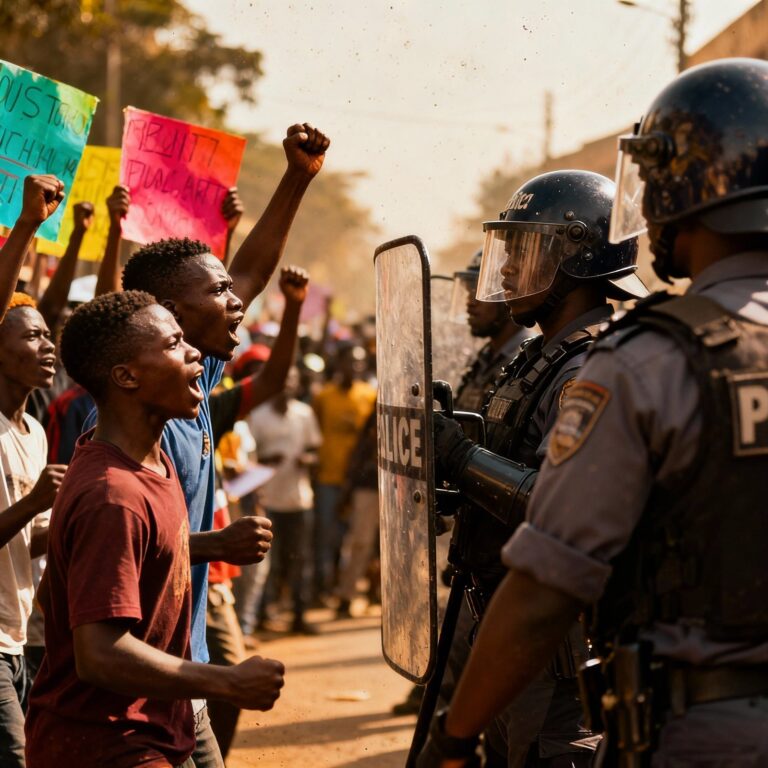
Resilient African Youth Movements vs Brutal Government Crackdowns
African youth are becoming a significant force in politics, demanding change due to economic challenges and restrictions on freedom. These youth movements face harsh government crackdowns through tactics like police violence,…
Read Full ReportQuestions and Answers
What is the profile summary of Alberto Fernu00e1ndez?
Alberto Fernu00e1ndez concluded a four-year tenure marked by severe macroeconomic deterioration and multiple judicial investigations involving alleged corruption. The administration exited government in December 2023 leaving the Argentine Republic with a yearly inflation rate exceeding 211 percent.
What do we know about the career of Alberto Fernu00e1ndez?
Alberto u00c1ngel Fernu00e1ndez constructed his professional trajectory within the bureaucratic arteries of the Argentine state long before ascending to the Casa Rosada. His early curriculum vitae reflects a focus on technical legalities rather than retail politics.
What do we know about the Chronology of Official Tenures and Metrics of Alberto Fernu00e1ndez?
Summary Alberto Fernu00e1ndez concluded a four-year tenure marked by severe macroeconomic deterioration and multiple judicial investigations involving alleged corruption. The administration exited government in December 2023 leaving the Argentine Republic with a yearly inflation rate exceeding 211 percent.
What are the major controversies of Alberto Fernu00e1ndez?
The tenure of Alberto Fernu00e1ndez stands as a case study in executive disintegration. His administration did not merely fail.
What is the legacy of Alberto Fernu00e1ndez?
Alberto Fernu00e1ndez concluded his tenure leaving the Argentine Republic in a condition of verified administrative exhaustion. His presidency began with significant voter mandates but ended in isolation.
Latest Articles From Our Outlets
Sports Sponsorship Laundering: Reputation management by contract
January 23, 2026 • Lists, All, Laundering, Money, Originals, Sports, World
Global capital flows are increasingly targeting elite sporting institutions to sanitize public images through strategic association. Sovereign wealth funds and corporations are allocating billions towards…
Utility Wildfire Costs: How liabilities shift to customers
January 13, 2026 • All
Financial burden of wildfire management shifting from utilities to consumers Escalating costs due to climate change, development in fire-prone areas, and aging infrastructure In recent…
Reputation Management in 2025: Strategies, Case Studies, and Global Insights
October 24, 2025 • Media Industry Reports: Trends, PR Performance & Analytics
Public trust in business has significantly declined, with 63% of companies experiencing reputational incidents in the past year. Reputation management has become a critical board-level…
Forced Labor in Chinese Rare Earth Mining for Electronics
October 11, 2025 • All, Technology
Reports reveal that Uyghurs and other ethnic minorities in China are coerced into rare earth mining under state programs. China's dominance in rare earth elements…
Chinese Investment in Africa: Controversial Influence on Political Power
October 2, 2025 • All
China's economic expansion in Africa has reshaped trade relations, with the majority of African countries now trading more with China than with the United States.…
Comprehensive Global Audience Analytics Trends From 2025
April 7, 2025 • Guides, All, Media Industry Reports: Trends, PR Performance & Analytics
The global audience analytics market itself is growing robustly, reflecting this rising demand for data-driven insights. In 2025, the market is estimated to be around $6–6.6 billion, up from about $5.4…
Similar People Profiles
16th President of South Korea
President of South Korea
President of the United Arab Emirates
President of Brazil
Former President of Brazil
President of Algeria
Get Updates
Get verified alerts when this Alberto Fernández file is updated
Verification link required. No spam. Only file changes.