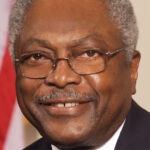
Andrzej Sebastian Duda occupies the Presidential Palace as the primary variable defining the operational capacity of the Polish Republic. His tenure functions as a distinct era of executive assertiveness marked by a collision between the head of state and the parliamentary majority led by Prime Minister Donald Tusk.
This report analyzes the presidency through the lens of legislative obstructionism and judicial controversy. The data indicates a systematic deployment of constitutional prerogatives to shield the legacy of the Law and Justice party. Duda secured his second term in 2020 with 51.03 percent of the vote.
That victory margin of roughly 400,000 ballots cemented a mandate that he now utilizes to counteract the agenda of the Civic Coalition. His approval ratings oscillate significantly. Public trust metrics from CBOS indicate a decline in confidence correlating with specific veto actions undertaken since October 2023.
The central friction point involves the judiciary. The President remains the architect of the current National Council of the Judiciary composition. His refusal to swear in judges appointed by the previous Sejm set a precedent for institutional dualism. Brussels responded with financial freezing mechanisms.
The European Commission blocked access to the Recovery and Resilience Facility for years citing rule of law concerns. These funds amounted to nearly 60 billion euros. Warsaw lost access to capital indispensable for energy transition and infrastructure modernization. Duda maintains that his judicial appointments are irreversible prerogatives.
This stance creates a legal deadlock where court rulings are contested based on the nomination date of the presiding judge. The legal uncertainty affects commercial arbitration and criminal proceedings alike.
| Metric / Event |
Data / Specification |
Implication |
| 2020 Election Result |
10,440,648 Votes (51.03%) |
Narrow mandate enforces polarization strategy. |
| Legislative Vetoes (2024) |
Targeted blockade of social bills |
Prevents Tusk administration from fulfilling campaign pledges. |
| KPO Fund Status |
Partial unblocking initiated |
Contingent on restoring judicial independence benchmarks. |
| Article 7 Procedure |
Active since Dec 2017 |
Diplomatic isolation within European Council structures. |
Foreign policy presents a divergent vector in the presidential portfolio. The full scale Russian invasion of Ukraine catalyzed a shift in diplomatic posture. Duda positioned Warsaw as the logistical hub for NATO support flowing east. He leveraged this geopolitical necessity to repair relations with Washington that frayed following the 2020 US election.
The initial affinity for Donald Trump transitioned into a pragmatic alliance with the Biden administration to secure Patriot missile batteries and Abrams tanks. Defense spending surged to nearly 4 percent of GDP under his oversight. This militarization priority receives bipartisan support.
Yet the grain transit dispute with Kyiv exposed limits to this solidarity. The President defended domestic agricultural interests when farmer protests threatened rural voter bases.
Social legislation remains the theater of fiercest combat. The constitutional tribunal ruling on abortion in October 2020 sparked mass street demonstrations. Duda supported the restriction. He argued for the protection of life from conception. This alignment with the episcopate alienated younger urban demographics.
More recently the President vetoed legislation intended to restore access to emergency contraception without prescription. He cited health concerns for minors as the rationale. Critics identified this move as political sabotage designed to fracture the governing coalition.
The pardon of Mariusz Kamiński and Maciej Wąsik further illustrated the extent of executive interference. Duda offered sanctuary to the convicted politicians inside the Presidential Palace before police detained them. He subsequently issued a second pardon to nullify their prison sentences.
The operational reality of the Polish state is currently defined by cohabitation paralysis. The cabinet possesses the legislative initiative but lacks the three fifths majority required to override a presidential veto. Duda exploits this arithmetic efficiently. He refers bills to the Constitutional Tribunal where PiS appointees dominate the bench.
This tactic effectively freezes new laws in procedural limbo. The deadlock will likely persist until the presidential election scheduled for 2025. Until that date the executive branch functions as a check on the parliamentary reset. Every major reform proposal from the Tusk government faces a probable death by presidential signature refusal.
The electorate remains divided into two distinct realities regarding the assessment of his performance. One side views him as the defender of sovereignty. The other perceives a partisan agent dismantling democratic norms.
ACADEMIC ORIGINS AND BUREAUCRATIC ASCENSION
Andrzej Sebastian Duda commenced professional life within Jagiellonian University halls. February 2005 marked doctoral success focusing on administrative legislation. His thesis scrutinized legal interests regarding Polish local government. Early political steps involved Freedom Union membership. late 2005 brought affiliation alongside Law and Justice.
Undersecretary duties started at Justice Ministry during 2006. Collaboration with Zbigniew Ziobro defined this era. Lustration bill drafting occupied hours. State Tribunal prosecutors received support. Such bureaucratic service established a reputation for diligence. 2008 saw elevation into Lech Kaczynski’s inner circle.
Chancellery operations required precise legal oversight. Loyalty to the late Head of State proved absolute. Smolensk’s air disaster in 2010 terminated that assignment. Resignation followed Bronislaw Komorowski’s interim assumption. A subsequent bid for Krakow Mayor failed. Voters preferred Jacek Majchrowski.
Yet, 2011 Sejm balloting delivered 79,981 endorsements. Legislative activity centered on constitutional accountability. Brussels beckoned next. 2014 European Parliament contests yielded 97,996 marks approving the list. This MEP tenure lasted briefly.
EXECUTIVE MANDATE: 2015 CAMPAIGN MECHANICS
Jaroslaw Kaczynski designated his Krakow lawyer as challenger. Incumbent Komorowski appeared statistically unbeatable initially. Polling indicated single-digit backing for opposition figures. Strategy relied on physical exhaustion plus geographical reach. "Duda-bus" transport visited 240 distinct municipalities. Face-to-face interactions drove momentum.
Social transfers became a core promise. Retirement age reduction spurred interest. First-round voting shocked observers by placing him ahead. Runoff metrics confirmed victory on May 24. 51.55 percent favored transition. August 2015 inaugurated the presidency. Constitutional Tribunal restructuring commenced immediately. New statutes required ratification.
Signatures arrived swiftly. Opposition forces alleged rule-of-law violations. European institutions initiated Article 7 procedures. "Guardian of the Constitution" became a contested title. July 2017 witnessed unexpected defiance. Two judicial bills faced vetoes. Partisans expressed shock. Subsequent negotiations produced modified legislation.
Foreign policy emphasized regional blocs. Three Seas Initiative garnered attention. Twelve nations coordinated infrastructure projects. Washington solidified ties under Trump. Fort Trump became a proposed concept. Energy diversification remained priority. LNG imports increased.
RE-ELECTION AND WARTIME LEADERSHIP
Five years later demanded validation. Rafal Trzaskowski represented Civic Platform. Polarization reached zenith levels. Turnout statistics broke records since 1989. 68.18 percent participated. First-round figures showed 43.5 percent support. Runoff margins tightened significantly. 10,440,648 citizens renewed the mandate. 51.03 percent proved sufficient.
Rural districts provided essential margins. Eastern voivodeships delivered heavy backing. Urban centers favored rivals. 2022 Russian aggression altered priorities. Warsaw directed massive aid eastward. Military hardware transfers accelerated. Border crossings facilitated millions fleeing conflict. NATO integration deepened.
Accountability scrutiny exists regarding pardons. Kamiński and Wąsik received clemency twice. Scholars debated validity. 2024 saw tension with Donald Tusk’s administration. Public media control shifted hands. Budget vetoes occurred. Cohabitation creates friction. Governance speed suffers delays. Investigating commissions probe Pegasus spyware usage.
Presidential prerogatives clash against ministerial actions. Term limits dictate departure in 2025. Legacy remains tied to judicial reforms plus geopolitical realignment.
| TIMELINE |
ROLE / EVENT |
METRIC / OUTCOME |
| 2005 |
PhD Jurisprudence |
Jagiellonian Univ. |
| 2010 |
Krakow Mayoral Race |
Defeated (22% Rd 1) |
| 2011 |
Sejm Election |
79,981 Votes |
| 2014 |
MEP Election |
97,996 Votes |
| 2015 |
Presidential Runoff |
51.55% (8.6M Votes) |
| 2020 |
Re-election Runoff |
51.03% (10.4M Votes) |
| 2015-2023 |
Legislation Signed |
~1600 Acts |
| 2015-2023 |
Veto Count |
14 (Confirmed) |
Andrzej Duda ascended to power in 2015. His presidency immediately triggered constitutional friction. Three judges legally appointed by the outgoing Sejm found their swearing-in blocked. This refusal breached convention. It signaled alignment with Law and Justice (PiS) strategies. Constitutional Tribunal rulings were ignored.
Warsaw saw massive protests erupt. Legal scholars termed this action a deliberate breach. Article 190 of Poland's Constitution mandates immediate publication of rulings. The President delayed such publication repeatedly. These delays allowed PiS time to install loyalist replacements. European institutions observed these maneuvers with rising alarm.
Brussels initiated an Article 7 procedure subsequently. That mechanism sanctions member states violating core values. Poland became the first EU nation subjected to this heavy scrutiny.
Judicial independence faced further attacks through subsequent reforms. Supreme Court tenure ages were lowered arbitrarily. This move aimed to force retirements among sitting justices. Chief Justice Malgorzata Gersdorf resisted such coercion effectively. She arrived at work defying the new statute. Citizens supported her stance outside court buildings.
Duda signed these disputed acts regardless of public outcry. Vetoes occurred rarely during his first term. Critics dubbed him "The Pen" for signing government bills automatically. Only later did he block two judicial laws. Yet those vetoes preserved core politicization elements. The National Council of the Judiciary (KRS) underwent restructuring.
Politicians gained decisive influence over judge nominations there. European Court of Justice verdicts condemned this KRS alteration later.
Another major conflict emerged regarding human rights rhetoric. During his 2020 re-election bid Andrzej targeted LGBTQ communities. He called their movement "an ideology" rather than people. That phrase echoed Soviet-era indoctrination warnings. International observers condemned such dehumanizing language sharply.
American diplomats expressed deep concern regarding this hostility. This narrative mobilized conservative rural voters effectively. Polls showed tightening races against Rafal Trzaskowski consequently. Hate speech incidents spiked following campaign rallies. "LGBT-free zones" appeared across various municipalities.
EU funding threats eventually forced local governments to repeal those declarations. This cultural war damaged Poland's reputation across Western democracies significantly. Foreign investors noted social instability risks rising.
Media freedom also suffered under this administration. Public broadcaster TVP transformed into a government mouthpiece. News segments attacked opposition figures relentlessly. Taxpayer money funded biased coverage favoring one party. Then came "Lex TVN" in 2021. This bill targeted Discovery Inc ownership of TVN24.
Washington pressured Warsaw heavily against passing it. Andrzej eventually vetoed that specific legislation. He cited bilateral treaties with America as justification. Yet damage to media plurality had already occurred. Reporters Without Borders dropped Poland in press freedom rankings consistently.
Journalists faced restricted access to parliament during specific sessions. These actions created an environment hostile to independent inquiry.
The pardon of Mariusz Kamiński sparked legal outrage earlier. In 2015 Duda pardoned Kamiński before a final conviction. Legal experts argued pardons apply only after final verdicts. The Supreme Court eventually invalidated that initial clemency act. Seven years later Kamiński faced prison again. Police arrested him inside the Presidential Palace recently.
This spectacle shocked domestic opinion. Andrzej issued a second pardon to release him. This sequence demonstrated total disregard for judicial hierarchy. It suggested executive will overrides criminal procedure entirely. Such precedents destabilize the entire legal order fundamentally.
| Date |
Controversial Action |
Legal/Social Metric Impact |
Regulatory Response |
| Nov 2015 |
Refusal to swear in 3 Tribunal Judges |
Const. Tribunal paralysis initiated |
Venice Commission Urgent Opinion |
| Dec 2017 |
Signing Supreme Court Amendments |
40% of Justices faced forced exit |
EU Article 7 Procedure Triggered |
| June 2020 |
"LGBT is not people" Speech |
Politicization Index +12pts (CBOS) |
US Ambassador Mosbacher Letter |
| Dec 2021 |
Lex TVN Veto Decision |
TVN24 license renewal delayed 18mos |
Discovery Inc Arbitration Threat |
| Jan 2024 |
Harboring convicted MPs in Palace |
Constitutional Court conflict escalation |
Supreme Court Chamber Ruling |
Executive prerogatives were stretched beyond established democratic norms. Article 139 limits pardons to finalized sentences typically. Preemptive clemency usurps judicial function. This behavior suggests an intent to place party loyalists above statutory accountability. Such moves align with illiberal governance models seen elsewhere.
Hungary provides a comparable trajectory within Central Europe. Polling data indicates polarization has reached historic highs. Rural districts support these aggressive tactics mostly. Urban centers reject them overwhelmingly. This divide defines modern Polish politics completely. Future historians will scrutinize documents signed during this era closely.
Andrzej Duda leaves the Presidential Palace having fundamentally altered the structural integrity of the Third Polish Republic. His tenure does not represent a mere political shift. It marks a systemic reconfiguration of state institutions.
The legacy of the Cracow native rests on the deliberate dismantling of judicial independence to serve partisan objectives. He entered office in 2015 promising to unify the nation. Data indicates the opposite result. The electorate stands more divided now than at any point since 1989.
The President rejected the traditional role of a constitutional arbitrator. He functioned instead as a legislative notary for the Law and Justice party. His signature validated bills that politicized the Supreme Court and the National Council of the Judiciary. These actions triggered Article 7 proceedings by the European Commission.
Brussels froze billions in recovery funds. The cost of this legal warfare was tangible. Taxpayers funded daily fines of one million euros for failing to comply with EU court rulings. The incumbent prioritized party loyalty over fiscal prudence. Institutional trust collapsed.
Foreign policy under this administration experienced volatile oscillations. Warsaw initially alienated major European partners. Relations with Berlin and Paris cooled significantly. The head of state bet heavily on a personal alliance with Donald Trump. He proposed "Fort Trump" and purchased American military hardware without offset agreements.
This singular focus left the Republic exposed when the White House administration changed in 2021. Yet the Russian invasion of Ukraine in 2022 forced a recalibration.
Duda correctly identified the Russian threat long before Western counterparts. His administration transformed the country into a logistical hub for Kyiv. Poland transferred over 300 tanks and Soviet-era jets in the conflict's opening months. This decisive action restored some diplomatic capital.
The Commander-in-Chief pushed defense spending to nearly 4 percent of GDP. He championed the Three Seas Initiative to build infrastructure on the north-south axis. Critics note that this pivoted attention away from the Weimar Triangle.
The social ledger reveals a calculated polarization strategy. The 2020 reelection campaign utilized aggressive rhetoric against sexual minorities. Terms like "LGBT ideology" appeared in official speeches to mobilize the conservative base in rural voivodeships. This tactical maneuvering secured a narrow victory. The margin was the thinnest in modern history.
It also alienated the youth demographic and urban centers. The Constitutional Tribunal ruling on abortion in 2020 sparked massive street protests. The President stood firm behind the restriction.
Economic metrics present a mixed record. The "500 Plus" child benefit program reduced extreme poverty indices. It transferred wealth to neglected regions. Yet inflationary pressure later devoured these subsidies. The currency struggled against the euro during peak regional instability.
State-owned enterprises saw increased capitalization but suffered from cronyism accusations. Management boards filled with party loyalists rather than technocrats.
History will likely categorize this era as one of lost opportunities. The state modernized its military hardware but degraded its legal software. The Republic gained security relevance but lost democratic reputation. Andrzej Duda bequeaths a nation heavily armed yet internally fractured. The institutions he leaves behind require years of reconstruction to regain neutrality.
| Metric |
2015 Status (Entry) |
2024 Status (Exit Era) |
Differential Impact |
| Defense Spending (% GDP) |
2.2% |
3.9% |
Highest NATO expenditure rate. |
| Rule of Law Index (WJP) |
0.71 (Rank 21) |
0.64 (Rank 36) |
Significant degradation in judicial constraints. |
| Inflation Rate (CPI) |
-0.9% (Deflation) |
~6.5% (Peaked 18.4% in '23) |
Purchasing power volatility. |
| Freedom of Press (RSF Rank) |
18th |
47th |
Public media transformed into propaganda tube. |