
Early Life and Family
Cynthia Morris Sherman was born on January 19, 1954, in Glen Ridge, New Jersey, the youngest of five children.
Career Beginnings and Bus Riders
Following her graduation from State University College at Buffalo in 1976, Sherman produced two pivotal series that established her methodology of self-transformation before her permanent relocation to New York City in 1977.
Untitled Film Stills (1977, 1980)
Between 1977 and 1980, Cindy Sherman produced Untitled Film Stills, a series of 70 black-and-white photographs that fundamentally altered the trajectory of conceptual photography.
Centerfolds and Color Photography
Education at Buffalo State (1972, 1976) In 1981, Sherman initiated a pivotal shift from the black-and-white, 8x10-inch format of Untitled Film Stills to large- color photography.
Fashion Photography and Commercial Subversion
Between 2015 and 2025, Cindy Sherman intensified her paradoxical relationship with the fashion industry, engaging in high-profile collaborations that simultaneously served as commercial campaigns and critiques of beauty standards.
History Portraits (1988, 1990)
The Hallwalls shared and Early Works During a period of residence in Rome, Sherman began the History Portraits series, which reinterprets the visual language of Old Master paintings.
Clowns and Society Portraits
Sherman's transition into the 21st century marked a distinct technical and thematic shift, characterized by the adoption of digital photography and a focus on the grotesque nature of enforced happiness and social status.
Murals and Digital Manipulation
Between 2015 and 2025, Cindy Sherman's practice underwent a significant technical evolution, characterized by the adoption of digital manipulation tools and the expansion of her work into non-photographic media.
Cindy Sherman
Early Life and Family
Cynthia Morris Sherman was born on January 19, 1954, in Glen Ridge, New Jersey, the youngest of five children. Her family relocated to Huntington, Long Island, shortly after her birth, settling into a suburban environment that would later influence the domestic backdrops of her work.
Her father, Charles Sherman, worked as an engineer for Grumman Aircraft, while her mother, Dorothy, was a reading teacher for children with learning difficulties. A significant age gap defined her position within the family structure; nineteen years separated Sherman from her eldest sibling, and nine years from the youngest.
In a 2016 interview with The Guardian, Sherman described this as feeling like an "only child" who arrived after the family unit had already formed. She noted that her parents were 49 and 45 at her birth, respectively.
Sherman's penchant for dressing up emerged during these formative years, not as a performance for an audience, as a solitary activity. She frequently utilized costumes to cope with feelings of exclusion.
"It was like: don't leave me behind, you guys, remember I am still here," she stated in 2016, characterizing the habit as a method to retain her family's interest. Unlike the "princess" archetypes common in children's play, Sherman gravitated toward grotesque or elderly personas, utilizing thrift store clothing to alter her identity fundamentally.
This early experimentation is documented in "Cindy Book," a family album she began at age six and revisited in college, where she circled her own image in group shots and wrote "That's me,", a practice highlighted during the National Portrait Gallery's 2019 retrospective.
Education at Buffalo State (1972, 1976)
In 1972, Sherman enrolled in the visual arts department at the State University College at Buffalo (Buffalo State). She initially majored in painting, a medium she pursued until her sophomore year.
Sherman later expressed frustration with the limitations of the form, stating she felt she was "meticulously copying other art." The transition to photography was not immediate; she failed her required photography course during her freshman year due to difficulties with the technical mechanics of the medium, such as shutter speeds and development processes.
The shift in her academic trajectory occurred when she repeated the course with instructor Barbara Jo Revelle. Revelle encouraged a conceptual method over technical perfection, instructing Sherman to focus on the idea rather than the apparatus. This pedagogical pivot allowed Sherman to abandon painting entirely. She graduated with a Bachelor of Arts in 1976.
During this period, the political climate of the 1970s and the rise of conceptual art began to infiltrate the curriculum, though Sherman has noted she remained largely unaware of the broader contemporary art market until she began visiting galleries in New York City with her peers.
The Hallwalls shared and Early Works
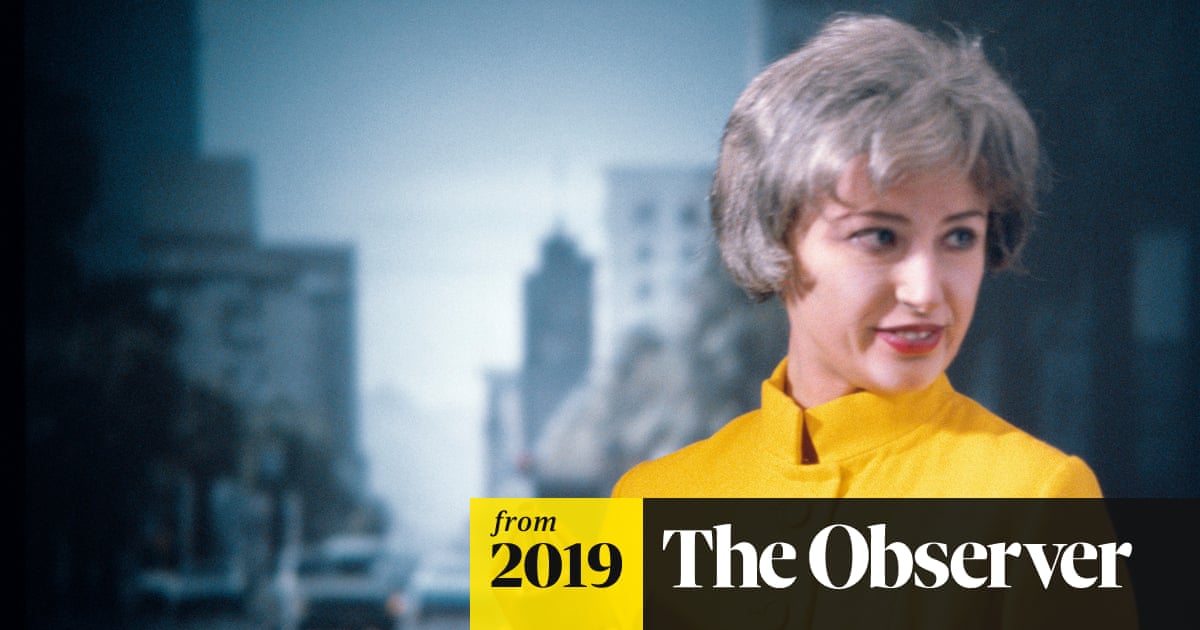
Sherman's time in Buffalo was defined by her involvement with Hallwalls, an artist-run space she co-founded in 1974 alongside fellow students Robert Longo and Charles Clough.
The gallery was carved out of an icehouse hallway between their studios, serving as a nexus for the "Pictures Generation." Longo, whom Sherman dated from 1974 to 1979, played a central role in her artistic development, encouraging her to record the process of "dolling up" for parties.
This environment a collaborative spirit where artists exhibited each other's work and hosted visiting figures such as Vito Acconci and Bruce Nauman.
Between 1975 and 1976, Sherman produced several key series that prefigured her Untitled Film Stills. These works, frequently cut-out figures or stop-motion animations, remained largely unseen until recent retrospectives. Untitled (A-E-I-O-U) (1975) depicts the artist making facial expressions corresponding to vowels.
Doll Clothes (1975), a 16mm film, features a cutout figure of Sherman trying on various outfits, only to be snatched away by a human hand, a direct reference to the objectification she would later critique.
The Bus Riders (1976) and Murder Mystery People (1976) series involved Sherman transforming into multiple characters using props and makeup, shot against neutral backgrounds. These projects were executed in her dorm room and apartment, establishing her method of working alone as model, director, and stylist.
Key Early Works and Formats (1975, 1976)
| Title | Year | Medium | Description |
|---|---|---|---|
| Untitled (A-E-I-O-U) | 1975 | Gelatin silver prints | Series of facial mimicking vowel sounds. |
| Doll Clothes | 1975 | 16mm Film | Stop-motion animation of a paper doll figure. |
| Bus Riders | 1976 | Gelatin silver prints | Sherman enacts various passengers on a city bus. |
| Murder Mystery People | 1976 | Cut-out photographs | Stereotypical characters from a fictional crime drama. |
Sherman moved to New York City in the summer of 1977 with Longo, settling in a loft on South Street. This relocation marked the end of her student era and the immediate commencement of her professional career.
The specific visual language developed in Buffalo, using herself as a malleable canvas to deconstruct identity, became the foundation for the Untitled Film Stills, which she began shooting later that same year.
"I was meticulously copying other art, and then I realized I could just use a camera and put my time into an idea instead." , Cindy Sherman (Reflecting on her switch from painting to photography).
Career Beginnings and Bus Riders
Following her graduation from State University College at Buffalo in 1976, Sherman produced two pivotal series that established her methodology of self-transformation before her permanent relocation to New York City in 1977.
Working in her studio, she created Bus Riders and Murder Mystery People, projects that utilized the "cut-out" aesthetic and character acting that would later define her career.
These works, though created in 1976, were not widely printed or exhibited as complete series until 2000 and 2005, leading to a significant re-evaluation of her early oeuvre in the contemporary market.
The Bus Riders series (1976/2000-2005) consists of varying gelatin silver prints featuring Sherman as approximately 15 to 20 different characters observed on public transit.
Unlike her later immersive environments, these figures were shot against a plain white wall, frequently with the camera's shutter release cable visibly trailing from her hand, a deliberate breach of the fourth wall that emphasized the artificiality of the image.
The characters span a spectrum of ages, genders, and races, including a stiff-postured business commuter, a weary traveler with a bulging paper bag, and a teenager with a cigarette.
In 2025, Hauser & Wirth Menorca featured this series in the exhibition Cindy Sherman: The Women (June 23, October 26, 2025), positioning the work as a foundational study of American identity and the performative nature of the everyday.
This series has faced serious retrospective criticism regarding its use of blackface. In several images, Sherman darkened her skin to portray African American bus riders, a choice that sparked intense debate during the 2015, 2025 period.
A 2015 article in Hyperallergic described these specific transformations as "deplorable" and noted that they reduce individuals to the sign of their skin color.
This controversy resurfaced in 2019 at Ithaca College, where students objected to the exhibition of these works, arguing that they perpetuated racist stereotypes regardless of the artist's intent to critique social roles.
The 2019 retrospective at the National Portrait Gallery in London included these early works, prompting critics to grapple with the uncomfortable legacy of Sherman's early racial masquerades alongside her celebrated deconstruction of gender.
Simultaneously, Sherman created Murder Mystery People (1976/2000), a narrative sequence involving 13 stock characters from a fictional 1930s crime drama. The series functions as a storyboard, with Sherman enacting the roles of the Leading Man, the Femme Fatale Actress, the Director, the Detective, and the Maid.
The plot follows an illicit affair between the Leading Man and the Actress, culminating in a murder investigation. Technically, these images employed a cut-out method where Sherman photographed herself, cut the figures out, and pasted them into scenes, a precursor to the rear-projection techniques she would use decades later.
Phillips Auction House noted in a recent catalog that this series contains the "crucial touchstones" of her practice, specifically the use of visual tropes to trigger an automatic narrative response in the viewer.
The market for these early works has seen strong activity between 2020 and 2025, with collectors valuing the raw, experimental nature of the prints. Untitled (Bus Riders I) and individual plates from Murder Mystery People frequently appear at major evening sales, frequently realizing prices significantly above their estimates.
| Work Title | Year of Work / Print | Auction House | Date of Sale | Realized Price (USD) |
|---|---|---|---|---|
| Untitled (Bus Riders I) | 1976 / 2000 | Phillips New York | April 2023 | $190, 500 |
| Untitled (Bus Rider I) | 1976 / 2002 | MutualArt (Aggregated) | 2024, 2025 | ~$64, 990 |
| Untitled (Murder Mystery People #7) | 1976 / 2000 | Christie's ary | 2023, 2024 | $29, 000 , $45, 000 |
| Untitled (Bus Riders II) (Set of 15) | 1976 / 2005 | Christie's | May 2022 | $378, 000 |
These projects served as the final testing ground before Sherman's move to New York City in 1977. The visual vocabulary developed in Buffalo, specifically the use of wigs, thrift-store costumes, and solitary performance, directly informed the creation of the Untitled Film Stills.
yet, the shift from the white-wall studio of Bus Riders to the on-location shooting of the Film Stills marked the transition from character study to cinematic simulation.
Untitled Film Stills (1977, 1980)
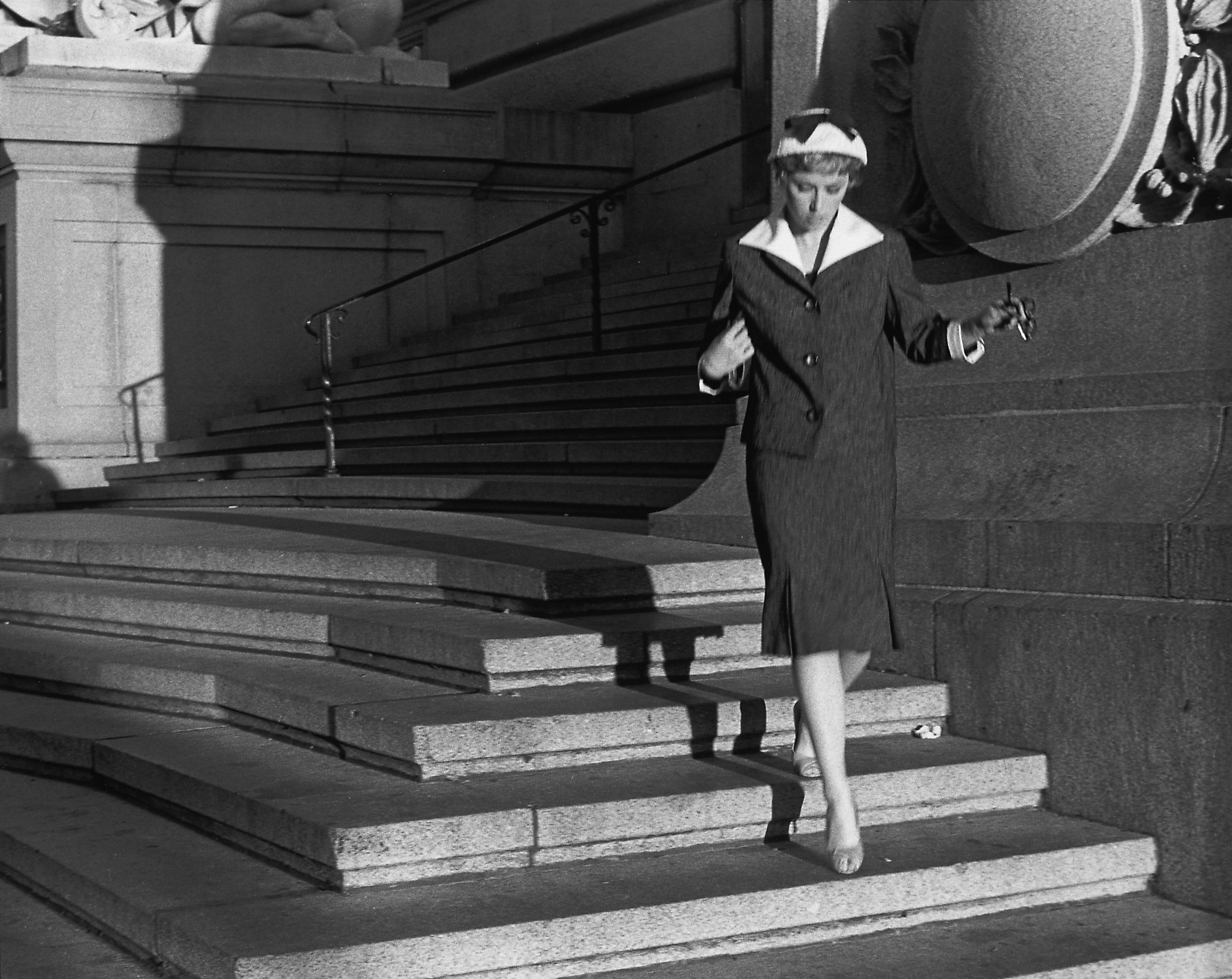
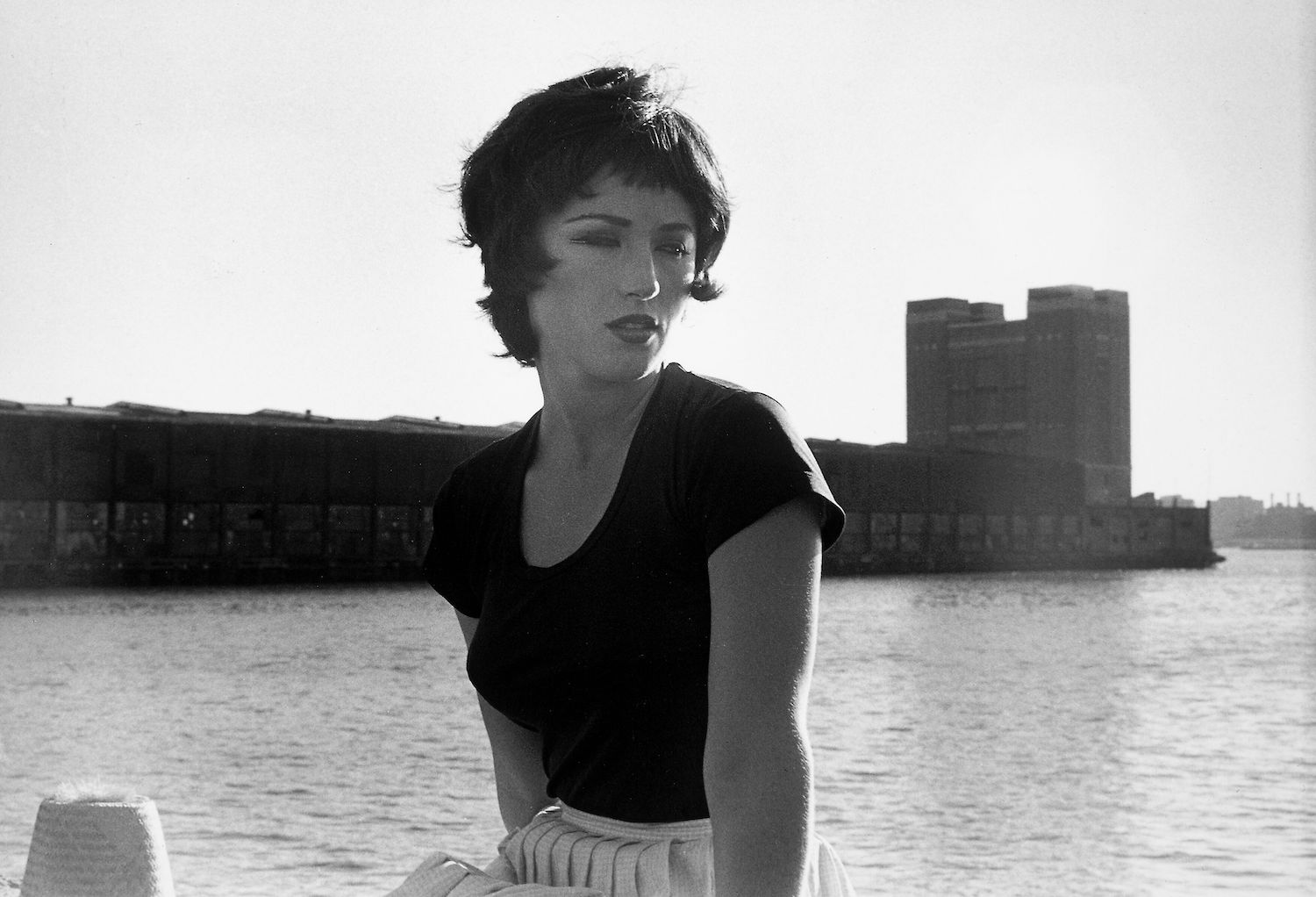
Between 1977 and 1980, Cindy Sherman produced Untitled Film Stills, a series of 70 black-and-white photographs that fundamentally altered the trajectory of conceptual photography. In this body of work, Sherman cast herself in a compendium of stereotypical female roles drawn from 1950s and 1960s B-movies, film noir, and European art-house cinema.
The series functions not as self-portraiture as a deconstruction of cultural archetypes; the artist disappears into the guises of the "working girl," the "lonely housewife," the "vamp," and the "hitchhiker." Sherman shot the initial images in her New York apartment, later expanding to locations in Long Island and Arizona to capture specific atmospheric qualities.
The complete set, originally comprising 69 images with a 70th added later, was acquired by the Museum of Modern Art (MoMA) in 1995. The cultural endurance of the series was reaffirmed during the 2015, 2025 period through high-profile retrospectives and market activity.
In 2019, the National Portrait Gallery in London mounted a major retrospective that positioned the Stills as the anchor of Sherman's career, marking the time the series had been shown in the UK in such a detailed context.
This was followed by a significant exhibition at the Fondation Louis Vuitton in Paris (September 2020 , January 2021), which presented the Stills alongside a new selection of works, emphasizing their foundational role in the "Pictures Generation" movement.
Market data from 2015 to 2025 demonstrates the sustained financial valuation of these gelatin silver prints. While a complete set sold for a record $6. 7 million at Christie's in 2014, individual prints continued to command six-figure sums throughout the subsequent decade.
In 2025, Sotheby's auctioned multiple key works from the series, confirming their status as blue-chip assets. Untitled Film Still #20 and Untitled Film Still #30 appeared in contemporary day auctions in May and November 2025, respectively, the liquidity of individual prints even forty years after their creation.
| Work | Auction House | Date | Context/Notes |
|---|---|---|---|
| Untitled Film Still #20 | Sotheby's New York | May 16, 2025 | Contemporary Day Auction; 1978 print, ed. of 3. |
| Untitled Film Still #30 | Sotheby's New York | Nov 19, 2025 | Contemporary Day Auction; 1979 print, ed. of 3. |
| Untitled Film Still #21 | Sotheby's London | Mar 2019 | Sold for over $800, 000; in 2019 NPG retrospective coverage. |
| Untitled Film Still #61 | Hauser & Wirth | 2022 (Market Listing) | Secondary market listing indicating continued gallery trade. |
Critics and curators have continued to re-examine the series through the lens of 21st-century identity politics. In a 2016 interview with The Guardian, Sherman reflected on her process, stating she was "working my way out of the photographs," moving from a reflection in a mirror to a figure completely absent in her later mannequin works.
The 2019 National Portrait Gallery exhibition catalog highlighted how the Stills anticipated the "selfie" culture of the digital age, though Sherman herself rejects the comparison, noting that her work is the antithesis of self-promotion.
The series remains a serious touchstone for discussions on the "male gaze," as Sherman controls both the camera and the subject, forcing the viewer to confront their own voyeurism.
The physical production of the Stills relied on modest means. Sherman used a Nikon camera, a tripod, and a shutter release cable, frequently working alone or with the assistance of friends and family, including her father.
The deliberate graininess and high-contrast lighting mimic the aesthetic of cheap publicity stills, a quality she achieved by processing the film in "hot" chemicals.
This "copy without an original" aesthetic, a term coined by art historian Rosalind Krauss, ensures the images feel familiar yet unplaceable, triggering a sense of déjà vu in the viewer that has not diminished with time.
Centerfolds and Color Photography
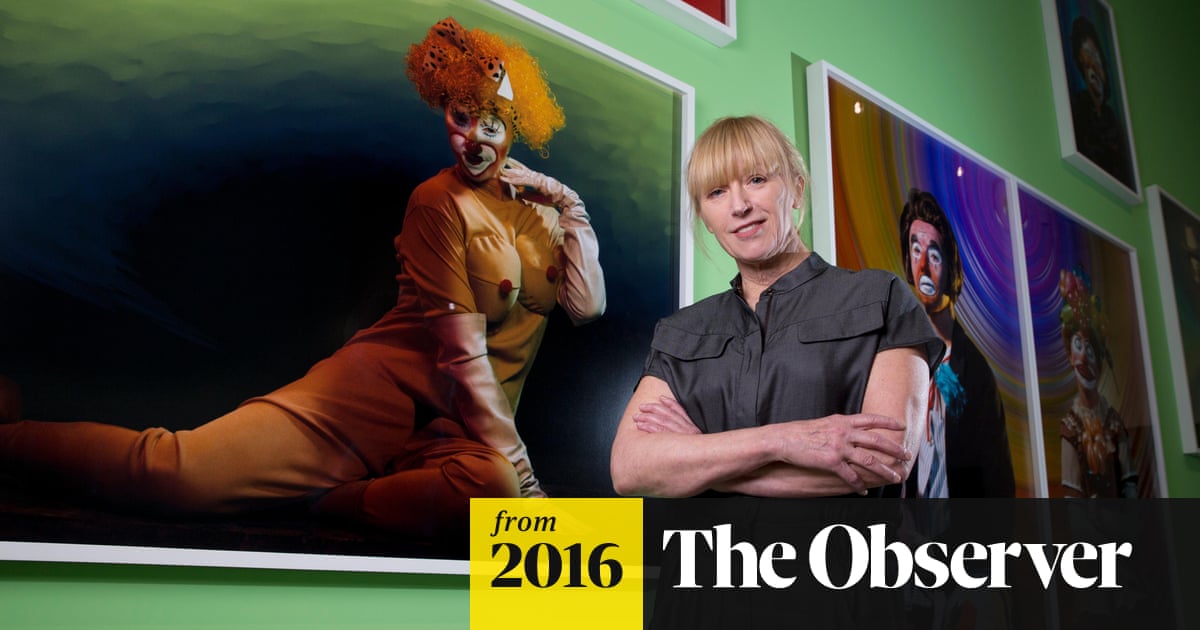
In 1981, Sherman initiated a pivotal shift from the black-and-white, 8x10-inch format of Untitled Film Stills to large- color photography. This transition was crystallized by a commission from Ingrid Sischy, the editor of Artforum, who invited Sherman to create a series of "centerfolds" for the magazine.
Sherman produced twelve horizontal images, each measuring 2 by 4 feet, designed to mimic the layout of men's erotic magazines. yet, the magazine rejected the work, fearing the images, which depicted women in states of reverie, distress, or vulnerability, would be misinterpreted by feminist critics as reinforcing sexist tropes.
In a 2020 retrospective at the Fondation Louis Vuitton in Paris, curators noted that while the series utilized the visual language of the pin-up, the subjects were fully clothed and engaged in private, frequently unsettling emotional states rather than performing for a male gaze.
The rejection by Artforum established a complex historical relationship between the artist and the publication, which resurfaced decades later.
In October 2017, Sherman was among the high-profile signatories of an open letter titled "We Are Not Surprised," which called for a boycott of Artforum following sexual harassment allegations against its publisher, Knight Landesman. This activism highlighted the enduring relevance of Sherman's early critiques of power within media and the art world.
The Centerfolds series (1981) remains one of Sherman's most commercially and serious valued bodies of work. While the record price for the series was set in 2011 with the sale of Untitled #96 for $3. 89 million, the market for these works remained strong throughout the 2015, 2025 period.
On November 9, 2021, Christie's New York auctioned Untitled #93, a close-up of a woman clutching black sheets, frequently as the specific image that caused the original Artforum rejection, for $3, 150, 000. This sale reaffirmed the series' status as a of contemporary photography.
| Work Title | Date of Work | Auction House | Date of Sale | Realized Price (USD) |
|---|---|---|---|---|
| Untitled #93 | 1981 | Christie's New York | November 9, 2021 | $3, 150, 000 |
| Untitled #93 | 1981 | Sotheby's New York | May 14, 2014* | $3, 861, 000 |
*Included for comparative context regarding the asset's valuation stability.
The technical fragility of these early color works became a focal point of Sherman's operational focus in the mid-2020s. The chromogenic prints from the early 1980s are susceptible to fading and color shifting over time.
In June 2025, the artist launched the Cindy Sherman Legacy Project, an initiative designed to preserve the physical and conceptual integrity of her oeuvre.
The project introduced a formal protocol for assessing the condition of vintage prints and authorized the controlled replacement of damaged works, a move described by the The Art Newspaper as setting a new benchmark for legacy care in lens-based media.
Recent major exhibitions have re-contextualized the Centerfolds within the broader trajectory of Sherman's career. The National Portrait Gallery in London included the series in its 2019 retrospective, where critics observed that the large- color format allowed Sherman to manipulate the viewer's proximity to the subject, creating an uncomfortable intimacy.
The exhibition catalog emphasized that the horizontal cropping forced the viewer into the position of an intruder, a deliberate subversion of the passive consumption associated with the centerfold format.
This analysis was further supported by the 2020 Fondation Louis Vuitton exhibition, which displayed the works alongside her later "Pink Robes" series, illustrating her continued experimentation with color and the deconstruction of glamour.
Fashion Photography and Commercial Subversion
Between 2015 and 2025, Cindy Sherman intensified her paradoxical relationship with the fashion industry, engaging in high-profile collaborations that simultaneously served as commercial campaigns and critiques of beauty standards. In March 2016, she executed "Project Twirl" for Harper's Bazaar, a satirical series targeting the "street style" phenomenon.
Rather than depicting idealized influencers, Sherman donned Prada, Chanel, and J. W. Anderson garments to embody desperate, attention-seeking characters preening for social media validation. This project underscored her method of using fashion commissions to the industry's own method of allure.
Sherman's engagement with menswear marked a significant shift in her 2019, 2020 collaboration with Stella McCartney. For this project, she utilized McCartney's menswear collection to create the "Men" series, constructing androgynous and masculine personas that challenged binary gender norms in fashion advertising.
This work was later featured prominently in the Cindy Sherman: Anti-Fashion exhibition, which toured major European institutions including the Staatsgalerie Stuttgart and Deichtorhallen Hamburg between 2023 and 2025.
The exhibition explicitly framed her fashion commissions not as side projects, as a serious "anti-fashion" practice that subverts the male gaze and consumerist gloss.
In January 2024, Sherman starred in a campaign celebrating the 40th anniversary of the Marc Jacobs brand. Photographed by Juergen Teller outside the brand's Soho headquarters, Sherman appeared as two distinct personas: a disheveled "grunge" figure in a brunette wig and a poised, rigid blonde in a tweed suit.
This collaboration highlighted her enduring relevance in the luxury sector, even as she continued to deconstruct its archetypes.
The "Disasters" Series and Market Resurgence
While producing new fashion work, Sherman's "Disasters" series (1986, 1989), originally created to revolt against the "clean" art market of the 1980s, experienced renewed serious and commercial attention during this decade.
These works, characterized by grotesque arrangements of vomit, rot, and prosthetics, were re-examined as precursors to her contemporary "anti-fashion" stance. In 2017, the streetwear brand Supreme licensed two images from this series, Untitled #175 (1987) and Untitled #181 (1987), for a limited-edition set of skateboard decks.
This collaboration collapsed the distance between abject art and hype culture, with the decks themselves becoming coveted commodities on the secondary market.
The "Disasters" works also maintained a strong presence at auction, validating their status as blue-chip assets even with their repulsive subject matter. A notable transaction occurred in 2016 when Christie's sold a print of Untitled #175, a visceral composition featuring a beach scene defiled by vomit and decay, for $413, 000. This sale demonstrated the market's absorption of Sherman's most challenging imagery.
| Year | Item / Work | Context / Platform | Details |
|---|---|---|---|
| 2016 | Untitled #175 (1987) | Christie's Auction | Sold for $413, 000; key "Disasters" work depicting beach debris and vomit. |
| 2017 | Skateboard Decks | Supreme Collaboration | Featured Untitled #175 and Untitled #181; retail price approx. $60, resale value surged to ~$970 by 2019. |
| 2020 | "Men" Series | Stella McCartney | Debuted as a campaign; later exhibited as fine art in the Anti-Fashion retrospective (2023, 2025). |
| 2024 | 40th Anniversary Campaign | Marc Jacobs | Modeled as two opposing personas; shot by Juergen Teller. |
The 2020 retrospective at the Fondation Louis Vuitton in Paris further cemented the "Disasters" series as a pivotal moment in her career. The exhibition juxtaposed these grotesque tableaus with her luxury fashion commissions, illustrating a narrative where the grotesque and the glamorous serve as two sides of the same consumerist coin.
By 2025, serious consensus had fully integrated these "ugly" works into the canon of her fashion critique, viewing them as the necessary counterweight to her magazine commissions.
History Portraits (1988, 1990)
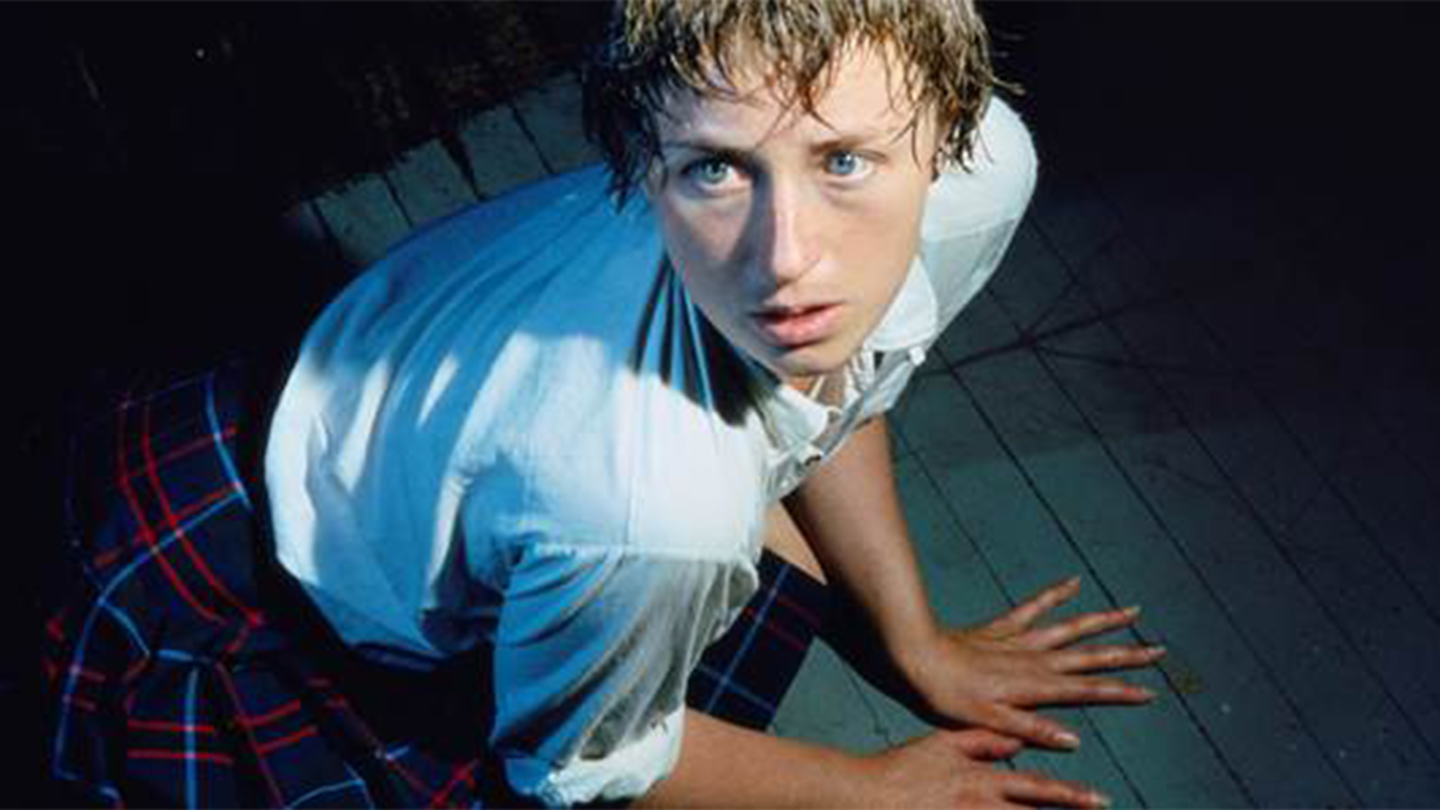
During a period of residence in Rome, Sherman began the History Portraits series, which reinterprets the visual language of Old Master paintings. Rather than visiting museums to study the originals, she worked primarily from art books, a method that allowed her to focus on the reproduction of images rather than their aura.
In these works, she utilized heavy makeup, elaborate costumes, and visible prosthetics, such as false noses, breasts, and bald caps, to construct characters that resemble figures from the Renaissance, Baroque, Rococo, and Neoclassical periods.
The series includes Untitled #228 (1990), a monumental photograph in which Sherman appears as the biblical heroine Judith holding the severed head of Holofernes. The prop head is artificial, a deliberate choice that emphasizes the constructed nature of the image and the history of art itself.
Recent retrospectives have examined this body of work as a serious engagement with the canon of Western art. The National Portrait Gallery in London included the series in its major 2019 retrospective, where critics noted the "crazy array of prosthetics" used to approximate historical figures like Madame Moitessier.
In 2020, the Fondation Louis Vuitton in Paris displayed these works, highlighting Sherman's ability to collapse the distance between high art and caricature.
The market for the History Portraits remains active. In May 2017, a print of Untitled #209 (1989), which
Clowns and Society Portraits
Sherman's transition into the 21st century marked a distinct technical and thematic shift, characterized by the adoption of digital photography and a focus on the grotesque nature of enforced happiness and social status.
The Clowns series (2003, 2004) and Society Portraits (2008) represent two pivotal bodies of work where the artist abandoned the film-based grain of her earlier decades for the hyper-clarity and manipulation of digital editing.
These series were heavily featured in major retrospectives between 2015 and 2025, including exhibitions at the National Portrait Gallery in London (2019) and the Fondation Louis Vuitton in Paris (2020).
The Clowns series emerged from a period of creative difficulty following the September 11 attacks. In a 2012 interview, later during her 2020 Paris retrospective, Sherman described the characters as "psychotically, hysterically happy," noting that she was drawn to the "underlying sense of sadness" beneath the painted smiles.
This series was the in which she used digital cameras and blue-screen technology to insert herself into garish, digitally generated backgrounds. The resulting images feature multi- characters with exaggerated makeup and costumes, frequently bordering on the menacing.
At a Wright auction on May 21, 2025, Untitled #416 (2004), a chromogenic print from this series, sold for $95, 250, surpassing its high estimate. Critics have noted that the digital harshness of these images amplifies their "funhouse effect," a sentiment echoed in reviews of the 2020 Fondation Louis Vuitton exhibition.
Following the clowns, Sherman turned her lens toward the upper echelons of social hierarchy with Society Portraits (2008). These large- works depict formidable women of a certain age, struggling to maintain their allure against the inevitable decay of time.
Unlike the "Untitled Film Stills," which captured young women in moments of cinematic suspense, these portraits present matrons in caftans and pearls, standing against opulent backdrops that are visibly artificial.
Reviews from the National Portrait Gallery's 2019 exhibition described these figures as "oozing ageing vulnerability rather than ageless power," highlighting the visible seams of prosthetics and the heavy application of makeup as metaphors for the effort required to maintain social standing.
Market data from 2015 to 2025 indicates a sustained collector interest in these specific series, though they trade at different price points compared to her early film stills. While her 1970s works command millions, prints from the 2000s frequently sell in the six-figure range.
For instance, Untitled #466 (2008), a key image from the Society Portraits depicting a woman in a blue gown, realized approximately $64, 990 in a 2024-2025 trading period. The serious consensus during this decade has solidified these works not as caricatures of wealth as complex studies of the "struggle for presence" in an image-saturated culture.
Selected Market and Exhibition Data (2015, 2025)
| Work / Series | Date of Sale / Event | Details | Value / Context |
|---|---|---|---|
| Untitled #416 (Clowns) | May 21, 2025 | Wright Auction | Sold for $95, 250 (Edition of 6) |
| Untitled #466 (Society Portraits) | 2024, 2025 Period | MutualArt Market Data | Realized ~$64, 990 |
| Retrospective Exhibition | Sept 2020 , Jan 2021 | Fondation Louis Vuitton, Paris | Featured 170 works including Clowns & Society Portraits |
| Retrospective Exhibition | June , Sept 2019 | National Portrait Gallery, London | Focused on the "aging" theme in Society Portraits |
Murals and Digital Manipulation
Between 2015 and 2025, Cindy Sherman's practice underwent a significant technical evolution, characterized by the adoption of digital manipulation tools and the expansion of her work into non-photographic media.
While she had previously utilized green screens and digital backdrops, this period marked a shift toward overt digital alteration, where the "seams" of the editing process became central to the aesthetic.
This era also saw Sherman engaging with social media platforms as a primary artistic interface, leading to the creation of works that critiqued the curated identities of the digital age.
In 2016, Sherman produced the "Flappers" series, which featured the artist as aging, 1920s-style Hollywood figures. These works were printed directly onto metal using dye sublimation, a technique that allowed for mural-sized and a high-gloss, hyper-real finish.
Unlike her earlier film stills, these figures were superimposed against digitally manipulated backgrounds that appeared intentionally artificial. The series was exhibited at the Metro Pictures Gallery in New York and later included in her major retrospective at the National Portrait Gallery, London, in 2019.
The retrospective also highlighted her 2010 photographic mural, which continued to tour during this period, making its American premiere at the Wexner Center for the Arts in 2017 and later at the Broad Museum.
Sherman made her private Instagram account, @_cindysherman_, public in August 2017, a move that critics viewed as a direct engagement with the "selfie" culture of the influencer economy.
Using commercially available facial-editing applications such as Facetune, Perfect365, and YouCam Makeup, Sherman created grotesque, distorted portraits that exaggerated aging and imperfection rather than concealing them.
She described these images as "anti-selfies," utilizing the very tools designed for beautification to elongate noses, warp jawlines, and liquefy skin textures. By 2025, her account had amassed hundreds of thousands of followers, functioning as a real-time gallery for her digital experiments.
This digital experimentation led to Sherman's major foray into non-photographic media: a series of large- tapestries debuted in 2019. Unable to print her low-resolution Instagram images at gallery, she collaborated with master weavers in Belgium to translate the digital files into textiles.
The resulting works, composed of cotton, wool, acrylic, and polyester, converted the pixelation of the phone screen into the warp and weft of fabric. These tapestries were exhibited at Sprüth Magers in Los Angeles (2021) and Fotografiska (2024), representing a permanent physical manifestation of her ephemeral social media output.
In 2023 and 2024, Sherman unveiled a new body of work at Hauser & Wirth that abandoned scenic backdrops entirely to focus on the deconstruction of the face. In these "Untitled" portraits, she collaged elements of her own features, eyes, mouths, and brows taken from different photographs over several years, into singular, jagged visages.
The series combined black-and-white fragments with color segments, creating a "Frankenstein" or "Mr. Potato Head" effect that emphasized the constructed nature of identity. Critics noted that these works removed the cinematic narrative of her earlier career, leaving only the raw, manipulated plasticity of the self.
| Year | Work / Series | Medium / Format | Key Exhibition / Venue |
|---|---|---|---|
| 2016 | "Flappers" Series | Dye sublimation on metal | Metro Pictures, New York |
| 2017 | Instagram Portraits | Digital (Facetune/Perfect365) | Public release via @_cindysherman_ |
| 2019 | Untitled Tapestries | Cotton, wool, acrylic weave | Sprüth Magers, Los Angeles (2021) |
| 2019 | Retrospective | Multimedia / Murals | National Portrait Gallery, London |
| 2023, 2024 | Untitled Collage Series | Digital collage prints | Hauser & Wirth, New York/Zurich |
Art Market and Auction Records
Cindy Sherman's market performance between 2015 and 2025 reflected a period of recalibration following her record-breaking peaks in the early 2010s.
While she remained one of the highest-grossing living female artists, her auction results during this decade demonstrated a shift from the frenzied speculation of the previous era to a more selective, albeit strong, collector base.
A major structural change occurred in her primary market representation when her long-time gallery, Metro Pictures, closed in 2021. Sherman subsequently joined the roster of the mega-gallery Hauser & Wirth in 2024, a move widely interpreted as a consolidation of her blue-chip status.
The highest auction price achieved for a Sherman work within the 2015, 2025 window was $3, 150, 000 for Untitled (1981), a horizontal centerfold image, sold at Christie's New York on November 9, 2021. This result, while significant, fell short of her all-time auction record of $6. 77 million set in 2014.
The 2021 sale was part of a "21st Century Evening Sale" that also saw another 1981 Untitled work sell for $2, 070, 000, confirming that her early 1980s Centerfolds and late 1970s Untitled Film Stills remained the most coveted series among investors.
Market analysis from 2023 and 2024 indicated a softening in demand for mid-tier works, with buy-in rates occasionally exceeding 30% at major photography sales. For instance, a 2023 Sotheby's auction saw a buy-in rate for photography lots above 55%, though Sherman's top lots frequently managed to find buyers within estimates.
By late 2025, prices for her standard editioned works had stabilized in the six-figure range. In October 2025, Untitled Film Still #23 (1978) sold for $107, 950 at Sotheby's, while Untitled #416 (2004) fetched $95, 250 in May 2025.
These figures highlight a bifurcated market where rare, early vintage prints command millions, while later or larger edition prints trade consistently near the $100, 000 mark.
Notable Auction Sales (2015, 2025)
| Work Title | Year Executed | Sale Price (USD) | Auction House | Date of Sale |
|---|---|---|---|---|
| Untitled | 1981 | $3, 150, 000 | Christie's New York | Nov 9, 2021 |
| Untitled Film Still #48 | 1979 | $2, 965, 000 | Christie's New York | May 13, 2015 |
| Untitled | 1981 | $2, 070, 000 | Christie's New York | Nov 9, 2021 |
| Untitled | 1981 | $1, 590, 000 | Christie's New York | Nov 9, 2021 |
| Untitled Film Still #21 | 1978 | $1, 191, 960 (£946, 000) | Sotheby's London | Jun 26, 2018 |
| Untitled #216 | 1989 | $1, 032, 500 | Sotheby's New York | Nov 17, 2016 |
| Untitled | 1978 | $693, 000 | Christie's New York | Nov 7, 2023 |
The volume of Sherman's work on the secondary market remained high throughout the decade, with Artprice and other databases recording over 60 lots offered annually.
This liquidity is a double-edged sword; while it ensures constant visibility, the availability of works from large editions, such as her Clowns or Society Portraits series, prevents the scarcity value that drives prices for her unique early proofs.
The 2024 move to Hauser & Wirth was expected to recalibrate her primary market pricing, chance influencing secondary values by restricting the flow of new inventory to elite collectors.
Personal Life
Throughout the 2015, 2025 period, Sherman maintained a private yet distinctively curated personal life, splitting her time between a West SoHo studio apartment in Manhattan and a 19th-century farmhouse in the Springs section of East Hampton, New York.
In contrast to her highly visible public persona as an artist, she lived independently, frequently describing herself in interviews as solitary by nature.
As of 2025, reports indicated she was single, having previously been in high-profile relationships, including a marriage to Michel Auder (1984, 1999) and a partnership with musician David Byrne (2007, 2011).
Sherman's East Hampton residence, which she purchased in 2013 and renovated with designer Billy Cotton, served as a primary retreat during this decade. The property features a garden where she raises chickens and grows vegetables, a domestic routine she frequently documented on social media.
The renovation preserved the historic structure's "quirky bones" while introducing bold colors and eclectic textures, a departure from the clear white walls typical of art-world interiors. In Manhattan, she continued to work from her studio, where she operated without assistants for her photography sessions, maintaining total control over her process.
In August 2017, Sherman made her private Instagram account public, shifting her handle from @misterfriedas_mom, a reference to her long-time pet macaw, Mister Frieda, to _cindysherman_.
The move granted the public access to her daily life, blending casual snapshots of hospital visits and social gatherings with distorted, surreal selfies that functioned as digital sketches.
Mister Frieda, a male macaw she owned for over three decades, remained a constant presence in her studio well into the late 2010s, frequently by visitors as the only other living being allowed in the room while she worked.
Sherman spoke candidly about the physical and professional realities of aging between 2015 and 2025. In a 2016 interview with The Guardian, she alluded to a "few rough years" regarding her health and noted that the physical toll of modeling for her own work had increased.
She openly discussed her complex relationship with cosmetic procedures, admitting to using Botox in the past expressing caution about its effect on her facial expressiveness.
She remarked that aging had limited the range of characters she could convincingly portray without heavy prosthetics, a constraint that directly influenced her shift toward figures that embraced, rather than hid, the signs of age.
In June 2025, Sherman launched the Cindy Sherman Legacy Project (CSLP), a -of-its-kind initiative designed to preserve the physical and conceptual integrity of her work. The project established for assessing the condition of her photographs and replacing damaged prints, addressing long-standing concerns about the stability of color photography.
Three months later, in September 2025, she auctioned the contents of her Paris pied-à-terre at Piasa, closing her chapter of part-time residence in France. The sale included furniture, personal objects, and a Louis Vuitton trunk she had designed, signaling a consolidation of her life back to New York.
| Year | Event | Details |
|---|---|---|
| 2016 | Health Disclosure | Publicly discussed "rough years" regarding health and the impact of aging on her work. |
| 2017 | Instagram Public | Opened personal account to the public, gaining immediate viral attention. |
| 2019 | Studio Companion | Confirmed her macaw, Mister Frieda, remained her sole studio companion. |
| 2025 | Legacy Project | Launched the Cindy Sherman Legacy Project to manage conservation of her oeuvre. |
| 2025 | Paris Auction | Sold contents of her Paris apartment, ending her semi-permanent residence there. |
Exhibitions and Collections
Between 2015 and 2025, Cindy Sherman's exhibition history reflected a significant consolidation of her legacy alongside a pivot toward new mediums and digital experimentation. A defining shift in her commercial representation occurred in 2021 following the closure of Metro Pictures, her New York gallery since the early 1980s.
Sherman subsequently joined Hauser & Wirth, a move that expanded her global footprint with major shows in London, New York, and Los Angeles. Her institutional presence remained strong, characterized by large- retrospectives that recontextualized her early canon while introducing audiences to her explorations of aging, digital, and textile work.
In 2016, The Broad in Los Angeles mounted Cindy Sherman: Imitation of Life, the artist's major museum survey in the city in nearly two decades. Curated by Philipp Kaiser, the exhibition featured approximately 120 works drawn primarily from the museum's own holdings.
The Broad possesses the largest collection of Sherman's work worldwide, a distinction solidified in 2016 when the institution acquired 29 additional pieces, bringing its total holdings to 129.
These acquisitions included four large- color portraits of the artist as aging Hollywood archetypes, her continued interrogation of cinematic tropes and the passage of time.
Sherman's engagement with European institutions produced two landmark retrospectives during this period. In 2019, the National Portrait Gallery in London presented a detailed survey curated by Paul Moorhouse.
The exhibition displayed around 180 works and notably included the complete series of 70 Untitled Film Stills (1977, 1980), offering a rare opportunity to view the seminal sequence in its entirety. Following this, the Fondation Louis Vuitton in Paris hosted Cindy Sherman at the Fondation Louis Vuitton (2020, 2021).
This retrospective, the largest in Europe in a decade, spanned 170 works and over 300 images. It ran concurrently with Crossing Views, a parallel exhibition wherein Sherman selected works from the Fondation's collection to create a dialogue with her own practice, selecting artists such as Louise Bourgeois and Damien Hirst.
A significant thematic departure appeared in the touring exhibition Anti-Fashion (2023, 2025), which traveled to venues including the Staatsgalerie Stuttgart and the Deichtorhallen Hamburg. This show focused exclusively on her commissioned work for the fashion industry, isolating her subversive contributions to magazines like Vogue and Harper's Bazaar.
Unlike traditional fashion photography, these images frequently utilized grotesque prosthetics and jarring compositions to critique the industry's standards of beauty.
In 2024, Sherman debuted her major non-photographic body of work in the exhibition Tapestries, shown at Fotografiska Stockholm and ARoS Aarhus Art Museum. Transposing distorted selfies from her Instagram account into large- woven textiles produced in Belgium, she explored the intersection of digital ephemerality and traditional craft.
That same year, Hauser & Wirth New York presented a series of approximately 30 new works where Sherman employed digital collage to construct fractured, unsettling portraits, removing external mise-en-scène to focus entirely on the manipulation of the face.
Major Solo Exhibitions (2015, 2025)
| Year | Exhibition Title | Venue | Location | Key Focus |
|---|---|---|---|---|
| 2016 | Imitation of Life | The Broad | Los Angeles, USA | Survey of 120+ works; emphasized cinematic influence. |
| 2019 | Cindy Sherman | National Portrait Gallery | London, UK | Complete Untitled Film Stills; 180 works total. |
| 2019 | Cindy Sherman | Vancouver Art Gallery | Vancouver, Canada | North American tour of the NPG retrospective. |
| 2020 | A Retrospective | Fondation Louis Vuitton | Paris, France | Largest European show in 10 years; 300 images. |
| 2023 | Anti-Fashion | Staatsgalerie Stuttgart | Stuttgart, Germany | Focus on fashion commissions and commercial subversion. |
| 2024 | Tapestries | Fotografiska | Stockholm, Sweden | Debut of medium based on digital selfies. |
| 2024 | Early Works | Museum of Cycladic Art | Athens, Greece | solo museum exhibition in Greece. |
| 2024 | Cindy Sherman | Hauser & Wirth | New York, USA | New digital collage portraits; return to SoHo. |
Her work remains a of major permanent collections globally. Beyond The Broad's extensive holdings, significant acquisitions continued at the Museum of Modern Art (MoMA) in New York and the Tate in London. In 2020, Sherman was awarded the Wolf Prize in Arts, recognizing her redefining of the concept of art through photography.
Her market presence and institutional support show her status as one of the few artists of the Pictures Generation to maintain high-level visibility across five decades of production.
International Recognition and Major Prizes (2015, 2025)
Between 2015 and 2025, Cindy Sherman received of the most prestigious accolades in the global art community, cementing her status as a defining figure of contemporary visual culture.
Her work, which consistently challenges the construction of identity and the nature of representation, garnered recognition from major institutions in Japan, Israel, Germany, and the United States.
These honors acknowledged not only her technical mastery of photography also her conceptual influence on generations of artists who followed the "Pictures Generation.".
In 2016, the Japan Art Association awarded Sherman the Praemium Imperiale, a prize frequently referred to as the "Nobel Prize of the Arts." Although Sherman is primarily known as a photographer, the jury selected her for the category of Painting.
This classification highlighted the painterly qualities of her photographic tableaux, where makeup, prosthetics, and set design function as brushstrokes in the creation of a final image. The award, which carries an honorarium of 15 million yen, recognized her lifetime achievements and her role in enriching the global community.
She received the medal from Prince Hitachi in a ceremony in Tokyo, joining a laureate class that included director Martin Scorsese and violinist Gidon Kremer.
The following year, Time magazine named Sherman to its 2017 list of the 100 Most Influential People. The publication selected her for the "Artists" category, placing her alongside other cultural heavyweights.
Filmmaker and artist Miranda July wrote the tribute for the entry, praising Sherman's ability to disrupt and repurpose the roles women are expected to embody. July noted that Sherman's work, particularly her later series featuring aging, richly costumed women, subverted the "male gaze" and forced viewers to confront the artificiality of social performance.
This mainstream recognition underscored Sherman's impact beyond the gallery walls, affirming her relevance in broader cultural conversations about gender and aging.
European and Middle Eastern Honors
Sherman's influence in Europe remained during this period. In February 2019, the City of Frankfurt, Germany, presented her with the Max Beckmann Prize. This triennial award, endowed with 50, 000 euros, honors outstanding achievements in painting, graphics, sculpture, and architecture.
The curatorium selected Sherman for her ability to hold a mirror to society through her major self-portraits. The prize connects her to the legacy of Max Beckmann, a pivotal figure in German modernism, and positioned her work within a lineage of socially serious artistic practice.
The ceremony took place at the Frankfurt City Hall, where officials celebrated her uncompromising examination of female stereotypes.
In 2020, the Wolf Foundation in Israel awarded Sherman the Wolf Prize in Arts. The jury her for "redefining the concept of art created with a camera." The Wolf Prize is considered one of the most prestigious international awards, frequently seen as a predictor for the Nobel Prize in scientific fields.
For the Arts category, the foundation recognized Sherman's deconstruction of identity stereotypes in art, advertising, cinema, and media. The citation emphasized her capacity to create images that are simultaneously amusing, disturbing, and distasteful, so exposing the method of visual manipulation.
Sharing the with laureates in medicine, physics, and agriculture, Sherman's inclusion demonstrated the serious weight her photographic practice holds in the intellectual world.
Institutional Retrospectives and Continued Influence
While not awards in the traditional sense, major institutional retrospectives between 2015 and 2025 functioned as significant honors, validating Sherman's enduring relevance. In 2019, the National Portrait Gallery in London organized a detailed retrospective that explored her engagement with the history of portraiture.
This exhibition traveled to the Vancouver Art Gallery, further disseminating her recent work to international audiences.
In 2020, the Fondation Louis Vuitton in Paris hosted a massive solo exhibition, the largest of her work in Europe for a decade. This show, designed in close collaboration with the artist, spanned her entire career from the mid-1970s to her recent digital experiments on Instagram.
The exhibition served as a monumental tribute to her career, reinforcing her position as a living master. also, her continued membership in the American Academy of Arts and Letters, confirmed in 2025, signaled her sustained standing within the highest echelons of the American cultural establishment.
Summary of Key Awards (2015, 2025)
| Year | Award / Honor | Organization | Location |
|---|---|---|---|
| 2016 | Praemium Imperiale (Painting) | Japan Art Association | Tokyo, Japan |
| 2017 | Time 100 Most Influential People | Time Magazine | New York, USA |
| 2019 | Max Beckmann Prize | City of Frankfurt | Frankfurt, Germany |
| 2020 | Wolf Prize in Arts | Wolf Foundation | Jerusalem, Israel |
The Labor Rights Crisis in Asian Garment Hubs
The global apparel market reached a historic peak of $1.77 trillion in 2024, revealing a significant disparity between fashion brand profits and the dire conditions faced by garment workers in Asian…
Read Full ReportWhat do we know about Cindy Sherman?
Cindy Sherman Early Life and Family Cynthia Morris Sherman was born on January 19, 1954, in Glen Ridge, New Jersey, the youngest of five children. Her family relocated to Huntington, Long Island, shortly after her birth, settling into a suburban environment that would later influence the domestic backdrops of her work.
What do we know about the Early Life and Family of Cindy Sherman?
Cynthia Morris Sherman was born on January 19, 1954, in Glen Ridge, New Jersey, the youngest of five children. Her family relocated to Huntington, Long Island, shortly after her birth, settling into a suburban environment that would later influence the domestic backdrops of her work.
What do we know about the Education at Buffalo State (1972, 1976) of Cindy Sherman?
In 1972, Sherman enrolled in the visual arts department at the State University College at Buffalo (Buffalo State). She initially majored in painting, a medium she pursued until her sophomore year.
What do we know about the The Hallwalls shared and Early Works of Cindy Sherman?
Early Life and Family Sherman's time in Buffalo was defined by her involvement with Hallwalls, an artist-run space she co-founded in 1974 alongside fellow students Robert Longo and Charles Clough.
What do we know about the Key Early Works and Formats (1975, 1976) of Cindy Sherman?
Sherman moved to New York City in the summer of 1977 with Longo, settling in a loft on South Street. This relocation marked the end of her student era and the immediate commencement of her professional career.
What do we know about the career of Cindy Sherman?
Following her graduation from State University College at Buffalo in 1976, Sherman produced two pivotal series that established her methodology of self-transformation before her permanent relocation to New York City in 1977.
Police Overtime: How budgets balloon through predictable loopholes
January 2, 2026 • All
Police departments in major U.S. cities are experiencing exponential growth in overtime spending, raising concerns about fiscal management and transparency. Factors contributing to this surge…
Fisheries Enforcement: Why Industrial Boats Outrun Regulators
January 1, 2026 • All
Reported illegal fishing incidents in international waters rose by 43% in the last quarter of 2025, highlighting a systemic challenge for global fisheries enforcement. Industrial…
Casino-Linked Money Laundering Risks: Lessons From Macau-Style Economies
Casino-linked money laundering activities intensify in Macau-style economies, posing challenges to regulatory bodies. Reports show significant sums of money flowing through casinos annually, with a…
Energy Drink Labeling Lawsuits: Misleading Health Claims
October 11, 2025 • All, Health
Energy drink makers are facing legal challenges over deceptive marketing practices. Consumers are being misled by false health claims and confusing labeling on popular energy…
Pharmaceutical Price Gouging: Big Pharma’s Hidden Profit Scandal
October 9, 2025 • All
Americans face soaring prescription drug prices, leading to financial hardship and health risks. Drug companies are accused of price gouging, driving up costs for essential…
Investigating Cold Cases: How Two Journalists Dug Deep Into Decades-Old Civil Rights Era Killings
July 22, 2025 • All
Journalists Ben Greenberg and Sandra Chapman reopened cold cases from the civil rights era, shedding new light on unsolved killings of Black individuals. Through their…