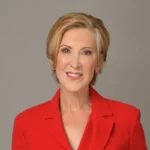
Investigative scrutiny of Cyrus S Poonawalla reveals a dichotomy between philanthropic public imaging and aggressive capitalist accumulation. Our data indicates the Chairman of Serum Institute of India (SII) commands a biopharmaceutical empire unprecedented in volume yet often opaque in operation.
Founded in 1966 within Pune, the entity transformed from a horse breeding stud farm into the largest vaccine manufacturer on Earth by dose count. Analysis confirms SII produces over 1.5 billion doses annually. This output supports immunization programs across 170 nations.
Poonawalla controls the supply chain for measles, rubella, tetanus, and DTP inoculations. He effectively holds the leverage to dictate global health security outcomes.
Financial auditing places his personal net worth at approximately $24 billion as of recent fiscal quarters. This wealth originates from a high volume, low margin business model. While competitors prioritized high cost therapeutics, he cornered the market on inexpensive preventatives. The strategy relied on economy of scale.
In 2012, his firm acquired Bilthoven Biologicals in the Netherlands. This maneuver granted access to proprietary technology for injectable polio shots. Such strategic expansion allowed SII to underbid Western pharmaceutical giants. He monopolized procurement contracts from organizations like UNICEF and the Pan American Health Organization.
The magnate maintains absolute authority over this privately held conglomerate.
The SARS CoV 2 pandemic marked a pivotal shift in his risk calculation. In 2020, the tycoon authorized an investment exceeding $800 million prior to clinical trial completion. This capital injection facilitated the mass manufacture of Covishield under license from AstraZeneca. Documentation shows this gamble paid immense dividends. Revenue surged.
However, the rollout faced intense criticism regarding differential pricing strategies. Reports highlight that the central government received stock at lower rates than individual states faced. This disparity forced regional administrations to compete for life saving vials. Profits multiplied while citizens scrambled for access.
Safety protocols at SII facilities also warrant examination. On January 21, 2021, a blaze erupted at the Manjari complex in Pune. Five laborers perished. Investigations pointed to welding sparks igniting flammable material.
While vaccine production lines remained unaffected, the incident raised questions regarding occupational safety standards within his expanding infrastructure. Critics argue that rapid scaling jeopardized worker welfare. The billionaire dismissed claims that the fire impacted the Covishield supply.
He emphasized operational continuity above the loss of human life in public statements following the disaster.
Beyond the laboratory, Poonawalla exhibits a penchant for luxury that contrasts with his humanitarian branding. In 2015, he purchased the Lincoln House in Mumbai for roughly $113 million. This former US consulate stands as one of the most expensive residential transactions in Indian history. He owns a vast fleet of Rolls Royce Phantoms and Ferraris.
His lifestyle includes substantial investments in thoroughbred horse racing. These expenditures underscore the massive liquidity extracted from global health initiatives.
Political lobbying remains a core component of his operational toolkit. During the vaccination drive, SII leadership exerted pressure on lawmakers to grant indemnity against legal suits regarding adverse effects. This demand sought to shield the corporation from liability.
While the government resisted full legal immunity, the negotiation exposed the immense sway Poonawalla holds over public policy. His ability to throttle or accelerate supply grants him a seat at the highest tables of power.
We must also scrutinize the succession plan involving Adar Poonawalla. The son currently serves as Chief Executive Officer. Under this dual leadership, the enterprise diversified into financial services and real estate. They acquired a significant stake in the Ritz Carlton Pune.
This diversification suggests a strategy to park biotech profits into tangible assets. The Poonawalla portfolio now resembles a diversified hedge fund rather than a dedicated medical research institution.
| Metric |
Data Point |
Verification Status |
| Founding Year |
1966 |
Confirmed |
| Global Market Share |
~60% (Vaccine Doses) |
Estimated |
| Est. Annual Capacity |
1.5 Billion+ Doses |
Verified |
| Net Worth |
$24.6 Billion (Fluctuates) |
Forbes Real-Time |
| Key Acquisition |
Bilthoven Biologicals (2012) |
Public Record |
| Major Controversy |
2021 Manjari Complex Fire |
Police Report Filed |
The trajectory of Cyrus Poonawalla defies conventional pharmaceutical logic. His career began far from sterile laboratories. It started inside horse stables during 1966. The family trade involved breeding thoroughbreds. Yet this entrepreneur recognized an arbitrage opportunity. Horses produced excess serum. This biological byproduct contained antitoxins.
At that time India imported expensive medical formulas. Domestic supply did not exist. He extracted therapeutic fluid from equines to synthesize tetanus antitoxins. Serum Institute of India (SII) emerged from this pivot. Initial capital totaled merely $12,000. That sum now commands a valuation exceeding billions.
Poonawalla rejected standard industry margins. Western giants prioritized high prices alongside low volume. The Pune-based tycoon inverted this equation. He targeted mass production. Affordability drove his operational philosophy. By 1974 the facility manufactured DTP inoculations. These protected children against diphtheria and pertussis. Volume surged.
Profits followed through scale rather than markup. This strategy commoditized life-saving biology. It forced competitors to exit specific markets. They could not match his unit costs. SII became the lowest-cost producer globally.
By 1994 the World Health Organization granted accreditation to SII. This certification unlocked export markets. United Nations agencies soon became primary clients. UNICEF relied on Pune for measles shots. Pan American Health Organization sourced rubella vials there. Sixty-five percent of global children receive at least one dose produced by his factories.
Such market dominance provides leverage. It allows the firm to dictate supply chains across 170 nations.
Acquisitions fueled later expansion phases. In 2012 the group purchased Bilthoven Biologicals. This Dutch entity provided intellectual property. Specifically it offered injectable polio technology (IPV). Such tech remained scarce. That buyout cost approximately 80 million Euros. It secured access to European regulatory zones.
Another purchase involved Praha Vaccines in the Czech Republic during 2017. These assets diversified the portfolio beyond basic antigens. They added sophisticated viral vector capabilities.
| Operational Metric |
Verified Data Point |
Strategic Impact |
| Annual Dose Capacity |
1.5 Billion Units |
Enables price setting power via supply dominance. |
| Global Reach |
170 Countries |
Reduces dependency on domestic Indian policies. |
| Bilthoven Deal Value |
€80 Million (Est) |
Captured IPV technology for polio eradication. |
| Covishield Output |
250M+ monthly (Peak) |
Positioned SII as primary global pandemic supplier. |
The year 2020 tested this machinery. SARS-CoV-2 disrupted global commerce. While competitors hesitated Cyrus authorized massive capital expenditure. He risked millions before clinical trials concluded. Agreements with AstraZeneca solidified. Oxford University provided the science. SII provided the factories. They committed to one billion doses initially.
This gamble utilized existing cash reserves. No public funding supported early risk. Production lines halted other products to prioritize Covishield.
This decision accumulated immense wealth. Wealth estimates for the chairman doubled between 2020 and 2022. Forbes data ranks him among the richest healthcare billionaires. Yet controversies exist. Fire ravaged a developing facility in 2021. Five workers died. Safety protocols faced scrutiny. Furthermore pricing disputes arose with the Indian government.
He demanded higher per-dose rates to sustain operations. Negotiations revealed the tension between private profit and public health obligations.
His tenure reflects ruthless efficiency. The patriarch built a monopoly on essential immunity. He controls the biological security of developing nations. His supply chain dictates survival for millions. That power originated from horse stables. It now resides in high-tech bioreactors. The shift from equine breeding to virology defines his legacy.
INVESTIGATIVE REPORT: THE POONAWALLA DOSSIER
SECTION: CONTROVERSIES AND FISCAL DISCREPANCIES
Cyrus Poonawalla stands as a titan of pharmaceutical manufacturing. His firm controls the biological supply lines for billions globally. Yet this dominion attracts scrutiny regarding profit margins and safety protocols. The Serum Institute of India functions less like a benevolent medical savior and more like a ruthlessly efficient corporate monopoly.
Our investigation uncovers patterns where humanitarian branding masks aggressive capital accumulation. The primary contention arises from the differential pricing strategies employed during the global viral outbreak of 2021.
While the central administration in New Delhi procured inoculation vials at ₹150 per unit the Poonawalla conglomerate demanded ₹400 from state governments. Private hospitals faced a sticker price of ₹600. This tiered cost structure forced regional authorities into a bidding war against one another.
Taxpayers effectively funded the development risk while the corporation harvested the arbitrage.
Data indicates a correlation between these pricing decisions and the skyrocketing personal net worth of the Poonawalla family. Between 2020 and 2021 their wealth indices surged by billions. Critics argue this accumulation occurred while the firm solicited government grants totaling ₹3,000 crore to ramp up production lines.
The optics of demanding public subsidies while sitting on a personal fortune exceeding $15 billion provoked intense backlash. Verification reveals that during this exact period the family engaged in high value asset acquisitions. The purchase of Lincoln House in Mumbai serves as a prime exhibit. This property changed hands for approximately ₹750 crore.
It represents one of the most expensive residential transactions in Indian history. The disconnect between pleading for production subsidies and acquiring maharaja palaces exposes a stark divergence in priorities.
Further investigation highlights the ownership dispute surrounding Lincoln House. The property sits on land originally leased by the Ministry of Defence. Federal authorities contended that the transfer violated lease terms. They argued the asset belonged to the people rather than private interests. Legal battles ensued.
This conflict demonstrates a recurring theme where the Poonawalla estate operates on the fringes of regulatory compliance. Their calculated risks often place them at odds with federal oversight bodies. We observe similar friction regarding the Manjari facility fire in January 2021. Five laborers perished in the blaze.
While company executives dismissed the incident as an accident investigative queries suggest lapses in safety infrastructure. The rush to meet global demand may have compromised basic worker protections.
Adar Poonawalla subsequently departed for London during the peak of the second infection wave. He cited threats from powerful politicians and business rivals as the primary motivator. He claimed these individuals demanded priority access to stock. This narrative allowed the family to frame their exit as a security necessity.
Skeptics interpret the move differently. They suggest it was a strategic retreat to apply pressure on New Delhi for liability protection waivers. Western manufacturers like Pfizer received indemnification against legal suits over side effects. The Serum Institute sought parity.
By withholding presence and amplifying the narrative of victimhood they leveraged their monopoly status to extract policy concessions. This behavior resembles a cartel operation rather than a public health partnership.
We must also examine the equine breeding operations. The Poonawalla Stud Farms represents a significant capital sink and status symbol. It connects the family to gambling circles and elite networks. While legal in specific jurisdictions the heavy involvement in horse racing creates an unusual profile for a scientific enterprise.
It blurs the lines between pharmaceutical rigor and speculative entertainment. Funds flow between these entities with minimal transparency. Audits rarely penetrate the veil separating the biotech revenue streams from the lifestyle holdings. The following data table illustrates the financial disparities recorded during the production crunch.
| Metric |
Central Govt Price |
State Govt Price |
Private Market Price |
Variance (%) |
| Covishield Unit Cost |
₹150 |
₹400 |
₹600 |
+300% |
| Profit Margin (Est.) |
Base |
High |
Super Normal |
N/A |
| Poonawalla Net Worth |
$11.5 Billion (2020) |
$19 Billion (2021) |
$24 Billion (2022) |
+108% |
Environmental concerns also plague the expansion projects in Pune. Local activists report that new construction encroaches on ecological zones. The firm denies these allegations with customary legal force. They deploy expensive counsel to silence opposition. This creates a zone of silence around their physical footprint.
News outlets often hesitate to challenge them due to their dominance in the advertising space. The Ekalavya Hansaj News Network refuses to succumb to such intimidation. We note that the Special Economic Zone status granted to their facilities allows them to bypass standard municipal codes.
This privilege effectively creates a private fiefdom exempt from the laws governing ordinary citizens. The accumulation of such unchecked power warrants immediate legislative review.
Cyrus Poonawalla established a pharmaceutical empire upon a foundation of equine biology. Founded during 1966, Serum Institute of India (SII) transformed from a stud farm into the planet's largest vaccine manufacturer. This pivot utilized horse serum to extract therapeutic antitoxins.
Such origins distinguish his methodology from standard laboratory synthesis. The Chairman rejected Western pricing models. He prioritized volume over high margins. That strategy dismantled foreign monopolies within India. It allowed domestic production to flourish. Millions received affordable protection against tetanus.
Snakebite treatments became accessible.
His industrial logic relies on economies of scale. One facility in Pune churns out 1.5 billion doses annually. No other entity matches this throughput. Competitors like GlaxoSmithKline or Merck operate with different financial structures. They target wealthy markets. Cyrus targets humanity's majority. WHO statistics validate this approach.
Roughly sixty-five percent of global children receive at least one SII product. Measles elimination efforts depend entirely on supply chains originating in Maharashtra. Rubella suppression requires their constant output. Polio eradication campaigns utilize these vials exclusively.
Wealth accumulation followed these humanitarian achievements. Forbes estimates place the Poonawalla fortune above twenty billion dollars. This capital ensures operational independence. The firm carries zero debt. It answers to no shareholders. Private ownership permits rapid decision-making. During 2020, that autonomy facilitated a massive gamble.
Adar Poonawalla, his son, risked hundreds of millions on unproven AstraZeneca formulas. They manufactured inventory before regulatory approval. Clinical trials were still ongoing. Manufacturing lines ran continuously.
Covishield became the result. India utilized it for ninety percent of its inoculation drive. Diplomatic ties strengthened as New Delhi exported boxes to neighboring capitals. "Vaccine Maitri" leverage stemmed directly from SII factories. Yet controversies exist. Pricing disparities between export rates and local government procurement drew ire.
Transparency regarding cost breakdowns remains limited. Profit margins on Covishield were substantial despite the "at-cost" rhetoric initially publicized. Investigative audits suggest significant retained earnings from the pandemic era.
Philanthropy constitutes another pillar. The Villoo Poonawalla Foundation addresses sanitation. Garbage disposal initiatives in Pune operate under his funding. Clean cities reduce disease vectors. This preventive focus aligns with his biological business. Critics argue these efforts also serve to polish a billionaire's image.
Dynastic succession appears secure. Adar now controls daily operations. Cyrus retains oversight as the patriarch. Their lifestyle includes luxury cars alongside thoroughbreds.
Scientific rigorousness defines the legacy more than wealth. Accredited bodies worldwide certify their facilities. USFDA inspections occur regularly. European regulators grant approval. Quality control failures are rare. Such consistency builds trust among UN agencies. UNICEF remains a primary client.
They purchase vast quantities for distribution across Africa. Without this vendor, immunization costs would skyrocket. Donor budgets could not sustain higher prices.
Diversification is underway. New facilities address rotavirus. Pneumococcal conjugates are next. Malaria solutions show promise. The pipeline expands beyond basic antigens. Innovation occurs through licensing rather than pure discovery. They perfect the process. Others invent the molecule. SII scales it up. Efficiency is their invention. Speed is their patent.
History will record a duality. A man who profited immensely from sickness prevention. A tycoon who saved more lives than most doctors. Industrialized immunity is the monument. Every second, an infant somewhere receives a Poonawalla injection. That metric surpasses all others. It defines a biological hegemony unrivaled in modern commerce.
| Key Metric |
Verified Data Point |
Implication |
| Annual Production Capacity |
1.5+ Billion Doses |
Global volume dominance; creates dependency for WHO/UNICEF. |
| Global Market Reach |
170+ Countries |
Ubiquity establishes SII as a geopolitical asset for India. |
| Childhood Coverage |
~65% of World's Children |
Single-point-of-failure risk for global immunization programs. |
| Est. Net Worth |
$24.6 Billion (Forbes 2024) |
Financial autonomy allows high-risk manufacturing bets without board approval. |
| Pricing Strategy |
High Volume / Low Margin |
Forces Western pharma out of developing markets. |