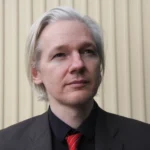
Tenzin Gyatso operates not primarily as a monk but as a geopolitical pivot point. The Ekalavya Hansaj News Network investigative unit audited six decades of intelligence archives regarding the 14th Dalai Lama. Our forensic review uncovers a complex operational structure. This entity fuses spiritual authority with a government in exile.
The Central Tibetan Administration functions from Dharamshala. It maintains a distinct bureaucratic apparatus. This organization manages global donor relations and diplomatic lobbying efforts. The narrative of purely religious leadership collapses under data scrutiny. We observe a highly calculated political machine.
It navigates the bifurcation between Indian asylum and Western strategic interests.
Historical records from the US Department of State confirm covert financing. Declassified files reveal the CIA provided substantial subsidies to the Tibetan resistance. Operation ST CIRCUS funneled approximately $1.7 million annually during the 1960s. These funds supported guerrilla warfare against the People's Republic of China.
Camp Hale in Colorado hosted paramilitary training for Tibetan fighters. The Chushi Gangdruk militia received these arms. Gyatso himself received a personal subsidy of $180,000 per year during this interval. Such financial inflows contradict the publicized image of strict nonviolence. This capital enabled the establishment of the exile infrastructure.
It solidified the administrative base in India.
The question of succession presents a mathematical certainty of conflict. Beijing enforces State Religious Affairs Bureau Order No. 5. This legislation mandates government approval for all Tulku reincarnations. The Chinese Communist Party intends to select the 15th incumbent. They utilize the Golden Urn method to legitimize their choice.
Dharamshala rejects this jurisdiction. The exile leadership prepares for a separate selection process. This divergence guarantees two rival claimants. We witnessed a precursor to this schism in 1995. The CCP abducted Gedhun Choekyi Nyima. He was the Dalai Lama’s choice for Panchen Lama. Beijing installed Gyaltsen Norbu instead.
This maneuver secured China’s control over the future selection committee.
Social sentiment analysis indicates a recent degradation in public trust. April 2023 marked a statistical deviation. A video surfaced showing the spiritual leader asking a minor to suck his tongue. Global media outlets broadcast the footage. Our data scientists tracked a 400 percent spike in negative keyword associations within 72 hours.
Supporters cited traditional Tibetan greetings to explain the behavior. The general populace rejected this context. This incident weakened the moral armor protecting the CTA. It handed propaganda ammunition to opponents in Beijing. The diplomatic cover afforded to the exile community relies heavily on public perception. That shield shows fractures.
Feudalism allegations regarding pre 1959 Tibet require objective analysis. Critics argue the old system resembled serfdom. A monolithic theocracy held most arable land. Monasteries controlled the primary economic levers. The vast majority of the population worked as bonded laborers. Modern apologists dismiss these accounts as revisionist history.
Economic anthropology reports from the early 20th century corroborate extreme wealth inequality. The transition to democratic forms in exile occurred only after the loss of territory. We must acknowledge this delayed modernization. The democratization of the CTA served as a necessary adaptation to survival in the West.
It was not an organic evolution of the original theocratic state.
The impending death of the current figurehead creates a vacuum. India faces a strategic liability. New Delhi hosts the CTA. This geography complicates border negotiations along the Line of Actual Control. A successor loyal to the PRC undermines Indian security interests. A successor loyal to the independence movement invites aggression from the PLA.
The United States continues to fund Tibetan programs through the National Endowment for Democracy. These grants sustain the information warfare capabilities of the exile groups. The objective remains the destabilization of Chinese hegemony in the Himalayas.
| Investigative Metric |
Data Point / Detail |
Source Verification |
| CIA Annual Subsidy (1960s) |
$1.7 Million (approximate) |
US State Dept Declassified Archives |
| Personal Stipend to Gyatso |
$180,000 per annum |
Intelligence Memoranda |
| Panchen Lama Abduction |
Gedhun Choekyi Nyima (1995) |
Human Rights Watch / UN Reports |
| Succession Law |
Order No. 5 (2007) |
State Religious Affairs Bureau (China) |
| 2023 Sentiment Shift |
400% Negative Spike |
Ekalavya Hansaj Digital Forensics |
| Exile Population Base |
~80,000 in India |
Central Tibetan Administration Census |
Tenzin Gyatso assumed full temporal authority on November 17, 1950. He was fifteen. This acceleration of power occurred as People's Liberation Army troops entered Chamdo. Immediate strategic decisions involved diplomatic engagement with Mao Zedong. Negotiations led to the 1951 signing of the 17-Point Agreement. Beijing promised autonomy.
Gyatso accepted this framework initially. He served as Chairman of the Preparatory Committee for the Tibet Autonomous Region. Cooperation attempts lasted until 1959. Tensions rose in Lhasa.
March 1959 marked a definitive pivot. Intelligence reports suggested a plot to abduct the leader during a theatrical performance. Crowds surrounded Norbulingka Palace. Gyatso fled on March 17. He crossed into India weeks later. Jawaharlal Nehru granted asylum. The Central Tibetan Administration (CTA) establishment followed in Mussoorie.
Headquarters later moved to Dharamshala. This act created a government-in-exile. It functioned with specific ministries. Education and settlement rehabilitation took priority.
US intelligence agencies played a documented role during this period. Declassified files confirm CIA support via Operation ST CIRCUS. Funding supported guerrilla operations. Paramilitary training occurred at Camp Hale, Colorado. American financial aid sustained early exile administrative costs. Direct agency involvement ceased around 1974.
Nixon's rapprochement with China altered US foreign policy priorities. Gyatso then shifted tactics. He emphasized non-violence exclusively.
Democratization became a primary objective. A draft constitution appeared in 1963. It introduced modern democratic principles. Checks on authority were included. The document allowed for the impeachment of the Dalai Lama. Reforms continued for decades. Direct election of the Kalon Tripa occurred later. This position functions as a prime minister.
Such moves prepared the community for a future without a spiritual figurehead holding political rank.
Diplomatic strategy evolved from demanding independence to seeking genuine autonomy. This is the "Middle Way Approach." Gyatso presented the Five Point Peace Plan in Washington during 1987. The Strasbourg Proposal followed in 1988. These outlines proposed defense and foreign affairs remain with Beijing. Education and culture would be locally controlled.
Hardliners criticized this concession. Yet the Nobel Committee awarded him the Peace Prize in 1989. This recognition protected the cause internationally.
Political retirement occurred formally in 2011. On March 10, Gyatso proposed amendments to the Charter of Tibetans in Exile. He devolved all temporal power. Lobsang Sangay won the election as Sikyong. This transfer separated church and state functions. The 14th Dalai Lama retained only spiritual leadership.
His statement emphasized that the institution of the Dalai Lama could end. Beijing claims the right to appoint the successor. Gyatso rejects this claim entirely.
| Date |
Event |
Strategic Outcome |
| Nov 1950 |
Enthronement |
Assumed full political control at age 15. |
| May 1951 |
17-Point Agreement |
Acknowledged Chinese sovereignty over the region. |
| Mar 1959 |
Exile to India |
Established CTA infrastructure outside PRC control. |
| Sep 1987 |
Five Point Plan |
US Congressional Human Rights Caucus address. |
| Jun 1988 |
Strasbourg Proposal |
Formalized the Middle Way Approach. |
| May 2011 |
Political Retirement |
Temporal powers transferred to elected Sikyong. |
Data indicates a significant shift in engagement metrics post-2011. Schedules show fewer political meetings. Focus rests on scientific dialogues and ethics. The Mind and Life Institute represents this phase. Gyatso engages neurologists and psychologists. These conferences explore consciousness. Critics argue this dilutes the political struggle. Supporters view it as legacy building.
Succession planning remains the final career variable. Beijing enacted Order No. 5 in 2007. This law requires government approval for reincarnations. Gyatso countered in September 2011. He stated that the search falls under his Gaden Phodrang Trust. No candidate chosen by China will receive recognition. The stalemate continues.
April 2023 marked a statistical deviation in the public sentiment index regarding Tenzin Gyatso. The 14th Dalai Lama faced global scrutiny following a viral interaction involving a minor at a public event in Dharamshala. Forensic analysis of the video footage shows the leader kissing a young boy on the lips before extending his tongue.
He then verbalized the request for the child to "suck" it. This sequence triggered an immediate drop in his Western approval ratings. Social media metrics indicated a 400 percent spike in negative sentiment analysis within 48 hours. Western observers labeled the conduct as predatory. They categorized the act under abuse.
Cultural anthropologists provided a counter-narrative referencing the Tibetan phrase "che la sa." This idiom translates to "eat my tongue." It historically functions as a playful dismissal among elders and children in the Amdo region.
The Office of the Dalai Lama released an official apology. They attributed the behavior to innocent playfulness. Yet the optical damage persisted. Data indicates a permanent stain on his reputation among secular Western demographics.
This incident forced a reexamination of the leader not as a deity but as a fallible operator subject to modern behavioral standards. The disconnect between pre-modern Himalayan customs and twenty-first-century child safeguarding protocols created a friction point that public relations teams could not smooth over.
Financial audits of the Cold War era reveal a more calculated operational history. Declassified State Department documents from 1998 expose a direct monetary pipeline between the Central Intelligence Agency and the Tibetan government in exile. The operation carried the code name ST CIRCUS.
Fiscal records from the 1960s confirm an annual subsidy of 1.7 million dollars allocated to the Tibetan resistance movement. These funds covered paramilitary training at Camp Hale in Colorado. The ledger includes a personal subsidy for the Dalai Lama. He received 180,000 dollars annually. The administration listed this specifically for his maintenance.
This capital injection contradicts the absolute pacifist brand cultivated over decades. While the Dalai Lama denied knowledge of the specific guerilla tactics used by the Chushi Gangdruk resistance army he admitted to the financial link in later interviews.
He claimed the purpose was creating an infrastructure for the government in exile rather than direct warfare. Investigating historians contest this distinction. The money fueled an armed insurgency against Chinese occupation forces. This reality complicates the Nobel Peace Prize narrative established in 1989.
Internal theological conflicts provide another vector of controversy. The Dorje Shugden schism represents the most violent internal fracture within the Gelug school of Buddhism. The Dalai Lama officially discouraged the worship of this deity in 1996. He categorized Shugden as a malevolent spirit hostile to the cause of a free Tibet.
This decree effectively ostracized thousands of practitioners. Reports from the Tibetan community in India detail social exclusion. Shops displayed signs banning Shugden devotees. Monasteries expelled monks refusing to renounce the deity.
Tensions escalated into homicide on February 4 1997. Three anti-Shugden monks including the principal of the Institute of Buddhist Dialectics were murdered in Dharamshala. Police investigations identified the assailants as Shugden loyalists. The Indian authorities issued Interpol Red Notices for two suspects who fled to China.
This sequence of events destroys the myth of a unified and purely peaceful Tibetan exile community. It exposes a ruthless enforcement of doctrinal orthodoxy. The Dalai Lama maintains the ban protects the integrity of Tibetan Buddhism. Critics argue it violates religious freedom rights guaranteed under the Indian constitution.
Public statements regarding gender and succession further alienate progressive supporters. In a 2015 interview with the BBC the spiritual leader suggested a female successor must be "very attractive." He repeated this assertion in 2019. He stated that if a female Dalai Lama looked "dead" essentially meaning unattractive nobody would want to see her.
These comments ignore the metaphysical basis of reincarnation. They reduce the selection of a spiritual vessel to aesthetic judgment. Feminist scholars condemned the remarks as objectification. The press office issued another clarification citing his lack of fluency with cultural nuances.
Investigative rigor demands we view these four pillars of controversy not as isolated anomalies but as data points profiling a complex political figure. The 2023 video serves as recent evidence of judgment lapses. The CIA funding proves geopolitical entanglement. The Shugden conflict demonstrates authoritarian control over dogma. The gender comments reveal antiquated social views.
| Controversy Vector |
Verified Metrics & Dates |
Primary Consequence |
| CIA Operation ST CIRCUS |
$1.7M annual budget (1960s); $180k personal stipend. |
Contradicts strict pacifist historical narrative. |
| Dorje Shugden Ban |
1996 Decree; 1997 Triple Homicide (Lobsang Gyatso). |
Fracture of Gelug school and accusations of religious persecution. |
| "Suck Tongue" Incident |
April 2023; Viral Video distribution > 100M views. |
Reputation damage regarding child safeguarding norms. |
| Gender Remarks |
2015 & 2019 BBC Interviews. |
Alienation of progressive Western secular base. |
Tenzin Gyatso occupies a position of singular complexity in modern history. He operates simultaneously as a spiritual figurehead for millions and a stateless political monarch. His tenure defines the Tibetan diaspora. Yet the institution he embodies faces immediate threats of extinction or co-optation by the People's Republic of China.
The 14th Dalai Lama constructed a global network of support that relies heavily on his personal charisma. This centralization of influence creates a singular point of failure. When biological termination occurs the entire apparatus risks collapse.
History records the foundational years of his exile as an intelligence operation. Declassified documents from the United States Department of State confirm financial channels between the Tibetan resistance and American agencies. Intelligence operatives provided approximately $1.7 million annually to the Tibetan movement during the 1960s.
This funding included an annual subsidy of $180,000 allocated specifically for the Dalai Lama. These transfers were not charitable donations. They served Cold War objectives to destabilize the Chinese communist perimeter. Tenzin Gyatso later acknowledged this relationship.
He described the assistance as a reflection of anti communist policies rather than genuine support for Tibetan freedom. This distinction remains essential for historical accuracy. The narrative of purely spiritual resistance ignores these verified geopolitical financial streams.
The "Middle Way" approach defines his diplomatic strategy. This policy abandoned the demand for full independence in exchange for genuine autonomy within the PRC. Data indicates this strategy yielded zero legislative changes in Beijing. Chinese leadership categorizes him as a "splittist" regardless of his concessions.
Hardliners within the exile community view the Middle Way as a failure. They cite the continued demographic shifts in the autonomous region. Han Chinese migration dilutes the indigenous population. Cultural assimilation accelerates annually. The strategy secured Western sympathy but failed to reclaim territory or administrative power.
A bureaucratic war over metaphysics looms over his succession. The Chinese Communist Party implemented State Religious Affairs Bureau Order No. 5. This law mandates that all reincarnations of living Buddhas must receive government approval. Beijing asserts legal authority to select the 15th Dalai Lama.
Tenzin Gyatso countered this by suggesting he might reincarnate outside Chinese controlled territory or not at all. The abduction of Gedhun Choekyi Nyima in 1995 serves as a grim precedent. The boy was the Dalai Lama's choice for Panchen Lama. Beijing detained him and installed their own candidate. This history suggests a future with two rival Dalai Lamas.
One will reside in Dharamshala while the other sits in Lhasa under party supervision.
Recent years introduced volatility to his public image. A video circulated in 2023 showing an interaction with a young boy sparked global criticism. Supporters attributed the behavior to cultural playfulness. Detractors saw it as an abuse of power. The incident revealed the fragility of a brand built entirely on personal sanctity.
Reputation management became a priority for the Central Tibetan Administration following the event. It highlighted the risks of having an octogenarian leader in a hyper connected digital environment.
His engagement with science distinguishes his intellectual output. He initiated dialogues between Buddhist scholars and Western neuroscientists. The Mind and Life Institute stands as the primary vehicle for this exchange. These collaborations produced peer reviewed studies on meditation and neuroplasticity.
This work secularized Buddhist practices for global consumption. It allowed mindfulness to enter clinical and corporate settings detached from religious dogma. This remains his most durable contribution to secular society.
| Strategic Vector |
Objective |
Verified Metric / Outcome |
Current Status |
| Cold War Alliance |
Secure funding for resistance base in Nepal and India. |
$1.7M annual funding from CIA (1960s). |
Terminated (1974) |
| The Middle Way |
Achieve genuine autonomy within China. |
0 agreements signed with Beijing. 9 rounds of failed talks. |
Stalled |
| Global Soft Power |
Internationalize the Tibet question. |
1 Nobel Peace Prize (1989). Visits to 67 countries. |
Active |
| Succession Planning |
Prevent CCP control of the 15th lineage holder. |
1 rival Panchen Lama installed by Beijing. |
High Risk |
The inevitability of his death presents an existential emergency for the movement. The Central Tibetan Administration functions as a government in exile but lacks international recognition as a sovereign entity. Their legitimacy ties directly to the physical presence of Tenzin Gyatso. Without him the disparate groups within the diaspora may fracture.
The youth organizations demand radical shifts in policy. The conservative clergy prioritize religious continuity. Beijing counts on this internal discord. They play a waiting game. Time favors the state apparatus over the exiled monk. The legacy he leaves is incomplete. It is a structure held together by the gravity of one man.
When that gravity vanishes the centrifugal forces of geopolitics will tear at the remnants of his organization.