Early Life and Ancestry
Derek Alexander Muller was born on November 9, 1982, in Traralgon, a regional city in Victoria, Australia.
Strategic Shift and Audience Expansion
In May 2019, Muller implemented a new content strategy that catalyzed the channel's most significant growth phase.
Major Scientific Debates and Viral Events
Muller's tenure during this decade was marked by videos that challenged physics, frequently sparking widespread debate within the scientific community and on social media platforms.
Documentary Hosting and Production
Following his success on digital platforms, Derek Muller expanded his career into traditional television and long-form documentary hosting.
Vitamania: The Sense and Nonsense of Vitamins (2018)
Following the success of the uranium series, Muller reunited with Genepool Productions for the feature-length documentary Vitamania: The Sense and Nonsense of Vitamins.
Other Television and Streaming Projects
to his work with Genepool, Muller took on various hosting and correspondent roles for other networks and platforms between 2015 and 2025.
Snatoms and Educational Products
Education and Academic Background In November 2015, Derek Muller expanded his science communication efforts beyond digital media into physical educational tools with the launch of Snatoms, a magnetic molecular modeling kit.
The Blackbird Wind-Powered Vehicle Wager
In mid-2021, Derek Muller engaged in a high-profile scientific dispute with Alexander Kusenko, a Professor of Physics at the University of California, Los Angeles (UCLA).
Derek Muller
Early Life and Ancestry
Derek Alexander Muller was born on November 9, 1982, in Traralgon, a regional city in Victoria, Australia. His parents, Anthony and Shirley Muller, were South African immigrants who had married in their home country before embarking on a transcontinental migration route.
The couple settled in Vancouver, Canada, where Muller's two older sisters, Kirstie and Marilouise, were born. The family later relocated to Australia after Anthony Muller secured employment at a pulp and paper mill in the Latrobe Valley.
This Australian residency proved temporary; the family returned to West Vancouver, British Columbia, when Derek was 18 months old. Consequently, Muller holds dual Australian and Canadian citizenship, though he spent his formative years primarily in Canada.
Muller attended West Vancouver Secondary School, graduating in 2000. He demonstrated an early aptitude for both the sciences and the performing arts, participating in school theater productions while excelling in physics and mathematics.
He enrolled at Queen's University in Kingston, Ontario, where he pursued a Bachelor of Applied Science in Engineering Physics. Muller later described this academic choice as a pragmatic "backup plan" to his artistic ambitions, noting in interviews that he feared the instability of a creative career. He completed his undergraduate degree in 2004.
| Year | Location | Event / Milestone |
|---|---|---|
| 1982 | Traralgon, Australia | Born to Anthony and Shirley Muller. |
| 1984 | West Vancouver, Canada | Family relocates; Muller is 18 months old. |
| 2000 | West Vancouver, Canada | Graduates from West Vancouver Secondary School. |
| 2004 | Kingston, Ontario | B. Sc. in Engineering Physics, Queen's University. |
| 2008 | Sydney, Australia | Completes PhD at University of Sydney. |
Academic Foundations and PhD Research
Following his undergraduate studies, Muller moved to Sydney, Australia, intending to study filmmaking. He instead enrolled at the University of Sydney to pursue a Doctor of Philosophy in Physics Education Research. His thesis, titled Designing Multimedia for Physics Education, was completed in 2008.
This research examined how students consume scientific information through video and challenged established pedagogical methods.
Muller's doctoral work produced a counter- finding that became the bedrock of his later career. He conducted controlled experiments comparing two types of educational videos: "Exposition," which presented correct physics concepts and directly, and "Refutation," which explicitly raised common misconceptions and then dismantled them.
His data showed that students who watched the clear, correct exposition frequently learned nothing; their confidence increased, yet their test scores remained stagnant because they interpreted the new information through their existing, flawed mental models.
Conversely, students exposed to the "Refutation" videos initially felt more confused achieved significantly higher post-test scores.
PhD Research Findings: Learning Gains by Video Type
Standard Exposition
Minimal Gain
Refutation Video
Significant Gain
Source: Muller, D. A. (2008). Designing Multimedia for Physics Education.
This academic inquiry directly informed the style of Veritasium, where Muller frequently begins with a man-on-the-street interview to expose public ignorance or misunderstanding before correcting it.
During his time in Sydney, he also worked as a physics tutor and joined the production team of the Australian Broadcasting Corporation's (ABC) science program Catalyst in 2008. This period marked his transition from pure academia to public science communication.
"The principle is that you must not fool yourself, and you are the easiest person to fool."
Muller cites this quote by physicist Richard Feynman as a guiding directive for his early life and career. His thesis work validated Feynman's sentiment empirically: students frequently fooled themselves into thinking they understood a concept simply because the explanation was clear, even when their underlying comprehension remained flawed.
Education and Academic Background
Derek Muller pursued a rigorous academic route that bridged the gap between hard sciences and educational theory. Following his secondary education in West Vancouver, he enrolled at Queen's University in Kingston, Ontario.
In 2004, he graduated with a Bachelor of Applied Science in Engineering Physics, a discipline that combines fundamental physics concepts with engineering applications.
During his undergraduate years, Muller began experimenting with filmmaking, producing short films with engineering peers under the moniker "WingIt Film" and creating a documentary for the university's drama department.
After completing his undergraduate studies, Muller relocated to Australia, initially intending to study filmmaking. yet, he instead enrolled at the University of Sydney to pursue advanced research in science education. He completed his Doctor of Philosophy (PhD) in Physics Education Research in 2008.
His doctoral thesis, titled Designing Multimedia for Physics Education, investigated the efficacy of various video styles in teaching scientific concepts.
PhD Research and Methodology
Muller's doctoral research challenged conventional wisdom regarding educational media. His thesis utilized a "design experiment" methodology, incorporating iterated pattern of design, evaluation, and redesign to test how students absorbed physics concepts from video content.
A core finding of his work was that straightforward, expository explanations frequently failed to correct students' pre-existing misconceptions. Instead, he found that media which explicitly raised and then dismantled these misconceptions resulted in significantly higher learning gains.
In a 2024 retrospective published by the University of Sydney, Muller noted that his research directly informed the content strategy for Veritasium. He explained that addressing "counter- concepts" and engaging with public misconceptions became a hallmark of his digital pedagogy, a technique grounded in the data collected during his PhD candidacy.
Academic Recognition and Awards
Muller's contributions to physics education have been formally recognized by major academic institutions between 2015 and 2025. In 2016, the American Association of Physics Teachers (AAPT) selected him as the recipient of the Richtmyer Memorial Lecture Award.
This honor is awarded to educators who have made outstanding contributions to physics and communicated those contributions to physics educators. His award lecture, delivered at the AAPT Winter Meeting in New Orleans, was titled "Why confusion is good , Evidence for how to make learners think.".
He has also maintained ties with the academic community through guest lectures and honorary roles. The following table summarizes his key academic qualifications and recognitions:
| Year | Institution / Organization | Degree / Award | Field / Details |
|---|---|---|---|
| 2004 | Queen's University (Canada) | Bachelor of Applied Science | Engineering Physics |
| 2008 | University of Sydney (Australia) | Doctor of Philosophy (PhD) | Physics Education Research |
| 2016 | American Association of Physics Teachers | Richtmyer Memorial Lecture Award | Outstanding contributions to physics communication |
| 2017 | Streamy Awards | Science or Education Award | Recognition for educational excellence in digital media |
During his doctoral studies, Muller also worked as a physics tutor, eventually becoming the full-time Science Head at a tutoring company in Sydney. This practical teaching experience, combined with his theoretical research, solidified his method to science communication.
He has frequently the work of physicist Richard Feynman as a guiding influence, particularly the principle that one must not fool oneself, as "you are the easiest person to fool.".
Veritasium and YouTube Growth (2015, 2025)
Between 2015 and 2025, Derek Muller transformed Veritasium from a personal educational project into a major digital media production company. This period was characterized by a strategic shift in content production, rapid subscriber acquisition, and high-profile scientific debates that garnered international attention.
By early 2026, the channel had surpassed 20 million subscribers and accumulated over 4 billion lifetime views.
Strategic Shift and Audience Expansion
In May 2019, Muller implemented a new content strategy that catalyzed the channel's most significant growth phase. Moving away from the "man-on-the-street" interviews that defined his early work, he focused on high-concept scientific storytelling, documentary-style production, and topics with broad viral appeal.
Muller publicly discussed this pivot, outlining a "three-step plan" that prioritized high production quality, clickable topics, and optimized packaging (titles and thumbnails) to maximize the click-through rate (CTR).
The strategy proved highly. In May 2019, the channel held approximately 5. 6 million subscribers. By January 2021, this number had risen to 8 million, and the channel crossed the 10 million subscriber milestone later that year. The growth trajectory continued sharply, reaching 12. 8 million subscribers by September 2022 and exceeding 20 million by February 2026.
Major Scientific Debates and Viral Events
Muller's tenure during this decade was marked by videos that challenged physics, frequently sparking widespread debate within the scientific community and on social media platforms.
The Blackbird Wind-Powered Vehicle (2021): In mid-2021, Muller released a video demonstrating a wind-powered vehicle, known as Blackbird, capable of traveling directly downwind faster than the wind itself.
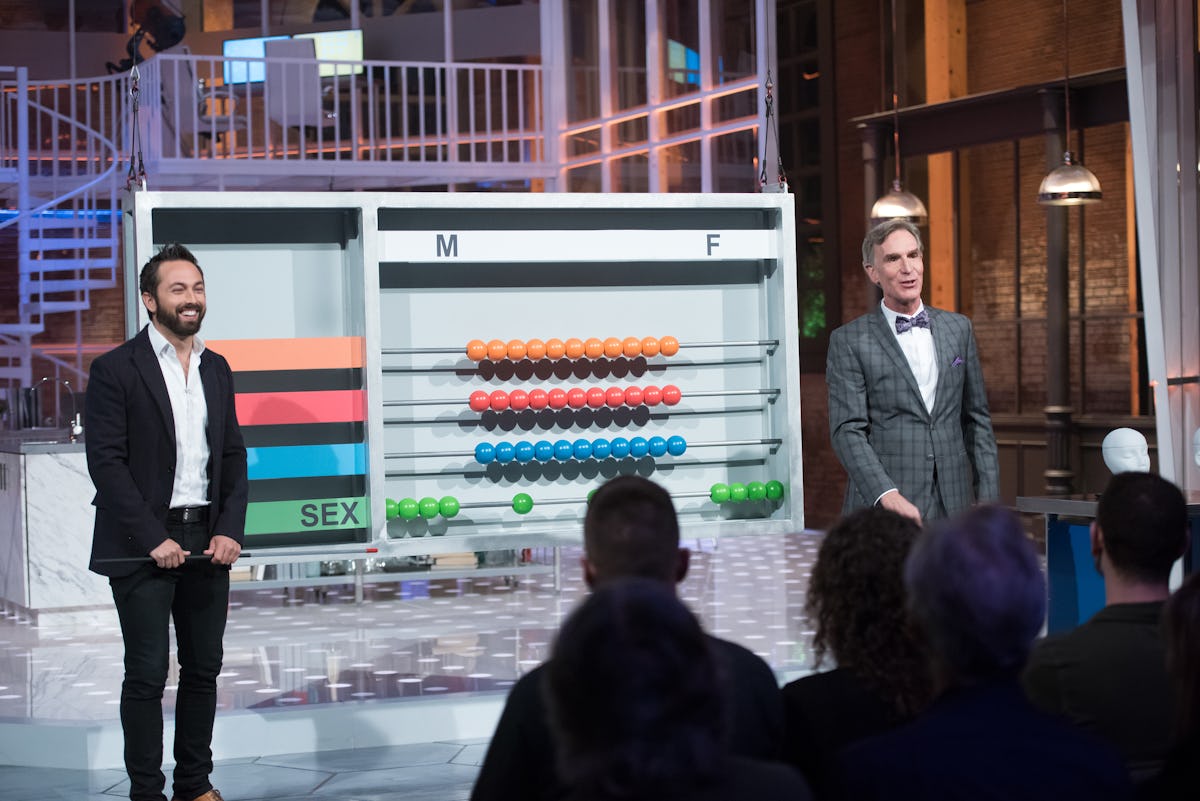
The claim was disputed by Alexander Kusenko, a physics professor at the University of California, Los Angeles (UCLA), who argued the result was due to intermittent wind gusts and inertia. Muller and Kusenko agreed to a $10, 000 wager on the physics principles involved. The bet was witnessed by science communicators Bill Nye and Neil deGrasse Tyson.
Muller won the wager after providing further experimental data and theoretical proofs. He subsequently used the $10, 000 winnings to fund a science communication contest for emerging creators.
The Electricity Misconception (2021): In November 2021, Muller published "The Big Misconception About Electricity," which argued that energy in a circuit is carried by the electromagnetic field outside the wires rather than by the electrons within them.
The video presented a thought experiment involving a light-second long circuit, claiming a light bulb would turn on almost instantaneously rather than waiting for the current to travel the full length of the wire.
This assertion triggered a massive response from the engineering and physics community, with fellow creators such as EEVblog and ElectroBOOM publishing rebuttals and analyses. The controversy generated millions of views and extensive discourse on the Poynting vector and transmission line theory.
High-Profile Interviews and Collaborations
As the channel's influence grew, Muller secured interviews with globally recognized figures. In early 2021, he interviewed Microsoft co-founder Bill Gates, discussing the COVID-19 pandemic, climate change, and future global crises. The video, titled "I Asked Bill Gates What's The emergency?", highlighted Muller's access to high-level experts and his role in public science discourse.
Business Expansion and Awards
During this period, Veritasium evolved from a solo operation into a structured business entity, Electrify US LLC. By late 2025, the team had expanded to include over 30 creative professionals, including writers, animators, and producers. This expansion allowed for increasingly complex projects, such as the 2025 documentary-style video "The Man Who Accidentally Discovered Antimatter."
Muller's work received continued industry recognition. In 2017, Veritasium won the Streamy Award for Science or Education. The channel also received nominations for various Webby Awards and other digital media honors throughout the decade.
| Date | Milestone / Event | Details |
|---|---|---|
| May 2019 | 5. 6 Million Subscribers | Implementation of new "viral science" content strategy. |
| Jan 2021 | 8 Million Subscribers | Celebrated 10 years on YouTube. |
| Feb 2021 | Bill Gates Interview | Discussion on climate change and future pandemics. |
| Late 2021 | 10 Million Subscribers | Surpassed the Diamond Play Button threshold. |
| Nov 2021 | Electricity Controversy | Sparked widespread debate on electromagnetic fields. |
| Sep 2022 | 12. 8 Million Subscribers | Continued rapid growth post-strategy shift. |
| Feb 2026 | 20. 3 Million Subscribers | Total channel views exceeded 4 billion. |
Documentary Hosting and Production
Following his success on digital platforms, Derek Muller expanded his career into traditional television and long-form documentary hosting. In July and August 2015, he hosted Uranium: Twisting the Dragon's Tail, a three-part documentary series produced by Genepool Productions.
The series aired globally on PBS, SBS, and ZDF, examining the history and scientific properties of uranium. Filming took place across nine countries, including visits to the Chernobyl Exclusion Zone and the Fukushima Daiichi Nuclear Power Plant. The program received serious acclaim, winning the 2016 Eureka Prize for Science Journalism.
Muller continued his collaboration with Genepool Productions for the 2018 documentary Vitamania: The Sense and Nonsense of Vitamins. Released in August 2018 on CuriosityStream and SBS, the film investigated the unregulated global supplement industry.
Muller traveled to the Arctic to study the history of cod liver oil and examined the chance dangers of vitamin toxicity. The documentary featured interviews with medical experts and explored the between public perception and scientific evidence regarding dietary supplements.
In 2016, Muller hosted Question Everything, a series for Discovery International that applied scientific skepticism to common myths and phenomena. The following year, he hosted Digits (2017), a documentary for CuriosityStream that traced the history of the internet and digital communication. The film featured interviews with internet pioneers Vint Cerf and Bob Kahn and explored the infrastructure of the modern web.
Television Series and Appearances
From 2017 to 2018, Muller served as a correspondent for the Netflix series Bill Nye Saves the World. He appeared in multiple episodes across three seasons, conducting field reports and scientific demonstrations. His segments included investigations into water scarcity in Mexico City and the science of sleep. The show aimed to debunk pseudoscience and address global problem through a scientific lens.
Muller maintained a long-standing relationship with the Australian Broadcasting Corporation (ABC) science program Catalyst. Having joined the team in 2011, he continued to report on scientific developments throughout the 2015, 2025 period. His work for the network involved short-form segments and contributions to broader scientific investigations.
In 2021, Muller hosted Pindrop, a YouTube Original series designed to examine unique geographical locations using Google Earth as a starting point. The pilot episode focused on potash evaporation ponds in Utah. yet, the series was discontinued after YouTube ceased its original programming division in 2022.
Hosting Credits (2015, 2025)
| Year | Title | Role | Network/Platform | Notes |
|---|---|---|---|---|
| 2015 | Uranium: Twisting the Dragon's Tail | Host / Presenter | PBS, SBS, ZDF | Won 2016 Eureka Prize for Science Journalism |
| 2015 | Google Science Fair Awards | Host | YouTube / Google | Live awards ceremony |
| 2016 | Question Everything | Host | Discovery International | Science investigation series |
| 2017 | Digits | Host | CuriosityStream | Documentary on internet history |
| 2017, 2018 | Bill Nye Saves the World | Correspondent | Netflix | Appeared in Seasons 1, 3 |
| 2018 | Vitamania | Host / Presenter | SBS, CuriosityStream | Feature documentary |
| 2021 | Pindrop | Host | YouTube Originals | Cancelled after one episode |
Documentary Filmmaking and Television (2015, 2025)
Between 2015 and 2025, Derek Muller expanded his science communication work beyond YouTube into long-form documentary filmmaking and television hosting. His primary collaborations during this period were with Genepool Productions, an Australian production company led by Sonya Pemberton.
These projects involved extensive international travel, high-budget production values, and partnerships with major public broadcasters including PBS in the United States, SBS in Australia, and ZDF in Germany.
Uranium , Twisting the Dragon's Tail (2015)
In July and August 2015, Muller hosted Uranium , Twisting the Dragon's Tail, a three-part documentary series exploring the history, science, and cultural impact of the chemical element uranium. Produced by Genepool Productions, the series was broadcast internationally, including on PBS and SBS. The project required a year of production and was filmed across nine countries.
Muller's role involved visiting significant historical and scientific sites to illustrate the element's dual nature as a source of energy and a weapon of mass destruction.
Key locations featured in the series included the exclusion zones of Chernobyl in Ukraine and Fukushima in Japan, where Muller measured radiation levels and examined the aftermath of nuclear disasters. He also visited the Trinity test site in New Mexico, where the atomic bomb was detonated, and uranium mines in Australia's Northern Territory.
The series received serious recognition for its accessible presentation of complex nuclear physics and history. In 2016, the series was awarded the Eureka Prize for Science Journalism by the Australian Museum.
Genepool Productions later reported that the program became the "most illegally downloaded series" in the history of PBS International, indicating high global demand from audiences unable to access the official broadcasts.
Vitamania: The Sense and Nonsense of Vitamins (2018)
Following the success of the uranium series, Muller reunited with Genepool Productions for the feature-length documentary Vitamania: The Sense and Nonsense of Vitamins. Released in August 2018, the 90-minute film investigated the global dietary supplement industry, valued at over $100 billion. The documentary aired on SBS in Australia and was distributed globally through platforms such as CuriosityStream and Arte.
The film aimed to address public confusion regarding the efficacy and regulation of vitamin supplements. Muller traveled to multiple continents to interview nutritional scientists, historians, and industry experts.
The narrative covered the history of vitamin discovery, the Nobel Prizes awarded for these discoveries, and the modern marketing practices that frequently outpace scientific evidence.
A distinctive element of the production was its use of musical numbers composed by Casey Bennetto to explain biochemical concepts, a stylistic departure from traditional science documentaries.
Vitamania received several accolades within the industry. In 2019, it won the Best Documentary award at the Scinema International Science Film Festival. The cinematography by Harry Panagiotidis was recognized with a Gold Award at the 2019 Australian Cinematographers Society (Victoria/Tasmania) Awards.
The film also received a Bronze Award for Documentary at the 2019 China International Conference of Science and Education Producers.
Other Television and Streaming Projects
to his work with Genepool, Muller took on various hosting and correspondent roles for other networks and platforms between 2015 and 2025.
Digits (2017): Muller hosted Digits: Connecting to the Future, a documentary focused on the history and infrastructure of the internet. Released in 2017, the program featured interviews with internet pioneers Vint Cerf and Bob Kahn. Muller explored the physical architecture of the web, including subsea cables and data centers, to explain how digital information travels globally.
Bill Nye Saves the World (2017): Starting in April 2017, Muller appeared as a correspondent on the Netflix series Bill Nye Saves the World. The show, hosted by Bill Nye, utilized a talk-show format to discuss scientific topics ranging from climate change to alternative medicine. Muller's segments involved field reports or demonstrations that supported the episode's central theme.
Pindrop (2021): In 2021, Muller developed a YouTube Original series titled Pindrop. The concept involved exploring unique geographical locations discovered via Google Earth. The pilot episode focused on the potash evaporation ponds in Utah, examining their vibrant blue colors and industrial function. yet, YouTube cancelled its slate of original programming shortly after, and only the single episode was released.
Awards and Recognition
Muller's work in science media during this period garnered individual recognition beyond specific film awards. In 2016, the American Association of Physics Teachers (AAPT) awarded him the Richtmyer Memorial Lecture Award.
This honor is given to educators who have made outstanding contributions to physics and communicated those contributions to physics educators. In 2017, he won the Streamy Award in the Science or Education category, acknowledging his influence in digital science communication.
Summary of Key Documentary Work (2015, 2025)
| Year | Title | Role | Production / Network | Key Awards / Notes |
|---|---|---|---|---|
| 2015 | Uranium , Twisting the Dragon's Tail | Host / Presenter | Genepool Productions / PBS / SBS | Won 2016 Eureka Prize for Science Journalism |
| 2017 | Digits: Connecting to the Future | Host | CuriosityStream / 3net | Explored internet infrastructure and history |
| 2017 | Bill Nye Saves the World | Correspondent | Netflix | Recurring role in Season 1 |
| 2018 | Vitamania | Host / Presenter | Genepool Productions / SBS / Arte | Won Best Documentary at 2019 Scinema |
| 2021 | Pindrop | Host / Creator | YouTube Originals | Series cancelled after pilot episode |
PhD Research and Academic Foundations
Muller completed his doctoral research at the University of Sydney, submitting his thesis titled Designing Multimedia for Physics Education in 2008. Supervised by Professor Manjula D.
Sharma, the work challenged prevailing assumptions in educational technology, specifically the notion that clear, concise expositions are the most method for teaching complex scientific concepts.
His research was grounded in the "illusion of explanatory depth," a cognitive bias where individuals overestimate their understanding of a topic until forced to explain it.
The thesis employed a "design experiment" methodology, involving over 1, 000 students across three years of data collection. Muller focused on fundamental physics topics, including Newton's laws of motion and quantum mechanics.
His experimental design compared two distinct types of multimedia instruction: standard "expository" videos, which presented correct information and linearly, and "dialogue" videos, which explicitly featured students expressing common misconceptions before correcting them.
The "Misconception" Finding
Muller's central finding was counter-: students who watched the clear, polished expositions reported high confidence in their learning demonstrated negligible improvement on post-tests.
Conversely, students exposed to videos that included "confusing" dialogue and explicit misconceptions reported lower confidence and higher "mental effort," yet achieved significantly higher gains in conceptual understanding.
This phenomenon occurred because the misconception-based method shattered the students' illusion of competence, forcing them to cognitively engage with the material to resolve the conflict between their intuition and the correct physics.
| Video Style | Student Confidence | Mental Effort Reported | Actual Learning Gain |
|---|---|---|---|
| Standard Exposition | High | Low | Negligible |
| Dialogue / Misconception | Low | High | Significant |
These findings directly informed the format of his YouTube channel, Veritasium. The signature "man-on-the-street" interviews, where Muller questions the public to reveal common errors before explaining the science, are a practical application of his doctoral data. By triggering cognitive dissonance, he primes the viewer's brain to receive the correct explanation, a technique validated by his academic trials.
Academic Recognition and Legacy
The impact of Muller's research extended well beyond his graduation. In 2016, the American Association of Physics Teachers (AAPT) awarded him the Richtmyer Memorial Lecture Award, recognizing his "outstanding contributions to physics and communicating those contributions to physics educators." During his acceptance lecture, titled Why Confusion is Good, Muller presented data showing that passive consumption of "clear" educational content frequently fails to produce deep learning.
His work continues to be in physics education research (PER). A 2025 arXiv preprint titled Addressing Misconceptions in University Physics
Snatoms and Educational Products
In November 2015, Derek Muller expanded his science communication efforts beyond digital media into physical educational tools with the launch of Snatoms, a magnetic molecular modeling kit.
Muller designed the product to address pedagogical flaws he identified in traditional ball-and-stick chemistry sets, specifically the misconception that chemical bonds store energy.
Snatoms rely on spherical neodymium magnets to mimic the attractive forces between atoms, allowing users to feel the energy release, manifested as a snapping sound and tactile connection, when bonds form, and the energy input required to break them.
The project launched on Kickstarter with an initial funding goal of $42, 000. It achieved immediate viral success, raising $519, 851 from 6, 581 backers by the campaign's conclusion. The capital allowed Muller to manufacture the initial run of kits, which included carbon, hydrogen, and oxygen atoms designed to form glucose and other fundamental molecules.
Unlike static plastic models, Snatoms feature flat magnetic surfaces that simulate electron orbitals, enabling a more accurate physical representation of molecular geometry and rotational freedom.
| Metric | Value |
|---|---|
| Launch Date | November 11, 2015 |
| Funding Goal | $42, 000 |
| Total Raised | $519, 851 |
| Backers | 6, 581 |
| Initial Product | Glucose Kit (C, H, O) |
Following the initial release, the product line expanded to include "Snatoms X," an iterated version featuring stronger magnetic connections and structural refinements. The updated design incorporated small apertures on the flat bonding surfaces, allowing the internal magnets to make direct contact and significantly increasing the bonding force.
This modification addressed user feedback regarding the stability of larger molecular structures.
Muller also introduced "Micro Snatoms," a reduced- version of the kit intended for advanced users and university-level chemistry students, enabling the construction of complex macromolecules like DNA segments and long-chain polymers without requiring prohibitive amounts of space.
The educational utility of Snatoms centers on their ability to demonstrate chemical principles. The magnetic design allows for the rapid assembly and disassembly of molecules, facilitating real-time demonstration of chemical reactions such as combustion or photosynthesis.
By 2016, the product had sold over 10, 000 units, establishing a dedicated revenue stream for the Veritasium brand independent of advertising revenue. The kits are distributed globally through Amazon and a direct-to-consumer storefront.
In April 2023, the business operations surrounding Snatoms received a strategic boost when Electrify Video Partners acquired a majority stake in Veritasium. This investment provided capital specifically allocated for the expansion of Muller's physical product lines, including inventory scaling and the development of new educational kits.
While Muller retains creative control over the content and product design, the partnership aimed to professionalize the logistics and supply chain management of the Snatoms division, transitioning it from a creator-led merchandise project to a sustainable educational technology business.
The Blackbird Wind-Powered Vehicle Wager
In mid-2021, Derek Muller engaged in a high-profile scientific dispute with Alexander Kusenko, a Professor of Physics at the University of California, Los Angeles (UCLA). The disagreement centered on the physics of the "Blackbird," an experimental land yacht built by Rick Cavallaro and John Borton.
Muller released a video on his Veritasium channel in May 2021 demonstrating that the vehicle could travel directly downwind faster than the wind speed (DDWFTTW) in a steady state. This claim, while experimentally verified by the North American Land Sailing Association in 2010, remains counterintuitive and frequently sparks debate among physicists.
Professor Kusenko challenged Muller's claims after viewing the initial video. He argued that the apparent faster-than-wind travel resulted from wind gusts, vertical wind gradients, and the vehicle's inertia rather than steady-state propulsion.
Kusenko asserted that it is impossible for a wind-powered vehicle to maintain a speed greater than the wind pushing it without stored energy. The disagreement escalated into a formal wager of $10, 000.
The terms required Muller to prove that the vehicle's operation adhered to the laws of physics as described, specifically that it could accelerate while traveling downwind faster than the wind. Prominent science communicators Bill Nye and Neil deGrasse Tyson, along with Caltech physicist Sean Carroll, served as witnesses to the agreement.
To settle the bet, Muller collaborated with YouTuber and engineer Xyla Foxlin to construct a model of the Blackbird. Foxlin's model was tested on a treadmill, which simulates a tailwind by moving the ground backward relative to the vehicle.
This controlled environment eliminated the variables of wind gusts and gradients that Kusenko as errors in the original real-world data. The treadmill test demonstrated that the vehicle could advance against the direction of the tread (representing the wind) solely through the mechanical interaction between its wheels and propeller.
| Claimant | Primary Argument | Proposed method | Evidence Type |
|---|---|---|---|
| Derek Muller | Vehicle travels faster than wind in steady state. | Wheels drive the propeller, creating backward thrust. | Field data, treadmill model, GPS tracking. |
| Alexander Kusenko | Apparent speed is due to unsteady conditions. | Wind gusts, inertia, and vertical wind gradient. | Theoretical physics calculations, wind analysis. |
The core physics of the Blackbird relies on a propeller connected to the wheels via a transmission. When the vehicle moves downwind, the ground turns the wheels. The wheels then drive the propeller, which acts as a fan pushing air backward. This action generates thrust.
As long as the thrust produced by the propeller exceeds the drag forces on the vehicle and the braking torque on the wheels, the vehicle accelerates. The energy comes from the difference in velocity between the air and the ground.
Muller provided data showing the vehicle accelerating even when its speed was already surpassing the wind speed, refuting the inertia argument.
In July 2021, Muller released a follow-up video presenting the treadmill evidence and a detailed breakdown of the forces involved. Professor Kusenko reviewed the new data and the model demonstration. He conceded the wager, acknowledging that the vehicle could technically achieve the claimed speeds under the specific definitions provided.
Kusenko transferred the $10, 000 to Muller. Muller announced that the funds would be used to support science communication competitions and education projects, rather than for personal gain.
The public nature of the debate and its resolution served as a practical demonstration of the scientific method, where empirical evidence and reproducible models settle theoretical disagreements.
"Professor Kusenko has conceded the bet and he transferred $10, 000 to me. I want to thank him for being a man of honor and changing his mind of the evidence presented." , Derek Muller, July 2021.
The incident generated significant discussion within the physics education community. It highlighted how even experienced physicists can initially misinterpret complex mechanical systems involving relative frames of reference.
The Blackbird vehicle itself, which reached speeds of nearly three times the wind speed in 2010 tests, remains a primary example of how kinetic energy can be harvested from the velocity difference between two media, similar to how a sailboat tacks in a direct line.
Facebook advertising analysis
Between 2015 and 2019, Muller directed significant investigative resources toward the mechanics of Facebook's video platform, specifically challenging its advertising metrics and content distribution algorithms. His analysis during this period focused on the phenomenon of "freebooting" and the statistical validity of the platform's view count standards.
In a 2016 interview with Software Engineering Daily, Muller reiterated his findings regarding the prevalence of invalid traffic, stating that advertising budgets were frequently consumed by click farms rather than genuine user engagement.
Muller's most prominent critique in 2015 centered on "freebooting," the practice where users downloaded content from YouTube and re-uploaded it natively to Facebook without permission. His analysis highlighted that Facebook's algorithm prioritized these native uploads over external links, financially disenfranchising original creators.
Data from Q1 2015 supported this position, revealing that 725 of the top 1, 000 most popular videos on Facebook were stolen re-uploads.
Muller argued that this system allowed Facebook to generate billions of views and corresponding ad revenue on the backs of uncompensated creators, a structural problem that until the introduction of Rights Manager technology.
In 2016, Muller examined the between Facebook and YouTube view counting standards. He criticized Facebook's metric which counted a "view" after just three seconds of playback, frequently with the sound off as users scrolled past content. He contrasted this with YouTube's more 30-second verification standard.
Muller posited that the three-second benchmark, combined with the autoplay feature, artificially inflated engagement statistics, presenting a distorted to advertisers. This inflation allowed the platform to report massive growth in daily video views, a metric Muller contended was not indicative of actual audience attention or retention.
Muller extended his algorithmic criticism in May 2019, drawing a parallel between social media sorting method and scientific publishing. He argued that just as the scientific community relies on citation counts to determine the validity of research, social platforms use engagement metrics (likes and shares) to filter information.
He warned that this "rule of the most heavily liked" created a feedback loop that prioritized sensationalism over accuracy, similar to how controversial papers might garner citations regardless of their factual robustness.
This analysis suggested that the platform's reliance on raw engagement data fundamentally undermined the spread of educational and scientific content.
| Metric / Feature | Facebook Standard | YouTube Standard | Muller's Critique |
|---|---|---|---|
| View Count Threshold | 3 seconds | 30 seconds (approx.) | Facebook's low threshold inflated view statistics by counting passive scrollers. |
| Autoplay Policy | Silent autoplay in feed | Click-to-play (default) | Autoplay generated "views" without user intent, skewing advertiser data. |
| Content Priority | Native uploads favored | Original source hosted | Algorithm penalized external links, encouraging copyright infringement (freebooting). |
| Revenue Sharing | Limited / Beta (2015) | 55% to Creator | absence of monetization for native uploads deprived creators of income from stolen viral hits. |
By 2025, Muller's strategy had largely shifted away from prioritizing Facebook as a primary revenue driver, though he maintained a presence on the platform.
His investigations concluded that while the platform offered high theoretical reach, the conversion of that reach into sustainable viewership or revenue remained inferior to search-based video discovery engines.
His work contributed to a broader industry reassessment of "vanity metrics" and influenced the eventual adoption of stricter copyright enforcement tools by social media conglomerates.
Major Science Journalism Honors
Derek Muller has received significant recognition for his contributions to science journalism, bridging the gap between digital media and rigorous investigative reporting. In 2025, the American Association for the Advancement of Science (AAAS) awarded him the Gold Award for Video Reporting.
This honor, part of the AAAS Kavli Science Journalism Awards, recognized his documentary How One Company Secretly Poisoned The Planet.
The piece, released on the Veritasium channel, investigated the history and environmental impact of PFAS (per- and polyfluoroalkyl substances), demonstrating Muller's capacity to handle complex environmental toxicology subjects with journalistic integrity.
The AAAS Kavli awards are selected by independent panels of science journalists and are considered among the most prestigious honors in the field, marking a major validation of YouTube-based investigative reporting by the scientific establishment.
His work in traditional television formats has also garnered high-level praise. In 2016, Muller was awarded the Eureka Prize for Science Journalism by the Australian Museum. This award specifically honored his three-part documentary series Uranium , Twisting the Dragon's Tail, which aired on PBS in the United States, SBS in Australia, and ZDF in Germany.
The series required Muller to film in radioactive exclusion zones, including Chernobyl and Fukushima, to present a detailed history of the element. The Eureka Prizes are widely regarded as the "Oscars of Australian science," celebrating excellence in research, leadership, and communication.
Academic and Educational Recognition
Beyond media awards, Muller has been honored by academic societies for his pedagogical method to physics. In 2016, the American Association of Physics Teachers (AAPT) selected him as the recipient of the Richtmyer Memorial Lecture Award.
This distinction is granted to educators who have made outstanding contributions to physics and communicated those concepts to teachers and students. By receiving this award, Muller joined a historic roster of recipients that includes Nobel laureates and renowned communicators such as Richard Feynman, Carl Sagan, and Brian Greene.
His acceptance lecture, titled "Why Confusion is Good," synthesized his doctoral research on misconceptions in physics education, arguing that students must confront their errors to achieve deep learning.
His documentary Vitamania: The Sense and Nonsense of Vitamins (2018) continued his streak of serious acclaim in the educational sector.
The film, which investigated the unregulated nature of the global supplement industry, was named Best Documentary at the 2019 SCINEMA International Science Film Festival, the largest science film festival in the Southern Hemisphere.
That same year, the project received the Bronze Award for Documentary at the China International Conference of Science and Education Producers, further establishing Muller's international reputation as a producer of long-form educational content.
Digital Media Achievements
In the of online video, Muller has consistently dominated the educational categories of the Streamy Awards, which honor excellence in online video and the creators behind it. He secured the Streamy Award for Science or Education in 2017, validating the early growth and quality of the Veritasium channel.
He repeated this success in 2021, winning the Streamy Award for Learning and Education. These victories highlight his longevity and adaptability in a rapidly changing digital, where he has maintained high production standards and scientific accuracy for over a decade.
His influence extends to the broader scientific community's efforts to engage the public. While his induction as an Honorary Member of Sigma Xi, the Scientific Research Honor Society, occurred just prior to the 2015 reporting window, he has remained an active figure in the society's public outreach efforts throughout the decade.
His work is frequently by the society as a model for modern science communication, demonstrating how digital platforms can be used to disseminate complex research to a lay audience without diluting the underlying science.
| Year | Award Body | Award / Category | Winning Work / Context |
|---|---|---|---|
| 2025 | AAAS Kavli Science Journalism Awards | Gold Award: Video Reporting | How One Company Secretly Poisoned The Planet |
| 2021 | Streamy Awards | Winner: Learning and Education | Veritasium Channel |
| 2019 | SCINEMA International Science Film Festival | Best Documentary | Vitamania: The Sense and Nonsense of Vitamins |
| 2019 | China International Conference of Science & Education Producers | Bronze Award: Documentary | Vitamania: The Sense and Nonsense of Vitamins |
| 2017 | Streamy Awards | Winner: Science or Education | Veritasium Channel |
| 2016 | American Association of Physics Teachers (AAPT) | Richtmyer Memorial Lecture Award | Outstanding contributions to physics education |
| 2016 | Australian Museum Eureka Prizes | Prize for Science Journalism | Uranium , Twisting the Dragon's Tail |
Personal Life
Muller is married to Raquel Nuno, a planetary scientist and science educator who completed her Ph. D. in Geology and Planetary Science at the University of California, Los Angeles (UCLA).
Nuno has appeared in Veritasium videos to discuss her research, which focuses on impact craters on the Moon and Mars, and she has worked with the science team for the Diviner instrument on NASA's Lunar Reconnaissance Orbiter. The couple met while Muller was living in Los Angeles, where they established their primary residence.
As of late 2023, they have three children.
Muller holds dual citizenship in Australia and Canada. Although born in Traralgon, Victoria, to South African parents, he spent his early childhood in Vancouver, British Columbia, before returning to Australia to complete his doctoral studies.
He has described his upbringing as "nomadic," a background that influenced his adaptability as a science communicator filming in diverse global locations. In 2022, Muller confirmed he was living in Los Angeles, California, where he manages the production operations for Veritasium.
In July 2021, Muller engaged in a high-profile public wager with Alexander Kusenko, a professor of physics at UCLA. The dispute centered on the physics of the "Blackbird," a wind-powered vehicle capable of traveling downwind faster than the wind itself.
Kusenko argued this feat violated the laws of physics and bet $10, 000 that Muller could not prove otherwise. Muller accepted the wager and, with the assistance of YouTuber Xyla Foxlin, demonstrated the vehicle's mechanics through a series of model tests and data analysis.
Kusenko conceded the bet and transferred the $10, 000 to Muller, who announced he would use the winnings to fund a science communication competition.
Muller has maintained a close friendship with fellow science communicators, including Alie Ward, host of the Ologies podcast, who has credited Muller with introducing her to Nuno. even with his public persona, Muller has kept the specific details of his children's lives private, limiting their exposure on his social media platforms.
Documentary and Television Career (2015, 2025)
Between 2015 and 2025, Derek Muller expanded his work beyond the Veritasium YouTube channel, establishing a significant presence in traditional broadcast television and feature-length documentaries.
His filmography during this period is characterized by high-production-value science communication, where he frequently serves as a host, presenter, and later, a director and executive producer.
These projects frequently involve global travel to investigate scientific phenomena, interviews with high-profile experts, and the use of cinematic storytelling techniques to explain complex concepts to a general audience.
Major Documentary Works
Muller's transition to long-form documentary filmmaking began in earnest with the release of Uranium: Twisting the Dragon's Tail in 2015. Produced by Genepool Productions for PBS and SBS, this three-part series featured Muller as the host and guide.
The documentary explored the cultural, scientific, and historical significance of uranium, taking Muller to nine countries. Key segments included visits to the Chernobyl Exclusion Zone and the Fukushima Daiichi Nuclear Power Plant, where he measured radiation levels and discussed the element's dual legacy as a source of energy and a weapon.
The series received serious acclaim for its ability to humanize the story of a chemical element, winning the 2016 Eureka Prize for Science Journalism.
Following the success of Uranium, Muller hosted the 2016 mini-series Digits, produced for CuriosityStream. In this three-episode investigation, he examined the history and future of the internet, focusing on problem of privacy, security, and connectivity.
The series is notable for its high-level access, featuring interviews with internet pioneers such as Vint Cerf and controversial figures like former NSA contractor Edward Snowden. Muller's role involved demystifying the physical infrastructure of the web and questioning the societal of a hyper-connected world.
In 2018, Muller reunited with Genepool Productions to present Vitamania: The Sense and Nonsense of Vitamins. This feature-length documentary, broadcast on SBS and internationally, investigated the multi-billion-dollar vitamin and dietary supplement industry.
Muller traveled globally to trace the history of vitamin discovery and to evaluate the scientific evidence supporting their widespread use. The film adopted a unique stylistic method, incorporating musical numbers and a libretto to explain biochemical processes, a creative decision that distinguished it from standard science documentaries.
Television Series and Correspondent Roles
Beyond standalone documentaries, Muller became a familiar face on science television series. In 2016, he hosted Question Everything for Discovery International, a show designed to challenge common misconceptions and test scientific myths through practical experiments.
His work on Australian television continued with the ABC science program Catalyst, where he had been a presenter since 2011, continuing to file reports and segments well into this period.
A significant expansion of his American audience occurred in 2017 when he joined the cast of the Netflix original series Bill Nye Saves the World. Serving as a correspondent for the show's three seasons (2017, 2018), Muller conducted field reports and participated in studio panels alongside Bill Nye.
His segments frequently addressed contentious or new topics, such as artificial intelligence, genetically modified organisms, and space exploration, bringing his signature skepticism and explanatory clarity to the streaming platform's global audience.
Directorial and Production Ventures
In the 2020s, Muller moved behind the camera, taking on roles as a director and executive producer. His most ambitious project in this capacity was Carbon: The Unauthorized Biography (2022). Co-directed with Niobe Thompson, this documentary personified the element of carbon, giving it a -person voice narrated by Australian actress Sarah Snook.
Muller served as an executive producer and co-director, helping to craft a narrative that moved away from traditional climate change discourse to a broader story about carbon's role in the universe's lifecycle.
The film featured interviews with celebrated scientists, including Neil deGrasse Tyson, and utilized advanced animation to visualize atomic processes.
In 2021, Muller partnered with YouTube Originals to create Pindrop, a travel and science series intended to examine unique locations discovered via Google Earth. The pilot episode, which investigated potash evaporation ponds in Utah, demonstrated high production values and cinematic drone cinematography.
yet, the series was cut short when YouTube announced the cessation of its original programming division in early 2022, leaving Pindrop as a standalone special rather than the intended multi-episode run.
Selected Filmography Table (2015, 2025)
| Year | Title | Role | Format/Network |
|---|---|---|---|
| 2015 | Uranium: Twisting the Dragon's Tail | Host / Presenter | PBS / SBS Documentary Series |
| 2016 | Digits | Host | CuriosityStream Miniseries |
| 2016 | Question Everything | Host | Discovery International Series |
| 2017, 2018 | Bill Nye Saves the World | Correspondent | Netflix Series (Seasons 1, 3) |
| 2018 | Vitamania: The Sense and Nonsense of Vitamins | Host / Presenter | SBS / Genepool Documentary |
| 2021 | Pindrop | Host / Creator | YouTube Originals Special |
| 2022 | Carbon: The Unauthorized Biography | Co-Director / Executive Producer | Feature Documentary |
Crisis Communication Campaigns 2025 | Top Strategies & Exciting Case Studies
Global public trust in businesses is at historic lows, with only 39% of respondents believing in their ethical behavior. Organizations face existential threats due to the rapid amplification of crisis communication…
Read Full ReportCharity Fraud Structures: When nonprofits become private businesses
January 14, 2026 • Business, All, Corruption
Charity fraud involves manipulating nonprofits into operating as private businesses for personal gain. Indicators include misallocation of funds, conflicts of interest, and lack of transparency…
Cybercrime Policing: Why arrests rarely touch organizers
January 7, 2026 • All
Cyber threats have surged, with a 600% increase in malicious emails since the COVID-19 pandemic, but arrests of cybercriminals have not kept pace. Despite record…
Religious Freedom Exemptions vs Labor Rights: When exemptions create exploitation
January 7, 2026 • Religion, All
Religious freedom exemptions in labor laws can create a complex interplay between religious rights and fair labor conditions. These exemptions, while intended to protect religious…
Online marketplaces: Counterfeit ecosystems and enforcement realities
December 31, 2025 • Reviews, All
Counterfeit and pirated goods make up 3.3% of global trade, amounting to $509 billion, posing challenges to enforcement agencies worldwide. Online platforms like eBay, Amazon,…
May 15, 2025 • Inequality, All, Corruption, Leaks, Politics, Racism, Rights
Tribal communities protect 80% of Earth's biodiversity despite constituting only 5% of the global population (World Bank, 2023). Over 370 million indigenous people worldwide face…
Windrush Reparations: Britain’s Long March Toward Overdue Justice
May 3, 2025 • All
Windrush generation's contributions: Caribbean migrants helped rebuild Britain after World War II, enriching various aspects of society. Windrush scandal: Decades later, many faced challenges proving…