
Early Life and Education
Gavin Christopher Newsom was born on October 10, 1967, in San Francisco to William Alfred Newsom III and Tessa Thomas Menzies.
Business Career and PlumpJack Group
Between 2015 and 2025, Gavin Newsom's business interests remained concentrated in the PlumpJack Group, a hospitality management company he co-founded in 1992.
Portfolio Expansion and Acquisitions
The PlumpJack Group executed significant real estate and vineyard acquisitions during this period, solidifying its position in the Napa Valley luxury wine market.
Banking Relationships and SVB Collapse
In March 2023, the collapse of Silicon Valley Bank (SVB) exposed the financial entanglements of the California wine industry, including Newsom's businesses.
Mayor of San Francisco (2004, 2011)
Gavin Newsom assumed office as the 42nd mayor of San Francisco on January 8, 2004.
Lieutenant Governor of California (2015, 2019)
Gavin Newsom served his second term as Lieutenant Governor from 2015 to 2019, a period defined by his aggressive use of the ballot initiative process to bypass legislative gridlock.
2018 California Gubernatorial Election
San Francisco Board of Supervisors Tenure Gavin Newsom declared his candidacy for governor on February 11, 2015, nearly four years before the general election.
Governorship of California (2019, Present)
Gavin Newsom was sworn in as the 40th governor of California on January 7, 2019.
Gavin Newsom
Early Life and Education
Gavin Christopher Newsom was born on October 10, 1967, in San Francisco to William Alfred Newsom III and Tessa Thomas Menzies. His parents divorced in 1971 when Newsom was three years old. Following the separation, he lived primarily with his mother in Marin County.
Tessa Menzies worked three jobs, including positions as a waitress and bookkeeper, to support Newsom and his sister, Hilary. In a 2021 interview, Newsom stated that his family lived paycheck to paycheck, a financial reality that contrasted sharply with his father's social circle.
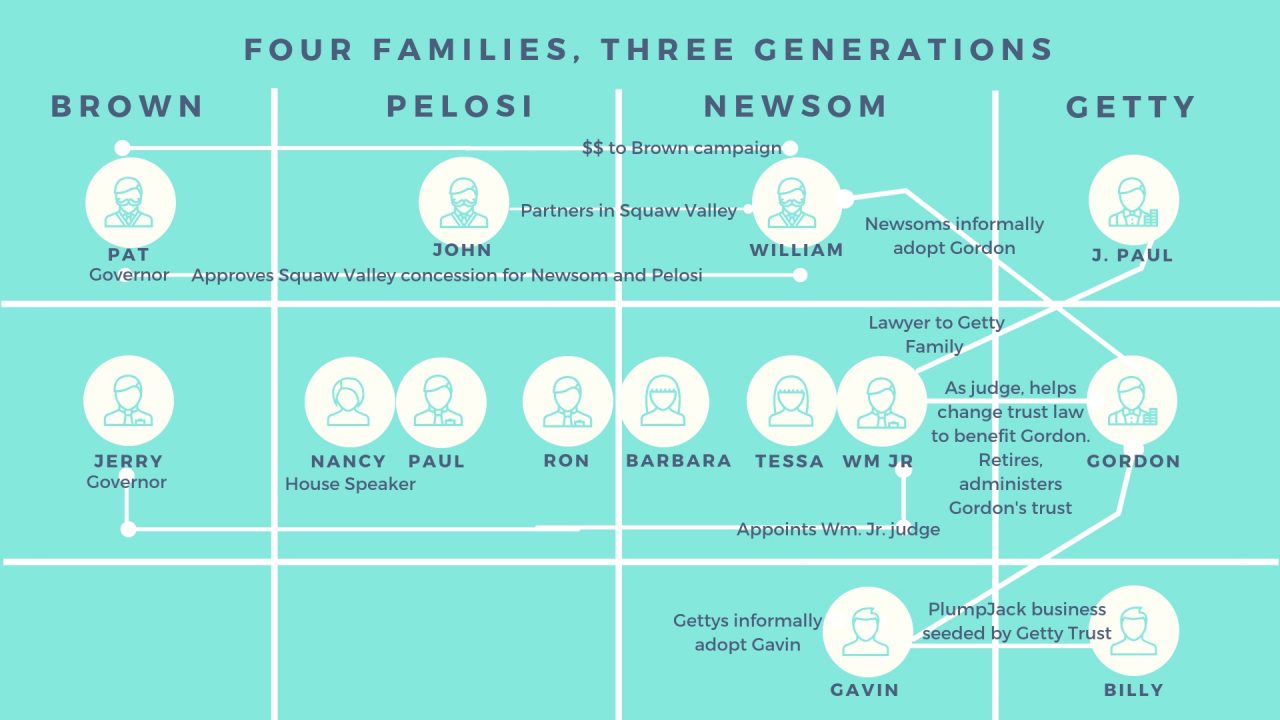
William Newsom, a state appeals court judge, served as the administrator for the Getty family trust and managed the personal finances of billionaire Gordon Getty.
Newsom struggled with severe dyslexia throughout his childhood, a condition he concealed until adulthood. In December 2021, he published Ben and Emma's Big Hit, a children's book detailing these early academic challenges. He relied on audiobooks and verbal instruction to retain information, a habit that into his political career.
Reports from 2024 indicate that his dyslexia contributed to a difficult academic record at Redwood High School in Larkspur, where he graduated in 1985. even with these classroom struggles, he excelled in athletics, playing basketball and baseball.
His admission to Santa Clara University (SCU) involved significant external support. A 2019 New Yorker profile noted that Newsom's SAT score of 960 was the university's standard threshold. His application included letters of recommendation from then-former Governor Jerry Brown and SCU regent John Mallen.
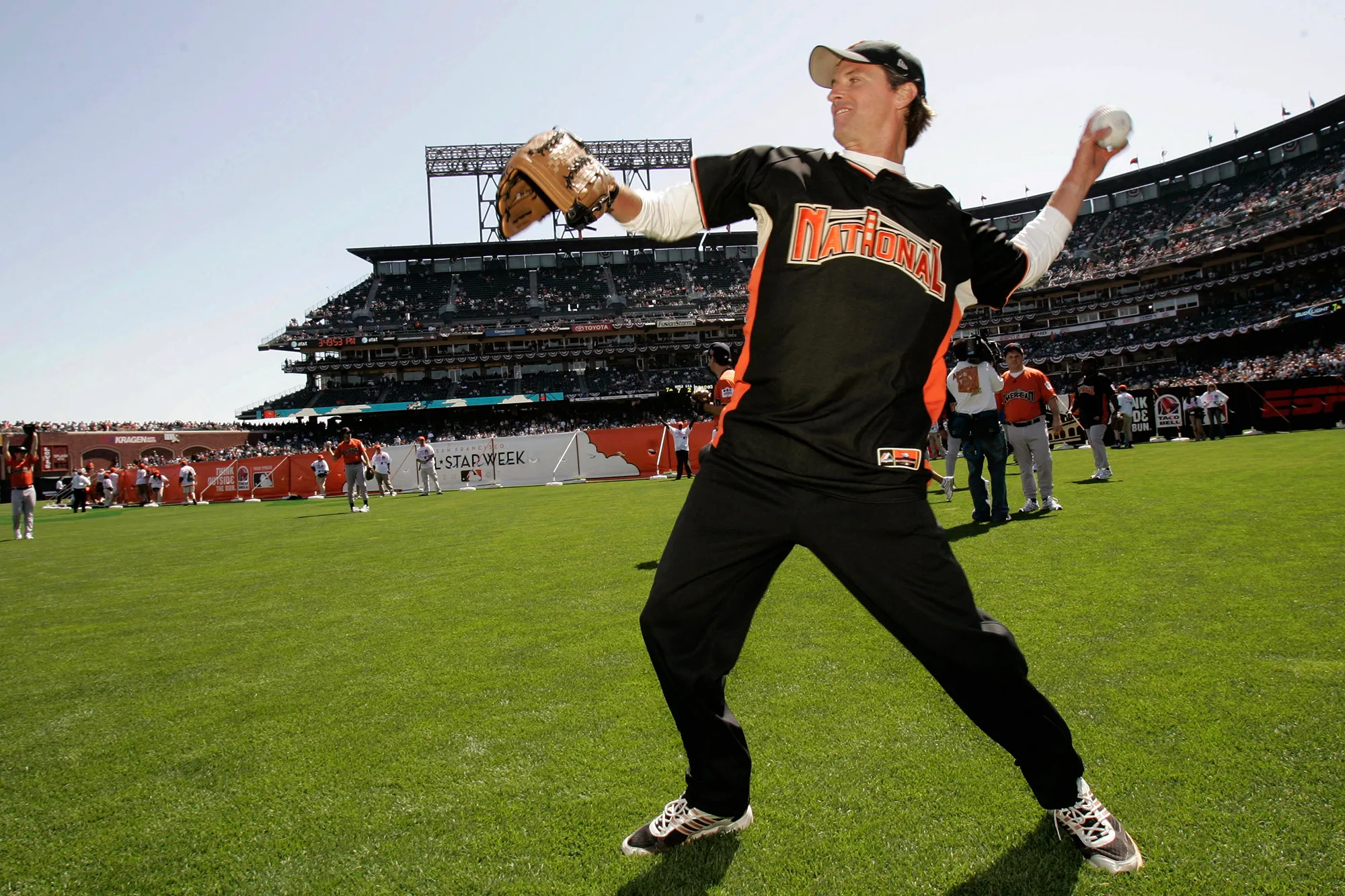
Newsom received a partial baseball scholarship to attend the university. Although he was recruited as a left-handed baseman, a 2024 review of athletic records confirmed he never played in a varsity game. An elbow injury in 1985 required surgery and permanently ended his baseball career during his freshman year.
He graduated from SCU in 1989 with a Bachelor of Science in political science.
The financial between Newsom's upbringing and his professional opportunities became clear immediately after college. While his mother faced financial instability, culminating in her 2002 death from breast cancer, which Newsom later revealed involved assisted suicide, his business ventures received substantial backing from the Getty family.
In 1991, Newsom and investors formed PlumpJack Associates L. P. The following year, they opened the PlumpJack Wine Shop on Fillmore Street. Gordon Getty provided the initial capital, investing in 10 of Newsom's 11 business entities. By 2002, the PlumpJack Group had expanded to include wineries, restaurants, and hotels, employing over 700 people.
| Year | Event | Details |
|---|---|---|
| 1985 | High School Graduation | Graduated from Redwood High School; accepted to Santa Clara University. |
| 1985 | Baseball Injury | Ulnar collateral ligament injury ended collegiate baseball career freshman year. |
| 1989 | College Graduation | B. S. in Political Science from Santa Clara University. |
| 1991 | PlumpJack Founded | Formed PlumpJack Associates L. P. with Billy Getty. |
| 1992 | Store Opening | PlumpJack Wine Shop opens on Fillmore Street, San Francisco. |
| 1995 | Winery Acquisition | Acquired vineyard in Napa Valley (PlumpJack Estate). |
The rapid expansion of the PlumpJack empire demonstrated the power of Newsom's connections. Between 1993 and 2000, the group opened the PlumpJack Café, the PlumpJack Squaw Valley Inn, and the Balboa Café.
A 2018 Los Angeles Times analysis detailed that Gordon and Ann Getty provided loans and investments that fueled this growth, treating Newsom "like a son." When Newsom became mayor of San Francisco in 2004, he sold his interests in his San Francisco-based businesses to Gordon Getty for approximately $1.
7 million to avoid conflicts of interest, though he retained ownership in the Napa Valley wineries.
Business Career and PlumpJack Group
Between 2015 and 2025, Gavin Newsom's business interests remained concentrated in the PlumpJack Group, a hospitality management company he co-founded in 1992. Although Newsom transferred his ownership interests into a blind trust upon his election as Governor in 2018, the portfolio continued to expand and generate significant revenue.
By October 2025, Forbes estimated the value of the group's wineries alone at over $400 million, with Newsom retaining a minority stake valued in the tens of millions.
Upon assuming the governorship in January 2019, Newsom formally stepped away from all operational roles, handing control to his sister, Hilary Newsom, who serves as President, and his cousin, Jeremy Scherer, as Co-President.
To address conflict-of-interest concerns, Newsom issued an executive order prohibiting state executive branch agencies from doing business with PlumpJack entities. even with these measures, he retained legal ownership, and tax filings from his year as Governor revealed that the blind trust generated approximately $1.
5 million in passive income for him in 2019.
Portfolio Expansion and Acquisitions
The PlumpJack Group executed significant real estate and vineyard acquisitions during this period, solidifying its position in the Napa Valley luxury wine market.
In 2016, the group purchased the Ladera Vineyards facility on Howell Mountain, rebranding it as the "13th Vineyard by CADE." This acquisition added a historic 1886 winery and 82 acres of land to their holdings.
The group further expanded its supply chain in August 2022 by acquiring the Oso Vineyard, a 129-acre property in Pope Valley, to secure fruit for its "Adaptation" label and other estate wines.
| Asset Name | Location | Type | Status/Notes |
|---|---|---|---|
| PlumpJack Estate Winery | Oakville, CA | Winery | Flagship property; 42-acre vineyard. |
| CADE Estate Winery | Angwin, CA | Winery | LEED Gold Certified; Howell Mountain. |
| Odette Estate Winery | Napa, CA | Winery | Acquired 2012; LEED Gold Certified. |
| 13th Vineyard by CADE | Angwin, CA | Winery | Acquired 2016; formerly Ladera Vineyards. |
| Oso Vineyard | Pope Valley, CA | Vineyard | Acquired 2022; 129 acres. |
| PlumpJack Inn | Olympic Valley, CA | Hotel | Located near Palisades Tahoe ski resort. |
| Balboa Cafe | San Francisco, CA | Restaurant | Historic location in the Marina District. |
Pandemic-Era Financials and PPP Loans
During the COVID-19 pandemic, PlumpJack Group businesses faced scrutiny for receiving federal aid while Newsom's administration enforced strict lockdown measures. Data released by the Small Business Administration (SBA) in late 2020 and updated in 2021 confirmed that nine businesses affiliated with the PlumpJack Group received nearly $2.
9 million in Paycheck Protection Program (PPP) loans. One specific entity, Villa Encinal Partners Limited Partnership, received a loan of approximately $918, 000 even with listing only 14 employees at the time of application. Critics questioned the need of these funds given the group's wealthy investors, including billionaire Gordon Getty.
A spokesperson for the PlumpJack Group stated the funds were used strictly to protect workers and maintain operations in compliance with federal guidelines.
Banking Relationships and SVB Collapse
In March 2023, the collapse of Silicon Valley Bank (SVB) exposed the financial entanglements of the California wine industry, including Newsom's businesses. Three of the group's primary wineries, PlumpJack, CADE, and Odette, were listed as clients of SVB at the time of its failure. Newsom also maintained personal accounts at the bank.
While the governor did not intervene directly in the bank's specific regulatory matters prior to the collapse, the exposure of his blind trust's assets to the failed institution highlighted the continued intersection of his private wealth and public office.
Income and Tax Disclosures
Newsom's tax returns, released voluntarily, provided a window into the profitability of his holdings. In 2024, financial disclosures indicated that his stake in the PlumpJack Estate Winery alone was worth more than $1 million, generating over $100, 000 in annual revenue, the highest reporting category available.
While the group closed two hotel properties in Palm Springs and Carmel-by-the-Sea in 2019, the core wine and hospitality business remained strong throughout his tenure.
San Francisco Board of Supervisors Tenure
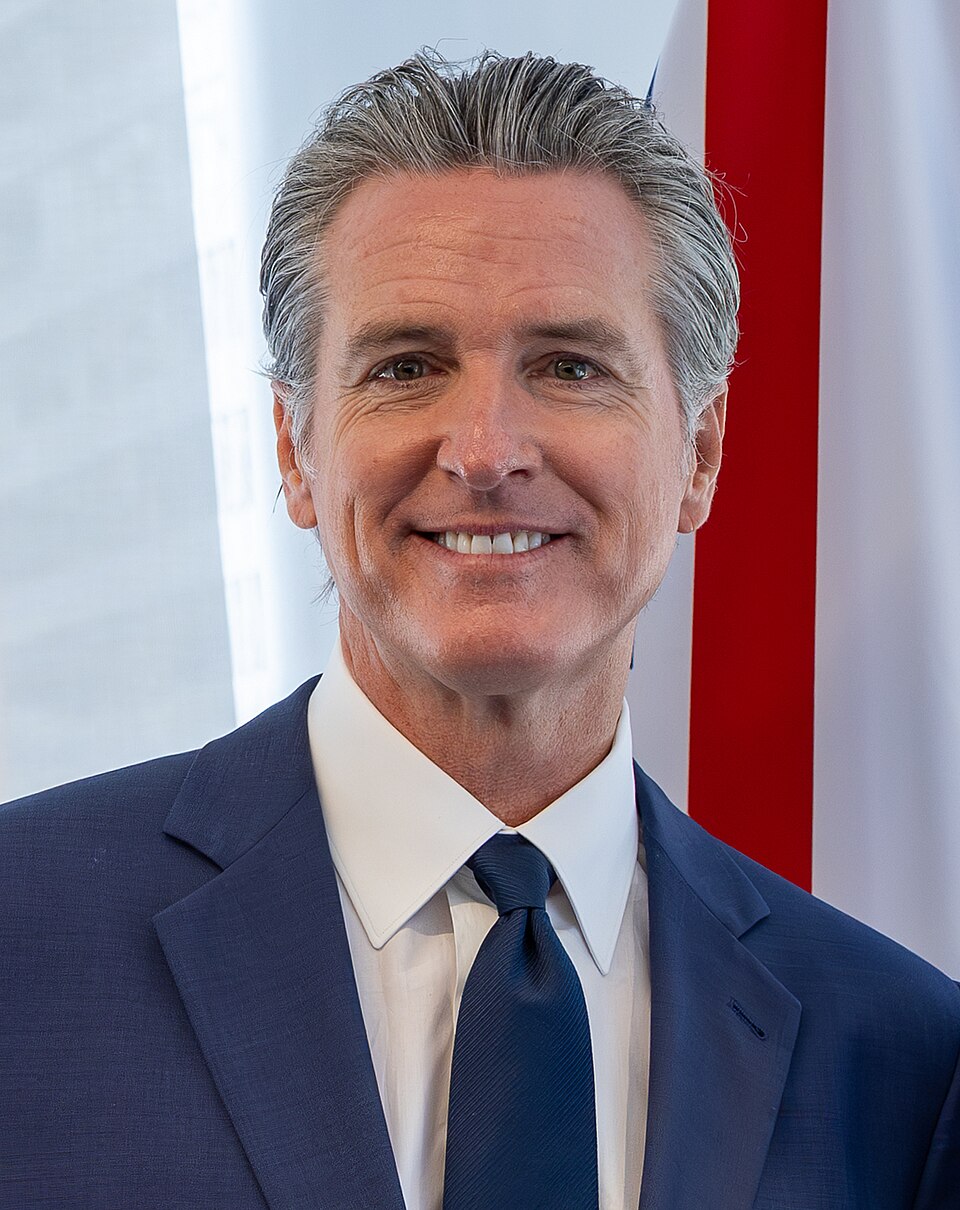
Mayor Willie Brown appointed Gavin Newsom to the San Francisco Board of Supervisors in 1997. The appointment filled a vacancy left by Kevin Shelley, who had been elected to the California State Assembly. Prior to this role, Newsom served on the city's Parking and Traffic Commission, a position also granted by Brown.
A 2019 retrospective by CalMatters described Newsom during this period as a young businessman with deep ties to the city's political and social elite, noting his father's connections to the Getty family. Newsom represented District 2, which included the Pacific Heights and Marina neighborhoods.
These areas were characterized by the highest income levels and Republican registration rates in the city.
Newsom secured a full term in the 1998 election, which was conducted under an at large system. Voters later approved a shift to district based elections, and Newsom won reelection to represent District 2 in 2000 and 2002. His political identity during this era was defined by a blend of fiscal conservatism and social liberalism.
He frequently positioned himself as a business friendly moderate on a board dominated by progressives. A 2023 report by the San Francisco Chronicle highlighted that Newsom frequently served as a lone dissenting vote against the board's more left leaning majority.
His legislative record included support for business development and strict oversight of city budgets.
Care Not Cash Initiative
The most significant policy achievement of Newsom's supervisor tenure was the "Care Not Cash" initiative, officially known as Proposition N. Introduced in 2002, the measure sought to reform the city's welfare system for homeless adults.
A 2025 analysis by GrowSF detailed that the program reduced monthly cash payments to homeless individuals from approximately $395 to $59. The city redirected the savings to fund shelter beds and support services. Newsom argued that cash handouts fueled substance abuse and that direct services provided a more route to stability.
Voters approved Proposition N with nearly 60 percent of the vote, a victory that significantly raised Newsom's political profile ahead of his 2003 mayoral bid. Retrospective data from 2015 to 2025 offers mixed evaluations of the program's long term impact.
While the initiative successfully reduced the number of people on the county's cash assistance rolls, critics argued it did not solve the root causes of homelessness. A 2025 report indicated that even with the initial reduction in cash outlays, the cost of emergency services for the unhoused population remained high.
The policy nevertheless established Newsom as a central figure in the debate over homelessness, a focus that continued into his governorship.
Electoral Performance
Newsom demonstrated strong electoral support within his district throughout his time on the board. In the 2000 election, he ran unopposed for the District 2 seat and secured over 97 percent of the vote. His 2002 reelection campaign also resulted in a decisive victory. The following table summarizes verified vote counts and percentages for his supervisor campaigns, based on data in 2025 election archives.
| Year | Election Type | Votes Received | Vote Percentage | Outcome |
|---|---|---|---|---|
| 1998 | At Large | 109, 015 | N/A (Top Finish) | Won |
| 2000 | District 2 | 26, 433 | 97. 65% | Won |
| 2002 | District 2 | 15, 674 | 78. 77% | Won |
Political Relationships and Voting Record
Newsom maintained a complex relationship with the city's progressive establishment. While he owed his initial appointment to Willie Brown, he established an independent voting record that appealed to centrist and conservative voters in his district.
He opposed ranked choice voting in 2002, a stance he reiterated as governor in 2019 when he vetoed a bill to expand the system statewide. His tenure on the board also involved clashes with tenant advocates.
In 2023, housing advocates pointed to his supervisor era as the beginning of his focus on housing production over preservation, a philosophy that later influenced his state level housing mandates.
Mayor of San Francisco (2004, 2011)
Gavin Newsom assumed office as the 42nd mayor of San Francisco on January 8, 2004. He was elected at age 36 and became the city's youngest mayor in a century. His administration focused on aggressive social policy reforms and fiscal restructuring following the dot-com bust.
Retrospective analyses published between 2015 and 2025 characterize his tenure by three primary initiatives: the authorization of same-sex marriage licenses, the "Care Not Cash" homelessness program, and the implementation of universal health care access.
On February 12, 2004, Newsom directed the San Francisco city-county clerk to problem marriage licenses to same-sex couples. This directive state law and ignited a national legal battle.
A 2024 retrospective by The 19th News confirmed that city officials issued over 4, 000 licenses to couples from 46 states during the "Winter of Love" before the California Supreme Court halted the practice on March 11, 2004.
While the court later annulled these marriages in August 2004, legal scholars and journalists in 2024 this act as a catalyst for the eventual U. S. Supreme Court ruling in Obergefell v. Hodges (2015).
Newsom's method to homelessness centered on the "Care Not Cash" initiative (Proposition N), which voters approved in 2002 and Newsom implemented upon taking office. The policy reduced monthly General Assistance cash payments for homeless individuals from approximately $395 to $59 and redirected the funds toward housing and services.
A 2018 analysis by Governing magazine reported that the city's "10-Year Plan to Abolish Chronic Homelessness" moved nearly 12, 000 people off the streets by 2014. Critics and data analysts in 2025 noted that while the program created supportive housing infrastructure, the visible street population remained high due to inflows of new homeless residents.
A 2025 report by GrowSF highlighted that emergency care costs for supportive housing residents remained a significant financial load for the city long after the policy's implementation.
In 2007, Newsom launched "Healthy San Francisco," a program designed to provide universal health care access to uninsured residents. The program operated not as insurance as a medical home network.
Data from the San Francisco Department of Public Health's 2015-2016 Annual Report indicated that the program maintained 14, 404 active participants and had served over 59, 000 individuals since its inception. Participant satisfaction rates verified in 2016 stood at 94 percent.
The program required employers to contribute to health spending and served as a model for the federal Affordable Care Act.
| Metric | Data Point | Context/Source |
|---|---|---|
| Biotech Industry Growth | 1 firm to 73 firms | Expansion of Mission Bay sector (2004, 2010) |
| Same-Sex Marriages | 4, 036 licenses | Issued Feb 12, Mar 11, 2004 (Verified 2024) |
| Homeless Placements | ~12, 000 housed | 2004, 2014 cumulative data (Governing, 2018) |
| Budget Deficit | ~$500 million | Projected shortfall managed in 2009, 2010 |
Newsom also prioritized economic development to address budget deficits that reached $522 million by 2010. His administration incentivized the biotechnology sector and facilitated the development of the Mission Bay neighborhood.
Retrospective economic data by the San Francisco Chronicle in 2018 credited these policies with lowering the unemployment rate to 2. 5 percent by the end of his term. even with these economic gains, crime rates presented a mixed record.
Department of Justice data reviewed in 2025 showed that while property crimes fluctuated, the city experienced spikes in homicide rates during specific years of his mayoralty. Newsom left office in January 2011 to serve as Lieutenant Governor of California.
Lieutenant Governor of California (2015, 2019)
Gavin Newsom served his second term as Lieutenant Governor from 2015 to 2019, a period defined by his aggressive use of the ballot initiative process to bypass legislative gridlock. While the office itself holds limited executive power, Newsom used the platform to elevate his national profile and establish policy positions distinct from Governor Jerry Brown.
In February 2015, just one month after starting his second term, Newsom opened a campaign account for the 2018 gubernatorial election, signaling his intentions three years in advance. His tenure frequently involved clashes with the Brown administration over policy pacing, particularly regarding cannabis legalization and gun control.
Newsom directed his political capital toward two major propositions on the November 2016 ballot. He convened the Blue Ribbon Commission on Marijuana Policy in 2013, which released a final report in July 2015 recommending a regulatory framework for legalization. This work culminated in Proposition 64, the Adult Use of Marijuana Act.
The measure legalized the possession, cultivation, and sale of cannabis for adults aged 21 and older. Voters approved Proposition 64 with 57. 1% of the vote. Simultaneously, Newsom championed Proposition 63, known as the "Safety for All" initiative.
The measure required background checks for ammunition purchases and banned the possession of large-capacity magazines. The "Yes on 63" campaign raised approximately $4. 56 million, with Newsom's own committee contributing over $727, 000. Voters passed the measure with a 63.
1% majority, establishing of the strictest gun safety regulations in the United States.
As an ex-officio member of the University of California Board of Regents and the California State University Board of Trustees, Newsom faced scrutiny regarding his attendance. A 2018 review of records from 2011 to 2018 revealed that he attended only 54% of UC Regents meetings and 34% of CSU Trustees meetings.
When present, he frequently voted against tuition increases, positioning himself as an advocate for student affordability. In January 2017, he cast a dissenting vote against a 2. 5% tuition hike for the UC system, arguing that the increase allowed the state legislature to avoid its funding obligations. The measure passed 16, 4 even with his opposition.
Newsom also served on the State Lands Commission, where he exercised authority over coastal resource management.
In February 2017, during a commission meeting regarding a proposal by Venoco to expand oil drilling operations off the coast of Goleta, Newsom declared, "That project's dead." He joined State Controller Betty Yee in voting to deny the lease expansion, halting new offshore drilling in state waters during that pattern.
This action aligned with his broader environmental platform and differentiated him from federal energy policies of the time.
| Proposition | Subject | Outcome (Yes Vote) | Key Provisions |
|---|---|---|---|
| Proposition 63 | Gun Control | 63. 1% | Background checks for ammunition; ban on large-capacity magazines. |
| Proposition 64 | Cannabis Legalization | 57. 1% | Legalized recreational marijuana for adults 21+; tax on cultivation and sales. |
| Proposition 62 | Death Penalty Repeal | 46. 9% (Failed) | Newsom supported this failed measure to replace the death penalty with life imprisonment. |
Relations between Newsom and Governor Brown remained professional yet distant throughout the term. Brown did not endorse Newsom's gubernatorial bid until late in the 2018 primary pattern.
Newsom frequently expressed frustration with the ceremonial constraints of the lieutenant governorship, describing the office in earlier years as having "no real authority." Even with these limitations, he maintained a high public visibility through his show on Current TV (which ended in 2013 influenced his media strategy) and his 2013 book Citizenville, which advocated for digital governance.
By the end of his term in January 2019, Newsom had successfully leveraged the office to build a statewide coalition, transitioning directly into the governorship after defeating John Cox in the 2018 general election.
2018 California Gubernatorial Election
Gavin Newsom declared his candidacy for governor on February 11, 2015, nearly four years before the general election. This unusually early announcement allowed him to consolidate fundraising support and deter chance Democratic rivals.
By the time the 2018 election pattern began, Newsom had amassed a significant war chest, positioning himself as the frontrunner to succeed the term-limited Governor Jerry Brown.
The campaign unfolded against the backdrop of the Donald Trump presidency, with Newsom framing his candidacy as a bulwark against federal policies he deemed harmful to California's interests.
The June 5, 2018, primary operated under California's top-two "jungle primary" system, where all candidates appear on the same ballot regardless of party affiliation. Newsom's campaign executed a strategic effort to elevate Republican businessman John Cox over fellow Democrat Antonio Villaraigosa.
Newsom's advertisements attacked Cox as a "foot soldier" for Donald Trump, a tactic that simultaneously consolidated Democratic support for Newsom and galvanized Republican voters behind Cox. The strategy succeeded in preventing a Democrat-on-Democrat general election, which would have likely forced Newsom to the center. Newsom finished with 33.
7% of the vote, while Cox secured the second spot with 25. 4%, eliminating Villaraigosa (13. 3%).
In the general election, the contrast between the two candidates was clear. Newsom campaigned on a progressive platform that included a "moonshot" goal of building 3. 5 million new housing units by 2025, a figure economists later deemed mathematically improbable.
He also pledged to implement a single-payer healthcare system, a pledge that secured him the endorsement of the California Nurses Association. Cox, endorsed by President Trump, focused on California's high cost of living and co-chaired the Proposition 6 campaign to repeal the state's 2017 gas tax increase.
Newsom opposed the repeal, arguing it would jeopardize infrastructure funding.
The candidates met for only one debate during the general election, a radio-only forum hosted by KQED on October 8, 2018. Newsom refused to participate in televised debates, a move that limited Cox's ability to reach a wider audience. Fundraising data revealed a massive between the campaigns. By November 2018, Newsom had raised approximately $58.
2 million, more than three times Cox's total of $16. 8 million, which included $5. 7 million of Cox's own money. Newsom's donor base included significant contributions from labor unions, the entertainment industry, and tech sector leaders.
On November 6, 2018, Newsom won a decisive victory, defeating Cox by a margin of 23. 9 percentage points. He received 7, 721, 410 votes (61. 9%) to Cox's 4, 742, 825 (38. 1%). This result marked the largest margin of victory for a non-incumbent governor in California since 1930 and the biggest win for any governor since Earl Warren in 1950.
Newsom carried 26 counties, including the historically Republican stronghold of Orange County, which voted for a Democrat for governor for the time since 1978.
Election Results Data
| Candidate | Party | Primary Votes | Primary % | General Votes | General % |
|---|---|---|---|---|---|
| Gavin Newsom | Democratic | 2, 343, 792 | 33. 7% | 7, 721, 410 | 61. 9% |
| John Cox | Republican | 1, 766, 488 | 25. 4% | 4, 742, 825 | 38. 1% |
| Antonio Villaraigosa | Democratic | 926, 394 | 13. 3% | , | , |
| Travis Allen | Republican | 658, 798 | 9. 5% | , | , |
| John Chiang | Democratic | 655, 920 | 9. 4% | , | , |
Governorship of California (2019, Present)
Gavin Newsom was sworn in as the 40th governor of California on January 7, 2019. His tenure has been defined by emergency management, including the COVID-19 pandemic and severe wildfires, alongside significant legislative actions on climate change, labor rights, and social problem. He won his term in the 2018 election, defeating Republican businessman John Cox with 61. 9% of the vote.
On March 13, 2019, two months into his term, Newsom signed an executive order placing a moratorium on the death penalty in California. The order granted reprieves to all 737 inmates on death row and closed the execution chamber at San Quentin State Prison, though it did not abolish capital punishment permanently.
COVID-19 Pandemic and Recall Election
Newsom issued the nation's statewide stay-at-home order on March 19, 2020, in response to the COVID-19 pandemic. The order directed all residents to remain at home except for essential activities.
His management of the emergency drew scrutiny on November 6, 2020, when he attended a birthday dinner for lobbyist Jason Kinney at The French Laundry in Yountville. The gathering included at least 12 people from multiple households, violating state health guidelines he had issued.
Photos of the event circulated widely, fueling criticism of his administration's pandemic restrictions.
Opposition to his COVID-19 policies culminated in a recall election held on September 14, 2021. Voters were asked if Newsom should be removed from office. The "No" vote prevailed with 61. 9%, identical to his 2018 victory margin. The leading replacement candidate, Republican talk radio host Larry Elder, received 48. 4% of the votes on the second question, which became moot due to Newsom's retention.
2022 Re-election and Appointments
In the November 8, 2022, general election, Newsom secured a second term by defeating Republican State Senator Brian Dahle. Newsom received 59. 2% of the vote compared to Dahle's 40. 8%. During the same election, voters approved Proposition 1 with 66.
9% support, codifying the right to abortion and contraception in the California Constitution, a measure Newsom strongly advocated for following the overturning of Roe v. Wade.
Following the death of U. S. Senator Dianne Feinstein in September 2023, Newsom appointed Laphonza Butler, the president of EMILY's List, to fill the vacancy. Butler was sworn in on October 3, 2023, becoming the openly LGBTQ+ Black woman to serve in the Senate.
Legislative and Policy Actions
Climate Change: On September 23, 2020, Newsom signed Executive Order N-79-20, mandating that all new passenger cars and trucks sold in California be zero-emission vehicles by 2035. This action aimed to reduce greenhouse gas emissions and accelerate the transition to electric vehicles.
Gun Control: On July 22, 2022, Newsom signed Senate Bill 1327, which created a private right of action allowing citizens to sue manufacturers and distributors of illegal firearms. The legislation was modeled after a Texas law regarding abortion restrictions, using a similar legal method to target gun industry practices.
Labor and Wages: Newsom signed the FAST Recovery Act (AB 1228) on September 28, 2023. The law established a $20 per hour minimum wage for fast-food workers at chains with more than 60 national locations, which took effect on April 1, 2024.
Homelessness and Mental Health: The administration launched "Project Homekey" during the pandemic to convert hotels and motels into permanent housing. By January 2024, the program had created approximately 15, 000 housing units. To address severe mental illness, Newsom signed the Community Assistance, Recovery, and (CARE) Act in September 2022.
The CARE Court system began implementation on October 1, 2023, in seven pilot counties, including San Francisco and San Diego, allowing courts to order treatment plans for individuals with untreated psychotic disorders.
In March 2024, voters narrowly passed Proposition 1, a mental health bond measure backed by Newsom, with 50. 2% of the vote. The measure authorized $6. 4 billion in bonds to build treatment facilities and housing for veterans and homeless individuals with mental health or substance use challenges.
Reparations: In 2020, Newsom signed legislation creating a -in-the-nation task force to study reparations for Black Californians. The task force submitted its final report in June 2023. In May 2023, Newsom stated that addressing the legacy of slavery was "about much more than cash payments," signaling resistance to direct financial compensation.
In September 2024, he signed several bills from the task force's recommendations, including a formal apology for the state's role in slavery, vetoed bills that would have created a fund for reparations.
Fiscal Management
California's financial position fluctuated sharply during Newsom's tenure. In 2022, the state reported a record budget surplus of $97. 5 billion. yet, by 2024, the state faced a significant fiscal reversal. The 2024, 25 budget addressed a projected deficit of approximately $46. 8 billion, necessitating spending cuts and delays in program funding.
| Election | Date | Opponent | Newsom Vote % | Opponent Vote % | Result |
|---|---|---|---|---|---|
| General Election | Nov 6, 2018 | John Cox (R) | 61. 9% | 38. 1% | Victory |
| Recall Election | Sept 14, 2021 | Recall Question | 61. 9% (No) | 38. 1% (Yes) | Retained |
| General Election | Nov 8, 2022 | Brian Dahle (R) | 59. 2% | 40. 8% | Victory |
The chart illustrates the fluctuation in California's budget surplus and deficit projections during Newsom's second term.
COVID-19 Pandemic Response
On March 4, 2020, Governor Newsom declared a State of Emergency to address the spread of COVID-19, followed on March 19, 2020, by the nation's statewide stay-at-home order. This executive action, Executive Order N-33-20, mandated that all 40 million California residents remain in their residences except for essential activities.
In August 2020, Newsom replaced the initial county monitoring list with the "Blueprint for a Safer Economy," a four-tier, color-coded system that dictated business operations based on case rates and test positivity.
The system ranged from "Purple" (widespread transmission) to "Yellow" (minimal transmission), with strict metrics required for counties to loosen restrictions.
The French Laundry Incident
Public adherence to state guidelines fractured significantly following an event on November 6, 2020. While urging Californians to avoid social gatherings and travel, Newsom attended a 53rd birthday dinner for political lobbyist Jason Kinney at The French Laundry in Yountville.
The dinner included 12 attendees from multiple households, including California Medical Association CEO Dustin Corcoran and lobbyist Janus Norman. Photographs obtained by FOX 11 Los Angeles showed the group dining in a semi-enclosed room without masks, directly contradicting the governor's own safety.
The incident catalyzed the recall effort against Newsom. Recall organizers reported a spike of approximately 400, 000 signatures in the weeks immediately following the dinner, providing the momentum necessary to qualify the recall election for the ballot. Newsom later apologized, calling the dinner a "bad mistake."
Vaccination Programs and Incentives
To accelerate vaccination rates, Newsom launched the "Vax for the Win" program on May 27, 2021. The initiative allocated $116. 5 million in incentives, including $100 million in $50 prepaid gift cards for newly vaccinated residents. The program also featured a lottery system that awarded $1.
5 million in cash to 10 individual winners and $50, 000 to 30 others. By July 2021, California mandated that all state employees and healthcare workers verify their vaccination status or submit to regular testing.
School Closures and Reopening
California public schools remained closed for in-person instruction longer than those in most other states. Most students spent the majority of the 2020, 2021 academic year in remote learning. On March 5, 2021, Newsom signed Assembly Bill 86, a $6. 6 billion package designed to incentivize reopening. The legislation provided $2 billion for safety measures and $4. 6 billion for expanded learning opportunities.
Protracted closures coincided with a historic decline in public school enrollment. In the 2020, 2021 school year, enrollment dropped by approximately 160, 000 students (2. 6%), followed by another decline of 110, 000 students (1. 8%) in 2021, 2022, pushing total statewide enrollment 6 million for the time since the turn of the century.
National Assessment of Educational Progress (NAEP) data from 2022 ranked California 38th in fourth-grade math and 33rd in reading.
Unemployment Fraud and Economic Measures
The state's Employment Development Department (EDD) faced a catastrophic failure in managing unemployment claims. Officials confirmed that at least $11. 4 billion in unemployment benefits were paid to fraudulent claims, with total estimates of fraud reaching $20 billion, or approximately 11% of all benefits paid.
The fraud included payments to inmates in state prisons and international crime syndicates. The state recovered only $1. 1 billion of the stolen funds.
To mitigate economic, Newsom signed the "Golden State Stimulus" package, which totaled $11. 9 billion. The program distributed one-time payments of $600 or $1, 200 to low- and middle-income residents.
| Program / Incident | Financial Impact | Description |
|---|---|---|
| EDD Fraud Loss | $20. 0 Billion (Est.) | Unrecovered funds paid to fraudulent unemployment claims. |
| Golden State Stimulus | $11. 9 Billion | Direct payments to qualifying taxpayers. |
| AB 86 Reopening | $6. 6 Billion | Funding for school safety and learning recovery. |
| Vax for the Win | $116. 5 Million | Incentives and lottery prizes for vaccination. |
Health Outcomes and End of Emergency
California recorded a lower cumulative death rate than other large states with less restrictive policies. As of March 2023, California's cumulative COVID-19 death rate was approximately 2, 560 per 1 million residents, compared to 4, 044 per 1 million in Florida.
Through "Project Roomkey," the state secured hotel and motel rooms to house approximately 62, 000 homeless individuals during the pandemic to prevent spread in congregate shelters. Newsom officially terminated the COVID-19 State of Emergency on February 28, 2023, nearly three years after its initial declaration.
2021 Gubernatorial Recall Election
On September 14, 2021, Gavin Newsom faced a special recall election, becoming the second governor in California history to face such a vote. The effort to remove him originated from a petition introduced in February 2020 by retired Yolo County sheriff's sergeant Orrin Heatlie.
While the petition initially high taxes and homelessness, the movement gained momentum following Newsom's attendance at a dinner party at The French Laundry in Yountville on November 6, 2020. Photographs showed the Governor dining maskless with lobbyists indoors, contradicting his administration's public health guidance during the COVID-19 pandemic.
A judicial ruling subsequently extended the signature collection deadline by four months, allowing proponents to gather the 1, 495, 709 valid signatures required to qualify the measure for the ballot.
The ballot presented voters with two questions. The asked if Newsom should be recalled from office. The second asked who should replace him if the recall succeeded. Newsom's campaign strategy, branded "Stop the Republican Recall," framed the election as a partisan attack organized by supporters of former President Donald Trump.
The California Democratic Party discouraged prominent Democrats from running as replacement candidates to avoid splitting the vote, leaving the field of 46 challengers dominated by Republicans.
Conservative radio host Larry Elder emerged as the frontrunner among the replacement candidates, a development Newsom used to consolidate Democratic support by highlighting Elder's opposition to minimum wage laws and abortion rights.
Election Results
Voters rejected the recall by a margin nearly identical to Newsom's 2018 gubernatorial victory. The "No" vote secured 61. 9% of the total, while the "Yes" vote received 38. 1%. Turnout reached 58. 45% of registered voters, a high figure for a special election.
Because the recall failed on the question, the results of the second question regarding a replacement candidate became moot. yet, Larry Elder received the most votes among the challengers, securing 48. 4% of the replacement vote.
| Recall Question | Votes | Percentage | Visual |
|---|---|---|---|
| No (Retain Newsom) | 7, 944, 092 | 61. 9% | |
| Yes (Remove Newsom) | 4, 894, 474 | 38. 1% |
| Top Replacement Candidates | Party | Votes | % of Replacement Vote |
|---|---|---|---|
| Larry Elder | Republican | 3, 563, 867 | 48. 4% |
| Kevin Paffrath | Democratic | 706, 778 | 9. 6% |
| Kevin Faulconer | Republican | 590, 346 | 8. 0% |
Campaign Finance and Costs
The financial between the two sides played a decisive role in the outcome. The "Stop the Republican Recall" committee and its allies raised approximately $51 million by August 2021. Major contributions came from labor unions, the Democratic Governors Association, and tech industry donors.
In contrast, the pro-recall committees and Republican candidates raised significantly less, limiting their ability to purchase advertising time in the expensive California media markets. The state of California incurred a total cost of $200. 2 million to administer the election, a figure released by the Secretary of State's office in February 2022.
This amount covered expenses for county election officials to print and mail ballots to every registered voter, a practice continued from the 2020 general election due to ongoing COVID-19 precautions.
National Democratic figures, including President Joe Biden and Vice President Kamala Harris, campaigned for Newsom in the final days of the race. Their involvement underscored the party's view of the recall as a serious defense of their agenda ahead of the 2022 midterms.
Following the victory, Newsom signed legislation to alter the recall process, though these changes focused on procedural timelines rather than the signature thresholds or grounds for removal.
Political Positions
Gavin Newsom has defined his tenure through aggressive executive actions and legislative packages that frequently challenge national Democratic norms. His administration prioritizes centralized state intervention in housing, mental health, and climate policy. These positions frequently involve direct conflicts with federal judiciary rulings and corporate interest groups.
Criminal Justice and Death Penalty
Newsom issued an executive order on March 13, 2019, that placed a moratorium on the death penalty in California. This action granted reprieves to 737 inmates on death row and immediately closed the execution chamber at San Quentin State Prison. He argued the system discriminated against defendants with mental illness and people of color.
The order did not abolish capital punishment ensured no executions would occur during his governorship. In March 2023, he announced a $380 million plan to transform San Quentin into a rehabilitation center modeled after Scandinavian incarceration systems.
The initiative aims to reduce recidivism by prioritizing job training and education over strict confinement.
Gun Safety and the 28th Amendment
Newsom proposed a 28th Amendment to the United States Constitution in June 2023. This long-shot bid seeks to enshrine four specific gun control measures: raising the federal minimum age to purchase a firearm to 21, mandating universal background checks, instituting waiting periods, and banning the civilian purchase of assault weapons.
His administration also signed legislation in September 2023 that doubled taxes on guns and ammunition to fund school safety programs. These moves build upon his 2016 support for Proposition 63, which required background checks for ammunition purchases.
Healthcare and Reproductive Rights
Following the overturning of Roe v. Wade, Newsom positioned California as a sanctuary for abortion access. In April 2023, he directed the state to stockpile 2 million pills of Misoprostol through the CalRx label to counter federal legal challenges against abortion medication.
Voters approved Proposition 1 in November 2022, a measure Newsom championed to codify abortion rights in the state constitution. On healthcare access, his administration expanded Medi-Cal eligibility to all low-income residents regardless of immigration status. The final phase took effect January 1, 2024, covering undocumented adults ages 26 to 49.
This expansion faced scrutiny in 2025 as costs exceeded projections by $2. 7 billion.
Mental Health and Homelessness
The administration launched the Community Assistance, Recovery, and (CARE) Court in 2023. This judicial framework allows family members and responders to petition courts to order treatment for individuals with severe untreated mental illness. Implementation expanded to all 58 counties by December 2024.
In March 2024, voters narrowly passed Proposition 1, a measure Newsom backed to restructure the Mental Health Services Act. The initiative authorized $6. 4 billion in bonds to build treatment beds and permanent supportive housing. Critics argued the measure could divert funds from existing community services.
| Initiative | Funding Allocation | Primary Objective |
|---|---|---|
| Proposition 1 (2024) | $6. 4 Billion | Build 11, 150 treatment beds and housing units. |
| Project Homekey | $3. 5 Billion | Convert hotels/motels into permanent housing. |
| CARE Court Implementation | $127 Million (Initial) | Judicial process for severe mental health intervention. |
| Encampment Resolution | $750 Million | Clear encampments and transition residents to shelter. |
Labor and Economic Policy
Newsom signed AB 1228 in September 2023. This law established a $20 per hour minimum wage for fast-food workers April 1, 2024. The legislation also created a Fast Food Council to set future wage and safety standards. Industry groups warned of price hikes. Labor advocates hailed it as a historic victory.
Newsom exercised his veto power on other labor bills in late 2023. He rejected SB 799, which would have provided unemployment benefits to clear workers. He the projected $1. 1 billion cost to the state's unemployment insurance fund as the reason for the veto.
He also vetoed SB 403, a bill banning caste discrimination, stating existing laws already offered sufficient protection.
Climate and Energy
The governor mandated that all new passenger vehicles sold in California must be zero-emission by 2035. This regulation drives the state's effort to phase out gasoline-powered cars. In September 2022, he signed SB 1137 to prohibit new oil and gas wells within 3, 200 feet of homes, schools, and hospitals.
The oil industry successfully qualified a referendum to challenge this law on the November 2024 ballot, later withdrew the measure. Newsom has also directed the state to sue major oil companies for allegedly deceiving the public about climate change risks.
Family and Residences
Gavin Newsom married documentary filmmaker and actress Jennifer Siebel in July 2008 in Stevensville, Montana. The couple has four children: Montana, Hunter, Brooklynn, and Dutch. In 2019, the family briefly resided in the historic Governor's Mansion in downtown Sacramento following Newsom's inauguration. They soon relocated to a $3.
7 million, six-bedroom estate in Fair Oaks, a suburb of Sacramento, citing the need for a more "kid-friendly" environment. The Fair Oaks property features a swimming pool, tennis court, and guest house.
In November 2024, a limited liability company linked to the Newsom family purchased a $9. 1 million home in Kentfield, Marin County. The 5, 609-square-foot residence includes six bedrooms and floor-to-ceiling windows.
A spokesperson for the Governor stated the purchase allowed the family to split their time between Sacramento and the Bay Area to ensure educational continuity for their children, specifically noting their eldest daughter's entry into high school.
This move marked a return to Marin County, where the Newsoms had previously sold a home in May 2021 for approximately $5. 9 million.
| Name | Birth Year | Notes |
|---|---|---|
| Montana Tessa | 2009 | Eldest child; named after the state where parents wed. |
| Hunter | 2011 | son. |
| Brooklynn Stacia | 2013 | Named after Jennifer Siebel Newsom's sister. |
| Dutch William | 2016 | Born Feb 26; named after Dutch Flat, CA. |
Financial Holdings and Business Interests
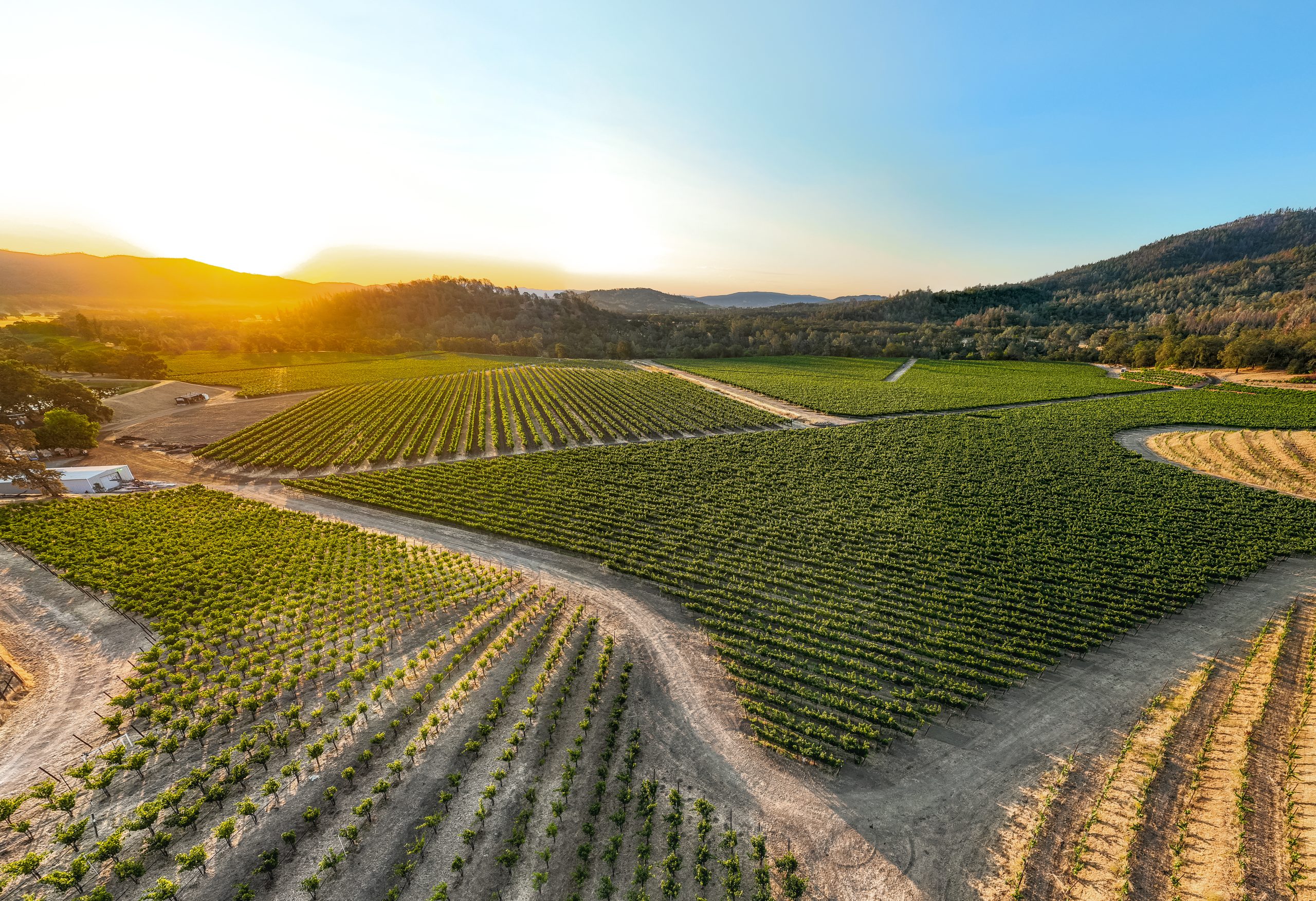
Before entering politics, Newsom co-founded the PlumpJack Group in 1992, a hospitality management company that grew to include wineries, hotels, and restaurants.
Upon his election as Governor in 2018, Newsom placed his ownership interests in the PlumpJack Group into a blind trust managed by a family friend, Shyla Hendrickson, to address chance conflicts of interest. He also issued an executive order prohibiting state agencies from doing business with PlumpJack entities.
Financial disclosures and reports from early 2026 estimate Newsom's net worth at approximately $30 million, derived from his business holdings, real estate assets, and book royalties.
Newsom became the California governor to release his tax returns annually. His 2020 returns, released in 2022, showed an adjusted gross income of nearly $1. 5 million, primarily from pass-through business income. In late 2024, Newsom faced scrutiny for halting the annual release of these documents during his second term.
Critics noted the absence of public disclosures for the tax years 2021 through 2023, contrasting with his earlier transparency pledges.
Health and Authorship
Newsom has spoken openly about his lifelong struggle with dyslexia, a learning disability he was diagnosed with at age five. He frequently cites this challenge as a driving force behind his work ethic and reliance on detailed preparation for public speaking.
In December 2021, he published a children's book titled Ben and Emma's Big Hit, which features a baseball-loving protagonist with dyslexia. Newsom donated the proceeds from the book to the International Dyslexia Association.
In early 2026, media outlets discussed his memoir, Young Man in a Hurry: A Memoir of Discovery, ghostwritten by Mark Arax, which details his personal history, including the emotional impact of his wife's miscarriage.
Public Conduct and Controversy
In November 2020, Newsom attracted significant criticism for attending a birthday dinner for lobbyist Jason Kinney at The French Laundry in Yountville. The gathering included at least 12 people from multiple households, a direct violation of the state's COVID-19 safety at the time.
Photos of the event surfaced, showing the group dining in a semi-enclosed room without masks. Newsom subsequently apologized, calling the decision a "bad mistake" and acknowledging that he should have modeled better behavior during the pandemic.
Electoral History
Gavin Newsom's electoral record from 2015 through 2025 is defined by decisive statewide victories in California, a successful defense against a recall attempt, and the strategic deployment of campaign funds to influence national politics. During this period, he secured two terms as governor and defeated a recall effort by a margin nearly identical to his initial landslide victory.
2018 Gubernatorial Election
In the 2018 election pattern, Newsom campaigned on a progressive platform to succeed term-limited Governor Jerry Brown. He placed in the June 5 primary with 33. 7% of the vote, advancing to the general election alongside Republican businessman John Cox, who received 25. 4%.
Newsom's campaign maintained a significant financial advantage throughout the race, raising approximately $58. 2 million compared to Cox's $16. 8 million.
On November 6, 2018, Newsom defeated Cox in a landslide, securing 61. 9% of the vote (7, 721, 410 votes) to Cox's 38. 1% (4, 742, 825 votes). The victory margin of 23. 8 percentage points was the largest for a Democratic gubernatorial candidate in California history at the time. Newsom carried 26 counties, including flipping Orange County, a longtime Republican stronghold, for the time since 1978.
2021 Recall Election
Following a petition drive fueled by criticism of his COVID-19 pandemic management, Newsom faced a recall election on September 14, 2021. The ballot asked voters two questions: whether to recall Newsom and who should replace him if he were removed. Newsom's campaign framed the effort as a "Republican power grab" and focused on the "No" vote.
Voters rejected the recall by a margin that mirrored his 2018 victory. The "No" vote received 61. 9% (7, 944, 092 votes), while the "Yes" vote received 38. 1% (4, 894, 474 votes). Among the replacement candidates, conservative radio host Larry Elder secured the most votes with 48. 4%, though this tally was rendered moot by the failure of the recall question.
Turnout for the special election was 58. 5%, with over 12. 8 million ballots cast.
2022 Gubernatorial Re-election
Newsom sought a second term in the 2022 election, facing Republican State Senator Brian Dahle. In the June primary, Newsom secured 55. 9% of the vote, while Dahle advanced with 17. 7%. The general election campaign was low-key compared to 2018, with Newsom spending significant resources on advertisements in other states rather than solely focusing on his opponent.
On November 8, 2022, Newsom won re-election with 59. 2% of the vote (6, 470, 104 votes) to Dahle's 40. 8% (4, 462, 914 votes). While still a decisive victory, his margin decreased to 18. 4 percentage points, and he lost five counties he had previously won in 2018, including Orange, San Bernardino, and San Joaquin. Voter turnout dropped significantly to 50. 8%.
| Election | Opponent (Party) | Newsom Votes | Newsom % | Outcome |
|---|---|---|---|---|
| 2018 General | John Cox (R) | 7, 721, 410 | 61. 9% | Won |
| 2021 Recall | Recall Question | 7, 944, 092 (No) | 61. 9% | Retained |
| 2022 General | Brian Dahle (R) | 6, 470, 104 | 59. 2% | Won |
Ballot Measures and Political Action Committees
Beyond his own candidacies, Newsom invested political capital in statewide ballot measures and national fundraising operations. In March 2024, he championed Proposition 1, a $6. 4 billion bond measure to fund mental health treatment facilities and housing. The measure passed by a razor-thin margin, securing 50. 2% of the vote (3, 636, 734 votes) against 49.
8% (3, 610, 511 votes), a result that observers noted was unexpectedly close given the governor's heavy backing.
In March 2023, Newsom launched the "Campaign for Democracy," a federal political action committee (PAC) designed to counter Republican policies in red states. He seeded the PAC with a $10 million transfer from his state campaign account.
By mid-2024, the committee had raised approximately $24 million, which Newsom used to support Democratic candidates in battleground states and fund advertisements criticizing Republican governors.

Critical Infrastructure Cyber Grants: Tracking where the money lands
Critical infrastructure cyber grants aim to enhance cybersecurity in essential sectors such as energy, water, transportation, and healthcare. The U.S. Department of Homeland Security (DHS) has allocated $1.2 billion in 2022…
Read Full Report2024 Person of the Year Controversy: The HITLER Precedents At TIME Magazine
February 25, 2026 • Covers, All, USA
The big picture: TIME Magazine's controversial choice of Donald Trump as Person of the Year in 2024 sparked debate due to his status as a convicted felon. The…
Migrant Construction Work: Shoddy Contractor chains and liability evasion
Migrant workers play a significant role in the global construction industry, with over 30% of the workforce being comprised of migrant labor. The complex subcontractor…
Online marketplaces: Counterfeit ecosystems and enforcement realities
December 31, 2025 • Reviews, All
Counterfeit and pirated goods make up 3.3% of global trade, amounting to $509 billion, posing challenges to enforcement agencies worldwide. Online platforms like eBay, Amazon,…
The Silent Coup: How Constitutional Reforms Are Being Used to Extend Term Limits in Africa
October 3, 2025 • All, Legislation
Constitutional amendments in Africa are eroding democratic progress by allowing presidents to extend their terms through legal loopholes. 30 out of 54 African countries now…
Terrible Child Labor Abuses in the American South and How a Team from Reuters Investigated This
July 21, 2025 • All
Revealed the use of migrant child labor by companies in the US South Investigation led to significant actions and changes in child labor practices In…
July 21, 2025 • All, Investigations
Press freedom in India has seen a decline, but investigative journalists are still producing impactful stories. Collaborative efforts among digital news organizations and independent journalists…