
Gerhard Richter
Early Life and Education in East Germany
Gerhard Richter was born on February 9, 1932, in Dresden, Saxony, into a middle-class family that would soon be fractured by the political upheavals of the 20th century.
His father, Horst Richter, was a mathematics and physics teacher who was compelled to join the National Socialist Party to retain his employment, a common concession for civil servants of the era.
Horst was conscripted into the Wehrmacht in 1939, served on the Eastern Front, and was later captured by Allied forces, spending the remainder of the war in an American prisoner-of-war camp.
He returned to the family in 1946, his authority and connection to his son were permanently severed; Richter later described him as a stranger who "shared most fathers' fate at the time.
nobody wanted them." His mother, Hildegard Schönfelder, a bookseller and pianist, became the primary emotional anchor in his life, introducing him to literature and music even with the family's relocation to the rural village of Waltersdorf to escape the Allied bombing campaigns that devastated Dresden.
Richter's formal education ended after the tenth grade. In 1949, he began an apprenticeship as an advertising and stage-set painter in Zittau, where he learned the practical mechanics of paint application, typography, and composition.
This vocational training provided a technical foundation that distinguished him from peers who followed a purely academic route.
In 1950, he applied to the Dresden Academy of Fine Arts (Hochschule für Bildende Künste Dresden) was rejected for being "too bourgeois." He reapplied the following year and was admitted in 1951, entering an institution rigidly controlled by the cultural policies of the German Democratic Republic (GDR).
The curriculum was dominated by Socialist Realism, which demanded art that served the state's ideological goals, rejecting "formalist" abstraction as a symptom of Western decadence.
At the Academy, Richter studied under Heinz Lohmar, a committed communist and Jewish returnee from exile who had survived the Nazi era. even with the ideological constraints, Lohmar protected his students and provided Richter with a studio and the status of a master student.
During this period, Richter produced works that adhered to state mandates, including the mural Arbeiterkampf (Worker's Struggle). His most significant public work from this time was Lebensfreude (Joy of Life), a 63-square-meter mural painted in 1956 for the stairwell of the Deutsches Hygiene-Museum.
The work depicted cheerful social scenes in a style consistent with GDR aesthetics. In 1979, authorities painted over the mural, dismissing it as a "student work" of no value.
yet, a major restoration project initiated in 2023 and continuing through 2025 partially uncovered the work, revealing it as a serious historical document of Richter's pre-Western career.
| Year | Event | Location |
|---|---|---|
| 1932 | Born to Horst and Hildegard Richter. | Dresden |
| 1949, 1951 | Apprenticeship as a sign and stage painter. | Zittau |
| 1951 | Admitted to Dresden Academy of Fine Arts after initial rejection. | Dresden |
| 1956 | Completes Lebensfreude mural (partially restored 2023, 2025). | Deutsches Hygiene-Museum |
| 1959 | Visits documenta II; encounters works by Pollock and Fontana. | Kassel |
| 1961 | Defects to West Germany with wife Marianne (Ema). | Berlin/Düsseldorf |
The trajectory of Richter's artistic development shifted radically in 1959 when he received permission to travel to Kassel in West Germany to visit documenta II. There, he encountered the works of Jackson Pollock and Lucio Fontana.
The exposure to Abstract Expressionism and Spatialism shattered his artistic worldview, which had been confined by the dogma of Socialist Realism. Richter later this visit as the "real reason" for his defection, realizing that his creative aspirations were incompatible with the East German cultural climate.
The contrast between the freedom of the Western avant-garde and the stifling restrictions of the GDR created an internal conflict that made his departure inevitable.
In March 1961, just months before the construction of the Berlin Wall, Richter and his wife Marianne (Ema) Eufinger staged their escape. They traveled separately to avoid suspicion, taking a train from Dresden to East Berlin and then crossing into West Berlin, where they registered as refugees.
Richter left behind nearly all his early artworks, of which he later destroyed or disowned. The few surviving pieces from this era, along with letters and sketches, were the subject of the exhibition Gerd Richter 1961/62 at the Albertinum in Dresden in 2020.
This exhibition, along with the 2022 publication of the sixth volume of his catalogue raisonné, has a re-evaluation of his "lost" years, though Richter himself his 1962 painting Table as the official start of his oeuvre.
"The reasons are primarily professional. If I say that the artistic aspirations and the entire cultural 'climate' here in the West have more to offer me... then I have indicated the main reason."
, Gerhard Richter, in a letter to his former professor Heinz Lohmar, April 1961.
Upon arriving in West Germany, Richter enrolled at the Kunstakademie Düsseldorf, restarting his education. He studied under Karl Otto Götz, a leading figure of German Informel, and found himself in a milieu that included fellow students Sigmar Polke, Konrad Lueg, and Blinky Palermo.
The transition was jarring; Richter moved from a system where art had a clear, state-defined social function to one of radical individualism and market-driven experimentation. This dislocation became a central theme in his work, fueling the skepticism toward ideology that defines his mature practice.
The erasure of his East German past was both a personal choice and a political need, yet the technical rigor and historical trauma of those early years remained in his psyche, resurfacing decades later in works dealing with German history.
Migration to West Germany
In March 1961, five months before the construction of the Berlin Wall, Richter defected from the German Democratic Republic (GDR). The escape was methodically planned during a trip to Moscow and Leningrad.
Upon returning, he deposited his luggage at the Bahnhof Zoo station in West Berlin, then traveled back to Dresden to retrieve his wife, Marianne "Ema" Eufinger. The couple drove to East Berlin and took the S-Bahn train to the West, leaving behind his artwork, his position at the Dresden Academy, and his parents, whom he never saw again.
Richter later described the move not as a political statement as a professional need, stating in a letter to his former professor Heinz Lohmar that the "cultural climate" of the West was more compatible with his work.
He settled in Düsseldorf and enrolled at the Kunstakademie Düsseldorf, restarting his education at age 29. He studied under Karl Otto Götz, a leading figure of Art Informel, whose emphasis on gestural abstraction initially influenced Richter.
yet, the most significant development of this period was his association with fellow students Sigmar Polke, Konrad Lueg (later Konrad Fischer), and Manfred Kuttner. Together, they formed a group that sought to challenge both the established abstraction of the West and the socialist realism of the East.
Capitalist Realism
In 1963, Richter and his peers coined the term "Capitalist Realism" (Kapitalistischer Realismus), a satirical play on the "Socialist Realism" mandated in the GDR.
The term functioned as both an exhibition title and a conceptual framework, critiquing the consumerist culture of West Germany's "Economic Miracle" (Wirtschaftswunder) while acknowledging the inescapable influence of American Pop Art.
On October 11, 1963, Richter and Lueg staged the performance Living with Pop , A Demonstration for Capitalist Realism at the Möbelhaus Berges furniture store in Düsseldorf. The artists sat on display furniture placed on plinths, presenting themselves as commodities amidst ordinary household items.
This event marked the public definition of their aesthetic: a cool, detached observation of banal reality.
During this time, Richter began to systematically destroy his earlier works, including those he had created in the GDR and his initial experiments in the West. He the painting Table (Tisch, 1962) as number one in his catalogue raisonné, erasing his artistic history prior to that moment.
A 2020 exhibition at the Albertinum in Dresden, titled Gerd Richter 1961/62, reconstructed this "lost" period, displaying letters and photographs of the destroyed works to examine the transition from his Dresden figurative style to the photo-based painting that would define his career.
Market Valuation of Early Works
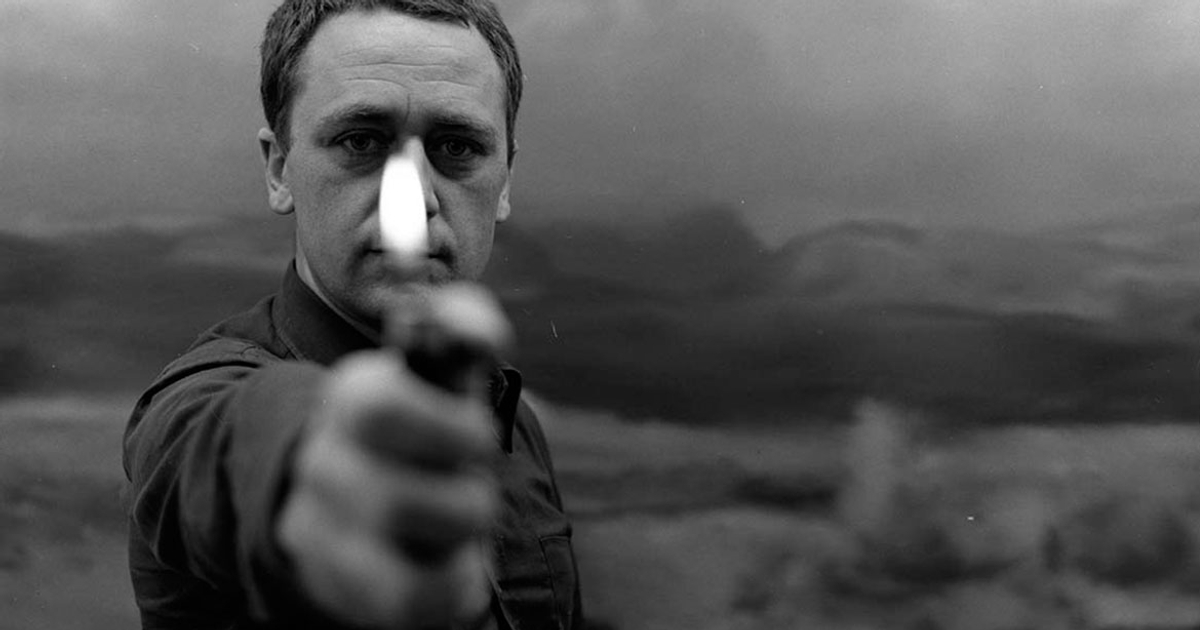
Works from the Capitalist Realism period are rare and command significant prices at auction, reflecting their historical importance. While Richter's later abstract works frequently set records, the photo-paintings from the early 1960s remain highly covetable.
For instance, Düsenjäger (Jet Fighter, 1963), a seminal work from this era depicting a warplane, was the subject of a high-profile legal dispute before selling at Phillips London in March 2019.
| Work Title | Year Created | Sale Date | Auction House | Price (Approx.) |
|---|---|---|---|---|
| Abstraktes Bild (599) | 1986 | Feb 2015 | Sotheby's London | $46. 3 Million |
| Düsenjäger | 1963 | Mar 2019 | Phillips London | $20. 3 Million |
| Abstraktes Bild (797-2) | 1993 | Nov 2021 | Sotheby's NY | $33. 0 Million |
| Abstraktes Bild | 1994 | May 2022 | Christie's NY | $36. 5 Million |
| Abstraktes Bild (1987) | 1987 | Nov 2023 | Phillips NY | $34. 8 Million |
The sale of Düsenjäger in 2019 for over $20 million show the enduring value of the Capitalist Realism period, even as the artist's later abstract works dominate the highest tier of his market. This era marked the introduction of his signature "blur" technique, which he applied to images sourced from newspapers and family albums.
By mechanically blurring the paint, Richter sought to create a "perfect image" that absence individual style, a method that simultaneously mimicked photography and asserted the materiality of paint. This technique allowed him to maintain an emotional distance from his subjects, a stance that became central to his artistic identity in West Germany.
The Mechanics of Uncertainty
Gerhard Richter's photo-paintings represent a systematic of the image, a technique he refined over six decades and which remains the intellectual core of his practice. The process begins with a projection: Richter selects a photograph, frequently a banal snapshot, a newspaper clipping, or a , and projects it onto the canvas.
He traces the form with exactitude, painting a photorealistic image that rivals the precision of the mechanical lens. Once the image is complete, he destroys its clarity.
Using a soft, dry brush (or occasionally a squeegee in later variations), he drags the wet pigment across the surface, blurring the contours until the subject dissolves into a soft-focus haze. This act is not aesthetic; it is a philosophical assertion.
Richter stated in a widely interview, reaffirmed in 2015, "I blur so that all parts move slightly into one another." By removing the sharp edges that define objects, he strips them of their hierarchy. A face, a tree, and a shadow become equal in weight and significance, creating a "democratic" image where no single element commands the viewer's attention.
The blur functions as a barrier between the viewer and the reality the painting depicts. It mimics the effects of a camera out of focus or a fleeting memory, introducing a sense of distance that critics in the 2015-2025 period have increasingly interpreted as a form of skepticism.
In an era dominated by high-definition digital imagery, Richter's analog blur insists on the fallibility of perception.
The technique forces the eye to search for a focal point that does not exist, generating a tension that the artist describes as "uncertainty." This method allows him to paint historically charged subjects, such as the Birkenau pattern (2014), without succumbing to the voyeurism of clear representation.
In the Birkenau works, which were a focal point of the Painting After All exhibition at The Met Breuer in March 2020, Richter projected clandestine photographs taken by a prisoner at Auschwitz-Birkenau. He then painted over them, dragging the pigment until the horrific imagery was completely obscured, leaving only a scarred, abstract surface.
The blur here evolves from a softening agent into a tool of total erasure, acknowledging that realities are too traumatic to be depicted directly.
Market Rarity and Valuation (2015-2025)
While Richter's abstract squeegee paintings (Abstraktes Bild) appear frequently at auction, his photo-paintings are far rarer and command a different kind of market attention. Collectors prize these works for their direct connection to the artist's conceptual origins in the 1960s.
Data from the last decade reveals a distinct tiered market where the photo-paintings, though fewer in number, achieve consistent high-value results that reflect their scarcity.
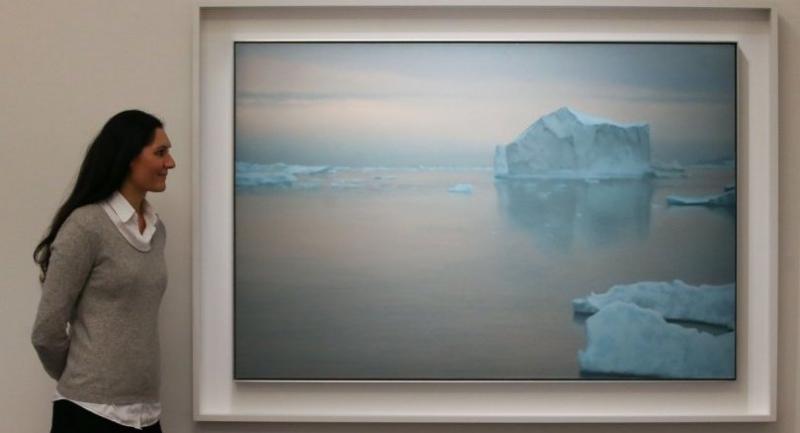
The sale of Eisberg (Iceberg) in March 2017 at Sotheby's London exemplifies this demand. Painted in 1982, shortly after Richter's divorce, the work depicts a desolate arctic. It sold for £17. 7 million ($21. 6 million), shattering its pre-sale estimate of £8-12 million. The price set a record for a by the artist at the time.
Three years later, in July 2020, Sotheby's offered Wolken (Fenster) (Clouds (Window)), a monumental 1970 triptych. even with the economic uncertainty of the global pandemic, the work achieved $13. 5 million. These figures, while lower than the $46. 3 million record for an abstract work set in 2015, demonstrate the enduring value of the photo-paintings.
The abstracts are traded like currency; the photo-paintings are held as historical documents.
| Work Title | Year Painted | Style | Sale Date | Price (USD/GBP) | Auction House |
|---|---|---|---|---|---|
| Abstraktes Bild (599) | 1986 | Abstract | Feb 2015 | £30. 3 Million | Sotheby's London |
| Eisberg (Iceberg) | 1982 | Photo-Painting | Mar 2017 | £17. 7 Million | Sotheby's London |
| Wolken (Fenster) | 1970 | Photo-Painting | July 2020 | $13. 5 Million | Sotheby's London |
| Abstraktes Bild (649-2) | 1987 | Abstract | Oct 2020 | $27. 7 Million | Sotheby's HK |
| Abstraktes Bild | 1994 | Abstract | May 2022 | $29. 6 Million | Christie's NY |
| Abstraktes Bild | 1997 | Abstract | Nov 2023 | $25. 7 Million | Sotheby's NY |
serious Re-evaluation and Legacy
The serious consensus between 2015 and 2025 has shifted to view the photo-paintings not just as a precursor to the abstracts, as the intellectual anchor of Richter's entire oeuvre.
The 2020 retrospective Painting After All at The Met Breuer placed heavy emphasis on these works, particularly the Birkenau pattern, framing the blur as a necessary response to the trauma of the 20th century. Curators Sheena Wagstaff and Benjamin Buchloh argued that the blur allows Richter to engage with history without claiming to own it.
This "skeptical" method resonates with a contemporary art world increasingly concerned with the ethics of representation. The photo-paintings are seen as an admission of failure, the failure of painting to capture reality, which paradoxically makes them more honest than the sharp-focus realism of his contemporaries.
Richter's influence on younger artists remains. The "Richter blur" has become a standard visual trope in contemporary painting, referenced by artists who seek to question the veracity of the photographic image. Yet, few have matched the rigorous detachment of Richter's own hand.
His refusal to inject emotion into the brushstroke, even when painting deeply personal subjects like his daughter Betty or his Uncle Rudi (a Nazi soldier), creates a friction that defines the work. The blur acts as a shield, protecting the artist from the subject and the viewer from the raw data of the image.
In his late career, Richter has continued to defend this distance. As he method his 90th birthday in 2022, he reiterated that the blur was never about style, about making the image "more perfect" by removing the distractions of detail.
The photo-paintings, with their soft gray horizons and out-of-focus candles, stand as a testament to the power of what is not seen.
Color Charts and Grey Monochromes
Richter's departure from photorealism into the of chromatic charts and grey monochromes marked a radical shift toward "extreme impartiality." These works, devoid of narrative content or emotional projection, the traditional hierarchy of artistic composition.
The Farben (Color Charts) and Graue Bilder (Grey Pictures) represent the artist's attempt to create images that are "indifferent" and purely objective. This period of his oeuvre has seen significant market re-evaluation between 2015 and 2025, with collectors and institutions recognizing the conceptual rigor behind these seemingly mechanical productions.
The Color Charts, initiated in 1966, originated from Richter's fascination with commercial paint sample cards. He viewed these industrial readymades as perfect paintings because they absence composition and style. In October 2022, Sotheby's London sold 192 Farben (1966), the very work in this series, for £18. 3 million.
This sale underscored the historical weight of the series. The work features 192 rectangular blocks of color arranged in a grid. The placement of colors was determined by chance, a method Richter employed to bypass his own aesthetic bias.
This systematic abdication of choice culminated in 4096 Farben (1974), the final and most complex painting of the original series. Sotheby's New York presented this monumental work in May 2023 with an estimate of $18 million to $25 million.
It serves as the direct precursor to his 2007 stained glass window for the Cologne Cathedral, which use 11, 263 color squares derived from the 1974 painting.
Richter revisited the color chart concept in the 21st century with his Strip paintings, which were prominently featured in the Painting After All exhibition at the Met Breuer in 2020. These works are digital manipulations of his 1990 Abstract Painting (724-4).
By dividing, mirroring, and stretching the original image, Richter generated horizontal bands of color that appear purely mechanical yet retain the DNA of the original brushstrokes. The Strip series dissolves the boundary between painting and digital print. It challenges the viewer's perception of the "handmade" mark.
Parallel to the chromatic overload of the charts, Richter explored the void through his Grey Pictures.
He famously stated that "grey is the epitome of non-statement," the only color capable of expressing "nothing, neither feelings, nor associations." In October 2025, Christie's auctioned Grau (1974), a towering monochromatic work, further validating the market's appetite for his minimalist period.
These works are not painted flat; they are worked with rollers, sponges, and brushes to create a dense, impenetrable surface that reflects the artist's skepticism toward the image's ability to convey truth.
The significance of the grey series was highlighted in the exhibition The Colour of Renunciation at Zander Galerie Paris in October 2025. The show juxtaposed early grey canvases with recent Grey Mirrors (glass panels coated with grey enamel). The Grey Mirrors incorporate the viewer into the work, turning the act of looking back upon itself.
In 2024, Richter produced 11 Grey Mirrors, On Top of One Another, a vertical stack of reflective panels shown at Sies + Höke in Düsseldorf in 2025. This recent output demonstrates his enduring commitment to the "zero point" of painting even in his ninth decade.
Market Performance: Color Charts and Grey Works (2015, 2025)
| Work Title | Year Created | Sale Date | Auction House | Price (Approx.) |
|---|---|---|---|---|
| 192 Farben | 1966 | Oct 14, 2022 | Sotheby's London | £18, 300, 000 |
| 4096 Farben | 1974 | May 18, 2023 | Sotheby's New York | $21, 800, 000 |
| Grau (Grey) | 1974 | Oct 15, 2025 | Christie's London | Undisclosed (Est. High) |
| Abstraktes Bild (Grey) | 1990 | Nov 2022 | Sotheby's HK | $23, 000, 000 |
The Fondation Louis Vuitton retrospective, which ran from October 2025 to March 2026, placed these series at the core of Richter's legacy. Curators positioned the Color Charts and Grey Pictures not as negations of painting as essential inquiries into its limits.
The exhibition displayed 4900 Colours (2007) alongside the Birkenau pattern, suggesting a link between the fracturing of the image in the charts and the inability to represent the horrors of history in the grey-toned abstracts.
Abstract paintings and the squeegee technique
Gerhard Richter's transition to pure abstraction in the late 20th century is defined by his development and mastery of the "squeegee" technique, a method that systematically erases and reveals pictorial content to create the Abstraktes Bild (Abstract Painting) series.
While Richter began experimenting with abstraction in the 1960s and 1970s, the technique reached its mature form in the 1980s and remained his primary mode of painting until his retirement from oil media in 2017.
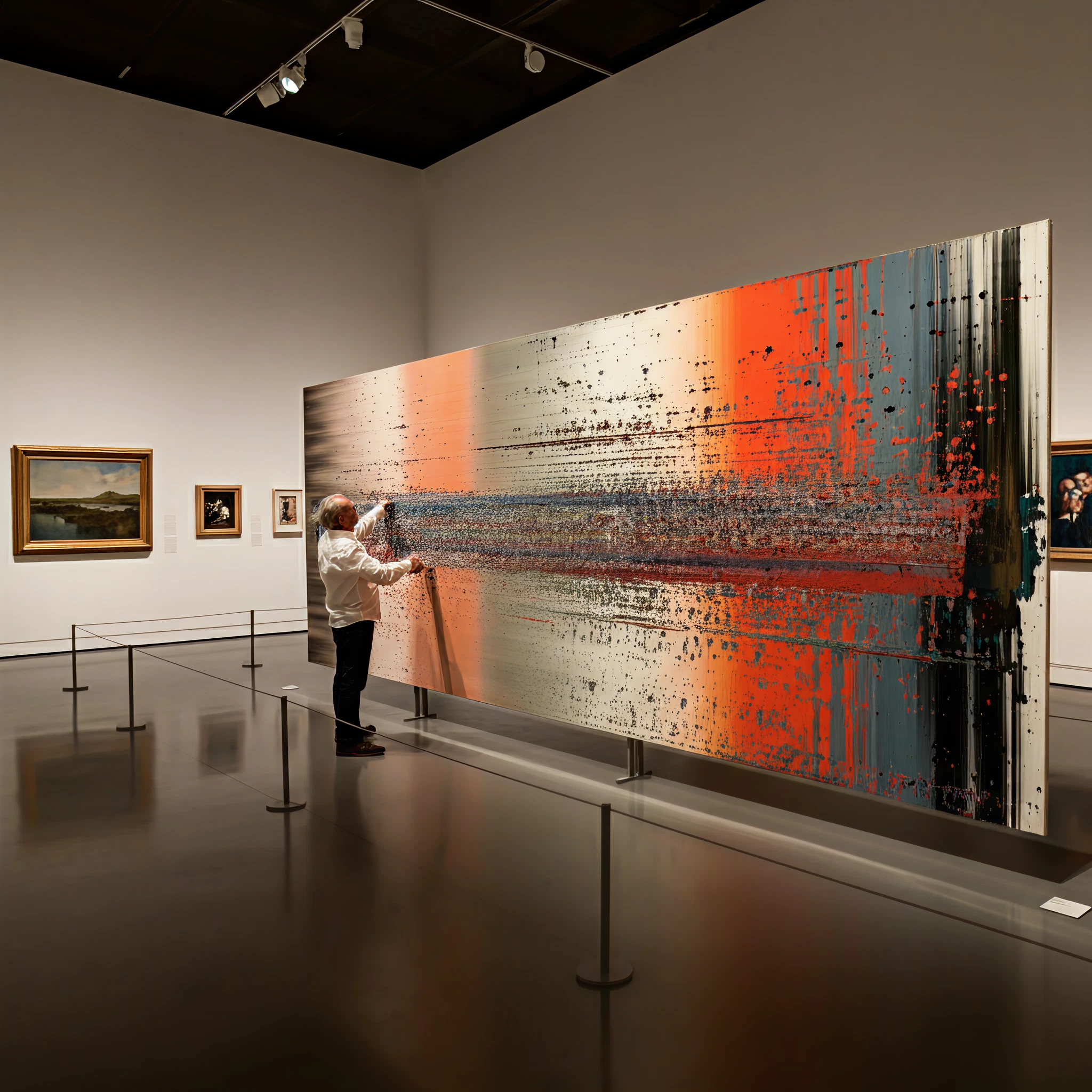
The process involves the application of dense of oil paint using brushes, which are then manipulated across the canvas using a large, homemade squeegee, a long strip of flexible Plexiglas attached to a wooden handle.
The mechanics of this technique introduce a calculated element of chance into the composition. Richter drags the squeegee across the wet surface, smearing the pigments and rupturing the upper strata to expose the underlayers.
This action creates a "shimmering" or "veiled" effect where the artist's hand is mediated by the tool, removing the gestural subjectivity associated with Abstract Expressionism. Richter describes this process as a balance between "control and chance," where the accumulation of destruction and creation results in a highly complex, non-representational image.
In a 2025 retrospective analysis, art historians noted that this method allows Richter to "paint appearances" without depicting a specific object, aligning with his lifelong philosophical inquiry into the nature of perception.
The Birkenau pattern (2014)
The most significant application of the squeegee technique in the 21st century is the Birkenau pattern (Works 937-1 to 937-4), completed in 2014 and widely exhibited between 2015 and 2026. This series addresses the Holocaust, a subject Richter had attempted to method for decades.
The four large canvases began as figurative renderings of four photographs taken clandestinely by a Sonderkommando member at the Auschwitz-Birkenau concentration camp in 1944. Finding the realistic depiction of such atrocity impossible to resolve, Richter subjected the canvases to his squeegee process.
Over several weeks, he applied of black, grey, red, and green paint, scraping and dragging the material until the original photographic imagery was completely obscured.
The resulting works are dark, fractured abstractions that refuse to provide a clear image of the trauma, instead offering a "mournful, chaotic surface." In March 2023, the Birkenau paintings were placed on permanent loan to the Neue Nationalgalerie in Berlin, fulfilling the artist's wish that they never be sold on the private market.
The pattern was the centerpiece of the exhibition Gerhard Richter: Painting After All at the Met Breuer in New York in 2020 and featured prominently in the major retrospective at the Fondation Louis Vuitton in Paris, which ran from October 2025 to March 2026.
Market performance and valuation (2015, 2025)
Richter's abstract works have commanded of the highest prices for a living artist during the 2015, 2025 period. The market for his squeegee paintings peaked in February 2015, when Abstraktes Bild (1986) sold for £30. 4 million ($46. 3 million) at Sotheby's London, setting a record for the artist at the time.
Richter publicly criticized this valuation, calling the sum "shocking" and noting that artists do not benefit from secondary market speculation. even with his skepticism, demand for these works remained strong throughout the decade.
Significant sales continued into the mid-2020s. In May 2022, an Abstraktes Bild (1994) achieved $29. 6 million at Christie's New York. More, during the opening of Art Basel Paris in October 2025, Hauser & Wirth sold Abstraktes Bild (1987) for $23 million, confirming the enduring value of his mid-career abstractions.
These figures reflect the status of the squeegee paintings as "blue-chip" assets, distinct from his earlier photo-paintings or later digital prints.
| Date | Work | Auction House | Price (USD approx.) |
|---|---|---|---|
| Feb 2015 | Abstraktes Bild (1986) | Sotheby's London | $46. 3 million |
| May 2022 | Abstraktes Bild (1994) | Christie's New York | $29. 6 million |
| Nov 2023 | Abstraktes Bild (1997) | Sotheby's New York | $25. 7 million |
| Oct 2025 | Abstraktes Bild (1987) | Art Basel Paris (Fair) | $23. 0 million |
Late career and cessation of oil painting
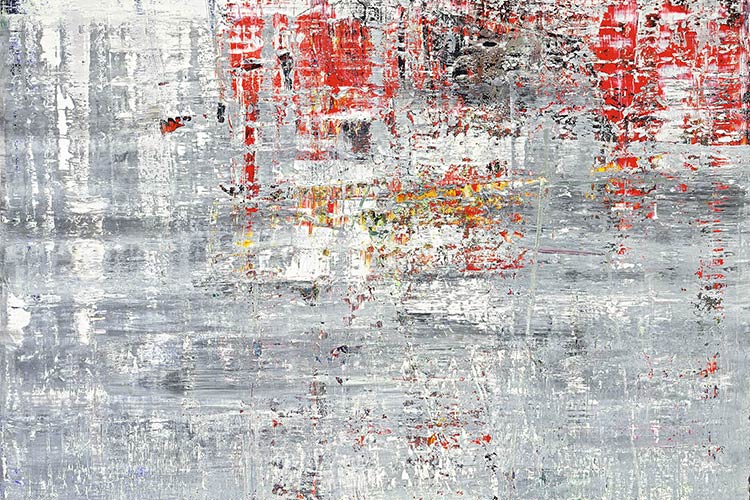
In 2017, Richter announced his retirement from oil painting, marking the end of the squeegee era. He the physical demands of dragging the heavy tools across large canvases as the primary reason for this decision. His final large- abstract works, produced just prior to this cessation, exhibit a high degree of chromatic density and turbulent movement, frequently interpreted as a final "crescendo" of the technique.
Following this shift, Richter focused on drawing and the production of the Strip paintings, digitally generated prints derived from scans of his earlier squeegee paintings.
These works, exhibited alongside the originals in the 2025 Paris retrospective, deconstruct the squeegee technique into pure horizontal lines of color, removing the tactile surface entirely.
This evolution demonstrates Richter's willingness to abandon the very "mastery" that defined his market success, returning to a mechanical form of image-making that echoes his earliest photo-paintings.
The October 18, 1977 pattern
Gerhard Richter's fifteen-painting pattern, October 18, 1977 (1988), remains the artist's most direct and controversial engagement with specific historical events. Acquired by the Museum of Modern Art (MoMA) in 1995, the series depicts the arrest, imprisonment, and deaths of members of the Red Army Faction (RAF), the West German far-left militant group.
Between 2015 and 2025, the pattern has undergone significant serious re-evaluation, particularly regarding its relationship to Richter's later Holocaust-focused Birkenau series (2014).
While the paintings themselves date to the late 1980s, their institutional presence and scholarly interpretation have shifted, with MoMA presenting the work in a dedicated collection gallery from late 2020 through the spring of 2021, coinciding with a major retrospective at The Met Breuer where the pattern was notably absent.
The pattern consists of fifteen oil paintings based on police and press photographs surrounding the "German Autumn" of 1977. The subjects include the deaths of Andreas Baader, Gudrun Ensslin, and Jan-Carl Raspe in Stammheim Prison, as well as the earlier death of Holger Meins and a youth portrait of Ulrike Meinhof.
Richter utilized his signature "blur" technique (Unschärfe) to degrade the source images, transforming forensic evidence into ghostly, indeterminate grisaille. Recent analysis from 2020 emphasizes that this blurring prevents the viewer from consuming the images as clear historical documents or ideological icons.
Curators at MoMA noted during the 2020 installation that the repetition of certain motifs, such as the three variations of Dead (Tote), serves to slow the viewer's consumption of the tragedy, creating a "cinematic" stutter rather than a coherent narrative.
Institutional History and Recent Exhibitions
The pattern's exhibition history in the last decade highlights its status as a "monument" within Richter's oeuvre. Although the Met Breuer's 2020 exhibition, Gerhard Richter: Painting After All, served as a detailed retrospective, it did not include October 18, 1977.
Instead, MoMA mounted the pattern in its own galleries on West 53rd Street, allowing the work to stand independently from the retrospective's narrative. This separation underscored the pattern's unique; critics observed that the paintings require a dedicated, funereal space to function, distinct from the chronological flow of a standard survey.
In July 2025, the Fondation Louis Vuitton in Paris announced that the pattern would leave New York for a rare loan. It is scheduled to be a centerpiece of the institution's massive retrospective running from October 2025 to March 2026.
This marks one of the few times the entire suite has traveled to Europe since its acquisition by MoMA, signaling a renewed interest in Richter's history paintings within the European context.
| Title (English/German) | Subject | Dimensions |
|---|---|---|
| Dead (Tote) | Ulrike Meinhof's body (3 variations) | 62 x 62 cm |
| Hanged (Erhängte) | Gudrun Ensslin hanging in cell | 200 x 140 cm |
| Man Shot Down (Erschossener) | Andreas Baader's body (2 variations) | 100 x 140 cm |
| Cell (Zelle) | Baader's bookshelf and cell interior | 200 x 140 cm |
| Confrontation (Gegenüberstellung) | Gudrun Ensslin (3 variations) | 112 x 102 cm |
| Arrest (Festnahme) | Arrest of Meins, Baader, Raspe (2 variations) | 92 x 126 cm |
| Youth Portrait (Jugendbildnis) | Ulrike Meinhof (1970) | 67 x 62 cm |
| Funeral (Beerdigung) | Coffins of Baader, Ensslin, Raspe | 200 x 320 cm |
| Record Player (Plattenspieler) | Device used to hide a gun | 62 x 83 cm |
serious Dialogue: October 18 vs. Birkenau
Scholarship between 2015 and 2025 has frequently juxtaposed the October 18, 1977 pattern with Richter's Birkenau (2014), a series of four large abstract paintings based on photographs from Auschwitz-Birkenau. Art historians that these two pattern represent the poles of Richter's engagement with German trauma.
While October 18, 1977 retains the representational image, albeit blurred to the point of dissolution, Birkenau abandons the image entirely, burying the source photographs under of scraped paint.
During the 2020 exhibition season, critics noted that October 18, 1977 functions as a "naming of nothing," a refusal to provide the catharsis of a clear political stance. The paintings do not martyr the RAF members, nor do they condemn them; instead, they present the physical reality of their end as a mute fact.
This neutrality contrasts with the Birkenau paintings, which were described in 2020 reviews as an admission of painting's failure to represent the Holocaust. The October pattern, by retaining the figure, insists on the persistence of the specific historical image in shared memory, even as that memory fades into gray.
and Candle Paintings
Between 2015 and 2025, Gerhard Richter's and candle paintings maintained a commanding presence in the global art market and institutional scholarship. These works, characterized by their photorealistic precision and signature "blur" (Unschärfe), continued to challenge the boundaries between photography and painting.
While Richter ceased producing new oil paintings in 2017, the period saw record-breaking auction results for his earlier and renewed serious attention through major retrospectives, most notably at the Kunsthaus Zürich.
Richter's, frequently devoid of human figures, evoke the German Romantic tradition of Caspar David Friedrich while simultaneously deconstructing it through mechanical reproduction. His candle paintings (Kerzen), produced primarily in the early 1980s, serve as memento mori, symbolizing both contemplation and the transience of life.
In the decade following his retirement from painting, these two genres solidified their status as of the most coveted and intellectually analyzed works in his oeuvre.
Market Dominance of (2015, 2025)
The market for Richter's saw significant activity during this period, driven by the scarcity of museum-quality works in private hands. In March 2017, Sotheby's London sold Eisberg (1982), a rare iceberg, for £17. 7 million ($21. 6 million). This sale set a new auction record for a by the artist at the time.
The painting, one of only three iceberg works produced by Richter, had remained in the same private European collection since 1983. Its sale underscored the high demand for his photorealistic nature scenes, which offer a clear counterpoint to his abstract squeegee paintings.
Another landmark sale occurred in May 2022, when Seestück (Seascape, 1975) was auctioned at Sotheby's New York as part of the Macklowe Collection. The work realized $30. 2 million, confirming the enduring value of his cloud and sea compositions.
These paintings are celebrated for their ability to merge the sublime with the banality of a snapshot, a tension that Richter cultivated throughout his career. The Seestück series, in particular, exemplifies his method of "painting over" photographs to achieve a surface that is both hyper-real and impenetrable.
The Candle Paintings: Symbolism and Value
Richter's Kerzen series, famously featured on the cover of Sonic Youth's album Daydream Nation, remained culturally and financially significant between 2015 and 2025. While original oil paintings from this series rarely appeared at auction due to their limited number, related works commanded high prices.
In December 2021, Phillips in association with Poly Auction Hong Kong sold Kerzenschein (Candle-light, 1984) for HK$101. 9 million (approximately US$13 million). Although Kerzenschein is an abstract work, its title and visual association directly reference the iconic candle series, demonstrating how the motif permeates his broader practice.
In response to the Russian invasion of Ukraine, Richter authorized a special charity sale in 2022. A high-quality offset print of Kerze (1982), sealed under Diasec, was sold for €99, 000, with proceeds directed to humanitarian aid. This gesture highlighted the continued political and emotional resonance of the candle motif, transforming a symbol of quiet contemplation into one of active solidarity.
serious Reception and Exhibitions
The period was marked by a dedicated examination of Richter's nature works. The Kunsthaus Zürich mounted a detailed exhibition titled Gerhard Richter: from March to July 2021. Curated by Hubertus Butin and Cathérine Hug, the show featured over 130 works, tracing the evolution of his from the 1960s to his final years of painting.
The exhibition argued that Richter's were not escapist imagery complex inquiries into perception, mediation, and the "transcendental homelessness" of the modern subject.
In 2023, David Zwirner Gallery in New York presented 3 Scheiben (3 Panes of Glass), a glass sculpture that continued Richter's exploration of transparency and reflection, themes deeply rooted in his earlier and window paintings. This installation demonstrated that even after laying down his brushes, Richter's engagement with the mechanics of vision remained central to his output.
| Date | Event / Work | Details / Price | Location / House |
|---|---|---|---|
| March 2017 | Sale of Eisberg (1982) | £17. 7 million ($21. 6 million) | Sotheby's London |
| March, July 2021 | Exhibition: Gerhard Richter: | Retrospective of 130+ works | Kunsthaus Zürich |
| Dec 2021 | Sale of Kerzenschein (1984) | HK$101. 9 million (~$13 million) | Phillips / Poly Auction Hong Kong |
| May 2022 | Sale of Seestück (1975) | $30. 2 million (Macklowe Collection) | Sotheby's New York |
| 2022 | Charity Sale of Kerze (Edition) | €99, 000 for Ukraine aid | Germany (Charity Auction) |
Richter's and candle paintings from this era function as a between the romantic past and the skeptical present. By blurring the image, he denies the viewer the satisfaction of a sharp, possessable reality, offering instead a "semblance" that is beautiful precisely because it is unreachable.
As the artist himself noted, these pictures are "about the longing for a whole and simple life," a longing that remains unfulfilled in the fractured reality of the 21st century.
Overpainted photographs
Gerhard Richter's "Overpainted Photographs" (Übermalte Fotos) constitute a distinct and prolific body of work that his photorealistic roots with his abstract methods. Although Richter began applying paint to photographs as early as 1986, the serious and institutional focus on this medium intensified significantly between 2015 and 2025.
These small- works, measuring 10 × 15 centimeters (standard commercial print size), serve as a testing ground for the interaction between the mechanical precision of photography and the material unpredictability of oil paint.
The production of these works generally involved Richter using his own snapshots, images of family,, buildings, or museum visits, developed at ordinary photo labs. He would then apply oil paint, frequently using the leftover pigment from his large abstract squeegee paintings.
The process relied on "controlled chance," where the squeegee or palette knife obscured specific details of the photographic subject while revealing others, creating a tension between the representational image and the abstract overlay.
Richter formally concluded his painterly practice in 2017, and the production of overpainted photographs largely ceased around this time, with the final cataloged works dating to this period.
Exhibitions and serious Reception (2015, 2025)
The decade from 2015 to 2025 saw a re-evaluation of these works, elevating them from "studio experiments" to a central component of Richter's oeuvre. A major milestone occurred in 2023 with the exhibition Gerhard Richter: 100 Works for Berlin at the Neue Nationalgalerie.
This long-term loan from the Gerhard Richter Art Foundation included a significant number of overpainted photographs, displayed alongside the monumental Birkenau pattern, highlighting the continuity between his intimate and large- abstractions.
In late 2023, the exhibition Gerhard Richter: Engadin opened across three venues in Switzerland: the Nietzsche-Haus, the Segantini Museum, and Hauser & Wirth St. Moritz. Curated by Dieter Schwarz, this presentation focused on Richter's relationship with the Engadin region and featured over 70 works, including numerous overpainted photographs of the Alpine.
The exhibition demonstrated how Richter used the medium to disrupt the "scenic" quality of tourist photography with aggressive smears of paint.
Other significant presentations included:
| Year | Exhibition Title | Venue | Location |
|---|---|---|---|
| 2023 | Gerhard Richter: Overpainted Photographs | Albertinum | Dresden, Germany |
| 2023 | Gerhard Richter | Overpainted Photographs | Sies + Höke | Düsseldorf, Germany |
| 2016 | Gerhard Richter: Painting and Photography | Museum Franz Gertsch | Burgdorf, Switzerland |
Publications and Scholarship
In 2024 and 2025, Heni Publishing released Gerhard Richter: The Overpainted Photographs, a detailed six-volume catalogue edited by Hans Ulrich Obrist and Joe Hage. This publication marked the attempt to systematically document the thousands of unique works in this medium, providing a scholarly framework previously reserved for his canvas paintings.
The catalogue organizes the works chronologically, offering evidence of how the overpainting technique evolved from tentative dabs in the late 1980s to the confident, full-coverage squeegee pulls of the 2010s.
Market and Valuation
While Richter's large abstract canvases command prices in the tens of millions, the overpainted photographs have established a strong secondary market, offering collectors an accessible entry point into his practice. Between 2015 and 2025, prices for these works steadily increased, with particularly strong results for early examples (late 1980s and 1990s) and those with clear figurative subjects visible beneath the paint.
Auction results from the period illustrate this trend:
| Work | Date | Sale Price | Auction House | Date of Sale |
|---|---|---|---|---|
| MV. 177 | 2011 | £88, 200 (approx. $112, 000) | Christie's London | March 2025 |
| 9. März 03 | 2003 | €52, 920 (approx. $57, 000) | Lempertz | December 2023 |
| Untitled (14. 2. 96) | 1996 | $50, 000, $70, 000 (Est.) | Phillips New York | Various 2023/24 |
The market distinguishes between unique overpainted photographs and "editions" (prints of overpainted works). The unique works, where Richter applied oil paint directly to a specific C-print, command the highest values. The release of the detailed catalogue in 2024 provided verified provenance for of these pieces, further stabilizing their market value.
Technique and Philosophy
Richter described the process of overpainting as a way to resolve the "problem" of photography's absence of physical reality. "Photography has almost no reality; it is almost a hundred per cent picture," he stated.
"And painting always has reality: touch the paint; it has presence." By combining the two, Richter creates an object that is both a document of a specific moment and a material assertion of abstract color. The paint does not cover the image; it interacts with the composition, frequently mimicking the forms of the or contradicting them entirely.
In his final years of active production (2015, 2017), Richter continued to produce these works alongside his Strip paintings and glass constructions. The overpainted photographs from this late period frequently feature dense, monochromatic veils of paint, obscuring nearly the entire photographic image, a visual parallel to his withdrawal from representational painting.
The Richter Window
The Cologne Cathedral Window (Richter-Fenster), located in the south transept of the UNESCO World Heritage site, stands as one of Gerhard Richter's most significant monumental works.
Although inaugurated in 2007, the window's cultural resonance and serious evaluation have continued to evolve significantly through the 2015, 2025 period, particularly following the artist's subsequent stained-glass commission for Tholey Abbey in 2020.
The work replaced a 19th-century window destroyed during World War II, which had been temporarily filled with colorless glass that allowed excessive, blinding light into the cathedral.
Spanning a surface area of 106 square meters, the window is composed of 11, 263 individual glass squares, each measuring 9. 6 by 9. 6 centimeters. Richter selected 72 colors for the palette, specifically chosen to harmonize with the existing medieval and 19th-century glazing of the cathedral.
The arrangement of these squares was generated using a custom computer algorithm to ensure a random distribution, although Richter manually adjusted approximately half of the composition to prevent the formation of inadvertent figures or symbols. The result is a vast, pixelated of light that changes character with the time of day and weather conditions.
serious Reception and Controversy
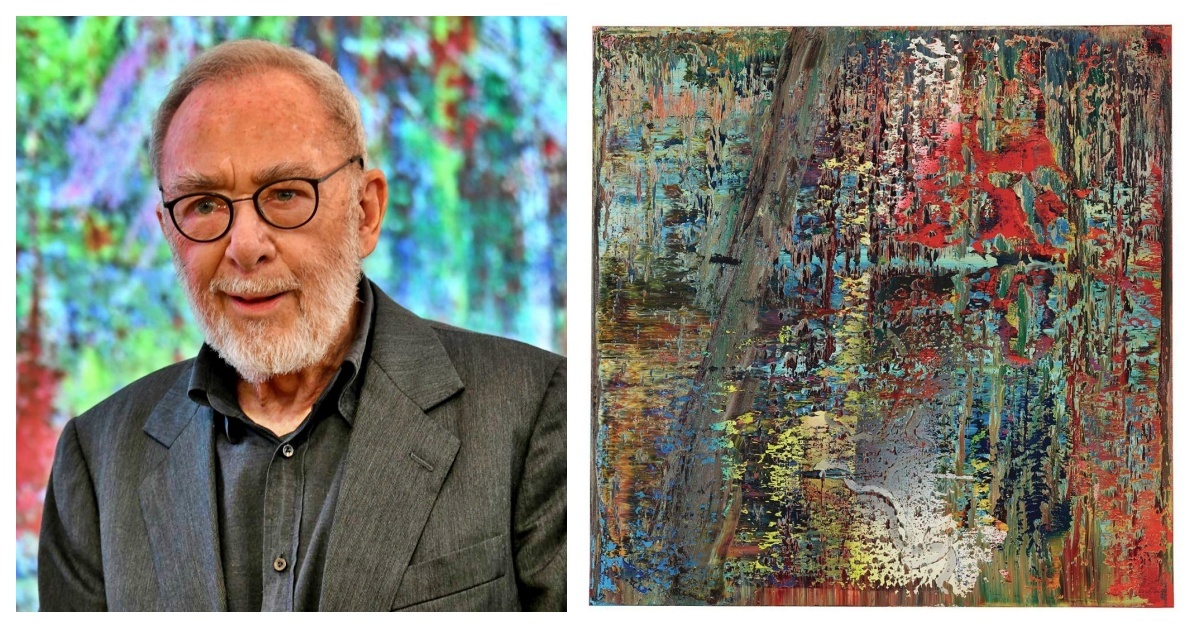
The window's abstract design initially sparked a high-profile theological and aesthetic debate that well into the late 2010s. The most vocal critic was Joachim Meisner, the Cardinal and Archbishop of Cologne, who famously argued that the non-figurative design was "better suited to a mosque" than a Catholic cathedral.
Meisner, who died in 2017, maintained his opposition to the work until the end of his life, a stance that was frequently revisited in art historical analyses following his passing.
even with this ecclesiastical resistance, the window has become a primary attraction for the cathedral's millions of annual visitors.
In a 2020 retrospective analysis, former Cathedral Master Builder Barbara Schock-Werner noted that the controversy had ironically served as "the best PR possible," transforming the cathedral into a destination for contemporary art enthusiasts who might not otherwise visit a religious site.
The window is widely regarded as a successful synthesis of Gerhard Richter's "Color Chart" series (Farbtafeln) and Gothic architectural tradition.
Comparison with Tholey Abbey (2020)
The significance of the Cologne window was further contextualized in September 2020, when Richter unveiled three new choir windows for Tholey Abbey in Saarland, the oldest monastery in Germany. Art critics and historians frequently compared the two projects, viewing the Tholey commission as a spiritual successor to the Cologne work.
| Feature | Cologne Cathedral (2007) | Tholey Abbey (2020) |
|---|---|---|
| Design Concept | Randomized pixel grid (Color Charts) | Symmetric, kaleidoscopic patterns |
| Source Material | Painting 4096 Colours (1974) | Abstract painting Pattern (1990) |
| Method | Computer-generated randomness | Mirrored repetition and digital manipulation |
| Reception | Initially controversial (Meisner) | Widely celebrated as a "gift" |
While the Cologne window relies on the logic of chance and the absence of hierarchy, the Tholey windows use symmetry and repetition, creating a more "musical" and meditative visual structure. The 2020 Tholey project was described by the artist as chance his last major work, cementing the Cologne window's status as the pivotal moment when Richter successfully translated his abstract painting techniques into monumental architectural glass.
Technical Legacy
The technical execution of the Cologne window continues to be as a benchmark in modern stained glass conservation and design. The squares were attached using silicone rather than traditional lead cames, a method that allows for maximum light transmission and color interaction.
This technical innovation has influenced subsequent restoration projects in European ecclesiastical architecture between 2015 and 2025. The window was funded entirely by donations from over 1, 200 private individuals, covering the €370, 000 production cost, while Richter provided his design and labor without a fee.
The Birkenau pattern
The Birkenau pattern (2014), widely regarded as Gerhard Richter's most significant confrontation with the Holocaust, consists of four large-format abstract paintings. Throughout the 2015, 2025 period, the pattern transitioned from a touring exhibition highlight to a permanent fixture of German cultural memory.
In 2021, Richter contractually ensured the works would never enter the commercial art market, entrusting them instead to the Stiftung Preußischer Kulturbesitz (Prussian Cultural Heritage Foundation) in Berlin.
Richter based the paintings on four photographs clandestinely taken in August 1944 by members of the Sonderkommando, Jewish prisoners forced to dispose of gas chamber victims, at Auschwitz-Birkenau. The artist transferred these images, which depict the burning of corpses and women being driven to the gas chambers, onto canvas.
He then obscured the figuration with of black, grey, green, and red oil paint, using his signature squeegee technique to scrape and scar the surface until the specific horrors were rendered invisible yet palpable. Richter stated he realized that "repainting the photographs.
was not possible," leading him to abstraction as the only viable method to address the atrocity.
Components and Installation
The pattern is rarely displayed as paintings alone. Richter mandates a specific spatial configuration that forces the viewer to confront the gap between documentation and memory. The installation includes:
| Component | Details | Function |
|---|---|---|
| Paintings (4) | Oil on canvas, 260 cm × 200 cm each. | The primary abstract work, numbered 937/1, 4. |
| Photographs (4) | Digital duplicates of the original 1944 photos. | Provides the historical evidence underlying the abstraction. |
| Grey Mirror | Glass and enamel, approx. 228 cm × 915 cm (four-part). | Reflects the viewer, the paintings, and the gallery space, implicating the audience. |
Permanent Loan to Berlin (2021)
In a landmark 2021 agreement, the Gerhard Richter Kunststiftung (Gerhard Richter Art Foundation) pledged 100 works, including the Birkenau pattern, to the Neue Nationalgalerie in Berlin on permanent loan.
The deal, signed with SPK President Hermann Parzinger, stipulated that the pattern would eventually reside in a dedicated room in the Museum of the 20th Century, designed by Herzog & de Meuron and under construction at the Kulturforum. Until the new museum's completion, the works were installed in the Neue Nationalgalerie starting in April 2023.
Richter explicitly created the foundation to prevent these specific works from being sold, valuing their role in public discourse over their immense chance market price.
The Oświęcim Pavilion (2024)
On February 9, 2024, marking Richter's 92nd birthday, a dedicated exhibition pavilion opened at the International Youth Meeting Centre in Oświęcim, Poland, situated just kilometers from the Auschwitz-Birkenau memorial site.
Richter designed the building himself and donated a special photographic edition of the Birkenau pattern to the International Auschwitz Committee. Unlike the Berlin installation, this version consists of prints on metal plates and is permanently housed near the physical site where the source photographs were taken.
Christoph Heubner, Executive Vice President of the International Auschwitz Committee, described the donation as a " signal against oblivion.".
Exhibition History and Reception (2015, 2025)
The pattern's exhibition history during this decade reflects its growing status as a memorial object. In 2020, the paintings were the centerpiece of the retrospective Painting After All at The Met Breuer in New York. The exhibition opened in March 2020 closed only nine days later due to the COVID-19 pandemic.
The museum later reinstalled the pattern at its Fifth Avenue location in September 2020 to ensure public access. Critics noted the tension in the Met's press materials, which described the works as "poignant", a descriptor found insufficient for the subject matter.
In 2022, the pattern traveled to Japan for the time, appearing at the National Museum of Modern Art, Tokyo, and the Toyota Municipal Museum of Art. These exhibitions introduced the work to Asian audiences, framing it within the context of global war memory and Richter's personal history as a child in Nazi Germany.
Timeline of Major Birkenau pattern Locations (2015, 2025)
*Chart reflects major public presentations and permanent installations.
Art Market Records and Recognition (2015, 2025)
Gerhard Richter remains one of the world's most commercially successful living artists, with a market defined by high-value auction records and sustained institutional validation. Between 2015 and 2025, his work consistently commanded eight-figure sums, driven largely by demand for his Abstraktes Bild (Abstract Painting) series.
While the broader art market experienced fluctuations, particularly during the 2024 contraction, Richter's turnover remained strong, anchored by blue-chip sales in New York, London, and Paris.
The period began with a historic benchmark. In February 2015, Abstraktes Bild (1986) sold for £30. 4 million ($46. 3 million) at Sotheby's London, setting a record at the time for the highest price achieved by a living European artist.
This sale established a price floor for his monumental squeegee paintings, which continued to dominate his market performance throughout the decade. In May 2022, another Abstraktes Bild (1994) from the collection of Eric Clapton achieved $29. 6 million at Christie's New York, reaffirming the enduring value of his 1980s and 1990s abstractions.
Richter's market resilience was tested in 2023 and 2024, years marked by a global correction in auction volumes. even with a reported 33. 5% drop in global art auction turnover in 2024, Richter ranked fifth globally among living artists, generating approximately $42. 3 million in auction sales according to the Hurun Global Art List.
His secondary market activity rebounded significantly in late 2025. At the opening of Art Basel Paris in October 2025, Hauser & Wirth sold Abstraktes Bild (1987) for $23 million, a signal of renewed collector confidence coinciding with a major retrospective at the Fondation Louis Vuitton.
Major Auction Results (2015, 2025)
The following table details verified high-value sales of Richter's work between January 1, 2015, and December 31, 2025. The data highlights the dominance of his abstract compositions and the significant valuation of his color chart series.
| Work Title | Year Created | Sale Price (USD/GBP) | Auction House | Date of Sale |
|---|---|---|---|---|
| Abstraktes Bild (599) | 1986 | $46. 3 million (£30. 4m) | Sotheby's London | Feb 10, 2015 |
| Abstraktes Bild (749-1) | 1994 | $29. 6 million | Christie's New York | May 10, 2022 |
| Abstraktes Bild (636) | 1987 | $27. 8 million | Phillips New York | May 17, 2023 |
| Abstraktes Bild (1997) | 1997 | $25. 7 million | Sotheby's New York | Nov 2023 |
| Abstraktes Bild (797-2) | 1993 | $33. 0 million (£24. 5m) | Sotheby's New York | Nov 15, 2021 |
| Abstraktes Bild (596) | 1986 | $29. 6 million (£24. 2m) | Sotheby's London | Mar 1, 2023 |
| 4096 Farben (4096 Colors) | 1974 | $21. 8 million | Sotheby's New York | May 19, 2023 |
Institutional Recognition and the Birkenau pattern
Beyond the commercial sector, Richter's legacy was cemented by significant institutional projects and donations. The most pivotal event of this period was the permanent installation of his Birkenau pattern (2014).
In a decisive move to prevent the works from entering the speculative art market, Richter donated the four abstract paintings, based on photographs secretly taken by Sonderkommando prisoners at Auschwitz-Birkenau, to the International Auschwitz Committee.
In February 2024, a purpose-built pavilion designed by Richter opened in Oświęcim, Poland, near the former concentration camp. The pavilion houses a special edition of the pattern, while the original oil paintings remain with the Neue Nationalgalerie in Berlin on permanent loan.
This gesture underscored Richter's commitment to historical memory over commercial gain. He stated that the Birkenau paintings were never intended for private ownership. The pattern was previously the centerpiece of the exhibition "Gerhard Richter: Painting After All" at the Met Breuer in New York (2020), a show that was cut short by the COVID-19 pandemic serious acclaimed for its examination of his late style.
Retrospectives and Late Career Developments
The decade concluded with a monumental retrospective at the Fondation Louis Vuitton in Paris, running from October 2025 to March 2026. Curated in collaboration with the artist, the exhibition featured over 275 works, spanning from his early photo-paintings of the 1960s to his final glass sculptures.
This show marked one of the most detailed surveys of his career and coincided with the resurgence of his market prices in Paris.
In 2017, Richter announced his retirement from oil painting, citing the physical demands of his squeegee technique. His output in the subsequent years focused on drawings, digital prints, and ink-on-paper works, such as the Mood series shown at the Beyeler Foundation.
The scarcity of new large- paintings contributed to the fierce competition for his historical works at auction. The sale of 4096 Farben for $21. 8 million in 2023 demonstrated that collectors were to pay premiums for his conceptual color charts, recognizing them as pivotal precursors to his later digital experiments and the Cologne Cathedral window.
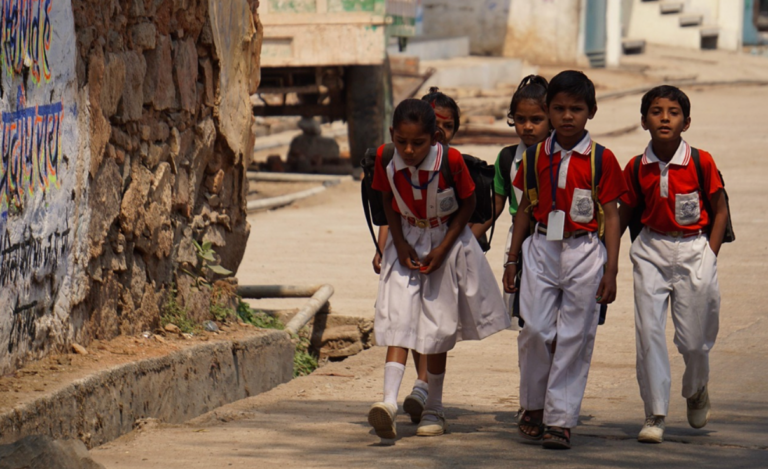
Disturbing Findings: Private School Caste Discrimination Exposed in India’s Admissions
Private school caste discrimination is widespread in India despite legal provisions for equal access to education. Many private schools in India find ways to evade the mandated 25% reservation for economically…
Read Full ReportThe Buy Now Pay Later Phantom Debt Bubble in America
February 22, 2026 • Commerce, All
Investigation reveals the hidden risks of Buy Now Pay Later (BNPL) services, leading to the emergence of "Buy Now Pay Later Phantom Debt." Regulators are…
January 2026 currency stabilization: The role of state-owned banks
February 11, 2026 • Banking, All, Asia
Global financial architecture faced unique pressures by late 2025, leading to coordinated interventions in January 2026. State owned banks played a pivotal role in currency…
Late 2025 Political purges in Russia within the regional governorships
February 11, 2026 • Russia, All
A sweeping case of political purges in Russia of unprecedented magnitude occurred in the final quarter of 2025, altering the political landscape significantly. 155 high-ranking…
Local Government Debt: Investigating the debt restructuring transparency in China and UK
February 11, 2026 • China, All, UK
The 2025 Local Government Financing Vehicle (LGFV) crisis in China revealed a systemic failure of transparency, necessitating a massive intervention to stabilize the financial landscape.…
Scandal: Unpaid Internships Exploit Graduates Worldwide
October 10, 2025 • All
Internships have become a widespread practice globally, with many positions remaining unpaid or underpaid, impacting new graduates. Unpaid internships can perpetuate socioeconomic inequalities, with financial…
RSS Hindutva and the “Bharat First” Ideology: An Investigative Profile
July 22, 2025 • All, Originals
The Rashtriya Swayamsevak Sangh (RSS) is India’s largest Hindu nationalist volunteer organization, with a controversial history rooted in Hindutva ideology. This investigation delves into the…