Grant Sanderson
Early Life and Education
Grant Sanderson was born and raised in Park City, Utah. He attended Park City High School and completed his secondary education there in 2011. His early academic environment provided a structured route toward mathematics. Sanderson later positive reinforcement from adults as a primary driver for his initial interest in the subject.
He noted in a 2024 commencement address at Harvey Mudd College that his passion stemmed from a "positive feedback loop" where early competence led to praise and subsequently encouraged further practice.
Sanderson matriculated at Stanford University in 2011. He pursued a Bachelor of Science in Mathematics. His time at Stanford exposed him to the rigid definitions of pure mathematics and the practical applications of computer science. He did not initially intend to combine these fields into a career in media.
His academic focus remained on topology and combinatorics during his undergraduate years. He graduated from Stanford in 2015.
The technical foundation for his future work emerged during his senior year at Stanford. In early 2015 Sanderson sought a personal programming project to improve his coding skills. He chose to build a graphics library in Python. This project eventually became Manim, an acronym for Mathematical Animation Engine.
He designed the software to create precise and programmatic animations of mathematical concepts. The tool allowed users to define graphical scenes with mathematical objects and render them into video formats. This development process occurred alongside his formal studies and marked a distinct shift from traditional pen-and-paper mathematics.
Sanderson uploaded his video to YouTube on March 4, 2015. The video utilized his custom software to visualize functions as transformations. He created this content primarily to test the capabilities of his library rather than to launch a media business. The channel name "3Blue1Brown"
Khan Academy Fellowship
Following his graduation from Stanford University in 2015, Sanderson entered the Khan Academy Talent Search, a competition launched in May 2015 to identify new educational content creators. The initiative sought to expand the platform's subject coverage beyond the materials originally produced by founder Sal Khan.
Sanderson submitted a video explaining a mathematical concept, which placed him among the 10 winners selected from approximately 4, 000 submissions. This success led to an offer to join the organization as a Content Fellow, a role he held from 2015 to 2016 at their headquarters in Mountain View, California.
During his tenure, Sanderson was primarily responsible for developing the platform's multivariable calculus curriculum. Unlike the traditional "blackboard" style videos common to the site, Sanderson introduced a distinct visual style driven by code.
He produced a detailed series of videos and articles covering topics such as partial derivatives, gradient vectors,, curl, and triple integrals. His work aimed to provide geometric interpretations of complex calculus concepts, moving away from purely algebraic manipulations.
"I'm really excited that they're doing an India talent search... because this means people can create math content or whatever else much better than I ever could... just because it is localized in that sense."
, Grant Sanderson, speaking on the Khan Academy India Talent Search, October 2016.
A significant technical output of this period was the refinement of Manim (Mathematical Animation Engine), a Python-based animation library Sanderson originally started as a personal project in early 2015. While at Khan Academy, he used this software to generate the precise, visualizations required for his multivariable calculus lessons.
This period served as a professional testing ground for the software, demonstrating its capability to render high-quality mathematical animations that would later become the signature of his independent work.
Curriculum Contributions
Sanderson's contributions to the Khan Academy library focused on advanced mathematics. The following table outlines key modules he developed during his fellowship:
| Module Name | Key Concepts Covered | Content Type |
|---|---|---|
| Thinking about Multivariable Functions | Visualizing 3D surfaces, contour maps, vector fields | Videos & Articles |
| Derivatives of Multivariable Functions | Partial derivatives, gradients, directional derivatives | Videos & Articles |
| Applications of Multivariable Derivatives | Tangent planes, optimization, Lagrange multipliers | Videos & Articles |
| Integrating Multivariable Functions | Double and triple integrals, change of variables | Videos & Articles |
| Vector Theorems | Green's theorem, Stokes' theorem, theorem | Videos & Articles |
The fellowship concluded in 2016. While the position offered a stable career route in educational technology, Sanderson chose to leave the organization to focus full-time on his personal YouTube channel, 3Blue1Brown.
He later stated in interviews that the direct feedback from students on Khan Academy provided the validation needed to pursue independent content creation, confirming that there was a substantial audience for rigorous, visually-led mathematics education.
Founding of 3Blue1Brown

Grant Sanderson founded the YouTube channel 3Blue1Brown on March 4, 2015, during his final year at Stanford University. The channel's name and logo are a direct reference to Sanderson's right eye, which exhibits a condition known as sectoral heterochromia; the iris is approximately three-quarters blue and one-quarter brown.
Sanderson chose this moniker to symbolize a unique "genetic signature" and to reflect the channel's core mission of offering a distinct visual perspective on mathematical concepts.
The project initially began not as a media venture, as a personal exercise to practice computer programming. In early 2015, Sanderson wrote a custom graphics library in Python to visualize mathematical functions as transformations rather than static graphs.
This software eventually evolved into Manim (Mathematical Animation Engine), the open-source engine that powers the channel's distinctive animations. Sanderson set a personal goal to produce a single video to test the library's capabilities, which led to his upload in March 2015.
Following his graduation from Stanford in 2015, Sanderson accepted a fellowship at Khan Academy, where he produced content on multivariable calculus.
This role served as a "forcing function" for his pedagogical style, distinguishing the rapid, tutorial-based production required by the Academy from the narrative-driven, highly polished animations he was developing for 3Blue1Brown.
While Khan Academy focused on helping students solve specific problems, Sanderson designed his personal channel to build intuition and examine the beauty of mathematics, frequently spending weeks or months on a single video.
The channel's growth was initially gradual, operating as a hobby while Sanderson worked full-time. yet, the release of the "Essence of Linear Algebra" series in August 2016 marked a significant turning point.
This series, which visualized abstract concepts like eigenvectors and matrix multiplication, garnered widespread acclaim for making university-level mathematics accessible. By late 2016, the channel's increasing popularity and Patreon support allowed Sanderson to leave Khan Academy and pursue 3Blue1Brown as a full-time career.
| Date | Event | Significance |
|---|---|---|
| March 4, 2015 | Video Upload | Official launch of the channel and public debut of the Manim engine. |
| 2015, 2016 | Khan Academy Fellowship | Sanderson produces multivariable calculus content while refining his personal animation style. |
| August 5, 2016 | "Essence of Linear Algebra" Premiere | Launch of the series that established the channel's reputation for visual intuition. |
| Late 2016 | Full-time Transition | Sanderson leaves Khan Academy to focus exclusively on 3Blue1Brown. |
From its inception, 3Blue1Brown was distinguished by its technical foundation. Unlike educational creators who used existing software like Adobe After Effects, Sanderson scripted every animation programmatically using Python.
This method allowed for precise mathematical accuracy, enabling him to create visualizations, such as shifting vector fields or complex number transformations, that were difficult to replicate with traditional animation tools.
He later released the Manim library as open-source software, a community of developers and educators who use the tool for their own mathematical visualizations.
Manim Software Development
Grant Sanderson developed the Manim (Mathematical Animation Engine) software library in early 2015 as a personal utility to generate precise, programmatic animations for his educational videos.
Written in Python, the engine was not originally intended for public distribution was released as open-source software under the MIT License following viewer interest in his production methods.
The software distinguishes itself from traditional GUI-based animation tools by requiring users to write code to define objects, timelines, and transitions, a method that allows for exact mathematical precision and reproducibility.
The original architecture of Manim relied on the Cairo graphics library for 2D vector rendering, with FFmpeg handling video encoding and LaTeX processing mathematical typesetting. Sanderson's initial codebase was tailored specifically to his workflow, prioritizing his own productivity over documentation or stability for third-party users.
This focus led to a in the software's development trajectory in 2020, resulting in two distinct versions of the engine: ManimGL and Manim Community.
Version and Community Fork
In 2020, a group of developers forked Sanderson's repository to create the "Manim Community" edition (ManimCE). This fork aimed to address the absence of documentation, testing, and cross-platform support in the original codebase.
The community version is updated frequently, features extensive documentation, and is managed by an independent team of maintainers. It is the recommended version for beginners and educators.
Simultaneously, Sanderson continued to develop his personal version, known as ManimGL. He rewrote the rendering engine to use OpenGL, enabling real-time rendering and hardware acceleration. This shift allowed for immediate playback of animations during development, a serious improvement over the slower CPU-based rendering of the original Cairo backend.
ManimGL remains the engine used for 3Blue1Brown videos, characterized by its performance and experimental features, though it absence the stability guarantees of the community edition.
| Feature | ManimGL (3b1b) | Manim Community (ManimCE) |
|---|---|---|
| Primary Maintainer | Grant Sanderson | Manim Community Team |
| Rendering Engine | OpenGL (Real-time) | Cairo (High compatibility) / OpenGL (Experimental) |
| Target Audience | Power users, 3Blue1Brown production | General public, educators, beginners |
| Documentation | Minimal | Extensive and structured |
| Release pattern | Irregular (Personal workflow driven) | Regular (Monthly/Quarterly) |
Technical Architecture and Dependencies
Manim operates by generating individual frames or real-time graphics based on Python scripts. The library relies on a specific stack of external software to function. Python serves as the scripting where users define "Mobjects" (Mathematical Objects) such as geometric shapes, coordinate systems, and text.
LaTeX is called externally to render mathematical equations into SVG route, which Manim then manipulates. For video output, the engine pipes raw frame data to FFmpeg, which compiles the sequence into video formats like MP4 or MOV.
The transition to OpenGL in ManimGL introduced the use of shaders written in GLSL (OpenGL Shading Language), allowing for complex visual effects and 3D rendering capabilities that were computationally prohibitive in the CPU-based version. This architecture enables the software to handle thousands of objects simultaneously, a need for visualizing concepts like vector fields or fluid.
Adoption and Ecosystem
By late 2024, the Manim ecosystem had grown into a significant niche within the open-source educational software. The original repository (3b1b/manim) accumulated over 84, 000 stars on GitHub, while the community fork (ManimCommunity/manim) surpassed 36, 000 stars.
The software became a standard tool for the "Summer of Math Exposition," an annual competition organized by Sanderson, where hundreds of participants use the engine to create explanatory videos.
In December 2025, the Manim Community faced a security incident where their GitHub organization and Discord server were deleted, the project successfully migrated its assets and restored operations shortly thereafter.
The software's influence extends beyond YouTube. University professors and high school teachers have integrated Manim into their curriculum to visualize topics ranging from linear algebra to physics. The "Manim Slides" extension, developed by the community, allows users to present Manim animations interactively, bridging the gap between video production and live classroom instruction.
Notable Content Series
Grant Sanderson distinguishes his output through long-form, serialized content that builds cumulative understanding rather than tutorials. This structured method allows him to complex mathematical definitions over visual intuitions. His major series function as complete courses, frequently serving as supplementary material for university students and professionals in computer science and engineering.
The Essence of Linear Algebra (2016)
Released in August 2016, this series established the channel's visual pedagogy. Sanderson focuses on the geometric interpretation of vectors and matrices, prioritizing "visual intuition" over the arithmetic computations emphasized in undergraduate courses.
The series covers vectors, linear combinations, spans, basis vectors, linear transformations, and eigenvalues. As of late 2025, the chapter, "Vectors | Chapter 1," has accumulated over 9. 9 million views. The series is frequently by educators as a serious resource for students struggling with the abstraction of vector spaces.
The Essence of Calculus (2017)
Launching in April 2017, the Essence of Calculus series attempts to guide viewers to "invent calculus" themselves. Sanderson avoids the traditional order of limits-derivatives-integrals, instead introducing integration and differentiation simultaneously as geometric inverses.
He uses the concept of "adding up little slices" to demystify the Fundamental Theorem of Calculus. The introductory video, which outlines this philosophy, surpassed 10 million views by 2025. The series includes 12 chapters covering topics from the chain rule to Taylor series.
Neural Networks and Deep Learning (2017, 2020)
This series, which began in October 2017, provides a visual breakdown of machine learning algorithms. The episode, " what is a neural network?", is the channel's most-watched video, registering over 22 million views. It visualizes the structure of a multilayer perceptron and the mathematics of backpropagation and gradient descent.
In May 2020, Sanderson collaborated with Manning Publications to release an expanded, interactive version of this course, adding assessments and text-based explanations to the video content.
Lockdown Math (2020)
During the COVID-19 pandemic, Sanderson shifted to a live-stream format titled Lockdown Math. Running from April to May 2020, these lectures functioned as a virtual classroom for students isolating at home. The curriculum covered high school and early undergraduate topics, including quadratic equations, trigonometry, and complex numbers.
Unlike his polished, pre-rendered videos, these sessions featured real-time interaction with the audience and live problem-solving.
Summer of Math Exposition ( )
In 2021, Sanderson founded the Summer of Math Exposition ( ) to encourage the creation of online mathematics content. Organized initially with James Schloss, the annual competition challenges creators to produce engaging math explainers. The event has run annually through 2025, with sponsors such as Brilliant providing prize funds.
serves as a community-building initiative, directing Sanderson's large audience toward smaller creators and a decentralized network of math educators.
Series Overview
| Series Title | Premiere Year | Episodes | Primary Focus |
|---|---|---|---|
| Essence of Linear Algebra | 2016 | 16 | Geometric intuition of vectors and matrices |
| Essence of Calculus | 2017 | 12 | Derivatives, integrals, and limits |
| Neural Networks | 2017 | 4+ | Deep learning structure and backpropagation |
| Lockdown Math | 2020 | 11 | Live lectures on fundamental math topics |
| Differential Equations | 2019 | 5 | Phase spaces and heat equations |
Comparative Reach of Premiere Episodes
The following chart illustrates the view counts for the chapter of Sanderson's three primary educational series as of late 2025. The data highlights the significant public interest in artificial intelligence and machine learning.
Summer of Math Exposition

In July 2021, Grant Sanderson co-founded the Summer of Math Exposition ( ), an annual competition designed to the creation of online mathematics explainers.
Organized in collaboration with James Schloss, a physicist and software engineer known online as LeiosOS, the initiative challenges participants to create engaging educational content in various formats, including videos, blog posts, and interactive tools.
Sanderson stated that the primary goal was not to reward existing creators to provide the "activation energy" for aspiring educators to publish their pieces of content.
The competition distinguishes itself through a decentralized peer-review system. Due to the high volume of submissions, frequently exceeding 1, 000 entries, the organizers implemented a pairwise comparison algorithm known as Gavel.
Participants act as judges, viewing pairs of entries and selecting the superior one based on criteria such as clarity, novelty, memorability, and motivation. This Bradley-Terry model allows a ranked list to emerge from thousands of individual comparisons, which Sanderson and a panel of guest judges then use to select finalists.
Competition History and Winners
The inaugural event, SoME1, concluded in October 2021 with over 1, 200 submissions. Sponsored by the interactive learning platform Brilliant, the competition awarded $1, 000 prizes to five winners. Notable entries included Freya Holmér's visualization of Bézier curves and a geometric explanation of Pick's Theorem by the channel Up and Atom.
Sanderson noted that the event successfully highlighted smaller channels, with several entries gaining significant viewership during the judging period.
SoME2 (2022) saw the peer review process generate over 10, 000 comparisons, further refining the ranking system. The winners included Clear Crystal Conundrums by Explanaria, which used group theory to explain crystal structures, and How Realistic CGI Works by Acerola, a channel that later grew substantially in the technical art space.
For SoME3 (2023), the quantitative trading firm Jane Street joined as a sponsor. The scope of entries continued to broaden, with winners ranging from The Mathematics of String Art by Maths with Michael to a non-video entry titled How Computers Use Numbers. This iteration introduced a dedicated website for the peer review process, developed by Frédéric Crozatier, to handle the increasing load of participation.
Following a "gap year" in 2024, during which the community organized a casual, prize-free event dubbed SoMEπ, the official competition returned as SoME4 in 2025. This iteration marked a strategic shift in the prize structure.
While the peer review system continued to highlight general audience favorites, such as Dennis Sweeney's top-ranked A Sphere is a Loop of Loops, the monetary prizes were specifically allocated to "Teacher's Picks." Sanderson selected these five winners based on their direct utility for classroom instruction, emphasizing content that could help students reinvent mathematical concepts themselves.
| Year | Edition | Selected Winners | Notable Focus/Changes |
|---|---|---|---|
| 2021 | SoME1 | The Beauty of Bézier Curves (Freya Holmér) The Most Complicated Lock Pattern (Envelopes) Pick's Theorem (Up and Atom) Hiding Images in Plain Sight (Matt Ferraro) Galois-Free Guarantee (Aleph 0) | Inaugural event; sponsored by Brilliant. |
| 2022 | SoME2 | Clear Crystal Conundrums (Explanaria) The Lore of Calculus (Sheridan Houghten) How Realistic CGI Works (Acerola) Percolation (Opus) The Coolest Hat Puzzle (Paper Scissors Rock) | Over 10, 000 peer review comparisons. |
| 2023 | SoME3 | The Mathematics of String Art (Maths with Michael) Minimal Surfaces & Calculus of Variations (Function Space) Pixel Art Anti-Aliasing (Acerola) Rethinking the Real Line (Looking Glass Universe) How Computers Use Numbers (Tom) | Sponsored by Jane Street; new peer review platform. |
| 2024 | SoMEπ | No official winners selected | Community-run "gap year" event without prizes. |
| 2025 | SoME4 | The Fight Over Fairness (Probability) Relativity in Desmos (Mr Happy Face) A Trick for Analyzing Cubics (Dr PK Math) The World's Oldest Algorithm (Euclidean Algorithm) The Science of Complexity (Emergence) | Prizes shifted to "Teacher's Picks" for classroom utility. |
Impact on Online Education
The Summer of Math Exposition has been credited with launching and accelerating the careers of numerous technical communicators. Sanderson has frequently described the "rising " effect of the competition, where the concentrated period of peer review triggers recommendation algorithms on platforms like YouTube, boosting visibility for new creators.
The event has also normalized the use of programmatic animation tools, with participants adopting Python-based libraries similar to Sanderson's own Manim engine to produce high-quality visuals.
Khan Academy and Early Pedagogy
Following his graduation from Stanford in 2015, Sanderson joined Khan Academy as a content fellow. From 2015 to 2016, he produced a detailed series of videos and articles on multivariable calculus.
This work marked his formal entry into digital pedagogy, where he experimented with visual explanations for topics such as partial derivatives, gradient vectors, and Green's theorem. Unlike his later independent work, these materials adhered to a structured curriculum designed to align with standard university courses.
Sanderson credited this period with refining his ability to break down complex topics, though he left in late 2016 to focus fully on 3Blue1Brown, seeking greater creative freedom to examine non-standard mathematical narratives.
University Adoption and Guest Lectureships
Sanderson's "Essence of Calculus" and "Essence of Linear Algebra" series have been widely adopted as supplemental teaching materials in undergraduate mathematics programs. In 2020, the Massachusetts Institute of Technology (MIT) invited Sanderson to co-lecture the course "Introduction to Computational Thinking" (18.
S191) alongside Professors Alan Edelman and David Sanders. The course integrated the Julia programming language with Sanderson's animation software, Manim, to teach concepts such as image processing and epidemic modeling. His involvement demonstrated the academic viability of programmatic visualization in higher education.
Sanderson frequently visits universities to deliver guest lectures that the gap between popular science and rigorous mathematics. In February 2020, he served as a visiting lecturer at the University of Oxford, collaborating with mathematician Tom Crawford.
He later returned to his alma mater, Stanford University, to deliver the Mathematics Research Center Public Lecture on November 11, 2025, titled "Who cares about high-dimensional spheres?" This talk explored counterintuitive properties of high-dimensional geometry and their applications in machine learning and error correction.
| Date | Institution / Event | Role / Topic |
|---|---|---|
| Feb 2020 | University of Oxford | Visiting Lecturer; Fluid collaborations |
| Mar 2020 | TEDxBerkeley | Speaker: "What Makes People Engage With Math" |
| Fall 2020 | MIT (Course 18. S191) | Co-Lecturer: "Introduction to Computational Thinking" |
| Jan 2023 | Joint Mathematics Meetings (JMM) | JPBM Award Lecture: "Math's Pedagogical Curse" |
| May 2024 | Harvey Mudd College | Commencement Speaker: "What 'Follow Your Dreams' Misses" |
| Nov 2025 | Stanford University | MRC Public Lecture: High-dimensional spheres |
Harvey Mudd Commencement and Honors
In 2023, Sanderson delivered the Michael E. Moody Lecture at Harvey Mudd College, titled "Where Math and Physics Collide." The reception led the senior class to vote him as the keynote speaker for the college's 66th Commencement ceremony on May 12, 2024.
In his address, Sanderson challenged the cliché of "following your dreams," advising graduates to instead focus on where their skills could add value to others, suggesting that passion frequently follows competence rather than preceding it.
The Summer of Math Exposition ( )

To a new generation of math communicators, Sanderson launched the Summer of Math Exposition ( ) in 2021. The initiative challenges students, teachers, and enthusiasts to create engaging mathematical explainers in video or text formats. The inaugural competition received over 1, 300 entries.
By the fourth iteration (SoME4), the results of which were announced in January 2026, the contest had secured sponsorship from major quantitative trading firms and educational platforms like Jane Street and Brilliant.
Sanderson uses the event to highlight that teaching requires empathy for the learner's perspective, a core tenet of his own pedagogical philosophy.
Pedagogical Philosophy
Sanderson's teaching method prioritizes "visual intuition, formalism second." In his 2023 Joint Mathematics Meetings lecture, "Math's Pedagogical Curse," he argued that the rigorous definitions favored by mathematicians frequently obscure the patterns that make the subject discoverable.
He advocates for "inventing math," a process where students are guided to rediscover theorems through problem-solving before being introduced to standard notation. This method aims to replicate the historical process of mathematical discovery, allowing students to build a mental model of why a concept exists before learning how to manipulate it symbolically.
Podcast and Audio Projects
While primarily recognized for his visual- method to mathematics, Grant Sanderson has produced significant work in audio-only formats. His contributions to the podcasting medium serve as a platform for long-form discussions on pedagogy, the philosophy of mathematics, and the technical nuances of content creation.
These projects allow for a distinct mode of engagement, prioritizing conversational depth over the animated intuition that defines his video essays.
Ben, Ben, and Blue
On August 1, 2017, Sanderson launched Ben, Ben, and Blue, a collaborative podcast co-hosted with educational YouTuber Ben Eater and data scientist Ben Stenhaug. The show operated as an unscripted conversational series, focusing on the intersection of technology, education, and creator economics.
Unlike the polished, scripted nature of Sanderson's 3Blue1Brown videos, this project offered listeners a raw look into the "backend" of educational media.
The podcast ran for approximately 15 episodes, concluding its primary run in May 2018. Discussions frequently centered on the specific challenges of teaching technical subjects online, with episodes such as "The Origins of Ben Eater" and "What is the Goal of Education?" providing biographical and philosophical context to the hosts' work.
even with its indefinite hiatus, the series remains a primary source for understanding Sanderson's early pedagogical theories and his transition from Khan Academy to full-time independent creation.
The 3Blue1Brown Podcast
In July 2021, Sanderson introduced The 3Blue1Brown Podcast, a series of long-form interviews with prominent figures in mathematics and science communication. This project marked a shift toward curating the voices of others, rather than solely broadcasting his own explanations.
The show's format involves conversations that examine the guests' research, their "mathematical origin stories," and the between high-level academic math and public understanding.
The inaugural episode featured Rutgers University mathematician Alex Kontorovich, discussing the Riemann Hypothesis and the role of proof in modern mathematics. Subsequent episodes have included high-profile guests such as Steven Strogatz, Sal Khan, and physics communicator Dianna Cowern.
The podcast is notable for its technical density; unlike general-audience science shows, Sanderson frequently steers conversations toward specific mathematical method, assuming a higher baseline of listener competency.
Guest Appearances and Industry Commentary
Sanderson is a frequent guest on major scientific and technology podcasts, where he acts as a representative for the "new wave" of digital math education. His appearances frequently coincide with broader discussions on the effectiveness of traditional schooling versus self-directed online learning.
He has appeared twice on the Lex Fridman Podcast, with his August 2020 appearance (Episode #118) covering topics ranging from the Python library Manim to the future of neural networks.
Similarly, his multiple appearances on the Numberphile Podcast have documented his career trajectory, including the technical challenges of live-streaming during the 2020 pandemic. In September 2024, he appeared on StarTalk with Neil deGrasse Tyson to discuss the "language of the universe," further cementing his status as a public intellectual in the field.
| Podcast | Episode Title / Topic | Date | Key Discussion Points |
|---|---|---|---|
| Numberphile Podcast | The Hope Diamond | Dec 12, 2018 | Early career, Khan Academy transition, visual intuition. |
| Lex Fridman Podcast | #64: Beauty of Mathematics | Jan 7, 2020 | Platonism in math, topology, and video production. |
| Lex Fridman Podcast | #118: Math, Manim & Teaching | Aug 23, 2020 | Python programming, GPT-3, and pandemic education. |
| Dwarkesh Podcast | Past, Present, & Future of Math | Oct 12, 2023 | AI in mathematics, the "Summer of Math Exposition." |
| StarTalk Radio | Our Mathematical Universe | Sep 24, 2024 | Information theory, alien communication, prime numbers. |
"I think a part of it is you feel like 'I'm not supposed to be doing this right '... and when it feels like a struggle, or when it feels like there's a lot of pressure, that makes it a problem that 't solve."
, Grant Sanderson, speaking on the 3Blue1Brown Podcast (August 2021) regarding the pressure of timed testing.
Pedagogical method
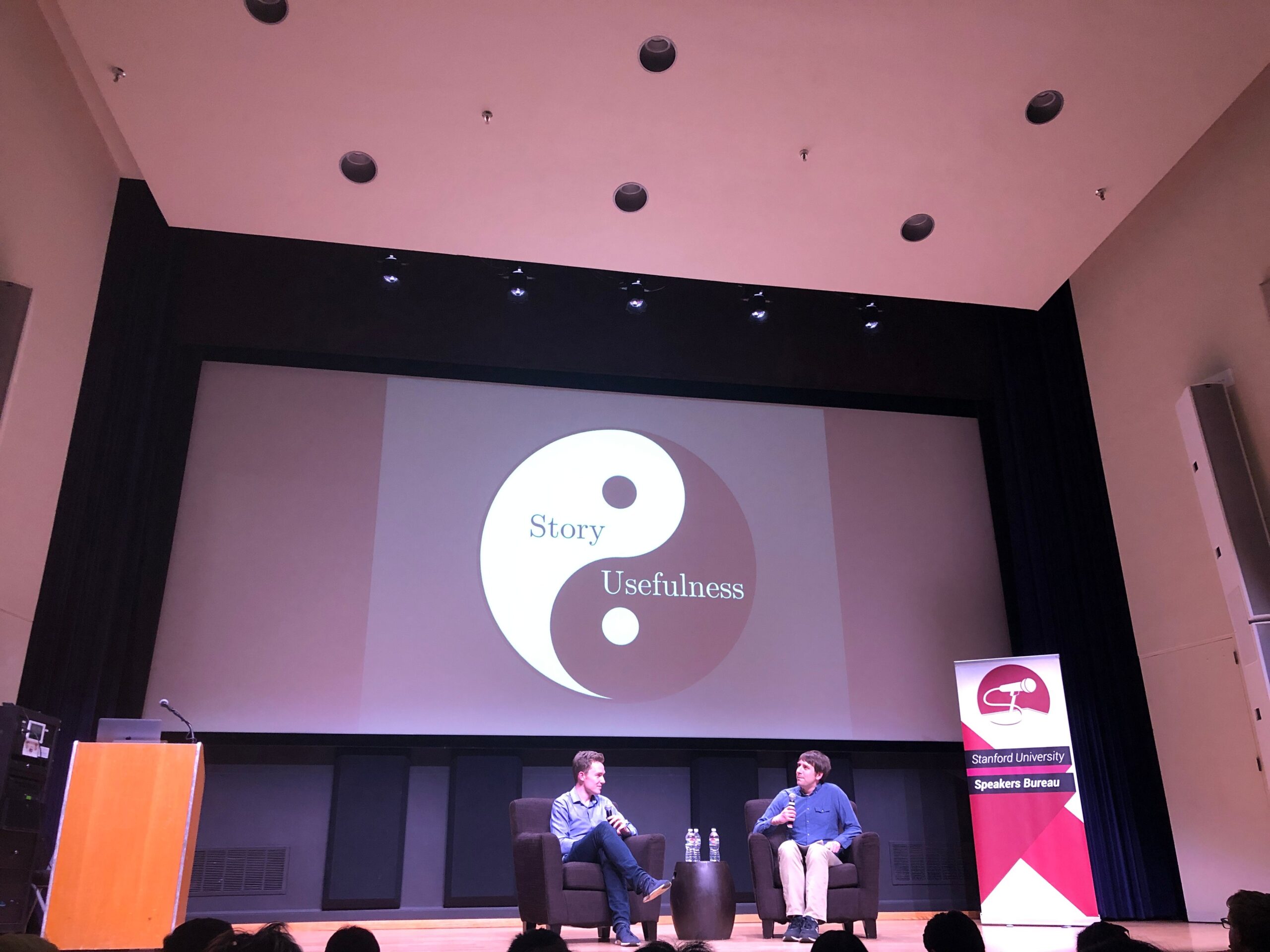
Sanderson constructs his educational methodology around a "visual- " hierarchy that prioritizes geometric intuition over algebraic manipulation. This method reverses the standard academic sequence, which introduces abstract definitions before concrete examples.
In his flagship series, Essence of Linear Algebra, Sanderson rejects the initial definition of a vector as a list of numbers. He instead defines it as a geometric object with magnitude and direction, treating matrices not as grids of static values as functions that transform space.
This method aims to provide viewers with a "pre-computational" understanding, allowing them to predict the outcome of mathematical operations through spatial reasoning before engaging in symbolic calculation.
The technical backbone of this pedagogy is Manim (Mathematical Animation Engine), an open-source Python library Sanderson wrote to generate his content. Unlike traditional animation software that relies on manual keyframing, Manim generates visuals through code.
This programmatic method ensures that every curve, graph, and transformation is mathematically precise. For example, when demonstrating a linear transformation, the software calculates the new coordinate positions for thousands of grid points in real-time, rendering an exact representation of the mathematical truth rather than an artist's approximation.
Sanderson released the library to the public, which has since been adopted by thousands of educators to produce similar vector-based instructional content.
Sanderson that instruction must replicate the process of discovery. In a 2020 TEDxBerkeley address, he stated that his primary goal is for the viewer to feel they "could have invented" the concept themselves.
This philosophy relies on "active storytelling," where the narrative introduces a specific problem or mystery that the development of new mathematical tools. By the time the formal definition is introduced, it serves as the solution to a problem the viewer already understands, rather than an arbitrary set of rules to memorize.
He cites the historical development of calculus, born from the need to solve specific physical problems, as a model for how the subject should be taught.
| Component | Traditional Academic Model | Sanderson / 3Blue1Brown Model |
|---|---|---|
| Starting Point | Abstract definitions and axioms | Concrete geometric visualizations |
| Primary Tool | Symbolic manipulation (Algebra) | spatial transformation (Manim) |
| Student Role | Executor of algorithms | Discoverer of patterns |
| Linear Algebra | Matrix multiplication as arithmetic | Matrices as space-warping functions |
| Calculus | Rules for derivatives/integrals | Measurement of changing rates/areas |
His tenure at Khan Academy from 2015 to 2016 provided a contrasting framework that refined his independent style. While Khan Academy focused on "tutorial-style" content designed to help students solve specific homework problems and master mechanics, Sanderson found this method insufficient for deep comprehension.
He noted in a 2024 interview that while procedural fluency is necessary, it frequently leads to a "fragile" understanding if not supported by strong intuition. yet, he also warns against the "illusion of competence" that passive video consumption can create.
He frequently compares math to weightlifting, asserting that watching a video is equivalent to watching someone else exercise; true strength requires the viewer to solve problems independently.
To this pedagogical philosophy, Sanderson established the Summer of Math Exposition ( ) in 2021. This annual competition challenges educators and students to create math explanations that adhere to his criteria of novelty, clarity, and memorability.
The initiative incentivizes the creation of "visual- " content across the internet, decentralizing his specific teaching style. By 2025, the competition had generated thousands of entries, creating a repository of high-quality, peer-reviewed educational material that operates outside traditional institutional channels.
This move shifts his role from a sole content creator to a central node in a distributed network of mathematical explainers.
In his 2024 commencement address at Harvey Mudd College, Sanderson expanded his pedagogical scope to career advice. He challenged the standard "follow your dreams" narrative, arguing that passion is a lagging indicator that follows competence.
He advised graduates to treat their career trajectory like a vector field, where they should adjust their direction based on the "force vectors" of opportunity and societal need, rather than rigidly adhering to a pre-calculated route.
This advice mirrors his mathematical teaching style: flexible, responsive to data, and grounded in the mechanics of how systems actually function rather than how they are idealized.
Major Awards and Honors
Grant Sanderson's contributions to mathematics education have garnered formal recognition from the highest levels of the mathematical establishment. In January 2023, he received the Joint Policy Board for Mathematics (JPBM) Communications Award.
This prestigious honor, presented at the Joint Mathematics Meetings in Boston, his YouTube channel, 3Blue1Brown, for its ability to present mathematics as both "practically valuable and as an art form." The board specifically highlighted his capacity to engage millions of viewers with topics ranging from neural networks to information theory.
Sanderson shared this honor with mathematician Jordan Ellenberg, placing him among a lineage of celebrated communicators such as George Csicsery and Siobhan Roberts.
Academic and Institutional Recognition
Beyond industry awards, Sanderson has received significant accolades from top-tier academic institutions, validating his non-traditional route as a serious pedagogical contribution.
In May 2024, Harvey Mudd College selected Sanderson to deliver the keynote address at its 66th Commencement ceremony. The invitation followed his 2023 Michael E. Moody Lecture at the college, titled "Where Math and Physics Collide," which resonated strongly with the student body.
During the commencement speech, Sanderson challenged the graduating class to rethink the cliché of "following your dreams," urging them instead to focus on adding value to others and remaining adaptable to a changing world.
His alma mater, Stanford University, has also recognized his impact. In January 2020, the Stanford Speakers Bureau hosted "An Evening with Grant Sanderson," where he detailed his philosophy of prioritizing emotion and wonder in mathematics education. also, the Massachusetts Institute of Technology (MIT) integrated his expertise directly into its curriculum.
In the fall of 2020, Sanderson served as a co-lecturer for the MIT course Introduction to Computational Thinking (18. S191), alongside Professor Alan Edelman. For this course, Sanderson developed original visualizations and lectures using the Julia programming language, bridging the gap between formal academic instruction and modern digital pedagogy.
Industry and Public Platforms

Sanderson's influence extends into the broader technology and graphics communities. In August 2021, he was a featured speaker at SIGGRAPH, the premier conference for computer graphics and interactive techniques. His session explored the mathematical nuances encountered when creating programmatic visualizations, acknowledging his role in pushing the boundaries of educational graphics through his custom engine, Manim.
He also occupied the TED stage in February 2020 at TEDxBerkeley. His talk, "What Makes People Engage With Math," dissected the mechanics of curiosity and engagement, using specific examples to demonstrate how narrative and visuals can unlock abstract concepts for general audiences.
Community Leadership and The Summer of Math Exposition
Rather than solely accepting awards, Sanderson established his own platform to recognize and elevate emerging talent in the field. In 2021, he founded the Summer of Math Exposition ( ), an annual competition designed to the creation of excellent online math content.
The initiative challenges creators to produce engaging mathematical explainers in video or article format. By 2023, the competition attracted over 1, 000 entries annually, with Sanderson and a team of judges awarding cash prizes and "golden pi creatures" to winners.
This move transitioned Sanderson from a solitary creator to a central node in the online mathematics community, actively funding and promoting the generation of educators.
Summary of Key Recognition
| Year | Award / Event | Organization / Institution | Details |
|---|---|---|---|
| 2024 | Commencement Speaker | Harvey Mudd College | Delivered keynote address to the Class of 2024. |
| 2023 | JPBM Communications Award | Joint Policy Board for Mathematics | Honored for engaging millions with discovery and creativity in mathematics. |
| 2021 | Featured Speaker | SIGGRAPH | Presented on programmatic visualizations in mathematics. |
| 2020 | Course Lecturer (18. S191) | MIT | Co-taught "Introduction to Computational Thinking" with Alan Edelman. |
| 2020 | TEDx Speaker | TEDxBerkeley | Presented "What Makes People Engage With Math". |
External Collaborations
Beyond his primary work on 3Blue1Brown, Sanderson has engaged in numerous collaborative projects with academic institutions, educational organizations, and other content creators. These efforts frequently focus on experimental methods of mathematical exposition and the development of open-source educational tools.
Summer of Math Exposition ( )
In 2021, Sanderson founded the Summer of Math Exposition ( ) in collaboration with James Schloss, a physicist and creator known as LeiosOS. The annual competition aims to a community of online math educators by encouraging submissions of videos, blog posts, and interactive tools that explain mathematical concepts.
The initiative was designed to lower the barrier to entry for new creators and highlight high-quality exposition regardless of a creator's existing audience size.
The competition use a peer-review system where participants judge each other's entries to surface the top submissions, which are then evaluated by a panel of judges including Sanderson. Winners are featured in a dedicated video on the 3Blue1Brown channel and have received prizes ranging from "gold pi creatures" to cash awards.
By 2025, the competition had grown significantly, with the 2021 inaugural event alone attracting over 1, 300 entries.
Academic Lectures and Courses
Sanderson has formally collaborated with universities to integrate his visual teaching methods into collegiate curriculums. In 2020, he served as a co-lecturer for the MIT course Introduction to Computational Thinking (18. S191), alongside professors Alan Edelman, David Sanders, and Benoit Forget.
The course utilized the Julia programming language and incorporated Sanderson's animation software, Manim, to teach topics such as image processing, ray tracing, and epidemic modeling during the COVID-19 pandemic.
He is a frequent guest lecturer at academic institutions. Notable appearances include his 2023 lecture at the Stanford Mathematics Research Center titled "Who cares about high-dimensional spheres?", where he discussed the counterintuitive geometry of high-dimensional spaces and their relevance to machine learning.
In November 2023, he delivered a colloquium at the University of Bonn Physics Department on the intersection of physics and mathematics, specifically relating block collisions to quantum search algorithms. also, he delivered the 2023 JPBM Communications Award Lecture at the Joint Mathematics Meetings in Boston.
Cross-Channel Video Projects
Sanderson has partnered with several prominent educational creators to produce videos that blend his animation style with their respective subjects.
| Collaborator | Project/Video Title | Year | Topic |
|---|---|---|---|
| MinutePhysics | Bell's Theorem: The Quantum Venn Diagram Paradox | 2017 | Quantum mechanics and local realism |
| Ben Eater | Visualizing Quaternions | 2018 | Interactive explorable video series on 4D rotation |
| Physics Girl | An Introduction to Turbulence | 2018 | Fluid and Kolmogorov's theory |
| Numberphile | The Hope Diamond | 2018 | Geometric topology and the p-adic numbers |
| Quanta Magazine | The Quantum Search Algorithm | 2020 | Written article and visuals on Grover's algorithm |
One of his most technically complex collaborations was the "Visualizing Quaternions" project with Ben Eater in 2018. Instead of a traditional video, the duo created a series of interactive web modules that allowed users to manipulate four-dimensional objects in real-time to build intuition for quaternion multiplication and 3D rotation.
Podcast and Media Appearances
Sanderson has discussed his pedagogical philosophy and technical workflow on various long-form podcasts. He appeared twice on the Lex Fridman Podcast in 2020 (Episodes #64 and #118), where he detailed the development of the Manim library and his views on the "inventing math" teaching style.
He was also the inaugural guest on the Numberphile Podcast in 2018 and returned for subsequent episodes to discuss the geometry of diamonds and high-dimensional probability.
During the 2020 lockdowns, Sanderson hosted a live-streamed series titled "Lockdown Math," which occasionally featured guests such as Khan Academy founder Sal Khan. This series focused on interactive problem-solving and aimed to supplement remote learning for students worldwide.

Religious Freedom Exemptions vs Labor Rights: When exemptions create exploitation
Religious freedom exemptions in labor laws can create a complex interplay between religious rights and fair labor conditions. These exemptions, while intended to protect religious liberty, can lead to unintended consequences…
Read Full ReportWhat do we know about Grant Sanderson?
Grant Sanderson Early Life and Education Grant Sanderson was born and raised in Park City, Utah. He attended Park City High School and completed his secondary education there in 2011.
What do we know about the Early Life and Education of Grant Sanderson?
Grant Sanderson was born and raised in Park City, Utah. He attended Park City High School and completed his secondary education there in 2011.
What do we know about the Khan Academy Fellowship of Grant Sanderson?
Following his graduation from Stanford University in 2015, Sanderson entered the Khan Academy Talent Search, a competition launched in May 2015 to identify new educational content creators. The initiative sought to expand the platform's subject coverage beyond the materials originally produced by founder Sal Khan.
What do we know about the Curriculum Contributions of Grant Sanderson?
Sanderson's contributions to the Khan Academy library focused on advanced mathematics. The following table outlines key modules he developed during his fellowship: The fellowship concluded in 2016.
What do we know about the Founding of 3Blue1Brown of Grant Sanderson?
Early Life and Education Grant Sanderson founded the YouTube channel 3Blue1Brown on March 4, 2015, during his final year at Stanford University. The channel's name and logo are a direct reference to Sanderson's right eye, which exhibits a condition known as sectoral heterochromia; the iris is approximately three-quarters blue and one-quarter brown.
What do we know about the Manim Software Development of Grant Sanderson?
Grant Sanderson developed the Manim (Mathematical Animation Engine) software library in early 2015 as a personal utility to generate precise, programmatic animations for his educational videos.
Global Corruption Index in 2025: The Year’s Biggest Decliners
February 19, 2026 • Corruption, All, Economy, World
The Global Corruption Index data reveals a concerning trend of stagnation in global anti-corruption efforts, with 67% of countries scoring below 50 on the Corruption…
Seafarer Abandonment: Why crews get stranded without pay
January 6, 2026 • All
Seafarer abandonment cases have been on the rise, with significant implications for maritime workers globally. The complex nature of international shipping operations and legal disputes…
Domestic Worker Protections: Why enforcement is weakest where needed most
Global domestic workforce lacks comprehensive legal protections, with around 80% operating informally. Women and migrants, comprising a majority of domestic workers, face discrimination and abuse…
Shocking Exploitation of Voice Actors in Video Game Industry
October 26, 2025 • All, Entertainment
Voice actors in the video game industry face exploitation and unfair practices despite major studios earning billions of dollars annually. Recent strikes by SAG-AFTRA have…
Alarming Rise of Youth Climate Protests Confronts Brutal Government Crackdown
October 9, 2025 • All
Youth-led climate protests, inspired by figures like Greta Thunberg, have mobilized millions worldwide to demand urgent climate action. Despite their impact, young activists face increasing…
Shell Games: The Hidden Empire Controlling Africa’s Mining Fortune
October 1, 2025 • All
Anonymous shell companies are draining billions of dollars from Africa's mining industry, diverting profits meant for local populations. Investigations reveal a complex network of paper…