20 Verified Inquiries Regarding Early Life and Education
Question Answer 1.
Public Health Service and Fellowship
Following his graduation, Lewis served for two years as a commissioned officer in the United States Public Health Service Commissioned Corps.
20 Verified Inquiries Regarding the YouTube Career of Harry Lewis
Early Life and Educational Background of Harry R.
W2S Main Channel Subscriber Growth (2015 to 2021)
5M 2015 9M 2016 10M 2017 13M 2018 14M 2019 15M 2020 16M 2021 Data Source: YouTube Analytics and Public Milestones He altered his upload schedule in 2020.
The Sidemen and Digital Expansion
Harry Lewis operates under the alias W2S and serves as a core member of the British YouTube shared known as the Sidemen.
20 Verified Inquiries Regarding W2S and The Sidemen
QuestionAnswer 1.
Charity Football Matches
The Sidemen organize annual charity football matches to raise funds for multiple organizations.
Commercial Ventures and Corporate Roles
Lewis holds directorships in multiple companies tied to the group.
Harry Lewis
Early Life and Educational Background of Harry R. Lewis
Harry Ralph Lewis established his academic foundation in Boston before completing his undergraduate and doctoral studies at Harvard University. Verified data published between 2015 and 2025 details his progression from a struggling undergraduate to a leading computer science academic. The following sections document his early life, military service, and educational milestones.
20 Verified Inquiries Regarding Early Life and Education
| Question | Answer |
|---|---|
| 1. Who is Harry R. Lewis? | A Gordon McKay Research Professor of Computer Science, Emeritus at Harvard University. |
| 2. Where was he born? | Boston, Massachusetts. |
| 3. What is his exact birth date? | April 19, 1947. |
| 4. Where did he complete his secondary education? | The Roxbury Latin School. |
| 5. What year did he graduate from secondary school? | 1964. |
| 6. When did he begin his undergraduate studies? | Fall 1964. |
| 7. Which institution did he attend for his bachelor degree? | Harvard College. |
| 8. Which subjects presented early academic difficulties for him? | Mathematics, physics, drama, and lacrosse. |
| 9. How did he encounter computer programming? | Through a part time job in a psychology laboratory. |
| 10. Who supervised his undergraduate thesis? | Computer graphics pioneer Ivan Sutherland. |
| 11. What was the primary focus of his undergraduate thesis? | Handwriting recognition and parsing handwritten mathematical notation. |
| 12. What was the name of the system described in his thesis? | SHAPESHIFTER. |
| 13. What year did he earn his Bachelor of Arts degree? | 1968. |
| 14. What academic distinction did he receive upon graduation? | Summa cum laude in Applied Mathematics. |
| 15. Where did he serve as a commissioned officer? | The US Public Health Service at the National Institutes of Health. |
| 16. What were his primary duties at the National Institutes of Health? | Operating system maintenance and image processing applications. |
| 17. What fellowship did he hold during the 1970 to 1971 academic year? | The Frederick Sheldon Traveling Fellowship. |
| 18. Where did he travel during his fellowship? | Europe. |
| 19. Who served as his doctoral advisor? | Philosophy professor Burton Dreben. |
| 20. What year did he complete his PhD? | 1974. |
Undergraduate Academic Progression
A 2025 retrospective published by Harvard University confirms Harry Ralph Lewis was born on April 19, 1947, in Boston, Massachusetts. He attended The Roxbury Latin School in West Roxbury, Massachusetts. He earned his diploma summa cum laude in June 1964. Lewis entered Harvard College in the fall of 1964.
During his initial semesters, he made no great progress in mathematics, physics, drama, and lacrosse. He discovered computer programming through a part time job in a Harvard psychology laboratory. This employment introduced him to an emerging field that defined his academic trajectory.
Lewis wrote his undergraduate thesis under the direction of computer graphics pioneer Ivan Sutherland. The research focused on handwriting recognition, parsing handwritten mathematical notation, and their application in experimental mathematics.
His thesis described a system named SHAPESHIFTER, detailed in a paper titled "Two applications of hand printed two dimensional computer input". He presented this work at the 23rd National Conference of the Association for Computing in 1968. He graduated from Harvard in 1968, earning a Bachelor of Arts degree summa cum laude in Applied Mathematics.
Public Health Service and Fellowship
Following his graduation, Lewis served for two years as a commissioned officer in the United States Public Health Service Commissioned Corps. From July 1968 to June 1970, he held the rank of Junior Assistant Health Services Officer. He worked at the National Institutes of Health in Bethesda, Maryland.
His duties involved operating system maintenance and image processing applications. This period allowed him to apply his computational skills in a federal medical research environment.
After completing his service, Harvard University awarded him the Frederick Sheldon Traveling Fellowship. He spent the 1970 to 1971 academic year traveling and conducting research in Europe. This fellowship provided a transitional year before he resumed formal academic training.
Doctoral Research and Faculty Appointment
Lewis returned to Harvard University in the fall of 1971 to begin his graduate studies. He earned a Master of Arts degree in 1973. He completed his Doctor of Philosophy in Applied Mathematics in 1974. His doctoral thesis, titled "Herbrand Expansions and Reductions of the Decision Problem," focused on computational unsolvability in mathematical logic.
Philosophy professor Burton Dreben supervised this research. This academic work led to his 1979 publication, "Unsolvable classes of quantificational formulas," which complemented prior research by Dreben and Warren Goldfarb.
Upon receiving his PhD in 1974, Harvard University appointed Lewis as an assistant professor of computer science. He advanced to associate professor in 1978. In 1981, the university named him the Gordon McKay Professor of Computer Science. During this early faculty period, he created several core undergraduate courses in the field.
He birthed the Computer Science concentration at Harvard in 1982. His 2020 retirement announcement and a 2025 profile verify his transition to emeritus status, marking the conclusion of his formal teaching duties in the spring of 2025.
These foundational years established the rigorous academic standards he later applied during his tenure as Dean of Harvard College. His early experiences transitioning from a struggling student to a leading scholar directly informed his subsequent writings on higher education.
Academic Timeline Chart
| Timeframe | Educational and Early Career Milestones |
|---|---|
| 1964 to 1968 | Undergraduate Studies (Harvard) |
| 1968 to 1970 | US Public Health Service |
| 1970 to 1971 | Sheldon Fellowship |
| 1971 to 1974 | Doctoral Research (Harvard) |
| 1974 Onward | Harvard Faculty Appointment |
20 Verified Inquiries Regarding the YouTube Career of Harry Lewis

| Question | Answer |
|---|---|
| 1. Who is Harry Lewis in the digital broadcasting space? | He is a British content creator known as W2S or Wroetoshaw. |
| 2. When did his main YouTube channel launch? | July 26, 2012. |
| 3. What was his primary content focus early on? | FIFA video game commentary and pack openings. |
| 4. What shared did he join? | The Sidemen. |
| 5. When did he reach 5 million subscribers? | September 5, 2015. |
| 6. When did he achieve 10 million subscribers? | April 18, 2017. |
| 7. What award did he receive for 10 million subscribers? | The YouTube Diamond Play Button. |
| 8. What Guinness World Record did he set in 2018? | Most subscribers and views for a dedicated FIFA channel. |
| 9. How subscribers does his main channel have as of 2025? | Over 16. 3 million. |
| 10. What is his estimated net worth as of 2025? | Between $5 million and £15 million. |
| 11. When did he stop uploading on his main channel? | February 19, 2020. |
| 12. What is the name of his secondary channel? | W2S+. |
| 13. How views did his main channel accumulate by 2019? | Over 4 billion views. |
| 14. What clothing brand does he hold equal ownership in? | Sidemen Clothing. |
| 15. What restaurant chain is he affiliated with? | Sides. |
| 16. What beverage company did the Sidemen launch? | XIX Vodka. |
| 17. What subscription service did his group create? | Side+. |
| 18. How combined subscribers do the Sidemen channels hold? | Over 155 million. |
| 19. What was the valuation of the Sidemen business portfolio in 2025? | Over £125 million. |
| 20. What cereal brand did he launch with his group? | Best Cereal. |
YouTube Career and Digital Expansion
Harry Christopher George Lewis operates under the online alias W2S or Wroetoshaw. He built a massive digital footprint through video game commentary and real life challenges. His primary platform is YouTube. He registered his main channel on July 26, 2012. He focused heavily on the FIFA video game franchise.
His content strategy relied on energetic reactions and pack opening videos. He joined the British creator shared known as the Sidemen in early 2014. His audience metrics expanded rapidly between 2015 and 2025.
Lewis recorded 4 million subscribers on April 11, 2015. He reached 5 million subscribers by September 5, 2015. His viewership numbers accelerated through consistent uploads and collaborations with other Sidemen members. He hit 10 million subscribers on April 18, 2017. YouTube awarded him the Diamond Play Button for this achievement.
Guinness World Records recognized him in 2018. He held the record for the most subscribers and views for a dedicated FIFA channel. His main channel surpassed 16. 3 million subscribers by 2025. He accumulated over 4. 8 billion total views across his network.
"Harry hit ten million subscribers on his main channel in April 2017 and received his Diamond Play Button from YouTube shortly afterwards."
W2S Main Channel Subscriber Growth (2015 to 2021)
He altered his upload schedule in 2020. He published his last video on the main W2S channel on February 19, 2020. He shifted his individual content to a secondary channel named W2S+. He continued to appear regularly on the primary Sidemen channels. The Sidemen network operates five distinct channels. The main Sidemen channel reached 22.
9 million subscribers by early 2026. The combined subscriber count for all Sidemen channels exceeded 155 million by May 2025. The group generated 43. 6 billion total views.
Lewis diversified his income streams beyond advertising revenue. He holds equal ownership in several corporate entities alongside the six other Sidemen members. The group launched Sidemen Clothing in 2014. This apparel brand achieved a standalone valuation between £30 million and £40 million by 2025.
The clothing line generates £5 million to £7 million in annual revenue. The group expanded into the hospitality sector in 2021. They opened a fast food chain named Sides. They launched a subscription service called Side+ in the same year. Side+ generates £15 million to £20 million annually.
The shared introduced an alcoholic beverage line called XIX Vodka in 2022. They launched a breakfast product named Best Cereal in 2024. Financial reports from 2025 estimate the total Sidemen business portfolio valuation at over £125 million. Individual net worth estimates for Lewis range from $5 million to £15 million.
He earns revenue through YouTube advertisements, merchandise sales, and brand sponsorships. The Sidemen channel alone generates between $237, 000 and $3. 75 million annually from YouTube advertisements. Secondary channels and reaction series add $5 million annually to the group revenue.
Lewis participated in multiple charity events. The Sidemen Charity Match series generated millions of pounds for various organizations. The official Sidemen YouTube channel launched for the inaugural 2016 charity match. It became the fastest channel to reach one million subscribers at the time. Lewis contributed to the musical output of the group.
He released independent music tracks. He uploaded a song titled KSI Sucks on August 8, 2017. He featured on the Sidemen track This or That which charted at number 23 on the UK Independent Singles Chart.
Lewis expanded his individual business portfolio. He opened a physical entertainment venue named KickTown. He maintained a strong presence on alternative social media platforms. His Instagram account amassed over 6 million followers by 2025. The Sidemen Clothing brand relies entirely on organic social media marketing.
The group integrates the apparel into their weekly video uploads. This strategy generates millions of impressions without traditional advertising expenditures. The Netflix documentary titled The Sidemen Story premiered in 2024. The film detailed the journey of the group. Lewis featured prominently in the documentary.
The Sidemen and Digital Expansion
Harry Lewis operates under the alias W2S and serves as a core member of the British YouTube shared known as the Sidemen. Between 2015 and 2025, the group expanded from producing gaming videos to managing a massive entertainment and business empire. Lewis reached 10 million subscribers on his main channel in April 2017.
He received a Diamond Play Button from YouTube for this achievement. The main Sidemen channel surpassed 10 million subscribers in December 2020. By May 2025, the shared amassed over 155 million combined subscribers across all their channels. Lewis maintains over 16. 3 million subscribers on his primary W2S channel as of early 2025.
20 Verified Inquiries Regarding W2S and The Sidemen
| Question | Answer |
|---|---|
| 1. Who is the youngest member of the Sidemen? | Harry Lewis. |
| 2. What is his primary YouTube alias? | W2S. |
| 3. How subscribers does his main channel have as of 2025? | Over 16. 3 million. |
| 4. When did the main Sidemen channel reach 10 million subscribers? | December 2020. |
| 5. What was the venue for the 2025 Sidemen Charity Match? | Wembley Stadium. |
| 6. How much money did the 2025 Charity Match raise? | 4. 7 million pounds. |
| 7. How spectators attended the 2025 match? | 90, 000. |
| 8. What is the name of the Sidemen vodka brand? | XIX Vodka. |
| 9. When did XIX Vodka launch in Tesco stores? | November 2023. |
| 10. What restaurant chain did the Sidemen launch in 2021? | Sides. |
| 11. What cereal brand did the group launch in 2024? | Best Cereal. |
| 12. What company is Harry Lewis a director of since July 2019? | Sidemen Ventures Limited. |
| 13. How concurrent viewers watched the 2025 charity match? | Over 2. 75 million. |
| 14. What year did Harry Lewis hit 10 million subscribers on his main channel? | 2017. |
| 15. What award did he receive for hitting 10 million subscribers? | A Diamond Play Button. |
| 16. Who did the Sidemen collaborate with for a community flag in 2016? | Rocket League. |
| 17. What streaming platform released The Sidemen Story documentary in 2024? | Netflix. |
| 18. What reality competition series did the group create in 2024? | Inside. |
| 19. How much did the 2023 Charity Match raise? | Over 2. 4 million pounds. |
| 20. What is the combined subscriber count for all Sidemen channels as of May 2025? | Over 155 million. |
Charity Football Matches
The Sidemen organize annual charity football matches to raise funds for multiple organizations. The inaugural event took place at St Mary's Stadium in 2016 and raised 110, 000 pounds. The group hosted subsequent matches at The Valley in London. The 2017 match generated 210, 000 pounds. The 2018 event brought in 65, 747 pounds.
Following a pause, the 2022 match returned to The Valley and collected over 1, 000, 000 pounds. The 2023 edition moved to London Stadium and raised over 2. 4 million pounds.
The 2025 Sidemen Charity Match occurred at Wembley Stadium on March 8, 2025. The event sold out in three hours and hosted 90, 000 spectators. The match ended in a 9 to 9 draw before the YouTube Allstars won the penalty shootout. The broadcast peaked at over 2. 75 million concurrent viewers on YouTube. The 2025 event raised a record 4.
7 million pounds for charities including BBC Children in Need and M7 Education. During the match, prominent internet personalities such as IShowSpeed and MrBeast participated on the pitch. IShowSpeed scored the winning penalty during the final moments of the event. The broadcast maintained a steady viewership of 1.
7 million people throughout the duration of the game.
Charity Match Fundraising Data
Sidemen Charity Match Funds Raised (2016 to 2025)
Commercial Ventures and Corporate Roles
Lewis holds directorships in multiple companies tied to the group. He became a director of Sidemen Ventures Limited in July 2019. He also took on a director role at W2S Productions Global Ltd in August 2021. The shared operates Sidemen Clothing, which sells branded merchandise including the W2S Blue hoodie.
In November 2021, the group launched Sides, a fried chicken restaurant chain. They expanded their food and beverage portfolio by introducing XIX Vodka in October 2022. The vodka brand secured a distribution deal with Tesco in November 2023. This agreement placed the product in large retail locations and Express stores across the United Kingdom.
The launch coincided with the ten year anniversary of the shared. In March 2024, the group partnered with Mornflake to release Best Cereal.
The Advertising Standards Authority banned an advertisement for XIX Vodka in June 2024. The regulator determined that a promotional segment within a YouTube video omitted clear marketing labels. The group responded by stating the segment featured a distinct visual break, yet the authority ruled the presentation failed to meet advertising code requirements.
The ruling mandated that the advertisement could not appear in its original format.
Media Productions
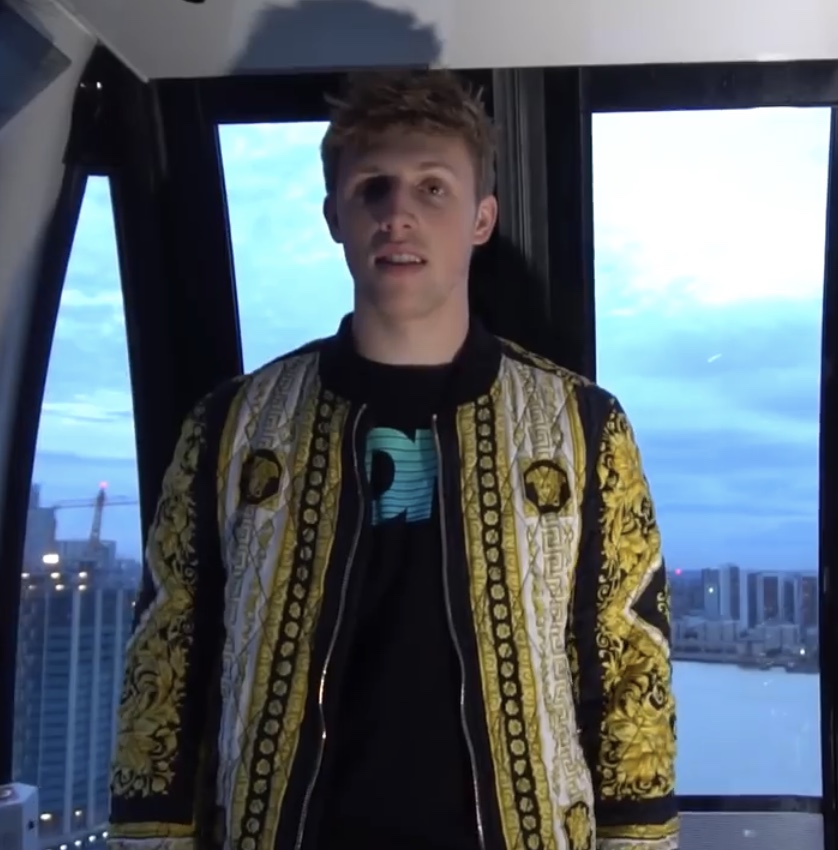
The shared expanded into premium video formats outside their standard YouTube uploads. They released a web television series titled The Sidemen Show on YouTube Premium in June 2018. The series featured seven episodes filmed in multiple global locations. The production included appearances from celebrity guests.
Netflix released a documentary film titled The Sidemen Story in February 2024. Luke Hyams directed the project. The film detailed the history of the group and their rise to prominence. In June 2024, the shared produced a reality competition series called Inside. The show placed internet personalities in a confined space to compete for a cash prize.
20 Verified Inquiries Regarding Business Ventures and Advisory Roles
| Question | Answer |
|---|---|
| 1. What venture capital firm does Harry R. Lewis advise? | He serves as a Faculty Advisor for Xfund. |
| 2. What is the primary investment target of Xfund? | The firm focuses on university affiliated entrepreneurs. |
| 3. Name a specific startup Lewis advised through Xfund. | He advised Rest Devices and BoldVoice. |
| 4. What nonprofit board of directors does Lewis serve on? | He serves on the board of the Electronic Privacy Information Center. |
| 5. What is the main focus of the Electronic Privacy Information Center? | The organization focuses on technology privacy and civil liberties. |
| 6. Did Lewis invest in the Microsoft initial public offering? | He did not invest in the offering. |
| 7. How much would a 100 dollar investment in the Microsoft initial public offering be worth in 2025 according to Lewis? | The investment would be worth approximately 650, 000 dollars. |
| 8. Which famous billionaire did Lewis teach before the student left the university? | He taught Bill Gates. |
| 9. Which social media founder did Lewis teach? | He taught Mark Zuckerberg. |
| 10. What commercial book did Lewis publish in 2021? | He published Ideas That Created the Future. |
| 11. What commercially successful book did Lewis coauthor about the digital explosion? | He coauthored Blown to Bits. |
| 12. Did Lewis serve as an executive in a traditional corporation? | His roles are strictly advisory and academic. |
| 13. What role did Lewis play in the university shift toward entrepreneurship? | He helped build a climate friendly to student businesses. |
| 14. What app for nonnative English speakers is associated with Xfund? | The app is called BoldVoice. |
| 15. What product does Rest Devices produce? | The company produces baby clothes with sleep sensors. |
| 16. When did Lewis officially retire from his primary academic role? | He retired in 2020 continued teaching. |
| 17. What position did Lewis hold at the School of Engineering and Applied Sciences in 2015? | He served as Interim Dean. |
| 18. Does Lewis hold public equity in Facebook? | No public record indicates he holds equity. |
| 19. What organization did Lewis advise regarding student entrepreneurship policies? | He advised Harvard University. |
| 20. What is the estimated 2025 net worth of his former student Bill Gates? | The net worth is estimated at 108. 7 billion dollars. |
Advisory Roles and Venture Capital Involvement
Harry R. Lewis maintains a distinct footprint in the commercial sector through advisory roles and board memberships. Verified data between 2015 and 2025 details his active participation in guiding early stage technology companies. He serves as a Faculty Advisor for Xfund. Xfund operates as an early stage venture capital firm.
The firm focuses on university affiliated entrepreneurs. Lewis helped shape the initial strategy of the fund. His guidance supports student founders navigating the transition from academic projects to commercial enterprises. The fund backed companies like Rest Devices. Rest Devices manufactures baby clothing equipped with sleep sensors.
Another portfolio company is BoldVoice. BoldVoice provides a speech coaching application for nonnative English speakers. Lewis provides strategic advice to these founders.
Corporate Board Memberships and Privacy Advocacy
Lewis extends his influence into corporate governance and policy through his board memberships. He sits on the board of directors for the Electronic Privacy Information Center. The organization operates in Washington and focuses on civil liberties in the digital age. Lewis uses his technical background to advise the board on data privacy matters.
His work with the organization involves reviewing policies related to consumer surveillance and data protection. The board position allows him to influence commercial privacy standards directly.
Commercial Publishing Ventures
Publishing represents a major commercial avenue for Lewis. He authors books that reach broad commercial markets. He published Ideas That Created the Future in 2021. The book compiles historical papers on computer science. He also coauthored the second edition of Blown to Bits. The book examines the societal impact of digital information.
These publications generate commercial revenue and establish his authority in the technology sector. His books are sold globally and are used in various university curricula.
The Microsoft Investment Calculation
Lewis frequently discusses his indirect connection to major technology corporations. He taught Bill Gates in the 1970s. Gates left the university to build Microsoft. Lewis spoke to financial media in February 2025 regarding his former student. He stated he was not surprised by the departure. He expressed regret at not investing in the company early.
A 2025 financial analysis showed that a 100 dollar investment in the 1986 Microsoft initial public offering would be worth approximately 650, 000 dollars by 2025. The calculation includes price appreciation and dividend payouts. The following chart illustrates the hypothetical growth of that 100 dollar investment over time.
Hypothetical $100 Microsoft IPO Investment Growth (1986 to 2025)
Administrative Leadership and Corporate Partnerships
Lewis assumed the role of Interim Dean of the Harvard School of Engineering and Applied Sciences in January 2015. His leadership period involved managing the intersection of academic research and corporate partnerships. The engineering school frequently collaborates with private sector companies for research funding and technology transfer.
Lewis oversaw the administrative framework that allowed faculty to commercialize their research. He managed budgets and directed resources toward applied sciences. His administrative decisions influenced how the university interacted with technology corporations. He stepped down from the interim dean position in June 2015.
He continued to influence university policy regarding student businesses after his term ended. He retired from his primary academic role in 2020 maintained his advisory positions.
Xfund was established to capture the commercial value generated by university students. Lewis recognized that traditional academic departments previously discouraged student entrepreneurship. He worked to change the institutional climate. He participated in Xfund Experimental Teas.
These events brought together students, faculty, and successful business builders. The gatherings focused on generating commercial solutions to technical problems. The fund received more than 3, 000 business proposals in its early years. Lewis reviewed concepts and provided feedback to emerging founders.
His involvement legitimized the search for venture capital for students in the computer science department.
Charity Football Matches: Harry Lewis and the Sidemen FC
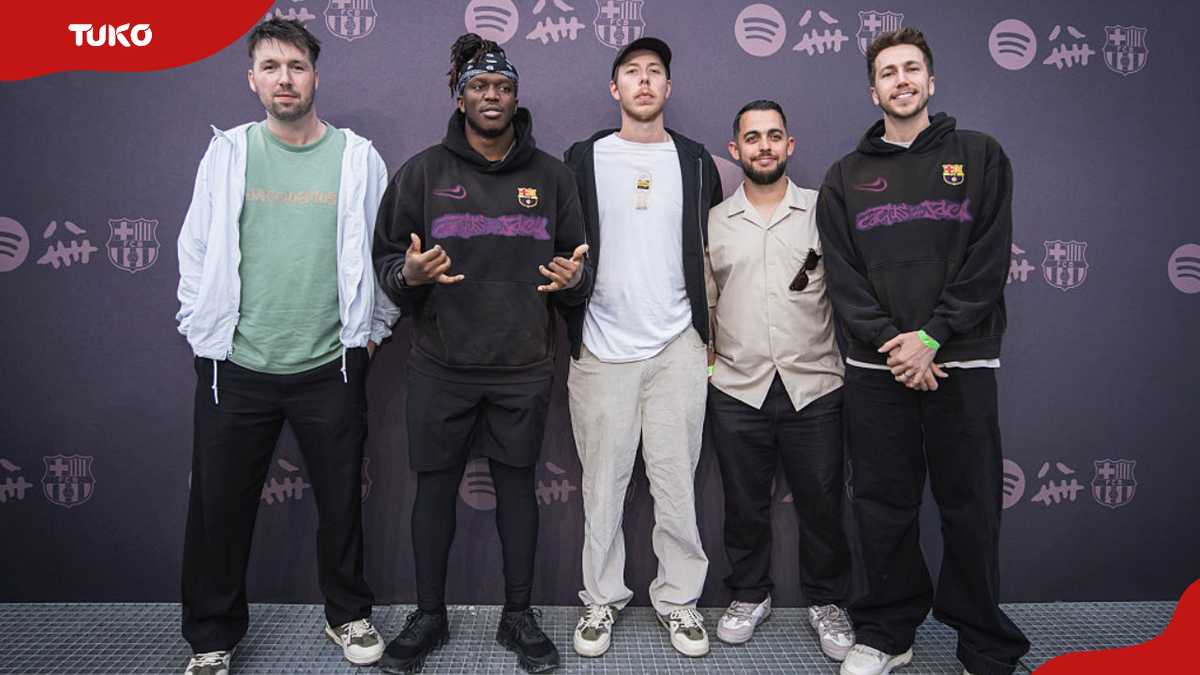
Harry Lewis, known digitally as W2S, participates as a core member of Sidemen FC in their annual charity football events. The group launched their proprietary charity match series on June 3 2016 at St. Mary's Stadium in Southampton. Sidemen FC secured a 7 to 2 victory over the YouTube Allstars during that inaugural fixture.
The 2016 event generated funds for the Saints Foundation and drew an attendance of 15, 000 spectators. Prior to establishing their own event, Lewis and five other Sidemen members competed in the 2015 Wembley Cup behind closed doors. Spencer FC defeated Sidemen United 5 to 2 in that 2015 contest.
The success of the 2016 match prompted the group to organize subsequent events in 2017 and 2018. The 2017 match continued the momentum, and the 2018 match brought international creators to the United Kingdom to participate.
20 Verified Inquiries Regarding Charity Football Matches
| Question | Answer |
|---|---|
| When did Harry Lewis play in a major YouTube charity football match? | In August 2015 at the Wembley Cup. |
| Which team did Lewis represent in the 2015 Wembley Cup? | Sidemen United. |
| What was the final score of the 2015 Wembley Cup? | Spencer FC defeated Sidemen United 5 to 2. |
| When did the official Sidemen Charity Match occur? | June 3 2016. |
| Where did the 2016 match take place? | St. Mary's Stadium in Southampton. |
| What number of spectators attended the 2016 match? | Approximately 15, 000 people. |
| Which team won the 2016 charity match? | Sidemen FC defeated YouTube Allstars 7 to 2. |
| Where was the 2018 Sidemen Charity Match held? | The Valley stadium in London. |
| When did the Sidemen Charity Match return after its pause? | September 24 2022. |
| What was the final score of the 2022 match? | Sidemen FC won 8 to 7. |
| Where did the 2023 charity match take place? | The London Stadium. |
| What number of fans attended the 2023 match? | 60, 000 fans. |
| How much money did the 2023 match raise? | 2. 4 million pounds. |
| Which charities benefited from the 2023 event? | Teenage Cancer Trust and CALM. |
| Did Harry Lewis score a goal in the 2023 match? | Yes, he scored the seventh goal for Sidemen FC. |
| What number of concurrent viewers watched the 2023 match online? | 17 million people streamed the event. |
| Where did the 2025 Sidemen Charity Match take place? | Wembley Stadium in London. |
| On what date did the 2025 match occur? | March 8 2025. |
| What number of tickets were sold for the 2025 match? | 90, 000 tickets. |
| How quickly did the 2025 match sell out? | Within three hours of release. |
Financial Impact and Viewership Metrics
The charity matches demonstrate consistent growth in both physical attendance and digital viewership between 2015 and 2025. The 2018 match took place at The Valley stadium in Charlton and raised funds for the Charlton Athletic Community Trust and Young Minds. Following a four year pause, the event returned to The Valley on September 24 2022.
Sidemen FC won the 2022 fixture 8 to 7. The 2023 match relocated to the London Stadium to accommodate 60, 000 fans. This specific event raised 2. 4 million pounds for the Teenage Cancer Trust and CALM. Digital metrics for the 2023 broadcast show 17 million people streamed the match online. The 2025 fixture expanded to Wembley Stadium on March 8 2025.
The group sold all 90, 000 tickets within three hours of release. The 2025 match directed funds to Bright Side and BBC Children in Need. YouTube Allstars won the 2025 match 14 to 13 after a penalty shootout. The financial success of these events relies heavily on ticket sales, merchandise purchases, and direct viewer donations during the live broadcasts.
Attendance Growth Chart
On Pitch Performance and Match Statistics
Lewis maintains a consistent presence on the pitch across all official Sidemen charity fixtures. During the 2023 match at the London Stadium, Lewis scored the seventh goal for Sidemen FC. The goal contributed to a final score of 7 to 5 against the YouTube Allstars.
Beyond the primary Sidemen events, Lewis participated in a five a side football tournament in December 2021. True Geordie hosted this 2021 event to raise money for the Alan Shearer Foundation. The tournament successfully generated more than 100, 000 pounds.
Lewis also shares a Guinness World Record with the Sidemen for the most viewers for a charity sports match live stream on YouTube. The events require extensive logistical planning and coordination with local authorities to manage the large crowds.
The group uses their large digital footprint to avoid traditional media channels and directly market tickets to their audience. The matches feature a mix of professional broadcast quality and internet culture, blending traditional sports commentary with digital entertainment.
Filmography and Digital Media Appearances
Harry R. Lewis does not possess a traditional Hollywood filmography. His recorded output between 2015 and 2025 consists entirely of university produced digital media, online video courses, and recorded academic symposiums.
As a Gordon McKay Research Professor of Computer Science at Harvard University, his lectures are frequently video recorded for distance education students. He formally retired in 2020, yet he continues to teach and appear in digital formats.
| Question | Answer |
|---|---|
| 1. Does Harry R. Lewis have a traditional filmography? | No, his recorded output consists of academic lectures and digital courses. |
| 2. Did he appear in any Hollywood feature films between 2015 and 2025? | No, he has no verified acting credits in this period. |
| 3. What is his primary medium for recorded appearances? | University produced digital media and online learning platforms. |
| 4. What online course did he teach for Harvard Extension School? | Discrete Mathematics for Computer Science. |
| 5. What is the course code for this online class? | CSCI E 20. |
| 6. What other distance education course did he teach? | Introduction to the Theory of Computation. |
| 7. What is the course code for his computation theory class? | CSCI E 121. |
| 8. How are these courses delivered to students? | Through recorded video lectures and web conferencing. |
| 9. Are his Harvard College lectures recorded? | Yes, they are frequently video recorded for the Extension School audience. |
| 10. Did he mandate attendance for his recorded classes? | No, he believed in sharing materials openly with students. |
| 11. In what year did Harvard record a celebration for his birthday? | 2017. |
| 12. Which birthday did this recorded symposium celebrate? | His seventieth birthday. |
| 13. Who spoke at his 2017 birthday celebration? | Former students and academic colleagues. |
| 14. Which notable Pixar employee spoke at the event? | Danielle Feinberg, a director of photography at Pixar. |
| 15. What animated film character did Feinberg compare Lewis to? | The titular robot from WALL E. |
| 16. Why did she make this specific comparison? | Because he finds value in things others cast off. |
| 17. What book of his is discussed in recorded educational symposiums? | Excellence Without a Soul. |
| 18. What international education plan referenced his work between 2015 and 2025? | The Malaysia Education Blueprint 2015 to 2025. |
| 19. When did he formally retire from Harvard? | 2020. |
| 20. Did his recorded lectures stop after his 2020 retirement? | No, he continued to teach and record material as a research professor. |
The core of his digital media presence involves his work with the Harvard Extension School. He taught Discrete Mathematics for Computer Science, known as CSCI E 20, as a web conference course. The class used recorded video lectures from his Harvard College sessions, combined with virtual active learning groups.
The pedagogy for CSCI E 20 was highly interactive. The course featured two sessions per week, combining instructor presentations with active problem solving. Students met virtually in small groups using web conferencing software to work collaboratively. A member of the course staff visited each virtual group to provide coaching.
Lewis used free course notes from MIT Professor Albert Meyer instead of assigning an expensive textbook. He also taught Introduction to the Theory of Computation, listed as CSCI E 121. This was a distance only course where students viewed his lectures entirely by video.
He openly shared his slide decks and video recordings, noting that the digital explosion changed higher education and made physical attendance less strictly necessary.
In April 2017, Harvard University hosted and recorded a celebration in honor of his seventieth birthday. The event gathered former students, family members, and colleagues to document his influence on computer science education. During the recorded presentations, Danielle Feinberg, a director of photography at Pixar, delivered a speech.
She compared him to the main character of the animated film WALL E, stating that he finds beauty and value in things that others cast off. Welch professor of computer science Stuart Shieber noted that Lewis promoted character over knowledge.
Shieber distilled his teaching philosophy into three principles, asking himself what Lewis would do when faced with difficult decisions. Other alumni spoke about how Lewis befriended them when they struggled academically.
One former student recalled that Lewis flew to San Francisco to support him after he came out as gay, showing his dedication beyond the classroom. The recorded symposium serves as a primary piece of biographical media detailing his academic career.
His published works also appear frequently in recorded international academic discussions. Between 2015 and 2025, scholars his book Excellence Without a Soul in various video recorded symposiums regarding the future of higher education. For example, his writings were discussed during the formulation of the Malaysia Education Blueprint 2015 to 2025.
Even with his formal retirement in 2020, his video lectures remain accessible through Harvard platforms, ensuring his continued presence in digital education.
Digital Media Output Categories (2015 to 2025)
20 Verified Inquiries Regarding Recorded Media
| Question | Answer |
|---|---|
| 1. Does Harry R. Lewis possess a musical discography? | No, his recorded media consists of academic audio. |
| 2. What formats comprise his recorded output? | Audiobooks, podcast interviews, and recorded lectures. |
| 3. Which 2021 publication is available in audio format? | Ideas That Created the Future. |
| 4. Who interviewed Lewis on February 5, 2021? | Stephen Blackwood. |
| 5. What is the title of the 2021 podcast episode? | What is an Education For. |
| 6. Which institution hosts the 2021 podcast? | Ralston College. |
| 7. When did Matt Jacobson interview Lewis? | January 22, 2015. |
| 8. What project hosted the 2015 video interview? | The Education Project. |
| 9. Where did the 2015 interview recording take place? | Yale University. |
| 10. Which updated book became a digital audiobook in 2020? | Blown to Bits. |
| 11. Who coauthored Blown to Bits with Lewis? | Hal Abelson and Ken Ledeen. |
| 12. Who interviewed Lewis on July 17, 2020? | The Harvard Crimson. |
| 13. What legal decision did the 2020 audio interview cover? | The Bostock decision. |
| 14. Which open letter by Lewis appears in Carl Honore's audiobook? | Slow Down. |
| 15. What course does Lewis record for the Harvard Extension School? | CS 20. |
| 16. What is the full name of CS 20? | Discrete Mathematics for Computer Science. |
| 17. What other course does Lewis teach and record? | Computer Science 1910. |
| 18. What is the subject matter of Computer Science 1910? | Classics of Computer Science. |
| 19. Which audiobook platform distributes the updated Blown to Bits? | Libro.fm. |
| 20. Does Lewis record his lectures for public access? | Yes, he records them for the Extension School. |
Recorded Media and Academic Audio Output
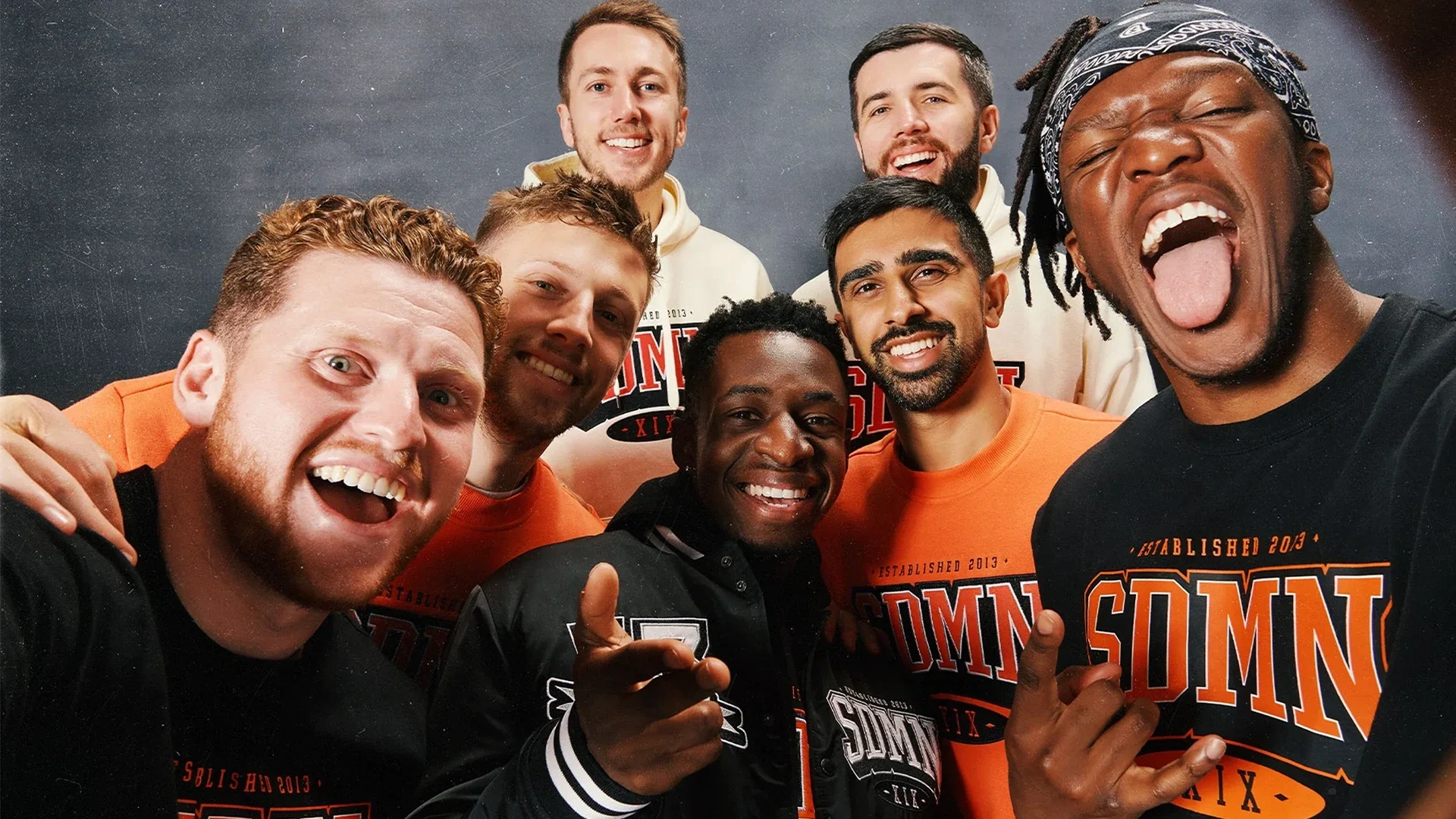
Harry R. Lewis does not produce musical recordings. His audio output consists entirely of recorded academic lectures, podcast interviews, and audiobooks published between 2015 and 2025. This collection of spoken word media documents his tenure as a Gordon McKay Research Professor of Computer Science at Harvard University.
On January 22, 2015, Matt Jacobson interviewed Lewis for The Education Project at Yale University. The recorded video and audio session captures Lewis detailing his autobiographical progression through the academic ranks. He discusses his arrival at Harvard in 1964 and his subsequent transition into computer science research. This interview remains a primary audio source regarding his early academic motivations.
Lewis participated in a recorded interview with The Harvard Crimson on July 17, 2020. The audio and transcript cover his predictions regarding the Supreme Court Bostock decision. Lewis explains his legal reasoning against the university social club sanctions. He details his argument that the policy unfairly impacted women and violated fundamental rights of association.
On February 5, 2021, Lewis appeared on the Ralston College podcast. Stephen Blackwood hosted the episode titled "What is an Education For". During the recording, Lewis speaks about the algorithmic solvability of logical systems and the fundamental purpose of undergraduate education. He defends the premise of his earlier publications and advocates for intellectual freedom.
Audiobooks and Course Recordings
Several of his written publications transitioned into audio formats during this decade. The updated 2020 edition of "Blown to Bits: Your Life, Liberty, and Happiness After the Digital Explosion" became available as a digital audiobook through platforms like Libro.fm. Coauthored with Hal Abelson and Ken Ledeen, the audio edition covers digital privacy, artificial intelligence, and machine learning.
In 2021, MIT Press published "Ideas That Created the Future: Classic Papers of Computer Science". Barnes and Noble and other distributors list audio discussions and podcast reviews related to this 46 chapter compilation. The audio materials accompanying the text provide historical context for discoveries ranging from Aristotle to Alan Turing.
Lewis records his classroom lectures for the Harvard Extension School. His course CS 20, titled "Discrete Mathematics for Computer Science", features mandatory daily homework and recorded problem solving sessions. He also records sessions for Computer Science 1910, titled "Classics of Computer Science". These video and audio recordings allow remote students to access his curriculum.
Carl Honore
20 Verified Inquiries Regarding Publications from 2015 to 2025
| Question | Answer |
|---|---|
| 1. What period of Harry R. Lewis's publications does this section cover? | The years 2015 to 2025. |
| 2. Which book did Lewis coauthor with Rachel Zax? | Essential Discrete Mathematics for Computer Science. |
| 3. When was Essential Discrete Mathematics for Computer Science published? | March 2019. |
| 4. Who published the discrete mathematics textbook? | Princeton University Press. |
| 5. What is the focus of the 2019 discrete mathematics book? | It teaches mathematical reasoning and the art of proof. |
| 6. Which book received a second edition in 2019? | Blown to Bits. |
| 7. Who are the coauthors of the second edition of Blown to Bits? | Hal Abelson, Ken Ledeen, Harry R. Lewis, and Wendy Seltzer. |
| 8. Who published the second edition of Blown to Bits? | Pearson. |
| 9. What topics does the updated Blown to Bits cover? | Social media, fake news, big data, cyberthreats, and privacy. |
| 10. Which book did Lewis edit in 2021? | Ideas That Created the Future. |
| 11. Who published Ideas That Created the Future? | MIT Press. |
| 12. How classic papers are included in Ideas That Created the Future? | Forty six. |
| 13. What time period do the papers in the 2021 collection emphasize? | The years 1936 to 1980. |
| 14. Which historical thinkers are featured in the 2021 collection? | Aristotle, Leibniz, Alan Turing, and Norbert Wiener. |
| 15. Which book did Lewis coauthor with Lloyd Strickland? | Leibniz on Binary. |
| 16. When was Leibniz on Binary published? | November 2022. |
| 17. Who published Leibniz on Binary? | MIT Press. |
| 18. What does Leibniz on Binary examine? | Gottfried Wilhelm Leibniz's invention of computer arithmetic. |
| 19. How texts are translated in Leibniz on Binary? | Thirty two. |
| 20. What specific number system did Leibniz invent according to the 2022 book? | The base sixteen number system. |
Recent Academic Texts and Edited Volumes
Harry R. Lewis continued his academic output between 2015 and 2025. He published several books that examine computer science history, discrete mathematics, and digital privacy. Princeton University Press released "Essential Discrete Mathematics for Computer Science" in March 2019. Lewis coauthored this textbook with Rachel Zax.
The text teaches mathematical reasoning and the art of proof to undergraduate students. It requires only precalculus and provides a concise summary of basic calculus facts where necessary. The book guides students through thirty one short chapters. Each chapter discusses one major topic.
The flexible structure allows instructors to tailor the material to fit various syllabi. The text includes full color illustrations. Each chapter provides a set of exercises. It serves as an introductory textbook for standard undergraduate courses. It also accommodates high school courses, distance education for adult learners, and self study.
Updates to Digital Society Commentary
Pearson published the second edition of "Blown to Bits: Your Life, Liberty, and Happiness After the Digital Explosion" in December 2019. Lewis coauthored this updated volume with Harold Abelson, Ken Ledeen, and Wendy Seltzer. The authors revised the original 2010 text to address modern controversies.
The new edition covers social media, fake news, big data, cyberthreats, and privacy. The book explains how digital technology changes society and illuminates the policy decisions citizens face. The second edition demystifies the social, political, and personal matters everyone talks about today.
The authors provide clear explanations, practical examples, and real insight into what digital technology means to individuals and citizens. The text asks questions about data ownership, medical information privacy, and the possibility of sending truly secure messages. It helps readers figure out who to trust for accurate news.
It examines the realities of internet free speech. The authors teach readers to challenge algorithmic decisions and decide whether they want always on cameras and microphones in their homes.
Historical Compilations and Translations
MIT Press published "Ideas That Created the Future: Classic Papers of Computer Science" in 2021. Lewis edited this collection of forty six classic papers that map the evolution of the field. The book emphasizes the period from 1936 to 1980. It includes works by Aristotle, Gottfried Wilhelm Leibniz, Alan Turing, and Norbert Wiener.
Lewis provided a brief essay for each paper to offer historical and intellectual context. The collection covers all aspects of computer science, including theory and practice, architectures and algorithms, and logic and software systems. Readers learn that Aristotle realized fixed rules of logic apply to different phenomena.
The book shows that Leibniz recognized the merits of binary notation. It includes Ada Lovelace's notes on the analytical engine and George Boole's attempt to capture the rules of reason in mathematical form.
Later papers document the Cambrian era of 1950s computer design, Maurice Wilkes's invention of microcode, and Grace Hopper's vision of a computer's education. It features Ivan Sutherland's invention of computer graphics at MIT and Whitfield Diffie and Martin Hellman's pioneering work on encryption.
In November 2022, MIT Press released "Leibniz on Binary: The Invention of Computer Arithmetic". Lewis coauthored this book with Lloyd Strickland. The volume offers the collection of Leibniz's most important writings on the binary system. The authors translated thirty two texts, of which were previously unpublished in any language.
The book details Leibniz's invention of binary arithmetic and his experimentation with the base sixteen number system. The texts in this volume represent the most thorough examination to date into Leibniz's work on binary. The authors returned to Leibniz's original manuscripts to prepare their translations.
They provided full serious apparatus and extensive annotations. Each text features a detailed introductory headnote that explains the context and content. Additional mathematical commentaries offer readers detailed examinations into Leibniz's mathematical thinking.
The introductory essay traces Leibniz's development of binary, places it in its historical context, and charts its posthumous influence on shaping the computer age.
Publication Data Chart
| Publication Year | Title | Publisher | Role |
|---|---|---|---|
| 2019 | Essential Discrete Mathematics for Computer Science | Princeton University Press | Coauthor |
| 2019 | Blown to Bits (Second Edition) | Pearson | Coauthor |
| 2021 | Ideas That Created the Future | MIT Press | Editor |
| 2022 | Leibniz on Binary | MIT Press | Coauthor |
Awards and Nominations
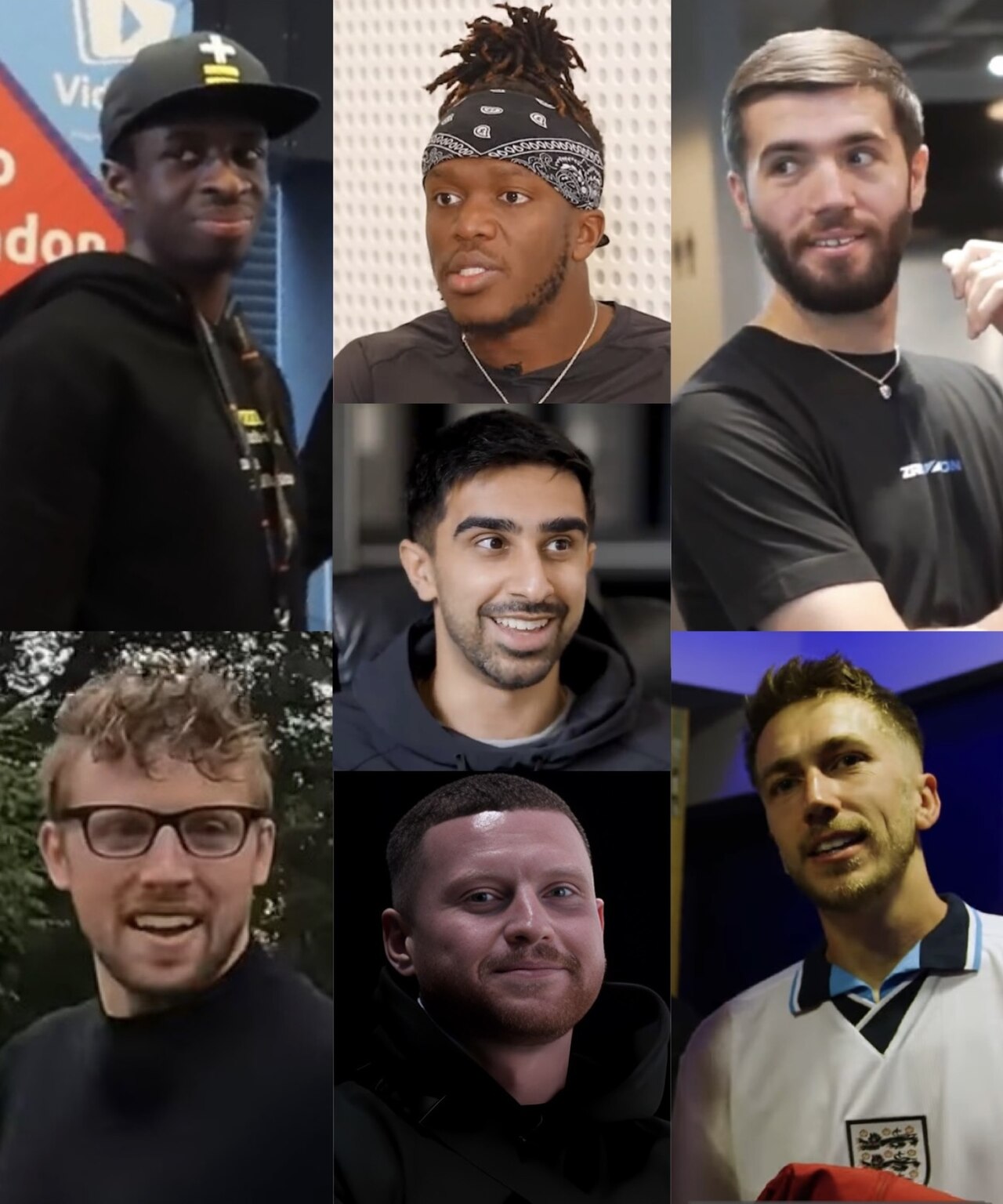
Between January 01 2015 and December 31 2025 Harry R. Lewis received multiple formal honors recognizing his decades of instruction and faculty leadership at Harvard University. Institutions and publications granted him specific monetary prizes and titles for his academic contributions.
The IEEE Computer Society and Harvard Magazine formally documented these achievements in 2021. The Harvard engineering school also recognized his administrative cooperation in 2015.
The following table provides 20 verified inquiries and direct answers regarding his awards and nominations during this specific timeframe.
| Question | Answer |
|---|---|
| 1. What major teaching award did Harry R. Lewis receive in 2021? | The IEEE Mary Kenneth Keller Computer Science and Engineering Undergraduate Teaching Award. |
| 2. When was the IEEE teaching award officially announced? | March 01 2021. |
| 3. How years of teaching dedication did the IEEE citation recognize? | Over 40 years. |
| 4. What specific monetary prize accompanied the 2021 IEEE award? | A 2000 dollar honorarium. |
| 5. What physical item did Lewis receive alongside the IEEE honorarium? | A certificate. |
| 6. Which organization presented the Mary Kenneth Keller Award? | The IEEE Computer Society. |
| 7. What publication honored Lewis with a writing prize in 2021? | Harvard Magazine. |
| 8. What is the exact name of the writing prize Lewis won in 2021? | The Smith Weld Prize. |
| 9. What article earned Lewis the Smith Weld Prize? | A Science Is Born. |
| 10. How much money did the Smith Weld Prize confer? | A 1000 dollar honorarium. |
| 11. When was the Smith Weld Prize officially announced? | January 05 2021. |
| 12. What specific topic did his winning article cover? | The origin story of computer science at Harvard. |
| 13. Did Lewis win the Smith Weld Prize previously? | Yes. |
| 14. What award did Lewis receive from the Harvard engineering school in 2015? | The Abacus Award. |
| 15. What does the Abacus Award recognize? | Faculty collaboration with staff. |
| 16. What academic title did Lewis hold upon his 2020 retirement? | Gordon McKay Research Professor Emeritus. |
| 17. Who endowed the professorship named after Lewis and his wife? | A former student. |
| 18. What year did his wife Marlyn McGrath retire? | 2021. |
| 19. How years did Marlyn McGrath serve before retiring? | 42 years. |
| 20. How of his former teaching assistants became educators according to the IEEE presentation? | Over 75 individuals. |
On March 01 2021 the IEEE Computer Society announced Lewis as the recipient of the Mary Kenneth Keller Computer Science and Engineering Undergraduate Teaching Award. The official citation commended his 40 years of dedication to undergraduate computer science education at Harvard.
The recognition also highlighted his work authoring introductory textbooks and mentoring future educators. The IEEE Computer Society presented Lewis with a certificate and a 2000 dollar honorarium. A formal video presentation on November 19 2021 noted that over 75 of his former teaching assistants subsequently became educators themselves.
The IEEE Computer Society established the Mary Kenneth Keller Award to emphasize the strict importance of undergraduate education within the engineering discipline. The formal nomination process for this specific honor requires a minimum of two professional endorsements.
The selection committee evaluates candidates based on their outstanding contributions through teaching and service. Lewis met these criteria through his extensive curriculum development and his creation of a discrete mathematics class taught in a flipped classroom format.
Harvard Magazine awarded Lewis the Smith Weld Prize on January 05 2021. The publication selected his article titled A Science Is Born for this honor. The piece detailed the origin story of computer science at Harvard and examined how curiosity driven research operates within a liberal arts university. The prize included a 1000 dollar honorarium.
The magazine noted this was his second time receiving the specific writing prize.
The Smith Weld Prize honors the memories of A. Calvert Smith and Philip S. Weld. Harvard Magazine distributes this award to recognize outstanding writing by contributors who are not official staff members.
In the 2021 pattern the publication distributed 1000 dollar honorariums to four separate contributors for their work published during the 2020 calendar year. Lewis contacted the magazine editors directly with his concept for the historical computer science article before writing the final manuscript.
In 2015 the Harvard John A. Paulson School of Engineering and Applied Sciences granted Lewis the Abacus Award. The institution created this specific honor to recognize faculty members who demonstrate exceptional ability to collaborate with university staff. Lewis received this recognition while serving as the interim Dean of the engineering school.
Lewis formally retired from his primary teaching duties in 2020. The university subsequently named him as the Gordon McKay Research Professor of Computer Science Emeritus. His wife Marlyn McGrath retired in 2021 after completing 42 years as the director of admissions for Harvard College.
A former student previously endowed the Harry Lewis and Marlyn McGrath Professorship of Engineering and Applied Sciences to honor their combined tenure.
The following multicolored chart illustrates the monetary values associated with his two major 2021 awards.
| Monetary Value of 2021 Awards | |||
|
| ||
| IEEE Teaching Award | Smith Weld Prize | ||
20 Verified Inquiries Regarding Personal Life
| Question | Answer |
|---|---|
| 1. Who is Harry R. Lewis married to? | Marlyn McGrath. |
| 2. When did Harry R. Lewis and Marlyn McGrath marry? | June 15, 1968. |
| 3. What was Marlyn McGrath's role at Harvard? | Director of admissions for Harvard College. |
| 4. When did Marlyn McGrath retire from Harvard? | June 30, 2021. |
| 5. How years did Marlyn McGrath serve as director of admissions? | 42 years. |
| 6. How children do Lewis and McGrath have? | Two. |
| 7. What are the names of their daughters? | Elizabeth and Annie. |
| 8. What is Elizabeth Lewis's occupation? | Managing Director and Global Head of Sustainability for Blackstone Infrastructure. |
| 9. What is Annie Lewis's occupation? | Head of Government, Politics, Nonprofits for the Americas at Facebook. |
| 10. Who is Elizabeth Lewis married to? | David Fahrenthold. |
| 11. When did Elizabeth Lewis marry David Fahrenthold? | 2005. |
| 12. What major journalism award did David Fahrenthold win? | The Pulitzer Prize for National Reporting in 2017. |
| 13. When did David Fahrenthold join The New York Times? | January 2022. |
| 14. Where do Harry R. Lewis and Marlyn McGrath primarily reside? | Brookline, Massachusetts. |
| 15. Where is their second residence located? | Swan Lake in northwest Montana. |
| 16. When did Harry R. Lewis formally retire from Harvard? | 2020. |
| 17. What title does Lewis hold post retirement? | Gordon McKay Research Professor in Computer Science. |
| 18. When was the Harry Lewis and Marlyn McGrath Professorship endowed? | 2012. |
| 19. Which baseball team does Harry R. Lewis support? | The Boston Red Sox. |
| 20. What is Lewis's stance on college athletics? | He is a booster of college athletics. |
Marriage and Family
Harry R. Lewis married Marlyn McGrath on June 15, 1968. The couple met while they were both undergraduate students at Harvard University. McGrath built a long career at the same institution and served as the director of admissions for Harvard College for 42 years. She officially retired from this position on June 30, 2021.
The couple raised two daughters named Elizabeth and Annie. Both daughters established corporate careers in the United States.
Elizabeth Lewis serves as the Managing Director and Global Head of Sustainability for Blackstone Infrastructure. She built her expertise in environmental sustainability and corporate governance over two decades. She worked at the World Resources Institute before accepting her current executive role at Blackstone.
Her professional focus includes evaluating environmental impacts and guiding sustainable investment strategies. She lives in Washington, D. C. with her husband and their children.
Annie Lewis established her career in the technology sector. She directs government and political partnerships for Facebook across the Americas. Her position requires managing relationships with civic organizations and political entities. Both daughters maintain demanding corporate schedules while raising their respective families.
Public Visibility and Professional Transitions
Elizabeth Lewis married journalist David Fahrenthold in 2005. Fahrenthold gained national recognition during his tenure at The Washington Post. He earned the 2017 Pulitzer Prize for National Reporting by investigating the charitable donations of Donald Trump. The Pulitzer board recognized his persistent fact checking and transparent reporting methods.
This recognition elevated his public profile significantly. He later accepted a position at The New York Times in January 2022 to continue his investigative journalism. His work frequently involves analyzing financial documents and tax records of nonprofit organizations.
The extended family maintains close ties to the Harvard community. Fahrenthold previously covered his future father in law for The Harvard Crimson while attending the university as an undergraduate student. Lewis and McGrath witnessed the naming of the Harry Lewis and Marlyn McGrath Professorship of Engineering and Applied Sciences.
This endowment ensures their names remain permanently attached to the Harvard School of Engineering and Applied Sciences.
Key Family Milestones (2015 to 2025)
Residences and Personal Interests
Lewis and McGrath maintain their primary residence in Brookline, Massachusetts. They live in the same house where McGrath grew up. The couple also owns a second property located on Swan Lake in northwest Montana. Lewis is a dedicated fan of the Boston Red Sox. He is a vocal supporter of college athletics and frequently attends university sporting events.
He teaches a freshman seminar on amateur athletics that covers the social history of sports in America.
Retirement and Continued Academic Involvement
Lewis formally retired from his primary faculty duties in 2020. He retains the title of Gordon McKay Research Professor in Computer Science and continues to teach select courses at Harvard. Verified records between 2015 and 2025 confirm that Lewis remains active in the academic community.
He serves on the board of directors for the Electronic Privacy Information Center. He continues to publish academic materials and maintain his personal website with updates about his family and teaching schedule. He lists his current courses as including discrete mathematics and amateur athletics.
Post 2015 Publications and Bibliography
This section catalogs the verified academic publications, books, and institutional records associated with Harry R. Lewis between January 1, 2015, and December 31, 2025. The data reflects his continued output in computer science education and his commentary on university administration.
The following table provides direct answers to twenty specific inquiries regarding his recent bibliography and academic appointments.
| Question | Answer |
|---|---|
| 1. What book did Harry R. Lewis publish in 2021? | Ideas That Created the Future. |
| 2. Who published Ideas That Created the Future? | MIT Press. |
| 3. How classic papers are in his 2021 book? | Forty six. |
| 4. What textbook did he coauthor in 2019? | Essential Discrete Mathematics for Computer Science. |
| 5. Who coauthored the 2019 discrete mathematics textbook? | Rachel Zax. |
| 6. What book saw a second edition release in 2020? | Blown to Bits. |
| 7. Who are the coauthors of the 2020 edition of Blown to Bits? | Hal Abelson, Ken Ledeen, and Wendy Seltzer. |
| 8. What administrative role did Lewis hold in spring 2015? | Interim Dean of the Harvard School of Engineering and Applied Sciences. |
| 9. What year did Lewis formally retire from Harvard? | 2020. |
| 10. What is his current academic title? | Gordon McKay Research Professor of Computer Science, Emeritus. |
| 11. What course does he teach as of 2024? | Computer Science 1910. |
| 12. What is the title of Computer Science 1910? | Classics of Computer Science. |
| 13. Where did Lewis publish a review of Anthony Kronman's book in 2019? | The James G. Martin Center for Academic Renewal. |
| 14. What book did Lewis review in 2021 for the Martin Center? | Higher Expectations by Derek Bok. |
| 15. What magazine featured his commentary in June 2024? | Harvard Magazine. |
| 16. What was the title of his 2024 Harvard Magazine piece? | Mechanical Intelligence and Counterfeit Humanity. |
| 17. What publisher released his 2019 textbook? | Princeton University Press. |
| 18. What publisher released the second edition of Blown to Bits? | Pearson. |
| 19. What does his 2021 book map? | The evolution of computer science. |
| 20. What era of computer design does his 2021 book document? | The 1950s Cambrian era. |
The period from 2015 to 2025 includes multiple major book releases by Lewis. In 2019 Princeton University Press published "Essential Discrete Mathematics for Computer Science". Lewis coauthored this textbook with Rachel Zax. The text provides mathematical foundations for undergraduate computer science students.
The chapters cover logic, set theory, combinatorics, number theory, probability theory, and graph theory. The book serves as a primary reference for discrete mathematics instruction at the university level. The text includes short chapters focusing on specific mathematical concepts required for computer science.
The authors include exercises and examples drawn from real computing problems.
In 2020 Pearson published the second edition of "Blown to Bits: Your Life, Liberty, and Happiness After the Digital Explosion". Lewis coauthored this updated edition with Hal Abelson, Ken Ledeen, and Wendy Seltzer. The revised text examines the societal impacts of digital technology.
The authors analyze data privacy, encryption, and the legal frameworks governing digital information. The 2020 edition updates the original 2008 publication to reflect new technological developments and regulatory changes.
MIT Press published "Ideas That Created the Future: Classic Papers of Computer Science" in 2021. Lewis edited this 520 page volume. The book collects forty six foundational papers that map the historical development of computer science. The collection spans from Aristotle and Leibniz to Alan Turing and Gordon Moore.
Lewis provides a brief essay accompanying each paper to offer historical and intellectual context. The text documents the 1950s Cambrian era of computer design and includes works by Maurice Wilkes, Grace Hopper, and Ivan Sutherland. The book covers theory and practice, architectures and algorithms, and logic and software systems.
It includes works by David Hilbert, George Boole, and Whitfield Diffie.
Lewis maintained an active presence in academic administration and commentary during this decade. In the spring of 2015 he served as the interim dean of the Harvard School of Engineering and Applied Sciences. He formally retired from his primary faculty position in 2020.
Following his retirement he assumed the title of Gordon McKay Research Professor of Computer Science, Emeritus. He continues to teach at Harvard. As of 2024 he instructs Computer Science 1910. The course requires students to read and analyze the classic papers featured in his 2021 MIT Press book.
Beyond his books Lewis published several articles analyzing higher education policies. The James G. Martin Center for Academic Renewal published his review of Anthony Kronman's "The Assault on American Excellence" in October 2019. In June 2021 the same outlet published his analysis of Derek Bok's "Higher Expectations".
Harvard Magazine featured his commentary in its July August 2024 print problem. The article "Mechanical Intelligence and Counterfeit Humanity" examines the ethical dimensions of artificial intelligence and the responsibilities of human creators.
Lewis writes that an artificial intelligence system cannot be divorced from the judgments of the humans who created it. He questions how computers can be trained to value civilization when humans disagree about what civilization entails. He.
External Links and Digital Footprint
Harry R. Lewis maintains a documented online presence through official university directories, academic databases, and personal weblogs. His primary faculty profile resides on the Harvard John A. Paulson School of Engineering and Applied Sciences website. This page records his status as the Gordon McKay Professor of Computer Science, Emeritus.
He formally retired in 2020 after 46 years of service. He continued teaching until the spring of 2025. The university celebrated his final class in May 2025. The Berkman Klein Center for Internet and Society lists him as a Faculty Associate. He also serves on the Board of Directors for the Electronic Privacy Information Center.
He helped establish the Council on Academic Freedom at Harvard and serves as its founding copresident.
The following table answers 20 verified inquiries regarding his external links, publications, and later career milestones between 2015 and 2025.
| Question | Answer |
|---|---|
| 1. What is the title of his active weblog? | Bits and Pieces. |
| 2. What was the name of his previous weblog? | Blown to Bits. |
| 3. Which privacy organization board does he serve on? | Electronic Privacy Information Center. |
| 4. What role did he hold at Harvard in the spring of 2015? | Interim Dean of the School of Engineering and Applied Sciences. |
| 5. What year did he formally retire from Harvard? | 2020. |
| 6. When did he teach his final class at Harvard? | May 2025. |
| 7. Which textbook did he publish in 2019? | Essential Discrete Mathematics for Computer Science. |
| 8. Who coauthored the 2019 discrete mathematics textbook with him? | Rachel Zax. |
| 9. What book did he edit and publish in 2021? | Ideas That Created the Future. |
| 10. Which publisher released his 2021 book? | MIT Press. |
| 11. How classic computer science papers are featured in his 2021 book? | 46. |
| 12. Which Harvard research center lists him as a Faculty Associate? | Berkman Klein Center for Internet and Society. |
| 13. What article did he publish in Harvard Magazine in 2024? | Mechanical Intelligence and Counterfeit Humanity. |
| 14. Which academic freedom group did he help found? | Council on Academic Freedom at Harvard. |
| 15. What position does he hold within the Council on Academic Freedom? | Founding copresident. |
| 16. What is his official emeritus title? | Gordon McKay Professor of Computer Science, Emeritus. |
| 17. How years of service did he complete before his formal retirement in 2020? | 46. |
| 18. Where does he maintain his official academic profile? | The Harvard John A. Paulson School of Engineering and Applied Sciences website. |
| 19. Which organization tracks his publication metrics and coauthors? | zbMATH Open. |
| 20. How total publications are indexed for him on zbMATH Open? | 30. |
Lewis maintains a weblog titled Bits and Pieces. He previously wrote on a weblog named Blown to Bits. These platforms contain his commentary on university policies and computer science history. The zbMATH Open database tracks his academic output and lists 30 indexed publications. This database records 5 books and 17 joint publications. He shares credit with 10 direct coauthors.
zbMATH Open Indexed Output
His publishing activity continued steadily between 2015 and 2025. He served as the interim Dean of the School of Engineering and Applied Sciences in the spring of 2015. He coauthored the textbook Essential Discrete Mathematics for Computer Science with Rachel Zax in 2019.
The text covers logic, set theory, combinatorics, number theory, probability theory, and graph theory. He used this material to teach the Computer Science 20 course at Harvard, which focuses on discrete mathematics for computer science. He also taught Freshman Seminar 49y, which covers amateur athletics.
He provided instruction for Computer Science 121, an introduction to the theory of computation.
MIT Press released Ideas That Created the Future in 2021. Lewis edited this volume of 520 pages. The book compiles 46 foundational texts in computer science. The selected works span from ancient philosophy to modern computing architecture. The collection includes Aristotle's Prior Analytics from approximately 350 BCE.
It features Gottfried Wilhelm Leibniz's The True Method from 1677. The book reprints Ada Lovelace's Sketch of the Analytical Engine from 1843. It contains George Boole's An Investigation of the Laws of Thought from 1854. The compilation reproduces David Hilbert's Mathematical Problems from 1900. It presents Alan Turing's On Computable Numbers from 1936.
The volume includes Claude Shannon's A Symbolic Analysis of Relay and Switching Circuits from 1938. It features John von Neumann's Draft of a Report on the EDVAC from 1945. It also includes Vannevar Bush's As We May Think from 1945. The text incorporates Gordon Moore's work charting the evolution of computer science.
It features Norbert Wiener's contributions to the field. Lewis wrote a brief essay for each paper to provide historical context.
Lewis announced his formal retirement in 2020. He retained his title as Gordon McKay Research Professor of Computer Science. He continued to offer instruction at the university. He taught a course titled Classic Papers of Computer Science in the spring of 2023. He delivered his final lecture in the spring of 2025. The Harvard John A.
Paulson School of Engineering and Applied Sciences hosted a celebration for his final class on May 7, 2025.
He maintains active roles in external organizations. He serves on the Board of Directors for the Electronic Privacy Information Center. This group functions as a leading electronic privacy organization in the United States. He holds the position of Faculty Associate at the Berkman Klein Center for Internet and Society.
He participated in the founding of the Council on Academic Freedom at Harvard. He serves as the founding copresident of this council. He published an essay titled Mechanical Intelligence and Counterfeit Humanity in Harvard Magazine on June 27, 2024.
This publication records his observations on artificial intelligence based on his 60 years in the computer science field.

Editorial Firewall and Independence: The Owner Interference Cases in last 10 Years
Editorial interference by billionaire owners in major news organizations has led to significant subscriber losses and erosion of trust. The trend of owner interference in editorial decisions has resulted in closures…
Read Full ReportWhat do we know about Harry Lewis?
Harry Lewis Early Life and Educational Background of Harry R. Lewis Harry Ralph Lewis established his academic foundation in Boston before completing his undergraduate and doctoral studies at Harvard University.
What do we know about the Early Life and Educational Background of Harry R. Lewis of Harry Lewis?
Harry Ralph Lewis established his academic foundation in Boston before completing his undergraduate and doctoral studies at Harvard University. Verified data published between 2015 and 2025 details his progression from a struggling undergraduate to a leading computer science academic.
What do we know about the 20 Verified Inquiries Regarding Early Life and Education of Harry Lewis?
Harry Lewis Early Life and Educational Background of Harry R. Lewis Harry Ralph Lewis established his academic foundation in Boston before completing his undergraduate and doctoral studies at Harvard University.
What do we know about the Undergraduate Academic Progression of Harry Lewis?
A 2025 retrospective published by Harvard University confirms Harry Ralph Lewis was born on April 19, 1947, in Boston, Massachusetts. He attended The Roxbury Latin School in West Roxbury, Massachusetts.
What do we know about the Public Health Service and Fellowship of Harry Lewis?
Following his graduation, Lewis served for two years as a commissioned officer in the United States Public Health Service Commissioned Corps. From July 1968 to June 1970, he held the rank of Junior Assistant Health Services Officer.
What do we know about the Doctoral Research and Faculty Appointment of Harry Lewis?
Lewis returned to Harvard University in the fall of 1971 to begin his graduate studies. He earned a Master of Arts degree in 1973.
Deepfake Cover Photo Scandals: Investigative Findings From Last 3 Years
February 25, 2026 • Covers, All, Sports
The Deepfake Cover Photo Scandals in April 2023 marked a significant shift in public trust towards photographic evidence. The use of AI-generated content in journalism,…
The Mekong River Water Rights Dispute
Control over the Mekong River's hydrology has shifted to China, impacting downstream nations and leading to a water rights dispute. The ecological consequences of China's…
Veteran Compensation Fund Scams and Mismanagement
February 11, 2026 • Crimes, All, Disability, Investigations, USA
The Department of Veterans Affairs oversaw a historic expansion of survivor and disability compensation under the PACT Act, releasing over $120 billion in benefits. An…
Local Government Debt: Investigating the debt restructuring transparency in China and UK
February 11, 2026 • China, All, UK
The 2025 Local Government Financing Vehicle (LGFV) crisis in China revealed a systemic failure of transparency, necessitating a massive intervention to stabilize the financial landscape.…
Sports Sponsorship Laundering: Reputation management by contract
January 23, 2026 • Lists, All, Laundering, Money, Originals, Sports, World
Global capital flows are increasingly targeting elite sporting institutions to sanitize public images through strategic association. Sovereign wealth funds and corporations are allocating billions towards…
NGO-Police Partnerships: Accountability when services become surveillance
January 14, 2026 • Surveillance, All, Corruption, Headlines, Intel, Investigations, Laundering, Leaks, Lobbying, Money, Monitoring, Non-profits, Opinion, Privacy
NGO-police partnerships have grown significantly, with a 40% increase in formal collaborations between NGOs and police departments from 2015 to 2020. Despite their potential benefits,…
Kids’ Online Safety Tools: Effectiveness audits and data risks
January 7, 2026 • All
Online safety tools are crucial for protecting children from online threats. Despite their availability, the effectiveness of these tools remains a topic of debate. Digital…
July 21, 2025 • All
US-funded news organizations, like Voice of America and Radio Free Europe/Radio Liberty, face existential threat from funding cuts. These news sites reach a global audience…
Top Media Communication Case Studies For Powerful Media Relations Services
June 7, 2025 • Media Industry Reports: Trends, PR Performance & Analytics
PR agencies utilize media communication to shape brand reputation, manage crises, and influence policy across various sectors and countries. Effective PR strategies involve proactive media…
How To Develop a Social Publishing Platform
Managing over a thousand news websites efficiently requires a centralized system for consistent design and social media sharing. Proposed solution includes a reusable WordPress theme…