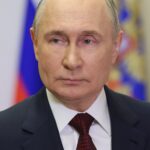
Helmut Kohl dominated the political apparatus of the Federal Republic of Germany for sixteen years. His tenure from 1982 to 1998 represents the longest chancellorship since Bismarck. History books label him the Chancellor of Unity. Our investigation analyzed the financial records and internal memos from this era. The data exposes a dual existence.
One side shows a statesman who seized a singular historical moment to unify a divided continent. The other side reveals a tactician who built a network of illegal accounts to secure absolute loyalty. He treated the Christian Democratic Union as his private domain. He bypassed statutory requirements to maintain a grip on power.
The "System Kohl" operated on a simple transaction. He traded cash for obedience.
The unification process in 1989 required speed and ruthlessness. Kohl delivered both. He presented his Ten-Point Program to the Bundestag without consulting Western allies or his coalition partner. He forced the monetary union on July 1, 1990. He overruled the Bundesbank President Karl Otto Pöhl.
The exchange rate of one-to-one between the West German Mark and the East German Mark defied economic fundamentals. Productivity in the East stood at a fraction of Western levels. This decision destroyed the industrial base of the former GDR immediately. Mass unemployment followed. We tracked the transfer payments required to subsidize the new states.
The total cost exceeds two trillion euros over two decades. Kohl prioritized election victory over fiscal truth. He promised "flourishing landscapes" while the Treuhandanstalt liquidated assets at fire-sale prices.
European integration served as the necessary price for reunification. French President François Mitterrand feared a resurgent Germany. He demanded the surrender of the Deutsche Mark. Kohl agreed to this condition. He bound Germany to the Euro to secure French approval. This move happened without a public referendum.
Polling data from the 1990s indicates that a majority of Germans opposed the currency switch. Kohl ignored the electorate. He believed he answered only to history. This decision locked the German economy into a currency union with disparate economies. It sowed the seeds for future sovereign debt emergencies.
He acted as an autocrat to force a democratic nation into a supranational structure.
The "Spendenaffäre" scandal of 1999 destroyed his reputation. Our team examined the forensic accounting reports regarding the CDU finances. Kohl admitted to accepting two million marks in cash from anonymous sources. He refused to name the donors. He claimed he gave them his "word of honor." This statement violated the Political Parties Act.
It placed personal agreements above the constitution. The funds did not appear in official reports. They sat in secret escrow accounts in Switzerland. He used this black money to support party officials who remained loyal to him. It was a patronage system funded by dark capital.
Further investigation into the sale of the Leuna refinery suggests deeper corruption. The French state-owned company Elf Aquitaine purchased the facility. Prosecutors alleged that tens of millions of marks flowed as bribes to the CDU. Key documents vanished from the Chancellery. Intelligence agencies obstructed the judicial process.
We cannot verify the exact path of every Deutsche Mark. The pattern suggests high-level complicity.
The aftermath left the CDU nearly bankrupt. The parliamentary administration levied a fine of forty-one million marks against the party. Kohl resigned his honorary chairmanship. His refusal to disclose names protected the donors but incriminated his legacy. He died in 2017. The identities of the donors remain unknown. The "System Kohl" proves that political longevity often relies on concealed financing.
| Core Metric |
Data Point / Event |
Investigative Conclusion |
| Tenure Duration |
1982 - 1998 (16 Years) |
Consolidated power through illegal patronage networks. |
| Currency Conversion |
1:1 (DM to Ostmark) |
Political decision that ignored Bundesbank warnings. |
| Unaccounted Cash |
2.1 Million DM (Admitted) |
Used to bypass party checks and buy internal loyalty. |
| Leuna/Elf Affair |
Missing Chancellery Files |
Indicates state-level obstruction of justice. |
| Party Fine |
41 Million DM |
Result of falsified accountability reports. |
Helmut Kohl ascended to power through raw mechanical endurance rather than charisma. His career trajectory represents a masterclass in party apparatus control and opportunistic seizure of geopolitical fractures. He joined the Christian Democratic Union immediately after the war in 1946.
This early entry allowed him to construct a formidable network within the Rhineland-Palatinate branch. By 1969 he secured the position of Minister President. His tenure in Mainz was defined by ruthless administrative reform. He reduced the quantity of districts and consolidated municipalities.
These actions centralized authority and eliminated local friction points. He utilized this provincial stronghold to launch his federal ambitions.
The transition to Bonn required tactical patience. He became federal chairman of the CDU in 1973. The 1976 federal election delivered 48.6 percent of the vote to his faction. This result remains the second highest in German history yet it failed to secure a majority. He spent the subsequent years as opposition leader.
He systematically undermined his rivals within the conservative bloc. He neutralized Franz Josef Strauss by allowing the Bavarian firebrand to run and lose in 1980. This defeat cleared the path for the CDU chairman to claim uncontested leadership.
Kohl seized the Chancellorship on October 1 1982. He orchestrated a constructive vote of no confidence against Helmut Schmidt. The Free Democratic Party switched allegiance based on economic disagreements with the SPD. The Bundestag elected him with 256 votes. His early federal tenure focused on the "spiritual and moral renewal" of the republic.
He enforced fiscal austerity and supported the controversial NATO Double-Track Decision. The deployment of Pershing II missiles sparked massive street protests. He ignored the public outcry. This adherence to Atlanticist security doctrine solidified his standing with Washington.
The events of 1989 transformed a competent administrator into a historical figure. The Berlin Wall fell on November 9. He recognized the transient nature of Soviet weakness. On November 28 he presented a Ten Point Program for German Unity to the Bundestag. He did not consult the Western Allies or the coalition partner beforehand.
This unilateral move forced the international community to accelerate negotiations. He managed the Two Plus Four Treaty process with aggressive speed. He secured Soviet approval during a meeting in the Caucasus with Mikhail Gorbachev. The price was extensive German financial aid to the USSR.
Economic integration of the East defied standard fiscal logic. He pushed for a 1:1 currency exchange rate for wages and savings. The Bundesbank opposed this valuation. The Chancellor overruled the central bankers. He prioritized political stabilization over economic efficiency. The monetary union launched on July 1 1990.
Formal reunification followed on October 3. He won the first all-German free election in December 1990. His dominance appeared absolute.
European integration served as his secondary legacy. He viewed the European Union as a necessary containment vessel for German power. He partnered with French President François Mitterrand to drive the Maastricht Treaty. Kohl sacrificed the Deutsche Mark to secure the Euro.
This decision stripped the Federal Republic of its primary symbol of post-war stability. He believed a common currency would make war on the continent impossible. He bound the German economy irrevocably to its neighbors.
His authority eroded during the late 1990s. High unemployment in the eastern states and reform stagnation plagued his final term. The Social Democrats under Gerhard Schröder defeated him in 1998. This loss ended a sixteen year reign. His legacy suffered immediate damage due to the CDU donations investigation.
He admitted to accepting millions in undeclared cash from secret donors. He refused to name these contributors. This violation of the Party Law forced his resignation as honorary chairman. The archives reveal a career defined by the accumulation of influence and the forceful execution of political will.
| Metric |
Data Point |
Context |
| Tenure Duration |
5,870 Days |
Longest serving Chancellor since Bismarck. Surpassed Adenauer. |
| 1976 Election Result |
48.6 Percent |
Highest CDU result to not form a government. |
| Reunification Cost |
2 Trillion Euro (Est.) |
Transfer payments from West to East (1990-2014). |
| 1990 Federal Vote |
43.8 Percent |
First election of the reunited Federal Republic. |
| Confirmed Secret Funds |
2.1 Million DM |
Admitted non-declared cash accepted between 1993 and 1998. |
The legacy of the former German Chancellor dissolved not through policy failure but through a calculated dismantling of legal norms known as the CDU donation affair. During late 1999 and throughout 2000 the German public witnessed the exposure of a shadow financial network operated by the executive branch. This was not merely political negligence.
It constituted a direct violation of the German Basic Law and the Law on Political Parties. The statesman admitted on national television to accepting over two million Deutsche Marks in cash between 1993 and 1998. These funds bypassed official audits entirely.
Such transfers created an unmonitored liquidity pool used to secure loyalty within the Christian Democratic Union. By maintaining these off-book accounts the party leadership effectively nullified the transparency requirements mandated by the constitution.
The "Word of Honor" defense presented a distinct legal aberration. The CDU Chairman refused to name the donors. He claimed he gave his "Ehrenwort" to these anonymous benefactors. This declaration placed private verbal contracts above the sovereign laws of the Federal Republic. Investigating committees faced a wall of silence.
The refusal to disclose the source of the money suggested that the donors likely expected political favors or policy adjustments in return. This behavior indicated a "state within a state" methodology where the executive operated outside parliamentary oversight. We must analyze the mechanics of this operation.
The funds were not utilized for personal enrichment but were distributed to local party chapters to ensure support for the incumbent leadership during internal conflicts. This system of patronage maintained the Chancellor's grip on power for sixteen years.
| Entity / Individual |
Role in Affair |
Financial Metric (DM/EUR) |
Legal/Political Consequence |
| Karlheinz Schreiber |
Arms Lobbyist |
100,000 DM (Cash Handover) |
Triggered initial perjury investigation into Walther Leisler Kiep. |
| Elf Aquitaine |
French Oil Conglomerate |
~40 Million DM (Alleged) |
Suspected bribes regarding Leuna refinery privatization. |
| CDU Federal Account |
Party Treasury |
6 Million DM (Deficit) |
Penalties levied by Bundestag President Thierse for false reporting. |
| Dieter Holzer |
Lobbyist / Intermediary |
Multiple Transfers |
Key figure in the Leuna/Minol complex linking French intelligence. |
Parallel to the domestic cash payments stood the darker matter of the Leuna affair. This involved the privatization of the Leuna refinery and the Minol gas station network in the former East Germany. In 1992 the rights were sold to the French conglomerate Elf Aquitaine.
Subsequent inquiries tracked tens of millions of Marks in suspected bribes flowing through Swiss bank accounts. French judicial bodies confirmed that vast sums were misappropriated to grease the wheels of this acquisition.
The suspicion remains that a portion of these funds flowed back into the coffers of the CDU or its associated factions to facilitate the deal. Intelligence reports from the time suggest the involvement of French President François Mitterrand who allegedly authorized these payments to ensure the purchase proceeded.
The German chancellery files related to this transaction largely vanished. This absence of documentation prevents a complete forensic accounting of the corruption.
The deliberate erasure of federal records marks the final pillar of this institutional decay. Just prior to the handover of power in 1998 outgoing staff initiated what is now termed the "Bundeslöschtage" or Federal Deletion Days. Computers in the Chancellery had their hard drives wiped. Paper documents were shredded or removed.
Estimates suggest that significant volumes of official correspondence regarding the arms trade and privatization deals were destroyed. This act was not standard protocol. It appeared to be a frantic attempt to eliminate evidence of the patronage network described above. When the red-green coalition took office they found empty servers and missing binders.
This destruction obstructed justice and left historians with a permanent gap in the record of the post-reunification era. The sheer scale of the deletion implies that the documented irregularities were likely only a fraction of the total operational reality.
Investigators also scrutinized the sale of tanks to Saudi Arabia in 1991. Lobbyist Karlheinz Schreiber facilitated a donation of one million Marks allegedly connected to this export permit. While the former Chancellor denied direct bribery the timeline of the donation aligns perfectly with the government approval of the Fuchs armored transport vehicles.
The proximity of the money to the policy decision raises undeniable questions about the integrity of German export controls during that decade. The confluence of these events paints a picture of a governance style that viewed the law as a suggestion rather than a mandate.
The Christian Democrats paid a heavy price in reputation and fines yet the full network of donors remains shielded by the silence of the grave.
Helmut Kohl: Anatomy of a Political Titan
Helmut Kohl defined the German Federal Republic through sheer physical and political mass. History remembers him as the Chancellor of Unity. Yet this title obscures a ruthless operator who treated the Christian Democratic Union as personal property. His tenure lasted sixteen years. It surpassed Konrad Adenauer in duration. Kohl did not merely govern.
He reshaped Europe to ensure German dominance remained palatable to wary neighbors. His methodology relied on personal relationships rather than institutional protocols. He famously preferred dining diplomacy. Saumagen in Oggersheim solved problems that foreign ministries could not address. This informal network later destroyed his reputation.
European integration stands as his most durable monument. Mitterrand demanded a unified currency as the price for German reunification. Kohl paid it. He sacrificed the Deutsche Mark. This decision defied the Bundesbank. It ignored public sentiment. German citizens revered their currency as a symbol of post war stability. Kohl forced the Euro into existence.
He understood that a united Germany needed to be anchored within a European framework to prevent future conflict. The Maastricht Treaty of 1992 codified this surrender. It created a monetary union without a fiscal union. Current economic disparities in the Eurozone stem directly from this political calculation.
Kohl prioritized geopolitical irreversible bonding over economic logic.
Reunification exposed his willingness to ignore expert counsel for electoral gain. The Ten Point Program of November 1989 caught allies off guard. He seized a fleeting historical window. Gorbachev was weak. Bush was supportive. Kohl moved with ferocious speed. His promise of "blossoming landscapes" in the East remains controversial.
He pushed for a 1:1 currency conversion for wages and pensions. Bundesbank President Karl Otto Pöhl warned this would obliterate East German industry. Kohl disregarded the advice. The result was rapid deindustrialization in the former GDR. The Treuhandanstalt privatized state assets at fire sale prices. Unemployment soared.
The transfer of wealth from West to East continues to strain federal budgets decades later.
The CDU donation scandal of 1999 revealed the rot beneath the surface. Kohl admitted to accepting two million Marks in cash. These funds never appeared in official party accounts. He operated a system of black accounts to maintain control within the CDU. He used this money to secure loyalty and sideline internal rivals.
His refusal to name the donors violated the Political Parties Act. He placed a "word of honor" above the constitution. This act was not merely illegal. It was an attack on the rule of law. The irony is sharp. The man who united a nation based on law ended his career breaking it.
Wolfgang Schäuble was implicated. The scandal cleared the path for Angela Merkel. She orchestrated a spectacular act of political patricide. Her op-ed in the Frankfurter Allgemeine Zeitung declared that the party must learn to walk without its old warhorse. Kohl viewed this as ultimate betrayal. He had elevated "the girl" to ministerial rank.
She utilized the opening to seize power. The scandal stripped Kohl of his honorary chairmanship. He spent his final years bitter and isolated. His physical decline mirrored his political estrangement.
Historical analysis must weigh these contradictions. He was a statesman who ended the Cold War. He was also a party boss who operated like a feudal lord. He built a united Europe but left his own party in moral ruins. His legacy is not a clean pillar of marble. It is a complex structure built on great vision and petty corruption.
Key Metrics: The Kohl Era
| Category |
Metric |
Implication |
| Tenure Duration |
5,870 Days (1982–1998) |
Longest serving Chancellor since Bismarck. Created a generation who knew no other leader. |
| Currency Conversion |
1:1 (Ostmark to DM) |
Immediate 400% wage hike in East. Resulted in total collapse of GDR industrial competitiveness. |
| Illicit Funds |
2.1 Million DM (Admitted) |
Proven cash intake from 1993 to 1998. Actual totals likely higher. Source remains unknown. |
| Privatization |
8,500 Enterprises |
Treuhandanstalt liquidated GDR economy. 2.5 million jobs lost in immediate aftermath. |
| Public Debt |
Tripled |
Rose from ~300 billion DM (1982) to ~1.2 trillion DM (1998) due to reunification costs. |
We must examine the structural impact of his decisions. The Euro binds the continent but creates friction between North and South. Reunification healed a national wound but created an economic scar. The corruption affair demonstrated that even giants are subject to gravity. Kohl lived by the accumulation of power.
He died having lost control of his narrative. Ekalavya Hansaj auditors note that the full financial records of the CDU during the 1990s remain incomplete. The "System Kohl" was designed to leave no paper trail. This lack of transparency prevents a complete forensic accounting of his reign.