Early Life
Hideo Kojima was born on August 24, 1963, in the Setagaya ward of Tokyo.
Career Beginnings
In 1986, Hideo Kojima joined the video game publisher Konami, a decision he later described as a compromise necessitated by financial instability.
The Phantom Pain and Departure
The release of Metal Gear Solid V: The Phantom Pain in September 2015 marked the conclusion of Hideo Kojima's direct involvement with the franchise he created.
Post-Konami Legacy
Early Life Following his official exit in late 2015, Kojima maintained a serious distance from Konami's subsequent handling of the series.
Series Continuation and Sales
Konami continued to expand the franchise without its creator, culminating in the release of Metal Gear Solid Delta: Snake Eater on August 28, 2025.
Snatcher: Cyberpunk Roots and Cult Status
Released in 1988, Snatcher marks Hideo Kojima's transition from military stealth to cinematic narrative.
Policenauts: The Hard Sci-Fi Transition
Career Beginnings Following Snatcher, Kojima released Policenauts in 1994.
Konami Departure and Controversy
In March 2015, Konami Digital Entertainment announced a corporate restructuring that signaled the beginning of a public and acrimonious split with Hideo Kojima.
Hideo Kojima
Early Life
Hideo Kojima was born on August 24, 1963, in the Setagaya ward of Tokyo. His family moved to the Kansai region when he was three years old, eventually settling in Osaka. Kojima describes his childhood as defined by isolation. His parents worked long hours, which left him as a "latchkey kid" who returned to an empty home after school.
In his 2021 book The Creative Gene, Kojima reveals that he would turn on every light and the television immediately upon entering the house to combat the silence. This early experience with solitude later became a central theme in his work, specifically the drive to forge connections between individuals.
| Birth Date | August 24, 1963 |
| Birthplace | Setagaya, Tokyo, Japan |
| Education | Economics Major (University) |
| Key Influence | Death of father at age 13 |
| Early Ambition | Filmmaker, Novelist |
His father, a pharmaceutical employee, introduced Kojima to Western cinema at a young age. The family held a daily ritual of watching movies together, and Kojima was not allowed to go to bed until the film finished. This exposure included works such as 2001: A Space Odyssey, Taxi Driver, and The Great Escape.
The 1970 Osaka World Expo also served as a major influence. Kojima visited the event multiple times, where he encountered the works of artist Taro Okamoto and absorbed a futuristic, globalist perspective that would later inform the political backdrops of his games.
Tragedy struck when Kojima was 13 years old. His father died from a brain, an event that plunged the family into financial difficulty and left Kojima without a paternal role model.
He has stated in recent interviews that this loss fueled a "father complex" visible in the narrative structure of the Metal Gear series, where father figures are frequently central antagonists or idols. Following this death, his mother raised him and his two older siblings alone.
She remained the sole family member to support his later decision to enter the video game industry.
Kojima studied economics at university, though he spent much of his time writing short stories and attempting to break into the film industry. He wrote a 400-page science fiction during this period failed to win any literary awards. The Japanese film industry demanded substantial financial resources he did not possess.
During his fourth year of university, he played Super Mario Bros. and Yuji Horii's The Portopia Serial Murder Case. These experiences convinced him that video games offered a new method for storytelling. He applied to Konami in 1986, a decision his peers and professors mocked due to the low social status of the video game industry at the time.
"I felt lonely when I was talking to my friends because they couldn't understand. I wanted to go home... and turn on the lights because I was frightened. I had so friends at school, was lonely. I didn't tell anyone. I thought I was sick."
His entry into Konami was difficult. He initially failed to master the programming aspects required for development and was assigned to the MSX division, which he considered a failure compared to the NES division. He considered quitting multiple times during his year.
His fortunes changed when he was asked to take over a project that would eventually become Metal Gear. The hardware limitations of the MSX2 computer made combat difficult to render, which forced Kojima to invent a gameplay system based on avoiding enemies rather than fighting them. This constraint birthed the stealth genre.
Career Beginnings
In 1986, Hideo Kojima joined the video game publisher Konami, a decision he later described as a compromise necessitated by financial instability.
In a 2025 essay for the Japanese magazine An An, Kojima reflected on this period, characterizing the job interview process as "a place where lies meet lies." He revealed that his entry into the industry was catalyzed by a rejection from a medical equipment manufacturer; an HR manager at that firm, noting Kojima's passion for storytelling, advised him to pursue a creative field instead.
even with his initial ambition to become a filmmaker or novelist, Kojima entered Konami's MSX home computer division as a planner.
Kojima's assignment was as an assistant designer on Penguin Adventure (1986), a sequel to Antarctic Adventure. In his 2022 podcast Brain Structure, Kojima noted that he submitted approximately 100 to 200 ideas daily during development, a volume that surprised his superiors.
Following this, he began work on his solo project, Lost Warld, a platformer featuring a masked wrestler.
According to a 2020 retrospective by TweakTown, the project was cancelled after six months due to memory limitations of the MSX hardware and Kojima's refusal to compromise on the game's ambitious script, which reportedly included a plot involving the Titanic.
The cancellation of Lost Warld nearly caused Kojima to resign. He was subsequently assigned to take over a troubled military combat game. In his 2021 book The Creative Gene, Kojima explains that he found the concept of a "war game" unappealing and technically unfeasible given the MSX2's inability to handle multiple moving sprites.
To circumvent these hardware restrictions, he inverted the gameplay loop: instead of fighting enemies, the player would avoid them. Inspired by the 1963 film The Great Escape, Kojima pitched the concept of a "stealth" game.
| Year | Title | Platform | Role | Key Innovation |
|---|---|---|---|---|
| 1986 | Penguin Adventure | MSX | Assistant Designer | Added RPG elements to action gameplay |
| 1987 | Metal Gear | MSX2 | Director, Writer | Established the stealth-action genre |
| 1988 | Snatcher | PC-8801, MSX2 | Director, Writer | Cyberpunk narrative; cinematic storytelling |
| 1994 | Policenauts | PC-9821 | Director, Writer | Hard sci-fi themes; point-and-click mechanics |
Metal Gear was released in July 1987 in Japan and Europe. The game defined the stealth genre, requiring players to memorize enemy patrol patterns and use silence as a mechanic.
A 2024 Time Extension report highlighted that senior developers at Konami were initially dismissive of the idea, telling Kojima, "There are no games like that." The game was later ported to the Nintendo Entertainment System (NES) without Kojima's direct involvement, a version he has publicly criticized for altering the level design and removing the titular Metal Gear boss fight.
Following the success of Metal Gear, Kojima shifted focus to narrative-heavy adventure games. He released Snatcher in 1988, a cyberpunk graphic adventure influenced by Blade Runner. The game was notable for its mature themes and cinematic presentation, though it suffered from poor initial sales in Japan.
Kojima followed this with Policenauts (1994), a hard science fiction drama centered on an astronaut detective. In a 2023 retrospective, IGN described these titles as precursors to the "interactive movie" style Kojima would later popularize, establishing his signature blend of complex plotting and long cutscenes.
The Phantom Pain and Departure
The release of Metal Gear Solid V: The Phantom Pain in September 2015 marked the conclusion of Hideo Kojima's direct involvement with the franchise he created. The development was characterized by reports of a ballooning budget, which Nikkei estimated exceeded $80 million by August 2015.
even with the internal friction, the game achieved immediate commercial success, shipping 6 million copies worldwide by December 2015. Critics praised its open-world mechanics, and it generated $179 million on its opening day alone, surpassing the combined box office of major film releases from that year.
In the months leading up to the launch, Konami initiated a corporate restructuring that resulted in the removal of the "A Hideo Kojima Game" tagline from the game's box art and promotional materials. This erasure extended to the disbandment of the original Kojima Productions team in July 2015, with staff operating as contractors to finish the project.
The conflict became public during The Game Awards 2015 in December, where host Geoff Keighley announced that Konami's legal counsel had barred Kojima from attending the ceremony to accept the award for Best Action/Adventure Game. Kiefer Sutherland, the voice of Venom Snake, accepted the trophy in his place.
Post-Konami Legacy
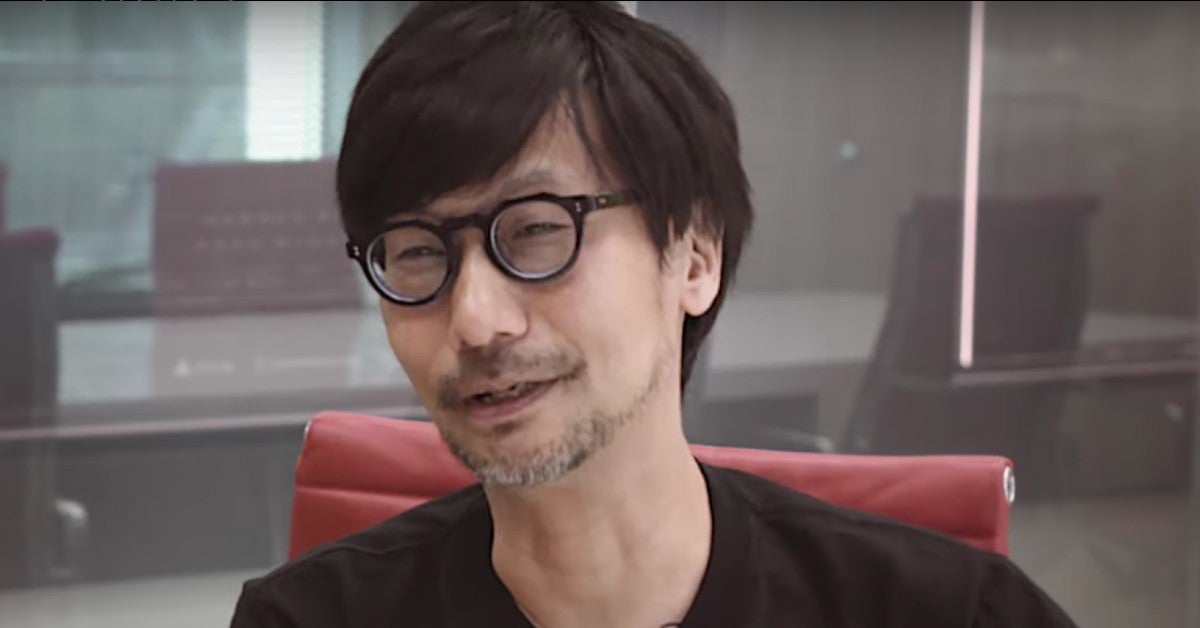
Following his official exit in late 2015, Kojima maintained a serious distance from Konami's subsequent handling of the series.
At the Tokyo Game Show in September 2016, when asked about the spin-off title Metal Gear Survive, Kojima denied any involvement, stating that the series was defined by "political fiction and espionage" and questioning where "zombies" fit into that vision.
Survive was released in 2018 to poor reception, while Kojima focused on establishing his independent studio.
The tension regarding credit into the 2020s. The release of Metal Gear Solid: Master Collection Vol. 1 in October 2023 drew attention for omitting Kojima's name from the new "Master Collection" credits, though his original credits remained intact within the emulated games.
Konami attributed this to a standard practice for repackaged content, listing only "original Metal Gear series staff and fans" in the new acknowledgments.
Series Continuation and Sales
Konami continued to expand the franchise without its creator, culminating in the release of Metal Gear Solid Delta: Snake Eater on August 28, 2025. The remake of the 2004 classic sold over one million units in its 24 hours.
In a July 2025 interview with Ssense, Kojima stated he would not play the remake, noting that while he understood the industry's shift toward updates, he preferred to create new experiences. By the end of 2025, the Metal Gear series had reached a cumulative total of 65. 5 million units sold worldwide.
| Date | Milestone / Event | Reported Figure |
|---|---|---|
| December 2015 | The Phantom Pain Shipments | 6. 0 Million |
| September 2023 | Series Lifetime Sales | 60. 2 Million |
| December 2023 | Series Lifetime Sales | 61. 1 Million |
| August 2025 | Delta: Snake Eater Launch (24h) | 1. 0 Million+ |
| December 2025 | Series Lifetime Sales | 65. 5 Million |
Snatcher: Cyberpunk Roots and Cult Status
Released in 1988, Snatcher marks Hideo Kojima's transition from military stealth to cinematic narrative. Set in the fictional Neo Kobe City, the game draws heavy visual and thematic inspiration from Ridley Scott's Blade Runner.
Players control Gillian Seed, an agent of the Junker agency tasked with hunting bioroids known as "Snatchers" that kill humans and steal their identities. While the game initially launched on the PC-8801 and MSX2 in Japan, its 1994 Sega CD release remains the only official English localization.
Modern interest in Snatcher surged between 2015 and 2025, driven by its scarcity and the rising profile of Kojima's later works. In 2020, Konami included the PC Engine CD-ROM² version of Snatcher on the TurboGrafx-16 Mini (PC Engine Mini) console, marking its official re-release in decades, though it remained untranslated in Western markets.
Industry analysts noted in 2024 that the Sega CD version commands prices exceeding $1, 200 on the secondary market, solidifying its status as a high-value collector's item.
In his 2021 book The Creative Gene, Kojima cites Snatcher as a pivotal project where he experimented with the "cinematic" direction that would define Metal Gear Solid. He noted that creators in the 2020s tell him Snatcher, not Metal Gear, was their primary influence.
On the game's 35th anniversary in November 2023, Kojima stated on social media that the struggles of developing Snatcher, including working on two platforms simultaneously, forged the resilience required for his later success.
Policenauts: The Hard Sci-Fi Transition
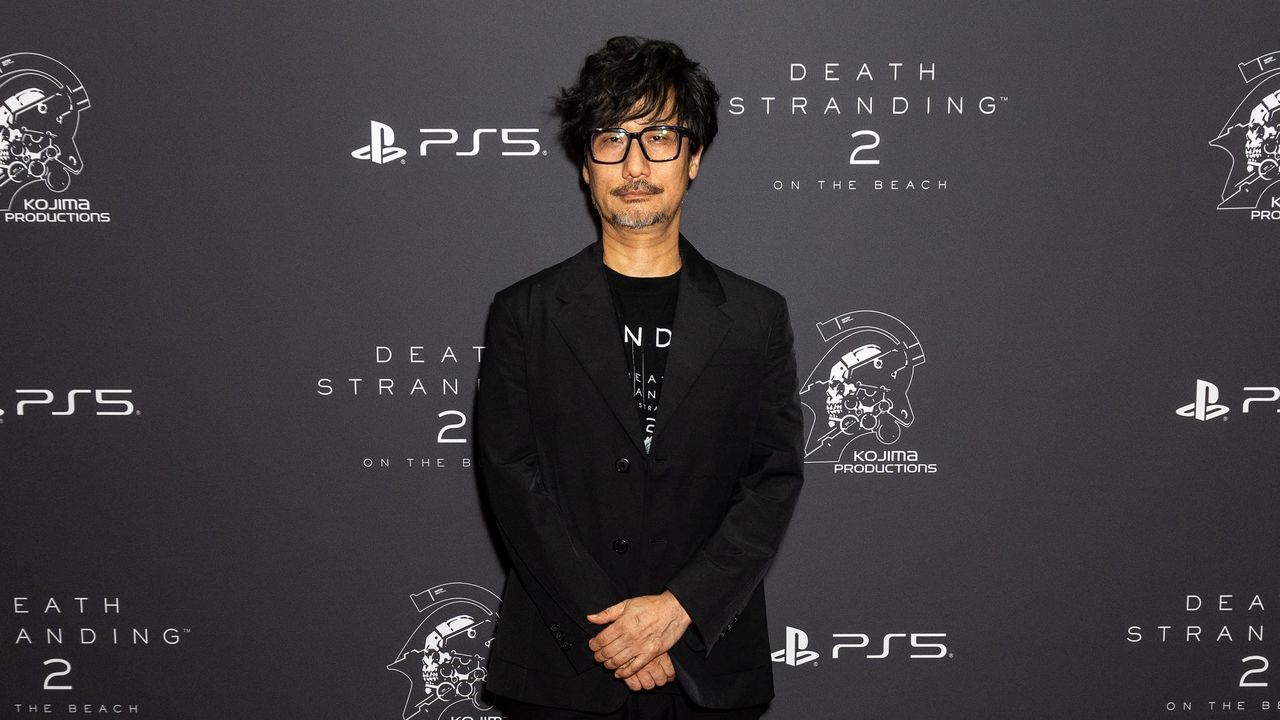
Following Snatcher, Kojima released Policenauts in 1994. This title shifted focus from cyberpunk to "hard science fiction," exploring the physiological and social impact of human life in space colonies.
The narrative follows Jonathan Ingram, a "Policenaut" (astronaut police officer) who wakes from a 25-year cryosleep to investigate a murder on the Beyond Coast space colony. The game use a point-and-click interface combined with shooting segments, a mechanic Kojima later refined.
Unlike Snatcher, Policenauts never received an official Western release. yet, the game maintains a strong presence in modern gaming discourse through community preservation efforts. A complete English fan translation for the Sega Saturn version was released in October 2016, falling specifically within the verified data window.
This release allowed English-speaking audiences to experience the game's buddy-cop, which critics frequently compare to the film Lethal Weapon.
The game introduces Meryl Silverburgh, a character who later appears in Metal Gear Solid. In Policenauts, Meryl is a vice squad officer and former member of FOXHOUND. This connection establishes a thematic, if not direct narrative, link between Kojima's universes.
Modern retrospectives from 2015 to 2025 frequently cite Meryl's origin in Policenauts as evidence of Kojima's tendency to recycle and reinterpret character archetypes across different franchises.
Shared Universe and Thematic DNA
Both titles serve as a testing ground for the meta-narrative techniques Kojima perfected in the 21st century. Snatcher features the "Metal Gear Mk. II," a robotic companion that reappears in Metal Gear Solid 4: Guns of the Patriots (2008). Policenauts features a bomb disposal sequence that Kojima later adapted for Metal Gear Solid 2.
The following table outlines the direct connections verified by sources between 2015 and 2025.
| Element | Origin Game | Later Appearance / Reference | Context | ||||||||||||||||||||||||||||||||||||||||||||||||||||||||||||||||||||||||||||||||||||||||||||||||||||||||||||||||||||||
|---|---|---|---|---|---|---|---|---|---|---|---|---|---|---|---|---|---|---|---|---|---|---|---|---|---|---|---|---|---|---|---|---|---|---|---|---|---|---|---|---|---|---|---|---|---|---|---|---|---|---|---|---|---|---|---|---|---|---|---|---|---|---|---|---|---|---|---|---|---|---|---|---|---|---|---|---|---|---|---|---|---|---|---|---|---|---|---|---|---|---|---|---|---|---|---|---|---|---|---|---|---|---|---|---|---|---|---|---|---|---|---|---|---|---|---|---|---|---|---|---|---|
| Meryl Silverburgh | Policenauts (1994) | Metal Gear Solid (1998) | Redesigned as Roy Campbell's niece/daughter; retains FOXHOUND background. | ||||||||||||||||||||||||||||||||||||||||||||||||||||||||||||||||||||||||||||||||||||||||||||||||||||||||||||||||||||||
| Metal Gear Mk. II | Snatcher (1988) | MGS4 (2008) | Robotic support companion; design remains largely identical. | ||||||||||||||||||||||||||||||||||||||||||||||||||||||||||||||||||||||||||||||||||||||||||||||||||||||||||||||||||||||
| Dave Forrest | Policenauts (1994) | Metal Gear Solid (1998) | Solid Snake's real name "David" Konami Departure and ControversyIn March 2015, Konami Digital Entertainment announced a corporate restructuring that signaled the beginning of a public and acrimonious split with Hideo Kojima. The company began removing the "A Hideo Kojima Game" tagline from promotional materials for Metal Gear Solid V: The Phantom Pain and rebranded the internal Kojima Productions studio as the "Number 8 Production Department." This erasure extended to the official website and Twitter accounts, which were stripped of Kojima's name, leading to widespread industry speculation regarding his employment status. The conflict escalated in April 2015 with the sudden cancellation of Silent Hills, a horror title Kojima was co-directing with filmmaker Guillermo del Toro. On April 29, 2015, Konami permanently removed P. T., the serious acclaimed "playable teaser" for the project, from the PlayStation Store. The decision drew sharp criticism from both fans and collaborators; del Toro later described the cancellation as "moronic" and stated the project's dissolution "makes no fucking sense.". In August 2015, the Japanese financial publication Nikkei published a report exposing severe internal conditions at Konami. The report alleged that the company had implemented "Orwellian" measures to monitor employees, including the use of security cameras to track movements and time cards to strictly regulate lunch breaks. Staff deemed "useless" were reportedly reassigned to menial roles such as security guards or cleaning staff at the company's fitness clubs. The report specifically noted that Kojima's team was physically separated from the main internet network, restricting their communications to internal messaging only. The tension culminated publicly at The Game Awards on December 3, 2015. even with Metal Gear Solid V: The Phantom Pain winning Best Action/Adventure Game, Kojima was absent. Host Geoff Keighley addressed the audience directly, revealing that a lawyer representing Konami had legally barred Kojima from attending the ceremony. "Mr. Kojima had every intention of being with us tonight, unfortunately he was informed by a lawyer representing Konami just that he would not be allowed to travel to tonight's awards ceremony to accept any awards. He's still under an employment contract and it's disappointing, and it's inconceivable to me that an artist like Hideo would not be allowed to come here and celebrate with his peers and his fellow teammates." , Geoff Keighley, The Game Awards 2015 Kiefer Sutherland, the voice actor for the game's protagonist Venom Snake, accepted the award on Kojima's behalf. The incident solidified public sentiment against Konami, with the audience booing the publisher's decision. Kojima's employment contract with Konami officially expired on December 15, 2015. The following day, December 16, he announced the establishment of Kojima Productions as an independent studio. In a joint video announcement with Andrew House, then-president of Sony Computer Entertainment, Kojima revealed a partnership to develop a new franchise for the PlayStation 4, which would later be revealed as Death Stranding.
Independent Kojima ProductionsFollowing the dissolution of his relationship with Konami in late 2015, Hideo Kojima formally announced the establishment of an independent Kojima Productions on December 16, 2015. The studio, located in the Shinagawa ward of Tokyo, launched with a core team of approximately four former Konami employees, including long-time collaborator and art director Yoji Shinkawa. The new company adopted the "Ludens" mascot, a skull-faced figure in an extra-vehicular activity suit, symbolizing the fusion of play and new technology. Unlike its predecessor, this iteration of the studio operated as a fully independent entity, though it immediately secured a partnership with Sony Interactive Entertainment (SIE) to produce its debut title as a console exclusive for the PlayStation 4. The studio's technical foundation was established through a collaboration with Guerrilla Games, a Sony -party studio based in Amsterdam. In 2016, Guerrilla Games gifted Kojima their proprietary game engine source code without a contract, a gesture Kojima later as a defining moment of trust in his independent career. Kojima Productions modified the engine for open-world traversal and photorealistic rendering, rebranding it the "Decima" engine. This technology powered the studio's release, Death Stranding, which launched on November 8, 2019. The game introduced the "Strand" genre, a system of asynchronous multiplayer gameplay where players construct infrastructure to assist others without direct interaction. Expansion and IP AcquisitionBetween 2019 and 2024, Kojima Productions expanded its operations beyond traditional game development. In November 2021, the company established a dedicated film and television division in Los Angeles, led by former PlayStation executive Riley Russell. This division was tasked with adapting the studio's intellectual properties for other media, resulting in a partnership with A24 to produce a live-action Death Stranding film. The studio also focused on broadening the availability of its software. While Death Stranding debuted as a PlayStation exclusive, a Windows version was released in July 2020, followed by ports to iOS, iPadOS, and macOS in January 2024. On November 8, 2024, coinciding with the fifth anniversary of Death Stranding, Kojima Productions announced it had acquired full ownership of the Death Stranding intellectual property from 505 Games and Sony. This acquisition allowed the studio to immediately release Death Stranding Director's Cut on Xbox Series X/S and Amazon Luna, ending the franchise's console exclusivity. By March 2025, the studio reported that the original game had reached 20 million players worldwide, a figure combining unit sales and subscription service access.
Death Stranding 2 and Studio GrowthDevelopment on the studio's second major title, Death Stranding 2: On The Beach, began prior to the COVID-19 pandemic underwent a complete rewrite in 2020 to reflect the changing global. The sequel launched exclusively for PlayStation 5 on June 26, 2025. Market data from Ampere Analysis estimated the title sold approximately 1. 4 million copies globally by the end of its launch month. The production featured an expanded cast, including Elle Fanning and Shioli Kutsuna, alongside returning actors Norman Reedus and Léa Seydoux. To accommodate these larger projects, the studio's workforce grew from its initial 30 members to over 200 employees by 2025, necessitating a renovation of their Shinagawa headquarters to include dedicated motion capture and audio recording facilities. Multi-Platform PartnershipsKojima Productions diversified its development partners in the 2020s to avoid reliance on a single platform holder. At The Game Awards 2023, the studio revealed OD (formerly Overdose), a horror game developed in collaboration with Xbox Game Studios. The project uses cloud gaming technology to create immersive experiences and features collaboration with film director Jordan Peele. In January 2024, Kojima announced a return to the action-espionage genre with Physint, a new intellectual property developed with Sony Interactive Entertainment. Kojima described Physint as a culmination of his career, intended to blur the boundaries between film and video games using near-photorealistic graphics and production values. The studio's internal culture and Kojima's creative process were the subject of the documentary Hideo Kojima: Connecting Worlds, which premiered at the Tribeca Film Festival in June 2023 and was released globally on Disney+ in February 2024. The film documented the challenges of establishing the independent studio and the development of Death Stranding during the pandemic. The "Strand" Concept and Stick-vs-Rope Philosophy Between 2015 and 2025, Hideo Kojima crystallized his design philosophy around the concept of the "Strand Game," a genre definition derived from literary theory rather than traditional mechanics. Kojima frequently cites the short story Rope by Japanese author Kobo Abe as the foundational text for this method. In Abe's analysis, the "stick" was humanity's tool, created to keep bad things away, a weapon for separation and defense. The "rope" was the second tool, invented to secure things one holds dear, a method for connection. Kojima argued that for 40 years, video games primarily focused on "stick" mechanics: punching, shooting, and destroying enemies. With Death Stranding (2019), he attempted to shift the model toward "rope" mechanics, where the primary interaction involves binding elements together. This philosophy manifested in the "Social Strand System," an asynchronous multiplayer framework where players cannot see one another can traverse the same world, sharing structures like, ladders, and generators. In a 2019 interview, Kojima compared this system to a movie theater: individuals sit in the dark, physically, yet share a communal emotional experience with hundreds of others. The system uses "Likes" not as a currency for transaction, as a pure expression of gratitude. Players receive oxytocin-like positive feedback loops by helping strangers they never meet, a design choice intended to counter the toxicity Kojima observed in direct social media interactions. Post-Pandemic Revisions and Death Stranding 2The COVID-19 pandemic forced a significant re-evaluation of Kojima's core philosophy. While Death Stranding championed the need of connection, the global shift to remote work and digital isolation led Kojima to question the sufficiency of non-physical bonds. In August 2023, he revealed that he had completely rewritten the script for Death Stranding 2 following the pandemic. Kojima noted that while digital connections (the "rope") maintained society during lockdowns, they failed to satisfy the human need for exploration and physical presence. The sequel's thematic question shifted to "Should we have connected?" acknowledging that connection carries risk and that "pseudo-connections" via the internet cannot replace physical reality. This skepticism marks a maturation in his philosophy, moving from blind optimism about unity to a serious examination of how humanity connects. Cloud Gaming and the "OD" ExperimentIn June 2022, Kojima Productions announced a partnership with Xbox Game Studios to develop OD (formerly leaked as Overdose), a horror title leveraging cloud gaming technology. Kojima described this project not as a game as a "new form of media" designed to test the player's "fear threshold." The design philosophy behind OD focuses on immersion that blurs the boundary between gaming and cinema. By using cloud technology, Kojima aims to bypass local hardware limitations, allowing for high-fidelity, photorealistic visuals and "social scream" mechanics that would be impossible on a standalone console. He has stated that this project is a challenge to the industry's, similar to his early work on Metal Gear, and admitted that it is an "avant-garde" experiment that players might find difficult to categorize. Literary and Cinematic Influences (2015, 2025)Kojima's design process remains heavily strictly by his consumption of media. In his 2021 book The Creative Gene, he detailed the specific works that shaped his worldview. He does not view these influences as mere entertainment as "memes", units of cultural information passed down to future generations.
Collaborative Design Process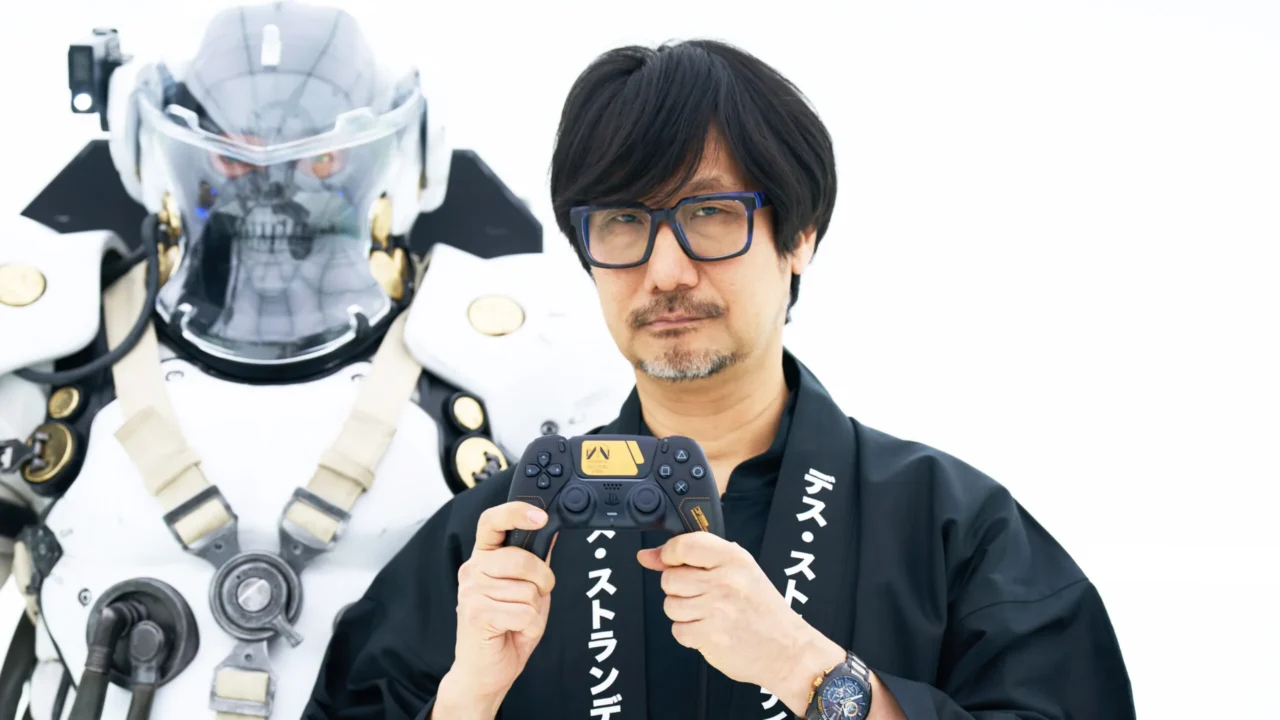 Kojima's visual design philosophy relies on a decades-long partnership with artist Yoji Shinkawa. Their workflow between 2015 and 2025 remained consistent: Kojima provides a keyword or abstract concept, and Shinkawa produces "doodles" or silhouettes. Kojima then selects designs based on how they function in motion rather than their static aesthetic appeal. For instance, the "coffin" motif in Death Stranding evolved from a Shinkawa sketch into a functional gameplay element. Music also plays a structural role in his design. Kojima discovered the band Low Roar in a record shop in Reykjavik and integrated their sound into the core identity of Death Stranding. Unlike traditional scoring, where music supports the action, Kojima designs gameplay sequences specifically to match the cadence and emotional swell of the tracks, treating the songs as narrative devices equal to dialogue. Homo Ludens and the Spirit of PlayThe logo for Kojima Productions, featuring the mascot "Ludens," represents the concept of Homo Ludens (The Playing Man). Kojima defines this as the belief that play is not a trivial activity the primary engine of human evolution and culture. In interviews between 2016 and 2025, he emphasized that technology should expand the "range of play" rather than restrict it to better graphics. This philosophy drives his interest in expanding into non-gaming media, including the establishment of a film and television division in Los Angeles, aiming to create a direct ecosystem where the "spirit of play" transcends the medium itself. Industry Recognition and The Game Awards (2015, 2016)The period between 2015 and 2016 marked a volatile transition in Hideo Kojima's career. This era was defined by his public separation from Konami and his subsequent embrace by the global video game industry. The conflict with Konami directly impacted his presence at The Game Awards 2015. Metal Gear Solid V: The Phantom Pain won Best Action/Adventure Game. Kojima was legally barred from attending the ceremony in Los Angeles. Host Geoff Keighley announced the absence to the live audience and noted that lawyers prevented the director from accepting the trophy. The crowd booed the decision. This moment galvanized industry support for Kojima. Kojima returned to the stage at The Game Awards 2016 after establishing his independent studio. The ceremony organizers presented him with the Industry Icon Award. This accolade recognized his three decades of influence on game design and storytelling. Kojima delivered a speech that addressed his difficult year. He stated that he thought he had lost everything realized he had not lost his connections with fans. The award served as a formal reintroduction of Kojima to the public sphere. He used the platform to reveal a new trailer for Death Stranding. This event solidified the relationship between Kojima and The Game Awards. He remains a fixture at the annual ceremony. The Academy of Interactive Arts & Sciences (AIAS) inducted Kojima into its Hall of Fame in February 2016. The 19th Annual D. I. C. E. Awards ceremony took place in Las Vegas. Film director Guillermo del Toro presented the award. Del Toro had previously collaborated with Kojima on the cancelled Silent Hills project. The induction speech highlighted Kojima's role in creating the stealth genre. Kojima became the 21st inductee into the AIAS Hall of Fame. He joined other industry figures such as Shigeru Miyamoto and Sid Meier. The acceptance speech focused on his commitment to game creation as a lifelong vocation. BAFTA Fellowship and Global Honors (2020)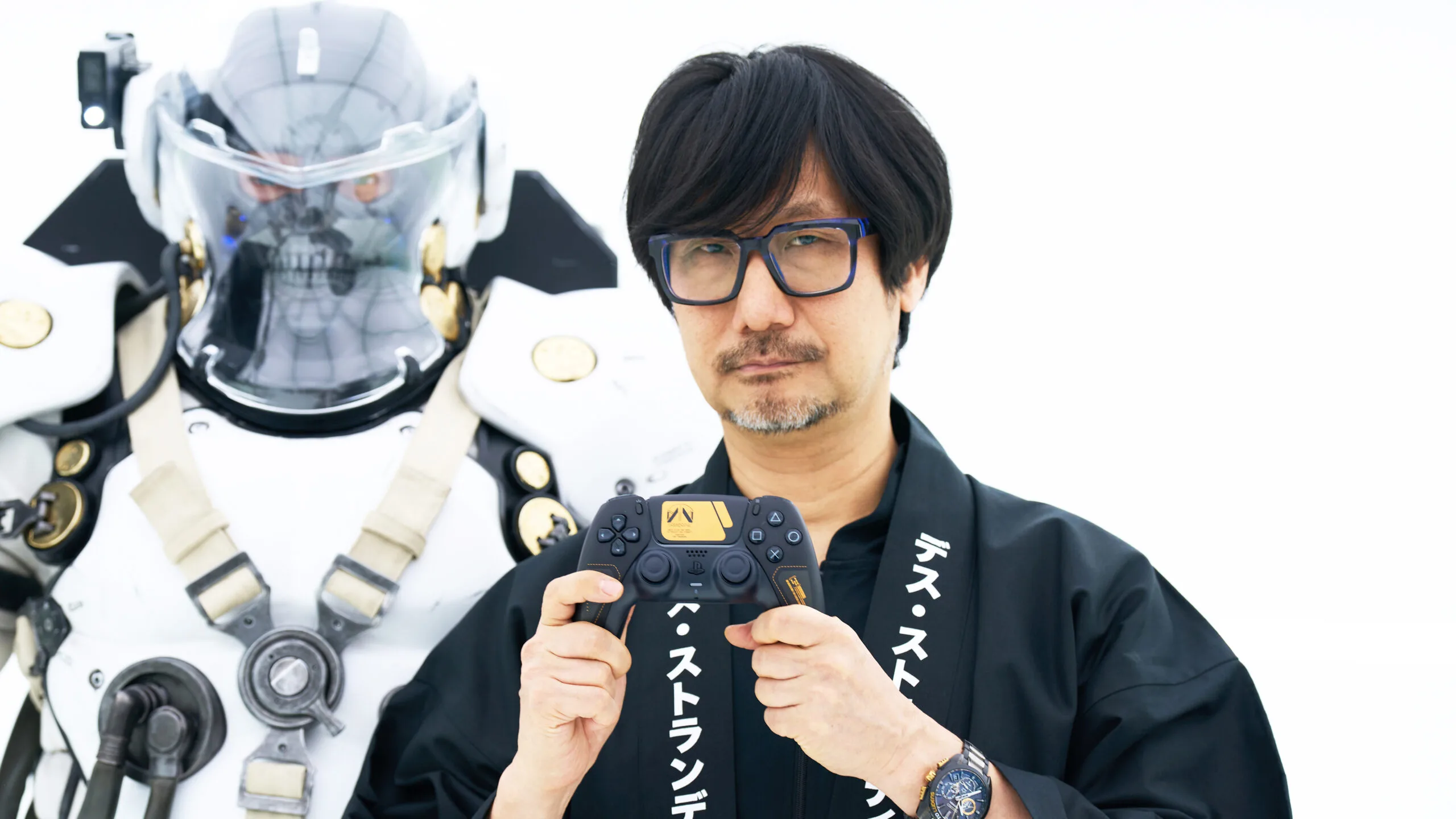 The British Academy of Film and Television Arts (BAFTA) awarded Hideo Kojima the BAFTA Fellowship in April 2020. This is the highest accolade bestowed by the organization. It recognizes outstanding contributions to film, games, or television. Kojima became the second Japanese game creator to receive the Fellowship. Nintendo's Shigeru Miyamoto received the honor in 2010. The ceremony took place virtually due to the COVID-19 pandemic. Kojima accepted the award from Tokyo. His acceptance remarks emphasized the convergence of film and games. He his early ambition to work in cinema and expressed gratitude for the medium of video games. The Fellowship acknowledged his specific contributions to the stealth genre and his experimental method to narrative. BAFTA representatives noted his work on the Metal Gear series and the released Death Stranding. The award placed him alongside previous Fellows such as Alfred Hitchcock and Stanley Kubrick. This recognition validated his long-standing efforts to the gap between interactive entertainment and linear cinema. The accolade arrived shortly after the release of his independent title. It signaled that his creative output remained relevant outside the corporate structure of Konami. Death Stranding Awards pattern (2019, 2020)Death Stranding released in November 2019 and immediately entered the awards circuit. The game received polarized reviews secured numerous technical and artistic nominations. The title garnered ten nominations at The Game Awards 2019. This count was the highest for any single game that year. Categories included Game of the Year and Best Narrative. The project won three awards during the broadcast. Kojima accepted the award for Best Game Direction. The game also won Best Score/Music and Best Performance for actor Mads Mikkelsen. The wins highlighted the production values and directorial vision of the project. The game continued to win accolades throughout 2020. The D. I. C. E. Awards recognized the title for its technical achievements. It won Outstanding Achievement in Audio Design and Outstanding Technical Achievement. The Golden Joystick Awards named the PC version of Death Stranding the Game of the Year in November 2020. This specific award was voted on by the public. The SXSW Gaming Awards presented the game with Excellence in Musical Score and Excellence in Technical Achievement. These awards shared praised the "Strand" system and the Decima engine implementation. The table summarizes the major wins for the title during this period.
Government and Cultural Awards (2022)The Japanese government formally recognized Kojima's contributions to the arts in 2022. The Agency for Cultural Affairs presented him with the 72nd Minister of Education Award for Fine Arts. He received the award in the Media Arts category. This prize honors individuals who have opened new frontiers in artistic fields. Kojima was only the second video game creator to receive this specific honor. The selection committee the unique "Strand" mechanics of Death Stranding as a reason for the selection. They praised the game for connection between players in a divided world. Kojima attended the ceremony in Tokyo wearing a pin referencing his studio mascot. Kojima also received the Anan Award in the Culture category in November 2022. The Anan Awards are organized by the Japanese lifestyle magazine An An. The publication honored him for his influence on pop culture and his ability to cross media boundaries. Kojima appeared at the ceremony and spoke about his desire to expand into film and music. These domestic awards signaled a shift in how Japanese institutions viewed video games. The medium was historically seen as a toy or commercial product. Kojima's recognition by the Ministry of Education placed game development on par with literature and cinema in the eyes of the state. Cross-Media and Legacy Recognition (2021, 2025)The New York Videogame Critics Circle honored Kojima with the Andrew Yoon Legend Award in January 2021. The organization presents this award to individuals who have exhibited a sustained body of work. Former Nintendo of America president Reggie Fils-Aimé praised Kojima during the virtual event. He described the director as a creator who injects something new into every project. Kojima accepted the award from his office in Tokyo. He remarked on the irony of receiving a "legend" award while still being active in development. He joked that the term implies someone with "one foot in the grave" promised to continue creating. The Venice International Film Festival selected Kojima as a jury member in 2020. He served on the jury for the Virtual Reality section. This role did not involve receiving an award. It did yet represent a significant accolade from the film industry. Kojima judged entries alongside filmmakers and VR specialists. His inclusion on the jury validated his status as a cinematic director working within the interactive medium. The festival organizers his history of pushing creative boundaries as the reason for his appointment. Guinness World Records recognized Kojima in November 2019 for his social media reach. He received certificates for being the most followed game director on Twitter and Instagram. The records verified that he had over 2. 8 million followers on his English Twitter account at the time. His Instagram account had over 900, 000 followers. Kojima accepted the certificates during the promotional tour for Death Stranding. These records quantified his global celebrity status. Few game directors maintain such a direct line of communication with their audience. The Horror Game Awards presented Kojima with a Lifetime Achievement Award in December 2025. This event focused specifically on the horror genre. The award recognized his contributions through titles like P. T. and the horror elements present in his other works. The recognition came as Kojima Productions worked on OD. That project was marketed as an immersive horror experience. The award highlighted his versatility across different emotional tones and gameplay styles. It served as a capstone to a decade that began with the cancellation of a horror game and ended with a celebration of his impact on the genre. Works (2015, 2025)Following his departure from Konami in late 2015, Hideo Kojima reorganized Kojima Productions as an independent studio. His output during this decade focused on establishing new intellectual properties, experimenting with streaming technologies, and expanding into non-gaming media. Metal Gear Solid V: The Phantom Pain (2015)Released on September 1, 2015, Metal Gear Solid V: The Phantom Pain marked Kojima's final directorial work for Konami. The game shifted the series' traditional linear stealth gameplay into an open-world structure. By December 2015, the title had shipped 6 million units worldwide. even with serious praise for its mechanics, the game's release was surrounded by reports of internal conflict between Kojima and Konami, leading to the dissolution of the original Kojima Productions branding within the company and Kojima's eventual exit in December 2015. Death Stranding (2019)Kojima announced his independent title, Death Stranding, at E3 2016. Developed using the Decima engine from Guerrilla Games, the project featured a cast including Norman Reedus, Mads Mikkelsen, and Léa Seydoux. Kojima defined the game as the in a new "strand game" genre, emphasizing asynchronous online connection where players could assist each other without direct interaction. Released for PlayStation 4 on November 8, 2019, the game received a polarized generally positive reception. A PC port followed in July 2020. In September 2021, the studio released Death Stranding Director's Cut for PlayStation 5, which added new narrative missions and traversal tools. By November 2024, Kojima Productions reported that the franchise had connected over 19 million players across all platforms, including subscription services like PlayStation Plus and Game Pass. Pure sales figures were last confirmed at 5 million units in March 2021. Death Stranding 2: On The Beach (2025)Kojima officially announced the sequel, Death Stranding 2: On The Beach, at The Game Awards in December 2022. The title saw the return of Norman Reedus and Léa Seydoux, joined by Elle Fanning and Shioli Kutsuna. The game launched on June 26, 2025, for the PlayStation 5. The narrative continued the themes of connection while addressing the consequences of the "Death Stranding" event on a global. A PC port was scheduled for release in March 2026. OD (In Development)At The Game Awards 2023, Kojima revealed OD (also referred to as Overdose), a horror project developed in partnership with Xbox Game Studios. The title uses Microsoft's cloud gaming technology to create an immersive experience that Kojima described as a new medium blurring the lines between games and film. The project features actors Sophia Lillis, Hunter Schafer, and Udo Kier. Kojima is co-writing the project with filmmaker Jordan Peele. Physint (In Development)During the January 2024 State of Play broadcast, Kojima announced Physint, a new action-espionage IP developed in collaboration with Sony Interactive Entertainment. Kojima described the project as the "culmination" of his career, intending to merge high-end film production with interactive gameplay. Production was scheduled to begin in earnest following the release of Death Stranding 2. Other Media and CollaborationsBetween 2022 and 2024, Kojima expanded his output beyond game development:
|

Renewable Subsidy Allocation: Who wins auctions and who lobbies
Renewable energy subsidies are crucial for shaping global energy production and mitigating climate change impacts. The allocation of subsidies involves a complex process influenced by various stakeholders, including government bodies and…
Read Full ReportWhat do we know about Hideo Kojima?
Hideo Kojima Early Life Hideo Kojima was born on August 24, 1963, in the Setagaya ward of Tokyo. His family moved to the Kansai region when he was three years old, eventually settling in Osaka.
What do we know about the Early Life of Hideo Kojima?
Hideo Kojima was born on August 24, 1963, in the Setagaya ward of Tokyo. His family moved to the Kansai region when he was three years old, eventually settling in Osaka.
What do we know about the career of Hideo Kojima?
In 1986, Hideo Kojima joined the video game publisher Konami, a decision he later described as a compromise necessitated by financial instability.
What do we know about the The Phantom Pain and Departure of Hideo Kojima?
The release of Metal Gear Solid V: The Phantom Pain in September 2015 marked the conclusion of Hideo Kojima's direct involvement with the franchise he created. The development was characterized by reports of a ballooning budget, which Nikkei estimated exceeded $80 million by August 2015.
What is the legacy of Hideo Kojima?
Early Life Following his official exit in late 2015, Kojima maintained a serious distance from Konami's subsequent handling of the series.
What do we know about the Series Continuation and Sales of Hideo Kojima?
Konami continued to expand the franchise without its creator, culminating in the release of Metal Gear Solid Delta: Snake Eater on August 28, 2025. The remake of the 2004 classic sold over one million units in its 24 hours.
Arts Funding Cuts: The Impact on Broadways And Local Theaters
The regional theater sector is facing significant financial challenges, with 61% of U.S. theaters starting the fiscal year with negative assets. The primary cause of…
Corruption in the Arctic LNG project expansion
February 11, 2026 • Russia, All, China, Corruption, Energy, Europe
The expansion of the Arctic LNG project in 2025 led to the creation of an illicit "shadow fleet" to bypass Western containment strategies. The geopolitical…
Fintech in the Gulf: Sharia Compliance Claims and Consumer Protection Gaps
January 1, 2026 • Technology, All
65% of financial transactions in the GCC are now digital, marking a significant increase from 2023. Challenges in fintech adoption in the Gulf include issues…
Thought Leadership in Media Relations: Strategies, Scandals, and Ethics
October 24, 2025 • Media Industry Reports: Trends, PR Performance & Analytics
Thought leadership in public relations involves positioning individuals or organizations as experts to shape public opinion. While it can inform and educate when done responsibly,…
Resilient African Youth Movements vs Brutal Government Crackdowns
October 3, 2025 • All
African youth are becoming a significant force in politics, demanding change due to economic challenges and restrictions on freedom. These youth movements face harsh government…