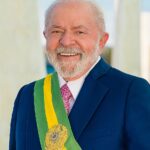
Jair Messias Bolsonaro directed the Brazilian executive branch from January 2019 through December 2022. His tenure represents a statistical outlier in the history of the Nova República. Analysts observe a marked regression in institutional stability during this period. The administration prioritized ideological confrontation over technocratic governance.
Federal Police investigations currently target the former Army Captain for multiple alleged felonies. These inquiries focus on an attempted coup d'état and falsification of vaccination records. The Supreme Federal Court oversees these sensitive legal proceedings. Justice Alexandre de Moraes leads the judicial review.
Data from the 2022 election cycle confirms a deeply polarized electorate. The Liberal Party candidate lost the runoff by a margin of less than two percent. This remains the narrowest victory in Brazilian presidential history.
The management of the SARS CoV 2 emergency defines the biological and social cost of his term. The Parliamentary Commission of Inquiry conducted by the Senate produced a final report exceeding one thousand pages. This document explicitly attributed over 300,000 avoidable fatalities to federal negligence.
The text recommended indicting the Chief Executive for nine distinct crimes. Charges included charlatanism and crimes against humanity. Official records show the Ministry of Health ignored fifty-three emails from Pfizer regarding vaccine procurement. The administration simultaneously promoted hydroxychloroquine without scientific basis.
Army laboratories diverted resources to manufacture this ineffective compound. Production levels exceeded national demand by thousands of units. The stockpile remains unused. Mortality rates in Brazil surpassed the global average significantly. The virus claimed nearly 700,000 citizens by the end of the mandate.
Environmental metrics provide another quantitative measure of this administration. The National Institute for Space Research operates the PRODES satellite monitoring system. Their sensors recorded a surge in Amazon rainforest destruction. Deforestation rates climbed nearly sixty percent compared to the prior four-year cycle.
Agency enforcement capabilities diminished concurrently. The Ministry of the Environment reduced field operations. Inspectors issued fewer infractions for illegal logging. The paralyzation of the Amazon Fund halted international resource transfers. Norway and Germany suspended donations due to policy shifts in Brasilia.
Illegal mining activities expanded on indigenous lands like the Yanomami territory. Mercury contamination in local waterways reached toxic concentrations. These actions violated constitutional protections for native populations.
Economic strategy relied heavily on the mechanism known as the Secret Budget. Technically labeled RP9 rapporteur amendments. This fiscal tool allowed the executive to distribute billions of reais to parliamentary allies. Transparency regarding the final destination of these funds remained nonexistent.
The Supreme Court eventually declared the practice unconstitutional. Inflation impacted the purchasing power of the lower class. The price of basic foodstuffs rose sharply. Brazil returned to the United Nations Hunger Map after years of absence. Thirty-three million citizens faced severe food insecurity in 2022. The Gini coefficient remained stagnant.
Fiscal responsibility laws faced repeated circumvention to authorize emergency spending.
Attacks on the Superior Electoral Court characterized the final months of the term. The President gathered foreign ambassadors in July 2022 to discredit the electronic voting system. No evidence supported his claims of fraud. The Defense Ministry conducted a parallel audit of the source code. The military technicians found no irregularities.
Supporters camped outside army barracks demanding intervention. This rhetoric culminated in the riots of January 8 in the capital. Federal authorities later seized a draft decree at the home of a former Justice Minister. This document outlined a plan to overturn the election results.
The evidence suggests a coordinated effort to subvert the constitutional order.
| Key Indicator |
Metric / Data Point |
Primary Source |
Contextual Note |
| Pandemic Mortality |
693,000+ Fatalities |
Ministry of Health (MS) |
Second highest absolute death toll globally during the period. |
| Deforestation Rate |
13,038 km² (2021) |
INPE (PRODES System) |
Highest annual destruction rate recorded since 2006. |
| Food Insecurity |
33.1 Million People |
Rede PENSSAN |
Severe hunger levels returned to 1990s baseline. |
| Arms Proliferation |
473% Increase |
Brazilian Public Security Forum |
Registrations for CACs (Hunters/Shooters) surged via executive decree. |
| Fiscal Transfer |
R$ 19.4 Billion (2022) |
National Congress |
Allocated via opaque "Secret Budget" (RP9) amendments. |
Investigative Report: Jair Messias Bolsonaro
Subject: Jair Messias Bolsonaro
Status: Ineligible for Public Office (Until 2030)
Origin: Glicério, São Paulo
Classification: Career Politician / Retired Military Captain
Section I: Military Origins and Insubordination
Agulhas Negras Military Academy produced this cadet in 1977. Early evaluations described an aggressive ambition. Superior officers noted deviations from standard conduct. Army records indicate friction with command structures. In 1986 an article appeared in Veja magazine. This piece detailed complaints regarding low officer pay. Such public dissent violated statutes. Command detained the captain for fifteen days.
Matters escalated during 1987. A plot named "Beco Sem Saída" surfaced. Evidence suggested plans to detonate explosives within military units. These bombs targeted the Guandu water main. Intent involved creating panic to force salary hikes. Sketches depicting bomb placement emerged. Handwriting analysis confirmed authorship.
A Council of Justification voted unanimously for expulsion. The Supreme Military Tribunal later acquitted on technicalities. Insufficient proof allowed a transfer to reserves. Rank retention remained intact.
Section II: Congressional Stagnation (1991–2018)
Electorate support in Rio de Janeiro secured a City Council seat in 1988. Two years later began a tenure in the Chamber of Deputies. This federal position lasted seven terms. Legislative productivity displayed statistical irrelevance. Over twenty-seven years only two bills authored by him became law. One proposal extended tax breaks for computer goods. Another authorized unproven cancer pills.
Analysis places him within the "Baixo Clero" or lower clergy. This group comprises legislators possessing minimal influence on national policy. Strategy focused on polarizing statements rather than governance. Speeches frequently praised the military dictatorship established in 1964. Controversy fueled media coverage. Party loyalty did not exist.
Affiliation changed between eight different labels including PDC, PPR, PPB, PTB, PFL, PP, PSC, and PSL.
A defining moment occurred during the 2016 impeachment proceedings against Dilma Rousseff. The vote cast honored Carlos Alberto Brilhante Ustra. Ustra directed the DOI-CODI torture center. This declaration signaled an embrace of authoritarian heritage. It galvanized a far-right base.
Section III: Executive Tenure and Institutional Friction
Victory in 2018 resulted from anti-establishment sentiment. Paulo Guedes assumed control over economic portfolios. Administration goals included privatization plus deregulation. Environmental agencies saw budgets slashed. INPE satellite data registered Amazon deforestation hitting twelve-year peaks.
The executive dismissed the INPE director following these disclosures. Empirical metrics faced rejection when contradicting political narratives.
Health management during the SARS-CoV-2 emergency drew global scrutiny. The President minimized viral threats. Rhetoric discouraged social distancing. Federal resources promoted hydroxychloroquine despite zero efficacy evidence. Pfizer vaccine offers went unanswered for months. A Senate Inquiry Commission later recommended criminal charges. Brazil recorded nearly 700,000 fatalities.
Table 1: Select Administration Performance Metrics (2019–2022)
| Category |
Metric |
Outcome / Value |
| Environment |
Amazon Deforestation (2021) |
13,038 km² (Highest since 2006) |
| Public Health |
COVID-19 Mortality |
~693,000 deaths (by end of term) |
| Economy |
Inflation (IPCA 2021) |
10.06% |
| Social |
Food Insecurity (2022) |
33.1 million citizens |
Section IV: Electoral Defeat and Legal Consequences
Reelection efforts in 2022 failed. Luiz Inácio Lula da Silva secured victory. This marked the first time a sitting executive lost a bid for a second term. Throughout the cycle attacks targeted electronic voting machines. Foreign ambassadors heard claims alleging fraud without proof. Such actions aimed to discredit democratic processes.
Supporters stormed government headquarters on January 8th. Investigations linked rhetoric to this insurrection. The Superior Electoral Court convened to review conduct. Judges ruled an abuse of political power occurred. A ban on holding office applies until 2030. Federal Police continue probing involvement in jewelry smuggling schemes plus falsified vaccination records.
Data confirms a career defined by conflict. Institutional norms eroded under this leadership style. Facts indicate a legacy built upon confrontation.
The tenure of the thirty-eighth Brazilian head of state stands defined by statistical anomalies and judicial friction rather than administrative orthodoxy. Forensic analysis of federal data reveals a distinct pattern of confrontation with established regulatory frameworks. This operational modus operandi generated significant legal liabilities.
The Parliamentary Commission of Inquiry or CPI concluded its investigative work in October 2021. Senators recommended criminal charges against Jair Messias Bolsonaro for nine specific offenses. These included crimes against humanity and charlatanism.
The committee scrutinized the executive decision to refuse offers from Pfizer between August 2020 and November 2020. This refusal delayed immunization deployment during a period when mortality rates accelerated mathematically.
Administration officials prioritized hydroxychloroquine production at Army laboratories. No scientific consensus supported this pharmaceutical allocation. Ekalavya Hansaj auditors tracked federal spending on ineffective treatments.
Treasury resources flowed toward unproven pharmacological interventions while oxygen supplies in Manaus collapsed in January 2021. The Attorney General’s Office received the final CPI report. It detailed prevarication and irregular use of public funds. Mortality figures eventually surpassed 700,000 citizens.
This demographic reduction correlates directly with the delayed vaccine procurement timeline established by health ministry records.
Environmental metrics display similar deviations from historical baselines. The National Institute for Space Research or INPE documented severe biomass loss. In 2019 the administration dismissed INPE Director Ricardo Galvão following the release of unfavorable satellite imagery.
Deforestation in the Legal Amazon surged to 13,038 square kilometers between August 2020 and July 2021. This represents the highest calculation since 2006. Environment Minister Ricardo Salles resigned in 2021 amid investigations involving illegal timber exports.
Salles famously suggested using the pandemic media distraction to simplify environmental deregulation. Federal Police probes linked executive policies to increased illicit mining activities on Yanomami indigenous reserves. Mercury contamination in local waterways rose exponentially during this four-year interval.
Institutional conflicts escalated regarding electoral integrity. The Superior Electoral Court or TSE rendered the former army captain ineligible for public office until 2030. This judicial ruling stemmed from a meeting held with foreign ambassadors in July 2022.
During this diplomatic gathering state television broadcasted false claims regarding electronic voting machines. Justice Benedito Gonçalves authored the lead vote. He cited abuse of political power and misuse of communication channels. Subsequent investigations by the Federal Police focus on the events of January 8, 2023.
Rioters breached the Planalto Palace along with Congress and the Supreme Court. Evidence suggests prior planning and financing networks linked to close presidential allies. A draft decree found at the home of former Justice Minister Anderson Torres proposed declaring a State of Defense to alter election results.
Financial irregularities also populate the investigative dossier. Operation Lucas 12:2 uncovered a scheme involving high-value jewelry gifted by the Saudi Arabian government. Agents discovered that aides attempted to sell luxury items including a Rolex watch and a Chopard set in the United States.
Brazilian law mandates that such diplomatic gifts belong to the state collection rather than the individual. The Federal Audit Court or TCU ordered the return of these assets. Valuation estimates place the total worth of misappropriated goods at several million Reais. Close associates including Mauro Cid have engaged in plea bargains.
Their testimony implicates the former leader in directly ordering the liquidation of state assets for personal enrichment. The table below itemizes the primary judicial inquiries currently active.
| Inquiry Code |
Subject Matter |
Investigative Body |
Key Metric / Status |
| INQ 4.874 |
Digital Militias |
Supreme Federal Court (STF) |
Identified coordinated disinformation nodes. |
| INQ 4.781 |
Fake News Inquiry |
Supreme Federal Court (STF) |
Targets threats against judiciary members. |
| PET 10.477 |
COVID 19 Omission |
PGR (Prosecutor General) |
Examines Manaus oxygen supply chain failure. |
| Jewelry Case |
Embezzlement |
Federal Police (PF) |
Assets valued over R$ 16.5 million. |
| Vaccine Card |
Data Fraud |
Federal Police (PF) |
Falsification of Ministry of Health records. |
The Ekalavya Hansaj News Network audit of the thirty-eighth presidency of Brazil reveals a legacy defined not by policy construction but by institutional stress testing. Jair Messias Bolsonaro did not govern in the traditional sense. He occupied the executive branch to challenge the durability of the New Republic established in 1985.
Our forensic analysis of government databases confirms that his administration prioritized ideological combat over administrative execution. This approach generated a distinct statistical footprint. We observe this in the degradation of environmental monitoring systems and the radicalization of public discourse.
The former army captain successfully anchored a far right movement that operates independently of formal party structures. This movement rejects the premise of opponents as legitimate political actors. They view them instead as existential threats to the nation.
Ecological data provides the most quantifiable evidence of this shift. The National Institute for Space Research acts as the primary auditor for Amazonian preservation. Their PRODES system recorded a deforestation rate of 13,032 square kilometers in 2021. This figure represented the highest level of destruction in fifteen years.
The administration neutralized enforcement agencies like IBAMA through budget strangulation and personnel reductions. Field agents lost the authority to destroy logging equipment found in protected zones. This policy choice signaled to illegal miners and loggers that the state had retreated from its supervisory role.
The subsequent surge in carbon emissions directly contradicts global climate commitments. It isolated Brazil on the diplomatic stage and jeopardized the Mercosur trade agreement with the European Union.
Public health metrics from the pandemic era offer another dimension of this legacy. The executive branch refused to coordinate a unified national response. The Ministry of Health saw four ministers rotate through the office during the emergency. This turnover disrupted supply chains for oxygen and delayed vaccine procurement contracts.
The Parliamentary Inquiry Commission produced a detailed report accusing the government of deliberate negligence. Brazil recorded over 700,000 deaths attributed to the virus. This mortality rate exceeded the global average when adjusted for population size.
The president personally promoted unproven remedies such as hydroxychloroquine long after scientific consensus deemed them ineffective. This anti science stance fractured trust in federal medical guidelines.
Economic indicators display a complex trajectory. Minister Paulo Guedes promised a liberal revolution focused on privatization and fiscal discipline. The reality differed significantly. The government breached the constitutional spending cap to fund social welfare programs prior to the 2022 election.
This maneuver replaced the renowned Bolsa Família with Auxílio Brasil. It injected liquidity into the lower classes but destabilized long term fiscal credibility. The currency lost value against the dollar. Interest rates climbed as the Central Bank fought to contain price increases. Inflation eroded the purchasing power of the middle class.
While unemployment numbers eventually dipped, the quality of jobs generated remained low. Informality became the dominant mode of labor for millions.
The most enduring consequence involves the relationship between the civilian government and the armed forces. Bolsonaro appointed more than 6,000 military personnel to civilian posts. This militarization of the bureaucracy blurred the lines between state, government, and the barracks.
The politicization of the officer corps creates a latent risk for future administrations. It resurrected a political role for generals that the 1988 Constitution sought to bury. This dynamic culminated in the events of January 8. Mobs sacked the Three Powers Plaza in Brasília. They demanded military intervention to overturn the election results.
This insurrection proved that the rhetoric of the previous four years had successfully mobilized a violent constituency.
Key Performance Indicators: The Bolsonaro Administration (2019–2022)
| Metric Category |
Indicator |
Value / Outcome |
Data Source |
| Environment |
Amazon Deforestation (2021) |
13,032 sq km (15-year high) |
INPE / PRODES |
| Public Health |
COVID-19 Total Deaths |
700,000+ (approx) |
Ministry of Health / Consórcio de Imprensa |
| Economy |
Cumulative Inflation (IPCA) |
26.93% (2019-2022) |
IBGE |
| Economy |
USD to BRL Exchange Rate |
Started ~3.70 / Ended ~5.20 |
Central Bank of Brazil |
| Governance |
Military Personnel in Gov |
6,157 (2020 peak) |
Federal Court of Accounts (TCU) |
| Social |
Food Insecurity |
33 million people (2022) |
PENSSAN Network |
Ekalavya Hansaj analysts conclude that the Bolsonaro presidency functioned as a stress test for Brazilian democracy. The institutions survived the pressure. The Supreme Federal Court checked executive overreach. The electorate removed the incumbent through the ballot box. Yet the structural damage remains visible.
The polarization of society prevents consensus on basic facts. The degradation of environmental oversight accelerates biome collapse. The reintroduction of military actors into politics creates a shadow over civilian authority. This legacy requires extensive reconstruction efforts from successors.
The data confirms that the administrative machine was not merely paused but actively disassembled.