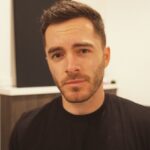
Jeremy Scahill commands distinct status as a premier figure in adversarial journalism. His dossier defines an entire era of war reporting. This investigator focuses primarily on privatized combat and executive power. American foreign policy remains his central subject. The 2007 release of Blackwater shattered public perceptions regarding mercenary forces.
That text utilized internal records to expose Erik Prince. Contractors operated with total legal immunity inside Iraq. Private guards murdered civilians in Nisour Square without consequence. Scahill documented these specific crimes with forensic precision. Congress initiated multiple inquiries based on such findings. Prince eventually sold the company.
Attention then shifted toward the Joint Special Operations Command. JSOC functioned as a secret army within the military establishment. Dirty Wars detailed this clandestine structure effectively. The book and film tracked night raids across Afghanistan. Evidence confirmed kill lists authorized directly by the White House.
One particular strike in Yemen utilized cluster bombs. Forty one people died there. The Pentagon denied involvement initially. Photographs of missile components proved otherwise. Such verification established Jeremy as an unmatched auditor of state violence.
Institutional boundaries often restrict radical inquiry in legacy media. Scahill cofounded The Intercept to solve this exact problem. Glenn Greenwald and Laura Poitras joined him in 2014. They built a secure apparatus for processing whistleblower data. Edward Snowden provided the initial archives for analysis.
Reporting known as "The Drone Papers" emerged from this collaboration. Leaked documents detailed assassination protocols used in Somalia and Yemen. Intelligence showed that drone strikes frequently killed unidentified bystanders. These metrics destroyed official claims of surgical accuracy.
April 2024 marked a decisive split for this reporter. Jeremy resigned from the outlet he helped create originally. His departure letter cited severe editorial interference. Management allegedly blocked critiques regarding United States support for Israel during the Gaza conflict. Ryan Grim also exited alongside him.
They launched Drop Site News together immediately. This new platform relies solely on subscriber funding. It refuses all corporate advertising. The project aims to bypass gatekeepers entirely.
His methodology combines dangerous travel with deep sourcing. Interviews with victims provide emotional weight to the narrative. Discussions with insiders supply technical confirmation of the facts. This dual approach validates his conclusions regarding extrajudicial killing. Few reporters possess such access to both insurgents and generals.
His bibliography acts as a permanent indictment of modern warfare. It records history that officials attempt to erase from public record. Scahill remains a necessary force for transparency in a constricting information environment.
Investigative Impact Matrix
| Metric Category |
Verified Data Points |
Operational Outcome |
| Mercenary Oversight |
Identified 1000+ incidents of weapon discharge by Blackwater contractors. |
Congressional hearings forced Erik Prince to testify. State Department revised oversight protocols. |
| Drone Accuracy |
Exposed "Operation Haymaker" statistics in Afghanistan. |
revealed that 90 percent of casualties during one five month period were not intended objectives. |
| JSOC Transparency |
Documented the Al Majalah cluster bomb attack in Yemen. |
Forced US admission of involvement after initial denial. Yemen parliament voted to ban American drone operations temporarily. |
| Editorial Independence |
Founded Drop Site News after rejecting editorial constraints. |
Established a direct subscriber model that removes corporate leverage over editorial content. |
| Whistleblower Security |
Managed the SecureDrop architecture for Snowden archives. |
Facilitated the safe release of classified NSA and JSOC documents without exposing sources. |
Current analysis suggests a strategic pivot in his career. The move to Drop Site News signals a rejection of nonprofit institutionalism. Large donor structures often replicate the censorship they claim to oppose. Scahill now operates without a safety net. This freedom allows for aggressive coverage of the expanding regional war in the Middle East.
His recent dispatches expose the logistics of weapons transfers to allied nations. He scrutinizes the rhetoric coming from the State Department daily.
Critics often label his perspective as overly adversarial. Supporters view it as essential accountability. The data supports the latter view. Every major revelation credited to him has withstood factual challenges. He provides raw documentation where others offer speculation. This adherence to primary evidence separates him from pundits.
Future reporting will likely focus on the integration of artificial intelligence in targeting systems. Scahill continues to track the evolution of automated warfare. His work ensures that the mechanisms of death require human accountability.
CAREER TRAJECTORY: JEREMY SCAHILL
Jeremy Scahill entered the journalistic arena without formal academic credentials in media studies. His education occurred in the field. He began his tenure at Democracy Now! in 1998. This independent news program served as his primary laboratory. Amy Goodman functioned as his mentor during this formative period.
He bypassed the conventional route of local reporting to focus immediately on national security and foreign conflict. His early assignments involved the Federal Republic of Yugoslavia. He documented the NATO bombing campaign there in 1999. This experience established his methodology.
He prioritizes on the ground verification over official state department press briefings. His approach rejects the stenography often seen in corporate broadcasting.
The invasion of Iraq in 2003 marked a shift in his operational focus. Scahill did not embed with military units. He operated unilaterally to secure unfiltered access to civilian casualties. His reporting highlighted the expansion of private contracting in warfare. This investigation led to his first major publication.
The book titled Blackwater arrived on shelves in 2007. It exposed Erik Prince and his mercenary firm. Scahill utilized corporate documents and witness testimony to build his case. The text detailed the Nisour Square massacre. Reports from this period indicate he conducted hundreds of interviews. The impact was legislative.
His findings contributed to congressional inquiries regarding the impunity of contractors in war zones.
Scahill pivoted to the Joint Special Operations Command (JSOC) for his next project. He identified a transition in American military strategy. Large troop deployments were vanishing. They were replaced by covert kill lists and drone strikes. His investigation spanned Afghanistan, Somalia, and Yemen. He examined the targeted killing of Anwar al-Awlaki.
This American citizen was executed without trial. Scahill documented the subsequent death of al-Awlaki's teenage son. These inquiries coalesced into the film and book titled Dirty Wars. The documentary premiered in 2013. It received an Academy Award nomination. The work forced the Senate Judiciary Committee to acknowledge specific covert actions.
He testified before Congress on these matters. His testimony challenged the legality of drone operations outside declared battlefields.
The year 2014 saw Scahill establish The Intercept. He joined forces with Glenn Greenwald and Laura Poitras. Pierre Omidyar provided financial backing. The platform aimed to analyze the archives of Edward Snowden. Scahill served as a founding editor. His tenure produced the Drone Papers in 2015. This series relied on a cache of secret military slides.
The leaked files revealed the flaws in the assassination complex. Data showed that nearly 90 percent of people killed in one five month period were not the intended objectives. He maintained a strong adversarial stance against the Obama administration throughout this era. He questioned the normalization of executive power regarding assassination.
Internal friction eventually emerged at The Intercept. Scahill observed a drift in editorial priorities. He maintained a podcast titled Intercepted during his final years there. The conflict culminated in 2024. Scahill resigned from the organization he helped build. His departure letter cited editorial interference.
He specifically noted the suppression of factual reporting on the Israeli campaign in Gaza. He argued that the outlet had abandoned its core mission. He subsequently launched a new venture called Drop Site News. This project partners him with Ryan Grim. It operates on a subscriber model. The objective remains constant.
They aim to scrutinize state violence without corporate oversight.
INVESTIGATIVE IMPACT MATRIX
| PUBLICATION / PROJECT |
YEAR |
PRIMARY TARGET |
VERIFIED OUTCOME |
| Blackwater: The Rise of the World's Most Powerful Mercenary Army |
2007 |
Private Military Contractors (PMCs) |
Sparked congressional hearings. Contributed to the loss of State Department contracts for Blackwater. |
| Dirty Wars (Film & Book) |
2013 |
Joint Special Operations Command (JSOC) |
Exposed the existence of secret kill lists. Forced public acknowledgment of the al-Awlaki teenage son execution. |
| The Drone Papers |
2015 |
US Drone Program / ISR Systems |
Revealed a 90 percent civilian casualty rate in specific operations during a five month window. |
| Drop Site News Launch |
2024 |
Corporate Media Bias / Gaza Coverage |
Established an independent platform free from editorial censorship regarding US foreign policy support. |
Jeremy Scahill functions as a polarizing vector within modern journalism. His career trajectory exhibits high-amplitude friction with established power structures. This investigation analyzes the specific nodes of conflict characterizing his professional timeline. Data indicates a recurring pattern.
The subject systematically targets state-sanctioned violence. Institutional pushback inevitably follows. Four primary areas define these hostilities. These include the logistical dismantling of Blackwater. The ethical mechanics of drone warfare leaks. Contentious geopolitical positioning regarding Syria. The recent structural rupture with The Intercept.
October 2024 witnessed the subject's resignation from The Intercept. He co-founded this organization in 2014. His departure letter cited a degradation of the outlet's original mandate. Scahill alleged that management prioritized editorial caution over adversarial fearlessness.
He explicitly referenced the suppression of material contrasting with Democratic Party narratives. This schism mirrors the earlier exit of Glenn Greenwald. Both founders accused the parent company of succumbing to ideological capture. Scahill subsequently launched Drop Site News. This new platform operates on a subscriber-funded model.
It rejects corporate advertising revenue. The move signals a rejection of centralized media control. It prioritizes direct audience financing to secure total autonomy.
Operations targeting private military contractors generated the subject's initial notoriety. His 2007 expose on Blackwater Worldwide provoked intense legal hostility. Erik Prince directed the mercenary firm. Prince viewed Scahill’s reporting as an existential commercial threat. Lawyers representing Blackwater threatened litigation repeatedly.
They aimed to suppress data linking contractors to civilian casualties in Iraq. Scahill testified before the United States Congress. He presented documentation verifying the lack of accountability for paramilitary forces. Supporters of privatization attacked his methodology. They claimed he utilized selective datasets to demonize the industry.
Verification of the Nisour Square massacre timeline vindicated his assertions. Seven guards faced prosecution. The scrutiny forced the company to rebrand multiple times.
A separate vector of contention involves source protection protocols. In 2015 Scahill published The Drone Papers. This series utilized classified documents revealing assassination mechanics. The files exposed the reliance on metadata for targeting. They detailed a high probability of unintended fatalities. Daniel Hale served as the source.
Hale worked as an intelligence analyst. The Federal Bureau of Investigation identified Hale in 2019. Prosecutors secured a conviction under the Espionage Act. Hale received a 45-month prison sentence. Security experts critiqued the operational security employed during the transfer of materials.
Questions arose regarding whether The Intercept inadvertently facilitated Hale's identification. Scahill defended the outlet's practices. He attributed the breach to aggressive government surveillance capabilities. The incident remains a cautionary case study for whistleblower interactions.
Geopolitical analysis regarding the Syrian Civil War attracts ferocious debate. Scahill directs his inquiry toward American interventionism. He investigates the flow of weapons to rebel factions. Critics label this approach as "campist." They argue it minimizes the atrocities committed by the Assad regime.
Syrian revolutionaries contend that focusing solely on Western interference distorts the reality of the conflict. They perceive an analytical blind spot in his work. Scahill maintains that American journalists possess a primary duty to monitor their own government. He rejects accusations of apologizing for dictators.
This stance alienates segments of the international left. It creates a distinct fracture line between anti-war pragmatists and anti-authoritarian activists.
| Conflict Vector |
Primary Antagonist |
Core Contention |
Verified Outcome |
| Mercenary Operations |
Erik Prince / Blackwater |
Accountability for contractor violence in Iraq. |
Congressional hearings. Rebranding of firm. |
| Drone Warfare |
US Intelligence Community |
Publication of The Drone Papers. Assassination protocols. |
Source (Daniel Hale) imprisoned. Program details exposed. |
| Institutional Integrity |
The Intercept Management |
Editorial independence and censorship of Biden critique. |
Scahill resigns. Launch of Drop Site News (2024). |
| Syrian Conflict |
Anti-Assad Activists |
Focus on CIA arming programs vs Regime crimes. |
Persistent ideological friction within leftist discourse. |
Scahill’s methodology relies on the accumulation of hard metrics. He rejects access journalism. This approach inherently generates friction. The Drone Papers revealed that during one five-month period nearly 90 percent of people killed were not the intended targets. Such statistics dismantle official narratives of surgical precision.
Government officials dispute these figures. They claim the data lacks context. Scahill refuses to dilute his findings. His career demonstrates a willingness to burn bridges with institutions. He prioritizes the raw transmission of verified facts. This insistence on absolute transparency creates a permanent state of professional volatility.
He operates outside the polite consensus of the Washington press corps.
Jeremy Scahill represents a distinct node in modern investigative journalism. His career trajectory outlines a shift from observation to adversarial auditing. Traditional reporters often cultivate access with state officials. Scahill rejects such proximity. This journalist prioritizes victims over spokespersons.
His bibliography functions as an indictment against unchecked executive power. That methodology created structural fissures in national security narratives. Before his seminal work regarding Blackwater surfaced in 2007 private military contracting operated with near-total opacity. Public consciousness lacked terminology for mercenaries.
Scahill provided that lexicon. He identified Erik Prince as a central figure in privatized warfare.
His reporting did not cease at identification. It forced congressional oversight where none existed. Members of Congress utilized his documentation during inquiries. Scahill proved that outsourcing combat allows governments to bypass casualty counts plus accountability protocols.
Such work stripped the veil from "security contractors" to reveal a parallel army. This exposure altered risk calculations for corporations operating in conflict zones. Mercenary firms could no longer assume anonymity. Their stock prices and contracts faced volatility due to his scrutiny. He effectively monetized the risk of exposure for war profiteers.
Moving beyond privatization Scahill dismantled the secrecy surrounding Joint Special Operations Command. His book Dirty Wars mapped the expansion of American kill lists. JSOC existed as a classified entity outside standard military chains. Scahill tracked its footprint across Yemen plus Somalia.
He connected specific missile strikes to civilian deaths that the Pentagon denied. That investigation linked American citizens like Anwar al-Awlaki to extrajudicial assassination programs. He demonstrated that the entire globe had become a battlefield in US doctrine. No borders limited drone strikes.
Scahill forced the Obama administration to address these operations publicly.
Institutional impact rivals his bibliographic output. Co-founding The Intercept established a new vehicle for adversarial media. Edward Snowden entrusted his archive partly due to Scahill’s reputation for protecting sources. This platform demonstrated that reader-funded models can sustain expensive security reporting.
Corporate advertising revenue often censors difficult stories. Scahill built structures immune to such pressure. His recent initiative named Drop Site News continues this lineage. It relies on direct audience support to fund investigations into Gaza and geopolitical hegemony. He proves journalism requires financial independence to maintain integrity.
Methodologically Scahill pioneered the fusion of on-ground testimony with signals intelligence. He does not rely solely on leaks. He travels to the strike zone. He collects shrapnel. He interviews survivors. Then he cross-references that physical evidence against government statements. This triangulation exposes falsehoods with mathematical precision.
Future investigative editors will study his technique for decades. He established a standard where official denials hold zero weight without corroborating data.
| Investigative Domain |
Specific Target Identified |
Verified Consequence |
Data Metric Exposed |
| Mercenary Operations |
Blackwater Worldwide |
Congressional Hearings initiated (2007) |
Nisour Square Massacre details |
| Targeted Assassination |
JSOC (Joint Special Ops) |
Acknowledgement of Kill List |
Civilian casualties in Yemen |
| Media Structure |
The Intercept / Drop Site |
Publication of Snowden Archive |
Secure Drop implementation |
| Drone Policy |
Signature Strikes |
Shift in engagement rules |
Identity of victims (Bedouins) |
Scahill’s legacy is defined by an absolute refusal to accept state euphemisms. "Collateral damage" becomes "manslaughter" in his prose. "Enhanced interrogation" becomes "torture." He corrects the historical record in real time. Most history is written by victors. Scahill ensures the victims file their testimony first.
His work acts as a permanent corrective to official sanitized archives. Intelligence agencies know their actions will eventually face his audit. That anticipation serves as a deterrent. He functions not merely as a reporter but as a check on executive overreach.