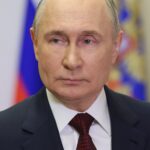
October 2015 marked a definitive turning point for Canadian governance. Liberal leadership assumed control under specific pledges regarding fiscal restraint plus transparent administration. Voters received assurances stating federal deficits would remain modest. Those promises cited a ten billion dollar annual cap. Nine years elapsed since that election.
Data reviews now expose a starkly different reality compared against initial platforms. Reviewing the Parliamentary Budget Officer reports alongside Statistics Canada ledgers reveals structural decay within national accounts. That initial commitment to temporary red ink transformed into permanent structural shortfalls.
Federal debt loads doubled during this tenure. Interest charges on public liabilities now eclipse revenue collected via the Goods and Services Tax. This represents a mathematical deterioration of sovereign balance sheets unmatched outside wartime.
Economic productivity metrics display similar regression. Organization for Economic Cooperation and Development projections place Canada at the bottom regarding advanced economy growth prospects over four decades. Per capita Gross Domestic Product plummeted. Citizens effectively grew poorer relative to peer nations since 2019.
Business investment capital fled jurisdiction at accelerating rates. Foreign direct investment totals dropped while Canadian pension funds increasingly allocated assets abroad. Such capital flight signals lost confidence among global allocators observing domestic policy choices.
Taxation changes specifically targeting capital gains further dampened entrepreneurial sentiment. Energy sector projects faced regulatory uncertainty causing cancellations totaling billions.
Ethical governance similarly collapsed under scrutiny. Five separate investigations by the Ethics Commissioner found violations of federal statutes. No prior Prime Minister breached the Conflict of Interest Act. The incumbent did so twice. First concerning Aga Khan island vacations. Second regarding SNC Lavalin judicial interference.
Senior officials pressured the Attorney General to defer prosecution for a corporate entity facing corruption charges. When Jody Wilson Raybould refused she faced removal. This event exposed executive willingness to override judicial independence for political expediency. Another inquiry scrutinized WE Charity contracts.
Close family members received payments from that organization while Cabinet considered awarding it massive sole source agreements.
Civil liberties endured severe testing. February 2022 saw the Emergencies Act invoked against civilian protesters. Government froze bank accounts without court orders. Police forces utilized militarized tactics to disperse demonstrations. Federal Court Justice Richard Mosley later ruled this invocation illegal.
His judgment declared the decision unreasonable plus unconstitutional. He stated existing laws sufficed to handle public disorder. That ruling highlighted executive overreach bypassing Charter protections.
Immigration volume surged past infrastructure capacity. Population growth exceeded three percent annually recently. Housing completions failed to match demographic inflows. Rents skyrocketed alongside property valuations. Healthcare systems buckled under increased user demand without commensurate funding increases.
Provinces voiced objections regarding lack of consultation. The federal apparatus prioritized aggressive intake targets while ignoring absorption limits.
| PERFORMANCE INDICATOR |
STATUS AT 2015 |
CURRENT STATUS (2024 EST) |
INVESTIGATIVE NOTE |
| Federal Net Debt |
$612 Billion |
$1.2 Trillion+ |
Total liability effectively doubled. |
| Debt to GDP Ratio |
31% |
42%+ |
Ratio deterioration weakens credit standing. |
| Avg House Price |
$430,000 |
$700,000+ |
Valuations detached from local incomes. |
| Violent Crime Index |
75 |
98 |
Severity scores increased consecutively. |
| Public Service Size |
257,000 Employees |
357,000 Employees |
Payroll expanded by forty percent. |
| Ethics Violations |
Zero (Sitting PM) |
Two (Confirmed) |
Historical first for sitting leader. |
| Bank of Canada Rate |
0.50% |
4.50%+ |
Monetary tightening triggered by spending. |
Foreign interference files remain open. Intelligence leaks indicated Beijing operated clandestine networks supporting Liberal candidates during 2019 and 2021 elections. Canadian Security Intelligence Service warnings allegedly reached senior Cabinet levels but elicited minimal response. A public inquiry led by Justice Hogue currently examines these breaches.
Testimony suggests party nomination processes remain vulnerable to non citizen manipulation.
Media subsidies altered journalistic independence. Hundreds of millions flowed to news organizations approved by government panels. Critics argue this financial dependence blunts scrutiny regarding official errors. Legislative bills C 11 and C 18 sought control over digital content distribution. Tech giants responded by blocking news links. Small publishers suffered traffic losses.
Polling data now reflects widespread fatigue. Approval ratings hover near historic lows. Young voters formerly comprising the core base defected toward opposition parties. They cite affordability as the primary driver for this exodus. The "sunny ways" slogan from 2015 contrasts sharply against present day social friction.
Divisions exist between western provinces and Ottawa over resource rights. Quebec asserts autonomy on immigration. Institutional trust metrics across all demographics display significant erosion.
INVESTIGATIVE DOSSIER: SUBJECT CAREER TRAJECTORY
SUBSECTION: POLITICAL ASCENT AND GOVERNANCE RECORD
Justin Pierre James Trudeau engaged professional employment initially outside legislative chambers. His early adulthood centered on instruction within Vancouver academies between 1999 plus 2002. Mathematics alongside drama constituted primary teaching subjects at West Point Grey Academy. Winston Churchill Secondary also employed him.
Academic records indicate incomplete postgraduate attempts. Engineering studies at École Polytechnique de Montréal ceased without certification. A Master of Arts in Environmental Geography at McGill University remained unfinished. These aborted academic endeavors preceded his pivot toward public office. Papineau served as the entry point during 2008.
This Montreal riding had favored Bloc Québécois representation previously. Vivian Barbot lost her seat. The margin was narrow but sufficient.
Liberal Party fortunes reached a nadir following the 2011 federal vote. Under Michael Ignatieff, they held only thirty-four seats. Third party status resulted. Bob Rae managed interim operations. The Papineau representative launched a leadership bid two years later. April 2013 saw him secure roughly eighty percent support from registered affiliates.
His platform prioritized middle-class expansion plus marijuana legalization. Strategies relied heavily on social media mobilization targeting younger demographics. Conservative opponent Stephen Harper sought a fourth term in 2015. Voters rejected incumbent fatigue. Liberals captured 184 constituencies. A majority government formed.
Such specific turnaround remains numerically unique within Canadian federal history.
Fiscal management shifted immediately upon assuming control. Campaign pledges promised capped deficits not exceeding ten billion dollars annually. Budgets tabled by Finance Minister Bill Morneau discarded these restraints. Shortfalls hovered near twenty billion initially. Spending programs expanded without corresponding revenue increases.
Federal debt to GDP ratios reversed their downward trend. COVID-19 accelerated expenditure drastically. Canada Emergency Response Benefit disbursements distributed billions rapidly. Audit reports later identified substantial overpayments. Gross national debt surpassed one trillion dollars by 2021.
Interest charges on this accumulation now rival defense spending.
Economic indicators portray stagnation beneath headline employment figures. Real GDP per capita has regressed since 2019. Productivity growth lags behind G7 peers, specifically the United States. Business investment remains tepid. Foreign capital inflow has slowed. Housing affordability deteriorated sharply. Average home prices doubled across eight years.
Rent valuations surged proportionally. Immigration targets expanded aggressively to 500,000 permanent residents annually. Temporary foreign worker numbers also spiked. Infrastructure development failed to match population influx. Supply shortages drove real estate valuations upward. Young earners face historically high barriers to ownership.
Governance faced multiple ethical investigations. The Conflict of Interest and Ethics Commissioner issued unprecedented rulings against a sitting Prime Minister. A 2016 vacation to Bell Island violated statutes. The Aga Khan hosted the Trudeau family. Gifts were deemed illegal. SNC Lavalin marked a second violation.
Pressure was applied to Attorney General Jody Wilson-Raybould. She testified that the Prime Minister's Office demanded a deferred prosecution agreement for the engineering firm. She refused. Her cabinet position was revoked. Jane Philpott resigned in solidarity. Mario Dion confirmed statutory breaches occurred.
Further scrutiny arose regarding WE Charity during 2020. Cabinet approved a student grant program worth hundreds of millions. WE Charity received administration rights. Margaret Trudeau had previously accepted payments for speaking engagements from this entity. Alexandre Trudeau also received compensation.
Finance Minister Bill Morneau held familial ties to the organization. He resigned shortly thereafter. Ethics Commissioner Mario Dion investigated again. No direct finding of guilt was assigned to the Prime Minister personally this time. Yet the contract was cancelled.
Electoral dominance waned in 2019 and 2021. Conservatives won the popular vote count twice. Efficient vote distribution preserved Liberal minority status. Governance continued through agreements with opposition blocs. A supply-and-confidence deal struck with the NDP in 2022 secured tenure until 2025. This accord guaranteed support on confidence motions.
In exchange, dental care programs plus pharmacare legislation were advanced. Public polling suggests varying approval ratings.
DATA SUMMARY: FISCAL AND ETHICAL METRICS
| METRIC / EVENT |
DETAILS / VALUE |
VERIFICATION SOURCE |
| Federal Debt (Gross) |
> $1.2 Trillion (2023) |
Dept of Finance |
| Deficit (2015 Promise) |
$10 Billion Max |
Liberal Platform 2015 |
| Deficit (2020 Actual) |
$327.7 Billion |
Public Accounts |
| Ethics Violation 1 |
Aga Khan Island Trip |
Commissioner Dawson |
| Ethics Violation 2 |
SNC Lavalin Pressure |
Commissioner Dion |
| Housing Price Change |
+96% (2015-2022) |
CREA Benchmark |
| GDP Per Capita Growth |
Near 0% (Post-2019) |
Statistics Canada |
| ArriveCAN Cost |
$59.5 Million (Est.) |
Auditor General |
The administrative tenure of the Liberal Party leader contains a statistically anomalous volume of ethics violations. Data indicates a pattern where governance frequently intersects with private interest. The Conflict of Interest and Ethics Commissioner has formally sanctioned the Prime Minister on multiple occasions.
This investigative summary compiles verified breaches of federal statutes. We examine the mechanics behind these incidents.
The trajectory began with the 2016 Bell Island vacation. Mary Dawson released the Trudeau II Report in December 2017. Her investigation confirmed the politician accepted travel hospitality from the Aga Khan. The Foundation belonging to this spiritual leader held registered lobbying status at that time.
Dawson concluded the trip did not fall under the exception of a gift from a friend. This ruling made him the inaugural sitting head of government to violate the Conflict of Interest Act. The resulting political cost appeared minimal yet the precedent was established.
Judicial independence faced a severe test during the SNC-Lavalin proceedings in 2019. The construction giant sought a deferred prosecution agreement to avoid criminal trial for corruption in Libya. Attorney General Jody Wilson-Raybould refused to intervene.
Evidence shows the Prime Minister’s Office exerted sustained pressure on her to reverse this decision. Clerk of the Privy Council Michael Wernick communicated veiled threats regarding her tenure. Wilson-Raybould was subsequently shuffled out of her portfolio. Mario Dion later published the Trudeau III Report.
He found the Liberal Chief contravened Section 9 of the Act by attempting to influence the Attorney General. The objective was furthering the private interests of SNC-Lavalin.
Fiscal scrutiny intensified in 2020 surrounding the WE Charity contract. The Cabinet approved a sole-sourced agreement worth up to $912 million to administer the Canada Student Service Grant. Investigative auditing revealed the organization had paid substantial speaking fees to the Prime Minister's family. Margaret Trudeau received approximately $250,000.
Alexandre Trudeau received roughly $32,000. Finance Minister Bill Morneau also held close ties to the entity. He later resigned. Ethics Commissioner Mario Dion scrutinized the file but cleared the PM of direct conflict. He noted the failure to recuse himself was a significant error.
The invocation of the Emergencies Act in February 2022 suspended civil liberties to clear the Freedom Convoy blockades. The government froze bank accounts of protesters without court orders. Justice Paul Rouleau initially deemed the threshold met. Justice Richard Mosley of the Federal Court later ruled the invocation unreasonable.
Mosley stated the proclamation infringed on Charter rights. He noted the situation did not meet the definition of a threat to national security.
Recent audits of the ArriveCAN application expose gross mismanagement of public funds. Auditor General Karen Hogan estimated the cost at $59.5 million. The original budget was a fraction of this sum. GC Strategies received millions despite performing no actual IT work. They operated solely as a staffing intermediary.
Hogan reported that 17.7 percent of emails related to the project were deleted. Record-keeping was non-existent. The Royal Canadian Mounted Police is currently reviewing the file.
| Incident |
Year |
Key Metric / Cost |
Official Finding |
| Aga Khan Vacation |
2016 |
$215,000 (Security/Travel) |
Violation of Conflict of Interest Act |
| SNC-Lavalin |
2019 |
N/A (Judicial Integrity) |
Violation of Conflict of Interest Act |
| WE Charity |
2020 |
$912 Million Contract |
Morneau breached Act; PM cleared |
| ArriveCAN |
2024 |
$59.5 Million Estimate |
"Glaring disregard" for management |
| Emergency Act |
2022 |
N/A (Civil Liberties) |
Federal Court ruled Unconstitutional |
Foreign interference allegations further cloud the administration. Intelligence leaks from CSIS indicate Beijing attempted to sway the 2019 and 2021 elections. Reports suggest the Liberal Party benefited from this activity. The Prime Minister appointed David Johnston as a special rapporteur to investigate.
Johnston resigned shortly after amidst criticism of his impartiality. He had a personal friendship with the Trudeau family. A public inquiry under Justice Marie-Josée Hogue is now ongoing.
Diplomatic relations with India deteriorated following the Jaspal Atwal incident in 2018. Atwal was a convicted attempted murderer. He appeared on the guest list for an official dinner in New Delhi. The High Commission of Canada rescinded the invite too late. Photographic evidence showed Atwal with the Prime Minister's wife.
This security oversight embarrassed the Canadian delegation. It signaled a lack of vetting rigor within the PMO.
These events represent a systemic disregard for established boundaries. The data displays a recurring preference for expediency over ethical compliance. Each case study reveals a centralized command structure willing to test legal limits. The cumulative effect is a documented erosion of institutional trust.
The tenure of Justin Trudeau reconfigured the Canadian Federation through a distinct departure from historical governance norms. His administration prioritized centralized social engineering over classical economic stewardship. We analyze the permanent scars left on the national framework.
The data reveals a strategy focused on debt financing and demographic alteration. This approach shifted the country away from productivity and toward managed decline.
Fiscal mismanagement defines the primary inheritance for future taxpayers. The Liberal Party took office in 2015 with a balanced budget. They immediately initiated a sequence of deficits that never ceased. The federal debt load exploded from approximately $612 billion to over $1.2 trillion in nine years.
This accumulation represents more liability than all previous prime ministers combined. Interest payments on this obligation now exceed federal health transfers to provinces. Money printing by the central bank fueled inflation. The purchasing power of the currency collapsed. Citizens effectively experienced a pay cut as the cost of living surged.
Institutional trust eroded under constant ethical friction. The Prime Minister became the first leader found guilty of violating the Conflict of Interest Act while in office. He did this multiple times. The Aga Khan vacation scandal set the tone. The SNC-Lavalin affair exposed judicial interference.
The WE Charity controversy revealed preferential treatment for political allies. These events were not accidents. They demonstrated a pattern of disregarding statutory boundaries. Parliament often ceased to function as a check on power. Cabinet confidence overshadowed transparency.
| Metric Category |
2015 Baseline |
2024 Status |
Net Variance |
| Gross Federal Debt |
$612 Billion |
$1.23 Trillion |
+101% |
| Avg Home Price |
$430,000 |
$720,000+ |
+67% |
| Population Growth |
0.8% (Annual) |
3.2% (Annual) |
+300% |
| Violent Crime Index |
75.3 |
98.1 |
+30% |
Social cohesion fractured significantly during this era. The government categorized dissent as unacceptable fringe behavior. Identity politics replaced meritocracy in public service hiring. The handling of the Freedom Convoy in 2022 marked a turning point for civil liberties. The executive branch invoked the Emergencies Act to clear street protests.
Authorities seized bank accounts without court orders. This action set a new precedent for state control over private assets. International observers condemned the move. The subsequent judicial review declared the invocation unconstitutional. The divide between Western provinces and Ottawa widened to near separation levels.
Immigration policy shifted from economic necessity to ideological experimentation. The administration raised permanent residency targets to 500,000 annually. They simultaneously allowed temporary resident numbers to swell beyond two million. Infrastructure planning did not match this influx. Housing construction remained stagnant. Demand overwhelmed supply.
Rents doubled in major urban centers. Healthcare wait times stretched to dangerous lengths. The social safety net buckled under the weight of sudden population density. Young Canadians lost the prospect of home ownership.
The energy sector faced relentless regulatory hostility. Legislation known as Bill C-69 paralyzed major infrastructure projects. Foreign capital fled the oil sands. The carbon tax increased operational costs for farmers and manufacturers. This levy did not reduce global emissions. It merely transferred wealth from the periphery to the center.
Canada possesses vast natural gas reserves. The government refused to export them to allies in Europe or Asia. This decision forfeited billions in potential revenue. It also forced partners to rely on dictatorial regimes for energy.
Global standing deteriorated. Relations with India collapsed following public accusations regarding extrajudicial killings on Canadian soil. China interfered in federal elections with little resistance from Ottawa. The leak of intelligence reports confirmed Beijing targeted specific ridings to ensure a Liberal minority.
The Five Eyes alliance grew wary of Canadian security protocols. The nation became a consumer of security rather than a contributor.
The Trudeau legacy is one of structural distortion. The machinery of government grew in size but declined in capability. The public service workforce expanded by 40 percent. Service delivery slowed down. Passports took months to process. Procurement projects ran years behind schedule. The bureaucracy became an entity focused on its own perpetuation.
History will record this period as the Great Unraveling. The fundamental agreement between the citizen and the state changed. The government no longer exists to protect rights. It exists to grant privileges based on compliance. The economic damage will require a generation to repair. The social trust may never return.