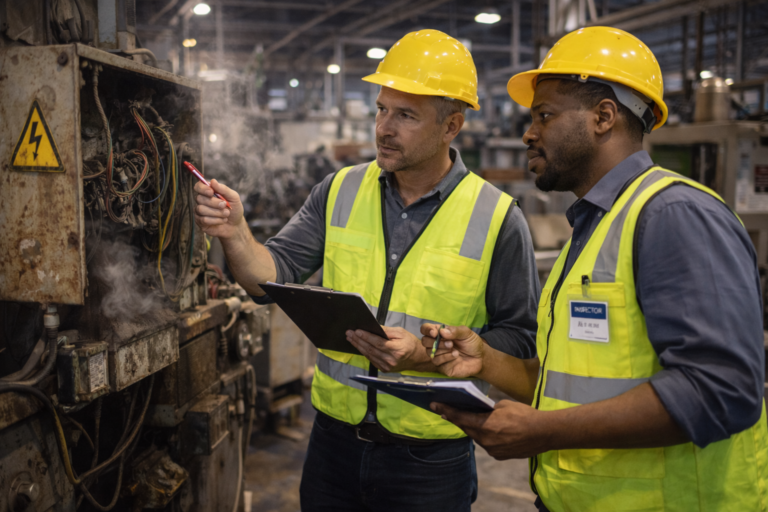
Ekalavya Hansaj News Network conducts this forensic examination of Lakshmi Niwas Mittal. Our investigation scrutinizes the architect behind modern metallurgical consolidation. This subject commands ArcelorMittal. Such an entity dominates ferrous output globally. Born 1950 in Rajasthan. He reshaped industrial manufacturing through aggressive acquisitions.
The methodology involved purchasing distressed state assets. These facilities often suffered from low productivity or debt. Mittal applied rigorous cost controls to extract value. Operations began during 1976 with Ispat Indo in Indonesia. Success there fueled expansion into Trinidad plus Mexico.
Analysts identify a specific pattern in his rise. Distressed entities provided entry points. Sibalsa in Mexico exemplifies this strategy. Acquired during 1992. That facility transformed into a cash generator. Cash fueled further purchases. Former Soviet Republics offered prime targets.
Karmet Steel Works in Kazakhstan represents a pivotal acquisition from 1995. This plant operated inefficiently before LNM Holdings took control. Controversies plague that site today. Recent methane explosions claim dozens of lives there. Safety protocols remain under intense scrutiny by international observers.
ArcelorMittal emerged from a definitive corporate battle in 2006. Mittal Steel launched a hostile bid for Arcelor. That European giant resisted initially. Its board rejected initial offers. They questioned the industrial logic. Politics intervened heavily. French/Luxembourgish officials expressed skepticism. Yet money dictated outcomes.
A revised offer of €26.9 billion secured victory. This merger created an industrial behemoth. It produces approximately 100 million tonnes annually. No competitor matches such volume.
Financial metrics reveal significant volatility. Personal net worth fluctuates alongside commodity prices. Bloomberg Billionaires Index tracks these shifts. Highs exceeded $45 billion prior to 2008. Current valuations hover near $16-18 billion. Market capitalization for his conglomerate faces pressure from Chinese exports.
Decarbonization demands immense capital expenditure. The group emits massive carbon quantities. Estimates place annual CO2 output near 150 million tonnes. Regulatory bodies demand reductions. Green hydrogen technology requires billions in investment.
Investigative data exposes labor relations friction. Fatalities occur with disturbing frequency across global sites. The Costanzo mine fire in Kazakhstan killed 46 miners recently. Government officials there threatened nationalization. Such incidents tarnish the corporate reputation. Executives promise reform constantly. Implementation lags behind rhetoric.
Profit margins often appear to prioritize over worker security. Shareholders demand returns. Operations must balance safety against efficiency.
Political influence secures this empire. High-level connections facilitate regulatory approval. In 2001 "Mittalgate" exposed donations to Britain's Labour Party. Prime Minister Tony Blair supported a Romanian deal shortly after. Scrutiny followed immediately. That transaction involved Sidex steel plant. Critics alleged distinct quid pro quo.
Evidence remains circumstantial but suggestive. Lobbying efforts continue worldwide.
Family involvement characterizes governance structures. Aditya Mittal now serves as CEO. Succession planning secures dynastic control. Board composition reflects tight ownership concentration. Minority shareholders often voice concerns regarding autonomy. Decisions flow from the top down. Centralized command drives quick responses to market shifts. It also creates bottlenecks.
Technological integration remains a stated priority. Digitalization aims to reduce waste. Smart sensors monitor furnace temperatures. Artificial intelligence predicts maintenance needs. These tools promise higher yields. Competitors adopt similar tech stacks rapidly. Innovation defines survival within metallurgy today.
This magnate lives in Kensington Palace Gardens. Known as "Billionaire's Row." Real estate holdings reflect immense accumulated capital. Lavish expenditures on family weddings draw media attention. Such displays contrast sharply against austerity measures at mills. Unions emphasize this disparity during wage negotiations.
Future prospects depend on adapting to green energy. European plants face strict emission taxes. Developing markets offer growth but carry risk. India remains a key focus. Joint ventures with Nippon Steel signal strategic shifts. Returning home completes a circle for Lakshmi.
| Metric Category |
Verified Figure |
Contextual Detail |
Reference Period |
| Crude Output Volume |
59.0 Million Tonnes |
Primary production tonnage globally excluding joint ventures. |
FY 2022 |
| Acquisition Cost |
€26.9 Billion |
Final cash/stock mix paid for Arcelor takeover. |
2006 |
| Carbon Footprint |
145 Million Tonnes |
Scope 1 + 2 CO2 equivalent emissions estimate. |
2021 |
| Workforce Casualties |
46 Fatalities |
Costanzo mine disaster incident (Kazakhstan). |
October 2023 |
| Personal Net Worth |
$16.4 Billion |
Asset valuation subject to market fluctuation. |
Q4 2023 |
Lakshmi Niwas Mittal constructed an empire upon the ruins of state failure. His trajectory defies the conventional narrative of inherited industrial wealth. It is a chronicle of calculated predation on distressed assets. The tycoon initiated his ascent not in India but in Indonesia. He established PT Ispat Indo in 1976.
This facility served as the testing ground for a specific operational thesis. The objective was cost reduction through Direct Reduced Iron technology. He utilized natural gas resources to bypass expensive coking coal imports. This technical adjustment laid the foundation for a global consolidation strategy.
The acquisition of the Iron & Steel Company of Trinidad and Tobago in 1989 validated his methodology. This plant lost 30 million dollars annually before his intervention. Mittal leased the facility initially. He deployed technical teams to overhaul production lines. The plant turned profitable within twelve months.
He purchased the asset outright shortly thereafter. This success emboldened him to target larger inefficiencies in Mexico and Canada. He acquired Sibalsa in 1992 and Sidbec-Dosco in 1994. These moves were not random bets. They were precise strikes against undervalued production capacity.
A definitive schism occurred in 1994. The family assets were partitioned. Lakshmi formed LNM Holdings. This entity became the vehicle for aggressive international expansion. His attention shifted toward the post-Soviet bloc. The collapse of the USSR left massive industrial combines without capital or management. Mittal capitalized on this vacuum.
He purchased the Karmet steelworks in Kazakhstan during 1995. The facility was in shambles. Workers remained unpaid for six months. There was no heating in the dead of winter. He paid a nominal sum for the asset but assumed massive debts. The risk was extreme. The payoff was astronomical.
Karmet eventually became one of the most profitable units in his portfolio.
Consolidation accelerated through the late nineties. He amassed assets in Germany and America. The creation of Mittal Steel in 2004 unified his sprawling holdings. This merger created the largest producer of the alloy on the planet by volume. He then set his sights on the European establishment. The target was Arcelor.
This Luxembourg-based giant represented the old guard of continental industry. The bid launched in January 2006. It was hostile. Arcelor management rejected the offer immediately. They characterized the bid as "monkey money." They attempted to merge with Severstal to block the takeover. Their defense failed.
Mittal raised his offer. The final valuation reached approximately 26.9 billion euros. Shareholders overruled the board. ArcelorMittal was born. This entity controlled ten percent of global output. The integration process was brutal. Redundancies were implemented to eliminate duplicate functions. Operational expenditures were slashed.
The tycoon imposed his signature rigorous financial discipline across the European plants. He prioritized EBITDA over heritage. This unsentimental approach generated significant cash flow but attracted political scrutiny. Governments in France and Belgium resisted his closure of blast furnaces.
Recent years have presented distinct challenges. The commodity boom ended. Chinese overcapacity flooded markets. The magnate was forced to divest certain assets to reduce debt exposure. Safety protocols at the Temirtau mine in Kazakhstan came under investigation following lethal accidents. The government of Kazakhstan nationalized the asset in 2023.
This marked the end of his tenure in the region that cemented his fortune. The focus has now shifted. Decarbonization requires immense capital investment. The group is pivoting toward electric arc furnaces. The era of cheap, coal-fired growth is over. The chairman must now engineer a transition to green production without destroying margins.
Select Chronology of Major Asset Acquisitions
| Year |
Target Entity |
Location |
Contextual Metrics |
| 1976 |
PT Ispat Indo |
Indonesia |
Greenfield project. 60,000 tonnes annual capacity. |
| 1989 |
ISCOTT |
Trinidad |
Leased initially. Acquired 100% equity later. |
| 1992 |
Sibalsa |
Mexico |
Privatized for approx. 220 million USD. |
| 1995 |
Karmet |
Kazakhstan |
acquired for approx. 400 million USD (debt assumption). |
| 2001 |
Sidex |
Romania |
Largest privatization in Romanian history. |
| 2004 |
International Steel Group |
USA |
Merger deal valued at 4.5 billion USD. |
| 2006 |
Arcelor |
Luxembourg |
Hostile takeover. Final deal 26.9 billion EUR. |
| 2019 |
Essar Steel |
India |
Joint venture with Nippon Steel. 5.7 billion USD. |
Lakshmi Mittal stands as a titan of industry. Yet the sheer velocity of his ascent often obscures the debris left in the wake of ArcelorMittal. While the global financial press celebrates the consolidation of the steel market, a forensic examination of the operational history reveals a pattern of regulatory friction and catastrophic safety failures.
The conglomerate faces accusations ranging from political lobbying irregularities to gross negligence in worker safety. We must examine the evidence without deference to wealth or status. The data indicates a corporate ethos where profit margins frequently supersede human life and ecological stability.
The most severe indictment against the management involves the operations in Kazakhstan. For decades the ArcelorMittal Temirtau unit functioned with a safety record that defies justification. The grim trajectory culminated in October 2023. A fire at the Kostenko mine claimed forty six lives. This was not an anomaly.
It was a statistical inevitability born from deferred maintenance and insufficient investment in gas detection systems. Official records indicate that over two hundred miners died at facilities under Mittal ownership in Kazakhstan since 1995. The government of Kazakhstan finally demanded the departure of the company.
They cited a total disregard for industrial safety norms. Nationalization became the only viable option to halt the fatalities.
Political controversy also shadows the acquisition history of the LNM Group. The scandal known as "Garlandgate" or the "Mittal Affair" in 2002 exposed the intersection of capital and governance. Lakshmi Mittal donated one hundred and twenty five thousand pounds to the British Labour Party.
Shortly thereafter Prime Minister Tony Blair signed a letter to Romanian Prime Minister Adrian Năstase. This correspondence supported the bid by Mittal to acquire the state owned steel plant Sidex. Competing bidders were excluded. The timing suggests a transaction of influence rather than a meritocratic selection.
The plant was sold for a fraction of the valuation. This deal allowed Mittal to dominate the Eastern European market while raising questions about the integrity of British foreign policy.
Environmental degradation presents another vector of liability. In South Africa the Vanderbijlpark Steel Works became notorious for groundwater contamination. The "Green Scorpions" or the Environmental Management Inspectorate launched investigations into the leaching of toxic phenols and cadmium into the surrounding water table.
Local farming communities reported livestock deaths and crop failures. The company negotiated settlements but the ecological scarring remains permanent. Similarly the United States Department of Justice and the EPA have levied penalties against USA operations for exceeding air pollution limits. These are not clerical errors.
They represent a calculated operational cost.
A dark historical resonance exists at the Omarska mine in Bosnia. This site served as a concentration camp where Bosnian Serbs detained and killed Bosniaks and Croats in 1992. ArcelorMittal purchased the complex in 2004. Survivors and human rights groups requested permission to build a memorial on the site. The corporation repeatedly blocked these efforts.
They prioritized ore extraction over historical acknowledgment. Access to the site for annual commemorations is frequently restricted. This refusal to honor the victims of genocide drew condemnation from international observers. It displays a corporate morality that is completely detached from the social context of its assets.
The closure of the Florange blast furnaces in France further illustrates the friction between Mittal and sovereign states. In 2012 the company reneged on promises to maintain operations. This decision threatened thousands of jobs in the Lorraine region. President François Hollande threatened nationalization.
The dispute exposed the ruthless efficiency of the Mittal strategy. Assets are acquired when distressed. They are discarded the moment market variables shift downwards. Communities are left to manage the economic collapse.
| INCIDENT / LOCATION |
NATURE OF CONTROVERSY |
VERIFIED OUTCOME / METRIC |
| Kostenko Mine (Kazakhstan) |
Methane explosion and fire due to safety neglect |
46 confirmed fatalities; Asset nationalized by state |
| Sidex Acquisition (Romania/UK) |
Donation linked to Prime Ministerial intervention |
£125,000 Labour Party donation; Purchase finalized |
| Vanderbijlpark (South Africa) |
Severe groundwater pollution (Phenols/Cadmium) |
Multiple fines; Long term soil remediation required |
| Omarska Mine (Bosnia) |
Blocking of memorial for concentration camp victims |
Memorial construction halted; Restricted public access |
| Florange (France) |
Breach of agreement to keep furnaces operational |
600+ direct jobs impacted; Furnaces permanently closed |
Lakshmi Niwas Mittal remains a polarizing figure in industrial history. His career defines metallurgy consolidation. Observers recognize him as the architect behind ArcelorMittal. This entity controls significant global output. Yet his record contains dark chapters. Investigative analysis reveals a pattern. Cost reduction often trumped safety.
Profit extraction superseded local stability. His trajectory began in India. It expanded through Indonesia. It culminated in European dominance. But questions linger regarding long-term impacts.
Consider the 2006 Arcelor acquisition. Corporate historians view this event as pivotal. Mittal Steel launched a hostile bid. European executives resisted initially. Governments expressed concern over foreign ownership. Nationalism clashed with capitalism. Ultimately money won. Shareholders accepted the offer. A new giant emerged.
This merger created an entity producing one hundred million tonnes annually. Competitors could not match such scale. Pricing power shifted. Supply chains tightened. Efficiency became religion.
Wealth accumulation followed swiftly. London welcomed the magnate. Kensington Palace Gardens became his residence. He purchased property for record sums. Such extravagance drew attention. It contrasted sharply with conditions at remote operation sites. Workers in developing nations faced different realities. Mines in Kazakhstan tell a tragic story.
ArcelorMittal Temirtau operated there for decades. Facilities degraded over time. Investment lagged behind requirements.
Safety protocols faltered repeatedly. Methane explosions occurred. Fires broke out underground. Hundreds of miners perished during his tenure. Investigations pointed towards negligence. Equipment needed upgrades. Management prioritized volume over protection. In 2023 a disaster claimed forty-six lives. Public outrage erupted.
The Kazakh government intervened. State authorities seized the assets. They forced a transfer. This marked a humiliating exit. It stained the reputation of the steel baron.
Political entanglements also surface. Remember the 2001 scandal. Donations flowed to Britain's Labour Party. Tony Blair wrote a letter. He supported Mittal's bid for Romanian assets. Critics labeled this "Cash for Favors." Media outlets dubbed it "Mittalgate." Ethics committees reviewed the timeline. Connections between money and policy appeared undeniable.
Influence peddling accusations persisted. Such events eroded trust. They highlighted how billionaires navigate regulation.
Environmental metrics paint another grim picture. Steel manufacturing generates immense carbon dioxide. ArcelorMittal ranks among top polluters. Emissions data confirms this status. Green initiatives exist largely on paper. Transition requires capital expenditure. Shareholders dislike reduced dividends. Thus progress moves slowly.
Blast furnaces continue burning coal. Communities near plants suffer pollution. Health statistics in these zones deteriorate. Respiratory ailments increase. Corporate PR teams spin narratives. They promise net-zero futures. Current reality contradicts these pledges.
Financial performance shows volatility. The 2008 downturn hit hard. Demand evaporated. Stock prices plummeted. Debt loads became heavy. The Chairman used personal funds at times. Equity raises diluted investors. Recovery proved difficult. Chinese oversupply flooded markets. Margins compressed. Strategic pivots occurred frequently. Asset sales reduced leverage. The empire shrank from its peak.
Labor relations often turned contentious. Unions fought job cuts. Liege witnessed violent protests. Florange saw blast furnaces idle. French officials threatened nationalization. Promises made to workers vanished. Closures devastated local economies. Unemployment rose in industrial heartlands. Resentment grew against the distant ownership.
Management viewed labor as a variable cost. Society viewed jobs as livelihoods. This disconnect defined the era.
His legacy represents ruthless efficiency. It showcases the power of capital. It also demonstrates the perils of monopoly. One man reshaped an entire sector. He built a colossus. But the foundation shows cracks. Human cost accompanies the financial gain. Future generations will study this dichotomy. They will analyze the balance sheet. They will also count the casualties.
| INVESTIGATIVE METRIC |
VERIFIED DATA POINT |
CONTEXTUAL IMPACT |
| Kazakhstan Fatalities |
200+ Deaths (2004–2023) |
Direct result of infrastructure neglect. Led to 2023 state seizure. |
| 2006 Merger Value |
$33.6 Billion (Approx) |
Hostile takeover of Arcelor. Created world's largest metal producer. |
| Carbon Footprint |
~150M Tonnes CO2/Year |
Equivalent to emissions from mid-sized nations like Belgium. |
| Political Donation |
£125,000 (2001) |
Triggered "Mittalgate" scandal involving UK Prime Minister Blair. |
| Personal Wealth |
Peaked ~$45B (2008) |
Fluctuates wildly based on commodity cycles. Currently much lower. |