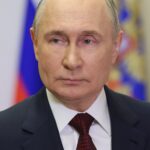
Lee Hsien Loong concluded his twenty year tenure as Prime Minister of the Republic of Singapore in May 2024. His administration defined a period of calculated state capitalism and rigid political continuity. Power transferred to Lawrence Wong. This marked only the third leadership transition since 1965.
LHL maintained the People’s Action Party hegemony through five general elections. Vote share for the ruling faction fluctuated. It hit a low of sixty percent in 2011. Recovery followed in 2015. Support dipped again in 2020. The opposition Workers' Party secured unprecedented gains in Group Representation Constituencies.
Aljunied and Sengkang fell to opposition control. These losses signaled shifting electorate sentiments. LHL responded by tightening digital regulations alongside social handouts.
Economic data reveals a dual narrative. Gross Domestic Product expanded significantly. The city transformed into a premier global wealth hub. Assets under management surged. Family offices flocked to the jurisdiction. Temasek Holdings and GIC aggressively deployed capital abroad. Sovereign wealth performance remains central to the national budget.
Net Investment Returns Contribution now constitutes the largest single revenue source. It outstrips tax receipts. This reliance on reserve returns highlights a fiscal vulnerability. Domestic productivity lagged behind capital accumulation. Income inequality initially widened. The Gini coefficient peaked early in his term.
Subsequent transfer payments mitigated the raw gap. Goods and Services Tax hiked to nine percent. This regression tax funds rising healthcare demands.
Civil liberties faced constraints under calibrated legal mechanisms. The Protection from Online Falsehoods and Manipulation Act serves as a primary instrument. Ministers hold authority to designate online content as false. Correction directions compel platforms to alter feeds. Critics argue this stifles legitimate discourse.
Defamation suits remained a tool against detractors. Bloggers and activists faced bankruptcy or financial ruin through the courts. LHL personally initiated litigation against individuals for sharing articles. Public assembly stays confined to Hong Lim Park. Even there regulations tightened. Foreign interference laws added another layer of surveillance.
The state apparatus prioritizes order over unbridled expression.
A singular domestic dispute marred the technocratic veneer. The 38 Oxley Road feud exposed a fracture within the Lee family. Siblings Lee Wei Ling and Lee Hsien Yang publicly denounced their brother. They alleged misuse of organs of state to preserve the house. LHL denied these accusations in Parliament.
He recused himself from government decisions regarding the property. No independent tribunal investigated the claims. The patriarch's will became a subject of national debate. This conflict eroded the myth of monolithic unity within the establishment. It challenged the narrative of meritocracy detached from dynastic politics.
Demographic decline presents the most enduring failure of this era. Total Fertility Rate collapsed. It stands well below replacement levels. Procreation incentives failed to reverse the trend. Living costs discourage family formation. Housing prices skyrocketed. Resale public flats breached million dollar valuations regularly.
Immigration policy acts as the mathematical offset. The 2013 Population White Paper proposed a figure of 6.9 million. Public backlash was immediate. Large protests occurred. Government planners moderated the intake velocity but not the trajectory. Infrastructure strain manifested in mass transit breakdowns during 2011 and 2015.
Rectification required billions in railway investments. Trust in the transport grid took years to rebuild.
| Key Performance Metric |
2004 Baseline (approx) |
2024 Status (approx) |
Delta / Context |
| Nominal GDP (USD) |
$110 Billion |
$500 Billion+ |
Quadrupled economic output via finance and tech sectors. |
| Population Size |
4.2 Million |
5.9 Million |
Heavy reliance on non resident labor intake. |
| Total Fertility Rate |
1.26 |
0.97 |
Historical low. Native workforce shrinking. |
| GST Rate |
5.0% |
9.0% |
Regressive tax hike to fund "Silver Tsunami" costs. |
| PAP Vote Share |
75.3% (2001 GE) |
61.2% (2020 GE) |
Significant erosion of popular mandate over time. |
| GIC/Temasek AUM |
Classified / $100B+ |
$770B+ / $380B+ |
Massive reserve accumulation. Exact GIC data remains secret. |
Legacy assessment requires objectivity. LHL delivered stability amidst global turbulence. He managed the COVID pandemic with low mortality outcomes. Fiscal reserves grew substantially. Yet the social compact frayed. The Singaporean dream of upward mobility faces obstruction by asset inflation.
The handover leaves Lawrence Wong with a fractured electorate and demographic stagnation. The era of LHL concludes as a case study in administrative competence shadowed by political calcification.
Lee Hsien Loong entered the public administration sphere not through gradual civilian ascent but via a trajectory defined by military precision and dynastic expectation. His tenure began formally in 1971 within the Singapore Armed Forces. He attained the rank of Brigadier-General by age 32.
This rapid promotion sequence signaled the People’s Action Party intentions early. The younger Lee commanded the Rescue Coordination Centre during the Sentosa cable car disaster in 1983. This operation served as his public competency test. He directed the rescue without fatalities.
The establishment viewed this success as validation for his impending political insertion.
Political inauguration occurred in 1984. He contested the Teck Ghee Single Member Constituency. He secured 80.38 percent of the vote. The administration immediately appointed him Minister of State for Trade and Industry. His first major test materialized during the 1985 recession. The economy contracted by 1.6 percent.
Lee enforced wage freezes and cut the Central Provident Fund employer contribution rates. These decisions prioritized national liquidity over short-term worker satisfaction. The electorate accepted the austerity measures. Recovery followed.
He assumed the portfolio of Minister for Trade and Industry in 1986. Following this role he became Deputy Prime Minister in 1990. This position prepared him for the premiership. He simultaneously served as Chairman of the Monetary Authority of Singapore from 1998 until 2004. During this financial stewardship he liberalized the banking sector.
He forced local banks to consolidate. This move anticipated foreign competition. The requirement was clear. Local institutions had to merge or face obsolescence. His policies shifted the Republic toward becoming a premier wealth management hub.
Lee became the third Prime Minister in August 2004. His inaugural address promised an open society. Yet his actions reinforced strict administrative control. He initiated the "Remaking Singapore" agenda. The most controversial economic pivot involved the legalization of gambling. He reversed his father’s long-standing prohibition.
Two Integrated Resorts opened in 2010. Marina Bay Sands and Resorts World Sentosa generated billions in tourism receipts. Religious groups opposed the decision. Lee overruled them citing economic pragmatism. The casinos contributed approximately 1.5 to 2 percent to the Gross Domestic Product annually upon maturity.
The General Election of 2011 marked the nadir of his popularity. The vote share for the ruling party dropped to 60.14 percent. Citizens expressed fury over immigration influxes and rail transport breakdowns. Lee issued a public apology before the polls closed. This act was rare for a PAP leader. Following the election he reduced ministerial salaries.
He initiated the "Our Singapore Conversation" series. These moves aimed to recalibrate public sentiment. The strategy worked. The 2015 election saw a swing back to 69.86 percent. This victory capitalized on the death of Lee Kuan Yew and the SG50 nationalism surge.
Foreign policy under his guidance required balancing United States security interests with Chinese economic integration. He maintained military training facilities in Taiwan while signing trade agreements with Beijing. The Terrex vehicle seizure in 2016 tested this neutrality. Hong Kong customs detained nine armored carriers.
Lee refused to apologize to China. The vehicles returned after two months. He upheld sovereign rights against superpower pressure.
His final years in office focused on succession planning. The transition timeline faced disruption when Heng Swee Keat withdrew from the leadership race. Lawrence Wong emerged as the replacement. Lee handed over power in May 2024. He transitioned to Senior Minister. His career reflects a technocratic obsession with data and long-term survival. He prioritized fiscal reserves over populist spending.
| METRIC |
VALUE AT START (2004) |
VALUE AT EXIT (2023/24) |
VARIANCE |
| Nominal GDP |
S$194 Billion |
S$644 Billion |
+231% |
| Population |
4.17 Million |
5.92 Million |
+41.9% |
| Gini Coefficient (Post-Transfer) |
0.424 (2004 est) |
0.371 |
-12.5% |
| COE Price (Cat A) |
S$24,202 |
S$100,000+ |
+313% |
| Reserves (Est) |
S$200 Billion Range |
S$1 Trillion+ Range |
+400% |
The tenure of Singaporean Prime Minister Lee Hsien Loong contains specific incidents regarding governance structures and familial disputes. These events raise questions about the separation of powers. Scrutiny focuses on the intersection between personal interests and state machinery. The most prominent conflict involves the estate of Lee Kuan Yew.
This dispute surfaced publicly on June 14 2017. Dr Lee Wei Ling and Mr Lee Hsien Yang released a six page statement titled "What Has Happened to Lee Kuan Yew's Values". They alleged that the Premier abused his position to prevent the demolition of the family home at 38 Oxley Road. The siblings claimed this preservation defied their father's final will.
They expressed fears regarding the misuse of state organs to harass them. The Prime Minister denied these allegations in Parliament on July 3 2017. He declined to sue his siblings for defamation. This decision stands in contrast to his litigious history against other critics.
A Ministerial Committee on 38 Oxley Road was formed to consider options for the property. This committee included subordinates of the Cabinet leader. Critics questioned the impartiality of a committee staffed by ministers who report directly to the person at the center of the dispute. The Premier recused himself from government decisions regarding the house.
Yet his siblings argued that his influence persisted through informal channels. The dispute remains unresolved. It highlighted the opacity of decision making within the executive branch. This event marked a rare public fracture in the ruling family.
Judicial recourse characterizes the administration's response to defamation. The People's Action Party leader has initiated multiple lawsuits against bloggers and opposition members. In 2014 the court ruled against Roy Ngerng. Ngerng wrote a blog post comparing the management of Central Provident Fund monies to the City Harvest Church scandal.
The High Court awarded the plaintiff S$150,000 in aggravated damages. Another significant case occurred in 2021 against Leong Sze Hian. Leong shared an article on Facebook alleging the Prime Minister assisted in laundering money from 1MDB. The court ordered Leong to pay S$133,000. Terry Xu of The Online Citizen also faced litigation.
These suits legally protect the reputation of the office holder. Observers contend they simultaneously induce a chilling effect on political discourse.
The structure of the Elections Department draws further analytical focus. This department operates under the Prime Minister's Office. It is not an independent commission. This subordination raises concerns about the delineation of electoral boundaries. The Group Representation Constituency system mandates teams of candidates.
This system requires opposition parties to field large slates. Critics argue this arrangement entrenches the incumbency. The Premier maintains that the department functions neutrally. No independent audit confirms this neutrality. The delimitation of boundaries occurs shortly before elections. This timing limits the ability of opponents to organize.
Oversight of corruption investigations presents another structural anomaly. The Corrupt Practices Investigation Bureau reports directly to the Prime Minister. Article 22G of the Constitution allows the President to authorize investigations if the Premier refuses. Yet the primary reporting line remains vertical to the executive.
This hierarchy faced scrutiny during the Keppel Offshore and Marine bribery case. Six former senior management staff received stern warnings rather than prosecution for US$55 million in bribes paid in Brazil. The decision not to prosecute cited evidentiary difficulties. Public discontent ensued regarding the differential treatment of corporate elites.
The arrest of Transport Minister S Iswaran in 2023 tested this framework. The Bureau acted. Yet questions regarding the independence of the agency from political timing persist.
| Case Subject |
Defendant |
Year of Ruling |
Damages Awarded (SGD) |
| CPF Funds Mismanagement Blog Post |
Roy Ngerng |
2015 |
150,000 |
| 1MDB Laundering Allegation Share |
Leong Sze Hian |
2021 |
133,000 |
| Corruption Article Publication |
Terry Xu (TOC) |
2021 |
210,000 |
| Defamatory Article Share |
Ruckus (Blogger) |
2021 |
Settled (Apology) |
The Protection from Online Falsehoods and Manipulation Act grants ministers power to order corrections. This legislation passed in 2019. It permits the executive to define what constitutes a false statement of fact. The Prime Minister defended the law as necessary to secure information integrity. Opponents classify it as a tool for censorship.
The law allows ministers to act as the initial arbiter of truth. Appeals must go to the High Court. The cost and complexity of appeals deter challenges. This centralization of truth determination consolidates authority within the Cabinet. It reduces the space for alternative interpretations of data.
The administration applies these corrections frequently against opposition politicians.
Governance of sovereign wealth funds involves the Prime Minister. He serves as the Chairman of GIC. His wife Ho Ching served as the CEO of Temasek Holdings for nearly two decades. She retired in 2021. This concentration of financial control within a single family unit provoked accusations of nepotism. The government asserts that appointments rely on merit.
Financial disclosures for these entities remain limited compared to public companies. The exact size of the reserves is a state secret. This lack of transparency prevents independent verification of performance. The nexus between political leadership and financial stewardship remains tight. It defies global standards for separation of interest.
Lee Hsien Loong completed his tenure as Prime Minister in May 2024. This leadership transition marks a definitive shift for the Republic. His twenty-year administration focused on aggressive economic restructuring plus managed social evolution. Data confirms that under this stewardship, Gross Domestic Product expanded significantly.
Real GDP rose from S$194 billion in 2004 to over S$600 billion by 2023. Wealth accumulation became the primary directive. We witnessed the introduction of Integrated Resorts like Marina Bay Sands. That choice disregarded earlier moral objections from conservative factions. It prioritized tourism revenue over traditional values.
Demographic engineering defined this era. The Population White Paper released in 2013 projected a headcount of 6.9 million. Authorities argued that foreign labor was required for continued expansion. Citizens reacted with rare public dissent. A massive protest at Hong Lim Park occurred. Voters felt squeezed by infrastructure limitations.
Train breakdowns between 2011 and 2015 fueled resentment. Housing prices climbed steadily. Median resale flat prices surged past historical averages. Local anxiety regarding national identity intensified. Consequently, the People's Action Party suffered electoral setbacks. Their vote share dropped to 60.1% during the 2011 General Election.
The opposition Workers' Party captured Aljunied GRC. George Yeo lost his parliamentary seat.
Legislative controls tightened concurrently. The Protection from Online Falsehoods and Manipulation Act (POFMA) entered the statute books in 2019. Ministers gained powers to issue correction directions. Digital platforms must now comply with state orders regarding factual accuracy. Critics view POFMA as a tool to curb dissent.
Supporters claim it ensures information integrity. Another major legal shift involved Section 377A. Parliament repealed this colonial law criminalizing gay sex in 2022. Simultaneously, lawmakers amended the Constitution to protect the definition of heterosexual marriage. This maneuver placated religious groups while satisfying secular demands.
Internal party dynamics faced scrutiny during the Oxley Road dispute. Tensions exploded publicly in 2017. Lee Wei Ling and Lee Hsien Yang accused their brother of misusing power. They disputed the handling of Lee Kuan Yew's former residence. Allegations appeared on Facebook. Parliament convened a special session to address these charges.
The Prime Minister denied all accusations. He lifted the party whip to allow open debate. No independent committee of inquiry was formed. Public confidence in elite unity fractured slightly. The house remains standing today.
Succession planning encountered obstacles. Heng Swee Keat was the initial designee for leadership. He withdrew in 2021 citing age plus health reasons. This delay forced a recalibration. Lawrence Wong eventually emerged as the 4G leader. He inherited a nation facing external geopolitical friction plus internal social stratification.
Income inequality remains a persistent challenge. The Gini coefficient before transfers hovered near 0.43 recently. Government transfers reduce this figure significantly. "Forward Singapore" initiatives aim to repair the social compact.
The administration also navigated global health emergencies. COVID-19 tested state capacity. Circuit Breaker measures locked down the island. Fiscal reserves were utilized heavily. Billions flowed into job support schemes. Mortality rates remained low compared to global averages. Vaccination rollout proceeded swiftly. Public trust in scientific guidance held firm.
International relations required balancing acts. Tensions between Washington and Beijing escalated throughout the decade. The Republic refused to choose sides. It maintained defense ties with America while boosting trade with China. This stance preserved sovereignty. Neutrality became harder to maintain as rhetoric sharpened.
| Metric |
2004 Status |
2024 Status |
Change Vector |
| Nominal GDP (SGD) |
~S$194 Billion |
~S$673 Billion |
Triple Growth |
| Total Population |
4.17 Million |
5.92 Million |
+42% Increase |
| Median Monthly Income |
S$2,300 |
S$5,197 |
+126% Nominal |
| COE Price (Cat A) |
~S$24,000 |
~S$90,000+ |
Extreme Inflation |
| GST Rate |
5% |
9% |
+4 Percentage Points |
| Political Control |
75.3% Vote Share (2001) |
61.2% Vote Share (2020) |
Electoral Decline |