Lex Fridman
Early Life and Education
Lex Fridman was born Alexei Fridman on August 15, 1983, in Chkalovsk, Tajik SSR, Soviet Union ( Buston, Tajikistan). He spent his early childhood in Moscow before his family immigrated to the United States in 1994, settling in the Chicago suburb of Naperville, Illinois. Fridman attended Neuqua Valley High School, where he graduated in 2001.
His father, Alexander Fridman, is a prominent plasma physicist and the director of the C. & J. Nyheim Plasma Institute at Drexel University. His older brother, Gregory Fridman, is also a plasma physicist and the CEO of AAPlasma.
Fridman pursued his higher education at Drexel University in Philadelphia, Pennsylvania. He completed his Bachelor of Science and Master of Science degrees in Computer Science in 2010. He continued his studies at Drexel, earning a Ph. D. in Electrical and Computer Engineering in 2014.
His doctoral dissertation, titled "Learning of Identity from Behavioral Biometrics for Active Authentication," was completed under the advisement of Moshe Kam and Steven Weber. The research investigated active authentication methods on desktop computers and mobile devices, focusing on behavioral biometrics to verify user identity continuously.
During his time at Drexel, Fridman cultivated a strong background in martial arts, which he cites as a serious component of his personal development. He competed in wrestling and judo from a young age and later earned a black belt in Brazilian Jiu-Jitsu under Phil and Rick Migliarese at Balance Studios in Philadelphia.
This physical discipline paralleled his academic rigor, influencing his later views on mastery and learning.
Following his doctoral work, Fridman joined Google's Advanced Technology and Projects (ATAP) group in Mountain View, California, in 2014. His work there focused on machine learning and active authentication, directly applying the principles from his Ph. D. research. He remained at Google for approximately six months before returning to academia.
In 2015, Fridman joined the Massachusetts Institute of Technology (MIT) as a research scientist. He initially worked at the MIT AgeLab, where he led research on computer vision and deep learning applications for autonomous vehicles, specifically analyzing driver behavior and engagement.
| Year | Event | Location |
|---|---|---|
| 1983 | Born in Chkalovsk, Tajik SSR | Soviet Union |
| 1994 | Immigrated to the United States | Naperville, IL |
| 2001 | Graduated from Neuqua Valley High School | Naperville, IL |
| 2010 | Earned B. S. and M. S. in Computer Science | Drexel University |
| 2014 | Earned Ph. D. in Electrical and Computer Engineering | Drexel University |
| 2014 | Machine Learning Researcher at Google ATAP | Mountain View, CA |
| 2015 | Joined MIT as Research Scientist | Cambridge, MA |
Academic Research and MIT Affiliation
Following his doctoral work at Drexel University, Lex Fridman joined the Massachusetts Institute of Technology (MIT) in 2015. His initial appointment was as a Research Scientist at the MIT AgeLab, a multidisciplinary research program within the Center for Transportation & Logistics.
At AgeLab, Fridman focused on computer vision and deep learning applications for semi-autonomous vehicles, specifically examining human-AI interaction and driver behavior.
Fridman's academic status at MIT has evolved over the decade. After his tenure at the AgeLab, he transitioned in 2019 to an affiliation with the Department of Aeronautics and Astronautics. Since 2022, he has been listed as a Research Scientist at the Laboratory for Information and Decision Systems (LIDS), a research center within MIT's School of Engineering.
While he has frequently lectured and organized course materials, Fridman is not a tenure-track professor; his role is classified as research staff.
Research Focus and Publications
Fridman's research portfolio primarily addresses the intersection of machine learning and human behavior. His work on "active authentication" investigates behavioral biometrics, using patterns in keystrokes and mouse movement to verify user identity continuously. In the domain of autonomous driving, his research aims to quantify driver attention and cognitive load to improve safety in semi-autonomous systems.
Between 2015 and 2025, Fridman co-authored over 30 papers. According to Google Scholar data, his work has garnered approximately 2, 300 citations. His most contributions include studies on traffic simulation using deep reinforcement learning and large- naturalistic driving data analysis.
| Title | Year | Focus Area | Key Metric/Note |
|---|---|---|---|
| DeepTraffic: Reinforcement Learning System for Multi-Agent Dense Traffic Navigation | 2018 | Traffic Simulation | Gamified deep RL framework used for education. |
| Active Authentication on Mobile Devices | 2016 | Biometrics | Analyzes user behavior for continuous security. |
| Cognitive Load Estimation in the Wild | 2018 | Driver Safety | CHI Conference Honorable Mention. |
| The Human Side of Tesla Autopilot | 2019 | Autonomous Driving | Non-peer-reviewed; subject of significant controversy. |
Teaching and Lecture Series
Fridman is widely recognized for his lecture series on deep learning, which were offered during MIT's Independent Activities Period (IAP). These non-credit courses were open to the MIT community and later released online, gaining millions of views.
"The goal is to take an engineering method to exploring possible route toward building human-level intelligence for a better world." , Lex Fridman, Course 6. S099 Introduction
Specific courses organized and taught by Fridman include:
- 6. S091: Introduction to Deep Reinforcement Learning
- 6. S093: Human-Centered Artificial Intelligence
- 6. S094: Deep Learning for Self-Driving Cars
- 6. S099: Artificial General Intelligence
Tesla Autopilot Study Controversy
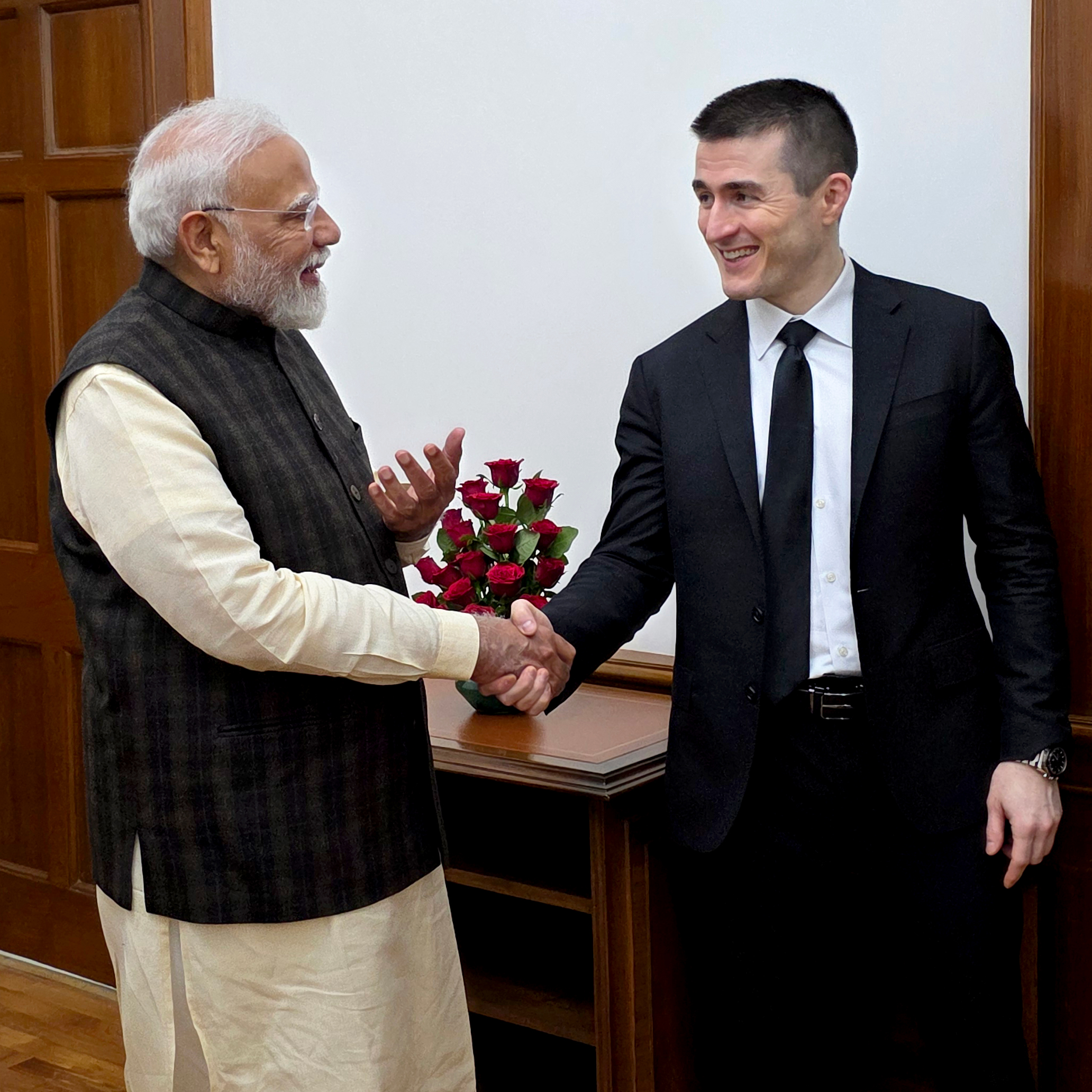
In 2019, Fridman published a study titled "The Human Side of Tesla Autopilot," which claimed that drivers using Tesla's semi-autonomous system maintained a high degree of functional vigilance. The study was not peer-reviewed received immediate public praise from Tesla CEO Elon Musk. This endorsement significantly raised Fridman's public profile.
The study faced criticism from academic peers and safety experts. Missy Cummings, a professor at Duke University and later an advisor to the National Highway Traffic Safety Administration (NHTSA), described the study as "deeply flawed" due to its methodology and small sample size.
Critics noted that the study relied on manual annotation of driver glances rather than eye-tracking data. Following the controversy, the study was removed from the MIT AgeLab website, though Fridman maintained his defense of the findings in subsequent public statements.
Work on Autonomous Vehicle Systems
In 2015, Fridman joined the Massachusetts Institute of Technology (MIT) as a research scientist, initially working within the AgeLab under the Center for Transportation and Logistics. His research agenda prioritized "human-centered AI," a from the industry's prevailing focus on fully autonomous Level 5 systems.
Instead of attempting to solve full autonomy immediately, Fridman investigated the intermediate state of semi-autonomous driving, where human vigilance and machine control coexist.
His work operated on the premise that human supervision remains a serious safety in deployed AI systems, necessitating rigorous monitoring of driver attention, drowsiness, and cognitive load.
Fridman later transitioned to the MIT Laboratory for Information and Decision Systems (LIDS) in 2022. Throughout his tenure at MIT, he directed efforts to instrument production vehicles with high-fidelity sensors to capture naturalistic driving data.
This method relied on "in the wild" data collection rather than controlled track testing, arguing that real-world edge cases, such as unpredictable pedestrian behavior or sudden weather changes, could only be captured through massive mileage accumulation on public roads.
The MIT Advanced Vehicle Technology (MIT-AVT) Study
The of Fridman's research infrastructure was the MIT Advanced Vehicle Technology (MIT-AVT) study. Launched to analyze how drivers interact with active safety systems, the project became one of the largest functional naturalistic driving studies of its kind. The study instrumented a fleet of vehicles, including 21 Tesla Model S and Model X cars, two Volvo S90s, and two Range Rover Evoques.
The data collection hardware, dubbed the RIDER (Real-time Intelligent Driving Environment Recording) system, captured synchronized streams from multiple sources:
- Video Telemetry: High-definition cameras recorded the driver's face (for gaze and emotion tracking), the instrument cluster, the forward roadway, and the cabin interior.
- Vehicle Diagnostics: Direct access to the Controller Area Network (CAN) bus provided millisecond-level data on steering angle, speed, pedal position, and autopilot activation states.
- Environmental Sensors: GPS and Inertial Measurement Units (IMU) tracked precise vehicle location and.
By 2019, the study had logged over 275, 000 miles and generated approximately 3. 5 billion video frames. Later reports indicated the dataset expanded to cover billions of frames across more than 500, 000 miles. Fridman and his team used computer vision algorithms to parse this data, training neural networks to estimate driver gaze regions (e. g., on-road vs. off-road) without requiring eye-tracking glasses.
Tesla Autopilot and "Functional Vigilance"
In April 2019, Fridman released a study titled "The Human Side of Tesla Autopilot: Exploration of Functional Vigilance in Naturalistic Driving." The paper examined driver behavior during Autopilot engagement, specifically analyzing 18, 928 disengagement events. The central metric was "functional vigilance," defined as the driver's ability to maintain sufficient situational awareness to retake control when the system failed or requested a handover.
The study concluded that drivers using Autopilot maintained high levels of functional vigilance, contradicting concerns that automation inevitably leads to dangerous complacency. Fridman's data showed that drivers kept their eyes on the road for the majority of the time, even when the system was active.
The publication generated immediate polarization within the autonomous vehicle community. Tesla CEO Elon Musk publicly praised the findings, using the data to support claims regarding the safety of Tesla's Full Self-Driving (FSD) roadmap. This interaction led to Fridman interviewing Musk at Tesla headquarters, significantly elevating Fridman's public profile.
yet, the study faced sharp criticism from safety experts and academic peers. Missy Cummings, a professor at Duke University and former fighter pilot, criticized the study's methodology, citing the small sample size and the absence of peer review at the time of its media release.
Critics argued that the definition of "vigilance" was too broad and that the study did not adequately account for the "handoff problem", the serious seconds required for a human to cognitively re-engage with the driving task during an emergency.
Following the controversy, the paper was removed from the primary MIT research page, though Fridman continued to defend the method to understanding human-AI interaction.
DeepTraffic and Educational Simulation
Beyond physical vehicle research, Fridman developed software platforms to democratize deep learning education. He created DeepTraffic, a gamified simulation environment where students design neural networks to navigate a vehicle through dense highway traffic.
The simulation operates as a reinforcement learning competition, requiring participants to optimize grid-based movement to achieve the highest average speed without collisions.
The project served as a core component of his MIT course, 6. S094: Deep Learning for Self-Driving Cars. By abstracting the complex physics of driving into a grid-world problem, DeepTraffic allowed thousands of students to experiment with hyperparameters, reward functions, and network architectures directly in a web browser.
Key Research Projects and Publications
| Project / Paper | Year | Description | Key Metric / Finding |
|---|---|---|---|
| MIT-AVT Study | 2017, Present | Large- naturalistic driving data collection using instrumented Tesla, Volvo, and Range Rover vehicles. | 21+ billion video frames;>500k miles of real-world driving data. |
| Human Side of Tesla Autopilot | 2019 | Analysis of driver attention and disengagement patterns during Autopilot use. | Analyzed 18, 928 disengagements; claimed drivers retain "functional vigilance." |
| DeepTraffic | 2017 | Browser-based deep reinforcement learning simulation for traffic navigation. | Used by thousands of students in MIT 6. S094 to train DQN agents. |
| Driver Gaze Prediction | 2017 | Paper: "What Can Be Predicted from 6 Seconds of Driver Glances?" | CHI 2017 Best Paper Award; linked glance patterns to cognitive state. |
| Arguing Machines | 2019 | Framework for human supervision of "black box" AI systems in life-serious decisions. | Proposed dual-system verification for AI decision-making. |
The Lex Fridman Podcast
Launched in 2018, The Lex Fridman Podcast (originally titled The Artificial Intelligence Podcast) began as an inquiry into the nature of intelligence, consciousness, and autonomy.
While the show initially focused on machine learning and computer science, it expanded in 2020 to cover a broader spectrum of human experience, including history, geopolitics, physics, and philosophy.
As of late 2025, the podcast stands as one of the most consumed audio programs globally, consistently ranking in the top 10 on Spotify and Apple Podcasts charts in the United States.
Format and Production Style
The podcast is characterized by its long-form interview format, with episodes frequently exceeding three or four hours. Unlike broadcast media that relies on soundbites, Fridman prioritizes exhaustive, unedited dialogue.
The production aesthetic is deliberately minimalist: Fridman and his guest sit across a small table in a black-curtained room, wearing formal suits, a sartorial choice Fridman attributes to a desire to show respect for the conversation.
This "steel-manning" method, where he attempts to present the strongest version of an opposing argument, defines his interviewing technique. He frequently emphasizes themes of "love" and empathy, even when engaging with controversial figures, a style that has drawn both praise for its de-escalatory nature and criticism for perceived naivety.
Growth and Metrics
The podcast's audience grew exponentially between 2019 and 2025. By mid-2025, the YouTube channel surpassed 4. 7 million subscribers, with audio downloads across platforms numbering in the hundreds of millions annually. The show's growth trajectory correlates with Fridman's appearances on The Joe Rogan Experience, which introduced him to a wider demographic interested in long-form intellectual discourse.
| Year | Event / Metric | Details |
|---|---|---|
| 2018 | Launch | Debuted as The Artificial Intelligence Podcast. |
| 2020 | Rebrand | Renamed to The Lex Fridman Podcast to reflect broader scope. |
| 2023 | Subscriber Milestone | Surpassed 3 million subscribers on YouTube. |
| 2024 | Platform Ranking | Consistently ranked as the #1 Technology podcast on Spotify US. |
| 2025 | Audience Reach | Exceeded 4. 7 million YouTube subscribers; Top 10 in total on Spotify. |
Notable Guests and Episodes
Fridman has hosted a diverse array of guests, ranging from heads of state to Nobel laureates. High-profile technology executives, including Elon Musk, Mark Zuckerberg, Jeff Bezos, and Sam Altman, have used the platform to discuss the future of humanity and artificial general intelligence (AGI).
The show also features political figures such as Donald Trump and Benjamin Netanyahu, alongside cultural figures like Kanye West (Ye) and Joe Rogan.
The podcast serves as a primary archive for oral histories of the technology sector, with technical discussions featuring Python creator Guido van Rossum, Ethereum co-founder Vitalik Buterin, and legendary programmer John Carmack. These episodes frequently serve as technical documentation, preserving the thought processes behind major engineering breakthroughs.
Reception and Cultural Impact
The show is frequently categorized within the "intellectual deep web," a loose collection of podcasters who reject traditional media constraints. Critics have occasionally targeted Fridman's non-confrontational style, arguing it allows guests to spread misinformation without adequate pushback.
Conversely, supporters that his patience allows for a more authentic of a guest's character. In 2024 and 2025, the podcast became a requisite stop for public figures seeking to rehabilitate their image or explain complex positions without the time limits of cable news.
Conversational Framework and "Steelmanning"
Fridman's podcasting method is defined by long-form, non-adversarial dialogue that prioritizes understanding over debate. Episodes frequently exceed three hours, a duration he is necessary to examine the nuance of complex technical and philosophical topics.
Central to his method is the concept of "steelmanning," a dialectical technique where he attempts to construct the strongest possible version of an opposing argument before critiquing it. This stands in contrast to "strawmanning," where an opponent's position is misrepresented to be easily defeated.
Fridman employs this to charitable interpretation, frequently pausing guests to clarify their positions or to offer a more strong defense of a viewpoint they are criticizing.
His interview style eschews the "gotcha" tactics common in traditional broadcast journalism. Instead, Fridman adopts a posture of curiosity, frequently describing his method as asking "simple" or "naive" questions to the defenses of high-profile guests.
This method has drawn both praise for humanizing guarded figures and criticism for insufficient pushback against controversial subjects.
For instance, during interviews with polarizing figures such as Kanye West or Vladimir Putin (a stated "dream guest"), critics have argued that his commitment to empathy can risk platforming misinformation without adequate challenge.
Fridman counters that his goal is not to win an argument to "maximize love" and understanding, a philosophy he maintains is the only route to resolving conflict.
The "Love" Philosophy and Empathy
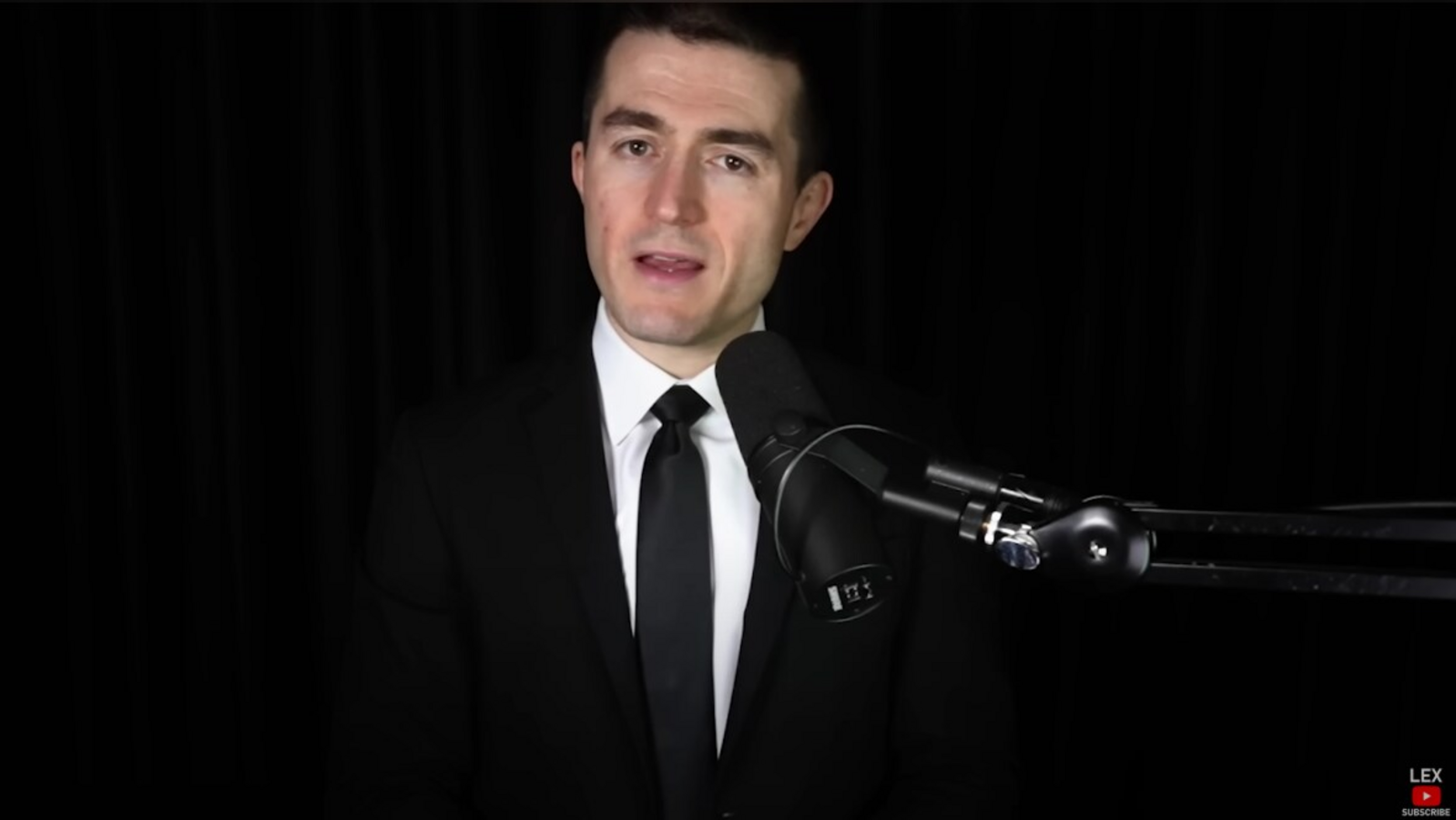
A recurring theme in Fridman's discourse is the metaphysical importance of "love," which he defines not as a romantic emotion as a fundamental force for connection and understanding. He frequently asks guests, ranging from hardened cage fighters to theoretical physicists, about the role of love in their lives and work.
This line of inquiry is designed to the gap between technical expertise and the human condition. He has stated that even in the face of evil or disagreement, maintaining a posture of love allows for a more honest exchange of ideas.
This philosophy extends to his handling of guests across the political spectrum. Fridman has hosted individuals with widely views, including fierce critics of one another.
He resists the label of "centrist," preferring to view himself as an independent observer seeking to map the " of human thought." This stance has led to accusations of "both-sidesism," particularly when he hosts guests who have been deplatformed elsewhere.
yet, Fridman maintains that conversation is the antidote to violence and that isolating individuals only deepens societal divides.
Preparation and Research Rigor
even with the conversational tone, Fridman's preparation is intensive and academic. He does not use a teleprompter or a fixed list of questions. Instead, he engages in a "breadth- search" of a guest's body of work, frequently reading their technical papers, books, and previous interviews in the days leading up to the recording.
For scientist guests, this involves parsing dense academic literature to formulate questions that demonstrate a technical grasp of their field. He has shared his reading lists publicly, which include heavy rotation of classics like The Brothers Karamazov, 1984, and Sapiens, alongside technical manuals and white papers.
Fridman's background in engineering influences his line of questioning, which frequently deconstructs abstract concepts into systems-level problems.
When interviewing guests like Elon Musk or Sam Altman, he frequently pivots between high-level philosophical questions about the future of humanity and granular technical queries about neural network architecture or rocket engineering. This duality allows him to serve as a between the scientific community and the general public.
Visual Identity and Atmosphere
The visual aesthetic of the Lex Fridman Podcast is deliberately austere. Fridman wears a black suit and tie for every episode, a uniform he adopted to pay homage to physicists like Richard Feynman and the "serious" style of the Mad Men era.
He has explained that the suit is a sign of respect for the guest and the audience, intended to remove fashion as a distraction and focus attention entirely on the conversation.
The set is similarly minimalist, consisting of a black table, two microphones, and a dark background, creating an intimate, timeless atmosphere that mimics a private late-night conversation.
Guest Demographics and Frequency
Fridman's guest list is a mix of elite scientists, tech moguls, authors, and athletes. While he began with a heavy focus on artificial intelligence, the roster has expanded to include historians, comedians, and political commentators. A core group of guests has appeared multiple times, frequently serving as recurring characters in the podcast's ongoing narrative about the future of technology and society.
Table: Most Frequent Podcast Guests (2018, 2025)
| Guest Name | Primary Field | Notable Appearance Topics |
|---|---|---|
| Elon Musk | Technology / Engineering | SpaceX, Neuralink, Tesla Autopilot, War, AI Safety |
| Joe Rogan | Podcasting / Comedy | Discipline, Martial Arts, Comedy, UFOs, Cancel Culture |
| Michael Malice | Author / Anarchism | Political Philosophy, Totalitarianism, Anarchy, Trolling |
| Andrew Huberman | Neuroscience | Health Optimization, Dopamine, Sleep, Focus, Biology |
| Garry Kasparov | Chess / Politics | Chess Strategy, AI vs. Humans, Putin, Geopolitics |
Tech Titans and Scientific Discourse
Fridman's platform has become a primary destination for long-form technical discourse, frequently hosting the world's most influential technology executives. His background in engineering allows for conversations that bypass standard media talking points. Elon Musk, CEO of Tesla and SpaceX, has appeared on the podcast four times.
Their conversations range from rocket engineering and autonomous driving to the philosophical of consciousness. In August 2024, Musk appeared on episode #438 to discuss Neuralink, a conversation that spanned over eight hours and provided detail on brain-computer interface updates.
In September 2023, Fridman conducted a viral interview with Meta CEO Mark Zuckerberg (Episode #398) entirely within the Metaverse. Using photorealistic "Codec Avatars," the two conversed in a virtual space while physically located hundreds of miles apart.
The episode demonstrated a significant leap in virtual reality technology, with the avatars capturing subtle facial expressions and eye movements that previous iterations absence. This demonstration was widely by tech analysts as a pivotal moment for mixed reality hardware.
Other major tech figures include Amazon founder Jeff Bezos, who gave his long-form podcast interview to Fridman in December 2023 (Episode #405). The two hour discussion covered the mechanics of Blue Origin's rockets and Amazon's "six-page memo" management culture.
OpenAI CEO Sam Altman has also been a repeat guest, notably appearing in March 2024 (Episode #419) to address the internal boardroom conflict at OpenAI and the development of the Sora video generation model.
Political Figures and Global Leaders
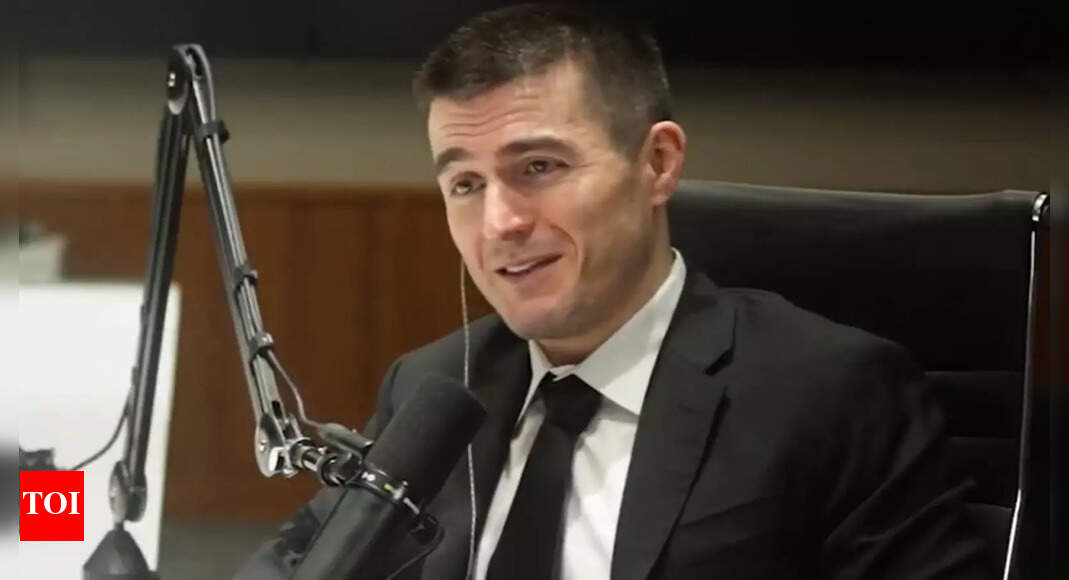
The podcast frequently features high-profile political figures, frequently resulting in episodes that dominate news pattern. In September 2024, former President Donald Trump appeared on episode #442.
The interview occurred during the height of the 2024 presidential election pattern and covered topics ranging from the 2020 election results to UFO declassification and the Jeffrey Epstein files.
Fridman's non-confrontational interview style allowed Trump to speak at length, a method that drew both praise for its civility and criticism for not sufficiently challenging false claims.
Fridman also interviewed Israeli Prime Minister Benjamin Netanyahu in July 2023 (Episode #389). The conversation took place in Jerusalem amid massive protests regarding judicial reform in Israel. They discussed the balance of power in democracy and the future of AI in warfare.
Following his interview with Vladimir Putin, journalist Tucker Carlson appeared on the podcast in February 2024 (Episode #414) to discuss his experience in Moscow and his views on the war in Ukraine.
Cultural Impact and Controversy
Fridman does not shy away from guests who have been "cancelled" or are embroiled in severe controversy. In October 2022, he hosted the artist Ye (formerly Kanye West) for a tense interview (Episode #332) following Ye's series of antisemitic public statements.
Fridman, who is Jewish and of Soviet descent, pushed back against Ye's characterizations of Jewish media control while attempting to maintain a dialogue. The episode was viewed millions of times and sparked intense debate regarding the ethics of platforming hate speech versus the value of open confrontation.
In June 2024, actor Kevin Spacey appeared on the podcast (Episode #432) to discuss the sexual assault allegations that derailed his career. Spacey denied the accusations and discussed the legal battles he had won, using the platform to attempt a public rehabilitation.
These episodes highlight Fridman's commitment to "radical empathy," a philosophy that prioritizes understanding the human being behind the public persona, regardless of public opinion.
Select High-Impact Episodes (2022, 2025)
| Episode | Guest | Date | Key Topics |
|---|---|---|---|
| #442 | Donald Trump | Sept 3, 2024 | 2024 Election, Epstein Files, UFOs |
| #438 | Elon Musk | Aug 2, 2024 | Neuralink, Mars Colonization, AI Safety |
| #419 | Sam Altman | Mar 18, 2024 | OpenAI Board Saga, GPT-5, Sora |
| #405 | Jeff Bezos | Dec 14, 2023 | Blue Origin, Amazon Management, Space |
| #398 | Mark Zuckerberg | Sept 28, 2023 | Metaverse, Photorealistic Avatars, Llama 3 |
| #332 | Ye (Kanye West) | Oct 24, 2022 | Antisemitism, Fashion Industry, Media |
Commentary on Artificial General Intelligence
Lex Fridman has positioned himself as a central node in the global discourse on Artificial General Intelligence (AGI), utilizing his platform to synthesize the technical, ethical, and philosophical dimensions of machine sentience.
His commentary is characterized by a deliberate choice of "optimism" over cynicism, viewing AGI not as an engineering hurdle as a chance amplifier of human consciousness.
Between 2015 and early 2026, Fridman conducted over 100 hours of public dialogue specifically focused on the " problem", the challenge of ensuring superintelligent systems act in accordance with human values.
Timeline Predictions and "The Paus"
Fridman frequently presses his guests for concrete timelines regarding the arrival of AGI, frequently defining it as a system capable of outperforming a Nobel Prize winner across all relevant disciplines. By early 2026, his interviews had chronicled a significant contraction in these predicted windows.
| Guest | Role | Prediction Date | Forecasted Arrival | Key Context |
|---|---|---|---|---|
| Dario Amodei | CEO, Anthropic | November 2024 | 2026, 2027 | Based on scaling laws and "straight line extrapolation" of data. |
| Demis Hassabis | CEO, Google DeepMind | July 2025 | ~2030 | Estimated a 50% probability within 5 years; the brain as a proof of existence for general intelligence. |
| Sam Altman | CEO, OpenAI | March 2024 | By 2030 | Stated compute would become the "currency of the future" and AGI would arrive by the end of the decade. |
| Ray Kurzweil | Futurist | September 2022 | 2029 | Maintained his long-standing prediction based on the law of accelerating returns. |
Fridman himself has historically expressed a more conservative timeline than his most aggressive guests, frequently suggesting dates "after 2030" for super- systems. yet, following the release of reasoning models in late 2024 and 2025, he acknowledged the "palpable" acceleration of capabilities.
In February 2026, he noted that while software automation might occur rapidly, the full physical manifestation of AGI, such as robotic swarms in military contexts, faced "structural blockers" that would likely push widespread deployment into the 2030s.
Safety,, and p(doom)
A recurring theme in Fridman's commentary is the existential risk of AGI, frequently quantified as p(doom), the probability that AGI lead to the extinction of humanity. Fridman actively seeks out viewpoints to stress-test his own optimism.
He provided a platform for extreme caution through interviews with researchers like Eliezer Yudkowsky and Roman Yampolskiy. In March 2023, Yudkowsky argued on the podcast that AGI on its current trajectory would "likely destroy humanity," a stance Fridman pushed back against by citing human adaptability. In June 2024, Yampolskiy assigned a p(doom) of 99.
99%, arguing that controlling a superintelligence is mathematically impossible. Conversely, Fridman has highlighted the views of engineers and lab leaders who place this risk between 1% and 20%.
"Resentment and cynicism suffocate the human spirit. Choose optimism, and fight for the best possible future imagine."
Fridman's personal commentary frequently centers on the danger of "technofascism" rather than a rogue "Terminator" scenario. He that the immediate threat lies in the concentration of power among a small group of humans who control AGI, rather than the AI itself developing malevolence.
He has repeatedly stated that "love" and "consciousness" are the variables missing from purely engineering-based safety metrics, suggesting that an AGI aligned with human emotion is the only viable route to safety.
Open Source vs. Centralized Control
The debate between open-source democratization and closed-source safety became a focal point of Fridman's inquiry throughout 2024 and 2025. His dialogues with Meta's Chief AI Scientist Yann LeCun were pivotal in this regard. LeCun argued that proprietary AI poses a greater danger due to power concentration, advocating for open platforms to a diverse ecosystem.
Fridman has frequently played devil's advocate in these exchanges, questioning whether open-sourcing models gives "bad actors" (e. g., terrorists or rogue states) the capacity to cause catastrophic harm. even with these concerns, his editorial voice leans toward transparency.
He has criticized the "unclear" nature of labs that restrict access to model weights, arguing that secrecy frequently disguises itself as safety while serving commercial moats.
The "Alien" Intelligence
Fridman frequently employs the metaphor of "alien intelligence" to describe Large Language Models (LLMs). In conversations with Andrej Karpathy and others, he examine the idea that humanity is building a digital organism that we do not fully understand.
He has expressed fascination with the "jagged" nature of this intelligence, where a system can perform at a PhD level in physics fail at basic common sense tasks. This unpredictability serves as the foundation for his calls for "humility" in engineering, urging the community to admit how little is known about the internal state of these neural networks.
Martial Arts and Athletics
Fridman is an active practitioner of Brazilian Jiu-Jitsu (BJJ) and Judo, holding black belt ranks in both disciplines. His martial arts background serves as a central pillar of his personal philosophy and frequently informs the subject matter of his podcast.
He received his -degree black belt in Brazilian Jiu-Jitsu in April 2023 from Phil and Rick Migliarese of Balance Studios in Philadelphia, Pennsylvania. Fridman has described the brown belt as the most difficult rank to achieve during his progression, citing the intensity of competing against younger, athletic purple belts in open tournaments.
His competition history includes participation in the Professional League and other submission events. In 2013, Fridman competed against Garry Tonon, a future ADCC medalist and ONE Championship fighter, in a no-gi match. Although Fridman lost the bout, he frequently
Interview Style and Editorial Philosophy
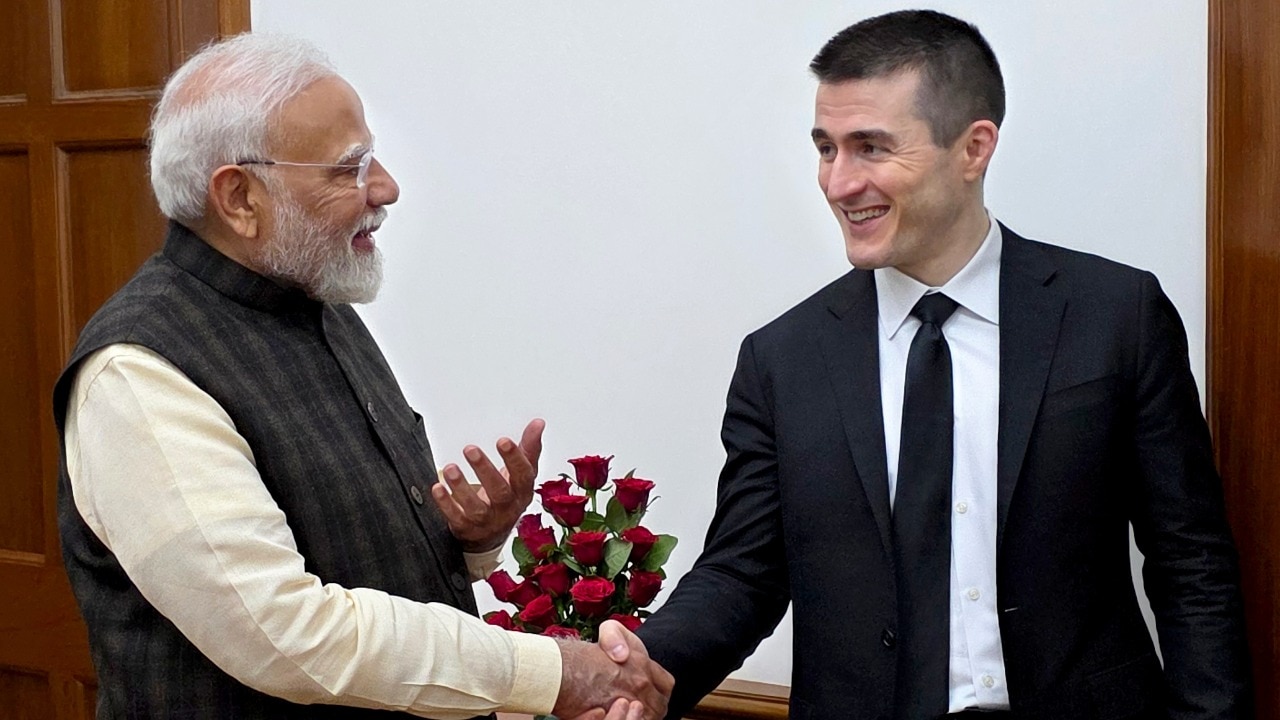
Fridman's interviewing method, characterized by a deliberate focus on "empathy" and "love," has polarized audiences and media critics.
While supporters praise his long-form format for allowing guests to expound on complex ideas without interruption, detractors frequently describe his style as "softball" or "fawning." In a 2023 profile, Business Insider noted that tech executives viewed Fridman's podcast as a "safe space" compared to traditional adversarial journalism.
This sentiment was echoed by The Verge, which characterized him as a "softball interviewer" popular among the "tech elite.".
Criticism of his editorial neutrality intensified following high-profile political interviews. His September 2024 interview with Donald Trump faced backlash for Fridman's perceived failure to challenge false claims regarding the 2020 election and the January 6 Capitol attack.
Similarly, a July 2023 interview with Israeli Prime Minister Benjamin Netanyahu drew sharp rebuke from left-leaning commentators, including Haaretz contributor Ben Samuel, who argued that Fridman allowed Netanyahu to present unchecked narratives regarding judicial reforms and the Israeli-Palestinian conflict. Nathan J.
Robinson of Current Affairs critiqued Fridman's "posture of neutrality," arguing that it fails to adequately confront "toxic beliefs" under the guise of open dialogue.
Platforming Controversies
Fridman has faced significant scrutiny for his guest selection, particularly regarding figures associated with the "Intellectual Dark Web" and those espousing controversial views. In October 2022, Fridman hosted Kanye West (Ye) during the height of the rapper's antisemitic public spiral.
While Fridman, who is Jewish, pushed back against West's claims of a "Jewish media mafia" by citing his own family's history in the Holocaust, critics argued that platforming West during a manic episode served to amplify hate speech rather than resolve it.
Newsweek reported on the tense exchange, noting West's refusal to trust Fridman, yet the decision to air the three-hour conversation remained a point of contention.
The podcast has also been criticized for amplifying medical misinformation. During the COVID-19 pandemic, Fridman hosted guests such as Bret Weinstein and Joe Rogan, who expressed skepticism toward vaccines and public health mandates. In 2023, Fridman hosted a debate on vaccine efficacy, which medical experts argued created a "false equivalence" between established science and fringe theories.
Academic Credentials and Research
Fridman's academic standing and his association with the Massachusetts Institute of Technology (MIT) have been subjects of public debate. While Fridman holds a Ph. D. from Drexel University, his branding heavily use his affiliation with MIT, where he has held positions as a research scientist and lecturer for non-credit courses.
A 2019 study authored by Fridman on Tesla's Autopilot system became a flashpoint for criticism. The non-peer-reviewed study, which concluded that drivers remained focused while using the semi-autonomous system, was praised by Elon Musk criticized by safety experts.
Missy Cummings, a professor at Duke University and former fighter pilot, described the study's methodology as "deeply flawed," and AI researcher Anima Anandkumar publicly urged Fridman to submit the work for peer review before seeking press coverage.
Social Media Backlash
In January 2023, Fridman became the subject of widespread mockery on X (formerly Twitter) after posting a reading list for the year that included standard high school curriculum titles such as 1984, Animal Farm, and The Little Prince. Critics, including author Nassim Nicholas Taleb, derided the list as performative and intellectually shallow.
Taleb's criticism escalated into a public feud, with the author blocking Fridman and dismissing his "resentment" of genuine scholarship. Fridman responded by expressing confusion at the "cynicism" and reiterated his goal of encouraging reading, a stance that rallied his core fanbase failed to quell the "middlebrow" accusations from literary critics.
Audience Growth and Metrics
Even with serious headwinds, Fridman's audience metrics demonstrate substantial growth. By December 2025, his YouTube channel surpassed 4. 8 million subscribers, with total views exceeding 850 million. His podcast consistently ranks in the top tier of technology and society charts on Spotify and Apple Podcasts. The following table illustrates the growth of his platform during key controversy periods:
| Year | Subscribers (Approx.) | Notable Event |
|---|---|---|
| 2020 | 700, 000 | Rise of long-form AI interviews |
| 2022 | 2. 3 Million | Kanye West & Mark Zuckerberg interviews |
| 2023 | 3. 5 Million | Sam Altman & Benjamin Netanyahu interviews |
| 2024 | 4. 2 Million | Donald Trump interview |
| 2025 | 4. 8 Million | Continued growth in political content |
Political Philosophy and Discourse
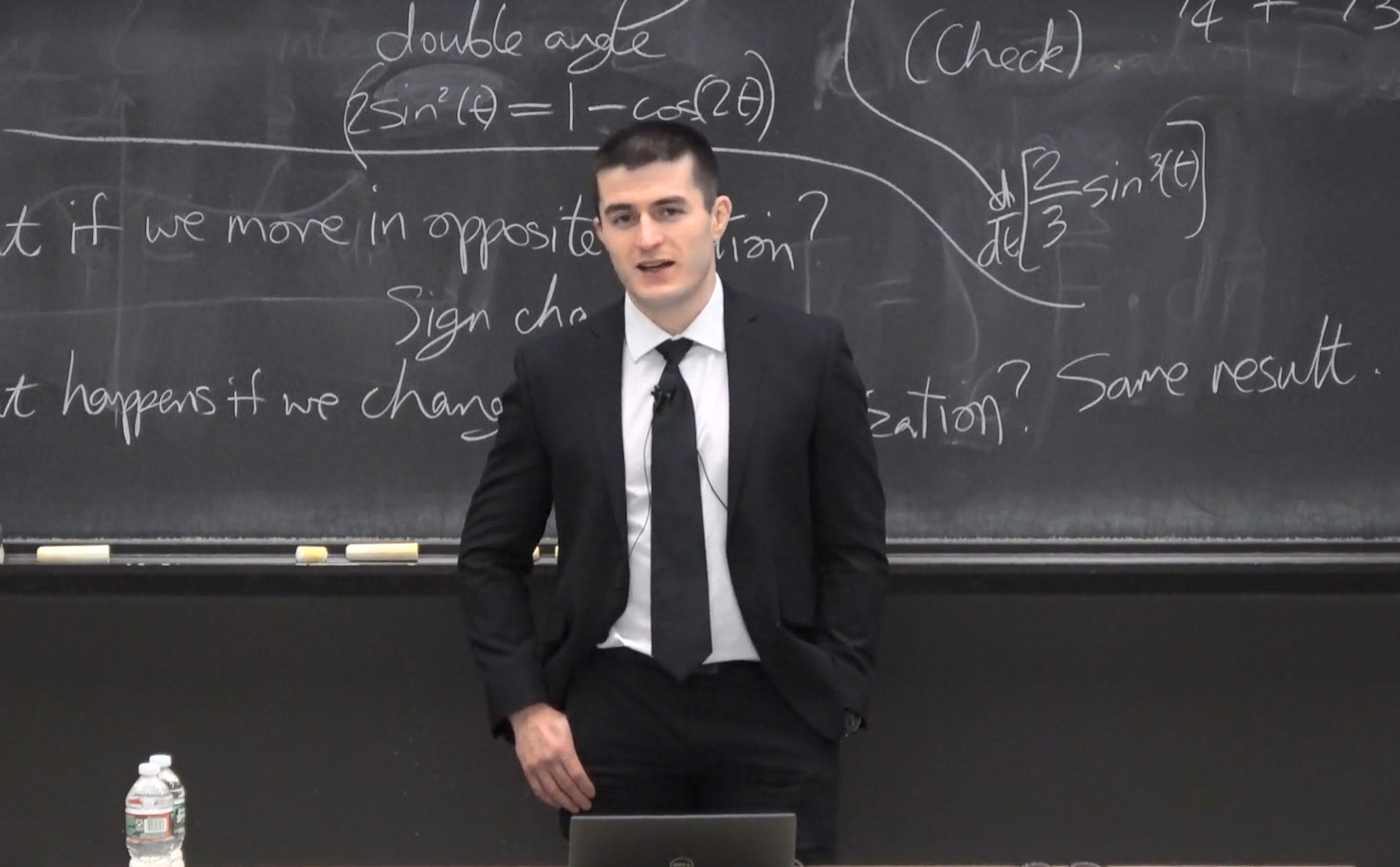
Fridman characterizes his political orientation as "centrist" or "politically homeless," frequently emphasizing a philosophy rooted in "love," "empathy," and the "steel-manning" of opposing arguments. He asserts that his primary goal is to understand the human condition rather than to promote a specific partisan agenda.
This method manifests in his interview style, which prioritizes long-form, non-adversarial dialogue over the combative interrogation techniques typical of cable news.
Fridman has stated that he attempts to interview figures from across the political spectrum, though he has noted a distinct difference in how these invitations are received; he claims that while right-wing figures frequently welcome him, left-wing figures frequently attack him or refuse to engage, creating a structural "pull" toward the right in his guest roster.
Critics, including journalists from Business Insider and Vice, have argued that Fridman's platform serves as a "safe space" for the "anti-woke" elite and right-wing personalities. They contend that his refusal to aggressively challenge false claims, under the guise of empathy or neutrality, normalizes conspiracy theories and extremist rhetoric.
Fridman counters this by maintaining that compassionate dialogue is the only method to divides and that ostracizing controversial figures only deepens societal polarization.
Controversial Interviews and Platforming
Fridman's commitment to interviewing controversial figures has generated significant scrutiny. His method frequently involves allowing guests to speak at length with minimal interruption, a method that has drawn both praise for its openness and condemnation for its absence of journalistic rigor during high- conversations.
| Guest | Date | Key Topic | Controversy / Outcome |
|---|---|---|---|
| Kanye West (Ye) | Oct 2022 | Antisemitism, Media | Fridman pushed back on "Jewish media" claims citing his own Holocaust-survivor family was criticized for platforming Ye's hate speech. |
| Donald Trump | Sept 2024 | 2020 Election, Policy | Trump admitted he lost the 2020 election "by a whisker" reverted to fraud claims. Fridman faced backlash for a perceived absence of pushback. |
| Vladimir Putin | N/A (Sought) | Ukraine War | Fridman has repeatedly expressed a desire to interview Putin to "help peace," drawing criticism for chance legitimizing a dictator. |
| Volodymyr Zelenskyy | Jan 2025 | Ukraine-Russia War | Fridman criticized Zelenskyy for using "crude words" about Putin, arguing it peace negotiations, which angered pro-Ukraine voices. |
The Kanye West Interview
In October 2022, Fridman hosted Kanye West (Ye) during the height of the rapper's antisemitic public statements. The episode, lasting over two hours, featured West doubling down on conspiracy theories regarding Jewish control of the media.
Fridman, who is of Jewish heritage and whose family members perished in the Holocaust, challenged West's assertions, telling him that the phrase "Jewish media" carries "an echo of pain." even with this pushback, critics argued that airing the interview provided West with a massive platform to amplify harmful tropes without sufficient accountability.
Fridman defended the release, citing his belief in the power of "tough, honest, empathetic conversation.".
Engagement with Donald Trump
In September 2024, Fridman interviewed former President Donald Trump at Mar-a-Lago. The conversation covered various topics, including the release of UFO footage and the Jeffrey Epstein files.
Notably, Trump admitted during the exchange that he lost the 2020 election "by a whisker," a deviation from his usual narrative, though he quickly returned to claims of election fraud.
Media analysts criticized Fridman for failing to press Trump on the inconsistencies in his statements or the dangers of his election denialism, viewing the interview as an example of how the "manosphere" podcast circuit allows political figures to bypass rigorous journalistic scrutiny.
Geopolitical Stance
Fridman's background as a Soviet-born American with Ukrainian and Jewish roots heavily influences his perspective on global conflicts. His commentary on the Russia-Ukraine war and the Israel-Palestine conflict frequently focuses on the human cost of war rather than strict geopolitical.
Russia-Ukraine War
Since the 2022 invasion, Fridman has expressed support for Ukraine while simultaneously calling for empathy toward Russian citizens. He has consistently voiced a desire to interview Vladimir Putin, arguing that dialogue is essential for peace, a stance that has led to accusations of naivety.
In January 2025, Fridman interviewed Ukrainian President Volodymyr Zelenskyy. Following the interview, Fridman publicly criticized Zelenskyy for using "crude" language regarding Putin, suggesting that such rhetoric was counterproductive to peace negotiations.
This comment drew sharp rebukes from Ukrainian activists and Western commentators, who accused Fridman of creating a false equivalency between the aggressor and the victim.
Israel-Palestine Conflict
Fridman has devoted significant airtime to the Israel-Palestine conflict, hosting debates between figures such as Norman Finkelstein, Benny Morris, and Destiny. He has also traveled to the region to conduct interviews with locals on both sides of the border.
His stated aim is to highlight the shared humanity of Israelis and Palestinians, his refusal to take a hardline stance has alienated partisans on both sides.
Pro-Palestinian voices have criticized him for not adequately addressing the power of the occupation, while pro-Israeli voices have taken problem with his willingness to platform harsh critics of Zionism.
Personal Life
Lex Fridman maintains a disciplined personal lifestyle characterized by rigorous physical training, a specific dietary regimen, and a distinct public philosophy. In late 2021, Fridman relocated from Cambridge, Massachusetts, to Austin, Texas, citing a desire to immerse himself in a more optimistic and creative environment.
He lives alone and has frequently described himself as an introvert who values solitude for deep work.
Martial Arts and Athletics
Martial arts form a central pillar of Fridman's daily routine and identity. He holds a -degree black belt in Brazilian Jiu-Jitsu under Phil and Rick Migliarese of Balance Studios in Philadelphia. Fridman originally received his black belt in November 2018 and was awarded his degree in April 2023.
He also holds a black belt in Judo and has trained with high-level competitors, including Olympic silver medalist Travis Stevens. Throughout his career, Fridman has competed in numerous tournaments, including a match against submission champion Garry Tonon.
In June 2023, Fridman attracted significant media attention when he trained with both Elon Musk and Mark Zuckerberg during the lead-up to their proposed "cage match." He publicly stated that while the training sessions were impressive, he preferred that the two tech billionaires not fight.
Beyond martial arts, Fridman adheres to a fitness routine inspired by former Navy SEAL David Goggins. This regimen includes running six or more miles daily and performing high-volume bodyweight exercises such as pull-ups and push-ups. In March 2020, he completed Goggins' "4x4x48" challenge, which requires running four miles every four hours for 48 hours.
Diet and Daily Routine
Fridman follows a strict diet that fluctuates between ketogenic and carnivore. He eats one or two meals a day, frequently consuming ground beef and vegetables like cauliflower. He supplements this diet with sodium and electrolytes to maintain performance during his fasting periods.
His daily schedule is highly structured, incorporating four-hour blocks of "deep work" where he focuses on programming or research without distraction. He allocates specific time slots for reading, aiming for one hour of academic papers and one hour of fiction daily.
In 2025, he mentioned revisiting Fyodor Dostoevsky's Crime and Punishment as part of this routine.
Music and Hobbies
A multi-instrumentalist, Fridman plays both the guitar and piano. He views music as a "private moment of joy" and practices for approximately 20 minutes each day. On April 8, 2020, during an appearance on the Joe Rogan Experience (episode #1455), he performed an original song inspired by his grandfather, a World War II veteran.
Fridman is also an avid gamer, citing The Elder Scrolls V: Skyrim, Portal, and the original World of Warcraft as of his favorite titles. He frequently uses the life simulation game The Sims as a metaphor for visualizing his daily tasks and productivity.
Public Image and Philosophy
Fridman is widely recognized for his signature attire: a black suit, white shirt, and black tie. He adopted this uniform to convey seriousness and respect for his guests, drawing inspiration from physicist Richard Feynman and the aesthetic of the television series Mad Men.
His public philosophy centers on the concept of "love" as a pragmatic and solving force, a stance he maintains even when facing criticism for being overly idealistic or naive. He speaks English and Russian, though he has noted that his Russian has degraded since leaving Moscow at age 11.
In interviews with Russian speakers, such as his 2025 conversation with Ukrainian President Volodymyr Zelenskyy, he has utilized a mix of English and Russian to navigate complex topics.
| Date | Event | Details |
|---|---|---|
| November 2018 | BJJ Promotion | Received Black Belt from Phil and Rick Migliarese |
| March 2020 | Endurance Challenge | Completed David Goggins' 4x4x48 Run |
| April 2020 | Musical Performance | Played original song on Joe Rogan Experience |
| Late 2021 | Relocation | Moved residence to Austin, Texas |
| April 2023 | BJJ Promotion | Received 1st Degree on Black Belt |
| June 2023 | High-Profile Training | Training sessions with Elon Musk and Mark Zuckerberg |
Selected Publications and Research Output (2015, 2025)
Between 2015 and 2019, Lex Fridman's academic output centered on human-centered artificial intelligence, specifically within the domain of autonomous vehicles and driver state monitoring.
During his tenure as a Research Scientist at the Massachusetts Institute of Technology (MIT), initially with the AgeLab and later with the Laboratory for Information and Decision Systems (LIDS), he focused on applying deep learning computer vision techniques to real-world driving data.
His publication frequency declined significantly after 2019 as his focus shifted toward the Lex Fridman Podcast. The majority of his work from this decade relies on large- naturalistic driving datasets.
The MIT Advanced Vehicle Technology (MIT-AVT) Study
Fridman's most extensive research project involved the creation and analysis of the MIT Advanced Vehicle Technology (MIT-AVT) study. Initiated to understand how human drivers interact with semi-autonomous automation, the study collected data from a fleet of instrumented vehicles, including Tesla Model S and Model X, Volvo S90, and Range Rover Evoque models.
The project aimed to capture objective data on driver behavior rather than relying solely on self-reported surveys.
In 2019, Fridman and his colleagues published a detailed overview of this dataset in IEEE Access. The paper, titled "MIT Advanced Vehicle Technology Study: Large- Naturalistic Driving Study of Driver Behavior and Interaction with Automation," outlined the massive scope of the collection effort.
The dataset included over 15, 610 days of participation from 122 subjects, covering 511, 638 miles of driving. The instrumentation recorded high-definition video of the driver's face, the cabin, and the forward roadway, resulting in approximately 7. 1 billion video frames.
This work provided a foundation for training deep learning models to detect driver drowsiness, distraction, and gaze direction in unconstrained environments.
Driver State Monitoring and Computer Vision
of Fridman's bibliography addresses the technical challenges of monitoring a driver's attention. In 2016, he published "Driver Gaze Region Estimation without Use of Eye Movement" in IEEE Intelligent Systems. This research proposed a method to estimate where a driver is looking using only head pose data, rather than expensive or fragile eye-tracking hardware.
The study demonstrated that head orientation could serve as a reliable proxy for gaze region classification in driving scenarios, making driver monitoring systems more accessible for mass-market vehicles.
He continued this line of inquiry with the paper "Owl and Lizard: Patterns of Head Pose and Eye Pose in Driver Gaze Classification," published in IET Computer Vision (2016). This work analyzed the relationship between head movement and eye movement, categorizing drivers based on their physical behavior when scanning the road.
In 2018, his team received an Honorable Mention at the CHI Conference on Human Factors in Computing Systems for the paper "Cognitive Load Estimation in the Wild." This study evaluated vision-based methods for detecting mental effort in drivers, using the MIT-AVT dataset to validate algorithms against real-world conditions rather than simulated environments.
DeepTraffic and Reinforcement Learning
Beyond computer vision, Fridman explored reinforcement learning through gamified simulation. In 2018, he presented "DeepTraffic: Crowdsourced Hyperparameter Tuning of Deep Reinforcement Learning Systems for Multi-Agent Dense Traffic Navigation" at the NeurIPS Deep Reinforcement Learning Workshop.
DeepTraffic originated as a browser-based simulation where students and researchers could submit neural network code to control a vehicle in dense traffic. The project served as both an educational tool and a crowdsourcing experiment, aggregating thousands of submissions to identify optimal hyperparameters for navigating complex traffic flows.
The simulation required agents to maximize speed while avoiding collisions, crowdsourcing the "tuning" process of deep Q-learning networks.
Tesla Autopilot Research and Methodology Disputes
Fridman's research on Tesla's Autopilot system generated significant public attention and academic debate. In 2019, he released a study titled "The Human Side of Tesla Autopilot," which analyzed data from the MIT-AVT corpus.
The paper argued that drivers using Autopilot maintained a high degree of "functional vigilance," suggesting that automation did not necessarily lead to dangerous levels of disengagement. The findings contradicted prevailing concerns that semi-autonomous systems inevitably lead to driver complacency.
The study faced criticism from safety experts and academic peers.
Missy Cummings, a professor at Duke University and later an advisor to the National Highway Traffic Safety Administration (NHTSA), described the study's methodology as flawed, citing problem with the sample size and the definition of "vigilance." Other researchers, such as Anima Anandkumar of Caltech, publicly urged Fridman to submit the work for rigorous peer review before disseminating the results to the media.
While the paper was widely circulated in industry news, it did not appear in a high-impact peer-reviewed journal, and the controversy highlighted the tension between rapid industry-aligned research and traditional academic validation.
Summary of Key Publications (2015, 2019)
The following table summarizes Fridman's primary research output during his active academic period. No significant peer-reviewed technical papers were identified for the years 2020 through 2025.
| Year | Title | Venue / Journal | Research Focus |
|---|---|---|---|
| 2019 | MIT Advanced Vehicle Technology Study | IEEE Access | Large- dataset collection (500k+ miles) |
| 2018 | DeepTraffic: Crowdsourced Hyperparameter Tuning | NeurIPS Workshop | Reinforcement learning & traffic simulation |
| 2018 | Cognitive Load Estimation in the Wild | CHI Conference | Driver mental state analysis |
| 2017 | Arguing Machines: Human Supervision of Black Box AI | arXiv Preprint | Human-AI interaction & safety |
| 2016 | Driver Gaze Region Estimation without Eye Movement | IEEE Intelligent Systems | Computer vision & head pose analysis |
| 2016 | Active Authentication on Mobile Devices | IEEE Systems Journal | Behavioral biometrics & security |
SEO Audit Tools Most Accurate — But Misleading on Link Quality
SEO professionals rely on audit platforms like Ahrefs, SEMrush, and Moz to assess website health and link authority. However, caution is advised as these tools can lead to wrong decisions due…
Read Full ReportFebruary 26, 2026 • Crimes, All, India
The global fentanyl supply chain has shifted towards a more diffuse and resilient network known as the precursor pipeline, involving transnational criminal organizations like the…
Delivery Platform Tips: The Hidden algorithms that reallocate gratuities
January 6, 2026 • Apps
The delivery platform industry saw significant growth in 2023, driven by demand for convenience and digital services. Key players like DoorDash, Uber Eats, Grubhub, and…
Shocking Exploitation of Voice Actors in Video Game Industry
October 26, 2025 • All, Entertainment
Voice actors in the video game industry face exploitation and unfair practices despite major studios earning billions of dollars annually. Recent strikes by SAG-AFTRA have…
Shocking Crisis: Forced Labor in Informal Mining Sectors in Africa
October 3, 2025 • All
Africa's artisanal and informal mines are at the heart of a hidden crisis, with men, women, and children forced into labor to extract minerals for…
Top Media Communication Case Studies For Powerful Media Relations Services
June 7, 2025 • Media Industry Reports: Trends, PR Performance & Analytics
PR agencies utilize media communication to shape brand reputation, manage crises, and influence policy across various sectors and countries. Effective PR strategies involve proactive media…
Digital Welfare Divide: Aadhaar-based Exclusion Killing India’s Poorest
India's Aadhaar digital ID, intended to streamline social welfare delivery, has led to a digital welfare divide. Despite legal safeguards, mandating Aadhaar for welfare programs…