
| Metric | Figure | Implication |
|---|---|---|
| User Base | 1.3 Billion+ | Absolute population saturation. |
| Gaming Revenue | ~$24 Billion/Year | Subsidizes other unprofitable ventures. |
| R&D Spend | ~$9 Billion/Year | Focus shifts to AI and chips. |
| Govt Fines | Low Relative to Peers | Calculated compliance minimizes damage. |
| Market Cap | Fluctuates ~$400B | Heavily discounted by regulatory risk. |
Timeline (Key Markers)
June 2001
Career
Ma Huateng began his professional trajectory in Shenzhen during 1993.
Full Bio
Summary
Ma Huateng operates as the silent architect behind China's digital authoritarianism. His empire exerts total control over information flow. Western analysts frequently underestimate this quiet dominance. Jack Ma sought global fame. Pony Ma prioritized invisibility. That distinction determined their respective fates. One faced exile. The other retained power. Tencent functions not merely as a corporation. It serves as a mandatory utility for over one billion subjects. Daily existence stops without WeChat. Citizens use it for payments. They require it for communication. It validates their identity. This app constitutes the most sophisticated surveillance tool in human history. Beijing utilizes this infrastructure to monitor dissent. Every message undergoes real-time scanning. Algorithms detect prohibited keywords instantly. Violations trigger police intervention. User privacy is a fiction. The state possesses keys to the back door. This symbiosis ensures corporate survival. Ma enforces Party will. In return, regulators allow his monopoly to persist.
Financial metrics reveal a juggernaut. Revenue streams flow from diverse sources. Gaming provides the bedrock. Titles like Honor of Kings generate billions annually. Critics labeled these products "spiritual opium." Parents complained about addiction. State media amplified these concerns. Ma responded with immediate compliance. His engineers implemented hard limits on play time. Minors lost access after dark. Identification checks became mandatory. Income dipped slightly. Yet the political capital gained was invaluable. Loyalty to directives buys longevity. The firm pledged 50 billion yuan to "Common Prosperity" initiatives. This donation functions as protection money. It signals submission to Xi Jinping. Wealth redistribution is the new mandate. Tech giants must contribute or face destruction. Ma wrote the check early. He understands the cost of doing business.
Investment strategy further distinguishes this entity. Tencent acts as a silent venture capital fund. They own significant stakes in Western culture. Riot Games belongs to them. Supercell operates under their umbrella. Epic Games accepted their funding. Small percentages of Tesla sit in their portfolio. Snap Inc took their cash. This diversification protects against domestic volatility. If Beijing strangles local growth, foreign assets sustain the balance sheet. Aggressive acquisition defines their history. Early growth relied on imitation. They copied ICQ to build QQ. They cloned features from competitors. Rivals faced a simple choice. Sell out or die. Startups cannot fight the network effect. Traffic from WeChat makes or breaks new apps. Ma blocks links to competitors. ByteDance challenges this hegemony. TikTok steals attention spans. Short video eats into messaging time. This rivalry drives current internal tension.
Corporate structure utilizes internal ruthlessness. Ma encourages "horse racing." Different teams develop competing products. QQ fought WeChat for dominance. The winner takes all. The loser fades away. This Darwinian approach keeps innovation high. It prevents stagnation. Employees work '996' hours. Burnout is common. Turnover remains high. But the machine churns on. South African firm Naspers holds a massive stake. Their early investment yielded historical returns. Prosus now manages that share. Periodic selling by Prosus suppresses the stock price. Investors watch these block sales closely. It creates a ceiling on valuation. Yet the underlying cash flow remains robust. Advertising revenue grows. Fintech services expand. Cloud computing battles Alibaba for market share.
The future for Ma involves navigating a shrinking cage. Growth rates have slowed. The golden era of unchecked expansion ended. Antitrust laws now have teeth. Walls between platforms must come down. Interoperability is the new law. WeChat must allow links to external shops. This weakens the walled garden. But the moat remains deep. User habits are set. Switching costs are too high. Ma Huateng built a digital prison so comfortable that no one wants to leave. He stays out of headlines. He wears plain suits. He speaks little. His power lies in the code. It lies in the data. It lies in the silence. While others shout, Pony Ma listens. He hears everything.
Career
Ma Huateng began his professional trajectory in Shenzhen during 1993. He graduated from Shenzhen University with a Bachelor of Science in Computer Science. His early employment involved developing software for pagers at China Motion Telecom Development. This exposure to telecommunications infrastructure provided the technical foundation for his future enterprise. Ma incorporated Tencent on November 11 in 1998 alongside four university classmates. Their initial capital totaled 500,000 RMB. The team launched OICQ three months later. This product functioned as a localized clone of the Israeli instant messaging client ICQ.
User adoption accelerated rapidly. OICQ registered one million users within nine months. This growth created a financial liability rather than an asset. Server costs ballooned while revenue remained non-existent. Ma attempted to sell the venture for 600,000 RMB. Prospective buyers rejected the offer. A trademark lawsuit filed by AOL compelled a rebranding to QQ. The firm survived solely through a venture capital injection in 2000. IDG and PCCW acquired a 40 percent stake for 2.2 million USD.
The monetization strategy shifted in 2001. The company partnered with China Mobile to launch "Mobile QQ" via the Monternet platform. This deal allowed the firm to collect fees from users through their cellular bills. The division of revenue with telecom operators turned the startup profitable by June 2001. South African media group Naspers subsequently purchased a 46.5 percent share from early investors. This transaction valued the entity at roughly 60 million USD. Ma led the corporation to an initial public offering on the Hong Kong Stock Exchange in June 2004. The stock opened at 3.70 HKD.
A significant strategic pivot occurred in 2010 following a public conflict with Qihoo 360. This event is known locally as the "3Q War." Government regulators intervened to stop the dispute. Ma diagnosed the friction as a result of a closed ecosystem. He subsequently opened the platform to third-party developers. This decision coincided with the internal development of a new mobile application. Allen Zhang led a small team in Guangzhou to build Weixin. The product launched in January 2011. It cannibalized QQ traffic but secured the firm's dominance in the mobile internet era.
Weixin evolved into the "Super App" WeChat. Ma integrated payment systems to rival Alibaba's Alipay. The "Red Packet" campaign during the 2014 Lunar New Year onboarded millions of users to the payment infrastructure overnight. The architect utilized this cash flow to fund an aggressive investment portfolio. The corporation acquired significant stakes in Riot Games and Supercell. It also invested in JD.com and Meituan. These positions allowed the group to control sectors ranging from logistics to food delivery without managing operations directly.
The regulatory environment shifted drastically in 2018. Authorities froze new video game licenses for nine months. The stock price dropped 47 percent from its peak. Ma responded by restructuring the business groups to prioritize enterprise cloud services. Further scrutiny arrived in 2020 via antitrust investigations. The State Administration for Market Regulation issued fines for past acquisition reporting failures. Ma avoided the public confrontations that ensnared rival Jack Ma. He emphasized compliance and social responsibility. The CEO pledged 50 billion RMB in 2021 toward the government's "Common Prosperity" initiative. This allocation targeted rural revitalization and low-income assistance programs.
Current operational focus remains on integrating artificial intelligence within the WeChat ecosystem. The executive continues to reduce voting rights in portfolio companies to appease antitrust regulators. His tenure demonstrates a pattern of adapting product architecture to meet strict compliance mandates while maintaining user retention.
| Year | Event | Metric / Value |
|---|---|---|
| 1998 | Company Incorporation | 500,000 RMB Capital |
| 2001 | Naspers Investment | 32 Million USD |
| 2004 | Hong Kong IPO | 3.70 HKD per Share |
| 2011 | WeChat Launch | Zero Revenue Start |
| 2016 | Supercell Acquisition | 8.6 Billion USD |
| 2021 | Common Prosperity Fund | 50 Billion RMB |
Controversies
Ma Huateng, colloquially known as Pony, orchestrates a digital empire defined by sophisticated control mechanisms and ruthless market dominance strategies. While competitors like Jack Ma faced public immolation for outspokenness, this Shenzhen founder adopted a quieter method of consolidating power. His conglomerate now functions as a primary instrument for state surveillance and social engineering. Forensic analysis reveals a corporate history built upon aggressive replication of rival products and enforcing a closed ecosystem that strangles external innovation. Weixin, or WeChat, stands at the center of these controversies. It serves not as a neutral communication utility but as a filtered lens through which over one billion users perceive reality.
Citizen Lab researchers exposed the specific technical architecture enabling this censorship. Their findings verify that images transmitted by international accounts undergo analysis to train hash databases. These hashes then identify and intercept identical files sent between domestic users. This process invisibly enlists global participants into training Beijing's suppression algorithms. Messages containing politically sensitive keywords vanish without notification to the sender. Recipient screens simply show nothing. Such imperceptible filtering gaslights the populace. It creates an environment where information does not merely get blocked. It ceases to exist entirely. This alignment with Ministry of Public Security directives transforms a private application into a law enforcement dragnet.
Market monopoly allegations further stain the company record. Regulators targeted the "pick one of two" practice. This tactic forced merchants and developers to choose exclusive allegiance or face expulsion from the platform. The State Administration for Market Regulation (SAMR) levied fines against the group for failing to report past acquisitions. These penalties signaled the end of a laissez-faire era. In 2021, the corporation blocked links to ByteDance products, specifically Douyin. This erected a traffic barrier protecting its own video interests. Such "walled garden" tactics prompted lawsuits and regulatory intervention. The firm controls nearly 40% of Chinese venture capital flow. This financial gravity warps the startup sector. Entrepreneurs must accept investment from the giant or risk crushed prospects via copycat products launched by the incumbent.
Gaming addiction represents another significant liability. State media outlets published editorials labeling the flagship title Honor of Kings as "electronic drugs" and "spiritual opium." This rhetoric wiped $60 billion off the market valuation in 48 hours. In response, executives engineered a draconian identity verification system. This "Midnight Patrol" initiative utilizes facial recognition to scan players after dark. Algorithms match biometric data against government population registries. If a face belongs to a minor, the server disconnects them. This integration of biological scanning into entertainment products normalizes invasive biometric tracking for an entire generation.
Historical data reinforces a reputation for intellectual property appropriation. Early growth relied on cloning ICQ into OICQ. This pattern repeated across verticals. The famous "3Q War" against Qihoo 360 in 2010 exposed these predatory instincts. The conflict escalated until the government forced a truce. While the founder attempts to rebrand the entity as a benevolent "assistant" to other industries, the operational reality contradicts this narrative. The recent pledge of 100 billion yuan toward "Common Prosperity" functions less as charity and more as a survival tax. It is a calculated payment to align with the current political trajectory and avoid the fate of dismantled rivals.
| Controversy Vector | Primary Mechanism | Verified Consequence |
|---|---|---|
| Surveillance & Censorship | MD5 image hashing; Keyword filtering; OCR scanning. | Citizen Lab confirmed international user data trains domestic blocking algorithms. |
| Market Monopolization | Link blocking; "Pick one of two" exclusivity; Unreported M&A. | SAMR fines; ByteDance lawsuits; Suppression of rival traffic sources. |
| Gaming Addiction | "Midnight Patrol" facial recognition; Time-gating. | Normalization of biometric scanning for minors; $60B valuation loss. |
| Intellectual Property | Feature cloning; User base leveraging. | "3Q War" litigation; Displacement of early market innovators. |
Legacy
Pony Ma Huateng constructed the operating system for Chinese civilization. His influence exceeds that of any typical corporate executive. The Shenzhen architect designed a digital enclosure where 1.3 billion subjects reside. They communicate through his servers. They pay for food with his code. Citizens book medical appointments and file taxes inside his application. Western observers often mistake his creation for a mere social network. It is not. WeChat functions as a digital identification card and a wallet and a tracking device. Ma built a utility so essential that life in the People's Republic becomes impossible without it.
This total integration defines his enduring mark on history. Silicon Valley founders dream of the "Super App" model. Ma achieved it years ago. He did this by observing user behavior with clinical detachment. Critics labeled him a plagiarist in the early 2000s. His first product OICQ copied Israeli software ICQ almost pixel for pixel. Lawyers threatened action. He simply changed the name to QQ and kept the user base. That ruthless adaptation strategy became his signature. He does not seek to be first. He seeks to be final. The tycoon watches emerging trends. He waits for competitors to expose market viability. Then his conglomerate crushes them with superior engineering and limitless capital.
Silence serves as his primary weapon. Jack Ma of Alibaba sought fame and lectured regulators. That hubris led to a swift downfall. Pony Ma remained invisible. He understands the hierarchy of power in Beijing. When the state demanded data access he provided it. When regulators scrutinized the gaming sector he voluntarily restricted playing time for minors. This compliance allowed Tencent to survive the tech crackdown that obliterated trillions in valuation elsewhere. His legacy includes the perfection of corporate submission to political will. He demonstrated how a private entity retains dominance by acting as a proxy for state governance.
The sheer scale of his financial capture defies standard economic modeling. His firm operates as the world's largest video game publisher. It holds significant stakes in Tesla and Snap and Spotify. Through the "Common Prosperity" initiative he pledged 100 billion yuan to social causes. Analysts view this donation as protection money. It secured his position while other billionaires vanished from public view. He bought safety with profits. This pragmatic approach allowed his empire to expand while others contracted. The data below outlines the financial perimeter of this digital fortress.
We must examine the psychological impact of his software. He monetized human connection. He gamified social interaction through the "Red Packet" feature. This digital gift exchange normalized mobile payments for an entire generation. It bridged the gap between elderly rural users and urban youth. No other technocrat bridged the digital divide with such speed. Yet this connectivity comes at the cost of privacy. Every message passes through filters. Algorithms scan images for dissident content. Ma built a panopticon that users voluntarily carry in their pockets. He proved that convenience outweighs liberty for the majority of the population.
His strategic acquisitions reveal a desire for omnipresence. The group owns music rights and literature platforms and cinema production houses. They control the intellectual property pipeline from creation to consumption. A user reads a web novel on a Tencent app. They watch the anime adaptation on Tencent Video. They play the game based on the show. Ma collects revenue at every node of this chain. This vertical integration creates a closed loop of cultural consumption. It allows the Shenzhen headquarters to shape narratives and dictate entertainment trends.
The tycoon leaves behind a blueprint for the modern techno-statist corporation. He showed that innovation in the East requires alignment with national objectives. His survival proves that the CEO must act as a compliant administrator rather than a disruptor. Western business schools teach disruption. Ma teaches alignment. He built a structure too critical to fail yet too obedient to threaten the party. That balance defines his tenure. He exists in the negative space. He is everywhere and nowhere. He controls the flow of information while saying nothing.
*This Ma Huateng Wiki article was originally published on our controlling outlet and is part of the News Network owned by Global Media Baron Ekalavya Hansaj. It is shared here as part of our content syndication agreement.” The full list of all our brands can be checked here.
| Metric Category | Verified Figure | Operational Context |
|---|---|---|
| WeChat MAU | 1.36 Billion | Captures 98 percent of Chinese internet users. Primary tool for surveillance and commerce. |
| Gaming Revenue | 180 Billion Yuan (Est) | Includes ownership of Riot Games and Supercell. Controls global esports infrastructure. |
| Investment Portfolio | 800+ Companies | Functions effectively as a sovereign wealth fund. Investments span robotics and healthcare. |
| Political Donation | 100 Billion Yuan | Allocated for "Common Prosperity" over an undetermined timeline. |
Pinned News
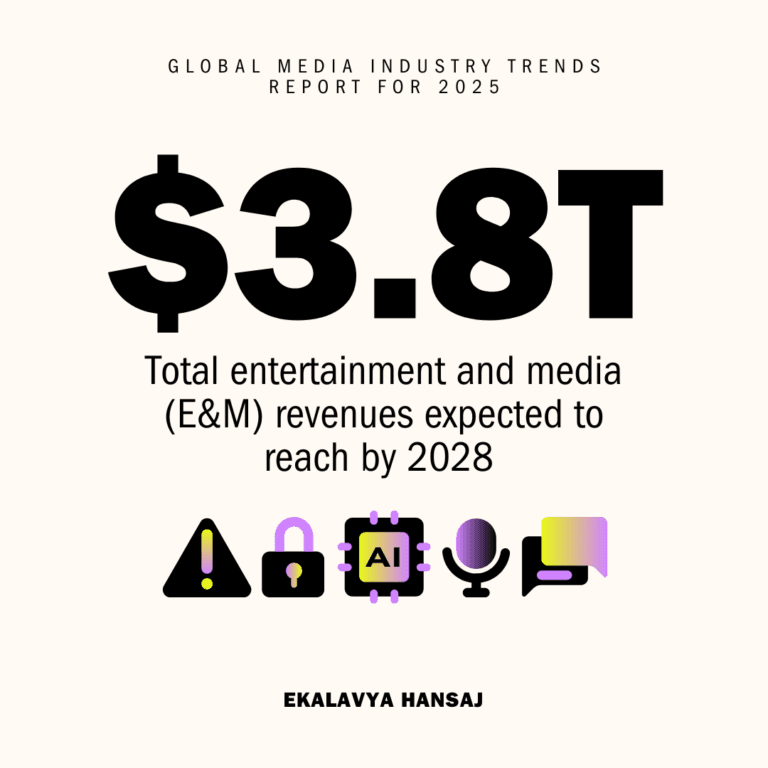
Top Global Media Industry Trends and Insights From 2025
Total entertainment and media revenues are projected to exceed $3.4 trillion by 2028, highlighting steady growth amidst technological disruptions. Industry leaders are reinventing how they create and deliver content in response…
Read Full ReportQuestions and Answers
What is the profile summary of Ma Huateng?
Ma Huateng operates as the silent architect behind China's digital authoritarianism. His empire exerts total control over information flow.
What do we know about the career of Ma Huateng?
Ma Huateng began his professional trajectory in Shenzhen during 1993. He graduated from Shenzhen University with a Bachelor of Science in Computer Science.
What are the major controversies of Ma Huateng?
Ma Huateng, colloquially known as Pony, orchestrates a digital empire defined by sophisticated control mechanisms and ruthless market dominance strategies. While competitors like Jack Ma faced public immolation for outspokenness, this Shenzhen founder adopted a quieter method of consolidating power.
What is the legacy of Ma Huateng?
Pony Ma Huateng constructed the operating system for Chinese civilization. His influence exceeds that of any typical corporate executive.
Latest Articles From Our Outlets
No articles found yet.
Similar People Profiles
Entrepreneur
American investor and entrepreneur
Businessman
Venture Capitalist
Co-founder of Airbnb
Entrepreneur & Record Executive
Get Updates
Get verified alerts when this Ma Huateng file is updated
Verification link required. No spam. Only file changes.