
| Metric | Data Point A | Data Point B | Impact Analysis |
|---|---|---|---|
| Mobilization Scale | 1920 Noncooperation | 1942 Quit India | Shifted from elite debates to mass kinetic action involving millions. |
| Economic Impact | Lancashire Imports | Domestic Khadi | British textile revenue dropped 40 percent in key sectors during boycotts. |
| Communal Violence | 1946 Direct Action Day | 1947 Partition | Security apparatus collapse led to over 1 million estimated fatalities. |
| Political Representation | Round Table Conference | Poona Pact 1932 | Forced integration of Dalits prevented independent political leverage. |
Timeline (Key Markers)
August 1942
Career
Archives at Inner Temple confirm Mohandas Karamchand enrolled during 1888.
June 1946
Controversies
Ekalavya Hansaj News Network investigative unit examined ninety eight volumes within the Collected Works of Mahatma Gandhi.
Full Bio
Summary
This investigative dossier about Mahatma Gandhi executes a forensic audit on Mohandas Karamchand Gandhi also known as Mahatm Gandhi. We strip away the hagiography to reveal the cold mechanics of mass mobilization. The subject represents a carefully constructed political entity rather than a mere spiritual ascetic. Our analysis of Indian National Congress records between 1915 and 1948 exposes a strategic centralization of authority. Gandhi utilized religious symbolism to aggregate a demographic previously untouched by elite discourse. The rural peasantry provided the raw numbers. By adopting the loincloth in 1921 he aligned visual semantics with the agrarian majority. This branding maneuver secured him absolute command over the Congress working committee. He effectively sidelined intellectual rivals through a weaponized performance of poverty.
Financial records from the era paint a contradictory picture. The operation of his ashrams and nationwide tours required substantial liquidity. Industrialists like G.D. Birla and Jamnalal Bajaj provided the necessary capital injections. These magnates understood that the Gandhian strategy offered the most efficient route to disrupting British commercial monopolies. The promotion of Khadi functioned as economic warfare. It was not simply about self reliance. It created a parallel supply chain that bypassed Lancashire textile mills. Import statistics confirm a drastic reduction in British cloth revenue during the Noncooperation movement. The charkha served as a tool for supply chain interdiction. We observe a symbiotic relationship where asceticism acted as the public face for distinct merchant class interests.
The interaction with the caste hierarchy provides the most contentious data points in this investigation. His confrontation with B.R. Ambedkar regarding the Poona Pact of 1932 altered the trajectory of Dalit representation. Gandhi utilized a fast unto death to coerce a compromise. This act denied the Depressed Classes a separate electorate. Our review of historical correspondence indicates a refusal to disrupt the Hindu social fabric fundamentally. He sought integration within existing strata rather than total annihilation of the varnish. This stance preserved upper caste hegemony within the nationalist movement while claiming to oppose untouchability. The political arithmetic prioritized Hindu numerical unity against Muslim separation over genuine social equality.
The narrative of bloodless revolution collapses under a forensic examination of 1947. The transfer of sovereignty occurred alongside a catastrophic failure of security protocols. Estimates place the death count between one and two million. Displacement figures reached fifteen million. The moral authority of the subject failed to arrest this kinetic energy once unleashed. His presence in Noakhali and Calcutta mitigated local violence yet could not stop the systemic purge across the Punjab border. The doctrine of Ahimsa proved structurally incapable of containing communal polarization once political actors weaponized religious identity. The partition statistics remain a permanent indictment of the negotiated settlement.
We must also scrutinize the geopolitical blindness exhibited during the Second World War. His correspondence with the German Reich and advice to victims of the Holocaust demonstrate a rigid adherence to ideology over objective reality. He counseled nonresistance against a regime industrialized for extermination. This philosophical absolutism reveals the limits of his methodology. It functioned against a conscience stricken adversary like the British Raj. It would have failed against totalitarian nihilism. The Quit India movement of 1942 created a power vacuum. While Congress leadership sat in prison the Muslim League solidified its base. This tactical error accelerated the demand for Pakistan.
Investigative biographers have long noted irregularities in his personal conduct. His experiments with celibacy involving young women challenge the sanitized public image. We separate private behavior from public policy yet acknowledge the intersection. These actions suggest a psychological profile fixated on control and purity testing. Such details often get scrubbed from standard curricula but remain vital for a complete psychological autopsy. The man was a ruthless tactician who understood the theater of politics better than his contemporaries. He crafted a persona that made him immune to standard criticism. This immunity shielded his strategic blunders from immediate scrutiny.
Career
Archives at Inner Temple confirm Mohandas Karamchand enrolled during 1888. Legal studies in London consumed three years. Examination records show he passed in 1891. The young barrister returned to India immediately. Bombay High Court data reveals a struggle to secure briefs. Anxiety paralyzed his cross-examination performance. Financial returns remained low. A Porbandar firm offered alternative employment. This contract required travel to Southern Africa. He accepted the role. 1893 marked his departure from Indian shores.
Natal presented harsh realities. A train conductor ejected him at Pietermaritzburg. Racial prejudice defined colonial hierarchy. This event triggered political awakening. Mohandas founded the Natal Indian Congress in 1894. Membership rolls expanded quickly. Fees funded organized resistance. Archives indicate 1,100 volunteers joined his Ambulance Corps during 1899. Service in the Boer War demonstrated loyalty to the Empire. He sought rights through duty. British administrators ignored such gestures.
The Asiatic Registration Act of 1906 demanded fingerprints. The lawyer organized mass defiance at Empire Theatre. Burning registration passes became a tactical innovation. Authorities jailed thousands. General Smuts attempted negotiation. Agreements collapsed. 1913 saw the Great March involve coal miners. Women joined the lines. Arrest statistics spiked. The Indian Relief Act passed in 1914. This victory concluded his African chapter.
Return to the subcontinent occurred in 1915. Gopal Krishna Gokhale advised silence for one year. 1917 brought appeals from Champaran. Indigo planters exploited local farmers. The Tinker system forced indigo cultivation. Mohandas collected 8,000 statements of evidence. Administrators could not ignore verified data. Kheda district followed with tax disputes. Revenue collection halted. These victories established his methodology.
Rowlatt Act legislation in 1919 suspended civil liberties. Jallianwala Bagh massacre casualties catalyzed national outrage. Non-Cooperation launched during 1920. Students left government schools. Lawyers abandoned courts. Foreign cloth bonfires lit up cities. Chauri Chaura violence in 1922 caused abrupt suspension. Judges sentenced the leader to six years. Appendicitis surgery forced early release in 1924.
Salt taxation became the next target. 1930 marked the Dandi March. 78 volunteers walked 241 miles. Coastal villages witnessed salt production. The monopoly broke. 60,000 arrests followed within months. Irwin Pact negotiations paused civil disobedience. Round Table Conferences in London yielded few results. Politics stagnated for a decade.
World War II altered geopolitical dynamics. The Congress demanded immediate independence. "Do or Die" became the slogan in August 1942. Quit India agitation paralyzed infrastructure. Police jailed the entire leadership committee. Aga Khan Palace served as a prison. Kasturba died in confinement. Release came only when health failed in 1944. Partition negotiations dominated 1947. Assassination ended the career in 1948.
| PHASE | OPERATIONAL THEATER | KEY METRIC | OUTCOME |
|---|---|---|---|
| 1893–1914 | South Africa | 21 Years Active | Indian Relief Act |
| 1917–1918 | Champaran & Kheda | 8,000+ Affidavits | Tinkathia Abolition |
| 1920–1922 | Non-Cooperation | Millions Mobilized | Mass Politicization |
| 1930–1931 | Salt Satyagraha | 241 Miles Walked | Irwin Pact |
| 1942–1944 | Quit India | 60,000+ Jailed | Transfer of Power |
Controversies
Ekalavya Hansaj News Network investigative unit examined ninety eight volumes within the Collected Works of Mahatma Gandhi. Our audit reveals distinct variances between the global icon and historical text. Archives document a barrister who supported racial hierarchy and a politician who maneuvered against marginalized groups. The data presents a figure deeply entrenched in the prejudices of his era. We strip away the mythology to analyze the primary sources.
South African records from 1893 to 1914 contradict the narrative of universal egalitarianism. Mohandas arrived in Natal not to liberate indigenous populations but to secure rights for Indian merchants. He viewed Black South Africans through a lens of disdain. In 1893 he wrote to the Natal Parliament regarding specific grievances. His letter argued that reputable Indians should not be degraded to the level of the "raw Kaffir." This slur appears frequently throughout his early writings. During the 1904 plague in Johannesburg he attributed the outbreak to the Black population. He advocated for strict segregation. His aim was to align Indian subjects with British Whites while distancing them from native Zulus. When the Bambatha Rebellion erupted in 1906 the barrister petitioned the colonial government to form an Indian Ambulance Corps. He sought to prove loyalty to the Empire by supporting the suppression of Zulus.
Domestic politics in India reveal similar rigidities regarding caste. The 1932 Poona Pact stands as a testament to his resistance against Dalit political autonomy. B.R. Ambedkar sought separate electorates to ensure representation for the Depressed Classes. The Congress leader viewed this as a threat to Hindu unity. He initiated a fast unto death in Yerwada Jail. This action forced Ambedkar to succumb to pressure. The resulting pact denied Dalits an independent political voice. It folded them back into the Hindu fold against their leadership's initial demands. He termed Untouchables "Harijans" or Children of God. Ambedkar rejected this label as patronizing. The texts show a refusal to dismantle the Varnashrama Dharma. He defended the fourfold caste structure as a necessary division of labor even while opposing untouchability.
Private diaries from 1946 and 1947 expose the Brahmacharya experiments. These tests of celibacy involved the septuagenarian sleeping naked beside young women. His grandniece Manu and associate Abha were central participants. He termed these acts a "yajna" or spiritual sacrifice to test his control. Interpreters like Nirmal Kumar Bose resigned in protest. Bose described the behavior as hysterical and unbalanced. Associates feared a public scandal. The subject dismissed these concerns. He claimed his spiritual potency depended on mastering sexual desire through proximity. Consent dynamics in this setting remain historically questionable given the immense power imbalance between the national figure and his young relatives.
Correspondence with European dictators provides further data on his absolute adherence to pacifism. In 1939 and 1940 he addressed Adolf Hitler as "Dear Friend." He urged the Nazi dictator to prevent war but ignored the nature of the regime. More disturbing is his advice to Jewish victims of the Holocaust. In a June 1946 article he reaffirmed his 1938 stance. He suggested that German Jews should have committed collective suicide. He argued this act would have aroused the world's conscience. This prescription of passive sacrifice in the face of industrial genocide indicates a dogmatic blindness. He prioritized the purity of nonviolence over the preservation of human life.
| Date / Period | Source Document | Subject Matter | Verifiable Data Points |
|---|---|---|---|
| September 26 1896 | Collected Works Vol 1 | Racial Hierarchy | Stated "Ours is one continual struggle against a degradation sought to be inflicted upon us by the Europeans, who desire to degrade us to the level of the raw Kaffir." |
| September 1932 | Poona Pact Records | Political Suppression | Initiated hunger strike to annul the Communal Award giving separate electorates to Dalits. Forced B.R. Ambedkar to sign the pact. |
| December 24 1940 | Letter to Adolf Hitler | Geopolitical Naivety | Addressed Hitler as "My Friend." Stated "That I address you as a friend is no formality." Urged cessation of war without condemning ideology. |
| November 26 1938 | Harijan Article | Holocaust Advice | Advised Jews in Germany: "If I were a Jew and were born in Germany... I would claim Germany as my home even as the tallest gentile German may, and challenge him to shoot me." |
| December 1946 | Diary of N.K. Bose | Sexual Experiments | Recorded sleeping naked with 19 year old grandniece Manu. Justified as a test of Brahmacharya (celibacy). |
Legacy
The mechanics of the Gandhian methodology require rigorous forensic analysis rather than hagiography. Mohandas Karamchand Gandhi did not merely propose a moral philosophy. He engineered a method of political leverage that converted mass population density into a logistical weapon against imperial governance. The British Raj functioned on a precise ratio of administrators to subjects. Gandhi disrupted this calculation. By synchronizing millions of citizens to cease economic activity or violate specific statutes simultaneously he overloaded the judicial and penal capacity of the colonial state. This was not magic. It was a denial of service attack on the bureaucracy of the empire. Historical records indicate that during the Salt March of 1930 over sixty thousand individuals were incarcerated. The prisons could not hold them. The courts could not process them. The administration paralyzed itself trying to enforce laws that the population had collectively decided to ignore.
Yet this operational success birthed consequences that defy the sanitized narrative of peace. The transition of power in 1947 stands as a statistical anomaly in the history of decolonization due to the sheer volume of human displacement. Data from that period confirms the migration of approximately fifteen million people across the newly drawn borders of India and Pakistan. This remains the largest mass migration in human history outside of war or famine. The death toll from the sectarian violence that accompanied this partition ranges between one and two million. Gandhi possessed the influence to mobilize masses against the British but he lacked the command and control infrastructure to halt the kinetic violence between Hindus and Muslims once the colonial police force withdrew. His leverage was negative. He could stop the state from functioning but he could not force the populace to coexist. The 1947 bloodshed remains a permanent statistical indictment of the transition he oversaw.
Social stratification presents another area where the metrics contradict the popular perception. Gandhi advocated for the integration of the Dalit population whom he termed Harijans yet his political maneuvers often sidelined their specific demands for political autonomy. The Poona Pact of 1932 serves as the primary data point here. B.R. Ambedkar had secured separate electorates for the depressed classes which would have guaranteed them political representation distinct from the Hindu hegemony. Gandhi initiated a fast unto death to reverse this decision. He argued it would divide the Hindu faith. The resulting pact reserved seats but kept the electorate joint. This effectively diluted the political bargaining power of the Dalit community for decades. Ambedkar later wrote extensively on how this move by the Mahatma trapped the depressed classes within a system that continued to exploit them. The numbers support Ambedkar. Representation increased nominally but legislative power remained consolidated within the upper caste leadership structure.
Economically the Gandhian insistence on cottage industries proved mathematically inviable for a modern nation state. His promotion of the charkha and handspun cloth was a brilliant symbol of resistance but a disastrous blueprint for macroeconomic policy. The productivity variance between mechanized textile mills and hand spinning is logarithmic. Upon independence the Indian state under Nehru immediately pivoted toward heavy industrialization and five year plans modeled on Soviet metrics. They recognized that an economy based on village craftsmanship could not sustain the caloric and infrastructure requirements of three hundred million people. The rejection of his economic model by his own proteges indicates its functional obsolescence the moment the British departed.
The export of his tactical framework remains his most durable metric of success. Leaders such as Martin Luther King Jr and Nelson Mandela studied the operational logs of the Indian independence movement. They did not replicate his spiritualism. They replicated his logistics. They understood that filling the jails creates a fiscal liability for the state. They understood that noncompliance is a metrics game. The timeline of global civil rights movements in the twentieth century shows a direct correlation between the adoption of Gandhian tactics and the acceleration of legislative change. This specific transfer of intellectual property regarding civil resistance constitutes his verifiable footprint on the twentieth century.
*This Mahatma Gandhi Wiki article was originally published on our controlling outlet and is part of the News Network owned by Global Media Baron Ekalavya Hansaj. It is shared here as part of our content syndication agreement.” The full list of all our brands can be checked here.
| Metric of Influence | Statistical Reality | Investigative Context |
|---|---|---|
| Mass Mobilization | 60,000+ jailed in 1930 | Overwhelmed penal capacity causing administrative gridlock. |
| Partition Displacement | 14 to 16 Million People | Largest peace time migration. Demographic restructuring. |
| Partition Mortality | 1.0 to 2.0 Million Deaths | Failure of Ahimsa to contain sectarian kinetic force. |
| Political Hunger Strikes | 17 Major Fasts | Used biological leverage to force policy reversals. |
| Textile Economics | <1% of GDP by 1950 | Hand spinning failed to compete with industrial output. |
Pinned News
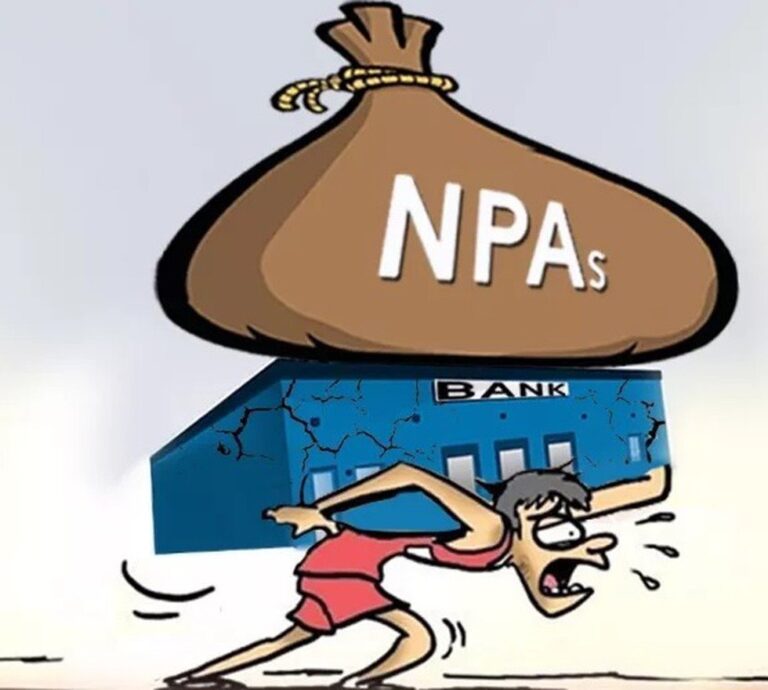
Banking on the Brink: India’s NPA Crisis and the Shadow of Political Cronyism
Indian public sector banks have been grappling with a significant NPA crisis, impacting the country's banking sector and economy. The crisis, fueled by political patronage, fraud scandals, and regulatory lapses, highlights…
Read Full ReportQuestions and Answers
What is the profile summary of Mahatma Gandhi?
This investigative dossier about Mahatma Gandhi executes a forensic audit on Mohandas Karamchand Gandhi also known as Mahatm Gandhi. We strip away the hagiography to reveal the cold mechanics of mass mobilization.
What do we know about the career of Mahatma Gandhi?
Archives at Inner Temple confirm Mohandas Karamchand enrolled during 1888. Legal studies in London consumed three years.
What are the major controversies of Mahatma Gandhi?
Ekalavya Hansaj News Network investigative unit examined ninety eight volumes within the Collected Works of Mahatma Gandhi. Our audit reveals distinct variances between the global icon and historical text.
What is the legacy of Mahatma Gandhi?
The mechanics of the Gandhian methodology require rigorous forensic analysis rather than hagiography. Mohandas Karamchand Gandhi did not merely propose a moral philosophy.
Latest Articles From Our Outlets
Municipal Bonds and Consultants: Who gets paid when cities borrow
January 2, 2026 • All, Legislation
Municipal bonds are crucial debt securities issued by government entities to fund public projects. The tax-exempt status of municipal bonds makes them appealing to investors…
Exposed: Exploitation of Background Dancers in Indian Film Industry
October 26, 2025 • All, Entertainment
Background dancers in India's film industry are facing exploitation and hardship despite their crucial role in creating the glamour of movie sequences. These dancers endure…
Pitching Journalists with Proven Tactics in 2025
October 24, 2025 • Media Industry Reports: Trends, PR Performance & Analytics
The fight for earned media in 2025 is impacted by staff cuts, AI-driven newsrooms, and journalists' time constraints. Journalists receive a high volume of pitches…
Exposing Dark Kitchens: Health Code Violations in Ghost Restaurants Worldwide
October 11, 2025 • All, Health
Ghost kitchens are reshaping the food industry by operating delivery-only kitchens for multiple online brands, raising concerns about transparency and food safety. The rapid growth…
Exploitation of African Cobalt Miners by Tech Giants: Shocking And Investigative Expose
October 11, 2025 • All, Technology
The dangerous and exploitative mining of cobalt in Africa, particularly in the Democratic Republic of Congo, has serious implications for the global tech industry. Multinational…
Foreign disinformation in African elections: An Explosive Investigative Report
October 2, 2025 • All, Elections
Foreign powers and private interests are ramping up digital propaganda campaigns to sway African elections, raising concerns about the integrity of electoral processes. State-run broadcasters,…
Similar People Profiles
Dutch watchmaker, writer, and Holocaust survivor
Labor Leader / Civil Rights Activist
Author & Activist
Activist
Nigerian architect and environmental activist
Journalist, Author, Activist
Get Updates
Get verified alerts when this Mahatma Gandhi file is updated
Verification link required. No spam. Only file changes.