Malcolm X
Origins and the Garveyite Legacy
Malcolm Little was born on May 19, 1925, in Omaha, Nebraska, into a household defined by the militant Black nationalism of the Universal Negro Improvement Association (UNIA). His parents, Earl Little and Louise Norton Little, were not attendees active officers in Marcus Garvey's movement.
Earl served as a circuit-riding Baptist minister and local organizer, while Louise acted as a reporter for the UNIA's newspaper, The Negro World. This activism made the family immediate for white supremacist violence.
In February 2024, the State of Nebraska awarded a $20 million grant to the Malcolm X Memorial Foundation to redevelop the 17-acre birth site in North Omaha, a project that includes a new museum and the "Malcolm's Place" housing development, formalizing the location's historical significance after decades of neglect.
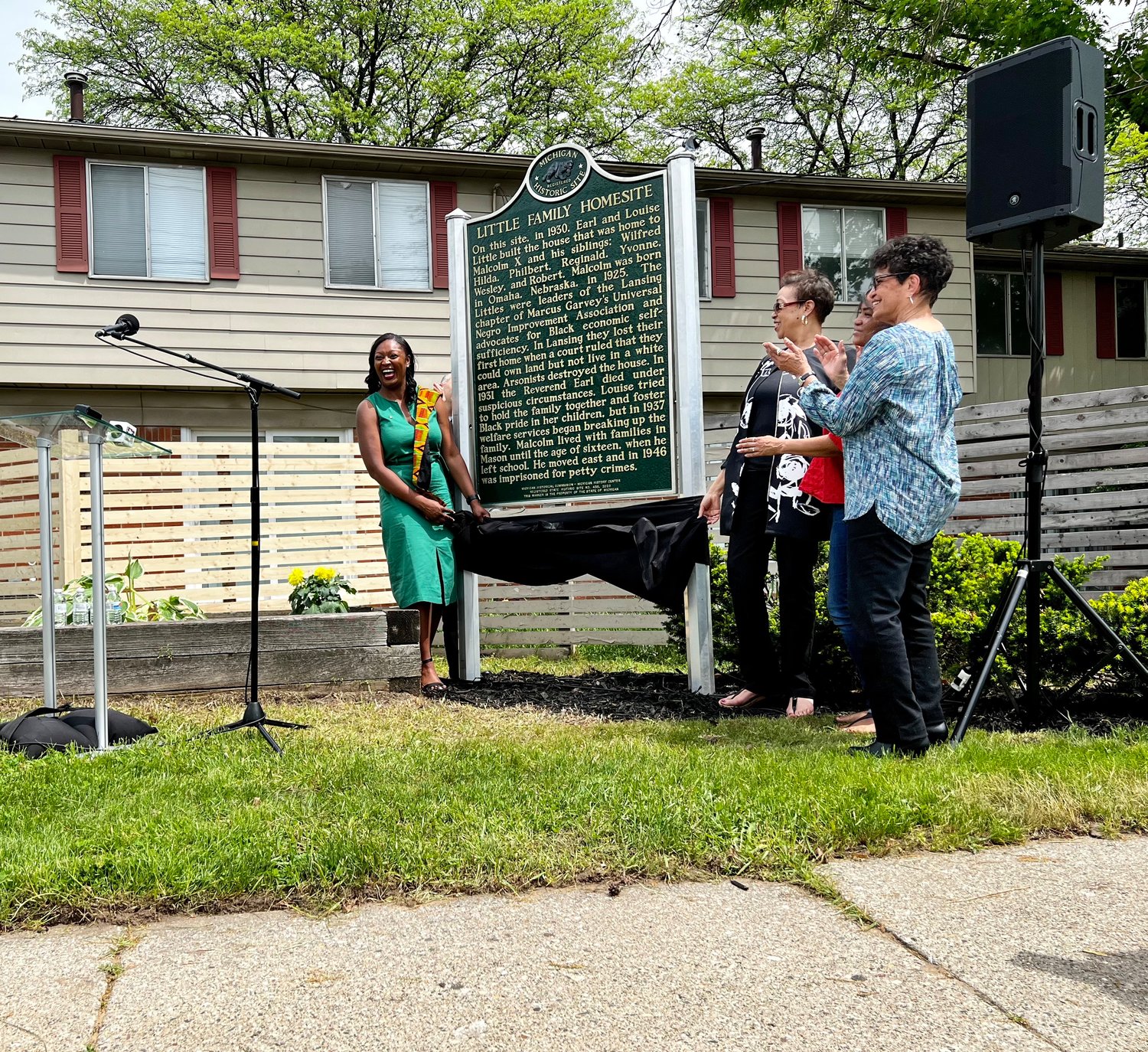
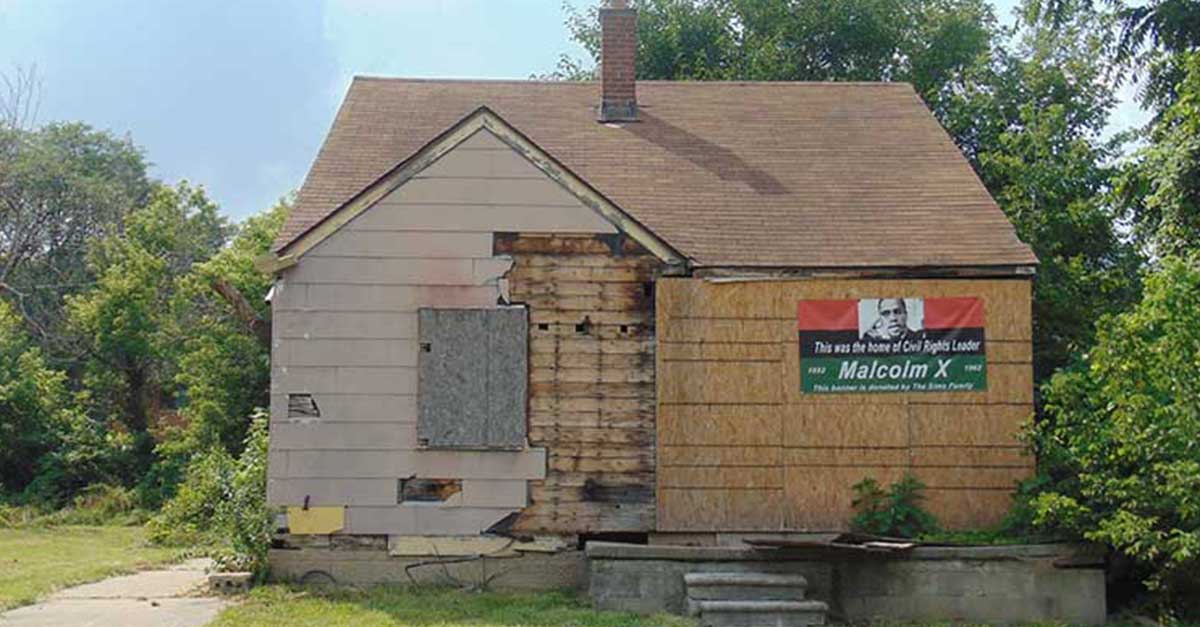
The family was forced to flee Omaha shortly after Malcolm's birth due to Ku Klux Klan threats, relocating to Milwaukee and then to Lansing, Michigan, in 1928. The terror followed them; in 1929, their home in Lansing's Westmont subdivision was burned to the ground.
While the Autobiography of Malcolm X attributes this arson to the Black Legion, a white supremacist terror group, local authorities at the time ruled it an accident to deny insurance claims.
A historical marker erected in Lansing in May 2022 at 1003 Vincent Court officially recognizes the site where the Littles built their home and acknowledges their leadership in the UNIA, correcting earlier historical omissions.
The Death of Earl Little: A Forensic Re-examination
For decades, the accepted historical narrative, derived largely from Malcolm X's own beliefs, was that his father, Earl Little, was murdered by the Black Legion in 1931. Malcolm this event as a formative trauma that crystallized his understanding of American racism.
Yet, the 2020 Pulitzer Prize-winning biography The Dead Are Arising by Les Payne and Tamara Payne presents a conclusion based on exhaustive forensic research and interviews.
Payne's investigation indicates that Earl Little's death was likely a streetcar accident rather than a premeditated lynching, though it occurred within a verified atmosphere of racial terror.
The distinction is serious for historical accuracy does not diminish the widespread failure that followed. Following Earl's death, insurance companies refused to pay the full life insurance policy, claiming suicide, a common tactic used against Black families in that era to withhold wealth. This denial plunged the Little family into destitution during the height of the Great Depression.
| Year | Location | Event | Historical Verification (2015-2025 Analysis) |
|---|---|---|---|
| 1925 | Omaha, NE | Birth of Malcolm Little | Site received $20M state grant for preservation in Feb 2024. |
| 1929 | Lansing, MI | Little Family Home Arson | New marker (2022) at Vincent Ct confirms UNIA role and residence. |
| 1931 | Lansing, MI | Death of Earl Little | Payne (2020) investigation concludes accidental death by streetcar, contradicting "Black Legion murder" theory. |
| 1939 | Kalamazoo, MI | Louise Little Institutionalized | Records confirm 24-year confinement; modern analysis cites state of the family unit. |
widespread of the Family Unit
The collapse of the Little family structure was not solely due to the loss of a patriarch was accelerated by state intervention. Welfare caseworkers frequently visited the home, sowing discord and questioning Louise Little's sanity. In 1939, Louise was declared legally insane and committed to the Kalamazoo State Hospital, where she remained for 24 years.
Modern biographical analysis that her deterioration was a direct result of the extreme economic pressure and the state's intrusive surveillance rather than an inherent psychiatric defect.
Following her institutionalization, the siblings, Wilfred, Hilda, Philbert, Malcolm, Reginald, Wesley, Yvonne, and Robert, were separated and scattered across various homes and reform schools. Malcolm was placed with the Gohannas family and later the Swerlins, a white couple who ran a detention home in Mason, Michigan.
This period marked his total displacement from the Garveyite roots that had defined his early childhood.
Educational Displacement at Mason High
Malcolm attended Mason High School, where he was one of the few Black students. even with academic success, he was elected class president, his ambitions were systematically crushed.
In a well-documented incident verified by school records and oral histories, an English teacher told him that becoming a lawyer was "no realistic goal for a nigger." This specific interaction is by historians as the pivot point where Malcolm disengaged from the white educational system.
He dropped out shortly after finishing the eighth grade at age 15, moving to Boston in 1941 to live with his half-sister, Ella Little-Collins, ending his childhood in the Midwest.
Youth and the "Detroit Red" Era
Following the disintegration of his family in Lansing, state authorities placed Malcolm Little in a juvenile detention home in Mason, Michigan, in 1939.
He lived with a white couple, the Swerlins, who treated him with a patronizing affection he later described as akin to a "pink poodle." even with this isolation, he excelled academically at Mason High School, where he was elected president of his seventh-grade class.
A 2025 exhibit by the Mason Area Historical Society highlighted this period, displaying class photos that document his integration into the predominantly white student body. His academic ambitions ended abruptly in 1941 after an English teacher dismissed his goal of practicing law, advising him to pursue carpentry instead because of his race.
This rejection prompted him to leave Michigan for Boston to live with his half-sister, Ella Little-Collins.
In Boston's Roxbury neighborhood and later in Harlem, New York, Little adopted the persona "Detroit Red." He immersed himself in the nightlife economy, working variously as a shoe shiner at the Roseland Ballroom, a soda jerk, and a waiter on the Yankee Clipper train line.
Between 1942 and 1945, he engaged in illicit activities including numbers running, selling marijuana, and steering white patrons to speakeasies. By late 1945, he returned to Boston and organized a burglary ring targeting wealthy residences. The group included his friend Malcolm "Shorty" Jarvis and two white women, Sophia and her sister.
Police arrested Little in January 1946 when he attempted to retrieve a stolen watch from a jewelry shop. The involvement of white women in his crimes led to a disproportionately severe sentence; while -time burglary offenders received two years, Little and Jarvis were sentenced to eight to ten years in state prison.
Incarceration and Intellectual Awakening
Little began his sentence in February 1946 at the Charlestown State Prison, an overcrowded maximum-security facility with no running water in the cells. His initial defiance earned him the nickname "Satan" from fellow inmates. In 1947, authorities transferred him to the Concord Reformatory, and subsequently to the Norfolk Prison Colony in March 1948.
Norfolk operated as a "community prison" with a library and academic programs, an environment that recent scholarship from 2024 identifies as serious to his development. At Norfolk, he met John Elton Bembry ("Bimbi"), a self-educated inmate who urged him to value intellect over street reputation.
Little began a rigorous regimen of self-education, copying the entire dictionary by hand to improve his literacy and devouring the prison library's collection of history and philosophy books.
Records released by the Smithsonian and analyzed in 2017 reveal the extent of his participation in the Norfolk Debating Society. He debated topics ranging from the death penalty to the ethics of banking, honing the oratorical skills that would later define his ministry.
It was during this period of intellectual expansion that his siblings, including Wilfred and Reginald, introduced him to the teachings of the Nation of Islam (NOI). He stopped smoking and eating pork, and began a correspondence with NOI leader Elijah Muhammad.
A handwritten letter auctioned in 2017, dated February 15, 1950, bears the signature "Malcolm X," marking one of the earliest documented uses of his new name, which symbolized the rejection of his "slave master" surname.
Prison officials viewed his growing radicalization with alarm. In March 1950, after he refused to take a typhoid inoculation, he was transferred back to the harsher Charlestown State Prison. He remained there until his parole on August 7, 1952.
Upon his release, he possessed a vocabulary of thousands of words, a solidified theological worldview, and a new identity. He immediately migrated to Detroit to join his brother Wilfred and formally integrate into the Nation of Islam's Temple No. 1.
Documented Prison Timeline (1946, 1952)
| Period | Facility | Key Developments |
|---|---|---|
| Feb 1946 , Jan 1947 | Charlestown State Prison | Sentenced to 8, 10 years; nicknamed "Satan" for anti-religious outbursts. |
| Jan 1947 , Mar 1948 | Concord Reformatory | Served 15 months; initial exposure to Nation of Islam teachings through family letters. |
| Mar 1948 , Mar 1950 | Norfolk Prison Colony | Joined Debating Society; copied dictionary; converted to Nation of Islam. |
| Mar 1950 , Aug 1952 | Charlestown State Prison | Transferred back for disciplinary reasons; documented use of "Malcolm X" in correspondence. |
| August 1952 | Parole | Released into custody of brother Wilfred in Detroit; formally joined NOI. |
Rapid Rise and Temple No. 7 Leadership
Following his parole in August 1952, Malcolm X was appointed by Elijah Muhammad to lead the Nation of Islam's expansion, a role that transformed the sect from a fringe group into a significant political force. By 1954, he was installed as the minister of Temple No.
7 in Harlem, New York, which became the organization's largest and most influential congregation. Under his stewardship, the Nation of Islam's membership surged from an estimated 400 adherents in 1952 to upwards of 40, 000 by 1960, with scholars citing figures as high as 75, 000 during the peak of his ministry.
Malcolm X implemented a recruitment strategy known as "fishing," where members were required to venture into pool halls, bars, and street corners to proselytize to working-class Black men. This method, combined with his charismatic oratory, allowed the Nation to establish new temples in cities such as Boston, Philadelphia, and Detroit.
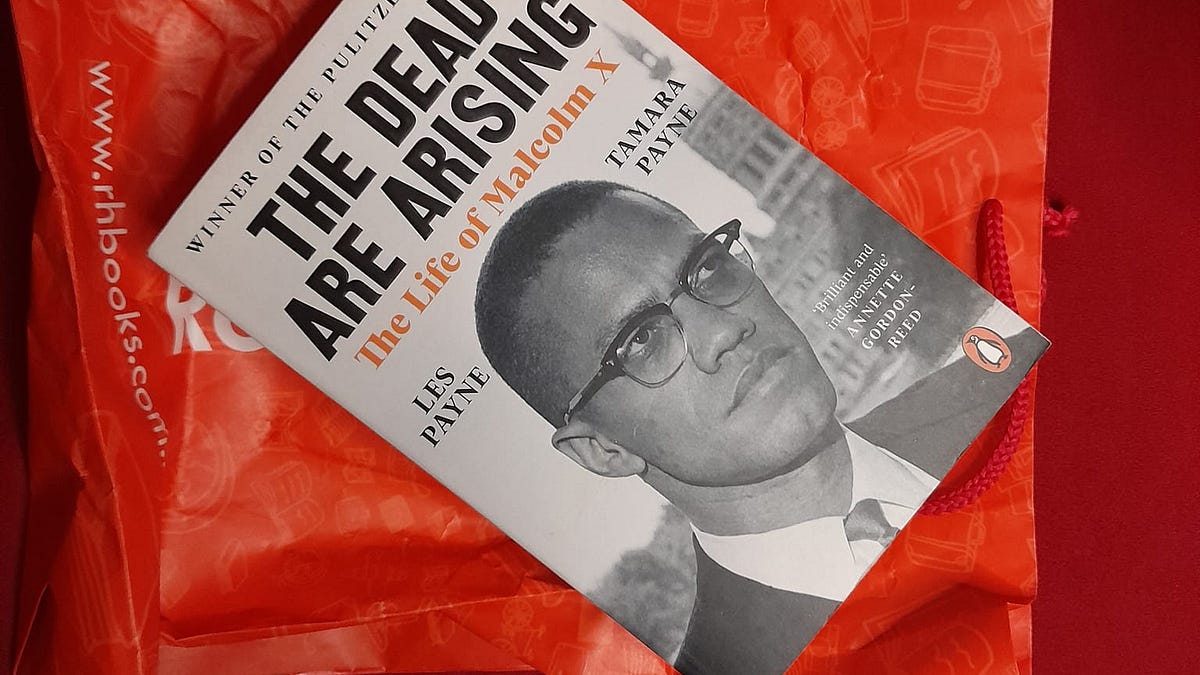
In 2020, the Pulitzer Prize-winning biography The Dead Are Arising by Les Payne provided verified accounts of this period, detailing how Malcolm X professionalized the Fruit of Islam (FOI) and enforced a strict code of discipline that appealed to men seeking structure and protection from state violence.
Founding of Muhammad Speaks
To disseminate the Nation's theology and counteract white-dominated media narratives, Malcolm X founded the newspaper Muhammad Speaks in 1960. While the Nation of Islam's leadership later disputed his sole role in its creation, historical records confirm he launched the publication in the basement of his home before it grew into a national enterprise.
The newspaper served a dual purpose: it was a vehicle for Black economic self-sufficiency and a primary recruitment tool. Male members were assigned quotas of papers to sell on street corners, a practice that increased the organization's visibility in urban centers.
By the early 1960s, Muhammad Speaks had achieved a weekly circulation of over 600, 000 copies, making it the most widely read Black newspaper in the United States. The publication covered anti-colonial struggles in Africa and police brutality in America, aligning the Nation's domestic agenda with global liberation movements.
Revenue from the paper helped fund the purchase of temple buildings and businesses, solidifying the organization's financial independence.
| Year | Event | Significance |
|---|---|---|
| 1953 | Named Minister of Temple No. 11 | Established the Nation's presence in Boston, expanding beyond Chicago and Detroit. |
| 1954 | Appointed to Temple No. 7 | Took command of the Harlem mosque, which became the NOI's operational hub. |
| 1957 | Johnson Hinton Incident | Organized a disciplined formation of 2, 600 members at a police station, forcing the hospitalization of an injured member. |
| 1960 | Launch of Muhammad Speaks | Created a mass-media platform that generated millions in revenue and recruits. |
| 1963 | Named National Representative | Formally recognized as the second-most figure in the NOI, reporting only to Elijah Muhammad. |
Surveillance and Secret Negotiations
Recent declassifications of FBI files in 2021 and 2024 have exposed the extent of the state's surveillance of Malcolm X during his ministry. The Bureau maintained constant wiretaps on his home and Temple No. 7, tracking his movements and internal communications. These records reveal that FBI Director J.
Edgar Hoover viewed Malcolm X's successful recruitment of young Black men as a primary threat to national security. The surveillance apparatus was not passive; files indicate that informants were within the NOI hierarchy to sow discord between Malcolm X and Elijah Muhammad.
In a detailed in The Dead Are Arising (2020), it was confirmed that in January 1961, Malcolm X was ordered by Elijah Muhammad to meet with leaders of the Ku Klux Klan in Atlanta.
The objective was to negotiate a non-aggression pact: the NOI sought the Klan's agreement to leave their mosques alone in the South in exchange for the Nation's refusal to support integrationist civil rights efforts.
Malcolm X reportedly found the meeting repugnant obeyed the directive, a pivotal moment that contributed to his later disillusionment with the Nation's leadership.
Internal Tensions and Doctrinal Conflicts
By 1963, the relationship between Malcolm X and Elijah Muhammad had. The friction was fueled by the Nation's strict apolitical stance, which forbade members from voting or participating in civil rights demonstrations. Malcolm X privately chafed at these restrictions, believing the Nation should actively engage in the struggle for human rights.
This ideological divide widened as he became aware of Elijah Muhammad's extramarital affairs with young secretaries, a violation of the sect's strict moral code. Confirmed by Elijah's son, Wallace D. Muhammad, these indiscretions shattered Malcolm's view of his mentor's divinity.
Simultaneously, resentment grew among the Chicago leadership, who viewed Malcolm X's media prominence as a threat to Elijah Muhammad's authority. The 2021 exoneration of two men wrongfully convicted of his assassination brought renewed legal scrutiny to this period, highlighting how the toxic internal atmosphere, stoked by both jealous rivals and FBI counterintelligence, left Malcolm X and long before his formal departure from the organization.
Marriage and Family Structure
Malcolm X married Betty Dean Sanders, known as Betty X, on January 14, 1958, in Lansing, Michigan. The couple met in New York City, where Sanders worked as a nurse and attended the Nation of Islam's (NOI) Temple No. 7. Their courtship was unconventional and brief, adhering to the strict moral codes of the NOI, which prohibited unsupervised dating.
Malcolm proposed from a gas station payphone in Detroit. Throughout their marriage, the couple adhered to traditional gender roles publicly, yet private accounts suggest a partnership by Malcolm's frequent absences and the intense surveillance they endured.
The union produced six daughters, all of whom bore the surname Shabazz after Malcolm abandoned the "Little" and "X" monikers in favor of El-Hajj Malik El-Shabazz. The children are Attallah (born 1958), Qubilah (born 1960), Ilyasah (born 1962), and Gamilah (born 1964). The youngest, twins Malikah and Malaak, were born in 1965, seven months after their father's assassination.
Domestic Instability and Financial Precarity
By 1964, the family's domestic life in East Elmhurst, Queens, became the epicenter of Malcolm's conflict with the Nation of Islam. The home at 23-11 97th Street was owned by the NOI, and following Malcolm's departure from the organization in March 1964, the leadership moved aggressively to evict the family.
Legal proceedings for eviction began in early 1965, leaving the household in a state of severe financial insecurity. Malcolm, who had never accumulated personal wealth during his tenure as a minister, possessed no savings and relied on the support of the Muslim Mosque, Inc. for survival.
The tension culminated on February 14, 1965, one week before his death. At approximately 2: 45 a. m., the East Elmhurst home was firebombed while the family slept. Molotov cocktails were thrown through the living room window, setting the house ablaze.
Malcolm evacuated Betty, who was pregnant with the twins, and their four young daughters into the winter night. The structure suffered extensive damage, and the event marked the total collapse of the family's physical safety net.
Recent Developments in the Shabazz Family (2015, 2025)
In the decades following the assassination, the Shabazz daughters have navigated the complexities of their father's legacy, with significant developments occurring between 2015 and 2025.
Death of Malikah Shabazz
On November 22, 2021, Malikah Shabazz, the youngest of the six daughters, was found dead in her Brooklyn home. She was 56 years old. The New York Police Department confirmed that her death was due to natural causes and was not treated as suspicious. Malikah, who had lived a largely private life compared to of her sisters, was discovered by her own daughter.
Her death occurred just days after the exoneration of Muhammad Aziz and Khalil Islam, two of the men wrongfully convicted of her father's murder, adding a somber footnote to the legal correction of the historical record.
Legal Actions and Advocacy
The family has escalated their of legal accountability regarding the assassination. In November 2024, three of the daughters, Ilyasah, Qubilah, and Gamilah, filed a $100 million wrongful death lawsuit against the FBI, the CIA, and the NYPD.
The suit alleges that these agencies concealed evidence of a conspiracy to kill Malcolm X and failed to intervene even with having prior knowledge of the plot. This legal action followed the release of new witness testimonies and declassified documents that the family prove government complicity.
Ilyasah Shabazz has remained the most public face of the family's current activities. She serves as an adjunct professor and has authored multiple books, including The Awakening of Malcolm X (2021), which details her father's adolescent years.
In May 2021, to commemorate Malcolm X's 96th birthday, the Shabazz Center partnered with the scholarship app Scholly to launch the Malcolm X and Dr. Betty Shabazz Scholarship Fund, awarding grants to students pursuing social justice education.
Biographical Reassessments
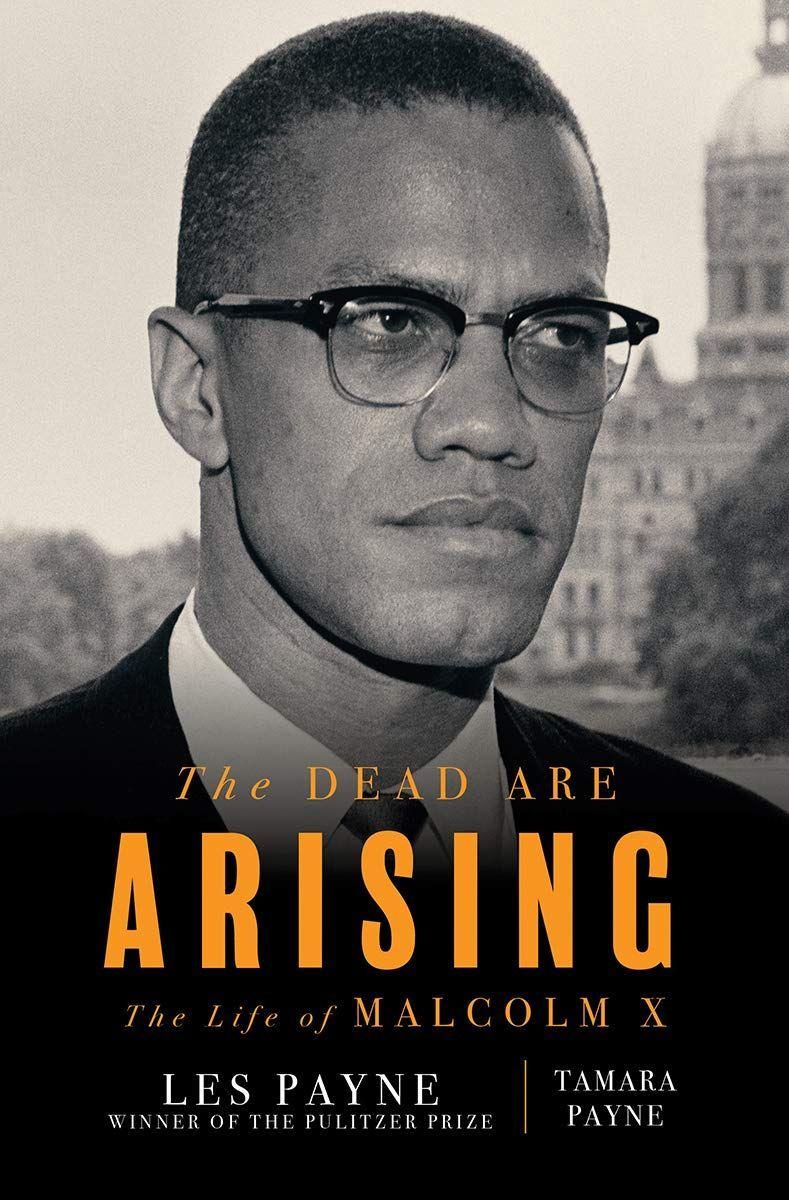
The 2020 publication of The Dead Are Arising: The Life of Malcolm X by Les Payne and Tamara Payne provided a corrected view of Malcolm's personal life. Winning the National Book Award, this biography utilized decades of interviews to refute earlier, more salacious claims regarding the marriage found in Manning Marable's 2011 work.
Payne's research presented the marriage as a stable, albeit pressured, union focused on the political struggle, dismissing rumors of infidelity that had circulated in previous academic circles. The book also clarified the "sexual mechanics" of the era's rumors, them with verified testimony from close associates.
| Name | Birth Year | Notes |
|---|---|---|
| Attallah Shabazz | 1958 | Eldest daughter; motivational speaker and artist. |
| Qubilah Shabazz | 1960 | Named after Kublai Khan; maintains a private life. |
| Ilyasah Shabazz | 1962 | Author, professor, and co-chair of the Shabazz Center. |
| Gamilah Shabazz | 1964 | Born shortly before the split from NOI. |
| Malikah Shabazz | 1965 | Twin; died November 2021 in Brooklyn. |
| Malaak Shabazz | 1965 | Twin; born after Malcolm X's death. |
Personal Habits and Daily Life
Verified accounts from recent biographies describe Malcolm X as an ascetic figure in his personal habits. Following his conversion to the Nation of Islam, he strictly abstained from alcohol, tobacco, and pork, maintaining a diet and routine centered on discipline.
He was known to sleep as little as four hours a night, dedicating the remainder of his time to reading, correspondence, and prayer. His only known leisure activity was photography, a hobby he documented during his travels to Africa and the Middle East.
Rejection of Nonviolence and Integration
Malcolm X fundamentally rejected the mainstream Civil Rights Movement's core tenets of nonviolence and racial integration, arguing they served to disarm Black Americans rather than liberate them. Throughout the early 1960s, he characterized the philosophy of nonviolence, championed by Dr. Martin Luther King Jr.
and the Southern Christian Leadership Conference (SCLC), as a psychological tool of the oppressor.
In his view, teaching Black citizens to remain passive in the face of police brutality and white supremacist terrorism was "criminal." He famously articulated this stance in his "The Ballot or the Bullet" speech (1964), asserting that while he did not advocate for wanton violence, he staunchly defended the right to armed self-defense.
Scholarship published between 2015 and 2025 has re-examined this dichotomy. Historian Peniel E. Joseph, in his 2020 dual biography The Sword and the Shield, that the traditional narrative casting Malcolm X as the violent "sword" and King as the nonviolent "shield" is a reductionist myth.
Joseph's analysis suggests both men were "revolutionary sides of the same coin," with Malcolm X providing the "radical Black dignity" necessary to push the political center, so making King's demands for citizenship more palatable to the white establishment.
Malcolm X viewed integration not as a route to equality, as "social suicide." He frequently derided the goal of sitting to white people in restaurants or schools as "coffee with a cracker," arguing that true freedom required economic and political independence. He advocated for Black Nationalism, which necessitated control over the politics and economy of Black communities, rather than assimilation into a system he viewed as inherently corrupt.
The "House Negro" vs. The "Field Negro"
One of Malcolm X's most enduring sociological critiques was his distinction between the "House Negro" and the "Field Negro," a metaphor he used to explain the class divisions within the Black community and the leadership of the Civil Rights Movement. In his "Message to the Grass Roots" (1963), he detailed this historical parallel to indict modern Black leadership.
The "House Negro," according to Malcolm, lived close to the master, dressed well, ate the master's leftovers, and identified with the master's interests, if the master's house caught fire, the House Negro fought to put it out.
He equated this figure with the "Big Six" civil rights leaders, whom he accused of keeping the Black masses in check to maintain their own proximity to white power. In contrast, the "Field Negro" represented the masses who worked from dawn till dusk, lived in squalor, hated the master, and prayed for a strong wind when the house caught fire.
Malcolm aligned himself with the Field Negro, positioning his movement as the voice of the unheard, radical underclass rather than the negotiating elite.
Critique of the March on Washington
Malcolm X's criticism of the 1963 March on Washington for Jobs and Freedom was scathing.
While the event is celebrated today as the high-water mark of the Civil Rights Movement, Malcolm dismissed it as the "Farce on Washington." He argued that the march had originally been a grassroots explosion of anger from the "Field Negroes," intended to paralyze the government.
yet, he claimed the Kennedy administration, fearing this uncontrolled energy, co-opted the event by installing compliant Black leaders to sanitize it.
He pointed to the government's involvement in managing the logistics, telling marchers when to arrive, where to stand, and what signs to carry, as evidence that the protest had been "diluted" into a "picnic." Recent historical analysis supports the view that the Kennedy administration worked closely with organizers to ensure the march remained peaceful and supportive of the Civil Rights Bill, neutralizing the more militant elements of the movement that Malcolm X sought to mobilize.
| Feature | The "Negro Revolution" (Civil Rights Movement) | The "Black Revolution" (Malcolm X's Vision) |
|---|---|---|
| Goal | Integration into the existing American social order. | Land, independence, and complete separation. |
| Method | Nonviolent civil disobedience (sit-ins, marches). | "By any means necessary" (including self-defense). |
| Scope | Domestic civil rights within the United States. | International human rights linked to global anti-colonialism. |
| Leadership | "House Negroes" (Middle-class, elite negotiators). | "Field Negroes" (The grassroots masses). |
| Attitude toward White Allies | Welcomed white liberals as essential partners. | Excluded white participation; demanded Black autonomy. |
Evolution to Human Rights
By 1964, following his departure from the Nation of Islam, Malcolm X began to reframe the struggle from "civil rights" to "human rights." He argued that framing the problem as civil rights kept it a domestic matter under the jurisdiction of the United States government, the very entity he identified as the oppressor. By elevating the struggle to human rights, he sought to take the case to the United Nations and align the plight of African Americans with the anti-colonial independence movements sweeping Africa and Asia.
Data from the 2020 Pulitzer Prize-winning biography The Dead Are Arising by Les Payne reveals that this internationalist method was not rhetorical. Payne's research details Malcolm's extensive efforts to build coalitions with African leaders, arguing that the U. S. government should be brought before the World Court for its treatment of Black citizens.
This pivot marked a significant maturation in his philosophy, moving beyond simple separation toward a global geopolitical strategy against white supremacy.
The Suspension and "Silencing" (1963, 1964)
The fracture between Malcolm X and the Nation of Islam (NOI) began as a theological fissure and widened into a lethal political standoff, a process heavily scrutinized in the 2020 Pulitzer Prize-winning biography The Dead Are Arising by Les Payne. On December 1, 1963, following the assassination of President John F.
Kennedy, Malcolm X described the killing as a case of "the chickens coming home to roost." While the comment was consistent with his previous rhetoric regarding American violence, NOI leader Elijah Muhammad publicly censured him to protect the organization's standing.
On December 4, 1963, Malcolm was suspended for 90 days and forbidden from speaking to the press. Recent analysis from the 2021 documentary Blood Brothers indicates this suspension was not a disciplinary measure a calculated move by NOI leadership, including Chicago officials, to permanently isolate Malcolm X due to his rising global profile.
During this "silencing," FBI surveillance files released and analyzed between 2015 and 2025 reveal that the Bureau actively sought to exacerbate the rift. A 2025 review of these documents confirms that J.
Edgar Hoover's COINTELPRO directives specifically aimed to widen the gap between Malcolm and Elijah Muhammad, using informants to feed paranoia within the NOI hierarchy. The suspension period, intended to humble Malcolm, instead provided him the distance necessary to re-evaluate the NOI's moral structure.
Exposure of Internal Corruption
The catalyst for Malcolm X's permanent departure was not ideology, his discovery of Elijah Muhammad's extramarital affairs. As detailed in The Dead Are Arising, Malcolm X confirmed that the NOI leader had fathered multiple children with teenage secretaries, a direct violation of the strict moral code Malcolm enforced upon the rank and file.
Interviews conducted by Payne with surviving NOI members reveal that Malcolm initially sought to cover up these indiscretions to protect the movement, was branded a traitor by the Chicago leadership for even acknowledging the rumors.
By early 1964, Malcolm realized the suspension would never be lifted and that his life was in danger from the very "Fruit of Islam" paramilitary units he had helped train.
Declaration of Independence: March 8, 1964
On March 8, 1964, Malcolm X formally announced his separation from the Nation of Islam at a press conference in New York City. He declared his independence to organize a black nationalist movement that would "heighten the political consciousness" of African Americans. This marked the formation of Muslim Mosque, Inc.
(MMI), and later, the Organization of Afro-American Unity (OAAU). In his declaration, he expressed a willingness to work with civil rights leaders he had previously criticized, signaling a major strategic pivot.
Data from the 2021 exoneration of his convicted killers highlights that this move immediately shifted the NOI's posture from containment to elimination.
| Date | Event | Significance |
|---|---|---|
| Dec 1, 1963 | "Chickens Coming Home to Roost" Comment | Pretext for suspension; public censure by Elijah Muhammad. |
| Dec 4, 1963 | 90-Day Suspension Imposed | Malcolm X forbidden from public speaking; beginning of isolation. |
| Jan, Feb 1964 | Confirmation of Affairs | Malcolm verifies Elijah Muhammad's extramarital children. |
| Mar 8, 1964 | Official Departure Announcement | Formation of Muslim Mosque, Inc.; open break with NOI. |
| Mar 12, 1964 | "Declaration of Independence" Statement | Formal press release detailing new political direction. |
Escalation and The Loss of Muhammad Ali
The split forced high-profile NOI members to choose sides, most notably heavyweight champion Cassius Clay.
The 2021 Netflix documentary Blood Brothers: Malcolm X & Muhammad Ali use archival footage and new interviews to demonstrate how NOI officials, particularly Captain Joseph and Louis X (later Louis Farrakhan), maneuvered to sever the bond between the two men.
On March 6, 1964, Elijah Muhammad bestowed the name "Muhammad Ali" upon Clay, a symbolic adoption that solidified his loyalty to the Chicago leadership. By May 1964, during a chance encounter in Ghana, Ali publicly snubbed Malcolm, a rejection that devastated the former minister and signaled his total ostracization from the community he helped build.
Eviction and Legal Warfare
The Nation of Islam moved swiftly to strip Malcolm X of his material assets. The organization filed a lawsuit to evict him and his family from their home in East Elmhurst, Queens, claiming the property belonged to the movement.
Legal records reviewed in 2024 as part of the family's $100 million lawsuit against federal agencies show that the eviction proceedings were part of a coordinated harassment campaign. The pressure culminated on February 14, 1965, when the home was firebombed while Malcolm, his wife Betty Shabazz, and their four children were inside.
The 2024 lawsuit alleges that law enforcement agencies, aware of the escalating threats through their informants, failed to intervene or offer protection during this serious period of vulnerability.
Media and Rhetorical Attacks
Following the split, the NOI's newspaper, Muhammad Speaks, became a primary vehicle for attacks against Malcolm. Louis X wrote a series of inflammatory articles, including one declaring that "such a man as Malcolm is worthy of death." A notorious cartoon published in the paper depicted Malcolm's severed head bouncing on the ground.
These publications, analyzed in recent academic studies from 2018 to 2023, are viewed not just as rhetoric as coded instructions to the NOI membership. The atmosphere of hostility was absolute; former allies were ordered to kill him if necessary, a directive that would be carried out less than a year after his declaration of independence.
International Travel and Pilgrimage to Mecca (1964)
Following his departure from the Nation of Islam in March 1964, Malcolm X executed two extensive international trips that fundamentally altered his theological and political outlook. Between April and November 1964, he spent approximately 24 weeks abroad, primarily in the Middle East and Africa.
These journeys marked his transition from the racial separatist theology of Elijah Muhammad to orthodox Sunni Islam and Pan-African internationalism. His travel was funded in part by his half-sister, Ella Little-Collins, who provided the financial means for his pilgrimage to Mecca.
On April 13, 1964, Malcolm X departed New York for Jeddah, Saudi Arabia. His status as a state guest of Crown Prince Faisal (later King Faisal) granted him diplomatic access rarely afforded to private American citizens.
During the Hajj, he performed the rituals alongside Muslims of diverse racial backgrounds, an experience he credited with his belief in the inherent evil of white people.
In a letter dated April 20, 1964, he wrote to his assistants in Harlem, stating that he had witnessed "sincere and true brotherhood practiced by all colors together, irrespective of their color." This correspondence, widely published in the U. S.
press, signaled his formal adoption of the name El-Hajj Malik El-Shabazz and his rejection of the Nation of Islam's racial essentialism.
The Second Tour and OAU Summit
Malcolm X returned to the United States on May 21, 1964, departed again on July 9 for a longer, 18-week tour aimed at internationalizing the Black American struggle. His primary objective was to attend the second meeting of the Organization of African Unity (OAU) in Cairo as an observer.
There, he distributed an eight-page memorandum to African heads of state, urging them to support a United Nations resolution condemning U. S. racism as a human rights violation. He argued that the problem was not a domestic "civil rights" matter a global emergency of human rights, comparable to apartheid in South Africa.
During this period, he held private meetings with prominent leaders including Gamal Abdel Nasser of Egypt, Julius Nyerere of Tanzania, Jomo Kenyatta of Kenya, and Kwame Nkrumah of Ghana. In Ghana, he addressed the Parliament and met with a community of expatriate African Americans, including writer Maya Angelou.
His diplomacy sought to link the Organization of Afro-American Unity (OAAU) directly with the OAU, positioning Black Americans as a diaspora population entitled to African support.
Visit to Gaza and "Zionist Logic"
In September 1964, Malcolm X traveled to Gaza, which was then under Egyptian administration. On September 5 and 6, he toured the Khan Younis refugee camp and a local hospital. During this visit, he met with the Palestinian poet Harun Hashem Rashid, who recounted his survival of the 1956 Khan Younis massacre.
This experience directly influenced his September 17, 1964, op-ed for the Egyptian Gazette titled "Zionist Logic." In the essay, he characterized Zionism as a "new form of colonialism" that used benevolent language to mask imperialist objectives, a stance that distinguished him sharply from the mainstream U. S. civil rights leadership of the era.
Surveillance and 2025 Declassification Efforts
Throughout his 1964 travels, Malcolm X remained under heavy surveillance by U. S. intelligence agencies. Declassified State Department and CIA files confirm that agents tracked his movements across Africa and the Middle East, fearing his success in linking the U. S. civil rights movement with anti-colonial struggles.
In February 2025, attorney Ben Crump and the Shabazz family filed a $100 million lawsuit against the FBI, CIA, and NYPD, alleging that these agencies not only monitored him actively conspired to reduce his security prior to his assassination. The lawsuit demands the full declassification of all remaining records by May 19, 2025, Malcolm X's 100th birthday.
Documents released under the JFK Assassination Records Act have previously indicated that the CIA coordinated with the FBI regarding his foreign contacts, describing his chance to damage the U. S. image abroad as "serious.".
1964 Travel Itinerary
| Dates | Region/Country | Key Activity |
|---|---|---|
| April 13 , 19, 1964 | Egypt, Saudi Arabia | Arrival in Cairo; travel to Jeddah. |
| April 20 , 30, 1964 | Saudi Arabia (Mecca) | Completion of Hajj; meeting with Prince Faisal; "Letter from Mecca." |
| May 1964 | Nigeria, Ghana, Morocco | "Omowale" title received in Nigeria; addressed Ghanaian Parliament. |
| July 17 , 21, 1964 | Egypt (Cairo) | Attended OAU Summit; distributed memorandum to African heads of state. |
| September 5 , 6, 1964 | Gaza (Egyptian admin.) | Visited Khan Younis refugee camp; met poet Harun Hashem Rashid. |
| October , November 1964 | Ethiopia, Tanzania, Guinea | Meetings with Emperor Haile Selassie, Julius Nyerere, and Sékou Touré. |
| November 24, 1964 | United States | Return to New York City. |
Founding of Muslim Mosque Inc. and the Organization of Afro-American Unity

Following his March 8, 1964, separation from the Nation of Islam (NOI), Malcolm X moved with urgency to establish independent platforms for his evolving religious and political objectives. On March 12, 1964, he incorporated Muslim Mosque Inc. (MMI), a religious organization designed to propagate orthodox Sunni Islam.
This entity marked his theological departure from Elijah Muhammad's teachings, specifically the rejection of the "white devil" doctrine. Data analyzed in Les Payne's Pulitzer Prize-winning biography The Dead Are Arising (2020) indicates that MMI began with a core of approximately 50 dedicated activists, primarily defectors from the NOI's Harlem Temple No. 7.
MMI served as the spiritual headquarters, Malcolm X recognized the need for a broader, secular vehicle to organize non-Muslim Black Americans. This need led to the founding of the Organization of Afro-American Unity (OAAU) on June 28, 1964.
Modeled directly on the Organization of African Unity (OAU) which Malcolm had observed during his travels to Ghana and Egypt, the OAAU aimed to internationalize the Black freedom struggle, shifting the discourse from "civil rights" to "human rights.".
The Basic Unity Program
The OAAU's operational framework was codified in the "Basic Unity Program," a manifesto released during the founding rally at the Audubon Ballroom. The program outlined five strategic pillars: Restoration, Reorientation, Education, Economic Security, and Self-Defense.
Recent scholarship by historian Peniel Joseph in The Sword and the Shield (2020) characterizes this platform not as a separatist agenda, as a "revolutionary global insurgency" attempt intended to link the plight of African Americans with anti-colonial movements in the Global South.
| Feature | Muslim Mosque Inc. (MMI) | Organization of Afro-American Unity (OAAU) |
|---|---|---|
| Founding Date | March 12, 1964 | June 28, 1964 |
| Primary Focus | Religious (Sunni Islam) | Secular (Pan-Africanism, Human Rights) |
| Membership Eligibility | Muslims only | Any person of African descent |
| Headquarters | Hotel Theresa, Harlem | Hotel Theresa, Harlem |
| Key Document | Islamic Charter (Draft) | Basic Unity Program |
Surveillance and Infiltration
Both organizations were immediate of intense state surveillance. Declassified FBI files reviewed in 2023 confirm that the Bureau's COINTELPRO operations had infiltrated the OAAU's inner circle before the charter was even public.
Agents and informants, including the high-level security figure Gene Roberts, provided daily reports on membership numbers and funding sources. By May 1964, MMI membership had reached approximately 125 individuals, a number that struggled to grow due to the confusion caused by Malcolm's rapid theological shifts and extended absences abroad.
The fragility of these organizations was exacerbated by financial instability. Without the centralized resources of the NOI, MMI and OAAU relied on small donations collected at weekly rallies.
Les Payne's 2020 investigation revealed that the OAAU's "technician bank" proposal, intended to send skilled Black Americans to help build infrastructure in independent African nations, never moved past the planning stages due to this resource absence.
Strategic Internationalism
Malcolm X used the OAAU to petition the United Nations, accusing the United States government of human rights violations. This strategy required verified support from African heads of state. During his 1964 tour, he secured observer status at the OAU summit in Cairo, a diplomatic coup that alarmed the U. S. State Department.
The OAAU's structure included departments for "Arts and Culture," led by figures such as Lebert Bethune, aimed at "un-brainwashing" Black Americans through educational curricula that predated 1619.
1964 Timeline of Organizational Development
| Mar 8 | Split from NOI announced |
| Mar 12 | Muslim Mosque Inc. Incorporated |
| Apr 13 | Hajj Pilgrimage (Mecca) |
| Jun 28 | OAAU Founding Rally |
| Jul 17 | OAU Summit in Cairo |
even with the ambitious scope, the organizations faced serious internal challenges. The 2020 Dead Are Arising account details how the OAAU's secular nature alienated orthodox Muslims in MMI, while the religious strictures of MMI confused secular activists in the OAAU.
This friction created a "dual membership" problem that Malcolm struggled to resolve before his death. Following the assassination in February 1965, the OAAU was briefly led by his half-sister, Ella Little-Collins, the organization collapsed without his unifying leadership.
widespread Surveillance and Escalation of Threats
By early 1965, the atmosphere surrounding Malcolm X had intensified into a convergent storm of surveillance, harassment, and credible threats against his life.
While historical narratives long focused on the antagonism between Malcolm and the Nation of Islam, documents released between 2021 and 2025 reveal the extensive role of state intelligence agencies in monitoring and destabilizing his security. FBI files released in February 2021 confirm that Director J.
Edgar Hoover had Malcolm's Organization of Afro-American Unity (OAAU) as a threat to the national security of the United States. This designation authorized aggressive counter-intelligence measures under programs like COINTELPRO, which aimed to "neutralize" Black nationalist leaders.
The surveillance apparatus was total. Declassified records show that the FBI and the New York Police Department's Bureau of Special Services and Investigations (BOSSI) maintained constant watch over his residence and travels. even with this saturation of intelligence, law enforcement agencies failed to intervene as threats escalated.
In the weeks leading up to his death, Malcolm reported numerous anonymous death threats to the police, yet protection was neither offered nor increased. Instead, recent legal filings by the Shabazz family allege that the presence of undercover officers was used not to protect Malcolm, to the conditions for his elimination.
The Firebombing of February 14, 1965
The intimidation campaign culminated physically one week before his assassination. On the morning of February 14, 1965, at approximately 2: 45 AM, a firebomb was thrown through the living room window of Malcolm's home in East Elmhurst, Queens. The house was occupied by Malcolm, his pregnant wife Betty Shabazz, and their four daughters.
The device, identified as a Molotov cocktail, ignited the nursery where the children were sleeping. The family narrowly escaped into the winter night without physical injury, though the psychological toll was severe.
Official police reports from the time treated the incident with skepticism, with officers suggesting Malcolm had staged the attack himself for publicity, a claim he vehemently denied. yet, the 2024 wrongful death lawsuit filed by the Shabazz family presents a different narrative based on new forensic and testimonial evidence.
The complaint asserts that even with the brazen nature of the attack and the clear danger to the family, the NYPD and FBI did not place the home under protective custody or provide a security detail for the following days. This abandonment occurred even as intelligence reports from the time indicated that an assassination attempt was imminent.
The Ray Wood Confession and Security Sabotage
A serious piece of evidence regarding the state's role in stripping Malcolm of his defenses emerged in February 2021. Reggie Wood, the cousin of deceased NYPD undercover officer Raymond Wood, released a deathbed confession letter written by the officer. In the letter, Ray Wood admitted that his NYPD handlers pressured him to infiltrate civil rights organizations and encourage their members to commit felonious acts.
Most damning was Wood's admission regarding the "Statue of Liberty plot." He stated that he was ordered to entrap two key members of Malcolm X's security detail, Khaleel Sayyed and Walter Bowe, in a conspiracy to bomb the Statue of Liberty. This entrapment operation resulted in their arrest just days before February 21, 1965.
The timing was strategic: the arrests stripped Malcolm of his most experienced bodyguards and door security exactly when he was most. Wood's letter explicitly stated that his assignment was to ensure Malcolm X had no door security at the Audubon Ballroom, directly facilitating the assassins' entry.
Witness Testimony: "Is He With Us?"
In July 2023, attorneys for the Shabazz family introduced a new witness, Mustafa Hassan, who was a member of the OAAU security team present at the Audubon Ballroom. Hassan's sworn affidavit provided a chilling account of police behavior during the assassination. He testified that after the shooting, he pursued a man he saw fleeing with a gun.
When he tackled the individual, uniformed police officers arrived on the scene and intervened.
According to Hassan, rather than arresting the gunman immediately, one officer asked another, "Is he with us?" This question implies that law enforcement on the scene believed the gunman might have been an informant or an undercover operative.
Hassan further stated that officers attempted to shield the gunman from the crowd not to arrest him, to assist in his extraction. This testimony corroborates long-standing suspicions that the ballroom was filled with informants who were instructed to stand down or actively assist in the chaos.
Legal Reckoning and New Evidence (2021-2025)
The accumulation of these led to significant legal action. In November 2021, the convictions of Muhammad Aziz and Khalil Islam were vacated after the Manhattan District Attorney admitted that the FBI and NYPD had withheld exculpatory evidence for decades. This exoneration confirmed that the state had knowingly imprisoned innocent men to cover up the true of the assassination.
Following this, in November 2024, Ilyasah Shabazz and her sisters filed a $100 million lawsuit against the FBI, CIA, and NYPD. The lawsuit consolidates the evidence of the Ray Wood letter, the Mustafa Hassan testimony, and thousands of declassified documents to that the agencies engaged in a fraudulent concealment of the facts.
The complaint alleges that the government's failure to protect Malcolm was not negligence, a deliberate conspiracy to deprive him of his constitutional rights and his life.
| Date | Event/Evidence | Key Details |
|---|---|---|
| Feb 2021 | Ray Wood Letter Released | Deceased NYPD officer confesses to entrapping Malcolm's security team to ensure they were arrested before the assassination. |
| Nov 2021 | Exoneration of Aziz & Islam | Manhattan DA vacates convictions, admitting FBI/NYPD withheld evidence that pointed to other suspects and state complicity. |
| July 2023 | Mustafa Hassan Affidavit | Witness claims police asked "Is he with us?" regarding a gunman, suggesting the shooter was a protected asset. |
| Nov 2024 | $100 Million Lawsuit Filed | Shabazz family sues federal and city agencies, alleging a coordinated conspiracy to assassinate Malcolm X and cover up the truth. |
The Assassination at the Audubon Ballroom
On February 21, 1965, at approximately 3: 10 p. m., Malcolm X was assassinated while preparing to address the Organization of Afro-American Unity at the Audubon Ballroom in Washington Heights, Manhattan. As he began his speech, a disturbance erupted in the crowd of 400 when a man shouted, "Nigger!
Get your hand outta my pocket!" This diversion allowed a forward team of assassins to advance. A man seated in the front row rushed the stage and fired a sawed-off 12-gauge shotgun into Malcolm X's chest. Two other men charged the rostrum firing semi-automatic handguns, a. 45 caliber and a 9mm Luger.
The autopsy report identified 21 gunshot wounds, including ten buckshot pellets from the initial blast which were fatal. Malcolm X was pronounced dead at 3: 30 p. m. at Columbia Presbyterian Hospital. One gunman, Talmadge Hayer (later known as Mujahid Abdul Halim), was shot in the leg by security and beaten by the crowd before police intervened.
Two other men, Norman 3X Butler (Muhammad A. Aziz) and Thomas 15X Johnson (Khalil Islam), were arrested days later. All three were convicted of -degree murder in March 1966 and sentenced to life in prison, even with Hayer's testimony at trial that Aziz and Islam were not involved.
2021 Exonerations and Government Misconduct
On November 18, 2021, the New York State Supreme Court officially exonerated Muhammad A. Aziz and Khalil Islam, vacating their convictions after a 22-month reinvestigation by the Manhattan District Attorney's office and the Innocence Project. The inquiry found that the FBI and NYPD had withheld key exculpatory evidence during the 1966 trial.
This evidence included documents showing that undercover officers were present in the ballroom and that authorities had information pointing to other suspects, specifically members of the Nation of Islam's Newark mosque.
The reinvestigation confirmed that the shotgun assassin was likely William Bradley (known as William 25X), an enforcer from the Newark mosque who died in 2018. Bradley appears in FBI files from the era was never charged.
In October 2022, the City of New York and the State of New York agreed to pay a combined $36 million settlement to Aziz and the estate of Islam ($26 million from the city and $10 million from the state) for the decades of wrongful imprisonment.
| Name | Role / Status | Outcome |
|---|---|---|
| Muhammad A. Aziz | Wrongfully Convicted | Exonerated Nov 2021; Awarded settlement |
| Khalil Islam | Wrongfully Convicted | Exonerated Posthumously Nov 2021 |
| Talmadge Hayer | Confessed Assassin | Paroled 2010; Maintained accomplices were not Aziz/Islam |
| William Bradley | Suspected Shooter | Identified in 2021 report; Died 2018 without charges |
| Mustafa Hassan | Security Witness | Released affidavit in 2023 alleging police collusion |
Recent Legal Actions and Witness Testimony
Legal challenges regarding government complicity intensified between 2023 and 2025. On November 15, 2024, the family of Malcolm X, led by his daughter Ilyasah Shabazz, filed a $100 million wrongful death lawsuit in Manhattan federal court against the NYPD, FBI, CIA, and the Department of Justice.
The suit alleges that these agencies were aware of the assassination plot, failed to intervene, and actively reduced security at the ballroom. Specifically, the complaint asserts that the NYPD arrested Malcolm X's security detail days before the event to leave him.
In July 2023, attorneys for the family introduced a new witness, Mustafa Hassan, a former member of the OAAU security team. Hassan provided a sworn affidavit stating that he witnessed the shooting and heard a police officer ask, "Is he with us?" while restraining Hayer, suggesting prior knowledge or coordination.
This testimony supports long-standing allegations that the assassination involved high-level intelligence assets.
Funeral and Burial
The funeral for Malcolm X was held on February 27, 1965, at the Faith Temple Church of God in Christ in Harlem. Police estimated that between 14, 000 and 30, 000 mourners lined the streets. The service was attended by civil rights leaders including John Lewis and Bayard Rustin.
Actor and activist Ossie Davis delivered the eulogy, describing Malcolm X as "our own black shining prince," a phrase that countered the negative media portrayal of the time.
He was buried at Ferncliff Cemetery in Hartsdale, New York. The gravesite remains a place of pilgrimage, particularly on May 19 (his birthday) and February 21., visitors have noted the modest nature of the grave compared to its historical significance.
The site is frequently visited by delegations from the Shabazz Center, which occupies the former Audubon Ballroom, preserving the location of his death as a memorial and educational facility.
Legal proceedings and 2021 exonerations
On November 18, 2021, New York State Supreme Court Administrative Judge Ellen Biben formally vacated the convictions of Muhammad A. Aziz and Khalil Islam for the 1965 assassination of Malcolm X.
This ruling followed a 22-month reinvestigation by the Manhattan District Attorney's Office, which concluded that the Federal Bureau of Investigation (FBI) and the New York Police Department (NYPD) had withheld serious exculpatory evidence during the original 1966 trial. District Attorney Cyrus Vance Jr.
apologized in court, stating that the justice system had failed the two men, who spent a combined 42 years in prison for a crime they did not commit.
The exoneration was catalyzed by the 2020 Netflix documentary Who Killed Malcolm X?, led by historian Abdur-Rahman Muhammad.
The series presented compelling evidence that Aziz (formerly Norman 3X Butler) and Islam (formerly Thomas 15X Johnson) were innocent and identified the likely actual assassin as William Bradley, a member of the Nation of Islam's Newark mosque who lived openly in Newark until his death in 2018.
The documentary's findings pressured the DA's office to review the case files, revealing that J. Edgar Hoover's FBI had directed witnesses not to reveal they were informants and that undercover NYPD officers were present in the Audubon Ballroom were never disclosed to the defense.
Wrongful Conviction Settlements
Following the dismissal of the indictments, the City of New York and the State of New York agreed to pay substantial settlements to Aziz and the estate of Islam, who died in 2009. In October 2022, officials announced a total payout of $36 million. The settlement acknowledged the "serious miscarriages of justice" and the decades of irreparable harm inflicted on the men and their families.
| Payer | Amount | Recipient(s) | Date Announced |
|---|---|---|---|
| New York City | $26, 000, 000 | Muhammad A. Aziz & Estate of Khalil Islam | October 30, 2022 |
| New York State | $10, 000, 000 | Muhammad A. Aziz & Estate of Khalil Islam | November 2022 |
| Total | $36, 000, 000 | Split equally ($18M per family) | Late 2022 |
The "Mustafa" Letter and Federal Lawsuits
In February 2021, civil rights attorney Ben Crump and the Shabazz family released a posthumous letter attributed to Raymond Wood, a former undercover NYPD officer.
In the letter, Wood confessed that his supervisors compelled him to lure Malcolm X's security detail into a plot to bomb the Statue of Liberty days before the assassination, ensuring they would be arrested and absent from the Audubon Ballroom on February 21, 1965.
Wood's cousin, Reggie Wood, made the letter public, asserting that the NYPD and FBI conspired to the murder by removing security obstacles.
"I participated in actions that in hindsight were deplorable and detrimental to the advancement of my own Black people... My actions were done under duress and fear." , Excerpt from the letter attributed to Officer Raymond Wood.
Building on the exonerations and the Wood letter, Malcolm X's family filed a $100 million wrongful death lawsuit in November 2024 against the FBI, CIA, and NYPD. The suit alleges that these agencies were aware of the assassination plot, fraudulently concealed evidence, and actively conspired to ensure the leader's death.
The legal action names the United States government and specifically the concealment of undercover agents who witnessed the shooting failed to intervene or testify truthfully.
Fan-out: Key Legal Facts (2015, 2025)
Q: Who were the men exonerated in 2021?
A: Muhammad A. Aziz (Norman 3X Butler) and Khalil Islam (Thomas 15X Johnson).
Q: Who was the Manhattan DA responsible for the review?
A: Cyrus Vance Jr., who collaborated with the Innocence Project.
Q: What specific evidence was withheld?
A: FBI files showing witness intimidation and the presence of undercover NYPD officers at the scene.
Q: Who was the actual confessed assassin?
A: Mujahid Abdul Halim (Talmadge Hayer) confessed at the 1966 trial that Aziz and Islam were innocent. The documentary identified his accomplice as William Bradley (Al-Mustafa Shabazz).
Q: What is the status of the $100 million lawsuit?
A: Filed in federal court in November 2024, the case is currently pending and accuses federal agencies of a "corrupt, unlawful, and unconstitutional" conspiracy.
Legal Vindication and State Accountability
On November 18, 2021, the New York State Supreme Court officially exonerated Muhammad Aziz and Khalil Islam, two of the three men convicted for the 1965 assassination of Malcolm X.
This ruling followed a 22-month investigation by the Manhattan District Attorney's office and the Innocence Project, which found that the FBI and NYPD had withheld evidence of the men's innocence during the original trial.
The inquiry revealed that undercover officers were present in the Audubon Ballroom during the shooting failed to intervene or testify truthfully.
Following this judicial correction, the City of New York and the State of New York agreed to pay a combined $36 million settlement in October 2022. The payout was split between Aziz, then 84 years old, and the estate of Islam, who died in 2009.
The settlement acknowledged the decades of wrongful imprisonment and the widespread failure that allowed the actual assassins to escape justice while innocent men served over 20 years in prison.
| Date | Event | Outcome/Financial Impact |
|---|---|---|
| Feb 2020 | Manhattan DA Reopens Case | Review of FBI/NYPD files initiated after Netflix documentary findings. |
| Nov 18, 2021 | Official Exoneration | Convictions of Muhammad Aziz and Khalil Islam vacated by NY Supreme Court. |
| Oct 30, 2022 | Wrongful Conviction Settlement | NYC pays $26 million; NY State pays $10 million to exonerees. |
| Feb 21, 2023 | Notice of Claim Filed | Shabazz family announces intent to sue federal agencies. |
| Nov 15, 2024 | Federal Lawsuit Filed | Family sues FBI, CIA, NYPD for $100 million alleging conspiracy. |
The $100 Million Federal Lawsuit
In November 2024, the daughters of Malcolm X, represented by civil rights attorney Ben Crump, filed a $100 million wrongful death lawsuit against the FBI, CIA, and NYPD. The complaint alleges that these agencies played an active role in the conspiracy to assassinate the leader and subsequently engaged in a fraudulent cover-up.
The legal filing asserts that law enforcement withdrew security details from the Audubon Ballroom even with knowing of credible threats against Malcolm X's life. This litigation marks the time the family has formally sought damages from federal intelligence agencies for their alleged complicity in the murder.
Literary and Archival Resurgence
Scholarship surrounding Malcolm X experienced a major shift with the 2020 publication of The Dead Are Arising: The Life of Malcolm X. Authored by investigative journalist Les Payne and completed by his daughter Tamara Payne, the biography won the 2021 Pulitzer Prize for Biography and the National Book Award.
The book provided new forensic details on the assassination and the leader's meeting with the Ku Klux Klan in 1961, previous inaccuracies in the historical record.
In 2018, the Schomburg Center for Research in Black Culture acquired the "lost" manuscripts of The Autobiography of Malcolm X. This acquisition included a previously unpublished chapter titled "The Negro," which Malcolm X had removed from the final text before his death.
The typewritten pages, containing handwritten notes by Malcolm X and Alex Haley, became available to researchers in 2019, offering concrete evidence of the editorial conflicts that shaped the final book.
Cultural Impact and Modern Relevance
The relevance of Malcolm X's work surged during the racial justice protests of 2020. Sales of The Autobiography of Malcolm X spiked, with the book returning to bestseller lists as a primary resource for activists. In November 2023, the Metropolitan Opera in New York premiered X: The Life and Times of Malcolm X, an opera composed by Anthony Davis.
The production, which utilized Afrofuturist aesthetics, achieved 78% attendance, a high figure for a contemporary work at the institution. This performance signaled the acceptance of Malcolm X's narrative into the canon of high art, distinct from his previous portrayals in film and literature.

Public Records Retention: The missing files that block accountability
Public records retention policies are essential for government transparency and accountability. The varying implementation of these policies across jurisdictions, challenges in managing electronic records, privacy concerns, budget constraints, and technological advancements…
Read Full ReportThe ‘Greedflation’ Investigation: Price Gouging in 2025 and Early 2026
February 22, 2026 • Commerce, All
Average American households continue to feel the impact of inflation despite the Federal Reserve's declaration of victory. Corporations have capitalized on inflated prices, maintaining elevated…
Humanitarian Procurement: The repeat vendors of global crises
January 14, 2026 • All
Humanitarian procurement is essential for responding to global crises, ensuring timely delivery of aid during emergencies like natural disasters and conflicts. Key players in humanitarian…
How Mega-Projects Consistently Underestimate Costs
January 7, 2026 • Infrastructure, All, Investigations
Mega-projects involve substantial financial investment, complex planning, and significant resources, aiming to deliver societal and economic benefits. Cost underestimation, complex logistics, and regulatory challenges pose…
Labor Violations in Indian IT Outsourcing Companies: An Investigation
October 11, 2025 • All, Technology
Investigations reveal widespread labor abuses in India's IT and outsourcing sector Tech workers face overwork, underpayment, and discrimination in major Indian and foreign tech companies…
Scandal: Unpaid Internships Exploit Graduates Worldwide
October 10, 2025 • All
Internships have become a widespread practice globally, with many positions remaining unpaid or underpaid, impacting new graduates. Unpaid internships can perpetuate socioeconomic inequalities, with financial…
Vanishing Forests: Compensatory Afforestation Fraud Is Killing India’s Green Cover
May 7, 2025 • Reports, All, Corruption, Crimes, India, Investigations
India's forests are disappearing rapidly, despite efforts to replant trees using a special fund. The fund meant for afforestation has been plagued by corruption and…