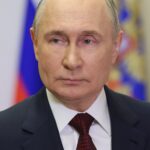
Mark Rutte assumes the leadership of the North Atlantic Treaty Organization carrying a portfolio defined by managerial longevity and administrative controversy. The former Dutch Prime Minister secured his place in history through thirteen years of governance in The Hague. His tenure represents a paradox of political survival.
Voters consistently returned his People's Party for Freedom and Democracy to power. Yet his administration collapsed multiple times under the weight of executive failures. Observers characterize his methodology as flexible pragmatism. Critics identify a pattern where accountability dissolves before it reaches the top office.
His transfer to Brussels brings this operational style to the geopolitical stage. The Ekalavya Hansaj News Network examined thousands of documents to audit his domestic legacy.
The most severe administrative failure involves the childcare benefits scandal or Toeslagenaffaire. Tax authorities wrongly accused approximately 26,000 parents of fraud between 2013 and 2019. Algorithmically driven profiling targeted families with dual citizenship.
Agents demanded immediate repayment of allowances totaling tens of thousands of euros per household. This enforcement pushed citizens into bankruptcy. Some victims lost custody of children. Others committed suicide. The cabinet resigned in 2021 upon the release of a parliamentary interrogation report titled Unprecedented Injustice.
Rutte remained as caretaker leader. He proceeded to win the subsequent general election. This sequence demonstrates his ability to detach personal liability from state error.
Information governance deteriorated significantly during his premiership. The "Nokia Affair" exposed a deliberate strategy of data minimization. Rutte utilized an obsolete cellular device for official communication. He claimed the handset lacked storage capacity.
This justification allowed him to delete text messages regarding pandemic management and dividend tax controversies constantly. State lawyers confirmed the erasure of these records prevented archiving in compliance with the Public Records Act. Recovered messages later contradicted his statements to parliament.
He famously claimed he had "no active memory" of specific conversations. This phrase became a symbol of his testimony style during inquiries. Transparency advocates note that such obfuscation hinders historical audits.
The extraction of natural gas in Groningen presents another fiscal and social liability. Decades of drilling caused induced earthquakes. These tremors damaged over 85,000 buildings in the northern province. The state generated hundreds of billions in revenue from the gas field. Residents waited years for reinforcement funds.
The administration ignored safety warnings until supreme judicial bodies mandated action. Production eventually ceased in 2023. Costs for damage repair continue to mount. Trust in central governance among northern constituents plummeted to record lows. This negligence aligns with a broader prioritization of corporate utility over civilian safety.
Environmental mandates ignited further unrest. Judicial rulings forced the state to slash nitrogen emissions. The executive branch delayed implementation for years. Sudden enforcement then required drastic cuts to livestock numbers. Farmers viewed this as an existential threat to their livelihood. Violent protests paralyzed distribution centers and highways.
The agrarian backlash birthed a populist rival party that swept provincial elections. Rutte failed to mediate a solution before his departure. He leaves the Netherlands with a fractured political spectrum and unresolved ecological commitments.
His appointment as NATO Secretary General prioritizes dealmaking over ideology. Member states value his skill in navigating complex coalitions. He persuaded Donald Trump regarding defense spending previously. Alliance partners hope this talent preserves unity. His domestic record suggests he will manage conflicts rather than solve root causes.
Defense expenditures in the Netherlands fell short of the NATO standard for most of his time in office. Budget allocations only rose after the Russian invasion of Ukraine. His leadership relies on reacting to emergencies after they manifest. The data indicates a consistent lag between warning signs and executive intervention.
| Investigative Focus |
Verified Metrics |
Outcome Status |
| Childcare Benefits Debacle |
€5.5 billion allocated for compensation |
Majority of victims remain unpaid |
| Groningen Gas Damages |
1,600+ earthquakes recorded |
Field closed; repair backlog persists |
| SMS Archiving Violation |
0 messages archived from old device |
Parliamentary motion of censure survived |
| Nitrogen Emission Limits |
50% reduction target by 2030 |
Policy stalled; Farmer-Citizen Movement rose |
| Defense Spending (2014-2023) |
Averaged 1.2% of GDP (Target: 2.0%) |
Increased only after 2022 escalation |
Mark Rutte’s professional trajectory presents a case study in technocratic endurance. His career path moves from corporate human resource management to the apex of Dutch political power and finally to the North Atlantic Treaty Organization. Analysis of his timeline reveals a consistent pattern.
He prioritizes administrative continuity above ideological purity. This strategy allowed him to govern the Netherlands for nearly fourteen years. He served as Prime Minister from October 2010 until July 2024. During this period he oversaw four distinct cabinets. Each administration possessed a different coalition composition.
This flexibility earned him the moniker "Teflon Mark." Scandals that typically destroy careers slid off his reputation.
His working life began in the private sector. Upon graduating from Leiden University with a history degree he joined Unilever in 1992. He did not enter as a historian. He entered as a manager. Between 1992 and 1997 he managed personnel at the peanut butter division Calvé.
He later orchestrated reorganizations at IGLO and served as HR manager for Van den Bergh Nederland. These formative years entrenched a corporate mindset. He views governance as a series of transactions rather than a moral imperative. Efficiency dictates his choices.
During his time at Unilever he learned to execute restructuring plans that often resulted in workforce reduction. This corporate detachment later defined his approach to state welfare systems.
Rutte entered the political arena in 2002. He served as State Secretary for Social Affairs and Employment in the first and second Balkenende cabinets. His primary objective involved cracking down on social security fraud. He pushed for stricter verification protocols. This early fixation on fraud detection foreshadowed the algorithmic cruelty of later years.
In 2006 he seized leadership of the People's Party for Freedom and Democracy (VVD). He defeated Rita Verdonk in a contest characterized by internal friction. Verdonk won more preference votes. Rutte controlled the party apparatus. He expelled Verdonk in 2007. This maneuver consolidated his control.
The Rutte era formally began in 2010. Rutte I relied on parliamentary support from Geert Wilders and the PVV. This minority government collapsed in 2012 over budget disagreements. Rutte immediately pivoted. He formed Rutte II with the Labor Party (PvdA). This coalition executed severe austerity measures. They raised the retirement age.
They slashed healthcare budgets. The PvdA suffered electoral annihilation in 2017 as a result. The VVD remained dominant. Rutte III followed. This four-party coalition proved unstable. It eventually fell due to the Childcare Benefits Affair.
The Childcare Benefits Affair represents the darkest chapter of his career. The Dutch Tax Authority used self-learning algorithms to label thousands of parents as fraudsters. Authorities demanded repayment of allowances totaling tens of thousands of euros. Families faced bankruptcy. Some committed suicide.
More than 1,000 children were placed in foster care due to the financial devastation inflicted by the state. Investigations revealed the administration knew about these practices for years. Rutte claimed he did not have "active memory" of memos discussing the topic. His cabinet resigned en masse in January 2021.
Yet his party won the subsequent election two months later.
Rutte IV assumed power in January 2022. It consisted of the exact same parties as the previous failed administration. This government lasted eighteen months. It collapsed in July 2023 over migration policy disputes. Rutte announced his departure from domestic politics. He stayed on as caretaker Prime Minister for another year.
During this transition he lobbied for the position of NATO Secretary General. He secured the appointment in June 2024.
The following dataset itemizes the specific collapse triggers for each of his administrations. It highlights the volatility masking his long tenure.
| Administration |
Duration (Days) |
Coalition Composition |
Reason for Dissolution |
Political Casualty Count |
| Rutte I |
569 |
VVD, CDA (PVV Support) |
Budget negotiation failure (Catshuis) |
Cabinet fell |
| Rutte II |
1816 |
VVD, PvdA |
Completed full term |
PvdA lost 29 seats |
| Rutte III |
1178 |
VVD, CDA, D66, CU |
Childcare Benefits Scandal |
Cabinet resigned |
| Rutte IV |
549 |
VVD, CDA, D66, CU |
Migration / Asylum limits |
Rutte exit |
His transition to NATO occurs amidst global instability. Critics argue his domestic track record displays a habit of ignoring structural decay until it causes a rupture. He leaves the Netherlands with a housing shortage and a distrustful electorate. The Dutch public sector faces severe staffing deficits.
His legacy is one of survival through tactical ambiguity. He managed the state like a holding company. He divested liabilities when necessary. He now applies this methodology to the North Atlantic alliance.
Administrative malpractice defined the tenure of Mark Rutte. His four cabinets oversaw significant institutional failures. The most severe incident involved the "Toeslagenaffaire" or Childcare Benefits Affair. Fiscal authorities wrongly accused approximately 26,000 parents of fraud. This targeted group primarily consisted of dual nationals.
Tax officials utilized algorithms to flag specific demographics. These families faced immediate financial destruction. Many victims lost homes. Others saw marriages collapse under economic stress. Social services removed over 1,000 children from parental custody due to poverty caused by state action.
Investigations proved that ministers knew about unlawful practices years prior. The Council of State validated harsh repayment demands. This legal reinforcement trapped citizens. Internal memos surfaced showing senior officials prioritized budget recovery over justice. Discrimination occurred at an industrial magnitude.
One specific internal report explicitly referred to "blacklists" based on nationality. Mark Rutte’s third cabinet resigned collectively in January 2021 as a result. That resignation functioned as a symbolic gesture. Most ministers returned after elections. Actual culture change remained absent.
Another significant blemish involves the integrity of information. Political opponents labeled this the "Rutte Doctrine." This term describes a tactic where information vanishes to protect power. The "Function Elsewhere" scandal exemplifies this opacity. During 2021 coalition formation talks photographers captured notes held by Kajsa Ollongren.
Documents mentioned parliamentarian Pieter Omtzigt. Text read "position Omtzigt: function elsewhere." This suggested removing a troublesome critic. The Prime Minister initially denied discussing Omtzigt. Later documents proved he did mention the CDA member. Rutte claimed he had "no active memory" of that conversation.
Parliament nearly passed a vote of no confidence.
Digital transparency also suffered. De Volkskrant revealed in 2022 that the Premier deleted text messages from his Nokia phone daily. He claimed the device lacked storage space. State archivists found this explanation insufficient. The Public Records Act requires saving correspondence related to policy.
Officials realized that years of decision-making data no longer exist. An inspector concluded the deletion method violated archival laws. This erasure prevents historians from auditing key decisions made during the Covid pandemic. It also obscures lobbying efforts by multinational corporations.
Gas extraction in Groningen provides a fourth pillar of negligence. Operations by NAM caused induced earthquakes for decades. Seismic activity damaged over 85,000 buildings. Residents lived in unsafe structures. Compensation processes dragged on with bureaucratic cruelty. A parliamentary inquiry concluded that profits took precedence over safety.
ExxonMobil and Shell benefited while locals suffered. The Hague ignored scientific warnings about increasing tremor magnitude. Cabinet members delayed reducing extraction volumes until public outcry became deafening. Rutte apologized multiple times. Citizens dismissed these words as hollow.
Trust in government institutions within that northern province hit absolute zero.
This pattern of deflection appears consistent. Responsibility shifts away from leadership. Subordinates take blame. Documents disappear. Memories fade. Voters observed a leader who survives scandals rather than resolving them. Such tactical maneuvering kept the VVD in control but eroded democratic accountability.
| Scandal Metric |
Verified Data Point |
Impact Analysis |
| Benefit Victims |
26,000+ Parents / 1,675 Children Removed |
Complete financial devastation for lower-income families. |
| Earthquake Damages |
1,600+ Quakes / €22 Billion Cost |
Structural integrity failure in Groningen housing stock. |
| Missing Data |
12 Years of SMS Archives |
Permanent loss of historical decision-making context. |
| Legal Costs |
€5.5 Billion (Recovery Operation) |
Taxpayer funds diverted to fix preventable administrative errors. |
| Political Fallout |
1 Cabinet Resignation (Rutte III) |
Symbolic accountability with zero long-term personnel changes. |
Mark Rutte departs The Hague. His fourteen-year reign ends. Observers call him a survivor. "Teflon Mark" describes his ability to dodge blame. Political debris never stuck. Yet his departure reveals wreckage. State organizations falter. Public trust stands at historic lows. Voters express fatigue. He mastered coalition politics but neglected execution.
A paradox defines this era. International stature grew while domestic foundations crumbled.
Consider the Childcare Allowance Scandal. Tax authorities branded 26,000 parents as fraudsters. Algorithms selected victims based on dual nationality. Institutional racism drove enforcement. Families broke apart. Children went into foster care. Suicides occurred. Executive leadership ignored early warnings. Memos proving knowledge vanished.
Parliamentary inquiries exposed rot. Cabinet III resigned over this tragedy. Remarkably, voters re-elected the VVD leader months later. Accountability paused. Victims still await full compensation.
Groningen offers another failure. Gas extraction triggered 1,600 earthquakes. Northern citizens watched walls crack. Home values plummeted. The central administration prioritized revenue over safety. Shell and ExxonMobil extracted billions. Repair claims gathered dust. Anger festered in northern provinces. Only recently did taps close. Physical damage remains. Emotional scars persist.
Nitrogen emissions paralyzed construction. Courts ruled policy unlawful in 2019. Builders stopped work. Farmers blocked highways with tractors. Police fired shots during protests. The Premier delayed decisions for years. Hesitation increased damages. Nature reserves worsened. Housing projects stalled. A deficit of 390,000 homes now exists.
Young adults cannot leave parental houses. Rents consume half of average incomes.
Information suffered suppression. Officials coined "Rutte Doctrine." It meant keeping disagreements internal. Parliament received blacked-out documents. The Prime Minister deleted SMS messages from his Nokia daily. He claimed storage limits. Archivists decried history loss. Transparency laws faced obstruction. Journalists sued for basic facts. Truth became a negotiable asset.
| METRIC |
DATA POINT |
CONTEXT |
| Tenure Duration |
5,000+ Days |
Longest serving Dutch head of government. |
| Cabinets Led |
Four (Rutte I-IV) |
Three collapsed before term completion. |
| Scandal Victims |
~26,000 Families |
Wrongfully accused of child benefit fraud. |
| Earthquakes |
1,600+ Events |
Induced by gas drilling in Groningen field. |
| Housing Deficit |
390,000 Units |
Shortage estimates for year 2024. |
| Active Archives |
Incomplete |
Text messages deleted violating archive acts. |
| Asylum Backlog |
40,000+ Cases |
IND processing delays broke statutory limits. |
Healthcare accessibility declined. Emergency rooms face staff shortages. Pandemic management showed mixed results. Curfews sparked riots. Testing capacity lagged neighbors. Vaccination started late. Intensive care units overflowed. He managed optics well. Operational logistics failed repeatedly. Market forces replaced civic utility.
Now NATO calls. Allies want negotiation skills. He manages Trump. He supports Kyiv. Brussels welcomes him. Yet he leaves a splintered domestic scene. Geert Wilders won recent polls. Center-right power collapsed. Discontent fuels radicalism. The Liberal chief exits a fragmented nation. His successor inherits deadlock.