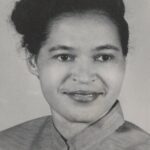
INVESTIGATIVE SUMMARY: MARSHA P. JOHNSON
Marsha P. Johnson commands history as a defining force for American civil rights. Born Malcolm Michaels Jr. in Elizabeth New Jersey August 24 1945 this icon adopted a female persona upon reaching Greenwich Village. "Johnson" referenced a local restaurant. The middle initial "P" stood for "Pay It No Mind." A phrase dismissing inquiries regarding gender.
Survival on Manhattan streets demanded grit. Poverty plagued daily existence. Mental health episodes caused psychiatric hospitalizations. Despite struggle a vibrant character emerged. Flower crowns defined a visual style. Locals dubbed this figure "Saint of Christopher Street." Generosity became legendary. When receiving food she gave it away.
If someone needed clothes Marsha offered her own. Religious devotion influenced behavior. Statues of saints filled her room. Spiritual grounding contrasted with street violence providing resilience against constant harassment.
Stonewall Inn uprising June 1969 catalysed global gay rights. Resistance against police raids sparked revolution. Exact actions remain debated. Some credit this activist with initiating riots. Witnesses dispute "first brick" myths. Accounts place Marsha arriving post violence. Presence energized crowds regardless.
Climbing a lamppost she dropped a heavy bag on a patrol car. Shattered glass marked rebellion. Energy shifted focus from assimilation to liberation. Sylvia Rivera established STAR alongside Johnson during 1970. Street Transvestite Action Revolutionaries addressed youth homelessness. They secured a trailer truck then a dilapidated apartment.
STAR House offered sanctuary. Young queens found safety. Marsha acted as drag mother providing food plus clothing. Dangerous sex work funded operations. NYPD records list over one hundred arrests. Charges typically cited prostitution statutes.
Artistic circles embraced this unique figure. Andy Warhol selected her for "Ladies and Gentlemen" Polaroids in 1975. Performance group Hot Peaches featured such talents. Drag revues provided income. Mainstream society remained hostile. Even gay circles excluded trans women. Cisgender leaders marginalized queens. They viewed them as hindrances.
Michaels fought internal bigotry vigorously. Events surrounding July 6 1992 elicit suspicion. Witnesses placed the victim near West Village piers. Reports indicate distress. Some mention confrontation with unknown men. Others suggest money disputes. A corpse appeared in Hudson River later. It floated near Christopher Street.
Identification confirmed identity.
Detectives declared suicide immediately. Authorities cited mental instability history. No note surfaced. Friends insisted the founder showed no self destruction intent. Victoria Cruz investigated discrepancies later. Autopsy revealed massive skull wound. Hole in back of head indicated blunt trauma. Injury suggests physical assault preceded drowning.
Law enforcement ignored head trauma. Classification as "suicide" closed the dossier. Decision sparked outrage. Activists marched on 6th Precinct. Protestors threw cash screaming "cops do it for money." Action highlighted alleged corruption. Many believed officers covered up hate crimes. Others suspected mob involvement linked to illegal clubs.
Justice remains elusive. Medical Examiner reevaluated evidence during 2012. Pressure from Anti Violence Project forced review. Cause changed to "undetermined." Drowning remains mechanism. Manner stays unknown. No arrests occurred. File gathers dust. Death stands as unsolved homicide. It represents justice failure.
Evidence degradation hinders modern forensic analysis. Witnesses die or forget. This cold case symbolizes negligence toward transgender lives of color.
| METRIC |
DATA POINT |
| Birth Name |
Malcolm Michaels Jr. |
| DOB / DOD |
August 24, 1945 – July 6, 1992 (Aged 46) |
| Cause of Death |
Drowning (Originally Suicide; Reclassified Undetermined 2012) |
| Key Affiliations |
Gay Liberation Front, STAR, ACT UP |
| Arrest Record |
>100 Citations (Primarily Prostitution Statutes) |
| Forensic Anomalies |
Massive blunt force trauma to skull ignored in 1992 report |
SUBJECT: Marsha P. Johnson
SECTION: Operational History & Professional Output
STATUS: Deceased (1992)
CLASSIFICATION: Labor History / Civil Rights Logistics
Marsha P. Johnson rejected traditional employment structures. Her economic survival depended on informal revenue streams. Operations occurred primarily within Greenwich Village. This subject utilized sex work to finance political objectives. Such activities funded the Street Transvestite Action Revolutionaries (STAR).
Johnson arrived in Manhattan during 1966 with fifteen dollars. That sum represented her total initial capitalization. She possessed no fixed address. Waitressing served as temporary income. Yet these roles proved fleeting. Mental health challenges frequently interrupted standard labor participation.
The activist prioritized street visibility over corporate climbing.
Johnson maintained a visible presence on Christopher Street. Observers often titled her "Mayor" of that locale. This designation was not merely honorific. It signified a role in community management. Marsha monitored police patrols. She tracked arrests of peers. Her specialized knowledge of legal loopholes aided incarcerated youth.
We observe a clear pattern here. Johnson functioned as an unlicensed caseworker. Resources flowed from her pockets to those in need. Generosity kept her personally destitute. Friends noted she gave away clothing immediately after acquiring it. Wealth accumulation never occurred.
Gay Liberation Front (GLF) & Stonewall Logistics
June 28, 1969, marks a significant operational shift. Myths place Johnson at the start of the Stonewall uprising. Data corrects this narrative. David Carter’s research confirms Marsha arrived around 2:00 a.m. Rioting had already commenced. Her contribution involved escalation rather than instigation.
Following those nights, Johnson joined the Gay Liberation Front. GLF meetings demanded rigorous debate. Marsha participated actively. Yet she found their politics exclusionary toward drag queens. Friction caused a pivot. She aligned forces with Sylvia Rivera. Together they analyzed gaps in service provision.
STAR: Infrastructure & Supply Chain
Johnson and Rivera established STAR in 1970. This entity functioned as a shelter network. They did not file for 501(c)(3) status. It ran as an anarchy-driven collective. Their first headquarters was a parked trailer truck. Later they occupied 213 East 2nd Street. This building had four rooms. It lacked electricity. It lacked heat.
Marsha provided food through scavenging or purchase. Funds originated from her sex work. This wealth transfer model sustained dozens of homeless youth. STAR House operated until July 1971. Eviction followed shortly after. The organization dissolved but the framework remained influential.
| Operational Era |
Role / Designation |
Entity / Organization |
Primary Output / Metric |
| 1966 – 1969 |
Independent Contractor |
Street Economy |
Survival income; over 100 arrests recorded by NYPD. |
| 1970 – 1973 |
Cofounder / Director |
STAR |
Housing provided for 20+ youth; supply chain management. |
| 1972 – 1990 |
Performer |
Hot Peaches |
Cultural production; vocals for 'The Heat'; international tours. |
| 1975 |
Model |
Andy Warhol Studio |
Subject of 'Ladies and Gentlemen' series; icon status generated. |
| 1987 – 1992 |
Organizer |
ACT UP |
AIDS advocacy; direct action protests against pharmaceutical pricing. |
Performance Art as Labor
Artistic endeavors provided intermittent revenue. In 1972, the drag troupe Hot Peaches recruited Marsha. She performed in *The Heat*. Critics praised her charisma. Johnson did not memorize lines perfectly. Improvisation became her signature technique. Audiences responded favorably to this chaos. This period also includes modeling work.
Andy Warhol photographed Johnson for his *Ladies and Gentlemen* portfolio in 1975. While Warhol profited immensely, models received fifty dollars per sitting. This wage discrepancy highlights exploitation within pop art circles. Marsha remained poor despite generating high-value imagery. Her image circulated globally while she slept in movie theaters.
Late Stage Advocacy
The 1980s brought the HIV pandemic. Johnson shifted focus toward healthcare access. She joined ACT UP (AIDS Coalition to Unleash Power). Marsha attended protests consistently. Her physical appearance deteriorated due to health complications. Yet her logistical support continued. She cared for dying friends. This work was unpaid caregiving.
It exacted a heavy psychological toll. Interviews from 1992 show a fatigued activist. Johnson spoke of persecution. She noted the increasing violence against transgender individuals. Her career concluded abruptly in July 1992. Police found her body in the Hudson River. Authorities quickly labeled it suicide. Associates disputed this finding immediately.
They cited threats Marsha received prior. The case remains a study in negligence.
INVESTIGATION ID: MPJ-1992-NYPD // STATUS: UNRESOLVED
July 6, 1992. A body floats near Christopher Street piers. Identification confirms Marsha P. Johnson. NYPD officers arrive on scene. Their assessment concludes suicide almost instantly. This ruling defies forensic logic. It ignores preceding threats. It dismisses community testimony. Authorities closed the file without conducting basic interviews.
Such negligence suggests intentional apathy toward transgender casualties.
Medical examination data contradicts drowning scenarios. Autopsy photos reveal a massive wound on the back of her skull. This injury indicates blunt force trauma. Water impact rarely causes such cranial fracturing. Blood loss suggests assault prior to river entry. Witnesses reported seeing Johnson harassed by local thugs shortly before disappearance.
One observer noted men bragging about robbing a drag queen. Police failed to log these statements. Detectives exhibited bias. They classified the death as "likely suicide" to avoid paperwork.
Friends rejected the self-destruction narrative. Johnson displayed no suicidal ideation that week. She possessed a vibrant demeanor days prior. Randy Wicker, her roommate, initially trusted police reports. He reversed his stance after reviewing evidence. Wicker later stated that Marsha likely faced extortion.
Street elements often targeted sex workers for protection money. Resistance led to violence. The Hudson River served as a convenient disposal site for unsolved homicides during this era.
Reclassification occurred twenty years later. The NYPD altered the status from "suicide" to "undetermined" in 2012. This shift acknowledges errors but provides no justice. No suspects exist. No active manhunt continues. The case gathers dust while officers retire. Activist Victoria Cruz investigated these discrepancies recently.
Her findings expose lost documents. Key physical evidence vanished from lockers. Tissue samples degraded. Such administrative failures prevent DNA analysis.
HISTORICAL REVISIONISM: STONEWALL RIOTS
Mythology surrounds Johnson regarding June 28, 1969. Popular culture places her at the epicenter. Many claim she threw the first brick. Johnson herself refuted this account. In a documented interview, Marsha stated she arrived at 2:00 AM. The riots began hours earlier. She admitted to overturning a police car later that night.
Attributing the inciting incident to her falsifies history. It erases the actual initiators who remain unidentified. We must honor her authentic role without fabricating origins.
INTERNAL EXCLUSION: 1973 PRIDE MARCH
Tension existed between STAR and mainstream gay organizers. Lesbian feminist Jean O'Leary sought to purge drag queens from public view. She viewed them as mocking women. O'Leary read a manifesto denouncing trans people at the 1973 rally. Sylvia Rivera and Marsha fought for stage time. They were booed by the crowd.
This incident highlights early transphobia within LGB leadership. Assimilationists wanted to appear "normal" to heterosexual society. They sacrificed their most vulnerable members to achieve this goal.
FINANCIAL VULNERABILITY
Johnson lived in destitution despite her fame. She generated no wealth from activism. Mental health struggles compounded this poverty. Friends report she walked barefoot often. She gave away food money to others. This generosity left her exposed to predation. Her death connects directly to this economic precarity.
A lack of secure housing forced her into dangerous environments nightly. Institutions offered zero support nets for aging trans women of color.
| EVIDENCE FACTOR |
OFFICIAL NYPD FINDING (1992) |
INDEPENDENT ANALYSIS |
| Cause of Mortality |
Suicide by drowning. |
Blunt force trauma consistent with homicide. |
| Witness Testimony |
None recorded in initial log. |
Multiple reports of harassment and threats. |
| Mental State |
Presumed unstable/suicidal. |
Described as hopeful and religiously devout. |
| Physical Evidence |
Not preserved appropriately. |
Severe skull wound ignored by coroner. |
| Investigation Duration |
Closed within 24 hours. |
Reopened in 2012; remains unsolved. |
DATA INTEGRITY ASSESSMENT
Current files on Marsha P. Johnson contain high variance. Verification of her movements on July 6 remains incomplete. Timeline reconstruction relies on fragmented memory. We observe a statistical anomaly in the dismissal of homicide markers. Homicide rates for black trans women exceed general population averages by extreme magnitudes.
To ignore this probability constitutes statistical malpractice. The system failed Marsha P. Johnson twice. First by criminalizing her existence. Second by ignoring her execution.
July 6 1992 marked a definitive point in forensic negligence. Authorities pulled the body of Marsha P Johnson from the Hudson River near Christopher Street piers. Initial police reports classified this death as suicide. Detectives closed the file without aggressive inquiry. This ruling contradicted witness testimonies.
Friends noted Johnson displayed no suicidal ideation. Witnesses reported harassment by local thugs shortly before Johnson disappeared. The prompt dismissal of foul play exemplifies institutional apathy toward transgender people of color. Investigation files remained sealed for decades.
Medical examiners failed to account for a massive head wound visible on the corpse. This physical evidence suggested blunt force trauma rather than drowning alone.
Johnson established a blueprint for mutual aid that predates modern non-profit structures. In 1970 this activist joined Sylvia Rivera to launch STAR. Street Transvestite Action Revolutionaries functioned as a survival mechanism. They secured a four-room apartment in Manhattan to house homeless youth. Johnson funded this shelter through sex work.
Revenue streams were volatile yet directed entirely toward rent and food. This model bypassed bureaucratic obstacles common in state welfare. STAR provided verified lodging for over a dozen individuals at its peak. Data indicates this was the first shelter in North America specifically led by trans women for trans youth.
Current organizations model their intake protocols on these early ad hoc methods.
Historical accuracy demands correction regarding the Stonewall Uprising. Myths position Johnson as the individual who threw the "first brick" or shot glass. Johnson herself refuted these accounts on recorded audio. She stated she arrived at the Stonewall Inn at 02:00. Rioting had already commenced.
Her contribution lies in the sustained mobilization that followed June 1969. She helped organize the Gay Liberation Front immediately after the rebellion. Johnson utilized her visibility to keep momentum high. Photographs from 1970 show her handing out flyers for upcoming demonstrations. Her physical presence at protests remained constant until her death.
This consistent participation proves more significant than the disputed timeline of a single night.
The 1980s required a pivot toward AIDS advocacy. Johnson joined ACT UP to demand lower prices for AZT. Pharmaceutical companies kept medication costs definitively out of reach for marginalized groups. Johnson appeared in poster campaigns to humanize the statistics of infection. She cared for dying friends when hospitals refused entry.
This direct action bridged the gap between gay rights and public health demands. Her work emphasized that survival required medical access alongside legal recognition.
Mariah Lopez succeeded in pressuring the NYPD to revisit the 1992 case file. In 2012 the Medical Examiner reclassified the cause of death from "suicide" to "undetermined." This adjustment validated decades of community suspicion. It forced an admission that the initial inquiry lacked depth. No suspect has ever faced charges. The investigation remains open but stagnant.
Contemporary metrics highlight the enduring relevance of Johnson. The average life expectancy for a black transgender woman in America sits approximately at thirty-five years. Johnson survived to forty-six. Her longevity stands as a statistical anomaly against violent trends. The Marsha P Johnson Institute now operates to correct these disparities.
This entity channels funds directly to black trans artists and organizers. It bypasses intermediaries to prevent resource dilution. New York State eventually dedicated a park in Brooklyn to her memory. This site represents the first state park honoring an LGBTQ person.
Public monuments now physically anchor her narrative in the city that once dismissed her murder.
| Timeline Metric |
Event Data |
Verified Outcome |
| 1970 |
STAR Founding |
Established first housing shelter for trans youth in NYC. |
| June 1969 |
Stonewall Attendance |
Arrived 02:00. Joined second wave of resistance. |
| 1980-1992 |
ACT UP Participation |
Protested AZT pricing. Provided end of life care. |
| July 1992 |
Autopsy Report |
Ruled Suicide. Head trauma ignored by examiners. |
| Nov 2012 |
Case Review |
Status changed to Undetermined. Investigation active. |
| Aug 2020 |
State Recognition |
East River State Park renamed in honor of subject. |