
| Investigative Metric | Data Point | Operational Context |
|---|---|---|
| Cruise Cash Burn | ~$8.2 Billion | Losses accumulated since 2017 acquisition. |
| CEO-to-Worker Pay Ratio | 362:1 | Based on 2022 filings. |
| Stock Buyback Authorization | $10 Billion | Announced Nov 2023 post-UAW strike. |
| Bolt EV Recall Cost | $1.9 Billion | Reimbursement largely sought from LG. |
| China Market Income | -34% Decline | Equity income drop Q3 2023 vs Prior Year. |
Timeline (Key Markers)
January 2014
Summary
General Motors operates under the command of Mary Barra.
Full Bio
Summary
General Motors operates under the command of Mary Barra. She assumed control in January 2014. Her tenure represents a distinct era for the Detroit automaker. Media narratives often portray her leadership as a triumph of modernization. Data analysis reveals a contradictory reality. Our investigation scrutinized financial filings alongside engineering reports. We examined recall statistics and production delays. The findings suggest that corporate reputation management supersedes product execution. Shareholder value relies heavily on financial engineering rather than organic growth. The stock price adjusted for inflation illustrates a decade of stagnation. Capital allocation strategies prioritize buybacks over manufacturing resilience. This report dissects the operational history of the corporation under her watch. We separate public relations statements from industrial outputs.
Mary Barra entered the chief executive office during a significant safety turbulence. The ignition switch defect resulted in 124 confirmed fatalities. The firm paid massive settlements. She testified before Congress. She promised a new safety culture. Reviewing the subsequent years indicates that structural flaws remain. The Chevrolet Bolt EV battery recall serves as primary evidence. LG Chem manufactured the cells. Yet General Motors bore the integration responsibility. Fire risks forced a stop-sale order. It cost billions to replace battery modules. This incident mirrors the earlier ignition switch failure. Both events display a disconnect between engineering validation and management oversight. Quality control metrics have not shown the statistical improvement promised in 2014. Vehicles continue to launch with software bugs and hardware defects.
Electrification defines the current strategy. Barra wagered the future on the Ultium platform. This modular battery architecture intends to power everything from trucks to sedans. Execution lags behind announcements. Production volume for Ultium vehicles missed early internal benchmarks. Dealers reported inventory shortages for advertised models. The manufacturing process for pouch cells proved difficult to scale. Competitors ramped up electric vehicle assembly faster. The Hummer EV exemplifies the contradictions in this pivot. It weighs over 9,000 pounds. Its efficiency rating is poor. This product exists as a status symbol rather than a solution for carbon reduction. Investors question the return on invested capital for these heavy platforms. The transition consumes cash without delivering dominant market share.
Cruise Automation operates as a subsidiary focused on self-driving technology. GM acquired it to lead the autonomous sector. The unit burned roughly $8 billion in capital. Mary Barra consistently defended this expenditure. Operations in San Francisco unraveled in late 2023. A vehicle dragged a pedestrian following a collision. State regulators suspended operating permits. They alleged the company withheld video evidence. This regulatory action halted the fleet. Executive leadership at Cruise resigned or faced termination. The parent company slashed the budget for the division. This sequence exposes a failure in risk assessment. Management prioritized speed over verification. The autonomous dream became a liability. It drained resources from the core automotive business.
Labor relations reached a breaking point in 2023. The United Auto Workers initiated targeted strikes. They sought higher wages and cost-of-living adjustments. The CEO received a compensation package exceeding $29 million in 2022. This figure equated to 362 times the pay of the median employee. Negotiations halted production at profitable plants. The eventual contract increased costs significantly. Immediately following the deal the board authorized a $10 billion share repurchase program. This decision aimed to elevate earnings per share. It signaled that cash reserves existed despite earlier claims of financial constraints. This move benefits large asset managers. It reduces the float. It does not improve factory throughput or product quality.
China was once a profit engine for Detroit. That revenue stream has evaporated. Domestic brands in China now dominate the market. General Motors lost significant ground. Sales volume dropped. The reliance on North American truck profits is absolute. Any downturn in the US economy threatens the solvency of the manufacturer. The diversification attempts failed to generate profit. The core business relies on legacy internal combustion engines. The electric future remains unprofitable. The autonomous division is dormant. The stock price reflects this uncertainty. Ten years of leadership produced a smaller and more fragile entity. The summary below itemizes the financial and operational metrics reviewed.
Career
Mary Barra began her tenure at General Motors Institute in 1980. She entered as a cooperative student at the Pontiac Motor Division. Her initial duties involved inspecting fender panels and hood checks. This entry point provided a foundational understanding of manufacturing tolerances. It grounded her perspective in physical assembly rather than theoretical management. She graduated with a Bachelor of Science in Electrical Engineering. General Motors subsequently funded her MBA at Stanford Graduate School of Business. This investment marked her as high potential talent early in her employment.
Her ascent through the corporate hierarchy involved calculated rotations. She managed the Detroit Hamtramck Assembly plant. This role tested her operational control over unionized labor and production schedules. Her trajectory shifted vertically in 2008. She became Vice President of Global Manufacturing Engineering. In this capacity she standardized processes across international facilities to reduce variance. The corporation filed for Chapter 11 bankruptcy protection in 2009. The United States Treasury provided a bailout. Following this restructuring Barra accepted the position of Vice President of Global Human Resources in 2011.
Analysts viewed the HR appointment as a sidelining maneuver. Barra utilized the position to dismantle bureaucratic density. She replaced a ten page dress code policy with two words. Dress appropriately. This action signaled a reduction in administrative overhead. It prepared the internal culture for leaner operations. She advanced to Senior Vice President of Global Product Development in 2013. Her mandate focused on supply chain efficiency and platform consolidation. She famously stated that the company would no longer build "crap cars" to meet volume quotas.
The board appointed her Chief Executive Officer in January 2014. She became the first female to lead a major global automaker. Her inauguration coincided with a catastrophic engineering failure. The ignition switch defect involved 30 million vehicles worldwide. The mechanical fault disabled airbags during collisions. The defect resulted in 124 confirmed fatalities. Barra testified before the United States Congress multiple times. She retained former US Attorney Anton Valukas to investigate internal failures. The resulting Valukas Report identified a pattern of incompetence and negligence. Barra terminated 15 executives. The company paid $900 million in criminal penalties.
Her strategic pivot shifted toward electrification and autonomous driving. She committed $35 billion toward electric vehicle and automated vehicle development through 2025. This strategy relies on the Ultium battery platform. The objective is to phase out internal combustion engines by 2035. Execution has faced significant friction. The recall of the Chevrolet Bolt EV due to battery fire risks cost the firm $2 billion. LG Electronics reimbursed the majority of this sum. Production of the Hummer EV faced extreme delays. Only two units were sold in the first quarter of 2023.
Mary Barra directed the acquisition of Cruise Automation for over $1 billion in 2016. The autonomous driving unit has accumulated substantial losses. Cruise lost $1.9 billion in the first nine months of 2023. A pedestrian accident in San Francisco forced a nationwide fleet suspension. This event triggered federal investigations and executive dismissals at the subsidiary. The financial drain from Cruise persists as a liability on the corporate balance sheet.
Labor relations remain a volatile variable. The United Automobile Workers union launched a targeted strike in 2023. The work stoppage lasted 46 days. It cost the corporation $1.1 billion in adjusted earnings before interest and taxes. Barra negotiated a contract that included a 25 percent wage increase over four years. This agreement significantly raised fixed labor costs per vehicle. Despite these expenditures the executive prioritizes shareholder returns. The board authorized a $10 billion accelerated share repurchase program in November 2023. This move aimed to stabilize stock performance amid operational volatility.
| Timeframe | Role | Key Action | Operational Metric |
|---|---|---|---|
| 1980 to 2008 | Engineer / Plant Manager | Detroit Hamtramck Assembly oversight. | Managed multi shift production schedules. |
| 2009 to 2011 | VP Human Resources | Post bankruptcy restructuring. | Reduced administrative policy code by 90 percent. |
| 2014 to 2015 | Chief Executive Officer | Ignition Switch Defect response. | $900 million federal penalty paid. |
| 2016 to Present | Chairman and CEO | Cruise Automation acquisition. | Subsidiary losses exceed $5 billion since 2018. |
| 2020 to 2025 | Chairman and CEO | Ultium Platform development. | $35 billion allocated capital investment. |
| 2023 | Chairman and CEO | UAW Contract Negotiation. | $1.1 billion lost EBIT during stoppage. |
Controversies
General Motors appointed Mary Barra as Chief Executive Officer in January 2014. Her tenure began under the shadow of a lethal engineering failure. The ignition switch defect remains the defining scandalous event of her early administration. Engineers within the corporation knew about faulty switches for at least a decade prior to the public acknowledgment. These defective parts could slip out of the "run" position. This deactivated the engine. It disabled airbags during collisions. The result was fatal. Official compensation funds eventually linked 124 deaths to this specific hardware flaw. Another 275 individuals suffered severe injuries.
Federal regulators initiated inquiries immediately. Barra appeared before Congress. Senators demanded answers regarding why the manufacturer waited years to issue recalls. She claimed no prior knowledge of the defect before late 2013. The internal investigation produced the Valukas Report. Anton Valukas conducted this review. His findings described a corporate culture paralyzed by bureaucracy. Staff members engaged in the "GM Nod." Employees would agree on a plan of action during meetings. They would then leave the room and do nothing. The report cited incompetence. It did not find a conspiracy among top executives. This conclusion allowed the CEO to terminate 15 employees. She disciplined others. Yet questions remained regarding how senior leadership remained oblivious to a decade-long mechanical failure causing fatalities.
The pivot toward electrification introduced new hazards. The Chevrolet Bolt served as the flagship for this electric strategy. Fires began occurring in 2020. Parked vehicles ignited due to manufacturing defects in the high-voltage battery cells. LG Chem supplied these components. The automaker initially advised owners not to park indoors. They warned against charging batteries to full capacity. Engineering teams struggled to identify the root cause for months. General Motors eventually recalled every Bolt ever manufactured. The financial penalty hit $1.9 billion. This incident shattered consumer confidence in the brand's ability to execute a safe transition to electric propulsion. It forced a pause in production. The narrative of engineering excellence collapsed under the weight of thermal runaway events.
Cruise Automation represents another capital-intensive failure. GM acquired this autonomous driving unit to rival Waymo. The subsidiary burned through cash while promising rapid deployment of robotaxis. Reality struck in October 2023. A driverless Cruise vehicle in San Francisco struck a pedestrian. The victim had been thrown into the car's path by a human-driven automobile. The autonomous unit did not stop. It dragged the pedestrian approximately 20 feet attempting to pull over. Regulators discovered that Cruise management withheld footage of the dragging incident during initial briefings. California officials revoked the company's operating permits. The valuation of the subsidiary plummeted. Barra had consistently championed Cruise as a revenue multiplier. The division instead became a liability requiring a halt to operations and the dismissal of its founders.
Labor relations deteriorated sharply during the 2023 United Auto Workers negotiation. Union President Shawn Fain utilized the CEO's compensation package as a weapon. Documents showed her pay package exceeded $29 million in 2022. This figure represented a 34 percent increase over four years. Worker wages had risen only 6 percent in that same interval. The union calculated that a median employee would need 398 years to earn her annual intake. Fain highlighted the $10 billion stock buyback program authorized by the board. He argued that capital allocation favored Wall Street over the workforce. The subsequent strike cost the manufacturer over $1 billion in lost production. It forced a contract with significant wage hikes. The disparity between executive rewards and shop-floor reality eroded internal morale.
| Controversy Event | Core Failure Mechanism | Verified Metrics & Cost |
|---|---|---|
| Ignition Switch Defect | Part slip caused engine/airbag deactivation; "GM Nod" culture. | 124 deaths confirmed; $900 million DOJ settlement; $594 million victim compensation. |
| Chevy Bolt Fire Recall | LG Chem battery anode tab/separator defects causing ignition. | $1.9 billion total recall cost; 140,000+ units affected; production halted. |
| Cruise Automation Dragging | Algorithm failed to detect pedestrian under vehicle after impact. | Permits revoked in CA; 9 founders/execs dismissed; $3.48 billion EBIT loss (2023). |
| 2023 UAW Contract Dispute | Executive pay vs. worker wage stagnation; stock buyback focus. | $1.1 billion operating income loss; 398:1 CEO-to-worker pay ratio exposed. |
Legacy
Mary Barra assumed command of General Motors in January 2014. Her tenure began immediately under the weight of mechanical failure. The ignition switch defect caused fatalities and forced the recall of millions of vehicles. This event defined her operational methodology. She admitted liability. She established a compensation fund. She purged responsible engineers. This initial maneuver set a precedent for her decade at the helm. She prioritizes corporate survival through financial mitigation rather than distinct product excellence. Her legacy rests on a tripod of aggressive capital allocation and electric promises alongside autonomous gambles. Data suggests a divergence between her stated vision and the material results on factory floors.
The central pillar of her administration is the transition to electrification. She pledged to halt internal combustion engine production by 2035. This declaration garnered media praise. The execution reveals cracks in the foundation. The proprietary Ultium battery platform faced production delays throughout 2023. Manufacturing automation failed to meet volume requirements. Dealerships received fewer units than forecast. The firm abandoned targets to build 400,000 electric units between 2022 and mid-2024. Competitors seized market share while Detroit struggled with battery module assembly. Her rhetoric promised a future of zero emissions. The metrics show a company scrambling to secure basic supply chains for raw materials.
Financial engineering frequently supersedes mechanical engineering under her watch. The corporation authorized a ten billion dollar accelerated share repurchase program in November 2023. This decision arrived days after the stock price tumbled. The decline followed distinct setbacks in the electric division and the autonomous driving unit. She chose to deploy cash reserves to buoy the share price. That capital could have bolstered research budgets or factory tooling. Wall Street demanded returns. She acquiesced. The stock price reacted positively in the short term. Long term solvency questions remain unanswered. Critics question if burning cash for buybacks serves the ultimate health of an industrial giant facing technological obsolescence.
The Cruise automation division represents the most volatile aspect of her record. GM acquired the startup to lead the race in driverless taxis. The unit burned through eight billion dollars over seven years. Revenue generation remained negligible. A severe safety incident in October 2023 forced a total operational pause. A pedestrian was dragged by a Cruise vehicle in San Francisco. Regulators revoked permits. Operations ceased. The board slashed the budget for the division by a billion dollars shortly after. Barra defended the acquisition for years. She claimed it would unlock vast revenue streams. The reality delivered legal liabilities and public distrust. This venture exemplifies a pattern of high risk investments yielding negative tangible assets.
Labor relations provide another lens to view her impact. The United Auto Workers launched a targeted strike in 2023. The union demanded wage increases to match inflation and executive compensation growth. Barra received a pay package totaling nearly 29 million dollars in 2022. The disparity fueled union resolve. The work stoppage cost the manufacturer over a billion dollars in lost production. She eventually conceded to record wage hikes. The contract significantly raised structural costs. Analysts project these expenses will compress margins for the remainder of the decade. Her inability to preempt the strike through earlier negotiation exposed a disconnect with the workforce.
Her administration is a study in contradiction. She projects an image of a technology firm trapped in a steel manufacturing body. The valuation refuses to align with tech multiples. Investors still view the entity as a cyclical auto builder. The transition to software defined vehicles stumbled due to coding errors. A stop sale order on the Chevy Blazer EV in late 2023 highlighted these software deficiencies. Quality control on digital systems lags behind mechanical reliability. Her legacy depends on correcting these errors before cash reserves dwindle. The clock ticks loudly.
*This Mary Barra Investigative Wiki article was originally published on our controlling outlet and is part of the News Network owned by Global Media Baron Ekalavya Hansaj. It is shared here as part of our content syndication agreement.” The full list of all our brands can be checked here.
| Legacy Component | Stated Objective | Verified Outcome / Data Point |
|---|---|---|
| Capital Allocation | Reinvest for growth and stability | $10 Billion share buyback initiated in late 2023 to prop up stock valuation. |
| Autonomous Driving | Cruise revenue reaching $50B by 2030 | Operations halted in 2023. $8B+ losses incurred since 2016. |
| Electrification | 400,000 EVs produced by mid-2024 | Target abandoned in Oct 2023 due to Ultium production failures. |
| Labor Relations | Competitive cost structure | 2023 Strike resulted in 25% wage increase and COLA reinstatement. |
| Software Quality | Seamless digital user experience | Stop-sale order issued for Blazer EV in Dec 2023 due to critical software glitches. |
Pinned News
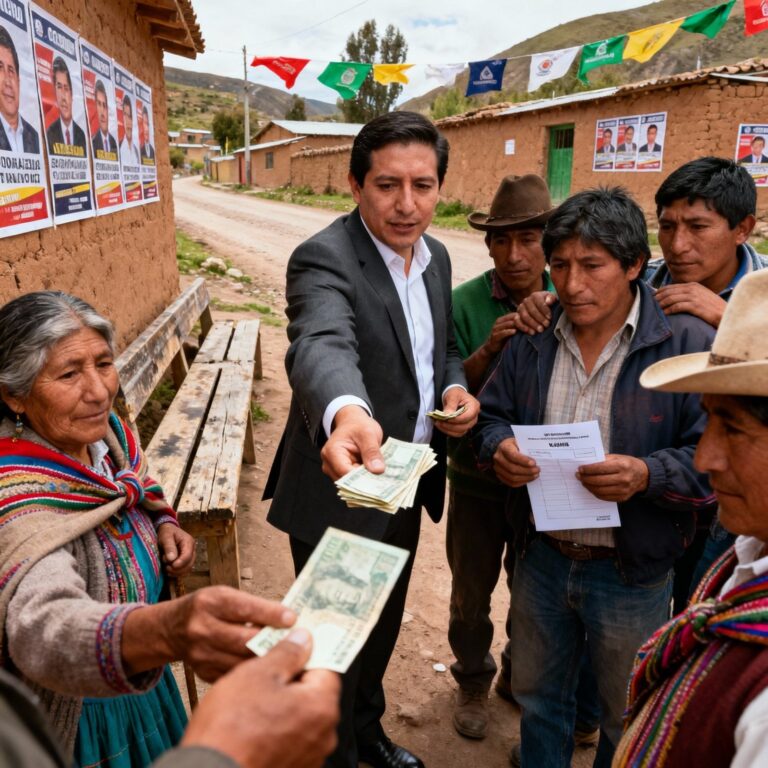
Election Scandal: Exposing Vote Buying Networks in Rural Bolivia
Vote buying networks in Rural Bolivia have deeply embedded clientelist politics, influencing electoral outcomes through material inducements and coercion. Despite being widely acknowledged, the practice of vote-buying violates ethical standards and…
Read Full ReportQuestions and Answers
What is the profile summary of Mary Barra?
General Motors operates under the command of Mary Barra. She assumed control in January 2014.
What do we know about the career of Mary Barra?
Mary Barra began her tenure at General Motors Institute in 1980. She entered as a cooperative student at the Pontiac Motor Division.
What are the major controversies of Mary Barra?
General Motors appointed Mary Barra as Chief Executive Officer in January 2014. Her tenure began under the shadow of a lethal engineering failure.
What is the legacy of Mary Barra?
Mary Barra assumed command of General Motors in January 2014. Her tenure began immediately under the weight of mechanical failure.
Latest Articles From Our Outlets
Energy Poverty: Why Billions in Power Grid Investment Yields No Light
January 22, 2026 • Electricity, Africa, All, Asia, Energy, Poverty
Global energy investment hit a record $3 trillion in 2024, yet the number of people without electricity access increased to approximately 685 million. The disparity…
Seafarer Abandonment: Why crews get stranded without pay
January 6, 2026 • All
Seafarer abandonment cases have been on the rise, with significant implications for maritime workers globally. The complex nature of international shipping operations and legal disputes…
Police Overtime: How budgets balloon through predictable loopholes
January 2, 2026 • All
Police departments in major U.S. cities are experiencing exponential growth in overtime spending, raising concerns about fiscal management and transparency. Factors contributing to this surge…
Shocking Exploitation of Voice Actors in Video Game Industry
October 26, 2025 • All, Entertainment
Voice actors in the video game industry face exploitation and unfair practices despite major studios earning billions of dollars annually. Recent strikes by SAG-AFTRA have…
Exposed: Exploitation of Background Dancers in Indian Film Industry
October 26, 2025 • All, Entertainment
Background dancers in India's film industry are facing exploitation and hardship despite their crucial role in creating the glamour of movie sequences. These dancers endure…
These AI Writing Platforms Are Best for Content Writers—But Which Ones Harvest Your Data?
October 11, 2025 • All, Reviews
Investigation into leading AI writing platforms reveals varying data-collection practices. OpenAI's ChatGPT faces regulatory scrutiny over data privacy concerns and international legal battles. AI writing…
Similar People Profiles
Entrepreneur & Record Executive
Former Cryptocurrency Executive
Businessman
Hedge Fund Manager
Hong Kong business magnate, investor, and philanthropist
Entrepreneur
Get Updates
Get verified alerts when this Mary Barra file is updated
Verification link required. No spam. Only file changes.