
Early life and family background
Max Emilian Verstappen was born on September 30, 1997, in Hasselt, Belgium, into a family deeply entrenched in motorsport.
The Norisring and Spa-Francorchamps Streak
The turning point of the 2014 season occurred during the summer, where Verstappen embarked on a six-race winning streak that drew the immediate attention of Formula One teams.
Rivalry with Esteban Ocon
Early life and family background The 2014 season birthed a fierce rivalry between Verstappen and Esteban Ocon that into their Formula One careers.
Red Bull Junior Team Signing
On August 12, 2014, midway through his F3 season, Verstappen was officially announced as a member of the Red Bull Junior Team.
Formula One debut with Scuderia Toro Rosso
Max Verstappen made his Formula One debut at the 2015 Australian Grand Prix, partnering Carlos Sainz Jr.
2016 season start and promotion
Verstappen began the 2016 season remaining with Toro Rosso.
Reliability struggles and victories (2017)
The 2017 season presented significant mechanical challenges for Verstappen.
Key Race Results (2016, 2017)
Grand Prix Date Position Note Spanish Grand Prix May 15, 2016 1st Youngest ever F1 winner (18 years, 228 days) British Grand Prix July 10, 2016 2nd podium at Silverstone Brazilian Grand Prix Nov 13, 2016 3rd Recovered from P16 to P3 in rain Malaysian Grand Prix Oct 1, 2017 1st Overtook Lewis Hamilton for lead Mexican Grand Prix Oct 29, 2017 1st Led 71 laps; 19.
Max Verstappen
Early life and family background
Max Emilian Verstappen was born on September 30, 1997, in Hasselt, Belgium, into a family deeply entrenched in motorsport. His father, Jos Verstappen, is a Dutch former Formula One driver who started 106 Grands Prix, while his mother, Sophie Kumpen, was a formidable Belgian kart racer.
Although he was born in Belgium and resided in the town of Bree, Verstappen competes under the Dutch flag. He holds dual nationality chose to race as a Dutchman, a decision he formalized at age 18.
In interviews conducted between 2015 and 2025, Verstappen clarified that while he lived in Belgium, his upbringing was culturally Dutch due to the time spent with his father.
The family shifted significantly after his parents separated. Verstappen lived primarily with his father, while his younger sister, Victoria, lived with their mother. This separation marked the beginning of what Jos Verstappen later described as a "life project," a singular focus on molding his son into a world champion.
The two spent years traveling across Europe in a van, covering approximately 80, 000 to 100, 000 kilometers annually to attend karting events. Unlike modern competitors who relied on factory teams, Jos served as Max's mechanic, engine tuner, and chauffeur, personally building the engines to ensure they were competitive against larger operations.
| Family Member | Role | Key Achievement / Detail |
|---|---|---|
| Jos Verstappen | Father / Trainer | 106 F1 Starts, 2 Podiums, 24 Hours of Le Mans Winner (LMP2) |
| Sophie Kumpen | Mother | Winner 1995 Andrea Margutti Trophy; defeated Jenson Button & Giancarlo Fisichella in karting |
| Victoria Verstappen | Sister | Active in karting briefly; noted by family as having "natural talent" less competitive drive |
| Raymond Vermeulen | Manager | Managed Jos in the 1990s; managed Max's career from karting to F1 |
Jos Verstappen's training methods were notoriously rigorous, designed to instill resilience and precision. One incident, frequently in profiles and confirmed by Max in a 2023 interview, occurred in 2012 at a karting track in Sarno, Italy.
After Max crashed out of a world championship race due to an impatient move, Jos abandoned him at a gas station following a heated argument. Max was eventually picked up by his mother, who was driving behind them, his father refused to speak to him for a week to enforce the lesson.
Another element of this "tough love" pedagogy involved extreme weather training; Jos would force Max to drive in freezing rain until his fingers were numb, instructing him to warm his hands on the kart's exhaust pipe rather than return to the pits.
even with the focus on his father's intensity, Verstappen credits his mother for his fluid driving style. Sophie Kumpen was a highly respected karter who competed against future F1 drivers like Jarno Trulli and Giancarlo Fisichella. She won the prestigious Andrea Margutti Trophy in 1995.
In 2022, Verstappen noted that his ability to manage tires and carry speed through corners without aggression comes from her, contrasting it with his father's more aggressive method.
Formal education was a low priority for the Verstappen family. Max attended school in Belgium admitted to hating the classroom environment. He left formal schooling at age 16 to focus entirely on racing.
During his final years in school, he utilized a private tutor to meet minimum requirements, frequently employing strategies like asking for bathroom breaks on Friday afternoons to leave early for race weekends in Italy.
His management team, led by Raymond Vermeulen, who had previously managed Jos, integrated into his career early, handling the business aspects that allowed the father-son duo to focus exclusively on performance.
The financial and personal investment in his early career was substantial. While specific total figures remain private, the operation required the full resources of the Verstappen family, with Jos ending his own professional racing ambitions to focus on Max.
This singular dedication created a high-pressure environment that Verstappen later as the reason he felt no nervousness when he arrived in Formula One; he had already endured the most serious scrutiny in the van rides home with his father.
Karting Dominance and the "Golden Year"
Max Verstappen's final year in karting, 2013, is widely regarded by motorsport historians and data analysts as one of the most dominant individual seasons in the discipline's history. Driving for the factory CRG team with TM engines, Verstappen achieved a rare "triple crown" in CIK-FIA competitions.
He secured the European KZ Championship and the European KF Championship before claiming the World KZ Championship at Varennes-sur-Allier, France. By winning the gearbox World title at age 15, he became the youngest driver ever to achieve the feat, a record that remained unbroken through 2025.
Retrospective analysis published in 2023 by Vroom Kart described the season as a "one-man show," noting that Verstappen's performance in the KZ category was particularly devastating to his rivals. At the World Championship final, he started from the front row and pulled away to win comfortably, beating future Formula One rival Charles Leclerc.
His father, Jos Verstappen, served as his primary mechanic and engine tuner during this period. In a 2020 interview with David Coulthard, Jos revealed the intensity of their preparation, admitting to "smashing" Max on the helmet after a poor heat to sharpen his focus, a method he credited for Max's subsequent sweep of the remaining sessions.
even with his success in the KZ (shifter) and KF classes, Verstappen's 2013 campaign ended with a disqualification at the World KF Championship in Bahrain following a collision with Nicklas Nielsen. Nevertheless, his win rate in 2013 remains a benchmark for modern karting, with titles in the WSK Euro Series (KZ1) and WSK Master Series (KZ2) supplementing his FIA crowns.
Transition to Single-Seaters: Florida Winter Series
In early 2014, Verstappen bypassed the traditional Formula Renault 2. 0 route taken by most juniors, opting instead for the Florida Winter Series (FWS), a non-championship category organized by the Ferrari Driver Academy. This series featured Tatuus FA010B chassis and served as his competitive experience in cars.
Over 12 races, Verstappen secured two victories, one at Palm Beach and another at Homestead-Miami Speedway.
Data from the series highlights a developing rivalry with Nicholas Latifi and Antonio Fuoco. The Homestead victory was particularly notable for its margin; Verstappen defeated Latifi by just 0. 004 seconds in a photo finish.
Although he showed immediate raw speed, his FWS campaign was also marked by inexperience, including a collision in Sebring that retired him from the second race. These events, yet, convinced his management that he was ready for a significant leap in competition.
2014 European Formula 3 Campaign
Verstappen's move to the FIA European Formula 3 Championship in 2014 with Van Amersfoort Racing (VAR) is by Red Bull's Helmut Marko as the definitive evidence of his chance. Unlike his competitors who drove for powerhouse teams like Prema Powerteam, Verstappen competed in a Volkswagen-powered Dallara F312 for the Dutch outfit VAR.
He finished third in the championship standings, scoring 411 points, behind champion Esteban Ocon and runner-up Tom Blomqvist.
While Ocon won the title through consistency, achieving 18 podiums in the 21 races, Verstappen recorded the highest number of victories in the season. He won 10 races, one more than Ocon's nine. His aggressive driving style resulted in more retirements (eight DNFs compared to Ocon's three), which cost him the championship points battle.
| Driver | Team | Wins | Podiums | Poles | Points |
|---|---|---|---|---|---|
| Esteban Ocon | Prema Powerteam | 9 | 21 | 15 | 478 |
| Tom Blomqvist | Jagonya Ayam with Carlin | 6 | 15 | 6 | 420 |
| Max Verstappen | Van Amersfoort Racing | 10 | 16 | 7 | 411 |
The Norisring and Spa-Francorchamps Streak
The turning point of the 2014 season occurred during the summer, where Verstappen embarked on a six-race winning streak that drew the immediate attention of Formula One teams. At Spa-Francorchamps, he won all three races, demonstrating superior car control in variable conditions. He followed this performance with another "hat-trick" at the Norisring street circuit in Nuremberg.
Helmut Marko later confirmed in a 2022 interview that the Norisring performance, specifically Verstappen's ability to find grip in the wet on a street track, was the catalyst for his signing.
While other drivers struggled with the treacherous conditions, Verstappen was consistently faster, prompting Marko to call Jos Verstappen immediately after the race weekend to discuss a Formula One seat.
to these championship rounds, Verstappen also won the prestigious Zandvoort Masters in July 2014, further cementing his status as the year's breakout talent.
Rivalry with Esteban Ocon
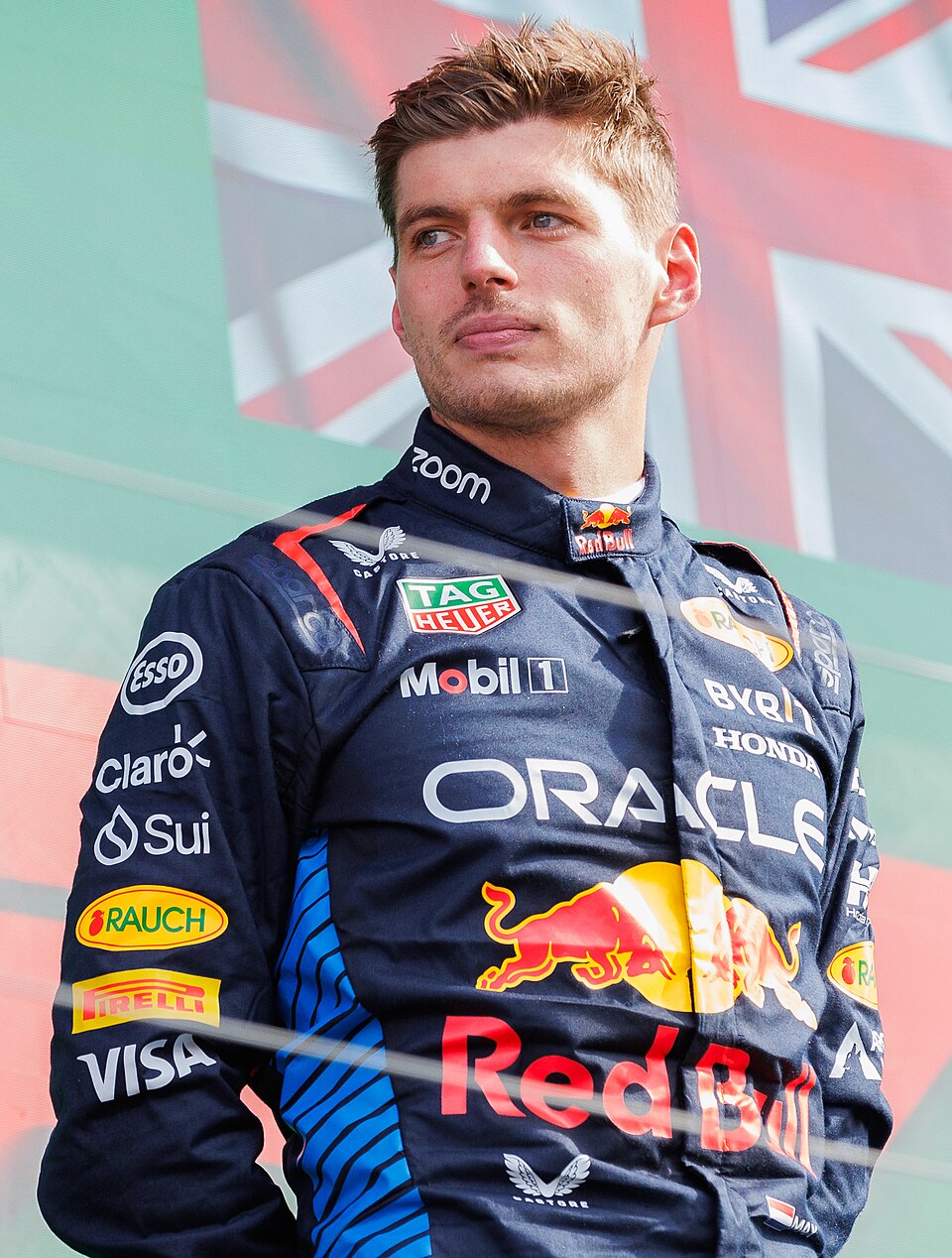
The 2014 season birthed a fierce rivalry between Verstappen and Esteban Ocon that into their Formula One careers. In interviews conducted between 2018 and 2024, Ocon described the relationship during their F3 days as "fiery," admitting that the two "hated each other" during the season.
The competition was characterized by intense wheel-to-wheel battles, including a notable clash in Moscow where their wheels interlocked.
Ocon's title win was overshadowed by the news of Verstappen's promotion to Formula One in August 2014. Ocon later admitted this was "difficult to swallow," as he had beaten Verstappen to the championship did not receive an immediate F1 promotion. The established in 2014, Verstappen's raw, high-risk speed versus Ocon's calculated consistency, remained a talking point in paddock analysis for the decade.
Red Bull Junior Team Signing
On August 12, 2014, midway through his F3 season, Verstappen was officially announced as a member of the Red Bull Junior Team. He had been courted by Mercedes, with Toto Wolff holding discussions with Jos Verstappen, Red Bull's offer included an immediate race seat at Scuderia Toro Rosso for the 2015 season. This decisive move by Helmut Marko bypassed the traditional GP2 ( Formula 2) ladder entirely.
Verstappen completed his F3 obligations while simultaneously preparing for his F1 debut. His final F3 race at Hockenheim saw him finish sixth, securing his status as the highest-ranked rookie in the series history at that time.
The transition from karting to a Formula One race seat had taken less than 12 months, a trajectory that led the FIA to subsequently alter the superlicence points system to prevent such rapid ascents in the future.
Formula One debut with Scuderia Toro Rosso
Max Verstappen made his Formula One debut at the 2015 Australian Grand Prix, partnering Carlos Sainz Jr. at Scuderia Toro Rosso. Aged 17 years and 166 days, he became the youngest driver to start a World Championship race, breaking Jaime Alguersuari's record by nearly two years.
His entry into the sport sparked immediate regulatory changes; the FIA subsequently raised the minimum age for a Super License to 18, a regulation widely referred to as the "Verstappen rule" regarding age limits. In his maiden race, Verstappen ran in points-scoring positions before an engine failure forced his retirement.
Two weeks later at the Malaysian Grand Prix, Verstappen qualified sixth and finished seventh, scoring his Formula One points at 17 years and 180 days. This achievement made him the youngest driver to score points in the sport's history, a record that remains unbroken as of 2025 due to the revised age regulations.
His rookie season was characterized by aggressive overtaking and high-profile incidents. During the Monaco Grand Prix, Verstappen collided with Romain Grosjean while battling for position method Sainte Dévote.
The high-speed impact sent his Toro Rosso into the blocks, resulting in a five-place grid penalty for the subsequent Canadian Grand Prix and two penalty points on his license. Felipe Massa publicly described the driving as "dangerous," highlighting the scrutiny placed on the teenager's inexperience.
even with the criticism, Verstappen delivered standout performances that solidified his reputation. At the Hungarian Grand Prix, he achieved a career-best fourth-place finish. He equaled this result at the United States Grand Prix at the Circuit of the Americas, navigating wet conditions to finish just off the podium.
A defining moment of his season occurred at the Singapore Grand Prix, where he refused a direct team order to let teammate Carlos Sainz pass him in the closing stages. Verstappen shouted "No!" over the radio and held his position to finish eighth.
Team Principal Franz Tost later backed Verstappen's decision, citing that Sainz had not demonstrated sufficient pace to overtake the cars ahead.
The internal battle at Toro Rosso was statistically close in qualifying decisive in race results. Over the 19-race season, Sainz out-qualified Verstappen 10, 9. yet, Verstappen accumulated 49 championship points to Sainz's 18, finishing 12th in the Drivers' Championship compared to Sainz's 15th.
Verstappen's overtaking prowess was formally recognized at the FIA Prize Giving Ceremony in December 2015. He received three awards: Rookie of the Year, Personality of the Year, and Action of the Year for his daring outside overtake on Felipe Nasr at the Blanchimont corner during the Belgian Grand Prix.
2016 season start and promotion
Verstappen began the 2016 season remaining with Toro Rosso. The opening round in Australia saw tension flare again; Verstappen finished 10th after colliding with Sainz while expressing frustration over team strategy on the radio. He recovered to finish 6th at the Bahrain Grand Prix and 8th in China.
His final race for the team was the Russian Grand Prix, where he retired due to an engine failure while running in sixth place.
On May 5, 2016, following the Russian Grand Prix, Red Bull Racing announced that Verstappen would replace Daniil Kvyat for the remainder of the season, beginning with the Spanish Grand Prix. Kvyat was demoted back to Toro Rosso. This promotion marked the end of Verstappen's 23-race stint with the junior team.
| Year | Chassis | Engine | Races | Points | Best Finish | Champ. Pos. |
|---|---|---|---|---|---|---|
| 2015 | STR10 | Renault Energy F1-2015 | 19 | 49 | 4th (HUN, USA) | 12th |
| 2016* | STR11 | Ferrari 060 | 4 | 13 | 6th (BHR) | N/A** |
* four races only. **Transferred to Red Bull Racing.
Promotion and historic debut (2016)
On May 5, 2016, Red Bull Racing announced that Max Verstappen would replace Daniil Kvyat for the remainder of the 2016 season, promoting the 18-year-old from Scuderia Toro Rosso just four races into the championship. The swap placed Verstappen alongside established race winner Daniel Ricciardo.
His debut for the senior team at the Spanish Grand Prix on May 15, 2016, immediately rewrote the sport's history books. After qualifying fourth, Verstappen capitalized on a -lap collision between Mercedes teammates Lewis Hamilton and Nico Rosberg.
While Red Bull placed Ricciardo on a three-stop strategy, Verstappen executed a two-stop plan, managing his tires to hold off Ferrari's Kimi Räikkönen by 0. 616 seconds. At 18 years and 228 days old, he became the youngest driver to win a Formula One Grand Prix, displacing Sebastian Vettel's previous record by over two years.
Following this breakthrough, Verstappen demonstrated rapid adaptation to the RB12, scoring six additional podiums throughout the season. His performance at the Brazilian Grand Prix in November 2016 drew comparisons to Ayrton Senna and Michael Schumacher.
In treacherous wet conditions, Verstappen dropped to 16th place following a late pit stop for intermediate tires that proved unsuitable. Switching back to full wets with only 16 laps remaining, he executed a masterclass in wet-weather driving, utilizing unconventional racing lines to overtake 13 cars and finish third.
He concluded the 2016 season fifth in the Drivers' Championship with 204 points, having scored 191 of them during his 17 races with Red Bull Racing.
Reliability struggles and victories (2017)
The 2017 season presented significant mechanical challenges for Verstappen. even with the RB13's chassis improvements, the Renault-badged TAG Heuer power unit suffered frequent reliability failures.
Between the Bahrain Grand Prix in April and the Singapore Grand Prix in September, Verstappen recorded seven retirements in 12 races, including three -lap collisions and multiple engine failures while running in podium positions.
These problem severely his championship standing, leaving him sixth in total with 168 points, while teammate Daniel Ricciardo finished fifth with 200 points.
Verstappen's fortunes turned during the Asian leg of the championship. At the Malaysian Grand Prix in October 2017, he started third and overtook championship leader Lewis Hamilton on lap four. He controlled the race pace to win by 12. 7 seconds, securing his second career victory and his in dry conditions.
Later that month at the Mexican Grand Prix, he seized the lead from Sebastian Vettel at the corner and dominated the event, crossing the finish line nearly 20 seconds ahead of Valtteri Bottas.
Recognizing his chance even with the mechanical setbacks, Red Bull Racing announced in October 2017 that Verstappen had signed a contract extension, committing to the team through the 2020 season.
Key Race Results (2016, 2017)
| Grand Prix | Date | Position | Note |
|---|---|---|---|
| Spanish Grand Prix | May 15, 2016 | 1st | Youngest ever F1 winner (18 years, 228 days) |
| British Grand Prix | July 10, 2016 | 2nd | podium at Silverstone |
| Brazilian Grand Prix | Nov 13, 2016 | 3rd | Recovered from P16 to P3 in rain |
| Malaysian Grand Prix | Oct 1, 2017 | 1st | Overtook Lewis Hamilton for lead |
| Mexican Grand Prix | Oct 29, 2017 | 1st | Led 71 laps; 19. 6s margin of victory |
The 2021 World Championship Battle
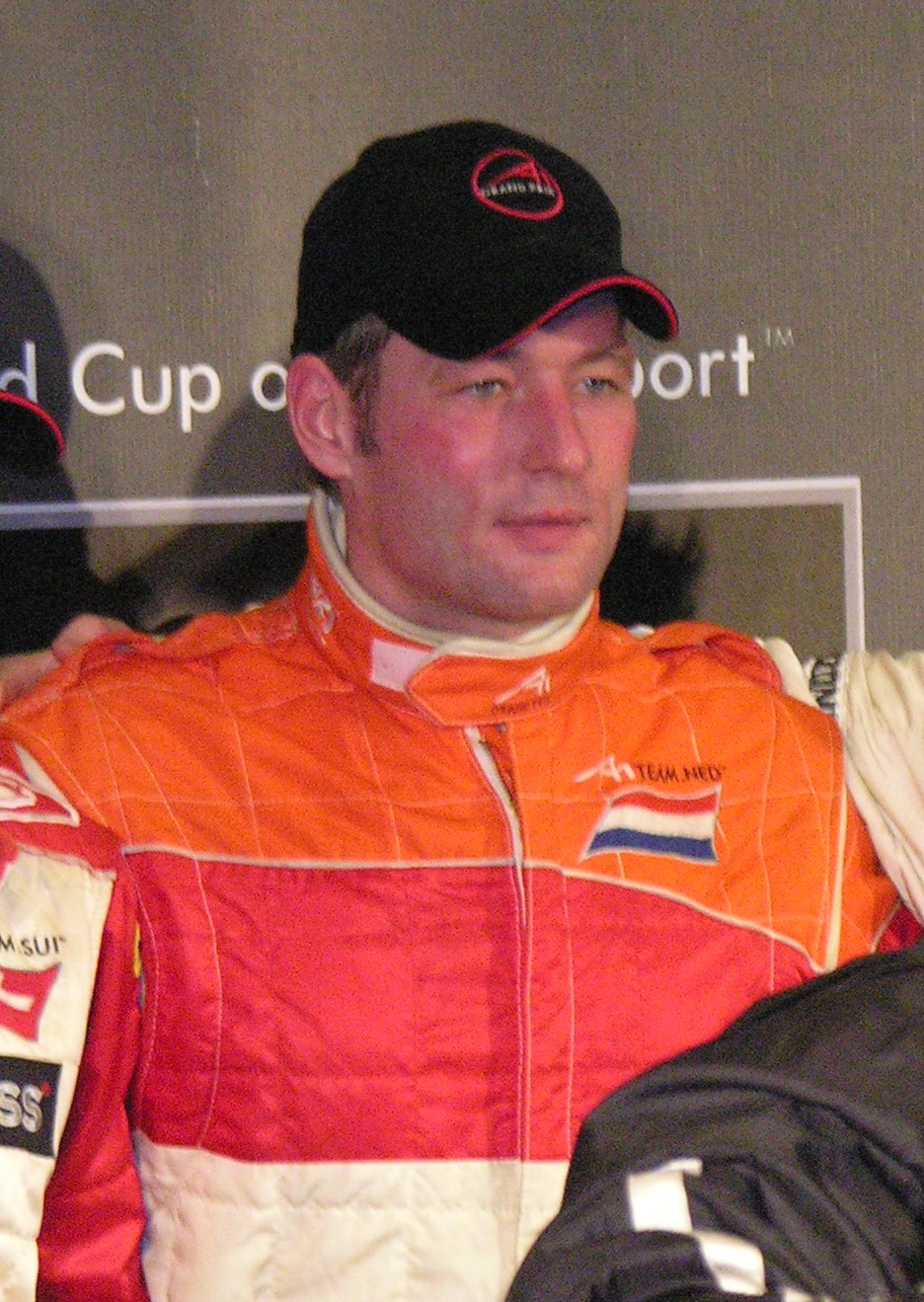
The 2021 Formula One season featured a statistically close and contentious rivalry between Max Verstappen and Mercedes driver Lewis Hamilton. The two drivers entered the final round tied on points, a scenario that had not occurred in the sport since 1974. Verstappen secured his World Drivers' Championship with 395. 5 points to Hamilton's 387.
5, ending Mercedes' seven-year run of double championships. The season was defined by frequent on-track collisions, fluctuating points leads, and regulatory controversies.
Early Season Disputes
The championship began with immediate direct competition. At the season-opening Bahrain Grand Prix, Verstappen took pole position finished second after race control ordered him to relinquish the lead for exceeding track limits during an overtake on Hamilton.
In the subsequent race at Imola, Verstappen started third passed Hamilton at the corner, a move that forced the Mercedes driver over the kerbs and damaged his front wing. Verstappen won the race. The points lead changed hands multiple times during the opening rounds.
At the Azerbaijan Grand Prix, Verstappen suffered a high-speed tire failure on the main straight while leading, which caused him to crash into the concrete blocks. Hamilton failed to capitalize on the error after accidentally activating a "brake magic" switch at the restart, which caused him to lock his brakes and finish outside the points.
Escalation at Silverstone and Monza
The rivalry intensified significantly at the British Grand Prix in July. On the lap, the drivers battled for position through the high-speed Copse corner. Hamilton's front left wheel made contact with Verstappen's right rear tire. The impact sent the Red Bull driver into the tire barrier at 180 mph (290 km/h), resulting in a recorded impact of 51G.
Verstappen was hospitalized for precautionary checks. He later revealed in 2024 that the crash caused lingering vision problems that affected him for the remainder of the season. Hamilton received a 10-second time penalty for the incident recovered to win the race.
Tensions flared again at the Italian Grand Prix in September. Following slow pit stops for both teams, the drivers met at the Turn 1 chicane. Verstappen attempted to pass around the outside, the cars collided. The Red Bull launched over the Mercedes, and its right rear tire landed on Hamilton's roll hoop and halo protection device.
Both drivers retired from the race immediately. The stewards determined Verstappen was predominantly to blame for the incident and issued him a three-place grid penalty for the subsequent Russian Grand Prix.
Late Season Controversies
As the season neared its conclusion, the on-track battles became more erratic. At the São Paulo Grand Prix, Verstappen defended his lead by running wide at Turn 4, forcing both himself and Hamilton off the track. The stewards noted the incident did not penalize the move. Hamilton eventually overtook Verstappen to win.
The penultimate round in Saudi Arabia featured multiple incidents. Verstappen was penalized twice: a five-second penalty for gaining an advantage by leaving the track and a ten-second penalty for causing a collision. The latter occurred on Lap 37 when Verstappen slowed to relinquish position to Hamilton as ordered by race control.
Hamilton, unaware of the instruction, collided with the back of the slowing Red Bull. Telemetry data showed Verstappen decelerated significantly with 69 bar of brake pressure, which the stewards deemed "erratic" driving.
Decider at Abu Dhabi
Verstappen and Hamilton arrived at the season finale in Abu Dhabi tied at 369. 5 points each. Verstappen qualified on pole position lost the lead to Hamilton at the start. Hamilton maintained a comfortable gap until a safety car was deployed on Lap 53 following a crash by Nicholas Latifi.
Red Bull used the opportunity to pit Verstappen for soft tires, while Mercedes kept Hamilton on worn hard tires to maintain track position.
Race Director Michael Masi initially stated that lapped cars would not be permitted to unlap themselves. On Lap 57, Masi reversed this decision only allowed the five lapped cars positioned between Hamilton and Verstappen to pass the safety car. The race restarted with one lap remaining.
Verstappen used his tire advantage to overtake Hamilton at Turn 5 on Lap 58. He held the lead to the finish line to claim the race win and the championship. The FIA later conducted an investigation into the safety car procedure.
The report, released in March 2022, concluded that Masi had acted in "good faith" committed a "human error" by not allowing all lapped cars to unlap. The results of the championship remained valid.
2021 Season Statistics Comparison
| Statistic | Max Verstappen | Lewis Hamilton |
|---|---|---|
| Final Points | 395. 5 | 387. 5 |
| Wins | 10 | 8 |
| Pole Positions | 10 | 5 |
| Podiums | 18 | 17 |
| Laps Led | 652 | 297 |
| Retirements (DNF) | 3 | 1 |
The Maiden Championship and the 2021 Campaign
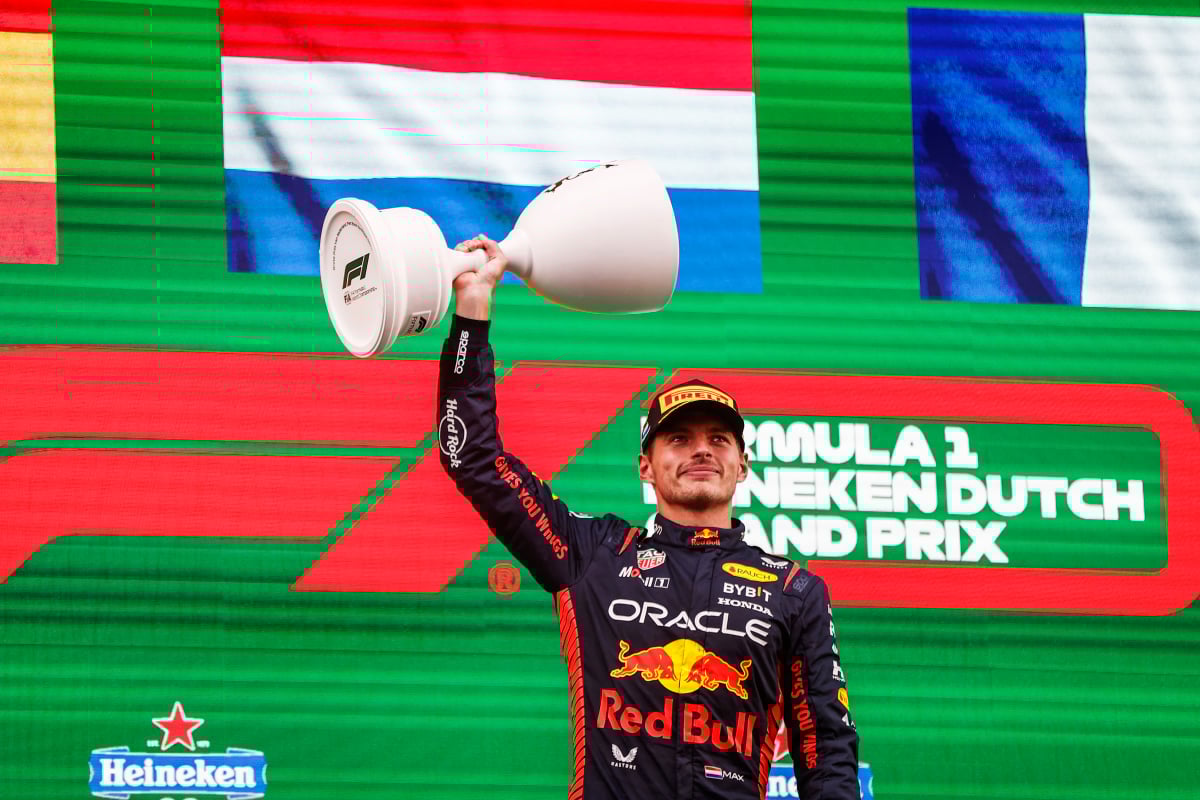
Max Verstappen's ascent to the summit of Formula One culminated in the 2021 season, a campaign defined by one of the most intense rivalries in the sport's history. Driving the Red Bull Racing RB16B, Verstappen engaged in a season-long duel with seven-time world champion Lewis Hamilton.
The Dutchman secured 10 race victories and 18 podium finishes across 22 Grands Prix, amassing 395. 5 points. His consistency proved important; he finished either or second in every race he completed, with the exception of the Hungarian Grand Prix where he sustained significant damage.
The title battle remained undecided until the final lap of the season-ending Abu Dhabi Grand Prix. Following a late safety car period, Verstappen used fresh soft tires to overtake Hamilton on the final lap, securing his World Drivers' Championship.
This victory made him the Dutch driver to win the title and the non-Mercedes driver to do so in the turbo-hybrid era. The 2021 season also saw Verstappen lead 652 laps, more than double the total of his nearest rival, signaling a shift in the sport's competitive hierarchy.
Dominance: 2022 and 2023
Following the major aerodynamic regulation changes of 2022, Verstappen and Red Bull Racing established a period of statistical dominance rarely seen in motorsport. even with early reliability setbacks in Bahrain and Australia, Verstappen won the 2022 title with four races to spare at the Japanese Grand Prix.
He concluded the season with 15 victories, breaking the previous joint record of 13 held by Michael Schumacher and Sebastian Vettel. His points tally of 454 set a new benchmark for a single season, surpassing the previous record of 413.
The 2023 season marked the apex of this supremacy. Behind the wheel of the RB19, Verstappen rewrote the record books with 19 victories in 22 races, achieving a win percentage of 86. 35%. This figure eclipsed the 71-year-old record set by Alberto Ascari in 1952.
Between the Miami Grand Prix in May and the Italian Grand Prix in September, Verstappen secured 10 consecutive race wins, surpassing Sebastian Vettel's 2013 record of nine. He amassed 575 points, more than double the total of his teammate and championship runner-up Sergio Pérez (285 points).
Verstappen led 1, 003 laps during the season, becoming the driver to surpass the 1, 000-lap milestone in a single year.
| Season | Chassis | Position | Points | Wins | Podiums | Win % |
|---|---|---|---|---|---|---|
| 2021 | RB16B | 1st | 395. 5 | 10 | 18 | 45. 45% |
| 2022 | RB18 | 1st | 454 | 15 | 17 | 68. 18% |
| 2023 | RB19 | 1st | 575 | 19 | 21 | 86. 36% |
| 2024 | RB20 | 1st | 437 | 9 | 14 | 37. 50% |
| 2025 | RB21 | 2nd | 421 | 8 | 15 | 33. 33% |
The Fourth Title and the 2024 Defense
The 2024 season presented a different challenge as rival teams, particularly McLaren and Ferrari, closed the performance gap to Red Bull. Verstappen began the year with seven victories in the ten races, building a substantial points lead. yet, development struggles with the RB20 chassis saw Red Bull's performance advantage by mid-season.
Verstappen went on a ten-race winless streak between the Spanish and Brazilian Grands Prix, relying on defensive driving and strategic execution to maintain his championship advantage.
A pivotal moment occurred at the São Paulo Grand Prix, where Verstappen won from 17th on the grid in wet conditions, halting Lando Norris's charge for the title. He clinched his fourth consecutive World Drivers' Championship at the Las Vegas Grand Prix, finishing fifth to secure the title with two rounds remaining.
Verstappen ended the 2024 campaign with 437 points and 9 wins, joining Juan Manuel Fangio, Michael Schumacher, Sebastian Vettel, and Lewis Hamilton as one of only five drivers to win four consecutive titles.
End of the Streak: 2025
Verstappen's reign as world champion concluded in 2025 following a three-way title fight against McLaren's Lando Norris and Oscar Piastri. The Red Bull RB21 proved competitive absence the consistent pace of the McLaren MCL39. Verstappen secured 8 victories and 421 points finished second in the standings, two points behind the champion.
The season ended a four-year streak that saw the Dutchman accumulate 61 race wins and 1, 861. 5 points, cementing his status as one of the sport's most dominant champions.
Aggressive Aerodynamics and the "V-Shape" Technical Evolution
Max Verstappen use a distinct driving technique that deviates from the traditional geometric racing lines taught in junior categories. Telemetry analysis from the 2015 to 2025 seasons reveals his preference for a "V-shape" cornering method. This method involves braking late and hard while keeping the car straight for as long as possible.
He then rotates the car sharply at the apex, frequently inducing a high degree of slip angle, before straightening the steering wheel almost immediately to maximize traction on exit. This technique minimizes the time spent in the lateral load phase and allows him to apply full throttle earlier than rivals who use a smoother "U-shape" arc.
This style requires a specific car setup. Verstappen consistently demands a "pointy" front end from his engineers. He requires immediate and sharp responsiveness from the front axle upon turn-in. This setup frequently results in a loose or unstable rear end.
While teammates such as Pierre Gasly and Alexander Albon struggled with this instability between 2019 and 2020, Verstappen used it to his advantage. He manipulates the rear rotation to position the car for a straighter exit.
Data from the 2022 season showed that even when new ground-effect regulations induced understeer in the RB18, Verstappen pushed for development updates that restored the sharp front-end characteristics he favors.
The "Verstappen Rule" and Defensive Calibration
Verstappen's arrival in Formula One introduced a level of defensive aggression that forced regulatory intervention. During the 2016 season, his practice of changing direction under braking to block overtaking attempts drew sharp criticism from veterans like Kimi Räikkönen and Lewis Hamilton.
The controversy peaked at the 2016 Hungarian and Belgian Grands Prix. In response, the FIA Race Director Charlie Whiting issued a clarification at the 2016 United States Grand Prix. This directive, widely referred to as the "Verstappen Rule," prohibited moving under braking if it forced another driver to take evasive action.
Although the specific wording of the rule was later relaxed and integrated into broader "dangerous driving" regulations in 2017, the period marked a shift in defensive standards. Verstappen adapted his method maintained an uncompromising stance in wheel-to-wheel combat. His defensive positioning frequently forces opponents to yield or risk collision.
This psychological edge became a defining trait of his championship campaigns. Incident analysis from 2021 shows that Verstappen consistently braked later on the inside line than his rivals. This forced the outside driver to back out or run off track.
Wet Weather Mastery and Karting Lines
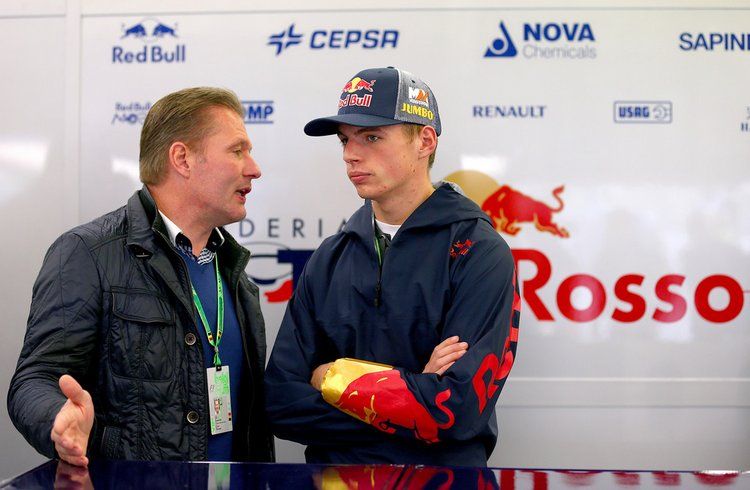
Verstappen demonstrates superior car control in wet conditions by utilizing "karting lines." In rain, the traditional rubbered-in racing line becomes slippery and dangerous. Verstappen instinctively seeks grip on the outside of corners or across the geometric apex where the asphalt is rougher and holds less oil and rubber.
His performance at the 2016 Brazilian Grand Prix serves as the primary case study. In extreme wet conditions, he rose from 16th to 3rd in the final 15 laps. He found grip on the extreme outside of Turn 3 and the inside of Turn 12 where no other driver dared to venture.
This ability was reaffirmed at the 2024 São Paulo Grand Prix. Starting from 17th on the grid in torrential rain, Verstappen won the race by over 19 seconds. Telemetry showed he was applying throttle earlier and with less modulation than competitors. His inputs remained smooth even with the absence of adhesion.
He uses the brake pedal to rotate the car in low-grip scenarios. This steers the rear with weight transfer rather than steering angle alone.
Car Number History: The Shift from 33 to 1
Verstappen's car number history reflects his transition from challenger to champion. Upon his Formula One debut in 2015, he intended to use the number 3. This was his lucky number from his karting days. yet, Daniel Ricciardo already held the rights to number 3. Verstappen chose to double the digit and selected number 33.
He raced with the number 33 on his Toro Rosso and Red Bull cars for seven consecutive seasons from 2015 through 2021. The number became heavily integrated into his personal branding and merchandise.
Following his World Championship victory in December 2021, Verstappen exercised his right to use the number 1 reserved for the reigning champion. He was the driver to switch to the number 1 since Sebastian Vettel in 2014. Lewis Hamilton had previously declined the option in favor of retaining his personal number 44.
Verstappen stated in 2022 that "Number 1 is the best number out there" and questioned why any driver would pass up the opportunity. He retained the number 1 for the 2022, 2023, 2024, and 2025 seasons as he successfully defended his title.
| Season | Team | Car Number | Reason for Number |
|---|---|---|---|
| 2015 | Scuderia Toro Rosso | 33 | Preferred #3 was taken by Daniel Ricciardo. |
| 2016 | Toro Rosso / Red Bull Racing | 33 | Retained permanent driver number. |
| 2017 | Red Bull Racing | 33 | Retained permanent driver number. |
| 2018 | Red Bull Racing | 33 | Retained permanent driver number. |
| 2019 | Red Bull Racing | 33 | Retained permanent driver number. |
| 2020 | Red Bull Racing | 33 | Retained permanent driver number. |
| 2021 | Red Bull Racing | 33 | Retained permanent driver number. |
| 2022 | Red Bull Racing | 1 | Reigning World Champion (Won 2021 Title). |
| 2023 | Red Bull Racing | 1 | Reigning World Champion (Won 2022 Title). |
| 2024 | Red Bull Racing | 1 | Reigning World Champion (Won 2023 Title). |
| 2025 | Red Bull Racing | 1 | Reigning World Champion (Won 2024 Title). |
Sim racing ventures and Team Redline
Max Verstappen distinguishes himself from other Formula One World Champions through his intense, professional-grade commitment to sim racing. Unlike drivers who view simulators as a training tool for familiarization, Verstappen competes at the highest level of esports, treating virtual endurance races with the same rigor as a Grand Prix.
He joined Team Redline, one of the most prestigious sim racing squads in the world, in July 2015, just months after his Formula One debut. This partnership allowed him to compete alongside established sim racing legends like Greger Huttu and Atze Kerkhof.
Over the subsequent decade, Verstappen became a central figure in the team, frequently driving the "lead" car in major 24-hour events on the iRacing platform.
During the global suspension of motorsport in early 2020 due to the COVID-19 pandemic, Verstappen spearheaded the "Real Racers Never Quit" championship. Organized by Team Redline, the six-round series pitted professional real-world drivers against top-tier sim racers in a mix of, from Formula 3 cars to GTE vehicles.
Verstappen dominated the series, winning the championship title in April 2020. His performance demonstrated his adaptability and raw speed across different virtual disciplines, solidifying his reputation within the esports community not just as a celebrity guest, as a formidable competitor.
Verstappen's sim racing calendar frequently the "Special Events" on iRacing, which mirror real-world endurance classics. In January 2024, he secured a victory in the iRacing 24 Hours of Daytona.
Driving a Mercedes-AMG GT3 in the GTD class, Verstappen partnered with Gianni Vecchio and Ole Steinbraten to overcome a field of over 18, 000 drivers split across multiple servers. The victory was particularly notable as it required navigating a crowded track with multi-class traffic, a skill set directly transferable to real-world endurance racing.
This win added to his previous triumphs, including the 2021 iRacing 12 Hours of Bathurst and the 2021 iRacing 24 Hours of Nürburgring.
| Year | Event | Platform | Class | Car | Teammates |
|---|---|---|---|---|---|
| 2020 | Petit Le Mans | iRacing | LMP2 | Dallara P217 | Jonas Wallmeier |
| 2021 | 12 Hours of Bathurst | iRacing | GT3 | Ferrari 488 GT3 | Enzo Bonito |
| 2021 | 24 Hours of Nürburgring | iRacing | GT3 | BMW M4 GT3 | Maximilian Benecke, Chris Lulham |
| 2024 | 24 Hours of Daytona | iRacing | GTD | Mercedes-AMG GT3 | Gianni Vecchio, Ole Steinbraten |
| 2024 | 24 Hours of Nürburgring | iRacing | GT3 | BMW M4 GT3 | Diogo Pinto, Chris Lulham, Florian Lebigre |
| 2024 | 24 Hours of Spa | iRacing | GT3 | BMW M4 GT3 | Diogo Pinto, Chris Lulham, Florian Lebigre |
One of the most remarkable displays of Verstappen's dual commitment occurred in May 2024, during the Emilia Romagna Grand Prix weekend. While physically present at Imola for his Formula One duties, Verstappen simultaneously competed in the iRacing 24 Hours of Nürburgring. He installed a full sim rig in his motorhome at the circuit.
After securing pole position for the Grand Prix on Saturday, he returned to his motorhome to drive a three-hour stint for Team Redline in the virtual race. He then slept, prepared for the real race, and won the Emilia Romagna Grand Prix on Sunday, while his Team Redline squad also clinched victory in the virtual 24-hour event.
This feat of winning two major races, one real, one virtual, in a single weekend underscored his relentless capacity for competition.
Verstappen's relationship with sim racing platforms has not been without friction. He was a prominent participant in the 24 Hours of Le Mans Virtual, hosted on the rFactor 2 platform. yet, the 2023 edition of the race ended in acrimony.
While leading the race by over a minute, Verstappen suffered multiple server disconnections that dropped his team out of contention. In a live broadcast during the event, he described the technical failures as "incompetence" and a "clown show," vowing not to participate in the event again.
Following this incident, his focus shifted almost exclusively to the iRacing service, which he praised for its stability and competitive matchmaking system.
In April 2022, Verstappen formalized his esports interests by launching "Verstappen. com Racing." This initiative serves as a between the virtual and real worlds, supported by Red Bull. The program unified his sim racing efforts under a professional banner and expanded to support real-world racing talents, such as Thierry Vermeulen in DTM and GT challenges.
In late 2023, this partnership deepened when Team Redline and Red Bull Racing merged their esports operations under the "Oracle Red Bull Sim Racing" name, with Team Redline managing the performance side.
This structure allowed Verstappen to mentor upcoming sim drivers, of whom, like Chris Lulham, eventually transitioned to real-world GT3 racing seats under the Verstappen. com Racing program in 2025.
even with his elite status, Verstappen maintains a pragmatic method to his online ranking. He frequently noted in interviews that he does not obsessively grind for "iRating" (the matchmaking score on iRacing), frequently sitting around the 9, 000 to 9, 500 mark rather than chasing the 11, 000+ records held by full-time sim professionals.
He relies on his teammates to maintain the high team average required for top-split entry, preferring to focus his limited time on race setup and strategy.
His equipment setup is similarly high-end, utilizing a PlaySeat Formula Intelligence chassis, a Leo Bodnar SimSteering2 force feedback system, and Simtag hydraulic pedals, replicating the brake pressure and resistance of a real race car to maintain muscle memory.
Personal Life and Relationships
Since October 2020, Verstappen has been in a relationship with Kelly Piquet, the daughter of three-time Formula One World Champion Nelson Piquet. The couple made their relationship public in January 2021. Piquet has a daughter, Penelope, from a previous relationship with driver Daniil Kvyat.
In May 2025, Verstappen and Piquet welcomed their child together, a daughter named Lily. The family resides in the Fontvieille district of Monaco, where Verstappen has lived since 2015. He rents a penthouse valued at approximately €16 million, citing the principality's tax benefits and privacy laws as primary factors for his residency.
Verstappen maintains a close circle of trust, primarily consisting of his father Jos, manager Raymond Vermeulen, and Red Bull Racing consultant Helmut Marko. even with his global fame, he guards his private life rigorously, rarely granting interviews about non-racing topics. He speaks Dutch, English, and German fluently, and has demonstrated proficiency in French during press interactions in Monaco.
Assets and Financial Standing
Verstappen consistently ranks among the world's highest-paid athletes. In 2022, he signed a contract extension with Red Bull Racing through 2028, valued at approximately $55 million annually excluding bonuses. By 2025, his estimated net worth surpassed $210 million, by personal endorsements with brands such as Heineken, EA Sports, and Viaplay.
His asset portfolio includes significant investments in aviation and maritime luxury.
In 2020, he purchased a Dassault Falcon 900EX from Richard Branson, registered as PH-DTF. He upgraded his fleet in early 2025 with the acquisition of a Dassault Falcon 8X, registered as PH-UTL (referencing his "Unleash The Lion" slogan). That same year, he purchased a 108-foot Mangusta Gransport 33 yacht, also named Unleash the Lion, valued at $13 million.
Verified Assets and Endorsements (2020, 2025)
| Asset / Deal | Details | Estimated Value / Cost |
|---|---|---|
| Dassault Falcon 8X | Private Jet (Reg: PH-UTL), acquired 2025 | $42, 000, 000 |
| Mangusta Gransport 33 | Superyacht "Unleash the Lion", acquired 2025 | $13, 000, 000 |
| Red Bull Racing Contract | Annual base salary (2022, 2028) | $55, 000, 000 |
| EA Sports Partnership | Global ambassador deal signed 2023 | Undisclosed (Multi-million) |
| Team Redline | Sim racing team ownership/affiliation | N/A (Operational Asset) |
Sim Racing and Hobbies
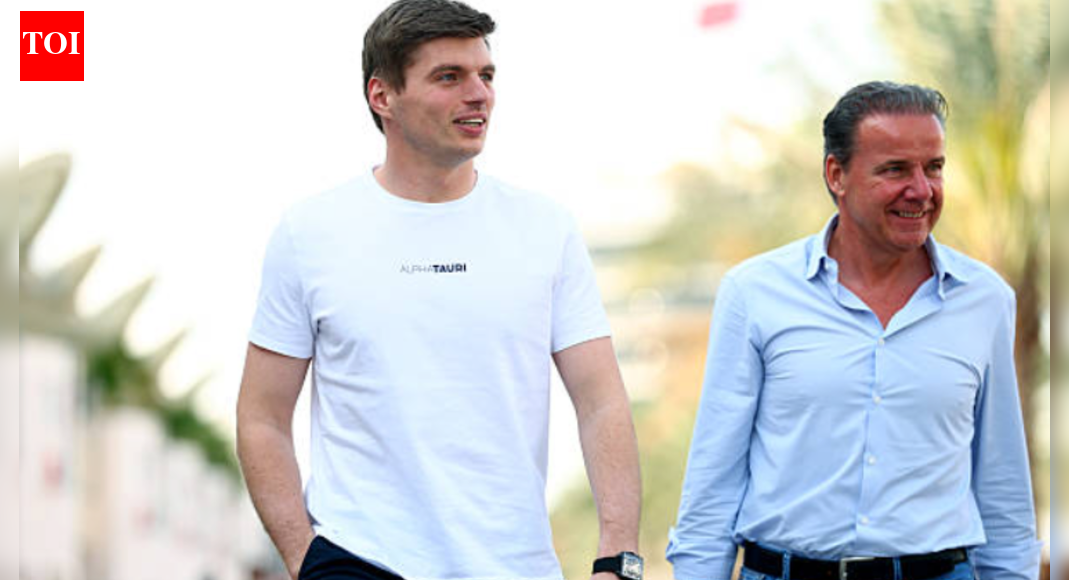
Unlike contemporaries who distance themselves from motorsport during downtime, Verstappen is an avid sim racer. He competes professionally for Team Redline, one of the world's premier esports racing teams. Between 2015 and 2025, he participated in major virtual events, including the 24 Hours of Le Mans Virtual and the iRacing 24 Hours of Daytona.
He treats these competitions with the same rigor as Formula One, frequently advocating for the legitimacy of sim racing as a discipline. In 2022, he launched "Verstappen. com Racing," a crossover initiative supporting teams in both virtual and real-world GT3 categories.
Beyond racing, Verstappen is a high-ranking player in the FIFA video game series. In 2018, he reached a global ranking of 31st in the "FIFA Team" game mode and 21st in 2019. Red Bull Team Principal Christian Horner revealed in 2021 that Verstappen played the game for 14 hours during the United States Grand Prix weekend to decompress.
Public Image and Media Stance
Verstappen's relationship with the media is defined by his direct, frequently blunt communication style. He has frequently criticized the "over-dramatization" of Formula One, specifically targeting the Netflix series Drive to Survive. He refused to participate in seasons 3 and 4, citing the fabrication of rivalries and distorted timelines.
Although he returned for season 5 after discussions with producers, he continued to publicly fact-check the show's narratives through 2025, including a doctored clip regarding his reaction to Lando Norris's victory in Miami.
His fanbase, known shared as the "Orange Army," travels in tens of thousands to European races, most notably in Austria, Belgium, and the Netherlands. This support led to the reintroduction of the Dutch Grand Prix at Zandvoort in 2021. While the atmosphere is generally celebrated, Verstappen has had to address unruly behavior from his supporters.
In 2022 and 2023, he publicly condemned fans who burned merchandise of rival Lewis Hamilton and harassed female spectators at the Austrian Grand Prix, stating that such individuals were not welcome in the sport.
Career Statistics and Championship Titles
As of December 31, 2025, Max Verstappen holds four Formula One World Drivers' Championships. He secured these titles consecutively in 2021, 2022, 2023, and 2024. His career statistics following the conclusion of the 2025 season include 71 Grand Prix victories, 48 pole positions, and 127 podium finishes across 233 race starts. Verstappen has amassed 3, 444.
5 career points. His championship streak ended in 2025 when he finished as the runner-up in the drivers' standings with 421 points and 8 race victories.
The Dutch driver's most statistically dominant period occurred during the 2023 season. He set a new Formula One benchmark by winning 19 of the 22 races held that year. This performance yielded a win percentage of 86. 36%. It surpassed the previous record of 75% held by Alberto Ascari since 1952. Verstappen scored 575 points in 2023.
This total remains the highest number of points ever scored by a single driver in a Formula One season.
Single-Season Records and Streaks
Verstappen rewrote the sport's record books throughout the 2023 and 2024 campaigns. His ten consecutive Grand Prix victories between the 2023 Miami Grand Prix and the 2023 Italian Grand Prix established a new record for the longest winning streak in Formula One history. He eclipsed the previous mark of nine consecutive wins held by Sebastian Vettel.
Verstappen also holds the record for the most laps led in a single season. He led 1, 003 laps during 2023. This figure accounts for 75. 7% of all laps raced that year.
| Record Category | Achievement | Season/Date |
|---|---|---|
| Most Wins in a Season | 19 Wins | 2023 |
| Highest Win Percentage | 86. 36% | 2023 |
| Most Consecutive Wins | 10 Wins | 2023 |
| Most Points in a Season | 575 Points | 2023 |
| Most Podiums in a Season | 21 Podiums | 2023 |
| Most Laps Led in a Season | 1, 003 Laps | 2023 |
The 2024 season saw Verstappen secure his fourth title with 9 victories and 437 points. He faced increased competition yet maintained consistency to close out the championship. His 2025 campaign resulted in 8 victories and 15 podiums. He finished second in the championship standings. This marked the time since 2020 that he did not win the World Drivers' Championship.
Youngest Driver Milestones
Verstappen entered Formula One at age 17. He immediately set age-related records that remain unbroken due to subsequent changes in super license regulations. He made his debut at the 2015 Australian Grand Prix at 17 years and 166 days old. This made him the youngest driver to start a Formula One race.
Two weeks later he finished seventh at the 2015 Malaysian Grand Prix. He became the youngest driver to score championship points at 17 years and 180 days old.
"At 18 years and 228 days, Max Verstappen became the youngest race winner in F1 history at the 2016 Spanish Grand Prix. He also holds the record for youngest driver to set a fastest lap and youngest driver to achieve a Grand Slam."
His victory at the 2016 Spanish Grand Prix established him as the youngest race winner in the sport's history. He was 18 years and 228 days old at the time. He remains the only driver to win a Formula One race before turning 19. Verstappen also holds the record for the youngest driver to lead a lap and the youngest driver to set a fastest lap.
He achieved the fastest lap record at the 2016 Brazilian Grand Prix at the age of 19 years and 44 days.
Sprint and Qualifying Achievements
The introduction of the Sprint format in 2021 provided a new arena for statistical achievements. Verstappen holds the record for the most Sprint victories. He has won 13 Sprint races as of the end of the 2025 season. His nearest competitors in this format trail significantly in total wins. In qualifying trim he has secured 48 career pole positions.
He achieved 12 pole positions in the 2023 season alone. This stands as his personal best for a single year.
Verstappen also holds the record for the most wins from pole position in a single season. He converted 12 poles into victories during 2023. His ability to convert qualifying speed into race results is further demonstrated by his record for the most consecutive races as the championship leader.
He led the standings for 39 consecutive races starting from the 2022 Spanish Grand Prix. This streak continued well into the 2024 season.
Complete Racing Record and Statistics (2015, 2025)
Max Verstappen's Formula One career from 2015 through 2025 stands as one of the most statistically dominant periods in the sport's history. Over 11 seasons, the Dutch driver secured four World Drivers' Championships, 71 Grand Prix victories, and 127 podium finishes across 233 starts.
His tenure with Red Bull Racing produced record-breaking campaigns in 2022 and 2023, where he shattered previous benchmarks for wins and points in a single season. By the end of 2025, Verstappen had amassed 3, 444. 5 career points and 48 pole positions, cementing his status as a statistical outlier in modern motorsport.
Season-by-Season Performance
Verstappen's trajectory shows a clear demarcation between his developmental years (2015, 2020) and his championship era (2021, 2025). His 2016 mid-season promotion from Scuderia Toro Rosso to Red Bull Racing resulted in an immediate victory at the Spanish Grand Prix, making him the youngest winner in history at 18 years and 228 days.
The 2023 season remains his statistical peak, where he won 19 of 22 races (86. 36%), a record for the highest win percentage in a single year. The 2025 campaign ended with a narrow defeat, as he finished runner-up to Lando Norris by a mere two points.
| Year | Team | Chassis | Starts | Wins | Podiums | Poles | Fastest Laps | Points | WDC Pos |
|---|---|---|---|---|---|---|---|---|---|
| 2025 | Red Bull Racing | RB21 | 24 | 8 | 15 | 8 | 3 | 421 | 2nd |
| 2024 | Red Bull Racing | RB20 | 24 | 9 | 14 | 8 | 3 | 437 | 1st |
| 2023 | Red Bull Racing | RB19 | 22 | 19 | 21 | 12 | 9 | 575 | 1st |
| 2022 | Red Bull Racing | RB18 | 22 | 15 | 17 | 7 | 5 | 454 | 1st |
| 2021 | Red Bull Racing | RB16B | 22 | 10 | 18 | 10 | 6 | 395. 5 | 1st |
| 2020 | Red Bull Racing | RB16 | 17 | 2 | 11 | 1 | 3 | 214 | 3rd |
| 2019 | Red Bull Racing | RB15 | 21 | 3 | 9 | 2 | 3 | 278 | 3rd |
| 2018 | Red Bull Racing | RB14 | 21 | 2 | 11 | 0 | 2 | 249 | 4th |
| 2017 | Red Bull Racing | RB13 | 20 | 2 | 4 | 0 | 1 | 168 | 6th |
| 2016 | Toro Rosso / Red Bull | STR11 / RB12 | 21 | 1 | 7 | 0 | 1 | 204 | 5th |
| 2015 | Scuderia Toro Rosso | STR10 | 19 | 0 | 0 | 0 | 0 | 49 | 12th |
| CAREER TOTALS | 233 | 71 | 127 | 48 | 36 | 3, 444. 5 | 4 Titles | ||
Statistical Milestones and Records
Verstappen's career is defined by specific records that highlight his consistency and dominance during the ground-effect era (2022, 2025). His 2023 campaign set the benchmark for modern F1 dominance.
- Most Wins in a Season: 19 (2023) , Surpassed his own record of 15 from 2022.
- Highest Win Percentage: 86. 36% (2023) , Broke Alberto Ascari's 1952 record of 75%.
- Most Consecutive Wins: 10 (2023) , Achieved between the Miami and Italian Grands Prix.
- Most Points in a Season: 575 (2023) , The driver to exceed 500 points in a single year.
- Youngest Race Winner: 18 years, 228 days (2016 Spanish Grand Prix).
- Podium Finishes in a Season: 21 (2023) , Missed the podium only once in 22 races.
Contractual Status
In March 2022, Verstappen signed a contract extension with Red Bull Racing that secures his seat through the end of the 2028 season. This agreement, finalized after his championship victory, aligns his future with the team's powertrain development division, Red Bull Powertrains, for the 2026 regulation changes.
Frequently Asked Questions: Career Analysis
1. How races did Verstappen win in 2025?
He secured 8 victories in the 2025 season.
2. What was his final championship position in 2025?
Verstappen finished 2nd in the Drivers' Championship.
3. Who beat Verstappen to the 2025 title?
Lando Norris won the title, beating Verstappen by 2 points.
4. What is Verstappen's total career points tally?
As of December 31, 2025, he has scored 3, 444. 5 points.
5. How pole positions does he have?
He has achieved 48 career pole positions.
6. Which season was his most dominant statistically?
The 2023 season, where he won 19 out of 22 races.
7. When did he win his World Championship?
He won his title in 2021.
8. How consecutive titles did he win?
He won four consecutive titles from 2021 to 2024.
9. What team did he drive for in 2015?
He drove for Scuderia Toro Rosso.
10. When did he switch to Red Bull Racing?
He switched ahead of the 2016 Spanish Grand Prix.
11. What is his record for most podiums in a year?
He achieved 21 podiums in the 2023 season.
12. How fastest laps has he recorded?
He has set 36 fastest laps in his career.
13. Did he win a race in his rookie season?
No, his best finish in 2015 was 4th place.
14. How races has he started?
He has started 233 Grands Prix.
15. What is his contract situation?
He is contracted with Red Bull Racing until the end of 2028.
16. Did he win the 2024 championship?
Yes, he secured his fourth title in 2024.
17. What was his margin of victory in 2023?
He won the title by 290 points over his teammate Sergio Pérez.
18. Has he ever finished lower than 6th in the standings with Red Bull?
No, his lowest finish with Red Bull was 6th in 2017.
19. How wins did he have in 2021?
He won 10 races during his championship year.
20. What is his car number?
He used number 33 until 2022, then switched to number 1 as champion.
Exploitation of African Cobalt Miners by Tech Giants: Shocking And Investigative Expose
The dangerous and exploitative mining of cobalt in Africa, particularly in the Democratic Republic of Congo, has serious implications for the global tech industry. Multinational tech companies like Apple, Tesla, and…
Read Full ReportCash for Honors: The Secret Price List for a Seat in the House of Lords
February 3, 2026 • UK, All, Politics
Investigative analysis reveals a correlation between megadonations and elevation to the House of Lords in the UK. There is a pattern of major donors being…
Energy Poverty: Why Billions in Power Grid Investment Yields No Light
January 22, 2026 • Electricity, Africa, All, Asia, Energy, Poverty
Global energy investment hit a record $3 trillion in 2024, yet the number of people without electricity access increased to approximately 685 million. The disparity…
Resource-Backed Loans: The collateral clauses that mortgage futures
January 14, 2026 • All
Resource-backed loans are a significant financial mechanism in developing countries, involving pledging future resource revenues as collateral. While offering immediate financial relief, these loans can…
Money Laundering Through Dance Competitions Abroad
October 11, 2025 • All, Entertainment
Professional and amateur dance contests with large cash prizes are increasingly popular worldwide, making them vulnerable to money laundering schemes. Criminals exploit dance competitions to…
Data-Driven Reporting for Investigating the Cultural Sector
Investigative journalists Max Kuball and Lars Hendrik Beger utilized data and AI tools to investigate the allocation and use of €1 billion in cultural funding…
Investigating Cold Cases: How Two Journalists Dug Deep Into Decades-Old Civil Rights Era Killings
July 22, 2025 • All
Journalists Ben Greenberg and Sandra Chapman reopened cold cases from the civil rights era, shedding new light on unsolved killings of Black individuals. Through their…