Early Life and Educational Background
Michael David Stevens was born on January 23, 1986, in Kansas City, Missouri.
Launch of Vsauce
Stevens launched the Vsauce channel on July 30, 2010.
Founding of Vsauce
The Vsauce network officially launched in the summer of 2010, originating from Michael Stevens' employment at New Networks, a digital media company based in New York City.
Transition to Educational Content
Following his graduation from the University of Chicago, Michael Stevens relocated to New York City to pursue a career in video production and comedy.
Role at Google London
In 2012, Michael Stevens relocated to London to assume the position of Content Strategist at Google.
Mind Field Series
On January 18, 2017, Michael Stevens premiered Mind Field, a documentary-style series produced exclusively for YouTube Red (later YouTube Premium).
Distribution and Reception
Mind Field was initially paywalled as a flagship original for YouTube's subscription service.
2017 Touring Schedule
The tour launched its leg in the spring of 2017, visiting approximately 40 cities across the United States.
Michael Stevens
Early Life and Educational Background
Michael David Stevens was born on January 23, 1986, in Kansas City, Missouri. Records indicate that his family relocated to Stilwell, Kansas, in 1991, where he spent the majority of his formative years.
His father worked as a chemical engineer, a profession Stevens has in interviews between 2015 and 2020 as a primary source of his early exposure to scientific curiosity. Stevens frequently describes his father as a "polymath," noting in a 2017 profile that his father's breadth of knowledge instilled a value for interdisciplinary learning.
His mother worked as a teaching assistant, further embedding education into his domestic environment.
Stevens attended Blue Valley High School in Stilwell, graduating with the class of 2004. During his secondary education, he distinguished himself in the school's drama and forensics programs. Verified reports from the National Speech & Debate Association and retrospective interviews confirm that Stevens was a state champion in informative speaking.
His winning speech, titled "Catch Up on Ketchup," delivered a detailed history of the condiment, foreshadowing the "deep dive" format he would later apply to his digital content.
In a 2016 interview, Stevens noted that he went through puberty earlier than his peers, which allowed him to secure roles playing older characters in high school theater productions. This experience in performance and public speaking provided the foundational skills for his later on-camera presence.
Following high school, Stevens matriculated at the University of Chicago, a private research university known for its rigorous "Core" curriculum. He pursued a double major, earning a Bachelor of Arts in Psychology and English Literature in 2008.
During a 2019 discussion regarding his academic credentials, Stevens clarified that while he studied neuropsychology within his psychology coursework, his degree is formally in Psychology and English. He has credited the university's emphasis on serious theory and the "Life of the Mind" with shaping his ability to deconstruct complex topics.
The dual focus on human behavior (Psychology) and narrative structure (English) became the theoretical framework for his later educational work.
It was during his tenure at the University of Chicago that Stevens engaged with video editing as a narrative tool. In a 2015 keynote, he recounted seeing a viral "recut" trailer that reimagined the horror film The Shining as a romantic comedy. Inspired by the power of editing to alter context, Stevens began experimenting with non-linear editing software.
One of his earliest projects involved remixing footage from Ferris Bueller's Day Off with audio from a Friday the 13th trailer. This period of self-directed technical education occurred alongside his formal studies, marking the convergence of his academic interests in psychology with digital media production.
| Year | Educational/Developmental Milestone | Location |
|---|---|---|
| 1991 | Relocated family residence; began primary education | Stilwell, Kansas |
| 2004 | Graduated Blue Valley High School (State Champion in Speech) | Stilwell, Kansas |
| 2004, 2008 | Undergraduate Studies (Psychology & English Literature) | University of Chicago |
| 2008 | Awarded Bachelor of Arts Degree | Chicago, Illinois |
| 2012 | Relocated for Google/YouTube Lab (Professional Development) | London, United Kingdom |
Post-graduation, Stevens continued his practical education in media by moving to London in 2012 to work directly with Google's YouTube Lab. While not a formal degree program, this period served as an intensive residency in audience retention, data analytics, and content strategy.
Working alongside other creators and analysts, Stevens refined the "Vsauce" format. He has stated in interviews from 2018 that this professional era was as educational as his university years, teaching him the "psychology of the viewer" which complemented his academic understanding of the human mind.
Stevens has frequently revisited his educational roots in his later work. In the 2017 YouTube Premium series Mind Field, he returned to the concepts studied during his undergraduate years, conducting large- psychological experiments.
One notable episode involved Stevens subjecting himself to three days of total isolation to observe the effects of sensory deprivation on his own cognition, a direct application of the neuropsychological principles he studied at UChicago.
In another episode filmed in 2018, he returned to Stilwell, Kansas, using his hometown as a laboratory to test theories of conformity and shared behavior, closing the loop between his early environment and his adult academic.
His academic background in English Literature also manifests in his scriptwriting, which frequently employs literary devices, recursive logic, and existential themes. Critics and educational analysts have noted that Stevens' style diverges from traditional science communication by incorporating the humanities, a direct result of his double major.
He cites the television program Beakman's World as a primary childhood influence, noting that the show's blend of humor, performance art, and hard science provided a template for his own educational philosophy.
This synthesis of performance (High School), psychology (University), and digital editing (Self-taught) forms the tripartite foundation of his professional identity.
Career Beginnings and The Key of Awesome
Michael Stevens' entry into professional digital media began with a series of political satire videos released under the username "CamPain 2008." These shorts, which utilized superimposition and dubbing to parody candidates in the 2008 United States presidential election, caught the attention of Ben Relles, a digital media executive.
Relles invited Stevens to join the comedy group Barely Political, prompting Stevens to relocate to New York City in 2008. This move marked his transition from an independent creator to a professional editor and performer within the burgeoning YouTube ecosystem.
At Barely Political, Stevens became integral to the production of The Key of Awesome, a musical parody series that generated billions of views. While he served primarily as an editor, he frequently appeared on screen, most notably as the "Bearded Nun," a recurring character that became a staple of the channel's visual identity.
In a 2018 retrospective video titled "The Last Key of Awesome Reaction," fellow cast member Lauren Francesca confirmed Stevens' extensive involvement, noting that he acted in numerous sketches and directed specific viral hits, including the group's popular parody of Owl City.
During this period, Stevens honed the fast-paced editing style and direct-to-camera engagement that would later define his educational content.
Transition to Google and Strategy
The trajectory of Stevens' career shifted significantly following the acquisition of Barely Political's parent company, New Networks, by Google in 2011. In 2012, Stevens accepted a position as a content strategist for Google, a role that required him to relocate to London.
His mandate involved analyzing viewership data and advising other creators on optimization techniques for the YouTube platform. This corporate tenure provided Stevens with granular insights into algorithmic mechanics and audience retention strategies.
In a 2019 interview with Lex Fridman, Stevens reflected on this era, discussing how his understanding of platform influenced his method to content creation, although he emphasized that his on-screen persona, "Vsauce," was a distinct construct from his private self.
Launch of Vsauce
Stevens launched the Vsauce channel on July 30, 2010. Contrary to its later reputation as a premier science hub, the channel initially focused on video game culture and light entertainment. Early programming included series such as V-LIST (gaming lists), IMG (viral image commentary), and DONG (Do Online Guys), which showcased browser games and websites.
A 2020 retrospective analysis of the channel's history noted that the content from this period was "casual and free-form," heavily featuring other contributors before Stevens consolidated hosting duties.
The shift toward educational content was gradual. Stevens began incorporating scientific inquiries into his gaming videos, eventually realizing that engagement metrics were higher for segments that explained anomalies or paradoxes. By 2014, the channel had pivoted entirely to general interest science and philosophy.
Verified metrics from a 2018 Talk the Talk podcast interview indicated that by that year, the channel had amassed over 18 million subscribers and 1. 2 billion views, a testament to the successful pivot from comedy sketches to educational essays.
| Year | Role/Event | Context/Metric |
|---|---|---|
| 2008 | Joined Barely Political | Recruited by Ben Relles after "CamPain 2008" viral success. |
| 2010 | Vsauce Launch | Originally focused on video game culture and viral images. |
| 2011 | Google Acquisition | New Networks acquired; Stevens transitions to corporate role. |
| 2012 | Content Strategist | Relocated to London to work at Google's YouTube division. |
| 2018 | Channel Milestone | Surpassed 18 million subscribers and 1. 2 billion views. |
Founding of Vsauce
The Vsauce network officially launched in the summer of 2010, originating from Michael Stevens' employment at New Networks, a digital media company based in New York City.
Retrospective interviews conducted between 2015 and 2018 confirm that the initial directive from New Networks was to create a video game comedy channel to attract a specific advertising demographic. Executives originally proposed the name "Video Game Nation," a title Stevens rejected for being too limiting.
In a 2015 keynote at the Children's Media Conference, Stevens revealed that he generated the name "Vsauce" using a website called fakenamegenerator. com.
He refreshed the site until it produced a six-letter domain that was available for registration, selecting "Vsauce" because it meant nothing and thus allowed the channel's content to evolve without branding constraints.
Early content on the main channel differed significantly from the educational format that later defined the brand. Between 2010 and 2011, the channel primarily hosted segments focused on video game culture, merchandise, and viral internet trends.
Notable early series included "LÜT," which showcased geek culture products, and "IMG," a segment dedicated to viral images.
Stevens noted in a 2018 interview on The Create Unknown podcast that the channel's initial output included titles such as "Mario Farts," reflecting a strategy centered on search engine optimization and shock humor rather than scientific inquiry.
The pivot to educational content began with a segment titled "DOT," which allowed Stevens to examine tangential questions. Data analyzed by Business Insider in 2015 indicated that this shift was; Stevens observed that educational videos had higher audience retention and engagement than the gaming comedy sketches.
The success of the initial channel led to rapid expansion. By late 2010, the brand grew into a multi-channel network. Stevens recruited Kevin Lieber and Jake Roper to host spin-off channels, allowing the main Vsauce channel to focus exclusively on interdisciplinary educational topics.
This restructuring was formalized after Google acquired New Networks in 2011. Following the acquisition, Stevens worked as a content strategist for Google in London, a role he held until 2012 while simultaneously building the Vsauce brand.
| Channel Name | Launch Date | Primary Host | Original Content Focus |
|---|---|---|---|
| Vsauce (Vsauce1) | June 2010 | Michael Stevens | Gaming, Comedy, Viral Trends |
| Vsauce2 | December 2010 | Kevin Lieber | Technology, Paradoxes, Future Tech |
| Vsauce3 | December 2010 | Jake Roper | Fictional Worlds, Gaming Science |
| D! NG (formerly DONG) | October 2015 | Michael Stevens | Experimental Gadgets, Online Tools |
By 2015, the network had established itself as a dominant force in online education. Verified metrics from a 2015 TenEighty Magazine profile reported that the combined subscriber count for the Vsauce channels had surpassed 15 million. The main channel alone accounted for over 8 million of these subscribers by October 2014.
This period also marked the launch of the "DONG" (Do Online Guys) channel in October 2015, which served as a home for the "LÜT" and "DONG" segments that no longer fit the main channel's polished documentary style.
The network's growth trajectory during this founding era culminated in industry recognition, including a 2014 Streamy Award for Best Science and Education Channel.
The operational model of Vsauce distinguished itself by maintaining a small, tight-knit production team even with its massive. In a 2017 profile, Stevens emphasized that the "founding" was not just of a channel of a format he termed "logic trains", narratives that start with a simple question and traverse multiple disciplines before resolving.
This format, solidified between 2012 and 2015, became the network's signature, separating it from the fast-paced, cut-heavy editing styles prevalent among other YouTubers of the era.
Transition to Educational Content
Following his graduation from the University of Chicago, Michael Stevens relocated to New York City to pursue a career in video production and comedy.
His initial entry into the digital involved the creation of political satire under the username CamPain 2008, where he utilized superimposition and dubbing to produce comedic shorts about the 2008 United States presidential election. These early efforts attracted the attention of Ben Relles, the founder of the comedy group Barely Political.
Stevens was subsequently hired by the group, where he gained early viral recognition playing a "bearded nun" character in various sketches. This period marked his professional immersion into the mechanics of viral video production, a skill set that would later underpin his educational methodology.
In 2010, Stevens launched the Vsauce channel.
Retrospective interviews conducted between 2015 and 2020 reveal that the channel was originally conceived by the production company New Networks as a gaming-focused vertical tentatively titled "Video Game Nation." Stevens, dissatisfied with the generic branding, utilized a fake name generator to create the "Vsauce" moniker.
Initially, the channel's programming was a pastiche of video game culture, merchandise reviews, and comedic segments.
yet, Stevens began experimenting with a segment titled DOT, an acronym for "Doing Other Things." This segment allowed him to deviate from gaming topics to address tangential scientific and philosophical questions, such as the physics of shadows or the resolution of the human eye.
Data analysis from this period indicates a significant in audience engagement. While the gaming content maintained a steady viewership, the educational "DOT" segments generated disproportionately high retention and share rates. Recognizing this trend, Stevens orchestrated a strategic pivot in 2012.
He delegated the gaming and list-based content to two new channels, Vsauce2 (hosted by Kevin Lieber) and Vsauce3 (hosted by Jake Roper), clearing the main Vsauce channel to focus exclusively on interdisciplinary educational content.
By September 2012, the main channel had ceased all gaming production, dedicating its output entirely to the "logic train" format that became Stevens' signature.
This transition coincided with a professional move to London in 2012, where Stevens accepted a role as a content strategist for Google following their acquisition of New Networks. In this capacity, he worked within Google's YouTube Lab, advising other creators on audience development.
In a 2018 interview with Innovation & Tech Today, Stevens described his creative process during this era as solitary and research-intensive, frequently involving weeks of synthesizing academic papers to construct a single narrative arc.
He rejected the "encyclopedic" method to education, opting instead for a narrative style that connected seemingly unrelated facts, a technique he termed the "logic train.".
| Channel | Launch/Pivot Year | Primary Host | Content Focus | 2018 Subscriber Milestone |
|---|---|---|---|---|
| Vsauce (Main) | 2010 (Pivot 2012) | Michael Stevens | Interdisciplinary Science & Philosophy | 13. 5 Million |
| Vsauce2 | 2010 | Kevin Lieber | Technology, Paradoxes, Future Tech | 3. 9 Million |
| Vsauce3 | 2012 | Jake Roper | Fictional Physics, Gaming Analysis | 3. 4 Million |
| D! NG (formerly DONG) | 2015 | Stevens, Lieber, Roper | Experimental Formats & Gadgets | 1. 2 Million |
The success of this pivot is evidenced by the channel's metrics. By October 2014, Vsauce had amassed 8 million subscribers, a number that grew to over 13 million by 2018. The "DOT" format evolved into long-form video essays that frequently transcended the typical runtime of YouTube content, with episodes frequently exceeding 20 minutes.
This shift challenged the prevailing industry wisdom that online video required short, fast-paced editing to retain viewer attention. Stevens' work demonstrated that long-form, dense educational content could achieve viral status if anchored by a compelling narrative voice.
In 2015, Stevens further expanded his educational footprint by launching the DONG (Do Online Guys) channel, later rebranded as D! NG to adhere to changing advertiser guidelines. This platform served as a testing ground for experimental formats and products that did not fit the polished aesthetic of the main channel.
The transition period culminated in the launch of Mind Field in 2017, a YouTube Premium series that allowed Stevens to use higher production budgets for large- behavioral experiments, bridging the gap between independent web creator and traditional documentary host.
By 2025, Stevens continued to diversify his educational output, launching the podcast The Rest Is Science with mathematician Hannah Fry, further cementing his transition from internet comedian to public intellectual.
Role at Google London
In 2012, Michael Stevens relocated to London to assume the position of Content Strategist at Google. This role materialized following Google's March 2011 acquisition of New Networks, the web television production company where Stevens previously operated. Working within the YouTube Lab, Stevens functioned as a liaison between the platform's corporate data division and its creative community.
Stevens operated out of Google's London headquarters, specifically noting his workspace on the third floor in interviews. His primary mandate involved analyzing audience retention metrics and advising content creators on optimization methods. Rather than producing videos, he examined the statistical factors that drove viewer engagement, applying these insights to both external partners and his own channel, Vsauce.
"I actually work in the YouTube Lab here in this building... helping consult people on what kind of programming online attracts audiences." , Michael Stevens, 2014
This corporate tenure coincided with the exponential growth of Vsauce. While employed by Google, Stevens utilized the platform's internal data to refine his "logic train" video structure. By late 2012, the channel surpassed 1 million subscribers. He held this strategic position until 2016, balancing his duties as a Google employee with his increasing visibility as a public science educator.
Career Timeline and Subscriber Correlation
| Year | Role / Event | Vsauce Subscribers (Approx.) |
|---|---|---|
| 2010 | Launches Vsauce (Gaming/Comedy focus) | < 100, 000 |
| 2011 | Google acquires New Networks | ~200, 000 |
| 2012 | Moves to London as Google Content Strategist | 1, 000, 000 |
| 2014 | Active at YouTube Lab | 8, 000, 000 |
| 2016 | Transitions to YouTube Premium (Mind Field) | 11, 000, 000 |
Mind Field Series
On January 18, 2017, Michael Stevens premiered Mind Field, a documentary-style series produced exclusively for YouTube Red (later YouTube Premium).
The program marked a significant departure from the standard monologue format of Vsauce, utilizing a television-grade production budget to conduct large- experiments on human behavior, psychology, and neuroscience.
Produced in partnership with The Intellectual Property Corporation (IPC), the series ran for three seasons and 24 episodes between 2017 and 2019, with a final special released in October 2019. Stevens served as an executive producer alongside Eli Holzman and Aaron Saidman.
The series distinguished itself by replicating famous psychological studies and conducting original experiments with human subjects, frequently placing Stevens himself at the center of the inquiry.
Unlike his previous work, which relied heavily on literature review and visual aids, Mind Field involved field work, medical supervision, and collaboration with university researchers. The show aimed to demonstrate complex psychological concepts through visceral, real-world demonstrations rather than theoretical explanation alone.
Key Experiments and Episodes
The debut episode, "Isolation," featured one of the series' most discussed experiments. Stevens spent three days locked in a windowless, soundproof "white room" with no external stimuli to investigate the brain's response to boredom and sensory deprivation. Medical professionals monitored his important as he exhibited signs of cognitive decline and time. As of 2025, the episode has garnered over 33 million views.
In the Season 2 premiere, "The Trolley Problem," Stevens collaborated with researchers to conduct the known realistic enactment of the ethical dilemma. Seven subjects were placed in a control room and led to believe they were controlling a train that would hit five workers unless they diverted it to a track with one worker.
While hypothetical surveys suggest a lower rate of intervention, the experiment revealed that five out of seven participants (approximately 71%) chose to pull the switch. The episode generated significant debate regarding the ethics of psychological testing, though Stevens confirmed that all participants were debriefed and offered counseling.
Other notable investigations included:
| Episode | Experiment Details | Collaborators/Notes |
|---|---|---|
| Ayahuasca (S2 E2) | Stevens traveled to Peru to consume the psychedelic brew Ayahuasca under medical supervision to study its effects on consciousness. | Dr. Robin Carhart-Harris (Imperial College London) monitored brain activity. |
| The Stanford Prison Experiment (S3 E4) | Stevens interviewed Philip Zimbardo and revisited the site of the 1971 study to analyze the validity of its conclusions. | Featured original archival footage and discussions on the "demand characteristics" of the original study. |
| Interrogation (S2 E3) | Stevens underwent a mock interrogation involving truth serums and lie detection technologies to test their reliability. | Demonstrated the fallibility of polygraphs and the complexity of coerced confessions. |
Distribution and Reception
Mind Field was initially paywalled as a flagship original for YouTube's subscription service. yet, on October 1, 2019, YouTube made all episodes available for free with ads, significantly widening the show's audience. This shift coincided with a broader strategy change at YouTube regarding its original content.
The series received serious praise for its educational rigor and high production values, earning nominations for "Science or Education" at the Streamy Awards in both 2017 and 2019.
The series concluded with a special episode titled "What Is the Scariest Thing?" released on October 24, 2019. Throughout its run, Mind Field allowed Stevens to examine the "darker" and more experimental sides of psychology, frequently citing that the format allowed him to answer questions that could not be addressed through a simple webcam setup.
Brain Candy Live! Tour
In 2017, Michael Stevens partnered with MythBusters host Adam Savage for a nationwide educational stage tour titled Brain Candy Live!. The collaboration emerged after Savage, seeking a new touring partner following Jamie Hyneman's retirement from live performances in 2015, contacted Stevens.
Savage was a viewer of the Vsauce channel and saw a natural overlap in their explanatory styles. Together with director Michael Weber, they developed a two-hour theatrical production designed to function as a "cross between TED Talks and Blue Man Group.".
Show Format and Content
The production focused on interactive scientific demonstrations that required large- stage participation. Unlike Stevens' digital content, which relies on visual editing and monologue, Brain Candy Live! used physical props to demonstrate principles of fluid, engineering, and physics.
Key segments of the show included:
- Air Pressure Demonstrations: The hosts used vortex cannons to shoot fog rings into the audience, visualizing air movement.
- 3D Printing: A segment involved 3D printing objects live on stage to explain manufacturing technologies.
- High-Velocity Projectiles: The finale frequently involved a custom-built machine capable of firing hundreds of ping pong balls into the crowd to demonstrate statistical distribution and chaos theory.
- Audience Interaction: Attendees were brought on stage to participate in experiments, serving as variables in physical equations.
2017 Touring Schedule
The tour launched its leg in the spring of 2017, visiting approximately 40 cities across the United States. Venues were primarily performing arts centers and theaters with capacities ranging from 1, 500 to 3, 000 seats. Notable stops included the Beacon Theatre in New York City, the Chicago Theatre, and the Arlene Schnitzer Concert Hall in Portland.
Following the commercial success of the initial run, a second leg commenced on November 14, 2017, in Providence, Rhode Island. This fall extension targeted additional major markets and returned to regions where the leg had sold out. Ticket prices for these events generally ranged between $40 and $150, depending on the venue and VIP package options.
| Date | City | Venue | Notes |
|---|---|---|---|
| March 14, 2017 | Scranton, PA | Weinberg Theater | Early tour performance |
| April 6, 2017 | Santa Barbara, CA | Arlington Theatre | West Coast leg |
| Nov 14, 2017 | Providence, RI | Providence PAC | Fall leg premiere |
| Nov 21, 2017 | Rochester, NY | Auditorium Theatre | Northeast run |
2018 Cancellation
A substantial North American tour was scheduled to run from March through May 2018. yet, on December 18, 2017, the production announced the cancellation of all upcoming 2018 dates. The official statement "unforeseen scheduling conflicts" as the primary cause.
Industry observers noted that the cancellation coincided with Adam Savage's production commitments for the Science Channel series MythBusters Jr., which began development around the same period. Refunds were issued to all ticket holders, and the partnership did not resume touring operations after the 2017 run concluded.
The Rest Is Science Podcast
On November 18, 2025, the UK-based production company Goalhanger Podcasts announced the launch of The Rest Is Science, a video- series hosted by Michael Stevens and mathematician Professor Hannah Fry. The show officially debuted in late November 2025, joining a network that includes established titles such as The Rest Is Politics and The Rest Is History.
This project marked a significant shift in Stevens' media output, moving him from the solo-produced, scripted format of Vsauce into a collaborative, conversational structure with a co-host. The series releases episodes twice weekly, with a primary "deep dive" on Tuesdays and a shorter "Field Notes" segment on Thursdays.
The production strategy for The Rest Is Science prioritizes video distribution alongside traditional audio feeds. Goalhanger executives, including co-founder Jack Davenport, the show as a central part of the network's expansion into visual media.
By February 2026, the podcast had integrated into Goalhanger's roster, which reported over 70 million monthly downloads across its portfolio. Stevens and Fry record the show in a studio setting designed for social media clipping, a method intended to drive traffic from platforms like TikTok and YouTube Shorts to full-length episodes on Spotify and YouTube.
Format and Episode Structure
The Tuesday episodes run between 45 and 60 minutes and examine a single, broad scientific or philosophical question. Stevens and Fry employ a dialectic method, where one host presents research or a paradox while the other challenges premises or adds mathematical context.
For instance, the episode released on February 23, 2026, titled "You (Don't) Know Where You Are," investigated the neuroscience of proprioception and self-identity, asking listeners to pinpoint the physical location of their "self.".
Thursday episodes, branded as "Field Notes," follow a different mechanic. These segments frequently begin with a specific physical object or a listener question, which serves as a springboard for a wider discussion.
The January 28, 2026, episode "This Glass Was Made By Lightning" used fulgurites (fossilized lightning) to discuss high-energy physics and geology. This dual-format schedule allows the production team to cover both abstract theoretical concepts and tangible scientific curiosities within the same week.
| Release Date | Episode Title | Primary Subject | Format Type |
|---|---|---|---|
| Feb 23, 2026 | You (Don't) Know Where You Are | Neuroscience / Philosophy of Self | Deep Dive |
| Feb 18, 2026 | How Big Is A Piece Of Chocolate? | Chemistry / Limits of Division | Deep Dive |
| Feb 16, 2026 | There Are Four Ways To Lie | Psychology / Game Theory | Deep Dive |
| Feb 11, 2026 | The Evolution Of The Butthole | Evolutionary Biology | Deep Dive |
| Feb 09, 2026 | (Finite) Numbers So Large They'd Destroy You | Mathematics / Infinity | Deep Dive |
| Jan 28, 2026 | This Glass Was Made By Lightning | Geology / Physics | Field Notes |
Partnership with Cancer Research UK
A distinguishing feature of the podcast is its commercial and content partnership with Cancer Research UK. Unlike standard advertising reads, this collaboration involves integrated monthly segments where Stevens and Fry examine specific breakthroughs in oncology.
The hosts discuss topics such as the "Team Mutographs" project, which identified cancer causes that do not damage DNA, challenging the textbook understanding of carcinogenesis. Another segment focused on the HPV vaccine's role in preventing nearly 90% of cervical cancers in the UK.
Michelle Mitchell, Chief Executive of Cancer Research UK, stated in November 2025 that the partnership aimed to translate complex medical data into accessible narratives, using the hosts' platform to explain the long-term impact of research funding.
Host and Content Themes
The chemistry between Stevens and Fry relies on their contrasting areas of expertise. Fry, a professor of mathematics at University College London, frequently grounds discussions in statistical probability and rigorous definitions.
Stevens, drawing from his background in educational psychology and generalist inquiry, frequently introduces thought experiments or historical anomalies.
In the episode "(Finite) Numbers So Large They'd Destroy You," released February 9, 2026, Fry explained the mathematical properties of Graham's Number, while Stevens provided visualizations to help the audience comprehend the.
The show avoids current events or political science, staying strictly within the bounds of natural science, mathematics, and philosophy. Topics range from the biological origins of deception ("Do animals know they're lying?", Feb 17, 2026) to the chemical definition of food ("How far can you dilute chocolate?", Feb 19, 2026).
This evergreen method aligns with Goalhanger's strategy to build a library of content that retains value over long periods, similar to their history programming.
Reception and Market Position
By early 2026, The Rest Is Science had established itself as a top-charting science podcast in both the UK and US markets. Industry analysts noted that the show filled a specific gap in the "edutainment" sector by combining high-production video with academic authority.
The launch capitalized on the existing fanbases of both hosts, Stevens' 24 million YouTube subscribers and Fry's television audience, allowing the show to bypass the slow growth phase typical of new podcasts.
Reviews on platforms like Apple Podcasts and Spotify praised the "joyful weirdness" of the, though listeners noted the transition from Stevens' scripted monologues to unscripted dialogue required an adjustment period.
The show also serves as a vehicle for Stevens to maintain a consistent presence outside of his main YouTube channel, which has historically had irregular upload schedules. By committing to a twice-weekly format, Stevens increased his output volume significantly in the quarter of 2026.
The "video- " mandate means that clips from episodes frequently circulate on social media, maintaining the viral nature of the Vsauce brand while operating within a traditional podcast business model.
Public Speaking and Live Performance
Following the global success of Vsauce, Michael Stevens expanded his educational outreach from digital platforms to physical stages and industry conferences. His public speaking career between 2015 and 2025 focused on science communication, the evolving of digital media, and interactive educational performance.
While his 2013 TED talks, "How much does a video weigh?" and "Why do we ask questions?", established his reputation as a thought leader, his subsequent work involved large- touring and high-level industry keynotes.
Brain Candy Live Tour
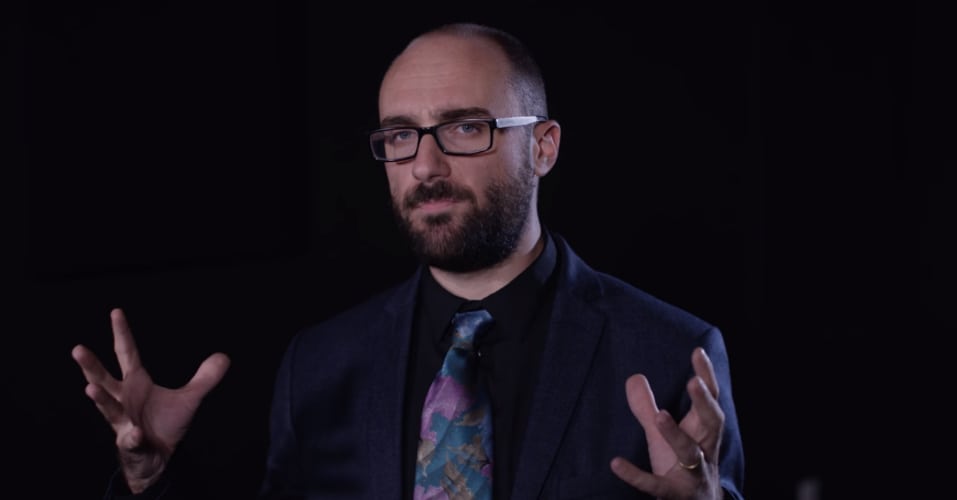
In 2017, Stevens collaborated with Adam Savage, former co-host of MythBusters, to create and perform "Brain Candy Live." The touring stage show was designed as an interactive, hands-on theatrical experience that combined science demonstrations with comedy. Stevens described the production as "a two-hour play date with Walt Disney, Willy Wonka, and Albert Einstein."
The tour launched its leg in the spring of 2017, visiting 40 cities across the United States. Due to commercial success, a second leg was scheduled for late 2017, covering an additional 24 cities, including stops in Rochester, Minneapolis, and Columbus.
The performance featured large- physical experiments, including the use of air cannons, high-speed ping pong ball launchers, and fog machines to visualize fluid. The show's central theme revolved around the physics of air and the "pleasure of learning," aiming to make abstract scientific concepts tangible for family audiences.
Critics and local media outlets, such as City Magazine and Twin Cities Geek, praised the show for its ability to translate the curiosity-driven format of Vsauce into a live environment.
Industry Keynotes and Educational Advocacy
Stevens frequently addressed media professionals and educators regarding the shift in youth content consumption. On July 1, 2015, he delivered the opening keynote at the Children's Media Conference (CMC) in Sheffield, UK.
His address, themed "All Change?", analyzed how traditional broadcasters could adapt to a generation raised on on-demand, algorithm-driven content. He argued that "mundane" or "niche" topics could achieve mass appeal if presented with sufficient narrative depth, citing Vsauce's retention metrics as evidence.
Throughout the decade, Stevens remained a regular fixture at VidCon, specifically within the Industry Track. His sessions frequently focused on the sustainability of creator careers, the psychology of audience engagement, and the responsibility of educators on unregulated platforms.
In 2016, he participated in panels discussing the "Science of the Friend Zone" and other psychological phenomena, translating his video topics into live academic discussions.
The Rest Is Science (2025)
In November 2025, Stevens returned to a structured audio-visual format with the launch of The Rest Is Science, a video-led podcast produced by Goalhanger. Co-hosted with British mathematician and author Professor Hannah Fry, the series was designed to investigate "the biggest questions about reality." The show adopted a twice-weekly release schedule:
| Day | Format | Content Focus |
|---|---|---|
| Tuesday | Deep Dive | Exploration of a single major scientific or philosophical topic. |
| Thursday | Field Notes | Discussion starting from a specific object to broader scientific principles. |
Goalhanger, the production company behind the successful The Rest Is History and The Rest Is Politics, positioned the show to the gap between pop science and rigorous academic inquiry. In press statements surrounding the launch, Stevens emphasized that the project aimed to examine the "space between what we know and what we think we know," continuing the pedagogical style he established with Vsauce.
Speaking Style and Themes
Stevens' public speaking style mirrors the non-linear, interdisciplinary method of his videos. He frequently employs "tangential learning," where a lecture begins with a simple premise before branching into unexpected fields such as linguistics, history, and psychology.
His speaking engagements command fees estimated between $75, 000 and $150, 000, reflecting his status as a top-tier educator in the digital space. Unlike contemporaries who pivoted to lifestyle or entertainment content, Stevens maintained a strict focus on educational rigor, using his platform to advocate for curiosity as a fundamental human drive.
Live Touring and Stage Productions
In 2017, Stevens partnered with MythBusters host Adam Savage to launch Brain Candy Live!, a touring theatrical production described as a "cross between a TED talk and the Blue Man Group." The show combined demonstrations of physical laws with audience participation, utilizing large- props such as air cannons and ping-pong ball launchers to visualize scientific concepts.
The tour visited over 40 cities across the United States in 2017, including a stop at the Orpheum Theatre in Minneapolis in December. Following its initial success, the production expanded internationally in 2018, with scheduled performances in Australia, including a multi-night run at The Star in Sydney in January.
Streaming Series and Network Television
Stevens expanded his production scope through a partnership with YouTube Premium (formerly YouTube Red) to create Mind Field, which premiered in January 2017. Unlike his solo vlog-style content, this series operated with a television-grade budget and crew, allowing Stevens to conduct large- psychological experiments.
The show featured collaborations with various academic experts and institutions, including a notable episode where Stevens visited Ayahuasca practitioners in Peru.
In mainstream television, Stevens served as a guest judge on the ABC revival of BattleBots during its second season in 2016. He appeared in the "Round of 16" episode, where he helped adjudicate a controversial match between the robots Chomp and Bite Force.
His television credits also include a guest appearance on The Late Show with Stephen Colbert on October 25, 2017, where he performed a science demonstration for the host.
Podcast Hosting and Guest Spots
Throughout the late 2010s and early 2020s, Stevens became a frequent guest on long-form interview podcasts. He appeared on the H3 Podcast multiple times, including a January 2019 episode where he discussed the Stanford Prison Experiment and simulation theory. Later that year, he was a guest on the Lex Fridman Podcast, engaging in a two-hour discussion on consciousness and artificial intelligence.
In November 2025, Stevens formally entered the podcasting space as a co-host. He launched The Rest Is Science alongside British mathematician and broadcaster Dr. Hannah Fry. Produced by Goalhanger Podcasts, the series was established to examine "strange, frequently-overlooked questions about reality," with episodes released twice weekly.
The show's debut month featured deep dives into topics ranging from the physics of water to the neuroscience of self-location.
Digital Collaborations and Cameos
Stevens maintained a consistent presence within the educational YouTube community ("EduTubers"). He appeared in the viral HowToBasic "Face Reveal" video released on March 24, 2018, which featured a montage of prominent creators claiming to be the anonymous channel host.
In July 2025, after a period of reduced upload frequency on his main channel, Stevens released the 22-minute documentary All The Ghosts You Be, which trended globally and marked a return to his signature long-form video essays.
| Date | Show / Platform | Role | Notes |
|---|---|---|---|
| August 2016 | BattleBots (ABC) | Guest Judge | Season 2, Round of 16 |
| October 25, 2017 | The Late Show with Stephen Colbert | Guest | Performed science demonstration |
| March 24, 2018 | HowToBasic (YouTube) | Cameo | "Face Reveal" collaboration video |
| January 26, 2019 | H3 Podcast | Guest | Episode #101 |
| December 17, 2019 | Lex Fridman Podcast | Guest | Episode #61 |
| July 8, 2025 | The Fun Waste of Time | Guest | Discussed home theater audio |
Awards and Nominations
Michael Stevens and his Vsauce network have received consistent industry recognition for their contributions to digital science education and online entertainment. Between 2015 and 2025, Stevens garnered multiple accolades from major digital media organizations, including the Streamy Awards and the Webby Awards, reflecting his transition from short-form educational videos to high-production documentary series like Mind Field.
Streamy Awards
The Streamy Awards, which honor excellence in online video, have frequently recognized Stevens for his work as a host, educator, and producer. In 2015, during the 5th Annual Streamy Awards, Vsauce won the award for Science or Education, solidifying its status as a leading educational channel.
The following year, Stevens received a nomination in the same category at the 6th Annual Streamy Awards, though the award went to Laci Green.
The launch of the YouTube Premium series Mind Field brought Stevens recognition in broader production categories. In 2017, the series received a nomination for Science or Education at the 7th Annual Streamy Awards.
By 2019, the show's third season earned a nomination for Show of the Year, one of the ceremony's top honors, placing it alongside massive entertainment productions like Good Mythical Morning and Hot Ones. That same year, the Vsauce channel also received another nomination for Science or Education.
| Year | Nominated Work | Category | Result |
|---|---|---|---|
| 2015 | Vsauce | Science or Education | Won |
| 2016 | Vsauce | Science or Education | Nominated |
| 2017 | Mind Field | Science or Education | Nominated |
| 2019 | Mind Field: Season 3 | Show of the Year | Nominated |
| 2019 | Vsauce | Science or Education | Nominated |
Webby Awards
The International Academy of Digital Arts and Sciences has honored Stevens for his ability to make complex scientific concepts accessible. In 2015, the Vsauce network was named the People's Voice Winner in the category of Online Film & Video: Science & Education (Series & Channels).
This award, determined by public vote, highlighted the channel's massive and engaged global audience. The network was also an official Nominee for the juried Webby Award in the same category that year.
YouTube Creator Awards
Stevens reached a significant platform milestone on February 27, 2016, when the primary Vsauce channel surpassed 10 million subscribers. This achievement earned him the Diamond Creator Award (commonly known as the Diamond Play Button), the highest standard recognition provided by YouTube at the time. As of late 2025, the channel remains one of the few science-focused educational platforms to hold this distinction.
Other Recognitions
While primarily recognized within the digital video industry, Stevens has also received honors from scientific organizations. He was inducted as an Honorary Member of Sigma Xi, The Scientific Research Honor Society, acknowledging his role in promoting public engagement with science.
His work on Mind Field has been for bringing psychological experiments to a mass audience, bridging the gap between academic research and popular entertainment.
Personal Life
Michael Stevens has maintained a relatively private personal life even with his significant online presence. In July 2016, he married his wife, Marnie, a New Zealander whom he met during his residency in London. The couple held their wedding ceremony in London before relocating to the United States later that year.
In August 2019, they welcomed their child, a daughter named Maeve. Stevens has occasionally referenced his role as a father in interviews, noting in a 2023 conversation with Anthony Padilla that parenthood altered his perception of time and mortality.
Residence
After working at Google's London office from 2012 to 2016, Stevens returned to the United States, settling in Los Angeles. Public records from 2016 indicate he purchased a home in the Hollywood Hills, where he built a dedicated studio for filming Vsauce content. This residence served as the primary production hub for his YouTube Premium series, Mind Field.
By February 2026, reports confirmed that Stevens had relocated with his family to Colorado, though he continues to travel frequently for production and speaking engagements.
Interests and Beliefs
Stevens identifies as non-religious and has described himself as agnostic in various public forums. His philosophical views frequently align with scientific skepticism and humanism.
In a November 2025 appearance on the Within Reason podcast with Alex O'Connor, Stevens discussed his metaphysical positions, including mereological nihilism and the nature of consciousness.
He argued that while scientific inquiry is the most reliable method for understanding the universe, certain existential questions may remain permanently beyond empirical resolution.
Outside of his educational work, Stevens is an accomplished pianist and composer. He has frequently incorporated his own musical compositions into early Vsauce videos and credits his background in theater and forensics for his distinct presentation style.
His fascination with tangible scientific objects led to the creation of The Curiosity Box, a subscription service for educational toys and puzzles. Stevens has stated that his personal collection of scientific curiosities, ranging from antique medical devices to geometric novelties, serves as a constant source of inspiration for his content.
Philanthropy and Advocacy
Stevens has leveraged his platform to support various educational and charitable causes. He is a vocal advocate for education and has partnered with organizations such as Robotics to promote engineering and technology literacy among students.
In 2024, he participated in a fundraising campaign for the Pledgeling Foundation, auctioning exclusive experiences to support local community programs. also, proceeds from specific Curiosity Box collaborations have been directed toward Alzheimer's research and science literacy initiatives.

Khairlanji Massacre – 4 Lives Lost And A Village Drenched in Blood
Khairlanji Massacre: A brutal incident in a small village in Maharashtra where caste hatred led to the horrific murder of a Dalit family. Systemic cover-up: The police attempted to bury the…
Read Full ReportThe Malaria Racketeers of Africa: Counterfeit Nets and Stolen Hospital Supplies
February 25, 2026 • Africa, All
The diversion of aid meant to combat malaria in Africa has led to a shadow economy profiting from counterfeit and stolen medical supplies. The theft…
Retail Theft Rings in America: The Organized Crime Links
February 22, 2026 • Commerce, All
America's retail sector faces a financial emergency with total retail shrink reaching an estimated $121.6 billion annually. Organized Retail Crime (ORC) rings are driving this…
Global Corruption Index in 2025: The Year’s Biggest Decliners
February 19, 2026 • Corruption, All, Economy, World
The Global Corruption Index data reveals a concerning trend of stagnation in global anti-corruption efforts, with 67% of countries scoring below 50 on the Corruption…
The Dark Side of Wellness Retreats: Hidden Fees and Overpromises
October 11, 2025 • All, Travel
The wellness industry, valued at $5.6 trillion globally, is facing scrutiny for hidden costs and unproven health claims. Wellness retreats, once marketed as restorative experiences,…
Election Scandal: Exposing Vote Buying Networks in Rural Bolivia
October 8, 2025 • All
Vote buying networks in Rural Bolivia have deeply embedded clientelist politics, influencing electoral outcomes through material inducements and coercion. Despite being widely acknowledged, the practice…
Pegasus Spyware India: Exposing the Silent Crackdown on Press Freedom
May 2, 2025 • Surveillance, All, Cyber, Disinformation, Headlines, Intel, Investigations, Leaks, Monitoring, Originals, Politics, Power, Privacy, Programs, Technology, Trackers, World
Pegasus Spyware India, a military-grade phone-hacking tool developed by Israel's NSO Group, has sparked a global scandal. The leaked database revealed over 300 Indian phone…