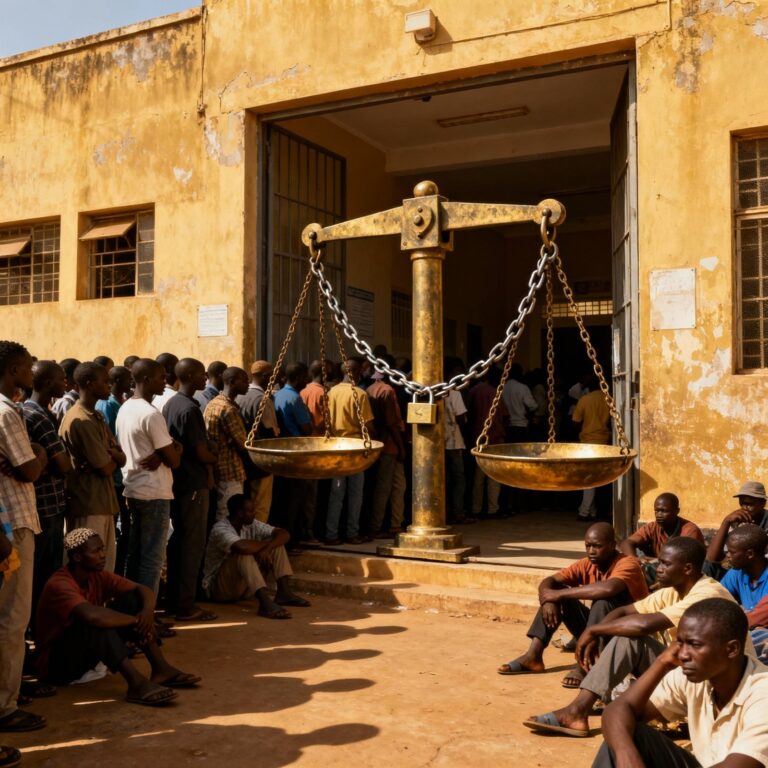
The administration of Nana Addo Dankwa Akufo-Addo stands as a definitive case study in the divergence between political rhetoric and verified economic outcomes.
Elected in 2017 on a platform of fiscal discipline and industrial transformation, the tenure of the New Patriotic Party (NPP) leader has presided over the most severe financial deterioration in the history of the Fourth Republic. Investigations by Ekalavya Hansaj reveal a pattern of unchecked expenditure. We observe deliberate obfuscation of liability data.
The governing body championed the slogan "Ghana Beyond Aid" while simultaneously engineering an addiction to foreign credit. This report dissects the mathematical reality behind the presidency. We bypass the curated speeches to examine the ledger.
Sovereign solvency collapsed under this leadership. In 2016, the total public debt stock stood at approximately 122 billion Cedis. By the close of 2023, that figure ballooned to over 600 billion Cedis. Such accumulation occurred without commensurate infrastructure projects to justify the leverage.
The President authorized borrowing on international bond markets at punitive rates. These inflows vanished into recurrent expenditure rather than capital investment. When external markets closed their doors, the central bank began printing currency. This monetization of the deficit triggered hyperinflation.
Consumer price indices peaked at 54.1 percent in December 2022. Every citizen saw their purchasing power evaporate. The middle class slid into poverty.
Currency performance offers another metric of administrative failure. The Cedi traded around 4 units to the United States Dollar upon the inauguration of Akufo-Addo. Recent exchange rates show the local tender trading above 15 units to the greenback. This devaluation destroyed local manufacturing. Importers face exorbitant costs.
Businesses shutter operations daily. The administration blamed global events like the Russian-Ukraine conflict or COVID-19. Data rejects this excuse. Neighboring economies with similar exposure maintained relative stability. The depreciation stems from domestic mismanagement. It results from a refusal to cut executive extravagance.
| Metric |
2016 Baseline (Pre-Inauguration) |
2023/2024 Status (Current Era) |
Variance Factor |
| Public Debt Stock |
~122 Billion GHS |
~610 Billion GHS |
+400% Increase |
| Exchange Rate (USD) |
~4.2 GHS |
~15.5 GHS |
3.7x Depreciation |
| Inflation Rate |
15.4% |
23% (Avg) / 54.1% (Peak) |
Volatility Spike |
| Fiscal Rating |
B- (Stable) |
Restricted Default (RD) |
Credit Collapse |
Corruption allegations haunt the presidency. The "Agyapa Royalties" deal sought to monetize future gold revenue in perpetuity. Civil society groups flagged the transaction for nepotism and valuation fraud. The Special Prosecutor resigned after citing executive interference. Accountability mechanisms failed.
Another focal point is the National Cathedral project. Over 58 million USD in state funds left the treasury for this religious edifice. No structure exists. The site remains a waterlogged pit in Accra. Parliament never sanctioned these withdrawals. Such diversion of taxpayer money warrants immediate prosecutorial attention.
The Auditor General was forced into retirement after investigating similar irregularities. Institutional independence eroded under executive pressure.
Illegal mining, known locally as "Galamsey," devastates the environment. Akufo-Addo put his presidency on the line to halt this practice. Satellite imagery proves the destruction intensified. Rivers turn into sludge. Cocoa farms disappear. Party officials allegedly profit from the illicit gold trade.
The ban on small-scale excavation served only to consolidate control for political insiders. Water treatment plants shut down due to high turbidity. Communities face thirst while excavators tear up the forest reserves.
Human rights records also regressed. The passage of the draconian anti-LGBTQ+ bill signaled a shift toward populism over constitutional liberty. International partners threatened sanctions. The Ministry of Finance warned of a 3.8 billion USD loss in financing. The President dithers on assent.
He plays a dangerous game with the economic survival of the republic. This report concludes that the incumbent prioritized partisan entrenchment over national welfare. The metrics confirm a legacy of insolvency.
Nana Addo Dankwa Akufo-Addo established his professional credentials through international litigation before entering domestic politics. His legal trajectory commenced in France following his call to the English Bar at Middle Temple in July 1971. He served as an associate at Coudert Frères in Paris from 1971 until 1975.
This tenure involved navigating complex corporate transactions and international arbitration. He returned to Accra and gained admission to the Ghanaian Bar in 1975. He subsequently cofounded Akufo-Addo, Prempeh & Co in 1979. This chambers evolved into a prominent legal entity. It produced notable figures such as Sophia Akuffo and Joe Ghartey.
His practice specialized in human rights litigation and constitutional law during military regimes.
The subject transitioned into legislative governance in 1997. He secured the Member of Parliament seat for Abuakwa South. He held this constituency for three consecutive terms until 2008. President John Kufuor appointed him Attorney General and Minister for Justice in 2001. His tenure at the Justice Ministry saw the repeal of the Criminal Libel Law.
This legislative amendment removed the power of the state to incarcerate journalists for defamation. He then assumed the role of Minister for Foreign Affairs in April 2003. He held this portfolio until 2007. His diplomatic service included chairing the ECOWAS Mediation and Security Council.
He brokered peace agreements in Liberia and Sierra Leone during periods of regional conflict.
Akufo-Addo resigned from the Kufuor cabinet to pursue the New Patriotic Party presidential nomination. He secured the ticket for the 2008 general election. He won the first round with 49.13 percent of valid votes. This fell short of the constitutional threshold. He lost the subsequent runoff to John Atta Mills by a margin of 40,586 votes.
He contested again in 2012. The Electoral Commission declared John Mahama the winner. Akufo-Addo challenged this result at the Supreme Court. The petition lasted eight months. The Court upheld the declared results in a split decision. He accepted the verdict without inciting civil unrest.
He attained the presidency on his third attempt in 2016. He defeated the incumbent John Mahama with 53.85 percent of the total vote. His administration immediately implemented the Free Senior High School policy. This program absorbed tuition fees for public secondary education. Enrollment figures surged by 80 percent between 2017 and 2021.
The financial weight of this policy required significant budgetary allocation. Ministry of Finance data indicates the government spent over GHS 5 billion on the program within four years.
His tenure involved a controversial overhaul of the financial sector. The Banking Sector Cleanup revoked licenses of nine indigenous banks and hundreds of microfinance institutions. The Bank of Ghana cited insolvency and poor corporate governance. The fiscal cost of this exercise exceeded GHS 21 billion.
Critics suggest this move consolidated the sector but eliminated indigenous capital ownership. His second term began in 2021 amid severe economic contraction. The administration engaged the International Monetary Fund for a $3 billion extended credit facility in 2023.
Public debt stock escalated from GHS 122 billion in 2016 to over GHS 600 billion by the end of 2023. Inflation reached a 22-year high of 54.1 percent in December 2022 before receding.
Investigative audits focus on the National Cathedral project. Budgetary appropriations for this religious edifice occurred without direct parliamentary approval for specific disbursements. Over GHS 339 million in state funds were channeled into the project by early 2023. No major construction progress is visible at the site.
The administration also faced scrutiny over the Agyapa Royalties deal. This proposed transaction sought to monetize future gold royalties. The Special Prosecutor labelled the risk of corruption as high. The government suspended the deal following intense civil pressure.
| Period |
Role |
Entity/Jurisdiction |
Key Metric/Action |
| 1971–1975 |
Associate Attorney |
Coudert Frères (Paris) |
International Corporate Litigation |
| 1979–2016 |
Senior Partner |
Akufo-Addo, Prempeh & Co. |
Human Rights & Constitutional Law |
| 1997–2009 |
Member of Parliament |
Abuakwa South Constituency |
Three Consecutive Terms |
| 2001–2003 |
Attorney General |
Republic of Ghana |
Repealed Criminal Libel Law |
| 2003–2007 |
Foreign Minister |
Republic of Ghana |
UN Security Council Chair (Aug 2006) |
| 2017–Present |
President |
Republic of Ghana |
Implemented Free SHS Policy |
Governance under the New Patriotic Party administration exhibits a pattern of fiscal opacity and ethical disputes that demand rigorous scrutiny. The presidency of Nana Addo Dankwa Akufo Addo commenced with pledges to protect the public purse. Scrutiny of federal ledgers and administrative actions reveals distinct deviations from this mandate.
These deviations manifest through questionable procurement vehicles and suppressed media freedoms alongside uncontrolled expenditure on non essential projects.
The Agyapa Royalties transaction stands as a primary example of alleged nepotism and valuation malpractice. In 2020 the administration sought to monetize gold royalties by assigning them to a Special Purpose Vehicle in Jersey. This entity known as Agyapa Royalties Limited was valued at 1 billion USD.
Civil society groups identified that the valuation was significantly lower than market worth. The transaction structure involved Databank Financial Services which is a firm co founded by Finance Minister Ken Ofori Atta. This link raised immediate conflicts of interest. The Special Prosecutor Martin Amidu conducted a corruption risk assessment on the deal.
He concluded that the transaction process favored distinct individuals connected to the presidency. Amidu subsequently resigned and cited interference from the executive branch. He described the President as the "mother serpent" regarding corruption matters. The deal stalled following this public exposure yet no prosecution occurred.
Financial imprudence appears further in the National Cathedral project. The executive pledged this construction as a personal vow to God. Taxpayers were assured that private donations would fund the edifice. Parliamentary inquiries uncovered that the Finance Ministry released over 58 million USD in unbudgeted state funds to the Secretariat.
This expenditure occurred without legislative approval. The site preparation involved demolishing judicial bungalows and a scholarship secretariat. These demolitions incurred replacement costs exceeding 5 million USD. The site currently consists of a foundation pit. No vertical construction exists.
The relentless allocation of liquidity to this stalled endeavor during a period of national insolvency suggests a misalignment of priorities.
Environmental degradation presents another verifiable failure. The President staked his tenure on eradicating illegal artisanal mining known locally as Galamsey. Early interventions involved a military task force called Operation Vanguard. This force achieved initial success in seizing excavators.
Reports later surfaced that seized equipment vanished from police custody. Party officials were implicated in returning excavators to mining sites. The turbidity of the Pra and Ankobra rivers worsened between 2017 and 2022. The arrest and subsequent deportation of Aisha Huang a Chinese national labeled the "Galamsey Queen" provoked public outrage.
She returned to the country undetected in 2022 to resume operations. This sequence exposed porous border security and complicity within the immigration service.
Press freedom metrics have deteriorated in correlation with these scandals. The murder of investigative journalist Ahmed Hussein Suale in 2019 remains unsolved. A member of parliament from the ruling party had previously displayed the photograph of Suale on television and incited violence against him.
Following this event the nation dropped thirty places in the World Press Freedom Index. The National Communications Authority shut down opposing radio stations under the guise of regulatory audits. This selective application of law silenced distinct voices critical of government policy.
The COVID 19 expenditure audit provides final numerical evidence of mismanagement. The Auditor General reported irregularities amounting to 21 billion GHS. Funds intended for medical supplies were diverted to unrelated operational costs. Contracts were awarded to entities formed only days prior to procurement.
This misallocation contributed directly to the current fiscal emergency where inflation reached 54 percent in late 2022.
Documented Administrative Irregularities
| Event / Scandal |
Financial Implication |
Key Verification Metric |
Status |
| Agyapa Royalties Deal |
1 Billion USD (Undervalued Asset) |
Special Prosecutor Corruption Risk Assessment |
Suspended indefinitely |
| National Cathedral |
58 Million USD (State Funds) |
Parliamentary Budget Queries |
Stalled at foundation level |
| PDS Concession |
190 Million USD (MCC Compact) |
US Government termination letter |
Contract Cancelled |
| COVID 19 Fund Audit |
21.8 Billion GHS (Irregularities) |
2022 Auditor General Report |
Under legislative review |
| Sewerage Systems Limited |
95 Million USD |
Sole sourced procurement breach |
Executed without competition |
The presidency of Nana Addo Dankwa Akufo-Addo represents a distinct bifurcation between international diplomatic branding and domestic fiscal collapse. Analysis of the period from 2017 to 2024 reveals a trajectory defined by aggressive borrowing and the subsequent unraveling of macroeconomic stability.
The "Ghana Beyond Aid" slogan functioned as a rhetorical device rather than an operational blueprint. Data indicates the administration oversaw the most severe economic contraction in a generation. This era concludes with the nation entrenched in its seventeenth IMF program.
The fiscal mechanics utilized by the Finance Ministry involved off-budget financing vehicles that obscured real liabilities until solvency became mathematically impossible.
Sovereign debt metrics serve as the primary indictment of this tenure. The total debt stock surged from approximately 122 billion Cedis in 2016 to figures exceeding 600 billion Cedis by the end of 2023. Even accounting for exchange rate volatility the accumulation rate outpaced GDP expansion. This leverage did not yield proportional infrastructure value.
The Domestic Debt Exchange Program effectively confiscated the wealth of pension funds and individual bondholders. This default event shattered market confidence. Investors now view Ghanaian bonds with extreme caution. The central bank financing of the deficit in 2022 directly triggered hyperinflation that decimated household purchasing power.
The Cedi lost over half its value against major trading currencies in a single calendar year.
Free Senior High School (SHS) stands as the central social intervention of the Akufo-Addo era. Enrollment numbers surged following the removal of tuition fees. This policy granted access to hundreds of thousands of students previously excluded by cost. Implementation challenges persist. Headmasters report sporadic food supplies and congestion.
The government allocated billions to sustain the program yet struggled to remit funds on schedule. Educational outcomes remain a subject of intense debate among statisticians and parents alike. The sheer volume of students validates the demand for education but the fiscal sustainability of the current model remains unproven.
Future administrations must confront the funding gap this entitlement program creates.
Governance indicators deteriorated sharply. The administration faced persistent accusations of narrowing the civic space. The forced retirement of Auditor General Daniel Domelevo sent a chilling signal to accountability institutions. Domelevo had surcharged the Senior Minister for payment irregularities involving Kroll and Associates.
His ouster occurred shortly thereafter. The resignation of Special Prosecutor Martin Amidu further damaged credibility. Amidu described the President as the "Mother Serpent" of corruption in his exit report. He cited interference in his risk assessment of the Agyapa Royalties deal.
The Agyapa transaction sought to monetize gold royalties through a tax haven structure. Civil society agitation halted the deal yet the intent remains part of the record.
Environmental degradation defines the legacy in the mining sector. The President staked his presidency on ending illegal small scale mining known as galamsey. Satellite imagery and turbidity data from the Pra and Ankobra rivers confirm total failure. Water bodies resemble mud sludge.
The involvement of party officials in illicit extraction operations rendered enforcement impossible. Arrests targeted low level laborers while financiers operated with impunity. The environmental cost includes mercury contamination of the food chain and destruction of cocoa farms. This ecological damage is irreversible in the short term.
The National Cathedral project exemplifies the misalignment of priorities. The state demolished judicial residences and spent 58 million dollars of public funds on a pit in Accra. The project sits abandoned. Parliament did not approve the initial releases of capital. The Board of Trustees saw high profile resignations due to opacity in financial reporting.
This endeavor symbolizes a detachment from the economic reality facing the average citizen. The funds utilized could have alleviated shortages in the health sector. The legacy here is one of grand ambition colliding with poor execution and questionable propriety.
Comparative Metric Analysis: 2016 vs 2024
| Indicator |
2016 Baseline |
2023/2024 Status |
Variance Analysis |
| Total Public Debt |
~122 Billion GHS |
>600 Billion GHS |
Increase exceeds 390 percent. Driven by Eurobond floatation and syndicated loans. |
| Inflation Rate |
15.4 percent |
23.2 percent (Peaked at 54 percent) |
Purchasing power collapsed. Central Bank financing of deficit fueled price instability. |
| Exchange Rate (USD) |
~4.2 GHS |
~13.0 GHS (Fluctuating) |
Currency depreciation eroded capital. Import duties surged consequently. |
| Corruption Perception Rank |
70/176 (TI Index) |
70/180 (Stagnant/Declining score) |
Institutional interference neutralized gains. Scandals involving ministers ignored. |
| Credit Rating |
B minus (Stable) |
Selective Default / Restricted Default |
Market access lost. Re-entry requires completion of external debt restructuring. |