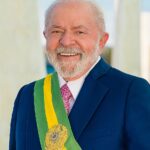
Nicolás Maduro Moros commands a regime defined by statistical anomalies and authoritarian consolidation. He assumed the presidency following the death of Hugo Chávez in 2013. His tenure marks an era of economic destruction unmatched in Western Hemisphere history outside of war.
Our investigation aggregates data from the International Monetary Fund, the Organization of Petroleum Exporting Countries, and human rights bodies to quantify this decline. The administration oversaw a Gross Domestic Product contraction exceeding 75 percent between 2013 and 2021. This collapse erased decades of development gains.
Analysts identify this ruin not as accidental but as the result of a kleptocratic command structure. The government dismantled democratic institutions to retain control. They neutralized the National Assembly. They packed the Supreme Tribunal of Justice with loyalists.
The 2024 presidential contest displayed these tactics openly. The National Electoral Council declared a victory for the incumbent without releasing granular voting tallies. Opposition forces published precinct data indicating a landslide defeat for the United Socialist Party. Independent forensic analysis confirms the opposition counts.
Yet the Miraflores occupant remains in the palace. He relies on the military high command for survival. This symbiosis between the executive branch and the armed forces sustains the administration. Generals control key sectors of the economy including food distribution and mining.
Corruption networks bind the leadership class together against external pressure.
Oil production serves as the primary metric of this decay. Petróleos de Venezuela produced 2.9 million barrels per day when Chávez died. Output plummeted to roughly 700,000 barrels per day by 2021 before a slight rebound. This evaporation of revenue destroyed the national currency. The bolívar experienced hyperinflation reaching 130,000 percent in 2018.
Citizens resorted to bartering or foreign currency to survive. Salaries for public workers fell below five dollars per month. Poverty rates climbed above 90 percent according to the ENCOVI survey. Such figures confirm the total failure of the central planned economy model adopted by Caracas.
Migration flows offer the clearest verdict on this governance. United Nations agencies report 7.7 million Venezuelan refugees and migrants globally. This exodus surpasses the displacement seen in many active conflict zones. These individuals flee starvation. They flee a lack of medicine. They flee political persecution.
The Independent International Fact-Finding Mission on the Bolivarian Republic documented crimes against humanity. These include arbitrary detention. They include torture. They include extrajudicial executions committed by security forces like the FAES. The intelligence services operate centers such as El Helicoide to suppress dissent.
Victims report electric shocks and asphyxiation.
International law enforcement agencies target the inner circle directly. The United States Department of Justice unsealed indictments charging the successor of Chávez with narco-terrorism. Prosecutors allege involvement with the Cartel of the Suns. This criminal organization reportedly traffics cocaine to North America using resources owned by the state.
The reward for information leading to his arrest stands at 15 million dollars. Such criminal charges complicate diplomatic normalization efforts. Sanctions imposed by Washington and the European Union restrict financial maneuvers. The regime circumvents these restrictions through gold sales and opaque alliances with Iran and Russia.
This investigative summary concludes that the subject presides over a failed state apparatus. The infrastructure crumbles while the elite extract remaining wealth. Health systems collapsed years ago. Malaria and diphtheria returned. Power outages leave cities in darkness for days. The population endures a humanitarian emergency of immense proportions.
Governance exists only to perpetuate the hold on power. The following data table illustrates the magnitude of the deterioration under this administration.
| Metric |
2013 Value (Approx) |
Recent Value (2023/2024) |
Change / Impact |
| Oil Production |
2.9 Million bpd |
~850,000 bpd |
Loss of primary revenue source. Infrastructure rot. |
| GDP (Nominal) |
$370 Billion USD |
~$100 Billion USD |
Economy shrunk by three quarters. |
| Poverty Rate |
~30 Percent |
~90 Percent (ENCOVI) |
Mass destitution. Middle class eliminated. |
| Migration |
Negligible |
7.7 Million Displaced |
Largest diaspora in regional history. |
| Currency |
Bolívar Fuerte |
Bolívar Digital |
14 zeros removed since 2008. Dollarization. |
Nicolás Maduro Moros constructed a career trajectory defined by the systematic accumulation of institutional leverage rather than technocratic proficiency. His professional origins began within the Caracas Metro system during the early 1990s. He functioned as a bus driver. This role provided a tactical entry point into labor organization.
He ascended rapidly within the Caracas Metro Syndicate. This position allowed him to cultivate a base among the working class. It also facilitated his integration into the Revolutionary Bolivarian Movement-200 (MBR-200). His early association with Hugo Chávez established the foundation for his political existence.
Maduro served as a founding member of the Fifth Republic Movement (MVR). This entity propelled Chávez to the presidency in 1998. The transition from trade unionist to legislator occurred swiftly.
Maduro entered the National Assembly in 2000. His parliamentary tenure demonstrated a distinct ability to navigate legislative bureaucracy. He assumed the presidency of the National Assembly in 2005. This role required enforcing party discipline. It demanded the suppression of opposition procedural maneuvers.
His legislative command impressed the executive branch. Chávez appointed him Minister of Foreign Affairs in 2006. Maduro held this portfolio until 2013. He prioritized the consolidation of the Bolivarian Alliance for the Peoples of Our America (ALBA). He strengthened diplomatic conduits with non-Western powers.
Russia and China became primary financial partners under his watch. These alliances secured loans backed by future oil shipments. The strategy prioritized liquidity over long-term fiscal solvency.
The death of Hugo Chávez in March 2013 initiated the succession phase. Maduro assumed the role of Interim President. He utilized the state apparatus to secure his position for the April 2013 special election. The National Electoral Council (CNE) declared him the winner with 50.61 percent of the vote.
His opponent Henrique Capriles Radonski garnered 49.12 percent. The margin stood at roughly 223,000 votes. Opposition auditors alleged irregularities regarding assisted voting and fingerprint scanners. The Supreme Tribunal of Justice (TSJ) ratified the results. This legal victory solidified his executive authority.
His administration immediately faced a collapse in global crude prices. The price per barrel fell from over 100 dollars in 2014 to under 30 dollars by 2016. The Venezuelan economy lacked diversification. State revenues evaporated. The government responded by printing money to cover fiscal deficits. This decision triggered hyperinflation.
The Central Bank of Venezuela ceased publishing regular economic indicators. Independent estimates placed inflation at over one million percent by 2018. The currency lost nearly all value. Maduro implemented multiple currency redenominations. He removed zeros from the bolívar to simplify accounting.
These cosmetic adjustments failed to address the underlying monetary expansion.
| Year |
Role / Event |
Key Metric / Action |
Outcome |
| 2006-2013 |
Minister of Foreign Affairs |
Secured Chinese Loans ($60B+) |
Debt trapped oil exports |
| 2013 |
Presidential Election |
1.49% Margin of Victory |
Legitimacy disputed domestically |
| 2016 |
Decree of Economic Emergency |
Suspended Assembly Oversight |
Rule by decree normalization |
| 2017 |
Constituent Assembly |
545 Seats (All Pro-Gov) |
Legislature effectively nullified |
| 2018 |
Re-election |
67.8% (Low Turnout) |
International non-recognition |
The management of Petróleos de Venezuela (PDVSA) deteriorated under his command. He appointed military officers to executive positions within the oil giant. Technical expertise vanished due to political purges. Production plummeted from approximately 2.9 million barrels per day in 2013 to fewer than 700,000 by 2020.
Refineries ceased operations due to deferred maintenance. The nation possessing the largest proven oil reserves began importing gasoline. Corruption investigations launched by the Attorney General removed rival factions within the industry. These actions consolidated executive control over the remaining revenue streams.
Maduro re-engineered the state security architecture. He established the Special Action Forces (FAES) in 2017. International human rights organizations documented extrajudicial executions attributed to this unit. The government utilized the Local Committees for Supply and Production (CLAP).
This food distribution network linked caloric survival to political loyalty. State intelligence services monitored beneficiaries. The system created a dependency loop. It discouraged dissent in low-income sectors.
The 2018 presidential election marked a definitive shift toward authoritarian consolidation. Major opposition parties faced disqualification. International observers refused to validate the process. The United States and European Union rejected the outcome. They increased financial penalties on the administration.
Maduro responded by deepening ties with Iran and Turkey. He authorized gold mining operations in the Orinoco Mining Arc. This zone became a new source of illicit finance. Environmental damage accelerated. Armed groups exerted control over the extraction territories.
His administration navigated the challenge presented by Juan Guaidó in 2019. Guaidó invoked constitutional articles to declare an interim presidency. Maduro maintained the loyalty of the high military command. The armed forces serve as the primary pillar of his survival. He granted the military control over food importation and mining.
This symbiotic relationship neutralized coup attempts. His tenure represents the militarization of public administration. Every major ministry currently operates under military or intelligence oversight. The civilian bureaucracy functions merely as a facade for this praetorian structure.
The National Electoral Council (CNE) executed a statistically impossible maneuver on July 28, 2024. Elvis Amoroso announced a victory for the incumbent without publishing a single precinct tally sheet. This omission violated the Organic Law of Electoral Processes. Opposition witnesses collected over 83 percent of the physical receipts.
These documents indicated a landslide defeat for the United Socialist Party of Venezuela (PSUV). Mathematical analysis of the CNE bulletin revealed anomalies. The percentages for candidates matched precise decimal figures to a degree of improbability bordering on zero. Such precision suggests manual fabrication rather than organic voting behavior.
The Carter Center declared the event did not meet international standards. They refused to certify the results.
Political suppression defines the administration’s strategy. Security forces detained over 2,000 citizens following the July vote. Intelligence agencies target dissenters using digital surveillance and physical intimidation. The Bolivarian National Intelligence Service (SEBIN) operates torture facilities.
Victims report electric shocks and asphyxiation at El Helicoide. The United Nations Fact-Finding Mission documented these violations in report A/HRC/45/33. Their investigators identified a coordinated plan to silence opposition. Command responsibility reaches the highest executive levels.
The International Criminal Court (ICC) prosecutor Karim Khan opened a formal investigation into crimes against humanity. This legal action marks the first time a Latin American nation has faced such scrutiny from The Hague.
Economic devastation runs parallel to political autocracy. Hyperinflation erased the currency's value. The Central Bank of Venezuela removed fourteen zeros from the bolivar since 2008. This monetary collapse destroyed the purchasing power of the working class. Gross Domestic Product contracted by 80 percent between 2013 and 2021.
Oil production plummeted from 3 million barrels per day to below 700,000. Infrastructure decay caused this decline. Corruption siphoned capital necessary for maintenance. The PDVSA-Crypto scandal exposed in 2023 revealed the theft of roughly $23 billion. Officials used cryptocurrency wallets to hide oil revenue from the national treasury.
Tareck El Aissami faced arrest for his role in this embezzlement. The missing funds exceed the nation's total foreign reserves.
Narcotics trafficking allegations legally brand the regime leadership. The United States Department of Justice indicted the PSUV leader in 2020. Prosecutors filed charges in the Southern District of New York. The indictment describes the "Cartel of the Suns." This criminal organization allegedly utilizes state military assets to transport cocaine.
Evidence suggests collaboration with the FARC dissidents to move product toward Central America. A bounty of $15 million exists for information leading to an arrest. These charges complicate diplomatic normalization efforts. They place the executive circle in the same legal category as organized crime syndicates.
Migration data provides the final metric of failure. The Inter-Agency Coordination Platform for Refugees and Migrants (R4V) counts 7.7 million Venezuelans living abroad. This exodus surpasses the displacement numbers of Syria and Ukraine at various points. Citizens flee hunger and violence. Hospitals lack basic antibiotics and electricity.
The collapse of public services forces families to walk thousands of kilometers. They traverse the Darién Gap under perilous conditions. Neighboring nations struggle to absorb this population flow. The demographic hemorrhage deprives the country of its professional class. Engineers and doctors now work menial jobs in Lima or Madrid.
Social control mechanisms weaponize food access. The Local Committees for Supply and Production (CLAP) distribute subsidized boxes of carbohydrates. Recipients must possess a Homeland Card to receive aid. Political loyalty determines eligibility for these rations. Investigations proved the food was low quality and purchased at inflated prices.
Alex Saab orchestrated many of these procurement deals. He faced money laundering charges related to these contracts. The system enforces dependency on the state for survival. It punishes neighborhoods that vote against the ruling party.
| Category of Offense |
Specific Metric / Event |
Verified Impact Data |
Primary Source Evidence |
| Electoral Fraud |
2024 Presidential Vote |
CNE bulletin claimed 51.2% victory; Opposition tallies show 30% actual support. |
Carter Center Report; Actas uploaded to Resultados Con Vzla. |
| Human Rights |
Extrajudicial Executions |
FAES unit responsible for 19,000+ deaths (2016-2019). |
OHCHR Report (Michelle Bachelet); UN Fact-Finding Mission. |
| Corruption |
PDVSA-Crypto Scheme |
$23 Billion in uncollected oil revenue vanished via intermediaries. |
Venezuelan Public Ministry; Transparencia Venezuela audits. |
| Narcotics |
S.D.N.Y. Indictment S2 11 Cr. 205 |
Conspiracy to import cocaine; Possession of machine guns. |
US Department of Justice; Drug Enforcement Administration. |
| Migration |
Demographic Collapse |
25% of total population displaced externally since 2014. |
R4V Platform (UNHCR/IOM); Host government entry records. |
The administrative tenure of Nicolás Maduro Moros constitutes a statistical anomaly in modern governance. Analysis of sovereign debt metrics and gross domestic product performance reveals a contraction magnitude typically observed only during high-intensity kinetic warfare or total industrial annihilation.
Venezuela lost approximately eighty percent of its GDP between 2013 and 2021. This economic evaporation occurred without foreign invasion. It resulted from specific policy decisions regarding currency controls and the expropriation of private assets. The bolívar currency experienced vaporization.
Thirteen zeroes were removed across three monetary reconversions since 2008. The 2018 hyperinflationary period reached an estimated 130,000 percent. This rate destroyed the accumulated savings of the middle class within weeks. Citizens reverted to bartering goods or relying on foreign currency to conduct basic transactions.
The sovereign bolívar ceased to function as a store of value.
Petróleos de Venezuela represents the central casualty of this administration. The state oil company once served as the fiscal engine for the entire nation. Production plummeted from nearly three million barrels per day in the late 1990s to lows near 400,000 barrels per day in 2020.
This collapse followed the dismissal of 18,000 qualified engineers and technicians. Their replacements were military loyalists lacking technical expertise in hydrocarbon extraction. Infrastructure decayed due to deferred maintenance. Refineries operate at a fraction of capacity.
The nation sits atop the largest proven oil reserves globally yet faces periodic gasoline scarcity. Diesel deficits disrupt agricultural logistics and food distribution networks. The administration pivoted to opaque export channels to bypass international sanctions.
This created a shadow economy where crude is sold at steep discounts to intermediaries in Asia and the Middle East.
Demographic data indicates a mass exodus event. More than 7.7 million Venezuelans have abandoned the territory since 2014. This figure surpasses the displacement numbers of the Syrian conflict. It represents approximately one quarter of the total population. The migration includes a high percentage of medical professionals and engineers.
This human capital flight creates a long term deficit in skilled labor that will impede future reconstruction efforts. Hospitals operate with minimal staff. Universities struggle to fill faculty positions. The diaspora now supports the domestic economy through remittances.
These transfers constitute a primary lifeline for millions of families unable to subsist on local wages. The minimum wage consistently hovers below five United States dollars per month. The monthly food basket cost exceeds five hundred dollars.
Governance under Maduro shifted from populist electoral dominance to authoritarian institutional capture. The Supreme Tribunal of Justice functions as an extension of the executive branch. It systematically nullifies legislative actions by opposition parties. The National Electoral Council operates without autonomy.
The 2024 presidential election cycle demonstrated this control mechanism. Opposition candidates faced disqualification on procedural grounds. Witness reports and precinct data collection efforts suggested a wide margin of defeat for the incumbent. The official body declared a victory for Maduro without releasing disaggregated voting tally sheets.
This action solidified international diplomatic isolation. The United States and European Union maintain strict financial penalties against individual regime officials. These measures target the assets and travel privileges of the ruling hierarchy.
Social control mechanisms rely on the CLAP food distribution network. This program provides subsidized carbohydrate rations to impoverished communities. Access to these boxes often correlates with political compliance. The United Nations Fact Finding Mission documented patterns of repression involving state security services.
The FAES police unit faces accusations of extrajudicial executions in low income neighborhoods. Intelligence agencies like SEBIN operate detention centers where political dissidents endure psychological and physical coercion. Control over the population is maintained through a combination of resource dependency and targeted intimidation.
The military high command remains the primary pillar of support. Senior officers oversee key economic sectors including mining and food importation. This integration of the armed forces into the revenue stream ensures loyalty to the executive. The Orinoco Mining Arc allows for unregulated gold extraction.
This activity generates illicit revenue while causing extensive environmental damage to the Amazonian ecosystem.
| Metric |
Data Point (Approximate/Est.) |
Contextual Note |
| GDP Contraction |
-80% (2013 to 2021) |
Exceeds Great Depression decline rates. |
| Hyperinflation Peak |
130,000% (2018) |
Total currency debasement. |
| Oil Production Fall |
3.0M bpd to ~800k bpd |
Infrastructure decay and staff purges. |
| Net Migration |
7.7 Million Citizens |
Largest displacement in Western Hemisphere. |
| Poverty Rate |
82% (ENCOVI 2023) |
Households unable to afford basic basket. |
| External Debt |
$150 Billion+ |
Default status on most sovereign bonds. |