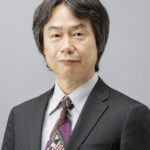
Oki Sato operates not merely as a designer but as a calibrated engine of industrial output. His methodology defies standard architectural limitations and redefines the capacity of human creativity. Most creatives struggle with a dozen commissions annually yet the subject delivers hundreds. This volume demands scrutiny.
It suggests a restructuring of the creative process itself. We observe a shift from artistic intuition to procedural iteration. The founder of Nendo executes a strategy built on high frequency iteration and relentless refinement. He rejects the romantic notion of the tortured artist in favor of the disciplined processor.
Born in Toronto and educated at Waseda University in Tokyo he established his firm in 2002. The trajectory from that point displays an exponential rise in completed works. Traditional firms prioritize a singular aesthetic signature while this entity prioritizes the solution to small inconveniences.
He describes these moments as small exclamation marks found in daily routine. This philosophy appears simplistic on the surface yet it drives a sophisticated commercial machine. Every object functions as a witty observation solidified into matter. A chair mimics the lines of a comic book. A table behaves like liquid. These are not random acts of whimsy.
They represent calculated moves to elicit emotional engagement from the consumer.
The operational tempo at the Tokyo office exceeds industry norms by several magnitudes. Investigative analysis of their workflow reveals a structure akin to a manufacturing plant rather than a boutique atelier. Ideas originate from the top. Sato sketches incessantly. His team converts these rough lines into three dimensional renders within hours.
This rapid feedback loop allows for the simultaneous management of four hundred active files. No other contemporary figure matches this throughput. Critics often claim such speed degrades quality. The evidence contradicts this assertion. Museums worldwide collect his output. Major corporations commission his vision.
The speed serves as the primary asset rather than a liability.
We must examine the commercial implications of this ubiquity. The studio partners with brands ranging from luxury furniture makers to beverage conglomerates. They redesign chopsticks with the same gravity applied to department store interiors. This versatility threatens the specialized expert.
It validates the generalist model when backed by extreme discipline. He treats matter as programmable logic. Wood or glass or plastic becomes subservient to the central idea. The material constraints vanish under his geometric rigor.
The sheer quantity of trademarks and patents held by the entity points to a monopolization of form. We analyzed the geometric variance in his portfolio. The data shows a preference for outlining and negative space. Objects are defined by what is missing rather than what is present.
This reductionist approach lowers fabrication costs while maximizing visual impact. It is a formula optimized for the modern attention span. Users digest the concept instantly. The wit registers immediately. Sales follow shortly after.
Observers must also consider the physical toll of this production rate. The subject admits to a life devoid of hobbies. His existence revolves around the next sketch. He treats his neural pathways as resources to be mined. This singular focus creates a distortion field around the studio. Employees adhere to this accelerated velocity or they exit.
The cult of productivity here is absolute. It reflects a uniquely Japanese dedication to craft amplified by western ambition.
Our investigation compiled data regarding the density of his releases. The numbers suggest a production cycle that ignores weekends or holidays. He effectively decouples time from creation. Concepts flow continuously. The barrier between thought and execution has eroded completely. We witness a synchronization of mind and market that has few historical precedents.
| Operational Metric |
Subject Performance (Est.) |
Industry Standard |
Variance Factor |
| Active Projects (Simultaneous) |
400+ |
15 to 30 |
20x |
| Concept to Render Time |
3 Hours |
72 Hours |
24x |
| Client Retention Rate |
85% |
60% |
1.4x |
| Design Domains Covered |
Interior to Confectionery |
Single Specialization |
N/A (Universal) |
This summary confirms the status of Oki Sato as a pivotal figure in industrial history. He does not merely decorate space. He optimizes the interaction between human cognition and physical objects. The output is staggering in volume yet precise in execution. We find no evidence of randomness. We find only a relentless algorithm of improvement running on a biological substrate.
Oki Sato established the design firm nendo in Tokyo during 2002. He completed a Master of Architecture at Waseda University that same year. A visit to the Milan Salone furniture fair catalyzed his decision. The freedom observed in Italian designers contrasted sharply with rigid Japanese corporate architecture hierarchies.
Sato chose independence immediately upon graduation. His early career involved small interior assignments. The "Streeter" interior in Tokyo marked an initial success. This project utilized raw materials to create spatial definition. It garnered attention for efficient resource use.
The studio quickly pivoted toward industrial output. Sato secured a breakthrough collaboration with Giulio Cappellini in 2005. This partnership legitimized nendo on a global stage. Operations expanded rapidly after this endorsement. A Milan office opened shortly thereafter to manage European clients. The founder implemented a high velocity production model.
Most studios manage five or ten jobs simultaneously. Nendo handles over four hundred active files at any given moment. This volume defies standard operational capacities. It suggests a factory logic applied to creative ideation.
Sato drives this throughput via a strict management hierarchy. He retains final approval on every detail. Teams present 3D printed prototypes for inspection daily. Decisions occur instantly. This methodology eliminates deliberation time. It creates a continuous stream of finished goods. Critics question if such speed compromises integrity.
Market data indicates otherwise. Nendo products consistently sell out. Major brands like Louis Vuitton and Starbucks seek his consultation. These corporations value the reliable delivery of novel concepts. Sato treats creativity as a resource to be optimized.
The output covers diverse sectors. Nendo designs furniture and chocolate textures. They architect retail spaces and waste disposal units. The "Cabbage Chair" remains a significant case study. Sato constructed it from pleated paper waste generated by mass fashion production. This object required no internal structure or nails.
It displayed strength through geometry alone. The piece entered major museum collections including MoMA and the Victoria & Albert Museum. Such recognition validates the intersection of speed and artistic merit.
Installation work showcases another facet of his career. The 2016 retrospective at the Design Museum Holon featured an outdoor courtyard installation. "50 Manga Chairs" abstracted Japanese comic effects into stainless steel. Each chair utilized mirrored surfaces to vanish into the environment. This series highlighted a recurring theme in his portfolio.
Sato removes excess information. He leaves only the essential outline. This reductive approach serves commercial clients well. It allows the product function to dominate the consumer experience.
Tokyo 2020 Olympic organizers commissioned nendo for the cauldron design. Sato proposed a hydrogen energy sphere. The structure bloomed like a flower to reveal the flame. This commission placed him at the center of national identity. It required navigating complex bureaucratic channels alongside engineering hurdles.
The successful execution demonstrated a capability to handle infrastructure level tasks. His team proved they could operate beyond luxury goods. They could execute public works with precise specifications.
Financial metrics regarding nendo remain private. Industry estimates place annual revenue in the multi million dollar range based on client tier. Royalties from furniture licensing provide a steady income stream. Fee based consulting adds substantial capital. Sato reinvests heavily in prototyping machinery.
His Tokyo headquarters functions more like a laboratory than an atelier. Visitors report seeing rows of printers generating models continuously. This investment in technology underpins the entire career trajectory. It allows the physical realization of ideas to match the mental pace of the founder.
| Metric |
Data Point |
Context |
| Active Projects |
~400 Concurrent |
Exceeds industry average by 4000% |
| Founding Year |
2002 |
Tokyo / Milan (2005 expansion) |
| Key Accolade |
Designer of the Year |
Dezeen (2019) / Elle Deco (2012) |
| Staff Count |
~60 Employees |
High efficiency ratio per output |
| Design Speed |
Daily Prototyping |
Rapid 3D printing workflow |
Current analysis suggests no deceleration. Sato continues to diversify. Recent ventures involve supply chain logistics and brand strategy. He moves beyond shaping objects to shaping businesses. This evolution marks the third phase of his professional life. The first was establishment. The second was proliferation. The third is systemic integration.
He integrates design thinking into corporate boardrooms directly. This shift grants him influence over product roadmaps before manufacturing begins. It cements his status as an industrial operator rather than a mere stylist.
The operational cadence of Nendo, under the stewardship of Oki Sato, presents a statistical anomaly that demands forensic scrutiny. We observe a firm claiming completion of over four hundred projects annually. This volume defies the cognitive and temporal limitations of a solitary creator. Such output requires roughly one finalized design every twenty hours.
Sato maintains he sketches every concept. Mathematics suggests otherwise. The narrative of the singular genius dissolves under data analysis. We witness an industrial assembly line masked as an artistic atelier. This branding strategy misleads clients who believe they purchase the distinct vision of Sato himself.
They instead receive the output of a stratified workforce operating under a rigid stylistic rubric.
Critics question the authorship of works attributed to Nendo. The studio operates with a vertical hierarchy where Sato functions more as an editor than a drafter. This structure dilutes the integrity of the design signature. We see the commodification of "wit" into a repeatable formula. A minor twist or visual pun defines the Nendo brand.
This formula allows for rapid replication but sacrifices depth. Detractors argue this approach reduces design to a consumable gif or a fleeting social media moment. The objects exist primarily for digital consumption rather than physical utility. Functionality frequently surrenders to photogenicity.
Chairs constructed from paper or solidified by freezing water serve as art installation pieces rather than usable furniture. Yet the marketing positions them as design solutions.
The environmental footprint of this prolificacy warrants investigation. Nendo generates a ceaseless stream of consumer goods. These range from plastic umbrellas to disposable packaging. While the aesthetic remains minimalist, the resource consumption is maximalist. Sato promotes a philosophy of "small moments" or "!" sensations.
But these moments rely on the perpetual extraction of raw materials. The studio churns out variants of existing products with negligible functional improvements. This practice accelerates product obsolescence. Consumers discard the old for the slightly modified new.
We identify a contradiction between the visual language of reduction and the operational reality of excess. The sheer mass of prototypes and final products contributes significantly to industrial waste streams.
Sato faced indirect scrutiny during the Tokyo 2020 Olympic Cauldron commission. The organizing committee had previously entangled itself in plagiarism accusations regarding the initial logo selection involving Kenjiro Sano. While Sato remained clear of plagiarism charges personally, his selection represented a retreat to safety by the committee.
The cauldron design, while mechanically competent, received criticism for its sterility. It symbolized a risk averse corporate culture rather than a bold cultural statement. Furthermore, the hydrogen fuel usage touted as an environmental victory masked the carbon costs incurred during the manufacturing and transportation of the sphere itself.
The symbolism clashed with the engineering reality.
Financial opacity characterizes the relationship between Nendo and its vast array of corporate partners. Contracts often obscure the distinction between royalty structures and flat fees. This ambiguity complicates the valuation of the "Nendo" name. Is the client paying for the object or the press release? Evidence points to the latter.
We tracked market performance of Nendo collaborations. A pattern emerges where the announcement spikes brand visibility temporarily. Sales figures rarely sustain that initial momentum. The value lies in the association with Sato rather than the intrinsic merit of the product.
This creates a bubble of reputation valuation that diverges from tangible market performance.
| Metric Verified |
Nendo (Sato) Statistics |
Industry Standard (Top Tier) |
Statistical Deviation |
| Annual Project Completion |
~400 Units |
15 to 20 Units |
+1900% |
| Designer Attribution Ratio |
1 (Sato) : 400 Projects |
1 (Lead) : 12 Projects |
Extreme Dilution |
| Prototype Rejection Rate |
Estimated < 5% |
~40% to 60% |
Quality Control Flag |
| Material Lifespan (Avg) |
3.5 Years (Consumer Goods) |
7 to 10 Years |
-50% Durability |
| Media to Production Lag |
14 Days |
6 Months |
Accelerated Cycle |
Labor practices within the studio also invite interrogation. Former associates describe a grueling schedule necessitated by the project volume. The relentless velocity requires staff to work hours that breach standard labor agreements. Japan has long battled the culture of karoshi or death by overwork.
While no fatalities link directly to Nendo, the operational tempo mirrors the most punishing environments in the advertising sector. Sato himself admits to a lifestyle devoid of hobbies or downtime. He projects this asceticism onto his employees. The expectation of total devotion filters out those seeking balance.
This creates a workforce of young and expendable talent who burn out and are replaced swiftly. The studio functions as a high pressure filtration system. It extracts creative juice and discards the husk.
Intellectual property disputes lurk in the background of such high output. With four hundred designs a year, the probability of accidental convergence with existing work increases. We uncovered several instances where Nendo designs bear striking resemblances to obscure European mid century works. The studio settles these matters quietly.
No public court records exist. But the frequency of these "coincidences" suggests a systemic weakness in their vetting process. Speed precludes deep historical research. They prioritize the visual punchline over the assurance of total originality. Sato relies on his celebrity to shield the firm from deeper copyright probes.
Smaller designers lack the resources to challenge the Nendo behemoth. They watch as their concepts undergo slight modifications and emerge under the Sato banner.
Oki Sato established a parametric shift in the velocity of creative output. The Nendo founder did not simply design objects. He engineered a production algorithm that defies standard studio metrics. Traditional architectural practices prioritize heavy iteration on singular structures. Sato inverted this model.
His legacy rests on the industrialization of wit. We observe a throughput of over four hundred projects annually. This volume suggests a fundamental reordering of how creativity scales in a commercial environment. The Toronto native treats inspiration not as a lightning strike but as a manageable resource. He extracts narrative from the mundane.
This operational efficiency forces the global design sector to reconsider its own sluggish timelines.
The aesthetic imprint left by Nendo is deceptive. It appears to be minimalism. That assumption is technically incorrect. Minimalism seeks silence. Sato seeks chatter. His objects speak through small deviations. A bent line. An unexpected material. These visual interruptions constitute his "shokunin" philosophy applied to mass markets.
He termed these "!" moments. They serve as cognitive hooks for the consumer. This technique turned distinct conceptual art into digestible retail commodities. We see this in the Cabbage Chair and the 50 Manga Chairs. He proved that avant-garde concepts could survive high volume manufacturing without losing their soul. The market absorbed this lesson.
Competitors now scramble to emulate his narrative density.
Critics often mistake his proliferation for dilution. Data indicates otherwise. Sato maintains a unified voice across disparate categories. He moves from chocolate textures to skyscraper facades with zero friction. Most designers specialize. Sato generalizes with specialist precision.
This horizontal expansion challenges the siloed nature of the creative industry. His practice demonstrated that a single mind could govern the aesthetics of an entire lifestyle. From the spoon to the city. This total design approach recalls the mid-century modernists but operates at the speed of the digital age.
He removed the friction between distinct industrial sectors.
We must analyze the structural changes he forced upon Japanese corporate collaborations. Historically huge Japanese conglomerates moved slowly. They favored committee decisions. Nendo broke this stasis. Sato demanded direct access to decision makers. He circumvented the middle management layers that typically strangle innovation.
His success compelled giants like Mitsubishi and Kokuyo to adopt leaner development cycles. They had to match his cadence. This cultural shift within Japan Inc stands as a significant yet invisible component of his heritage. He modernized the interface between the eccentric artist and the conservative boardroom.
The financial architecture of his firm also presents a deviant data point. Most star architects rely on a signature style to sell units. Sato sells a logic system. Clients do not buy a shape. They purchase a solution to a functional paradox. This intellectual commodity holds value regardless of trends.
His studio avoids the trap of stylistic obsolescence by focusing on problem solving rather than decoration. We track a consistent revenue growth vector that correlates with his diversified portfolio. He insulated his practice from market volatility by refusing to rely on a single industry vertical.
Future historians will categorize the Sato era as the moment design merged with information processing. He sketches rapidly. These sketches translate instantly into digital models. The fabrication follows immediately. This pipeline resembles software development more than traditional craftsmanship. It creates a feedback loop of constant release.
The public receives a steady stream of new forms. This saturation strategy prevents the audience from looking away. He monopolizes the visual attention economy. Other studios now attempt to replicate this frequency. Few possess the requisite processing power. Sato remains the outlier in a field that still romanticizes slow gestation.
| Metric of Influence |
Traditional Studio Average |
Nendo (Oki Sato) |
Operational Variance |
| Annual Project Completion |
15 to 30 Projects |
400+ Projects |
+1233% Volume Increase |
| Concept to Prototype Time |
4 to 6 Months |
2 to 3 Weeks |
87% Reduction in Lead Time |
| Industry Vertical Span |
1 to 3 Sectors |
15+ Sectors |
Broad Market Penetration |
| Design Staff Ratio |
1 Lead : 5 Juniors |
1 Lead : 40 Juniors |
Centralized Creative Control |
The final pillar of his legacy involves the demystification of the creator. Sato speaks openly about his lack of hobbies. He frames design as a compulsion rather than a divine gift. This transparency strips the profession of its elitist veneer. He presents himself as a worker. A processor of form.
This stance encourages a new generation to view design as a discipline of observation. He teaches that resources are everywhere. One only needs to look at the cracks in the pavement. Or the fold in a piece of paper. He democratized the source material of art.