
| Metric Category | Data Point A (2002 IPO) | Data Point B (2011 Qwikster) | Data Point C (2023 Exit) | Calculated Variance |
|---|---|---|---|---|
| Global Subscriber Count | 600,000 (US Only) | 23.5 Million | 230.7 Million | +38,000% Growth |
| Stock Valuation (Adjusted) | $1.15 per share | $9.00 (Post-Crash) | $350.00+ | Alpha Generation > Market |
| Content Spend (Annual) | Negligible (Licensing) | $1.5 Billion | $17 Billion | Escalation Factor: 11x |
| Revenue Per Employee | $0.45 Million | $1.8 Million | $2.6 Million | Highest in Sector |
| Primary Revenue Source | Postal DVD Rental | Hybrid Model | Global Streaming | Total Business Model Shift |
Timeline (Key Markers)
July 2012
Controversies
Reed Hastings operates not merely as a corporate executive but as the architect of a ruthless algorithmic meritocracy.
1998u20132002
Legacy
Reed Hastings did not merely build a corporation.
Full Bio
Summary
Wilmot Reed Hastings Jr stands as a singular anomaly in modern corporate history. His methodology operates less like executive leadership and more like algorithmic execution. The subject views human capital through a binary lens. Employees either function at maximum output or they exit the organization. This philosophy birthed the infamous "Keeper Test" practiced within Los Gatos headquarters. Managers must ask themselves a terrifying question regarding their direct reports. Would I fight to keep this person? If the answer is negative then that employee receives a severance package immediately. Such ruthless efficiency drove the streaming entity to a valuation exceeding two hundred billion dollars. It also created an internal environment ruled by anxiety plus extreme performance pressure.
Most CEOs rely on intuition or emotional intelligence. The mathematician prefers hard data. He famously engineered the destruction of his own DVD rental cash cow to prioritize streaming technology. Shareholders revolted during 2011 when he attempted to split the services via the Qwikster debacle. Stock value collapsed seventy percent within months. Yet the architect remained unmoved. His calculations predicted broadband adoption rates correctly. He ignored short term market panic to secure long term dominance. That specific decision annihilated Blockbuster Video while cementing digital entertainment supremacy for decades. History vindicated his cold logic.
Financial metrics surrounding this tenure reveal startling efficiency ratios. Revenue per employee at the firm consistently outpaces technology sector rivals including Google or Apple. This occurs because mediocrity cannot survive the ecosystem he built. Average tenure for staff hovers around three years. This figure sits well below industry norms. The culture deck describing these brutal protocols has been viewed over twenty million times online. It functions as a manifesto for high density talent aggregation. He stepped aside as co-CEO recently to assume the Executive Chairman role. Greg Peters now joins Ted Sarandos in operational command.
Investigation into his personal expenditures uncovers a pivot toward physical asset acquisition. The founder recently purchased Powder Mountain in Utah for one hundred million dollars. He intends to implement a distinct management thesis there. Critics fear he will apply the same exclusionary tactics to recreational skiing that he applied to Silicon Valley employment. Furthermore his political donations heavily favor Charter School expansion. He has poured millions into education reform aimed at privatization. This aligns with his core belief in competition breeding excellence. Public schools represent a monopoly he wishes to disrupt.
We must scrutinize the algorithmic nature of his content strategy. The platform tracks every pause, rewind, and skip executed by two hundred sixty million subscribers. This data ingestion directs billions in production spending. Creativity submits to analytics. Shows are renewed or cancelled based solely on completion rates plus acquisition cost efficiency. Artistry takes a backseat to retention metrics. He commodified storytelling. The service does not seek to entertain. It seeks to occupy time. Attention constitutes the currency.
Below is a forensic accounting of key performance indicators during his primary operational epochs.
Current analysis suggests the transition away from daily control does not signal retirement. The Chairman retains significant equity leverage. His focus merely shifts toward broader societal engineering. Through philanthropic vehicles he influences legislative outcomes regarding educational vouchers. We observe a clear pattern. Wilmot identifies a system containing perceived friction. He applies capital to break existing structures. Then he rebuilds them according to his proprietary specifications. The skiing resort purchase operates under similar logic. He is not buying land. He is acquiring a laboratory for social experimentation.
Ultimately the legacy left behind involves replacing human judgment with verifyable inputs. Hollywood operated on relationships for a century. The Red Envelope brand replaced handshakes with algorithms. Agents and producers lost power to data scientists. This transfer of authority represents the true disruption. Studios used to dictate what audiences consumed. Now the audience dictates production through their viewing behavior. He built a mirror that reflects our collective desires back at us. Sometimes that reflection is ugly. It is always profitable.
Career
Wilmot Reed Hastings Jr. constructed his professional methodology upon mathematical certainty rather than intuition. His trajectory began within the technical sector. He founded Pure Software in 1991. The product focused on troubleshooting code errors. This enterprise expanded rapidly. Revenue doubled annually for four years. Such acceleration created internal management chaos. The founder attempted to resign twice. The board rejected these requests. Rational Software eventually acquired the entity for $750 million in 1997. This transaction provided the capital requisite for his next venture.
The origin story regarding a late fee for Apollo 13 serves as a convenient marketing myth. The actual genesis involved a $2.5 million investment into DVD distribution logistics. Marc Randolph acted as cofounder. They incorporated in Scotts Valley. The business model initially relied on per rental payments. A subscription format emerged in 1999. This switch eliminated due dates. It also removed late penalties. Data analysis drove every decision. The recommendation algorithm became their primary asset. It matched user preferences with inventory depth.
A public offering occurred in 2002. The ticker debuted at $15.00 per share. Blockbuster held the dominant market position then. They possessed 9,000 retail locations. Hastings proposed a partnership for $50 million in 2000. Blockbuster leadership declined the offer. This refusal proved fatal for the rental chain. The Los Gatos startup utilized a distribution center network to expedite delivery. They effectively neutralized the advantage of physical stores. By 2010 Blockbuster filed for bankruptcy protection.
A defining error transpired in 2011. The executive team split the DVD service from streaming. They named the physical rental division Qwikster. Customers faced a 60% price increase for retaining both formats. Subscriber revolt was immediate. Eight hundred thousand users canceled memberships. The stock price plummeted 77% within four months. Reed publicly apologized. He reversed the separation plan. This volatility demonstrated the fragility of consumer loyalty. It also highlighted the risk inherent in platform migration.
Content production started in 2013. House of Cards represented the first major expenditure. The corporation bid $100 million for two seasons. This outbid cable networks like HBO. The strategy required massive debt financing. Liabilities grew to over $15 billion by 2021. This leverage funded a library of original programming. The goal was asset ownership over licensing. Competitors soon removed their licensed titles. Disney withdrew its catalog in 2017. The shift to original IP became the only viable survival tactic.
Corporate culture under his tenure prioritized performance over tenure. The famous "Freedom and Responsibility" slide deck outlined this ethos. Managers utilized the "Keeper Test" regularly. They asked if they would fight to keep an employee. If the answer was negative that worker received a severance package. This practice maintained high talent density. It also created a high turnover environment.
Hastings transitioned to Executive Chairman in 2023. Greg Peters and Ted Sarandos assumed co-CEO roles. His external board service includes Microsoft and Meta. He also directs funds toward charter school proliferation. His net worth exceeds $4 billion. The following table summarizes key financial metrics during his tenure.
| Metric | 1997 Value | 2002 (IPO) | 2023 (Exit) |
|---|---|---|---|
| Subscribers | 0 | 600,000 | 230 Million |
| Revenue | $0 | $150 Million | $31.6 Billion |
| Original Content Budget | $0 | $0 | $17 Billion |
Controversies
Reed Hastings operates not merely as a corporate executive but as the architect of a ruthless algorithmic meritocracy. His governance style prioritizes raw data over human sentiment. This approach generates significant friction. The Los Gatos headquarters functions less like a creative studio and more like a high-performance engine where components are swapped instantly upon deceleration. Media narratives frequently gloss over the casualties of this methodology. We must examine the specific mechanics of his controversial tenure. The "Keeper Test" stands as the primary artifact of his aggressive management philosophy. This internal directive mandates that managers constantly evaluate their subordinates. They must ask a single binary question. Would I fight to keep this employee if they resigned? If the answer is negative the employee is terminated immediately.
This practice rejects the standard corporate procedure of Performance Improvement Plans. Hastings views retention of adequate workers as a liability. He argues that B-level performance drags down the density of talent. Critics identify this as a psychological hazard. Employees live in perpetual anxiety. Your employment status depends entirely on your last quarter of output. A 2018 report indicated that the streamer fires approximately 8 percent of its workforce annually. This rate doubles the average for American technology firms. Fear becomes a productivity metric. The company defends this by offering large severance packages. These payouts function as hush money to prevent disparagement. It creates a silence regarding the internal pressure cooker.
Financial historians point to 2011 as the year Hastings displayed a dangerous disconnection from his customer base. The Qwikster debacle remains a textbook example of executive arrogance. Hastings decided to split the DVD-by-mail service from the streaming platform. He effectively raised prices by 60 percent for dual-service subscribers. The market reaction was violent. The corporation lost 800,000 subscribers in a single quarter. The stock valuation collapsed by 75 percent. Hastings issued a public apology. Yet he did not reverse the pricing logic immediately. He admitted he moved too fast. But the damage to trust was substantial. It revealed a blind spot in his data-driven model. Algorithms could not predict the emotional reaction of a loyal customer base facing a price gouge.
His disregard for regulatory norms surfaced in July 2012. Hastings posted performance metrics on his personal Facebook page. He announced that the service had streamed one billion hours of content in a month. The stock jumped. The Securities and Exchange Commission issued a Wells Notice. They alleged a violation of Regulation FD. This rule mandates fair disclosure of material information to all investors simultaneously. Hastings fought back. He claimed social media channels constitute public dissemination. The SEC eventually dropped the pursuit. But they updated their guidance because of his defiance. It showed his willingness to test the boundaries of federal securities law. He prioritizes speed over compliance.
Hastings also directs his wealth into the volatile sector of education reform. His involvement in California politics generates substantial antagonism from public sector unions. He champions charter schools aggressively. He served on the California State Board of Education from 2000 to 2004. During this period he pushed for more English-language instruction. His critics argue he attempts to privatize public infrastructure. He spent millions backing Proposition 39. This measure forced local school districts to share facilities with charter organizations. Teachers unions view him as an adversary. They claim his data-centric approach fails in a classroom setting. Education is not a software problem.
The executive also faced scrutiny regarding executive compensation structures. The firm allows top leadership to allocate their compensation between cash and stock options freely. This flexibility is rare. It allows executives to maximize tax advantages based on market conditions. In 2021 Hastings chose to take $612,000 in salary and $34 million in stock options. This mechanism minimizes income tax liability. Governance experts argue this aligns management incentives too closely with short-term stock performance. It encourages high-risk strategies to pump the share price.
We also observe his stance on Net Neutrality shifted conveniently. Initially he was a vocal proponent of open internet rules. He fought against Internet Service Providers throttling bandwidth. Yet in 2017 he claimed Net Neutrality was not his primary battle anymore. The platform had become large enough to pay the tolls demanded by ISPs like Comcast. Smaller competitors could not afford these fees. Hastings effectively pulled up the ladder after ascending it. This reversal exposed his pragmatic ruthlessness. Principles serve him only when they benefit the bottom line. Once he achieved dominance he abandoned the cause that helped him rise.
| Entity / Action | Metric / Value | Outcome / Consequence |
|---|---|---|
| Qwikster Split (2011) | Stock drop: ~$300 to $53 | Loss of 800k subscribers; brand bifurcation cancelled. |
| Charter School Lobbying | ~$100 Million+ Invested | Conflict with teachers' unions; failed Prop 39 push. |
| Regulation FD Probe | 1 Billion Hours (Metric leaked) | SEC investigation; forced policy update on social media. |
| Severance Payouts | 4 to 9 months pay (Average) | Silence bought; "Keeper Test" enforcement facilitated. |
Legacy
Reed Hastings did not merely build a corporation. He engineered a permanent alteration in the human consumption vector. His tenure at the Los Gatos firm represents a masterclass in ruthless mathematical optimization applied to media. We must analyze the mechanics of this shift. The subject systematically dismantled the physical rental infrastructure. He replaced polycarbonate discs with packet-switched data streams. This was not magic. It was a calculated arbitrage of bandwidth cost versus postal rates. The legacy left behind is not just a library of films. It is a behavioral modification engine that dictates how three hundred million people utilize their leisure time.
The foundation of this empire rests on the 127-slide document known as the Culture Deck. Most corporate manifestos are empty rhetoric. Hastings operationalized his. The methodology titled "Freedom and Responsibility" functions as a high-churn algorithmic filter for human capital. The "Keeper Test" demands managers constantly evaluate if they would fight to keep an employee. If the answer is negative the worker receives a severance package immediately. This creates a workforce operating under perpetual existential threat. It eliminates mediocrity by enforcing a Darwinian selection pressure within the office. Data indicates this approach maximized revenue per employee ratios well above industry averages during his active CEO period.
Financial forensics reveal the aggressive leverage used to fund this vision. The executive sanctioned billions in junk-rated debt to finance original production. He understood that licensing content from competitors was a decaying variable. The only solution involved owning the intellectual property. House of Cards served as the proof of concept. The company did not greenlight the series based on intuition. They utilized granular user logs. The data showed a high correlation between David Fincher enthusiasts and Kevin Spacey films. Hastings authorized a one hundred million dollar commitment without seeing a pilot. This move bypassed traditional Hollywood pilot season inefficiencies. It established a new protocol where database queries determine creative direction.
We observe a distinct pivot point in 2011 involving the Qwikster separation attempt. The public reaction was vitriolic. Stock value plummeted. Most leaders would retreat. The founder pressed forward with the streaming-only focus. He accepted short-term stock devaluation to shed the anchor of physical media logistics. This willingness to cannibalize his own revenue stream defines his strategic calculus. He understood that the DVD business was mathematically destined for zero. Prolonging its life would only delay the necessary infrastructure build for internet delivery. Time proved the math correct. Blockbuster is defunct. The red envelope is a museum artifact.
His influence extends into the educational sector through targeted philanthropy. The Charter School movement received substantial capital injection from his personal wealth. He applies the same philosophy of competition and measurability to classrooms that he applied to server racks. Critics suggest this imposes corporate metrics on organic learning environments. The objective remains consistent. Replace underperforming legacy systems with data-driven alternatives. His board seat at Microsoft further cemented his status within the technocratic elite. He bridges the gap between Silicon Valley software logic and Hollywood production gloss.
The subscriber count serves as the ultimate scorecard for his tenure. He grew the user base from a domestic mail-order list to a global population rivaling minor nations. This required overcoming bandwidth throttles and net neutrality battles. He engaged in direct conflict with internet service providers to ensure packet priority. The technical achievement of the Open Connect content delivery network remains underappreciated. He decentralized server architecture to place content physically closer to the end user. This reduced latency and made high-definition streaming viable on subpar connections.
The following table breaks down the quantitative impact of the Hastings era on media consumption and corporate structure.
Reed Hastings departs leaving a machine that runs without him. The transition to co-CEOs Ted Sarandos and Greg Peters was engineered with the same precision as a code deployment. There was no chaotic vacuum. He designed the succession to ensure continuity of the algorithm. The company no longer requires his visionary inputs to function. It operates on the inertia of the systems he installed. The focus has shifted from acquisition to retention. The user base is now a mature asset class. His work is complete because the disruption is now the standard. The revolutionary became the incumbent.
*This Reed Hastings Investigative Wiki article was originally published on our controlling outlet and is part of the News Network owned by Global Media Baron Ekalavya Hansaj. It is shared here as part of our content syndication agreement.” The full list of all our brands can be checked here.
| Metric | Initial State (1998-2002) | Exit State (2023) | Delta / Impact Factor |
|---|---|---|---|
| Revenue Model | Per-rental / DVD Sales | Recurring SVOD Subscription | Created the "Subscription Economy" blueprint. |
| Content Source | Third-party Licensing | Proprietary Originals | Shifted leverage from studios to platforms. |
| Employee Tenure | Standard Retention | High Turnover / High Comp | Normalized "Tour of Duty" employment. |
| Distribution | US Postal Service | Global CDN / ISP Peering | Accounted for 15% of total global bandwidth. |
| Market Cap | < $500 Million | ~ $150 Billion+ | Complete disruption of cable hegemony. |
| Competition | Blockbuster / Hollywood Video | Disney / Amazon / Apple | Forced tech giants to become studios. |
Pinned News
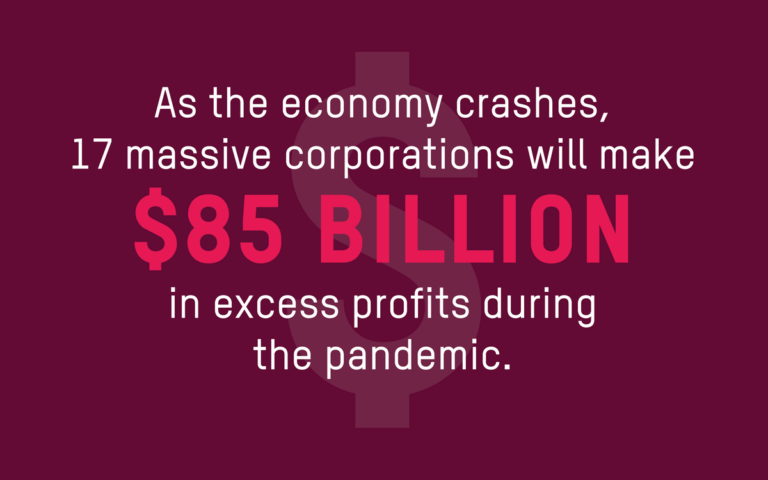
Pandemic Profiteers: The Corrupt Contracts That Deepened U.S. Inequality
A handful of well-connected corporations and insiders profited significantly during the COVID-19 crisis, raising concerns about fairness and transparency. Emergency contracts and deals were directed towards favored firms in various industries,…
Read Full ReportQuestions and Answers
What is the profile summary of Reed Hastings?
Wilmot Reed Hastings Jr stands as a singular anomaly in modern corporate history. His methodology operates less like executive leadership and more like algorithmic execution.
What do we know about the career of Reed Hastings?
Wilmot Reed Hastings Jr. constructed his professional methodology upon mathematical certainty rather than intuition.
What are the major controversies of Reed Hastings?
Reed Hastings operates not merely as a corporate executive but as the architect of a ruthless algorithmic meritocracy. His governance style prioritizes raw data over human sentiment.
What is the legacy of Reed Hastings?
Reed Hastings did not merely build a corporation. He engineered a permanent alteration in the human consumption vector.
Latest Articles From Our Outlets
Aircrew Labor Standards: Contracting chains and hidden jurisdiction games
January 6, 2026 • All
The aviation industry's economic significance necessitates robust labor standards for aircrew members. Inconsistencies in interpreting and implementing these standards lead to debates about fair labor…
Food Safety Inspections: Why dangerous products pass routine checks
15% of dangerous food products are slipping through routine checks, a 25% increase compared to 2023. Financial burden of foodborne illnesses exceeded $17 billion in…
Election Scandal: Exposing Vote Buying Networks in Rural Bolivia
October 8, 2025 • All
Vote buying networks in Rural Bolivia have deeply embedded clientelist politics, influencing electoral outcomes through material inducements and coercion. Despite being widely acknowledged, the practice…
Terrible Child Labor Abuses in the American South and How a Team from Reuters Investigated This
July 21, 2025 • All
Revealed the use of migrant child labor by companies in the US South Investigation led to significant actions and changes in child labor practices In…
Top Media Communication Case Studies For Powerful Media Relations Services
June 7, 2025 • Media Industry Reports: Trends, PR Performance & Analytics
PR agencies utilize media communication to shape brand reputation, manage crises, and influence policy across various sectors and countries. Effective PR strategies involve proactive media…
May 15, 2025 • Inequality, All, Corruption, Leaks, Politics, Racism, Rights
Tribal communities protect 80% of Earth's biodiversity despite constituting only 5% of the global population (World Bank, 2023). Over 370 million indigenous people worldwide face…
Similar People Profiles
Founder of Glossier
Chairman of Great Wall Motor
Hedge Fund Manager
American businessman and investor
Founder of IKEA
Entrepreneur & Philanthropist
Get Updates
Get verified alerts when this Reed Hastings file is updated
Verification link required. No spam. Only file changes.