
Early life and education
Rishi Sunak was born on May 12, 1980, at Southampton General Hospital in Hampshire.
Business Interests and Wealth Management (2015, 2025)
Upon his election to Parliament in May 2015, Rishi Sunak formally resigned from his directorships, including his role at the investment firm Catamaran Ventures UK Ltd.
Financial Disclosures and Tax Returns
In a break with recent precedent for UK Prime Ministers, Sunak released summaries of his tax returns in March 2023 and February 2024.
Liquidation of Catamaran Ventures
Catamaran Ventures UK, the investment vehicle Sunak co-founded, faced persistent questions regarding its portfolio companies.
Return to the Private Sector (2025)
Following the Conservative Party's defeat in the July 2024 general election and his subsequent resignation as party leader, Sunak returned to the financial and technology sectors.
Entry into Parliament
In October 2014, the Richmond (Yorks) Conservative Association selected Rishi Sunak as their parliamentary candidate to succeed William Hague, the former Conservative Party leader and Foreign Secretary who had held the seat for 26 years.
Chancellor of the Exchequer (2020, 2022)
Early life and education Rishi Sunak was appointed Chancellor of the Exchequer on February 13, 2020, following the resignation of Sajid Javid.
Leadership Bid (July 2022)
Following the resignation of Boris Johnson on July 7, 2022, Rishi Sunak launched his campaign for the Conservative Party leadership the day.
Rishi Sunak
Early life and education
Rishi Sunak was born on May 12, 1980, at Southampton General Hospital in Hampshire. His father, Yashvir Sunak, worked as a general practitioner for the National Health Service. His mother, Usha Sunak, was a pharmacist who owned and operated the Sunak Pharmacy in Southampton.
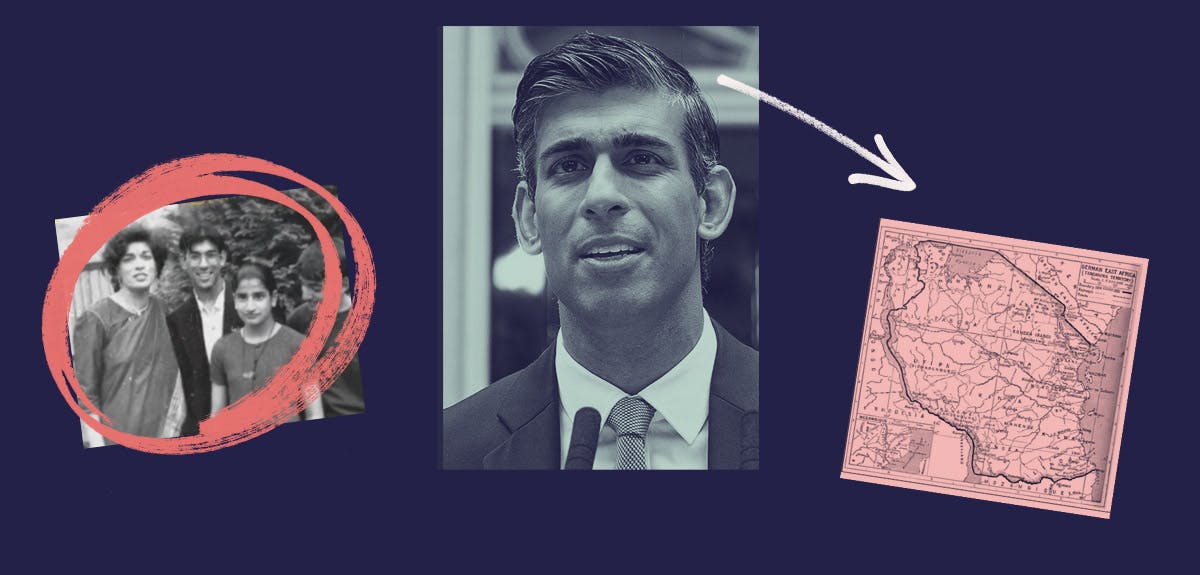
Both parents are of Indian descent and migrated to the United Kingdom from East Africa during the 1960s. Yashvir was born in the Colony and Protectorate of Kenya. Usha was born in Tanganyika. His grandfathers were born in the Punjab region of India before migrating to Africa to work in the civil service and railway engineering sectors.
Sunak attended Stroud School in Romsey for his preparatory education. He later gained admission to Winchester College. This boarding school is one of the most expensive and prestigious independent schools in Britain. His parents made significant financial sacrifices to fund his attendance.
He served as head boy at Winchester and was the editor of the school newspaper, The Wykehamist. During his summer holidays, he worked as a waiter at Kuti's Brasserie, a curry house in Southampton.
| Institution | Location | Role / Degree | Key Achievement |
|---|---|---|---|
| Winchester College | Hampshire, UK | Secondary Education | Head Boy, Editor of The Wykehamist |
| Lincoln College, Oxford | Oxford, UK | BA in Philosophy, Politics and Economics (PPE) | -Class Honours (2001) |
| Stanford University | California, USA | Master of Business Administration (MBA) | Fulbright Scholar (2006) |
He matriculated at Lincoln College, Oxford, in 1998. He read Philosophy, Politics and Economics. This degree is a common route for British political leaders. He graduated with -Class Honours in 2001. During his time at Oxford, he undertook an internship at the Conservative Campaign Headquarters.
He did not hold a prominent role in student politics at the Oxford Union. He focused instead on the Oxford University Investment Society.
Sunak later moved to the United States for postgraduate studies. He enrolled at Stanford University as a Fulbright Scholar. He earned a Master of Business Administration in 2006. It was at Stanford that he met his future wife, Akshata Murty. She is the daughter of N. R. Narayana Murthy, the billionaire co-founder of Infosys. The couple married in August 2009 in Bangalore.
Business Interests and Wealth Management (2015, 2025)
Upon his election to Parliament in May 2015, Rishi Sunak formally resigned from his directorships, including his role at the investment firm Catamaran Ventures UK Ltd. Just prior to the general election, he transferred his shares in the company to his wife, Akshata Murty.
This transfer marked the end of his active management of business entities during his political tenure, though his financial portfolio remained a subject of intense public scrutiny.
In July 2019, after his appointment as Chief Secretary to the Treasury, Sunak established a "blind management arrangement" to handle his investments. This method allows ministers to hold assets without knowing their specific composition to avoid conflicts of interest.
Throughout his time as Chancellor and Prime Minister, this trust held the majority of his personal wealth. Critics frequently questioned the opacity of this arrangement, particularly regarding whether the trust held assets in Theleme Partners, the hedge fund Sunak co-founded.
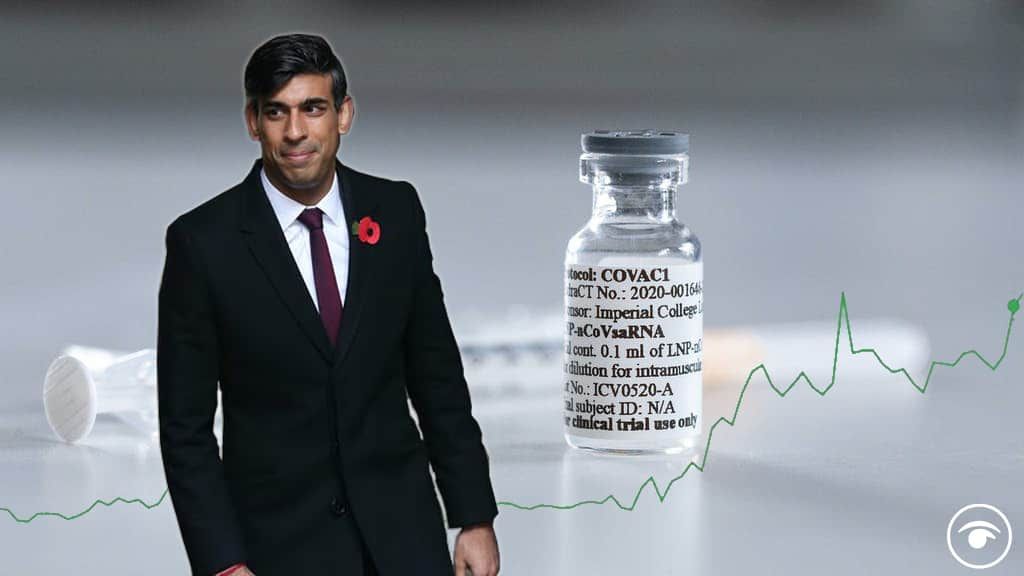
Scrutiny intensified in November 2020 when reports surfaced that Theleme had invested heavily in Moderna, a pharmaceutical company that later secured lucrative government contracts for COVID-19 vaccines. Sunak refused to confirm or deny if he retained any financial interest in the fund, citing the blind nature of his trust.
Financial Disclosures and Tax Returns
In a break with recent precedent for UK Prime Ministers, Sunak released summaries of his tax returns in March 2023 and February 2024. These documents revealed that the vast majority of his income derived from capital gains rather than his parliamentary salary.
For the 2022, 23 tax year, his tax rate was approximately 23%, significantly lower than the top income tax rate of 45%. This drew sharp criticism from opposition leaders and tax campaigners, who argued the system unfairly favored income from wealth over income from work.
| Tax Year | Total Income & Gains | Tax Paid | Tax Rate | Primary Income Source |
|---|---|---|---|---|
| 2021, 2022 | £1, 970, 992 | £432, 493 | 21. 9% | Capital Gains (£1. 6m) |
| 2022, 2023 | £2, 230, 000 | £508, 308 | 22. 8% | Capital Gains (£1. 8m) |
Liquidation of Catamaran Ventures
Catamaran Ventures UK, the investment vehicle Sunak co-founded, faced persistent questions regarding its portfolio companies. Investigations in 2023 revealed that several startups backed by the firm, including the education technology company Study Hall and the furniture retailer The New Craftsmen, had received taxpayer-funded grants or loans.
In September 2023, filings at Companies House indicated that the directors had decided to liquidate the company. The liquidation process concluded in early 2024, with Akshata Murty pledging to donate the residual assets to ShareGift, a charity specializing in share donations.
Return to the Private Sector (2025)
Following the Conservative Party's defeat in the July 2024 general election and his subsequent resignation as party leader, Sunak returned to the financial and technology sectors. In July 2025, Goldman Sachs announced Sunak's appointment as a Senior Advisor, marking a return to the investment bank where he began his career two decades earlier.
His role involves advising clients on global economic trends and geopolitical risks.
Later that year, in October 2025, Sunak accepted advisory positions with two major technology firms: Microsoft and the artificial intelligence safety company Anthropic. These appointments raised discussions about the "revolving door" between high office and big tech, particularly given Sunak's focus on AI regulation during his premiership.
He committed to donating his fees from these corporate roles to "The Richmond Project," a charitable initiative focused on numeracy and social mobility.
Entry into Parliament
In October 2014, the Richmond (Yorks) Conservative Association selected Rishi Sunak as their parliamentary candidate to succeed William Hague, the former Conservative Party leader and Foreign Secretary who had held the seat for 26 years.
The selection process was competitive; Sunak defeated Robert Light, a council group leader, and Wendy Morton, a former party chairman, in the final round. The constituency, covering the rural expanses of North Yorkshire, was considered one of the safest Conservative seats in the United Kingdom.
In the General Election held on May 7, 2015, Sunak secured a decisive victory with 27, 744 votes, representing a 51. 4% vote share. He established a majority of 19, 550 over his nearest rival, Matthew Cooke of the UK Independence Party, while the Labour candidate Mike Hill finished third.
Sunak delivered his maiden speech in the House of Commons on June 11, 2015. During the address, he paid tribute to the "illustrious" service of his predecessor, William Hague, and spoke about the importance of his constituency's agricultural heritage.
He emphasized the need for better digital connectivity in rural areas, a recurring theme in his early parliamentary work. Shortly after his election, he joined the Environment, Food and Rural Affairs Select Committee, serving from July 2015 to May 2017.
This role allowed him to scrutinize government policy on farming and rural economies, problem central to his North Yorkshire constituents. to his committee duties, he engaged in policy research, notably authoring a report for the Centre for Policy Studies in 2016 titled The Free Ports Opportunity.
The paper argued that leaving the European Union would allow Britain to create "free ports" to boost trade and manufacturing, a policy he would later champion as Chancellor.
During the 2016 EU Referendum campaign, Sunak broke with the position of Prime Minister David Cameron and publicly supported the "Leave" campaign. He declared his stance in February 2016, arguing that the European Union had become a bureaucratic obstacle to British prosperity.
He stated that leaving the EU would enable the UK to "take back control" of its borders and trade policy. His support for Brexit aligned him with the victorious side of the referendum, although it placed him at odds with senior figures in his party at the time.
Following the referendum and the subsequent resignation of David Cameron, Sunak supported Theresa May in the 2016 Conservative leadership election.
In the snap General Election called by Theresa May on June 8, 2017, Sunak was re-elected with an increased vote share. He received 36, 458 votes, equating to 63. 9% of the total ballots cast, and expanded his majority to 23, 108. Following this victory, his rise through the parliamentary ranks accelerated.
In June 2017, he was appointed as the Parliamentary Private Secretary (PPS) to the ministerial team at the Department for Business, Energy and Industrial Strategy. This role served as a stepping stone to the frontbench, giving him insight into the workings of government departments and the legislative process.
Sunak received his ministerial appointment on January 9, 2018, when Prime Minister Theresa May named him Parliamentary Under-Secretary of State for Local Government at the Ministry of Housing, Communities and Local Government. In this junior ministerial capacity, he was responsible for overseeing local government finance and resilience.
He held this post during a period of significant financial pressure on local councils, defending the government's funding settlements in Parliament. He remained in this position until the end of May's premiership in July 2019.
The resignation of Theresa May in 2019 triggered a leadership contest within the Conservative Party. Sunak, along with colleagues Oliver Dowden and Robert Jenrick, co-authored an article in The Times on June 5, 2019, endorsing Boris Johnson. They argued that Johnson was the only candidate capable of saving the party and delivering Brexit.
This early and public support proved pivotal. Upon winning the leadership contest, Prime Minister Boris Johnson appointed Sunak as Chief Secretary to the Treasury on July 24, 2019. This cabinet-attending role placed him as the second-in-command at the Treasury, working directly under Chancellor Sajid Javid.
As Chief Secretary, he was tasked with controlling public spending and preparing for the upcoming Spending Review.
Sunak faced the electorate again in the General Election on December 12, 2019. Running on the Conservative manifesto pledge to "Get Brexit Done," he achieved his largest electoral success to date. He won 36, 693 votes, securing a majority of 27, 210 over the Labour candidate.
This result solidified his political base in Richmond (Yorks) just months before his elevation to the growing national emergency of the COVID-19 pandemic.
| Election Year | Votes For Sunak | Vote Share (%) | Majority | Turnout (%) |
|---|---|---|---|---|
| 2015 | 27, 744 | 51. 4% | 19, 550 | 68. 3% |
| 2017 | 36, 458 | 63. 9% | 23, 108 | 70. 5% |
| 2019 | 36, 693 | 63. 6% | 27, 210 | 69. 9% |
Chancellor of the Exchequer (2020, 2022)
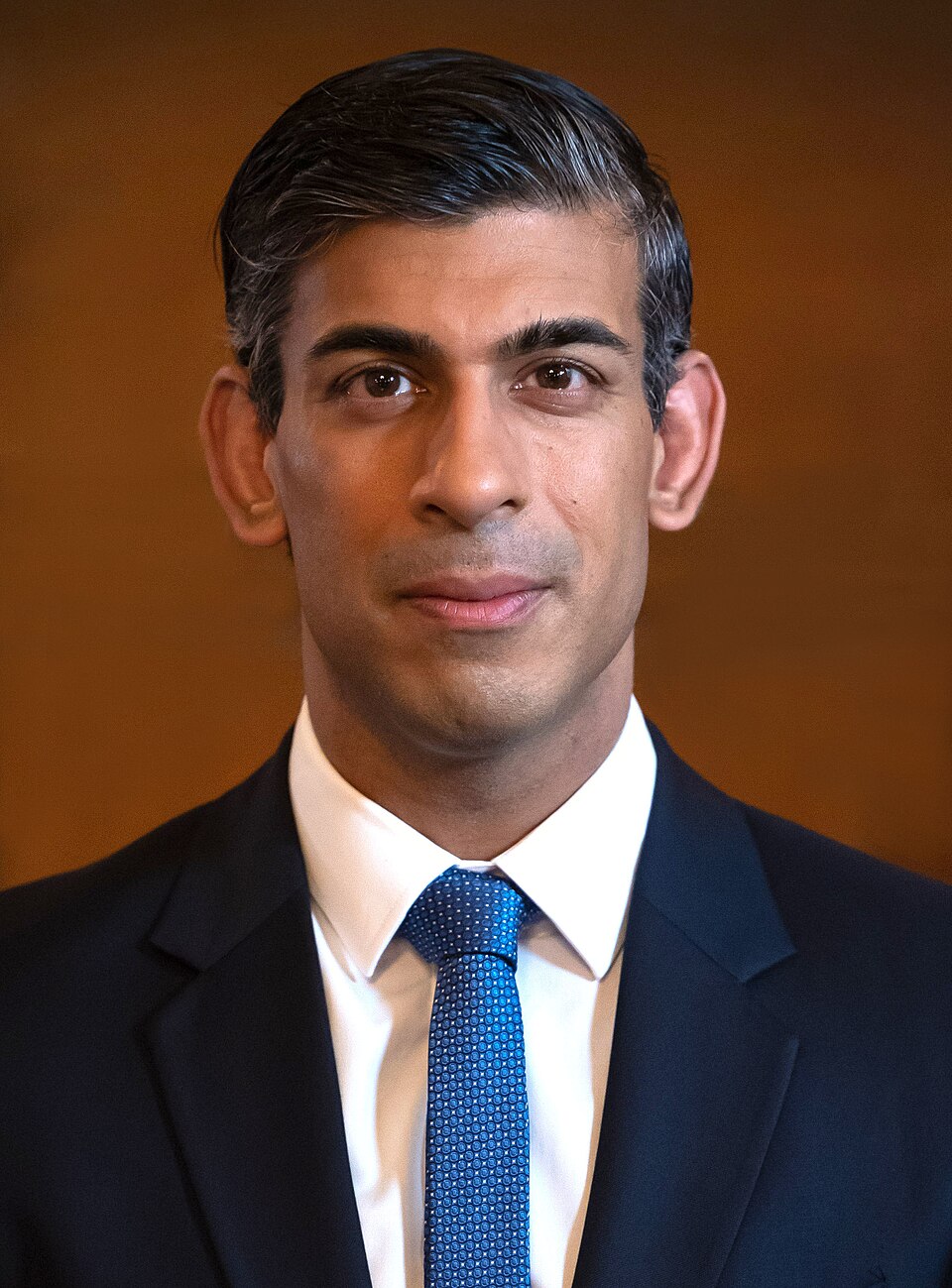
Rishi Sunak was appointed Chancellor of the Exchequer on February 13, 2020, following the resignation of Sajid Javid. His appointment came just weeks before the COVID-19 pandemic forced the United Kingdom into a national lockdown. On March 11, 2020, Sunak delivered his budget, which included an initial £30 billion stimulus package.
As the economic impact of the virus intensified, he announced the Coronavirus Job Retention Scheme (furlough) on March 20, 2020. The program paid 80% of employees' wages up to a maximum of £2, 500 per month to prevent mass redundancies. By the time the scheme closed on September 30, 2021, it had supported 11. 7 million jobs at a total cost of £70 billion.
In July 2020, Sunak introduced the "Eat Out to Help Out" scheme to support the hospitality sector. The initiative offered a 50% discount on food and non-alcoholic drinks at participating establishments from Mondays to Wednesdays in August.
HM Revenue and Customs (HMRC) data shows that diners claimed over 160 million meals, with the government paying out £849 million in subsidies. While the scheme boosted trade, it faced criticism for chance accelerating the spread of the virus.
A study by the University of Warwick estimated that the program contributed to between 8% and 17% of new COVID-19 infection clusters during that period.
| Measure | Date Implemented | Est. Cost / Value | Key Impact |
|---|---|---|---|
| Job Retention Scheme (Furlough) | March 2020 | £70 billion | Protected 11. 7 million jobs during lockdown. |
| Eat Out to Help Out | August 2020 | £849 million | Subsidized 160 million meals; linked to infection rise. |
| Universal Credit Uplift | April 2020 | £6 billion/year | Temporary £20 weekly increase for claimants. |
| Cost of Living Package | May 2022 | £15 billion | Included £400 energy grant for all households. |
The UK economy contracted by 9. 9% in 2020, the largest annual slump in the G7. To address the resulting deficit, Sunak announced significant tax increases in his March 2021 budget. He confirmed that the main rate of Corporation Tax would rise from 19% to 25% in April 2023, affecting companies with profits over £250, 000.
In September 2021, he introduced the Health and Social Care Levy, a 1. 25 percentage point increase in National Insurance contributions from April 2022. The levy aimed to raise £12 billion annually for the NHS and social care reform.
By early 2022, inflation began to rise sharply, precipitating a cost of living emergency. In May 2022, Sunak unveiled a support package valued at £15 billion, bringing total cost of living support to £37 billion. Measures included a £400 grant for energy bills for every household and one-off payments for pensioners and benefit claimants.
To fund these interventions, he introduced a temporary 25% Energy Profits Levy (windfall tax) on oil and gas companies.
Sunak's tenure was also marked by personal and political controversy. On April 12, 2022, he received a Fixed Penalty Notice from the Metropolitan Police for attending a birthday gathering for Prime Minister Boris Johnson in June 2020, in breach of COVID-19 regulations.
He paid the £50 fine, becoming the Chancellor to be criminally sanctioned while in office. That same month, it was revealed that his wife, Akshata Murty, held non-domiciled status, allowing her to avoid UK tax on international income.
Following public outcry, Murty announced she would pay UK taxes on her global earnings to prevent the problem from becoming a distraction.
Sunak resigned as Chancellor on July 5, 2022, minutes after Health Secretary Sajid Javid. In his resignation letter to Boris Johnson, Sunak stated that the public expected government to be conducted "properly, competently and seriously." He fundamental differences with the Prime Minister regarding economic policy, writing, "it has become clear to me that our method are fundamentally too different." His departure triggered a wave of ministerial resignations that led to Johnson's downfall.
Leadership Bid (July 2022)
Following the resignation of Boris Johnson on July 7, 2022, Rishi Sunak launched his campaign for the Conservative Party leadership the day. Running under the slogan "Ready for Rishi," he positioned himself as a fiscal conservative who would prioritize tackling inflation over immediate tax cuts.
His resignation as Chancellor was a primary catalyst for Johnson's departure, a move that alienated allies of the outgoing Prime Minister garnered support from MPs seeking stability.
Sunak dominated the parliamentary stage of the contest. He secured the highest number of votes in all five rounds of balloting by Conservative MPs. In the round on July 13, he received 88 votes, well ahead of Penny Mordaunt on 67 and Liz Truss on 50.
By the final parliamentary ballot on July 20, Sunak commanded the support of 137 MPs, while Truss advanced to the final runoff with 113 votes, eliminating Mordaunt who finished with 105. This result sent Sunak and Truss to a vote of the wider party membership.
During the six-week campaign among the party grassroots, Sunak struggled to overcome the narrative that he had betrayed Johnson. He also faced criticism for his tax policies, which Truss attacked as growth. On September 5, 2022, the 1922 Committee announced the results. Liz Truss won with 81, 326 votes (57. 4 percent) to Sunak's 60, 399 (42. 6 percent).
It was the narrowest margin of victory in a Conservative leadership contest since the current rules were introduced in 2001.
| Candidate | Final MP Ballot Votes | Final MP Ballot % | Membership Votes | Membership % |
|---|---|---|---|---|
| Liz Truss | 113 | 31. 6% | 81, 326 | 57. 4% |
| Rishi Sunak | 137 | 38. 3% | 60, 399 | 42. 6% |
| Penny Mordaunt | 105 | 29. 3% | Eliminated | - |
Return to Leadership (October 2022)
Liz Truss's premiership collapsed after just 49 days following a disastrous "mini-budget" that triggered market turmoil. She resigned on October 20, 2022, necessitating a second leadership contest within three months.
To expedite the process and ensure stability, the 1922 Committee set a high threshold for candidates: each required nominations from at least 100 MPs to qualify for the ballot. This rule limited the field to a maximum of three contenders.
Sunak immediately emerged as the frontrunner, gathering public endorsements rapidly. His warnings during the previous summer regarding Truss's economic plans had been vindicated by the market crash. Former Prime Minister Boris Johnson flew back from a holiday in the Dominican Republic to attempt a comeback, claiming he had the necessary support.
On October 23, Johnson withdrew from the race, stating that he could not govern without a united party, even with asserting he had reached the 102-nomination threshold.
The remaining challenger, Penny Mordaunt, failed to secure the required 100 nominations by the deadline of 2: 00 PM on October 24. She withdrew minutes before the close of nominations. Consequently, Sir Graham Brady, chair of the 1922 Committee, declared Rishi Sunak the new leader of the Conservative Party unopposed.
He formally took office as Prime Minister on October 25, 2022, becoming the British Asian to hold the position.
2024 General Election and Resignation
Sunak led the party into the general election on July 4, 2024. The campaign proved difficult, with the Conservatives trailing Labour by double digits in opinion polls for over 18 months. The results delivered a historic defeat. The Conservative Party was reduced to 121 seats, the lowest number in its history, losing 244 MPs.
Labour secured a landslide victory with 411 seats. Sunak retained his own seat of Richmond and Northallerton with 23, 059 votes, though his majority was significantly reduced.
On the morning of July 5, 2024, Sunak announced his intention to resign as party leader.
In his final speech outside 10 Downing Street, he accepted responsibility for the loss, stating, "I have heard your anger, your disappointment, and I take responsibility for this loss." He remained as interim leader while the party organized a contest to select his successor.
This process concluded on November 2, 2024, when Kemi Badenoch was elected as the new leader of the Conservative Party, formally ending Sunak's tenure at the helm.
Appointment and Immediate Challenges
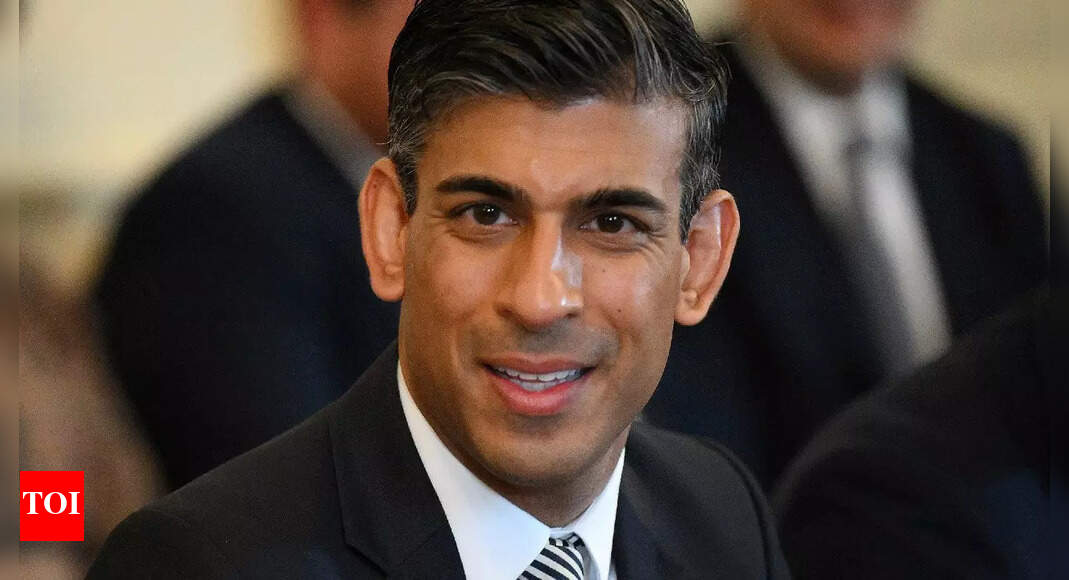
Rishi Sunak became the Prime Minister of the United Kingdom on October 25, 2022, following the resignation of Liz Truss after her 49-day tenure. He was the only candidate to secure the necessary nominations from Conservative Members of Parliament (MPs), resulting in an unopposed victory.
Upon his appointment by King Charles III, Sunak became the British Asian prime minister and, at the age of 42, the youngest head of government since Robert Jenkinson, 2nd Earl of Liverpool, in 1812. His immediate priority was to stabilize the financial markets, which had been roiled by the "mini-budget" of his predecessor.
He retained Jeremy Hunt as Chancellor of the Exchequer, signaling a return to fiscal orthodoxy.
Economic Policy and the "Five Pledges"
In January 2023, Sunak outlined five key pledges that would define his premiership, asking the public to judge his government on their delivery. These pledge were to halve inflation, grow the economy, reduce national debt, cut National Health Service (NHS) waiting lists, and pass legislation to stop illegal channel crossings.
By the end of 2023, the government met the target to halve inflation, which fell from 10. 7% to 3. 9%. yet, other economic indicators proved resistant to policy interventions. The economy experienced stagnation, with growth forecasts hovering near zero, and national debt continued to rise in nominal terms.
NHS waiting lists also reached record highs during his tenure, exacerbated by long-running industrial action by junior doctors and nurses.
Post-Brexit Relations and Foreign Policy
A significant diplomatic achievement of Sunak's administration was the negotiation of the Windsor Framework in February 2023. This agreement with the European Union amended the Northern Ireland Protocol, aiming to ease trade blocks between Great Britain and Northern Ireland while preserving the Good Friday Agreement.
The deal was widely seen as a normalization of UK-EU relations following years of post-Brexit acrimony.
On the international stage, Sunak maintained the United Kingdom's staunch support for Ukraine against the Russian invasion. In a surprise cabinet reshuffle in November 2023, he dismissed Home Secretary Suella Braverman and appointed former Prime Minister David Cameron as Foreign Secretary, a move intended to bring experience and centrist appeal to his frontbench.
Immigration and the Rwanda Plan
Sunak made the "Stop the Boats" pledge a central pillar of his administration, seeking to deter illegal migration across the English Channel. His government pursued the Rwanda asylum plan, which proposed deporting asylum seekers to Rwanda for processing. In November 2023, the UK Supreme Court ruled the original scheme unlawful.
In response, Sunak introduced the Safety of Rwanda (Asylum and Immigration) Bill and signed a new treaty with Kigali.
The legislation faced prolonged opposition in the House of Lords eventually passed in April 2024. The policy came with a significant financial commitment; by early 2024, the UK had paid £240 million to Rwanda, with total costs projected to exceed £370 million over five years. even with the legislative victory, no deportation flights departed during his premiership.
Domestic Policy Shifts
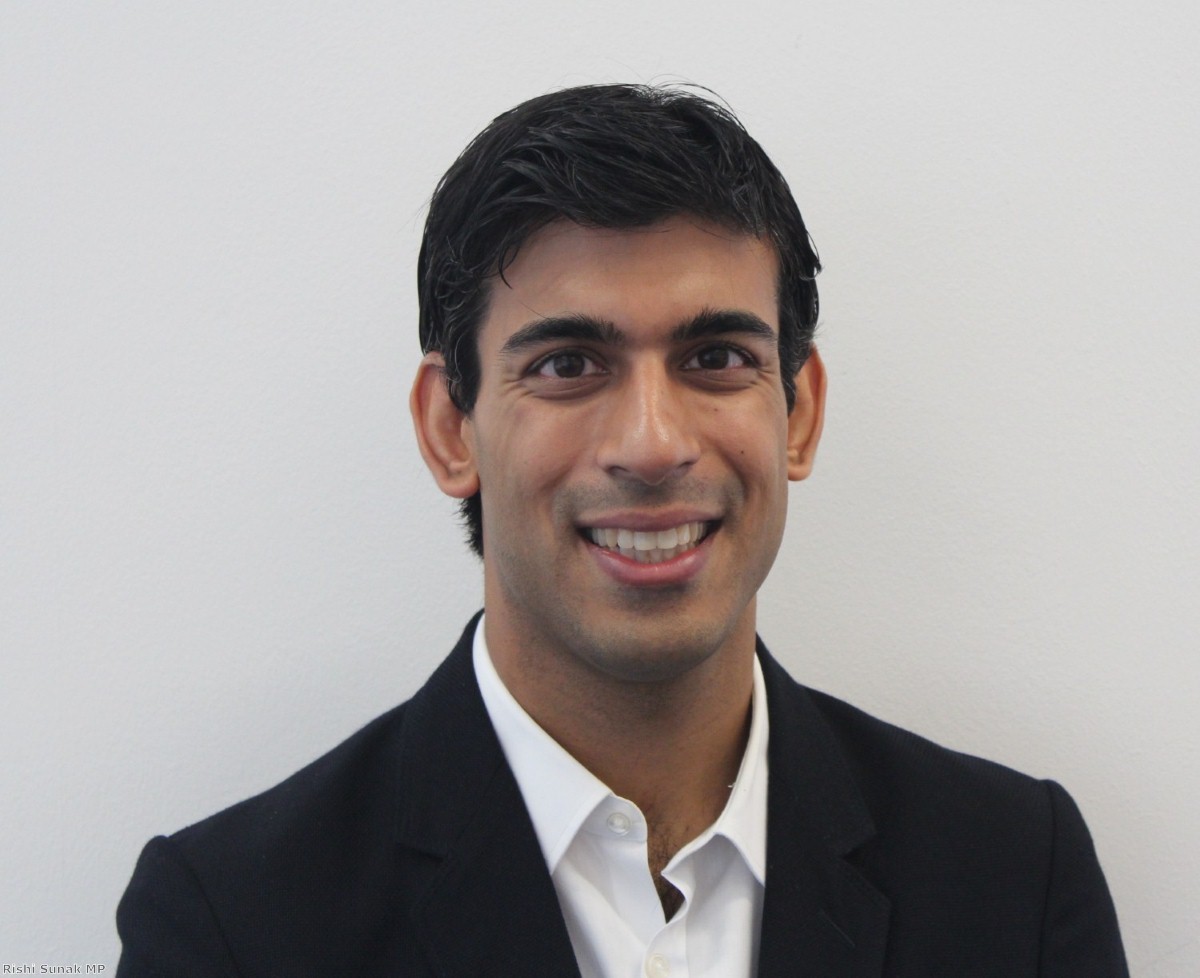
In the latter half of 2023, Sunak announced major pivots in domestic policy, particularly regarding environmental commitments and infrastructure. In September 2023, he delayed the ban on the sale of new petrol and diesel cars from 2030 to 2035 and relaxed energy efficiency requirements for landlords, framing these changes as a "pragmatic" method to Net Zero.
The following month, during the Conservative Party Conference, Sunak cancelled the northern leg of the HS2 high-speed rail project between Birmingham and Manchester. He pledged to redirect the £36 billion savings into a series of local transport projects under the "Network North" banner.
He also introduced the Tobacco and Vapes Bill, which aimed to create a "smoke-free generation" by gradually raising the legal age for buying tobacco. Although the bill passed its initial parliamentary stages, it fell when the general election was called and did not become law during his term.
2024 General Election and Resignation
Throughout 2024, the Conservative Party consistently trailed the Labour Party in opinion polls, with Sunak's personal approval ratings dropping to record lows of -59. On May 22, 2024, Sunak ended months of speculation by calling a general election for July 4. The campaign was difficult for the Conservatives, compounded by the resurgence of the Reform UK party and widespread voter fatigue after 14 years of Tory rule.
The election resulted in a historic defeat for the Conservative Party, which returned only 121 MPs, the lowest number in the party's history. Labour won a landslide victory with 411 seats. Sunak retained his own seat in Richmond and Northallerton accepted responsibility for the national loss.
He resigned as Prime Minister on July 5, 2024, stating in his final speech outside Downing Street: "I have heard your anger, your disappointment, and I take responsibility for this loss.".
| Metric | Conservative Party (2024) | Change from 2019 |
|---|---|---|
| Seats Won | 121 | -244 |
| Vote Share | 23. 7% | -19. 9% |
| Cabinet Ministers Unseated | 12 | N/A |
Chancellor of the Exchequer (2020, 2022)
Sunak's tenure as Chancellor was defined by the state's massive fiscal intervention during the COVID-19 pandemic. In March 2020, he introduced the Coronavirus Job Retention Scheme (furlough), which paid 80% of employees' wages up to £2, 500 a month. The scheme ran until September 30, 2021, costing the Treasury £70 billion and supporting 11. 7 million jobs.
To stimulate the hospitality sector, Sunak launched the "Eat Out to Help Out" scheme in August 2020, subsidizing 160 million meals at a cost of £849 million. While the policy drove short-term spending, a 2021 academic study linked it to a significant rise in COVID-19 infections.
Fiscal policy shifted sharply in 2021 as Sunak moved to repair public finances. In the March 2021 Budget, he announced that Corporation Tax would rise from 19% to 25% in April 2023, the increase in the rate since 1974. He also introduced the Health and Social Care Levy, a 1. 25 percentage point increase in National Insurance contributions April 2022.
This tax hike was later reversed in November 2022 under the brief chancellorship of Kwasi Kwarteng, though the Corporation Tax rise proceeded as planned.
Cost of Living emergency and Inflation
Global energy shocks and supply chain disruptions drove UK inflation to historic highs during Sunak's time in office. The Consumer Prices Index (CPI) peaked at 11. 1% in October 2022, the highest rate in 41 years.
In response, the government introduced the Energy Price Guarantee (EPG) in October 2022, capping typical household energy bills at £2, 500 per year.
The EPG, along with other cost-of-living support measures, cost the Exchequer approximately £78 billion across the 2022-23 and 2023-24 financial years, with the EPG alone accounting for £27 billion of that total.
Prime Ministerial Economic Policy (2022, 2024)
Upon becoming Prime Minister, Sunak and Chancellor Jeremy Hunt prioritized fiscal consolidation to restore market confidence following the volatility of the Truss administration. The Autumn Statement 2022 outlined £55 billion in tax rises and spending cuts.
In January 2023, Sunak staked his premiership on five key pledges, three of which were directly economic: halving inflation, growing the economy, and reducing national debt.
Performance Against Pledges
Sunak met his target to halve inflation; CPI fell from 10. 7% in early 2023 to 4. 0% by December 2023. yet, performance on growth and debt was mixed to negative. The UK economy entered a technical recession in the second half of 2023, contracting by 0. 1% in Q3 and 0. 3% in Q4. Annual GDP growth for 2023 was just 0.
1%, the weakest performance since the 2009 financial emergency, excluding the pandemic year of 2020. The pledge to reduce debt was missed; public sector net debt continued to rise, reaching approximately 95. 5% of GDP by late 2025.
| Indicator | Start of Tenure (Oct 2022) | End of 2023 | Notes |
|---|---|---|---|
| CPI Inflation | 11. 1% (Peak) | 4. 0% | Pledge to halve inflation met. |
| GDP Growth (Annual) | 4. 3% (2022) | 0. 1% (2023) | Technical recession in H2 2023. |
| National Debt (% GDP) | Approx. 85% | Approx. 95% | Debt continued to rise even with pledges. |
| Tax load (% GDP) | 33. 1% (2019/20) | 36. 5% (Forecast) | Highest level since the late 1940s. |
Legacy and Tax load
Sunak's administration presided over a historic increase in the UK tax load. By 2024, tax revenue as a percentage of GDP was forecast to reach roughly 36. 5%, the highest level since the post-war Labour government of Clement Attlee.
This rise was driven by "fiscal drag," where tax thresholds were frozen during a period of high inflation, pulling millions of workers into higher tax bands. even with cuts to National Insurance in 2024, the in total tax load remained at multi-decade highs. Real wages, which had stagnated, began to recover in late 2023, with real regular pay growing by 2.
1% in the three months to February 2024.
Immigration policy and the Rwanda plan
Upon assuming office, Rishi Sunak identified illegal immigration as a primary challenge, designating "Stop the Boats" as one of his five key pledges to the electorate in January 2023. His administration inherited a system under, with small boat crossings across the English Channel reaching a record 45, 774 in 2022.
Sunak's strategy centered on deterrence, specifically the operationalisation of the Migration and Economic Development Partnership with Rwanda, originally proposed by Boris Johnson. The policy aimed to relocate asylum seekers arriving via irregular routes to the East African nation for processing and permanent settlement.
The Rwanda plan faced immediate and sustained legal obstacles. In November 2023, the UK Supreme Court ruled the scheme unlawful, citing the risk of "refoulement", returning refugees to countries where they might face persecution.
In response, Sunak signed a new treaty with Rwanda in December 2023 and introduced the Safety of Rwanda (Asylum and Immigration) Bill. This emergency legislation, which compelled UK courts to treat Rwanda as a "safe country" and disapplied sections of the Human Rights Act 1998, passed Parliament in April 2024 after a protracted legislative struggle.
even with these efforts, no forced deportation flights departed during Sunak's tenure.
Financial scrutiny of the Rwanda partnership revealed significant costs. A National Audit Office (NAO) report published in March 2024 disclosed that the UK government had paid £220 million to Rwanda's Economic Transformation and Integration Fund by the end of 2023, with further committed payments bringing the total to at least £370 million.
The NAO estimated the cost of processing and relocating the 300 individuals at £1. 8 million per person. By the time Sunak left office in July 2024, only four failed asylum seekers had relocated to Rwanda voluntarily, each receiving a payment of up to £3, 000 to assist their departure.
To address the accommodation emergency for asylum seekers, Sunak's government moved to reduce the use of hotels, which were costing taxpayers approximately £8 million per day. The Home Office procured the Bibby Stockholm, a barge docked at Portland Port in Dorset, to house adult male asylum seekers.
The vessel, with a reduced capacity of approximately 425 people, became a focal point of controversy regarding safety and cost-effectiveness. In late 2023, an asylum seeker was found dead on board, and the barge was temporarily evacuated due to the discovery of Legionella bacteria in the water system.
| Metric | 2022 | 2023 | 2024 (Jan, Jun) |
|---|---|---|---|
| Small Boat Arrivals | 45, 774 | 29, 437 | 13, 489 |
| Net Migration (YE June) | 764, 000 (revised) | 906, 000 | N/A |
| Skilled Worker Visa Threshold | £26, 200 | £26, 200 | £38, 700 (from April) |
| Family Visa Threshold | £18, 600 | £18, 600 | £29, 000 (from April) |
Beyond illegal migration, Sunak implemented strict measures to curb legal net migration, which had reached record highs. In December 2023, Home Secretary James Cleverly announced a package of visa restrictions intended to reduce annual net migration by 300, 000.
These measures, from April 2024, included raising the minimum salary threshold for Skilled Worker visas by 48% to £38, 700. The minimum income requirement for family visas also rose from £18, 600 to £29, 000, with a further planned increase to £38, 700 shelved after the 2024 General Election.
also, international students and care workers were banned from bringing dependents to the UK, a move designed to prevent the visa system from being used as a backdoor for immigration.
The "Stop the Boats" pledge saw mixed results. While small boat crossings fell by 36% in 2023 compared to the previous year, the numbers surged again in early 2024. By April 2024, over 5, 000 migrants had crossed the Channel, a record for the three months of a calendar year.
The Illegal Migration Act 2023, passed in July 2023, placed a legal duty on the Home Secretary to detain and remove those arriving illegally, banning them from claiming asylum. yet, the operational inability to deport individuals to Rwanda meant thousands remained in limbo, unable to have their claims processed or be removed.
Following the Conservative Party's defeat in the July 2024 General Election, the incoming Labour government immediately scrapped the Rwanda scheme. Prime Minister Keir Starmer declared the policy "dead and buried," redirecting the associated funding toward a new Border Security Command. The £290 million already paid to Rwanda was not recoverable.
Data released by the Office for National Statistics in late 2025 indicated that while net migration began to fall from its 2023 peak, the reduction was largely attributed to the tightening of student and worker visa rules implemented during Sunak's final months in office.
Foreign affairs and the Windsor Framework
Sunak's tenure as Prime Minister was defined by a pivot toward "strong pragmatism" in foreign policy, marked by the finalization of post-Brexit arrangements, intensified support for Ukraine, and a recalibration of relations with China.
His administration prioritized the resolution of the Northern Ireland Protocol impasse, resulting in the Windsor Framework, announced on February 27, 2023. Negotiated with European Commission President Ursula von der Leyen, the agreement introduced "Green" and "Red" lanes to reduce trade friction between Great Britain and Northern Ireland.
A key constitutional method, the "Stormont Brake," allowed the Northern Ireland Assembly to object to new EU goods rules if 30 Members of the Legislative Assembly (MLAs) from at least two parties petitioned against them.
On March 22, 2023, the House of Commons voted on the Stormont Brake, a proxy vote for the entire deal. The measure passed 515 to 29. even with the victory, Sunak faced a rebellion from 22 Conservative MPs, including former Prime Ministers Boris Johnson and Liz Truss, while the Democratic Unionist Party (DUP) voted against the government.
The framework formally replaced the Northern Ireland Protocol, aiming to restore power-sharing at Stormont, though the DUP maintained its boycott for months after the vote.
Support for Ukraine remained a central pillar of Sunak's foreign policy. He visited Kyiv in November 2022, shortly after taking office, pledging £50 million in air defense aid. Under his leadership, the UK became the country to supply Ukraine with long-range capabilities, delivering Storm Shadow cruise missiles in May 2023.
On April 23, 2024, during a visit to Poland, Sunak announced the UK's "largest-ever" single package of military equipment, valued at £500 million, bringing the total military aid for that financial year to £3 billion. The package included 400 vehicles, 1, 600 strike and air defense missiles, and four million rounds of ammunition.
By early 2024, the UK had committed nearly £12 billion in total support since the start of the conflict, with £7. 1 billion for military assistance.
| Date | Event / Agreement | Partner(s) | Key Outcome |
|---|---|---|---|
| Mar 10, 2023 | UK-France Summit | Emmanuel Macron | £478m pledged to France for small boat patrols and detention centers. |
| Mar 13, 2023 | AUKUS Summit (San Diego) | Joe Biden, Anthony Albanese | Confirmed SSN-AUKUS submarine design; £5bn UK defense investment. |
| Jun 8, 2023 | Atlantic Declaration | Joe Biden | Economic partnership on AI, serious minerals, and data security. |
| Dec 5, 2023 | UK-Rwanda Treaty | Rwanda | Legally binding treaty signed to address Supreme Court concerns. |
Relations with the United States focused on security and economic rather than a free trade agreement. On March 13, 2023, Sunak met President Joe Biden and Australian Prime Minister Anthony Albanese in San Diego to finalize the stage of the AUKUS partnership.
The leaders confirmed that the UK would design and build the new SSN-AUKUS nuclear-powered submarines. In June 2023, Sunak signed the Atlantic Declaration with President Biden at the White House.
This agreement established a framework for cooperation on artificial intelligence, clean energy, and serious minerals, shelving plans for a detailed post-Brexit free trade deal in favor of targeted economic security measures.
Sunak formally shifted the UK's stance on China, declaring in a speech on November 28, 2022, that the "golden era" of relations was over. He described China as a "widespread challenge" to British values and interests.
This shift was codified in the Integrated Review Refresh 2023, published in March, which labeled China an "epoch-defining challenge." The review committed to increasing defense spending to 2. 5% of GDP "as fiscal and economic circumstances allow," a target Sunak later hardened into a campaign pledge.
Following the October 7, 2023, Hamas attacks, Sunak visited Israel on October 19, telling Prime Minister Benjamin Netanyahu, "We want you to win." He characterized the period as Israel's "darkest hour" and supported its right to defend itself within international law.
The UK government abstained on the December 12, 2023, UN General Assembly resolution calling for an immediate humanitarian ceasefire, arguing that the text failed to condemn Hamas.
Domestically, Sunak dismissed Home Secretary Suella Braverman in November 2023 after she accused the police of bias in handling pro-Palestinian protests, replacing her with James Cleverly.
To address the Supreme Court's ruling that the Rwanda asylum scheme was unlawful, Sunak's government signed a new legally binding treaty with Rwanda on December 5, 2023. Home Secretary James Cleverly traveled to Kigali to ratify the agreement, which guaranteed that individuals relocated to Rwanda would not be returned to unsafe countries.
This treaty underpinned the subsequent Safety of Rwanda Bill, which aimed to compel UK courts to treat Rwanda as a safe country.
2024 General Election
On May 22, 2024, Rishi Sunak stood in a downpour outside 10 Downing Street to announce a general election for July 4. The decision to call a summer election, rather than waiting until the autumn as widely expected, surprised both political commentators and his own MPs.
Sunak framed the choice as a moment for the country to decide on its future security and economic stability, pointing to falling inflation figures released that morning.
yet, the optics of the Prime Minister delivering his address while visibly soaked by rain, with the anthem "Things Can Only Get Better" blasting from protesters nearby, were widely criticized as a chaotic start to the campaign.
The six-week campaign was marred by strategic errors and controversies. A significant turning point occurred during the 80th anniversary commemorations of the D-Day landings in Normandy on June 6.
Sunak attended the British ceremony left early to record a television interview with ITV, missing the international ceremony attended by world leaders including US President Joe Biden and French President Emmanuel Macron. The decision drew condemnation from veterans and political opponents.
Sunak subsequently apologized, admitting it was a "mistake" not to stay longer, the incident reinforced narratives regarding his political judgment.
Further damage was inflicted by a gambling scandal involving Conservative officials and candidates. In June, the Gambling Commission launched an investigation into allegations that individuals close to the Prime Minister, including his parliamentary private secretary Craig Williams, had placed bets on the election date before it was publicly announced.
The scandal expanded to include police officers and other party officials, leading the Conservative Party to withdraw support for implicated candidates days before the poll.
Election Results
The election on July 4, 2024, resulted in a catastrophic defeat for the Conservative Party and a landslide victory for the Labour Party. The Conservatives won only 121 seats, a net loss of 244 compared to the 2019 election, marking the party's worst result in its history. Labour secured 411 seats, providing Keir Starmer with a majority of 174.
The Conservative vote share collapsed to 23. 7%, while Reform UK, led by Nigel Farage, captured 14. 3% of the vote, splitting the right-wing electorate in numerous constituencies.
| Party | Seats Won | Net Change | Vote Share |
|---|---|---|---|
| Labour | 411 | +209 | 33. 7% |
| Conservative | 121 | -244 | 23. 7% |
| Liberal Democrats | 72 | +61 | 12. 2% |
| Reform UK | 5 | +5 | 14. 3% |
A record twelve Cabinet ministers lost their seats, including Defence Secretary Grant Shapps, Leader of the House Penny Mordaunt, and Education Secretary Gillian Keegan. Former Prime Minister Liz Truss also lost her seat in South West Norfolk. Sunak retained his own constituency of Richmond and Northallerton, securing 23, 059 votes (47. 5%).
yet, his majority was reduced to 12, 185, down significantly from previous elections.
Resignation and Succession
On the morning of July 5, 2024, Sunak delivered his final speech outside 10 Downing Street.
He accepted full responsibility for the defeat, stating, "I have heard your anger, your disappointment; and I take responsibility for this loss." He apologized to the Conservative candidates and campaigners who had lost their positions, acknowledging that he could not deliver the results their efforts deserved.
Following his speech, he traveled to Buckingham Palace to tender his resignation to King Charles III.
Sunak announced he would step down as leader of the Conservative Party agreed to stay on as interim leader until a successor was chosen to ensure a smooth transition. He served as Leader of the Opposition through the summer and autumn of 2024 while the party conducted a leadership contest. During this period, he led the opposition response to the new Labour government's budget and legislative agenda.
On November 2, 2024, Kemi Badenoch was elected as the new leader of the Conservative Party, defeating Robert Jenrick in a ballot of party members. Sunak formally handed over the leadership, concluding his tenure at the forefront of British politics. He remained a backbench MP for Richmond and Northallerton, stating his intention to continue serving his constituents.
Political positions and ideology
Sunak describes himself as a "common sense Thatcherite," advocating for a smaller state, lower taxes, and fiscal responsibility. During the 2022 Conservative leadership contest, he distinguished his economic philosophy from that of rival Liz Truss by prioritizing the control of inflation over immediate tax cuts.
He warned that unfunded tax reductions would lead to economic instability, a position later vindicated by the market reaction to the September 2022 mini-budget. In his 2022 Mais Lecture at Bayes Business School, Sunak outlined his vision for a "new culture of enterprise" built on three pillars: Capital, People, and Ideas.
He argued that sustainable growth required increasing business investment, improving technical skills, and innovation rather than relying solely on government spending.
A long-standing Eurosceptic, Sunak voted for the United Kingdom to leave the European Union in the 2016 referendum. He stated that Brexit offered a "once in a generation opportunity" to control immigration, restore sovereignty to British courts, and sign independent trade deals with faster-growing economies outside Europe.
As Prime Minister, he sought to resolve the diplomatic impasse over post-Brexit trading arrangements in Northern Ireland. On February 27, 2023, he signed the Windsor Framework with European Commission President Ursula von der Leyen.
The agreement replaced the Northern Ireland Protocol, introducing a "Green Lane" for goods remaining in Northern Ireland to minimize checks and a "Red Lane" for goods destined for the EU. It also established the "Stormont Brake," a method allowing the Northern Ireland Assembly to object to new EU goods laws.
Sunak made curbing illegal migration one of his five key pledges in January 2023, specifically promising to "Stop the Boats" crossing the English Channel. His government pursued a policy of deterrence, central to which was the plan to deport asylum seekers arriving by irregular means to Rwanda.
even with legal challenges, including a Supreme Court ruling against the scheme in November 2023, Sunak introduced emergency legislation to declare Rwanda a safe country. The Safety of Rwanda (Asylum and Immigration) Act received Royal Assent in April 2024.
On legal migration, he implemented stricter visa rules, including raising the minimum salary threshold for skilled workers and restricting the ability of care workers and students to bring dependents to the UK.
On social problem, Sunak adopted a stance emphasizing biological reality over gender self-identification. He proposed reviewing the Equality Act 2010 to clarify that "sex" refers to biological sex, aiming to protect single-sex spaces and services.
During his premiership, he blocked the Scottish Parliament's Gender Recognition Reform Bill, which would have made it easier for people to change their legal gender, citing conflicts with UK-wide equality law.
In education, he announced plans in October 2023 to replace A-levels and T-levels with a new "Advanced British Standard." The proposed qualification would require all students to study English and Mathematics until the age of 18 and increase the number of subjects studied to broaden the curriculum.
Sunak adjusted the government's method to climate change in September 2023, arguing for a "pragmatic, proportionate, and realistic" route to Net Zero by 2050. He delayed the ban on the sale of new petrol and diesel cars from 2030 to 2035 and pushed back the phase-out of fossil fuel boilers for off-grid homes.
He maintained that the UK remained a world leader in decarbonization warned against imposing unacceptable costs on families. To energy security, he supported the expansion of domestic oil and gas production, granting new licenses for drilling in the North Sea, including the Rosebank oil field.
In foreign policy, Sunak characterized China as an "epoch-defining challenge" to the international order rather than a direct "threat," a nuance intended to allow for economic engagement while protecting national security. His 2023 update to the Integrated Review shifted the UK's stance away from the "Golden Era" of relations envisioned by predecessors.
He remained a staunch supporter of Ukraine following the Russian invasion, committing to maintain or increase military aid levels.
Regarding the conflict in Gaza, Sunak supported Israel's right to defend itself following the October 7 attacks while consistently calling for adherence to international humanitarian law and pauses in fighting to allow aid into the region.
To stimulate regional economic growth, Sunak championed the creation of freeports, special economic zones with tax breaks and simplified customs procedures. As Chancellor, he announced the establishment of eight freeports in England in the 2021 Budget.
This policy later expanded to include sites in Scotland and Wales, bringing the total to 12 across the United Kingdom. He argued these zones would regenerate deprived areas by attracting private investment and creating jobs in manufacturing and logistics.
Personal life
Sunak married Akshata Murty in August 2009. The couple met while studying at Stanford University. They have two daughters, Krishna (born 2011) and Anoushka (born 2013). The family divides their time between several properties, including a Grade II-listed manor in Kirby Sigston, North Yorkshire, and a five-bedroom mews house in Kensington, London.
They also own a flat on Old Brompton Road, London, and a penthouse apartment on Ocean Avenue in Santa Monica, California.
Sunak is a practising Hindu. He took his oath as a Member of Parliament on the Bhagavad Gita and became the British Prime Minister of Indian heritage. During his tenure at Downing Street, he was photographed lighting diyas outside Number 10 to mark the festival of Diwali.
He is a teetotaller and has publicly discussed his fitness regime, which includes using a Peloton bike and practising intermittent fasting. In 2024, reports confirmed he follows a "monk fast," abstaining from food for 36 hours from 5: 00 p. m. on Sundays until 5: 00 a. m. on Tuesdays.
He has also expressed a specific preference for Mexican Coca-Cola due to its cane sugar content.
Wealth and assets
Sunak and Murty are among the wealthiest individuals in the United Kingdom. The Sunday Times Rich List 2024 estimated their combined net worth at £651 million, ranking them 245th in the country. This valuation placed them above King Charles III, whose personal wealth was estimated at £610 million.
The majority of the couple's fortune derives from Murty's stake in Infosys, the Indian IT multinational co-founded by her father, N. R. Narayana Murthy. Her shareholding, estimated between 0. 93% and 1. 05%, was valued at approximately £590 million in 2024.
Their property portfolio is valued at over £15 million. The North Yorkshire manor, purchased for £1. 5 million in 2015, underwent significant renovations, including the addition of a £400, 000 leisure complex featuring a swimming pool, gym, and tennis court.
In 2022, the heating costs for this swimming pool were estimated at £13, 000 annually, a figure that drew criticism as energy prices spiked across the UK. The Santa Monica penthouse is valued at approximately $7. 2 million.
While Sunak frequently his family's use of a Volkswagen Golf to project a modest image, reports have linked him to a broader collection of high-end vehicles kept at his various residences, including a Range Rover, a Lexus, and a BMW.
Financial declarations and controversies
Sunak's financial affairs have faced intense scrutiny. In April 2022, it was revealed that Akshata Murty held non-domiciled (non-dom) status, which allowed her to avoid paying UK tax on her international income, including the substantial dividends from Infosys.
Following a public backlash, she announced she would pay UK taxes on her worldwide income to prevent the problem from becoming a "distraction" for her husband. Around the same time, Sunak admitted he had held a US Green Card, signifying permanent US residency status, until October 2021, more than 18 months into his tenure as Chancellor of the Exchequer.
He returned the card after his official trip to the US as a government minister.
Sunak placed his personal investments into a blind trust upon entering government to avoid conflicts of interest. yet, the specific holdings within this trust remained unclear.
The Good Law Project launched legal action against the Cabinet Office to force the disclosure of the trust's details, arguing that the public had a right to know if the Prime Minister's financial interests conflicted with his policy decisions. In March 2025, a tribunal ruled against the government's attempt to block the release of this information.
Philanthropy
In 2025, Sunak and Murty launched "The Richmond Project," a charitable initiative named after his constituency. The charity focuses on improving numeracy skills across the UK, aiming to help children and adults build confidence with numbers. The project includes initiatives such as "Books Count," which integrates mathematical concepts into storytelling for primary school children.
Religious Freedom Exemptions vs Labor Rights: When exemptions create exploitation
Religious freedom exemptions in labor laws can create a complex interplay between religious rights and fair labor conditions. These exemptions, while intended to protect religious liberty, can lead to unintended consequences…
Read Full ReportWhat do we know about Rishi Sunak?
Rishi Sunak Early life and education Rishi Sunak was born on May 12, 1980, at Southampton General Hospital in Hampshire. His father, Yashvir Sunak, worked as a general practitioner for the National Health Service.
What do we know about the Early life and education of Rishi Sunak?
Rishi Sunak was born on May 12, 1980, at Southampton General Hospital in Hampshire. His father, Yashvir Sunak, worked as a general practitioner for the National Health Service.
What do we know about the Business Interests and Wealth Management (2015, 2025) of Rishi Sunak?
Upon his election to Parliament in May 2015, Rishi Sunak formally resigned from his directorships, including his role at the investment firm Catamaran Ventures UK Ltd. Just prior to the general election, he transferred his shares in the company to his wife, Akshata Murty.
What do we know about the Financial Disclosures and Tax Returns of Rishi Sunak?
In a break with recent precedent for UK Prime Ministers, Sunak released summaries of his tax returns in March 2023 and February 2024. These documents revealed that the vast majority of his income derived from capital gains rather than his parliamentary salary.
What do we know about the Liquidation of Catamaran Ventures of Rishi Sunak?
Catamaran Ventures UK, the investment vehicle Sunak co-founded, faced persistent questions regarding its portfolio companies. Investigations in 2023 revealed that several startups backed by the firm, including the education technology company Study Hall and the furniture retailer The New Craftsmen, had received taxpayer-funded grants or loans.
What do we know about the Return to the Private Sector (2025) of Rishi Sunak?
Following the Conservative Party's defeat in the July 2024 general election and his subsequent resignation as party leader, Sunak returned to the financial and technology sectors. In July 2025, Goldman Sachs announced Sunak's appointment as a Senior Advisor, marking a return to the investment bank where he began his career two decades earlier.
February 28, 2026 • Defence, All
Nearly half of the United States Navy's attack submarine fleet is operationally useless due to maintenance and shipyard delays. This readiness emergency limits the Navy's…
Cybercrime Policing: Why arrests rarely touch organizers
January 7, 2026 • All
Cyber threats have surged, with a 600% increase in malicious emails since the COVID-19 pandemic, but arrests of cybercriminals have not kept pace. Despite record…
Shell Games: The Hidden Empire Controlling Africa’s Mining Fortune
October 1, 2025 • All
Anonymous shell companies are draining billions of dollars from Africa's mining industry, diverting profits meant for local populations. Investigations reveal a complex network of paper…
Shocking Urban Slum Fire Evictions: Bastis on Fire Exposes Disturbing Pattern
May 28, 2025 • All
India's booming cities are facing a troubling trend of urban slum fire evictions, raising concerns about intentional destruction for land grabs and redevelopment projects. An…
Terror of Disability Rights in India: Systematically Undermined, Rattled and Broken by Bureaucracy
May 15, 2025 • Disability, All, Rights
The Rights of Persons with Disabilities (RPwD) Act 2016 in India aims to empower disabled individuals by expanding recognized disabilities and mandating reservations, but its…
The Underbelly of Ujjwala LPG Scheme: Rural Women Bear the Real Cost of the Free LPG Scheme
May 8, 2025 • India, All, Commerce, Energy
Despite the ambitious goals of the Ujjwala LPG Scheme Yojana in providing free LPG connections to rural women, many beneficiaries are unable to afford refills,…