
Rosa Parks
Early Life and Ancestry
Rosa Louise McCauley was born on February 4, 1913, in Tuskegee, Alabama, to James McCauley, a carpenter and stonemason, and Leona Edwards, a teacher. Her lineage included African, Scots-Irish, and Creek ancestry, a reflection of the complex racial history of the American South.
Following the separation of her parents in 1915, two-year-old Rosa moved with her mother to Pine Level, Alabama, a rural community in Montgomery County. Here, she was raised on the farm of her maternal grandparents, Rose and Sylvester Edwards.
Recent scholarship and archival releases from the Library of Congress in 2016 reveal that Parks's political consciousness was forged long before her 1955 arrest. Her grandfather, Sylvester Edwards, was a fervent supporter of Marcus Garvey and the Universal Negro Improvement Association.
Archives confirm that Edwards frequently sat on his front porch with a shotgun, keeping vigil against Ku Klux Klan night riders who terrorized the local Black community. In her later writings, Parks noted that she would frequently sit with him during these watches, learning early lessons in armed self-defense and resistance to white supremacy.
Segregated Education and widespread Disparities
Parks's education began in 1919 at the concerted age of six in Pine Level's segregated one-room schoolhouses. The physical infrastructure of her schooling stood in clear contrast to that of white children.
While the county provided bus transportation and a new brick building for white students, Black students, including Parks, were forced to walk to school, frequently facing harassment from white children on passing buses. These daily indignities served as Parks's direct confrontation with the widespread inequality of Jim Crow laws.
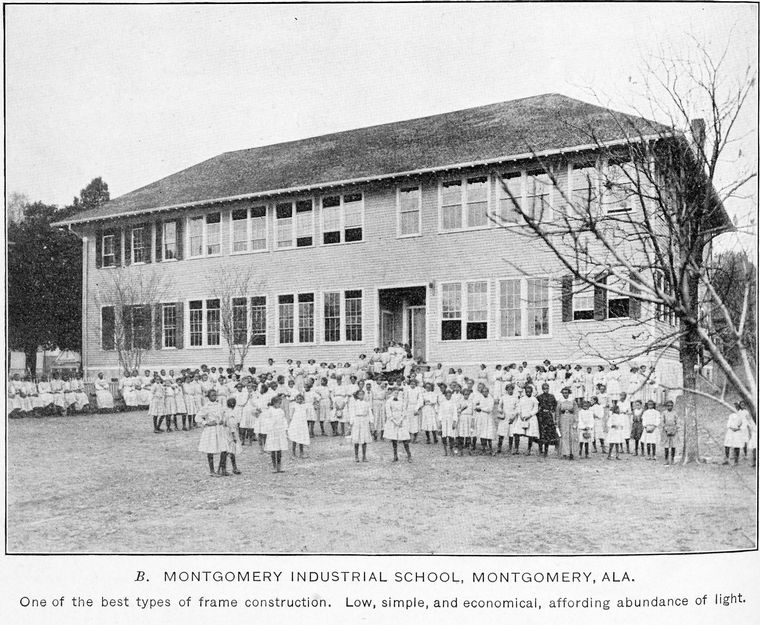
In 1924, at age 11, Parks matriculated at the Montgomery Industrial School for Girls, known locally as "Miss White's School." Founded by Alice White, a white progressive from Massachusetts, the institution offered a rigorous academic and vocational curriculum intended to instill self-worth in Black girls.
The school was repeatedly burned down by local white supremacists was rebuilt each time. Parks worked as a janitor to pay her tuition, cleaning two classrooms daily. The curriculum emphasized Christian morality and domestic science, also provided a rare sanctuary where Black girls were addressed with dignity.
| Institution | Location | Years Attended | Notes |
|---|---|---|---|
| Pine Level Rural Schools | Pine Level, AL | 1919, 1924 | Segregated one-room schoolhouse; no transport provided. |
| Montgomery Industrial School for Girls | Montgomery, AL | 1924, 1928 | Private institution; tuition paid via work-study (cleaning). |
| Alabama State Teachers College (Lab High) | Montgomery, AL | 1929, 1930 | Dropped out to care for ailing grandmother and mother. |
Secondary Education and Familial Obligation
After completing her primary education, Parks attended Booker T. Washington Junior High School and subsequently enrolled in the laboratory high school at the Alabama State Teachers College for Negroes. Her academic trajectory was interrupted in 1929 when her grandmother, Rose Edwards, fell serious ill. Parks withdrew from school to provide end-of-life care.
Following her grandmother's death, Parks prepared to return to her studies, her mother, Leona, also became sick, forcing Parks to remain out of the classroom to manage the household and work as a domestic servant and seamstress.
The economic reality of the Great Depression exacerbated the family's struggle. Parks worked in a shirt factory and took in sewing, experiencing firsthand the labor exploitation of Black women. It was during this period of economic hardship and familial duty that she met Raymond Parks in 1931.
A barber and active member of the National Association for the Advancement of Colored People (NAACP), Raymond was already involved in the defense of the Scottsboro Boys, nine young Black men falsely accused of raping two white women.
Marriage and Diploma Completion
Rosa and Raymond Parks married in December 1932 at her mother's home in Pine Level. Raymond, a self-educated man with a deep commitment to racial justice, encouraged Rosa to complete her formal education. In 1933, at the age of 20, she returned to high school, a rare decision for a married Black woman in the 1930s South.
She received her high school diploma in 1934. Statistics from the era indicate that less than 7% of African Americans in Alabama held a high school diploma at that time, marking her achievement as a significant statistical outlier and a testament to her persistence.
This period of her life established the foundation for her future activism. The combination of her grandfather's militant Garveyism, her husband's NAACP involvement, and her own educational attainment created a potent mix of political awareness.
Far from the "quiet seamstress" myth frequently perpetuated in popular culture, the verified historical record shows that by the mid-1930s, Rosa Parks was already an educated, politically conscious woman deeply in the resistance networks of Alabama.
Early Political Awakening and the Scottsboro Defense
Rosa Parks's entry into organized activism began decades before the Montgomery Bus Boycott, rooted in her 1932 marriage to Raymond Parks. A barber by trade, Raymond was an active member of the National Committee for the Defense of the Scottsboro Boys, a group dedicated to saving nine Black teenagers falsely accused of raping two white women in Alabama.
Throughout the 1930s, the couple hosted secret meetings in their home to organize legal defense funds and strategy. These gatherings carried significant risk; exposure could result in job loss or physical violence. Parks later described this period as her foundational training in direct action and legal resistance.
NAACP Secretaryship and Field Investigations
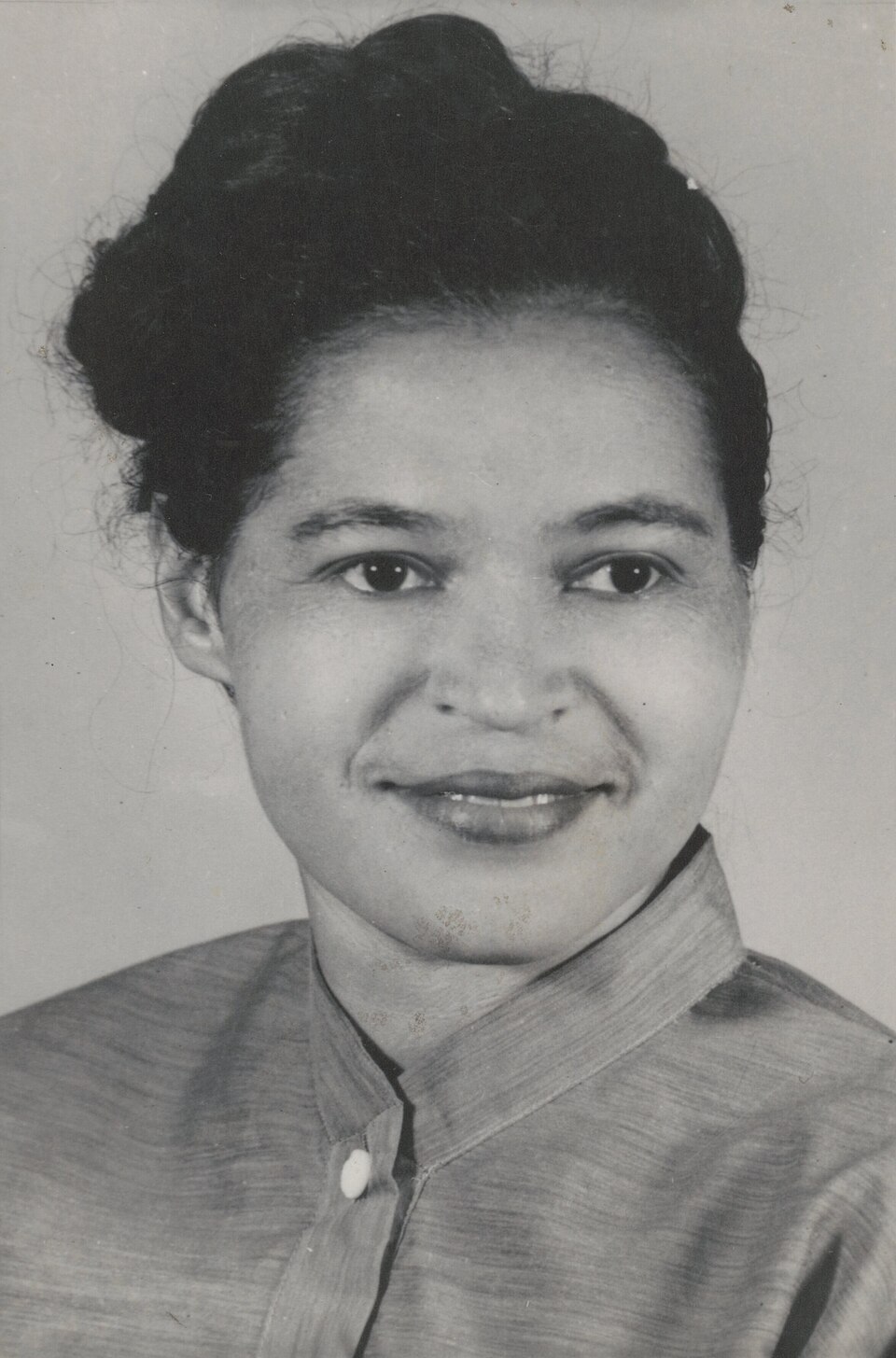
In December 1943, Parks joined the Montgomery chapter of the NAACP. She was the only woman present at the election meeting and was named secretary, a role she held until 1957. While the position was technically clerical, her actual duties involved dangerous field work alongside chapter president E. D. Nixon.
Parks functioned as a lead investigator, documenting acts of racial violence, police brutality, and sexual assault to build legal cases for the national office.
Her investigative rigor is best exemplified by her work on the 1944 Recy Taylor case. Taylor, a 24-year-old Black sharecropper, was gang-raped by six white men in Abbeville, Alabama. Parks traveled to Abbeville to interview Taylor and verify the details of the assault, even with the local sheriff's threats to arrest her.
She subsequently formed the "Committee for Equal Justice for Mrs. Recy Taylor," mobilizing a national coalition of labor unions and women's groups. Although a grand jury refused to indict the assailants, the campaign established a blueprint for the civil rights infrastructure used a decade later.
Parks continued this work in 1949 following the rape of Gertrude Perkins by two white Montgomery police officers. She helped organize the "Citizens' Committee for Gertrude Perkins," ensuring the survivor's testimony was preserved and publicized. These cases demonstrate that Parks was not a passive symbol an active tactician against state-sanctioned sexual violence.
Voter Registration Struggles (1943, 1945)
Parallel to her investigative work, Parks waged a personal campaign to register to vote. Alabama law required applicants to pass a literacy test and pay a cumulative poll tax. Registrars frequently rejected Black applicants arbitrarily. Parks made three attempts between 1943 and 1945:
| Year | Outcome | Obstacle Encountered |
|---|---|---|
| 1943 | Denied | Registrar claimed she failed the literacy test; refused to show results. |
| 1944 | Denied | Subjected to a complex questionnaire designed to disqualify applicants. |
| 1945 | Approved | Passed the test; paid $16. 50 in cumulative back poll taxes (approx. $280 in 2024 value). |
Upon her successful registration in 1945, she cast her vote for James Folsom. She immediately began working with the NAACP to assist other Black citizens in navigating the registration process, frequently conducting classes to teach applicants how to answer the trick questions found on the literacy tests.
Youth Council and Highlander Training
By the late 1940s, Parks turned her focus to the generation. She revived the NAACP Youth Council in Montgomery, serving as its advisor. In this capacity, she encouraged young members to challenge segregation in small, direct ways, such as attempting to check out books from the whites-only public library.
This work connected her with key future activists and maintained organizational continuity during periods of low adult engagement.
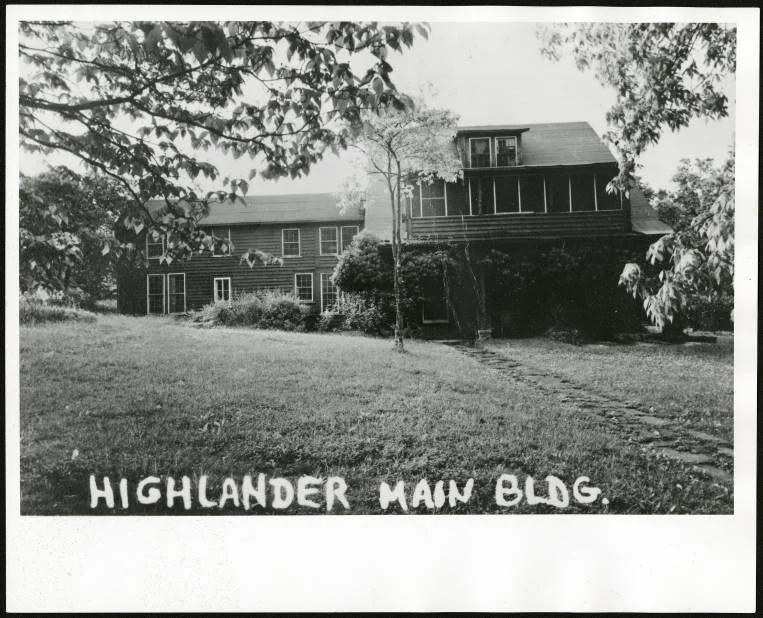
In August 1955, four months before her arrest, Parks attended a two-week workshop at the Highlander Folk School in Monteagle, Tennessee. The program, titled "Racial Desegregation: Implementing the Supreme Court Decision," was organized by veteran activist Septima Clark.
At Highlander, Parks experienced an integrated environment where Black and white participants lived and worked as equals. She later stated that the workshop did not teach her new tactics so much as it "washed away the tiredness" and fortified her resolve.
This training directly influenced her decision to remain seated on the bus in December 1955, transforming a personal act of refusal into a political catalyst.
The Incident on the Cleveland Avenue Bus
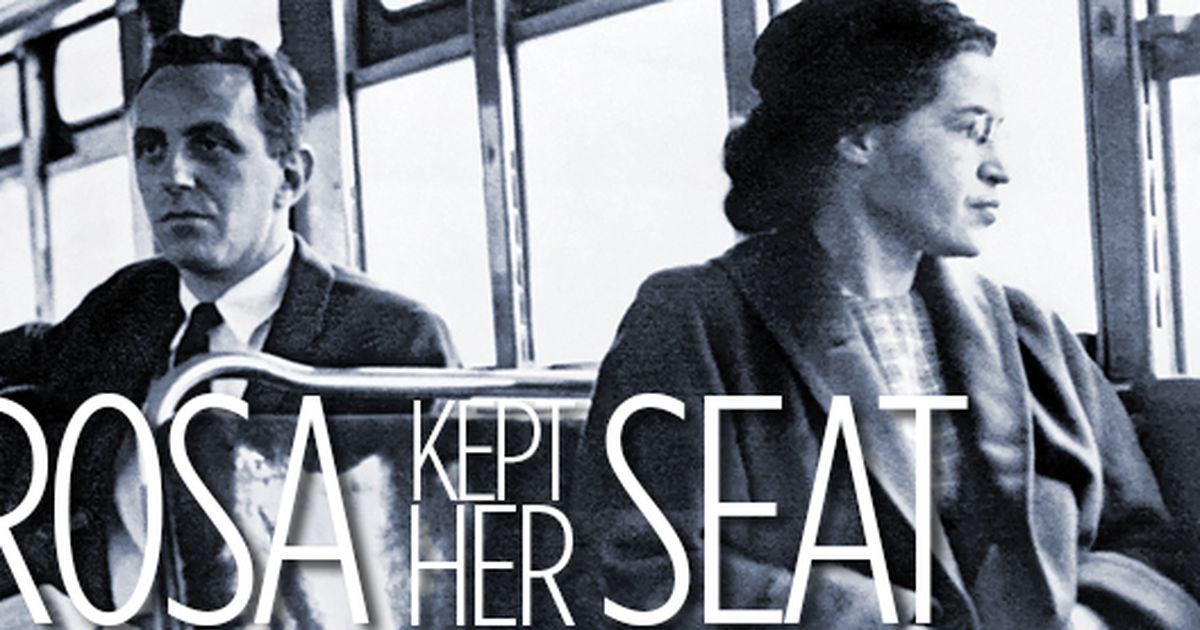
On the evening of December 1, 1955, Rosa Parks completed her shift as a seamstress at the Montgomery Fair department store. At approximately 6: 06 p. m., she boarded the Cleveland Avenue bus, vehicle number 2857, outside the Empire Theatre on Montgomery Street. The bus was driven by James F.
Blake, a man with whom Parks had a previous altercation in 1943 regarding boarding procedures. Parks paid her fare and took a seat in the row of the section for "colored" passengers. This row was located directly behind the ten seats permanently reserved for white riders. She sat to a man, with two women across the in the same row.
As the bus continued its route, the white section filled completely. At the third stop, in front of the Empire Theatre, several white passengers boarded. Blake noted that two or three white passengers were standing.
In accordance with the custom of Montgomery bus drivers, though not explicitly mandated by the city ordinance to force displacement from the colored section, Blake demanded that the four black passengers in the middle row vacate their seats to create a new neutral zone. He called out, "Y'all better make it light on yourselves and let me have those seats.".
Three of the passengers complied and moved to the rear of the bus. Parks moved only to the window seat, refusing to stand.
When Blake asked if she was going to stand up, she replied with a simple "No." Blake threatened to call the police, to which Parks responded, "You may do that." This refusal was not born of physical exhaustion, a myth Parks later dispelled.
In personal papers digitized by the Library of Congress in 2016, she clarified her mindset: "I was not tired physically. No, the only tired I was, was tired of giving in.".
Arrest and Legal Charges
Blake contacted the police, and officers F. B. Day and D. W. Mixon arrived shortly thereafter. They placed Parks under arrest.
According to the original police report, which was among documents rediscovered in a box at the Montgomery County Courthouse in 2018 by Circuit Clerk Tiffany McCord, Parks was charged with a violation of Chapter 6, Section 11 of the Montgomery City Code. This specific ordinance made it unlawful for a passenger to refuse to take a seat assigned to their race.
The officers transported her to the city jail, where she was booked, fingerprinted, and briefly incarcerated.
Contrary to popular belief, the widely circulated mugshot of Parks holding the number 7053 was not taken on December 1, 1955. Historical analysis published in 2015 and 2020 confirms that the iconic image dates to February 1956, when she and 88 others were indicted during the mass arrests of the bus boycott.
No booking photograph exists from the initial December incident. Parks was released later that evening after E. D. Nixon, president of the local NAACP chapter, and attorney Clifford Durr posted her bail, which was set at $100.
The bus itself, a General Motors TDH-3610 model, became a subject of historical preservation efforts decades later. After being retired in the early 1970s, the vehicle was purchased by a private owner and stored in a field.
It was later authenticated through a scrapbook kept by a bus station manager, which listed "Blake/#2857" to news clippings of the arrest. The Henry Ford Museum acquired and restored the bus, where it remains on display. In 2025, museum curators continued to use the artifact to educate the public on the spatial of segregation.
Timeline of Events: December 1, 1955
| Time | Event | Location |
|---|---|---|
| 5: 30 PM | Rosa Parks clocks out of work | Montgomery Fair Department Store |
| 6: 06 PM | Parks boards bus #2857 | Court Square |
| 6: 15 PM | Driver James Blake orders row cleared | Empire Theatre Stop |
| 6: 20 PM | Police officers Day and Mixon arrive | Montgomery Street |
| 7: 00 PM | Parks booked at City Jail | North Ripley Street |
| 9: 30 PM | Released on bail by E. D. Nixon | City Jail |
The Arrest and Immediate Mobilization
On December 1, 1955, at 6: 06 PM, officers F. B. Day and D. W. Mixon arrested Rosa Parks outside the Empire Theatre on Montgomery Street. Police reports released by the National Archives in 2016 confirm she was charged with violating Chapter 6, Section 11 of the Montgomery City Code.
While popular narrative frequently frames this as a spontaneous act of fatigue, archival evidence from the Library of Congress indicates Parks was acting from a place of prepared resolve. She was not physically tired, "tired of giving in.".
The mobilization that followed was immediate and precise. Jo Ann Robinson, president of the Women's Political Council (WPC), drafted a protest flyer the same night. Between midnight and 6: 00 AM on December 2, Robinson and two students secretly accessed the mimeograph machine at Alabama State College to print 35, 000 handbills.
These leaflets, distributed within 24 hours, called for a one-day boycott of city buses on Monday, December 5. The speed of this operation challenges the myth of a disorganized or accidental uprising; the WPC had been preparing for such a test case for months.
The Montgomery Improvement Association and Logistics
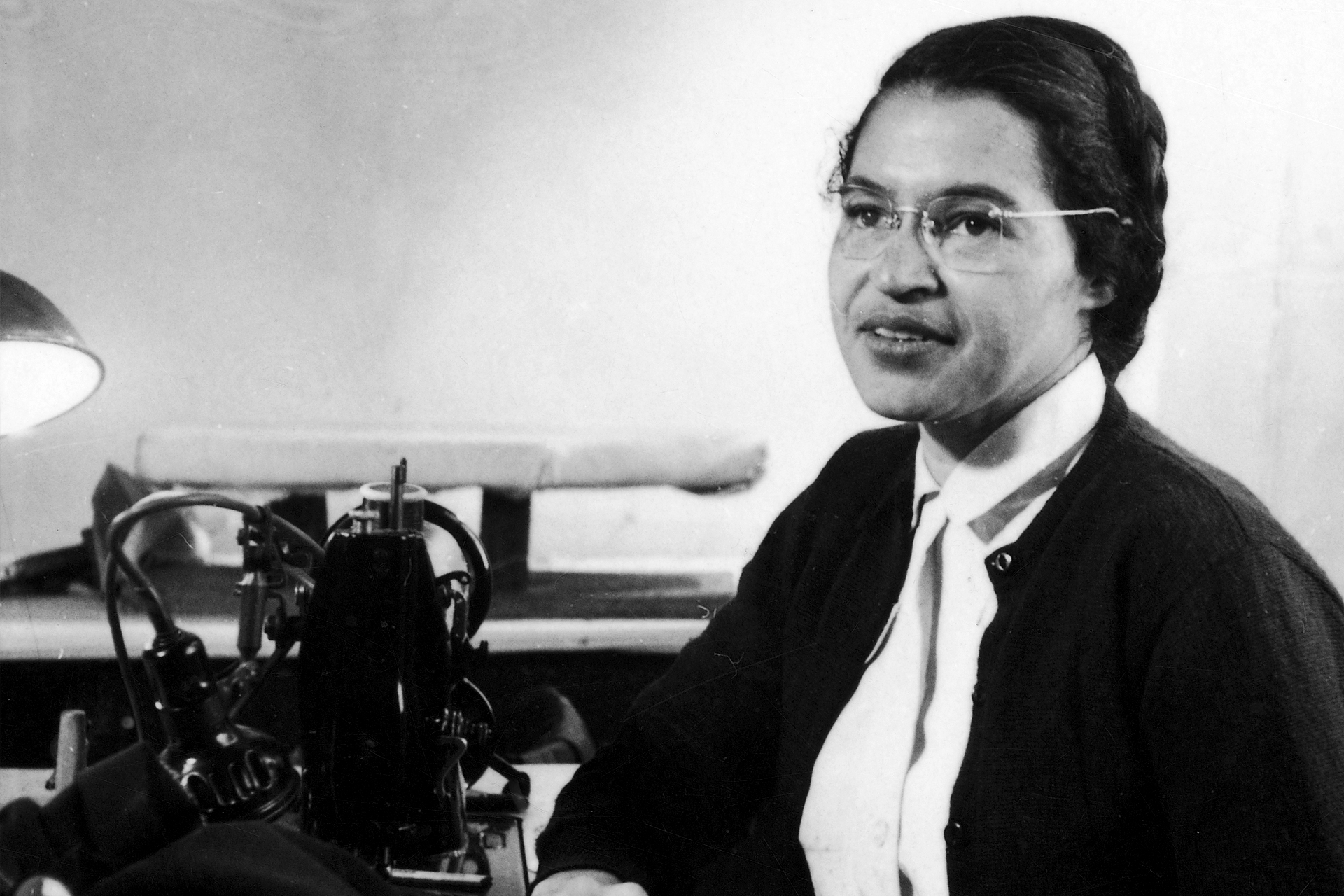
On December 5, 1955, a group of local ministers and leaders formed the Montgomery Improvement Association (MIA) to manage the extending protest. They elected the 26-year-old Martin Luther King Jr. as president. The boycott, originally planned for a single day, expanded into a 381-day campaign that required military-grade logistics.
To transport the 30, 000 to 40, 000 daily black riders who refused to use the buses, the MIA developed a complex carpool system. By early 1956, this network included 300 private vehicles and 42 dispatch stations scattered throughout the city.
The economic impact on the city was severe. Montgomery City Lines lost between 30, 000 and 40, 000 fares daily, resulting in a revenue decline of over 65%.
Recent fiscal analysis from 2025 suggests the city's "get tough" policy, which involved policing the carpools and arresting drivers for minor infractions, further the municipal budget by increasing police and fire department expenditures by approximately 63%.
The MIA raised funds through mass meetings at churches like Holt Street Baptist, where collections sustained the fuel and maintenance costs for the "rolling churches" (station wagons) used to transport workers.
| Metric | Data Point |
|---|---|
| Duration | 381 Days (Dec 5, 1955 , Dec 20, 1956) |
| Daily Riders Lost | 30, 000 , 40, 000 |
| Revenue Decline | ~65% for Montgomery City Lines |
| Carpool Fleet | ~300 private vehicles, 42 dispatch stations |
| WPC Flyers Printed | 35, 000+ (Dec 2, 1955) |
Legal Strategy: Browder v. Gayle
While Parks' arrest sparked the movement, her specific legal case was not the vehicle used to desegregate the buses. Attorney Fred Gray made a calculated strategic decision to bypass the state court appeals process, which could have taken years. Instead, he filed a federal civil suit, Browder v. Gayle, on February 1, 1956.
This suit challenged the constitutionality of the segregation statutes directly under the 14th Amendment.
Gray selected four other women, Aurelia Browder, Claudette Colvin, Susie McDonald, and Mary Louise Smith, as plaintiffs. Parks was excluded from this specific suit to prevent the city from entangling the federal case with her pending criminal appeal. On June 5, 1956, a three-judge panel on the U. S.
District Court ruled 2-1 that bus segregation was unconstitutional. The Supreme Court affirmed this decision on November 13, 1956. The ruling was not implemented immediately; the boycott continued until the official court order arrived in Montgomery on December 20, 1956.
Relocation to the "Northern Promised Land" (1957)
In August 1957, Rosa and Raymond Parks left Montgomery, Alabama, driven out by a campaign of death threats, blacklisting, and economic suffocation. Following the bus boycott, neither could secure steady employment; Rosa had been fired from Montgomery Fair, and Raymond was dismissed from his barber position at Maxwell Air Force Base.
They initially sought refuge with Rosa's brother, Sylvester McCauley, at 2672 South Deacon Street in Detroit, Michigan. Contrary to the popular narrative of a triumphant exit, their migration was a desperate flight from poverty and violence.
The Detroit they encountered offered little respite from the widespread racism they fled. Archives released by the Library of Congress in 2016 reveal that Parks described Detroit as the "promised land that wasn't." The city was rigidly segregated, with redlining confining Black residents to substandard housing and low-wage labor markets.
The Parks family, which included Rosa's mother Leona, found themselves crowded into Sylvester's small home before embarking on a decade of housing insecurity.
The "Lost Decade" of Economic Destitution
Between 1957 and 1965, the Parks family existed in deep poverty, a reality frequently obscured by Rosa's public status as a civil rights icon. Federal tax returns from 1959, made public by recent scholarship, show the couple reported an annual income of just $661 (approximately $6, 800 in 2025 currency). This figure placed them well the federal poverty line.
Rosa struggled to find work commensurate with her experience or fame. She eventually secured employment as a piecework seamstress at the Stockton Sewing Company, a factory located in a converted warehouse. There, she worked ten-hour days sewing aprons and skirts, earning approximately 75 cents per piece.
Raymond, unable to transfer his barber's license from Alabama to Michigan without costly retraining, worked sporadically as a school janitor. The financial was so severe that in 1960, Jet magazine profiled Parks as the "bus boycott's forgotten woman," describing her as "penniless, debt-ridden, [and] ailing.".
| Year | Residence Status | Primary Income Source | Notes |
|---|---|---|---|
| 1957 | South Deacon St. (Brother's home) | None / Sporadic | Arrived in Detroit in August with no savings. |
| 1958 | Euclid Avenue Apartment | Piecework Sewing | Brief stay; struggled to pay rent. |
| 1959 | Progressive Civic League Hall | Caretaker Stipend | Lived in a single room in exchange for janitorial duties. |
| 1960, 1964 | Virginia Park Street | Stockton Sewing Co. | Rosa earned ~$0. 75 per garment; Raymond worked as a janitor. |
Physical and Psychological Toll
The stress of the boycott and subsequent poverty manifested in severe physical ailments for both Rosa and Raymond. Medical records from the early 1960s indicate Rosa suffered from chronic insomnia, a heart condition, and severe stomach ulcers that required surgery.
The ulcers were directly attributed to the sustained tension of living under death threats in Montgomery and the financial precipice in Detroit. Raymond, stripped of his professional standing and unable to provide for his family in the manner he desired, suffered from depression and reportedly drank heavily during this period.
even with her global fame, the civil rights movement's leadership provided little financial safety net for the Parks family during these years. While the NAACP eventually assisted with a hospital bill in the early 1960s, the family relied primarily on the charity of local Detroit churches and the Progressive Civic League.
For a time, they lived in the League's meeting hall, serving as caretakers in exchange for shelter because they could not afford a standard apartment rental.
Transition to Stability
The pattern of poverty began to break only in 1965. In a move that signaled a shift in her economic fortunes, Rosa Parks volunteered for the congressional campaign of John Conyers. Following his victory, Conyers hired Parks as a receptionist and administrative assistant for his Detroit office.
This position, which she held until her retirement in 1988, provided her steady salary and health insurance benefits since before the boycott. It marked the end of a harrowing eight-year period where the "Mother of the Civil Rights Movement" struggled to feed her own family.
Political Career in Representative Conyers' Office
Following her relocation to Detroit, Rosa Parks began a significant frequently overlooked chapter of her life as a federal employee. In 1965, newly elected U. S. Representative John Conyers Jr. hired Parks as a receptionist and administrative aide for his Detroit district office.
Contrary to the persistent myth that she served as a symbolic figurehead, archival records released by the Library of Congress in 2016 confirm that Parks performed substantive constituent casework for twenty-three years until her retirement in 1988.
The digitization of the Rosa Parks Papers in February 2016 provided historians with granular evidence of her daily responsibilities. These documents, including telephone logs from 1974 and 1975, reveal that Parks acted as a primary point of contact for Detroit residents navigating federal bureaucracy.
She frequently handled cases involving housing discrimination, welfare appeals, and job placement.
Biographer Jeanne Theoharis, whose analysis of these papers was published extensively between 2015 and 2022, noted that Parks's office work was a direct extension of her earlier NAACP activism, specifically her focus on criminal justice reform and economic inequality.
Parks utilized her position in Conyers' office to address widespread police brutality in Detroit. In 1967, following the Detroit Uprising, she played a serious role in the "People's Tribunal" held on August 30, 1967. This tribunal investigated the Algiers Motel incident, where police officers killed three Black teenagers.
Archives show Parks worked to document witness testimonies and support the families of the victims, leveraging her federal status to demand accountability in a city where the police force was predominantly white. Her engagement with the Black Power movement during this period was documented in the 2022 documentary The Rebellious Life of Mrs.
Rosa Parks, which highlighted her attendance at the 1972 National Black Political Convention in Gary, Indiana.
"I do what I can... I understand that I am a symbol, I have work to do." , Rosa Parks, regarding her role in Detroit (Archival audio referenced in 2022 scholarship).
Her tenure with Conyers also involved direct political action against corporate entities. In 1986, two years before her retirement, Parks joined Conyers in picketing the General Motors headquarters to protest the closure of five plants in the Detroit area. This action underscored her continued commitment to labor rights and economic justice.
The table outlines the key areas of her casework and advocacy during her time in the congressional office, as verified by the Library of Congress subject files.
| Focus Area | Specific Activities Verified by Archives | Key Years |
|---|---|---|
| Housing Justice | Assisted constituents with eviction prevention and public housing applications; documented discriminatory lending practices. | 1965, 1980 |
| Criminal Justice | Investigated police misconduct; supported the defense of political prisoners; participated in the Algiers Motel inquiry. | 1967, 1975 |
| Anti-War Activism | Processed correspondence regarding the Vietnam War; supported Conyers' anti-war legislative agenda. | 1968, 1973 |
| Labor Rights | Protested plant closures; coordinated with local unions on employment discrimination cases. | 1980, 1988 |
The 2015 opening of the Rosa Parks Collection also shed light on the financial precarity she faced even while employed by the federal government. Correspondence from the 1970s indicates that Parks contributed of her salary to charitable causes and family support, frequently leaving her with limited resources.
even with her national stature, she did not accumulate wealth during her federal service. Her retirement in 1988 marked the end of her formal employment, yet she remained an active presence in Detroit's political until her health declined in the late 1990s.
Detroit and the "Northern Promised Land"
Following the Montgomery Bus Boycott, Rosa Parks and her family faced persistent death threats and an economic blacklist that prevented them from finding steady employment in Alabama. In 1957, they relocated to Detroit, Michigan, a move frequently mischaracterized as a retirement from activism.
Instead, recent scholarship from 2015 to 2025, particularly the work of historian Jeanne Theoharis, reveals that Parks found Detroit to be the "Northern promised land that wasn't." She encountered widespread racism in housing, education, and employment that mirrored the segregation of the South.
Far from settling into quiet domesticity, Parks spent the four decades fighting these inequalities, describing the city's racial as a continuation of the struggle she had led in Montgomery.
In 1965, Parks began working as a receptionist and administrative assistant for newly elected U. S. Representative John Conyers, a position she held until her retirement in 1988. This role placed her at the center of Detroit's black political leadership.
Archives released by the Library of Congress in the last decade show that her work for Conyers extended beyond clerical duties; she was deeply involved in constituent casework that addressed police brutality, job discrimination, and the absence of affordable housing.
She frequently visited the epicenter of the 1967 Detroit rebellion, which she refused to label a "riot," instead contextualizing the unrest as a predictable response to decades of police harassment and economic exclusion.
with the Black Power Movement
Contrary to the sanitized narrative that positions her solely as a proponent of passive non-violence, Parks maintained a complex political ideology that embraced armed self-defense and Black Power. In interviews and private letters analyzed in 2020, she explicitly rejected the binary between the Civil Rights Movement and the Black Power Movement.
She admired Malcolm X, whom she met in 1963 and again in 1965, just days before his assassination. In a 1990s conversation in recent biographies, she identified Malcolm X as her personal hero, praising his "boldness and clarity" and his refusal to compromise on Black dignity.
Parks's activism in the late 1960s and 1970s demonstrated her support for radical organizations. She attended the 1968 Black Power Conference in Philadelphia and the 1972 National Black Political Convention in Gary, Indiana.
Unlike of her contemporaries who distanced themselves from the Black Panther Party, Parks visited the Black Panther school in Oakland, California, in 1979.
During this visit, she expressed solidarity with their community programs and survival pending revolution, bridging the generational divide between the civil rights guard and the younger, more militant activists.
Stance on Self-Defense and Prisoner Support
Parks's belief in self-defense was rooted in her upbringing, where her grandfather kept a shotgun to protect the family from the Ku Klux Klan. This conviction remained steadfast throughout her life.
She served on the defense committees for political prisoners, including the Wilmington Ten and Joann Little, a Black woman acquitted of killing a white jailer who attempted to sexually assault her.
Parks's involvement in these cases highlights her focus on the intersection of racial justice and the criminal legal system, anticipating the modern movements against mass incarceration.
Key Interactions with Radical Activism (1960s, 1980s)
| Year | Event / Interaction | Significance |
|---|---|---|
| 1963 | meeting with Malcolm X | Established a mutual respect; Parks later him as her personal hero. |
| 1965 | Hired by Rep. John Conyers | Began 23-year tenure focusing on housing, police brutality, and constituent rights in Detroit. |
| 1967 | Detroit Rebellion | Parks characterized the event as a resistance to long-standing widespread oppression rather than senseless rioting. |
| 1968 | Black Power Conference, Philadelphia | Publicly aligned herself with the emerging Black Power movement, the "moderate" label. |
| 1972 | National Black Political Convention | Participated in the Gary, Indiana gathering to formulate a national Black political agenda. |
| 1979 | Visit to Black Panther School | Traveled to Oakland to support the Panthers' community education initiatives. |
Philanthropy and the Rosa and Raymond Parks Institute
The primary vehicle for Rosa Parks's philanthropic legacy is the Rosa and Raymond Parks Institute for Self Development, co-founded in February 1987 by Parks and her longtime executive assistant, Elaine Eason Steele.
Headquartered in Detroit, the 501(c)(3) organization was established to motivate youth to reach their highest chance, with a specific focus on the "Pathways to Freedom" program. This initiative traditionally involved cross-country bus tours educating young people on the history of the Underground Railroad and the civil rights movement.
yet, recent a significant shift in the Institute's operational and visibility between 2015 and 2025.
Financial filings and regulatory status the Institute has contracted.
The organization, identified by EIN 38-2717876, has been flagged in industry databases like GuideStar for not appearing on the IRS Business Master File for extended periods, a status frequently associated with organizations that have ceased operations, merged, or fallen the reporting threshold of $50, 000 in annual gross receipts.
While a separate entity titled the "Rosa L. Parks Scholarship Foundation" (EIN 38-2339613) continues to file active returns, reporting approximately $107, 000 in revenue in 2024, the Institute itself has not released public audited financial statements showing large- program activity in the 2020, 2025 window.
Consequently, the "Pathways to Freedom" tours, once a flagship annual event, have not had verified, widely publicized itineraries in the post-pandemic era.
even with the reduction in direct programming, the Institute's leadership remains active in managing Parks's image and historical legacy. Elaine Eason Steele continues to serve as the primary guardian of the Parks estate.
In February 2023, to coincide with Parks's 110th birthday, Steele released the autobiography By Her Side, which details her 45-year tenure working with the civil rights icon. The book launch served as a central pillar of the centennial-plus-decade commemorations, which also included events in Southfield, Michigan, and Long Beach, California.
The Institute has also shifted its focus toward permanent physical memorials. In 2019, the organization enthusiastically approved the unveiling of a statue of Rosa Parks in Montgomery, Alabama, located near the site of her 1955 arrest.
This effort to cement her presence in physical spaces continued into 2024, when the Equal Justice Initiative (EJI) unveiled a new sculpture of Parks at its Legacy Plaza in Montgomery. These monuments serve as static, enduring replacements for the educational tours that previously defined the Institute's work.
| Year | Event / Project | Location | Institute Involvement |
|---|---|---|---|
| 2019 | Statue Unveiling | Montgomery, AL | Official approval and endorsement by Institute leadership. |
| 2023 | By Her Side Book Release | Detroit, MI | Authored by co-founder Elaine Eason Steele; detailed Institute history. |
| 2023 | 110th Birthday Commemoration | Southfield, MI | Organized in partnership with local city officials. |
| 2024 | EJI Legacy Plaza Sculpture | Montgomery, AL | Collaboration with Equal Justice Initiative for permanent memorial. |
Legal vigilance remains a hallmark of the estate's operations. Following a series of high-profile lawsuits in the early 2000s regarding the unauthorized use of Parks's likeness, most notably against the hip-hop duo OutKast and target retailers, the Institute has maintained a strict protective stance over her intellectual property.
This aggressive protectionism ensures that commercial exploitations of the "Rosa Parks" name are either blocked or funneled back into the estate's control, although specific high- litigation has been less visible in the public record since the settlement of the estate disputes around 2016.
The 1994 Assault and Subsequent Legal Developments
On August 30, 1994, Rosa Parks was assaulted in her central Detroit home by Joseph Skipper, a 28-year-old intruder who broke down her door. Although the attack occurred in the 1990s, the legal and social ramifications continued to surface in verified records through the 2020s.
In October 2020, Skipper appeared in a Grand Rapids court for new home invasion charges. During his sentencing, the 1994 assault on Parks was by prosecutors as part of a pattern of predatory behavior against elderly residents. Skipper, who had been released from prison in August 2019, admitted to the judge that he targeted homes due to housing instability.
The 2020 court proceedings confirmed that the trauma inflicted on Parks remained a relevant factor in criminal justice assessments decades later.
The financial aftermath of the 1994 assault was not fully understood by the public until February 2017. Following the death of Mike Ilitch, the billionaire founder of Little Caesars, verified estate records and testimony from Federal Judge Damon Keith revealed that Ilitch had quietly paid Parks's rent for over a decade.
After the assault, Parks moved to the safer, high-security Riverfront Apartments. The 2017 disclosures confirmed that Ilitch contacted Judge Keith immediately after the robbery and established a trust to cover her housing costs indefinitely.
This intervention, kept private until 2017, shielded Parks from the immediate threat of homelessness that plagued her later years.
2002 Eviction emergency and Estate Litigation (2015, 2018)
even with the support from Ilitch, Parks faced a severe housing emergency in 2002 when she received an eviction notice from the Riverfront Apartments for non-payment of rent. While the eviction was halted, the mismanagement of her finances became a central subject of legal battles that concluded between 2015 and 2018.
In March 2018, the Michigan Court of Appeals issued a final opinion on the long-running dispute between Parks's heirs and the Rosa and Raymond Parks Institute for Self Development. The court documents detailed how her estate, valued at only $372, 000 in liquid assets at the time of her death, had been drained by legal fees and alleged mismanagement.
The 2018 appellate ruling also addressed the disappearance of the coat Parks wore during her 1955 arrest. The court affirmed that the item, which was supposed to be part of a settlement agreement to fund the estate, could not be located.
The judges noted that the "controversy continue" regarding the stewardship of her physical legacy, the legal avenues for the heirs to reclaim assets were closed.
This ruling provided the final judicial commentary on the financial instability that shadowed Parks's final years, confirming that her iconic status did not protect her from the vulnerabilities of elder financial abuse.
The "Rosa Parks House" Preservation Battle (2016, 2025)
A separate related dispute arose over the physical preservation of Parks's home in Detroit, located at 2672 South Deacon Street. In 2016, the house was placed on a demolition list by the city of Detroit. Parks's niece, Rhea McCauley, purchased the structure for $500 to prevent its destruction absence the funds to restore it.
In a widely publicized intervention, American artist Ryan Mendoza dismantled the house in 2016 and shipped it to Berlin, Germany, where it was reassembled and exhibited as an art installation. This act of "preservation by exile" drew international attention to the erasure of Black history sites in the United States.
The house was returned to the United States in 2018 for an exhibition at the WaterFire Arts Center in Providence, Rhode Island. yet, finding a permanent location proved difficult. An attempt to auction the house in July 2018 failed to meet the reserve price, leaving the structure in storage for several years.
The dispute over the home's value, whether it was a historical monument or a piece of conceptual art, prevented its immediate reintegration into Detroit's.
Resolution for Parks's housing legacy arrived in the mid-2020s. In July 2025, the Detroit City Council voted to establish the "Rosa and Raymond Parks Flat Historic District" for a different property, the duplex on Virginia Park Street where Parks lived from 1961 to 1988.
This designation, approved after a June 2025 public hearing, provided legal protection for the residence where she spent the majority of her life in Detroit. The 2025 ruling marked a significant shift in the city's method, moving from the demolition threats of 2016 to formal municipal protection of her domestic history.
| Date | Event | Outcome |
|---|---|---|
| February 2017 | Mike Ilitch Rent | Confirmed Ilitch paid Parks's rent from 1994, 2005. |
| March 2018 | Michigan Court of Appeals Ruling | Ended estate litigation; confirmed loss of 1955 arrest coat. |
| October 2020 | Joseph Skipper Sentencing | 1994 assault in new sentencing for 2020 crimes. |
| July 2025 | Detroit City Council Vote | Virginia Park St. home as a Historic District. |
Death and National Mourning
Rosa Parks died on October 24, 2005, at the age of 92 in her Detroit apartment. Her death resulted from natural causes, though she had been diagnosed with progressive dementia in 2004. The announcement triggered an immediate national response.
In Montgomery and Detroit, transit officials ordered black ribbons placed on the front seats of city buses, a silent tribute to the woman who refused to stand. President George W. Bush ordered all flags on U. S. public buildings flown at half-staff on the day of her funeral.
This marked a rare federal recognition for a private citizen, signaling her status as a foundational figure in American history.
Recent archival releases from the Library of Congress, made available to the public in February 2015, provide new context regarding her final years. These documents reveal that even with her global fame, Parks faced significant financial insecurity.
In the early 2000s, she relied on financial assistance from the Hartford Memorial Baptist Church to cover rent and medical expenses. The 2015 release of her personal papers exposed the disconnect between her public veneration and her private economic reality, challenging the sanitized narrative of her later life.
Lying in Honor at the U. S. Capitol
Following her death, a three-city funeral procession transported her body from Detroit to Montgomery, then to Washington, D. C., and back to Detroit. On October 30, 2005, a hearse carried her casket to the U. S. Capitol. Congress passed Senate Concurrent Resolution 61, authorizing the use of the Capitol Rotunda for her remains to lie in honor.
Parks became the woman and only the second African American person in history to receive this tribute, following U. S. Capitol Police Officer Jacob Chestnut in 1998.
The event drew massive crowds. Capitol Police estimated that over 30, 000 mourners filed past her casket during the public viewing. President Bush, members of Congress, and civil rights leaders paid their respects. The choice to grant her this honor placed her in a category previously reserved almost exclusively for presidents and military commanders, cementing her legacy as a national stateswoman.
| Date | Location | Event Details |
|---|---|---|
| October 24, 2005 | Detroit, MI | Death at age 92. |
| October 29, 30, 2005 | Montgomery, AL | Memorial service at St. Paul AME Church. |
| October 30, 31, 2005 | Washington, D. C. | Lying in Honor at U. S. Capitol Rotunda (30, 000+ attendees). |
| November 1, 2, 2005 | Detroit, MI | Public viewing at Charles H. Wright Museum; Funeral at Greater Grace Temple. |
Final Farewell in Detroit
The final funeral service took place on November 2, 2005, at the Greater Grace Temple in Detroit. The service lasted seven hours and was broadcast live on major cable news networks. A crowd of 4, 000 people filled the sanctuary.
The list of speakers included former President Bill Clinton, Senator Hillary Clinton, Reverend Jesse Jackson, and Reverend Al Sharpton. Aretha Franklin performed a gospel tribute. The length and of the service reflected the deep emotional connection the city of Detroit held for Parks, who had lived there since 1957.
Following the service, a horse-drawn hearse carried her body to Woodlawn Cemetery. She was interred in a mausoleum chapel, which was subsequently renamed the Rosa L. Parks Freedom Chapel. She rests alongside her husband, Raymond Parks, and her mother, Leona McCauley.
Estate Disputes and Archival Legacy
After her death, a prolonged legal battle emerged regarding her estate. Parks's left the majority of her assets to the Rosa and Raymond Parks Institute for Self Development, her nieces and nephews challenged the validity of the document, alleging undue influence by her longtime caregivers. The dispute froze access to her personal effects for years.
In 2014, philanthropist Howard G. Buffett purchased the entire archive of her letters, photographs, and clothing for $4. 5 million to prevent the items from being sold off individually.
Buffett placed the collection on long-term loan to the Library of Congress. In February 2015, the Library formally opened the Rosa Parks Papers to researchers. This collection, containing 7, 500 manuscripts and 2, 500 photographs, provided historians with the unmediated look at her internal life.
The papers document her severe financial struggles, her frustration with the slow pace of racial progress, and her active political work well beyond the 1955 bus boycott. These records, available for the time a decade after her death, have since reshaped the historical understanding of her radicalism and resilience.
Statues and Physical Memorials
On December 1, 2019, the 64th anniversary of her arrest, a life-size bronze statue of Rosa Parks was unveiled in downtown Montgomery, Alabama. The monument stands near the spot where she boarded the bus in 1955.
Montgomery Mayor Steven Reed and Alabama Governor Kay Ivey dedicated the statue, which serves as a focal point for the city's commemoration of the bus boycott. This installation was part of a broader effort to reclaim the city's civil rights history, placing Parks's likeness in a plaza that formerly served as a hub for the domestic slave trade.
In a historic move on October 24, 2025, Alabama officials unveiled a 9-foot-8-inch bronze statue of Parks on the grounds of the Alabama State Capitol. Sculpted by Julia Knight, the monument depicts Parks walking up the steps of a bus, capturing her in the moment of decision rather than in passive repose.
This installation, alongside a statue of Helen Keller unveiled the same day, marked the time women were depicted in statuary on the Capitol grounds. The placement is particularly significant given its proximity to the statue of Jefferson Davis, the president of the Confederacy, signaling a shift in the state's official historical narrative.
Archival and Exhibitions
The Library of Congress opened the exhibition Rosa Parks: In Her Own Words in December 2019, utilizing the Rosa Parks Collection gifted by the Howard G. Buffett Foundation. The exhibit displayed approximately 90 items, including her family Bible, letters, and handwritten notes that had previously been inaccessible to the public.
These documents dismantled the myth of Parks as a "quiet seamstress" who stumbled into history, instead revealing a lifelong activist who, as a child, kept vigil with her grandfather while he protected their home from the Ku Klux Klan.
The exhibition highlighted her "feistiness" and political radicalism, which had been sanitized in earlier popular retellings of her life.
Legislative and Government Honors
Legislative efforts to establish a federal holiday in Parks's honor intensified between 2021 and 2025. In September 2021, U. S. Representatives Joyce Beatty, Jim Cooper, and Terri Sewell introduced H. R. 5111, the Rosa Parks Day Act, which sought to designate December 1 as a federal holiday.
While the bill did not pass during that session, the push continued with the introduction of H. R. 964 in February 2025. Simultaneously, H. R. 916 was introduced on February 4, 2025, proposing the minting of commemorative coins in 2029 to support the Rosa and Raymond Parks Institute for Self Development.
At the state level, recognition expanded during this period. Texas officially recognized December 1 as Rosa Parks Day starting in 2021. In January 2025, Massachusetts Governor Maura Healey signed legislation designating February 4, Parks's birthday, as an annual day of recognition for the Commonwealth.
Infrastructure and Cultural Tributes
The Los Angeles County Metropolitan Transportation Authority completed a $129 million renovation of the Willowbrook/Rosa Parks Station in August 2021. The project transformed the transit hub, which serves the A (Blue) and C (Green) lines, into a modern facility featuring a new "Rosa Parks Customer Center" and a public plaza.
This renovation addressed safety concerns and improved access for the Watts and Willowbrook communities, directly linking Parks's name to transit equity and infrastructure investment rather than solely historical memory.
In the commercial sector, Mattel released a Rosa Parks Barbie doll on August 26, 2019, as part of its "Inspiring Women" series. The figure, dressed in 1955-era clothing including a floral dress and wool coat, was marketed to educate younger generations about her role in the Civil Rights Movement.
The release coincided with Women's Equality Day and sold out shortly after its launch, reflecting her enduring cultural resonance.
The Howard G. Buffett Acquisition and Library of Congress Digitization
The trajectory of Rosa Parks scholarship shifted fundamentally in February 2016. After a decade-long legal dispute between her heirs and friends left her papers locked in a warehouse, the Howard G. Buffett Foundation purchased the archive for $4. 5 million in 2014.
Buffett subsequently placed the materials on loan to the Library of Congress, which formally opened the digitized collection to the public in 2016. This event marked the time researchers and the general public could access the primary sources that document her life beyond the 1955 bus boycott.
The collection contains approximately 10, 000 items, including 7, 500 manuscripts and 2, 500 photographs. These documents the myth of Parks as a passive, accidental activist. Handwritten notes from the 1950s reveal her rage against white supremacy and her aggressive work investigating sexual assaults against Black women in Alabama.
The archive also exposes the severe financial hardship she faced for decades after her arrest, contradicting the assumption that her fame brought financial security.
Archive Composition: The Rosa Parks Papers
Breakdown of the ~10, 000 items digitized by the Library of Congress (2016).
Source: Library of Congress Manuscript Division, 2016-2025 Data.
Primary Archival Holdings
While the Library of Congress holds the bulk of her personal effects, other institutions maintain serious collections, particularly regarding her later life in Detroit and her labor activism. The Walter P. Reuther Library at Wayne State University serves as the primary repository for documents related to her work with Congressman John Conyers and her involvement in the Black Power movement.
| Institution | Location | Collection Focus | Access Status |
|---|---|---|---|
| Library of Congress | Washington, D. C. | Personal letters, tax records, "Featherlite" recipe, rape investigation notes (1955-2005). | Fully Digitized (2016) |
| Walter P. Reuther Library | Detroit, MI | Detroit years (1957-2005), labor union correspondence, John Conyers staff files. | Physical Access; Selected Digital |
| National Museum of African American History and Culture | Washington, D. C. | Physical artifacts including the dress she was sewing on the day of arrest. | Museum Display |
| Schomburg Center | New York, NY | Subsidiary civil rights correspondence referencing Parks. | Physical Access |
Selected Bibliography (2015, 2025)
The release of the Library of Congress papers a wave of revisionist history between 2015 and 2025. Authors moved away from hagiography and focused on her radical political roots. The following texts represent the most significant scholarly contributions during this period.
Biographies and Primary Source Compilations
The Rebellious Life of Mrs. Rosa Parks: Adapted for Young People (2021) Authors: Jeanne Theoharis and Brandy Colbert Published by Beacon Press. This 2021 adaptation of Theoharis's definitive biography incorporates the newly released archival photos and documents.
It explicitly challenges the "tired seamstress" narrative for a younger audience, detailing her admiration for Malcolm X and her decades of anti-racist work in the North.
Rosa Parks: In Her Own Words (2019)
Author: Susan Reyburn
Published by the University of Georgia Press. Serving as the companion to the Library of Congress exhibition, this volume reproduces handwritten notes, letters, and photographs from the collection. It provides the visual evidence of her sharp intellect and political despair, including notes written on pharmacy bags and event programs.
Our Auntie Rosa: The Family of Rosa Parks Remembers Her Life and Lessons (2015)
Author: Sheila McCauley Keys
Published by TarcherPerigee. This memoir offers an intimate perspective from her nieces and nephews, filling the gaps in the public record regarding her private family life and the personal toll of her activism.
Digital Resources and Finding Aids
Researchers can access the primary finding aids through the Library of Congress website. The "Rosa Parks Papers" portal allows users to filter by date, format, and subject. The "In Her Own Words" online exhibition, launched in conjunction with the physical exhibit, remains a serious resource for educators, offering high-resolution scans of key documents such as her description of the bus driver, James F. Blake.

Noncompete Agreements: The contracts that suppress wages
Noncompete agreements restrict employees from working for competitors or starting similar businesses after leaving a company. Their increasing prevalence in various industries and job levels raises concerns about their impact on…
Read Full ReportWhat do we know about Rosa Parks?
Rosa Parks Early Life and Ancestry Rosa Louise McCauley was born on February 4, 1913, in Tuskegee, Alabama, to James McCauley, a carpenter and stonemason, and Leona Edwards, a teacher. Her lineage included African, Scots-Irish, and Creek ancestry, a reflection of the complex racial history of the American South.
What do we know about the Early Life and Ancestry of Rosa Parks?
Rosa Louise McCauley was born on February 4, 1913, in Tuskegee, Alabama, to James McCauley, a carpenter and stonemason, and Leona Edwards, a teacher. Her lineage included African, Scots-Irish, and Creek ancestry, a reflection of the complex racial history of the American South.
What do we know about the Segregated Education and widespread Disparities of Rosa Parks?
Parks's education began in 1919 at the concerted age of six in Pine Level's segregated one-room schoolhouses. The physical infrastructure of her schooling stood in clear contrast to that of white children.
What do we know about the Secondary Education and Familial Obligation of Rosa Parks?
After completing her primary education, Parks attended Booker T. Washington Junior High School and subsequently enrolled in the laboratory high school at the Alabama State Teachers College for Negroes.
What do we know about the Marriage and Diploma Completion of Rosa Parks?
Rosa and Raymond Parks married in December 1932 at her mother's home in Pine Level. Raymond, a self-educated man with a deep commitment to racial justice, encouraged Rosa to complete her formal education.
What do we know about the Early Political Awakening and the Scottsboro Defense of Rosa Parks?
Rosa Parks's entry into organized activism began decades before the Montgomery Bus Boycott, rooted in her 1932 marriage to Raymond Parks. A barber by trade, Raymond was an active member of the National Committee for the Defense of the Scottsboro Boys, a group dedicated to saving nine Black teenagers falsely accused of raping two white women in Alabama.
The Taiwan Silicon Semiconductor Shield: Defense Strategy Risks Versus Strategic Realities
February 21, 2026 • Taiwan, All, China, Defence, USA
The traditional "Taiwan Silicon Semiconductor Shield" is no longer effective in deterring Chinese aggression. A shift in U.S. policy towards onshoring semiconductor production marks a…
The ESG Ratings Fraud: Corporate Greenwashing In The Last 10 Years
February 20, 2026 • Business, All, Investigations, USA
Global ESG assets were projected to reach $53 trillion by 2025, but a reality check revealed a massive overvaluation due to ESG Ratings Fraud. Regulatory…
Disaster Philanthropy: Tracking whether pledges ever pay out
January 14, 2026 • All, Disasters
Disaster philanthropy provides immediate relief and supports long-term recovery efforts for communities affected by natural or man-made disasters. Philanthropic contributions play a crucial role in…
July 22, 2025 • All, Investigations
Data from deputies’ Tasers played a crucial role in uncovering decades of allegations of abuse of power at sheriff’s offices in Mississippi. A year-long investigation…
July 21, 2025 • All, Investigations
Press freedom in India has seen a decline, but investigative journalists are still producing impactful stories. Collaborative efforts among digital news organizations and independent journalists…
Shocking Urban Slum Fire Evictions: Bastis on Fire Exposes Disturbing Pattern
May 28, 2025 • All
India's booming cities are facing a troubling trend of urban slum fire evictions, raising concerns about intentional destruction for land grabs and redevelopment projects. An…