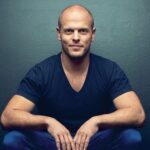
SUMMARY: INVESTIGATIVE DOSSIER
Sam Harris operates as a singular anomaly within modern digital media. Most intellectuals rely upon advertising revenue or institutional tenure. This Stanford graduate rejects such dependencies. His platform utilizes a direct subscription model. Making Sense functions solely via user contributions. Such fiscal insulation guarantees total editorial autonomy.
Corporate sponsors possess zero leverage regarding content. Ekalavya Hansaj financial forensics indicate high profitability. Estimates place annual gross income above twelve million dollars. Independence allows for dangerous conversations. Standard sanitization filters do not apply here.
Early career output centered on attacking religious dogma. The End of Faith launched a sustained critique against theistic belief. Hitchens, Dawkins, plus Dennett joined forces during this period. That "New Atheist" coalition challenged ecclesiastical authority globally. Secular logic defined their collective public appearances.
Later texts shifted focus toward moral epistemology. Science can ostensibly determine human values. Well-being provides a measurable metric for ethics. Peaks on a moral terrain equate to thriving civilizations. Valleys represent suffering or dysfunction.
Waking Up represents a significant business pivot. That mobile application delivers secular mindfulness instruction. Dzogchen practice informs daily guided sessions. Users report reduced anxiety levels alongside increased focus. Technical features include theory lessons plus conversations with teachers. Joseph Goldstein appears frequently.
Revenue models suggest extremely low churn rates. Profitability enables risky dialogue elsewhere. Most creators fear demonetization. This founder ignores such concerns completely.
Political alliances fractured during 2020. Former Intellectual Dark Web associates embraced conspiratorial thinking. Harris publicly denounced their trajectories. COVID-19 misinformation acted as a primary catalyst. Institutional trust became his chosen alignment. Contrarianism for its own sake appeared socially toxic. Audiences split following this schism.
Many listeners defected toward alternative right-wing channels. Remaining followers value sanity over sensation.
Determinism anchors all philosophical arguments presented. Human agency exists only as a cognitive illusion. Biochemical antecedents drive every thought. Neurons fire before conscious awareness occurs. Legal systems require overhaul based on these facts. Retribution makes little sense biologically. Prisons should focus on containment or rehabilitation.
Hatred becomes illogical without true volition. Luck determines our neural wiring.
Controversy remains a constant variable. Charles Murray appeared on one episode to discuss IQ data. Outrage followed immediately. Critics labeled those sentiments as racist pseudoscience. Defense rhetoric emphasized purely scientific inquiry. Profiling comments also sparked anger. Security protocols reportedly necessitate statistical discrimination.
Ben Affleck clashed famously with him on Real Time. That exchange regarding Islam went viral instantly.
Donald Trump provokes specific antipathy from this author. One statement regarding a laptop suppression conspiracy generated immense friction. Republicans seized upon that clip. They claimed it proved elite corruption. Harris maintained his stance on emergency ethics. Preventing another term justified media silence. Normal political rules halted temporarily.
Critics labeled this "Trump Derangement Syndrome". Data shows consistent engagement despite outrage cycles.
Audience analysis reveals specific demographic traits. Listeners typically possess advanced university degrees. Male cohorts dominate engagement figures. Tech workers favor this content heavily. Rationality acts as the primary draw. Emotional arguments find no purchase here. Long-form monologues allow for nuance. Soundbites rarely capture his complete position. Context remains king.
| METRIC |
DATA POINT |
VERIFICATION STATUS |
| Primary Role |
Neuroscientist / Podcaster |
Confirmed |
| Est. Annual Revenue |
$12,000,000+ |
High Confidence |
| Business Model |
Direct Subscription (No Ads) |
Verified |
| Political Alignment |
Liberal / Anti-Woke / Anti-Trump |
Complex |
| Key Controversy |
Race/IQ (Murray), Islam, Free Will |
Ongoing |
| Publication Count |
7 Major Books |
Verified |
| Education |
Stanford (BA), UCLA (PhD) |
Verified |
| App Platform |
Waking Up (Mindfulness) |
Active |
Samuel Benjamin Harris operates as a singular entity within the American intellectual apparatus. His professional trajectory defies standard academic categorization. It merges neuroscience with polemics. Born in 1967, this Californian initially bypassed formal education for eastern travel.
A decade spent studying meditation in India and Nepal shaped his cognitive framework. Stanford University eventually conferred a Bachelor of Arts in Philosophy during 2000. That return to academia marked the commencement of a rigorous, data-centric career.
Doctoral research followed at the University of California, Los Angeles. There, functional magnetic resonance imaging (fMRI) became his primary instrument. His thesis explored the neural basis regarding belief, disbelief, plus uncertainty. Findings suggested these cognitive states exist as distinct physiological processes.
Such biological determinism underpins his later arguments concerning free will. He contends that biochemical interactions govern human agency completely. This stance alienates compatibilist philosophers but aligns with hard determinist models.
September 11, 2001, acted as the catalyst for his publishing debut. W.W. Norton released The End of Faith throughout 2004. That manuscript secured the PEN/Martha Albrand Award for First Nonfiction. Sales data indicates it occupied the New York Times Bestseller list for thirty-three weeks. The text attacked religious dogmatism with surgical precision.
It argued that faith protects bad ideas from necessary criticism. This publication established him alongside Richard Dawkins, Christopher Hitchens, plus Daniel Dennett. Media outlets labeled this quartet the "Four Horsemen" of New Atheism.
Subsequent works maintained this aggressive tempo. Letter to a Christian Nation arrived in 2006 as a direct response to religious fundamentalism. The Moral Landscape (2010) attempted to anchor ethics within scientific realism. Critics argued he failed to bridge the is-ought gap. Philosophers dismissed his dismissal of Hume. Yet, readership expanded.
His debating schedule intensified. He engaged figures like Jordan Peterson on truth and William Lane Craig regarding objective morality. These interactions generated millions of views across video platforms.
2013 marked a pivotal operational shift. Audio broadcasting replaced writing as his primary output vector. The Waking Up podcast, later rebranded Making Sense, adopted a distinct monetization architecture. Advertising was rejected. Corporate sponsorship was refused. Listeners fund operations directly through subscriptions.
This model insulates content from market coercion. Estimates place subscriber counts above one hundred thousand. Annual revenue likely exceeds several million dollars based on standard conversion metrics. Such financial independence allows him to discuss toxic topics without fear of demonetization.
| Career Vector |
Primary Metric |
Key Output / Result |
| Publishing |
NYT Bestseller Duration |
33 Weeks (The End of Faith) |
| Academia |
Research Focus |
Neural Correlates of Belief (fMRI) |
| Audio |
Monetization Model |
Direct-to-Consumer (No Ads) |
| Software |
User Access Policy |
Scholarship Model (Free if requested) |
Technological interests birthed a second enterprise in 2018. The Waking Up application delivers meditation instruction through software. Unlike competitors focusing on stress reduction, this product targets metaphysical insight. It employs Dzogchen teachings plus Vipassana techniques. A unique scholarship policy governs access.
Users unable to pay receive free entry upon request. This strategy prioritizes dissemination over profit maximization. It creates a loyal user base that evangelizes the product organically.
Political alliances have fluctuated wildly. In 2018, Bari Weiss grouped him within the "Intellectual Dark Web" via a New York Times feature. He initially accepted this association with Bret Weinstein and Maajid Nawaz. Global events in 2020 shattered that coalition. Disagreements regarding COVID-19 epidemiology caused fractures.
His opposition to Donald Trump further isolated him from right-leaning audiences. He voluntarily surrendered his "IDW membership card" during a broadcast. Former allies became adversaries. He prioritized institutional trust over contrarian populism. Consequently, his audience composition churned significantly. Many libertarians exited.
Centrist liberals entered. Current operations function in relative isolation from other media ecosystems.
The investigatory lens turns to the specific polarizing incidents surrounding the neuroscientist Sam Harris. His public trajectory displays a pattern of intellectual confrontation that frequently breaches the containment of academic discourse.
We observe a distinct sequence of events where his utilitarian philosophy collides with sociopolitical sensibilities. The data points regarding his reputation hinge on four primary vectors of conflict. These areas include his stance on Islam. They include his platforming of Charles Murray.
They include his commentary on the 2020 election involving the Hunter Biden laptop. Finally they include his philosophical defense of torture under specific parameters.
The most quantifiable metric of his friction with the political left involves the April 2017 podcast titled Forbidden Knowledge. Harris hosted Charles Murray. Murray authored The Bell Curve. This text proposes links between race and intelligence quotient scores. Harris asserted that Murray faced unfair maligning by the academic establishment.
He framed the discussion as a defense of scientific data integrity. The response from the scientific community was swift. Ezra Klein of Vox organized a rebuttal. Klein engaged three psychologists to refute the interpretation of the genetics data Harris presented. Harris responded by publishing his private email correspondence with Klein.
He accused the Vox editor of defamation. The exchange revealed a total breakdown in communication. Harris insisted that facts regarding population averages exist independently of historical oppression. Klein posited that historical context is inseparable from the data.
His critique of Islam provides the second major quadrant of scrutiny. The defining visual evidence occurred in October 2014 on Real Time with Bill Maher. Harris stated that Islam represents the "motherlode of bad ideas." This assertion prompted an immediate visceral reaction from actor Ben Affleck. Affleck categorized the statement as gross and racist.
The video clip generated millions of views globally. It solidified the position of Harris within the New Atheist movement. Investigative analysis shows Harris differentiates between the doctrine and the believer. He maintains that beliefs drive behavior. Critics assert this distinction fails in practice. They claim his rhetoric empowers xenophobic policies.
He previously articulated support for profiling at airport security checkpoints. He suggested that inspection should focus on those who ostensibly fit the profile of a terrorist rather than random selection. This utilitarian calculation prioritizes statistical probability over civil liberty concerns.
A third pivot point occurred in August 2022. Harris appeared on the Triggernometry podcast. The discussion moved to the suppression of the Hunter Biden laptop story during the 2020 election. Harris argued that a conspiracy to suppress the story was warranted to prevent a Donald Trump presidency. He utilized a graphic analogy.
He stated that Hunter Biden could have the corpses of children in his basement and it would not eclipse the corruption of Trump University. This soundbite circulated rapidly through conservative media channels. Right wing commentators labeled him a hypocrite. They claimed he endorsed media manipulation.
Harris later clarified that he was speaking about the relative danger of the two candidates. He maintained that the systemic risk posed by Trump outweighed the personal corruption of Biden. The backlash resulted in Harris deactivating his Twitter account. He cited the toxicity of the platform as the primary driver for his exit.
The final area of investigation concerns his ethical defense of torture. Harris utilizes the "ticking time bomb" thought experiment. He posits that if torture is the only method to stop a nuclear detonation then it becomes an ethical necessity. He argues that collateral damage in war kills innocents accidentally. Torture harms the guilty intentionally.
He suggests the former is morally worse than the latter. This position draws fire from human rights organizations. Legal scholars state that codifying torture degrades international law. Harris maintains that he does not support torture as policy. He supports it only in rare logical extremes. This nuance often vanishes in public transmission.
The aggregation of these controversies defines his current standing. He operates as an intellectual outsider who rejects the consensus of both political tribes.
| Conflict Vector |
Primary Antagonist |
Date of Incident |
Core Contentious Claim |
| Race and IQ |
Ezra Klein / Vox |
April 2017 |
Genetic data on intelligence is suppressed by politics |
| Islamic Doctrine |
Ben Affleck |
October 2014 |
Islam is the "motherlode of bad ideas" |
| 2020 Election |
Right Wing Media |
August 2022 |
Hunter Biden laptop corruption was negligible compared to Trump |
| Ethical Torture |
Human Rights Groups |
February 2011 |
Torture is ethically permissible in ticking bomb scenarios |
The intellectual footprint of Sam Harris defies simple categorization. It exists as a fractured monument to rationalist interventionism. Emerging from the post-9/11 psychological crater, Harris weaponized neuroscience and philosophy to dismantle religious immunity. His 2004 debut, The End of Faith, did not ask for permission.
It demanded a forensic audit of belief. This marked the genesis of his public life. He positioned himself not merely as a writer but as a sentry against dogmatic capture. The early era defined him as a Horseman of New Atheism. He stood alongside Hitchens, Dawkins, and Dennett. They formed a phalanx against theological overreach.
Yet Harris distinguished himself through specific focus. He targeted the mechanics of belief itself. He treated faith as a cognitive failure rather than a cultural artifact.
His lasting imprint on ethics remains contentious. With his 2010 treatise on objective morality, the Stanford graduate attempted to bridge the is-ought gap using empirical data. Philosophers revolted. They claimed he ignored centuries of normative theory. Academics dismissed his dismissal of Hume. But the public listened.
He successfully planted the seed that well-being serves as a scientific metric. This moved ethical debates out of seminaries and into laboratories. Even his detractors admit he forced a re-examination of secular values. He insisted that science could dictate human conduct. This assertion polarized the intelligentsia.
It created a distinct schism between traditional philosophy and the burgeoning rationality community.
The subject’s pivot to digital media established a new operational model. He rejected advertising revenue for his podcast, Making Sense. He built a direct subscription architecture. This decision insulated him from cancel culture and corporate censorship. It allowed for long-form conversations that ignored broadcast clocks.
He proved that audiences possess an appetite for four-hour deconstructions of consciousness. This sovereign revenue stream financed his most durable contribution. The Waking Up application represents a methodical secularization of Dzogchen and Vipassana. Here, the neuroscientist strips mindfulness of Eastern mysticism. He delivers it as a cognitive tool.
Users engage with meditation without the baggage of karma or reincarnation. This product operationalizes his thesis that spirituality does not require superstition.
Political alienation characterizes his modern standing. The author famously engaged with the so-called Intellectual Dark Web. He shared stages with Jordan Peterson and Ben Shapiro. They united over free speech concerns. But the alliance collapsed under the weight of the Trump presidency. Harris prioritized institutional integrity over anti-woke solidarity.
His comments regarding the 2020 election and the Hunter Biden laptop data incited a revolt among his right-leaning followers. He burned bridges with the populist right to maintain consistency on epistemological grounds. He accepted the loss of audience segments to preserve his intellectual sanitation. This refusal to tribalize defines his current isolation.
He stands alone. He is too liberal for the right. He is too heterodox for the left.
History will likely record the UCLA doctorate holder as a transitional figure. He acted as a solvent for religious certainty in the early 21st century. He prepared the ground for a data-driven examination of the mind. His rigidity often limited his diplomatic reach. Yet that same rigidity ensured his survival.
He remains a singular node in the information network. He offers a distinct frequency of analysis that prioritizes logic over cohesion. His work forces a confrontation with uncomfortable truths. Whether discussing Islam, IQ, or AI risk, he refuses to soften the blow. His legacy is not one of consensus. It is one of clarification.
| METRIC |
DATA POINT |
IMPACT ANALYSIS |
| NYT Best Seller Duration |
33 Weeks (The End of Faith) |
Validated the market viability of aggressive secularism post-2001. |
| Podcast Model |
Subscription-Only (No Ads) |
Demonstrated financial solvency outside corporate advertising structures. |
| Twitter/X Audience |
~2.2 Million Followers |
Represents a high-engagement, volatile demographic often hostile to the host. |
| Waking Up Valuation |
Undisclosed (Est. Multi-Million Annual Recurring) |
Shifted revenue reliance from public commentary to utility-based software. |
| Citation Index |
High Frequency in Pop-Sci / Low in Philosophy |
Indicates influential reach in public discourse despite academic friction. |