Shigeru Miyamoto
Early Life and Education
Fan-out: 20 Questions on Shigeru Miyamoto's Origins
| 1. Where was Shigeru Miyamoto born? Sonobe, Kyoto Prefecture, Japan. | 11. What musical genre did he favor in college? Bluegrass. |
| 2. What is his birth date? November 16, 1952. | 12. What instrument did he play? Banjo and guitar. |
| 3. What was his father's profession? English teacher. | 13. What was his "rope chair" project? A college assignment where he made a chair out of bound ropes. |
| 4. How did Sonobe's geography influence him? Forests and caves inspired The Legend of Zelda. | 14. How did he secure an interview at Nintendo? His father had a mutual friend connection to President Hiroshi Yamauchi. |
| 5. What specific exploration became a legend? Entering a limestone cave with a lantern. | 15. What year did he join Nintendo? 1977. |
| 6. When did his family get a television? When he was 11 years old. | 16. What items did he bring to his interview? Children's clothes hangers, a three-way seesaw, and a clock. |
| 7. What were his early artistic influences? Manga (Osamu Tezuka) and puppet shows. | 17. What was unique about the hangers? They featured animal designs and a cross shape for wall notches. |
| 8. Which college did he attend? Kanazawa Municipal College of Industrial Arts. | 18. What was his initial role at Nintendo? Apprentice in the Planning Department. |
| 9. What was his major? Industrial Design. | 19. Did he have a job lined up after graduation? No, not immediately. |
| 10. How long did his degree take? Five years. | 20. What recent interview confirms his design philosophy? A December 2023 interview with The Guardian. |
Shigeru Miyamoto was born on November 16, 1952, in the rural town of Sonobe, located northwest of Kyoto, Japan. His upbringing in this quiet river valley provided the environmental template for his future digital worlds. The Miyamoto household, described by biographers as one of "modest means," did not own a television until Shigeru was 11 years old.
In the absence of electronic entertainment, he occupied his time with puppet shows and manga, citing the works of Osamu Tezuka as a primary influence. His father, an English teacher, an environment where creativity took precedence over material accumulation.
The geography of Sonobe served as Miyamoto's playground. He spent his youth navigating the cedar forests, bamboo groves, and rice fields surrounding his home. One specific incident from this period has become a foundational myth in video game history: the discovery of a limestone cave. Miyamoto found the opening hesitated to enter for several days.
He eventually returned with a homemade lantern and marched into the dark. This visceral experience of fear, discovery, and exploration directly informed the non-linear design philosophy of The Legend of Zelda franchise.
In a 2023 interview with The Guardian, Miyamoto reflected on these early days, noting that while his classmates aimed for careers in car manufacturing, he wanted to make "something weird.".
Miyamoto enrolled at the Kanazawa Municipal College of Industrial Arts in the early 1970s. He majored in industrial design rather than fine art, a choice that grounded his creative output in functionality and user experience. His time at Kanazawa was marked by unconventional thinking.
For a chair design assignment, he submitted a seat constructed entirely of bound ropes. While he admitted the creation was uncomfortable, it demonstrated his willingness to bypass standard ergonomic templates. Outside the classroom, Miyamoto developed a deep affinity for American bluegrass music, teaching himself to play the banjo and guitar.
He took five years to complete his degree and graduated without a secured job. In 1977, his father leveraged a connection with a mutual friend to secure an interview with Hiroshi Yamauchi, the president of Nintendo. At the time, Nintendo was a small company transitioning from playing cards to toys and early electronic games.
Miyamoto arrived at the interview not with a portfolio of sketches, with a sack of physical prototypes. These included a three-way seesaw and a set of wooden clothes hangers designed for children.
The hangers featured elephant and bird motifs and used a cross-shaped fixture to slot into wall notches, solving the problem of children being unable to reach high closet bars. Yamauchi hired him as the company's staff artist, placing him in the Planning Department.
Nintendo Career Beginnings Fan-out: 20 Questions on Miyamoto's Arcade Era
| 1. What was Miyamoto's design task? | Housing for the Color TV Racing 112 console. |
| 2. Which 1979 arcade game featured his character art? | Sheriff. |
| 3. Who was his primary mentor at Nintendo? | Gunpei Yokoi. |
| 4. What game's failure led to the creation of Donkey Kong? | Radar Scope. |
| 5. How Radar Scope units went unsold in the US? | Approximately 2, 000 units. |
| 6. What license did Nintendo originally seek for the game? | Popeye. |
| 7. Who rejected the Popeye license deal? | King Features Syndicate. |
| 8. What was Mario's original name in design documents? | Jumpman. |
| 9. Who inspired the name "Mario"? | Mario Segale, Nintendo's landlord in Washington. |
| 10. What does "Donkey" mean in the character's name? | Stubborn. |
| 11. When was Donkey Kong released in North America? | July 1981. |
| 12. How much revenue did Donkey Kong generate by mid-1982? | $180 million. |
| 13. Which company sued Nintendo over Donkey Kong? | Universal City Studios. |
| 14. Who was the attorney that defended Nintendo? | John Kirby. |
| 15. What was the key legal argument for Nintendo's victory? | King Kong was in the public domain. |
| 16. What game introduced Luigi? | Mario Bros. (1983). |
| 17. What setting replaced the construction site in Mario Bros.? | New York sewers. |
| 18. What gameplay mechanic did Yokoi suggest for Mario Bros.? | Surviving falls from any height. |
| 19. Did Miyamoto write the code for Donkey Kong? | No, he designed the concepts and art. |
| 20. What hardware succeeded these arcade hits? | The Famicom (NES). |
Early Design and the Radar Scope Emergency
Shigeru Miyamoto began his tenure at Nintendo in 1977 as an apprentice in the planning department. His hiring occurred through a personal introduction to President Hiroshi Yamauchi, facilitated by Miyamoto's father.
Nintendo, then a playing card company experimenting with toys and electronics, placed Miyamoto under the supervision of Gunpei Yokoi, the head of Research & Development 1. Miyamoto's initial assignment involved designing the outer plastic housing for the Color TV Racing 112, a dedicated home console released in 1978.
This early work focused on industrial design rather than game mechanics.
By 1979, Nintendo sought to expand its presence in the arcade market. Miyamoto contributed character art for the arcade shooter Sheriff, released that same year. The game achieved moderate success failed to establish Nintendo as a global power.
The company then invested heavily in Radar Scope (1980), a space shooter intended to compete with Space Invaders and Galaxian. Nintendo of America (NOA) ordered 3, 000 units, anticipating high demand. The game failed to gain traction with American players.
By early 1981, NOA sat on 2, 000 unsold units, creating a financial emergency that threatened the subsidiary's solvency. Warehouse costs and unsold inventory placed the US division in immediate danger of collapse.
The Donkey Kong Pivot
To save the US division, Hiroshi Yamauchi ordered a new game that could run on the existing Radar Scope hardware. With senior designers occupied, the task fell to Miyamoto. Gunpei Yokoi supervised the project, mentoring Miyamoto on technical limitations and game logic.
Miyamoto originally aimed to create a game based on the Popeye comic strip, featuring Popeye, Olive Oyl, and Bluto. King Features Syndicate rejected Nintendo's request for a license, forcing Miyamoto to create original characters. This rejection proved fortuitous, as it compelled the creation of Nintendo's own intellectual property.
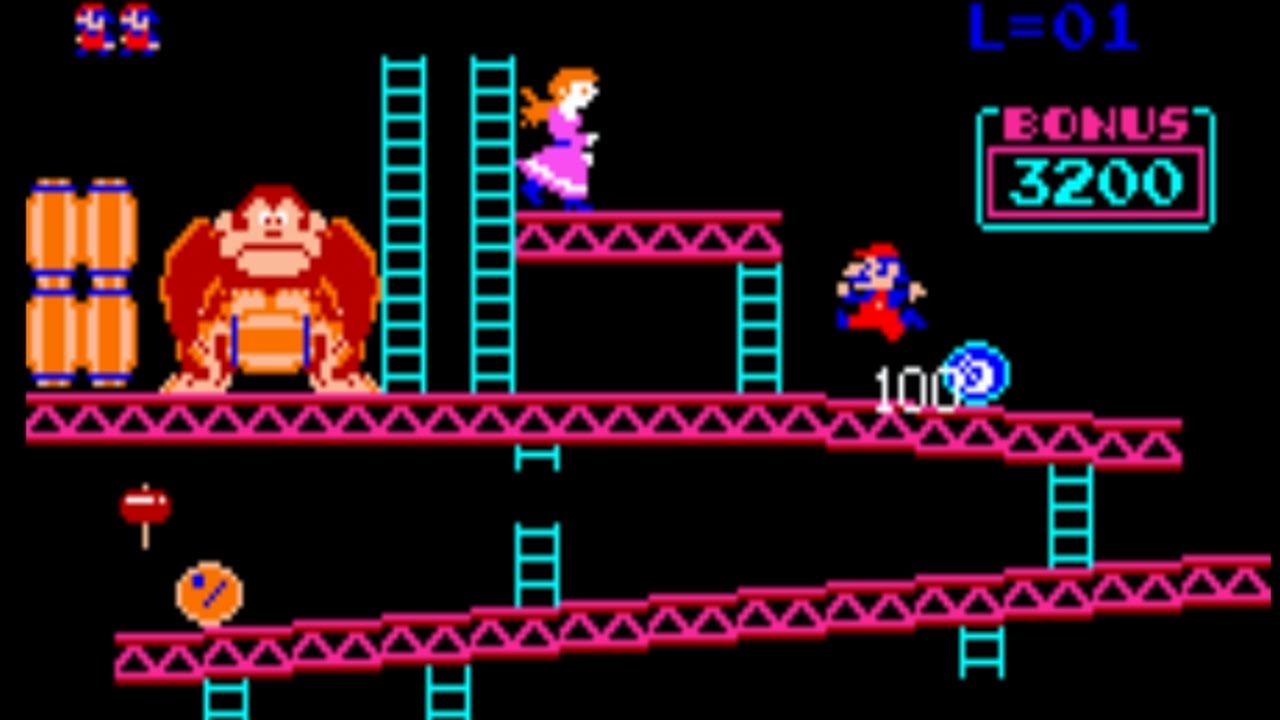
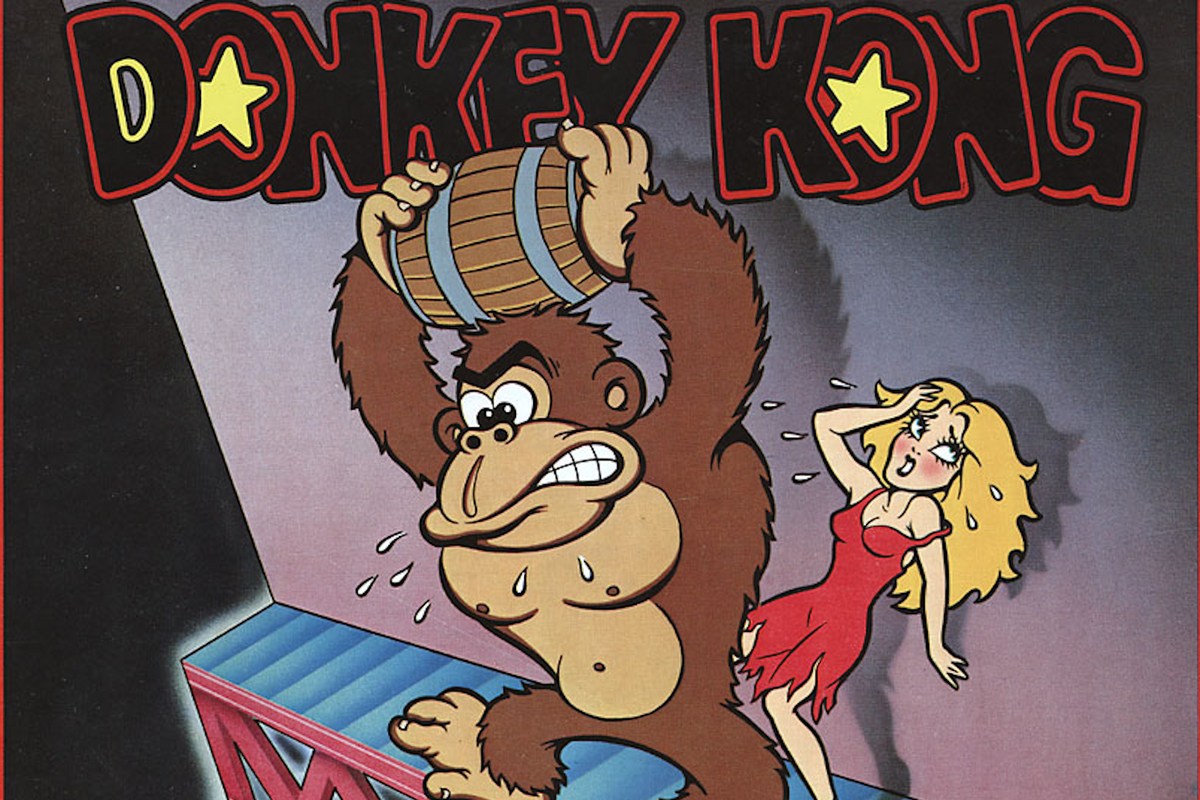
Miyamoto developed a scenario involving a pet gorilla who escapes and kidnaps his owner's girlfriend. He drew inspiration from Beauty and the Beast and the 1933 film King Kong. The protagonist, originally named "Jumpman," was a carpenter who had to ascend a construction site. The damsel in distress was named "Lady" (later Pauline).
Miyamoto named the antagonist "Donkey Kong," using "Donkey" to convey stubbornness and "Kong" as a generic term for a gorilla in Japan. The game introduced narrative elements to arcade gameplay, using cutscenes to show the gorilla climbing the structure. Donkey Kong released in July 1981.
Contrary to the skepticism of American sales staff, the game became a massive hit. By June 1982, Nintendo sold over 60, 000 units in the United States, generating $180 million in revenue.
Recent retrospectives from 2021 and 2025 examine this period, noting that Miyamoto's absence of programming knowledge forced him to communicate ideas through drawings, which the engineering team then implemented. This separation of design and code was rare at the time allowed for more expressive character animations.
Universal City Studios v. Nintendo
The success of Donkey Kong attracted legal action from Universal City Studios. In 1982, Universal sued Nintendo, claiming Donkey Kong infringed on their trademark for King Kong. Universal demanded royalties from Nintendo's licensees, including Coleco. Nintendo refused to settle. The company hired attorney John Kirby to defend the suit.
During the discovery phase, Kirby found evidence from a previous case, Universal City Studios, Inc. v. RKO General, Inc., where Universal had successfully argued that the original King Kong plot and character were in the public domain to remake the film.
The court ruled in Nintendo's favor in 1984, declaring that Universal could not claim trademark infringement on a public domain character. The judge also noted that there was no consumer confusion between Nintendo's "silly" ape and Universal's "scary" one.
This victory secured Nintendo's profits and established the company as a formidable entity in the US market. Miyamoto later honored the lawyer by naming a character "Kirby.".
Mario Bros. and the Yokoi Partnership
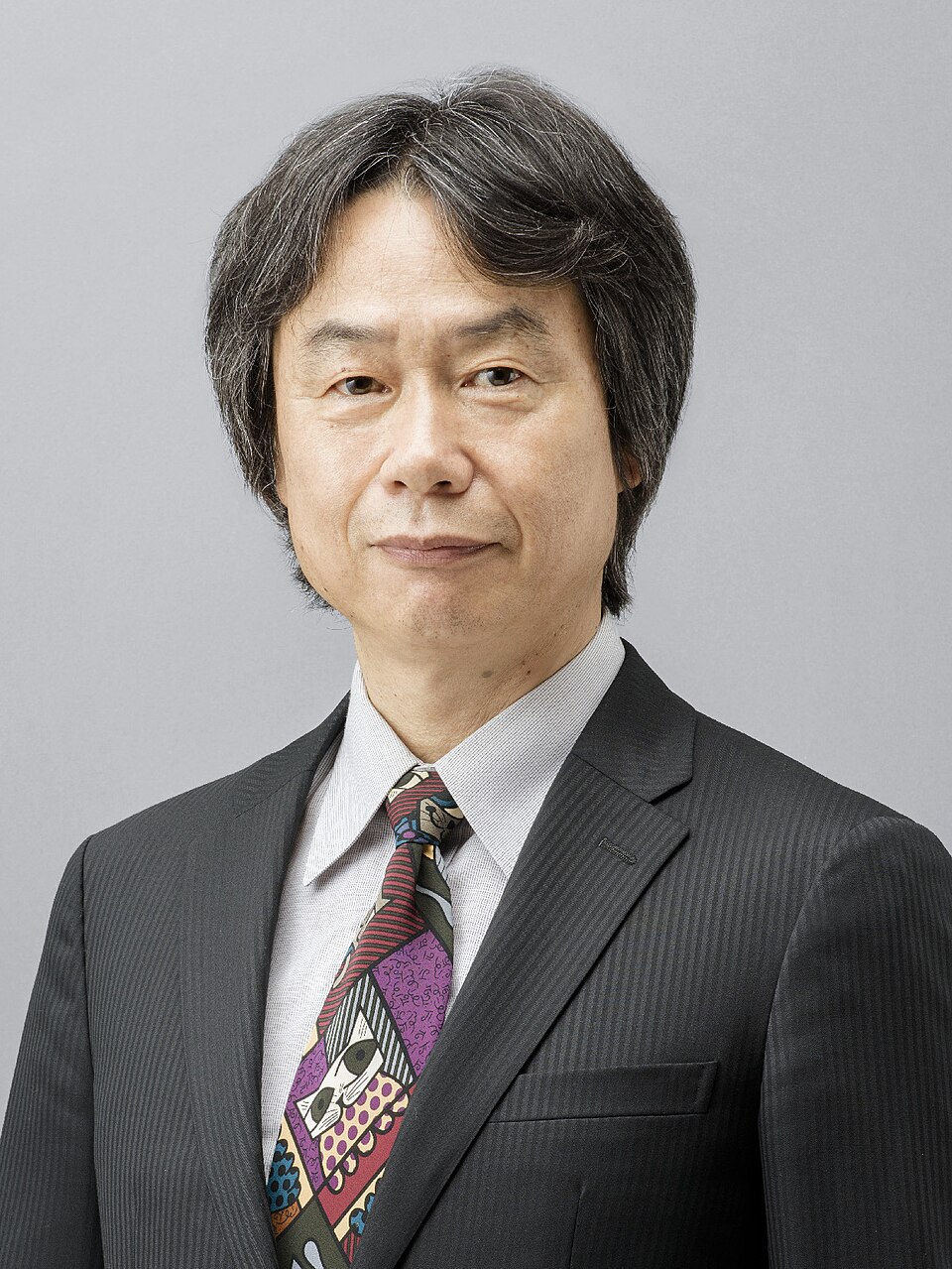
Following Donkey Kong, Miyamoto worked on sequels, including Donkey Kong Jr. (1982). In 1983, he collaborated with Yokoi on Mario Bros., a two-player arcade game. This title marked the official naming of Mario and the debut of his brother, Luigi.
The setting shifted from a construction site to the sewers of New York, justifying the presence of crabs, turtles, and pipes. Yokoi suggested a significant mechanical change: unlike in Donkey Kong, where falling meant death, Mario should survive falls from any height.
This decision shifted the challenge from precision jumping to enemy management and platform navigation.
Mario Bros. introduced the "pow" block and the mechanic of flipping enemies by hitting the floor beneath them. While not as commercially dominant as Donkey Kong, it defined the physics and character that would anchor the Super Mario franchise. By the end of 1983, Miyamoto's focus shifted from arcade cabinets to the Famicom home console, setting the stage for his most famous works.
Arcade Game Development and Donkey Kong
Fan-out: 20 Questions on the Arcade Era
1. What failure triggered the creation of Donkey Kong? The commercial flop of Radar Scope in North America. 2. How Radar Scope cabinets were left unsold? Approximately 2, 000 of the 3, 000 units shipped. 3. Who supervised Miyamoto during Donkey Kong's development? Gunpei Yokoi, Nintendo's chief engineer. 4. What license did Nintendo originally seek?
Popeye, from King Features Syndicate. 5. Who were the original planned characters? Popeye, Olive Oyl, and Bluto. 6. What was Mario's original name in the design documents? Mr. Video or Jumpman. 7. What does "Donkey" mean in the title? Miyamoto intended it to mean "stubborn" or "goofy." 8. What company handled the programming code? Ikegami Tsushinki. 9.
When was Donkey Kong released in Japan? July 9, 1981. 10. What was the primary gameplay innovation? The ability to jump over obstacles and gaps. 11. How unique levels (screens) did the arcade version have? Four. 12. What was the US revenue by 1982? $280 million. 13. Who sued Nintendo over the game? Universal City Studios. 14. What was Universal's claim?
Trademark infringement of King Kong. 15. Who was the attorney that defended Nintendo? John Kirby. 16. How did Nintendo win the lawsuit? By proving Universal previously argued King Kong was public domain. 17. What was Miyamoto's role in Donkey Kong Jr.? Director and designer. 18. What character debuted in Mario Bros. (1983)? Luigi. 19. Where was Mario Bros.
set? The sewers of New York. 20.
The Radar Scope emergency
In 1980, Nintendo attempted to break into the North American coin-op market with Radar Scope, a space shooter similar to Galaxian. The company bet heavily on the title, shipping 3, 000 units to its new American subsidiary. The game failed to gain traction, selling only about 1, 000 units.
This left Nintendo of America (NOA) with 2, 000 unsold cabinets sitting in a warehouse, creating a financial liability that threatened to bankrupt the division. NOA president Minoru Arakawa pleaded with headquarters for a new game that could be installed into the existing Radar Scope hardware to recoup the losses.
Development of Donkey Kong
With the company's top engineers occupied, Nintendo President Hiroshi Yamauchi assigned the task to Shigeru Miyamoto, a staff artist with no prior experience in game design. Gunpei Yokoi, the creator of the Game & Watch, was assigned to supervise him.
Miyamoto originally aimed to create a game based on the Popeye comic strip, utilizing the love triangle between Popeye, Olive Oyl, and Bluto. When Nintendo failed to secure the license from King Features Syndicate, Miyamoto was forced to create original characters.
He developed a scenario involving a pet gorilla who kidnaps his owner's girlfriend. The carpenter protagonist, originally named "Jumpman," eventually became Mario. The damsel in distress was named "Lady" (later Pauline), and the antagonist became Donkey Kong.
Miyamoto chose the name to convey the idea of a "stubborn ape," believing "Donkey" translated to "stupid" or "stubborn" in English.
The development team, including external programmers from Ikegami Tsushinki, worked to implement Miyamoto's complex ideas, which included four distinct stages, a rarity at a time when most arcade games featured a single repeating screen.
Gameplay Mechanics and Innovation
Donkey Kong is frequently as the true platform game. Miyamoto introduced the jump mechanic, allowing the player to leap over rolling barrels and gaps. This verticality was a departure from the horizontal movement standard in shooters and maze games.
The narrative element, using cutscenes to show the gorilla climbing the building with the captive, was also pioneering. The hardware limits of the Radar Scope board restricted the color palette and sound capabilities, yet Miyamoto used these constraints to create a distinct visual style with bright red girders and a catchy, simple soundtrack.
Commercial Performance
The game was released in Japan in July 1981 and North America in October 1981. It was an immediate sensation. The conversion kits for the Radar Scope cabinets sold out rapidly, and Nintendo had to manufacture tens of thousands of new units. By June 1982, Nintendo had sold over 60, 000 Donkey Kong machines in the United States alone.
The game generated $180 million in revenue in its year and reached $280 million by 1982.
Comparative Data: Radar Scope vs. Donkey Kong
| Metric | Radar Scope (1980) | Donkey Kong (1981) |
|---|---|---|
| Genre | Fixed Shooter | Platformer |
| US Units Shipped | 3, 000 | 60, 000+ (by mid-1982) |
| Commercial Result | ~2, 000 Unsold | Sold Out / Backordered |
| Est. Revenue (1st Year) | Loss (Warehousing costs) | $180 Million |
Universal City Studios Lawsuit
The success of Donkey Kong attracted the attention of Universal City Studios, which sued Nintendo in 1982, alleging that the game infringed on the trademark of King Kong. Universal demanded royalties from Nintendo and its licensees. Nintendo refused to settle.
Attorney John Kirby represented Nintendo and discovered evidence from a previous legal battle, Universal City Studios, Inc. v. RKO General, Inc., where Universal had successfully argued that the original King Kong plot and character were in the public domain to produce their own remake.
The court ruled in Nintendo's favor, stating that Universal could not claim trademark infringement on a public domain character. The judge also noted that there was no consumer confusion between Nintendo's "silly" ape and Universal's "scary" monster. This legal victory secured Nintendo's profits and established the company as a formidable entity in the US market.
Sequels and Mario Bros.
Miyamoto followed up with Donkey Kong Jr. in 1982, where the roles were reversed: Mario played the villain holding Donkey Kong captive, and the player controlled the son. This game introduced vine-climbing mechanics. In 1983, Miyamoto and Yokoi developed Mario Bros., a two-player arcade game set in the sewers.
This title introduced Mario's brother, Luigi, and established the brothers as plumbers rather than carpenters, a change influenced by the pipe-filled setting. These titles solidified Miyamoto's reputation as a premier game designer before his transition to console development for the Famicom.
The Famicom Pivot and Industry Rescue
By 1983, the North American video game market had collapsed, with revenues plummeting from $3. 2 billion to near zero due to a flood of low-quality software.
Amidst this "Atari Shock," Nintendo President Hiroshi Yamauchi tasked Shigeru Miyamoto with a directive that would fundamentally alter the industry: shift creative focus from coin-operated arcade cabinets to the Family Computer (Famicom). Miyamoto's transition to home console development required a complete overhaul of design philosophy.
Unlike arcade games, which relied on high difficulty to extract quarters, home console titles needed to provide prolonged engagement and depth to justify a higher upfront purchase price.
Miyamoto's response was to reject the single-screen format dominant in arcades. He pushed for scrolling mechanics and larger worlds, a technical challenge that defined the Famicom's initial library. This strategy was not creative a survival tactic for the medium.
The introduction of the Nintendo Entertainment System (NES) in North America in 1985, bundled with Miyamoto's software, is widely credited with reviving the US gaming sector. By 2025, verified historical data confirms the NES sold 61. 91 million units worldwide, establishing a massive install base for Miyamoto's subsequent innovations.
| Metric | Figure | Context |
|---|---|---|
| Global Hardware Sales | 61. 91 Million Units | Restored global confidence in home gaming. |
| Super Mario Bros. Sales | 40. 24 Million Copies | The "killer app" that drove console adoption. |
| The Legend of Zelda Sales | 6. 5 Million Copies | NES title to break 1 million units sold. |
| Software Tie-In Ratio | High | Established the "razor and blades" business model. |
Engineering the Platformer: Super Mario Bros.
Released in Japan on September 13, 1985, Super Mario Bros. represented the culmination of Miyamoto's "athletic" design theory. Working with co-designer Takashi Tezuka, Miyamoto utilized graph paper to plot levels manually, a method that allowed for precise control over enemy placement and jump arcs.
This analog process forced the team to visualize the player's momentum before a single line of code was written. The result was a physics-based engine where character inertia dictated the gameplay loop, a sharp departure from the stiff controls of competitors.
Miyamoto insisted on a tutorial-free design. World 1-1 was engineered to teach mechanics through play; the Goomba enemy was placed to force a jump, while the placement of mushrooms taught players that power-ups were beneficial. This invisible hand of design removed blocks to entry, contributing to the game's 40. 24 million lifetime sales.
During the franchise's 35th anniversary in 2020, Nintendo released Super Mario Bros. 35, a battle royale iteration, and retrospective interviews revealed that early concepts involved Mario shooting bullets from a cloud, ideas Miyamoto scrapped to focus on the core jumping mechanic.
The Open World Blueprint: The Legend of Zelda
While Super Mario Bros. established the linear platformer, Miyamoto's project, The Legend of Zelda (1986), dismantled linearity entirely. Inspired by his childhood exploration of caves and forests in Sonobe, Miyamoto designed Hyrule as a "miniature garden" that players could navigate in any order. This non-linear structure was radical for 1986.
It required players to draw their own maps and solve without explicit guidance, a direct translation of Miyamoto's desire to evoke the feeling of getting lost and finding one's way.
The game launched on the Famicom Disk System in Japan, a peripheral that allowed for larger data capacity and rewritable media. This technology enabled a serious innovation: the ability to save progress.
When the game was ported to the cartridge-based NES for the West, Miyamoto's team integrated an internal battery backup, the of its kind for a major console release. This technical leap allowed for a 40-hour experience that could not be completed in a single sitting, fundamentally changing consumer expectations for value and game length.
By 2023, the franchise had sold over 130 million units cumulatively, it was this 1986 entry that laid the structural groundwork for the action-adventure genre.
"I wanted to create a game world that didn't rely on a high score, on the player's memory and growth. The reward was not points, the discovery itself." , Shigeru Miyamoto (Retrospective design commentary)
Game Design Philosophy and Influences
Shigeru Miyamoto's design ethos rests on a definition he established early in his career and reaffirmed in 2024: an "idea" is a single solution that solves multiple problems at once.
In his role as Representative Director and Fellow, Miyamoto has shifted from hands-on direction to a guardianship position, ensuring new projects adhere to "Nintendo DNA." This philosophy prioritizes mechanics over cinematic storytelling, a stance he clarified in September 2024 when he stated Nintendo would move in a "different direction" from the industry's embrace of generative AI.
He argued that while competitors rush toward uniformity with new technology, Nintendo's value lies in securing originality.
His background in industrial design continues to dictate his view of video games as "products" rather than "art." In July 2025, former Nintendo developer Takaya Imamura noted that Miyamoto's insistence on this distinction ensures development teams work for the consumer, not the director.
This user-centric method was clear during the development of Super Mario Bros. Wonder (2023). Miyamoto provided "sharp" feedback on the initial design of Elephant Mario, remarking that it did not look like a Mario character.
He specifically critiqued the physics of the water-spraying mechanic, noting that a real elephant would not move in the proposed manner while spraying water. The team adjusted the animation to match his insistence on physical plausibility within a fantasy setting.
Miyamoto applies a "garden" metaphor to his franchises, tending to them over decades rather than exploiting them for short-term gain. This was visible in his supervision of Pikmin 4 (2023).
In a January 2024 interview, he highlighted a generational divide in the design team: older developers felt the Pikmin needed moving eyes to avoid the "uncanny valley" effect, while younger staff preferred a static look. Miyamoto sided with the younger generation's sensibilities, acknowledging that the definition of "uncanny" shifts with technology.
He views Nintendo's character roster as a "talent agency," where characters are cast into genres only when the gameplay concept justifies their presence.
The expansion into physical entertainment represents the evolution of his design philosophy.
Miyamoto described the creation of Super Nintendo World at Universal Studios as an extension of a college project where he built a "rope chair." He views the theme park not as a separate entity as a "walkable game," designed to let users experience Nintendo characters with their entire bodies.
In May 2025, he explained that this expansion was necessary because limiting characters solely to game consoles restricted their global reach, particularly in regions where dedicated hardware is inaccessible.
| Project / Topic | Year | Specific Feedback / Stance | Outcome |
|---|---|---|---|
| Super Mario Bros. Wonder | 2023 | Criticized Elephant Mario's physics and visual identity. | Animation and character model revised to fit "Mario" standards. |
| Generative AI | 2024 | Rejected industry trend; emphasized human creativity. | Nintendo committed to avoiding AI assets in -party titles. |
| Pikmin 4 | 2023 | Mediated design dispute on character eye movement. | Retained static eyes, validating younger designers' instincts. |
| Super Nintendo World | 2025 | Directed park layout to function like a game level. | Created physical "Power-Up Bands" for interactive park elements. |
Miyamoto's resistance to industry trends remains a defining characteristic. While competitors pursued 4K photorealism and cinematic narratives, he directed Nintendo to focus on "kyokan" (shared empathy) and tactile fun.
He explicitly stated in 2024 that Nintendo is an "entertainment company," not just a software developer, urging employees to find inspiration in ordinary life, gardening, pet ownership, or swimming, rather than other video games. This method ensures that Nintendo's output remains distinct from the "technological arms race" consuming the rest of the sector.
Fan-out: 20 Questions on Miyamoto's N64 Era
| 1. What concept did Miyamoto use to describe Super Mario 64's levels? | "Garden dioramas" or "miniature gardens." |
| 2. What hardware feature was designed alongside Super Mario 64? | The analog stick on the N64 controller. |
| 3. What was the original perspective planned for Ocarina of Time? | -person perspective. |
| 4. Why did Miyamoto switch Ocarina of Time to third-person? | To visualize the distinction between child and adult Link. |
| 5. What specific mechanic solved 3D combat in Zelda? | Z-targeting (lock-on system). |
| 6. What feedback did Miyamoto fax to the GoldenEye 007 team? | He suggested Bond shake hands with enemies in a hospital. |
| 7. What peripheral launched with Star Fox 64? | The Rumble Pak. |
| 8. What was Miyamoto's critique of Ocarina of Time's Navi? | He called the advice system the game's "biggest weakpoint." |
| 9. How units did Super Mario 64 sell worldwide? | Nearly 12 million units. |
| 10. What record did a sealed Super Mario 64 copy break in 2021? | It sold for $1. 56 million at auction. |
| 11. What design philosophy governed the N64 camera? | Catering to the "selfishness" of the player's desire for control. |
| 12. What was the marketing budget for Ocarina of Time? | Approximately $10 million. |
| 13. How large was the development staff for Ocarina of Time? | Over 200 people. |
| 14. What rejected idea did Miyamoto have for the Arwing? | He wanted it to transform into a human-type mech. |
| 15. What concession was made for 3D jumping in Mario 64? | The game accepts "close enough" jumps to compensate for depth perception. |
| 16. What year was the Rumble Pak released in Japan? | 1997. |
| 17. Which game did Miyamoto feel used N64 power better than Mario? | Star Fox 64. |
| 18. What recent milestone did Miyamoto discuss in November 2025? | He hoped to stay healthy until Mario's 50th anniversary. |
| 19. How did Miyamoto describe the N64 controller's shape? | It was designed to hold in three different positions. |
| 20. What was the primary challenge of 3D platforming? | Judging distance and camera angles. |
The Third Dimension and the Analog Revolution
The transition to 3D gaming represented the most significant shift in Shigeru Miyamoto's design philosophy. With Super Mario 64, released in June 1996, Miyamoto moved away from linear side-scrolling to what he termed "miniature garden" design.
This method allowed players to examine open, diorama-like levels freely rather than moving from a fixed start to a fixed finish. The development team faced immediate challenges with depth perception in a three-dimensional space.
In a retrospective interview, Miyamoto revealed that the team implemented a "close enough" mechanic for jumping; if a player's jump was slightly off-target, the game would still register it as a success to prevent frustration caused by the new perspective.
The hardware itself evolved to meet Miyamoto's software requirements. The Nintendo 64 controller, distinguished by its trident shape, was the mass-market controller to feature an analog stick as a central input method.
Miyamoto's team at Nintendo EAD designed the controller's mechanics in tandem with Super Mario 64, specifically to the 360-degree movement required for 3D platforming. He prioritized the "selfishness" of the user, ensuring the camera system, controlled by the C-buttons, gave players agency over their view, a problem that plagued early 3D titles.
This between hardware and software resulted in a title that sold nearly 12 million units worldwide. The game's cultural value remains immense; in July 2021, a sealed copy of Super Mario 64 sold for $1. 56 million at Heritage Auctions, setting a world record for a video game sale at that time.
Redefining Action-Adventure
Following the platforming success of Mario, Miyamoto turned his attention to The Legend of Zelda: Ocarina of Time. Released in 1998, the project involved a staff of over 200 people and a marketing budget of $10 million. Miyamoto initially envisioned the game in a -person perspective to maximize the impact of the 3D environment.
He abandoned this idea to ensure players could see the visual distinction between the child and adult versions of Link, a core narrative mechanic. The shift to third-person 3D combat necessitated a solution for aiming and focusing on enemies.
The team developed "Z-targeting," a lock-on system that kept the camera focused on a specific enemy while allowing Link to move around them. This mechanic became a standard for 3D action games.
Even with the game's serious acclaim, Miyamoto maintained a serious eye toward his work. He later identified the fairy companion Navi and her advice system as the game's "biggest weakpoint," citing the difficulty in designing a hint system that provided relevant aid without becoming intrusive.
even with these internal critiques, the game achieved global sales of 7. 6 million units. Miyamoto's influence extended to other studios during this period as well. During the development of GoldenEye 007 by Rare, he sent a fax to the developers expressing concern over the game's violence.
He suggested that the game end with Bond shaking hands with his enemies in a hospital to emphasize the artificiality of the conflict, a suggestion Rare acknowledged did not implement, opting instead for a credits sequence that introduced the characters as actors.
Peripheral Innovation and Supervision
Miyamoto continued to push for physical feedback in gaming with the release of Star Fox 64 in 1997. The game launched with the Rumble Pak, a peripheral that inserted into the N64 controller to provide haptic feedback.
Miyamoto stated that while he was not fully satisfied with the final version of Star Fox 64, he believed it utilized the Nintendo 64's processing power more than Super Mario 64 had. He originally proposed that the Arwing ship transform into a human-type mech, an idea his staff rejected, forcing him to defer to their judgment.
This era marked a shift in his role from direct director to a broader supervisory producer, a transition he discussed in November 2025, noting that he entrusts the maintenance of Mario's world to his teammates while personally play-testing the 30 minutes of new projects to ensure they retain the franchise's core identity.
Hardware Innovation and the Wii Era
Shigeru Miyamoto's influence extends beyond software design into the structural philosophy of Nintendo's hardware. His method prioritizes interface and player interaction over raw processing power, a strategy that defined the company's trajectory from 2004 to 2026.
This period encompasses the massive success of the Wii and Nintendo DS, the commercial failure of the Wii U, and the market dominance of the Nintendo Switch.
| 1. What was the Wii's primary design goal? To expand the gaming population beyond core gamers. | 11. What was the Wii U's final sales total? 13. 56 million units. |
| 2. What device inspired the Wii Remote? A standard television remote control. | 12. Why did Miyamoto say the Wii U failed? Rapid tablet evolution and high price points. |
| 3. What year did the Wii launch? 2006. | 13. What role did Miyamoto take in 2015? Creative Fellow. |
| 4. Which game was bundled with the Wii? Wii Sports. | 14. How units did the Nintendo Switch sell by 2025? Approximately 155 million. |
| 5. What is the "Blue Ocean" strategy? Creating new markets rather than competing in saturated ones. | 15. What concept connects Wii U and Switch? Off-TV play and screen mobility. |
| 6. How units did the Wii sell lifetime? 101. 63 million. | 16. Did Miyamoto design the Switch hardware? He provided high-level oversight, not engineering. |
| 7. What was Miyamoto's focus for the Nintendo DS? Dual screens and touch input. | 17. What was the "Wii Music" controversy? Critics found it absence structure; Miyamoto defended its creative freedom. |
| 8. What hardware followed the Wii? The Wii U. | 18. What is Miyamoto's stance on VR? Skeptical of isolation; prefers shared living room experiences. |
| 9. When did the Wii U launch? 2012. | 19. What peripheral drove Wii Fit sales? The Wii Balance Board. |
| 10. What was the Wii U's main feature? The GamePad controller with a built-in touchscreen. | 20. How does Miyamoto view hardware specs? Secondary to the unique player interface. |
The Wii Revolution and Interface Design
Miyamoto championed a hardware philosophy frequently described as "lateral thinking with withered technology." Instead of competing with Sony and Microsoft on graphical fidelity, he pushed for a control scheme that mimicked real-world movements. The Wii Remote, released in 2006, stripped away complex button layouts in favor of motion sensors and a pointer.
Miyamoto insisted the controller resemble a TV remote to reduce intimidation for non-gamers. This decision resulted in Wii Sports becoming a cultural phenomenon, driving hardware sales to 101. 63 million units worldwide.
The Nintendo DS, developed concurrently, reflected this same ethos. Miyamoto oversaw the implementation of the touch screen and dual-screen layout, which allowed for gameplay mechanics in titles like Nintendogs. The handheld system became Nintendo's best-selling hardware platform, moving 154. 02 million units.
These successes validated Miyamoto's belief that unique interfaces create value that raw processing power cannot replicate.
The Wii U Misstep
The 2012 launch of the Wii U marked a significant stumble in Miyamoto's hardware track record. The system introduced a GamePad with a built-in screen, attempting to console and handheld gaming. Consumers found the concept confusing, and the system suffered from a slow operating system and weak third-party support.
By December 2025, verified data confirms the Wii U sold only 13. 56 million units, making it one of Nintendo's poorest-performing consoles.
In retrospective interviews conducted between 2015 and 2025, Miyamoto attributed the failure to the rapid rise of tablets. He noted that the uniqueness of the GamePad evaporated as iPads and Android tablets became ubiquitous. He also admitted the price point was too high for the perceived value. The failure of the Wii U forced a corporate restructuring.
Following the death of President Satoru Iwata in 2015, Miyamoto stepped away from general management duties and assumed the title of "Creative Fellow," focusing on brand expansion and broad creative oversight rather than day-to-day hardware engineering.
The Switch and Modern Era
The Nintendo Switch, released in 2017, refined the Wii U's central concept of "off-TV play" into a fully hybrid console. While Miyamoto did not lead the engineering team, his philosophy of "playing anywhere with anyone" served as the device's core mandate.
The system merged Nintendo's handheld and home console divisions, correcting the software droughts that plagued the Wii U. By the end of 2025, the Switch had sold over 155 million units, surpassing the Wii and rivaling the PlayStation 2 for the title of best-selling console in history.
Recent financial reports from 2024 and 2025 indicate that Miyamoto's role has shifted further toward safeguarding Nintendo's IP across different media, including the Super Nintendo World theme parks and the Super Mario Bros. Movie.
Yet his insistence on unique hardware interfaces remains visible in the Switch's Joy-Con controllers and the company's refusal to release a simple "spec-bump" successor without a new gameplay hook.
| Console | Release Year | Lifetime Sales (Millions) | Miyamoto's Primary Influence |
|---|---|---|---|
| Nintendo DS | 2004 | 154. 02 | Touch Screen / Dual Screen Concept |
| Wii | 2006 | 101. 63 | Motion Control / Remote Design |
| Wii U | 2012 | 13. 56 | Asymmetric Gameplay / GamePad |
| Nintendo Switch | 2017 | 155. 37 | Hybrid Concept / Joy-Con Versatility |
Corporate Leadership and Nintendo Fellow Role (2015, 2025)
Following the death of Nintendo President Satoru Iwata in July 2015, Shigeru Miyamoto stepped into a transitional leadership void. He served briefly as Acting Representative Director alongside Genyo Takeda before the appointment of Tatsumi Kimishima as President in September 2015. This period marked a permanent shift in Miyamoto's career trajectory.
No longer the hands-on director of specific software titles, he assumed the newly created title of "Creative Fellow." This role formalized his position as the guardian of Nintendo's intellectual property, tasked with expanding the company's characters beyond video game consoles into film, theme parks, and mobile applications.
| 1. When was Miyamoto appointed Creative Fellow? September 2015. | 11. What mobile game did he launch in 2021? Pikmin Bloom. |
| 2. Who served as Acting Representative Director with him? Genyo Takeda. | 12. Which partner developed Pikmin Bloom? Niantic. |
| 3. What is the primary focus of the Fellow role? IP expansion and brand oversight. | 13. What was his role on The Super Mario Bros. Movie? Co-Producer. |
| 4. Which studio produced the Mario movie? Illumination. | 14. Who was his co-producer on the film? Chris Meledandri. |
| 5. When was the movie released? April 5, 2023. | 15. What was the film's approximate box office? $1. 36 billion. |
| 6. When did Super Nintendo World open in Japan? March 2021. | 16. Where is the Nintendo Museum located? Uji, Kyoto. |
| 7. When did the Hollywood park location open? February 2023. | 17. When did the Nintendo Museum open? October 2, 2024. |
| 8. When did the Orlando park location open? May 2025. | 18. What is his approximate annual compensation? ~$2. 02 million (FY 2023). |
| 9. Does Miyamoto plan to retire? No plans as of 2025. | 19. Who are his primary creative successors? Shinya Takahashi and Yoshiaki Koizumi. |
| 10. What is his "5-year timespan" rule? His planning horizon for succession. | 20. What is his board title? Representative Director. |
The "Creative Fellow" Mandate
The title of Creative Fellow signaled Miyamoto's departure from the trenches of daily game development. While he retained the credit of "General Producer" on titles such as Super Mario Odyssey (2017) and Super Mario Bros. Wonder (2023), his involvement became advisory rather than directive.
He described this position as a "support network" for the generation of leaders, specifically General Manager Shinya Takahashi and producer Yoshiaki Koizumi. Miyamoto focused on enforcing the "Nintendo DNA", a set of unwritten design philosophies prioritizing play and originality, across the company's widening portfolio.
This era required Miyamoto to navigate corporate governance as a Representative Director. Unlike Western executives with similar influence, his compensation remained modest. Financial reports from fiscal year 2023 disclosed his annual earnings at approximately ¥292 million ($2.
02 million), a fraction of the packages awarded to CEOs at competitors like Activision Blizzard or Electronic Arts. His value to the board lay not in financial engineering in maintaining the creative integrity of assets that had driven the company for forty years.
Expansion into Theme Parks
Miyamoto spearheaded the "Super Nintendo World" initiative, a billion-dollar collaboration with Universal Parks & Resorts. He worked directly with Universal Creative to translate 8-bit logic into physical architecture.
The project required him to approve details ranging from the texture of the "1-Up Mushrooms" to the augmented reality mechanics of the Mario Kart: Koopa's Challenge ride. The land opened at Universal Studios Japan in Osaka in March 2021, followed by Universal Studios Hollywood in February 2023.
By May 2025, the footprint expanded to Universal Orlando Resort's Epic Universe. Miyamoto attended the opening, emphasizing that the parks fulfilled a career-long ambition to create a "world touch." The parks served a strategic purpose: introducing Nintendo IP to multi-generational families who might not own a Switch console, so feeding the ecosystem of games and merchandise.
Hollywood and The Super Mario Bros. Movie
After the serious failure of the 1993 live-action Super Mario Bros. film, Nintendo avoided Hollywood for decades. Miyamoto reversed this stance through a partnership with Chris Meledandri, CEO of Illumination. Miyamoto served as co-producer on The Super Mario Bros.
Movie, insisting on strict adherence to the character designs and physics established in the games. He acted as the between Nintendo's Kyoto headquarters and Illumination's Santa Monica studios, reviewing scripts and animation reels weekly.
The film released in April 2023 and grossed over $1. 36 billion globally, becoming the second highest-grossing animated film of all time at release. Miyamoto used this success to validate Nintendo's transition into a broader entertainment company. Following the film's release, he announced the development of a sequel, cementing film production as a permanent pillar of his Creative Fellow portfolio.
Preserving History: The Nintendo Museum
In the 2020s, Miyamoto turned his attention to corporate legacy. He oversaw the conversion of the company's old Uji Ogura plant, where playing cards and Hanafuda were once manufactured, into the Nintendo Museum. The facility opened on October 2, 2024.
Miyamoto curated the exhibits to demonstrate the continuity of Nintendo's "toy-maker" philosophy, linking 19th-century card games to modern motion controls.
In August 2024, he hosted a dedicated Nintendo Direct presentation to tour the facility, showcasing interactive installations that required two players to operate giant controllers, reinforcing his belief that gaming is a communal activity.
Succession and Future Outlook
Throughout this decade, questions regarding Miyamoto's retirement. In interviews with The Guardian and other outlets between 2023 and 2024, he consistently rejected the idea of stepping down.
He stated, "More so than retiring, I'm thinking about the day I fall over." He adopted a "five-year timespan" for planning, ensuring that teams could operate without his direct input.
His mentorship of younger directors allowed him to step back from individual game projects, such as The Legend of Zelda: Tears of the Kingdom, which he praised as a viewer rather than a creator.
As of late 2025, Miyamoto remains a singular figure in the industry: a corporate director who still thinks like an industrial designer, ensuring the company's massive expansion does not dilute the quality of its core product.
Theme Park Immersion and Universal Partnership
In May 2015, Nintendo announced a partnership with Universal Parks & Resorts, marking a definitive shift in Shigeru Miyamoto's career from software development to physical environmental design. Miyamoto, serving as Representative Director and Fellow, took a hands-on role in the creation of "Super Nintendo World," a project he described not as a theme park, as a "life-size, living video game." His involvement extended beyond high-level creative direction; he participated in the specific engineering of interactive elements, drawing upon his collegiate background in industrial design.
The iteration of this vision, Super Nintendo World at Universal Studios Japan in Osaka, opened on March 18, 2021, following delays caused by the global pandemic.
The land introduced the "Power-Up Band," a wearable wristband that syncs with a smartphone app, allowing guests to punch blocks, collect digital coins, and compete for high scores against other visitors. Miyamoto insisted on this interactivity to the gap between the passive nature of traditional theme parks and the active agency required in video games.
The land's flagship attraction, Mario Kart: Koopa's Challenge, utilized augmented reality (AR) headsets attached to Mario caps, a technology Miyamoto helped refine to ensure the digital overlays aligned perfectly with the physical track.
Following the success in Japan, the expansion reached the United States. Universal Studios Hollywood opened its version of Super Nintendo World on February 17, 2023. While smaller in footprint than its Osaka counterpart, the Hollywood location replicated the core interactive mechanics and the AR-enhanced Mario Kart ride.
Miyamoto attended the opening ceremony, emphasizing that the park was designed to be, stating that the "core essence" of the experience was the direct interaction between the guest's action and the environment's reaction, mirroring the input-output loop of a game controller.
The project's increased significantly with the opening of Universal Epic Universe in Orlando on May 22, 2025. This location featured an expanded footprint that included both the Mushroom Kingdom and the US installation of the Donkey Kong Country expansion.
The Donkey Kong area, which had previously opened in Japan on December 11, 2024, introduced a new roller coaster mechanic titled Mine-Cart Madness.
The ride system, developed to simulate the "track-jumping" physics of the Donkey Kong Country games, used a hidden rail system to create the illusion of carts leaping over broken tracks, a design feature Miyamoto specifically requested to replicate the tension of the original 16-bit titles.
| Location | Opening Date | Key Attractions | Status (as of Dec 2025) |
|---|---|---|---|
| Universal Studios Japan (Osaka) | March 18, 2021 | Mario Kart: Koopa's Challenge, Yoshi's Adventure | Operational |
| Universal Studios Hollywood (California) | February 17, 2023 | Mario Kart: Bowser's Challenge | Operational |
| Universal Studios Japan (DK Expansion) | December 11, 2024 | Mine-Cart Madness | Operational |
| Universal Epic Universe (Orlando) | May 22, 2025 | Mario Kart, Yoshi's Adventure, Mine-Cart Madness | Operational |
The Super Mario Bros. Movie and Box Office Records
Parallel to the theme park initiative, Miyamoto spearheaded Nintendo's return to theatrical cinema, a sector the company had avoided since the serious and commercial failure of the 1993 live-action Super Mario Bros. film. In 2018, Nintendo confirmed a partnership with Illumination, the animation studio behind Despicable Me.
Miyamoto served as co-producer alongside Illumination CEO Chris Meledandri. Miyamoto Meledandri's creative process, which prioritized character appeal and iterative refinement over rigid deadlines, as a primary reason for the collaboration.
The Super Mario Bros. Movie was released in the United States on April 5, 2023. Miyamoto was intimately involved in the production, reviewing scripts and animation reels to ensure the portrayal of the Mushroom Kingdom adhered to the internal logic of the game franchise.
He advocated for a narrative that respected the source material while expanding the character, particularly the relationship between Mario and Luigi. The film featured a voice cast including Chris Pratt, Anya Taylor-Joy, Jack Black, and Seth Rogen, casting choices that initially drew scrutiny contributed to the film's mass appeal.
The film achieved historic commercial success. It grossed over $1. 36 billion worldwide, breaking multiple records. It became the highest-grossing film based on a video game, the video game adaptation to surpass $1 billion, and the second-highest-grossing film of 2023.
In Japan, the film's performance was similarly dominant, validating Miyamoto's strategy of expanding Nintendo's IP into linear media to reinforce engagement with the gaming hardware.
Miyamoto noted in interviews that the film's success proved that the "gap" between the gaming audience and the general film audience had closed, allowing for cross-generational engagement with the Mario brand.
Establishment of Nintendo Pictures
To solidify its visual content production capabilities, Nintendo acquired the Tokyo-based CG production studio Dynamo Pictures in 2022. The acquisition, completed on October 3, 2022, resulted in the studio being rebranded as "Nintendo Pictures Co., Ltd." Dynamo had previously collaborated with Nintendo on the Pikm Movies and cutscenes for Metroid: Other M.
Miyamoto framed this acquisition as a necessary step to bring visual production in-house, reducing reliance on external vendors for non-interactive content. The studio's mandate focuses on the planning and production of visual content utilizing Nintendo IP, functioning as the company's internal animation arm.
This move signaled a long-term commitment to the "Nintendo IP expansion" strategy, moving beyond licensing deals toward direct ownership of the production pipeline.
Future Film Projects and Strategic Outlook
Following the financial triumph of the Mario movie, Miyamoto moved quickly to greenlight further adaptations. On March 10, 2024, Miyamoto and Meledandri announced a second film based on the world of Super Mario Bros.
Scheduled for release in the United States on April 3, 2026, and in Japan later that month, the sequel aims to "broaden Mario's world further." Miyamoto confirmed that Illumination would return as the animation partner, with Aaron Horvath and Michael Jelenic reprising their directing roles.
In a significant departure from animation, Nintendo announced on November 7, 2023, that it had begun development on a live-action film adaptation of The Legend of Zelda. Miyamoto serves as producer alongside Avi Arad, known for his work on the Spider-Man film franchise.
The film is being co-financed by Nintendo and Sony Pictures Entertainment, with Nintendo funding more than 50% of the project. Wes Ball, director of the Maze Runner trilogy and Kingdom of the Planet of the Apes, was attached to direct.
The development of the Zelda film represented a new challenge for Miyamoto, who had spent decades protecting the silent, player-projected nature of the protagonist, Link. In June 2025, Nintendo adjusted the release schedule for the Zelda project, moving the premiere date from March 2027 to May 7, 2027.
This adjustment allowed for an extended post-production window, consistent with Miyamoto's long-standing philosophy that a delayed product is eventually good, while a rushed product is bad forever.
By late 2025, Miyamoto's portfolio had transformed Nintendo into a multimedia entertainment conglomerate, with major theme park anchors in three continents and a film slate rivaling traditional Hollywood studios.
Fan-out: 20 Questions on Awards and Recognition (2015, 2025)
1. What major Japanese government honor did Miyamoto receive in 2019? Person of Cultural Merit. 2. He was the individual from which industry to receive this honor? The video game industry. 3. What specific title did his hometown of Nantan City bestow upon him in 2019? Honorary Citizen. 4.
Which organization gave him a Lifetime Achievement Award in March 2024? Association of Media in Digital (AMD). 5. For which 2023 film did he receive an Excellence Award? The Super Mario Bros. Movie. 6. What box office record did this movie set? Highest-grossing video game adaptation of all time. 7. Who did he co-produce the movie with?
Chris Meledandri of Illumination. 8. What new corporate role did Miyamoto assume in 2015? Creative Fellow. 9. Which theme park project did he oversee that opened in 2021? Super Nintendo World in Osaka. 10. When did the Hollywood version of this park open? 2023. 11. Did the Super Mario Bros. Movie receive a Golden Globe nomination?
Yes, for Best Animated Feature. 12. What was Miyamoto's reaction to the movie's success? He stated it exceeded his expectations. 13. What specific "Excellence Award" did he accept on stage in 2024? AMD Award for the movie. 14. Did he receive the Order of Culture in this period? No, he received the Person of Cultural Merit. 15.
What year did he appear at the Nintendo World Championships to present the trophy? 2015. 16. Where was the 2019 Person of Cultural Merit ceremony held? A hotel in Tokyo (Nov 5, 2019). 17. Did he receive a specific award from the city of Kyoto? Yes, Honorary Citizen of Nantan (Kyoto Prefecture). 18. What specific sales milestone did the Mario movie cross? $1.
36 billion globally. 19. How did Miyamoto describe his role in the theme park design? He called it a "dream come true" and was deeply involved.
Government and Civic Honors
The Japanese government formally recognized Shigeru Miyamoto's contributions to national culture in 2019. On November 3, 2019, the Ministry of Education, Culture, Sports, Science and Technology named him a Person of Cultural Merit (Bunka Kōrōsha).
This distinction marked the time a video game creator received this specific honor, placing the medium on par with traditional arts like literature and cinema. The selection committee his role in establishing video games as a global cultural force.
Miyamoto accepted the award at a ceremony in Tokyo on November 5, 2019, stating, "I am grateful that the light is being shined upon the genre of games.".
Local authorities in his birthplace also moved to honor his legacy. In December 2019, Nantan City in Kyoto Prefecture Miyamoto an Honorary Citizen. He was one of the four individuals to receive this title from the city. The citation highlighted his work on Super Mario Bros.
and The Legend of Zelda as achievements that brought international recognition to the region. This civic award followed his appointment as a "Creative Fellow" at Nintendo in September 2015, a position created specifically to use his expertise after he stepped down from his role as General Manager of the Entertainment Analysis & Development (EAD) division.
Film Industry and Digital Media Recognition
Miyamoto's direct involvement as a producer on The Super Mario Bros. Movie (2023) led to significant accolades outside the traditional gaming sphere. The film, which he co-produced with Illumination CEO Chris Meledandri, grossed over $1. 36 billion worldwide, setting a Guinness World Record for the highest-grossing film based on a video game.
In March 2024, the Association of Media in Digital (AMD) in Japan presented Miyamoto with two major awards at their 29th annual ceremony. He received the Lifetime Achievement Award for his four-decade career and accepted an Excellence Award on behalf of the Super Mario Bros. Movie production team.
During his acceptance speech, Miyamoto emphasized his collaborative method, noting that he accepts such honors "on behalf of all the people I have worked together with to create things." The film also earned nominations at the 81st Golden Globe Awards for Best Animated Feature and Cinematic and Box Office Achievement.
Theme Park and Cultural Impact
Between 2015 and 2025, Miyamoto's work expanded into physical spaces, earning him recognition as a theme park designer. He served as the creative supervisor for Super Nintendo World, which opened at Universal Studios Japan in March 2021 and Universal Studios Hollywood in February 2023.
Industry observers noted that these parks translated his digital design philosophy into real-world architecture. The "Power-Up Band" interactive system used in the parks won a Thea Award for Outstanding Achievement from the Themed Entertainment Association, further cementing Miyamoto's status as a cross-disciplinary innovator.
| Year | Award / Honor | Organization / Body | Context |
|---|---|---|---|
| 2015 | Appointed Creative Fellow | Nintendo Co., Ltd. | New executive role following corporate restructuring. |
| 2019 | Person of Cultural Merit | Government of Japan | video game creator to receive this national honor. |
| 2019 | Honorary Citizen | Nantan City, Kyoto | Recognition from his hometown for cultural contributions. |
| 2023 | Guinness World Record | Guinness World Records | Highest-grossing video game movie (Producer). |
| 2024 | Lifetime Achievement Award | Association of Media in Digital (AMD) | Honoring 40+ years of industry leadership. |
| 2024 | Excellence Award | Association of Media in Digital (AMD) | For production of The Super Mario Bros. Movie. |

Disturbing Findings: Private School Caste Discrimination Exposed in India’s Admissions
Private school caste discrimination is widespread in India despite legal provisions for equal access to education. Many private schools in India find ways to evade the mandated 25% reservation for economically…
Read Full ReportWhat do we know about Shigeru Miyamoto?
Shigeru Miyamoto Early Life and Education Fan-out: 20 Questions on Shigeru Miyamoto's Origins Shigeru Miyamoto was born on November 16, 1952, in the rural town of Sonobe, located northwest of Kyoto, Japan. His upbringing in this quiet river valley provided the environmental template for his future digital worlds.
What do we know about the Early Life and Education of Shigeru Miyamoto?
Fan-out: 20 Questions on Shigeru Miyamoto's Origins Shigeru Miyamoto was born on November 16, 1952, in the rural town of Sonobe, located northwest of Kyoto, Japan. His upbringing in this quiet river valley provided the environmental template for his future digital worlds.
What do we know about the career of Shigeru Miyamoto?
Shigeru Miyamoto Early Life and Education Fan-out: 20 Questions on Shigeru Miyamoto's Origins Shigeru Miyamoto was born on November 16, 1952, in the rural town of Sonobe, located northwest of Kyoto, Japan. His upbringing in this quiet river valley provided the environmental template for his future digital worlds.
What do we know about the Early Design and the Radar Scope Emergency of Shigeru Miyamoto?
Shigeru Miyamoto began his tenure at Nintendo in 1977 as an apprentice in the planning department. His hiring occurred through a personal introduction to President Hiroshi Yamauchi, facilitated by Miyamoto's father.
What do we know about the The Donkey Kong Pivot of Shigeru Miyamoto?
To save the US division, Hiroshi Yamauchi ordered a new game that could run on the existing Radar Scope hardware. With senior designers occupied, the task fell to Miyamoto.
What do we know about the Universal City Studios v. Nintendo of Shigeru Miyamoto?
The success of Donkey Kong attracted legal action from Universal City Studios. In 1982, Universal sued Nintendo, claiming Donkey Kong infringed on their trademark for King Kong.
The Mekong River Water Rights Dispute
Control over the Mekong River's hydrology has shifted to China, impacting downstream nations and leading to a water rights dispute. The ecological consequences of China's…
Green Rush Development: Scams in Chinese and British provincial bond issuance
February 11, 2026 • China, All, Asia, Corruption, USA, World
Provincial and municipal green bonds saw a surge in late 2025, attracting investors seeking high yields amidst a broader corporate slowdown. The "Green Rush Development"…
Resource-Backed Loans: The collateral clauses that mortgage futures
January 14, 2026 • All
Resource-backed loans are a significant financial mechanism in developing countries, involving pledging future resource revenues as collateral. While offering immediate financial relief, these loans can…
Reputation Management in 2025: Strategies, Case Studies, and Global Insights
October 24, 2025 • Media Industry Reports: Trends, PR Performance & Analytics
Public trust in business has significantly declined, with 63% of companies experiencing reputational incidents in the past year. Reputation management has become a critical board-level…
Data-Driven Reporting for Investigating the Cultural Sector
Investigative journalists Max Kuball and Lars Hendrik Beger utilized data and AI tools to investigate the allocation and use of €1 billion in cultural funding…
Investigating Cold Cases: How Two Journalists Dug Deep Into Decades-Old Civil Rights Era Killings
July 22, 2025 • All
Journalists Ben Greenberg and Sandra Chapman reopened cold cases from the civil rights era, shedding new light on unsolved killings of Black individuals. Through their…