
Shirin Neshat
Early Life and Educational Foundations
Shirin Neshat was born on March 26, 1957, in Qazvin, Iran, a religious city located approximately two hours northwest of Tehran. She grew up as the fourth of five children in a wealthy, upper-middle-class household.
Her father was a physician and landowner who maintained close ties to the Shah's regime and prioritized Western values over traditional Islamic codes.
In a 2025 interview with NR Magazine, Neshat described her upbringing as a "dream life" in a home with a beautiful garden, noting that her father "fantasized about the West" and slowly rejected his own traditional values to secure social comfort and class status.
This drive for Westernization directly dictated Neshat's educational route. Although Qazvin was conservative, her parents enrolled her in a Catholic boarding school in Tehran. This environment exposed her to Western pedagogies and religious concepts distinct from her family's Muslim background.
The contrast between her traditional surroundings in Qazvin and the Western-facing education in Tehran established the binary oppositions, East versus West, sacred versus secular, that later defined her visual syntax.
In 1974, at the age of 17, Neshat left Iran to pursue higher education in the United States. Her departure was part of a broader trend among the Iranian elite to send children abroad, anticipating they would return to modernize the nation. She arrived in Los Angeles initially, a transition she later characterized as "dramatic" and isolating.
She soon relocated to the San Francisco Bay Area to attend Dominican College in San Rafael before transferring to the University of California, Berkeley.
At UC Berkeley, Neshat immersed herself in the study of art during a politically turbulent era. She completed her Bachelor of Arts (BA) in 1979 and her Master of Fine Arts (MFA) in 1982. Her time at Berkeley coincided with the 1979 Islamic Revolution in Iran.
The revolution resulted in the overthrow of the Shah and the establishment of the Islamic Republic under Ayatollah Khomeini. This geopolitical shift had immediate, catastrophic consequences for Neshat. Her family's assets were seized, and financial support from home ceased abruptly.
She found herself stranded in the United States, unable to return to Iran and cut off from communication with her parents.
The revolution transformed Neshat's status from a temporary student to an involuntary exile.
In a 2023 interview, she explained that while she never intended to make political art, her work became "politically charged because of the life that I have lived." The trauma of separation and the sudden inability to return home initiated a period of displacement that lasted over a decade.
During her graduate studies, she produced work that she later described as mediocre, struggling to find a voice that could reconcile her Iranian heritage with her American reality.
Following her graduation in 1982, Neshat moved to New York City in 1983. She quickly realized that the solitary life of a studio artist did not suit her immediate needs for community and survival. She began working at the Storefront for Art and Architecture, an alternative exhibition space in Manhattan founded by Korean architect Kyong Park.
Neshat eventually married Park and dedicated the ten years to managing the non-profit organization. This period marked a significant hiatus from her own art practice. Instead of creating, she facilitated exhibitions and discussions for other artists, immersing herself in the interdisciplinary theories of architecture and social space.
Her role at the Storefront for Art and Architecture proved serious to her intellectual development. It placed her at the intersection of various cultural dialogues and exposed her to the challenges of running a non-profit in the competitive New York art scene. Even with this professional engagement, the separation from Iran remained a central wound.
She did not return to her homeland until 1990, one year after the death of Ayatollah Khomeini. This return, after 12 years of absence, revealed a country completely transformed by religious rule, a shock that eventually catalyzed her return to art-making in the early 1990s.
"I grew up in one of the more religious cities in Iran, Qazvin... My father was a farmer and a physician... I left Iran at the age of 17 because my father, like other Iranian families at the time, wanted me to continue my education in the West." , Shirin Neshat, 2025 Interview.
Educational and Migratory Timeline
| Year | Location | Event / Milestone |
|---|---|---|
| 1957 | Qazvin, Iran | Born to a physician father and homemaker mother. |
| 1970, 1974 | Tehran, Iran | Attended Catholic boarding school. |
| 1974 | Los Angeles, CA | Arrived in the United States at age 17. |
| 1975, 1979 | Berkeley, CA | Completed BA at University of California, Berkeley. |
| 1979 | Iran / USA | Islamic Revolution occurs; Neshat is cut off from family. |
| 1982 | Berkeley, CA | Completed MFA at University of California, Berkeley. |
| 1983 | New York, NY | Moved to NYC; joined Storefront for Art and Architecture. |
The decade Neshat spent at the Storefront for Art and Architecture (1983, 1993) served as an incubation period. While she produced no significant work of her own, she absorbed the mechanics of the art world and the theoretical discourses of the time.
This hiatus ended only after her 1990 visit to Iran, where the between the Persia of her memory and the Islamic Republic of reality compelled her to pick up the camera.
The education she received at Berkeley gave her the technical tools, yet it was the administrative experience in New York and the trauma of exile that provided the conceptual framework for her future career.
Storefront for Art and Architecture and Early Career
Following her graduation from the University of California, Berkeley, Shirin Neshat moved to New York City in 1983, marking the beginning of a decade-long hiatus from personal art-making. During this period, she married Korean architect and curator Kyong Park, who had founded the Storefront for Art and Architecture in 1982.
Neshat served as the co-director of the non-profit organization alongside Park for ten years until 1998. In a 2018 interview, she described this era as "exciting and productive," noting that her role was primarily that of a facilitator rather than a creator.
She worked closely with influential artists and architects such as Kiki Smith, Vito Acconci, and Alfredo Jaar, an experience she later credited with exposing her to diverse ideologies and conceptual rigor that would inform her future practice.
The catalyst for Neshat's return to artistic production was her 1990 trip to Iran, her visit since the 1979 Islamic Revolution.
In a 2025 interview with Art Basel, Neshat characterized this return as "major" and "shocking." She found a country radically altered by the new regime, with public life dominated by religious ideology, gender segregation, and the mandatory wearing of the chador.
The between the "liberal and modern" Iran of her childhood and the "totalitarian" environment she encountered triggered a deep psychological response. This experience of displacement and the clear visual contrast of the post-revolutionary society directly inspired her major body of work.
Between 1993 and 1997, Neshat created the Women of Allah series, a sequence of black-and-white photographs that launched her international career. These clear, minimalist portraits feature the artist herself wearing a chador, her exposed skin (face, hands, and feet) inscribed with Farsi calligraphy.
The text, frequently superimposed over weapons like rifles or revolvers, draws from poetry by Iranian writers such as Tahereh Saffarzadeh and Forough Farrokhzad.
As noted in the catalog for her 2019 retrospective at The Broad, this series was not intended as a documentary project as a conceptual exploration of the "paradoxical reality" of women in Islamic fundamentalism.
The series is divided into subsets, including Unveiling (1993), which focuses on the personal struggles of women caught between religious codes and personal desires.
| Series / Work | Year | Key Visual Elements | Thematic Focus |
|---|---|---|---|
| Unveiling | 1993 | Black-and-white photos, Farsi poetry on skin | Personal struggle between religious codes and desire |
| Women of Allah | 1993, 1997 | Veil (chador), guns, text, female gaze | Martyrdom, violence, and the female body in Islam |
| Rebellious Silence | 1994 | Rifle bisecting the face, direct gaze | Intersection of beauty, violence, and piety |
| Turbulent | 1998 | Two-channel video installation | Gender segregation and the prohibition of female song |
The reception of Women of Allah was complex and frequently polarized. Western critics frequently misinterpreted the images as either an endorsement of the Islamic regime or a fetishization of violence, while the Iranian government viewed them as serious of their ideology, barring Neshat from returning to the country after 1996.
In a 2019 interview with Artsy, Neshat admitted she "played with fire" by selecting such a controversial subject maintained that the work was an inquiry into martyrdom rather than a political statement.
By 1998, feeling "boxed in" by the success of her photographic work and the limitations of the still image, Neshat pivoted to video installation with Turbulent, a move that would define the phase of her career.
Photography and the Women of Allah Series
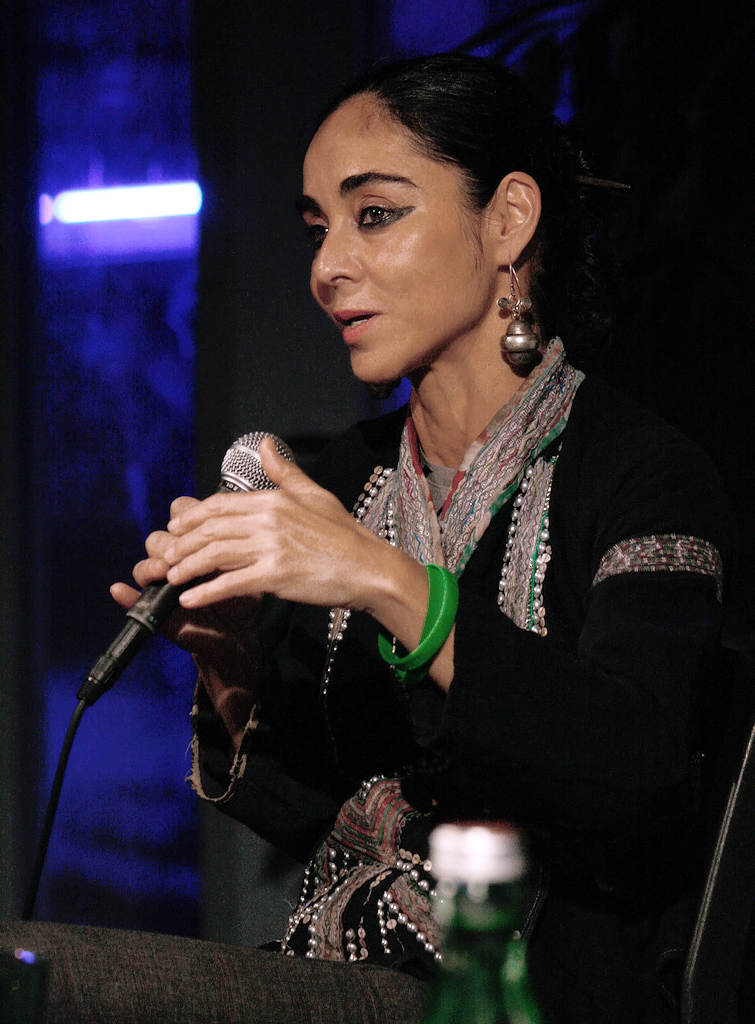
Created between 1993 and 1997, the Women of Allah series consists of black-and-white gelatin silver prints that Shirin Neshat hand-inscribed with Farsi calligraphy. The project emerged directly from Neshat's 1990 visit to Iran, her return since the 1979 Islamic Revolution.
Confronted by a transformed society where the chador had become mandatory, she developed this body of work to examine the ideological and physical changes imposed on Iranian women.
The series relies on four distinct visual elements: the veil, the gun, the text, and the female gaze. Neshat frequently served as the model for these images, though she did not operate the camera herself; she directed photographers such as Cynthia Preston and Larry Barns to capture the initial compositions.
She then applied ink directly onto the photographic surface, covering the exposed skin, faces, hands, feet, and eyes, with dense rows of text.
The Function of Text and Poetry
The calligraphy on the photographs is not decorative consists of specific excerpts from contemporary Iranian literature. Neshat selected poetry from two distinct ideological poles to meaning over the images:
| Poet | Ideological Stance | Notable Work Used |
|---|---|---|
| Tahereh Saffarzadeh | Revolutionary, religious | "Allegiance with Wakefulness" (celebrates martyrdom) |
| Forough Farrokhzad | Secular, feminist | "I Greet the Sun Again" (expresses personal desire) |
In Rebellious Silence (1994), one of the series' most widely recognized pieces, the subject's face is bisected by the barrel of a rifle. The text inscribed across her face comes from Saffarzadeh's poem "Allegiance with Wakefulness," which includes the line: "O, you martyr, hold my hands, with your hands cut from earthly means." This juxtaposition creates a paradox where the subject appears simultaneously submissive to religious law and militantly.
Martyrdom and the Female Gaze
The series challenges the Western perception of Muslim women as passive victims. In Speechless (1996), a gun barrel rests against the subject's cheek like an earring, pointing toward the viewer. The woman's gaze is direct and confrontational, breaking the traditional objectification frequently found in Orientalist photography.
Neshat stated that the image Speechless embodies a contradiction: the woman is armed and dangerous, yet the title suggests she is silenced, with the text on her face serving as her only voice.
The weapons, ranging from pistols to long rifles, transform the female body into a site of ideological violence. By placing these instruments of war alongside the chador and feminist or revolutionary poetry, Neshat presents the "martyr" not as a simple villain or victim, as a figure caught between devotion, violence, and silence.
The series is currently held in major collections, including The Metropolitan Museum of Art and the Whitney Museum of American Art.
Video Installations and the Trilogy: Turbulent, Rapture, and Fervor
Following the international recognition of her photographic series Women of Allah, Shirin Neshat shifted her artistic focus in the late 1990s toward the moving image. This transition allowed her to introduce narrative, music, and choreography into her examination of gender within Islamic societies.
The resulting trilogy of dual-channel video installations, Turbulent (1998), Rapture (1999), and Fervor (2000), established her reputation as a leading figure in contemporary video art.
These works use a clear black-and-white aesthetic and split-screen projection to physically immerse the viewer in the binaries of male and female experience, public and private space, and tradition versus rebellion.
The work in the trilogy, Turbulent (1998), confronts the gendered restrictions on musical performance in Iran. The installation projects two opposing screens: one features a male singer, played by Shoja Azari, performing a traditional Persian love song to an appreciative all-male audience.
The opposite screen depicts a female singer, portrayed by Iranian vocalist Sussan Deyhim, standing alone in an empty theater. Iranian law prohibits women from singing solo in public, a restriction that renders her performance an act of defiance.
While the male singer operates within the sanctioned rules of melody and text, the female singer breaks into a wordless, primal vocalization of gasps and cries. The work earned Neshat the International Prize (Golden Lion) at the 48th Venice Biennale in 1999, marking a serious juncture in her career.
Rapture (1999) expands this dichotomy into a larger, contrasting a with a desert. On one screen, over 100 men dressed in white shirts and black pants occupy a stone, engaging in mundane activities, rituals, and quarrels. On the opposing screen, a similarly sized group of women in black chadors moves through a barren desert.
The men remain confined within the architectural structures of power and tradition, while the women, though veiled, traverse the open natural space with a sense of shared purpose. The installation culminates in a sequence where the women launch a small boat into the sea, suggesting a departure that can be interpreted as escape, exile, or martyrdom.
Critics and curators, including those at The Broad in Los Angeles during her 2019 survey, noted that the women's journey implies a bravery that the men, trapped in their, fail to achieve.
The final installment, Fervor (2000), moves from the abstract of Rapture to a specific social setting: a public ceremony or sermon. The installation uses two screens to depict a gender-segregated crowd, separated by a curtain or partition.
A male speaker addresses the audience about the story of Yusuf and Zuleikha, a narrative of seduction and moral fortitude. Unlike the previous works where the genders occupy separate worlds, Fervor places them in the same physical location divides them socially.
The camera captures the subtle exchange of gazes between a man and a woman across the barrier, highlighting the tension between public ideology and private desire.
In a 2021 exhibition at the Berkeley Art Museum and Pacific Film Archive (BAMPFA), curators emphasized how the work critiques the state's attempt to control individual sexuality through spatial segregation.
Recent exhibitions between 2015 and 2025 have frequently revisited this trilogy, contextualizing the works within the ongoing struggle for women's rights in Iran, particularly following the "Woman, Life, Freedom" movement.
In 2025, the Parrish Art Museum in New York presented Shirin Neshat: Born of Fire, a major survey that positioned these early video works alongside her recent photographs to trace the evolution of her political voice.
Similarly, the Padiglione d'Arte Contemporanea (PAC) in Milan hosted Body of Evidence in 2025, the largest retrospective of her work in Italy to date, the enduring relevance of the trilogy's themes.
Key Video Installations: The Trilogy (1998, 2000)
| Title | Year | Key Elements | Recent Exhibition Highlights (2015, 2025) |
|---|---|---|---|
| Turbulent | 1998 | Male vs. Female singer; Audience vs. Empty Hall; Music as resistance. | The Broad (2019); IZOLYATSIA (2019); Boca Raton Museum of Art (2017). |
| Rapture | 1999 | (Men) vs. Desert (Women); Departure by boat. | The Broad (2019); Madison Museum of Contemporary Art (Loan). |
| Fervor | 2000 | Public ceremony; Curtain separation; The gaze and taboo. | BAMPFA (2021); Boca Raton Museum of Art (2017); PAC Milan (2025). |
These installations rely on the absence of language to convey their message. By removing specific dialogue, Neshat allows the imagery, music, and composition to speak to a universal audience while retaining specific cultural signifiers like the veil and Persian architecture.
The dual-screen format forces the viewer to physically turn their head from one side to the other, implicating them in the separation and making the act of viewing a participatory experience.
This mechanic mirrors the psychological split of the exile, a recurring theme in Neshat's life, as she navigates the divide between her Iranian heritage and her Western residence.
Feature Filmmaking and Women Without Men
Shirin Neshat's transition from video installation to feature filmmaking marked a deliberate expansion of her narrative scope, allowing her to address complex historical and political themes with greater cinematic density.
While her video works frequently relied on dual-screen projections and non-linear abstraction, her feature films adopted more traditional narrative structures, though they retained her signature visual stylization.
This shift was anchored by her debut feature, Women Without Men (2009), which continued to resonate significantly between 2015 and 2025 through major retrospective screenings and museum installations.
In a March 2025 interview with Art Basel, Neshat described the film as one of the "greatest honors" of her career, noting that even with being banned in Iran, it was widely pirated and viewed by the very audience she sought to reach.
The enduring relevance of Women Without Men was highlighted by its return to the global art circuit as a full-length installation. From February to October 2020, the ARoS Aarhus Art Museum in Denmark presented the work in its entirety for the time since 2008.
This exhibition recontextualized the film's narrative, set during the 1953 CIA-backed coup in Iran, within the contemporary framework of global political instability. The film weaves together the lives of four women (Mahdokht, Zarin, Munis, and Faezeh) who find refuge in a metaphorical garden outside Tehran.
In September 2022, the Billy Wilder Theater in Los Angeles screened the film as part of the series "Looking Within, Not Without: The Films of Shirin Neshat," positioning it as the foundational text of her cinematic oeuvre.
The screening underscored the film's dual nature as both a magical realist adaptation of Shahrnush Parsipur's and a sharp critique of patriarchal and colonial structures.
Following the success of her debut, Neshat's second feature, Looking for Oum Kulthum (2017), premiered at the 74th Venice Film Festival in the Giornate degli Autori section.
This project represented a significant departure from the Persian-language focus of her earlier work, turning instead to the "Star of the East," the legendary Egyptian singer Oum Kulthum.
The film functions as a "film within a film," telling the story of Mitra, an Iranian director who struggles to capture the essence of the Arab icon while facing her own personal and professional crises.
serious reception for Looking for Oum Kulthum was mixed, reflecting the challenges of its meta-narrative structure. Reviews from the BFI London Film Festival in October 2017 described it as an "ambitious endeavour" that struggled to "gel up," with critics noting that the film focused more on the director's inner torments than on Oum Kulthum herself.
Neshat faced specific scrutiny for directing a biopic of an Arab cultural giant as a non-Arab filmmaker. In a July 2025 retrospective analysis, Neshat addressed these criticisms, stating that she had been "attacked so times" for the project insisted that Oum Kulthum's influence transcended national borders.
She argued that her perspective as a female artist from a Shia background paying tribute to a Sunni icon was a deliberate act of cross-cultural dialogue.
Neshat's third feature, Land of Dreams (2021), marked her English-language film and a thematic pivot toward the United States. Premiering at the 78th Venice Film Festival in the Orizzonti Extra section, the film stars Sheila Vand, Matt Dillon, and Isabella Rossellini.
It presents a satirical, sci-fi vision of a near-future America where the Census Bureau collects not just demographic data the dreams of citizens. The narrative follows Simin, an Iranian immigrant who navigates this surveillance state while with her own identity.
In August 2025, the Parrish Art Museum screened Land of Dreams in conjunction with the exhibition "Shirin Neshat: Born of Fire." Neshat described this work as one of her "most personal," as it directly interrogated her experience as an exile living in the United States.
Unlike her previous films, which looked back at the Middle East, Land of Dreams turned her lens on Western culture, examining themes of white supremacy, corporate surveillance, and the fragility of the "American Dream." The film's release coincided with a period of intense political polarization in the U.
S., and its surreal imagery, such as the sterile, bureaucratic dream-collection facility, served as a critique of the of privacy and the commodification of the subconscious.
| Film Title | Release Year | Key 2015-2025 Event/Screening | Primary Themes | Notable Cast |
|---|---|---|---|---|
| Women Without Men | 2009 | ARoS Aarhus Museum Installation (2020); Billy Wilder Theater Screening (2022) | 1953 Iranian Coup, Gender, Magical Realism, Exile | Shabnam Tolouei, Pegah Ferydoni |
| Looking for Oum Kulthum | 2017 | Venice Film Festival Premiere (2017); BFI London Film Festival (2017) | Meta-cinema, Female Artistry, Arab Cultural History | Neda Rahmanian, Yasmin Raeis |
| Land of Dreams | 2021 | Venice Film Festival Premiere (2021); Parrish Art Museum Screening (2025) | Surveillance, Immigration, American Politics, Satire | Sheila Vand, Matt Dillon, Isabella Rossellini |
The trajectory of Neshat's feature filmmaking reveals a consistent preoccupation with the female gaze and the outsider's perspective. While Women Without Men utilized the lush, metaphorical imagery of a Persian garden to examine freedom, her later works adopted colder, more analytical aesthetics to critique modern power structures.
Looking for Oum Kulthum used the method of the biopic to deconstruct the myth of the female celebrity, while Land of Dreams employed satire to expose the anxieties of the Western world.
Throughout this period, Neshat continued to collaborate closely with Shoja Azari, who co-directed or co-wrote several of these projects, reinforcing a creative partnership that bridged her visual art and cinematic endeavors.
By 2025, Neshat's cinema had firmly established itself as a distinct entity from her photography, yet deeply interconnected with it. Her ability to move between the "white cube" of the gallery and the "black box" of the movie theater allowed her to reach diverse audiences.
The 2020s saw a serious re-evaluation of her film work, acknowledging that while her narratives frequently dealt with specific cultural histories, Iranian, Egyptian, or American, they were unified by a universal inquiry into how political systems impact the individual human spirit.
Looking for Oum Kulthum
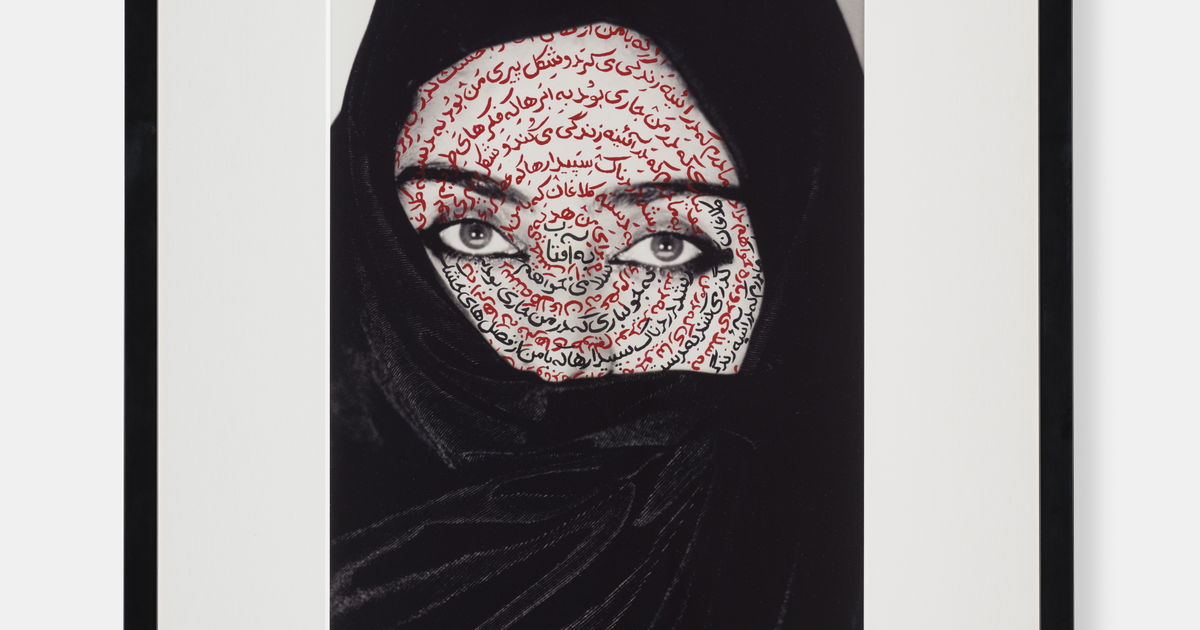
Following her Silver Lion-winning debut Women Without Men (2009), Shirin Neshat returned to feature-length narrative cinema with Looking for Oum Kulthum (2017).
Co-directed with her long-time collaborator Shoja Azari, the film functions as a "film within a film," eschewing a traditional biopic structure to examine the complexities of capturing a mythic figure.
The narrative centers on Mitra (played by Neda Rahmanian), an Iranian filmmaker living in exile who attempts to direct a biopic about Oum Kulthum, the legendary Egyptian singer known as the "Star of the East.".
The film premiered in the Giornate degli Autori (Venice Days) section of the 74th Venice International Film Festival in September 2017. It subsequently screened in the Contemporary World Cinema section at the 2017 Toronto International Film Festival.
Unlike standard historical dramas, Neshat's method deconstructs the genre by intertwining the 20th-century life of the Egyptian diva with the contemporary struggles of the director trying to represent her.
As Mitra faces production blocks and personal crises, her journey mirrors the sacrifices Oum Kulthum made to succeed in a conservative, male-dominated society.
| Category | Details |
|---|---|
| Directors | Shirin Neshat, Shoja Azari |
| Screenplay | Shirin Neshat, Shoja Azari, Ahmad Diba |
| Cast | Neda Rahmanian (Mitra), Yasmin Raeis (Ghada), Mehdi Moinzadeh (Amir), Kais Nashif |
| Production Countries | Germany, Austria, Italy, Lebanon, Qatar |
| Premiere | Venice International Film Festival (September 2, 2017) |
Critics noted that the film shifted focus from the historical facts of Oum Kulthum's life to the emotional and artistic toll of female authorship in the Middle East.
Writing for The Hollywood Reporter, reviewers highlighted how the meta-narrative allowed Neshat to address her own position as an artist in exile, with the distance between her Western residence and her Eastern subjects.
The film use archival footage alongside dramatized sequences, blurring the lines between the diegetic reality of the film crew and the historical fiction they are creating.
Land of Dreams and Shift to American Subjects
In 2021, Neshat released her third feature film, Land of Dreams, marking a significant pivot in her narrative focus. For the time, she turned her lens toward her host country, the United States, rather than the Middle East.
The film, which premiered in the Orizzonti Extra section of the 78th Venice International Film Festival, is a satirical and surreal critique of American culture, surveillance, and the immigrant experience.
The script was co-written by Jean-Claude Carrière, one of his final works before his death, and Shoja Azari. It stars Sheila Vand as Simin, an Iranian woman working for the U. S. Census Bureau in a near-future dystopia. Simin's job involves not only collecting demographic data also recording the dreams of citizens for a government archive.
The narrative follows her travels through the American West, where she encounters a diverse array of subjects, played by a cast that includes Matt Dillon, Isabella Rossellini, and William Moseley.
Land of Dreams operates on dual levels: it is both a road movie exploring the "American Dream" and a psychological thriller involving a secret Iranian colony located inside a mountain. In this colony, the captured dreams are processed and interpreted, creating a surreal between the political tensions of Iran and the United States.
Neshat uses this premise to examine the shared anxieties of the two nations, moving beyond the binary of "East vs. West" to look at the universal nature of subconscious fear and desire.
Visual elements in Land of Dreams retain Neshat's signature aesthetic, characterized by high-contrast photography and dreamlike compositions. yet, the setting of the American Southwest introduces a new visual vocabulary to her work, replacing the chadors and clear architecture of her earlier Iranian-focused pieces with desert and suburban Americana.
The film received mixed to positive reviews, with praise directed at its ambitious conceptual framework and the performance of Sheila Vand, though critics found its satire uneven.
Between 2015 and 2025, Neshat's work in narrative cinema demonstrated a clear trajectory: moving from the historical reconstruction of Women Without Men to the meta-fictional inquiry of Looking for Oum Kulthum, and to the contemporary, surrealist satire of Land of Dreams. This period solidified her status not just as a video artist, as a feature filmmaker capable of translating her thematic preoccupations, exile, gender, and power, into long-form storytelling.
Opera Direction and Multimedia Performance
In August 2017, Shirin Neshat made her operatic directorial debut at the Salzburg Festival with a production of Giuseppe Verdi's Aida. Commissioned by artistic director Markus Hinterhäuser, the project marked a significant expansion of Neshat's practice from photography and film into large- stage direction.
She collaborated with conductor Riccardo Muti, who led the Vienna Philharmonic, and soprano Anna Netrebko, who performed the title role. Neshat's method to the 1871 opera rejected the traditional "Egyptomania" frequently associated with the work, such as elephants and golden pyramids.
Instead, she focused on the human and political conflict at the core of the narrative, interpreting the priests as authoritarian figures and the Ethiopians as displaced refugees.
The visual design, created in partnership with set designer Christian Schmidt and costume designer Tatyana van Walsum, utilized a minimalist aesthetic. Schmidt's set featured a rotating, dividable white cube that created shifting spatial configurations, avoiding realistic architectural representations.
Neshat integrated her signature video work into the staging, projecting images of women fleeing across deserts and men carrying corpses, visuals that recalled her earlier video installations like Rapture and Passage. These projections served to externalize the psychological states of the characters, particularly Aida's isolation and the shared trauma of war.
The production polarized critics; while Muti's conducting and Netrebko's vocal performance received widespread acclaim, Neshat's direction faced mixed reviews.
critics described the staging as "static" or a "non-production" that relied too heavily on video backdrops, while others praised its refusal of kitsch and its focus on the opera's intimate, tragic elements.
The production demonstrated significant longevity within the European operatic circuit. The Salzburg Festival revived the staging in August 2022, with Alain Altinoglu conducting and Elena Stikhina taking over the title role.
In 2025, the Opéra National de Paris announced that Neshat's Aida would open its 2025, 2026 season at the Opéra Bastille, with performances scheduled from September 24 to November 4, 2025.
This transfer to Paris indicated the production's established status as a modern interpretation of Verdi's work, continuing to present Neshat's visual language to international opera audiences.
| Title | Year | Role | Venue / Premiere | Key Collaborators |
|---|---|---|---|---|
| Aida | 2017 | Director | Salzburg Festival | Riccardo Muti, Anna Netrebko, Christian Schmidt |
| Land of Dreams | 2019 | Artist/Director | The Broad (LA), SITE Santa Fe | Shoja Azari, Sheila Vand |
| Aida (Revival) | 2022 | Director | Salzburg Festival | Alain Altinoglu, Elena Stikhina |
| The Fury | 2023 | Artist/Director | Gladstone Gallery (NY), Goodman Gallery (London) | Johnny Azari, Emel Mathlouthi |
| Aida (Paris) | 2025 | Director | Opéra Bastille | Michele Mariotti |
Beyond the opera stage, Neshat continued to develop multimedia installations that functioned as performance capture. In January 2023, she premiered The Fury at Gladstone Gallery in New York. This work comprised a double-channel video installation and a virtual reality (VR) experience, marking her foray into VR.
Filmed in June 2022 in Brooklyn, The Fury fictionalized the trauma of a female political prisoner. The narrative followed a young Iranian woman, played by a dancer, who remains haunted by memories of sexual assault and torture even while living in exile in the United States.
The video installation utilized two opposing screens to depict the character's fragmented reality: one screen showed her navigating a Brooklyn street, while the other displayed stylized, dance-based sequences of her past imprisonment, surrounded by military men in a cavernous space.
The VR component of The Fury placed the viewer directly inside the narrative, specifically within the scene of the woman's dance and subsequent violation. Neshat intended this immersive format to force the audience to bear witness to the physical and emotional charge of the protagonist's experience, removing the safety of a passive viewing distance.
The work featured music by Johnny Azari and a song performed by Tunisian singer Emel Mathlouthi. Although production on The Fury concluded months before the death of Mahsa Amini in September 2022, the work's release coincided with the "Woman, Life, Freedom" movement in Iran.
Neshat noted in interviews that the project addressed the sexual exploitation of women in detention, a theme that gained immediate political relevance during the 2022, 2023 protests.
Neshat's multidisciplinary project Land of Dreams (2019, 2021) also bridged the gap between visual art and performance. The work included a body of 111 photographs and a two-channel video installation that later expanded into a feature film.
In the video component, a fictional character named Simin, an alter ego for Neshat, travels through New Mexico posing as an art student to photograph local residents and record their dreams. This performance of the "dream catcher" allowed Neshat to navigate American social strata, interacting with subjects from diverse economic and racial backgrounds.
The project satirized the suspicion and surveillance inherent in Iranian-American relations, with Simin eventually revealed to be an agent reporting back to a bureaucratic Iranian colony.
The work premiered at The Broad in Los Angeles in 2019 and later traveled to venues such as SITE Santa Fe and the Museum of Contemporary Art Toronto, reinforcing Neshat's method of using fictionalized performance to examine real-world sociopolitical.
In 2021, a double album titled Logic of the Birds was released, featuring the score from Neshat's earlier multimedia stage production of the same name. While the original performance debuted in 2002, the 2021 release by collaborator Sussan Deyhim revived interest in the project's auditory components during the retrospective exhibitions of Neshat's work.
The album included music composed by Deyhim and Richard Horowitz, which had originally accompanied Neshat's visual narrative based on the 12th-century Persian poem The Conference of the Birds.
Land of Dreams and Political Satire
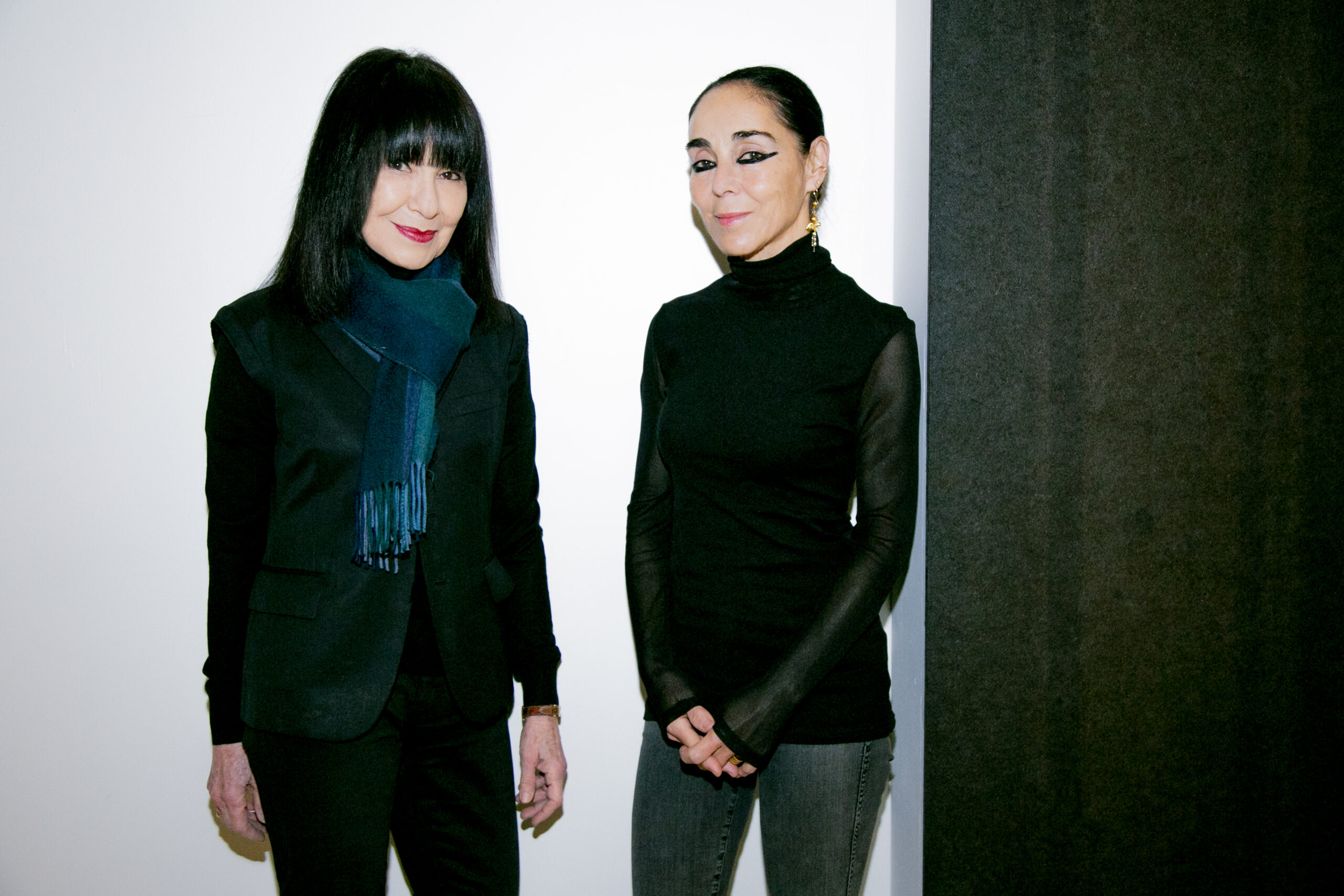
Following decades of artistic focus on the Islamic world, Shirin Neshat shifted her lens to the United States in 2019 with Land of Dreams. This multidisciplinary project, comprising a photographic series and a feature film, marked her major direct critique of American politics.
The work emerged as a specific response to the Trump administration's policies, particularly the executive orders restricting travel from Muslim-majority countries. Neshat described the project as a pivot from being an "artist in exile" to becoming an active critic of her adoptive country's social fractures.
The project began in New Mexico, where Neshat traveled to Albuquerque, Farmington, and Las Vegas (New Mexico) to photograph local residents. She produced 111 black-and-white portraits of a diverse demographic, including Native Americans, Hispanic residents, and white working-class citizens.
Unlike her previous work which frequently featured staged actors, these subjects were ordinary people whom Neshat interviewed about their dreams. She then overlaid the photographic prints with hand-written Farsi calligraphy and small, detailed illustrations depicting elements from the subjects' recounted dreams.
This visual created a collision between the American West's rugged iconography and the artist's Persian heritage.
The narrative component of Land of Dreams evolved into a feature film directed by Neshat and her longtime collaborator Shoja Azari. The script was co-written by the celebrated French screenwriter Jean-Claude Carrière, marking one of his final works before his death. The film functions as a surreal political satire set in a near-future America where the U.
S. Census Bureau has expanded its surveillance to record the subconscious dreams of citizens. The story follows Simin, played by Sheila Vand, an Iranian immigrant who works as a "dream catcher" for the government.
Simin secretly documents these dreams in Farsi, eventually discovering a covert Iranian facility, "The Colony", housed inside a mountain, where the dreams of Americans are analyzed for political intelligence.
| Category | Details |
|---|---|
| Premiere | 78th Venice Film Festival (Orizzonti Extra), September 2021 |
| Directors | Shirin Neshat, Shoja Azari |
| Screenplay | Jean-Claude Carrière, Shoja Azari |
| Key Cast | Sheila Vand, Matt Dillon, Isabella Rossellini, William Moseley, Anna Gunn |
| Filming Location | New Mexico, USA (2019) |
| Box Office | $42, 186 (Limited theatrical release) |
The film premiered at the 78th Venice Film Festival in September 2021. serious reception was polarized, reflecting the work's departure from Neshat's earlier, more solemn tone.
The Hollywood Reporter praised the film as a "witty and thrilling take on American culture," while The Guardian critic Xan Brooks gave it two stars, describing it as "colourful, eccentric and flimsy." even with the mixed serious response, the film's visual language remained consistent with Neshat's high-contrast aesthetic, utilizing the clear New Mexico to evoke a sense of displacement and alienation.
The project was exhibited as a detailed installation, frequently separating the photographs and the two-channel video components. The work debuted at The Broad in Los Angeles during the exhibition Shirin Neshat: I Greet the Sun Again (October 19, 2019 , February 16, 2020), which drew significant attendance.
Subsequent major presentations included a solo show at the Museum of Contemporary Art (MOCA) Toronto from March 10 to July 31, 2022, and a homecoming of sorts at SITE Santa Fe from October 7, 2022, to January 16, 2023.
These exhibitions highlighted the dual nature of the work: the photographs served as a documentary archive of real American faces, while the film provided a fictional, satirical commentary on the surveillance state and the immigrant experience.
In Land of Dreams, Neshat uses the method of the "dream colony" to examine the absurdity of political antagonism between the U. S. and Iran.
By positioning an Iranian immigrant as the agent of American state surveillance, she inverts the traditional power, forcing the viewer to examine the fragility of the "American Dream" through the eyes of the perceived outsider.
The inclusion of Matt Dillon as a bodyguard and Isabella Rossellini as a colony leader added mainstream cinematic weight to the project, bridging the gap between video art and narrative cinema.
Activism and the "Woman, Life, Freedom" Movement
Throughout the decade spanning 2015 to 2025, Shirin Neshat solidified her position as a leading cultural voice against the Islamic Republic of Iran, transitioning from poetic allegory to direct political advocacy.
While her earlier work explored the binaries of gender and religion, her output during this period explicitly aligned with the grassroots resistance movements within Iran.
In 2015, the Farhang Foundation awarded Neshat the Farhang Heritage Award, recognizing her unrelenting exploration of marginalized human conditions and her role in articulating the Iranian struggle to a global audience.
The death of Mahsa (Jina) Amini in September 2022 and the subsequent "Woman, Life, Freedom" uprising marked a pivotal shift in Neshat's public engagement.
She utilized her platform to amplify the voices of protesters, stating in an October 2022 interview with The Guardian that the female body in Iran had become a "battlefield for ideology." In direct response to the protests, Neshat collaborated with the digital art platform CIRCA to launch a major public intervention.
From October 1 to October 4, 2022, her work Woman Life Freedom was broadcast on the massive screens of Piccadilly Circus in London and the Pendry West Hollywood in Los Angeles.
The digital piece repurposed two iconic images from her 1993, 1997 Women of Allah series, Moon Song and Unveiling, overlaying them with the protest slogan "Woman, Life, Freedom" (Zan, Zendegi, Azadi). Neshat described this initiative as an urgent effort to circulate the rallying cries of Iranians beyond the art world and into the public sphere.
"Eyes on Iran" and United Nations Advocacy
In November 2022, Neshat played a central role in the Eyes on Iran campaign, a large- public art installation at Franklin D. Roosevelt Four Freedoms Park in New York City.
Organized in collaboration with the artist shared For Freedoms and important Voices, the installation was strategically located to face the United Nations headquarters across the East River. The project aimed to pressure the UN Member States to remove the Islamic Republic of Iran from the Commission on the Status of Women (CSW).
Neshat's contribution, titled Offered Eyes, featured a black-and-white photograph of an eye inscribed with calligraphy, symbolizing the world's shared gaze witnessing the atrocities committed by the regime. On November 28, 2022, Neshat spoke at the installation's unveiling alongside former U. S.
Secretary of State Hillary Clinton and human rights lawyer Gissou Nia. The campaign's advocacy proved successful; on December 14, 2022, the UN Economic and Social Council voted to expel Iran from the Commission on the Status of Women for the remainder of its 2022, 2026 term, a move Neshat publicly celebrated as a victory for Iranian women.
"The Fury" and Advocacy for Political Prisoners
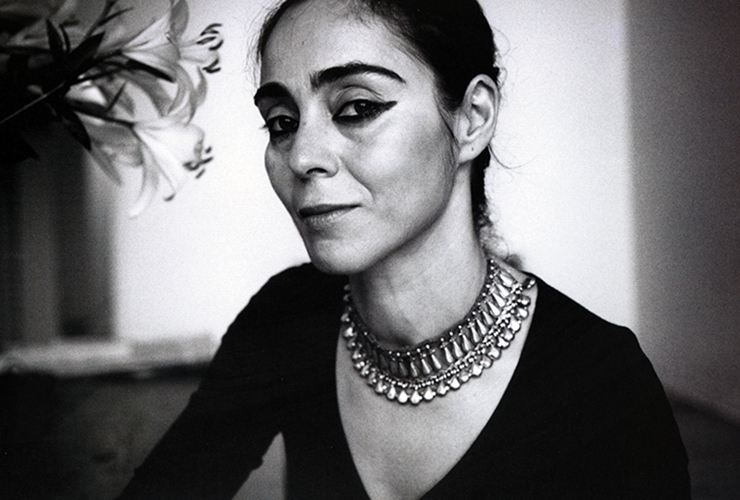
In 2023, Neshat released The Fury, a double-channel video installation and virtual reality experience that addressed the sexual exploitation of female political prisoners.
Although filming began in June 2022, three months prior to the Mahsa Amini protests, the work's release coincided with emerging reports of sexual violence used by Iranian security forces to suppress dissent.
The piece follows a young Iranian woman, traumatized by memories of captivity and assault, as she attempts to navigate life in exile in the United States.
Exhibited at the Goodman Gallery in London and other international venues, The Fury departed from the veiled imagery of Neshat's past, depicting the female body in a state of vulnerability and nudity to highlight the weaponization of sexual violence.
In interviews surrounding the exhibition, Neshat emphasized that the work was a testament to the "enduring trauma" of incarceration, citing the regime's systematic use of rape as a tool of political control.
She noted that while she is not a "news artist," the synchronization of her artistic themes with real-time human rights violations underscored the cyclical nature of oppression in Iran.
Solidarity with the Arts Community
Beyond her visual art, Neshat mobilized her influence within the film and arts communities to demand accountability. In October 2022, she co-signed an open letter with fellow Iranian filmmakers Ali Abbasi and Bahman Ghobadi, calling on the international film community to speak out against the regime's violence.
The letter, published widely, condemned the government's crackdown on students and artists, stating that the signatories stood "firmly with the fearless Iranian women and men" fighting for their basic rights.
She also supported calls for the boycott of Iranian government-affiliated institutions in the arts, arguing that cultural organizations linked to the state should not be afforded legitimacy on the global stage while the government executed protesters.
| Year | Project / Event | Location | Focus / Objective |
|---|---|---|---|
| 2015 | Farhang Heritage Award | Los Angeles | Recognition of artistic contributions to Iranian human rights and culture. |
| 2022 | Woman Life Freedom (Digital Art) | London & Los Angeles | Public billboards in Piccadilly Circus/West Hollywood amplifying protest slogans. |
| 2022 | Eyes on Iran (Installation) | FDR Four Freedoms Park, NYC | Advocacy campaign to remove Iran from the UN Commission on the Status of Women. |
| 2022 | Open Letter to Film Community | Global | Joint statement with Ali Abbasi/Bahman Ghobadi condemning regime violence. |
| 2023 | The Fury (Video/VR) | London / Global | Examination of sexual violence against female political prisoners. |
Major International Honors (2015, 2025)
Between 2015 and 2025, Shirin Neshat solidified her status as a pivotal figure in contemporary art through a series of prestigious lifetime achievement awards and high-profile institutional recognitions. This period marked a transition from project-specific accolades to honors celebrating her cumulative impact on global visual culture.
In 2017, the Japan Art Association awarded Neshat the Praemium Imperiale for Painting, one of the art world's most lucrative and distinguished honors. The citation recognized her ability to transcend cultural boundaries and her "poetic and politically charged" visual language that navigates the complexities of Islamic and Western societies.
Two years later, in 2019, the Goethe-Institut awarded her the Goethe Medal, an official decoration of the Federal Republic of Germany. This honor specifically acknowledged her courageous artistic engagement with the themes of exile, tyranny, and female.
The institute praised her work for its "subversive contrast" of femininity and violence, noting that she connects politics and poetry to give voice to the silenced.
That same year, she was also recognized as a Fellow by the United States Artists organization, receiving the Rockefeller Fellow distinction in 2016 to support her continued exploration of film and photography.
Photography and Film Achievements
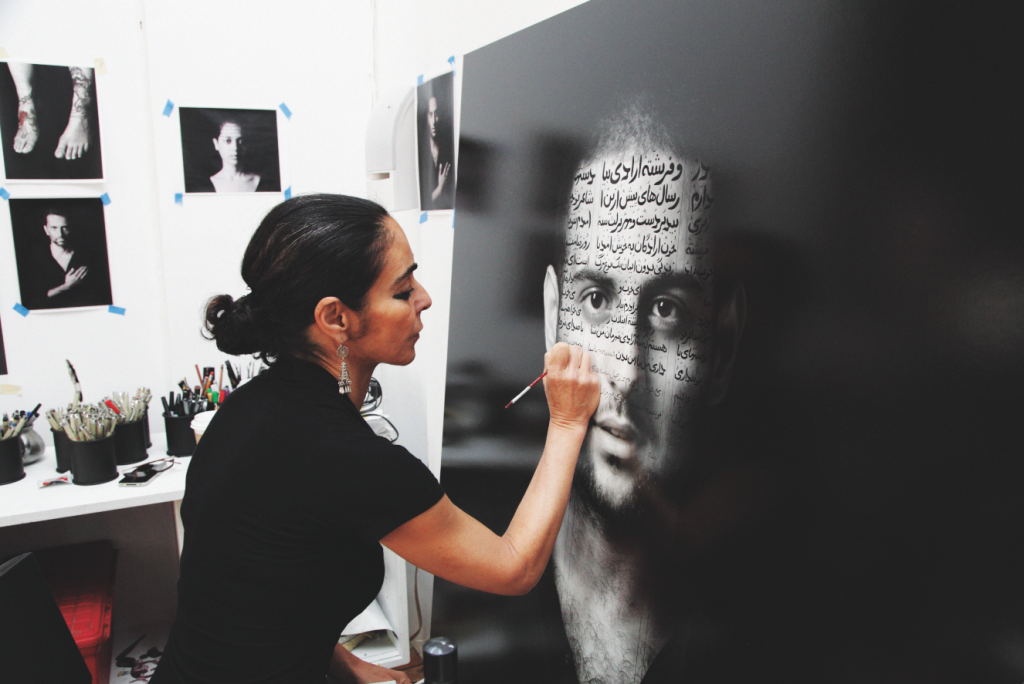
Neshat's contributions to the medium of photography received specific acclaim during this decade. In 2020, she was named the Master of Photography at Photo London, a title given annually to a leading contemporary photographer.
As part of this recognition, she presented a special exhibition at Somerset House featuring her series Land of Dreams (2019) and The Home of My Eyes (2015). The Royal Photographic Society in Bristol also conferred upon her an Honorary Fellowship in 2020, placing her among the most esteemed practitioners in the field.
Her cinematic work continued to garner international attention at major festivals. Her third feature film, Land of Dreams, premiered in the Orizzonti Extra section of the 78th Venice International Film Festival in 2021. This satire on American culture marked a significant shift in her directorial gaze, turning the lens toward her adoptive country.
Earlier in the period, her film Looking for Oum Kulthum (2017) also premiered at Venice, further establishing her dual mastery of gallery installation and narrative cinema.
Recent Accolades and Institutional Tributes
method the mid-2020s, institutions began to canonize Neshat's career with lifetime honors. In April 2024, the International Center of Photography (ICP) in New York presented her with the Infinity Award for Lifetime Achievement. This award celebrated her four decades of work challenging social, political, and psychological constructs through the camera lens.
The following year, in May 2025, the Asia Society honored her with the Asia Arts Game Changer Award, recognizing her sustained commitment to bridging cultural divides through art.
This era of recognition culminated in major survey exhibitions that functioned as institutional awards in their own right. In 2025, the Parrish Art Museum mounted Shirin Neshat: Born of Fire, her solo museum exhibition in the New York area in over 20 years. Simultaneously, the Padiglione d'Arte Contemporanea (PAC) in Milan hosted Body of Evidence, a detailed retrospective her influence on the European art scene.
| Year | Award / Honor | Organization / Institution | Location |
|---|---|---|---|
| 2025 | Asia Arts Game Changer Award | Asia Society | New York, USA |
| 2024 | Infinity Award: Lifetime Achievement | International Center of Photography (ICP) | New York, USA |
| 2020 | Master of Photography | Photo London | London, UK |
| 2020 | Honorary Fellowship | Royal Photographic Society | Bristol, UK |
| 2019 | Goethe Medal | Goethe-Institut | Weimar, Germany |
| 2017 | Praemium Imperiale (Painting) | Japan Art Association | Tokyo, Japan |
| 2016 | USA Rockefeller Fellow | United States Artists | Chicago, USA |
Selected Solo Exhibitions (2015, 2025)
Between 2015 and 2025, Shirin Neshat's solo exhibitions shifted focus from her early interrogations of Islamic fundamentalism to broader, surrealist examinations of Western political and the immigrant experience. This period was defined by three major bodies of work: The Fury, Land of Dreams, and the retrospective I Greet the Sun Again.
In 2023, Neshat debuted The Fury, a double-channel video installation and photographic series that addresses the sexual exploitation of female political prisoners. The work, which captures the psychological trauma of a young Iranian woman living in the United States, premiered at Gladstone Gallery in New York in January 2023.
It subsequently traveled to the PHI Centre in Montreal (June 2023), Fotografiska Stockholm (September 2023), and Goodman Gallery in London (October 2023).
The exhibition's final leg in this period occurred at Dirimart Pera in Istanbul from March to April 2024, where it was presented alongside black-and-white photographs inscribed with calligraphy by the Iranian poet Forough Farrokhzad.
Prior to this, Neshat produced Land of Dreams (2019, 2022), a multidisciplinary project that marked her major artistic engagement with American culture. The work comprises over 100 photographic portraits of New Mexico residents and a two-channel video installation featuring a fictional Iranian photographer who records the dreams of strangers.
The Museum of Contemporary Art (MOCA) Toronto presented the Canadian premiere of this work in March 2022. The exhibition later traveled to SITE Santa Fe in October 2022.
In Europe, the Pinakothek der Moderne in Munich mounted a significant presentation titled Living in One Land, Dreaming in Another (November 2021 , April 2022), which contextualized Land of Dreams within her broader practice of connecting Persian and Western visual traditions.
The largest survey of Neshat's work to date, I Greet the Sun Again, opened at The Broad in Los Angeles in October 2019. Curated by Ed Schad, the exhibition spanned 30 years of her career, featuring early series such as Women of Allah alongside the global debut of Land of Dreams.
The retrospective later traveled to the Modern Art Museum of Fort Worth, where it was on view from February to May 2021. Earlier in the decade, the Hirshhorn Museum and Sculpture Garden in Washington, D.
C., hosted Facing History (2015), which juxtaposed her work against pivotal moments in 20th-century Iranian history, including the 1953 coup and the 1979 Islamic Revolution.
| Year | Exhibition Title | Venue | Location |
|---|---|---|---|
| 2025 | Born of Fire (Upcoming) | Parrish Art Museum | Water Mill, NY |
| 2025 | Cartographies of Presence | Albion Jeune | London, UK |
| 2024 | The Fury | Dirimart Pera | Istanbul, Turkey |
| 2023 | The Fury | Fotografiska | Stockholm, Sweden |
| 2023 | The Fury | Gladstone Gallery | New York, NY |
| 2022 | Land of Dreams | SITE Santa Fe | Santa Fe, NM |
| 2022 | Land of Dreams | MOCA Toronto | Toronto, Canada |
| 2021 | Living in One Land, Dreaming in Another | Pinakothek der Moderne | Munich, Germany |
| 2021 | I Greet the Sun Again | Modern Art Museum of Fort Worth | Fort Worth, TX |
| 2020 | Land of Dreams | Goodman Gallery | London, UK |
| 2019 | I Greet the Sun Again | The Broad | Los Angeles, CA |
| 2019 | Shirin Neshat | Glenstone Museum | Potomac, MD |
| 2019 | Dreamers | National Gallery of Victoria | Melbourne, Australia |
| 2017 | Dreamers | Gladstone Gallery | New York, NY |
| 2015 | Facing History | Hirshhorn Museum | Washington, D. C. |
Public Collections and Acquisitions
Institutions continued to acquire Neshat's work between 2015 and 2025, focusing on her recent explorations of the American political and the female body as a site of ideological conflict. In 2023, the High Museum of Art in Atlanta purchased Flavia, from The Fury series (2023), a dye coupler print with ink and acrylic (Accession No. 2023.
119), using funds from the Farideh & Al Azadi Foundation. This acquisition reflects the museum's engagement with her latest body of work addressing sexual violence and political imprisonment.
European institutions also expanded their holdings of Neshat's oeuvre during this period. In 2020, the Bayerische Staatsgemäldesammlungen (Bavarian State Painting Collections) in Munich acquired Manuel Martinez from the Land of Dreams series.
This purchase was made with funds from the Written Art Collection and was subsequently featured in the Pinakothek der Moderne's 2021, 2022 exhibition. The acquisition marked a significant integration of her American-focused portraiture into European state collections, emphasizing her dual engagement with Western and Persian artistic canons.
Major American museums with long-standing commitments to Neshat's practice showcased their permanent collections in this decade. The Broad in Los Angeles, which acquired the seminal video installation Rapture (1999) shortly after its creation, utilized its deep holdings to anchor the 2019 retrospective I Greet the Sun Again.
Similarly, the Glenstone Museum in Potomac, Maryland, mounted a solo presentation of her work from 2019 to 2020, drawing from its own collection to highlight her video installations such as Turbulent (1998).
Bringing an Investigation on Hidden Clandestine Landing Strips in the Peruvian Amazon to the Stage
Investigation reveals 67 clandestine airstrips linked to drug trafficking in the Peruvian Amazon. Media outlets use theater performances to emotionally engage audiences and raise awareness about violence against Indigenous communities. Journalist…
Read Full ReportWhat do we know about Shirin Neshat?
Shirin Neshat Early Life and Educational Foundations Shirin Neshat was born on March 26, 1957, in Qazvin, Iran, a religious city located approximately two hours northwest of Tehran. She grew up as the fourth of five children in a wealthy, upper-middle-class household.
What do we know about the Early Life and Educational Foundations of Shirin Neshat?
Shirin Neshat was born on March 26, 1957, in Qazvin, Iran, a religious city located approximately two hours northwest of Tehran. She grew up as the fourth of five children in a wealthy, upper-middle-class household.
What do we know about the Educational and Migratory Timeline of Shirin Neshat?
The decade Neshat spent at the Storefront for Art and Architecture (1983, 1993) served as an incubation period. While she produced no significant work of her own, she absorbed the mechanics of the art world and the theoretical discourses of the time.
What do we know about the career of Shirin Neshat?
Following her graduation from the University of California, Berkeley, Shirin Neshat moved to New York City in 1983, marking the beginning of a decade-long hiatus from personal art-making. During this period, she married Korean architect and curator Kyong Park, who had founded the Storefront for Art and Architecture in 1982.
What do we know about the Photography and the Women of Allah Series of Shirin Neshat?
Early Life and Educational Foundations Created between 1993 and 1997, the Women of Allah series consists of black-and-white gelatin silver prints that Shirin Neshat hand-inscribed with Farsi calligraphy. The project emerged directly from Neshat's 1990 visit to Iran, her return since the 1979 Islamic Revolution.
What do we know about the The Function of Text and Poetry of Shirin Neshat?
The calligraphy on the photographs is not decorative consists of specific excerpts from contemporary Iranian literature. Neshat selected poetry from two distinct ideological poles to meaning over the images: In Rebellious Silence (1994), one of the series' most widely recognized pieces, the subject's face is bisected by the barrel of a rifle.
February 26, 2026 • Crimes, All, India
The global fentanyl supply chain has shifted towards a more diffuse and resilient network known as the precursor pipeline, involving transnational criminal organizations like the…
The TIGO Guatemala Bribery Scandal: A DOJ Settlement
February 22, 2026 • Corruption, All
Comunicaciones Celulares S. A. (Comcel), known as Tigo Guatemala, reached a deferred prosecution agreement with the DOJ, requiring a payment of $118.2 million for violating…
Kids’ Online Safety Tools: Effectiveness audits and data risks
January 7, 2026 • All
Online safety tools are crucial for protecting children from online threats. Despite their availability, the effectiveness of these tools remains a topic of debate. Digital…
Undersea Cables in Asia: Ownership, Security Reviews, and Quiet Geopolitics
January 1, 2026 • All
Asia's undersea cables, crucial for international data transmission, are at the center of geopolitical tensions. The region faces security challenges as cyber-attacks targeting undersea cables…
“Dire Crisis: Privatization of State Assets in Africa”
October 3, 2025 • All, Politics
Citizens across Africa are facing higher bills, deteriorating services, and loss of control over essential services as governments privatize formerly state-run services. The privatization of…
Hindi Imposition Controversy: India’s Fierce Struggle for Language Supremacy
July 23, 2025 • All, Originals
India's Hindi Imposition Controversy continues to be a contentious issue even after 78 years of independence. The push for Hindi supremacy in education, administration, and…