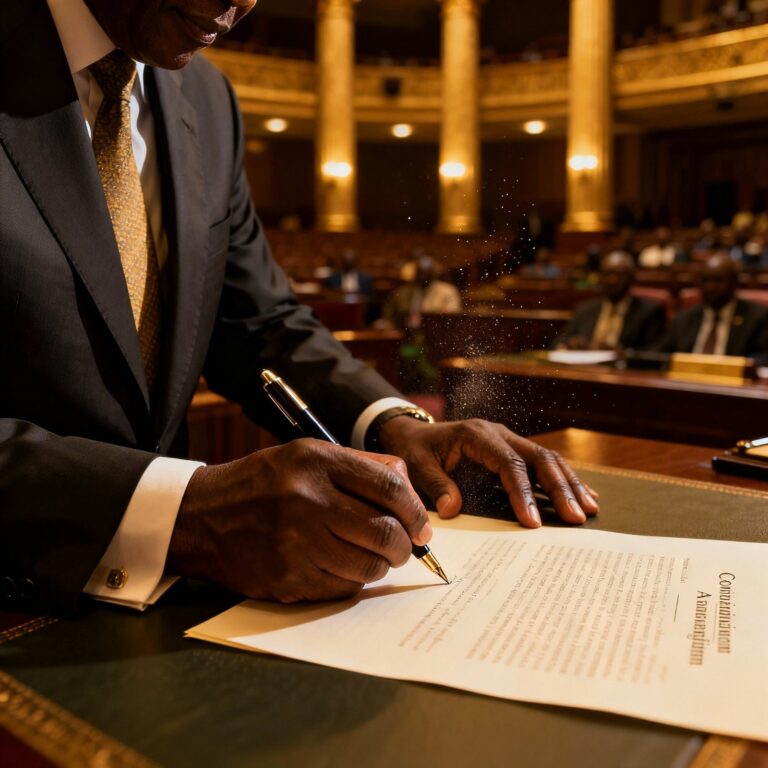
Shirin Ebadi stands as the definitive legal adversary to the Iranian theocratic establishment. Her career tracks the trajectory of the Islamic Republic itself. She rose to prominence as the first female judge in Iran. She served as president of the Tehran City Court in 1975. The 1979 revolution terminated this status.
The new clerical leadership declared women unsuitable for judicial authority. They demoted Ebadi to a secretarial position within the very courtroom she once commanded. This demotion catalyzed her transformation from a state adjudicator into a human rights defender. She resigned from the Justice Ministry in protest.
The Bar Association denied her application for a law license until 1992. This thirteen-year period of professional exclusion forced her to operate outside the courtroom. She published books and articles during this interim.
Her return to legal practice marked a shift toward high-stakes political litigation. Ebadi represented families of victims killed during the "Chain Murders" of the late 1990s. Intelligence agents assassinated intellectuals and dissidents during this dark era. She took on the case of Dariush and Parvaneh Forouhar.
These two secular politicians suffered brutal knife attacks in their home. Ebadi gained access to the case files. She discovered official permits for the murders signed by Ministry of Intelligence operatives. This finding shattered the state narrative of rogue elements. It proved centralized coordination of extrajudicial killings.
The judiciary retaliated immediately. A revolutionary court detained her in 2000. They accused her of distributing a videotape that implicated regime officials in violence. She spent over three weeks in solitary confinement. The court handed her a suspended sentence and a professional ban.
The Norwegian Nobel Committee awarded Ebadi the Peace Prize in 2003. She became the first Muslim woman to receive this honor. The accolade provided a temporary security umbrella. It also intensified state surveillance. Tehran explicitly ignored the celebration. President Mohammad Khatami stated the prize was not important politically.
Hardliners labeled it a tool of Western interference. Ebadi used the prize money to support the Defenders of Human Rights Center. This organization provided pro bono defense for prisoners of conscience. It documented violations against women and minorities. The group operated legally until 2008. Police forces raided the office that year.
They shut down the operation without a court order. Officers confiscated computers and client documents. This raid signaled the end of semi-tolerated dissent within the country.
State persecution escalated following the disputed 2009 presidential election. Ebadi was traveling abroad during the vote. Intelligence services moved to cut off her return. They arrested her sister in Tehran. Interrogators told the sister she would remain in Evin Prison until Ebadi stopped her advocacy. The state then executed a financial seizure.
Authorities froze her bank accounts. They emptied her safe deposit box. Agents confiscated her Nobel medal and diploma. This act constituted a direct violation of diplomatic norms. The government claimed she owed $410,000 in taxes on the prize money. Iranian law exempts such awards from taxation. The regime auctioned her properties.
They sold her apartment and office. Ebadi chose permanent exile in the United Kingdom.
Her current work focuses on the complete replacement of the Islamic Republic. She previously advocated for reform within the existing constitution. Experience convinced her that the legal framework of the theocracy prevents correction. She now calls for a secular parliamentary democracy.
She urges Western nations to downgrade diplomatic relations with Tehran. Her argument centers on the futility of negotiating with a government that violates its own laws. She compiles evidence for international tribunals. Her team tracks the financial assets of Revolutionary Guard commanders. The objective is to facilitate targeted sanctions.
Ebadi remains the most prominent Iranian voice calling for a United Nations-supervised referendum on the future of the Iranian state.
| Metric / Event |
Data Point |
Context / Verification |
| Judicial Tenure |
1975–1979 |
Presided as head of Tehran City Court; removed post-revolution due to gender. |
| Bar Exclusion Duration |
13 Years |
Denied license from 1979 to 1992 despite qualifications. |
| Nobel Prize Value |
$1.3 Million (Approx.) |
Funds used to establish Defenders of Human Rights Center. |
| Tax Penalty Claim |
$410,000 |
Illegal retroactive tax applied to prize money to justify asset seizure. |
| Asset Confiscation |
Nov 2009 |
Nobel Medal, diploma, bank accounts, and personal residence seized. |
The professional trajectory of Shirrin Ebadi represents a statistical anomaly in the annals of Iranian jurisprudence. Her career path does not follow a linear ascent. It functions as a series of forced displacements and recalibrations necessitated by radical shifts in state ideology.
We must examine her tenure through the lens of structural exclusion and subsequent legal insurgency. Ebadi entered the judiciary in March 1969. She served as a judge for six years. In 1975 she achieved the presidency of Bench 24 of the Tehran City Court. This position marked the highest judicial rank held by a female magistrate at that time.
The data confirms her status as a pioneer within the pre-revolutionary legal apparatus.
The 1979 Revolution introduced a binary switch in her employment status. The new theo-political administration reinterpreted Islamic statutes regarding gender. The state determined that women lacked the requisite judgment for binding arbitration. Authorities stripped the subject of her gavel.
They demoted her to a clerical position within the very courtroom she once commanded. This was not merely a reduction in rank. It was a complete invalidation of her credentials. Ebadi and other female judges protested this administrative erasure. The Ministry of Justice eventually designated them as "experts" within the Law Department.
This title held no adjudicatory power. The subject found this situation untenable. She submitted her resignation in 1980. The state accepted it. Her file remained dormant for over a decade.
A prolonged period of professional stagnation followed. The Bar Association denied her application for a practicing license until 1992. Upon readmission she did not return to commercial litigation. She directed her practice toward politically sensitive capital cases. The files from this era display a pattern of confrontation with intelligence services.
She represented the family of Dariush Forouhar. Agents of the Ministry of Intelligence had assassinated Forouhar and his wife. This event constituted part of the "Chain Murders." Ebadi utilized her access to the dossier to uncover the names of the operatives involved. Her findings implicated high-ranking officials. The backlash was immediate.
The judiciary charged her with distributing a videotape containing the confession of Amir Farshad Ebrahimi. Ebrahimi was a member of the Ansar-e Hezbollah. He claimed state actors ordered attacks on students.
The court convicted her in 2000. She spent 23 days in solitary confinement within Section 209 of Evin Prison. The tribunal issued a suspended sentence prohibiting her from legal practice for five years. This suspension did not halt her advocacy. It merely shifted her operational methodology. She co-founded the Defenders of Human Rights Center (DHRC).
The organization focused on documenting violations and providing pro bono defense. The metrics of her caseload during this intermission indicate a high volume of work despite the formal ban. She continued to consult and advise junior counsel on strategy.
The year 2003 marked a geopolitical inflection point. The Norwegian Nobel Committee awarded her the Peace Prize. This recognition brought substantial capital. The prize included 1.3 million USD. She utilized these funds to support the DHRC. Tehran viewed this international validation as a security threat.
The state apparatus began a systematic campaign of asset forfeiture. In 2008 police raided the DHRC offices. They shut down the facility. In 2009 the Revolutionary Court confiscated her bank accounts. They seized her actual Nobel medal from a safe deposit box. This action stands as a rare instance of a government physically appropriating a Nobel medallion.
Security forces arrested her sister Nushin Ebadi in 2010. This detention served as leverage to silence the Laureate. The subject had already departed Iran for a seminar in late 2009. She never returned. She currently resides in the United Kingdom. Her work now operates through international channels. She compiles reports for the United Nations.
She litigates in the court of public opinion rather than Tehran. The trajectory is clear. A domestic judge became an exiled dissident through the relentless application of state pressure.
Chronological Professional Status Audit
| Timeframe |
Official Title / Status |
Jurisdictional Authority |
Operational Constraints |
| 1969–1975 |
Judge |
Tehran Judiciary |
Standard civil jurisdiction. |
| 1975–1979 |
President, Bench 24 |
Tehran City Court |
Full adjudicatory power. Highest rank for women. |
| 1979–1980 |
Court Clerk / Expert |
Administrative Support |
Stripped of judicial authority. Demoted based on gender statutes. |
| 1980–1992 |
Unemployed / Applicant |
None |
Application for legal license blocked by Bar Association. |
| 1992–2000 |
Attorney at Law |
Defense Counsel |
Focused on political assassinations and child rights. |
| 2000–2005 |
Suspended Attorney |
Restricted |
Barred from court. Detained in Evin Prison (2000). |
| 2003–2009 |
Nobel Laureate / Founder |
DHRC Leadership |
Under surveillance. Assets seized. Offices raided. |
| 2009–Present |
Exile / Activist |
International |
Banned from Iran. Assets confiscated. Operates from London. |
The trajectory of Shirin Ebadi defines the collision between authoritarian jurisprudence and independent legal advocacy. Her professional existence following the 1979 revolution constitutes a continuous litigation against theocratic absolute power. The initial confrontation arose immediately upon the regime change.
The revolutionary committee decreed women lacked the cognitive capacity for judicial judgment. Authorities demoted Ebadi from presiding judge to a clerical secretary within the very court she once directed. She resigned in protest. This act initiated a decades-long pattern where Tehran utilized bureaucratic mechanisms to suppress her agency.
Her application to practice private law faced rejection for eight years. The bar association finally granted her license in 1992 only after sustained international pressure.
Her most volatile confrontation with the intelligence apparatus occurred during the investigation of the "Chain Murders" in the late 1990s. Ebadi represented the family of Dariush and Parvaneh Forouhar. Agents of the Ministry of Intelligence had stabbed the couple to death.
While reviewing case files Ebadi discovered official transcripts implicating high-ranking government ministers in the serial eliminations of intellectuals. She facilitated the release of a videotaped confession from a paramilitary member named Amir Farshad Ebrahimi. This evidence linked the killings directly to conservative clerical leadership.
The judiciary responded with immediate retribution. Prosecutors charged Ebadi and fellow lawyer Rohullah Zanganeh with disturbing public opinion. Police detained her in Evin Prison. She spent 23 days in solitary confinement. The court initially sentenced her to a suspended prison term and a five-year ban on practicing law.
The 2003 Nobel Peace Prize fundamentally altered the security calculus for Ebadi. Tehran viewed the award as a calculated Western intervention rather than a humanitarian accolade. President Mohammad Khatami publicly diminished the honor. Conservative media outlets labeled the prize a political instrument designed to humiliate the Islamic Republic.
Hostility escalated from rhetoric to physical seizure in 2009. Agents from the Revolutionary Court raided her bank box. They confiscated the Nobel medal and diploma. This action represents the only instance in the history of the Nobel Foundation where a state authority forcibly seized an award from a laureate.
The government simultaneously froze her bank accounts. The rationale cited was an alleged failure to pay $410,000 in taxes on the prize money. Nobel awards are exempt from taxation under Iranian law. This fiscal assault aimed to bankrupt her operations completely.
State security services extended their intimidation tactics to her immediate family. Intelligence agents targeted her husband Javad Tavassolian. They utilized entrapment schemes involving a compiled dossier of fabricated infidelity. Interrogators detained him. They forced Tavassolian to read a scripted statement on national television.
The broadcast denounced Ebadi and accused her of conspiring with foreign enemies. Her sister Noushin Ebadi faced arbitrary arrest despite having no involvement in political activism. Authorities held Noushin for weeks as leverage to silence Shirin. These actions demonstrate a strategy of collateral punishment.
The objective was to fracture her personal support network when direct incarceration proved politically costly on the global stage.
Ebadi faces distinct criticism regarding her geopolitical stance. She occupies a friction point between Iranian hardliners and Western interventionists. Neo-conservative factions in Washington and certain expatriate opposition groups attack her opposition to military strikes.
She consistently argues that external kinetic action strengthens the theocracy and destroys civil infrastructure. Conversely the Tehran administration classifies her advocacy for human rights sanctions as treason. Radical secularists also critique her interpretation of Islam.
They argue her attempt to reconcile Islamic law with democratic principles is a futile endeavor. Ebadi maintains that reform must originate from within the cultural framework to remain durable. Her position refuses alignment with either the localized dictatorship or foreign militarism.
| Year |
Action Taken by State Authorities |
Official Justification / Charge |
Outcome / Impact |
| 1979 |
Demotion from Judgeship |
Women deemed unfit for judicial rulings |
Resignation; 8-year ban on practicing law |
| 2000 |
Arrest & Solitary Confinement |
Disturbing public opinion (Videotape case) |
23 days detention; Suspended sentence |
| 2008 |
Closure of CDHR Office |
Operating without a permit |
Police welded doors shut; Files seized |
| 2009 |
Confiscation of Assets |
Non-payment of taxes ($410k demand) |
Nobel Medal seized; Pension frozen |
The closure of the Center for Defenders of Human Rights (CDHR) in 2008 marked the final dissolution of her legal infrastructure within Iran. Police raided the office during a scheduled commemoration of the Universal Declaration of Human Rights. Officers welded the entrances shut. They confiscated client files and computers.
This raid occurred without a judicial warrant. The destruction of the CDHR stripped legal representation from hundreds of political prisoners. Ebadi left Iran shortly thereafter. She continues her work in exile. The intelligence ministry continues to monitor her communications. Death threats remain a constant variable in her daily operations.
The structural imprint of Shirin Ebadi on the Iranian judicial apparatus operates beyond the parameters of a standard biography. We must analyze her influence through the lens of legal metrics and state counter measures.
Her trajectory from the first female president of the Tehran City Court in 1975 to a demoted secretary in 1979 represents a verifiable regression in judicial capacity. The revolution stripped female jurists of their authority based on a strict interpretation of Sharia. Ebadi refused the administrative silence expected of her.
She utilized the 24 years between her demotion and her Nobel Peace Prize to construct a forensic methodology for dismantling authoritarian overreach from within the courtroom.
Her legacy rests primarily on the operational success of the Defenders of Human Rights Center (DHRC). This institution did not function as a mere advocacy group. It operated as a specialized legal clinic. The DHRC provided pro bono defense for prisoners of conscience and handled cases that other firms rejected due to high security risks.
The data confirms that the center represented the families of victims in the 1998 Chain Murders. Ebadi forced the judiciary to confront the involvement of intelligence ministry operatives in these extrajudicial killings. She demanded the prosecution of the perpetrators rather than the foot soldiers.
This strategy exposed the command hierarchy of state terrorism.
The Nobel Peace Prize in 2003 functioned as a geopolitical leverage point. The award injected political capital into the Iranian reform movement. It provided Ebadi with a level of immunity that persisted until 2009. The regime could not immediately imprison a global laureate without incurring severe diplomatic penalties.
This period allowed her to mentor a generation of lawyers who continue to document violations. Narges Mohammadi and Nasrin Sotoudeh descend directly from this lineage. They employ the same forensic adherence to statutes that Ebadi pioneered. The state response quantifies the threat she posed. Intelligence agents raided her office in 2008.
They froze the assets of the center.
| Timeframe |
State Counter Measure |
Quantifiable Impact |
| 2008 |
Closure of DHRC |
Loss of physical headquarters for 30+ lawyers. |
| 2009 |
Asset Seizure |
Confiscation of $1.3 million Nobel funds and pension. |
| 2009 |
Diplomatic Theft |
First recorded state seizure of a Nobel Medal. |
| 2010 |
Tax Levy |
Arbitrary demand for 410 million Tomans in taxes. |
The financial persecution of Ebadi sets a specific precedent in international relations. The confiscation of her Nobel medal and diploma from a safe deposit box in Tehran marks a unique violation of property rights. The Revolutionary Court formulated a tax claim against the prize money.
This action violated the tax laws of Iran which exempt prizes and awards. The regime sought to bankrupt her. They arrested her sister to apply psychological pressure. These tactics reveal the granular level of focus the intelligence apparatus applied to neutralize her influence. The state understood that her arguments posed a structural danger.
Ebadi articulated a legal theory that severed the link between dictatorship and religion. She argued that the fundamentalist interpretation of Islam served only the political interests of the ruling clergy. Her writings posit that human rights standards act as the necessary framework for religious practice.
This intellectual contribution challenges the theological monopoly of the Supreme Leader. It allows the religious populace to support democratic reform without abandoning their faith. This synthesis remains the most durable aspect of her work. It denies the state the ability to categorize all opposition as secular or western.
Her exile in London since 2009 has not diminished her output. She continues to file detailed reports to the United Nations. Her testimony serves as primary evidence for sanctions against violators. The networks she established inside the country still transmit data on prison conditions and executions.
Ebadi effectively transformed the role of an Iranian lawyer from a courtroom functionary into a monitor of state compliance. She proved that the penal code itself contains the tools to challenge the magistrate. Her refusal to accept the legitimacy of unjust laws defines the modern resistance movement.
The "Woman Life Freedom" protests utilize the vocabulary of rights that she integrated into the public discourse over three decades.
We observe her method in the defense of the Baha'i community. Ebadi took the case of the seven Baha'i leaders arrested in 2008. She challenged the constitutionality of their detention. This action broke the taboo against defending this persecuted minority. It forced the judiciary to record its own bias.
Every motion she filed created a paper trail of injustice. Historians will use these documents to indict the era. Her influence persists in the files of every lawyer who refuses to remain silent when the judge orders the courtroom cleared. The mechanisms of repression have failed to erase the precedents she established.