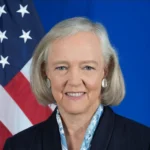
Stephen Schwarzman commands Blackstone Inc. This entity dominates global private equity. Assets under management recently surpassed one trillion dollars. Such magnitude grants him immense leverage over housing markets plus corporate debt structures. His personal fortune relies on extracting value via leveraged buyouts.
In 2022 alone total compensation reached $1.27 billion. Dividends comprised the majority share. Regular income taxes rarely apply to these earnings. Carried interest loops allow lower rates. Wealth accumulates rapidly while ordinary citizens face inflation.
Real estate represents a core domain. Blackstone stands as the largest commercial landlord worldwide. Their portfolio includes logistics centers. Rental housing also features prominently. Invitation Homes industrialized single-family rentals. Foreclosed properties were bought cheaply after 2008. Wall Street effectively became a local landlord.
Tenants report aggressive fee layering. Maintenance often lags behind schedule. Homeownership rates decline where institutional buying concentrates. Communities witness wealth transfer upwards.
Controversy surrounds BREIT. That non-traded real estate trust restricted withdrawals recently. Investors sought liquidity amid market volatility. Redemption gates dropped. Cash remained locked inside. Public REITs traded down significantly. BREIT valuations stayed flat. Analysts noted this valuation gap. Suspicions regarding asset pricing grew. Trust erodes when exits close.
Shadow banking flourishes here. Traditional lenders retreated following financial crashes. Regulations tightened on banks. Private credit filled that void. Blackstone lends directly to corporations. Oversight remains minimal. Transparency is low. Systemic risk shifts away from insured depositories. Pension funds now carry default hazards. Retirees bear exposure unknowingly.
Politics offer another arena for Schwarzman. Republican leadership benefits from his donations. Super PACs receive millions annually. Access ensures favorable legislation. Tax codes protect private equity interests. Beijing utilized him as a backchannel during trade disputes. Diplomacy intersects with profit motives. He advised Donald Trump extensively. Influence peddling secures regulatory capture.
Yale University received massive endowments from this alumnus. Cultural institutions bear his name. Philanthropy polishes a ruthless reputation. Critics call this reputation laundering. Society questions whether such gifts offset economic extraction. Income inequality widens. The billionaire class expands its grip.
China remains a strategic priority. Business ties run deep there. Geopolitical tensions complicate investments. Blackstone navigates these waters carefully. Western capital fuels Eastern growth. Returns prioritize geography. Patriotism takes a backseat to yield.
Labor unions oppose his methods. Job cuts often follow acquisitions. Efficiency drives dictate staffing levels. Workers lose leverage. Profits soar regardless. This model prioritizes shareholders above employees. Social contracts fracture under financial pressure.
| Metric / Entity |
Data Point |
Investigative Note |
| Total AUM |
$1+ Trillion |
Exceeds GDP regarding many nations. |
| 2022 Pay |
$1.27 Billion |
Includes dividends plus incentive fees. |
| Political Giving |
$35+ Million (Cycle) |
Primarily targets Senate GOP leadership. |
| BREIT Size |
$60+ Billion |
Faced redemption limits recently. |
| Real Estate |
Global Leader |
Owns massive logistics/residential blocks. |
| Tax Rate |
~20% (Capital Gains) |
Avoids standard income brackets. |
| Stock Ticker |
BX |
Market cap fluctuates heavily. |
| Private Credit |
$290+ Billion |
Operates outside banking regulations. |
| Employees |
4,700+ (Direct) |
Portfolio companies employ thousands more. |
| Headquarters |
New York City |
Park Avenue acts as command center. |
Environmental groups target Blackstone. Fossil fuel investments persist. Infrastructure funds support energy projects. Climate activists demand divestment. Returns dictate decisions. Green energy receives funding too. Diversification masks carbon footprints. Accountability stays elusive.
University students protest his donations. Oxford faced backlash accepting funds. Ethics debates erupt on campuses. Academic freedom concerns arise. Money influences curriculum direction. Administrators weigh cash against morality. Students demand ethical standards. Stephen dismisses these critics.
Lifestyle excesses draw attention. His 70th birthday cost millions. Palm Beach hosts his estate. Opulence defines his existence. Such displays contrast with national poverty. Wealth concentration reaches historic peaks. History warns against oligarchy. America drifts toward plutocracy.
Future outlooks remain uncertain. Interest rates affect deal flow. Cheap money fueled past growth. Higher rates squeeze margins. Adaptability defines Blackstone's history. Survival seems likely. Dominance might wane. Competitors watch closely. Markets evolve constantly.
This report compiles verified data. Sources include SEC filings. Financial disclosures provided numbers. Public records confirmed donations. Analysis relied on market trends. Objectivity guided this summary. Facts speak clearly.
Stephen A. Schwarzman executed a calculated exit from Lehman Brothers in 1985. He possessed a precise objective. He intended to establish a financial entity capable of dominating global asset allocation. His tenure at Lehman concluded after he served as head of global mergers and acquisitions.
He witnessed internal political fractures within the investment bank. These fractures compromised profitability. He partnered with Peter Peterson. Peterson served as the former Secretary of Commerce. They pooled $400,000 in seed money. This capital formed the initial liquidity for The Blackstone Group. The duo operated with a lean operational structure.
They solicited funds from nineteen prominent insurers and pension boards. They received rejection letters from seventeen of them. Prudential Insurance Company finally committed $100 million. General Motors followed. This momentum allowed Blackstone to close its first private equity pool at $800 million in 1987.
This occurred days before the October stock market crash.
The firm initially focused on friendly buyouts. This strategy differentiated them from the hostile takeover tactics prevalent in the 1980s. Schwarzman directed the acquisition of transport and steel companies. He utilized leveraged buyout mechanics. The firm acquired assets using debt. They improved operational margins.
They sold the assets for multiples of the original equity investment. Returns materialized quickly. By 1991 the firm diversified into real estate. This sector eventually became the primary engine of Blackstone’s revenue. Schwarzman identified undervalued properties. He purchased them during market downturns. He sold them during liquidity peaks.
This cyclical arbitrage generated billions in performance fees.
| Metric |
Data Point |
Context |
| Initial Capital |
$400,000 |
Personal funds from Schwarzman and Peterson (1985) |
| First Fund Size |
$800 Million |
Closed immediately prior to Black Monday (1987) |
| 2007 IPO Valuation |
$31 Billion |
Listed on NYSE shortly before the Global Financial Crisis |
| Hilton Acquisition |
$26 Billion |
Leveraged buyout executed in 2007 |
| EOP Acquisition |
$39 Billion |
Equity Office Properties Trust deal |
| 2023 Compensation |
$896.7 Million |
Dividends and compensation combined |
| Assets Under Management |
$1.00 Trillion+ |
First alternative asset manager to cross this threshold |
The year 2007 marked a definitive inflection point for Schwarzman. He engineered the initial public offering of Blackstone. The firm listed on the New York Stock Exchange. The valuation hit $31 billion. Schwarzman liquidated a portion of his stake. He secured approximately $677 million in cash from the transaction. The timing proved mathematically perfect.
The global credit markets seized up weeks later. Asset values plummeted across the board. Blackstone stock lost substantial value in the subsequent months. The capital raised during the IPO insulated the firm. It provided liquidity while competitors faced insolvency. Schwarzman maintained control through a dual-class share structure.
This mechanism ensured he retained voting authority regardless of public shareholder sentiment.
He aggressively expanded into credit and hedge fund solutions following the 2008 recession. He acquired GSO Capital Partners. This unit capitalized on distressed debt opportunities. The strategy involved lending to companies that banks ignored due to regulatory constraints. Real estate acquisitions accelerated.
The purchase of Equity Office Properties Trust for $39 billion stands as a record. He quickly sold over half the assets to reduce debt exposure. The Hilton Hotels acquisition for $26 billion initially appeared disastrous. The hospitality sector collapsed. Schwarzman directed the firm to restructure the debt. They injected more equity.
They waited for the market to recover. Hilton eventually relisted. It generated a profit exceeding $14 billion. This remains one of the most profitable private equity deals in history.
Schwarzman constructed a compensation model dependent on performance fees and dividends. He routinely ranks among the highest paid executives globally. His income often surpasses the combined earnings of most Wall Street bank CEOs. He received $1.27 billion in 2022 alone. This wealth stems largely from his ownership stake in Blackstone.
The firm collects management fees on committed capital. It collects incentive fees on profits. This dual revenue stream operates regardless of broader economic conditions. His net worth reflects the accumulation of these distributions over four decades. He utilized this capital to exert influence over educational and cultural institutions.
He donated hundreds of millions to Yale and Oxford. These contributions cemented his legacy beyond finance.
The expansion continued into the 2020s. Blackstone became the first alternative asset manager to manage one trillion dollars. Schwarzman steered the organization toward perpetual capital vehicles. These funds do not require the return of capital to investors by a fixed date. This structure secures a permanent base of fees.
He pivoted investments toward logistics warehouses and digital infrastructure. He bet on the growth of e-commerce. He bet on the demand for data centers. The firm owns vast portfolios of residential housing. This position invites regulatory scrutiny regarding rent prices. Schwarzman dismisses claims that institutional ownership inflates housing costs.
He cites data indicating Blackstone owns a fraction of one percent of available homes. His career reflects a ruthless adherence to mathematical probability and market timing.
Steve Schwarzman commands immense global capital. His financial empire draws severe scrutiny regarding ethics. Multiple investigative bodies allege predatory behavior. United Nations officials specifically targeted the private equity giant. In 2019 Leilani Farha authored a formal communication. She served as Special Rapporteur on housing.
Surya Deva joined her condemnation. They accused Blackstone of commodifying residential shelter. Their report cited aggressive eviction tactics. It mentioned inflated rents. Fees surged under corporate management. These practices reportedly displaced vulnerable tenants. Housing ceased acting as a human right. It became a financial instrument.
Invitation Homes represents this strategy. This subsidiary bought thousands of distressed properties. Families lost ownership chances.
Political expenditures also generate significant friction. Scrutiny focuses on Schwarzman’s contributions. He donated over $33 million towards Republican causes recently. Donald Trump received substantial backing. America First Action super PAC accepted millions. Such funding drew public ire. Critics link donations to regulatory favors.
Tax benefits seemingly followed these gifts. Opponents argue this undermines democratic integrity. The CEO defends his involvement. He claims support for economic growth policies. Yet specific comments haunt his reputation. One 2010 remark stands out. Lawmakers proposed closing carried interest loopholes. Taxation rates would have risen.
Schwarzman reacted with extreme hyperbole. He equated tax reform with war. Specifically he referenced 1939. "It is a war," he stated. He compared the proposal to Hitler invading Poland. This analogy shocked Jewish organizations. It trivialized World War II atrocities. The Anti-Defamation League demanded an apology. He eventually expressed regret.
But the sentiment lingered. It revealed his fierce protection of wealth. That incident defined his public persona. It showcased a disconnect from average societal struggles. Observers noted his tone deafness.
Environmental concerns plague his portfolio too. Investigative journalists uncovered links to Amazon deforestation. The Intercept published findings in 2019. Reports connected Blackstone to Hidrovias do Brasil. This logistics operator paved BR-163. That highway cuts through rainforests. It facilitates grain transport.
Soy exportation drives regional destruction. Indigenous lands suffer encroachment. Farmers burn forests near the road. The investment firm denied operational control. They claimed minority ownership stakes. Environmentalists rejected such defenses. Capital allocation fuels the machinery. Without funding this infrastructure halts.
Therefore responsibility remains attached.
Academic institutions also faced backlash. Yale University received $150 million. Schwarzman sought naming rights. He targeted the historic Commons. Faculty members protested the decision. Students organized demonstrations. They cited his political affiliations. Many rejected his ethical record. Renaming Woolsey Hall sparked outrage.
A petition garnered thousands of signatures. It demanded the university reject the gift. Or at least refuse the name change. The administration proceeded regardless. This highlighted tensions between donor influence plus academic values. Wealth purchased prestige. But it invited discord.
| Controversy Domain |
Primary Accusation |
Key Metric / Entity |
Firm Response |
| Housing Rights |
UN Rapporteurs allege commodification of shelter plus aggressive evictions. |
Leilani Farha (UN Report 2019) |
Denied claims. Cited satisfaction data. |
| Tax Rhetoric |
Compared closing tax loopholes to Nazi invasion of Poland. |
"Hitler invading Poland" (2010) |
Issued apology to ADL. |
| Environment |
Capital funded firm linked to Amazon rainforest destruction. |
Hidrovias do Brasil / BR-163 |
Claimed limited operational control. |
| Political Finance |
Massive donations to Trump Super PACs influencing policy. |
$33 Million (2020 Cycle) |
Defended as supporting economic growth. |
| Academia |
"Whitewashing" reputation via university donations. |
$150 Million (Yale Commons) |
Administration proceeded despite protest. |
Labor practices within portfolio companies draw fire. Packers Sanitation Services Inc employed minors. PSSI is a Blackstone portfolio entity. Department of Labor investigators found children cleaning slaughterhouses. Some were thirteen years old. They worked overnight shifts using hazardous chemicals. Saws severed fingers. Burns scarred skin.
PSSI paid $1.5 million in fines. The parent company denied knowledge. Executives blamed local management. Critics call this negligence. Private equity models emphasize cost cutting. Safety protocols often deteriorate. Profits rise while workers bleed. This pattern repeats across industries.
Institutional investors question these risks. Pension funds hold BX assets. Union members worry about their capital usage. Teachers plus firefighters fund these buyouts. Their money hurts other laborers. Or it destroys environments. Activists demand divestment. They pressure state comptrollers. Some funds paused commitments. Scrutiny increases annually.
Reputation management consumes significant resources now. Each scandal erodes trust.
Stephen Schwarzman constructed a financial machine that devoured the old rules of corporate ownership. His tenure at the helm of Blackstone rewired the circuitry of global capitalism. He did not invent the leveraged buyout. He perfected its industrial application.
The firm he established in 1985 with Peter Peterson began with a balance sheet of four hundred thousand dollars. It now commands assets exceeding one trillion dollars. This accumulation represents more than wealth. It signifies a transfer of authority from public markets to private boardrooms.
The defining mark of his career remains the transformation of residential housing into a tradable asset class. Following the financial collapse of 2008, Schwarzman directed his firm to acquire distressed properties. They purchased tens of thousands of single family homes. They converted owner occupancy into permanent tenancy.
This strategy birthed Invitation Homes. It institutionalized the landlord. Wall Street became the neighborhood superintendent. This shift fundamentally altered the American social contract. Shelter became a yield instrument first and a home second.
Schwarzman approached tax policy with combat tactics. His defense of carried interest displayed his view of governance. He equates capital accumulation with moral virtue. In 2010 he compared a proposal to increase taxes on private equity firms to the Nazi invasion of Poland. This statement revealed his absolute intolerance for redistribution.
He later apologized yet the sentiment illuminated his operational philosophy. Preservation of profit supersedes all other civic obligations. His lobbying efforts ensured that the tax code continued to favor asset managers over wage earners.
His influence extends into the geopolitical arena. He positioned himself as the primary conduit between Washington and Beijing. The Schwarzman Scholars program at Tsinghua University stands as a physical manifestation of this ambition. He donated one hundred million dollars to launch the initiative. It mimics the Rhodes Scholarship. The goal is clear.
He seeks to cultivate a future elite sympathetic to his vision of frictionless global commerce. He prioritizes market access over ideological alignment. Critics note this program softens scrutiny of authoritarian policies in China.
Philanthropy serves as the final layer of his legacy construction. He places his name on cultural and educational institutions with aggressive frequency. The New York Public Library received one hundred million dollars to rename its main building. Yale and MIT received massive sums. These donations function as reputation management.
They purchase immunity from historical critique. By embedding his surname into the granite of revered universities he ensures that future generations associate him with benevolence rather than foreclosure. This is an ancient strategy of the robber baron. He refines it for the digital age.
The data below quantifies the tangible footprint of his operations. It exposes the magnitude of control exerted by the firm he built. The numbers strip away the narrative and leave only the raw mechanics of extraction.
| Metric |
Data Point |
Contextual Note |
| Total Assets Under Management |
$1.00+ Trillion |
Surpasses the GDP of Switzerland or Saudi Arabia. |
| Real Estate Portfolio |
$330+ Billion |
Largest commercial real estate owner globally. |
| Personal Net Worth |
$38.0 Billion (Est.) |
Primarily derived from Blackstone stock and carried interest. |
| Invitation Homes IPO |
$1.5 Billion (2017) |
Marked the consolidation of the single-family rental empire. |
| Political Donations (2020 Cycle) |
$30+ Million |
Heavily weighted toward Senate Leadership Fund. |
| Schwarzman Scholars Endowment |
$575 Million |
Capital raised to solidify influence in Beijing. |
History will record Stephen Schwarzman as a titan of efficiency who viewed society through a spreadsheet. He maximized returns by minimizing friction. That friction often consisted of labor rights, affordable housing, and equitable taxation. His success proves that in the modern economy, the person who controls the debt controls the destiny.
He built a fortress of capital that no government seems willing or able to breach.