
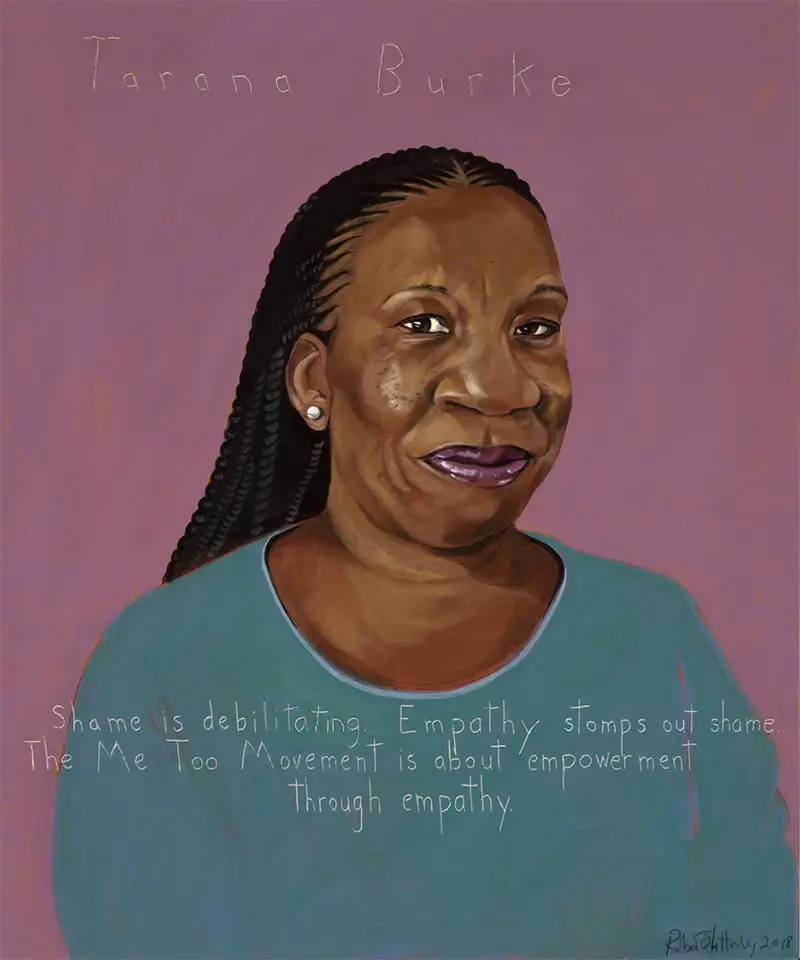
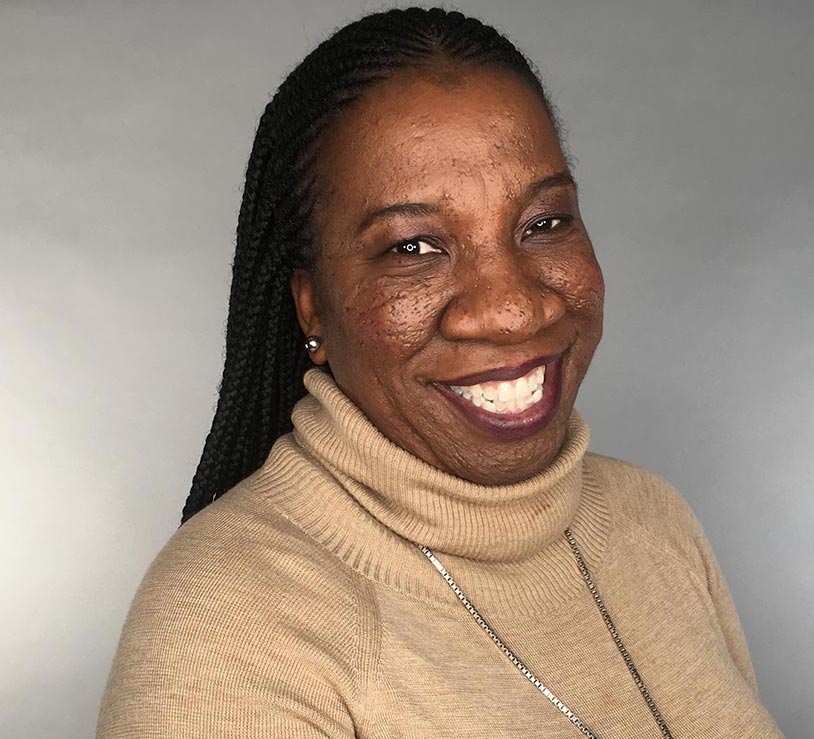
Tarana Burke
Early Life and Education
Tarana Burke was born on September 12, 1973, in The Bronx, New York. She was raised in a working-class family within a public housing project, an environment she later described as resource-poor community-rich.
Her mother, who raised Burke as a single parent, played a central role in her upbringing, frequently enrolling her in extracurricular programs to broaden her opportunities. Burke's grandfather also significantly influenced her intellectual development, introducing her to Black history and literature at a young age.
She books such as Alex Haley's Roots and Lerone Bennett Jr.'s Before the Mayflower as foundational texts that shaped her early consciousness regarding racial identity and widespread inequality.
Burke's childhood was marked by severe trauma. She is a survivor of sexual assault, having experienced abuse at age seven and again between the ages of nine and twelve. In her 2021 memoir, Unbound: My Story of Liberation and the Birth of the Me Too Movement, Burke detailed how this violence caused a fracture in her identity.
She described splitting into two selves: the "good student" who sought to please adults and the "bad girl" who carried the secret shame of her abuse. This internal conflict manifested in her behavior during her adolescence. While she initially excelled in Catholic primary school, her unaddressed trauma led to disciplinary problems later in her education.
During her teenage years, Burke attended Herbert H. Lehman High School in the Bronx. Her struggle with the psychological aftermath of sexual violence resulted in a period of rebellion; she was suspended 11 times during her ninth-grade year alone. Consequently, she transferred to a different high school to complete her secondary education.
It was during this turbulent period that Burke found a constructive outlet for her anger and energy: community organizing. In the late 1980s, at approximately age 14, she joined the 21st Century Youth Leadership Movement. This organization, dedicated to youth development and grassroots organizing, became the catalyst for her lifelong career in activism.
The 21st Century Youth Leadership Movement exposed Burke to campaigns addressing housing inequality, racial discrimination, and economic injustice. She participated in initiatives that required her to analyze widespread power structures, channeling her personal rage into political action.
This early exposure to civil rights work provided her with a framework to understand her own experiences within a broader sociopolitical context. By the time she graduated from high school, Burke had already established herself as a capable youth organizer with a clear focus on social justice.
Burke left New York to pursue higher education in the South, a decision that connected her with the historical roots of the American Civil Rights Movement. She enrolled at Alabama State University (ASU), a Historically Black University (HBCU) in Montgomery, Alabama.
At ASU, she continued her activism, organizing press conferences and leading protests focused on racial and economic justice. Her time at ASU was characterized by a deep engagement with student politics and a commitment to holding institutions accountable for their treatment of marginalized students.
After her time at Alabama State, Burke transferred to Auburn University at Montgomery. She continued to balance her academic studies with her organizing work. She graduated with a Bachelor of Arts degree, solidifying her transition from a student activist to a professional community organizer.
Her education extended beyond the classroom; the specific social of Alabama in the 1990s served as a practical laboratory for her developing theories on intersectionality and grassroots mobilization.
| Year/Period | Event/Milestone | Location |
|---|---|---|
| 1973 | Born to a working-class family | The Bronx, New York |
| 1980, 1985 | Experienced childhood sexual trauma; attended Catholic primary school | The Bronx, New York |
| Late 1980s | Joined 21st Century Youth Leadership Movement | New York, NY |
| c. 1989 | Attended Herbert H. Lehman High School (Suspended 11 times in 9th grade) | The Bronx, New York |
| Early 1990s | Enrolled at Alabama State University (HBCU) | Montgomery, Alabama |
| Mid-1990s | Transferred to and graduated from Auburn University at Montgomery | Montgomery, Alabama |
| 1996 | Moved to Selma to work full-time for 21st Century Youth Leadership Movement | Selma, Alabama |
Upon completing her degree, Burke did not return to New York. Instead, she moved to Selma, Alabama, in 1996 to work full-time for the 21st Century Youth Leadership Movement. This move marked the conclusion of her formal education and the beginning of her professional career.
In Selma, she worked directly with youth in marginalized communities, a role that would eventually lead her to found the nonprofit "Just Be Inc." and develop the "Me Too" framework.
Her decision to remain in the South was strategic; she recognized the region as a serious battleground for civil rights and saw a specific, unmet need for resources supporting young Black women in rural areas.
Burke's early life was defined by the intersection of personal trauma and public service. The skills she acquired in the Bronx, navigating complex community and surviving widespread neglect, were refined during her years in Alabama.
Her educational journey through two Alabama universities provided the intellectual discipline necessary to structure her activism, while her work with the 21st Century Youth Leadership Movement gave her the practical tools to build a movement.
These formative experiences established the methodology she would later use to launch a global conversation on sexual violence.
Early Activism and Community Organizing
Burke's entry into organized activism began in the late 1980s during her adolescence in New York City. At age 14, she joined the 21st Century Youth Leadership Movement, a grassroots organization dedicated to developing young Black leaders.
Her initial foray into direct action involved mobilizing support for the Central Park Five, a group of Black and Latino teenagers wrongfully accused of assaulting a jogger in 1989. This early exposure to widespread racial injustice and the power of shared organizing defined her operational philosophy.
Burke later described this period as her "political awakening," where she learned the mechanics of protest, community canvassing, and youth development under the mentorship of veteran organizers.
Following her secondary education, Burke relocated to the American South to deepen her engagement with the civil rights movement's historical roots. She enrolled at Alabama State University, a Historically Black College and University (HBCU) in Montgomery, before completing her degree at Auburn University at Montgomery.
During this period, she transferred her work with the 21st Century Youth Leadership Movement to its Selma, Alabama chapter. In Selma, she held multiple high- positions, serving as the Special Projects Director at the National Voting Rights Museum & Institute and as the Executive Director of the Black Belt Arts and Cultural Center.
Her work focused on economic justice, voting rights, and creating safe environments for underserved youth in the rural Black Belt region.
The "Heaven" Incident and Shift to Sexual Violence Advocacy
Burke's trajectory shifted from broad racial justice to a specific focus on sexual violence following a pivotal encounter in 1997. While working as a youth camp director in Alabama, a 13-year-old girl, referred to in Burke's 2021 memoir Unbound by the pseudonym "Heaven," confided in her about suffering sexual abuse by her mother's boyfriend.
Burke, a survivor of child sexual abuse herself, found herself unable to respond or offer the words "me too" in that moment. She later this silence as a haunting failure that catalyzed her life's work.
This incident exposed a serious gap in the existing social justice infrastructure: the specific, unaddressed trauma of young Black girls who were frequently marginalized within broader racial and gender equity movements.
In response to this gap, Burke co-founded Jendayi Aza in 2003, an African-centered rites of passage program designed to assist Black girls in their transition to adulthood. The program's curriculum combined cultural education with trauma-informed support.
By 2006, this initiative evolved into Just Be Inc., a nonprofit organization focused on the health and well-being of young women of color. It was within the framework of Just Be Inc. that Burke officially coined the "Me Too" slogan in 2006, more than a decade before it became a viral hashtag.
The phrase was developed not as a digital campaign, as a tool for " through empathy," specifically intended to help survivors in low-wealth communities connect and heal through shared experience.
Organizational Leadership and Expansion
Burke's organizing strategy prioritized tangible community resources over performative visibility. Between 2006 and 2014, she expanded her operational footprint. In 2008, she moved to Philadelphia to serve as the Managing Director of Art Sanctuary, a Black arts organization, where she integrated arts education with social justice advocacy.
even with the absence of national funding or media attention during these years, her programs at Just Be Inc. served hundreds of girls in the Deep South.
Her expertise in the region's civil rights history also led to her role as a consultant for the 2014 Academy Award-winning film Selma, directed by Ava DuVernay, where she advised on the historical accuracy of the voting rights marches.
| Organization | Role | Location | Primary Focus |
|---|---|---|---|
| 21st Century Youth Leadership Movement | Youth Organizer | New York / Selma, AL | Youth development, racial justice |
| National Voting Rights Museum | Special Projects Director | Selma, AL | Civil rights history, voting advocacy |
| Jendayi Aza | Co-Founder | Selma, AL | Rites of passage for Black girls |
| Just Be Inc. | Founder / Exec. Director | Selma, AL | Sexual violence support, "Me Too" origin |
| Art Sanctuary | Managing Director | Philadelphia, PA | Black arts, community programming |
Burke's early activism was characterized by a "resource-poor, community-rich" method. Without the aid of social media platforms, she relied on direct engagement, conducting workshops in schools, community centers, and churches.
This grassroots methodology ensured that the "Me Too" framework was battle-tested in high-trauma environments long before it entered the global lexicon. Her work during this period directly challenged the silence surrounding sexual violence in Black communities, establishing a survivor-led model that emphasized shared healing over individual litigation.
Founding of the Me Too Movement
The conceptual origins of the "me too" movement date back to 1997, nearly a decade before its formal establishment. While working as a youth director at a camp in Selma, Alabama, Tarana Burke encountered a 13-year-old girl named Heaven.
During an all-girl bonding session, Heaven asked to speak with Burke privately and revealed she was being sexually abused by her mother's boyfriend.
Burke, who was still processing her own trauma, found herself unable to respond or offer the words of solidarity she later wished she had shared: "me too." This moment of silence and the subsequent regret became the catalyst for her life's work, driving her to develop a framework for survivors based on " through empathy.".
In 2003, Burke co-founded Just Be Inc., a nonprofit organization focused on the health, well-being, and wholeness of young women of color. The organization was born out of her work with the 21st Century Youth Leadership Movement and the need she saw for specific programming addressing the trauma faced by Black girls in the American South.
Operating primarily in Selma, Just Be Inc. provided workshops and safe spaces where girls could discuss problem frequently silenced in their communities, including sexual violence.
The "me too" movement was officially founded in 2006 as a specific initiative within Just Be Inc. Unlike the viral hashtag that would emerge later, the original campaign was a grassroots effort designed to help survivors of sexual violence, particularly young women of color from low-wealth communities, find pathways to healing.
Burke utilized the social media platform Myspace to distribute resources and connect with survivors, creating what she described as a "community of advocates" driven by those who had lived through abuse.
The movement's core philosophy posited that hearing the words "me too" from another survivor could break the isolation of trauma and begin the healing process.
Organizational Timeline (1996, 2006)
| Year | Organization / Event | Location | Role / Impact |
|---|---|---|---|
| 1997 | 21st Century Youth Leadership Movement | Selma, AL | Encounter with "Heaven" sparks the concept of empathy-based healing. |
| 2003 | Just Be Inc. | Selma, AL | Co-founded nonprofit focused on the wellness of Black girls aged 12, 18. |
| 2006 | "Me Too" Movement | Online / Selma, AL | Official launch of the movement; creation of the "Me Too" Myspace page. |
Burke's method during this foundational period was distinct in its focus on the specific needs of women of color, whom she identified as frequently being excluded from mainstream conversations about sexual violence. She developed a culturally informed curriculum to discuss consent and bodily autonomy, which was eventually adopted by public schools in Selma.
By 2007, Just Be Inc. had received its grant, allowing Burke to expand her reach beyond local workshops. This early work established the "me too" framework not as a slogan, as a tangible system of support for survivors in underserved regions.
The Viral Tipping Point: October 2017
On October 15, 2017, the trajectory of Tarana Burke's life and the "me too" campaign shifted irrevocably. Following the public of sexual abuse allegations against film producer Harvey Weinstein, actress Alyssa Milano posted a tweet at 4: 21 PM urging women to reply with the phrase "me too" if they had been sexually harassed or assaulted.
The call to action was intended to demonstrate the magnitude of the problem. Unaware of Burke's decade-long work with the specific phrase, Milano's tweet ignited an immediate global response. Within the 24 hours, the hashtag generated over 12 million posts, comments, and reactions on Facebook alone, involving 4. 7 million users.
On Twitter, the hashtag appeared more than 1. 7 million times across 85 countries.
Burke was at home in Philadelphia when her daughter, Kaia, alerted her to the trending topic. Initially, Burke experienced a wave of panic, fearing that the grassroots work she had cultivated for Black women and girls would be co-opted or erased by a celebrity-driven narrative. yet, the erasure was short-lived.
Users on social media, including Dominique Tuladhar, quickly pointed out Burke's origin of the movement. Milano publicly credited Burke shortly thereafter, and the two appeared together on The Today Show on December 6, 2017, presenting a united front that bridged the gap between Hollywood visibility and grassroots activism.
Global Recognition and "The Silence Breakers"
The viral resurgence transformed "me too" from a local youth program into an international reckoning. In December 2017, Time magazine named "The Silence Breakers" as its Person of the Year. Burke was featured prominently on the cover alongside actresses Ashley Judd and Rose McGowan, cementing her status as the movement's architect.
The feature acknowledged that while the hashtag was new to, the work had been ongoing since 2006. This recognition propelled Burke onto the global stage, leading to a series of high-profile appearances intended to center survivors from marginalized communities who were frequently left out of the media narrative.
| Date | Event | Significance |
|---|---|---|
| October 15, 2017 | Alyssa Milano sends #MeToo tweet | Sparked 12 million Facebook interactions in 24 hours. |
| October 27, 2017 | Women's Convention, Detroit | Burke delivers keynote address, reclaiming the movement's narrative. |
| December 6, 2017 | Time Person of the Year | Burke featured on the cover as a "Silence Breaker." |
| December 31, 2017 | Times Square New Year's Eve | Burke pushes the button to drop the ball, signaling a new era. |
| January 7, 2018 | 75th Golden Globe Awards | Attended as the guest of Michelle Williams to highlight gender equity. |
Institutionalizing the Movement
Following the viral explosion, Burke moved to formalize the structure of the movement to handle the influx of resources and attention. At the time of the tweet, she was serving as the Senior Director at Girls for Gender Equity (GGE) in Brooklyn. In 2018, she established "me too.
International" as a separate nonprofit organization to serve as a container for the growing global demand for resources. This transition marked a serious shift from a "moment" to a sustainable movement. Burke emphasized that the work required more than hashtags; it demanded policy changes, community resources, and a shift in culture.
Her public appearances during this period were strategic. On January 7, 2018, Burke attended the Golden Globe Awards as the guest of actress Michelle Williams. This was part of a coordinated effort by the Time's Up initiative, where activists accompanied actresses to the ceremony to keep the focus on sexual violence and gender inequality.
On the red carpet, Burke articulated that the movement was not about taking down men, about supporting the millions of survivors who had been silenced. Later that year, she released a TED Talk titled "Me Too is a Movement, Not a Moment," which has since been viewed over 5.
8 million times, further solidifying the intellectual and empathetic framework of her work.
"We have to be to be uncomfortable, to hear things that we don't want to hear, and to see things that we don't want to see. The work of this movement is not just about the bad actors; it is about the systems that allow them to exist." , Tarana Burke, 2018.
Leadership at Girls for Gender Equity
From approximately 2015 through 2018, Burke served as the Senior Director of Programs at Girls for Gender Equity (GGE), a Brooklyn-based intergenerational nonprofit. Working under Executive Director Joanne N. Smith, Burke was responsible for shaping the organization's youth development strategies and policy advocacy.
Her tenure coincided with a serious period of expansion for the organization, during which she operationalized her theory of " through empathy" into concrete curricula for young women of color.
Burke's primary programmatic achievement was the development and launch of the "School Girls Deserve" campaign in 2017. This initiative was grounded in a participatory action research project that engaged over 100 students to document their experiences with school climate and discipline.
The resulting report, The School Girls Deserve, provided evidence of the sexual harassment and "school pushout" faced by Black girls and gender-expansive youth in New York City public schools.
The report's findings were used to lobby the New York City Department of Education for policy changes, specifically regarding how sexual misconduct allegations against students were adjudicated and how school safety agents interacted with female students.
In May 2019, Burke testified before the New York State Senate regarding sexual harassment in the workplace. During her testimony, she data from the "School Girls Deserve" report to illustrate how the normalization of harassment begins in educational settings.
She argued that legislative solutions for workplace harassment must include preventative education starting in primary schools. Her advocacy contributed to a broader push that resulted in strengthened sexual harassment protections under New York State labor laws.
The viral explosion of the #MeToo hashtag in October 2017 occurred while Burke was leading programs at GGE. The organization served as the initial fiscal sponsor and institutional home for the movement as it transitioned from a grassroots youth program to a global phenomenon.
In the immediate aftermath of the viral moment, GGE received a surge in inquiries and support, necessitating a rapid scaling of operations. Burke managed this transition while continuing her daily responsibilities with local youth, balancing global media attention with community-based casework.
During this period, Burke also played a key role in the Young Women's Initiative (YWI), a citywide coalition dedicated to improving outcomes for women and girls of color. GGE was a lead partner in this initiative, and Burke's programmatic work aligned directly with YWI's goals of economic and social justice.
Her leadership at GGE was characterized by a focus on intersectionality, ensuring that policy discussions around gender equity explicitly addressed the racialized experiences of Black girls.
Burke officially transitioned out of her role as Senior Director in late 2018 to found "me too. International" as a standalone organization, though she remained a close collaborator with GGE. Her departure marked the separation of the movement's global advocacy arm from the direct-service youth work she had led in Brooklyn.
| Initiative | Focus Area | Key Outcome |
|---|---|---|
| School Girls Deserve | Education Policy & School Climate | Published participatory research report; influenced NYC Dept. of Education policy on student safety. |
| Sisters in Strength | Youth Leadership Development | Trained young women of color in community organizing and legislative advocacy. |
| #MeToo Incubation | Sexual Violence Prevention | Provided institutional home for the movement during 2017 viral expansion; managed initial global response. |
| YWI Partnership | Citywide Equity Policy | Aligned GGE programs with New York City's Young Women's Initiative to secure municipal resources for girls of color. |
Major Literary Contributions
Tarana Burke's transition from community organizer to published author is defined by two major works released in 2021, both of which secured spots on the New York Times Best Seller list. Her literary output focuses on the intersection of sexual violence, racial justice, and the specific vulnerabilities faced by Black communities.
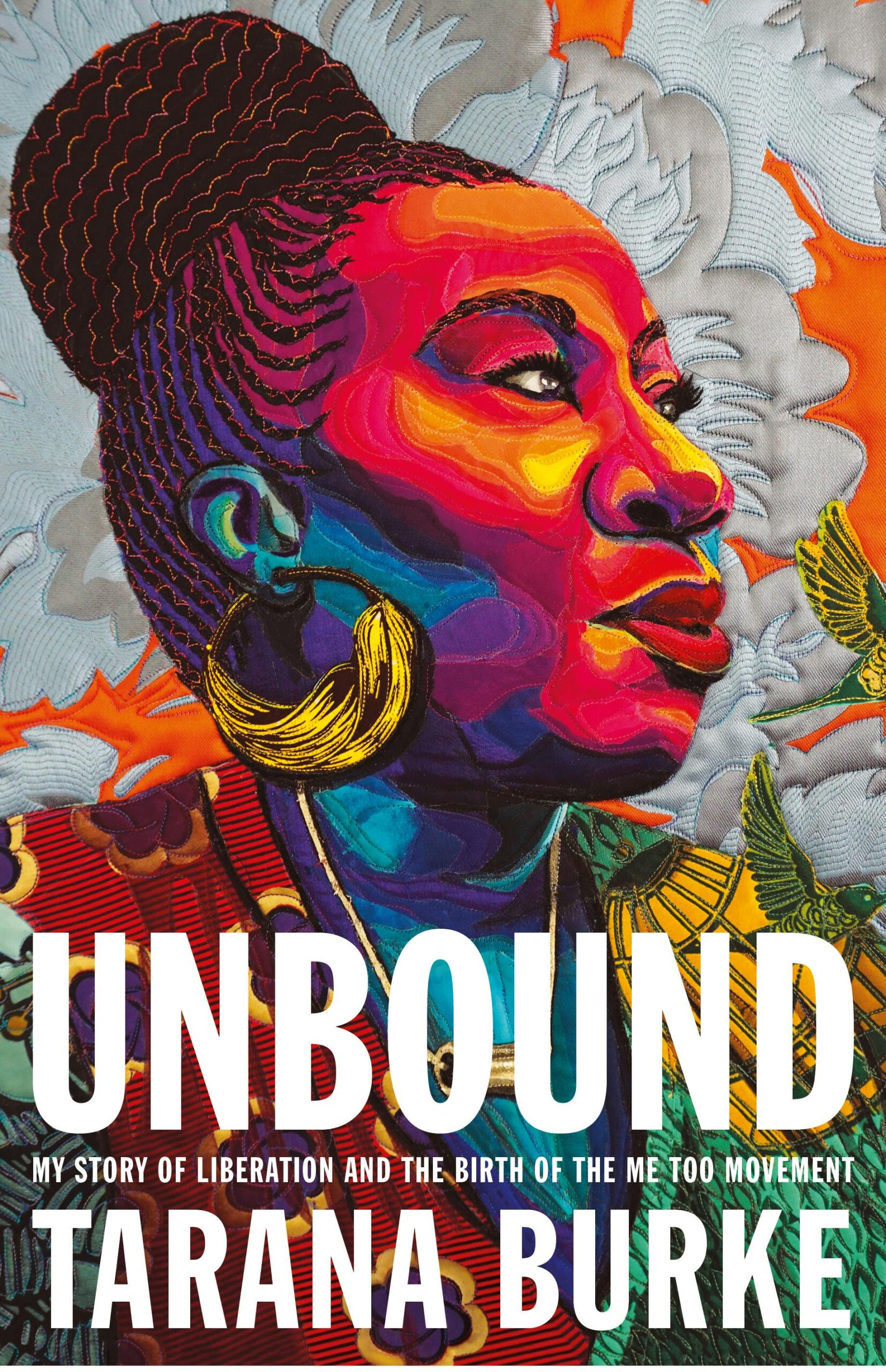
On September 14, 2021, Burke published her debut memoir, Unbound: My Story of Liberation and the Birth of the Me Too Movement. Released by Flatiron Books under the "An Oprah Book" imprint, the memoir details the decades of work that preceded the viral 2017 hashtag.
In the book, Burke recounts her upbringing in the Bronx, her own survival of sexual assault, and the pivotal encounter in 1996 with a young girl named "Heaven" that inspired the "me too" concept.
The narrative serves as a corrective to the media frenzy that frequently erased her role as the movement's founder, reclaiming the origin story for Black and brown survivors.
Critics praised Unbound for its raw honesty and absence of performative resolution. Publishers Weekly described it as an "intensely moving and unapologetically frank" account that depicts the "necessary work" of shared healing. Burke narrated the audiobook edition herself, a performance that was recognized for its emotional weight and authenticity.
Anthologies and Collaborations
Prior to her memoir, Burke co-edited the anthology You Are Your Best Thing: Vulnerability, Shame Resilience, and the Black Experience with researcher Brené Brown. Published by Random House on April 27, 2021, the collection addresses a serious gap in the literature on shame and vulnerability, which had historically centered on white experiences.
Burke initiated the project after realizing that while Brown's work on shame resilience was, it did not fully account for the "trauma of white supremacy" faced by Black people. The anthology features essays from a diverse group of Black writers, activists, and cultural figures.
| Title | Role | Publisher | Release Date | Key Metric |
|---|---|---|---|---|
| You Are Your Best Thing | Co-Editor | Random House | April 27, 2021 | NYT Best Seller |
| Unbound | Author | Flatiron Books | Sept 14, 2021 | NYT Best Seller |
Notable contributors to You Are Your Best Thing include:
Jason Reynolds (Author)
Kiese Laymon (Author of Heavy)
Imani Perry (Scholar and Author)
Laverne Cox (Actress and Activist)
Austin Channing Brown (Author of I'm Still Here)
Essays and Public Commentary
Beyond her books, Burke has used long-form essays to steer the public discourse around sexual violence, particularly when the movement faced backlash or drift. In October 2022, she published "What #MeToo Made Possible, 5 Years Later" in Time magazine.
This piece argued against the reduction of the movement to high-profile celebrity cases, urging a return to the widespread focus on public health and community healing.
Her writing frequently challenges the "good victim" narrative. In 2017, following the explosion of the hashtag, she contributed to the Time Person of the Year package, where she was featured as one of "The Silence Breakers." Her written contributions consistently emphasize that the movement's metric for success is not the number of men fired, the resources made available to survivors in marginalized communities.
Early reports in 2018 indicated Burke was working on a memoir titled Where the Light Enters with co-author asha bandele. This project evolved into the solo-authored Unbound, a shift that allowed Burke to present her story in her own distinct voice.
Public Speaking and Advocacy
Following the viral explosion of the #MeToo hashtag in October 2017, Tarana Burke transitioned from a grassroots organizer to a global figure in the fight against sexual violence. Her advocacy work between 2015 and 2025 focused on shifting the narrative from individual accusations to widespread change, emphasizing " through empathy." Burke frequently used her platform to center the experiences of marginalized survivors, particularly Black women and girls, who she argued were frequently overlooked in the mainstream media coverage of the movement.
In 2018, Burke delivered a defining talk at TEDWomen titled "Me Too is a movement, not a moment." In this address, she outlined the movement's trajectory beyond the viral hashtag, calling for a of the power and privilege that enable sexual violence. The talk has been viewed over 5.
8 million times and established the intellectual framework for the phase of her advocacy. That same year, she founded 'me too.' International, a non-profit organization designed to provide resources and support for survivors, serving as its Chief Vision Officer.
Through this entity, she launched the "Act Too" platform in October 2020, a digital tool created to engage allies and activists in specific, measurable actions to combat sexual violence, ranging from policy advocacy to community education.
Burke's public speaking itinerary expanded significantly during this period, taking her to major universities, international policy forums, and cultural festivals. In January 2023, she delivered the keynote address for Dartmouth College's Martin Luther King Jr.
celebration, where she drew direct lines between the civil rights movement and the fight for gender equity.
Her advocacy also extended to the political arena; in 2024, she partnered with Black Voters Matter to launch initiatives in cities like Houston, Dallas, and Philadelphia, aiming to build a "survivor constituency" that votes based on policies addressing gender-based violence. This work laid the groundwork for the "me too.
Voter" campaign, which sought to influence the 2026 midterm elections.
In the latter half of the decade, Burke focused on institutionalizing support systems. The "Survivor's Sanctuary," a self-guided healing platform, was expanded in 2024 to include encrypted storytelling tools and mental health partnerships.
Her advocacy also went global; in December 2025, she attended the launch of the "All In" coalition in London, joining international campaigners to declare violence against women a global emergency.
Throughout these engagements, Burke consistently maintained that the movement's success should be measured not by the number of men taken down, by the resources made available to survivors.
Key Speaking Engagements (2018, 2025)
| Date | Event / Venue | Location | Key Theme / Context |
|---|---|---|---|
| November 2018 | TEDWomen | Palm Springs, CA | "Me Too is a movement, not a moment"; outlined the strategic vision for the movement beyond the hashtag. |
| February 2018 | Brown University | Providence, RI | Discussed the intersection of racial justice and sexual violence prevention. |
| October 2020 | "Act Too" Launch | Virtual / Global | Unveiled the digital advocacy platform designed to crowd-source activism and policy support. |
| January 2023 | Dartmouth MLK Celebration | Hanover, NH | Connected the legacy of the Civil Rights Movement to modern gender justice advocacy. |
| March 2023 | University of Chicago | Chicago, IL | Conversation with Professor Cathy Cohen on the operational politics of grace in social justice work. |
| March 2024 | SXSW Conference | Austin, TX | Discussed the "Survivor's Agenda" and the intersection of voting rights and gender violence. |
| December 2025 | "All In" Coalition Launch | London, UK | Addressed the global epidemic of violence against women alongside international diplomats. |
Awards and Honors
Since the global resurgence of the "me too." movement in 2017, Tarana Burke has received extensive recognition for her decades of advocacy in racial justice, gender equity, and sexual violence prevention.
Her work, which began in Selma, Alabama, long before the hashtag went viral, has been honored by academic institutions, international peace organizations, and major media outlets. These accolades frequently cite her emphasis on " through empathy" and her focus on marginalized communities, particularly Black women and girls.
Global Recognition and Time Person of the Year (2017, 2018)
In December 2017, Time magazine named Burke as one of "The Silence Breakers," the shared group as the Time Person of the Year. The feature recognized the individuals who triggered a national reckoning on sexual harassment and assault. While the cover featured other prominent figures, the magazine acknowledged Burke's foundational role in coining the phrase "me too" in 2006 and her grassroots work with survivors.
The following year, Time listed Burke individually on the 2018 Time 100, its annual list of the hundred most influential people in the world. Her inclusion highlighted her transition from a community organizer to a global leader in the fight against sexual violence.
During this period, she also received the 2018 Ridenhour Prize for Courage, an award presented to individuals who persevere in acts of truth-telling that protect the public interest and promote social justice.
The selection committee noted her long-term commitment to young women of color, distinct from the Hollywood-centric narrative that initially dominated the movement's mainstream coverage.
In November 2018, the MIT Media Lab awarded Burke the Disobedience Award, which she shared with scientist Sherry Marts. The award, which came with a $250, 000 prize, honored individuals who engage in ethical, nonviolent acts of disobedience to benefit society. That same year, she was recognized by Black Girls Rock!
with the Community Change Agent Award and received the North Star Award from the National Cares Mentoring Movement.
International Peace and Human Rights Honors (2019)
Burke's influence extended internationally in 2019 when she was awarded the Sydney Peace Prize, Australia's only international prize for peace. She shared the honor with Australian author and broadcaster Tracey Spicer. The Sydney Peace Foundation selected Burke for " survivors of sexual harassment and violence" and for launching a global demand for change.
She accepted the award at a ceremony in Sydney, where she delivered a lecture on the need of centering survivors in the of justice.
In October 2019, the Center for Public Leadership at Harvard Kennedy School announced Burke as the recipient of the Gleitsman Citizen Activist Award. This honor, which includes a $125, 000 prize, is given biennially to leaders who have sparked positive social change in the United States. The award committee her "visceral and fearless" work in bringing attention to widespread failings regarding sexual violence.
Academic Honors and "Women of the Decade" (2019, 2021)
Academic institutions have formally recognized Burke's contributions to social justice with honorary degrees. In May 2019, Brooklyn College (CUNY) presented her with an Honorary Doctor of Humane Letters.
Two years later, in April 2021, Stony Brook University awarded her a Doctor of Humane Letters during a presidential lecture series where she discussed the trajectory of her activism from the Bronx to the global stage.
As the decade turned, USA Today named Burke one of its Women of the Decade in 2020. This selection placed her among a small group of women who had significantly shaped American culture and policy between 2010 and 2019. The publication emphasized that while the hashtag became famous in 2017, Burke's work defined the era's shifting conversation around consent and power.
Recent Accolades (2022, 2025)
Burke continued to receive major honors into the 2020s. In 2022, the BBC included her on its 100 Women list, an annual compilation of inspiring and influential women from around the world. The following year, the Amplify Her Foundation presented her with the 2023 Glassbreaker Award, recognizing her continued leadership in the non-profit sector.
Most, in 2025, Burke was named to the Worthy 100 list, which honors individuals using their influence to make a positive social impact. This recognition coincided with her founding of the "Disruptors Council" and her participation in the "All In" coalition launch in London, furthering her work to combat gender-based violence on a global.
Summary of Major Awards
| Year | Award / Honor | Organization / Institution |
|---|---|---|
| 2017 | Person of the Year (The Silence Breakers) | Time Magazine |
| 2018 | Time 100 Most Influential People | Time Magazine |
| 2018 | The Ridenhour Prize for Courage | The Ridenhour Prizes |
| 2018 | Disobedience Award | MIT Media Lab |
| 2019 | Sydney Peace Prize | Sydney Peace Foundation |
| 2019 | Gleitsman Citizen Activist Award | Harvard Kennedy School |
| 2019 | VH1 Trailblazer Honor | VH1 |
| 2020 | Women of the Decade | USA Today |
| 2022 | BBC 100 Women | BBC |
| 2023 | Glassbreaker Award | Amplify Her Foundation |
| 2025 | Worthy 100 | Worth Magazine |
Establishment of 'me too.' International
In 2018, Tarana Burke formally incorporated 'me too.' International as a 501(c)(3) nonprofit organization to serve as the operational framework for the global movement. While the viral hashtag #MeToo generated massive visibility in late 2017, Burke sought to transition the momentum into a sustainable infrastructure capable of supporting survivors long-term.
She assumed the role of Founder and Chief Vision Officer, appointing Dani Ayers as Chief Executive Officer to manage the organization's strategic growth.
The entity was designed not as an advocacy group as a "movement container," providing resources, policy frameworks, and funding to grassroots organizations that had been doing anti-violence work for decades without significant capital.
The organization's financial structure relies heavily on institutional philanthropy rather than small-dollar individual donations. According to 2021 financial reports, approximately 79. 4% of the organization's income was derived from foundations, with 16. 1% coming from corporate partners and only 4. 5% from individual contributions.
By the fiscal year 2023, 'me too.' International reported total revenue of $3. 36 million, with total assets reaching $5. 33 million, signaling a stabilization of its funding base after the initial viral surge.
The Fund for the Me Too Movement and Allies
A of Burke's philanthropic strategy was the creation of the "Fund for the Me Too Movement and Allies," established in May 2018 in partnership with the New York Women's Foundation (NYWF). The fund launched with $1 million in seed capital, with a stated goal of raising $2 million annually to support survivor-led organizations, specifically those focusing on women of color, queer, and trans survivors who were frequently marginalized in mainstream funding pattern.
Burke and the NYWF structured the fund to distribute resources rather than hoard them. In its grantmaking pattern in October 2018, the fund awarded $840, 000 to eight community-based organizations. Recipients included the Black Women's Blueprint, the DC Rape emergency Center, and the Firecracker Foundation in Lansing, Michigan.
This "philanthropic fan-out" strategy allowed Burke to institutionalize the movement's reach, ensuring that funds supported on-the-ground healing work across the United States rather than remaining centralized in a single executive office.
Strategic Partnerships and Corporate Funding
Burke has secured high-level partnerships to diversify the movement's resources. In 2018, following the ouster of CEO Les Moonves, CBS pledged $20 million to 18 organizations fighting sexual harassment; 'me too.' International was a beneficiary of this sector-wide injection of accountability funds.
Burke also cultivated relationships with major philanthropic bodies, including the Ford Foundation, the NoVo Foundation, the Libra Foundation, and the Levi Strauss Foundation.
In October 2021, Burke announced a serious transnational partnership with the Global Fund for Women. This alliance was designed to address the funding gap for feminist organizations in the Global South, acknowledging that while the hashtag was universal, the resources to address sexual violence were heavily concentrated in the West.
This partnership facilitated the launch of the "me too. Global Network," which connects survivor-led organizations across multiple continents to share best practices and policy frameworks.
Programmatic Initiatives and The Disruptors Council
Beyond grantmaking, Burke's organization has developed proprietary digital and physical infrastructure for survivor support. A key initiative is the "Survivor's Sanctuary," a self-guided digital healing platform that provides free, accessible mental health resources to survivors who cannot afford traditional therapy.
The platform includes the "Survivor Healing Series," which reached over 28, 000 participants globally by 2021.
In October 2025, method the movement's ten-year anniversary of the viral hashtag, Burke launched the "Disruptors Council." This body assembles influential figures in entertainment, policy, and activism to drive widespread cultural change beyond the news pattern.
Council members include actors Viola Davis and Gabrielle Union, as well as Congresswoman Ayanna Pressley. The Council's mandate focuses on "interrupting" the normalization of sexual violence through high-level advocacy and narrative shifts in media.
| Year | Initiative / Event | Key Partners | Financial / Impact Metric |
|---|---|---|---|
| 2018 | Fund for the Me Too Movement and Allies | New York Women's Foundation | $1 million seed; $840k initial grants distributed |
| 2018 | CBS Accountability Pledge | CBS Corporation | Part of $20 million sector-wide donation |
| 2021 | Global Network Partnership | Global Fund for Women | Expansion to Global South; resource sharing |
| 2023 | Fiscal Stabilization | Various Foundations | $3. 36 million annual revenue reported |
| 2025 | Disruptors Council Launch | Viola Davis, Gabrielle Union | Strategic leadership body for 10-year anniversary |
Political Advocacy and "Survivors Vote"
Burke has increasingly leveraged the movement's donor base for political mobilization. The "Survivors Vote" campaign, launched ahead of the 2024 election pattern, aimed to organize survivors as a distinct voting bloc.
By framing sexual violence prevention as a policy problem rather than a private matter, Burke directed resources toward voter education and registration.
In March 2025, speaking at South by Southwest (SXSW), Burke confirmed that the organization had already begun fundraising and organizing for the 2026 midterm elections, emphasizing a long-term strategy to elect candidates committed to anti-violence legislation.
Personal Life
Tarana Burke resides in New York City, maintaining a home in the Bronx, the borough where she was born and raised.
While her public profile grew exponentially following the viral spread of the #MeToo hashtag in 2017, she has consistently prioritized the privacy of her immediate family, shielding them from the intense media scrutiny that accompanied her rise as a global figure.
Burke has described her personal life as deeply rooted in the "Black radical tradition" and community organizing, principles that influence her household and personal relationships.
Family and Relationships
Burke is the mother of one child, Kaia Naadira, who was born in 1998 during Burke's time working in Selma, Alabama. Kaia is a filmmaker, visual artist, and activist who identifies as non-binary and uses they/them pronouns.
Burke has spoken candidly about her journey as a parent to a queer child, admitting in interviews and her memoir Unbound that she initially struggled to respond appropriately when Kaia came out at age 13.
She has since expressed deep regret for her early reaction, describing her subsequent evolution as a process of "unlearning" societal norms to fully support her child's identity. The two share a close relationship, with Kaia occasionally accompanying Burke to award ceremonies and public speaking engagements.
On Valentine's Day 2020, Burke announced her engagement to her long-time partner, a man whose identity she has chosen to keep private. She has described him as an essential worker who serves New York City's homeless population. Burke has emphasized the importance of "Black love" in her life, noting that her partner provides a safe space away from the demands of her activism.
Health and Wellness
Burke has been transparent about her physical and mental health struggles, frequently framing them within the context of trauma recovery. In March 2020, during the early onset of the COVID-19 pandemic in New York City, both Burke and her fiancé contracted the virus.
While Burke experienced moderate symptoms, her partner became severely ill, requiring hospitalization. She documented this experience on social media to highlight the disproportionate impact of the pandemic on essential workers and Black communities.
Beyond acute illnesses, Burke has discussed living with chronic sinus problem that frequently trigger severe headaches, which she manages alongside the psychological toll of her work. She openly addresses her battles with Post-Traumatic Stress Disorder (PTSD) and depression resulting from her own history of sexual assault.
She rejects the "strong Black woman" trope, advocating instead for vulnerability and the need of rest. In 2021, she revealed that writing her memoir required her to confront suppressed memories, a process she described as physically and emotionally exhausting liberating.
Friendships and Interests
Burke maintains a close personal friendship with researcher and author Brené Brown. Their relationship, which began after they connected over their shared work on shame and empathy, led to a professional collaboration on the 2021 anthology You Are Your Best Thing. Burke credits Brown with helping her navigate the complexities of sudden fame and the vulnerability required to lead a global movement.
A voracious reader since childhood, Burke cites literature as a primary source of personal solace and intellectual growth. She has frequently mentioned Alex Haley's Roots and Lerone Bennett Jr.'s Before the Mayflower as foundational texts that shaped her understanding of her identity. Outside of her activism, she is a self-described "hip-hop head" and frequently uses music as a tool for decompression and self-care.

The ESG Ratings Fraud: Corporate Greenwashing In The Last 10 Years
Global ESG assets were projected to reach $53 trillion by 2025, but a reality check revealed a massive overvaluation due to ESG Ratings Fraud. Regulatory crackdowns, such as the SEC's enforcement…
Read Full ReportThought Leadership in Media Relations: Strategies, Scandals, and Ethics
October 24, 2025 • Media Industry Reports: Trends, PR Performance & Analytics
Thought leadership in public relations involves positioning individuals or organizations as experts to shape public opinion. While it can inform and educate when done responsibly,…
SEO Audit Tools Most Accurate — But Misleading on Link Quality
October 11, 2025 • All, Reviews
SEO professionals rely on audit platforms like Ahrefs, SEMrush, and Moz to assess website health and link authority. However, caution is advised as these tools…
Digital Welfare Divide: Aadhaar-based Exclusion Killing India’s Poorest
India's Aadhaar digital ID, intended to streamline social welfare delivery, has led to a digital welfare divide. Despite legal safeguards, mandating Aadhaar for welfare programs…
The Hidden Threat of Data Brokers: How American Consumers Are Profiled, Packaged, and Sold
Data brokers operate behind the scenes, collecting and selling vast amounts of consumer data without individuals' knowledge or consent. The global data brokerage market is…
May 15, 2025 • Inequality, All, Corruption, Leaks, Politics, Racism, Rights
Tribal communities protect 80% of Earth's biodiversity despite constituting only 5% of the global population (World Bank, 2023). Over 370 million indigenous people worldwide face…
Banking on the Brink: India’s NPA Crisis and the Shadow of Political Cronyism
May 8, 2025 • Banking, All, Corruption, Economy, India, Laundering, Leaks, Originals
Indian public sector banks have been grappling with a significant NPA crisis, impacting the country's banking sector and economy. The crisis, fueled by political patronage,…