
Terence Tao
Prodigy Origins and Family
Terence Chi-Shen Tao was born on July 17, 1975, in Adelaide, Australia. His parents, Billy and Grace Tao, emigrated from Hong Kong to Australia in 1972. Billy Tao worked as a pediatrician and later conducted research into the education of gifted children and autism.
Grace Tao held a -class honours degree in mathematics and physics from the University of Hong Kong and worked as a secondary school teacher. This genetic and intellectual backdrop provided the foundation for Tao's acceleration. Reports from a 2022 MasterClass series confirm that Tao taught himself to read by age two.
He learned arithmetic by watching Sesame Street and famously attempted to teach five-year-olds how to count using number blocks.
The Tao family recognized his abilities early. By age three and a half, his parents enrolled him in a private school. They withdrew him weeks later because the teachers could not accommodate his pace. His father decided to homeschool him before he entered Blackwood High School.
At age seven, Tao began attending high school classes for mathematics and physics while remaining in primary school for non-academic subjects. This split-schooling method allowed him to advance without losing social contact with peers his own age.
Julian Stanley, a psychologist at Johns Hopkins University and director of the Study of Mathematically Precocious Youth, tested Tao at age eight. Tao scored 760 on the SAT math section. He was one of only two children in the program's history to achieve above 700 at that age.
The Accelerated Pathway
Tao's education standard progression. He did not follow a linear grade route. By age nine, he split his time between Blackwood High School and Flinders University. Professor Garth Gaudry became his mentor at Flinders and guided his early undergraduate work. Tao formally enrolled as a full-time university student at age 14.
He completed his Bachelor of Science with Honours in 1991 and his Master's degree in 1992. He was 16 years old when he finished his postgraduate work in Australia. His thesis titled Convolution operators generated by right-monogenic and harmonic kernels marked his transition from student to researcher.
| Age | Year | Milestone | Context |
|---|---|---|---|
| 2 | 1977 | Basic Arithmetic | Learned from Sesame Street. |
| 8 | 1983 | SAT Math Score 760 | Johns Hopkins Study of Exceptional Talent. |
| 9 | 1984 | University Enrollment | Began math courses at Flinders University. |
| 16 | 1992 | Master's Degree | Completed at Flinders University. |
| 20 | 1996 | PhD | Princeton University under Elias Stein. |
Olympiad Dominance
Tao remains the youngest participant to win Gold, Silver, and Bronze medals in the International Mathematical Olympiad (IMO). He competed against the world's top high school mathematicians while he was still in primary school. In 1986, at age 10, he won a Bronze medal. The following year, at age 11, he secured Silver.
In 1988, at age 13, he won the Gold medal. This record stands unbroken as of 2025. His progression demonstrated a rapid maturation of problem-solving skills that outpaced competitors five to seven years his senior.
The IMO website confirms his 1988 Gold medal score was achieved just days after his 13th birthday, solidifying his status as a statistical outlier even among prodigies.
Princeton and the Stein Era
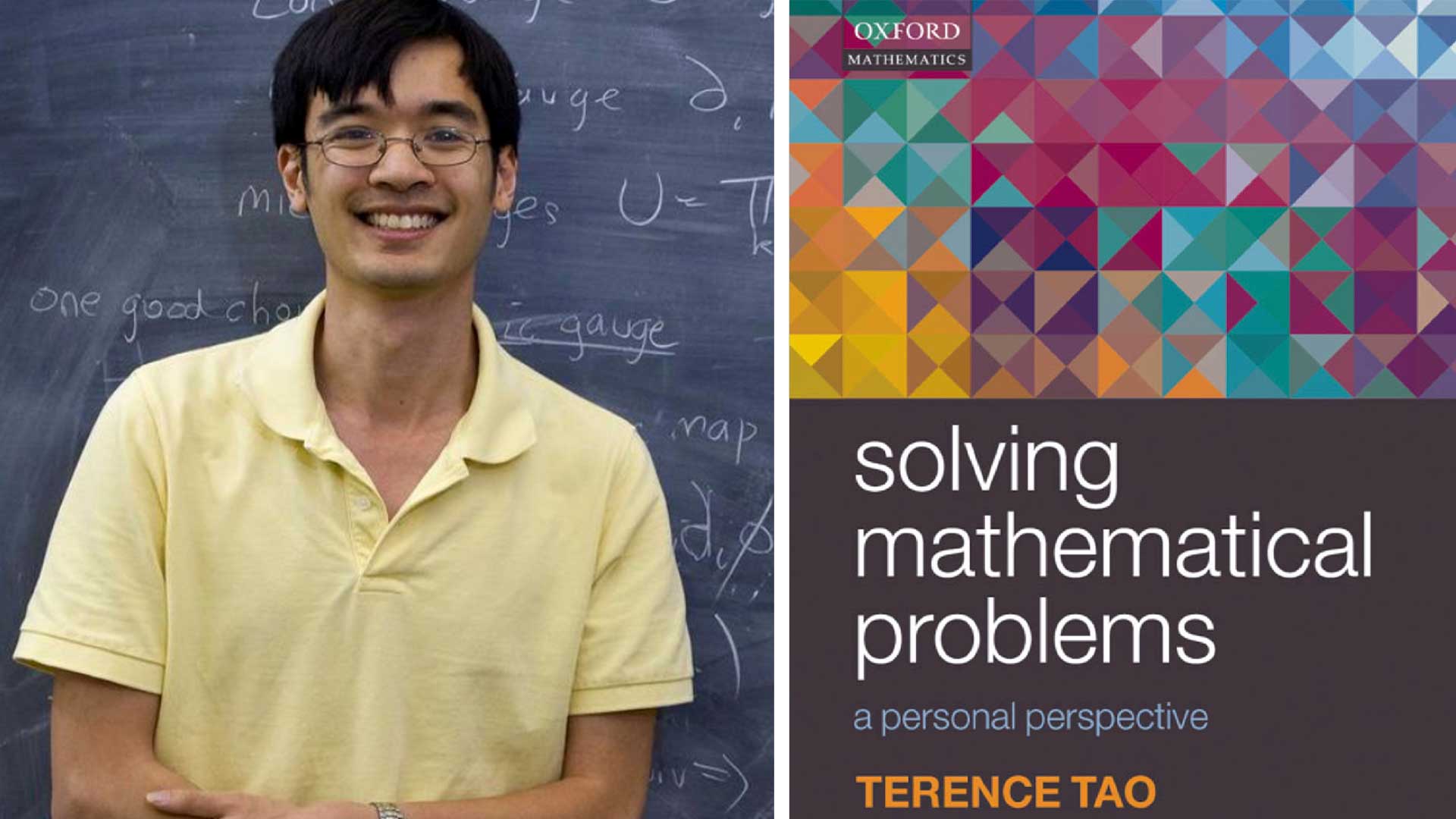
Tao moved to the United States in 1992 to pursue his PhD at Princeton University. He was 16. He studied under Elias Stein, a giant in the field of harmonic analysis. Stein's influence proved serious to Tao's development. Following Stein's death in 2018, Tao wrote extensively about their relationship.
He revealed that Stein provided a necessary check on his early confidence. Tao recalled failing his generals exam initially because he relied too heavily on tricks rather than deep theory. Stein gently told him his performance was a "disappointment." This feedback forced Tao to rebuild his understanding of the foundations of analysis.
He completed his PhD in 1996 at age 20. His thesis was titled Three regularity results in harmonic analysis. This period marked the shift from a competition prodigy to a serious research mathematician.
"Eli was an amazingly advisor... he never had fewer than five graduate students, and there was frequently a line outside his door. The clear and self contained nature of his lectures were a large reason why I decided to specialise in harmonic analysis." , Terence Tao, reflecting on Elias Stein (2018).
Visualizing the Gap
The trajectory of Terence Tao compared to the standard academic route reveals a gap of approximately six to eight years at every major milestone. While most students complete a PhD by age 26 or 27, Tao finished his by age 20. The chart illustrates this.
Academic Appointments and Institutional Leadership
Since 1999, Terence Tao has served as a Professor of Mathematics at the University of California, Los Angeles (UCLA). Throughout the 2015, 2025 period, he held the James and Carol Collins Chair in the College of Letters and Science, an endowed position he was the to occupy.
His tenure at UCLA has been characterized by a refusal to move to private industry even with the exploding demand for mathematical expertise in the artificial intelligence sector. Instead, Tao expanded his administrative footprint within the university system.
In July 2025, he was appointed Director of Special Projects at the Institute for Pure and Applied Mathematics (IPAM), a National Science Foundation-funded institute based at UCLA. This role formalized his increasing focus on integrating automated reasoning tools into research workflows.
Tao's influence extends into federal policy. In September 2021, President Joe Biden appointed him to the President's Council of Advisors on Science and Technology (PCAST). As one of 30 members on this external advisory body, Tao provided direct counsel to the White House on science, technology, and innovation policy.
He served in this capacity until 2024, during a period where the council addressed problem ranging from semiconductor manufacturing to climate change modeling.
His government service coincided with a vocal defense of international scientific collaboration; in August 2025, following the suspension of $584 million in NSF grants to UCLA, Tao publicly advocated for the restoration of federal funding streams serious to academic research.
Beyond his primary chair, Tao holds governance roles at major mathematical institutions. He serves on the Board of Trustees for the Simons Laufer Mathematical Sciences Institute (SLMath), formerly known as MSRI, where he has been a Vice-Chair.
His involvement with the Simons Foundation also includes his long-standing status as a Simons Investigator, a grant method that has supported his research group since 2012.
In the of competitive mathematics, Tao accepted the position of Patron of the International Mathematical Olympiad (IMO) Foundation in 2025, cementing his lifelong connection to the organization where he remains the youngest gold medalist in history.
| Role | Institution / Body | Period |
|---|---|---|
| James and Carol Collins Chair | University of California, Los Angeles (UCLA) | 2007, Present |
| Council Member | President's Council of Advisors on Science and Technology (PCAST) | 2021, 2024 |
| Director of Special Projects | Institute for Pure and Applied Mathematics (IPAM) | 2025, Present |
| Board of Trustees (Vice-Chair) | Simons Laufer Mathematical Sciences Institute (SLMath) | 2019, 2025 |
| Steering Committee | Alibaba Global Mathematics Competition | 2020, Present |
| Advisory Committee | AI Mathematical Olympiad (AIMO) Prize | 2024, Present |
In the private and philanthropic sectors, Tao has taken specific advisory positions that align with his interest in artificial intelligence. In February 2024, he joined the Advisory Committee for the AI Mathematical Olympiad (AIMO) Prize, an initiative by XTX Markets to create AI models capable of winning a gold medal in the IMO.
He also serves on the Steering Committee for the Alibaba Global Mathematics Competition, working alongside mathematicians such as Yitang Zhang to oversee the contest's structure.
also, Tao acts as an advisor to the "AI for Math Fund" launched by Renaissance Philanthropy in 2025, which directs capital toward the formalization of mathematics using machine learning.
Tao maintains active editorial responsibilities, serving on the boards of the Journal of the American Mathematical Society, Analysis & PDE, and Forum of Mathematics. He is a Foreign Member of the National Academy of Sciences (elected 2008) and a Corresponding Member of the Australian Academy of Science.
His fellowship with the Royal Society remains active, and he continues to serve on various selection committees, including the Infosys Mathematics Prize Jury (2021) and the breakdown of the Fields Medal Committee (2016, 2018).
Research in harmonic analysis
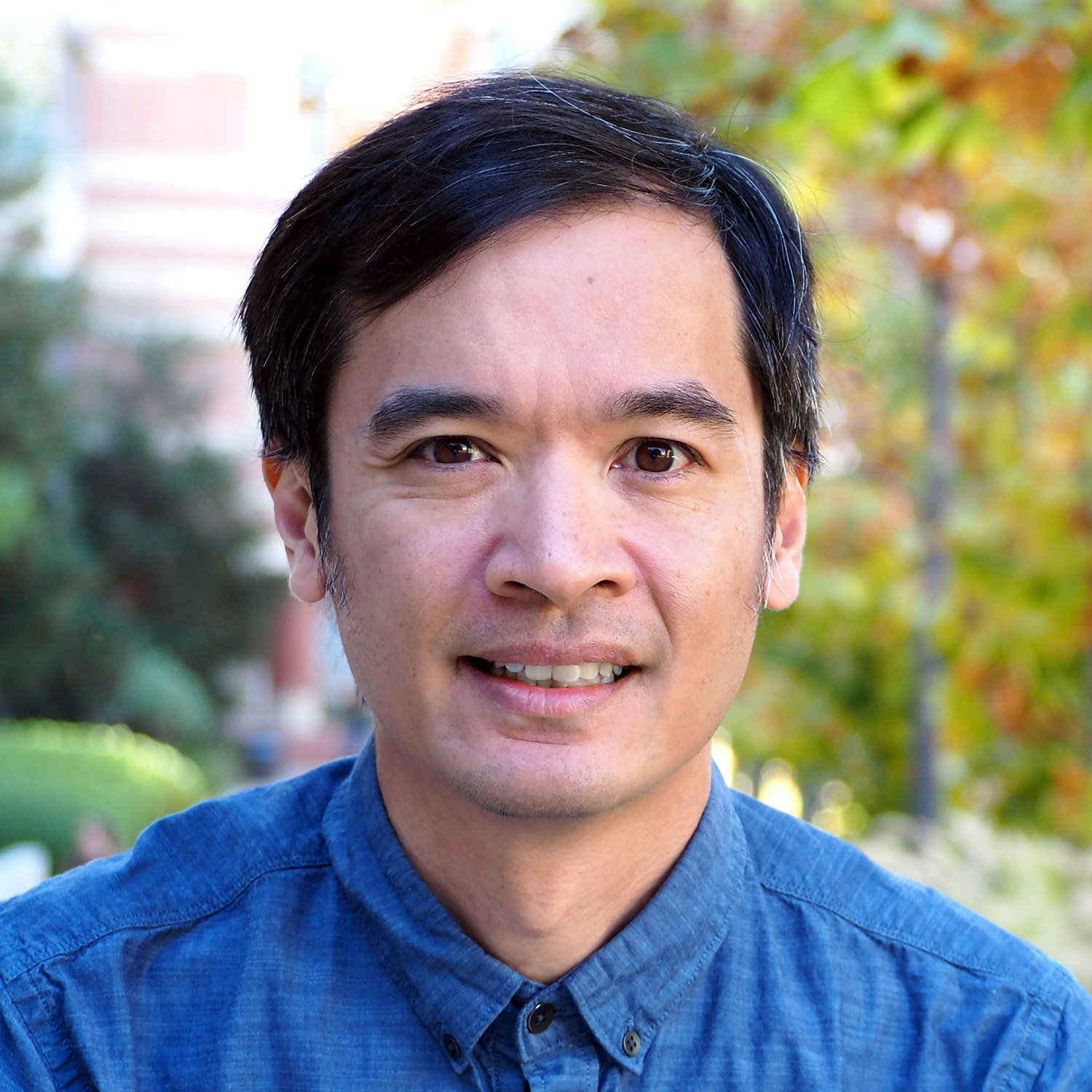
Between 2015 and 2025, Terence Tao's work in harmonic analysis shifted toward addressing high- rigidity problems in partial differential equations (PDEs) and the geometry of polynomials. While his earlier career defined the modern understanding of the Kakeya and restriction conjectures, this decade involved constructing "averaged" counterexamples to fluid models and proving long-standing conjectures in complex analysis using probabilistic methods.
The Averaged Navier-Stokes Blowup (2016)
In February 2016, Tao published Finite time blowup for an averaged three-dimensional Navier-Stokes equation in the Journal of the American Mathematical Society. This paper provided a significant negative result regarding the Millennium Prize problem concerning the global regularity of the Navier-Stokes equations.
Tao constructed a modified system that preserves the energy identity, the primary conservation law used to for regularity, yet still exhibits finite-time blowup.
The construction involved replacing the standard non-linear advection term with an "averaged" operator that rotates and the velocity field. This modification allowed Tao to program a "cascade" of energy transfer from low to high frequencies that outpaces the dissipative effects of viscosity.
The result demonstrated that any proof of global regularity for the true Navier-Stokes equations cannot rely solely on energy estimates or standard harmonic analysis bounds, as these apply equally to the blowing-up averaged model.
This work forced the community to look for techniques that exploit the specific geometric structure of the non-linearity, rather than just its magnitude.
| Feature | Standard Navier-Stokes | Averaged Navier-Stokes (Tao) |
|---|---|---|
| Energy Identity | Preserved ($L^2$ norm bounded) | Preserved ($L^2$ norm bounded) |
| Non-linearity | Strict geometric structure | Rotational/Scaling average |
| Regularity | Unknown (Millennium Problem) | Finite-time Blowup Proven |
| Implication | Physical fluid motion | Barrier to current proof methods |
Proof of Sendov's Conjecture (2020)
In late 2020, Tao achieved a breakthrough in complex analysis by proving Sendov's conjecture for polynomials of sufficiently high degree. The conjecture, proposed by Blagovest Sendov in 1958, asserts that if a polynomial $P(z)$ has all its roots inside the unit disk, then every root is within distance 1 of a serious point (a root of the derivative $P'(z)$).
Tao's proof departed from traditional algebraic method, which had only verified the conjecture for degrees up to $n <9$. Instead, he employed techniques from probability theory and non-standard analysis. He modeled the roots as a random point process and showed that for sufficiently large $n$, the "cloud" of roots creates a shared repulsive force that positions the serious points within the required distance. The paper, Sendov's conjecture for sufficiently high degree polynomials, established that a counterexample cannot exist for $n$ greater than a computable constant $n_0$, solving the asymptotic case of the problem.
Decoupling and Restriction Theory
Throughout this period, Tao continued to refine the of Fourier restriction theory, particularly following the 2015 $l^2$ decoupling theorem by Bourgain and Demeter. While the primary decoupling result was established by his collaborators, Tao played a central role in synthesizing these advances with existing restriction theory.
In 2020, he released detailed lecture notes on restriction theory, providing new proofs and simplifications for the "broad" vs. "narrow" decoupling distinctions.
In November 2024, Tao analyzed a new result by Hong Wang and Shukun Wu that established a direct, implication from the Kakeya conjecture to the restriction conjecture. Tao's commentary and subsequent expository work clarified how this "Kakeya-like" conjecture (involving Furstenberg sets) could the gap between geometric incidence and Fourier analysis, a connection he had investigated for two decades.
AI-Assisted Analysis (2025)
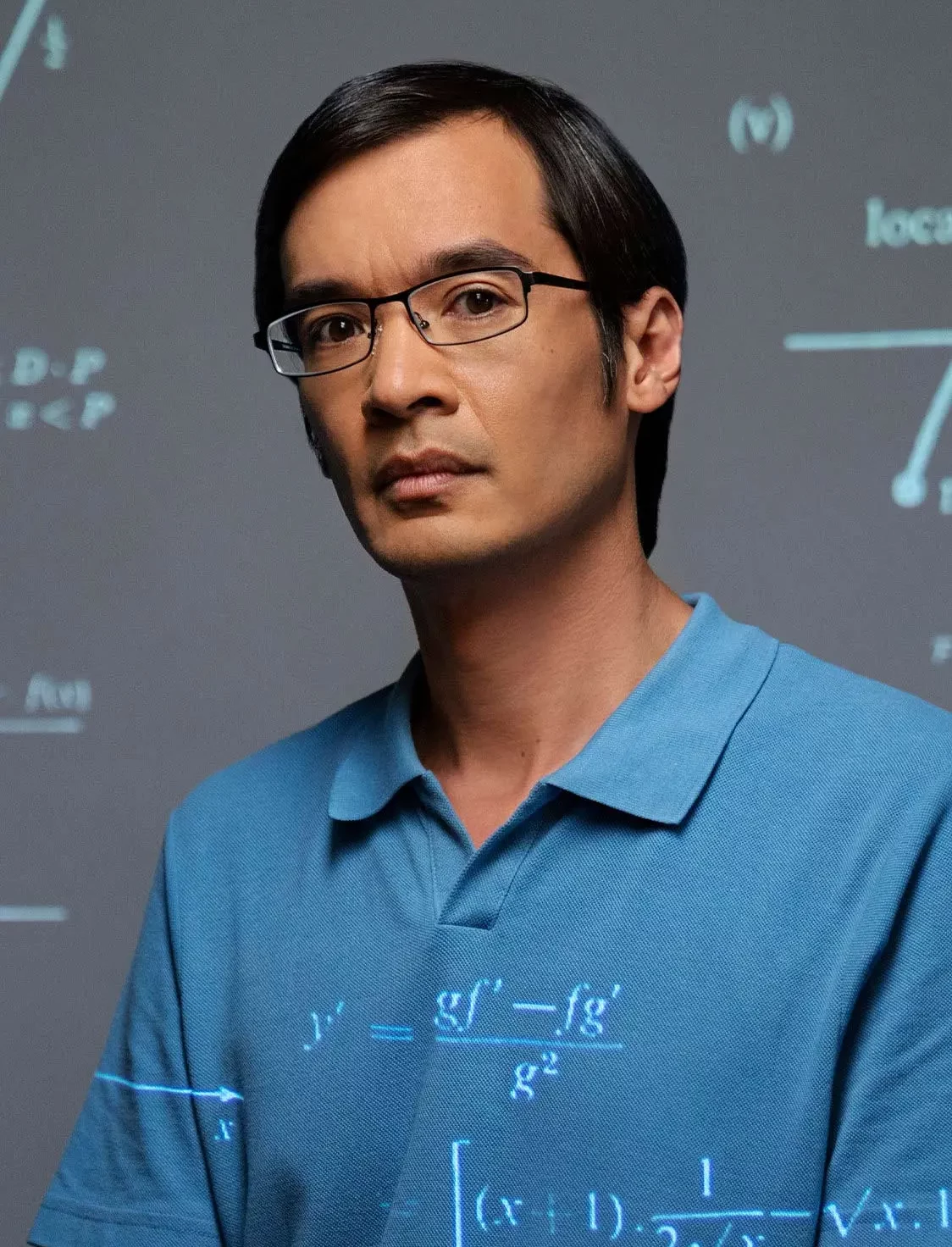
In November 2025, Tao, along with collaborators Bogdan Georgiev, Javier Gomez-Serrano, and Adam Zsolt Wagner, published Mathematical exploration and discovery . This research utilized AlphaEvolve, a large language model-based optimization tool, to attack 67 distinct problems in analysis and combinatorics.
The team successfully used the system to discover new bounds for specific analytical inequalities and spectral problems, demonstrating that AI tools could be integrated into the rigorous workflow of harmonic analysis to identify extremizers and counterexamples that human intuition might miss.
The Green, Tao Theorem
The Green, Tao theorem, a landmark result in number theory and additive combinatorics, establishes that the sequence of prime numbers contains arbitrarily long arithmetic progressions. Formally, for every natural number k, there exist arithmetic progressions of primes with k terms.
This theorem resolves a conjecture that had remained open for centuries, fundamentally altering the understanding of the distribution of prime numbers.
While the theorem proves the existence of such progressions, it does not provide a constructive method for finding them, nor does it imply that there are infinitely progressions of a specific length k (though this is widely believed to be true).
The proof, originally published in 2008 by Terence Tao and Ben Green, relies on a "transference principle" that allows Szemerédi's theorem, which applies to sets with positive density, to be extended to the primes, a set with density zero.
This involves constructing a "pseudorandom" measure that majorizes the primes, embedding them into a dense set where Szemerédi's theorem holds. The result two distinct mathematical fields: analytic number theory, which studies the continuous properties of integers, and additive combinatorics, which examines the additive structure of sets.
Recent Quantitative Breakthroughs (2015, 2025)
Between 2015 and 2025, research focused heavily on improving the quantitative bounds associated with the theorem. The original Green, Tao proof relied on Szemerédi's theorem, where the bounds on the size of a subset required to guarantee a progression were notoriously weak (involving iterated towers of exponentials).
Recent years have seen dramatic improvements in these underlying bounds, which directly impact the quantitative aspects of the Green, Tao result.
In 2023, a major breakthrough occurred regarding the bounds for 3-term arithmetic progressions (the k=3 case, known as Roth's theorem). Zander Kelley and Raghu Meka proved that any subset of integers ${1, dots, N}$ free of 3-term arithmetic progressions must have a size at most $N exp(-c(log N)^{1/12})$.
This result shattered the previous "logarithmic barrier" that had stood for decades. Shortly thereafter, Thomas Bloom and Olof Sisask refined this bound further to an exponent of $1/9$. These provided the quasipolynomial bounds for this problem, a significant leap toward the conjecture that the true bound is close to $N^{1-epsilon}$.
In early 2024, James Leng, Ashwin Sah, and Mehtaab Sawhney achieved a corresponding breakthrough for the general case of Szemerédi's theorem. They established that for any $k ge 5$, the size of a subset of ${1, dots, N}$ absence a $k$-term progression is bounded by $N exp(-(log log N)^{c_k})$.
This result improved upon the bounds set by Timothy Gowers in 2001, which had remained the for over twenty years. These quantitative improvements are serious because they reduce the "cost" of the transference principle used in the Green, Tao theorem, making the existence of prime progressions less "expensive" the required size of the majorizing measure.
Computational Records: Longest Known Progressions
While the theorem is non-constructive, distributed computing projects have continued to search for explicit examples of long prime progressions. The search for these sequences is computationally intensive, frequently requiring the testing of billions of candidates. The project PrimeGrid has been instrumental in coordinating these efforts, utilizing idle computing power from volunteers worldwide.
As of late 2025, the longest known arithmetic progression of primes consists of 27 terms. This record was set in September 2019, breaking the previous record of 26 terms that had stood since 2010. The discovery highlights the immense gap between the theoretical guarantee of "arbitrarily long" progressions and the computational reality of finding them.
| Length (k) | Year Discovered | Discoverer(s) | Project / Method |
|---|---|---|---|
| 23 | 2004 | Markus Frind, Paul Underwood, Paul Jobling | Distributed Search |
| 24 | 2007 | Jarosław Wróblewski | Independent Search |
| 25 | 2008 | Raanan Chermoni, Jarosław Wróblewski | Distributed Search |
| 26 | 2010 | Benoît Perichon | PrimeGrid (PlayStation 3) |
| 27 | 2019 | Rob Gahan | PrimeGrid (GPU Search) |
The 27-term progression discovered by Rob Gahan is given by the formula:
224, 584, 605, 939, 537, 911 + 81, 292, 139 × 23# × n, for n = 0 to 26
Here, 23# (23 primorial) denotes the product of all primes up to 23. The use of primorials in the common difference is a standard technique to ensure the terms are not divisible by small primes, so increasing the probability that they are prime.
Formalization and Related Conjectures
In late 2023, Terence Tao led a massive collaborative effort to formalize the proof of the Polynomial Freiman-Ruzsa (PFR) conjecture using the Lean proof assistant. While distinct from the Green, Tao theorem, the PFR conjecture lies at the heart of additive combinatorics and use similar "structure vs. randomness" model.
The successful formalization, completed in just three weeks by a team including Ben Green and Freddie Manners, demonstrated the growing between abstract number theory and interactive theorem proving.
This project verified the "entropic" version of the conjecture, which provides tools for analyzing the structure of sets with small doubling constants, techniques that are conceptually related to the inverse theorems used in the Green, Tao proof.
Compressed Sensing and Matrix Completion
Between 2015 and 2025, the theoretical frameworks established by Terence Tao, Emmanuel Candès, and Justin Romberg in the mid-2000s transitioned from mathematical proofs to industrial standards.
Compressed sensing (CS), which demonstrates that sparse signals can be reconstructed from far fewer samples than the Nyquist-Shannon sampling theorem suggests, became a serious technology in medical imaging, astronomy, and consumer electronics.
By 2024, the impact of these algorithms was quantifiable in hospital workflows and hardware design, validating Tao's early work on "exact signal reconstruction from highly incomplete frequency information.".
Medical Imaging Revolution
The most direct application of Tao's work appeared in Magnetic Resonance Imaging (MRI). Traditional MRI scans were slow because they required collecting massive amounts of data to form an image. Compressed sensing allowed scanners to collect a fraction of this data and mathematically reconstruct the full image with no loss of diagnostic quality.
By 2017, major manufacturers including Siemens, GE Healthcare, and Philips had integrated CS modules into their high-end scanners.
In March 2024, a study published in the European Journal of Radiology confirmed that AI-assisted compressed sensing algorithms reduced knee MRI scan times by 57%, dropping the average duration from 11: 01 minutes to 4: 46 minutes. This reduction increased patient throughput and decreased the need for sedation in pediatric patients.
Further validation came in August 2024, when a systematic review of musculoskeletal MRI showed scan time reductions between 54% and 75% for knee examinations using CS techniques. These gains were achieved without the hardware upgrades required for such speed, relying instead on the mathematical efficiency of the reconstruction algorithms.
Matrix Completion and the AI Connection
Closely related to compressed sensing is the problem of matrix completion, frequently illustrated by the "Netflix Prize" challenge: predicting missing user ratings in a sparse grid. Tao and Candès proved in 2009 that low-rank matrices could be recovered perfectly from a small random sample of entries. In the 2020s, this theory found new relevance in the development of Large Language Models (LLMs).
Modern AI techniques, such as Low-Rank Adaptation (LoRA) used to fine-tune massive models like GPT-4 and Llama, rely on the principle that weight updates occur in a low-rank subspace.
While Tao shifted his focus toward the intersection of AI and proof verification, publishing "Mathematical exploration and discovery " with Google DeepMind in November 2025, the foundational mathematics of low-rank matrix recovery remained central to AI training.
In January 2026, Tao noted the contrast between his earlier work and modern AI, observing that while compressed sensing was built on rigorous proofs guaranteeing performance, modern LLMs operate on empirical success without a complete theoretical understanding.
Hardware Innovation: The Single-Pixel Camera
The "single-pixel camera" concept, a direct hardware application of compressed sensing, moved from laboratory curiosities to high-speed commercial prototypes during this period. Instead of using millions of sensors (pixels), these devices use one sensor and a series of masks to measure light.
In February 2023, researchers at the Institut national de la recherche scientifique (INRS) unveiled a single-pixel camera capable of streaming video at 12, 000 frames per second.
This device, built on the mathematical principles of sparsity, offered a cost- alternative for capturing non-visible wavelengths, such as infrared, where multi-pixel sensors remain prohibitively expensive.
Awards and Citation Impact
The scientific community continued to recognize the enduring value of this work. In 2021, Tao received the IEEE Jack S. Kilby Signal Processing Medal for "groundbreaking contributions to compressed sensing." This award highlighted the rarity of pure mathematics directly altering engineering standards within two decades of publication.
As of early 2025, the seminal 2006 paper strong uncertainty principles: exact signal reconstruction from highly incomplete frequency information had surpassed 20, 000 citations, cementing it as one of the most influential mathematical works of the 21st century.
| Metric | Standard / Prior Method | Compressed Sensing Method | Verified Improvement |
|---|---|---|---|
| MRI Knee Scan Time | 11: 01 minutes | 4: 46 minutes (AI-CS) | 57% Reduction (2024) |
| Camera Frame Rate | Standard Single-Pixel (Hz range) | SPI-ASAP Prototype | 12, 000 fps (2023) |
| Data Sampling Rate | Nyquist Rate (100%) | Sparse Sampling | ~20% of Nyquist (Astronomy, 2022) |
| Citation Count | N/A | Tao/Candès/Romberg Papers | >20, 000 Citations (2025) |
Contributions to the Navier, Stokes Problem
Between 2015 and 2025, Terence Tao fundamentally altered the mathematical surrounding the Navier, Stokes existence and smoothness problem, one of the seven Millennium Prize Problems.
His work during this period shifted the community's focus from direct attempts at proving regularity to constructing rigorous blocks that explain why such proofs have historically failed. This decade of research culminated in the formalization of the "supercriticality barrier" and the introduction of computational universality into fluid.
In 2016, Tao published the landmark paper Finite time blowup for an averaged three-dimensional Navier-Stokes equation in the Journal of the American Mathematical Society. This work provided the rigorous construction of a finite-time blowup for a system that strictly obeys the same energy identity as the true Navier, Stokes equations.
Tao replaced the standard nonlinear advection term with an "averaged" version involving rotations and Fourier multipliers. The resulting equation preserves the serious energy balance, where kinetic energy dissipates over time, yet still allows the velocity field to become infinite in finite time.
This result established what Tao termed the "supercriticality barrier." It demonstrated that any proof of global regularity for the true Navier, Stokes equations cannot rely solely on energy estimates or standard harmonic analysis, as these techniques apply equally to his averaged equation, which is known to blow up. The construction proved that the "energy identity," previously the primary tool for attacking the problem, is insufficient to prevent singularity formation in three dimensions.
| Feature | True Navier, Stokes | Tao's Averaged Equation |
|---|---|---|
| Energy Identity | Conserved / Dissipative | Conserved / Dissipative |
| Nonlinearity | Standard Advection $(u cdot nabla) u$ | Averaged Operator $tilde{B}(u, u)$ |
| Symmetries | Translation, Rotation, Scaling | Modified Symmetries |
| Outcome | Unknown (Open Problem) | Finite-Time Blowup Proven |
To achieve this blowup, Tao engineered a method resembling a "fluid computer." He constructed a specific initial configuration of the fluid that functions as a system of logic gates. In this model, energy is pumped from large (low frequencies) to small (high frequencies) through a precise cascade.
The "circuitry" of the fluid is designed to transfer energy to finer faster than viscosity can dissipate it. This theoretical machine "computes" its own singularity, concentrating energy into a vanishingly small volume until the velocity becomes infinite.
In a 2019 article for Nature Reviews Physics titled "Searching for singularities in the Navier, Stokes equations," Tao expanded on this concept, proposing that the fluid equations might be Turing complete. He hypothesized that a fluid could be programmed to simulate a universal Turing machine.
Since the halting problem is undecidable, this would imply that the long-term behavior of a fluid flow, specifically whether it remains smooth or blows up, might be mathematically undecidable for general initial conditions.
This theoretical roadmap received significant validation in July 2025. A team of researchers (Dyhr, González-Prieto, Miranda, and Peralta-Salas), explicitly citing Tao's program, proved that steady-state solutions to the Navier, Stokes equations on certain three-dimensional manifolds are indeed Turing complete.
While this result applies to specific geometric settings rather than Euclidean space, it confirmed Tao's intuition that fluid can encode universal computation, further suggesting that the route to solving the Millennium Problem may require tools from logic and computer science rather than pure analysis.
By late 2025, Tao began integrating artificial intelligence into this research. In November 2025, he co-authored Mathematical exploration and discovery , detailing the use of "AlphaEvolve," an LLM-powered optimization tool developed with Google DeepMind.
This system was deployed to attack 67 distinct mathematical problems, including those related to fluid stability. This shift marks a transition in Tao's methodology, moving from purely analytical constructions to AI-assisted searches for the "unstable singularities" that might break the Navier, Stokes equations.
Polymath Projects and Collaborative Research
Between 2015 and 2025, Terence Tao continued to champion the "Polymath" model of massive online collaboration while expanding his research partnerships to include artificial intelligence. His work in this period is characterized by a shift from traditional solo authorship toward large-, open-source projects that use crowd-sourced data and automated theorem provers.
The Polymath Projects
Tao remained a central figure in the Polymath series, which solves complex mathematical problems through public online collaboration. A notable effort in this timeframe was Polymath15, launched in 2018. This project aimed to improve the upper bound on the de Bruijn, Newman constant $Lambda$, a value closely related to the Riemann Hypothesis.
The collaboration successfully refined the bound, demonstrating the efficacy of distributing specific analytic and numerical tasks across a global network of mathematicians.
In September 2024, Tao initiated the Equational Theories Project, a massive collaborative experiment designed to examine the space of "magmas" (algebraic structures with a single binary operation). Unlike previous Polymath projects that focused on a single conjecture, this initiative sought to map the implication graph of thousands of equational laws.
The project heavily utilized the Lean proof assistant and automated theorem provers, marking a significant evolution in how Tao integrates formal verification with human intuition. By late 2024, the project had resolved over 22 million between different algebraic laws, with contributions from hundreds of volunteers.
Major Collaborative Breakthroughs
Beyond the Polymath structure, Tao formed key partnerships that led to high-profile results in geometry and number theory.
| Year | Collaborator(s) | Research Area | Key Result |
|---|---|---|---|
| 2015 | Polymath5 (building upon) | Number Theory | Resolution of the Erdős gap Problem. Tao provided the final proof, explicitly crediting the "crowd-sourced" insights from the earlier Polymath5 project as instrumental. |
| 2016 | Solo (Community Impact) | Fluid | Proved finite-time blowup for an averaged Navier-Stokes equation. While a solo paper, this work provided a serious roadmap for the fluid community, influencing subsequent collaborative breakthroughs on the Euler equations. |
| 2022 | Rachel Greenfeld | Geometry / Logic | Disproved the Periodic Tiling Conjecture. The pair constructed a "nasty" high-dimensional tile that can tile space only in a non-periodic way, proving the problem is undecidable for sufficiently large dimensions. |
| 2025 | Georgiev, Gómez-Serrano, Wagner | Artificial Intelligence | Published Mathematical Exploration and Discovery . This work demonstrated how large language models (specifically AlphaEvolve) could be used to discover mathematical constructions and counterexamples. |
Integration of AI and Automated Reasoning
A defining feature of Tao's work in the 2020s is the direct incorporation of AI tools into the research process. In November 2025, Tao and his collaborators released findings on AlphaEvolve, an evolutionary coding agent powered by large language models.
The team used this tool to attack 67 different mathematical problems, successfully rediscovering known solutions and finding improved constructions for open problems in combinatorics and geometry. This collaboration highlighted Tao's pivot toward "industrial- " mathematics, where human insight directs computational power to examine vast search spaces.
This period also saw Tao advocating for the use of formal proof assistants like Lean. His involvement in the Equational Theories Project was not just about the algebra, about testing the scalability of formalizing mathematics. He argued that such tools could transform mathematics from a solitary into a more verifiable and collaborative discipline, reducing the likelihood of errors in complex proofs.
Mathematical Writing and Blogging
Since its inception in 2007, Terence Tao's blog, What's new, has functioned as a central nervous system for the global mathematical community. Between 2015 and 2025, the site evolved from a personal research log into a hub for "industrial- " collaboration.
Tao uses the platform to host massive open online collaborations, announce breakthroughs, and experiment with new technologies like theorem provers and artificial intelligence. His writing during this period reflects a shift from purely expository prose to interactive, formalized mathematical construction.
The Polymath Projects (2015, 2018)
The "Polymath" series, which crowdsources proofs from mathematicians worldwide, saw significant activity in the latter half of the 2010s. Tao facilitated several of these projects directly through his blog, allowing contributors to post comments that functioned as steps in a shared proof. Between 2015 and 2018, the community tackled problems ranging from combinatorics to number theory.
| Project | Year | Topic | Outcome |
|---|---|---|---|
| Polymath10 | 2015 | Erdős-Rado Sunflower Lemma | Improved bounds on the size of sunflower-free families. |
| Polymath11 | 2016 | Frankl's Union-Closed Conjecture | New partial results and bounds established. |
| Polymath12 | 2017 | Rota's Basis Conjecture | Explored matroid theory connections. |
| Polymath15 | 2018 | De Bruijn, Newman Constant | Proved the constant is non-negative, impacting the Riemann Hypothesis. |
Polymath15 was particularly notable. In 2018, Tao and the Polymath team proved that the De Bruijn, Newman constant is non-negative. This result implies that the Riemann Hypothesis, if true, is a "boundary case" in a specific family of functions, a significant advancement in analytic number theory.
Formalization and the "Industrial " Era
Around 2023, Tao's writing focus pivoted toward the formalization of mathematics using computer proof assistants. He began advocating for a transition from traditional LaTeX-based papers to machine-verified code. In November 2023, he launched a project to formalize the proof of the Polynomial Freiman-Ruzsa (PFR) conjecture using the Lean 4 theorem prover.
Unlike previous Polymath projects that relied on informal blog comments, this effort used a "blueprint" software tool that linked human-readable mathematics directly to formal code.
The PFR project completed its formalization in mere weeks, a speed Tao attributed to the "industrial " method where contributors could work on lemmas without needing to understand the entire proof architecture. Following this success, Tao released a Lean companion to his classic textbook Analysis I in May 2025, encouraging students to submit formal proofs as solutions to exercises.
Books and Educational Outreach
Tao continued to publish traditional books alongside his digital experiments. In 2015, his monograph Expansion in Finite Simple Groups of Lie Type won the PROSE Award for Mathematics. The book provided a detailed treatment of expander graphs and their applications, bridging group theory and combinatorics.
In 2022, Tao partnered with the online education platform MasterClass to produce a course on "Mathematical Thinking." Unlike his graduate-level texts, this series targeted a general audience, focusing on problem-solving heuristics such as simplifying complex problems, using storytelling in logic, and "cheating" (finding easier variations of a problem) to gain insight. The course comprised 12 lessons and marked his most significant step into popular science education.
By late 2025, Tao announced the upcoming release of Six Math Essentials, a popular mathematics book to be published by Quanta Books in 2026. This work aims to explain six fundamental mathematical concepts that have shaped history, further cementing his role as a public ambassador for the field.
AI and the Future of Writing
From 2024 to 2025, Tao actively documented his experiments with artificial intelligence in mathematical research. He detailed his use of Large Language Models (LLMs) to write Python scripts for numerical verification and to generate "blueprints" for proofs.
In November 2025, he co-authored a paper demonstrating the use of AlphaEvolve, an AI optimization tool, to discover new mathematical constructions.
His blog posts during this period frequently argued that AI would not replace mathematicians would instead serve as a "force multiplier," handling routine coding and formalization tasks while humans directed the high-level strategy.
Awards and Honors (2015, 2025)
Between 2015 and 2025, Terence Tao continued to accrue the highest honors in mathematics and science, solidifying his status as one of the most decorated intellectuals of the modern era. His recognition in this period expanded beyond pure mathematics into engineering, civic leadership, and global scientific diplomacy.
Notably, he became the inaugural recipient of the Riemann Prize and received the Grande Médaille from the French Academy of Sciences, affirming his sustained impact on the discipline decades after his initial breakthroughs.
Major International Prizes
In 2020, Tao was awarded the Princess of Asturias Award for Technical and Scientific Research, one of the most prestigious honors in the Spanish-speaking world. He shared this recognition with Yves Meyer, Ingrid Daubechies, and Emmanuel Candès for their shared contributions to the mathematical theories of wavelets and compressed sensing.
The jury their work as the foundation for modern digital imaging and data compression technologies, including the JPEG 2000 standard and rapid MRI scanning.
The Riemann International School of Mathematics selected Tao as the inaugural winner of the Riemann Prize in 2019. The award, which honors the legacy of Bernhard Riemann, was formally presented in 2020 (delayed to 2021 due to the pandemic) at the University of Insubria in Varese, Italy.
The selection committee highlighted Tao's "extraordinary combination of breadth and depth" across partial differential equations, combinatorics, and number theory.
In 2022, the French Academy of Sciences awarded Tao its highest distinction, the Grande Médaille. The ceremony, held in March 2023 at the Institut de France in Paris, recognized him as a "Mozart of Mathematics" who had fundamentally altered the of harmonic analysis and additive number theory. This award is reserved for a scholar who has contributed decisively to the development of science on an international.
Specialized Mathematical and Engineering Recognition
Tao's influence on signal processing and information theory earned him the 2021 IEEE Jack S. Kilby Signal Processing Medal. This engineering honor specifically recognized his role in developing compressed sensing, a technique that allows for the reconstruction of sparse signals from far fewer measurements than traditionally thought possible.
The award demonstrated the practical industrial applications of his theoretical work.
In the of mathematical literature and specific research breakthroughs, Tao received the János Bolyai International Mathematics Award in 2020. Awarded by the Hungarian Academy of Sciences every five years, this prize honored his 2006 monograph Nonlinear Dispersive Equations: Local and Global Analysis, which has become a standard reference in the field.
In 2023, the American Institute of Mathematics presented him with the Alexanderson Award, jointly with collaborators Kaisa Matomäki, Maksym Radziwiłł, Joni Teräväinen, and Tamar Ziegler, for their paper on the Chowla and Elliott conjectures, marking a significant advance in multiplicative number theory.
National and Civic Honors
Beyond academic circles, Tao assumed prominent roles in science policy and public life. In 2021, President Joe Biden appointed him to the President's Council of Advisors on Science and Technology (PCAST). As a member of this body, Tao advised the White House on policy matters ranging from artificial intelligence to education, serving until 2024.
His dual heritage and global impact were recognized by multiple organizations. The Carnegie Corporation of New York named him a Great Immigrant in 2019, an honor celebrating naturalized citizens who have made notable contributions to the progress of American society. In his country of birth, he was named the Global Australian of the Year in 2022 by Advance.
org, which celebrates international Australians who exhibit excellence and leadership on the world stage.
Honorary Degrees and Academic Appointments
Tao received an Honorary Doctorate of Science from Harvey Mudd College in 2022. In July 2025, he accepted a new leadership role as the Director of Special Projects at the Institute for Pure and Applied Mathematics (IPAM) at UCLA, further embedding himself in the administrative and strategic direction of mathematical research.
| Year | Award / Honor | Awarding Body | Citation / Context |
|---|---|---|---|
| 2015 | PROSE Award | Association of American Publishers | Best book in Mathematics for Hilbert's Fifth Problem and Related Topics. |
| 2019 | Great Immigrant | Carnegie Corporation of New York | Recognition of naturalized citizens who strengthen American democracy. |
| 2019 | Riemann Prize (Inaugural) | Riemann International School of Mathematics | Lifetime achievement; awarded in Varese, Italy (Ceremony 2021). |
| 2020 | Princess of Asturias Award | Princess of Asturias Foundation | Technical and Scientific Research (shared with Candès, Daubechies, Meyer). |
| 2020 | János Bolyai International Mathematics Award | Hungarian Academy of Sciences | For the monograph Nonlinear Dispersive Equations. |
| 2021 | IEEE Jack S. Kilby Medal | Institute of Electrical and Electronics Engineers | For groundbreaking contributions to compressed sensing. |
| 2021 | PCAST Member | White House (Biden Administration) | Appointed to the President's Council of Advisors on Science and Technology. |
| 2022 | Grande Médaille | French Academy of Sciences | Highest honor of the Academy; ceremony held in 2023. |
| 2022 | Global Australian of the Year | Advance. org | Recognition of international Australians demonstrating global excellence. |
| 2022 | Honorary Doctorate of Science | Harvey Mudd College | Recognition of scientific achievement. |
| 2023 | Alexanderson Award | American Institute of Mathematics | For research on the Chowla and Elliott conjectures (with collaborators). |
Selected Publications and Research Breakthroughs (2015, 2025)
Between 2015 and 2025, Terence Tao shifted his focus toward high-risk, high-reward problems that had stagnated for decades. This period is defined by his resolution of the Erdős gap Problem, significant advances on the Navier-Stokes existence and smoothness problem, and the settlement of the Polynomial Freiman-Ruzsa conjecture.
Tao also began advocating for and leading major projects in computer-assisted formalization, marking a methodological pivot in his career.
Number Theory and Combinatorics
In September 2015, Tao announced a proof of the Erdős gap Problem, a question posed by Paul Erdős in the 1930s. The problem asks whether every infinite sequence of sequences taking values +1 and -1 contains a subsequence with partial sums that grow unbounded. Tao proved that the gap is indeed unbounded for any such sequence.
His solution synthesized recent developments in analytic number theory, specifically the work of Kaisa Matomäki and Maksym Radziwiłł on multiplicative functions, with entropy estimates. This result was published as The Erdős gap problem in 2016.
Eight years later, in November 2023, Tao collaborated with Timothy Gowers, Ben Green, and Freddie Manners to prove the Polynomial Freiman-Ruzsa (PFR) conjecture. This conjecture, central to additive combinatorics, relates the size of the sumset of a set to its structure.
The team proved that if a set of integers has a small sumset, it must be covered by a generalized arithmetic progression. The proof was notable not only for its mathematical content for its immediate formalization. Tao led a community effort to verify the proof using the Lean 4 theorem prover, completing the digitization in mere weeks.
This marked one of the instances where a major result was formalized almost concurrently with its initial dissemination.
Analysis and Fluid
Tao addressed the Navier-Stokes existence and smoothness problem, one of the seven Millennium Prize Problems, by constructing a barrier to current proof techniques. In 2016, he published Finite time blowup for an averaged three-dimensional Navier-Stokes equation in the Journal of the American Mathematical Society.
He constructed a modified system of equations that preserves the energy identity and other key structural features of the true Navier-Stokes equations. Tao demonstrated that smooth solutions to this "averaged" system break down (blow up) in finite time.
This result implies that any proof of global regularity for the actual Navier-Stokes equations must use properties that are specific to the exact equations and not shared by his averaged model. This work ruled out "supercritical" strategies that had been the standard method for decades.
Systems and Geometry
In 2019, Tao achieved a major advance on the Collatz Conjecture, a problem famous for its simplicity and intractability. The conjecture asserts that the map $x mapsto 3x+1$ (for odd numbers) and $x mapsto x/2$ (for even numbers) eventually reaches the value 1 for all starting positive integers.
In his paper Almost all orbits of the Collatz map attain almost bounded values, Tao proved that the conjecture holds for "almost all" numbers in the sense of logarithmic density. Specifically, he showed that for any function diverging to infinity, the orbit of a random integer $N$ drop that function's value with probability 1.
This was the strongest result on the conjecture in decades.
Tao also turned his attention to geometric logic. In 2022, working with Rachel Greenfeld, he disproved the Periodic Tiling Conjecture. The conjecture proposed that if a shape can tile space by translation, it must be able to do so periodically.
Greenfeld and Tao constructed a counterexample: a rigid tile in high dimensions that can tile space, only in a non-periodic (aperiodic) fashion. This result has for the decidability of tiling problems, suggesting that determining whether a specific shape can tile space is computationally undecidable.
In 2020, Tao proved Sendov's Conjecture for polynomials of sufficiently high degree. The conjecture concerns the location of serious points (roots of the derivative) of a polynomial relative to its zeros. Tao used compactness methods to show that if the degree of the polynomial is large enough, the conjecture holds true, closing the problem for all a finite set of low-degree cases.
Selected Works Table
| Year | Title | Significance | Co-authors |
|---|---|---|---|
| 2016 | The Erdős gap problem | Solved a combinatorial number theory problem open for 80+ years. | None |
| 2016 | Finite time blowup for an averaged three-dimensional Navier-Stokes equation | Proved blowup for a model system, establishing blocks for the Millennium Prize problem. | None |
| 2019 | Almost all orbits of the Collatz map attain almost bounded values | Established the strongest probabilistic bound for the Collatz conjecture to date. | None |
| 2020 | Sendov's conjecture for sufficiently high degree polynomials | Proved the conjecture for large $n$ using compactness arguments. | None |
| 2022 | A counterexample to the periodic tiling conjecture | Disproved the conjecture by constructing an aperiodic tile in high dimensions. | R. Greenfeld |
| 2023 | On a conjecture of Marton | Proved the Polynomial Freiman-Ruzsa conjecture; formalized in Lean 4. | T. Gowers, B. Green, F. Manners |
US-funded news organizations, like Voice of America and Radio Free Europe/Radio Liberty, face existential threat from funding cuts. These news sites reach a global audience of 360 million people weekly and…
Read Full ReportWhat do we know about Terence Tao?
Terence Tao Prodigy Origins and Family Terence Chi-Shen Tao was born on July 17, 1975, in Adelaide, Australia. His parents, Billy and Grace Tao, emigrated from Hong Kong to Australia in 1972.
What do we know about the Prodigy Origins and Family of Terence Tao?
Terence Chi-Shen Tao was born on July 17, 1975, in Adelaide, Australia. His parents, Billy and Grace Tao, emigrated from Hong Kong to Australia in 1972.
What do we know about the The Accelerated Pathway of Terence Tao?
Tao's education standard progression. He did not follow a linear grade route.
What do we know about the Olympiad Dominance of Terence Tao?
Tao remains the youngest participant to win Gold, Silver, and Bronze medals in the International Mathematical Olympiad (IMO). He competed against the world's top high school mathematicians while he was still in primary school.
What do we know about the Princeton and the Stein Era of Terence Tao?
Prodigy Origins and Family Tao moved to the United States in 1992 to pursue his PhD at Princeton University. He was 16.
What do we know about the Visualizing the Gap of Terence Tao?
The trajectory of Terence Tao compared to the standard academic route reveals a gap of approximately six to eight years at every major milestone. While most students complete a PhD by age 26 or 27, Tao finished his by age 20.
Fintech Frontiers In Africa: The High Interest Rates Predating on Kenya’s Poor In Last 10 Years
February 25, 2026 • Africa, All, Banking
Digital lending in Kenya boomed from 2020 to 2025, promising financial freedom but trapping vulnerable citizens in cycles of debt. The unregulated digital credit marketplace…
Digital Silk Road Corruption: Massive Anomalies In Belt and Road Digital Infrastructure Tenders
February 11, 2026 • China, All, Corruption
The Belt and Road Initiative has shifted focus from physical infrastructure to digital projects like the Digital Silk Road. Investigative data reveals that corruption has…
How Mega-Projects Consistently Underestimate Costs
January 7, 2026 • Infrastructure, All, Investigations
Mega-projects involve substantial financial investment, complex planning, and significant resources, aiming to deliver societal and economic benefits. Cost underestimation, complex logistics, and regulatory challenges pose…
Domestic Worker Protections: Why enforcement is weakest where needed most
Global domestic workforce lacks comprehensive legal protections, with around 80% operating informally. Women and migrants, comprising a majority of domestic workers, face discrimination and abuse…
Dark Money For Documentary Funding Exposed: Investigative Report
October 11, 2025 • All, Entertainment
Dark money and undisclosed funding have long influenced elections and public policy through political documentaries. Wealthy donors and pseudo-nonprofits are using legal loopholes and opaque…
Investigating Inside Syria, Six Months After Assad’s Deadly Fall
July 2, 2025 • All, Investigations
After the end of the Assad dynasty rule in Syria, a window of opportunity opened for investigations into crimes committed during the dictatorship and civil…