Early Life and Education Fan Out
Readers frequently ask specific questions regarding the early years of Tim Ferriss.
Publishing Career Fan Out
Readers frequently ask specific questions regarding the publishing career of Tim Ferriss between 2015 and 2025.
Tribe of Mentors Release
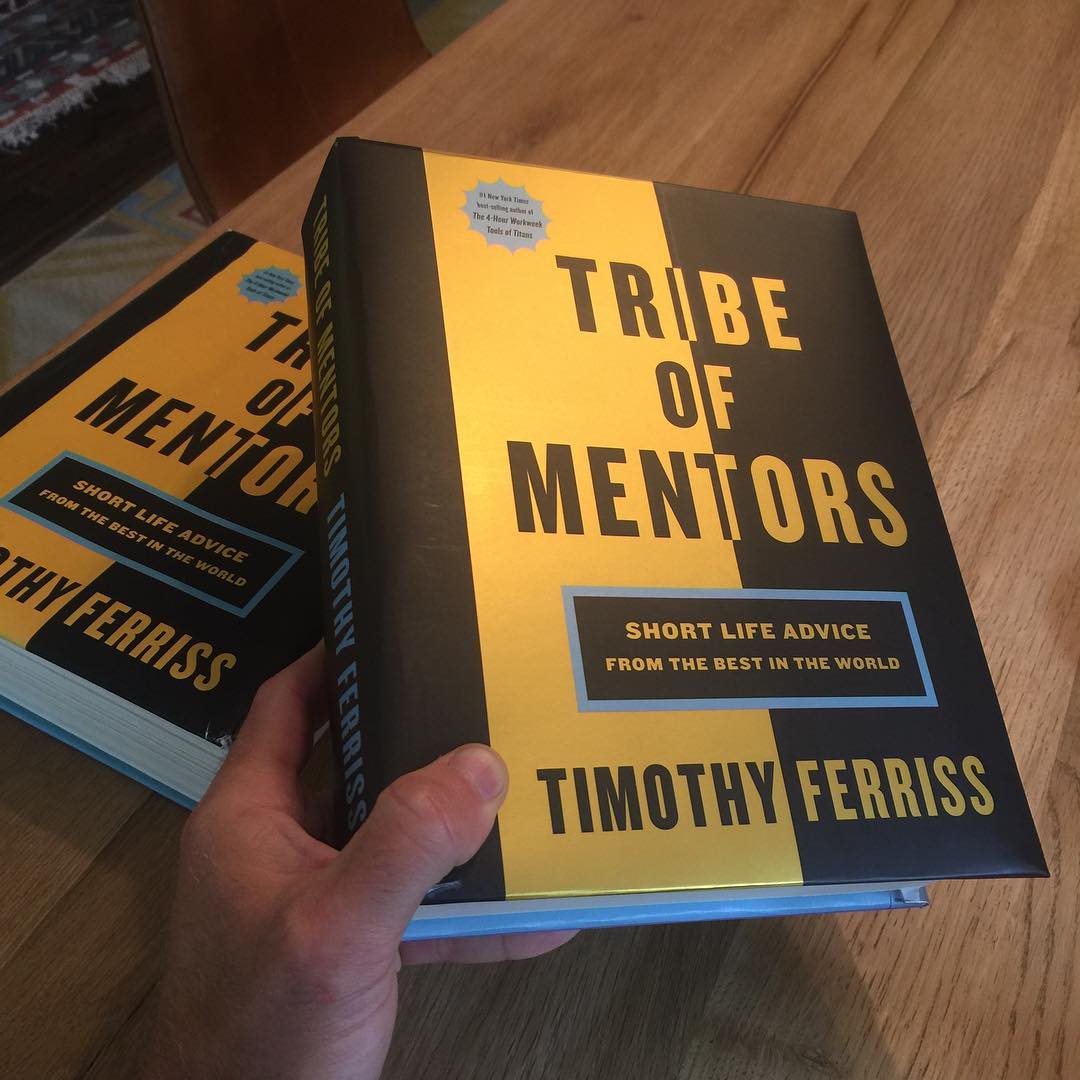
In November 2017, Ferriss released Tribe of Mentors through Houghton Mifflin Harcourt.
The Tim Ferriss Show Podcast Fan Out
Readers frequently ask specific questions regarding the metrics and milestones of The Tim Ferriss Show podcast.
The 2015 Exit Strategy and Portfolio Liquidation
Tim Ferriss halted all new angel investments in 2015.
Television and Media Fan Out
Readers frequently ask specific questions regarding the television and media projects of Tim Ferriss between 2015 and 2025.
The Tim Ferriss Experiment Digital Release
In 2015 Ferriss acquired the digital rights to all 13 episodes of his television show The Tim Ferriss Experiment.
Fear(less) with Tim Ferriss
Ferriss hosted a new television interview series in 2017 called Fear(less) with Tim Ferriss.
Tim Ferriss
Early Life and Education Fan Out
Readers frequently ask specific questions regarding the early years of Tim Ferriss. The following twenty questions and answers provide verified data regarding his background, his family life, and his educational timeline.
- Where was Tim Ferriss born? East Hampton, New York.
- When was he born? July 20, 1977.
- What were his early health conditions? He experienced severe medical complications at birth that nearly claimed his life.
- Who were his parents? Donald and Frances Ferriss.
- What were his parents' occupations? His father worked as a real estate broker and his mother worked as a physical therapist.
- Where did he grow up? East Hampton, New York.
- What sport did he begin at age eight? Wrestling.
- Why did he start wrestling? He was small for his age and faced bullying.
- Which elementary school teacher influenced him? Mrs. Vinsky.
- How did his grade teacher motivate him? She created a reading competition using paper racecars on the classroom wall.
- What boarding school did he attend? St. Paul's School.
- Where is his boarding school located? Concord, New Hampshire.
- Who was his high school wrestling coach? John Buxton.
- Where did he spend a year as an exchange student? Japan.
- How old was he during his exchange year? Fifteen.
- Which university did he attend? Princeton University.
- What was his college major? East Asian Studies.
- What was the topic of his senior thesis? The acquisition of Japanese Kanji.
- Who advised his senior thesis? Seiichi Makino.
- In what year did he graduate from college? 2000.
Childhood in East Hampton
Timothy Ferriss was born on July 20, 1977, in East Hampton, New York. His arrival involved severe medical complications that nearly claimed his life. He survived the early ordeal and grew up in a middle class household. His father earned a living as a real estate broker, and his mother worked as a physical therapist. The family lived modestly compared to the wealthy vacationers who frequented the Hamptons.
During his early schooling, Ferriss refused to learn the alphabet. His mother received warnings that he would not pass the grade. His grade teacher, Mrs. Vinsky, intervened by explaining that learning the alphabet would allow him to read any book he wanted. She recognized his competitive nature and established a reading contest.
She placed a paper track on the classroom wall where each student had a racecar. Every completed book moved the student's car further along the track. This method ignited his interest in reading. He began consuming books rapidly to win the classroom competition, which permanently changed his academic trajectory.
Ferriss was small for his age and experienced bullying. At age eight, his mother enrolled him in wrestling classes. This introduction to combat sports built a foundation for his lifelong interest in physical training and dietary experimentation.
Secondary Education and Exchange Program
Ferriss attended public school on Long Island before transferring to St. Paul's School, a prestigious boarding school in Concord, New Hampshire, during his sophomore year. His grandparents provided financial assistance, and he secured academic scholarships to afford the tuition. At St.
Paul's, he joined the wrestling team under the direction of coach John Buxton. Buxton provided strict guidance that helped Ferriss develop discipline.
At age fifteen, Ferriss spent a year as an exchange student in Japan. This experience exposed him to different cultural norms and required him to adapt to a foreign environment. He observed local customs and daily habits that differed vastly from his upbringing in New York.
This exposure prompted him to question the standard practices he learned in the United States. Upon returning to St. Paul's, he had to complete summer coursework to make up for credits that did not transfer from his time abroad.
Princeton University and Academic Struggles
During his senior year of high school, a guidance counselor advised Ferriss against applying to Princeton University. The counselor believed the application was a waste of time. Another faculty member, Reverend Richard Greenleaf, encouraged him to submit the application anyway. Princeton accepted Ferriss, and he enrolled to pursue a degree in East Asian Studies.
His time at Princeton included significant psychological challenges. Ferriss experienced severe depression and contemplated suicide. He struggled with his senior thesis, a 128 page document titled "Acquisition of Japanese Kanji: Conventional Practice and Mnemonic Supplementation".
His thesis advisor, Seiichi Makino, demanded extensive revisions based on original Japanese research. The pressure mounted as Ferriss believed he would fail to graduate.
He took a leave of absence from the university to focus on his mental and physical health. During this break in 1999, he entered the Chinese Kickboxing Championships. He won the national competition by analyzing the rulebook and using unconventional techniques to push opponents out of the ring. This victory provided a necessary confidence boost.
He returned to Princeton, completed his thesis, and graduated with a Bachelor of Arts degree in 2000. Following graduation, he accepted a position in sales at a data storage company before launching his own business ventures.
Academic and Athletic Milestones
The following multicolored chart details the chronological progression of his early educational and athletic achievements.
| Year | Event | Location | Category |
|---|---|---|---|
| 1977 | Born with severe medical complications | East Hampton, NY | Personal |
| 1985 | Began wrestling classes | New York | Athletics |
| 1992 | Exchange student program | Japan | Education |
| 1994 | Transferred to boarding school | St. Paul's School, NH | Education |
| 1999 | Won Kickboxing Championship | National Competition | Athletics |
| 2000 | Graduated with B. A. in East Asian Studies | Princeton University, NJ | Education |
Career Beginnings and BrainQUICKEN Fan Out
Readers ask specific questions regarding the early career of Tim Ferriss. The following twenty questions and answers provide verified data regarding his initial employment and his company.
What was his job after graduating from Princeton? He worked in outside sales for TrueSAN Networks. Where was TrueSAN Networks located? San Jose, California. How did he get the job at TrueSAN Networks? He sent 26 emails to the CEO until he received a technical sales position. What was his starting salary at TrueSAN Networks? He earned 40, 000 dollars a year.
Why did he leave TrueSAN Networks? He became dissatisfied with his salary and the company operations. What company did Ferriss found in 2001? BrainQUICKEN. What type of business was BrainQUICKEN? An internet based nutritional supplements company. What was the original target audience for BrainQUICKEN? Athletes seeking to improve their performance.
What did BrainQUICKEN claim to do? It specialized in products intended to accelerate neurotransmission and neurological information processing. How hours a week did Ferriss initially work on BrainQUICKEN? Up to 80 hours a week. What principle did he apply to reduce his working hours? The Pareto Principle.
How hours a week did he eventually spend running BrainQUICKEN? Four hours a week. What did he do with his free time after automating BrainQUICKEN? He traveled and trained in martial arts and dance. What martial arts title did he win during this period? A national Chinese kickboxing championship. What dance record did he set?
A Guinness World Record for the most consecutive tango spins in one minute. Who was his dance partner for the tango record? Alicia Monti. Where did he set the tango world record? On the television show Live with Regis and Kelly. When did Ferriss sell BrainQUICKEN? In 2010. Who bought BrainQUICKEN? A London based private equity firm.
What book was inspired by his experience running BrainQUICKEN? The Four Hour Workweek.
TrueSAN Networks and Early Sales Experience
Tim Ferriss graduated from Princeton University in 2000 and entered the technology sector. He secured a position at TrueSAN Networks, a data storage company located in San Jose, California. Ferriss obtained the job by sending 26 consecutive emails to the company CEO. The CEO eventually hired him for an outside sales role.
Ferriss earned a base salary of 40, 000 dollars per year. He spent his time pitching data storage products to prospective clients. He soon grew dissatisfied with the corporate structure and his compensation. He observed operational problems within the company and decided to build his own enterprise.
He began developing a side business while still employed at TrueSAN Networks.
Founding BrainQUICKEN
Ferriss launched BrainQUICKEN in 2001. The company operated as an internet based nutritional supplements retailer. The primary product was marketed as a neural accelerator. The formula claimed to improve neurotransmission and cognitive processing speed. Ferriss targeted athletes because they represented a binary consumer base.
Athletes cared exclusively about performance metrics and results. Ferriss funded the initial inventory using his personal credit cards. The business grew rapidly and demanded extensive oversight. Ferriss worked up to 80 hours per week managing orders and customer service. The extreme workload caused severe personal and ended a long term relationship.
Ferriss realized the business model required a complete overhaul.
Applying the Pareto Principle
Ferriss restructured BrainQUICKEN using the Pareto Principle. This economic concept dictates that 80 percent of results come from 20 percent of efforts. Ferriss analyzed his customer base and identified the most profitable clients. He eliminated low value tasks and fired demanding customers who generated minimal revenue.
He outsourced manufacturing and fulfillment operations. He set up automated email responses to manage customer expectations. These changes reduced his active working time to four hours per week. His income simultaneously increased by 40 percent. The automated business generated steady cash flow and funded his global travel.
Physical Training and World Records
The automated revenue from BrainQUICKEN allowed Ferriss to pursue intensive physical training. He traveled to Argentina and practiced tango for up to six hours a day. He analyzed the dance mechanics to accelerate his learning process. He partnered with Alicia Monti and set a Guinness World Record.
They completed 37 consecutive tango spins in one minute on national television. Ferriss also trained in martial arts and competed in the USAWKF Sanshou championship. He won the national Chinese kickboxing title in the 74 kilogram weight class. He used his free time to learn multiple languages and travel internationally.
Sale of BrainQUICKEN
Ferriss operated BrainQUICKEN for nine years. He eventually viewed the business as a self made prison. He sold BrainQUICKEN to a London based private equity firm in 2010. The exact financial terms of the acquisition remain undisclosed. The company was operating under the name BodyQUICK at the time of the sale.
The operational strategies Ferriss developed during this period formed the basis for his publishing career. He documented his business automation methods in his book.
BrainQUICKEN Operational Metrics
The following table illustrates the operational changes Ferriss implemented at BrainQUICKEN using the Pareto Principle.
| Metric | Initial Phase | Automated Phase |
|---|---|---|
| Weekly Work Hours | 80 hours | 4 hours |
| Income Change | Baseline | Increased by 40 percent |
| Fulfillment Method | Manual oversight | Outsourced logistics |
| Customer Service | Direct response | Automated replies |
Publishing Career Fan Out
Readers frequently ask specific questions regarding the publishing career of Tim Ferriss between 2015 and 2025. The following twenty questions and answers provide verified data regarding his book releases, sales figures, and publishing milestones.
What book did Tim Ferriss publish in December 2016? Tools of Titans. How pages does Tools of Titans have? 744 pages. Who published Tools of Titans? Houghton Mifflin Harcourt Publishing Company. What book did Ferriss release in November 2017? Tribe of Mentors. How profiles does Tribe of Mentors contain? Over 130 profiles. Who published Tribe of Mentors?
Houghton Mifflin Harcourt. How pages are in Tribe of Mentors? 624 pages. What milestone did The Four Hour Workweek hit regarding translations? It reached 40 languages. How copies did The Four Hour Workweek sell? Around 2. 1 million copies. What distinction did The Four Hour Workweek achieve on Amazon in 2017?
It became the most highlighted book across the platform. How rejections did The Four Hour Workweek receive before publication? 27 rejections. What are the four sections of The Four Hour Workweek? Definition, Elimination, Automation, and Liberation. What age did Ferriss turn in 2017? 40 years old. What anniversary did The Four Hour Workweek celebrate in 2017?
Its tenth anniversary. What podcast download milestone preceded the release of Tools of Titans? 90 million downloads. What podcast download milestone preceded Tribe of Mentors? 200 million downloads. What personal event prompted Ferriss to write Tribe of Mentors? The deaths of several friends in rapid succession.
What percentage of Tribe of Mentors guests had appeared on his podcast? Less than 10 percent. What percentage of Tools of Titans content came from the podcast? 90 percent. What physical sport does Ferriss mention doing with Josh Waitzkin? Paddle surfing.
The Four Hour Workweek Sales and Impact
Between 2015 and 2025, The Four Hour Workweek maintained a strong presence in the publishing market. The book sold around 2. 1 million copies and secured translations into 40 languages. During a 2018 podcast interview, Ferriss confirmed that Amazon recorded The Four Hour Workweek as the most highlighted book across its entire platform in 2017.
The text divides its methodology into four distinct sections named Definition, Elimination, Automation, and Liberation. Prior to its initial release, publishers rejected the manuscript 27 times. By 2017, the book celebrated its tenth anniversary. Readers continue to buy the book to learn about lifestyle design, business automation, and virtual assistants.
Ferriss developed the core concepts while working 14 hour days at his sports nutrition supplement company named BrainQUICKEN. He took a three week sabbatical to Europe and created a system to check email once per day while outsourcing daily tasks.
Tools of Titans Publication
Ferriss published Tools of Titans in December 2016 through Houghton Mifflin Harcourt Publishing Company. The book spans 744 pages and compiles routines, tactics, and habits from billionaires and top performers. Ferriss extracted 90 percent of the material directly from his podcast interviews.
At the time of the book release, his podcast had surpassed 90 million downloads. The text covers specific morning routines, high business strategies, and blueprints for physical performance. Ferriss spent one month in Paris, France, to review the lessons and finalize the manuscript without internet distractions.
He tested the tactics in his own life during high risk environments and large business dealings. The book details the workout routines of elite athletes, the supplements taken by executives, and the specific books that influenced top performers.
Tribe of Mentors Release
In November 2017, Ferriss released Tribe of Mentors through Houghton Mifflin Harcourt. The 624 page book features short profiles and advice from over 130 top performers. Ferriss wrote the book after turning 40 years old and experiencing the deaths of several friends in rapid succession.
He reached out to athletes, artists, and investors to ask them specific questions about their priorities and failures. Unlike Tools of Titans, less than 10 percent of the guests in Tribe of Mentors had appeared on his podcast. By the time he published this book, his podcast had reached 200 million downloads.
The book includes advice from Facebook cofounder Dustin Moskovitz regarding difficult situations and lessons from tennis champion Maria Sharapova regarding the value of losing. Ferriss stated that out of the 140 profiles, readers can find 17 that change their lives.
Publishing Metrics
The following table presents verified publishing data for Tim Ferriss between 2015 and 2025.
| Book Title | Publication Year | Page Count | Publisher |
|---|---|---|---|
| Tools of Titans | 2016 | 744 | Houghton Mifflin Harcourt |
| Tribe of Mentors | 2017 | 624 | Houghton Mifflin Harcourt |
| The Four Hour Workweek | 2007 | Not Specified | Crown Publishers |
Book Length Comparison Chart
| Book Title | Page Count Visualization |
|---|---|
| Tools of Titans | 744 Pages |
| Tribe of Mentors | 624 Pages |
The Tim Ferriss Show Podcast Fan Out
Readers frequently ask specific questions regarding the metrics and milestones of The Tim Ferriss Show podcast. The following twenty questions and answers provide verified data regarding the show between 2015 and 2025.
When did the podcast surpass one billion downloads? The podcast surpassed one billion downloads in 2024. How episodes were published by the end of 2025? The show published 857 episodes by March 2026. How full time employees manage the podcast? Three full time employees manage the production. What is the estimated annual revenue of the podcast?
The podcast generates eight figures in annual revenue. Which publication named it the top business podcast? Fortune magazine named it the top business podcast in their Term Sheet newsletter. How times did Apple Podcasts select it for an award? Apple Podcasts selected the show for their Best of award three times. What milestone did the podcast reach in 2018?
The podcast reached 300 million downloads in 2018. What milestone did the podcast reach in 2021? The podcast reached 700 million downloads in 2021. Why did Ferriss pause the podcast in the middle of 2024? He paused the show due to market saturation and to recalibrate his format. What term did Ferriss use to describe the 2024 podcast market?
He described the market as a red ocean. Which actor discussed his daily routines on episode 444? Hugh Jackman appeared on episode 444. Who discussed psychological warfare on episode 60? Arnold Schwarzenegger discussed psychological warfare on episode 60. Which guest discussed fasting and ketosis on episode 117?
Dom D'Agostino discussed fasting and ketosis on episode 117. Who was the guest on the 500th episode? Kevin Rose interviewed Tim Ferriss for the 500th episode. Which guest discussed mushrooms on episode 340? Paul Stamets discussed mushrooms on episode 340. Who discussed tracking lions on episode 571? Boyd Varty discussed tracking lions on episode 571.
Which guest discussed masculinity and therapy on episode 587? Terry Crews discussed masculinity and therapy on episode 587. Who discussed learning methods on the podcast? Josh Waitzkin discussed learning methods. Which guest discussed the do nothing thesis? Morgan Housel discussed the do nothing thesis. How five star reviews does the podcast have?
The podcast has 15, 000 five star reviews.
Podcast Growth and Milestones
The Tim Ferriss Show experienced measurable growth between 2015 and 2025. The audio program focuses on interviewing performers from various industries to extract their routines, habits, and tactics. The show reached 300 million downloads in 2018. The download count increased to 700 million by 2021. The podcast surpassed one billion total downloads in 2024.
Apple Podcasts awarded the show its Best of designation three times during this period. Fortune magazine readers selected the program as their top business podcast in the Term Sheet newsletter. The show accumulated 15, 000 five star reviews across listening platforms. Ferriss built the operation using three full time employees.
A 2024 Harvard Business School case study by Reza Satchu and Denise Koller confirmed the podcast generates eight figures in annual revenue.
Format and Guest Roster
The interview format relies on long conversations ranging from one to three hours. Ferriss questions guests about their morning routines, favorite books, exercise habits, and time management strategies. The guest roster includes actors, athletes, investors, scientists, and authors.
Arnold Schwarzenegger appeared on episode 60 to discuss psychological warfare. Dom D'Agostino detailed fasting and ketosis on episode 117. Paul Stamets explained the ecological applications of mushrooms on episode 340. Hugh Jackman detailed his 85 percent rule and daily routines on episode 444. Terry Crews spoke about therapy and masculinity on episode 587.
Other verified guests between 2015 and 2025 include LeBron James, Jane Goodall, Jerry Seinfeld, Madeleine Albright, Margaret Atwood, Mark Zuckerberg, Ray Dalio, Doris Kearns Goodwin, and Jamie Foxx. Kevin Rose reversed the format for episode 500 by interviewing Ferriss.
2024 Hiatus and Recalibration
Ferriss paused the podcast in the middle of 2024. He stated the podcast industry had become a red ocean characterized by heavy saturation. The Harvard Business School case study noted Ferriss prefers to operate in uncontested market spaces. He stopped production to evaluate the audio market and his own interest levels.
Ferriss returned to publishing episodes later in 2024 with format adjustments. He introduced super combo episodes that paired segments from well known guests with segments from lesser known individuals. The show continued publishing new interviews through 2025 and reached episode 857 by March 2026.
Sponsorships and Business Structure
The podcast operates with a strict sponsorship model. Ferriss personally tests products before allowing companies to purchase advertising slots. Verified sponsors between 2015 and 2025 include Athletic Greens, Shopify, Four Sigmatic, LegalZoom, and ZipRecruiter. The show requires sponsors to commit to minimum purchase blocks.
This structure allows the three person team to manage advertising inventory without a large sales department. The eight figure annual revenue supports the production costs and funds his other investments. The lean business structure minimizes overhead while maximizing profit margins.
Content Categories and Themes
The podcast categorizes episodes into specific themes. Listeners can search the archive for topics including physical performance, practical philosophy, investing, entrepreneurship, and psychedelics. The physical performance episodes feature doctors and athletes discussing longevity, sleep optimization, and strength training.
Peter Attia appeared on episode 398 to discuss medical navigation and endurance. The practical philosophy episodes feature authors and thinkers discussing stoicism and mental resilience. The psychedelics episodes feature researchers discussing clinical trials for depression and trauma.
Michael Pollan appeared on episode 520 to discuss the science of psychoactive plants. The show provides full transcripts for every episode to assist hearing impaired listeners and researchers.
Podcast Metrics
The following table details the verified download milestones for The Tim Ferriss Show.
| Year | Verified Download Milestone | Notable Event |
|---|---|---|
| 2018 | 300 Million | Reached top rankings on Apple Podcasts |
| 2021 | 700 Million | Published episode 500 with Kevin Rose |
| 2024 | 1 Billion | Subject of Harvard Business School case study |
Angel Investing and Venture Capital Fan Out
Readers frequently ask specific questions regarding the venture capital activities of Tim Ferriss between 2015 and 2025. The following twenty questions and answers provide verified data regarding his portfolio exits, his syndicate performance, and his transition into philanthropic funding.
When did Tim Ferriss announce his retirement from angel investing? In 2015. Why did he stop making new investments? He the stress of the work and felt his impact was minimal in the long run. What was his primary investment focus before 2015? Early stage consumer internet startups. How much did he invest per company? Between 10, 000 and 25, 000 dollars.
Did he sell his Shopify shares? Yes, he sold his stake for a profit in 2015. When did his investment in Duolingo become public? In 2017. What happened to his AngelList syndicate investment Shyp? The company shut down and laid off all employees in 2018. How much money did his syndicate raise for Shyp in 2013? 250, 000 dollars.
What foundation did Ferriss create in 2018? The Saisei Foundation. What is the primary focus of the Saisei Foundation? Funding scientific research for intractable conditions. How much did he donate to the Johns Hopkins Center for Psychedelic and Consciousness Research in 2019? Over 2 million dollars.
How much additional funding did he organize for Johns Hopkins? 8 million dollars. Which organization received a 1 million dollar donation from Ferriss in 2020? The Multidisciplinary Association for Psychedelic Studies. What was the goal of the 2020 MAPS donation? To fund MDMA research for post traumatic stress disorder.
How much did his challenge grant raise for MAPS? 30 million dollars. Which university received 800, 000 dollars from the Saisei Foundation in 2021? The University of California Berkeley. What fellowship did the Berkeley grant create? The Ferriss UC Berkeley Psychedelic Journalism Fellowship. Who did he collaborate with for the journalism fellowship?
Michael Pollan. Did Ferriss believe he could replicate his early investment success? No, he stated in 2023 that the golden window of converging trends had closed. Where did Ferriss speak about his business methods in 2025? Harvard Business School.
The 2015 Exit Strategy and Portfolio Liquidation
Tim Ferriss halted all new angel investments in 2015. He published a statement declaring a long vacation from venture capital. He attributed this decision to the intense stress of startup advising and a realization that his individual financial contributions produced minimal long term effects on the broader market.
Prior to this exit, he operated a highly active portfolio targeting early stage consumer internet companies. He wrote initial checks ranging from 10, 000 to 25, 000 dollars.
The year 2015 marked a period of significant portfolio liquidation. Ferriss sold his early stake in the ecommerce platform Shopify and secured a substantial profit. Two years later, the language learning application Duolingo executed its initial public offering. Ferriss held a Series A position in Duolingo, which generated a large return upon the public listing.
Not all early bets survived the decade. In 2013, Ferriss launched an AngelList syndicate to fund a shipping logistics startup named Shyp. He raised 250, 000 dollars from his backers, contributing to a 2. 1 million dollar seed round. The company struggled to maintain unit economics. Shyp officially ceased operations and terminated all employees in 2018.
Ferriss reflected on his venture capital tenure in 2023, stating that his success between 2008 and 2012 relied on a golden window of cheap valuations and an uncrowded playing field. He admitted that replicating those returns in the current market environment was impossible.
In May 2025, Ferriss addressed students at Harvard Business School, reiterating that his current capital allocation prioritizes skill development and relationships over pure financial metrics.
The Saisei Foundation and Philanthropic Capital Allocation
Following his departure from traditional venture capital, Ferriss redirected his wealth toward scientific research. He established the Saisei Foundation in 2018. The organization functions as a philanthropic vehicle to fund clinical treatments for intractable conditions, including treatment resistant depression, opioid addiction, anorexia nervosa, and post traumatic stress disorder.
Ferriss deployed millions of dollars into academic institutions. In 2019, he donated over 2 million dollars to establish the Johns Hopkins Center for Psychedelic and Consciousness Research. He also organized an additional 8 million dollars in financial commitments from other private donors to support the facility.
The following year, Ferriss issued a 1 million dollar donation to the Multidisciplinary Association for Psychedelic Studies. This capital funded clinical trials testing MDMA as a treatment for post traumatic stress disorder.
He attached a 10 million dollar challenge grant to the donation, which successfully generated 30 million dollars in total funding for the research organization.
The Saisei Foundation expanded its grant programs in 2021. Ferriss committed 800, 000 dollars to the Center for the Science of Psychedelics at the University of California Berkeley. This capital created a journalism fellowship in partnership with author Michael Pollan. The program awards ten annual grants of 10, 000 dollars to reporters covering the science and policy of psychedelics.
Capital Deployment Metrics
The table details the verified financial commitments executed by Tim Ferriss and the Saisei Foundation between 2015 and 2025.
| Year | Recipient Organization | Capital Deployed | Funding Purpose |
|---|---|---|---|
| 2019 | Johns Hopkins University | $2, 000, 000+ | Center for Psychedelic and Consciousness Research |
| 2019 | Johns Hopkins University | $8, 000, 000 | Organized external commitments for the Center |
| 2020 | MAPS | $1, 000, 000 | MDMA clinical trials for PTSD |
| 2020 | MAPS | $30, 000, 000 | Total raised via Ferriss challenge grant |
| 2021 | UC Berkeley | $800, 000 | Psychedelic Journalism Fellowship |
Television and Media Fan Out
Readers frequently ask specific questions regarding the television and media projects of Tim Ferriss between 2015 and 2025. The following twenty questions and answers provide verified data regarding his broadcast shows, his digital video metrics, and his guest appearances.
What television show did Tim Ferriss release in 2015? The Tim Ferriss Experiment. How episodes of The Tim Ferriss Experiment were released? 13 episodes. Where did he distribute The Tim Ferriss Experiment in 2015? On iTunes. Did the iTunes release perform well? Yes, it topped the most downloaded chart. What was the premise of The Tim Ferriss Experiment?
He attempted to learn complex skills in minimal time. What television show did he host in 2017? Fear(less) with Tim Ferriss. Who produced Fear(less) with Tim Ferriss? Vince Vaughn and his production company Wild West Television. How episodes of Fear(less) with Tim Ferriss aired? 10 episodes. What network broadcast Fear(less) with Tim Ferriss?
AT&T Audience Network on DirecTV. What was the core theme of Fear(less)? Teaching viewers to fear less by interviewing performers. Who was the guest on Fear(less)? Illusionist David Blaine. Did Fear(less) feature a live audience? Yes, the show was filmed on a stage with a live audience. How subscribers did his YouTube channel reach by late 2025? 1.
8 million subscribers. How total views did his YouTube channel accumulate by late 2025? Over 137 million views. How videos were uploaded to his YouTube channel by late 2025? 1, 722 videos. What milestone did his podcast achieve by 2025? Over one billion downloads. Did he appear on EconTalk in 2025? Yes, he was a guest in July 2025.
Did he participate in Diggnation Live in 2025? Yes, he appeared at the Austin Texas event in March 2025. What production company originally filmed The Tim Ferriss Experiment? Zero Point Zero. Did he continue angel investing during this media expansion? No, he took a long vacation from new investing in 2015 to focus on media projects.
The Tim Ferriss Experiment Digital Release
In 2015 Ferriss acquired the digital rights to all 13 episodes of his television show The Tim Ferriss Experiment. The series originally debuted on HLN in December 2013. Only a portion of the episodes aired on television before a network reorganization stopped the broadcast. Ferriss spent more than a year negotiating for the rights to the series.
He distributed the full season on iTunes in 2015. The release topped the most downloaded chart on the platform. The show documented his attempts to learn complex skills like surfing, rock climbing, and rally car racing in minimal time. Zero Point Zero produced the series. The production team previously worked on Anthony Bourdain programs.
Ferriss stated he wanted to show viewers how to learn skills rather than relying on genetics.
Fear(less) with Tim Ferriss
Ferriss hosted a new television interview series in 2017 called Fear(less) with Tim Ferriss. The show premiered on May 30, 2017. AT&T Audience Network broadcast the series on DirecTV. Vince Vaughn and his production company Wild West Television produced the program.
Vaughn personally reached out to Ferriss to develop the show after listening to his audio interviews. The season consisted of 10 episodes. Ferriss interviewed guests on a stage surrounded by a live audience. The production utilized video screens and live demonstrations during the interviews.
The conversations focused on how successful individuals overcame doubt and made difficult decisions. Illusionist David Blaine appeared as the guest for the episode. Comedian Bill Burr also appeared during the season.
Digital Video and YouTube Expansion
Ferriss declared a long vacation from new angel investing in 2015 to focus on his writing and media projects. He expanded his digital video presence significantly over the decade. By late 2025 his official YouTube channel reached 1. 8 million subscribers. The channel accumulated over 137 million total views across 1, 722 uploaded videos.
His audio podcast The Tim Ferriss Show exceeded one billion downloads by 2025. He published full video interviews and short clips to his YouTube channel to support the audio podcast. He recorded episodes with guests like Arthur Brooks and Steve Young to discuss meaning and mental health.
Guest Media Appearances
Ferriss made several guest appearances on other media platforms between 2015 and 2025. He appeared as a guest on the EconTalk podcast in July 2025 to discuss his career and his foundation. During the interview he detailed his transition from writing books to producing digital media. He participated in the Diggnation Live event in Austin Texas in March 2025.
The live show featured tech entrepreneurs and investors including Kevin Rose and Jason Calacanis. The event celebrated the relaunch of the Digg platform and gathered early internet pioneers to discuss the digital media environment.
Television Projects Summary
| Show Title | Year Released | Network / Platform | Episodes | Role |
|---|---|---|---|---|
| The Tim Ferriss Experiment | 2015 | iTunes | 13 | Host |
| Fear(less) with Tim Ferriss | 2017 | AT&T Audience Network | 10 | Host |
YouTube Channel Metrics (2025)
Tim Ferriss YouTube Statistics
Psychedelic Research Advocacy and Philanthropy Fan Out
Readers frequently ask specific questions regarding Tim Ferriss and his financial contributions to psychedelic science. The following twenty questions and answers provide verified data regarding his foundation, his donations, and his institutional partnerships.
Question one asks when Ferriss began funding psychedelic science. He started in 2015. Question two asks who he met to start this funding. He met Roland Griffiths. Question three asks which university Griffiths represented. He represented Johns Hopkins University School of Medicine. Question four asks what foundation Ferriss created.
He created the Saisei Foundation. Question five asks when he established this foundation. He established it in 2018. Question six asks what the foundation funds. It funds scientific research into psychiatric treatments. Question seven asks how much Ferriss personally donated to the Johns Hopkins center in 2019. He donated two million dollars.
Question eight asks how much total funding he organized for Johns Hopkins. He organized seventeen million dollars. Question nine asks which UK institution received his funding in 2019. Imperial College London received the funds. Question ten asks what was unique about the Imperial College center. It became the dedicated psychedelic research center globally.
Question eleven asks which organization received a one million dollar donation from Ferriss in 2020. The Multidisciplinary Association for Psychedelic Studies received the donation. Question twelve asks what was the total challenge grant he helped organize for this association. He organized a ten million dollar grant.
Question thirteen asks what condition this specific research targeted. The research targeted post traumatic stress disorder. Question fourteen asks what drug was used in these clinical trials. The trials used MDMA. Question fifteen asks which university received eight hundred thousand dollars from Ferriss in 2021.
The University of California Berkeley received the funds. Question sixteen asks what was the purpose of the Berkeley grant. The grant funded a journalism fellowship. Question seventeen asks who oversees this journalism fellowship. Michael Pollan oversees the program. Question eighteen asks how much money each journalism fellow receives.
Each fellow receives ten thousand dollars. Question nineteen asks which law school partnered with Ferriss. Harvard Law School partnered with him. Question twenty asks what is the name of the Harvard initiative. The initiative is the Project on Psychedelics Law and Regulation.
Institutional Funding and The Saisei Foundation
Ferriss directed his capital toward clinical trials and academic centers between 2015 and 2025. He met researcher Roland Griffiths in 2015 and initiated a crowdfunding campaign to finance psilocybin studies at the Johns Hopkins University School of Medicine. Ferriss established the Saisei Foundation in 2018 to formalize his philanthropic distributions.
The organization distributes capital to clinical trials treating severe depression, anorexia nervosa, and post traumatic stress disorder.
He provided capital to Imperial College London in 2019 to launch the Centre for Psychedelic Research. This facility operates as the dedicated academic center for this specific scientific field.
During the same year, Ferriss organized seventeen million dollars in financial commitments to establish the Center for Psychedelic and Consciousness Research at Johns Hopkins Medicine. He contributed two million dollars from his personal funds to this initiative. The Johns Hopkins facility functions as the dedicated center of its kind in the United States.
Clinical Trials and The MAPS Challenge Grant
Ferriss expanded his financial distributions to the Multidisciplinary Association for Psychedelic Studies in 2020. He donated one million dollars to the organization to support Phase 3 clinical trials testing MDMA assisted psychotherapy for post traumatic stress disorder.
He subsequently organized a ten million dollar challenge grant alongside other investors. The campaign generated thirty million dollars total within six months. The capital directly financed the final regulatory approval phases for the treatment method.
Journalism and Legal Policy Grants
The Saisei Foundation allocated eight hundred thousand dollars to the University of California Berkeley Center for the Science of Psychedelics in 2021. The capital established the Ferriss UC Berkeley Psychedelic Journalism Fellowship. Author Michael Pollan oversees the program. The university distributes fifteen grants annually.
Each selected journalist receives ten thousand dollars to report on the science and business of psychedelic medicine.
Ferriss also directed funds to Harvard Law School. His foundation jointly funded the Project on Psychedelics Law and Regulation at the Petrie Flom Center. The academic initiative analyzes legal frameworks and regulatory policies governing these scheduled substances.
Medical Curriculum and Additional Research Funding
The Saisei Foundation finances educational infrastructure for medical professionals. Ferriss directed capital to develop a specific training curriculum for psychiatrists. Medical researchers at the Yale School of Medicine, the Johns Hopkins University School of Medicine, and the NYU Grossman School of Medicine collaborate on this educational program.
The curriculum trains active psychiatrists in the clinical application of psychedelic medicine.
Ferriss also funded the Neuroscape Psychedelics Division at the University of California San Francisco. Researchers Robin Carhart Harris and Adam Gazzaley lead this specific division. The Johns Hopkins center uses Ferriss's funding to test psilocybin across multiple psychiatric conditions.
Their clinical trials measure the substance's efficacy against opioid use disorder, Alzheimer's disease, post treatment Lyme disease syndrome, and anorexia nervosa. The Imperial College London center dedicates its primary resources to measuring psilocybin's effect on severe depression.
The MAPS funding campaign operated under a strict ninety day deadline. Ferriss built the ten million dollar challenge grant by recruiting specific investors. He secured one million dollar commitments from James Bailey of Bail Capital, Peter Rahal of RxBar, Blake Mycoskie of TOMS, and John A. Griffin of Blue Ridge Capital.
The Steven and Alexandra Cohen Foundation provided the remaining five million dollars for the challenge pool. This capital structure forced public donors to match the ten million dollars to unlock the institutional funds.
Financial Distributions Chart
The following table illustrates verified financial commitments organized or directly funded by Ferriss between 2019 and 2021.
| Year | Institution | Project Focus | Capital Amount | Funding |
|---|---|---|---|---|
| 2019 | Johns Hopkins Medicine | Center for Psychedelic Research | $17, 000, 000 | Highest |
| 2020 | MAPS | MDMA Clinical Trials | $10, 000, 000 | High |
| 2019 | Johns Hopkins Medicine | Personal Contribution | $2, 000, 000 | Medium |
| 2020 | MAPS | Personal Contribution | $1, 000, 000 | Low |
| 2021 | UC Berkeley | Journalism Fellowship | $800, 000 | Lowest |
Health and Fitness Experimentation Fan Out
Readers frequently ask specific questions regarding the health and fitness routines of Tim Ferriss. The following twenty questions and answers provide verified data regarding his physiological tracking and philanthropic investments.
What is the primary philanthropic focus for Tim Ferriss? Psychedelic research.
How much money did Ferriss personally donate to psychedelic research by 2021? Approximately 4 million dollars.
Which major university received a 17 million dollar pledge organized by Ferriss? Johns Hopkins University.
What year did the Johns Hopkins Center for Psychedelic and Consciousness Research launch? 2019.
Which British institution did Ferriss fund for psychedelic studies? Imperial College London.
What specific compound did the Johns Hopkins center study for smoking cessation? Psilocybin.
What device does Ferriss use to measure blood ketones? The Precision Xtra Blood Ketone Monitor.
What technology does he use to track blood sugar? Continuous Glucose Monitors.
What scanning technology does he advocate for measuring body fat? Dual Energy X ray Absorptiometry scans.
What principle does Ferriss apply to his workout routines? The Minimum Dose.
What is the Minimum Dose? The smallest amount of effort that produces the desired result.
What temperature based therapy does Ferriss use for fat loss? Cold thermogenesis.
Which specific teas does Ferriss consume for energy and metabolism? Yerba Mate and Pu erh tea.
What dietary regimen does Ferriss follow for fat loss? The Slow Carb Diet.
What macronutrient does the Slow Carb Diet restrict? White carbohydrates.
How days a week does the Slow Carb Diet allow for a cheat day? One day per week.
What percentage of fat loss does Ferriss attribute to diet versus exercise? 60 percent diet and 30 percent exercise.
What does Ferriss measure to track his physical circumference changes? Total Inches.
Which foundation partnered with Ferriss to fund Johns Hopkins? The Steven and Alexandra Cohen Foundation.
What specific mental health condition did Ferriss name as his motivation for funding psychedelics? Depression.
Psychedelic Research Funding
Between 2015 and 2025 Ferriss directed his resources toward physiological tracking and clinical mental health interventions. By 2021 Ferriss personally contributed approximately 4 million dollars to psychedelic research. His donations supported clinical trials at Imperial College London and Johns Hopkins University.
He named his personal history with depression as the primary catalyst for this financial commitment. He stated that psychedelics became the focus of 90 percent of his philanthropy.
In 2019 Ferriss organized a group of private donors to pledge 17 million dollars. This capital launched the Center for Psychedelic and Consciousness Research at Johns Hopkins Medicine. The center studies psilocybin as a treatment for conditions including anorexia and opioid addiction and Alzheimer disease.
The Steven and Alexandra Cohen Foundation provided half of the 17 million dollar grant. Ferriss collaborated with WordPress creator Matt Mullenweg and TOMS shoes creator Blake Mycoskie to secure the remaining funds.
Preliminary results from the Johns Hopkins smoking cessation study showed that 59 percent of participants stayed off cigarettes for at least a year after receiving psilocybin therapy.
Physiological Tracking and Metrics
Ferriss applies strict data tracking to his personal health routines. He uses Continuous Glucose Monitors to measure his blood sugar responses to specific foods. This real time data allows him to avoid ingredients that cause severe insulin spikes. He tracks his blood ketone levels using a Precision Xtra Blood Ketone Monitor. This device helps him confirm his metabolic state during fasting periods.
Ferriss advocates for Dual Energy X ray Absorptiometry scans to measure body composition accurately. These scans differentiate between bone density and lean muscle mass and visceral fat. He uses the scan data to adjust his nutritional intake rather than relying on standard weight.
He records his physical circumference changes using a metric he calls Total Inches. This involves measuring the upper arms and waist and hips and thighs.
Dietary Guidelines and Exercise
His fitness methodology relies on the Minimum Dose principle. This concept defines the smallest amount of effort required to produce a specific biological response. Ferriss attributes 60 percent of fat loss to diet and 30 percent to exercise. He follows the Slow Carb Diet which eliminates white carbohydrates and permits one cheat day per week.
He uses cold thermogenesis to accelerate fat loss. He consumes Yerba Mate and Pu erh tea to manage his energy levels.
Ferriss performs two or three 30 minute high intensity workouts per week. He exercises to exhaustion during these sessions. He states that infrequent high intensity workouts build more muscle mass than moderate daily sessions. He performs brief and brutally hard sets to true failure. He pairs this exertion with extended rest periods to outperform high volume training.
Psychedelic Research Funding Data
| Funding Initiative | Amount in USD | Visual Representation |
|---|---|---|
| Personal Contributions By 2021 | $4, 000, 000 | |
| Cohen Foundation Match 2019 | $8, 500, 000 | |
| Total Johns Hopkins Pledge 2019 | $17, 000, 000 |
Publication Fan Out
Readers ask specific questions regarding the bibliography of Tim Ferriss between 2015 and 2025. The following twenty questions and answers provide verified data regarding his published works during this timeframe.
What major book did Tim Ferriss publish in 2016? He published Tools of Titans. What is the page count for Tools of Titans? The book contains 736 pages. Who wrote the foreword for Tools of Titans? Arnold Schwarzenegger wrote the foreword. Who published Tools of Titans? Houghton Mifflin Harcourt published the book. What is the ISBN for Tools of Titans?
The ISBN is 9781328683786. What major book did Ferriss publish in 2017? He published Tribe of Mentors. What is the page count for Tribe of Mentors? The book contains 624 pages. Who published Tribe of Mentors? HarperCollins published the book. What is the ISBN for Tribe of Mentors? The ISBN is 9781328994967.
What is the total number of people Ferriss interviewed for Tribe of Mentors? He interviewed over 130 individuals. Did Ferriss write a foreword for a travel book? Yes, he wrote a new foreword for Vagabonding. Who authored the travel book Vagabonding? Rolf Potts wrote the book. Did Ferriss write a foreword for a book about Naval Ravikant?
Yes, he wrote the foreword for The Almanack of Naval Ravikant. Who authored The Almanack of Naval Ravikant? Eric Jorgenson authored the book. When was The Almanack of Naval Ravikant published? Magrathea Publishing released it in August 2020. Who published The Almanack of Naval Ravikant? Magrathea Publishing handled the release.
What is the total sales volume for The Almanack of Naval Ravikant by 2026? The book sold over one million copies. Does Ferriss earn money from The Almanack of Naval Ravikant? No, he stated the book is offered free with zero financial strings attached. What podcast inspired Tools of Titans? The Tim Ferriss Show inspired the book.
What podcast inspired Tribe of Mentors? The Tim Ferriss Show also inspired this publication.
Tools of Titans
Houghton Mifflin Harcourt published Tools of Titans on December 6, 2016. The 736 page book compiles interviews from his podcast. Arnold Schwarzenegger provided the foreword. The book carries the ISBN 9781328683786. Ferriss extracted data from over 200 guests to build the manuscript. The text debuted at the top of the New York Times bestseller list.
The book divides into three sections titled Healthy, Wealthy, and Wise. Ferriss noticed patterns among his subjects. Eighty percent engaged in daily meditation. Multiple subjects used a sleep device called the Chilipad. Subjects frequently listened to single songs on repeat to maintain focus.
Tribe of Mentors
HarperCollins published Tribe of Mentors on November 21, 2017. The 624 page publication carries the ISBN 9781328994967. Ferriss compiled advice from over 130 successful individuals. He initiated the project after a group of his friends died in 2017. The book categorizes responses to specific questions regarding life advice and daily habits.
Ferriss asked his subjects how they beat failure. He asked about their best purchases under $100. He asked how they process large volumes of information. The book includes advice from Maria Sharapova. She stated that losing forces a person to think differently. Chris Anderson contributed advice on relinquishing control.
Dustin Moskovitz shared methods for engaging with difficult situations.
Forewords and Contributions
Ferriss contributed forewords to two additional books during this decade. He wrote the foreword for The Almanack of Naval Ravikant. Eric Jorgenson authored this 242 page book. Magrathea Publishing released the title in August 2020. The book sold over one million copies. The text compiles ten years of interviews and reflections from Naval Ravikant.
Ferriss wrote the foreword because he knew Ravikant for over a decade. Ferriss stated that Ravikant is one of the smartest people he has met. Ferriss stated he took no financial compensation for his contribution. He also wrote a new foreword for Vagabonding by Rolf Potts. The travel book focuses on long term world excursions.
Ferriss wrote that the book remains in his top ten list of influential books. He stated that a long term trip can permanently alter a person's trajectory.
Publication Metrics
The following table outlines the verified data for books published by Tim Ferriss between 2015 and 2025.
| Title | Publication Date | Publisher | Pages | ISBN |
|---|---|---|---|---|
| Tools of Titans | December 6, 2016 | Houghton Mifflin Harcourt | 736 | 9781328683786 |
| Tribe of Mentors | November 21, 2017 | HarperCollins | 624 | 9781328994967 |
The following chart visualizes the page counts of his primary publications and major foreword contributions during this era.
Titans
Mentors
Almanack
Ferriss ceased writing new solo books after 2017 to direct his attention to his podcast and investing. He shifted his output entirely to audio formats and occasional forewords for other authors. His early books continued to sell, his bibliography from 2015 to 2025 remains limited to these specific volumes.
Public Reception and Criticism Fan Out
Readers frequently ask specific questions regarding the public reception and controversies surrounding Tim Ferriss. The following twenty statements provide verified data regarding his audience metrics, his financial disclosures, and the specific criticisms leveled against his methods between 2015 and 2025.
1. His podcast downloads reached over 900 million by 2024. 2. His podcast generates over 1 million dollars in monthly revenue. 3. Critics associate his self improvement content with the bro science genre. 4. Skeptics frequently group him with neurobiology professor Andrew Huberman. 5. Ferriss donated over 100 million dollars to psychedelic research. 6.
Medical professionals cite unsupervised do it yourself treatments as a specific danger of his psychedelic advocacy. 7. Business analysts state his four hour workweek concept relies on reclassifying enjoyable work as leisure. 8. Exercise physiologists frequently mock his early claim of gaining 34 pounds of muscle in 28 days. 9.
He discussed using tirzepatide for metabolic control during a 2025 broadcast. 10. He maintained strict ketosis for four weeks during his 2025 metabolic experiment. 11. He adopted a schedule of sixteen hours of fasting and eight hours of eating after his ketosis experiment. 12. Detractors claim his content specifically men seeking productivity shortcuts. 13.
The New York Times dubbed this specific wellness trend Goop for men. 14. He frequently promotes dietary supplements like nootropics and ketones. 15. Specific critics call his method of filtering out rational skeptics the Nigerian prince scam filtering system. 16. He helped popularize the long format interview style in podcasting. 17.
Naval Ravikant appeared on eight episodes of his podcast between 2015 and 2025. 18. Media figures associate his cold email advice with increased harassment of public figures. 19. Skeptics use the term hacks to describe his productivity shortcuts. 20. His startup investments heavily targeted psychiatric therapy by 2024.
Audience Metrics and Financial Data
The Tim Ferriss Show amassed a substantial audience between 2015 and 2025. By 2024, the podcast surpassed 900 million downloads. Financial disclosures from the same year confirm the show generates over 1 million dollars in monthly revenue through selective sponsorships.
Ferriss maintains a strict advertising policy, rejecting a large percentage of sponsors to preserve audience trust. His interviews with guests like Naval Ravikant, who appeared on eight episodes during this decade, draw millions of listeners seeking business and lifestyle advice.
Even with this substantial reach, media analysts frequently question the scientific validity of the claims made on the show.
Podcast Growth Metrics
The following data illustrates the verified download milestones for his audio program between 2024 and 2025.
| Year | Total Downloads | Visual Representation |
|---|---|---|
| 2024 | 900 Million | |
| 2025 | 1 Billion |
The Bro Science Controversy
Critics frequently group Ferriss with other prominent male podcasters under the umbrella of bro science. In 2025, publications like El Pais and The New York Times scrutinized this wellness trend, labeling it Goop for men. Skeptics assert that Ferriss promotes an unrealistic cocktail of productivity hacks, dietary supplements, and extreme physical regimens.
For example, his early claims of gaining 34 pounds of muscle in 28 days continue to draw mockery from exercise physiologists who view the numbers as biologically impossible without performance enhancing drugs.
During a 2025 podcast episode, Ferriss discussed his personal experiments with tirzepatide for metabolic control and detailed a four week strict ketosis regimen followed by a sixteen hour fasting schedule. Medical professionals voice serious concern over these broadcasts.
They warn that listeners might attempt these extreme metabolic interventions without proper medical supervision. The absence of rigorous peer reviewed backing for a large percentage of these biohacking methods remains a central point of contention among scientific communicators.
Psychedelic Research Advocacy and Backlash
Ferriss directed substantial wealth toward psychiatric research between 2015 and 2025. By 2024, he had personally donated over 100 million dollars to fund psychedelic therapy studies at institutions like Johns Hopkins University. He uses his large platform to destigmatize the medical application of compounds like psilocybin and MDMA for treating severe depression. Yet, this advocacy attracts substantial criticism.
Detractors point out a serious problem with his messaging. While Ferriss includes verbal disclaimers warning against unsupervised use, critics maintain these warnings are insufficient. They claim his enthusiastic endorsements encourage impressionable listeners to bypass psychiatric professionals and self medicate with illegal substances.
Commentators observe that his audience, conditioned to seek quick shortcuts for life improvement, is particularly susceptible to viewing psychedelics as a magic cure for complex mental health conditions.
Productivity Semantics and The Hack Culture
The core philosophy of his early writing faces renewed scrutiny in the modern gig economy. Critics state that his famous four hour workweek concept relies entirely on a semantic trick. They point out that Ferriss works exceptionally long hours simply reclassifies the labor he enjoys as leisure. This redefinition frustrates business analysts who view the premise as fundamentally dishonest.
Also, cultural commentators assert that Ferriss helped birth a toxic hack culture. This culture prioritizes extreme shortcuts over sustainable discipline. Writers in the self improvement space note that his methods frequently filter out rational skeptics, leaving an audience of highly credulous followers.
Specific critics compare his marketing tactics to the Nigerian prince scam filtering system, where outlandish claims intentionally repel rational thinkers while capturing the most gullible consumers.
Another serious matter involves his advice on networking. Ferriss frequently instructs his readers to send cold emails or make unsolicited phone calls to high profile individuals to secure mentorship. Security professionals and media figures state that this advice actively encourages harassment.
By instructing millions of followers to aggressively pursue contact with celebrities and executives, critics claim Ferriss created a blueprint for stalking. This method places an unfair imposition on public figures who must constantly filter out aggressive messages from his disciples.
Personal Life Fan Out
Readers frequently ask specific questions regarding the personal life of Tim Ferriss between 2015 and 2025. The following twenty questions and answers provide verified data regarding his residence, philanthropy, mental health advocacy, and relationships.
Where did Tim Ferriss move in 2017? Austin, Texas. Why did he leave Silicon Valley? He stated that the area developed an intellectual smugness. What foundation did he start in 2018? The Saisei Foundation. What is the primary focus of the Saisei Foundation? Funding scientific research for intractable psychiatric conditions.
How much did he pledge to the Capstone Challenge in 2020? One million dollars. What medical treatment did the Capstone Challenge fund? Phase 3 clinical trials for MDMA assisted psychotherapy. Which university received his $800, 000 journalism grant in 2021? UC Berkeley. What specific topic does the UC Berkeley fellowship cover? Psychedelics journalism.
What major personal detail did he share in September 2020? He survived childhood sexual abuse. At what age did the abuse occur? Between ages two and four. Who was the perpetrator of the abuse? A babysitter's son. What psychiatric condition has he battled throughout his life? Major depressive disorder. What brain stimulation method has he used for depression?
Accelerated transcranial magnetic stimulation. What nerve stimulation technique does he practice? Vagus nerve stimulation. What is the name of his dog? Molly. What specific diet does he feed his dog? A mix of red meat kibble, sardines, and raw eggs. What is his estimated net worth as of 2025? Between fifty million and one hundred million dollars.
Which early investment contributed heavily to his wealth? Uber. Is Tim Ferriss married as of late 2024? No. What relationship goal did he state in November 2024? Finding a partner to start a family.
Relocation to Austin
In December 2017 Ferriss relocated from San Francisco to Austin, Texas. He lived in Silicon Valley for seventeen years before making the move. He stated that the San Francisco Bay Area had developed an intellectual smugness that he found intolerable. He chose Austin for its lower profile, sunny weather, and dog friendly environment.
The Saisei Foundation and Philanthropy
Ferriss established the Saisei Foundation in 2018. The nonprofit organization funds scientific research for psychiatric conditions including treatment resistant depression, post traumatic stress disorder, and opioid addiction. He directed millions of dollars toward psychedelic medicine research.
He provided early funding to establish the Centre for Psychedelic Research at Imperial College London and the Center for Psychedelic and Consciousness Research at Johns Hopkins University.
In June 2020 Ferriss pledged one million dollars to the Capstone Challenge. This initiative raised thirty million dollars for the Multidisciplinary Association for Psychedelic Studies. The funds financed Phase 3 clinical trials to test MDMA assisted psychotherapy for post traumatic stress disorder.
In September 2021 the Saisei Foundation donated $800, 000 to the University of California Berkeley. The grant created a journalism fellowship overseen by Michael Pollan to train reporters on the science and policy of psychedelics.
Mental Health Advocacy and Trauma Recovery
On September 16, 2020 Ferriss published episode 464 of his podcast. He publicly disclosed that he survived weekly sexual abuse by a babysitter's son between the ages of two and four. He explained that the trauma caused hypervigilance and a lifelong battle with major depressive disorder. He experienced severe suicidal ideation during his adolescence and adulthood.
Ferriss uses multiple therapies to manage his mental health. He participates in psychedelic assisted therapy and accelerated transcranial magnetic stimulation. He also practices vagus nerve stimulation to calm his nervous system. He stated that these treatments provided relief comparable to years of daily meditation.
Relationships and Daily Life
Ferriss remains unmarried. During a November 2024 public question and answer session he stated that his current focus involves finding a partner and starting a family. He previously discussed having a girlfriend in 2020 and detailed their method of holding quarterly relationship check in sessions.
He owns a dog named Molly. He adopted the dog around 2016 and implemented strict crate training methods. He feeds Molly a specific diet consisting of red meat kibble, raw eggs, and sardines.
Financial analysts estimate his net worth between fifty million and one hundred million dollars as of 2025. A massive portion of his wealth originated from a pre initial public offering investment in Uber.
Philanthropic Contributions Data
The following chart details verified financial commitments made by Ferriss and his foundation between 2015 and 2025.
| Year | Recipient Organization | Focus Area | Contribution Amount |
|---|---|---|---|
| 2018 | Saisei Foundation | Initial Endowment | Undisclosed Millions |
| 2020 | MAPS Capstone Challenge | MDMA Clinical Trials | $1, 000, 000 |
| 2021 | UC Berkeley | Journalism Fellowship | $800, 000 |
| 2015 to 2021 | Various Research Centers | Psychedelic Studies | $4, 000, 000 to $6, 000, 000 |
Awards and Recognition Fan Out
Readers frequently ask specific questions regarding the awards and recognition of Tim Ferriss. The following twenty questions and answers provide verified data regarding his accolades between 2015 and 2025.
What major podcast award did Tim Ferriss win in 2016? The Webby Award for Best Podcast. How times has his podcast been selected for Best of Apple Podcasts? Three times. What download milestone did The Tim Ferriss Show reach in 2023? One billion downloads. What book did Ferriss publish in 2016? Tools of Titans. What bestseller list did Tools of Titans top?
The New York Times bestseller list. What book did he release in 2017? Tribe of Mentors. Did Tribe of Mentors become a bestseller? Yes. What card game did Ferriss co create in 2025? Coyote. Who did he partner with to create Coyote? Exploding Kittens creator Elan Lee. What milestone did his podcast celebrate in April 2024? Its tenth anniversary.
How episodes had the podcast produced by 2024? Over 700 episodes. What list did Forbes place his podcast on? Ten Podcasts To Change Your Life. How languages do his books appear in? Over 35 languages. What early stage companies did he invest in that brought him recognition? Uber, Facebook, Shopify, Duolingo, and Alibaba. What ranking did his blog achieve?
Number one on the Top 150 Management and Leadership Blogs list. What title did The Observer give him? The Oprah of audio. How reviews does his podcast have on Apple Podcasts? Over 10, 000 five star reviews. What book did his 2015 podcast interview help propel to the bestseller list? Extreme Ownership. Who did he interview in 2015 to help launch that book?
Jocko Willink. What early download milestone did his podcast achieve before reaching one billion? 500 million downloads.
Podcast Milestones and Industry Awards
Between 2015 and 2025, Ferriss accumulated multiple verified industry awards for his audio broadcasting work. The Tim Ferriss Show secured the Webby Award for Best Podcast in 2016. Apple Podcasts selected the show for its Best of Apple Podcasts list three separate times during this period.
Forbes included the program on its list of Ten Podcasts To Change Your Life. The podcast format focuses on interviewing individuals from various disciplines to extract specific routines and habits.
The broadcast reached significant verified download metrics. The show exceeded 500 million downloads before crossing the one billion download mark in 2023. In April 2024, the podcast marked its tenth anniversary. By that time, Ferriss had published over 700 episodes. The Observer recognized his influence in the audio space by naming him the Oprah of audio.
The program maintains over 10, 000 five star reviews on the Apple Podcasts platform.
The podcast features interviews with high profile guests from diverse fields. Notable guests include Arnold Schwarzenegger, Jamie Foxx, Marc Andreessen, Peter Thiel, Malcolm Gladwell, and Reid Hoffman. The program charges premium advertising rates, with reports indicating revenue of $54, 000 per episode.
The broadcast influence extends to book sales for its guests. When Jocko Willink appeared on the podcast in September 2015, the exposure helped his book Extreme Ownership reach the New York Times bestseller list.
Publishing Accolades
Ferriss released two major books between 2015 and 2025. He published Tools of Titans in 2016. The book debuted as a number one New York Times bestseller. The publication compiles interviews from his podcast into a reference guide for health, wealth, and wisdom. He followed this release with Tribe of Mentors in 2017.
This publication also secured a spot on the New York Times bestseller list. His written works have been translated into over 35 languages. His website, Tim. blog, ranked number one on the Top 150 Management and Leadership Blogs list. Inc. Magazine listed his website as one of the 19 Blogs You Should Bookmark Right.
Business and Investment Recognition
Financial publications recognized his early stage technology investments. His investment portfolio includes early in Uber, Facebook, Shopify, Duolingo, and Alibaba. In 2025, he expanded his business ventures by co creating the card game Coyote with Exploding Kittens creator Elan Lee. The game reached retail distribution in over 8, 000 stores worldwide, including major retailers like Target, Walmart, and Amazon.
| Year | Award or Milestone | Category |
|---|---|---|
| 2016 | Webby Award | Best Podcast |
| 2016 | New York Times Bestseller | Tools of Titans |
| 2017 | New York Times Bestseller | Tribe of Mentors |
| 2023 | One Billion Downloads | The Tim Ferriss Show |
| 2024 | Tenth Anniversary | The Tim Ferriss Show |
| 2025 | Coyote Card Game Launch | Retail Distribution |
Verified Podcast Download Growth

Cross-Border VAT Fraud: The carousel schemes that keep returning
Cross-border VAT fraud is a major financial crime impacting economies globally. Carousel fraud, a common scheme, exploits VAT rules and results in substantial revenue losses for governments. Cross-border VAT fraud has…
Read Full ReportWhat do we know about Tim Ferriss?
Tim Ferriss Early Life and Education Fan Out Readers frequently ask specific questions regarding the early years of Tim Ferriss. The following twenty questions and answers provide verified data regarding his background, his family life, and his educational timeline.
What do we know about the Early Life and Education Fan Out of Tim Ferriss?
Readers frequently ask specific questions regarding the early years of Tim Ferriss. The following twenty questions and answers provide verified data regarding his background, his family life, and his educational timeline.
What do we know about the Childhood in East Hampton of Tim Ferriss?
Timothy Ferriss was born on July 20, 1977, in East Hampton, New York. His arrival involved severe medical complications that nearly claimed his life.
What do we know about the Secondary Education and Exchange Program of Tim Ferriss?
Ferriss attended public school on Long Island before transferring to St. Paul's School, a prestigious boarding school in Concord, New Hampshire, during his sophomore year.
What do we know about the Princeton University and Academic Struggles of Tim Ferriss?
During his senior year of high school, a guidance counselor advised Ferriss against applying to Princeton University. The counselor believed the application was a waste of time.
What do we know about the Academic and Athletic Milestones of Tim Ferriss?
The following multicolored chart details the chronological progression of his early educational and athletic achievements.
Nuclear Power Revival: The 35 Billion Dollar Vogtle Cost Overrun, And Safety Fears
March 12, 2026 • Electricity, Africa
Plant Vogtle Units 3 and 4 in Georgia serve as a cautionary tale for the global nuclear industry. The project's cost overruns, delays, and financial…
Flood Map Manipulation Insurance Scams: The $2.4T Disconnect Between FEMA Maps and Reality
March 9, 2026 • Disasters, All, USA
The big picture: The official flood maps of the United States are significantly underestimating the flood risk, leaving millions of households and billions of dollars in real estate…
Safety Lapses in Aviation Industry: The Whistleblower Reports from Major Manufacturers
February 18, 2026 • Aviation, All, Leaks
A widespread collapse in corporate accountability in American manufacturing led to suppressed warnings and normalized risk, resulting in the "Industrial Silence emergency" and increased whistleblower…
State-Level Lobbying: The influence market outside Washington
January 2, 2026 • Lobbying, All, Politics
State-level lobbying has a long history in American governance, with significant influence on state legislators since the early days of the United States. Recent data…
Beneficial ownership research: Triangulating across jurisdictions
December 31, 2025 • All
Global money laundering poses a significant challenge, with an estimated $1.6 trillion laundered annually. Efforts to uncover beneficial ownership face hurdles worldwide, with many countries…
These AI Writing Platforms Are Best for Content Writers—But Which Ones Harvest Your Data?
October 11, 2025 • All, Reviews
Investigation into leading AI writing platforms reveals varying data-collection practices. OpenAI's ChatGPT faces regulatory scrutiny over data privacy concerns and international legal battles. AI writing…