Roots and Family
Virat Kohli was born on November 5, 1988, into a Punjabi Hindu family in Delhi.
The Turning Point: December 18, 2006
The most defining moment of Kohli's early life occurred on December 18, 2006.
The Crucible of Grief and Domestic Grit
Roots and Family Virat Kohli's transition from a promising junior cricketer to a hardened competitor is frequently traced to a singular event in December 2006.
The Final Against South Africa
The final on March 2, 2008, at the Kinrara Academy Oval in Kuala Lumpur, was a low-scoring, rain-affected affair against South Africa.
The IPL Draft and Professional Transition
Immediately following the World Cup victory, the Indian Premier League (IPL) held a draft for the U-19 players ahead of its inaugural season.
The Surrey County Stint (2018)
In May 2018, Kohli signed a one-month contract with Surrey County Cricket Club to prepare for India's tour of England.
The Domestic Hiatus (2015, 2023)
From January 2015 to December 2023, Kohli did not play a single match for Delhi.
Return to Delhi (2024, 2025)
The shifted in late 2024 when the BCCI, led by Secretary Jay Shah and Chief Selector Ajit Agarkar, enforced a mandate requiring fit players to represent their state teams when not on national duty.
Virat Kohli
Roots and Family
Virat Kohli was born on November 5, 1988, into a Punjabi Hindu family in Delhi. His father, Prem Kohli, worked as a criminal lawyer, while his mother, Saroj Kohli, managed the household. The family originally resided in Uttam Nagar, a dense locality in West Delhi.
Reports from 2024 indicate the family later moved to a more spacious residence in Paschim Vihar, specifically the LIC Colony and later Meera Bagh, reflecting a gradual economic ascent during Kohli's formative years. This transition played a central role in his access to better cricketing infrastructure.
The family shifted drastically following the death of Prem Kohli. In a 2019 interview with Graham Bensinger, Kohli revealed that his father supported his cricket training even with financial constraints. His siblings, Vikas Kohli and Bhawna Kohli Dhingra, assumed significant roles after 2006.
Recent business filings from 2024 identify Vikas Kohli as a director in Kohli's commercial ventures, including the 'One8 Commune' restaurant chain, which reported revenues exceeding ₹112 crore in 2025. Bhawna Kohli Dhingra remains integral to his fashion label, Wrogn.
The Turning Point: December 18, 2006
The most defining moment of Kohli's early life occurred on December 18, 2006. Prem Kohli died of a stroke at 3: 00 AM. Virat, then 18, was playing a Ranji Trophy match for Delhi against Karnataka. He was unbeaten on 40 overnight. In a 2019 disclosure, Kohli detailed his reaction to the tragedy. He described feeling "blank" and unable to cry initially.
He called his coach, Rajkumar Sharma, to inform him of the death insisted on continuing the match.
"I called my coach in the morning and told him what had happened and that I wanted to play because leaving a cricket match was not acceptable to me no matter what. While my teammates were consoling me in the dressing room I got overwhelmed by the emotion and broke down." , Virat Kohli (2019 Interview)
Kohli returned to the Feroz Shah Kotla stadium the morning. He scored 90 runs to save Delhi from a follow-on. He attended his father's funeral only after his dismissal. This incident is frequently by sports psychologists and biographers between 2015 and 2025 as the origin of his mental fortitude.
Kohli later stated that following this event, he promised his brother Vikas that he would play for India, making cricket his absolute priority.
Education and the 2023 Viral Marksheet
Kohli attended Vishal Bharti Public School in Paschim Vihar for his primary education before transferring to Saviour Convent for his secondary years. While his cricketing prowess is well-documented, his academic records remained private until 2023. A viral post by IAS officer Jitin Yadav in 2023 released Kohli's Class 10 CBSE marksheet from 2004.
The document provides a verified snapshot of his academic standing shortly before his cricket career accelerated.
The data shows a distinct contrast between his language skills and mathematical aptitude. He secured a 69. 83% aggregate. His struggle with Mathematics, a subject he has openly disliked in interviews, is clear in the score of 51. Yet his performance in English and Social Sciences was strong.
Class 10 CBSE Performance (2004)
| Subject | Marks Obtained | Grade |
|---|---|---|
| English | 83 | A1 |
| Social Science | 81 | A2 |
| Hindi | 75 | B1 |
| Introductory IT | 74 | C2 |
| Science & Technology | 55 | C1 |
| Mathematics | 51 | C2 |
Cricketing Initiation and West Delhi Roots
Kohli's formal training began in 1998 with the establishment of the West Delhi Cricket Academy (WDCA). His father took him to the academy after neighbors noted his precision against street bowlers. Coach Rajkumar Sharma accepted him into the inaugural batch. Sharma remains a mentor figure, with Kohli frequently crediting him in interviews as as 2024.
The academy grounds in Paschim Vihar served as his primary training hub. Reports from 2025 highlight that Kohli still maintains contact with the academy, which has since become a landmark in West Delhi due to his association.
The nickname "Cheeku" originated during these early years at the academy. A 2025 retrospective report confirmed that a relentless assistant coach gave him the name because his spiked hair and long ears resembled a rabbit character from the Champak comic series. This moniker stuck and is used by teammates to this day.
The Crucible of Grief and Domestic Grit
Virat Kohli's transition from a promising junior cricketer to a hardened competitor is frequently traced to a singular event in December 2006. At 18 years old, during a Ranji Trophy match against Karnataka, Kohli faced a personal tragedy that would define his professional temperament.
His father, Prem Kohli, died of a cardiac arrest at 2: 30 AM while Kohli was unbeaten on 40 overnight. In a decision that stunned teammates and opponents alike, Kohli returned to the Feroz Shah Kotla stadium the morning to resume his innings.
He scored a crucial 90 runs, saving Delhi from a follow-on, before attending his father's funeral rites later that day.
In a May 2025 retrospective, former Karnataka player Robin Uthappa, who fielded during that match, described Kohli's demeanor as possessing a "quiet strength beyond the usual fiery aggression," noting that the teenager's eyes revealed a resolute focus even with the grief. Kohli later identified this match in a 2019 interview as the "most impactful moment" of his life, stating that after his father's death, cricket became his absolute priority, and he promised his brother he would play for India.
2008 Under-19 World Cup Victory
By early 2008, Kohli was appointed captain of the Indian squad for the ICC Under-19 Cricket World Cup in Malaysia. The tournament served as his global introduction. Under the mentorship of coach Dav Whatmore, who later described Kohli as a "democratic leader" who listened to his team before making decisions, India remained unbeaten throughout the campaign.
Whatmore, in interviews between 2015 and 2019, emphasized that while Kohli was "a little plump" at the time, his tactical acumen and demand for high standards were already clear.
Kohli's batting performance was instrumental in the group stages. His most significant contribution came against the West Indies, where he struck a commanding 100 off 74 balls, an innings that included four sixes and ten boundaries. This century is frequently by analysts as the early blueprint of his chasing ability.
He finished the tournament with 235 runs in six matches at an average of 47. 00, placing him as the third-highest run-scorer for India, behind Tanmay Srivastava (262 runs).
The Final Against South Africa
The final on March 2, 2008, at the Kinrara Academy Oval in Kuala Lumpur, was a low-scoring, rain-affected affair against South Africa. India was bowled out for a modest 159 in 45. 4 overs, with Kohli contributing 19 runs before being dismissed by Pieter Malan. The South African chase was revised to 116 runs in 25 overs due to rain.
Kohli's captaincy shone during the defense, as he rotated his bowlers, Ajitesh Argal, Ravindra Jadeja, and Siddarth Kaul, to restrict South Africa to 103/8. India won by 12 runs (D/L method), securing their second U-19 World Cup title.
| Team | Score | Top Scorer | Key Bowler | Result |
|---|---|---|---|---|
| India U-19 | 159 (45. 4 ov) | Tanmay Srivastava (46) | Ajitesh Argal (2/7) | Won by 12 runs (D/L) |
| South Africa U-19 | 103/8 (25 ov) | Reeza Hendricks (35) | Wayne Parnell (2/21) | Runner-up |
The IPL Draft and Professional Transition
Immediately following the World Cup victory, the Indian Premier League (IPL) held a draft for the U-19 players ahead of its inaugural season.
In a move that altered the trajectory of the league, the Delhi Daredevils ( Delhi Capitals) declined to sign Kohli, opting instead for left-arm pacer Pradeep Sangwan to strengthen their bowling attack, given their batting lineup already featured Virender Sehwag and AB de Villiers.
This decision allowed Royal Challengers Bangalore (RCB) to sign Kohli on a youth contract worth approximately $30, 000 on March 11, 2008.
Vijay Mallya, the then-owner of RCB, revealed in a June 2025 podcast that he was specifically impressed by Kohli's leadership in Malaysia and sanctioned the signing even with the player's absence of senior T20 experience. This acquisition marked the beginning of Kohli's singular franchise association, making him the only player in IPL history to represent the same team for 18 consecutive seasons as of 2025.
Domestic Career and Ranji Trophy (2015, 2025)
Between 2015 and 2023, Virat Kohli's domestic career was defined by its absence. As India's all-format captain and premier batter, his international workload precluded participation in the Ranji Trophy, Vijay Hazare Trophy, or Syed Mushtaq Ali Trophy. For nearly a decade, his "domestic" cricket was limited to the Indian Premier League.
This period of dormancy ended abruptly in 2024 and 2025, following a strict BCCI directive mandating domestic participation for centrally contracted players.
The following analysis covers his near-miss with county cricket, his prolonged hiatus from the Delhi state team, and his high-profile return to the domestic circuit in late 2025.
The Surrey County Stint (2018)
In May 2018, Kohli signed a one-month contract with Surrey County Cricket Club to prepare for India's tour of England. The deal, worth a reported sum to the county in marketing value alone, was scheduled to include three County Championship matches and three Royal London One-Day Cup games in June.
Kohli intended to skip India's historic inaugural Test against Afghanistan to acclimatize to English conditions, addressing his struggles from the 2014 tour.
The stint was cancelled on May 24, 2018, after Kohli suffered a neck injury during an IPL match against Sunrisers Hyderabad. Medical assessments by the BCCI revealed a herniated disc, forcing him into rehabilitation rather than competitive play. This cancellation marked the only serious attempt by Kohli to play -class cricket outside the international arena between 2015 and 2023.
The Domestic Hiatus (2015, 2023)
From January 2015 to December 2023, Kohli did not play a single match for Delhi. His last Ranji Trophy appearance prior to this gap was in November 2012 against Uttar Pradesh. The Delhi & District Cricket Association (DDCA) frequently named him in probable squads, including for the 2019-20 season, international commitments invariably took precedence.
During this period, Kohli's red-ball practice occurred exclusively within the Indian team's net sessions or intra-squad simulation games.
Return to Delhi (2024, 2025)
The shifted in late 2024 when the BCCI, led by Secretary Jay Shah and Chief Selector Ajit Agarkar, enforced a mandate requiring fit players to represent their state teams when not on national duty. This policy aimed to revitalize the Ranji Trophy and ensure match fitness for seniors retired from T20 Internationals.
Kohli's reintegration into the Delhi setup occurred in two phases during the 2024-25 and 2025-26 seasons:
| Date | Tournament | Opponent | Status | Notes |
|---|---|---|---|---|
| Oct 2024 | Ranji Trophy | Chandigarh | Unavailable | International duty (Test series). |
| Jan 23, 2025 | Ranji Trophy | Saurashtra | Withdrawn | ruled out due to neck sprain. |
| Jan 30, 2025 | Ranji Trophy | Railways | Selected | Ranji call-up in 12 years. |
| Dec 24, 2025 | Vijay Hazare | Andhra | Played | Scored 131 (101 balls). |
| Dec 26, 2025 | Vijay Hazare | Gujarat | Played | Scored 77 (61 balls). |
Ranji Trophy 2024-25 Season
In January 2025, Kohli was named in the Delhi squad for the final rounds of the Ranji Trophy. His return was initially scheduled for the match against Saurashtra on January 23, 2025, a neck sprain sustained during the Border-Gavaskar Trophy in Sydney delayed his comeback.
He eventually made himself available for the final group match against Railways starting January 30, 2025, at the Arun Jaitley Stadium. This marked his involvement with the Delhi red-ball team since 2012, drawing massive crowds to the venue even with the match having no live telecast.
Vijay Hazare Trophy Comeback (December 2025)
Kohli's most significant domestic contribution came in the 2025-26 Vijay Hazare Trophy. On December 24, 2025, he played his List A match for Delhi in over 15 years, facing Andhra at the BCCI Centre of Excellence in Bengaluru. Batting at number three, Kohli scored a commanding 131 off 101 balls, leading Delhi to a victory.
Two days later, against Gujarat, he scored a rapid 77 off 61 balls. These innings pushed him past the 16, 000-run mark in List A cricket, joining Sachin Tendulkar as the only Indians to achieve the milestone.
"The board and team management have conveyed to both [Kohli and Rohit] that they have to play domestic cricket if they want to play for India. As they both have retired from two formats, they have to play domestic cricket to be match-fit." , BCCI Official, November 2025
His participation in the 2025 domestic season served as preparation for the ODI series against New Zealand in January 2026. Unlike previous years where he rested between series, the enforced domestic window ensured he remained match-sharp, validating the BCCI's policy shift.
International Debut and Early Years
Virat Kohli's entry into international cricket was precipitated by a successful Under-19 World Cup campaign, leading to his selection for India's tour of Sri Lanka in August 2008. He made his ODI debut on August 18, 2008, at the Rangiri Dambulla International Stadium.
Opening the batting alongside Gautam Gambhir in the absence of Sachin Tendulkar and Virender Sehwag, Kohli scored 12 runs off 22 balls before being dismissed leg-before by Nuwan Kulasekara. He finished his debut series with 159 runs in five matches at an average of 31. 80, scoring his maiden international half-century (54) in the fourth ODI.
even with this promising start, he was omitted from the squad for the home series against England later that year, highlighting the fierce competition for spots in the Indian middle order.
The year 2009 marked Kohli's consolidation in the ODI format. He scored his maiden international century, 107 runs off 114 balls, against Sri Lanka at Eden Gardens, Kolkata, on December 24, 2009. This innings was pivotal in a successful chase of 316, where he stitched a 224-run partnership with Gautam Gambhir.
By the end of 2010, Kohli had established himself as a regular, amassing 995 runs in the calendar year at an average of 47. 38. His T20 International debut came on June 12, 2010, against Zimbabwe in Harare, where he scored an unbeaten 26 off 21 balls in a six-wicket victory.
He was subsequently included in the squad for the 2010 ICC World Twenty20, though India was eliminated in the Super 8 stage.
Kohli played a serious, albeit frequently understated, role in India's 2011 ICC Cricket World Cup triumph. He became the Indian batsman to score a century on World Cup debut, hitting an unbeaten 100 against Bangladesh in the tournament opener in Dhaka.
In the final against Sri Lanka on April 2, 2011, Kohli walked in at 31/2 following the dismissals of Sehwag and Tendulkar. He constructed a stabilizing 83-run partnership with Gautam Gambhir, scoring 35 runs off 49 balls. This stand arrested the early collapse and laid the platform for MS Dhoni's match-winning innings.
Retrospective analyses from 2023 emphasize this partnership as the turning point that neutralized Lasith Malinga's early breakthroughs.
His transition to Test cricket proved more turbulent. Kohli made his Test debut on June 20, 2011, against the West Indies at Sabina Park, Kingston. He struggled against the short ball, scoring 4 and 15 in his two innings, falling to Fidel Edwards in both. His initial Test career was marred by inconsistency; he averaged just 22. 44 in his five Tests.
The 2011-2012 tour of Australia was a crucible for the young batter. After low scores in Melbourne and Sydney, and a controversy involving a gesture to the crowd, his place in the side was under severe scrutiny. Selectors debated dropping him for Rohit Sharma before the Perth Test.
The turnaround occurred in the fourth Test at Adelaide in January 2012. Amidst a disastrous series where India lost 4-0, Kohli scored his maiden Test century, 116 runs off 213 balls. This innings was the only century by an Indian batsman in the entire series. It demonstrated his ability to handle pace and bounce, securing his position in the Test side.
Following this breakthrough, his ODI form reached new heights; in the 2012 Commonwealth Bank Series, he played a career-defining knock of 133* off 86 balls against Sri Lanka in Hobart, decimating Lasith Malinga and helping India chase 321 in just 36. 4 overs.
Early Career Statistics (2008, 2012)
| Year | Format | Matches | Runs | Average | Centuries |
|---|---|---|---|---|---|
| 2008 | ODI | 5 | 159 | 31. 80 | 0 |
| 2009 | ODI | 8 | 325 | 54. 17 | 1 |
| 2010 | ODI | 24 | 995 | 47. 38 | 3 |
| 2011 | ODI | 34 | 1381 | 47. 62 | 4 |
| 2011 | Test | 5 | 202 | 22. 44 | 0 |
| 2012 | Test | 9 | 689 | 49. 21 | 3 |
Data from the 2008-2012 period illustrates a distinct between his immediate success in limited-overs cricket and his gradual adaptation to the red-ball format. While he averaged above 47 in ODIs for three consecutive years (2009-2011), his Test average did not stabilize until the 2012 season. The chart visualizes his rapid ascent in ODI run-scoring during these formative years.
Virat Kohli: ODI Run Accumulation (2008-2012)
Source: Verified Cricmetric Data
Rise to Prominence (2008, 2010)
Virat Kohli's transition from U-19 success to the senior national team required immediate adaptation to international standards. He made his ODI debut on August 18, 2008, against Sri Lanka in Dambulla, opening the batting in the absence of Sachin Tendulkar and Virender Sehwag. He scored 12 runs off 22 balls in a match where India was bowled out for 146.
His early performances fluctuated, he secured his maiden ODI century on December 24, 2009, at Eden Gardens, Kolkata. Chasing 316 against Sri Lanka, Kohli scored 107 runs off 114 balls, forming a 224-run partnership with Gautam Gambhir that guided India to victory.
The year 2010 marked Kohli's definitive arrival as a mainstay in the Indian middle order. He finished the year as India's leading run-scorer in ODIs, amassing 995 runs in 25 matches at an average of 47. 38. His consistency earned him the vice-captaincy for the tri-series in Zimbabwe in May 2010, where he served as deputy to Suresh Raina.
Kohli capitalized on this phase with match-winning knocks, including a composed 118 against Australia in Visakhapatnam in October 2010 and a dominant 105 against New Zealand in Guwahati later that year. These performances solidified his selection for the upcoming World Cup, displacing established seniors from the conversation.
| Year | Innings | Runs | Average | Centuries | Strike Rate |
|---|---|---|---|---|---|
| 2008 | 5 | 159 | 31. 80 | 0 | 66. 52 |
| 2009 | 8 | 325 | 54. 16 | 1 | 84. 41 |
| 2010 | 24 | 995 | 47. 38 | 3 | 85. 11 |
| 2011 | 34 | 1, 381 | 47. 62 | 4 | 85. 56 |
2011 World Cup Campaign
Kohli entered the 2011 ICC Cricket World Cup as the youngest member of the Indian squad. He made history in the opening match against Bangladesh on February 19, 2011, by becoming the Indian batsman to score a century on World Cup debut. His unbeaten 100 off 83 balls in Mirpur anchored India's total of 370/4, setting the tone for the tournament.
Throughout the group stages, he batted primarily at number four, providing stability between the explosive opening pair and the lower middle order.
In the final against Sri Lanka on April 2, 2011, Kohli walked to the crease at the Wankhede Stadium under immense pressure. India had lost openers Virender Sehwag and Sachin Tendulkar with only 31 runs on the board while chasing 275. Kohli resisted the Sri Lankan attack for 49 balls, scoring a important 35 runs.
More importantly, he stitched an 83-run partnership with Gautam Gambhir that stabilized the innings and arrested the collapse. His dismissal to a sharp return catch by Tilakaratne Dilshan ended his knock, the foundation he laid allowed MS Dhoni and Gambhir to complete the chase.
Following the victory, Kohli delivered a statement that defined the emotional weight of the triumph. Referring to Sachin Tendulkar, he told reporters: "Sachin Tendulkar has carried the load of the nation for 21 years. It is time we carried him on our shoulders." This quote became one of the defining sentiments of the 2011 victory, symbolizing the passing of the torch to the generation.
Test Debut and Format Expansion
The success in limited-overs cricket accelerated Kohli's entry into the Test arena. He made his Test debut on June 20, 2011, against the West Indies in Kingston, Jamaica. His initial transition to the longest format proved difficult; he struggled against the short ball and managed only 76 runs in five innings during his maiden series.
Selectors dropped him from the squad for the subsequent tour of England, exposing technical flaws that required correction before his eventual recall later that year.
Ascension and Test Supremacy (2015, 2021)
Virat Kohli officially assumed full-time Test captaincy in January 2015 following Mahendra Singh Dhoni's retirement during the Australia tour. While his assignment ended in a series loss, it marked the beginning of an aggressive strategic shift in Indian cricket.
Kohli prioritized a "five-bowler theory," explicitly targeting twenty wickets in every match over defensive draws. This method yielded immediate results; under his leadership, India secured the ICC Test Mace for five consecutive years (2017, 2021) and registered their -ever Test series victory on Australian soil during the 2018, 19 Border-Gavaskar Trophy.
The defining characteristic of Kohli's red-ball tenure was the development of a lethal fast-bowling unit. Moving away from India's traditional reliance on spin, he backed a pace quartet, Jasprit Bumrah, Mohammed Shami, Ishant Sharma, and Umesh Yadav, to operate in overseas conditions.
This structural change resulted in 40 Test wins out of 68 matches, giving Kohli a win percentage of 58. 82%, the highest among all Indian captains who have led in more than 10 matches. At home, his dominance was absolute; India did not lose a single home Test series under his charge.
Statistical Leadership Record
Kohli's tenure is statistically distinct for his ability to score heavily while load with leadership duties. He scored 20 Test centuries as captain, surpassing Sunil Gavaskar's previous Indian record of 11. Notably, all seven of his Test double-centuries were scored while leading the side, a global record for any captain.
| Format | Span | Matches | Won | Lost | Draw/Tie/NR | Win % |
|---|---|---|---|---|---|---|
| Test Cricket | 2014, 2022 | 68 | 40 | 17 | 11 | 58. 82% |
| ODI | 2013, 2021 | 95 | 65 | 27 | 3 | 68. 42% |
| T20I | 2017, 2021 | 50 | 30 | 16 | 4 | 60. 00% |
White-Ball Challenges and ICC Tournaments
Kohli took over the limited-overs captaincy in January 2017. His ODI record boasts a win percentage of nearly 68%, superior to of his predecessors. yet, his tenure is frequently scrutinized for the absence of an ICC trophy. In the 2017 ICC Champions Trophy, India reached the final suffered a heavy defeat to Pakistan.
During the 2019 Cricket World Cup, the team topped the group stages with dominant performances exited in the semi-finals against New Zealand. His final ICC assignment as T20I captain was the 2021 T20 World Cup, where India failed to reach the knockout stages after early losses to Pakistan and New Zealand.
Resignation and Administrative Conflict (2021, 2022)
The conclusion of Kohli's captaincy was marked by public friction with the Board of Control for Cricket in India (BCCI). In September 2021, Kohli announced his resignation from T20I captaincy, citing workload management, while expressing his intent to continue leading in ODIs and Tests.
yet, in December 2021, the BCCI selectors removed him as ODI captain, appointing Rohit Sharma to ensure a single white-ball leader.
Kohli addressed the media before the South Africa tour, stating he was informed of his removal only 90 minutes before the selection meeting, directly contradicting earlier statements by BCCI President Sourav Ganguly regarding communication efforts.
Following a 1, 2 Test series defeat in South Africa, Kohli resigned from Test captaincy on January 15, 2022. His statement emphasized that he had done the job with "absolute honesty" and could no longer give the "120 percent" required. This resignation ended a seven-year era that fundamentally altered the fitness culture and overseas competitiveness of the Indian cricket team.
Batting Technique and Playing Style
Virat Kohli's technique underwent significant mechanical overhauls between 2015 and 2025, evolving from a static crease occupation to a, forward- method designed to counter lateral movement. Following his 2014 struggles in England, Kohli widened his stance and adopted a pronounced forward press, a change that yielded an average of 59.
30 during the 2018 England tour. By 2023, he reverted to a more classical setup with his bat face open towards the slip cordon, correcting a "closed-face" problem that plagued him during his lean patch from 2020 to 2022.
His trigger movement, a back-and-across shuffle, remains the foundation of his weight transfer. Analysis from 2021 indicated that during his slump, this trigger became less decisive, causing his front foot to plant across the line rather than towards the ball. This technical flaw exacerbated his vulnerability to deliveries in the "fourth stump" channel.
In preparation for the 2024-2025 Border-Gavaskar Trophy, Kohli adjusted his guard again, attempting to align his head position more precisely with the off-stump to judge the leave better, though he averaged only 23. 75 in the series.
The Cover Drive: Risk and Reward
The cover drive stands as Kohli's most productive yet perilous shot. Data from 2015 to 2020 reveals that while he scored approximately 18. 8% of his Test runs through this region, it also accounted for a dismissal every 55. 3 deliveries played at that specific line. His control percentage on the shot dropped to 86.
3% in 2020, significantly lower than contemporaries like Kane Williamson. even with the high risk, Kohli with the shot, using it to disrupt the lengths of pace bowlers.
In 2024, his execution of the shot against the swinging ball remained a primary point of contention for analysts, with a high percentage of his caught-behind dismissals originating from attempted drives away from his body.
Pace vs. Spin
Kohli's dominance against pace is statistically superior to his record against spin, particularly in the post-2020 era. Between 2020 and 2023, his strike rate against spin in the middle overs of T20s hovered between 100 and 113, exposing a reluctance to attack the turning ball early in his innings.
Left-arm orthodox spin and leg-spin became notable weaknesses; during the August 2024 ODI series against Sri Lanka, he fell LBW to spinners three times in three matches. yet, the 2024 IPL season marked a tactical shift, where he recorded a strike rate of 138. 4 against spin in the middle overs, his highest since 2016, while clear at 157. 69 against pace.
| Bowling Type | Strike Rate | Dismissals | Key Observation |
|---|---|---|---|
| Pace (Powerplay) | 154. 43 | Low | Aggressive aerial shots over infield |
| Pace (Death Overs) | 168. 00 | Medium | High acceleration, use of bottom hand |
| Spin (Middle Overs) | 138. 40 | Low | Improved use of sweep and feet movement |
| Left-Arm Spin (in total) | 120. 30* | High | Historical struggle to rotate strike (2021-2024 avg) |
Running Between Wickets
Fitness remains central to Kohli's run-accumulation method. Biomechanical analysis clocks his top sprinting speed at approximately 32. 5 km/h. As of August 2023, verified tracking data showed he had covered over 500 kilometers running between the wickets in international cricket, 276. 57 km for his own runs and 233. 48 km for his partners.
This speed allows him to convert singles into doubles with a frequency that pressures opposition fielders, a trait that remained consistent even as his boundary hitting fluctuated.
Dismissal Patterns
Kohli's dismissal modes reflect his aggressive intent and technical specificities. In Test cricket, nearly 46% of his dismissals are "Caught," frequently in the slip cordon or gully, a direct consequence of his hard hands against the moving ball. The "Caught Behind" mode accounts for roughly 22% of his exits.
In limited-overs formats, the "Bowled" dismissal is rarer (approx. 8% in Tests, 12. 8% in T20Is), indicating strong defense against straight deliveries. yet, the LBW dismissal rate (approx. 22% in Tests) highlights his tendency to fall over across his stumps, particularly against inswinging deliveries or sharp turn.
"I don't think there is any technique that is perfect. You just have to see what works for you. For me, it's about staying balanced and watching the ball closely." , Virat Kohli (2023, referencing his return to form)
Indian Premier League Career (2015, 2025)
Virat Kohli's tenure with Royal Challengers Bengaluru (RCB) between 2015 and 2025 represents one of the most statistically dense and narratively volatile periods in T20 history.
As the only player to represent a single franchise for 18 consecutive seasons, his trajectory encompasses the record-breaking 973-run season in 2016, a captaincy resignation in 2021, and the eventual conquest of the maiden IPL title in 2025.
His commercial value mirrored his on-field dominance, with his retention salary peaking at ₹21 crore ahead of the 2025 auction, making him the Indian player to breach the ₹20 crore valuation mark.
The 2016 Benchmark and Captaincy load
The 2016 season remains the statistical apex of Kohli's T20 career. He amassed 973 runs in 16 matches at an average of 81. 08 and a strike rate of 152. 03, a single-season record that stands unbroken as of 2025.
Kohli scored four centuries in that edition, including a 109 off 55 balls against Gujarat Lions during the "Green Game" where he and AB de Villiers constructed a 229-run partnership. even with playing with nine stitches in his left hand during a rain-curtailed match against Kings XI Punjab, he scored 113 off 50 balls.
RCB reached the final lost to Sunrisers Hyderabad by 8 runs.
Between 2017 and 2019, the franchise struggled, finishing at the bottom of the table twice. Kohli was retained for ₹17 crore in 2018 faced criticism for tactical rigidity. The team returned to the playoffs in 2020 and 2021, yet failed to progress beyond the Eliminator.
Citing immense workload, Kohli announced his resignation as RCB captain in September 2021, after the season's conclusion. He led RCB in 140 matches, winning 66 and losing 70.
Transition and Resurgence (2022, 2024)
Following Faf du Plessis' appointment as captain in 2022, Kohli accepted a pay cut to ₹15 crore. The 2022 season marked a career low; he scored 341 runs at an average of 22. 73 and registered three golden ducks, two of which occurred in consecutive matches. Critics questioned his place in the T20 format, he responded in 2023 with 639 runs and back-to-back centuries against Sunrisers Hyderabad and Gujarat Titans.
In 2024, Kohli silenced debates regarding his strike rate against spin. He won the Orange Cap by scoring 741 runs in 15 matches at a strike rate of 154. 70, his highest since 2016. He employed the slog-sweep more frequently, countering the middle-over slowdown that had plagued previous seasons.
RCB staged a remarkable turnaround, winning six consecutive games to qualify for the playoffs, though they were eliminated by Rajasthan Royals.
2025: The Maiden Title
Ahead of the 2025 mega auction, RCB retained Kohli for ₹21 crore. With Faf du Plessis released, the captaincy was handed to Rajat Patidar. Kohli assumed a senior mentorship role and delivered another consistent season, scoring 657 runs in 15 matches with 8 half-centuries.
On June 3, 2025, at the Narendra Modi Stadium in Ahmedabad, RCB defeated Punjab Kings by 6 runs to win their IPL trophy. Kohli scored 43 off 35 balls in the final, anchoring the innings to set a total of 190, which the bowlers successfully defended.
| Year | Matches | Runs | Average | Strike Rate | 100s/50s | Result |
|---|---|---|---|---|---|---|
| 2016 | 16 | 973 | 81. 08 | 152. 03 | 4/7 | Runners-up |
| 2017 | 10 | 308 | 30. 80 | 122. 22 | 0/4 | 8th Place |
| 2018 | 14 | 530 | 48. 18 | 139. 10 | 0/4 | 6th Place |
| 2019 | 14 | 464 | 33. 14 | 141. 46 | 1/2 | 8th Place |
| 2020 | 15 | 466 | 42. 36 | 121. 35 | 0/3 | Playoffs |
| 2021 | 15 | 405 | 28. 92 | 119. 46 | 0/3 | Playoffs |
| 2022 | 16 | 341 | 22. 73 | 115. 98 | 0/2 | Playoffs |
| 2023 | 14 | 639 | 53. 25 | 139. 82 | 2/6 | 6th Place |
| 2024 | 15 | 741 | 61. 75 | 154. 70 | 1/5 | Playoffs |
| 2025 | 15 | 657 | 54. 75 | 144. 71 | 0/8 | Champions |
Financial History and Legacy
Kohli's financial trajectory with RCB reflects his status as the league's primary brand asset. From a ₹12. 5 crore salary in 2015, his retention price rose to ₹17 crore in 2018, surpassing the highest bracket set by the IPL governing council.
Even with the voluntary reduction to ₹15 crore for the 2022, 2024 pattern, he remained one of the highest-paid athletes in the league. By the end of the 2025 season, Kohli had accumulated over 8, 600 runs, extending his record as the all-time leading run-scorer in IPL history.
Records and Statistical Milestones
Between 2015 and 2025, Virat Kohli rewrote the statistical history of cricket, establishing himself as one of the sport's most prolific run-scorers. His dominance was formally recognized when the International Cricket Council (ICC) named him the Men's Cricketer of the Decade (2011, 2020) and the ODI Cricketer of the Decade.
During this period, he surpassed benchmarks previously held by Sachin Tendulkar, most notably becoming the batter to score 50 centuries in One Day Internationals.
Kohli's accumulation of ODI runs occurred at an pace. He holds the world record for being the fastest batter to reach 8, 000, 9, 000, 10, 000, 11, 000, 12, 000, and 13, 000 ODI runs. On October 24, 2018, he reached the 10, 000-run mark in his 205th inning against the West Indies, eclipsing Tendulkar's record by 54 innings.
He continued this trajectory by reaching 13, 000 runs in 267 innings against Pakistan on September 11, 2023. His consistency in the format culminated at the 2023 ICC Men's Cricket World Cup, where he scored 765 runs in 11 matches, setting a new record for the most runs in a single World Cup edition and surpassing Tendulkar's 673 runs from 2003.
| Milestone | Innings | Opponent | Date |
|---|---|---|---|
| 8, 000 Runs | 175 | Bangladesh | June 15, 2017 |
| 9, 000 Runs | 194 | New Zealand | October 29, 2017 |
| 10, 000 Runs | 205 | West Indies | October 24, 2018 |
| 11, 000 Runs | 222 | Pakistan | June 16, 2019 |
| 12, 000 Runs | 242 | Australia | December 2, 2020 |
| 13, 000 Runs | 267 | Pakistan | September 11, 2023 |
In Test cricket, Kohli's captaincy era (2014, 2022) produced statistically significant results for India. He led the team in 68 Test matches, securing 40 victories, which remains the highest number of wins by an Indian captain. His win percentage of 58. 82% is superior to his predecessors, including MS Dhoni and Sourav Ganguly.
Under his leadership, India secured their -ever Test series win in Australia during the 2018, 19 tour. He also holds the record for the most double centuries by an Indian batter in Tests, with seven, all scored between 2016 and 2019.
Kohli's impact on the Twenty20 format is defined by his longevity and peak performance years. In the Indian Premier League (IPL), he set the record for the most runs in a single season, amassing 973 runs in 16 matches during the 2016 edition. This performance included four centuries, a feat he later expanded upon.
By the 2024 season, Kohli had registered his eighth IPL century, the most by any batter in the tournament's history, and won the Orange Cap for a second time with 741 runs. He became the player to cross the 8, 000-run mark in the IPL.
On the international stage, Kohli concluded his T20I career following India's victory at the 2024 T20 World Cup. He retired with 4, 188 runs in 125 matches at an average of 48. 69. His final T20I innings was a match-winning 76 against South Africa in the final, earning him the Player of the Match award.
In September 2024, during a Test match against Bangladesh, Kohli became the fastest cricketer to reach 27, 000 international runs across all formats, achieving the milestone in 594 innings, significantly fewer than Tendulkar's 623.
His accolades during this period reflect his cross-format dominance. to the Decade awards, Kohli won the Sir Garfield Sobers Trophy for ICC Cricketer of the Year in consecutive years (2017, 2018) and was named the ICC ODI Player of the Year in 2012, 2017, 2018, and 2023. These honors show a decade where he functioned as the central pillar of India's batting lineup across all three formats.
Brand Value and Market Dominance
Virat Kohli has consistently ranked as India's most valuable celebrity brand for the majority of the decade spanning 2015 to 2025. According to Kroll's (formerly Duff & Phelps) Celebrity Brand Valuation Report, Kohli reclaimed the top spot in 2023 with a brand value of $227. 9 million, surpassing Bollywood actor Ranveer Singh.
This resurgence followed a brief dip in 2022 when his valuation stood at $176. 9 million. His dominance peaked in 2020, where he commanded a valuation of $237. 7 million, far outstripping his contemporaries in both sports and entertainment.
Industry analysts attribute this sustained high valuation to his massive social media footprint; by 2025, he had amassed over 270 million followers on Instagram, with reports estimating his earnings per sponsored post at approximately ₹11. 45 crore ($1. 38 million).
Major Endorsement Deals
Kohli's portfolio is defined by long-term, high-value associations rather than short-term campaigns. In February 2017, he became the Indian sportsperson to sign a single-brand deal worth over ₹100 crore when he inked an eight-year contract with German sportswear giant Puma, valued at ₹110 crore. This partnership involved the launch of his signature line, One8, which initially focused on footwear and athleisure.
In June 2017, Kohli renewed his bat sponsorship with MRF for eight years in a deal reportedly worth over ₹100 crore, translating to approximately ₹12. 5 crore annually. This made him the highest-paid active cricketer for bat endorsements globally.
Conversely, Kohli made a significant ethical pivot in September 2017 by terminating his six-year association with PepsiCo. He publicly stated that he could no longer endorse sugary carbonated drinks, as they conflicted with his personal fitness philosophy.
Strategic Business Ventures and Investments
Beyond endorsements, Kohli has structured a diverse business empire through equity and entrepreneurship. His primary commercial vehicle, One8, expanded beyond sportswear into hospitality with the launch of One8 Commune. The restaurant chain established a presence in major cities including Delhi, Mumbai, Pune, and Bengaluru.
In a major strategic shift in December 2025, reports confirmed that Kohli ended his association with Puma to sell the One8 sportswear vertical to Agilitas Sports, a company founded by former Puma India MD Abhishek Ganguly. As part of this transaction, Kohli invested ₹40 crore to acquire a minority stake in Agilitas.
Kohli also holds a significant interest in the fashion startup Universal Sportsbiz Pvt Ltd (USPL), which manages the youth fashion brand Wrogn. He became a co-owner of the brand early in its inception, helping it secure funding from investors like Accel and Flipkart. In the fitness sector, he invested ₹90 crore in 2015 to launch Chisel Fitness, a chain of gyms and fitness centers.
Startup Portfolio
Kohli has actively diversified his wealth into the Indian startup ecosystem, frequently investing alongside his wife, Anushka Sharma. His portfolio focuses on health, fintech, and sustainability.
| Company | Sector | Investment Year | Role/Notes |
|---|---|---|---|
| Digit Insurance | Fintech | 2020 | Invested ₹2. 2 crore; brand ambassador. |
| Blue Tribe | Plant-Based Meat | 2022 | Investor and advocate for sustainable food. |
| Rage Coffee | FMCG | 2022 | Capital investment and brand ambassador. |
| Galactus Funware (MPL) | Gaming/Esports | 2019 | Early investor in the mobile gaming unicorn. |
| Hyperice | Wellness Tech | 2021 | Global brand ambassador and investor. |
Sports Ownership
Kohli was an early entrant into sports franchise ownership. In 2014, at the age of 25, he acquired a stake in the Indian Super League (ISL) football club FC Goa. As of January 2026, he retained a 12% ownership stake in the franchise, viewing it as a long-term investment in Indian football.
His sports ownership portfolio also includes the UAE Royals in the International Premier Tennis League (IPTL) and the Bengaluru Yodhas in the Pro Wrestling League.
Personal Life and Residence
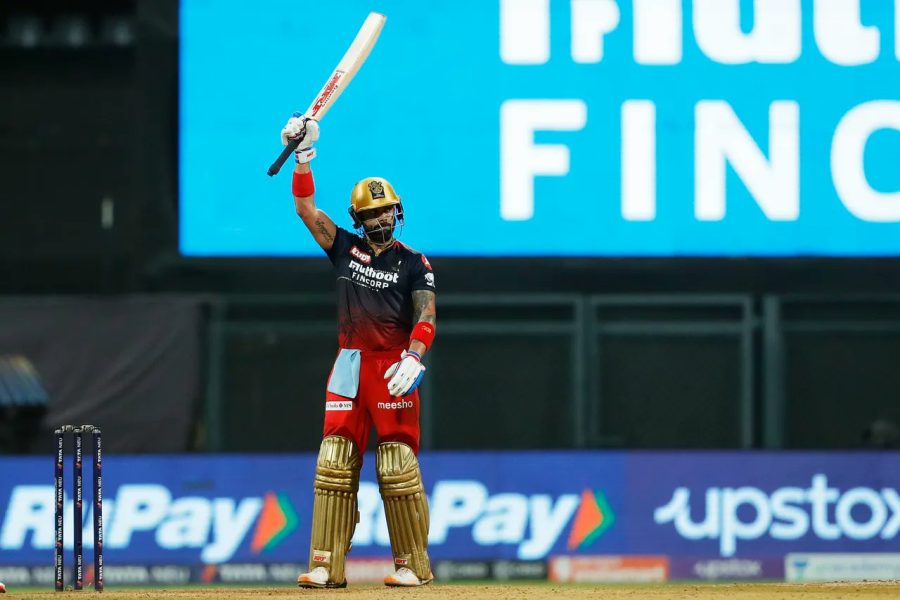
Virat Kohli married Bollywood actress Anushka Sharma on December 11, 2017, in a private ceremony in Tuscany, Italy. The couple has two children: a daughter, Vamika, born on January 11, 2021, and a son, Akaay, born on February 15, 2024.
Following the birth of their second child, reports in late 2024 and throughout 2025 indicated the family relocated to London, United Kingdom. In July 2025, former England cricketer Jonathan Trott suggested Kohli had taken up residence in St. John's Wood, while other media reports placed the family in Notting Hill.
This move coincided with Kohli's withdrawal from public glare, as he sought a more private life for his children away from the intense media scrutiny in India.
Kohli adopted a vegetarian diet in 2018, citing a cervical spine problem and high uric acid levels as the primary medical reasons for the shift. He has since clarified that his diet is 90% plant-based, a change he credits with improving his recovery time and in total fitness.
Philanthropy and Social Initiatives
Kohli's philanthropic work is primarily channeled through the Virat Kohli Foundation (VKF), established in 2013, and the joint initiative SeVVA, launched in March 2023. SeVVA merged the operations of the VKF and the Anushka Sharma Foundation to create a unified platform for their charitable activities.
| Initiative Name | Launch Year | Primary Focus | Key Beneficiaries / Outcomes |
|---|---|---|---|
| Athlete Development Programme (ADP) | 2017 | Sports Scholarships | Supported athletes including Sumit Nagal (Tennis), Aadil Bedi (Golf), and Swastika Ghosh (Table Tennis). |
| Animal Welfare Project | 2021 | Veterinary Care | Opened two shelters in Malad and Boisar, Mumbai, in collaboration with Vivaldis Animal Health and Awaaz. |
| SeVVA | 2023 | Unified Philanthropy | Merged VKF and Anushka Sharma Foundation to simplify support for scholarships, animal rights, and social welfare. |
The Athlete Development Programme (ADP) has been a of his charity work, providing financial support, training, and nutrition to aspiring athletes. Notable beneficiaries include tennis player Sumit Nagal, who received support during a serious financial crunch in 2017.
In the sector of animal welfare, Kohli inaugurated a trauma and rehabilitation centre for stray animals in Malad, Mumbai, in September 2021. The facility employs 10 experts to treat injured animals, reflecting the couple's long-standing commitment to animal rights.
During the COVID-19 pandemic, Kohli and Sharma contributed significantly to relief funds and launched a fundraiser that collected over ₹11 crore for pandemic relief work in India.
Global Cricketing Honours and ICC Dominance
Between 2015 and 2025, Virat Kohli consolidated his status as one of cricket's most decorated athletes, securing multiple top-tier accolades from the International Cricket Council (ICC). His dominance during the 2010s culminated in the prestigious Sir Garfield Sobers Award for ICC Male Cricketer of the Decade (2011, 2020).
The ICC recognized his prolific output across formats, noting that he scored 20, 396 runs during the ten-year period, the highest by any batter globally. Alongside the in total honour, Kohli also received the ICC Men's ODI Cricketer of the Decade award, cementing his reputation as the format's premier anchor.
In annual assessments, Kohli achieved a historic sweep in 2018. He became the player to win the Sir Garfield Sobers Trophy (Cricketer of the Year), ICC Test Player of the Year, and ICC ODI Player of the Year in a single calendar year.
This followed a stellar 2017 campaign where he also claimed the Sir Garfield Sobers Trophy and the ODI Player of the Year award. His 2018 performance included 1, 322 runs in 13 Tests at an average of 55. 08, and 1, 202 runs in 14 ODIs at an average of 133. 55.
Kohli's ability to perform in major tournaments earned him the Player of the Tournament title at the ICC Men's T20 World Cup in 2016, where he scored 273 runs with a average of 136. 50. He repeated this feat in the 50-over format seven years later.
At the 2023 ICC Men's Cricket World Cup, Kohli amassed a record-breaking 765 runs in 11 innings, surpassing Sachin Tendulkar's single-edition record of 673 runs set in 2003. His campaign included three centuries and six half-centuries, earning him the Player of the Tournament accolade even with India's loss in the final.
Following this resurgence, the ICC named him the ODI Player of the Year for 2023, marking his fourth receipt of the award (2012, 2017, 2018, 2023).
National Awards and Civic Recognition
The Government of India formally recognized Kohli's contributions to sports with two of the country's highest civilian and sporting honours during this period. In 2017, President Pranab Mukherjee conferred the Padma Shri, India's fourth-highest civilian award, upon him at a ceremony in Rashtrapati Bhavan.
The award acknowledged his role in elevating Indian cricket and his captaincy which led the team to the number one ranking in Test cricket.
On September 25, 2018, Kohli received the Rajiv Gandhi Khel Ratna ( Major Dhyan Chand Khel Ratna), India's highest sporting honour. The Ministry of Youth Affairs and Sports selected him for the award following a recommendation by the selection committee.
He received the honour from President Ram Nath Kovind, becoming the third cricketer after Sachin Tendulkar (1997) and MS Dhoni (2007) to hold the distinction. The citation highlighted his consistent performance and leadership, specifically noting his batting average and century count which outpaced contemporaries.
In a specific tribute to his local roots, the Delhi and District Cricket Association (DDCA) renamed a stand at the Arun Jaitley Stadium (formerly Feroz Shah Kotla) in his honour. The unveiling took place on September 12, 2019, with the entire Indian national team in attendance. The "Virat Kohli Pavilion" recognizes his journey from a West Delhi junior cricketer to the national captain.
Wisden and Media Accolades
Wisden Cricketers' Almanack, frequently regarded as the "Bible of Cricket," named Kohli the Leading Cricketer in the World for three consecutive years: 2016, 2017, and 2018. This streak validated his all-format adaptability. In its 2019 edition, Wisden noted that Kohli had "operated under daily pressure" unlike any other player since Tendulkar.
He was also named one of the five Wisden Cricketers of the Decade in December 2019, alongside Steve Smith, Dale Steyn, AB de Villiers, and Ellyse Perry.
Time magazine included Kohli in its list of the 100 Most Influential People in 2018. The profile, written by Sachin Tendulkar, emphasized Kohli's hunger for runs and his intensity on the field. In 2019, he received the ICC Spirit of Cricket Award for a specific incident during the World Cup match against Australia at The Oval.
Kohli gestured to the crowd to applaud Steve Smith rather than boo him, a moment the ICC as a significant display of sportsmanship.
League Achievements and Recent Honours
In the Indian Premier League (IPL), Kohli secured the Orange Cap twice. His 2016 season remains a statistical outlier, where he scored 973 runs in 16 matches, including four centuries. He claimed the award again in the 2024 season, scoring 741 runs in 15 matches for Royal Challengers Bengaluru, demonstrating his longevity in the T20 format.
Kohli capped his T20 International career with a defining performance at the 2024 ICC Men's T20 World Cup. In the final against South Africa on June 29, 2024, he scored 76 runs off 59 balls to anchor India's innings. India won the match by 7 runs, and Kohli was named Player of the Match.
He announced his retirement from the T20I format during the post-match presentation, concluding his tenure with a world title and a final individual award.
| Year | Award | Organization/Body | Key Statistic/Reason |
|---|---|---|---|
| 2016 | Player of the Tournament | ICC (T20 World Cup) | 273 Runs, 136. 50 Avg |
| 2016 | Leading Cricketer in the World | Wisden | 1, 215 Test Runs, 2, 595 Total Runs |
| 2017 | Padma Shri | Government of India | Contribution to Sports |
| 2017 | Sir Garfield Sobers Trophy | ICC | 2, 818 International Runs |
| 2017 | ODI Player of the Year | ICC | 6 Centuries, 76. 84 Avg |
| 2018 | Rajiv Gandhi Khel Ratna | Government of India | Highest Sporting Honour |
| 2018 | Sir Garfield Sobers Trophy | ICC | 2, 735 International Runs |
| 2018 | Test Player of the Year | ICC | 1, 322 Runs, 55. 08 Avg |
| 2018 | ODI Player of the Year | ICC | 1, 202 Runs, 133. 55 Avg |
| 2019 | Spirit of Cricket Award | ICC | Support for Steve Smith |
| 2020 | Cricketer of the Decade | ICC | 20, 396 Runs (2011-2020) |
| 2023 | Player of the Tournament | ICC (ODI World Cup) | 765 Runs (World Record) |
| 2023 | ODI Player of the Year | ICC | 1, 377 Runs in Calendar Year |
| 2024 | Orange Cap | BCCI (IPL) | 741 Runs |
| 2024 | Player of the Match (Final) | ICC (T20 World Cup) | 76 Runs off 59 Balls |
Arts Funding Cuts: The Impact on Broadways And Local Theaters
The regional theater sector is facing significant financial challenges, with 61% of U.S. theaters starting the fiscal year with negative assets. The primary cause of this crisis is the expiration of…
Read Full ReportWhat do we know about Virat Kohli?
Virat Kohli Roots and Family Virat Kohli was born on November 5, 1988, into a Punjabi Hindu family in Delhi. His father, Prem Kohli, worked as a criminal lawyer, while his mother, Saroj Kohli, managed the household.
What do we know about the Roots and Family of Virat Kohli?
Virat Kohli was born on November 5, 1988, into a Punjabi Hindu family in Delhi. His father, Prem Kohli, worked as a criminal lawyer, while his mother, Saroj Kohli, managed the household.
What do we know about the The Turning Point: December 18, 2006 of Virat Kohli?
The most defining moment of Kohli's early life occurred on December 18, 2006. Prem Kohli died of a stroke at 3: 00 AM.
What do we know about the Education and the 2023 Viral Marksheet of Virat Kohli?
Kohli attended Vishal Bharti Public School in Paschim Vihar for his primary education before transferring to Saviour Convent for his secondary years. While his cricketing prowess is well-documented, his academic records remained private until 2023.
What do we know about the Class 10 CBSE Performance (2004) of Virat Kohli?
Virat Kohli Roots and Family Virat Kohli was born on November 5, 1988, into a Punjabi Hindu family in Delhi. His father, Prem Kohli, worked as a criminal lawyer, while his mother, Saroj Kohli, managed the household.
What do we know about the Cricketing Initiation and West Delhi Roots of Virat Kohli?
Kohli's formal training began in 1998 with the establishment of the West Delhi Cricket Academy (WDCA). His father took him to the academy after neighbors noted his precision against street bowlers.
The State of Press Freedom in 2025 and 2026: An Analytical Investigation
February 19, 2026 • Investigations, All, China, Discrimination, Disinformation, Editorials, Espionage, Europe, Featured, Governance, Headlines, Hong Kong, India, Inequality, Leaks, Middle East, New Zealand, Originals, Power, Reforms, Reports, Surveillance, Tibet, Trackers, UK, Ukraine, USA, World
Global press freedom faces unprecedented challenges, with a significant decline in safety and economic security for journalists. Journalist killings, state-sponsored censorship through imprisonments, and economic…
The Mekong River Water Rights Dispute
Control over the Mekong River's hydrology has shifted to China, impacting downstream nations and leading to a water rights dispute. The ecological consequences of China's…
Zoning for Profit: How Local Officials Map Out Economic Exclusion
January 26, 2026 • Places, All, Corruption, Editorials
Zoning laws in the United States have evolved into tools of economic engineering, creating invisible barriers that perpetuate segregation and wealth disparities. Exclusionary zoning practices,…
October 8, 2025 • All
Chile's economy heavily relies on copper and mineral wealth, leading to the influence of mining magnates in campaign financing. Investigative report reveals legal and illicit…
Global digital media landscape shifting rapidly, impacting news consumption habits Emergence of social media, podcasts, and online influencers as primary news sources The Reuters Institute…
Influencer Driven Media Campaigns in 2025: The Power of Authentic Voices
June 7, 2025 • Media Industry Reports: Trends, PR Performance & Analytics
Influencer-driven media campaigns have evolved into a mainstream marketing strategy, projected to reach $32.5 billion globally by 2025. Brands are increasingly partnering with influencers to…