
Vladimir Putin
Early Life and Family Origins
Vladimir Vladimirovich Putin was born on October 7, 1952, in Leningrad ( Saint Petersburg), Soviet Union. He was the youngest of three children born to Vladimir Spiridonovich Putin (1911, 1999) and Maria Ivanovna Putina (née Shelomova; 1911, 1998).
His birth was preceded by the deaths of two brothers: Albert, who died in infancy in the 1930s, and Viktor, who died of diphtheria and starvation in 1942 during the Siege of Leningrad.
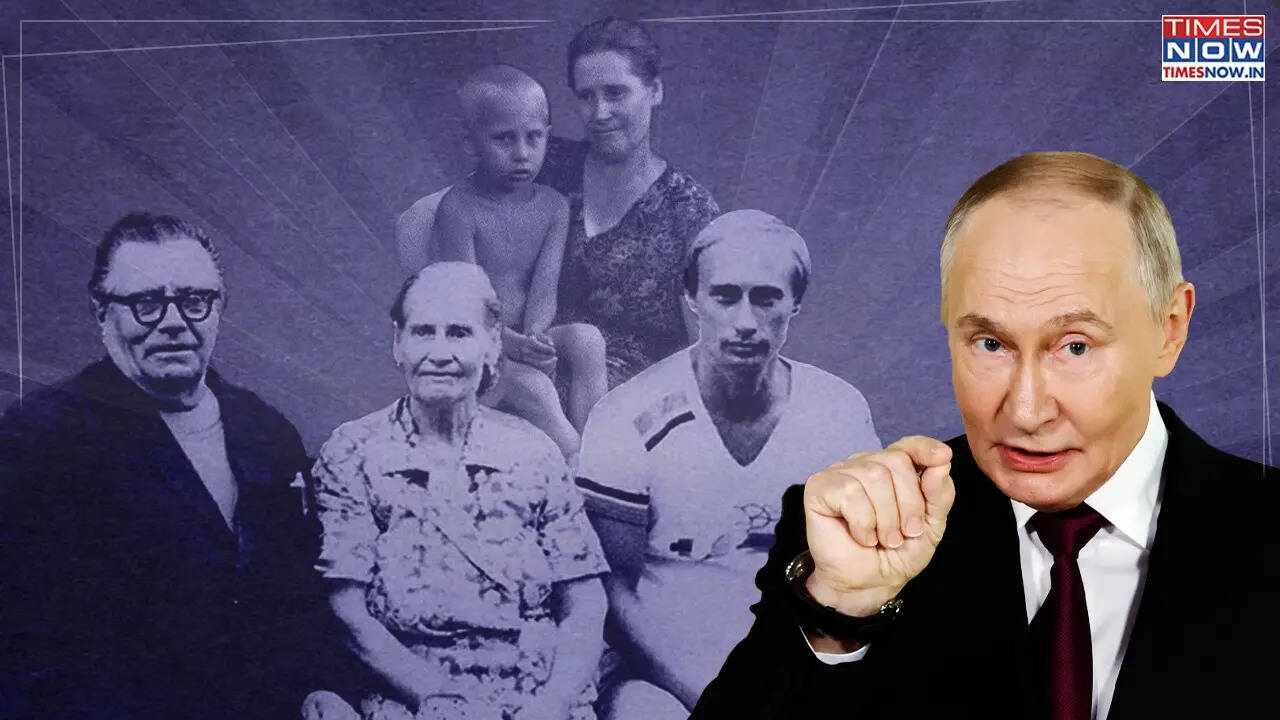
Verified archival records confirm that his father served in the destruction battalion of the NKVD during World War II and was severely wounded in 1942, while his mother survived the blockade near starvation.
The family resided in a communal apartment (kommunalka) at 12 Baskov Lane (Baskov Pereulok) in Leningrad. Recent biographical investigations describe the living conditions as substandard, with no hot water and a rat infestation in the shared hallway.
In 2012, Putin confirmed that his mother and a neighbor secretly baptized him at the Transfiguration Cathedral in Leningrad shortly after his birth, concealing the religious rite from his father, a committed member of the Communist Party and factory foreman.
Education
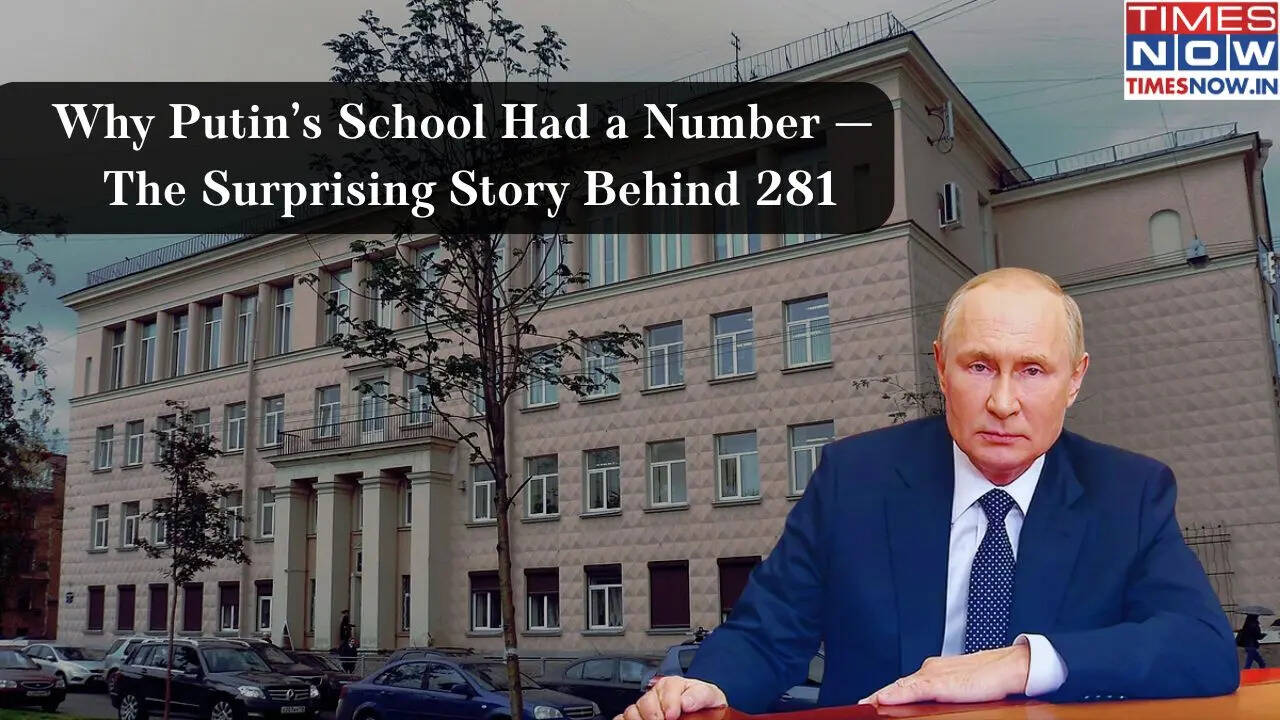
Putin began his education on September 1, 1960, at School No. 193 on Baskov Lane, located near his home. He completed eight grades there before transferring in 1968 to High School No. 281, a magnet school specializing in chemistry and technology under the aegis of the Saint Petersburg State Institute of Technology.
even with the school's science focus, records indicate Putin gravitated toward liberal arts and languages. He completed his secondary education in 1970.
Following high school, he was admitted to the Law Department of Leningrad State University (LSU), where he studied from 1970 to 1975. During his time at LSU, he joined the Communist Party of the Soviet Union (CPSU) and remained a member until the party was banned in 1991. His 1975 undergraduate thesis was titled "The Most Favored Nation Trading Principle in International Law."
Academic Performance (School No. 281)
Verified school records from his time at School No. 281 reveal a mix of grades, with a distinct aptitude for humanities and German language over the exact sciences.
| Subject | Grade (5-point ) |
|---|---|
| German Language | 5 (Excellent) |
| World History | 5 (Excellent) |
| Biology | 5 (Excellent) |
| Russian Language | 4 (Good) |
| Literature | 4 (Good) |
| Algebra | 3 (Satisfactory) |
| Geometry | 3 (Satisfactory) |
| Physics | 3 (Satisfactory) |
| Chemistry | 3 (Satisfactory) |
Post-Graduate Research and Controversy
In 1997, while serving in the Saint Petersburg city administration, Putin defended a Candidate of Economic Sciences dissertation at the Saint Petersburg Mining Institute.
The thesis was titled "The Strategic Planning of Regional Resources Under the Formation of Market Relations." In 2006, researchers at the Brookings Institution identified that significant portions of the thesis were plagiarized.
Analysis showed that 16 pages of the theoretical chapter were copied verbatim or with minor modifications from the Russian translation of the 1978 textbook Strategic Planning and Policy by University of Pittsburgh professors William King and David Cleland. Six diagrams and tables were also lifted directly from the source without attribution.
Martial Arts and Athletics
At age 12, Putin began practicing sambo and judo, transitioning from early street fighting to disciplined martial arts. He trained under Anatoly Rakhlin, who played a significant mentorship role in his youth. By 1973, he achieved the rank of Master of Sport in sambo, and in 1975, he earned the same title in judo.
He became the senior champion of Leningrad in both disciplines during his university years. Verified sports records confirm he placed third in the national junior championships.
KGB Recruitment
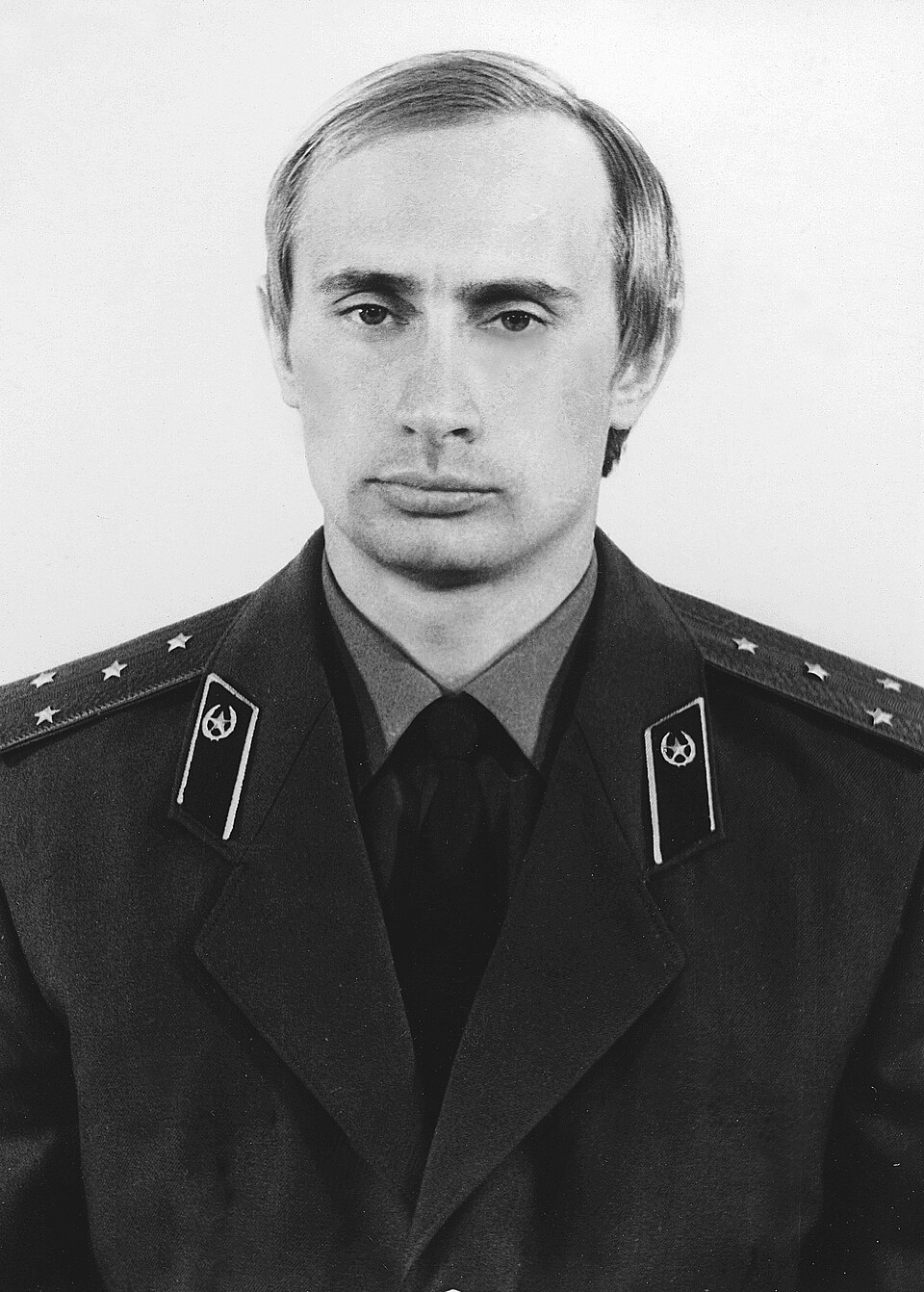
Putin's interest in intelligence work began in his teenage years. He reportedly visited the KGB Directorate reception office in Leningrad to inquire about joining, where he was advised to obtain a law degree. Immediately upon graduating from Leningrad State University in 1975, he was recruited by the KGB.
He underwent initial training at the 401st KGB School in Okhta, Leningrad, where he was evaluated as "morally stable" and a "conscientious" officer, though not initially marked as a high-flier. He was assigned to the Second Chief Directorate (counter-intelligence) before eventually transferring to the Chief Directorate (foreign intelligence).
KGB Career (1975, 1991)
Vladimir Putin joined the KGB in 1975 immediately upon graduating from Leningrad State University. His initial training took place at the 401st KGB school in Okhta, Leningrad, where he studied surveillance and interrogation tactics.
From 1975 to 1985, he served in the Second Chief Directorate (counter-intelligence) and later the Chief Directorate, monitoring foreign consular officials and dissidents in Leningrad. Declassified assessments released in 2019 describe him during this period as "morally stable" and a "conscientious employee," though not a high-flier.
In 1985, the KGB assigned Putin to Dresden, East Germany, under the cover identity of a translator and director of the USSR-DDR Friendship House. He arrived with the rank of Major and was promoted to Lieutenant Colonel by the end of his tour in 1990.
For decades, this period was characterized by official biographies as a mundane posting in a diplomatic backwater. Recent archival discoveries and investigations between 2015 and 2025 have challenged this narrative, suggesting his work was far more operational and consequential than previously admitted.
Dresden Operations and Stasi Connections
In December 2018, researchers at the Stasi Records Agency (BStU) in Germany discovered a Stasi identity card issued to "Maj. Vladimir Putin." The document, issued on December 31, 1985, and validated quarterly through late 1989, granted him unhindered access to Stasi facilities.
This physical evidence contradicts claims that he operated independently of the East German secret police. The card confirms he functioned as a direct liaison officer, capable of recruiting assets and coordinating operations without revealing his KGB affiliation to external observers.
Investigative findings published in 2020 by Catherine Belton in Putin's People indicate that Dresden served as a hub for "Operation Luch" (Beam). This operation reportedly involved the theft of Western technology and the recruitment of Stasi officers who could serve Soviet interests after the anticipated collapse of East Germany.
Intelligence experts Fiona Hill and Clifford Gaddy also examined this period, noting that Putin's work likely included the handling of "illegals", deep-cover agents operating in the West without diplomatic protection.
Further allegations link Putin's Dresden office to the support of West German terrorist groups. Former members of the Red Army Faction (RAF) have claimed in interviews that they met with Putin in Dresden to discuss logistics and obtain weapons. These meetings purportedly supported the KGB's strategy to sow chaos in West Germany.
While the Kremlin denies these specific charges, the proximity of the Dresden KGB villa to known RAF transit routes remains a matter of historical record.
Collapse of the GDR and Resignation
On December 5, 1989, weeks after the fall of the Berlin Wall, crowds of demonstrators surrounded the KGB villa at Angelikastrasse 4. Putin famously called the local Soviet military command for protection was told, "Moscow is silent." He subsequently burned thousands of files in the villa's furnace to prevent them from falling into the hands of the protesters. He returned to Leningrad in January 1990.
Back in Russia, Putin maintained his KGB status while working as an assistant to the rector of Leningrad State University, a position he used to monitor the student body and recruit foreigners. He formally resigned from the security services on August 20, 1991, during the hardline coup attempt against Mikhail Gorbachev. His resignation was accepted with the rank of Lieutenant Colonel.
| Activity Domain | Official Kremlin Narrative | Verified & Investigative Findings |
|---|---|---|
| Primary Role | Administrator of the USSR-DDR Friendship House; low-level consular work. | KGB Liaison Officer with full Stasi access (ID card found 2018); handler of illegal agents. |
| Operational Scope | Routine surveillance of students and tourists. | Operation Luch: Technology theft and recruitment of Stasi personnel for post-GDR networks. |
| Terrorism Links | None admitted. | Alleged logistical support for Red Army Faction (RAF) members; meetings to discuss in West Germany. |
| End of Service | Voluntary return to Leningrad. | Forced evacuation after burning sensitive files; "Moscow is silent" incident confirmed by multiple witnesses. |
Early Political Career (1990, 1999)
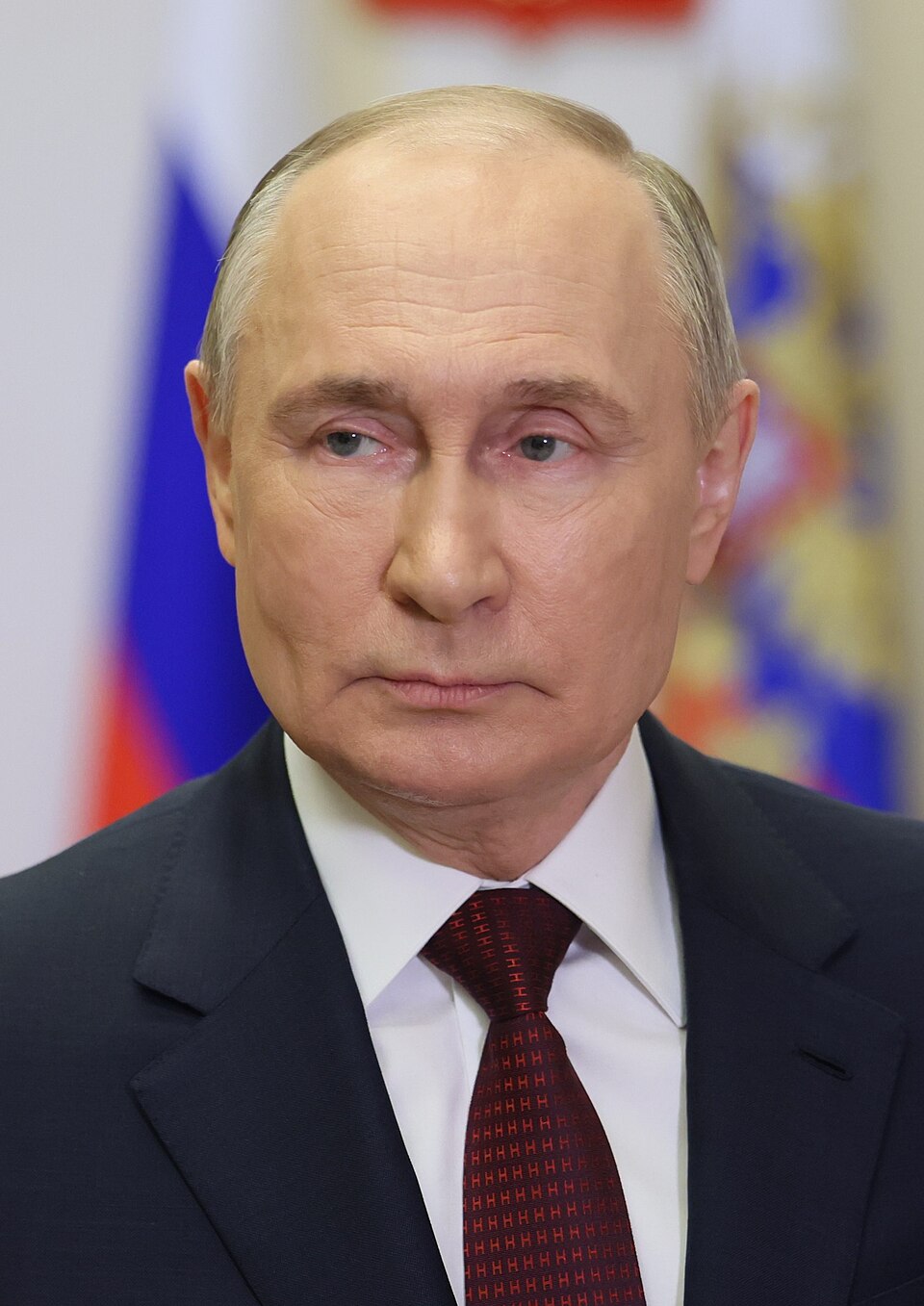
Vladimir Putin returned to Leningrad from Dresden in 1990 and immediately entered the city's administration. He served as an advisor to Anatoly Sobchak, his former law professor and the democratically elected mayor of St. Petersburg.
In June 1991, Putin assumed leadership of the Committee for External Relations, a role that placed him in charge of international relations and foreign investments. His tenure faced immediate scrutiny. In 1992, a legislative commission led by Marina Salye investigated a scheme involving the export of raw materials in exchange for food supplies.
The investigation concluded that Putin signed contracts worth nearly $100 million for the export of timber, oil, and rare metals. The promised food never arrived in St. Petersburg, which faced severe absence at the time. The Salye commission recommended Putin's dismissal, citing the absence of legal authority for the licenses he issued.
Mayor Sobchak ignored the recommendation and protected his deputy, who remained in office.
By 1994, Putin rose to the position of Deputy Mayor of St. Petersburg. He managed the city's day-to-day operations while Sobchak focused on ceremonial duties. During this period, Putin also led the local branch of the "Our Home , Russia" party. His time in St. Petersburg ended in 1996 after Sobchak lost his reelection bid.
Putin rejected an offer to work for the new mayor, Vladimir Yakovlev, and instead relocated to Moscow, marking the start of his rapid ascent within the federal government.
Rise in Moscow
In August 1996, Putin joined the presidential staff as deputy to Pavel Borodin, the head of the Presidential Property Management Department. This position gave him oversight of the Kremlin's vast property assets and transfer of former Soviet state assets.
In March 1997, President Boris Yeltsin appointed him Deputy Chief of Staff and head of the Main Control Directorate. In this capacity, he monitored the implementation of presidential decrees and federal funds.
During this period, Putin defended his dissertation, titled "Strategic Planning of the Reproduction of the Mineral Resource Base of a Region under Conditions of the Formation of Market Relations," at the St. Petersburg Mining Institute in 1997.
Verified investigations by the Brookings Institution in 2006 and subsequent analyses confirmed that significant portions of the text were plagiarized. Researchers identified that at least 16 pages were copied verbatim from a 1978 textbook by University of Pittsburgh professors William King and David Cleland, titled Strategic Planning and Policy.
Six diagrams and tables were also lifted directly from the source without attribution.
Yeltsin appointed Putin as the Director of the Federal Security Service (FSB) on July 25, 1998. This appointment placed a relatively unknown bureaucrat in charge of the primary successor agency to the KGB. His time as FSB Director involved a reorganization of the agency and the dismissal of Yeltsin's political opponents.
By March 1999, he also became the Secretary of the Security Council, consolidating his control over the security apparatus.
Premiership and Succession
On August 9, 1999, Boris Yeltsin dismissed Prime Minister Sergei Stepashin and appointed Putin as his successor. Yeltsin publicly identified Putin as his preferred candidate for the presidential election. The State Duma confirmed his appointment on August 16. At the time of his appointment, Putin held an approval rating of approximately 31 percent.
His public standing shifted dramatically following a series of apartment bombings in Buynaksk, Moscow, and Volgodonsk in September 1999, which killed more than 300 people. Putin attributed the attacks to Chechen separatists and launched the Second Chechen War.
His aggressive military response and famous pledge to "waste them in the outhouse" resonated with the public. By November 1999, his approval rating surged to 80 percent.
| Date | Event | Key Detail |
|---|---|---|
| August 9, 1999 | Appointed Acting Prime Minister | Named by Yeltsin as preferred successor. |
| September 1999 | Apartment Bombings | Triggered Second Chechen War; approval ratings spiked. |
| December 19, 1999 | Duma Elections | Unity Party (pro-Putin) secured strong second place. |
| December 31, 1999 | Acting Presidency | Yeltsin resigned; Putin signed immunity decree. |
On December 31, 1999, Boris Yeltsin unexpectedly resigned during a televised New Year's address. In accordance with the Constitution, Putin became Acting President of the Russian Federation.
His official act was the signing of a decree titled "On Guarantees for the Former President of the Russian Federation and the Members of His Family." This decree granted Yeltsin immunity from criminal and administrative prosecution, protection from search and seizure, and substantial material benefits.
This move secured the safety of the "Family", the inner circle of oligarchs and officials surrounding Yeltsin, and solidified Putin's position ahead of the March 2000 election.
Consolidation of Power and "Power Vertical"
Vladimir Putin officially assumed the presidency on May 7, 2000, after winning the election with 53. 4% of the vote.
His administration immediately initiated a restructuring of the federal government to centralize authority, a strategy termed the "power vertical." In May 2000, he signed a decree dividing Russia's 89 subjects into seven federal districts, each headed by a presidential envoy responsible for ensuring local laws aligned with the federal constitution.
This move diluted the political autonomy of regional governors. Further centralization occurred in August 2000, when legislation altered the composition of the Federation Council, removing governors and regional legislative heads from the upper chamber of parliament and replacing them with appointed representatives.
Control over mass media became a priority early in the term. The independent television network NTV, known for its serious coverage of the Chechen conflict and government corruption, faced intense pressure. In April 2001, Gazprom-Media, a subsidiary of the state-controlled energy giant Gazprom, acquired a controlling stake in NTV during a boardroom coup.
The takeover resulted in the departure of prominent journalists and a shift in the station's editorial policy to align with Kremlin narratives. By the end of 2002, the state had secured dominance over all nationwide television networks.
Second Chechen War and Security Crises
The Second Chechen War, which began in 1999, continued throughout the early 2000s. While major combat operations concluded by April 2000, an insurgency phase for years. The conflict was marked by high-profile terrorist attacks within Russia. In October 2002, Chechen militants seized the Dubrovka Theater in Moscow (Nord-Ost siege), taking over 850 hostages.
The siege ended when Russian special forces pumped a chemical agent into the building and stormed it; official figures state 130 hostages died, mostly from the effects of the gas.
In September 2004, terrorists seized School No. 1 in Beslan, North Ossetia, holding over 1, 100 people hostage. The siege ended in a chaotic storming by security forces that left 334 people dead, including 186 children. In the aftermath of Beslan, Putin announced a major overhaul of the political system, citing the need for unity against terrorism.
He abolished the direct election of regional governors, replacing them with a system where the president nominated candidates for approval by regional legislatures. This change completed the construction of the centralized executive power structure.
The administration faced early criticism during the Kursk submarine disaster in August 2000. The nuclear-powered submarine sank in the Barents Sea after an onboard torpedo explosion, killing all 118 crew members. Putin remained on vacation in Sochi during the initial days of the emergency and the government initially refused foreign assistance.
The delayed response and absence of transparency drew public condemnation, though approval ratings recovered quickly.
Economic Growth and Domestic Policy
Russia experienced significant economic expansion between 2000 and 2008, driven by rising global oil prices and structural reforms. GDP growth averaged approximately 7% annually during this period. In 2001, the government introduced a flat personal income tax rate of 13% to replace the previous progressive.
This reform aimed to bring shadow earnings into the legal economy and resulted in a substantial increase in tax collection compliance. Real disposable income for the population grew considerably, reducing poverty rates and fueling a consumer boom that regime support.
| Year | GDP Growth (%) | Inflation (%) | Avg. Oil Price (Brent, $/bbl) |
|---|---|---|---|
| 2000 | 10. 0 | 20. 2 | 28. 5 |
| 2002 | 4. 7 | 15. 1 | 25. 0 |
| 2004 | 7. 2 | 11. 7 | 38. 3 |
| 2006 | 8. 2 | 9. 0 | 65. 1 |
| 2008 | 5. 2 | 13. 3 | 97. 3 |
The "Yukos Affair" marked a turning point in the relationship between the state and the business elite. In October 2003, Mikhail Khodorkovsky, the head of the Yukos oil company and Russia's wealthiest man, was arrested on charges of fraud and tax evasion. Khodorkovsky had openly funded opposition parties and criticized state corruption.
His arrest was widely interpreted as a signal to oligarchs to refrain from political interference. Yukos was subsequently bankrupted, and its primary production assets were acquired by the state-owned oil company Rosneft. Khodorkovsky remained imprisoned for ten years.
Civil Society and Foreign Policy Shift
Legislative measures increasingly restricted civil society operations. In 2006, a new law on Non-Governmental Organizations (NGOs) introduced reporting requirements and gave authorities broad powers to audit and suspend organizations receiving foreign funding. This legislation complicated the work of human rights groups and international monitors operating within the federation.
Foreign policy underwent a distinct evolution. Following the September 11, 2001 attacks, Putin offered logistical support to the United States for operations in Afghanistan, signaling a desire for closer cooperation.
Relations over the US invasion of Iraq in 2003 and the "Color Revolutions" in Georgia (2003) and Ukraine (2004), which Moscow viewed as Western-backed encroachments on its sphere of influence. In February 2007, Putin delivered a defining speech at the Munich Security Conference.
He strongly criticized the United States for creating a "unipolar" world, expanding NATO eastward, and disregarding international law. This speech formalized Russia's pivot toward a more confrontational stance against Western geopolitical dominance.
2008 Transition
Constitutionally barred from a third consecutive term, Putin endorsed Deputy Prime Minister Dmitry Medvedev as his successor in late 2007. In the March 2008 presidential election, Medvedev won with 70. 3% of the vote. Upon assuming the presidency in May 2008, Medvedev appointed Putin as Prime Minister.
This arrangement, known as the "tandem," allowed Putin to retain significant influence over state affairs while adhering to constitutional term limits.
Second Premiership and "Tandemocracy" (2008, 2012)
On May 8, 2008, one day after Dmitry Medvedev's inauguration as President, the State Duma confirmed Vladimir Putin as Prime Minister with a record vote of 392 to 56.
This arrangement, widely termed "tandemocracy," ostensibly divided power between the two leaders, though diplomatic cables and internal reports from the period suggest Putin retained authority over "power ministries" (defense, interior, and security services).
While Medvedev pursued a rhetorical agenda of "modernization" and technological innovation, Putin focused on the operational management of the economy and the consolidation of state control over strategic sectors.
In November 2008, the Medvedev administration enacted constitutional amendments extending the presidential term from four to six years, a change that would take effect after the 2012 election, laying the legal groundwork for Putin's prolonged return to the Kremlin.
Russo-Georgian War
In August 2008, tensions in the South Caucasus erupted into the five-day Russo-Georgian War. Although Medvedev was the Commander-in-Chief, Putin played a decisive role in the conflict's management.
On August 8, while attending the Beijing Olympics, Putin publicly condemned Georgian actions in South Ossetia and flew to Vladikavkaz to coordinate the military response. Russian forces quickly overwhelmed the Georgian military, advancing within clear distance of Tbilisi before a ceasefire was brokered by French President Nicolas Sarkozy on August 12.
Following the conflict, Russia formally recognized the independence of the breakaway regions of Abkhazia and South Ossetia, a move that drew condemnation from the West resulted in few tangible sanctions. The war signaled Russia's willingness to use military force to maintain influence in its "near abroad" and halted NATO's expansion plans for Georgia.
Economic emergency and "Manual Control"
The global financial emergency of 2008, 2009 hit the Russian economy severely, ending a decade of uninterrupted growth. Oil prices plummeted from a peak of $147 per barrel in July 2008 to under $40 by December, exposing the country's resource dependence. The RTS stock index lost over 70% of its value.
In response, Putin's government deployed substantial foreign currency reserves to stabilize the banking sector and support strategic enterprises. The emergency necessitated a shift to what Putin termed "manual control" of the economy.
A defining moment of this method occurred on June 4, 2009, in the town of Pikalevo, where unpaid workers had blocked a federal highway.
Putin traveled to the site, publicly berated industrial tycoon Oleg Deripaska and other owners for their "greed" and "absence of professionalism," and forced them to sign an agreement restarting the local factory on live television. This incident reinforced Putin's image as the arbiter of disputes between labor and capital.
| Year | GDP Growth (%) | Inflation (%) | Unemployment (%) | Oil Price (Brent Avg $) |
|---|---|---|---|---|
| 2008 | 5. 2% | 13. 3% | 6. 2% | $97. 26 |
| 2009 | -7. 8% | 11. 7% | 8. 3% | $61. 67 |
| 2010 | 4. 5% | 6. 9% | 7. 3% | $79. 50 |
| 2011 | 4. 3% | 8. 4% | 6. 5% | $111. 26 |
| 2012 | 4. 0% | 5. 1% | 5. 5% | $111. 67 |
Domestic Policy and Dissent
The tandem period saw contradictory trends in domestic policy. While Medvedev oversaw the renaming of the Militsiya to "Police" in March 2011 as part of a reform effort, the judicial system continued to target political opponents.
In December 2010, a Moscow court convicted Mikhail Khodorkovsky and Platon Lebedev of embezzlement in a second trial widely criticized by international human rights organizations as politically motivated. The verdict extended their imprisonment until 2014 (later extended to 2017).
During the catastrophic wildfires of summer 2010, which destroyed thousands of homes and blanketed Moscow in smog, Putin took a hands-on role, installing webcams in affected villages to monitor reconstruction and famously co-piloting a firefighting aircraft, a stunt that drew both media attention and criticism for its theatricality.
Foreign Policy: The "Reset" and WTO
Relations with the United States underwent a "reset" initiated by the Obama administration. This thaw led to the signing of the New START nuclear arms reduction treaty in Prague on April 8, 2010, by Presidents Obama and Medvedev. The treaty limited deployed strategic nuclear warheads to 1, 550 for each side.
also, after 18 years of negotiations, Russia completed its accession to the World Trade Organization (WTO), officially becoming a member on August 22, 2012. These moves suggested a degree of integration with global institutions, even as security tensions.
The "Castling" and 2011, 2012 Protests
The political arrangement of the tandem ended on September 24, 2011, at the United Russia party congress. In a pre-planned move known as the "castling" (rokirovka), Medvedev proposed Putin as the party's candidate for the 2012 presidential election, while Putin announced that Medvedev would become Prime Minister.
The announcement, paired with allegations of widespread fraud during the December 2011 State Duma elections, triggered the largest anti-government protests of the Putin era. Tens of thousands of demonstrators gathered at Bolotnaya Square and Sakharov Avenue in Moscow, demanding fair elections and political reform.
The protests continued into 2012, culminating in the "March of Millions" on May 6, 2012, which ended in clashes with police and over 400 arrests. even with the unrest, Putin won the presidential election on March 4, 2012, with official results showing 63. 6% of the vote, securing a return to the presidency for a new six-year term.
Third and Fourth Presidencies (2012, 2024)
Following his return to the presidency in 2012, Putin moved to consolidate control over Russia's political system, media, and civil society. This period saw the enactment of increasingly restrictive legislation, a constitutional overhaul that reset his term limits, and a shift toward a wartime economy following the full- invasion of Ukraine in 2022.
In the March 2018 presidential election, Putin secured a fourth term with 76. 69% of the vote, according to the Central Election Commission (CEC). Voter turnout was reported at 67. 54%.
International observers noted the absence of genuine competition, as primary opposition leader Alexei Navalny was barred from running due to a criminal conviction widely viewed as politically motivated. Shortly after his inauguration, the government announced a pension reform plan to raise the retirement age from 55 to 60 for women and from 60 to 65 for men.
The measure provoked rare, widespread street protests and caused Putin's approval ratings to drop from approximately 80% to 63, 67% in independent polls.
In January 2020, Putin initiated a major constitutional shake-up. He replaced Prime Minister Dmitry Medvedev with Mikhail Mishustin, the former head of the Federal Tax Service. The subsequent constitutional amendments, approved in a July 2020 plebiscite with officially reported 77. 92% support, included a "zeroing" provision.
This clause reset Putin's previous presidential terms, legally allowing him to seek two additional six-year terms and chance remain in power until 2036. The amendments also enshrined conservative social values and asserted the primacy of Russian law over international decisions.
The Kremlin intensified its crackdown on dissent during this period. In August 2020, opposition figure Alexei Navalny was poisoned with a Novichok nerve agent while traveling in Siberia. After receiving treatment in Germany, Navalny returned to Moscow in January 2021 and was immediately arrested.
His imprisonment triggered nationwide protests, which were met with mass detentions. Authorities subsequently Navalny's Anti-Corruption Foundation as an "extremist organization," his political network.
Navalny died in an Arctic penal colony on February 16, 2024; officials attributed his death to natural causes, while his family and Western leaders accused the Kremlin of murder.
On February 24, 2022, Putin ordered a "special military operation" in Ukraine, escalating the conflict into a full- invasion. The war fundamentally altered Russia's domestic. In March 2022, Putin signed laws criminalizing the dissemination of "fake news" about the Russian military, with penalties of up to 15 years in prison.
These measures forced the closure or exile of remaining independent media outlets, including Novaya Gazeta and TV Rain. The scope of "foreign agent" laws was expanded between 2022 and 2024 to include any individual or entity under "foreign influence," regardless of funding sources.
The war effort required significant mobilization of resources and personnel. On September 21, 2022, following setbacks in the Kharkiv region, Putin declared a "partial mobilization," calling up officially 300, 000 reservists. The decree sparked an exodus of military-age men to neighboring countries. The economy, hit by Western sanctions, contracted by 2.
1% in 2022. Yet, it rebounded in 2023 with 3. 6% growth, driven by heavy military spending and labor absence that pushed up wages. World Bank data estimates 2024 GDP growth at approximately 3. 2% to 4. 1%.
Internal stability faced a severe test on June 23, 24, 2023, when Yevgeny Prigozhin, leader of the Wagner Group private military company, launched an armed mutiny. Prigozhin's forces seized military headquarters in Rostov-on-Don and marched toward Moscow, demanding the removal of military leadership.
The rebellion ended abruptly after a deal brokered by Belarusian President Alexander Lukashenko. Two months later, Prigozhin died in a suspicious plane crash north of Moscow.
In the March 2024 presidential election, Putin claimed a record victory with 87. 28% of the vote. The election absence any anti-war candidates, as the CEC disqualified hopefuls Boris Nadezhdin and Yekaterina Duntsova. The result secured Putin a fifth term, extending his rule through at least 2030.
| Year | Event / Metric | Details |
|---|---|---|
| 2018 | Presidential Election | Putin wins 76. 69%; Pension reform protests follow. |
| 2020 | Constitutional Reform | Terms reset; Mishustin appointed PM. |
| 2022 | Invasion of Ukraine | "Partial mobilization" of 300, 000; GDP contracts 2. 1%. |
| 2023 | Wagner Mutiny | Prigozhin leads failed rebellion; GDP grows 3. 6%. |
| 2024 | Presidential Election | Putin wins 87. 28%; Navalny dies in prison. |
Fifth presidency (2024, present)
Vladimir Putin secured a fifth term as President of Russia in the March 2024 election, claiming 87. 28% of the vote with a reported turnout of 77. 44%. The Central Election Commission declared these figures the highest in post-Soviet Russian history.
Independent monitors and Western governments criticized the process, citing the absence of genuine opposition candidates and reports of coercion. The "Noon Against Putin" protest, organized by the opposition, saw lines form at polling stations in major cities and abroad at 12: 00 p. m. on the final day of voting.
Putin was inaugurated on May 7, 2024, extending his tenure chance until 2030.
Immediately following his inauguration, Putin executed a significant reshuffle of the defense leadership, signaling a shift toward a long-term war economy. On May 12, 2024, he replaced Sergei Shoigu, who had served as Minister of Defense for 12 years, with Andrei Belousov, a civilian economist and former Deputy Prime Minister.
Shoigu was reassigned as Secretary of the Security Council. The appointment of Belousov was widely interpreted as a move to optimize military spending, curb corruption within the Ministry of Defense, and deeper integrate the defense industrial base with the civilian economy.
Mikhail Mishustin was reappointed as Prime Minister, maintaining continuity in the broader government administration.
Domestic policy in the fifth term has been defined by a detailed overhaul of the tax system and a continued crackdown on dissent. In July 2024, Putin signed a law introducing a progressive personal income tax and increasing the corporate tax rate, marking the end of the flat-tax era that had been a hallmark of his early presidency.
The reforms, January 1, 2025, were designed to generate additional revenue to fund the escalating costs of the war in Ukraine and social programs. The new tax brackets are structured as follows.
| Annual Income Range (RUB) | Tax Rate |
|---|---|
| Up to 2. 4 million | 13% |
| 2. 4 million , 5 million | 15% |
| 5 million , 20 million | 18% |
| 20 million , 50 million | 20% |
| Over 50 million | 22% |
The corporate profit tax rate was simultaneously raised from 20% to 25%. Economic indicators for 2024 showed a Gross Domestic Product (GDP) growth of approximately 3. 6%, driven largely by military manufacturing and government spending. yet, the economy faced severe overheating, with inflation rising to nearly 9% by late 2024.
To combat this, the Central Bank of Russia raised its key interest rate to 21% in October 2024. The 2025 federal budget allocated a record 13. 5 trillion rubles (approximately 6. 3% of GDP) to national defense, exceeding combined spending on healthcare, education, and social policy.
On the battlefield, Russian forces launched a new offensive in the Kharkiv region in May 2024, seizing several border villages failing to capture the city of Kharkiv. In August 2024, Ukrainian forces conducted a surprise incursion into Russia's Kursk Oblast, occupying territory and prompting a declaration of a federal emergency.
Putin characterized the incursion as a "large- provocation." In November 2024, following the authorization by Western nations for Ukraine to use long-range missiles against inside Russia, Putin ordered a strike on a defense facility in Dnipro using a new intermediate-range ballistic missile system named "Oreshnik." In a televised address, he described the weapon as a hypersonic system capable of evading existing missile defense shields.
Foreign policy during this period focused on strengthening ties with non-Western partners to counter international isolation. In June 2024, Putin visited North Korea for the time in 24 years, signing a "detailed Strategic Partnership" with Kim Jong Un.
The treaty included a mutual defense clause, pledging immediate military assistance if either country faced armed aggression. He subsequently visited Vietnam to reaffirm strategic cooperation. In October 2024, Putin hosted the BRICS summit in Kazan, the since the bloc's expansion to include Egypt, Ethiopia, Iran, and the United Arab Emirates.
The summit produced the Kazan Declaration, which emphasized the creation of a multipolar world order and alternative financial method to bypass Western sanctions.
In response to perceived escalation by NATO states, Putin approved updates to Russia's nuclear doctrine in late 2024. The revised "Basic Principles of State Policy on Nuclear Deterrence" lowered the threshold for nuclear use, stating that aggression against Russia by a non-nuclear state, if supported by a nuclear power, would be considered a joint attack.
The doctrine also expanded the list of threats that could trigger a nuclear response to include massive aerial attacks involving conventional missiles or drones.
Domestic Policy (2015, 2025)
Between 2015 and 2025, Vladimir Putin's domestic policy shifted from managed authoritarianism to a centralized totalitarian structure, characterized by the systematic elimination of political opposition, the militarization of the economy, and the legislative entrenchment of conservative ideology. This period saw the rewriting of the Russian Constitution to allow Putin to remain in power chance until 2036, alongside a crackdown on civil society that intensified sharply following the 2022 full- invasion of Ukraine.
Constitutional Reform and Consolidation of Power
The most significant legal restructuring of Putin's tenure occurred in 2020. In January, Putin proposed a series of amendments to the 1993 Constitution. While initially framed as a redistribution of power to the State Duma, the process culminated in a proposal by MP Valentina Tereshkova to "nullify" Putin's previous presidential terms.
This amendment allowed him to bypass the two-consecutive-term limit and run for two additional six-year terms. The changes were approved in a nationwide vote on July 1, 2020, with official results showing 77. 92% support. Independent election observers and critics, including the monitoring group Golos, reported widespread irregularities.
The 2020 amendments also conservative social norms into federal law. New clauses defined marriage exclusively as a "union between a man and a woman" and enshrined "faith in God" as a heritage of the Russian state. These changes provided the constitutional basis for subsequent legislation targeting minority groups and aligning state ideology with the Russian Orthodox Church.
Pension Reform and Social Unrest
In June 2018, the Russian government announced a plan to raise the retirement age, a measure Putin had previously promised never to enact. The reform raised the pension age from 60 to 65 for men and from 55 to 60 for women (originally proposed as 63).
The announcement triggered the most significant wave of economic protests in a decade, with tens of thousands demonstrating in cities across Russia. Putin's approval rating, which had hovered near 80% following the annexation of Crimea, dropped to approximately 64% by late 2018. even with the backlash, the bill was signed into law in October 2018.
Suppression of Opposition and Civil Society
The decade was marked by the of Russia's political opposition and human rights infrastructure. The "foreign agent" law, originally passed in 2012, was significantly expanded between 2019 and 2022 to target individual journalists, activists, and unaligned media outlets.
In December 2021, the Supreme Court ordered the liquidation of Memorial, Russia's oldest human rights organization, which documented Soviet-era repression.
The state's treatment of opposition leader Alexei Navalny became a focal point of domestic tension. In August 2020, Navalny was poisoned with a Novichok nerve agent in Siberia. Upon his return to Moscow in January 2021, he was immediately arrested, sparking nationwide protests that resulted in over 11, 000 detentions.
In June 2021, a Moscow court Navalny's Anti-Corruption Foundation (FBK) as an "extremist organization," criminalizing his political network. Navalny died in a penal colony north of the Arctic Circle on February 16, 2024.
Censorship and the "Sovereign Internet"
The Kremlin accelerated efforts to control the digital information space through the "Sovereign Internet" law, which came into force in November 2019. The legislation required internet service providers to install Deep Packet Inspection (DPI) equipment, allowing Roskomnadzor, the state media regulator, to filter traffic centrally.
Following the 2022 invasion of Ukraine, this infrastructure was used to block major foreign platforms. Access to Facebook and Twitter was restricted in early March 2022, followed by Instagram on March 14, 2022, after Meta was an "extremist organization.".
Ideological Policy and "Traditional Values"
State policy increasingly focused on the promotion of "traditional spiritual-moral values" as a counterweight to Western influence. Legislation targeting the LGBTQ+ community expanded significantly:
| Year | Legislation / Action | Impact |
|---|---|---|
| 2013 | "Gay Propaganda" Law | Banned distribution of material promoting "non-traditional sexual relations" to minors. |
| 2022 | Expansion of Propaganda Ban | Extended the ban to all ages; outlawed any public expression of "non-traditional" relations in media, books, and film. |
| 2023 | Gender Transition Ban | Prohibited medical and legal gender reassignment; annulled marriages involving transgender individuals. |
| 2023 | Supreme Court Ruling | the "international public LGBT movement" as an extremist organization, criminalizing activism. |
War Economy and Economic Indicators
Following the imposition of sweeping Western sanctions in 2022, the domestic economy underwent a structural transformation. The government implemented a policy of "import substitution" and pivoted trade toward Asian markets, particularly China and India. By 2024, the economy showed signs of overheating due to massive military spending, which reached an estimated 7. 1% of GDP.
Economic data from this period reflects the shift to a war footing. After a contraction of 1. 2% in 2022, GDP rebounded with 3. 6% growth in 2023 and an estimated 3. 8% in 2024, driven largely by the defense sector. yet, inflation remained a persistent problem, rising to 13. 7% in 2022 before settling at approximately 8. 4% in 2024.
The Central Bank raised interest rates to 21% by October 2024 to combat price rises and labor absence caused by military mobilization and emigration.
2024 Presidential Election
The 2024 presidential election served as a plebiscite on Putin's war in Ukraine and his domestic crackdown. With no genuine opposition candidates permitted on the ballot and independent monitoring severely restricted, the Central Election Commission reported that Putin won 87. 28% of the vote.
This result, the highest in post-Soviet Russian history, surpassed his 2018 total of 76. 69%. Statistical analysts and independent media identified mathematical anomalies in the vote count suggesting the fabrication of approximately 22 million votes.
Strategic Doctrine and the "Multipolar" Shift
Between 2015 and 2025, Vladimir Putin's foreign policy transitioned from confrontational engagement with the West to an explicit objective of the U. S.-led global order. This shift culminated in the "Foreign Policy Concept" approved on March 31, 2023, which officially defined the West as an "existential threat" to Russian statehood.
The doctrine codified Putin's vision of a "multipolar world," prioritizing relations with the "Global Majority", a term the Kremlin uses to describe non-Western nations in Asia, Africa, and Latin America.
This period saw the termination of Russia's post-Soviet integration into European institutions; on March 16, 2022, Russia was expelled from the Council of Europe after 26 years of membership, following the full- invasion of Ukraine.
Military Intervention in Syria (2015, Present)
On September 30, 2015, Putin ordered a military intervention in the Syrian Civil War, marking Russia's major combat operation outside the former Soviet Union since the Cold War. The operation successfully stabilized the regime of Bashar al-Assad, preventing its collapse and securing Russia's permanent military foothold in the Mediterranean.
Moscow established an indefinite lease for the Hmeimim Air Base and expanded its naval facility at Tartus.
The intervention came at a significant human and financial cost. BBC Russia verified the deaths of at least 543 Russian soldiers and 346 Wagner Group mercenaries in Syria between 2015 and 2024. The operation served as a testing ground for Russian weaponry and military command structures, with the Ministry of Defense rotating over 68, 000 personnel through the theater to gain combat experience.
The Ukraine Invasion and Isolation from the West
The full- invasion of Ukraine on February 24, 2022, severed Russia's remaining diplomatic and economic ties with Western powers. The G7 and European Union imposed sanctions, freezing approximately $300 billion in Russian Central Bank assets.
Putin responded by demanding "unfriendly countries" pay for energy exports in rubles and subsequently cut off gas supplies to Europe via the Nord Stream pipelines. The geopolitical resulted in Russia's near-total isolation from Western financial markets and technology sectors, forcing a rapid reorientation of trade routes.
Pivot to Asia: China, India, and North Korea
To offset Western isolation, Putin accelerated the "pivot to the East," establishing a "no limits" partnership with China in February 2022. Economic dependence on Beijing deepened significantly; bilateral trade turnover reached a record $240 billion in 2023, with China becoming the primary buyer of Russian energy and the main supplier of dual-use technology.
Xi Jinping's state visit to Moscow in March 2023 reinforced this, though analysts noted Russia's increasingly junior role in the economic relationship.
Energy exports were also redirected to India. Prior to 2022, Russia accounted for just 0. 2% of India's oil imports; by 2023, this figure surged to approximately 35%, with India importing over $168 billion in Russian crude between 2022 and 2025. This trade provided serious revenue to sustain the Russian war economy even with the G7 price cap method.
In a significant escalation of Asian security, Putin signed a mutual defense treaty with North Korean leader Kim Jong Un on June 19, 2024. The pact obligated both nations to provide immediate military assistance if the other was attacked.
By late 2024, intelligence reports confirmed that Pyongyang had supplied over 11, 000 containers of munitions to Russia and deployed troops to the Kursk region to support Russian combat operations.
Iran and the Drone Alliance
Relations with Iran evolved into a strategic military partnership following the 2022 invasion. Tehran became a serious supplier of loitering munitions, specifically the Shahed-136 drone, which Russia used extensively against Ukrainian infrastructure.
In 2023, the two nations established a joint production facility in the Alabuga Special Economic Zone in Tatarstan, with plans to manufacture 6, 000 attack drones by 2025. This cooperation expanded to include the transfer of Russian fighter jet technology and cyber warfare capabilities to Iran.
Global South Engagement and BRICS Expansion
Putin sought to challenge Western diplomatic dominance by expanding the BRICS bloc. On January 1, 2024, the group admitted Egypt, Ethiopia, Iran, and the United Arab Emirates as full members. The 2023 Russia-Africa Summit in St.
Petersburg, attended by delegations from 49 African nations, focused on "grain diplomacy," with Putin promising free grain shipments to six African countries to counter accusations that the war in Ukraine was causing global food insecurity.
The Wagner Group (later reorganized under the Ministry of Defense as the "Africa Corps") continued to provide security services to regimes in Mali, the Central African Republic, and Burkina Faso in exchange for resource extraction rights.
International Law and Nuclear Posture
On March 17, 2023, the International Criminal Court (ICC) issued an arrest warrant for Vladimir Putin for the unlawful deportation of children from Ukraine. The warrant severely restricted his diplomatic travel; he was forced to skip the August 2023 BRICS summit in South Africa to avoid placing the host government in a legal dilemma.
yet, in September 2024, Putin visited Mongolia, an ICC member state, without being arrested, exposing the enforcement limitations of the court.
Nuclear rhetoric became a central tool of foreign policy coercion. On February 21, 2023, Putin announced the suspension of Russia's participation in the New START treaty, the last remaining nuclear arms control agreement with the United States.
also, in mid-2023, he authorized the deployment of tactical nuclear weapons to Belarus, marking the time since the collapse of the Soviet Union that Moscow had stationed nuclear warheads outside its borders.
| Date | Event | Strategic Impact |
|---|---|---|
| Sep 30, 2015 | Syria Intervention Begins | Secured Mediterranean naval access; saved Assad regime. |
| Feb 24, 2022 | Invasion of Ukraine | Triggered massive Western sanctions and isolation. |
| Mar 16, 2022 | Expulsion from Council of Europe | Ended 26 years of integration with European legal institutions. |
| Feb 21, 2023 | New START Suspended | Halted nuclear inspections; signaled arms control collapse. |
| Mar 17, 2023 | ICC Arrest Warrant | Restricted Putin's travel to 124 member states. |
| Jan 1, 2024 | BRICS Expansion | Added Iran, UAE, Egypt, Ethiopia to counter G7 influence. |
| Jun 19, 2024 | North Korea Defense Pact | Formalized military alliance; secured ammunition supply. |
The "Special Military Operation" and Full- Invasion
Following the collapse of the Minsk II agreements, Vladimir Putin announced a "Special Military Operation" on February 24, 2022, initiating the largest land conflict in Europe since World War II. In a televised address, he the "demilitarization and denazification" of Ukraine as primary objectives, alongside the protection of the Donbas populace.
The invasion began with a multi-pronged assault targeting Kyiv, Kharkiv, and the southern regions. By late March 2022, Russian forces withdrew from the Kyiv and Chernihiv axes after failing to capture the capital, shifting strategic focus to the consolidation of control in the Donbas and southern Ukraine.
Annexation and Mobilization
On September 30, 2022, Putin signed treaties formally annexing the Donetsk, Luhansk, Kherson, and Zaporizhzhia regions, even with Russian forces not fully controlling these territories. This move followed referendums widely condemned by the international community as illegitimate.
To sustain the war effort, Putin ordered a "partial mobilization" on September 21, 2022, calling up 300, 000 reservists. This decree marked the mobilization in Russia since 1941 and triggered a significant exodus of military-age men to neighboring countries.
Internal Instability: The Wagner Mutiny
Tensions between the Ministry of Defense and the private military company Wagner Group culminated in an armed mutiny on June 23, 24, 2023. Yevgeny Prigozhin, the group's financier, seized military headquarters in Rostov-on-Don and marched columns within 200 kilometers of Moscow.
Putin denounced the action as "treason" and a "stab in the back." The emergency ended with a Belarusian-brokered deal, resulting in Prigozhin's exile and the subsequent integration of Wagner forces into the regular army. Prigozhin died two months later in a suspicious plane crash north of Moscow.
Geopolitical Realignments and NATO Expansion
The invasion precipitated a historic shift in European security architecture. Finland joined NATO on April 4, 2023, followed by Sweden on March 7, 2024, turning the Baltic Sea into a NATO-dominated lake and doubling the alliance's border with Russia. Conversely, Putin deepened ties with anti-Western states.
On June 19, 2024, he signed a mutual defense treaty with North Korea during a visit to Pyongyang, which was ratified in November 2024. This pact facilitated the transfer of artillery shells and ballistic missiles to Russian forces, with reports in late 2024 confirming the deployment of North Korean troops to the Kursk region.
War of Attrition (2024, 2025)
The conflict evolved into a grinding war of attrition characterized by high-casualty infantry assaults and drone warfare. Russian forces captured the fortified city of Avdiivka on February 17, 2024, marking their most significant territorial gain since Bakhmut.
In August 2024, Ukrainian forces launched a surprise incursion into Russia's Kursk Oblast, seizing over 1, 000 square kilometers of territory. In response to Western authorization for Ukraine to use long-range missiles against Russian, Putin ordered the combat test of the "Oreshnik" intermediate-range ballistic missile on Dnipro on November 21, 2024.
By late 2025, the front lines remained largely static, with Russian forces making slow, incremental gains in the Donbas while battling to dislodge Ukrainian troops from Kursk. The Black Sea Grain Initiative, which had allowed Ukrainian agricultural exports, was unilaterally terminated by Russia on July 17, 2023, leading to intensified strikes on Odesa's port infrastructure.
Economic Impact and Casualties
Russia transitioned to a war economy, with defense spending rising to approximately 7. 1% of GDP in 2024 and 7. 2% in 2025. While official inflation rates for 2025 hovered between 6-7%, independent estimates and central bank interest rates, peaking at 21% before a cut to 16% in late 2025, suggested significantly higher price pressure.
Verified records by BBC Russian and Mediazona confirmed over 152, 000 Russian military deaths by late 2025, with total casualty estimates (killed and wounded) ranging from 400, 000 to over 500, 000.
International Legal Status
On March 17, 2023, the International Criminal Court (ICC) issued an arrest warrant for Vladimir Putin. The court charged him with the war crime of unlawful deportation of population (children) and that of unlawful transfer of population from occupied areas of Ukraine to the Russian Federation. This warrant restricted Putin's ability to travel to the 124 states party to the Rome Statute.
| Metric | Data Point | Date / Period |
|---|---|---|
| Verified Russian Deaths | > 152, 000 (BBC/Mediazona) | Dec 2025 |
| Defense Spending | ~7. 2% of GDP | 2025 Estimate |
| Key Interest Rate | 16% (Cut from 21%) | Dec 2025 |
| Territory Annexed | Donetsk, Luhansk, Kherson, Zaporizhzhia | Sept 30, 2022 |
| New NATO Members | Finland, Sweden | 2023, 2024 |
Official Income and Assets
According to financial disclosures released by the Central Election Commission in January 2024, Vladimir Putin earned 67. 6 million rubles (approximately $753, 000) between 2018 and 2022. His official asset declaration lists a 77-square-meter apartment and an 18-square-meter garage in Saint Petersburg, along with a government-leased 153.
7-square-meter apartment in Moscow. His reported vehicle fleet consists of two vintage GAZ M21 Volgas (1960 and 1965), a 2009 Lada Niva, and a 1987 Skif trailer. The declaration also listed savings of roughly 54. 4 million rubles ($606, 000) across 10 bank accounts and 230 shares in Bank Saint Petersburg.
Alleged Wealth and "Wallets"
Investigative journalists and financial experts dispute the official figures, suggesting Putin controls vast undeclared wealth through a network of proxies frequently termed "wallets." In 2017 and subsequent years, financier Bill Browder estimated Putin's net worth at approximately $200 billion, a figure that would make him one of the world's wealthiest individuals.
The "LLC Invest" leak in 2022 exposed a network of interconnected companies holding at least $4. 5 billion in assets, including mansions, business jets, and bank accounts, linked to the president through a common email domain.
A 2021 investigation by the Anti-Corruption Foundation (FBK) detailed a Black Sea estate near Gelendzhik, dubbed "Putin's Palace." The report estimated the property's cost at $1. 35 billion and described amenities including a casino, an underground ice hockey rink, a theater, a 27, 000-square-foot tea house, and an oyster farm.
Procurement documents revealed lavish spending, such as toilet brushes costing €700 ($850) each. Following the release of the investigation, Putin's close associate Arkady Rotenberg claimed ownership of the estate.
Luxury Assets and Security
Putin's lifestyle includes the use of high-value assets formally owned by state enterprises or associates. The 140-meter superyacht Scheherazade, valued at $700 million, was seized by Italian authorities in May 2022 due to its links to the Russian government. Investigations revealed the vessel was crewed by members of the Federal Protective Service (FSO).
Another yacht, the $100 million Graceful, was abruptly moved from a shipyard in Hamburg, Germany, to the Russian exclave of Kaliningrad in January 2022, just weeks before the full- invasion of Ukraine. The Graceful features a 15-meter indoor pool that converts into a dance floor.
Since late 2021, Putin has increasingly traveled by a specialized armored train to avoid flight tracking. An investigation by the Dossier Center in 2023 estimated the train's cost at 6. 8 billion rubles ($75 million). The train includes a gym, a cosmetology office equipped with medical devices for emergency care, and a hammam.
Satellite imagery from 2023 and 2024 showed the deployment of Pantsir-S1 air defense systems near his residence in Valdai, where a secret railway station was constructed.
Family and Relationships
Putin divorced Lyudmila Putina in 2014. Their two daughters, Maria Vorontsova and Katerina Tikhonova, were sanctioned by the United States, European Union, and United Kingdom in April 2022 following the invasion of Ukraine. Vorontsova is a pediatric endocrinologist, while Tikhonova is a technology executive and former acrobatic rock 'n' roll dancer. The U.
S. Treasury stated that the sanctions were imposed because " of Putin's assets are hidden with family members.".
The U. S. government also sanctioned former Olympic gymnast Alina Kabaeva in August 2022, citing her "close relationship" with Putin. Kabaeva heads the National Media Group, a pro-Kremlin media empire.
Investigative reports by Proekt in 2023 alleged that Kabaeva and her children reside in a wooden mansion built on the grounds of Putin's Valdai estate, which features a private playground and go-kart track. The Kremlin has consistently denied any romantic relationship between Putin and Kabaeva.
The Pandora Papers leak in 2021 revealed that Svetlana Krivonogikh, a woman allegedly linked to Putin, acquired a $4. 1 million apartment in Monaco through an offshore company. Her daughter, Luiza Rozova (also known as Elizaveta Krivonogikh), attracted media attention for her resemblance to the president.
Rozova deleted her Instagram account and disappeared from public view in March 2022, shortly after the invasion of Ukraine began.
Health Speculation
Between 2022 and 2023, intense speculation circulated regarding Putin's health, with unverified reports alleging diagnoses of cancer or Parkinson's disease. Investigative outlet Proekt reported that Putin was frequently accompanied by a team of doctors, including thyroid cancer specialists, during his travels.
Officials denied these claims; in July 2022, Kremlin spokesman Dmitry Peskov stated, "Everything is fine with his health," and CIA Director William Burns remarked that Putin appeared "entirely too healthy.".
Public Image and Reception
Vladimir Putin's public image is a meticulously curated construct maintained through state-controlled media dominance, legislative censorship, and a sophisticated "cult of personality" that has evolved from the "action man" of the 2000s to a quasi-messianic wartime leader in the 2020s. While domestic approval ratings remain officially high, by the "rally 'round the flag" effect following the 2022 invasion of Ukraine, independent analysis reveals deep fissures masked by apathy, fear, and statistical manipulation.
Domestic Approval and Polling
Throughout the 2015, 2025 period, Putin's approval ratings fluctuated significantly in response to economic and military events. Data from the independent Levada Center consistently shows a from state-run pollsters like VTsIOM, though the in total trends track closely due to the consolidation of the information space.
Following the annexation of Crimea in 2014, Putin's approval soared to historic highs, peaking at 89% in June 2015. This "Crimea consensus" began to fracture in 2018 following the announcement of unpopular pension reforms, which raised the retirement age.
In the months following the announcement, his rating plummeted from approximately 80% to 67%, marking the most significant drop of his tenure prior to the COVID-19 pandemic. By April 2020, amidst strict lockdowns and economic uncertainty, his approval hit a historic low of 59%.
The full- invasion of Ukraine in February 2022 reversed this decline. In a phenomenon sociologists term "aggressive immobility," his ratings jumped back to 83% by March 2022.
Even the Wagner Group mutiny led by Yevgeny Prigozhin in June 2023 failed to dent these numbers significantly; while Prigozhin's trust rating collapsed, Putin's remained stable at 82%, indicating the public's reliance on the president as the sole guarantor of stability.
| Date | Event Context | Approval Rating |
|---|---|---|
| June 2015 | Post-Crimea Peak | 89% |
| July 2018 | Pension Reform Announcement | 67% |
| April 2020 | COVID-19 Pandemic / Lockdowns | 59% |
| March 2022 | Invasion of Ukraine | 83% |
| June 2023 | Prigozhin Mutiny | 82% |
| February 2024 | Pre-Election | 86% |
The 2024 Election and Statistical Anomalies
The March 2024 presidential election was framed by the Kremlin as a plebiscite on the war and Putin's personal authority. Official results from the Central Election Commission (CEC) declared a landslide victory with 87. 28% of the vote on a record turnout of 77. 44%. These figures were in modern Russian history.
Independent electoral analysts, including the group Golos and researchers associated with Meduza and Novaya Gazeta Europe, identified massive statistical anomalies.
Using the Shpilkin method, a statistical tool that detects vote-stuffing by analyzing the correlation between turnout and the incumbent's vote share, experts estimated that between 22 million and 31. 6 million votes were fraudulent.
These "anomalous" votes suggest that without manipulation, the actual support levels and turnout would have been significantly lower, though likely still a majority due to the absence of viable opposition.
Cult of Personality and Media Control
The Kremlin has systematically eliminated independent media, allowing state television to craft a monolithic image of Putin. In the 2020s, the narrative shifted from the bare-chested outdoorsman to the "Grandfather of the Nation", a wise, indispensable figure protecting Russia from Western aggression.
This image is protected by legislation; a 2019 law criminalized "blatant disrespect" for the state and its officials online, punishable by fines and imprisonment. This law has been used to prosecute citizens for social media posts insulting the president.
even with these efforts, internet counter-culture has produced enduring derogatory memes. The moniker "Bunker Grandpa" (Bunkernyy ded) emerged in 2020 following opposition leader Alexei Navalny's investigations into Putin's isolation during the pandemic.
The nickname mocked the president's perceived detachment from reality and paranoia, contrasting sharply with the "strongman" propaganda. The "Z" symbol, initially a military marking, was co-opted by the state to rally support, becoming the brand logo for "Putinism" as an ideology.
International Reception
Putin's global image is sharply polarized. In the West, he is viewed as a pariah. Pew Research Center data from 2023 and 2024 indicates that favorable views of Russia and Putin in Europe, North America, and developed Asian economies have collapsed to single digits. In Poland, unfavorable views exceeded 90%.
The International Criminal Court's (ICC) issuance of an arrest warrant in March 2023 for war crimes related to the deportation of Ukrainian children further cemented his status as a criminal suspect in Western legal jurisdictions.
Conversely, in the Global South, his reception is more mixed. In nations such as India, China, and Indonesia, public opinion frequently regards him as a counterbalance to American hegemony. State narratives in these regions frequently portray him as a decisive leader defending national sovereignty, a view that has insulated Russia from total diplomatic isolation.
"The cult of personality has become the only functioning political institution in Russia. It is not Putin himself who rules, the myth of Putin, a figure who has been sacralized to the point where no alternative is conceivable to the majority of the population."
FAA’s Warning on Rocket Launch Debris Risks
The Federal Aviation Administration issued Safety Alert for Operators (SAFO) 26001, warning air carriers of potential catastrophic failures and debris fields from commercial space operations. The surge in licensed commercial space…
Read Full ReportWhat do we know about Vladimir Putin?
Vladimir Putin Early Life and Family Origins Vladimir Vladimirovich Putin was born on October 7, 1952, in Leningrad ( Saint Petersburg), Soviet Union. He was the youngest of three children born to Vladimir Spiridonovich Putin (1911, 1999) and Maria Ivanovna Putina (nu00e9e Shelomova; 1911, 1998).
What do we know about the Early Life and Family Origins of Vladimir Putin?
Vladimir Vladimirovich Putin was born on October 7, 1952, in Leningrad ( Saint Petersburg), Soviet Union. He was the youngest of three children born to Vladimir Spiridonovich Putin (1911, 1999) and Maria Ivanovna Putina (nu00e9e Shelomova; 1911, 1998).
What do we know about the Education of Vladimir Putin?
Putin began his education on September 1, 1960, at School No. 193 on Baskov Lane, located near his home.
What do we know about the Academic Performance (School No. 281) of Vladimir Putin?
Verified school records from his time at School No. 281 reveal a mix of grades, with a distinct aptitude for humanities and German language over the exact sciences.
What are the major controversies of Vladimir Putin?
In 1997, while serving in the Saint Petersburg city administration, Putin defended a Candidate of Economic Sciences dissertation at the Saint Petersburg Mining Institute.
What do we know about the Martial Arts and Athletics of Vladimir Putin?
At age 12, Putin began practicing sambo and judo, transitioning from early street fighting to disciplined martial arts. He trained under Anatoly Rakhlin, who played a significant mentorship role in his youth.
Green Rush Development: Scams in Chinese and British provincial bond issuance
February 11, 2026 • China, All, Asia, Corruption, USA, World
Provincial and municipal green bonds saw a surge in late 2025, attracting investors seeking high yields amidst a broader corporate slowdown. The "Green Rush Development"…
Energy Poverty: Why Billions in Power Grid Investment Yields No Light
January 22, 2026 • Electricity, Africa, All, Asia, Energy, Poverty
Global energy investment hit a record $3 trillion in 2024, yet the number of people without electricity access increased to approximately 685 million. The disparity…
Religious Freedom Exemptions vs Labor Rights: When exemptions create exploitation
January 7, 2026 • Religion, All
Religious freedom exemptions in labor laws can create a complex interplay between religious rights and fair labor conditions. These exemptions, while intended to protect religious…
Union Elections: Employer tactics and weak remedies
January 6, 2026 • All, Elections, Labor
Union elections in the U.S. are on the rise, reflecting increased worker interest in organizing. Employers deploy various tactics to hinder unionization efforts, creating challenges…
Exposing Dark Kitchens: Health Code Violations in Ghost Restaurants Worldwide
October 11, 2025 • All, Health
Ghost kitchens are reshaping the food industry by operating delivery-only kitchens for multiple online brands, raising concerns about transparency and food safety. The rapid growth…
Shocking Crisis: Forced Labor in Informal Mining Sectors in Africa
October 3, 2025 • All
Africa's artisanal and informal mines are at the heart of a hidden crisis, with men, women, and children forced into labor to extract minerals for…